I. INTRODUCTION
International law and international courts are facing an intense wave of resistance. Global international courts, such as the International Criminal Court (ICC) and the Appellate Body of the World Trade Organization (WTO AB), have been subject to harsh political criticism.Footnote 1 A number of Latin American and Caribbean States have withdrawn from the Inter-American Court of Human Rights (IACtHR).Footnote 2 There have been attempts to restrict the authority of the European Court of Human Rights (ECtHR),Footnote 3 the Central American Court of Justice (CACJ),Footnote 4 the Court of Justice of the Economic Community of West African States (ECOWAS CJ), the East African Court of Justice (EACJ), and the South African Development Community Tribunal (SADCT), albeit with varying degrees of success.Footnote 5 This increasing backlash has gone hand in hand with a notable increase in international courts considering highly sensitive legal questions.
In Europe, the Court of Justice of the European Union (CJEU) has engaged with issues relating to the systematic erosion of the liberal State in Poland and Hungary.Footnote 6 In the Americas, the Caribbean Court of Justice (CCJ) has ruled upon a variety of contested minority rights, including the fundamental rights of Lesbian Gay Bisexual Transgender Queer and Intersex (LGBTQI) persons and of indigenous land rights.Footnote 7 The CACJ has intervened in a constitutional crisis between the Nicaraguan Parliament and the President of the Republic, and in a case concerning the annulment of the decision of the Constitutional Court of El Salvador concerning the appointment of its judges.Footnote 8 The Andean Tribunal of Justice (ATJ) has addressed disputes arising from the anti-neoliberal drift of Ecuador and Bolivia,Footnote 9 while the Mercosur Permanent Review Court (PRC) has been asked to confirm the validity of the suspension of Paraguay from that trade bloc for violating democratic values in the context of the impeachment of President Fernando Lugo.Footnote 10
African international courts have also experienced a rising number of cases dealing with sensitive political and social issues. The EACJ and the ECOWAS CJ have transitioned from being courts with a purely economic focus to becoming courts which also consider human rights issues, ruling upon matters as diverse as the arrest of journalists in the Gambia and the banning of pregnant girls from school in Sierra Leone.Footnote 11 The SADCT, for its part, addressed the controversial question of redistribution of land to black farmers in Zimbabwe, before being shut down following the protests of former Zimbabwean President, Robert Mugabe.Footnote 12 Interestingly, the tribunal was reopened a number of years later with a significantly reduced jurisdiction.
In this landscape, international courts occupy a very delicate position which exposes them to potentially strong backlash. On the one hand, as they do not control their docket, they are often called on to intervene in cases concerning the rule of law and democratic values. On the other hand, their authority tends to be weaker than that of domestic courts, particularly because the implementation of their rulings relies largely on political institutions at the national level. This ultimately raises the question of how international courts can navigate increasingly politicised and polarised environments without jeopardising their (already weak) authority.
In this article, it is argued argue that in order to avoid resistance and protect their authority, international courts must deploy what we label as ‘resilience techniques’ when tasked with addressing legal questions which are particularly politically or socially sensitive. These comprise judicial and extrajudicial strategies aimed at making the practices of international courts more palatable for a number of those with whom they interact, particularly those increasingly opposed to multilateral politics and international law. In other words, to survive in a contemporary landscape characterised by an escalating critique of international law and courts, international courts must carefully weigh the consequences of their judgments against the socio-political environment in which they are embedded, even if this may sometimes come at the cost of sacrificing the pure, short-term interests of justice. The analysis conducted in the article highlights the relevance of preventive extrajudicial techniques for avoiding backlash.
The article is organised into three parts. The first part (Section II) clarifies the theoretical framework in relation to three key issues: a) the backlash and resistance to international courts; b) the political sensitivity of certain legal disputes adjudicated by international courts; and c) the idea of resilience and its relevance for the argument. In brief, it is argued that the idea of ‘backlash’ is not an entirely appropriate way of explaining the ongoing challenge to international law and international courts and that the idea of ‘resistance’ is more appropriate. Resistance is a process which may, under certain circumstances, lead to critique that fundamentally challenges the authority of an international court as an institution.Footnote 13 We then conceptualise the political sensitivity of certain legal disputes, distinguishing between mega-political and politically sensitive cases. As to the first, we echo Ran Hirschl in his suggestion that certain specific legal disputes (ie electoral matters, issues of national and international identity, and so on) are inherently sensitive as they raise fundamental, defining questions concerning the identity of a polity.Footnote 14 However, we consider this view to be too reductive when applied to international courts. International courts often face contestation when ruling upon issues that are not substantively mega-political, as theorised by Hirschl. International courts may also be challenged when ruling upon technical or formally apolitical disputes, but which remain closely linked to an underlying mega-political conflict. Such cases are labelled as politically sensitive (rather than mega-political), but they are equally risky as regards the authority of an international court. Finally, the idea of systemic resilience, found in environmental law,Footnote 15 is used to explain how international courts—like other international organisations—can contribute to the maintenance of the international liberal orderFootnote 16 by preventing the emergence of an authoritarian international law.Footnote 17
The second part (Section III) categorises the resilience techniques that international courts can deploy when adjudicating upon sensitive disputes. It provides an overview of the jurisprudence of a number of international courts that illustrates how they cope in highly politicised environments. The techniques are initially categorised as being either judicial or extrajudicial, depending on whether they relate to the international court's adjudicatory role or to its broader institutional functioning. They are then reclassified according to the timing of their deployment. The practice of international courts across the globe indicates that resilience techniques can, in fact, be implemented before resistance emerges. The section concludes with a non-exhaustive list of contextual factors—ranging from the broader structural to the more agent-based—that are likely to enhance or diminish the effectiveness of these techniques.
The third part (Section IV) comprises two case studies of how international courts deploy resilience techniques when ruling upon politically sensitive disputes. It begins with a discussion of how the CJEU has addressed situations in Poland and Hungary related to democracy and the rule of law. The CJEU has addressed these issues, not as systemic rule of law violations, but primarily by applying secondary EU law in specific fields, such as age or gender discrimination in relation to judges. It then shows how the CCJ has engaged with contested LGBTQI and indigenous rights in Belize, Guyana, and Trinidad and Tobago. It shows how the CCJ has safeguarded its authority by using judicial and extrajudicial techniques. These range from the choice of careful wording and comparative legal analysis to the application of a legally diplomatic approach and outreach to compliance constituencies.
Both case studies concern courts of economic integration, yet they are embedded within different institutional and political contexts. The CJEU is the judicial body of a (quasi-) federal political union; for some, it may even be considered the constitutional court of Europe.Footnote 18 It is the most authoritative and active integration court in the world. The CCJ, on the other hand, is embedded within the Caribbean Common Market (CARICOM), a system which is still characterised by a strong intergovernmental spirit. Yet, the CCJ is not simply an integration court of an intergovernmental legal system. In addition to its international competences, it has an Appellate Jurisdiction, acting as a regional Supreme Court for those countries which accept it as such.Footnote 19
As a result, the powers of the CCJ exceed those of the CJEU—at least formally—as it is required to apply national laws, implement human and fundamental rights, and even rule upon the constitutionality of national norms. Moreover, its international jurisdiction (so-called Original Jurisdiction) is such that it is particularly susceptible to receiving sensitive cases. In particular, and more easily than the CJEU, the CCJ allows private parties to file cases directly without prior exhaustion of local remedies or mediation. The two courts thus provide ideal case studies to examine the response of international courts to politically sensitive disputes, and how the contexts in which they work might affect this.
Human rights courts were consciously excluded in favour of ‘economic integration’ courts, as this allows consideration of how international courts achieve authority beyond their formally delegated powers. Although human rights courts also encounter resistance when engaging in highly political matters,Footnote 20 it is generally accepted that they should be doing so. This is not true of courts such as the CJEU and the CCJ, however, and they are more exposed to resistance when doing so and, in particular, to the claim that they are overreaching their mandates.
Overall, it is suggested that judicial and extrajudicial resilience techniques are a central dimension of how international courts respond to resistance. In particular, reaching out to compliance constituencies seems particularly important when the courts face actual and/or potential backlash. Judicial techniques, for their part, help the courts contain resistance and can prevent its escalation.Footnote 21 Finally, it is important to remember that courts and politics often work in different time frames, with international courts often having the longer view and the opportunity to build and consolidate their authority over time without provoking a short-term political backlash.Footnote 22
II. Resistance, Politically Sensitive Disputes, and Resilience
Recent scholarship on international courts has focused on how these institutions develop authorityFootnote 23 and legitimacyFootnote 24 and, conversely, when and how other actors resist them.Footnote 25 These accounts essentially claim that: a) international courts exercise a form of public authority;Footnote 26 b) the authority of international courts differs from their legitimacy,Footnote 27 but, once exercised, they must be legitimised if they are to avoid controversy;Footnote 28 c) authority is a factual question and depends on whether or not their rulings are reflected in the practices of a number of actors in their operational contexts (ie governments, national judges, NGOs, and so on);Footnote 29 d) resistance to international courts takes the form of a process, which may escalate from ordinary critique to backlash, the latter being a source of danger.Footnote 30 The following sections clarify the theoretical approach of this article, focusing on the conceptualisation of resistance to international courts and how this differs from existing theories of backlash; the conditions which cause the politicisation of certain legal disputes and, finally, the idea of resilience.
A. Conceptualising Resistance to International Courts: A Process-Oriented Approach
This article relies on the literature on resistance to international courts, which distinguishes between ordinary and extraordinary forms of resistance. Only the latter seriously threatens the authority of international courts.Footnote 31 Accordingly, we conceptualise resistance as a process, and not just as an outcome, challenging the State-centric approach of most existing studies of backlash against international courts. Due to the legal set-up of international courts, the actual institutional overhaul or dismantling of a tribunal requires action on the part of a national government. Such actions are outcomes that should not be confused with processes of resisting international courts. These processes are also largely dependent on non-State actors.Footnote 32 Our analysis thus includes other independent national institutions, such as courts or ombudsmen, professional associations, epistemic communities of lawyers, and NGOs. This broadening of the analysis provides more precise conclusions on resistance to international courts. It also rejects the presumption that conflicts between national and international institutions follow a pattern of linear escalation.
Much of the literature presents resistance as an evolution from minor disagreement to eventual backlash. It often assumes that conflict escalates gradually, irrespective of the empirical evidence that might suggest otherwise. Rather than assuming such conflict-escalating models, we explore the forms and patterns of resistance to international courts and show that resistance to international courts can be both gradual and sudden. Resistance to international courts can be explained by examining a broad constellation of actors, together with the energy and capital they invest in resisting international courts as well as external forces shaping the context.
Resistance to international courts is extremely uneven. This can be seen both in terms of the level of resistance experienced by an international court and in relation to the relative strength of the resisting actors. To make resistance intelligible, the patterns of resistance that international courts experience must first be unpacked. There is a real difference between specific disagreements that result in a concrete criticism of the court, and more sustained systemic or structural critique. Pushback is a form of resistance from individual States or other actors as an attempt to influence the future direction of a court's case law. Backlash occurs when such criticism results in significant institutional reform or even the dismantling of a tribunal.
Finally, we do not assume that resistance can only be expected from populist or authoritarian governments. Firstly, resistance can come from different parts and levels of society and is not only associated with the activity of governments. For instance, international courts can face pushback from national courts at different levels. There is little correlation between this form of resistance and the form of governance in a given State.Footnote 33 Secondly, there are countless examples of resistance from democratic systems. Recent examples include the United States blocking the appointments of the new arbiters of the WTO AB,Footnote 34 the United Kingdom's criticism of the ECtHR on matters related to prisoner voting,Footnote 35 Trinidad and Tobago withdrawing from the jurisdiction of the IACtHR after being condemned for issues related to the death penalty,Footnote 36 or Costa Rica refusing to fully ratify the jurisdiction of the CACJ.Footnote 37 Yet, the recent wave of populist and authoritarian governments around the world has led to more intensified forms of resistance against international courts. Such governments share a common stance towards international law and institutions. Their resistance often stems from opposition to the very principles that justify the existence of international courts, such as liberalism, the rule of law, and human rights.Footnote 38
B. Mega-political and Politically Sensitive Legal Disputes
A key aspect of our approach is to identify when legal disputes decided by international courts are, or become, particularly politicised, thus making them prone to contestation. We take the definition of mega-politics developed by Ran Hirschl as a starting point,Footnote 39 but adapt it to fit the more specific realm of international courts. Accordingly, we conceptualise mega-political disputes as those concerning substantive issues that divide domestic societies (ie electoral matters, highly contested minority rights, etc) or affect inter-State relations (ie territorial disputes, the use of force, etc). The mega-political nature of legal disputes may vary from context to context. In other words, whether a society is divided over a topic depends on socio-political factors and changes across time. In certain situations, mega-political legal disputes are easy to identify. This is the case, for instance, in disputes concerning what has been defined as ‘constitutional capture’Footnote 40 and ‘democratic backsliding’.Footnote 41 These involve direct structural challenges to the most prominent features of liberal constitutional democracy, such as the separation of powers, the independence of the judiciary and the media. They may relate to constitutional reforms weakening the democratic nature of the State and/or strengthening the powers of the executive. For example, the governments of Viktor Orbán in Hungary and Jarosław Kaczyński in Poland have passed a variety of constitutional reforms to establish illiberal democracies.Footnote 42 Similar cases are evident within the Mercosur, notably the impeachment of President Lugo in Paraguay, and in Central America, when the Nicaraguan Parliament controlled by the leftist Sandinistas sought to oust the liberal President Enrique Bolaños from power in 2005. In other situations, however, the mega-political nature of a given dispute is less obvious and must be assessed thoroughly and empirically. For instance, LGBTQI rights can be an extremely sensitive topic in a region like the Caribbean, whereas they are (at least now) relatively uncontested in many European countries.
In addition to these clear-cut cases, we also include disputes that are not mega-political per se but have the potential to be equally dangerous for an international court. These are discrete legal disputes that are inherently linked to an underlying mega-political dispute and, as such, are open to politicisation. For instance, some of the cases decided by the CJEU in the context of Polish and Hungarian democratic backsliding (ie the cuts to the salaries of Portuguese judges) are technical and in principle apolitical. Yet, since these cases are linked to the underlying mega-political phenomenon of rule-of-law backsliding in the EU, they should be considered politically sensitive cases. This is because they involve broader resilience techniques used by the EU and CJEU to mitigate the Hungarian and Polish governments’ potential resistance against bolder rulings.
C. International Courts as Agents of Resilience
We borrow the idea of ‘resilience’ from environmental studies. According to this understanding, resilience is the capacity of a system to tolerate disturbance without changing its basic structure and function.Footnote 43 Applied to international courts, resilience relates to the capacity of courts to maintain the legal, political, and ideological ideas that justify their own existence. Without getting into complex theoretical debates, we consider international courts as key institutions of the international liberal order. They are part of a system of governance based on international and multilateral organisations created under the auspices of Europe and the United States in the post-World War II era, and which became a global model of governance at the end of the Cold War. The focus of this international liberal order was, and still is, the implementation of free trade and the promotion of democracy, rule of law, and human rights. The rise of neo-liberalism in the 1980s, the financial crisis of 2008, and the latest transformation of capitalism driven by new technologies and network society,Footnote 44 have exposed some of the international liberal order's weaknesses in terms of containing financial downturns and income inequality.Footnote 45 This has resulted in a serious legitimacy crisis within the international liberal order.Footnote 46 This has manifested itself, for instance, in the United Kingdom leaving the EU, and in the election (or rise to power) of a number of populist and authoritarian governments (eg Venezuela, Ecuador, Bolivia, Poland, Hungary, Russia, Turkey, Brazil, and the Philippines) which all share a common stance against international law and institutions.
In the light of these developments, the idea of resilience allows us to better explore the extent to which international courts can cope in this hostile environment. The underlying hypothesis is that, in order to be resilient, international courts must find ways to legitimise their practices vis-à-vis a variety of actors. The following sections show how courts use a variety of resilience techniques to achieve this.
III. Resilience Techniques of International Courts
This part provides a general categorisation of the resilience techniques that international courts can deploy when ruling upon politically sensitive disputes. Our categorisation contains two levels. First, we distinguish between extrajudicial and judicial techniques, on the basis of whether they fall within the international court's adjudicatory function or is part of its broader institutional and political settings. Secondly, we categorise resilience techniques according to the timing of their deployment. They may be adopted prior to the expression of resistance towards international courts, in response to growing criticism, or to try to redress an ongoing backlash. The part provides a non-exhaustive list of contextual factors that are likely to enable or disable these techniques.
A. Judicial and Extrajudicial Techniques
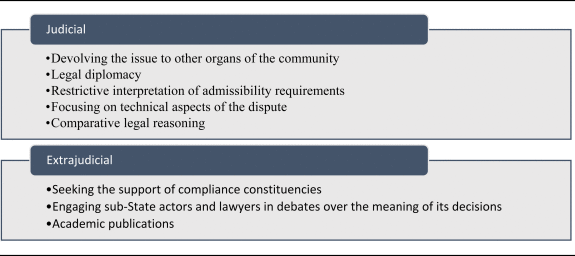
While international courts are rarely upfront about it, they adopt a variety of judicial techniques to address resilience.Footnote 47 These techniques can be applied when interpreting rules regarding admissibility, when addressing substantive legal issues, and even in the style of legal reasoning adopted. For example, international courts engage in comparative legal reasoning by either referring to or adopting the case law of other international and regional courts. They can also rely on the jurisprudence of authoritative national courts to back up their own arguments.Footnote 48 As discussed below, when called upon to address issues relating to indigenous property rights in Belize, the CCJ cited the jurisprudence of the IACtHR, whose case law in this area is generally recognised as authoritative.Footnote 49 In other instances, the CCJ engaged with common law principles and the jurisprudence of a variety of Commonwealth courts, such as the Judicial Committee of the Privy Council, and the supreme courts of Australia, the United Kingdom, and South Africa.Footnote 50 Similarly, when addressing a constitutional crisis between the Nicaraguan President Enrique Bolaños Geyer and the Parliament, in which the latter sought to withdraw ex post some of the former's powers, the CACJ filled its decision with citations from a variety of decisions of constitutional and supreme courts in which the principle of separation of powers was defended.Footnote 51
Another form of judicial resilience is legal diplomacy. International courts rule upon politically loaded cases by stating bold legal principles, but simultaneously carefully weigh the costs that their decisions may incur for other actors. In relation to the CJEU, Karen Alter stated that ‘the early jurisprudence of the CJEU shows clear signs of caution. Although bold in doctrinal rhetoric, the CJEU made sure that the political impact was minimal in terms of both financial consequences and political consequences.’Footnote 52 Similar observations have been made by Mikael Rask Madsen in relation to the ECtHR,Footnote 53 and by Salvatore Caserta and Madsen in relation to the CCJ.Footnote 54 More pertinent to our case studies is the CJEU's ruling in the case brought by the Associação Sindical dos Juízes Portugueses (ASJP), in which the CJEU held that judicial independence is a general principle of EU law derived from Article 19 TEU. At the same time, the Court ruled that the austerity cuts to the salaries of Portuguese judges did not violate this general principle.Footnote 55 As a result, the Portuguese authorities had no reason to contest this ruling, which paved the way for the CJEU's jurisprudence on judicial independence.Footnote 56
A particular form of legal diplomacy is practised when an international court gives a restrictive interpretation of the rules of standing and jurisdiction. For example, the Mercosur PRC used this technique when it declined to hear a case concerning a constitutional crisis in Paraguay on the merits due to the plaintiff's selection of the wrong procedure to submit it.Footnote 57 The opposite strategy of expansive interpretation of rules of standing and jurisdiction has also been deployed. This was evidenced in the ECOWAS CJ's decision, in one of its first human rights cases, to give standing to NGOs and to soften the requirement of exhaustion of national remedies before accessing the Court.Footnote 58
A further judicial technique entails focusing on certain discrete legal aspects of a broader dispute. It can often amount to avoidance strategies.Footnote 59 For instance, the CJEU has responded to the Polish and Hungarian illiberal turns without addressing them as systemic violations of democracy and the rule of law.Footnote 60 Instead, the Court has applied specific norms of EU law in domains such as age discrimination among judgesFootnote 61 or independence of data protection supervision.Footnote 62 Similarly, when confronting the ideological schism within the Andean Community (AC)—between neo-liberal Colombia and Peru, and leftist-populist Bolivia—the ATJ limited itself to merely ensuring formal adherence to Andean law while allowing governments to revise the Treaties in accordance with their preferences.Footnote 63
Extrajudicial techniques are most often implemented by international courts when they engage with relevant audiences to develop the court's support. This may take the form of inter-institutional dialogue between the various organs of the regional organisation in which the international court is entrenched. For instance, the CJEU, the CACJ, and the ATJ have decided to devolve issues concerning democratic backsliding in their Member States to the political and executive organs of their respective communities, such as Commissions/Secretariats, Heads of States, and/or Councils of Ministers. Winning over audiences may also require international courts to gain the support of other constituencies through out-of-court judicial diplomacy and other outreach activities. The CJEU has been organising regular meetings with national judges to encourage them to refer cases to the supranational Court. The EACJ has developed relationships with the human rights oriented legal professions in order to create allies and secure its future expansion of jurisdiction into human rights. This is another example of extrajudicial strategies.
Table 1 below provides a non-exhaustive list of various judicial and extrajudicial techniques.
Judicial and extrajudicial techniques of international courts

B. The Timing of Deployment of Resilience Techniques
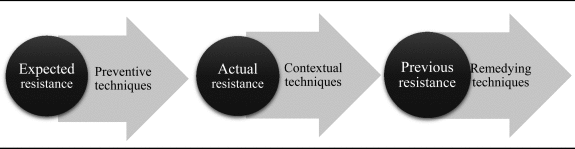
An important aspect of resilience techniques relates to the timing of their deployment. We argue that resilience techniques can be adopted: a) prior to the criticism directed toward the international court in question; b) contextually, as criticism of the international court grows; or c) to remedy an existing, protracted backlash. Table 2 visually summarises this view.
The timing of deployment of resilience techniques

When the ECOWAS CJ was given the chance to expand its jurisdiction to encompass human rights, the Court initially refused to do so through adjudication (judicial technique). At the same time, the Court advocated for treaty reforms to provide the Court with jurisdiction over human rights cases (extrajudicial technique). These are examples of preventive techniques, as they were deployed before the Court received criticism and before its human rights jurisdiction became politicised. The CCJ engaging in legal diplomacy in the case concerning LGBTQI rights in the CARICOM, on the other hand, is an example of a contextual technique.Footnote 64 In this instance, both Belize and Trinidad and Tobago had begun to express a certain degree of discontent with the Court's involvement in this socio-legal arena. This, in turn, pushed the Court to soften the impact of its final judgment. Finally, an example of a remedial technique can be seen in the SADC Tribunal's efforts to form alliances with NGOs and international academics in order to create a buffer for Robert Mugabe's vehement reaction against the Court's ruling on the white farmers’ land rights in Zimbabwe.
C. Contextual Factors Enabling or Disabling Resilience Techniques
This article does not tackle the question of whether (and if so under what conditions) the resilience techniques presented above can allow international courts to successfully face down resistance. We leave this puzzle to further explorations. Based on our research, we claim that similar techniques may give different results depending on the legal, institutional, and socio-political context in which each international court operates. For this reason, we conclude this section by providing a non-exhaustive list of contextual factors that may enable or disable these techniques. These range from broader structural factors to more agent-based factors.
Structural factors include issues as diverse as the common history of a region; the relative power of a particular State in a region, the nature of politics in a specific State involved in a dispute, and the balance of power between the organs of the regional organisation in which the international court operates. For instance, the use of comparative legal reasoning by the CCJ (discussed above) is inherently linked to the colonial and postcolonial history of the Caribbean region, which still maintains strong legal and cultural links with its former colonial power (the United Kingdom). This technique might be equally successful in other regions—such as East Africa– which have a similar colonial history and legacy in terms of legal culture. Moreover, the effectiveness of the ATJ's involvement in the crisis of the AC was influenced by the behaviour of Venezuela. Important here is Venezuela's withdrawal from the AC in 2006 in order to join the Mercosur, a move which gave the two other leftist leaders in the community, Evo Morales (Bolivia) and Rafael Correa (Ecuador), strong negotiating power vis-à-vis both the Andean Secretariat and the ATJ.
In relation to agent-based factors, we note the importance of epistemic communities of lawyers (NGOs and other progressive legal elites). These communities lend support to the international courts’ involvement in these politically and socially sensitive issues. For example, human rights lawyers and NGOs played a role in supporting the EACJ during its struggle for survival against the Kenyan backlash in the aftermath of the Nyong'o case.Footnote 65 Equally important is the possibility for international courts to cooperate with national judges in order to secure compliance.
IV. The Deployment of Resilience Techniques by International Courts
The remaining sections explore two case studies that show how different international courts deploy resilience techniques when called upon to rule in politically sensitive disputes. The first case study is that of the CJEU and its limited involvement in the systemic undermining of liberal democracy in Poland and Hungary. The second case study addresses the CCJ's management of minority rights in the CARICOM. Each section focuses on different aspects of our model so as to demonstrate its virtues and flexibility. In the case of the CJEU, we focus on the timing of the techniques deployed to assess whether they are being used pre-emptively, contextually, or ex post. In the case of the CCJ, we emphasise the nature of the techniques deployed so as to determine whether they are judicial or extrajudicial. The analysis of the two case studies shows the potential of the analytical framework of resilience techniques of international courts developed in the previous section.
A. The CJEU's Limited Involvement with the Rise of Illiberal Democracies in Hungary and Poland
The CJEU has only very gradually and extremely carefully become involved in the legal disputes arising from democratic backsliding in Hungary and Poland. This is because the so-called ‘Rule of Law Crisis’ in those two countries has been mainly addressed on the political plane.Footnote 66 The debates within the political institutions of the EU—especially those held in the Council of the EU—have, however, been marked by a stalemate.Footnote 67 There was no necessary majority in the Council to conclude that there is a serious risk of violation of EU values by Hungary or Poland, which could eventually lead to a suspension of those Member States. The EU's reactions have largely remained limited to the administration of legally non-binding instruments by other institutions, such as the Rule of Law Framework of the European CommissionFootnote 68 or the resolutions of the European Parliament.Footnote 69 The Court was therefore asked to adjudicate on issues related to blatant democratic backsliding in two of its Member States, at a time of political impasse at EU level. In this context, the CJEU decided to tread carefully and managed to de-escalate and potentially hold off the resistance to its involvement in this politically fraught matter. In the analysis of a large body of the CJEU's case law relating to democratic backsliding in Hungary and Poland, we distinguish between two sets of cases. Firstly, we focus on direct actions brought by the Commission for specific violations of EU law. These are only indirectly related to the democratic backsliding at the national level as they primarily serve as a sort of preliminary warning to the two defending States. Secondly, we analyse its jurisprudence on judicial independence. This was initially developed in cases not directly related to Hungary and Poland but was subsequently, and rather carefully, used against these two States. As we show, the CJEU has deployed preventive judicial resilience techniques primarily to avoid potential resistance from Member States and other actors. The use of extrajudicial techniques is limited to judges’ academic publications, in particular those of the President of the Court.
1. Avoiding the rule-of-law framing in direct actions against Hungary and Poland
The EU's response to the gradual dismantling of democratic guarantees in Hungary and Poland remains a politically divisive question.Footnote 70 The CJEU has thus taken clear steps to avoid encountering resistance to its rulings. In these cases, the infringement procedure is the core mechanism used to ensure EU Member States comply with EU law. Since 2010, the European Commission brought a series of infringement proceedings against both Hungary and Poland. In this section, we narrow the focus to proceedings against Hungary. These reveal the most about the Court's careful approach in this matter. These proceedings focused exclusively on violations of secondary EU law and only indirectly broached systemic rule of law violations. This was due both to the narrow framing by the Commission as a litigant and the reluctance of the CJEU to broaden the scope of those proceedings.
One of the first instances of the CJEU deploying pre-emptive resilience techniques was the Hungarian government's de facto appointment of the bench of the Hungarian Constitutional Court. It was addressed, not as a violation of the principle of separation of powers, but as an issue of age discrimination.Footnote 71 Even though the CJEU ultimately condemned Hungary for violating EU law, it avoided framing its judgment in terms of threats to democracy and judicial independence. Instead, the CJEU proceeded with a regular test of the discriminatory effects of these measures on certain groups of judges, concluding that the Hungarian measures indeed represented a discrimination based on age.Footnote 72 This framing was changed by the CJEU only later and through a gradual process.
The CJEU used narrow framing as a pre-emptive technique in cases involving the Hungarian government's premature removal of the independent supervisory authority for the protection of personal data.Footnote 73 The CJEU concluded that Hungary's behaviour constituted a violation of the independence of this authority. Yet the decision relied heavily on Article 28 (1) of Directive 95/46/EC on the protection of individuals in relation to the processing of personal data and on the free movement of such data. In condemning Hungary, the Court did not venture beyond the facts of the case at hand and relied on the most narrow legal basis available to it.Footnote 74
After these initial careful interventions, the CJEU gradually broadened its approach by including human rights violations in its adjudication. It did so, however, by keeping the specific norms of EU law related to internal markets at the forefront of its legal reasoning. This approach was adopted in two infringement rulings related to Hungary's ‘Lex CEU’ and ‘Lex NGO’ in 2020. These two laws were respectively intended to close down the Central European University, which was operating as a foreign university in Budapest, and to restrict the activity of foreign NGOs in Hungary.Footnote 75 Both were part of the Hungarian government strategy to dismantle legal guarantees within the country. The Court concluded that Hungary violated EU law in both instances. More specifically, the Court ruled that the ‘Lex NGO’ violated free movement of capital, as well as three articles of the Charter of Fundamental Rights of the EU relating to the right to respect for private and family life, the right to the protection of personal data, and the right to freedom of association.Footnote 76 According to the Court, the ‘Lex CEU’ amounted to a violation of norms of the General Agreement on Trade in Services—an international treaty currently included in the framework of the WTO—as well as the provisions of the EU internal market and norms of the Charter of Fundamental Rights of the EU relating to academic freedom, the freedom to found higher education institutions, and the freedom to conduct a business.Footnote 77 In both judgments, the Court devoted significantly more attention to the violations of economic freedoms than to fundamental rights issues, omitting a broader proportionality analysis for the latter, in particular. This, we argue, was part of the Court's deliberate strategy to avoid venturing into more sensitive legal areas in order to avoid a full confrontation with the Hungarian government.
Another area in which the CJEU used strategies to soften potential future critiques was the relocation of asylum seekers within the EU, an issue that also critically involved Hungary and Poland. According to the Dublin Regulation, an asylum seeker's claim must be processed by the EU Member State of first entry.Footnote 78 In response to the so-called migration crisis, however, the EU institutions adopted extraordinary measures to help EU border countries of first entry (Italy and Greece) to temporarily redistribute asylum seekers among other less-affected EU Member States.Footnote 79 Two Visegrad countries—Hungary and Slovakia (and supported by Poland)—brought proceedings to annul the Council Decision.Footnote 80 These countries had already shown clear opposition to the mainstream political position in the EU on the migration crisis. More specifically, they were opposed to the refugee relocation decision from the outset on the grounds that these measures were based on an unstable political compromise and a narrative of urgency to act in the face of a crisis.Footnote 81 The political salience of the case can also be seen in the plethora of basic EU law principles listed in the allegations which were supposedly violated by the Council, including principles of proportionality and solidarity. Additionally, Poland, as an intervening party, argued that the Council decision would disproportionately affect countries ‘virtually ethnically homogeneous, like Poland’.Footnote 82 The Court dismissed the case, expressing a high degree of deference to the Council. Its judicial scrutiny was limited to ascertaining that the Council did ‘not manifestly exceed the bounds of its discretion’ and did not make ‘a manifest error of assessment’ when adopting provisional measures in the context of the crisis.Footnote 83 This decision and its legal reasoning is a clear example of devolution to the political institutions of the regional organisation, a judicial resilience technique often deployed by international courts in regional contexts when faced with particularly fractious cases.Footnote 84
Following this unsuccessful challenge, a number of Central and Eastern European governments refused to implement the Council decision. The resistance itself, however, concentrated on the political decision to relocate refugees rather than on the ruling of the Court. The Hungarian Minister of Foreign Affairs even went so far as to say that ‘[p]olitics has raped European law’.Footnote 85 The Court followed up on its decision when the Commission brought infringement proceedings against Hungary, Poland, and the Czech Republic for non-compliance with the refugee relocation scheme.Footnote 86 After upholding the relocation scheme in 2017, in 2020 the Court ruled that the Visegrad countries’ refusal to accept refugees on their territories constituted a violation of EU law. This ruling allowed the Court to reinforce its case law by relying on its own precedent, an approach that might be read as a resilience technique. In other words, the Court adopted a tiered approach by, first, establishing legal principles that were of little concern to the Member States on the losing side of the dispute and, secondly, by using them in subsequent cases instigated by EU institutions (Commission) to expand its approach, all the while giving the countries involved an opportunity to voice a forceful reaction if necessary. This can be seen, for instance, in the response to the ruling by national governments, who argued that implementation was not actually necessary because the refugee relocation system had in the meantime been reformed by the Council of the EU.Footnote 87
The CJEU also ruled on another Hungarian violation of EU migration law and fundamental rights with respect to the country's operation of the Röszke and Tompa transit zones. Here, the Court issued two rulings condemning Hungarian practices in the transit zones at the EU's external borders; one as a result of a preliminary ruling question in a case initiated by human rights NGOs,Footnote 88 the second in relation to an infringement case brought by the Commission.Footnote 89 In both cases, however, the Court limited its legal reasoning to specific issues of migration law, without referring to the broader issue of democratic backsliding. In the preliminary ruling, the CJEU was further asked to rule on the question of violations of fundamental rights. It did so through comparative legal reasoning, referring to standards developed by the European Court of Human Rights.Footnote 90 In the infringement procedure, the framing was limited to violations of EU directives in the field of migration. While the ruling led to the transit zones being in large part dismantled and the migrants detained in them released, a member of the Hungarian government challenged the use of the comparative legal reasoning and the coherence of the judgment with the jurisprudence of the European Court of Human Rights.Footnote 91 This case shows how the Court can be influential in changing actual State behaviour without triggering resistance in the politically salient debate on the rule of law in Hungary.
The analysis above shows how the CJEU has chosen to only scrutinise the democratic backsliding in Hungary and Poland indirectly, by focusing on particular rights which were breached in specific political contexts. This, in our view, is part of the Court's broader strategy to prevent potential and future resistance. By providing a narrow framing in its legal reasoning, it avoids direct engagement with the systemic rule-of-law violations. Focusing on technical aspects of the dispute and devolving the decision-making role to other EU organs are part of the CJEU's toolbox of judicial resilience techniques. As a result, the Court's rulings were met with little resistance and the Member States have generally complied with the concrete rulings. One notable exception to this trend is the area of migration policy, where the Court was met with more resistance even though similar resilience techniques were deployed. This resistance is, however, in our view more closely linked to the political salience of the migration crisis in Europe at the time, rather than to systemic rule-of-law issues. Therefore, it could be suggested that the CJEU's resilience techniques were successful in so far as they avoided potential backlash.
2. Linking judicial independence to the rule of law
The second judicial resilience technique, which the CJEU deploys even more broadly, is legal diplomacy. This is when an international court establishes an important legal principle in cases that are not politically sensitive, in order to increase its authority, and subsequently applies such principle as established jurisprudence in more sensitive cases. The CJEU used this technique when it initially interpreted judicial independence as a general principle of EU law in non-sensitive cases brought by national courts from Portugal and Ireland. This represented a progressive development of EU law. It also, however, reflected the understanding of judicial independence suggested by the national courts referring those cases, which guaranteed that it will also be made effective in those instances. The Court's recourse to legal diplomacy in these cases gave it time to solidify the concept of judicial independence in its jurisprudence. On this basis, the CJEU gradually intervened more directly in the democratic backsliding in Poland and Hungary by applying the already established principle of judicial independence to these situations. In spite of the resilience techniques deployed, it seems that the resistance to this judicial intervention from the Polish government is still escalating.Footnote 92 We focus on two instances of judicial diplomacy in the broader context of the CJEU's jurisprudence on judicial independence; the first ruling citing judicial independence as a general principle of EU law, and the possibility of granting exceptions to the execution of the European Arrest Warrant (EAW) derived from it.
The 2018 ASJP judgment established judicial independence as a general principle of EU law.Footnote 93 After this judgment, and perhaps because of it, the Commission has broadened its infringement procedures with regard to the reforms of the Polish judiciary to include judicial independence as one of its grounds. This has had a decisive influence on the development of the Court's case law since 2018. In ASJP, the Court was asked to rule upon the validity of salary cuts imposed on Portuguese judges and whether these violated the principle of judicial independence in EU law. Though the Court concluded that the salary cuts were justified in the context of the financial crisis, the decision laid down an important principle for future cases on judicial independence: the Court recognised that national judges can now invoke EU law, in particular Article 19 TEU, to protect their independence from attacks by the executive. Previously, the principle of judicial independence was derived from the Charter of Fundamental Rights of the EU, which would not be applicable in situations where Member States are regulating the organisation of their judiciary and not implementing EU law. In the ASJP judgment, the Court laid the foundations for future adjudication on judicial independence in Hungary and Poland.
The Commission's major infringement procedure following ASJP concerned the capture of the Polish Supreme Court. The Polish legislation in question lowered the retirement age of the judges and granted authority to the Minister of Justice to prolong the mandates of selected judges.Footnote 94 The Court ruled that the reform constituted a violation of Article 19 TEU, which was considered to give ‘concrete expression to the value of the rule of law affirmed in Article 2 TEU’.Footnote 95 The Polish government changed the legislation in anticipation of the judgment and returned the judicial retirement rules to the status quo ex ante.Footnote 96 As a result, the Polish government argued that the Court's judgment concerned a historical situation and was no longer relevant at the time of issuance.Footnote 97 On the day the CJEU's judgment was delivered, the Commission issued a carefully worded statement summarising its main findings and adding that it ‘stands ready to support the Polish Government in the application of this judgment and to continue discussions on the resolution of all other outstanding issues related to the rule of law in Poland under the ongoing Article 7 Procedure’.Footnote 98
Another example of judicial diplomacy is the LM case.Footnote 99 The CJEU directly adjudicated on democratic backsliding in Poland but did so in proceedings that originated in courts in Ireland. The LM case concerned an EAW issued by Polish authorities for a person detained in Ireland. On this matter, the Irish High Court referred two preliminary ruling questions to ascertain whether Poland's breaches of Article 2 TEU values constitute a reason for denying the execution of the EAW.Footnote 100 The referring court posited that Poland had breached the principle of judicial independence, as well as the values enshrined in Article 2 TEU.Footnote 101 The CJEU ruled that a national judge can exceptionally refuse to execute an EAW when there is a ‘real risk that the individual concerned would suffer a breach of his fundamental right to an independent tribunal’.Footnote 102 This ruling can be regarded as strategic, in light of the Court's case law allowing for various exceptions to the execution of EAWs and, in particular, exceptions based on human rights violations.Footnote 103 This preliminary ruling reference was met with critical responses in the State-controlled Polish media,Footnote 104 but much of the discontent focused on the personality of the Irish judge—her activism, personal engagements, and sexual orientation—rather than the authority of the CJEU to decide the matter. In turn, the Association of Judges of Ireland condemned Polish media outlets for aiming ‘personalized attacks and invective’ at one of its members.Footnote 105
The practical consequences of this judgment remain unclear and will fundamentally depend on its application by various national judges across Europe. In its subsequent case law, the CJEU seems to be limiting the systemic consequences of its rulings on the EAW framework to avoid a situation where all warrants issued by Polish authorities are automatically considered ineffective.Footnote 106 When confronted with the practice of the District Court of Amsterdam of essentially stopping all EAW-based removals to Poland, the CJEU curtailed such practices, insisting that judicial authorities must examine the specific circumstances of each case.Footnote 107 This appears to be a judicial remedying technique following pushback from national courts and governments.Footnote 108
In general, the CJEU has experienced increased resistance to its adjudication on judicial independence, which directly refers to the rule of law and EU values enshrined in Article 2 TEU. This resistance, however, seems to be focused on the Court's involvement in this particular issue, which critics often argue falls outside the EU's competences. To date, this pushback would not seem to amount to a backlash that challenges the Court's institutional authority. The Hungarian Minister of Justice, Judit Varga, stated that the ‘enthusiasm in the EU for imposing rule of law criteria looks like Brussels asserting control in areas where it has no competence’.Footnote 109 The response of the Hungarian President, Viktor Orbán, to the European Parliament's report on democratic backsliding in Hungary voices a populist discourse critical of technocratic elites:
Hungary's decisions are made by the voters in parliamentary elections. What you are claiming is no less than saying that the Hungarian people are not sufficiently capable of being trusted to judge what is in their own interests. You think that you know the needs of the Hungarian people better than the Hungarian people themselves. Therefore I must say to you that this report does not show respect for the Hungarian people. This report applies double standards, it is an abuse of power, it oversteps the limits on spheres of competence, and the method of its adoption is a treaty violation.Footnote 110
In the opinion of the Polish Minister of Justice, Zbigniew Ziobro, the CJEU does not have the competence to interfere with the organisation of the national judiciary.Footnote 111 Ziobro has also questioned the judicial independence of the Polish CJEU judge, describing his public appearances as more like those of a politician than a judge.Footnote 112 Already while awaiting a CJEU ruling, the Polish Prime Minister stated that EU law has an obligation to respect the diverse legal traditions of its Member States.Footnote 113
Since its strong statement on the principle of judicial independence in June 2019, the Court appears to be nuancing its approach in subsequent judgements. Firstly, in a follow-up procedure on reforms of the Polish judiciary, the Court reverted to adjudicating from a discrimination angle, as these proposed changes would end up disproportionally affecting female judges.Footnote 114 Secondly, in its judgment on the disciplinary chamber of the Polish Supreme Court, brought as a preliminary reference by the Polish Supreme Court itself, the framing seems incredibly narrow and gives deference to national judges. In November 2019, the Court ruled on a preliminary ruling question invoking the right to a fair trial (Article 47 Charter of Fundamental Rights of the EU) being violated by the creation of a Disciplinary Chamber within the Supreme Court.Footnote 115 This Chamber would be filled with ministerial appointees and its role would be to scrutinise judges. While the CJEU concurred with the referring judges in the abstract—holding that a tribunal is not independent if there are doubts as to its imperviousness to ‘direct or indirect influence of the legislature and the executive’—it left the concrete assessment in the hands of national judges.Footnote 116
The Polish government's responses to these decisions have focused on introducing national measures that would de facto limit the effects of the CJEU's ruling, without expressly opposing the authority of the Court. New regulations were adopted that limit judicial independence, allow for judges to be submitted to political control, and even make it possible for individual judges who apply the Court's ruling directly to be demoted.Footnote 117 In October 2019, as the Disciplinary Chamber was beginning its operations, the Commission brought infringement proceedings against Poland. In April 2020, the Court issued interim measures obliging Poland to stop the operation of the Disciplinary Chamber.Footnote 118 A significant number of preliminary ruling requests from Polish courts challenging the judicial independence of their highest courts are currently pending before the CJEU.Footnote 119 This shows, on the one hand, the high level of mobilisation among the Polish judiciary and, on the other hand, the need for the Court to clarify its stance on a case-by-case basis.
Since June 2019, the CJEU has engaged more directly with issues concerning separation of powers at the national level by ruling on judicial independence in Poland. In order to avoid backlash from the Polish government, the CJEU has deployed preventive and remedial judicial resilience techniques. It has gradually developed a nuanced understanding of judicial independence, which remains linked to the rule of law and democratic values. In follow-up judgments, the Court has emphasised the crucial role of national authorities in enforcing these values. Finally, it is worth noting that the CJEU has communicated on this issue almost exclusively through its judgments. Aside from this, the Court's President, Koen Lenaerts, has commented on the issue through his academic writings. This extrajudicial communication can also be viewed as another way of mitigating backlash. In one of his numerous academic articles, Lenaerts argued that the CJEU is a crucial actor in enforcing rule of law in the EU:
The cases discussed in this article demonstrate that the Court is ready to bear its full responsibility for upholding the rule of law within the EU. … Those cases equally attest to the fact that the Court would not be in a position to uphold the rule of law and thus to preserve the Union's autonomous legal order without judicial dialogue with national courts.Footnote 120
This seems to suggest that the Court is not part of the political efforts to tackle rule of law backsliding in the EU, but instead forms part of the judicial branch, together with national judiciaries. This, in turn, might suggest to the politicians in Budapest and Warsaw that the Court has a different role than the EU's political institutions around Brussels, on which most of their criticism is focused. Furthermore, this appears to be in line with the deference that the Court shows to the EU political institutions in these cases.
To conclude, by deploying a plethora of judicial resilience techniques and limiting its extrajudicial outreach, the CJEU seems to have delayed and de-escalated the build-up of resistance and challenges to its authority but has not prevented them altogether. In cases related to democratic backsliding in Hungary and Poland, the Court has relied on a number of resilience techniques. It often devolves the issue to other EU organs (such as the Council in deciding on measures to adopt in response to the migration crisis); conducts legal diplomacy (as in the case of the ASJP ruling); provides restrictive interpretations of admissibility requirements (when striking out the application of the Hungarian President for falling outside of the scope of EU law); and engages in comparative legal reasoning (such as that of the Strasbourg Court on issues of fundamental rights). A common feature of these resilience techniques is that they focus on the technical aspects of the dispute, rather than dealing with the core political aspect. Between 2012 and 2019, the Court adjudicated on specific violations of EU law without linking these to broader questions of the rule of law or democratic values. The Court gradually broadened the scope of its adjudication by introducing judicial independence as a general principle of EU law. The emerging jurisprudence on judicial independence, however, appears to have been met with more direct challenges in terms of the implementation and unmediated criticism of the CJEU. Although the CJEU managed to ‘flatten the curve’ of critiques up until 2019, it did not avoid resistance entirely.
B. Protecting and Enforcing Minority Rights in the Caribbean through Legal Diplomacy, Comparative Legal Reasoning, and Outreach Activities
Despite being a rather young court,Footnote 121 the CCJ has often been called to rule upon politically sensitive issues concerning politicised rights, in particular those of minorities. In this section, we focus on two particular sets of disputes, those concerning the protection of LGBTQI rights in Belize, Guyana, and Trinidad and Tobago, and those relating to the constitutional recognition of indigenous land rights in Belize. These cases are a good test for our framework. Although the Court's involvement was seen by many as an unnecessary intrusion in domestic affairs, the CCJ managed to avoid backlash in the form of a State withdrawing from its jurisdiction and/or advocating for reforms curtailing the Court's competences. The Court effectively limited the negative responses to its rulings on such contentious topics to no more than ordinary critique. Such critique was expressed primarily in the form of verbal disagreements with the legal solutions offered by the Court and through partial compliance with the Court's orders. In our view, the CCJ achieved this thanks to its deployment of a variety of judicial and extrajudicial strategies to appease the potentially negative reactions of a variety of actors. Such techniques ranged from a careful use of legal diplomacy to extensive comparative legal reasoning and outreach activities. Finally, we show that the deployment of such resilience techniques has helped the Court to maintain its authority, although some criticism was voiced both by governments on the losing side of the disputes and by human rights activists expressing their disappointment with the Court's conservative approach.
1. Avoiding potential backlash in Belize with the help of comparative legal reasoning in indigenous rights cases
In 2015, the CCJ ruled upon a case concerning indigenous land rights in Belize, a State inhabited by a variety of Maya communities.Footnote 122 The case was brought before the CCJ's Appellate Jurisdiction by a coalition of NGOs and representatives of the Maya communities of Southern Belize, who sought constitutional recognition of Maya customary land tenure. The case was highly politicised as, in the two decades before its filing before the CCJ, the question of land tenure had been the subject of a harsh battle between the Belizean Government and the Maya minorities. The controversy formally began in 1995, when the Government of Belize issued logging and oil drilling concessions over land occupied by Maya villages. This triggered a constitutional motion before the Belizean Supreme Court in which the Maya communities requested the acknowledgement of their customary property rights.Footnote 123 A decision on this case was never reached. In 1998, the Maya filed a petition before the Inter-American Commission of Human Rights. The Commission released a report in 2004, finding Belize in violation of the rights to property and equality enshrined in the American Declaration of the Rights and Duties of Man.Footnote 124 As Belize continued to deny the constitutional recognition of Maya indigenous land rights, two additional constitutional motions were filed by the Maya communities in 2007. Even though these were successful, the Government of Belize refused to implement them. This gave rise to another application before the Belizean Supreme Court, which was then counter-appealed before the CCJ (an institution which had been established during the course of the case). The history of the issue placed the CCJ in a tight spot, as the government of Belize had vigorously contested the assertion that the Maya have customary land rights in the past, and to a certain extent, continues to do so to this day.
In its decision, the CCJ recognised the constitutional right of the Mayas to indigenous property rights, affirming that these traditional land rights constitute property equal in legitimacy to any other form of property under Belizean law. It is perhaps important to mention that this decision was reached in agreement with the government of Belize, which conceded on the issues in question during the proceedings. Despite this apparent settlement, in its reasoning, the CCJ adopted a variety of judicial techniques to avoid and/or mitigate potential resistance against its judgment. In particular, the CCJ employed the technique of adopting comparative legal reasoning while building its legal arguments, relying heavily on several cases of the IACtHR,Footnote 125 additional international instruments,Footnote 126 and the preamble of the Constitution of BelizeFootnote 127 to establish legal grounds for claiming the existence of indigenous property rights.Footnote 128 Moreover, in granting damages to the Maya, the Court referred to previous decisions of the Judicial Committee of the Privy Council in order to justify its claim.
In other words, the CCJ grounded its decision in international and supranational authoritative case law to show not only the Belizean Government, but a variety of Caribbean legal elites, academics, and NGOs, that it was capable of providing a legal decision on a sensitive legal issue that conformed to international human rights standards and common law jurisprudence. Moreover, in the context of this case, the Court adopted an original and interesting extrajudicial technique by withholding supervision of the implementation of the ruling to ensure that the government complied with its decision. In addition, the Court organises (semi-)regular outreach activities to target a number of actors such as national judges, other legal professionals, academics and NGOs.Footnote 129
In our view, this approach has only been partially successful. Although the ruling avoided backlash from the Belizean Government (which, for a long time, had not only refused to accept the Maya's claims concerning their land rights, but had also raised several criticisms to the Court),Footnote 130 and despite the fact that Belize conceded to the Court's decision ‘on paper’, there is strong evidence of an overall failure of the government to comply with the Court's ruling. A recent report of the Human Rights Committee, which monitors compliance with the International Covenant on Civil and Political Rights, found that the Government of Belize has continued to disregard its duty to protect the rights of the Maya by permitting acts by government agents and third parties (acting with the government's acquiescence or tolerance), to affect the existence, value, use, or enjoyment of the land and other resources belonging to the Maya peoples, without the free, prior, and informed consent of the affected Maya villagers.Footnote 131 This was further confirmed by a compliance report hearing before the CCJ, which essentially reached the same conclusion.Footnote 132 Concretely, Belize is very keen to formally comply with the Court's orders, but then leaves the actual situation substantively as it stood before the CCJ's intervention. For instance, following an order from the CCJ, the Government of Belize has established a Land Rights Commission empowered to find solutions to contestations surrounding the land rights of the Maya. However, this Commission has not been operating properly since its inception, refusing to consult with the Maya representatives, refraining from taking concrete decisions, and spending all the resources allocated to it by the CCJ fulfilling administrative functions.Footnote 133
Thus, while successful in avoiding backlash and in giving national, regional, and international visibility to the Court, the resilience techniques employed in the Maya case did not help the CCJ to secure full compliance with its orders.
2. A legally diplomatic solution to LGBTQI rights in Belize, Guyana, and Trinidad and Tobago
In spite of the problems in implementing the decision against Belize in the Maya case, the resilience techniques adopted by the CCJ were relatively successful. This is evidenced by the fact that a wider set of actors, such as international human rights NGOs, and other private litigants, have seised the Court in relation to their contested human and fundamental rights. In 2016, Mr Maurice Tomlinson filed two cases before the CCJ (which the CCJ consolidated into one case), challenging the compatibility of the Immigration Acts of Belize and Trinidad and Tobago with CARICOM law.Footnote 134 Tomlinson argued that the provisions banning the entrance of homosexuals into these two countries violated his right to free movement within the CARICOM. Given the approach of many Caribbean societies to homosexuality, this case also fits into the category of contested minority rights.
In deciding this case, the main technique deployed by the CCJ was that of legal diplomacy. Overall, the Court did not find in favour of the plaintiff, on the grounds that actual State practice in relation to the impugned provisions of the Immigration Acts of both Belize and Trinidad and Tobago did not suggest any incompatiblility with the CARICOM law. The Court saw enough evidence to show that homosexuals, including Mr Tomlinson, had repeatedly been granted admission to the two countries. The Court added the caveat that CARICOM law makes the admission of homosexual nationals from other CARICOM States a legal requirement, contradictory positions of the national Immigration Acts notwithstanding. For this reason, in an obiter dictum, the Court warned both Belize and Trinidad and Tobago not to retain laws which seemingly conflict with Community law obligations.
The overall suitability of the Court's restrictive approach to human and fundamental rights in this decision is questionable. The CCJ's restricted focus on actual practices as opposed to the existence of discriminatory laws seems to contradict the latest developments of other international human rights bodies, which have often found violations of the rights to non-discrimination and privacy based solely on the existence of incompatible national legislation.Footnote 135 When placed in the broader socio-political context of the CCJ in 2016, on the other hand, this diplomatic approach becomes more intelligible. We argue that it constituted a deliberate judicial strategy on the part of the Court to try to limit negative reactions from Belize and Trinidad and Tobago, and similarly from other CARICOM Members. This strategy was needed because, since its filing in 2013, the case received a great deal of attention in the region, as many considered this case to fall beyond the Court's formally delegated competences. Since the beginning of its operations, Trinidad and Tobago, Jamaica, and other CARICOM States have been very critical of the CCJ. These States have refused to ratify the Court's Appellate Jurisdiction, alleging the lack of quality and impartiality of the judges. Thus, a decision concerning a very contentious issue for Caribbean societies, such as LGBTQI rights, had the potential of triggering quite an extreme backlash, such as the two countries withdrawing from the Court's jurisdiction.
Seen in retrospect, the legal diplomacy strategy helped the Court to overcome this potential backlash, and even set in motion other positive developments in Belize. Coincidentally or not, almost at the same time as the CCJ's decision in the Tomlinson case, in the landmark decision Orozco v Attorney General of Belize, the Supreme Court of Belize determined that Section 53 of the Criminal Code of Belize, which criminalised same-sex sexual activity between two consenting male adults in private, was unconstitutional.Footnote 136
In 2018, another case related to LGBTQI issues was brought before the CCJ, this time in its Appellate Jurisdiction and lodged against Guyana. This case concerned the arrest and subsequent charging by a national court in Guyana of four transgender persons for wearing women's clothing in public, a conduct criminalised by the Guyanese Summary Jurisdiction (Offences) Act.Footnote 137 In this decision, the CCJ abandoned the legal diplomacy approach adopted in Tomlinson and declared the aforementioned law to be in violation of the Guyanese constitution. The CCJ also reviewed the extent to which the colonial ‘savings clause’ in the constitutions of the Commonwealth Caribbean countries can limit the Court's powers to exercise judicial review, thus presenting itself as the main authoritative actor in the enforcement of contested rights in the region.
When called upon to rule in politically sensitive cases, the CCJ has often deployed a number of judicial resilience methods in order to curtail the potential pathways of resistance to the Court. Among these methods, the Court often tended toward the adoption of comparative legal analysis and legal diplomacy. We have also shown that the Court has been proactive in deploying extrajudicial techniques such as outreach activities and monitoring of compliance with its rulings. Although it remains to be seen whether the CCJ will succeed in becoming an authoritative voice in the protection and enforcement of fundamental rights in the Caribbean, for now, we find that the deployment of a variety of resilience techniques has allowed the Court to rather calmly navigate around various sensitive legal question without triggering harsh backlash from the Member States.
V. Conclusion
International courts have arguably undertaken a crucial role as defenders of the international liberal order in the face of its adversaries. However, when it comes to more immediate reactions to politically divisive conflicts, these institutions find themselves in a very difficult situation. On the one hand, they are increasingly called upon to address legal questions on controversial matters that divide societies. On the other hand, they face a serious risk of backlash if they scrutinise or challenge their Member States in these situations. International courts must therefore strike a balance between the resilience of their regional constitutional regimes and the enforcement of their basic underlying values. We have argued that the deployment of a variety of resilience techniques may assist international courts in this complex task.
After elaborating the general framework of resilience techniques available to international courts, our analysis focused on case studies from two regional courts, the CJEU and the CCJ. Both courts have deployed the judicial technique of legal diplomacy, making important progress in interpreting regional law in cases with a low risk of non-implementation. Moreover, they have pronounced on matters of principle, but without condemning Member States for specific violations. As an additional tool, the CCJ has practised comparative legal reasoning with other well-established national and international courts in order to vest its own decisions with the legitimacy of other judicial institutions.
The important difference between the European and Caribbean courts is in the deployment of extrajudicial techniques. Partly due to its institutional context and more fragile authority, the CCJ has relied extensively on support from compliance constituencies and governments. In contrast, the CJEU has remained almost entirely within the realm of judicial techniques. It has been extremely prudent, developing its jurisprudence on judicial independence gradually, and focusing on narrower aspects of EU law, leaving broader pronunciations on the rule of law to the EU's political organs. This approach, described by its President as ‘stone-by-stone’, has allowed the Court to remain in line with the emergent political consensus on denouncing the attacks on the judiciary in Poland.
The analysis of the selected case studies shows that the judicial technique of narrow framing of the scope of the courts’ decisions, which positions them as questions of individual violations rather than questions of systemic backsliding, has helped to avoid or mitigate resistance. The judicial resilience techniques appear crucial in the pre-emption stage. In order to prevent the escalation of resistance into a backlash, which might draw the overall legitimacy and even existence of the institution into question, international courts employ extrajudicial techniques by reaching out to political institutions at the regional level or transnational professional communities to garner support for the implementation of their rulings. Some courts, such as the CJEU, have a long-standing policy of limiting any extrajudicial engagements in order to appear neutral as an institution. However, if international courts want to avoid marginalisation, the use of extrajudicial techniques to gain the support of compliance constituencies appears to be crucial.
A final word on the broader role of international courts in times of crisis for the international liberal order is necessary. The current global political landscape is an existential challenge to the liberal world order, and with it the legitimation and empowerment of international organisations (including international courts). This makes their role in securing the constitutional structure of their systems increasingly important, but also increasingly challenging. Bold and direct intervention on the part of international courts is not always recommended, as the risk of backlash, like in the case of the SADC Tribunal, is too high. At the same time, international courts cannot avoid the elephant in the room and take refuge in simply ruling upon technical matters. Something needs to be done. The key question is how and when. In our view, the deployment of resilience techniques provides the answer to this question, especially if viewed in the light of the fact that international courts have different time horizons from politics. Crucially, by playing off the shorter time horizons of politics, international courts may slowly build legal doctrines to consolidate their power and authority without provoking any immediate political backlash.