INTRODUCTION
The macrocylic lactones (ML) are the most important family of anthelmintics in current use, both in economic terms and because of their high efficacy and broad spectrum. It follows that the emergence of resistance to the ML in a number of parasites of veterinary and, possibly, medical importance will have serious economic as well as animal and human health consequences (Sangster and Dobson, Reference Sangster, Dobson and Lee2002; Wolstenholme et al. Reference Wolstenholme, Fairweather, Prichard, von Samson-Himmelstjerna and Sangster2004). The lack of rapid and reliable diagnostic tests for ML resistance in most species hampers the development and implementation of refugia-based (van Wyk et al. Reference Van Wyk, Hoste, Kaplan and Besier2006) and other strategies that could maximise the sustainable use of these compounds. This makes the development of molecular tests for resistance-linked alleles all the more urgent. Unfortunately, developing an understanding of the molecular mechanism(s) of ML resistance has proved to be a considerable scientific challenge and progress in the identification of specific resistance alleles has been limited. The current hope is that the application of molecular genetic and genomic methods will shed light on this difficult problem (Gilleard, Reference Gilleard2006). This review will concentrate on the potential for discovering ML resistance markers or alleles in the genes encoding the drug targets, the ligand-gated chloride channels (LGCC): in a separate article in this special issue, Roger Prichard and colleagues discuss the potential of the detoxifying P-glycoproteins, and other genes, for identifying the elusive resistance mechanism and providing the tools needed to develop a molecular test for ML resistance.
CRITERIA FOR ESTABLISHING A POLYMORPHISM AS BEING LINKED TO RESISTANCE
It may be more difficult than is first apparent to determine whether or not a particular polymorphism or allele is required for ML resistance, or is tightly linked to it. First of all, it is necessary to define what constitutes a ‘resistant’ nematode population: current guidelines suggest that this is present when the efficacy of a normal therapeutic dose falls below 95% (Coles et al. Reference Coles, Bauer, Borgsteede, Geerts, Klei, Taylor and Waller1992). However, such a population is, by definition, ∼95% susceptible to the anthelmintic and presumably most of the individuals within it have a susceptible genotype. Field populations of parasitic nematodes are also genetically extremely variable (Otsen et al. Reference Otsen, Plas, Lenstra, Roos and Hoekstra2000; Reference Otsen, Hoekstra, Plas, Buntjer, Lenstra and Roos2001) and this adds greatly to the complexity of any analysis. It cannot be over-emphasised that those working on parasitic nematodes rarely, if ever, use defined strains of genetically similar individuals, as may be the case for model organisms or bacteria, viruses, etc.
For these and other, reasons, several groups have isolated ML-resistant populations under controlled conditions by selection with increasing doses of drug over several generations (Egerton, Suhayda and Eary, Reference Egerton, Suhayda and Eary1988; Shoop et al. Reference Shoop, Egerton, Eary and Suhayda1990; Rohrer et al. Reference Rohrer, Birzin, Eary, Schaeffer and Shoop1994; Gill et al. Reference Gill, Kerr, Shoop and Lacey1998; Ranjan et al. Reference Ranjan, Wang, Hirschlein and Simkins2002; Coles, Rhodes and Wolstenholme, Reference Coles, Rhodes and Wolstenholme2005). This has produced populations in which the majority of individuals are clinically resistant, permitting comparison of susceptible and resistant populations at the molecular and genetic level. Such comparisons have revealed a number of differences between the two populations, but so far left unanswered is the question: what criteria need to be fulfilled before a specific allele or polymorphism is considered to be resistance-associated? In our opinion, several kinds of evidence are required. For instance, the allele needs to be enriched in resistant populations and the level of enrichment should be proportional to the level of the resistance of those populations. There should be evidence that the candidate allele increases in frequency following challenge of the nematode population with the drug. There should also be biochemical or pharmacological evidence that the change in sequence or level of expression of the allele reduces the potency of the anthelmintic, for example by reducing the affinity of drug binding to its receptor or the concentration needed to open an ion channel. It would be helpful if the change could be demonstrated to confer resistance onto a previously susceptible worm following its introduction: C. elegans can be very useful in this context. As an example, consider the well known F200Y polymorphism in β-tubulin that is associated with benzimidazole resistance in Haemonchus contortus. In this case, the resistant allele is found at substantially higher frequencies in resistant populations (Kwa et al. Reference Kwa, Kooyman, Boersma and Roos1993), causes a reduction in the binding of the drug to tubulin (Lubega et al. Reference Lubega, Klein, Geary and Prichard1994) and confers resistance to an otherwise susceptible C. elegans strain (Kwa et al. Reference Kwa, Veenstra, Van Dujk and Roos1995).
THE MACROCYCLIC LACTONES TARGET LIGAND-GATED CHLORIDE CHANNELS
The evidence implicating the LGCC, especially glutamate-gated chloride channels (GluCl), as the main target of the ML has been extensively reviewed and will not be repeated here (Wolstenholme and Rogers, Reference Wolstenholme and Rogers2005). However, it is clear that avermectins can interact with a variety of different channels in addition to the GluCl, including nematode and mammalian GABAA and glycine receptors (Adelsberger, Lepier and Dudel, Reference Adelsberger, Lepier and Dudel2000; Dawson et al. Reference Dawson, Wafford, Smith, Marshall, Bayley, Schaeffer, Meinke and Mckernan2000; Shan, Haddrill and Lynch, Reference Shan, Haddrill and Lynch2001), α7 nicotinic acetylcholine receptors and P2X4 receptors (Krause et al. Reference Krause, Buisson, Bertrand, Corringer, Galzi, Changeux and Bertrand1998; Khakh et al. Reference Khakh, Procter, Dunwiddie, Labarca and Lester1999).
Although the focus of this article is on nematodes, the ML are also potent insecticides and acaricides and it may be possible to gain insights into the anthelmintic action of these compounds, and of resistance to them, by looking at their modes of action and resistance in insects. Several insect LGCC are sensitive to avermectins, including the glutamate- and histamine-gated chloride channels (HisCl) (Gisselmann et al. Reference Gisselmann, Pusch, Hovemann and Hatt2002; Zheng et al. Reference Zheng, Hirschberg, Yuan, Wang, Hunt, Ludmerer, Schmatz and Cully2002). Mutations in the ort gene, encoding one of the HisCl subunits of Drosophila melanogaster, alter the susceptibility of the flies to ML (Iovchev et al. Reference Iovchev, Kodrov, Wolstenholme, Pak and Semenov2002), although specific resistance-associated polymorphisms have yet to be identified in this channel. An amino acid substitution (P299S) in the Drosophila GluClα subunit confers a ten-fold level of resistance to ivermectin and nodulisporic acid (Kane et al. Reference Kane, Hirschberg, Qian, Hunt, Thomas, Brochu, Ludmerer, Zheng, Smith, Arena, Cohen, Schmatz, Warmke and Cully2000). The affected proline residue is located just after the second transmembrane region and is ubiquitous in all known glutamate-, glycine- and GABA-gated chloride channels. Homomeric channels were expressed in Xenopus oocytes and voltage clamp electrophysiology carried out to determine the pharmacological effects of the mutation. The P299S mutation conferred a ten-fold loss of glutamate sensitivity, with EC50 values changing from 19·5 μM in the wild type subunits to 201 μM in the P299S DmGluClα subunits. The loss of sensitivity to ivermectin was even more marked with a 14-fold decrease in EC50 (from 25 nM in wild-type channels to 340 nM in the P299S DmGluClα (Kane et al. Reference Kane, Hirschberg, Qian, Hunt, Thomas, Brochu, Ludmerer, Zheng, Smith, Arena, Cohen, Schmatz, Warmke and Cully2000). However, these are laboratory strains and there is no information on the mechanism of insect resistance to the ML from the field.
The GABA-gated chloride channel is the site of action of the cyclodiene insecticides. Resistance to these is conferred by a SNP at position 302 of Rdl, a GABA-gated chloride channel subunit, with an alanine being replaced with either a serine or a glycine (ffrench-Constant et al. Reference ffrench-Constant, Rocheleau, Steichen and Chalmers1993). The A302S/A302G substitutions are in the important second transmembrane region (M2) of the GABA-binding subunit. Interestingly, later expression studies carried out in Xenopus oocytes showed that the Rdl mutation also results a 3·3-fold decrease in sensitivity to ivermectin (Kane et al. Reference Kane, Hirschberg, Qian, Hunt, Thomas, Brochu, Ludmerer, Zheng, Smith, Arena, Cohen, Schmatz, Warmke and Cully2000). It has also been reported that the GluCl and RDL subunits can be co-immunoprecipitated, suggesting that either the GABA and glutamate-gated channels are part of the same complex or that RDL and GluClα coassemble into a functional receptor (Ludmerer et al. Reference Ludmerer, Warren, Williams, Zheng, Hunt, Ayer, Wallace, Chaudhary, Egan, Meinke, Dean, Garcia, Cully and Smith2002): other workers have found that the insect glutamate- and GABA-gated channels co-exist and function separately (Zhao et al. Reference Zhao, Salgado, Yeh and Narahashi2004). Very recently, Eguchi et al. (Reference Eguchi, Ihara, Ochi, Shibata, Matsuda, Fushiki, Sugama, Hamasaki, Niwa, Wada, Ozoe and Ozoe2006) have found that the Musca domestica GluClα assists in the expression of RDL when the two are co-expressed in the same Xenopus oocyte.
It is worth noting that the Drosophila mutations that confer resistance to ivermectin in both GABA receptors and GluCl are in, or very close to, M2, the membrane-spanning region that lines the pore and undergoes a conformational change to open the channel. This could highlight this part of the receptor as a potential ‘hotspot’ for resistance-associated polymorphisms.
In nematodes, we have most information about the free-living species, C. elegans. Ivermectin kills C. elegans at therapeutic concentrations, making it a suitable model system to investigate the mechanism of resistance. A large number of C. elegans genes are predicted to encode proteins with homology to LGCC subunits. Though a systematic analysis of the role of these receptors in avermectin sensitivity and resistance is lacking, several genes have been found to contribute to IVM resistance. Based on this work, Dent et al. (Reference Dent, Smith, Vassilatic and Avery2000) concluded that the GluCl are the physiologically relevant mediators of ivermectin toxicity.
In C. elegans there are six GluCl genes, at least two of which are alternatively spliced giving at least eight functional subunits (Yates, Portillo and Wolstenholme, Reference Yates, Portillo and Wolstenholme2003). Ivermectin activates GluCl channels that contain α-type subunits: the avr-14, avr-15, glc-1 and glc-3 gene products all individually form ivermectin-sensitive channels (Cully et al. Reference Cully, Vassilatis, Liu, Paress, Van Der Ploeg, Schaeffer and Arena1994; Dent, Davis and Avery, Reference Dent, Davis and Avery1997; Vassilatis et al. Reference Vassilatis, Arena, Plasterk, Wilkinson, Schaeffer, Cully and Van Der Ploeg1997; Dent et al. Reference Dent, Smith, Vassilatic and Avery2000; Horoszok et al. Reference Horoszok, Raymond, Sattelle and Wolstenholme2001). These are obvious candidate resistance-associated genes. Functionally, null mutations in avr-14, avr-15 and glc-1 genes (individually) do not lead to significantly resistant worms. However, a triple GluCl mutant displays >4000-fold resistance (Dent et al. Reference Dent, Smith, Vassilatic and Avery2000); double mutants in two of the genes lead to an intermediate level of resistance. Even in the model nematode, this may reflect the necessity for changes in multiple genes to cause high-level target-site mediated ML resistance.
Other C. elegans gene products may interact with the GluCl to mediate ML sensitivity. In particular, mutations in annexin genes, which encode proteins that function in gap junctions, may allow ivermectin-induced hyperpolarisation to spread to other cells. In the absence of the annexins (UNC-7 and UNC-9 in C. elegans), ML toxicity might be restricted to only those cells expressing GluCl, preventing systemic effects (Dent et al. Reference Dent, Smith, Vassilatic and Avery2000). Both unc-7 and unc-9 genes contribute to ivermectin sensitivity, but neither bind ivermectin directly. An additional pathway for resistance in C. elegans is controlled by genes that mediate cuticle permeability. The dye-filling (dyf) mutants are unable to take up fluorescent dyes from the environment through the amphids. When the Dyf gene osm-1 is mutated, all genetic backgrounds show reduced effects of ivermectin, presumably due to lower uptake of the drug (Dent et al. Reference Dent, Smith, Vassilatic and Avery2000). The GluCl and the Dyf genes can also act together, as the avr-15; osm-1 double mutant is significantly more resistant than the osm-1 single mutant, though the avr-14; osm-1 mutant is not.
It is clear that in C. elegans the ML have multiple GluCl targets and so high level resistance requires mutations in multiple genes. This may explain why the avermectins have been relatively long lived effective antiparasitic drugs, as a single mutation in one of the targets is not enough to confer resistance (Dent et al. Reference Dent, Davis and Avery1997; Martin et al. Reference Martin, Murray, Robertson, Bjorn and Sangster1998). However, there are some questions concerning the applicability of these very elegant C. elegans studies to parasitic species. It is unlikely that a reduction in ML sensitivity of >4000-fold is necessary to cause clinical resistance and it may be that further studies on lower level resistance might yield better clues to its mechanism in parasites. Many of the C. elegans mutants are null, or functional nulls, and this complete loss of channel function has marked behavioural and other effects (Dent et al. Reference Dent, Smith, Vassilatic and Avery2000; Cook et al. Reference Cook, Aptel, Portillo, Siney, Sihotra, Holden-Dye and Wolstenholme2006) that might make them too deleterious to allow parasites to survive in the field. It is also interesting that the C. elegans screens have not identified a role for the P-glycoproteins (P-gp) in ML resistance, despite evidence from parasites (Kerboeuf et al. Reference Kerboeuf, Blackhall, Kaminsky and Von Samson-Himmelstjerna2003; von Samson-Himmelstjerna and Blackhall, Reference Von Samson-Himmelstjerna and Blackhall2005) that these proteins may play a role in ivermectin resistance. Indeed, it has been reported that mutations in two P-gp genes (pgp-1 and pgp-3) have no effect on ivermectin sensitivity in C. elegans (Broeks et al. Reference Broeks, Jannsen, Calafat and Plaster1995), though recent preliminary work in our laboratory suggests that there may be some small effects, especially with mutations in pgp-3 (McCavera and Wolstenholme, unpublished).
THE GLUCL FAMILY DIFFERS BETWEEN NEMATODE SPECIES
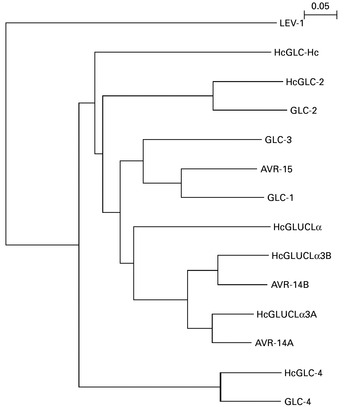
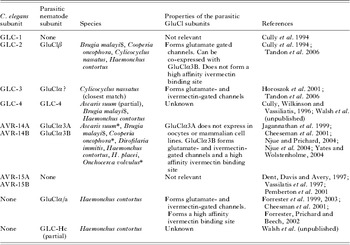
H. contortus is one of the most well studied parasitic nematodes and is the source of much of the evidence concerning the mechanisms of ML resistance in trichostrongylid nematodes. We have searched the partial H. contortus genome sequence (Gilleard, Reference Gilleard2006) for homologues of the C. elegans GluCl family, to complement the results of cDNA cloning experiments (Delany, Laughton and Wolstenholme, Reference Delany, Laughton and Wolstenholme1998; Forrester et al. Reference Forrester, Hamdan, Prichard and Beech1999; Jagannathan et al. Reference Jagannathan, Laughton, Critten, Skinner, Horoszok and Wolstenholme1999). We have identified two new subunits (tentatively named Hcglc-4 and Hcglc-Hc), giving a minimum of 5 GluCl genes in H. contortus, at least one of which is alternatively spliced (Fig. 1; Table 1). In theory, any of these subunits has the potential to be involved in ML mode of action or resistance, though the evidence suggests that glc-2 and the GluClβ subunits it encodes have little involvement. Such analyses shows that H. contortus has a slightly different set of GluCl subunits to C. elegans, and out of the three genes involved in high level ML resistance of the model organism (avr-14, avr-15 and glc-1), only avr-14 has a clear orthologue in the parasite (Jagannathan et al. Reference Jagannathan, Laughton, Critten, Skinner, Horoszok and Wolstenholme1999; Cook et al. Reference Cook, Aptel, Portillo, Siney, Sihotra, Holden-Dye and Wolstenholme2006). H. contortus does possess another ivermectin-sensitive α-subunit, HcGluClα or HcGluCla (Forrester et al. Reference Forrester, Hamdan, Prichard and Beech1999, Reference Forrester, Prichard, Dent and Beech2003; Cheeseman et al. Reference Cheeseman, Delany, Woods and Wolstenholme2001) and this, together with the avr-14 orthologue, is an obvious candidate resistance gene. A very similar gene has been discovered in the cyathostomins (Tandon, LePage and Kaplan, Reference Tandon, Lepage and Kaplan2006). We have identified the HcGLC-Hc subunit sequence only very recently and a full length cDNA is not yet available. It may also be an α-type subunit, though it seems to be significantly divergent from the other H. contortus α-type subunits (Fig. 1). Hcglc-4 is a clear orthologues of C. elegans glc-4, but is rather different in sequence from the other subunits the function of these subunits has not yet been reported. Therefore, even from examination of a single parasitic species, H. contortus, it is clear that, while there are some very close homologues to the C. elegans subunits, the GluCl gene composition of various nematodes may differ substantially.
Neighbour-joining tree of the GluCl subunits of C. elegans and H. contortus (Hc). The C. elegans nicotinic acetylcholine receptor subunit, LEV-1, is shown as an outgroup.

The glutamate-gated chloride channel (GluCl) subunits of Caenorhabditis elegans and the parasitic nematodes

* Only a single GluClα3 has been identified in these species.
$ Identified by homology from the B. malayi genome.
H. contortus, like C. elegans, is in clade V of the Nematoda and the two species are thus quite closely related (Blaxter et al. Reference Blaxter, De Ley, Garey, Liu, Scheldeman, Vierstrate, Vanfleteren, Mackey, Dorris, Frisse, Vida and Thomas1998). This clade contains a number of important parasitic species, but many important parasite species are phylogenetically more distant. In particular, clade III includes Ascaris spp., important veterinary and human parasites, and the filariae (Blaxter et al. Reference Blaxter, De Ley, Garey, Liu, Scheldeman, Vierstrate, Vanfleteren, Mackey, Dorris, Frisse, Vida and Thomas1998). Bioinformatics searches of the Brugia malayi genome and EST databases, coupled with cDNA cloning procedures using A. suum, suggest that these nematodes contain at least three GluCl genes, which are most similar to avr-14, glc-2 and glc-4 of C. elegans (Jagannathan et al. Reference Jagannathan, Laughton, Critten, Skinner, Horoszok and Wolstenholme1999; Walsh, Williamson and Wolstenholme, unpublished). Interestingly, these genes encode an α-subunit, a β-subunit and the divergent GLC-4 subunit, and are also present in H. contortus; avr-14 and glc-4 are also present in Trichinella spiralis. These three may represent a conserved core of GluCl genes, which would make them prime candidates for studying the mechanism of ML resistance in parasites. Sequences similar to avr-14 have been reported from a variety of parasitic species (Jagannathan et al. Reference Jagannathan, Laughton, Critten, Skinner, Horoszok and Wolstenholme1999; Njue et al. Reference Njue, Hayashi, Kinne, Feng and Prichard2004; Yates and Wolstenholme, Reference Yates and Wolstenholme2004) and, of all the GluCl genes, it seems to be the most widely expressed. The gene products of at least one parasite, H. contortus, can be expressed successfully in C. elegans and rescue a loss-of-function phenotype, suggesting at least some conserved functions (Cook et al. Reference Cook, Aptel, Portillo, Siney, Sihotra, Holden-Dye and Wolstenholme2006). Since the GluClα3B subunit, one of the products of this gene, forms channels activated by the ML anthelmintics (Dent et al. Reference Dent, Smith, Vassilatic and Avery2000; Cheeseman et al. Reference Cheeseman, Delany, Woods and Wolstenholme2001; Njue et al. Reference Njue, Hayashi, Kinne, Feng and Prichard2004; Yates and Wolstenholme, Reference Yates and Wolstenholme2004), this would make it a prime candidate for investigation as a potential resistance-associated gene.
Indeed, two candidate SNPs have already been identified in avr-14 from ML-resistant parasites. The White River isolate of H. contortus (Van Wyk and Malan, Reference Van Wyk and Malan1988) carries a SNP in the TM2 region causing a T300S change in the amino-acid sequence (Jagannathan, Reference Jagannathan1998): the effect of this change on the properties of the channel and the prevalence of the SNP in resistant populations are currently under investigation. More impressively, Njue et al. (Reference Njue, Hayashi, Kinne, Feng and Prichard2004) cloned full-length avr-14 cDNAs from Cooperia oncophora, using ivermectin-susceptible (IVS) and -resistant (IVR) adult worms. The IVS and IVR GluClα3B subunits differed at three amino acid positions, E114G, V235A and L256F. All of these SNPs were located in the N terminal domain of the C. oncophora GluClα3 subunit, which is believed to contain the glutamate-binding site, although it is important to note the actual ML binding sites are still unknown. The subunits carrying the candidate SNPs were cloned and expressed in Xenopus laevis oocytes. Whole-cell 2-electrode voltage-clamp recordings showed that the L256F change in GluClα3 caused a small but significant (three-fold) loss of sensitivity to glutamate, from an EC50 of 29·7±4 μM to 100·6±0·21 μM. The efficacy of ivermectin and moxidectin were also significantly reduced, with the EC50 for ivermectin increasing from 0·5±0·12 to 1·2±0·11 μM in channels carrying the L256F mutation. Such a relatively small change in drug sensitivity may not be sufficient to confer resistance on the parasite in most cases, but C. oncophora is the dose-limiting species for cattle (Shoop, Mrozik and Fisher, Reference Shoop, Mrozik and Fisher1995) and in this particular species, a 2- to 3-fold resistance may be enough to cause clinical problems. The gene encoding this subunit has also been shown, using population genetic methods, to be under selection in ML-resistant C. oncophora (Njue and Prichard, Reference Njue and Prichard2004). This polymorphism thus satisfies a number of the criteria set out at the beginning of this review, but more work needs to be carried out to establish its true importance. A number of workers have started to look for this polymorphism in other species, but its detection has not yet been reported. Even for C. oncophora, we still do not know how widespread this polymorphism is in other susceptible and resistant isolates, but this is an obvious lead to follow up. One other piece of evidence that might indirectly implicate avr-14 in ML resistance in H. contortus comes from a study of amphid structure in ML-resistant worms (Freeman et al. Reference Freeman, Nghiem, Li, Ashton, Guerrero, Shoop and Schad2003): they are severely deformed, a finding consistent with C. elegans data showing amphid defects can cause ivermectin-resistance. The HcGluClα3A subunit is expressed in at least two amphid neurones (Portillo, Jagannathan and Wolstenholme, Reference Portillo, Jagannathan and Wolstenholme2003) and the two observations may obviously be linked.
It is clear that the ML are capable of acting at several LGCC, and initially GABA receptors were identified as potential targets due to their involvement in locomotion and because insect GABA-gated chloride channels are a well known target for pesticides (Holden-Dye and Walker, Reference Holden-Dye and Walker1990; Buckingham et al. Reference Buckingham, Biggin, Sattelle, Brown and Sattelle2005). Although later results implicated the GluCl as the clinically relevant ML target (Arena et al. Reference Arena, Liu, Paress and Cully1992), some interesting data have been reported on alleles of the HG1 subunit of H. contortus (Laughton et al. Reference Laughton, Amar, Thomas, Towner, Harris, Lunt and Wolstenholme1994). This subunit is expressed in vivo at the neuromuscular junction and elsewhere (Skinner et al. Reference Skinner, Bascal, Holden-Dye, Lunt and Wolstenholme1998), and can be co-expressed with the C. elegans GAB-1 subunit in vitro to form a functional ivermectin-sensitive GABA-gated chloride channel (Feng et al. Reference Feng, Hayashi, Beech and Prichard2002). The gene has also been shown, using population genetic methods (see below), to be under selection in laboratory-selected ML resistant isolates of H. contortus (Blackhall, Prichard and Beech, Reference Blackhall, Prichard and Beech2003). When two different alleles identified from these studies (A – ‘wild type’ and E – ‘ivermectin selected’) were co-expressed with GAB-1, 10 μM ivermectin, when co-applied with 10 μM GABA, potentiated the current of the GAB-1/HG1A (‘ML sensitive’) receptor, but attenuated the GABA response of the GAB-1/HG1E (‘ML resistant’) receptor (Feng et al. Reference Feng, Hayashi, Beech and Prichard2002). Four amino acid residues differ between these two alleles; two of them (K169R and Q176L) are in the extracellular disulphide-bonded ‘cys-loop’, a motif characteristic of this family of ligand-gated ion channels and thought to be involved in coupling ligand-binding to channel opening (Schofield, Jenkins and Harrison, Reference Schofield, Jenkins and Harrison2003). The other two, V436I and H442Y, are in the fourth membrane-spanning region. This forms the interface between the channel protein and membrane lipids (Miyazawa, Fujiyoshi and Unwin, Reference Miyazawa, Fujiyoshi and Unwin2003), and changes here are predicted to be interesting because the hydrophobic nature of the ML means that the binding site on the receptor might be in, or close to, the lipid bilayer. However, more data are needed to determine which of these changes is most important for this dramatic change in the effects of the Ml on the channels and the quantitative nature of that change – on the face of it, 10 μM ivermectin is not a clinically relevant dose. In addition, though the HG1 gene appeared to be under selection pressure in multiple laboratory strains, the actual allele selected varied between strains (Blackhall et al. Reference Blackhall, Prichard and Beech2003). In the absence of detailed sequence information for these alleles, it is difficult to interpret the significance of this variation. Given the possible interactions between insect GluCl and putative GABA receptors discussed above (Ludmerer et al. Reference Ludmerer, Warren, Williams, Zheng, Hunt, Ayer, Wallace, Chaudhary, Egan, Meinke, Dean, Garcia, Cully and Smith2002; Eguchi et al. Reference Eguchi, Ihara, Ochi, Shibata, Matsuda, Fushiki, Sugama, Hamasaki, Niwa, Wada, Ozoe and Ozoe2006), an involvement of HG1 with ML action in parasitic nematodes cannot be ruled out (even though it does not appear to be important in C. elegans).
It is interesting that all of the potential resistance alleles described to date have altered the effect of the native ligand, as well as that of the ML. Given that it is believed that the two compounds have distinct binding sites, this is perhaps surprising. It will be important to see if it is possible to separate the affinity of the LGCC for the small, water-soluble amino acid neurotransmitters from the relatively large, hydrophobic ML anthelmintics.
Most of the studies on parasites considered here have concentrated on SNPs that change the amino acid sequence of the individual proteins and subunits and have not identified polymorphisms that might result in gross changes of expression of the receptors, such as deletions. This is in contrast to most of the C. elegans mutations, which tend to be deletions or functional nulls. It is conceivable that such mutations may not be easy to detect using the methods most commonly used to study genetic variation. If a sequence does not amplify, no polymorphisms will be detected by SSCP, for example, and the mixed nature of the parasite populations will ensure that the deletion will not present at a 100%, so could be missed. It is also apparent that most of the studies have been carried out on ‘candidate’ genes, based on what we think we know about ML action and resistance, but the lack of success from such approaches to date emphasises the need for a less focused approach: the imminent completion of several parasite genomes should greatly assist such efforts (Gilleard, Reference Gilleard2006). Several studies have concluded that ML binding to membrane preparations of parasitic nematodes is unchanged in resistant isolates (Rohrer et al. Reference Rohrer, Birzin, Eary, Schaeffer and Shoop1994; Hejmadi et al. Reference Hejmadi, Jagannathan, Delany, Coles and Wolstenholme2000) and this could be interpreted as arguing against a complete loss of the target. However, it is clear that the ML have multiple binding sites in parasitic nematodes and the binding assays may not sensitive enough to detect the loss of a single component amongst many. The reproducible massive increase in a low-affinity glutamate binding site (Paiement, Prichard and Ribiero, Reference Paiement, Prichard and Ribeiro1999; Hejmadi et al. Reference Hejmadi, Jagannathan, Delany, Coles and Wolstenholme2000) has also yet to be properly investigated or explained.
WHAT IF RESISTANCE IS POLYGENIC?
One remarkable feature of the population genetic studies that have carried out on ML-resistant parasitic nematodes is the sheer number of genes that appear to be under selection, including several LGCC subunits (though not all), P-glycoproteins and even β-tubulin (Blackhall et al. Reference Blackhall, Liu, Xu, Prichard and Beech1998a, Reference Blackhall, Pouliot, Prichard and Beechb, Reference Blackhall, Prichard and Beech2003; Njue and Prichard, Reference Njue and Prichard2004; Ardelli, Guerriero and Prichard, Reference Ardelli, Guerriero and Prichard2006; Eng et al. Reference Eng, Blackhall, Osei-Atweneboana, Bourguinat, Galazzo, Beech, Unnasch, Awadzi, Lubega and Prichard2006); one caution is that these studies have been carried out on relatively few species. The number of different genes apparently under selection in ML-resistant parasites raises the obvious possibility, even probability, that resistance is polygenic. This could be interpreted in two ways: resistance requires the presence of specific alleles of more than gene or, alternatively, that resistance can be caused by specific alleles of multiple genes. There is also evidence that ML resistance in H. contortus can develop very rapidly, over the course of as few as three treatments (Coles et al. Reference Coles, Rhodes and Wolstenholme2005) and ML resistance has developed many times in many species in many hosts in the field (Van Wyk and Malan, Reference Van Wyk and Malan1988; Kaplan et al. Reference Kaplan, Klei, Lyons, Lester, Courtney, French, Tolliver, Vidyashankar and Zhao2004; Le Jambre, Geoghegan and Lyndal-Murphy, Reference Le Jambre, Geoghegan and Lyndal-Murphy2005). The genetic evidence suggests that resistance is inherited as a single autosomal dominant gene in H. contortus larvae, though its expression is sex-linked in adult worms (Le Jambre et al. Reference Le Jambre, Gill, Lenane and Baker2000). How can these apparently conflicting data be reconciled and, if resistance is polygenic, what does this imply for molecular detection methods?
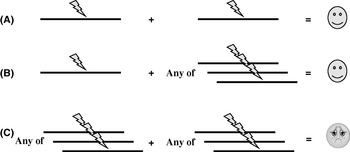
The impact of a polygenic resistance mechanism on the development of molecular methods for detecting resistance alleles will depend on whether any one of the changes is essential for resistance to occur (Fig. 2). If it is, then it should be possible to produce tests for its detection – though the identification of a ‘necessary but not sufficient’ sequence polymorphism may prove difficult. Once such an identification has been made, though, its detection should be straightforward. The major problem would be the incidence of ‘false positive’ – the identification of populations and individuals expressing only one of the resistance alleles and not actually clinically ML resistant. However, the presence of such populations and individuals would be a warning that the appearance of genuine drug resistance was imminent, and this might actually be advantageous if the identification of such ‘pre-resistant’ populations allowed measures to be taken that reduce the likelihood that true resistance would appear or spread. If multiple combinations of polymorphisms can cause resistance, then the production of a test that will detect resistance-associated alleles in more than one population may be difficult. Even if it is possible, the use of such a test may be limited to defined resistant populations of nematodes.
Possible consequences of a polygenic resistance mechanism for the development of molecular detection methods. If resistance requires one (A) or more (B) specific polymorphisms, then that could be used as the basis for a detection system. If resistance can be caused by multiple polymorphisms (C), then the development of a useful test will be much more complex.

The suggestion that ML resistance is polygenic might also explain some observations about the laboratory selection of resistant isolates. As mentioned above, under some circumstances resistant worms can be selected very rapidly from an extremely sensitive population (Coles et al. Reference Coles, Rhodes and Wolstenholme2005), however this is not the case for all populations (G. Coles, personal communication). For example, if the susceptible starting population has been exposed to other anthelmintic compounds, the expression of non-specific detoxification mechanisms, such as P-gp, might already have been induced and, if this is one of the changes required, resistance might appear to be due to a single further change, whereas a totally anthelmintic-naïve population would require selection at both genes. In practice, all field isolates will have been exposed to multiple anthelmintic compounds and this might explain the observed differences between ‘field’ and ‘laboratory’ resistant isolates (Gill et al. Reference Gill, Kerr, Shoop and Lacey1998). This might suggest that, in practical terms, ML resistance in the field is not polygenic because one of the required changes has already taken place prior to the introduction of this drug family.
Are there other possible reasons for the apparent multilocus selection required for ML resistance? It is normally assumed that resistant alleles are present in the starting population, but at a very low frequency (otherwise the drugs would not be effective!), and that such alleles are at a selective advantage when the animals are treated. One possible reason for the resistance alleles being at a low frequency is that they impose a selective disadvantage on the majority of worms and it is often assumed that the removal of drug treatment should cause resistance to disappear. This has not been observed for parasitic nematodes. Why not? Genes and their products do not act in isolation and it may be that the many generations over which resistant worms are normally selected also allows for the selection of secondary alleles that compensate for any loss of fitness imposed by the key, necessary resistance allele. To take an example, that of the L256F polymorphism described in the ML-resistant C. oncophora: this polymorphism reduces the sensitivity of the GluCl target of the drug by about 2–3 fold, but it does the same for L-glutamate, the normal ligand of the receptor (Njue et al. Reference Njue, Hayashi, Kinne, Feng and Prichard2004). Expression of such a receptor on a nematode neurone would reduce the efficacy of inhibitory glutamate signalling to that neurone, and would therefore tend to increase its excitability. This could easily be slightly deleterious to the worm, causing an apparent loss of fitness, but this change could be compensated by other mechanisms, in other neuronal components. For example, the presynaptic cell could release more glutamate in response to an incoming action potential, or the signal might be augmented by reducing the expression or activity of the inactivating plasma membrane glutamate transporters. In the neurone expressing the modified GluCl, the expression and trafficking of the GluCl, or other subunits and receptors, might be altered to increase the inhibitory signal, or the instrinsic excitability of the cell might be reduced by changing the expression or properties of ion channels and/or pumps. There might even be changes in other cells downstream of the modified neurones, for example in motor neurones or at the neuromuscular junction. Over several generations, alleles in many other genes may be selected that restore the signalling properties of the neurone to its original state and, under such conditions, the re-emergence of the original susceptible form of the GluCl could, in turn, be deleterious. Examination of the genotypes of worms selected in such a manner would, after several generations, reveal apparent selection at multiple loci, even though only one of these was actually directly responsible for the original appearance of the resistance phenotype. Though such a discussion is hypothetical and possibly wildly speculative, it might help to provide an explanation some of the apparently contradictory data in the ML resistance literature.
CONCLUSIONS
We do not know the mechanism of resistance to macrocyclic lactone anthelmintics in parasitic nematodes and, until we do, it will not be possible to produce molecular tests to detect resistance alleles. The ML have a wide variety of biological effects and multiple molecular targets which will vary in their pharmacology and relative importance between species. This implies that the mechanisms of resistance will also vary between species and, in a worst-case scenario, between different isolates of the same species – this is not a new suggestion (Gill et al. Reference Gill, Kerr, Shoop and Lacey1998) but a real possibility that should not be overlooked in our enthusiasm to promote molecular techniques and genomics as a panacea for parasitological problems. In one way this has little impact on the production of molecular tests, since these will always be species specific, but it will mean that we cannot assume that finding for one species will be applicable to others. So far, only one convincing candidate polymorphism has emerged, the L256F change seen in the GluClα3 of C. oncophora (Njue et al. Reference Njue, Hayashi, Kinne, Feng and Prichard2004), and even this needs considerable additional population and pharmacological data to confirm or refute its importance. Several other interesting polymorphisms are under active investigation but if the LGCC are the important site for ML resistance, then any useful molecular test (except for C. oncophora) is unlikely to be widely available in the short term. It may be that a less hypothesis-based approach is required, looking at global changes in gene expression in resistant nematodes, rather than concentrating on readily identifiable candidate genes. In science, apparent complexity has often been simplified once we have the right information, and we can only hope that the same may be true of ML resistance.