Introduction
In Tunisia, cereal crops dominated by wheat (Triticum durum Desf.) and to lesser extent barley (Hordeum vulgare L.) are grown on around one third of the arable land which is concentrated in rain-fed areas in the north of the country (Latiri et al., Reference Latiri, Lhomme, Annabi and Setter2010). Despite its agronomic importance, wheat production is limited by a large number of factors including weeds. The weed flora is highly diversified and comprises more than 200 species, of which 50% occur in cereal crops (Caréme et al., Reference Carème, Ben Brahim, Ben Harrath, Blaiech, Chemli, Kadraoui, Kabouchi and Traia1990). Through the world and as in Tunisia, control methods commonly used to control weeds in cereal crops are mainly chemical and cultural. Excessive use of chemical herbicides has resulted in the evolution of herbicide resistance in many broadleaf and grass weed species including rigid ryegrass (Lolium rigidum) (Heap, Reference Heap2019).
Rigid ryegrass is one of the world's worst weeds, with a major economic and agronomic negative impact. It is an annual weed characterized by its high competitiveness within the crop, rapid adaptability and reproductive capacity of up to 45 000 seeds/m2 (Cook et al., Reference Cook, Moore, Peltzer, Gill and Holmes2005) as well as by its ability to evolve resistance to herbicides (Preston and Powles, Reference Preston and Powles2002). It is currently one of the most widespread and troublesome grassy weeds in cereal-growing regions in the north of Tunisia, infesting about 480 000 ha of cereal crops and resulting in considerable yield losses in highly infested areas (Anonymous, 2015). Rigid ryegrass control in cereal fields is mainly achieved by applying selective grass herbicides with acetyl CoA carboxylase (ACCase) and acetolactate synthase (ALS) inhibiting herbicides being of main importance.
ACCase inhibiting herbicides consist of three chemically different groups: aryloxyphenoxypropionates (APPs or FOPs), cyclohexanediones (CHDs or DIMs) and the more recent phenylpyrazoline (DEN). All these herbicides are selective graminicides as they are effective on the plastidic homomeric ACCase in grass species with little to no activity on the heteromeric broad-leaf equivalent ACCase (Scarabel et al., Reference Scarabel, Panozzo, Varotto and Sattin2011). The ALS inhibitors are currently one of the most broadly used classes of herbicides (Tranel and Wright, Reference Tranel and Wright2002; Heap, Reference Heap2019). The ALS (also referred to AHAS) is the first enzyme in the pathway for the biosynthesis of branched-chain, essential amino acids valine, leucine and isoleucine. The enzyme is the target site of five herbicide chemical groups: sulphonylureas (SUs), imidazolinones, triazolopyrimidines, pyrimidinyl-thiobenzoates and sulphonyl-aminocarbonyl-triazolinones (Yu and Powles, Reference Yu and Powles2014).
Resistance to the ACCase and ALS inhibiting herbicides and in some cases the cross- or multiple resistance patterns are documented from the main cereal cropping regions worldwide (Heap and Knight, Reference Heap and Knight1986; Powles and Howat, Reference Powles and Howat1990; Powles and Matthews, Reference Powles, Matthews, Denholm, Devonshire and Hollomon1992; Burnet et al., Reference Burnet, Hart, Holtum and Powles1994; Gill, Reference Gill1995; De Prado et al., Reference De Prado, De Prado and Menendez1997; Gasquez et al., Reference Gasquez, Fried, Delos, Gauvrit and Reboud2008, Reference Gasquez, Matejicek and Palavioux2009; Preston et al., Reference Preston, Wakelin, Dolman, Bostamam and Boutsalis2009; Owen et al., Reference Owen, Martinez and Powles2014; Heap, Reference Heap2017). In Australia, 19 departments have been affected by herbicide resistance (Heap, Reference Heap2017). Ryegrass populations collected from the Western wheat belt have evolved high levels of resistance to commonly used herbicides (Llewellyn and Powles, Reference Llewellyn and Powles2001; Owen et al., Reference Owen, Walsh, Llewellyn and Powles2007, Reference Owen, Martinez and Powles2014). The later study revealed a significant increase in resistance levels of ryegrass populations across the WA compared to the earlier study. Ninety-eight percent of tested populations exhibited resistance to the ACCase-inhibiting herbicide diclofop-methyl and 96% to the ALS-inhibiting herbicide sulphometuron, with 95% exhibiting resistance to at least two herbicide modes of action (Owen et al., Reference Owen, Martinez and Powles2014). In Tunisia, ryegrass resistance to diclofop-methyl (FOP) was reported as early as 1996 and subsequently confirmed in wheat crops in north of the country (Souissi et al., Reference Souissi, Labidi and Ben Hadj Salah2004; Beldi, Reference Beldi2005). More recently, there have also been anecdotal reports of ryegrass populations resistant to ALS herbicides. With the increased reports from cereal growers on the failure to effectively control rigid ryegrass in cereals with available herbicides, a more up to date survey of the prevalence of Lolium rigidum resistant to ACCase and ALS herbicides is paramount for designing effective weed management strategies to limit the spread of resistance. The objective of this study was to determine the distribution and frequency of herbicide resistance in ryegrass populations randomly collected in the cereal growing regions of Tunisia to ACCase and ALS inhibiting herbicides, the two classes of herbicides commonly used to control weed grass species in cereal crops.
Materials and methods
Seed collection
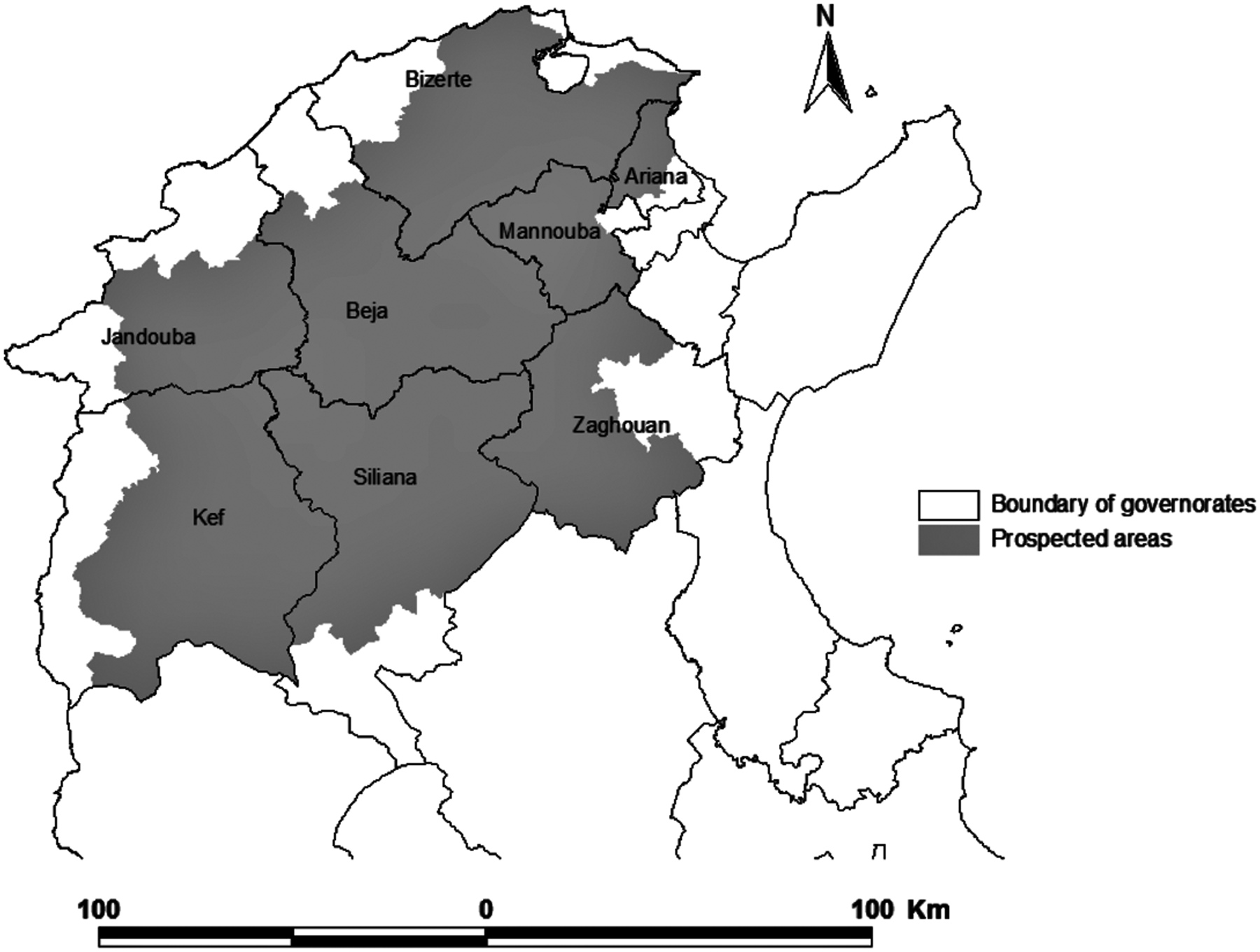
A total of 177 ryegrass populations were collected during three successive growing seasons (2012, 2013 and 2014) in wheat fields across eight governorates of cereal-growing areas in the north of the country (Bizerte, Beja, Jendouba, Zaghouan, Ariana, Mannouba, Kef and Seliana) (Fig. 1). Ninety percent of the populations (161) were collected from three governorates: Bizerte, Beja and Jendouba, the major cereal-growing regions in Tunisia, also known to have difficulties with grass weed control, namely brome (Bromus diandrus) and ryegrass. Cereal fields were targeted randomly and ryegrass seed samples were collected at maturity (end of May to end of June) by following a w-shaped path in the field. A global positioning system unit was used to record latitude and longitude for each site. Ninety percent of the surveyed fields were cropped to durum wheat (Triticum durum L.), the remaining with barley (Hordeum vulgare L.) and small faba bean (Vicia faba v. minor). A known ryegrass population resistant to ACCase-inhibiting herbicides (PS6124), a susceptible population (PS872) provided by Syngenta and two susceptible populations collected from Tunisian fields that have never been treated with herbicides, were used as references in this bioassay. Rigid ryegrass seed collections were subsequently stored at room temperature in the laboratory until use.
Surveyed cereal-growing areas in north of Tunisia.

Detection of resistance using the syngenta RISQ® test
Herbicide resistance of the different populations of ryegrass was detected using the RISQ® (Resistance In-Season Quick) test, developed and validated by Syngenta, as described by Kaundun et al. (Reference Kaundun, Hutching, Dale, Bailly and Glanfield2011). Seeds were sown in trays containing a mixture of loam soil, sand and peat (1:1:1 v/v/v) and grown for 14 days in a growth chamber at 22 °C with an 18/6 light/dark photoperiod and 70% relative humidity. Rigid ryegrass populations were screened with the two most commonly employed herbicides to combat grassy weeds in wheat crops: iodosulphuron + mesosulphuron-methyl (Amilcar, WG, 30 + 30 g ai/l, Bayer CropScience) and clodinafop-propargyl (Topik 80, EC, 80 g ai/l, Syngenta). The newly registered ACCase herbicide pinoxaden (Axial 045, EC, 45 g ai/l, Syngenta) was also included in the test (Table 1). The latter was tested on 39 populations randomly collected from the governorate of Bizerte to determine the level of cross and multiple resistance between clodinafop-propargyl and iodosulphuron + mesosulphuron and the newly employed pinoxaden herbicide. Similar discriminating rates of the ACCase-inhibiting herbicides to those previously published by Kaundun et al. (Reference Kaundun, Hutching, Dale, Bailly and Glanfield2011) were used in our bioassay, except for the ALS-inhibiting iodosulphuron + mesosulphuron as its commercial rate differs from country to country. The discriminating rate for the ALS herbicide was determined as 0.1 µm using the same procedure as described in Kaundun et al. (Reference Kaundun, Hutching, Dale, Bailly and Glanfield2011).
Commercial formulations and their discriminating rates used in the RISQ® test

The bioassay was carried out in Petri-dishes containing 1.2% agar supplemented with discriminating rates of herbicides as indicated in Table 1. Seedlings from each population, at 2 to 3 leaf stage, were transplanted into Petri-dishes after washing the roots with water to remove all soil particles. Seedlings were placed on the surface of the agar containing the herbicide and roots were gently pushed into the agar and allowed to grow into it. Five seedlings per Petri-dish and four replicates were used for each treatment. Controls consisted of Petri-dishes containing agar supplemented with sterile distilled water. All Petri-dishes were placed in an incubator at 20 °C/16 °C day/night temperatures, 16 h/8 h photoperiod and 60% humidity, and allowed to grow for 14 days. Resistance was assessed at the end of the 14 days of incubation by comparing shoot and especially root growth of seedlings in treatments to those in control plates. A seedling is considered resistant if it develops new leaves and healthy roots (Kaundun et al., Reference Kaundun, Hutching, Dale, Bailly and Glanfield2011).
Resistance scoring and mapping
Resistance levels were scored based on the classification described by Llewellyn and Powles (Reference Llewellyn and Powles2001). This classification divides populations into three categories based on the proportion of plants surviving after herbicide treatment: susceptible (S) if 0% of plants survived the herbicide treatment, developing resistance (DR) if 1–20% of plants survived the herbicide and resistant (R) if >20% of plants in the population survived the herbicide. Results were projected on the digital map of Northern Tunisia, using ARCVIEW® GIS 3.2 Software.
Data analysis
The frequencies of resistance were subjected to analysis of variance (ANOVA) to compare the evolution of resistance among the surveyed governorates. Where F values were significant at the P = 0.05 level, the means were compared using Fisher's least significant difference (LSD) test.
Results
Resistance to ACCase- and ALS-inhibiting herbicides
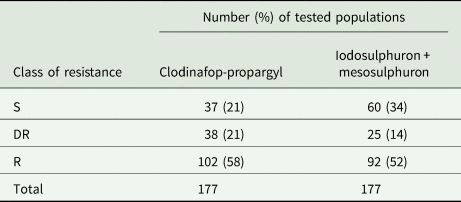
Out of 177 rigid ryegrass populations tested, 37 (21%) were susceptible to clodinafop-propargyl whilst 38 (21%) and 102 (58%) were classified as DR and resistant respectively (Table 2). When tested to iodosulphuron + mesosulphuron 92 (52%) and 25 (14%) populations were found to be resistant or DR respectively, with 60 populations (34%) susceptible (Table 2).
Frequencies of susceptible, DR and resistance to ACCase- and ALS-inhibiting herbicides among tested ryegrass populations
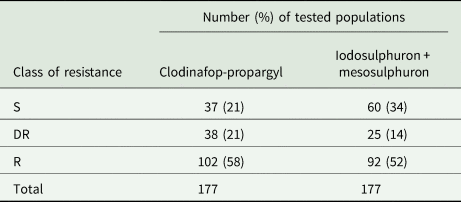
Susceptible (S): 0%, Development of resistance (DR): 1–20% and resistant (R): >20% (Llewellyn and Powles, Reference Llewellyn and Powles2001).
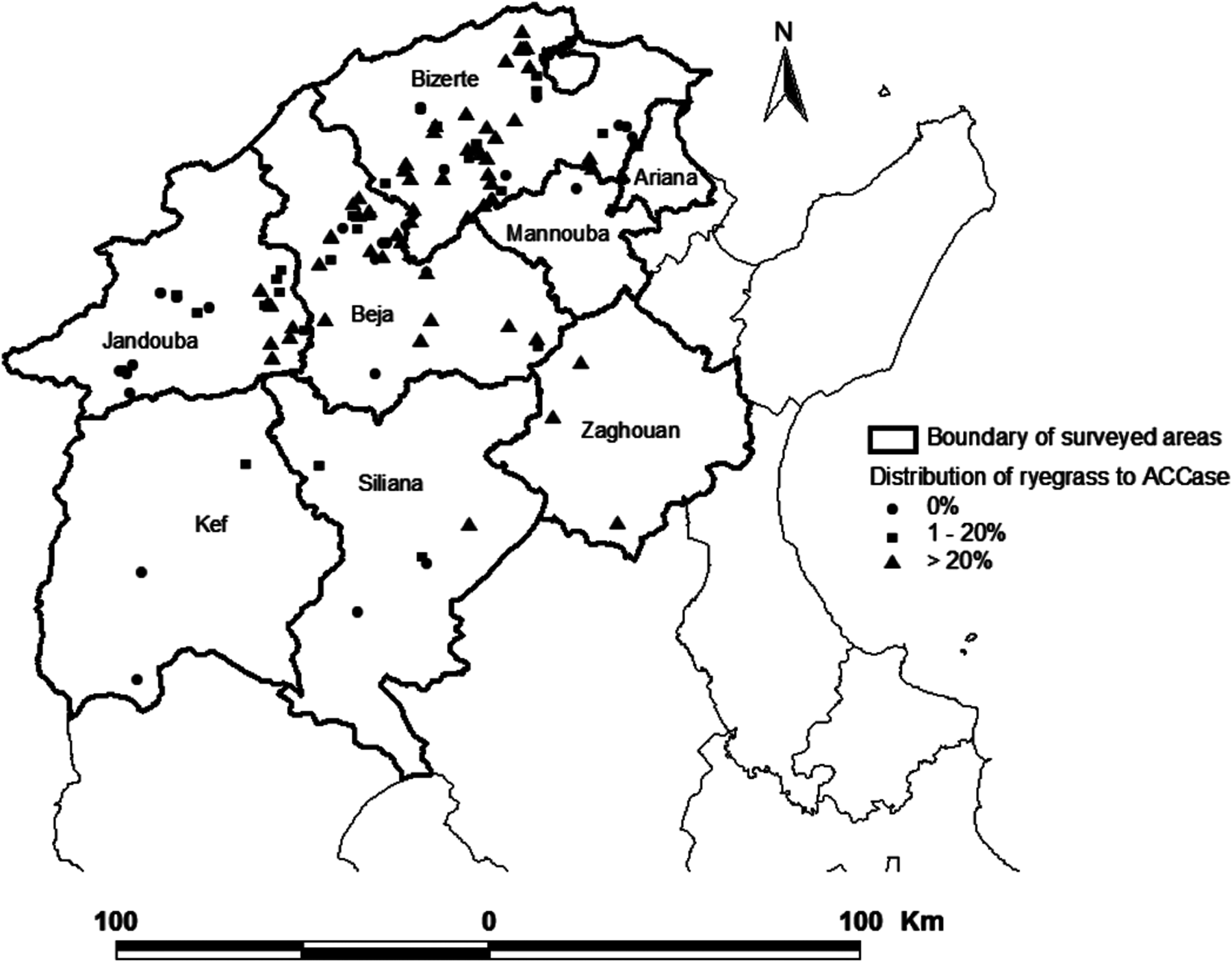
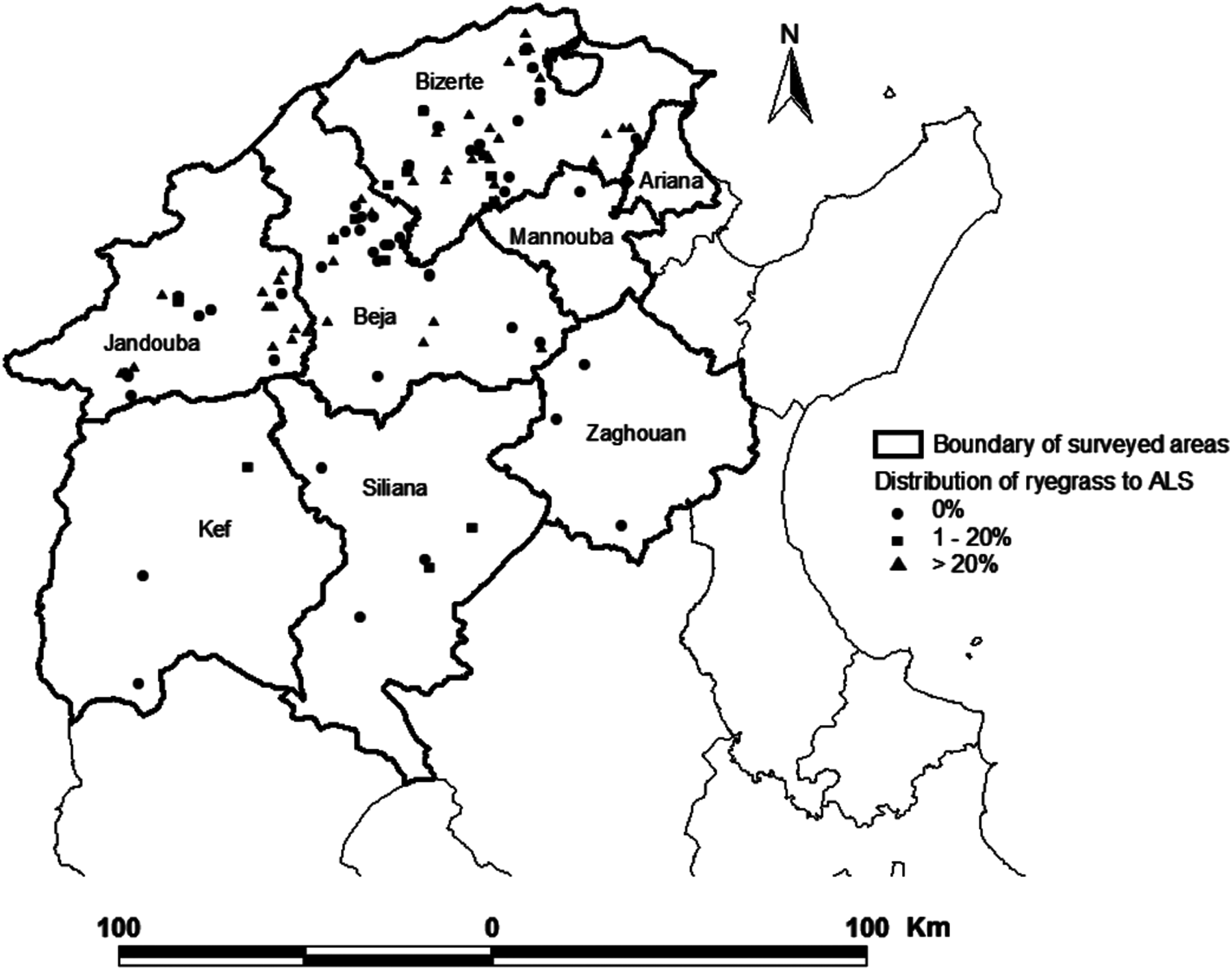
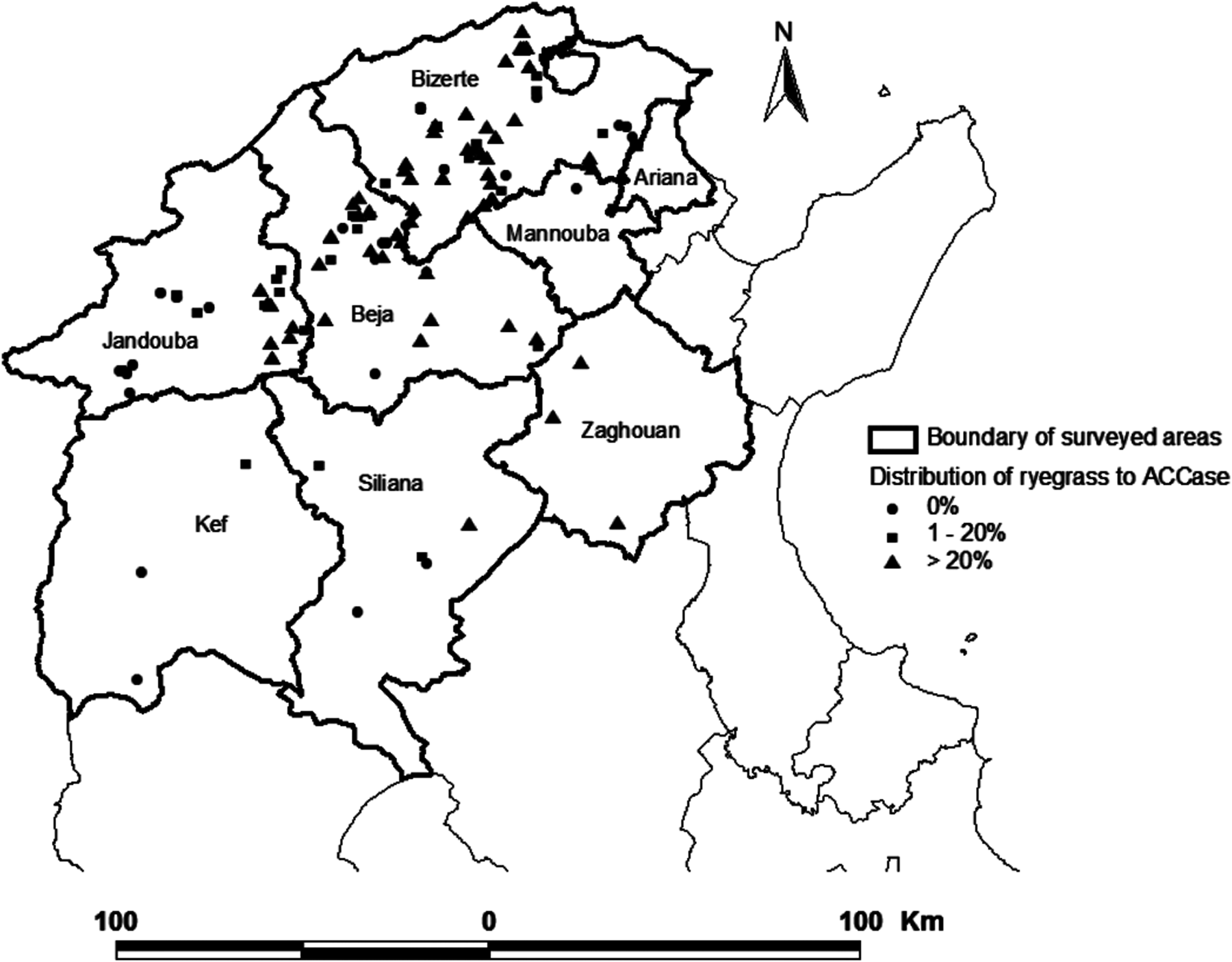
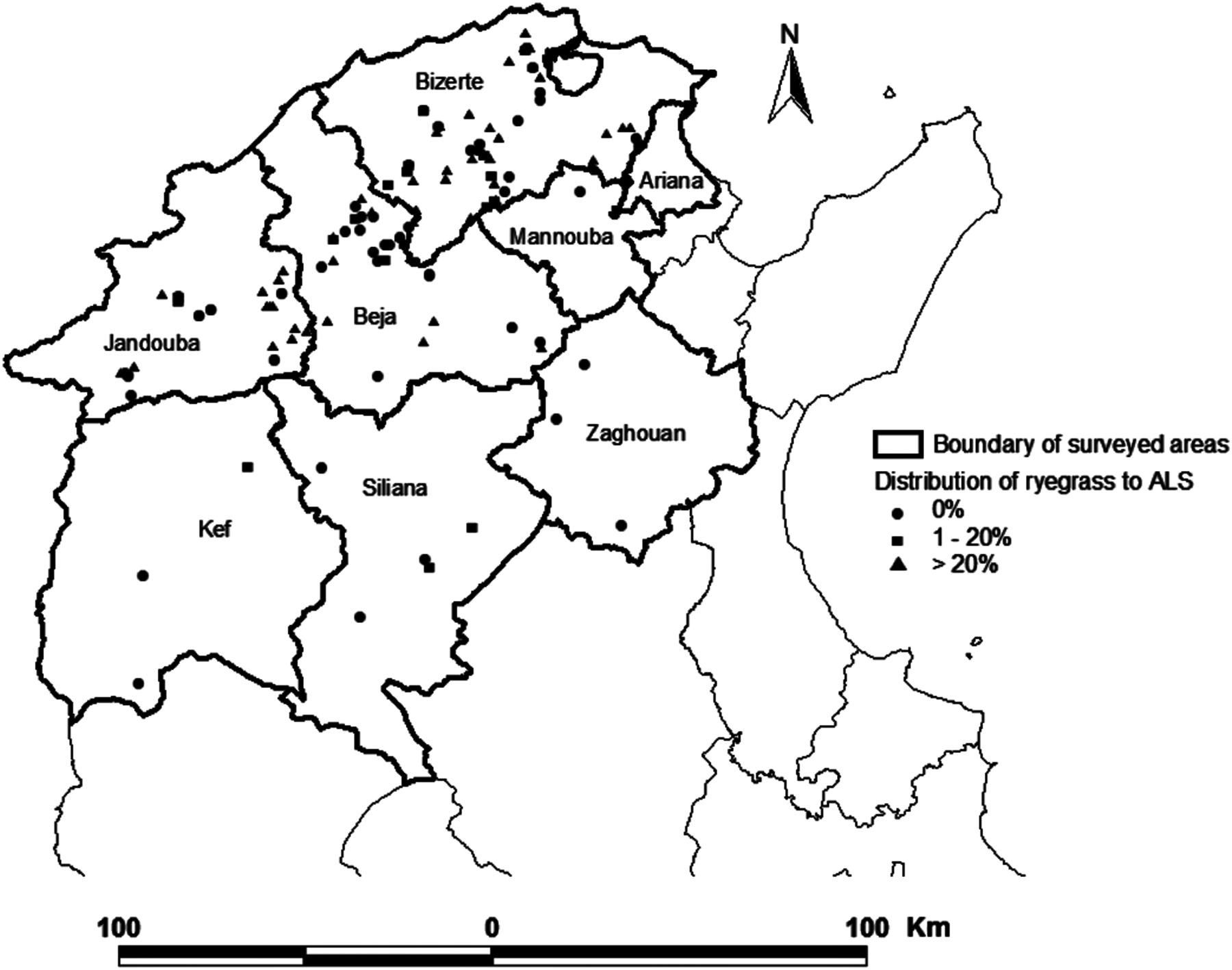
The distribution patterns of the herbicide resistant populations classified as resistant (>20% survival) to clodinafop-propargyl identified that there were higher frequencies of resistant populations occurring in the governorates of Bizerte and Beja than in Jendouba. In contrast, the distribution of ryegrass populations DR (1–20% survival) and susceptible (0% survival) was higher in Jendouba than in Beja and Bizerte (Fig. 2). Likewise, the distribution patterns of populations resistance to the ALS-inhibiting herbicide iodosulphuron + mesosulphuron was much more developed in Bizerte and Jendouba than in Beja. In contrast, the distribution of ryegrass populations DR was higher in Beja and Bizerte than in Jendouba. The distribution patterns of susceptible populations to iodosulphuron + mesosulphuron was higher in Beja and Jendouba than in Bizerte (Fig. 3).
Distribution of rigid ryegrass populations that are resistant, DR and susceptible to the ACCase-inhibiting herbicide.
Distribution of rigid ryegrass populations that are resistant, DR and susceptible to the ALS-inhibiting herbicide.
The results showed also that 54% of the Bizerte resistant populations displayed levels of resistance higher than 81% to clodinafop-propargyl and higher than Beja and Jendouba. However, 43% of the Beja and Jendouba resistant populations displayed levels of resistance higher than 81% to iodosulphuron + mesosulphuron and higher than Bizerte.
Multiple and cross resistance to ACCase and ALS-inhibiting herbicides
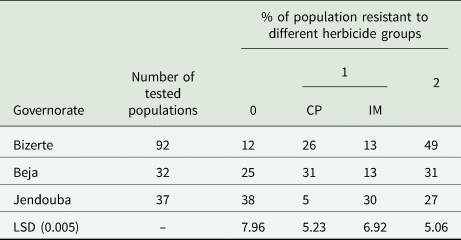
The results revealed diverse patterns of cross and multiple resistance observed in tested ryegrass populations randomly collected from major wheat growing areas in north of Tunisia (Table 3). About 40% of ryegrass populations displayed resistance to the two herbicide modes of action tested (ACCase and ALS inhibitors). Ryegrass populations showing combined resistance to clodinafop-propargyl and iodosulphuron + mesosulphuron varied among regions with higher frequencies recorded in Bizerte (49%) than in Beja and Jendouba (Table 3).
Frequency (%) of rigid ryegrass populations with resistance to zero, one and two herbicides in the major cereal-growing governorates
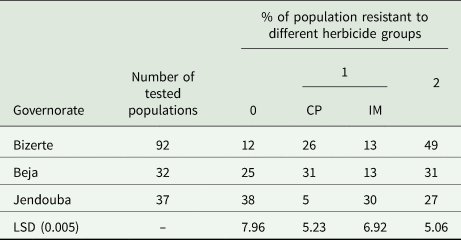
CP, clodinafop-propargyl; IM, iodosulphuron + mesosulphuron.
Thirty-nine of the ryegrass populations randomly collected from the region of Bizerte were also screened to pinoxaden, 23% (nine samples) were susceptible to all three herbicides, 26% were resistant to one herbicide (clodinafop – 5 samples; pinoxaden – 1; iodosulphuron + mesosulphuron ‘−4’), 28% (11) displayed resistance to both pinoxaden and clodinafop-propargyl, 26% (10) exhibited resistance to both pinoxaden and iodosulphuron + mesosulphuron and 23% (9) were also resistant to all three herbicides.
Discussion
This large scale study is the first of its kind in view of investigating the distribution and frequency of resistance to ACCase- and ALS-inhibiting herbicides in relevant cereal-growing regions in Tunisia. Results of the resistance screening have shown that more than 60% of ryegrass populations have evolved herbicide resistance to the two most commonly employed ACCase- and ALS-inhibiting herbicides to combat grass weeds in cereal crops in Tunisia. Considering the impact of resistance on cereal production, testing for resistance using the RISQ® test could be a very useful management tool for Tunisian growers to rapidly detect resistant populations and make rapid decisions for the implementation of appropriate weed management options in the region.
Worldwide, the number of weed species evolving resistant to the ACCase-inhibiting herbicides is increasing (Heap, Reference Heap2017). In the cropping belt of Western Australia, resistance to the ACCase-inhibiting diclofop-methyl herbicide was highly prevalent within rigid ryegrass populations. Owen et al. (Reference Owen, Martinez and Powles2014) found that 96% of screened populations have plants resistant to the diclofop-methyl and that resistance level for the ACCase-inhibiting herbicides has increased dramatically compared to the previous survey conducted in the region (Owen et al., Reference Owen, Walsh, Llewellyn and Powles2007).
The ACCase-inhibiting herbicides have been largely adopted by Tunisian farmers to control grass weeds in wheat crops during the last 30 years. After interviewing farmers, Menchari et al. (Reference Menchari, Annabi, Bahri and Latiri2014) found that herbicide applications to control grass weeds represent about 20% of the treatments carried out in the regions of Bizerte and Beja, with clodinafop-propargyl and iodosulphuron + mesosulphuron being the two herbicides most commonly used to control grass weeds in wheat. Additionally, despite the increase of herbicide applications in cereal crops in Tunisia during the last two decades, the number of herbicide modes of action available remains limited. The continuous use of selective herbicides in mono-cropping systems has increased the selection pressure for these herbicides, resulting in the widespread evolution of rigid ryegrass populations resistant to ACCase-inhibiting herbicides.
With the introduction of the SU herbicides in 1999, a shift to the use of ALS-inhibiting herbicides to control grass weeds in cereal crops was observed in several cereal-growing regions as this group of herbicides has a broad spectrum of action and was very effective at very low rates of application (Délye et al., Reference Délye, Boucansaud, Pernin and Couloume2008). Our results showed that, after many years of use, rigid ryegrass resistant to ALS inhibitors has also became a common problem in cereals in northern of Tunisia (Table 2). In UK, resistance to iodosulphuron + mesosulphuron was detected not long after its introduction in 2003 and was confirmed on more than 700 farms in 27 counties by 2013 (Hull et al., Reference Hull, Tatnell, Cook, Beffa and Moss2014).
Given the differences in the intensity of the cropping systems and the history of the herbicide use in the cereal-growing region in Tunisia, the frequencies of ryegrass populations resistant to the tested ACCase and ALS-inhibiting herbicides varied among the surveyed regions (Figs 2 and 3). The study revealed variations in ryegrass resistance to the clodinafop-propargyl to among the different regions studied. More populations are resistant to ACCase-inhibiting herbicides in the two governorates of Bizerte (69%) and Beja (62%) than the governorate of Jendouba (33%). Weed grass control in cereals has been dominated by ACCase-inhibiting herbicides in Bizerte and in Beja. Ryegrass populations resistant to the ALS-inhibiting herbicide was much more developed in Bizerte (60%) and Jendouba (57%) than in Beja (44%). The variations in ryegrass resistance to the tested herbicides among the different regions may reflect differences in cropping and, therefore, herbicide use history.
Surveys conducted in the fields where ryegrass populations were collected showed high frequencies of application of clodinafop-propargyl, up to 4 consecutive years either alone or in combination with another herbicide of the same group in Beja and Bizerte whilst iodosulphuron + mesosulphuron was more frequently used in Jendouba (unpublished data). Tardif et al. (Reference Tardif, Holtum and Powles1993) reported that resistance to ACCase-inhibiting herbicides could appear after a period of selection as short as 3 years. It is worthwhile mentioning that the high infestations of cereal crops by brome grass that occurred in these regions at the early of 2000s (Souissi et al., Reference Souissi, BelhadjSalah and Latiri2001) have resulted in an extensive use of the sulphosulphuron, an ALS-inhibiting herbicide, to combat the weed, which may explain the faster evolution of the ALS resistance observed in Jendouba compared to the ACCase resistance. The first case of ryegrass resistant to clodinafop-propargyl was detected in 1996 in a population collected from the wheat field at Bizerte (Gasquez, Reference Gasquez2000). Other studies have subsequently confirmed this resistance (Souissi et al., Reference Souissi, Labidi and Ben Hadj Salah2004). A previous study conducted in 2009 on rigid ryegrass populations collected from Bizerte revealed also the prevalence (94%) of populations resistant to clodinafop-propargyl but a DR to iodosulphuron + mesosulphuron (Hajri et al., Reference Hajri, Menchari and Ghorbel2015). In the present study, 31% of the populations from Bizerte displayed high levels of resistance to iodosulphuron + mesosulphuron, up to 81%, reflecting the rapid evolution of resistance to ALS-inhibiting herbicides. The high level of survivors, along with the observed increase indicates the continued use and reliance on iodosulphuron + mesosulphuron and other ALS-inhibiting herbicides for weed control in Tunisian crop production systems.
Multiple and cross resistance in rigid ryegrass has been well documented (Matthews et al., Reference Matthews, Holtum, Liljegren, Furness and Powles1990; Neve and Powles, Reference Neve and Powles2005). As tested ryegrass populations were independently treated with two herbicide modes of action, the extent of cross and multiple resistances could be determined. Results revealed diverse patterns of cross and multiple resistance observed in tested ryegrass populations. The resistance to clodinafop-propargyl and iodosulphuron + mesosulphuron varied among regions and higher frequencies were recorded in Bizerte than in Beja and Jendouba.
Both target site resistance (TSR) and non-target site resistance (NTSR) mechanisms are involved in Lolium spp. resistance to the ACCase- and ALS-inhibiting herbicides (Powles and Yu, Reference Powles and Yu2010). These mechanisms selected by ACCase inhibitors can confer cross-resistance to pinoxaden. For instance, resistance selected by the fenoxaprop ACCase inhibiting herbicide conferred cross-resistance to pinoxaden (Yu et al., Reference Yu, Collavo, Zheng, Owen, Sattin and Powles2007; Petit et al., Reference Petit, Bay, Pernin and Délye2010). However, the low frequency of resistance to pinoxaden solely (one population) suggests that resistance to pinoxaden may be the result of cross-resistance selected by other ACCase inhibiting herbicides or other modes of action used in the past. The low frequency of pinoxaden resistance also showed a comparatively low use of this recently released herbicide.
In a study conducted across grain cropping areas in Southern Australia, Malone et al. (Reference Malone, Boutsalis, Baker and Preston2014) showed that target site mutation is a common mechanism of resistance of L. rigidum to the ACCase inhibitors with the substitutions at positions 1781, 2041 and 2078 being the most common. The two mutant resistant alleles L1781 and G2078 confer cross resistance patterns to all ACCase-inhibiting herbicides (Powles and Yu, Reference Powles and Yu2010). Similar mutations were detected in Tunisian ryegrass populations (Hajri et al., Reference Hajri, Menchari and Ghorbel2015). The cross resistance to pinoxaden observed in some populations collected from the region of Bizerte could be explained by the presence of such alleles.
Likewise, in most of the initially documented cases, resistance to ALS inhibiting herbicides occurs as the result of the altered target site (Saari et al., Reference Saari, Cotterman, Thill, Powles and Holtum1994; Tranel and Wright, Reference Tranel and Wright2002) although metabolism-based resistance to ALS herbicides has also been reported (Powles and Yu, Reference Powles and Yu2010; Délye, Reference Délye2013). ALS TSR has been recorded in plants treated with iodosulphuron + mesosulphuron from populations of black grass (Alopecurus myosuroides) randomly collected in England (Moss et al., Reference Moss, Hull, Marshall and Perryman2014). In Tunisia, the P197 and W574 ALS mutant resistant alleles were detected in ryegrass populations collected from Bizerte and partly contribute to multiple resistance (Hajri et al., Reference Hajri, Menchari and Ghorbel2015). However, it should be emphasized that there is growing evidence NTSR is also widespread and is considered as the predominant mechanism of resistance to the ACCase and ALS-inhibiting herbicides in grasses (Powles and Yu, Reference Powles and Yu2010; Délye, Reference Délye2013). NTSR is very common and seems to be the main mechanism conferring resistance in blackgrass and Italian ryegrass (L. multiflorum) in United Kingdom (Hull et al., Reference Hull, Tatnell, Cook, Beffa and Moss2014). A study conducted by Duhoux and Délye (Reference Duhoux and Délye2013) illustrated the complexity of investigating the genetic basis of NTSR. The adverse impact of such mechanism of resistance on weed management is considerable since the associated cross-resistance to herbicides with different modes of action is unpredictable. This would have a significant implication on ryegrass management in cereal crops as the efficacy of others herbicides, even those which are newly released, may be compromised.
The results showed that herbicide resistance in rigid ryegrass is widespread and is increasing in major cereal-growing regions of Tunisia. Growers must be alerted to the problem as when they are faced with multiple ACCase/ALS resistance, weed management will be more difficult and costly. Indeed, with the release of prosulphocarb (Anonymous, 2009), a pre-emergent herbicide from the thiocarbamate family, weed control in cereal crops is relying more on this pre-emergent herbicide, applied alone or in mixture in order to address the issue of resistance to the post-emergent ACCase and ALS herbicides. Future control options that integrate alternative methods to reduce dependency on herbicides are needed to manage ryegrass populations and prevent further evolution of herbicide resistant ryegrass populations in cereal crops in Tunisia.
In this study, resistance was detected based on the Syngenta RISQ® test. Several other methods are available for documenting for resistance to herbicides. These comprise of trials on whole plants conducted in the field or in greenhouses to assessment via molecular or seed bioassays in laboratory conditions (Beckie et al., Reference Beckie, Heap, Smeda and Hall2000; Burgos et al., Reference Burgos, Tranel, Streibig, Davis, Shaner, Norsworthy and Ritz2013). Although whole-plant assays provide reliable results irrespective of the mechanism involved, it is time and space consuming. The Syngenta RISQ® test used in our study has the advantage to be cost-effective and does not require the use of glasshouse or herbicide sprayer and is suited for testing a large number of populations, with results generated within 2 weeks. Given the impact of resistance evolution on cereal production in Tunisia, the RISQ® test could be a very useful tool for Tunisian growers to rapidly detect resistant populations and to take rapid decisions for the implementation of appropriate methods to control the weed.
Conclusion
The results showed that resistance in rigid ryegrass in Tunisia is widespread and is present in several regions. The Syngenta RISQ® test was used in this study to detect the resistance in major cereal-growing governorates in the north of the country. The distribution pattern of collected ryegrass populations indicated there were higher frequencies of resistant and DR populations to clodinafop-propargyl than to iodosulphuron + mesosulphuron. Results also indicated the current and future difficulties that cereal growers are facing to control ryegrass populations within cropping systems where weed management is mainly relying on herbicides. Therefore, future control of ryegrass needs to incorporate alternative control measures, either in the management of herbicide resistant populations or in an effort to avoid the evolution of herbicide resistance.
Acknowledgements
The authors would like to thank Halim Bel Haj Salah (former director general of INCG), Oussama KHERIJJI (director general of INCG) and Hichem OUNALLAH (director general of Bioprotection) for their help and support. Special thanks to Ahlem Matmati at the weed science laboratory at the National Institute of agronomy of Tunisia (INAT) and Hechmi Mejri at the farm Fritissa for their technical assistance.
Financial support
Financial support from the National Institute of Field Crops (INGC), Bioprotection and Syngenta for their financial support of this study is gratefully acknowledged.
Conflict of interest
None.
Ethical standards
Not applicable.