
Introduction
Technologic breakthroughs across multiple fields are envisioned with nanocrystals (NCs), owing to the novel physicochemical properties of NCs uniquely suited for several existing or new technologies.[Reference Alivisatos1–Reference Talapin, Lee, Kovalenko and Shevchenko4] In particular, size-dependent optical properties of colloidal semiconductor NCs in quantum confinement regime, especially referred as quantum dots (QDs), show much promise in areas such as bio-imaging,[Reference Bruchez, Moronne, Gin, Weiss and Alivisatos5, Reference Kairdolf, Smith, Stokes, Wang, Young and Nie6] solar energy conversion,[Reference McDonald, Konstantatos, Zhang, Cyr, Klem, Levina and Sargent7–Reference Truong, Hoang, Trinh, Pham, Smith and Park10] photocatalysis,[Reference Kang, Tsang, Wong, Zhang and Lee11–Reference Sung, Lim, Koh, Min, Pyun and Char14] laser, and display devices.[Reference Shirasaki, Supran, Bawendi and Bulović15–Reference Lee, Kim, Koo, Kim and Kim19] Wet chemical synthesis has become a mainstream protocol for the growth of QDs, because colloidal growth gives rise to relative ease in terms of scalability. At the core of wet chemical synthesis of QDs is arrested precipitation, where reactive molecular precursors decompose to form QDs in an organic solvent assisted by organic ligands bound at surface that effectively control the size of QDs.[Reference Rossetti, Ellison, Gibson and Brus18] A big breakthrough in this approach came in 1993 when Murray et al. reported the synthesis of CdE (E = S, Se, or Te) QDs by injecting dimethylcadmium and trioctylphosphine chalcogenides as precursors into a hot trioctylphosphine oxide.[Reference Murray, Norris and Bawendi20] Injection of the reactive precursors into the coordinating solvent at an elevated temperature resulted in spontaneous nucleation and controlled growth of CdE QDs. The unprecedented monodispersity underlined the importance of precursors and their decomposition in the colloidal growth of QDs.
As for colloidal QDs, success in finding experimental conditions for precursor decomposition enabled the colloidal synthesis of highly monodisperse CdSe or PbSe QDs, in which the bonding within the crystals shows a relatively more ionic nature. The understanding allowed for the design of heterostructured QDs such as core/shell structure[Reference Reiss, Protiere and Li21, Reference Jeong, Park, Change, Cho, Kim, Kim, Char, Cho, Klimov, Park, Lee and Bae22] and anisotropic NCs.[Reference Peng, Manna, Yang, Wickham, Scher, Kadavanich and Alivisatos23–Reference Seo, Heo, Lim and Char26] The development in II–VI and IV–VI compound QDs has driven the scientific community to push the envelope into other semiconductor compounds, such as InP, CuInSe2, or Si, to name a few.[Reference Lee, Hanrath and Korgel27–Reference Aldakov, Lefrançois and Reiss29] In fact, the impetus to address toxicity issues in the case of CdSe has resulted in the wildly successful launch of commercial product based on InP QDs.[Reference Gensch, Baron and Blepp30] Because InP crystals have more covalent nature in bonding than CdSe, the crystal growth may take place in very different reaction conditions. In this sense, precursor decomposition and subsequent supply of adatom in colloidal reaction poses a new challenge in III–V or IV group QDs.
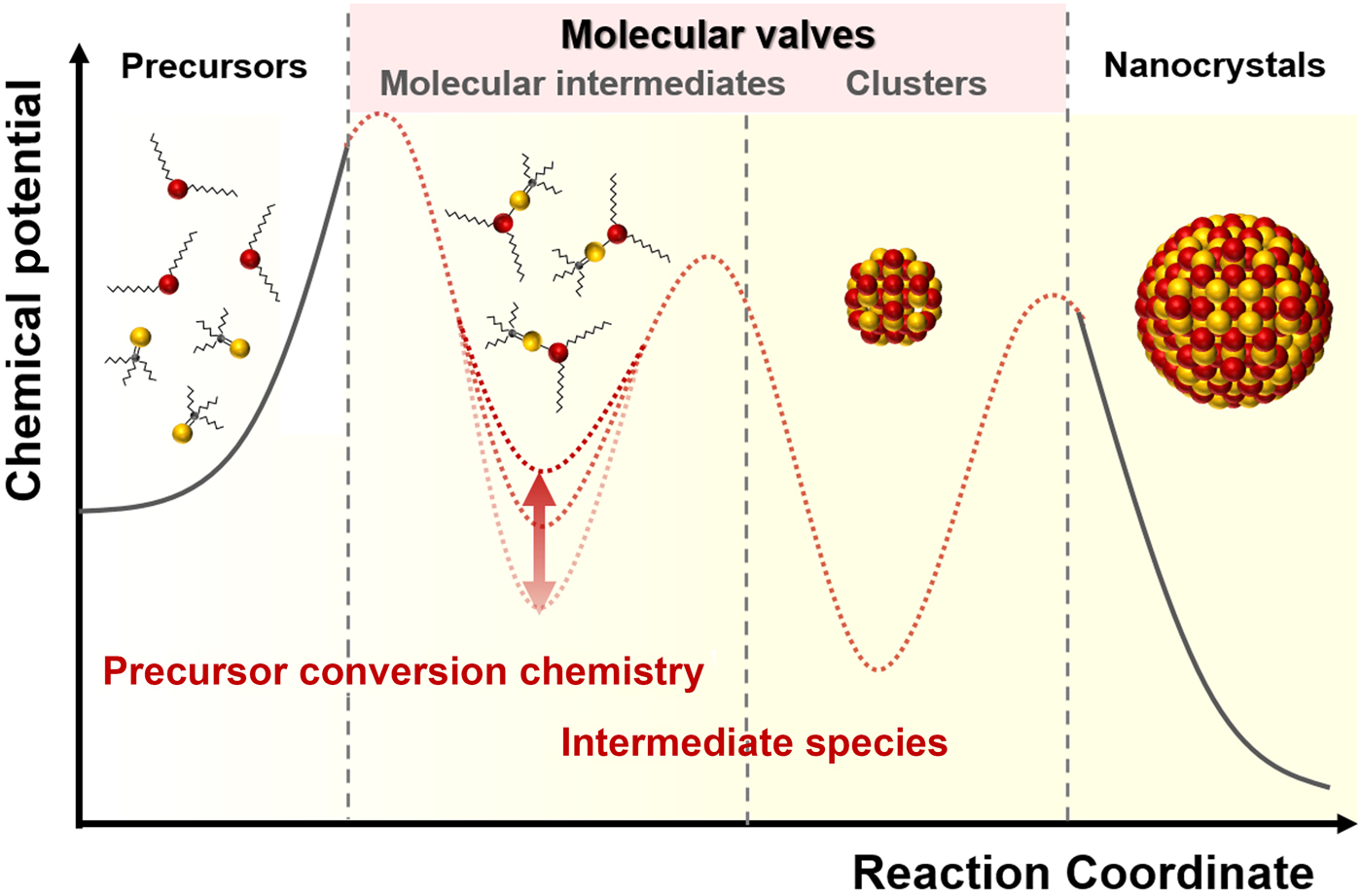
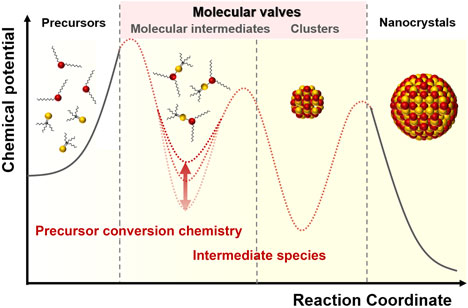
In this paper, we review important landmark achievements in the field of colloidal synthesis of QDs, in the context of precursor decomposition and intermediate species. Based on a premise that precursor decomposition results in a relatively wide swing in terms of overall growth kinetics (Fig. 1), we cover the progress in the colloidal growth of QDs, ranging from II–VI and IV–VI compounds, e.g., CdSe and PbSe, to III–V materials, e.g., InP. As a result of precursor decomposition, molecular active species are formed and often produce relatively stable clusters. Because these intermediate species relate directly to the growth kinetics of colloidal QDs, the understanding of their formation and interaction has been key to a strategy for designing monodisperse QDs and heterostructured QDs. We discuss recent progress in the study of magic-sized clusters (MSCs) and their implications in the growth of QDs, e.g., CdSe and InP.
Schematic description of chemical potential energy of reaction system during the synthesis of NCs.

Precursor conversion chemistry
Choice of precursors
Organometallic chemicals have been used for precursors for the supply of Cd in CdSe or CdS QDs.[Reference Murray, Norris and Bawendi20, Reference Peng and Peng31] Decomposition of the precursors in the presence of capping ligands has constituted a concept of arrested precipitation, in which QDs crystallize in a confine of inverse micelle.[Reference Kortan, Hull, Opila, Bawendi, Steigerwald, Carroll and Brus32] The growth conditions for the reverse micelle approach poses a limitation for the crystallinity and size uniformity of QDs. Bawendi and coworkers demonstrated successful growth of highly crystalline and monodisperse CdE (E = S, Se, Te) QDs, in which high reactivity of dimethylcadmium served as a key component.[Reference Murray, Norris and Bawendi20] This seminal report received a great deal of accolades because of unprecedented quality of resulting nanoparticles, from both crystallinity and monodispersity standpoints. However, the use of dimethylcadmium in and of itself causes a roadblock for scale-up of the synthetic procedures, because the chemical is so reactive and pyrophoric as to require extreme caution in dealing with it. Peng and Peng prepared Cd-carboxylate and Cd-phosphonate derived from the reaction of relatively benign CdO and carboxylic acids in the synthesis of CdE QDs.[Reference Peng and Peng31] The resulting nanoparticles were uniform in size, lifting the need of rigorous post-synthetic size-selection process. This example is an accurate reflection of a notion that precursor decomposition plays a pivotal role in QD growth and previous studies on CdSe QDs show that finding a right recipe for QD growth is nearly all about identifying right precursors.
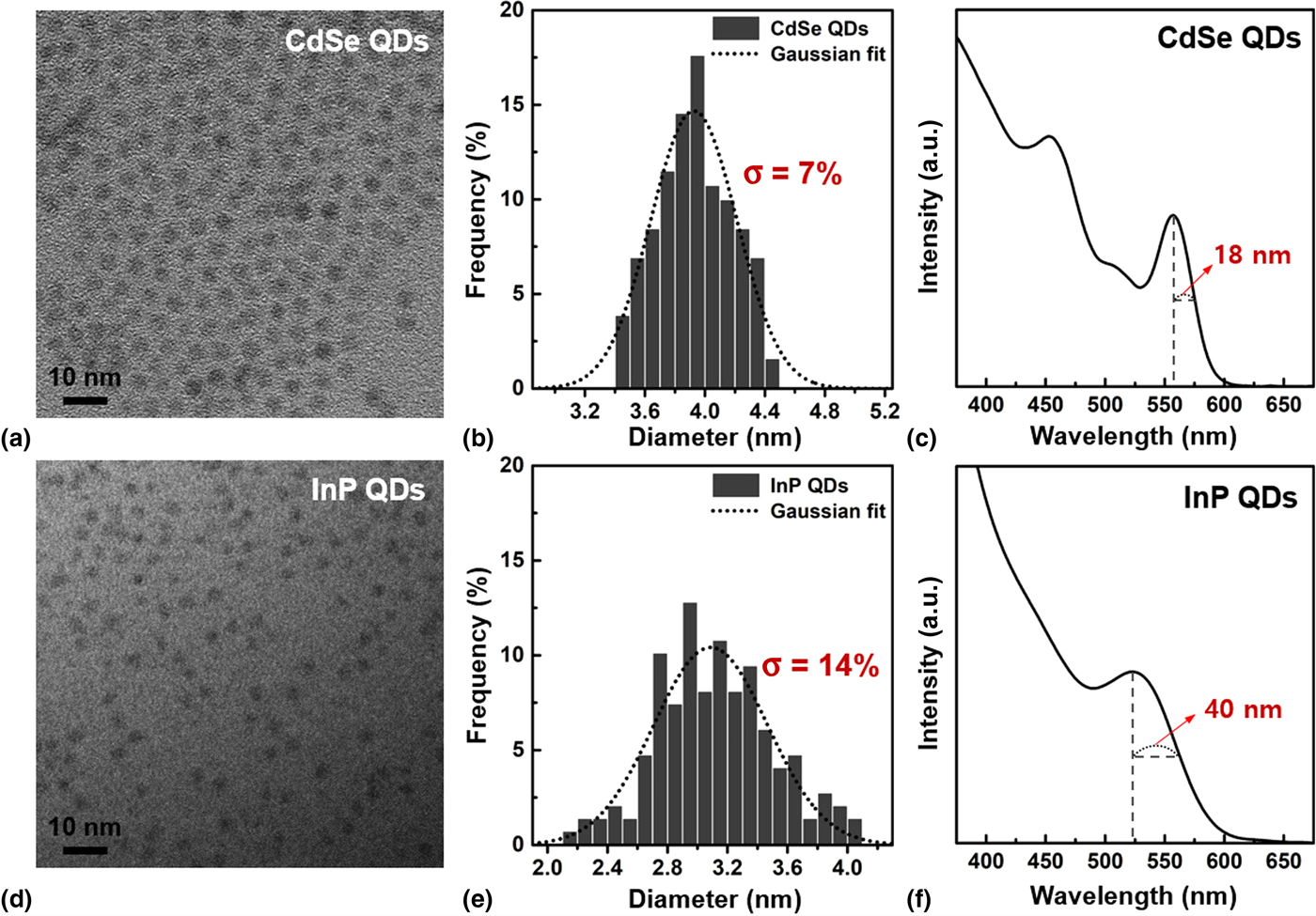
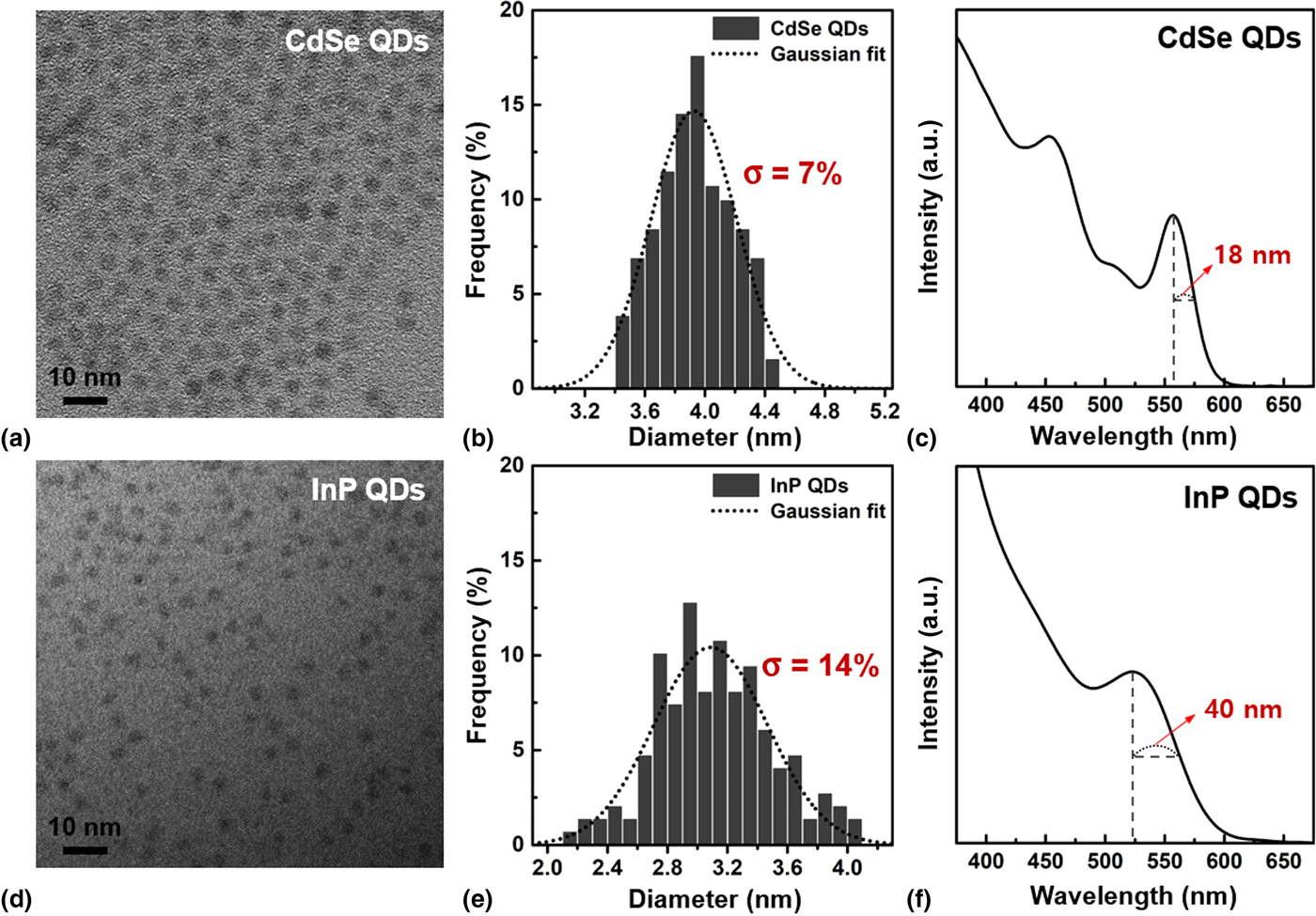
Finding a right combination of precursors has been equally important in the colloidal of III–V QDs. Guzelian et al. reported the synthesis of colloidal InP QDs, based on Well's dehalosilylation reaction[Reference Wells, Aubuchon, Kher, Lube and White33] of InCl3 and P(SiMe3)3 in TOPO accompanied by size-selective precipitation,[Reference Guzelian, Katari, Kadavanich, Banin, Hamad, Juban, Alivisatos, Wolters, Arnold and Heath34] following the first report by Micic et al.[Reference Micic, Sprague, Curtis, Jones, Machol, Nozik, Giessen, Fluegel, Mohs and Peyghambarian35] Again, the high reactivity of P(SiMe3)3 played an important role in the growth of highly crystalline InP QDs, which necessitates highly reactive precursors due to their covalency in bonding as a III–V compound. Battaglia and Peng observed that the use of In-carboxylate, in lieu of InCl3, and non-coordinating solvent appeared to accelerate the synthesis, with reaction time reduced from days in the case of InCl3 to minutes when using In-carboxylate.[Reference Battaglia and Peng36] Moreover, similar to the case of Cd-carboxylate in the growth of CdSe QDs, use of In-carboxylate enabled preparing monodisperse ensemble of InP QDs without size-selective precipitation. However, the high reactivity of P(SiMe3)3 gives rise to side effects in terms of size distribution. In spite of the contribution to crystallize high-quality InP QDs combined with In-carboxylate, the extremely rapid decomposition of P(SiMe3)3 is likely to be immoderate for sufficient supply of P during QDs growth.[Reference Allen, Walker and Bawendi37] Indeed, as exemplified in Fig. 2, InP QDs synthesized from In-carboxylate and P(SiMe3)3 typically exhibit poor size distribution compared with CdSe QDs synthesized from Cd-carboxylate and TOP-Se. Besides, P(SiMe3)3 is pyrophoric, and alternative P sources or a procedure to mitigate the reactivity of P(SiMe3)3 have been investigated.
TEM images (a, d), size histograms (b, e), and absorption spectra (c, f) of CdSe and InP QDs synthesized using recipe modified from Refs. Reference Peng and Peng31 and Reference Battaglia and Peng36.
Decomposition of precursors
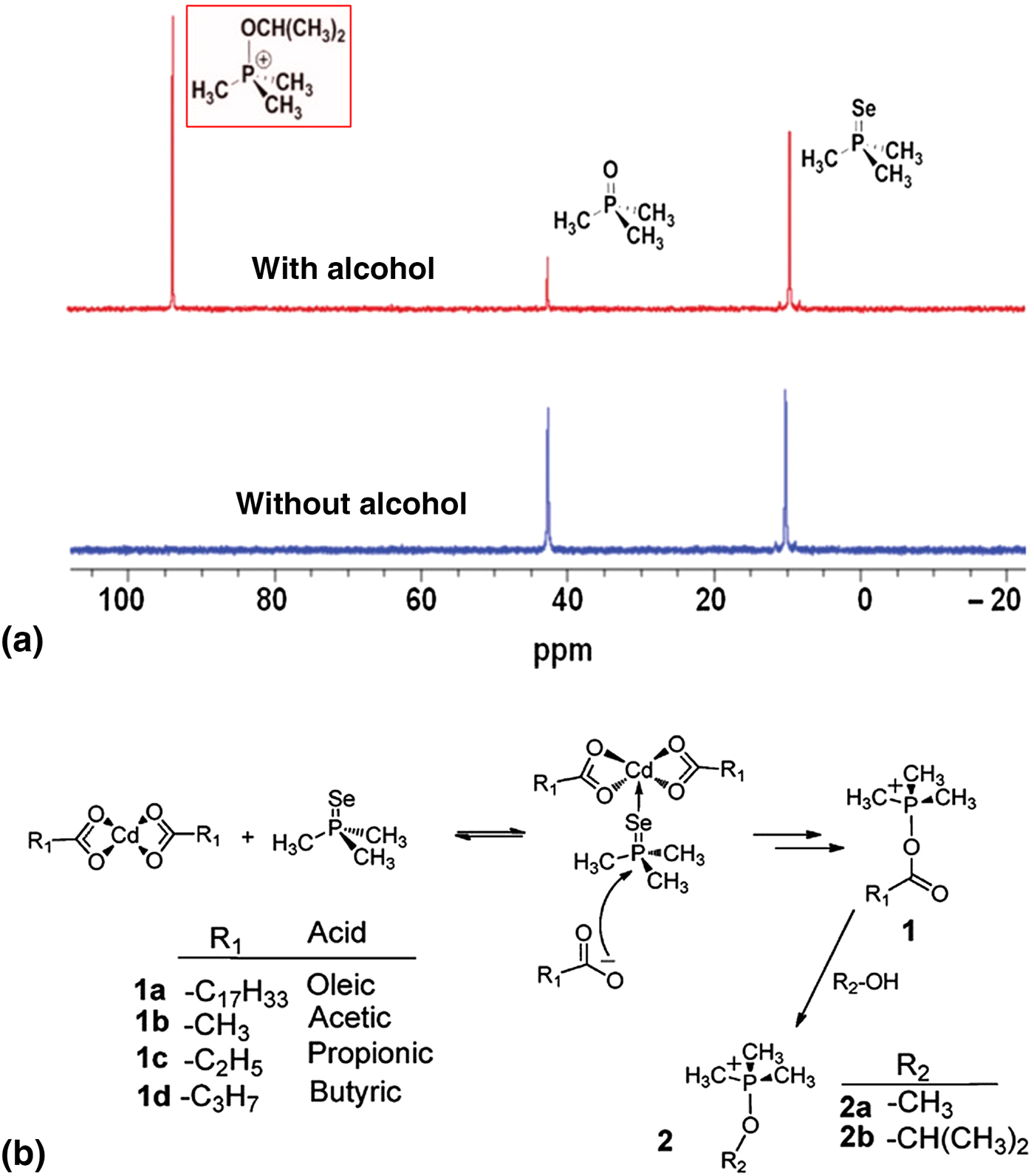
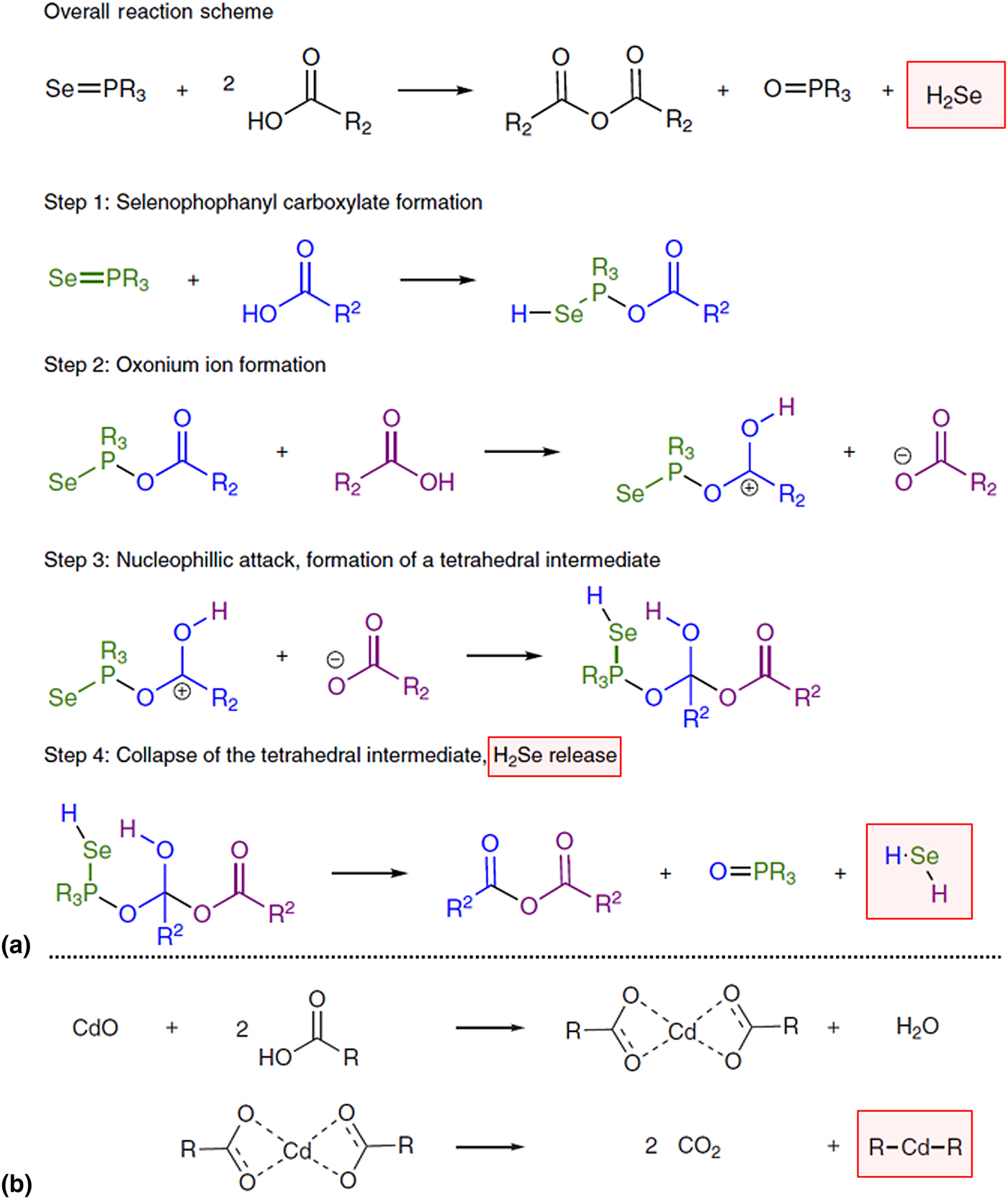
Typically, precursors for anionic species (e.g., Se or P) are injected to a mixture containing precursors for cationic species (e.g., Cd or In) in solvent, whether the synthesis of QDs in colloidal reaction is based on hot-injection or heat-up methods. Controlling the type or amount of precursors for anionic species has turned out to affect the properties of NCs significantly.[Reference Vo, Dung, Cho and Kim38, Reference van Embden, Chesman and Jasieniak39] Therefore, the precursor decomposition chemistry for anionic sources deserves intensive investigation, and in fact, the decomposition pathways and reaction rates have been studied in the context of relevance to the nucleation and growth kinetics. For the synthesis of II–VI and IV–VI QDs, various chalcogen sources have been tested: tertiary alkyl- or arylphosphine chalcogenides,[Reference Murray, Norris and Bawendi20, Reference Du, Chen, Krishnan, Krauss, Harbold, Wise, Thomas and Silcox40] selenium oxides,[Reference Chen, Chen, Yang, Lynch, Wu, Zhuang and Cao41] seleno- or thiourea,[Reference Pan, Wang, Jiang, Ji and An42, Reference Campos, Hendricks, Beecher, Walravens, Swain, Cleveland, Hens, Sfeir and Owen43] alkylthiols,[Reference Jun, Jang and Chung44] and elemental chalcogens.[Reference Joo, Na, Yu, Yu, Kim, Wu, Zhang and Hyeon45, Reference Yang, Wu, Williams and Cao46] Among these precursors, tertiary phosphine chalcogenides have been the most heavily used for the growth of II–VI and IV–VI QDs.[Reference van Embden, Chesman and Jasieniak39] Despite the frequent use, the decomposition chemistry of tertiary phosphine chalcogenide in the presence of metal carboxylate had not been elucidated until recently. García-Rodríguez and Liu proposed that P=Se bond in trialkylphosphine selenide is cleavaged by nucleophilic attack by carboxylate group releasing Cd–Se units and acyloxytrialkylphosphonium ions, monitored in 31P nuclear magnetic resonance (NMR) spectra with assistance from alcohols (Fig. 3).[Reference García-Rodríguez and Liu47] On a related note, Evans et al. reported that secondary phosphine impurities in tertiary phosphine is responsible for burst nucleation of PbSe QDs presenting insights into nucleation of II–VI and IV–VI QDs.[Reference Evans, Evans and Krauss48] Other studies on the decomposition of chalcogen precursors also extended the understanding on the growth of QDs on a molecular level.
(a) 31P NMR spectra showing phosphonium ion intermediate trapped by alcohol. (b) Schematic description of P=Se bond cleavage in the mixture of Cd-carboxylate and R3P-Se. Reproduced with permission from Ref. Reference García-Rodríguez and Liu47. Copyright 2012 American Chemical Society.

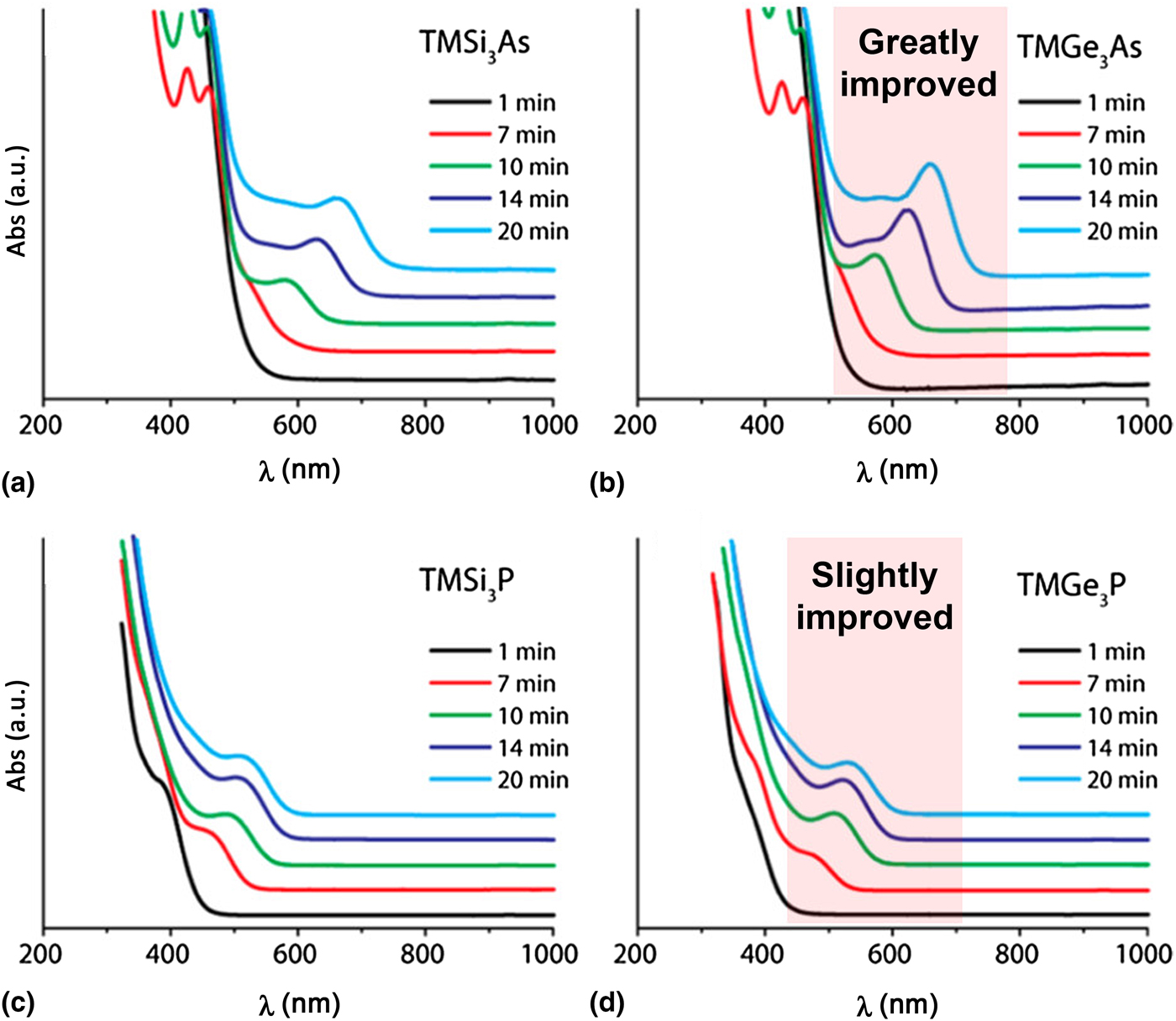
Understanding and controlling decomposition of anionic sources are also very important in the case of synthesizing colloidal QDs of III–V compounds. On the contrary to II–VI or IV–VI QDs, commercially available pnictogen precursors are relatively fewer,[Reference Tamang, Lincheneau, Hermans, Jeong and Reiss28] with the most widely employed type being P(SiMe3)3 or As(SiMe3)3. Even though these two chemicals are suitable for the synthesis of III–V QDs considering that they are reactive enough to generate QDs with high crystallinity, the high reactivity results in decomposition even at room temperature in the presence of In-carboxylate,[Reference Allen, Walker and Bawendi37] and size-focusing growth of III–V QDs is barely achieved. For this reason, researchers have tried to attenuate the reactivity by chemical modification of P(SiMe3)3. For example, Harris and Bawendi prepared P(GeMe3)3 and As(GeMe3)3 to synthesize InP and InAs QDs, where P(GeMe3)3 and As(GeMe3)3 react with In-carboxylate far more slowly than P(SiMe3)3 and As(SiMe3)3, resulting in improved size distribution, only for InAs QDs (Fig. 4).[Reference Harris and Bawendi49] In addition, P(SiMe2-tert-Bu)3[Reference Joung, Yoon, Han, Kim and Jeong50] and P[Si(aryl)3]3[Reference Gary, Glassy and Cossairt51] were used to prepare monodisperse InP QDs.[Reference Franke, Harris, Xie, Jensen and Bawendi52] Further developments on the growth chemistry of InP QDs based on P(SiMe3)3 will be discussed later.
Temporal evolution of the absorption spectra of (a, b) InAs and (c, d) InP using the V(SiMe3)3 (a, c) and the V(GeMe3)3 precursor (b, d) (V = P, As). Reproduced with permission from Ref. Reference Harris and Bawendi49. Copyright 2012 American Chemical Society.

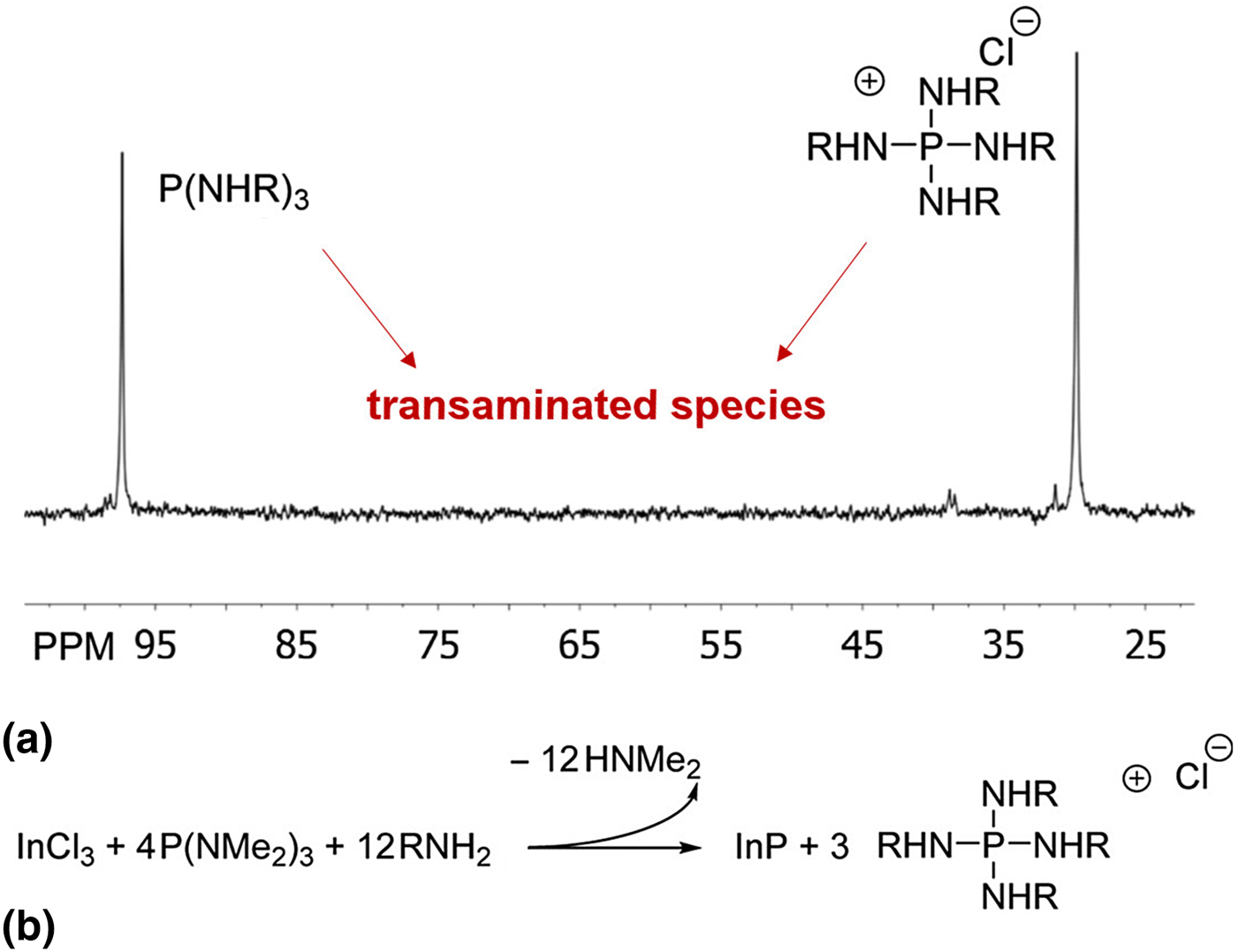
Aminophosphines [P(NMe2)3 or P(NEt2)3] are another important class among the relatively short list of precursors available for the synthesis of InP QDs. Aminophosphines have garnered attention because of the ease of handling and relatively low cost, two important features to be considered in scale-up steps.[Reference Tessier, Dupont, De Nolf, De Roo and Hens53] InP QDs synthesized using aminophosphines as a P source exhibit quality on a par with QDs prepared using P(SiMe3)3.[Reference Song, Lee, Lee, Jang, Choi, Choi and Yang54–Reference Pietra, Kirkwood, Trizio, Hoekstra, Kleibergen, Renaud, Baesjou, Manna and Houtepen57] The successful implementation of aminophosphine-based approaches has derived from a series of in-depth examination on the decomposition of P(NMe2)3, as summarized in Fig. 5.[Reference Buffard, Dreyfuss, Nadal, Heuclin, Xu, Patriarche, Mezailles and Dubertret58, Reference Tessier, Nolf, Dupont, Sinnaeve, Roo and Hens59] Basically, formation of InP units would not be favored due to a positively charged P center in P(NMe2)3. However, transamination reaction by oleylamine produces P(NHR)3 with P3− center, enabling complex formation with InCl3 and detachment of (NHR)3 by nucleophilic attack of another P(NHR)3, hence formation of InP units.[Reference Chandrasekaran, Tessier, Dupont, Geiregat, Hens and Brainis55] The transamination approach has expanded to the case of other III–V QDs and other pnictogen sources.[Reference Grigel, Dupont, De Nolf, Hens and Tessier60–Reference Panzer, Guhrenz, Haubold, Hubner, Gaponik, Eychmuller and Weigand62]
Formation of products by transamination observed by 31P NMR. (a) 31P{1H} NMR recording during the reaction between P(NMe2)3, oleylamine, and InCl3. Recorded after 12 h at 80 °C and 30 min at 180 °C. (b) Proposed chemical equation. Reproduced with permission from Ref. Reference Buffard, Dreyfuss, Nadal, Heuclin, Xu, Patriarche, Mezailles and Dubertret58. Copyright 2016 American Chemical Society.

Role of capping ligands
Organic ligands bind at dangling atoms on the surface of NCs, thereby enhancing their stability via both sterical and electrostatical passivation.[Reference Boles, Ling, Hyeon and Talapin63] During the growth of QDs, organic ligands work as a growth controller, either stabilizing molecular precursors by complex formation, and presenting physical and energetic barrier for surface reaction of monomers.[Reference Alivisatos1, Reference Yin and Alivisatos64] In the synthesis of II–VI QDs, the amount of capping ligands introduced to the reaction influences the nucleation and growth kinetics.[Reference Yu and Peng65–Reference Yordanov, Yoshimura and Dushkin67] For example, excess oleic acid increases the solubility of the precursor or monomer in non-coordinating solvent.[Reference Nakonechnyi, Sluydts, Justo, Jasieniak and Hens68] In this case, the number of nucleated seeds decreases, causing delayed nucleation burst and larger QDs.[Reference Yu and Peng65] The amount of organic ligands could also influence the growth of NCs: for example, in the case of CdSe/CdS core/shell QDs, the solubility of monomer increases with increasing oleic acid amount, suppressing homogeneous nucleation and instead promoting uniform growth of CdS shell.[Reference Nakonechnyi, Sluydts, Justo, Jasieniak and Hens68] Organic ligands binding at the surface of NCs can account for anisotropic growth. It is known that different surface energies of each facet in wurtzite CdSe and CdS binding results in one-dimensional growth along c-axis of their unit cells.[Reference Peng, Manna, Yang, Wickham, Scher, Kadavanich and Alivisatos23, Reference Puzder, Williamson, Zaitseva and Galli69] Binding of ligands can further differentiate the growth rate of facets by controlling the diffusion of monomers toward the surface of NCs.[Reference Puzder, Williamson, Zaitseva and Galli69–Reference Kim, Lee, Lee, Kim, Bae and Lee71]
Growth of III–V QDs is also very sensitive to the type and amount of organic ligands. In the case of InP QD synthesis using P(SiMe3)3, carboxylic acids react with In precursors to form In-carboxylate.[Reference Tamang, Lincheneau, Hermans, Jeong and Reiss28, Reference Kim, Steeves and Kulik72] Battaglia and Peng observed that the size distribution varies depending on the hydrocarbon chain length of carboxylic acids and their relative amount.[Reference Battaglia and Peng36] The stoichiometric amount of carboxylic acids, i.e., three equivalent to indium, turned out to result in the most uniform QD size. Later, Gary and Cossairt reported that excess acids accelerate the decomposition of P(SiMe3)3 by protonation, generating HP(SiMe3)2, H2P(SiMe3), and PH3.[Reference Gary and Cossairt66] Carboxylic acids in a bound species could also alter the growth rate: for instance, the presence of Z-type ligands, such as Zn-carboxylate, could lower the growth rate of InP QDs.[Reference Ryu, Kim, Jang, Jun, Jang, Kim and Kim73, Reference Yang, Zhao, Leck, Tan, Tang, Zhao, Demir and Sun74] Zn-carboxylate effectively passivating the surface of InP QDs reduces the critical size of InP nuclei, thus slowing growth rate.[Reference Yang, Zhao, Leck, Tan, Tang, Zhao, Demir and Sun74] We recently elucidated that Zn-carboxylate involves in the conversion of P(SiMe3)3,[Reference Ryu, Kim, Jang, Jun, Jang, Kim and Kim73] and the details will be discussed in sections to come.
Intermediate species: molecular intermediates and clusters
More often than not, molecular intermediate species and clusters formed during colloidal synthesis give clues about reaction mechanism and key design parameters for the production of high-quality QDs. Some synthetic protocols constitute the backbone of diverse growth recipes, with representative examples being combination of Cd-carboxylates and R3P-E (E = Se, S, Te) for CdE QDs or In-carboxylate and P(SiMe3)3 for InP QDs. Interestingly, only relatively recently have detailed growth mechanisms been reported based upon rigorous characterization of intermediate species. Other than precursors and NCs, species found in a reaction can be classified into two, molecular complexes and clusters, both playing pivotal roles in understanding synthetic chemistry for QDs. In this section, we introduce several recent efforts to elucidate underlying mechanism on the synthesis of QDs by characterizing intermediate molecules derived from precursor conversion and clusters.
Characterization of molecular intermediate species
Cd-carboxylate and R3P-Se or R3P-S are precursors most frequently used to synthesize CdSe, CdS, or heterostructured NCs composed of Cd chalcogenides. R3P-chalcogenides used along with Cd-carboxylate tend to show reactivity high enough to initiate burst nucleation yet low enough to modulate growth in size-focusing regime, resulting in monodisperse NCs.[Reference van Embden, Chesman and Jasieniak39] The relatively short list of good combinations of precursors has triggered the research on decomposition of these precursors and investigation of intermediate species. A notable example of research on precursor decomposition involves the study on the P=Se cleavage pathway and burst nucleation of II–VI QDs with secondary phosphine impurities.[Reference García-Rodríguez and Liu47, Reference Liu, Owen and Alivisatos75] As for the study on intermediate species, various characterization tools have been used to analyze the chemicals and clusters formed in reactions. For example, Frenette and Krauss recently reported the observation of active species in the synthesis of CdSe QDs using Cd-carboxylate and R3P-Se (Fig. 6).[Reference Frenette and Krauss76] 31P and [Reference Thuy, Reiss and Liem77]Se NMR spectroscopic results suggest that R3P-Se oxidizes reacting with carboxylic acids and generates H2Se. In addition, formation of alkylcadmium is verified by detecting CO2 derived from thermally activated decarboxylation of Cd-carboxylate occurring regardless of Se sources. It is intriguing to note that the precursors with relatively mild reactivity turn out to generate highly reactive species, e.g., H2Se and alkylcadmium. The unexpected in situ generation of active species from mild precursors would be the key to consider for designing rational synthetic protocols of II–VI QDs in a controlled manner.
(a) Reaction schemes for H2Se release by decomposition of tertiary phosphine selenide in the absence of Cd. In the steps of the proposed reaction mechanism, species with the tertiary phosphine are in green and carboxylic acids are in blue and purple. Newly formed bonds are in black. (b) Formation of cadmium carboxylate and thermal decarboxylation releasing alkylcadmium. Reproduced with permission from Ref. Reference Frenette and Krauss76 licensed under CC BY 4.0. Copyright 2017 Springer Nature.

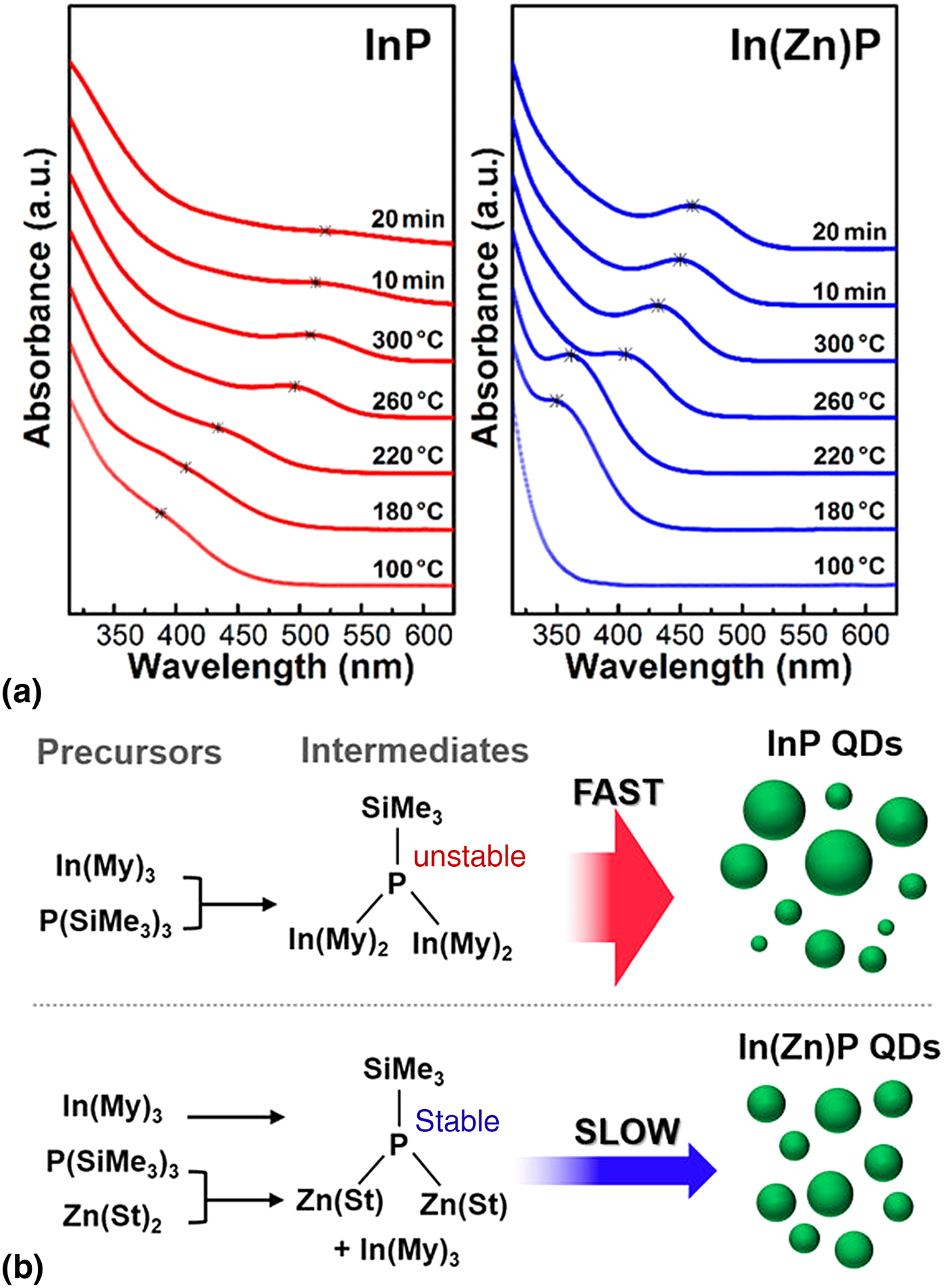
In the case of InP QDs, the extreme reactivity and rapid decomposition of P(SiMe3)3 has been a pressing roadblock for large-scale synthesis of monodisperse InP QDs. Even though researchers attempted to chemically modify P(SiMe3)3 in attempts to suppress the decomposition rate, the improvements have been marginal.[Reference Franke, Harris, Xie, Jensen and Bawendi52] Introducing additional precursors such as Zn-carboxylate has proven to improve size dispersion of resulting QDs.[Reference Ryu, Kim, Jang, Jun, Jang, Kim and Kim73, Reference Thuy, Reiss and Liem77, Reference Lim, Bae, Lee, Nam, Jung, Lee, Char and Lee78] We recently reported that Zn-carboxylate reacts with P(SiMe3)3 to form a complex prior to crystallization of InP (Fig. 7).[Reference Koh, Eom, Kim, Lee, Lee, Lee, Kim, Bae and Lee79] NMR, x-ray photoelectron spectroscopy, and mass spectrometry revealed that P(SiMe3)3 builds a complex with Zn-carboxylate more favorably than In-carboxylate with higher thermodynamic stability and lower reaction rate. The lowered InP QD growth reaction rate results in improved size distribution because of continuous supply of P into the QDs. The strategy to modify the reactivity of intermediate molecular complex based on the understanding of precursor conversion poses tremendous opportunities to improve the properties of NCs. For example, recently, Ramasamy et al. prepared Zn(In)-P complexes by mixing In- and Zn-carboxylate and P(SiMe3)3 at 120 °C and utilized them in a seeded growth of highly monodisperse InP QDs.[Reference Ramasamy, Ko, Kang and Lee80]
(a) Absorption spectra of InP QDs synthesized in the absence and presence of Zn-carboxylates and taken at different reaction coordinates. (b) Schematic description of metal–phosphorus intermediate complex formation and growth reaction toward InP or In(Zn)P QDs having different size distribution. Reproduced with permission from Ref. Reference Koh, Eom, Kim, Lee, Lee, Lee, Kim, Bae and Lee79. Copyright 2017 American Chemical Society.

Addition of primary amines is another notable approach to effective control over the growth of InP QDs using P(SiMe3)3. Primary amines are known to work as activating agents for both cationic and anionic precursors.[Reference Buffard, Dreyfuss, Nadal, Heuclin, Xu, Patriarche, Mezailles and Dubertret58, Reference Tessier, Nolf, Dupont, Sinnaeve, Roo and Hens59, Reference Li, Pradhan, Wang and Peng81] For example, oleylamine enables the growth of InP QDs with high crystallinity at low temperatures, e.g., ~180 °C.[Reference Xie, Battaglia and Peng82] However, Allen et al. reported that primary amines slow down the decomposition of P(SiMe3)3 in the synthesis of InP QDs.[Reference Allen, Walker and Bawendi37] NMR spectroscopic analysis proposed that amines coordinate to In-carboxylate as Lewis bases and enhance the solvation. The increased solubility inhibits the formation of In–P molecular clusters resulting in delayed decomposition of P(SiMe3)3 and slow growth of InP QDs. On the other hand, Gary et al. reported that primary amines destabilize clusters, resulting in faster conversion to QDs at the growth regime.[Reference Gary, Petrone, Li and Cossairt83]
Role of MSCs
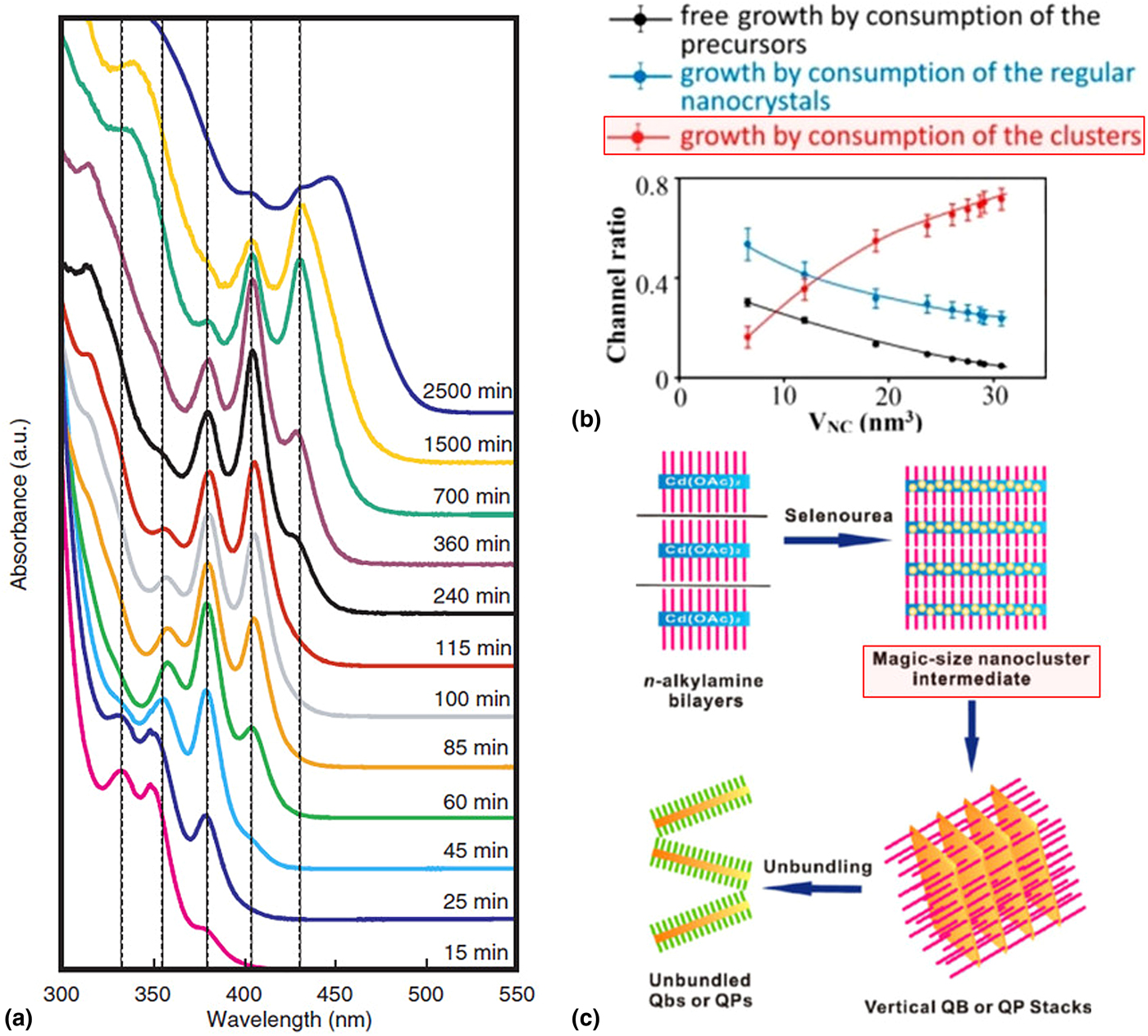
MSCs are highly stable groups of specific number of atoms, distinguished from regular NCs.[Reference Yu84, Reference Kudera, Zanella, Giannini, Rizzo, Li, Gigli, Cingolani, Ciccarella, Spahl, Parak and Manna85] Since MSCs have a size of atomic precision, extremely narrow spectral features appear in absorption spectra with only homogeneous line broadening [Fig. 8(a)]. Evolution of MSCs in the midst of NC synthesis has been observed for various kinds of compounds including II–VI,[Reference Dagtepe, Chikan, Jasinski and Leppert86] IV–VI,[Reference Evans, Guo, Peterson, Maccagnano-Zacher and Krauss87] and III–V[Reference Cossairt88] semiconductors. Research interest in MSCs has increased, as the MSCs serve as a platform to prepare monodisperse or shape-controlled NCs.[Reference Bowers, McBride and Rosenthal89, Reference Ouyang, Zaman, Yan, Johnston, Li, Wu, Leek, Ratcliffe, Ripmeester and Yu90] Recently, Li et al. proposed an advanced growth theory of monodisperse CdS QDs in a quantitative way utilizing a microreactor system [Fig. 8(b)].[Reference Li, Wang, Lin, Fang and Peng91] According to the study, growth of NCs consists of three pathways: (i) free growth by direct incorporation of monomers in accordance with classical nucleation and growth theory, (ii) growth by dissolution of NCs which is known to self-focusing growth, and (iii) growth by dissolution of MSCs. All three channels coexist during growth of monodisperse NCs. In particular, large portion of CdS units for the growth of NCs is stored in a form of MSCs at an initial stage of reaction, which implies that MSCs serve as a reservoir of consumption units. II–VI MSCs also appear as intermediates in the synthesis of nanorods (NRs) and nanoplatelets (NPLs). For example, CdSe MSCs served as a clue to trace the growth of CdSe NRs. Jiang and Kelly utilized the fact that temporal evolution and consumption of MSCs are outstanding in the absorption spectra to study the growth kinetics of CdSe NRs changing with different ligands composition.[Reference Jiang and Kelley92] On a related note, Wang et al. reported that (CdSe)34 MSCs evolve as key intermediates in the growth of CdSe NPLs during the synthesis using selenourea as selenium source [Fig. 8(c)].[Reference Wang, Zhang, Wang, Giblin, Hoy, Rohrs, Loomis and Buhro93] (CdSe)34 MSCs directly convert to CdSe NPLs even at room temperature with high crystallinity. There have also been recent reports describing MSCs as key intermediates to the understanding of NCs growth chemistry, ultimate pinnacle for high-quality NCs.[Reference Gutsev, Ramachandran and Gutsev94, Reference Liu, Zhang, Fan, Rowell, Willis, Zheng, Che, Han and Yu95]
(a) Temporal evolution of CdSe magic-sized clusters (MSCs). Reproduced with permission from Ref. Reference Kudera, Zanella, Giannini, Rizzo, Li, Gigli, Cingolani, Ciccarella, Spahl, Parak and Manna85. Copyright 2007 John Wiley and Sons. (b) Three basic reaction channels for the growth of monodisperse CdS NCs. Reproduced with permission from Ref. Reference Li, Wang, Lin, Fang and Peng91. Copyright 2018 American Chemical Society. (c) Schematic illustration of the synthesis of 2D CdSe NCs derived from MSCs. Reproduced with permission from Ref. Reference Wang, Zhang, Wang, Giblin, Hoy, Rohrs, Loomis and Buhro93 licensed under CC BY 4.0. Copyright 2014 American Chemical Society.

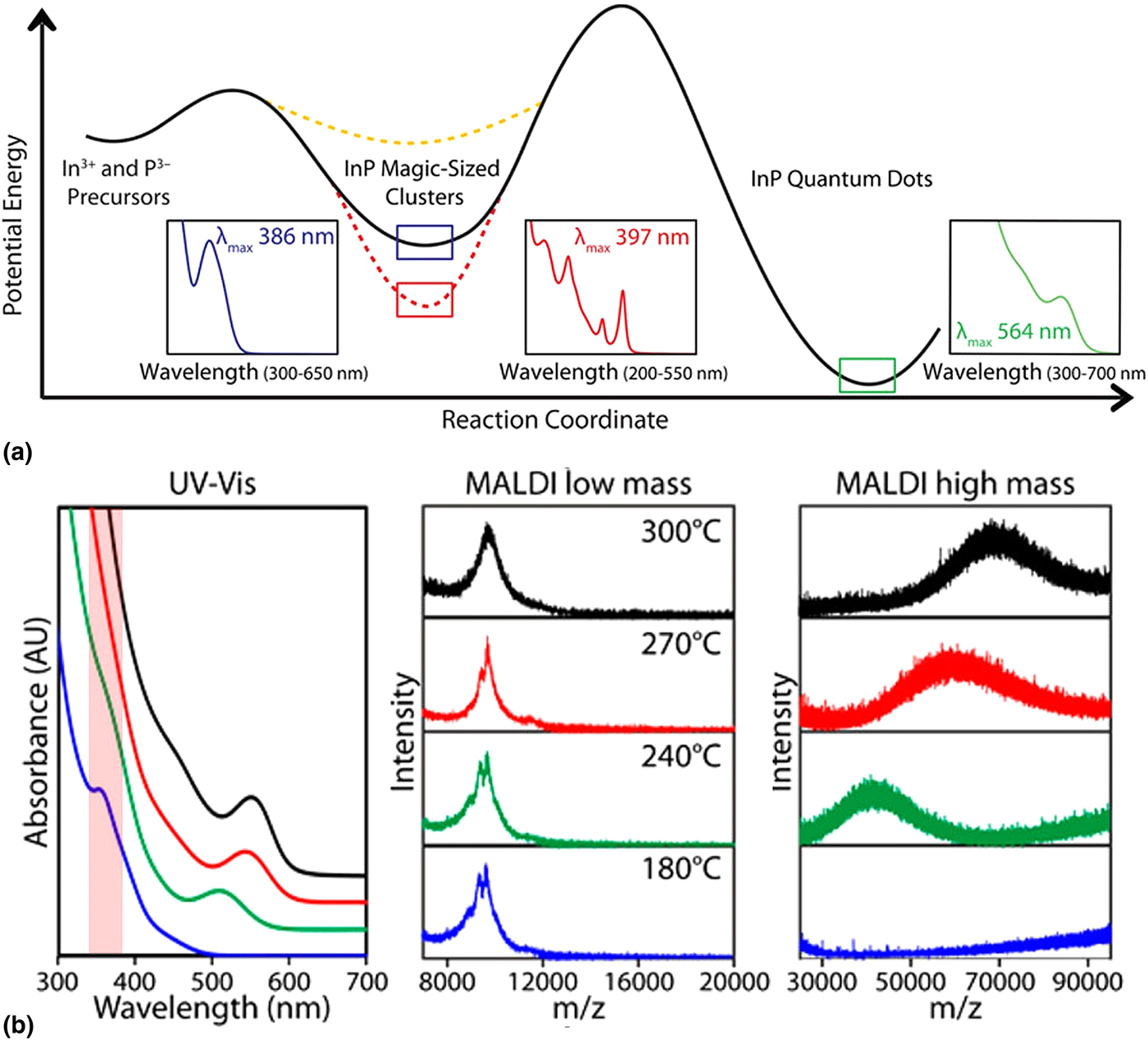
Similar to the case of II–VI NCs synthesis, MSCs also evolve during the growth of InP NCs. In systematic study on InP cluster formation [Fig. 9(a)], Gary et al. reported that In-myristate reacting with P(SiMe3)3 generates InP MSCs at 110 °C in toluene.[Reference Gary, Terban, Billinge and Cossairt96] The unprecedented observation of InP MSCs might indicate a two-step growth pathway of InP QDs that explains the polydispersity of InP NCs, which could not be addressed with chemical modification of P(SiMe3)3. The InP MSCs from In-myristate served as a single-source precursor to synthesize InP QDs. Hot injection of the isolated InP MSCs produced InP QDs, and it implies that InP MSCs work as a monomer reservoir, similar to the case of CdS MSCs. Xie et al. confirmed that InP MSCs are consumed continuously for the growth of InP QDs utilizing mass spectrometry [Fig. 9(b)].[Reference Xie, Shen, Franke, Sebastian, Bawendi and Jensen97] InP MSCs could also be prepared with phosphonic acids.[Reference Bowers, McBride and Rosenthal89] Extremely narrow electronic transition peaks appear in the absorption spectra when In-octadecylphosphonate is reacted with P(SiMe3)3 at high temperatures such as 370 °C. However, InP MSCs from phosphonic acid do not convert to NCs since the MSCs are highly stable, in contrast to InP MSCs from myristic acid. The stability difference is likely due to much stronger binding of phosphonic acid to the surface of MSCs compared with carboxylic acid.[Reference Woo, Lee, Lee, Kim, Lee, Kim, An, Lee and Jeong98, Reference Koh, Park and Ham99] Furthermore, Tamang et al. utilized InAs clusters for the growth of InAs QDs.[Reference Tamang, Lee, Choi and Jeong100] The amorphous clusters formed at room temperature from In-oleate and As(SiMe3)3 may not be magic-sized, but the continuous injection of the clusters, stated as prenucleation clusters, resulted in monodisperse InAs NCs. With the interest in the growth of III–V NCs surging in academic community and industry alike, investigation on the formation and reaction III–V MSCs receives a great deal of attention, and rightfully so.[Reference Stein, Steimle, Terban, Petrone, Billinge, Li and Cossairt101, Reference Ning and Banin102]
(a) Schematic illustration describing reaction pathways from molecular precursors to InP MSCs and NCs. Reproduced with permission from Ref. Reference Gary, Terban, Billinge and Cossairt96. Copyright 2015 American Chemical Society. (b) Absorption spectra and mass spectra of InP MSCs and QDs. Reproduced with permission from Ref. Reference Xie, Shen, Franke, Sebastian, Bawendi and Jensen97. Copyright 2016 American Chemical Society.

Conclusion and perspectives
In summary, we review the progress in synthetic chemistry of QDs, with our primary focus being on precursor decomposition and intermediate cluster formation during the growth of QDs. In the past three decades, materials scientists and chemists have made tremendous strides to unveil precursor conversion chemistry during the synthesis of QDs. Years of research efforts yielded some precursor combinations that give rise to monodisperse II–VI and IV–VI QDs, e.g., Cd-carboxylate and R3P-Se. Decomposition of R3P-Se in the synthesis of CdSe QDs turned out to excel in both rapid nucleation and uniform growth, resulting in monodisperse QDs. The competition in the market for high color-gamut display raised the standard on the quality of QDs, particularly in the context of size uniformity of InP QDs. With the list of realistically viable phosphorus precursors relatively short, focus has turned to slowing the decomposition of extremely reactive P(SiMe3)3, the most widely used P precursor in colloidal phosphide NC growth. Unfortunately, chemical modifications of P(SiMe3)3 could not improve the size distribution of InP QDs. Instead, controlling the reactivity of molecular intermediates could address the problem, for example, by using Zn-carboxylate in the reactant mixture. In addition to molecular intermediates, clusters play an important role in the growth of II–VI and III–V QDs. Since clusters are more stable units compared with molecular intermediate, they can serve as a monomer for the growth of monodisperse QDs. Clusters have garnered attention because they can also yield the anisotropic growth of NCs, for example, CdSe NRs and NPLs. We expect that the utilization of clusters for NC growth would present substantial room for improvement in light-emitting properties of NCs. Furthermore, lessons learned in the progress of colloidal NC growth chemistry would advance innovative class of new synthetic techniques, e.g., ion exchange reaction. Molecular complex formation energetics between ionic precursors and ligands controls the direction and kinetics of ion exchange reaction.[Reference De Trizio and Manna103, Reference Wark, Hsia and Son104] For example, our group recently utilized the formation of stable complex between Cd and primary amine to induce direct Cd-to-Pb cation exchange reaction of CdSe NRs, and synthesized CdSe/PbSe axially heterostructured NRs.[Reference Lee, Kim, Lee, Bae, Lee and Lee105] As ion exchange reaction is a powerful tool presenting the feasibility of shape, morphology and structure control of NCs, we expect that the knowledge from precursor conversion and intermediate species in QD synthesis would accelerate the technologic applications of ion-exchanged NCs.
Acknowledgments
This work is supported by the National Research Foundation (NRF) grants funded by the Korean Government (NRF-2016M3A7B4910618 and NRF-2017R1A2B2011066), by the Ministry of Trade, Industry & Energy (MOTIE, Korea) under Industrial Strategic Technology Development Program No. 10077471, “Development of core technology for highly efficient and stable, non-cadmium QLED materials”.