










1. Introduction and main results
This paper deals with the existence and concentration of normalized solutions for the following logarithmic Schrödinger–Bopp–Podolsky type system involving the  $p$-Laplacian in
 $\mathbb{R}^3$:
 \begin{equation}
\left\{
\begin{array}{lll}
-\varepsilon^p\Delta_p u+Z(x)|u|^{p-2}u-\kappa\phi u=\lambda |u|^{p-2}u+|u|^{p-2}u\log|u|^p \ \
& \text{in} \ \mathbb{R}^3, \\
-\varepsilon^2\Delta\phi+a^2\varepsilon^4\Delta^2\phi=4\pi u^2 & \text{in}\ \mathbb{R}^3, \\
\int_{\mathbb{R}^3}|u|^pdx=d^p\varepsilon^3,\\
\end{array} \right.\end{equation}
where  $2\leq p \lt \frac{12}{5}, \kappa,a,\varepsilon \gt 0$ are parameters,
 $\Delta_p\cdot=\text{div} (|\nabla \cdot|^{p-2}\nabla \cdot)$ is the usual
 $p$-Laplacian operator,
 $Z \in \mathcal{C}^0(\mathbb{R}^3)$ is given and satisfies some appropriate conditions, and the unknowns are
 $u,\phi:\mathbb{R}^{3}\to \mathbb{R}$ and the Lagrange multiplier
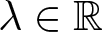
 $\lambda\in\mathbb{R}$.
Let us first point out the features of this paper:
(i) the appearance of two variables
 $(u, \phi)$ in the Schrödinger–Bopp–Podolsky systems, which enable us to get more meaningful phenomena;
(ii) the solution of the second equation of system (1.1) is not homogeneous and the appearance of the
$p$-Laplacian seems to be a thought-provoking question, which brings some new obstacles;(iii) due to the unboundedness of the domain and the logarithmic nonlinearity, a careful analysis needs to be done in order to prove a compactness property;
(v) the main concentration phenomenon creates a bridge between the global maximum point of the solution versus the global minimum of the external potential
$Z$;(vi) the proofs combine some refined estimates and some analysis techniques, including the extension, truncation argument, topological, and variational tools.


As introduced in d’Avenia and Siciliano [Reference d’Avenia and Siciliano18], system (1.1) is a version of Schrödinger–Bopp–Podolsky system. Such a system is obtained when we couple the Schrödinger field  $\psi=\psi(t,x)$ with its electromagnetic field in the Bopp–Podolsky electromagnetic theory, especially in the electrostatic case of standing wave
 $\psi(t,x)=e^{i\omega t}u(x)$. It is worth noting that the Bopp–Podolsky theory introduced by Bopp [Reference Bopp12] and Podolsky [Reference Podolsky39] is a second-order gauge theory for the electromagnetic field and can be regarded as a valid theory for short distances (see Frenkel [Reference Frenkel24]), while for large distances, it is experimentally indistinguishable from Maxwell. Thus, the Bopp–Podolsky parameter
 $a \gt 0$, whose dimension is inversely proportional to the mass, can be interpreted as a cutoff distance, or can be linked to the effective radius of the electron. Moreover, this theory solves the so-called infinity problem that arises in the classical Maxwell theory. For more physical details, we refer the interested reader to [Reference Bertin, Pimentel, Valccel and Zambrano10, Reference Bufalo, Pimentel and Soto13, Reference Bufalo, Pimentel and Soto14, Reference Mie36].
The paper [Reference d’Avenia and Siciliano18] by d’Avenia and Siciliano was the first in the mathematical literature to propose the study of the Schrödinger–Bopp–Podolsky system
 \begin{equation}
\left\{
\begin{array}{lll}
-\Delta u+\omega u+q^2\phi u =|u|^{p-2}u & \mbox{in} \ \mathbb{R}^3, \\
-\Delta\phi+a^2\Delta^2\phi=4\pi u^2 & \mbox{in} \ \mathbb{R}^3,
\end{array} \right.
\end{equation}
where  $a \gt 0$ is the Bopp–Podolsky parameter,
 $\omega \gt 0$ is known as the frequency of the standing wave and is fixed. The authors obtained the existence and nonexistence of solutions.
After that, many other authors have studied the Schrödinger–Bopp–Podolsky system under different assumptions on the nonlinearity, the potential, or the domain, and this type of system is still under study. We just cite here some other interesting papers on the subject.
Siciliano and Silva in [Reference Siciliano and Silva44] proved the nonexistence of solutions for system (1.2) via the fibring method as  $q \gt 0$ large enough, and the existence of two radial solutions for
 $q \gt 0$ small enough. Li et al. in [Reference Li, Pucci and Tang28] by combining the Pohozaev–Nehari manifold and the monotonicity trick, extended the results to the critical case. Chen et al. in [Reference Chen, Lin and Radulescu16] obtained the existence of ground state solutions for the non-autonomous Schrödinger–Bopp–Podolsky system of type:
 \begin{equation}
\left\{
\begin{array}{lll}
-\Delta u+Z(x)u+q^2\phi u =f(u) & \mbox{in} \ \mathbb{R}^3, \\
-\Delta\phi+a^2\Delta^2\phi=4\pi u^2 & \mbox{in} \ \mathbb{R}^3,
\end{array} \right.\end{equation}
where  $Z$ and
 $f$ satisfy the appropriate conditions. For
 $q=1$ and
 $f(u)=\lambda K(x)h(u)+|u|^4u,$ Liu and Chen [Reference Liu and Chen33] extended previous results to the critical case, and obtained the existence, nonexistence, and asymptotic behaviour of ground state solutions for the system. The critical problem has also been addressed in [Reference Damian and Siciliano19], where solutions are found in the semiclassical limit whenever the external potential vanishes and in [Reference Yang, Chen and Liu51] when the potential has positive infimum. Wang et al. in [Reference Wang, Chen and Liu47] obtained the existence of multiple sign-changing solution for system (1.3) with
 $Z(x)\equiv1.$ In [Reference Jiang, Li, Chen and Siciliano27], the existence of ground state solution in presence of nonperiodic potentials is proved, and in [Reference Mascaro and Siciliano34], a multiplicity result is furnished in the semiclassical limit by using the Lusternick–Schnirelmann category
In recent years, many authors have focused on the study of normalized solutions for such scalar field equations. Such solutions satisfy a constraint of type  $|u|_p^p=d^p$ (
 $L^p$-constraint) and from a physical point of view, are more interesting; in fact, this type of constraint is related to the conservation of mass. In addition, it provides meaningful insights into the dynamic properties of the stationary solutions, such as stability or instability, see e.g., the seminal papers [Reference Berestycki and Cazenave9, Reference Cazenave and Lions15] and the references [Reference Du and Wang22, Reference Liang, Pucci and Sun31, Reference Meng and He35].
Also the Schrödinger–Bopp–Podolsky system has been studied under the constraint of the  $L^{2}$ norm. For example, Li and Zhang [Reference Li and Zhang30] considered the existence of multiple normalized solutions for the following critical Schrödinger–Bopp–Podolsky system:
 \begin{equation}
\left\{
\begin{array}{ll}
-\Delta u+\phi u=\lambda u+\mu|u|^{p-2}u+u^5 & \mbox{in}\ \mathbb{R}^3, \\
-\Delta\phi+\Delta^2\phi=4\pi u^2& \mbox{in} \ \mathbb{R}^3, \\
\displaystyle \int_{\mathbb{R}^3}u^2dx=d^2,
\end{array} \right.\end{equation}
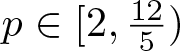
where  $p\in(2,6)$ and
 $\lambda\in \mathbb{R}$ is a Lagrange multiplier. Applying a constraint minimizing approach, Li et al. [Reference Li, Chang and Feng29] proved the existence of normalized ground state solutions for system (1.4) in the case
 $p\in (2,\frac{8}{3}).$ In [Reference de Paula Ramos and Siciliano20] a study on the ground states for normalized solutions has been done depending on the value of
 $p$ in the nonlinearity
 $|u|^{p-2}u$. Normalized solutions are also studied in bounded domain with Neumann and Dirichlet boundary conditions, see [Reference Afonso and Siciliano1, Reference Hernandez and Siciliano26, Reference Siciliano43]. We point out that the Schrödinger–Bopp–Podolsky system has also been considered in [Reference Quoirin, Siciliano and Silva40] where a different constraint on the solutions (namely, the energy) is imposed.
Peng [Reference Peng38] considered the following critical Schrödinger–Bopp–Podolsky system in  $\mathbb{R}^3$:
 \begin{equation}
\left\{
\begin{array}{ll}
-\Delta u+\lambda u-\kappa\phi u=|u|^{4}u& \mbox{in}\ \mathbb{R}^3, \\
-\Delta\phi+a^{2}\Delta^2\phi=4\pi u^2& \mbox{in} \ \mathbb{R}^3, \\
\displaystyle \int_{\mathbb{R}^3}u^2=d^2,\quad u \gt 0,
\end{array} \right.\end{equation}
where  $d,a \gt 0$ and
 $\kappa\in\mathbb{R}\backslash\{0\}$ is a fixed constants. As
 $\kappa \gt 0,$ he proved the existence and multiplicity of radial normalized solutions for the above system via a truncation argument. As
 $\kappa \lt 0,$ he obtained the non-existence of solutions for system (1.5) by a Liouville-type Theorem and the Pohozaev identity. For other results on these types of systems, we refer the reader to [Reference Talluri45, Reference Wang, Wang and Wang49, Reference Zhang, Yao and Sun53] and the references therein.
For the constrained problem, we cite finally [Reference Figueiredo and Siciliano23] where the existence of solutions is proved in the presence of positive potentials but the constraint is given by the interacting energy.
All the above-cited results deal with the Schrödinger–Bopp–Podolsky system involving the Laplace operator; it seems there are no results about Schrödinger–Bopp–Podolsky system involving the  $p$-Laplacian. This is the first motivation for our study.
A second one concerns the logarithmic nonlinearity. In fact, this type of nonlinearity deserves some challenges in this kind of system starting from the Schrödinger equation, which is the basic prototype:
 \begin{align*}
\left\{\begin{array}{ll}
\partial_t v(t, x)=i \Delta v(t, x)+i \lambda v(t, x) \log \left(|v(t, x)|^2\right)+iW\left(t, x,|v|^2\right) v(t, x),\\
x \in \mathbb{R}^d,\ t \gt 0, & \\
v(0, x) =v_0(x),\ x\in \mathbb{R}^d, &\end{array}\right.\end{align*}
where  $\lambda \in \mathbb{R} \backslash \{0\}$ is related to the strength of the force of the nonlinear interaction, and
 $W$ is a real-valued function. Such equations have a wide range of applications in physics, such as quantum mechanics, quantum optics, nuclear physics, transport and diffusion phenomena, open quantum system, effective quantum gravity, which is the reason the interested in this topic.
Logarithmic Schrödinger equations have attracted much attention from many authors in recent years. In [Reference Bialynicki-Birula and Mycielski11], Mycielski and Bialynicki-Birula gave the first contribution on the study of the logarithmic Schrödinger equations. We recall interesting papers dealing with such a nonlinearity. Alves and Ji in [Reference Alves and Ji6] explored the following equation
 \begin{equation}
\left\{
\begin{array}{lll}
-\varepsilon^2\Delta u+V(x)u=\lambda u+u\log|u|^2
\ \text{in}\ \mathbb{R}^N, \\
\displaystyle\int_{\mathbb{R}^N}|u|^2dx=a^2\varepsilon^N,
\end{array} \right.\end{equation}
where  $N\geq1, a, \varepsilon \gt 0.$ They obtained the existence and multiplicity of solutions via the minimization techniques and the Lusternik–Schnirelmann category. Zhang and Zou in [Reference Zhang and Zou52] studied existence and asymptotic behaviour of the solutions; it was the first result for nonlinear Schrödinger system with logarithmic perturbations. Shen and Squassina in [Reference Shen and Squassina42] extended the results of system (1.6) to the
 $p$-Laplacian operator and proved existence and concentration of normalized solutions in both
 $L^p$-mass subcritical and supercritical cases. Peng and Gao in [Reference Peng and Jia37] investigated the existence and concentration behaviour of solutions in the unconstrained case.
For other results and background on logarithmic Schrödinger equation, we refer the reader to [Reference Alves and Ambrosio3, Reference Avdeenkov and Zloshchastiev8, Reference Cui and Mao17, Reference Hefter25, Reference Wang, Feng and Cheng48, Reference Zloshchastiev54].
As far as we have seen, there are no results in the current literature about the existence and concentration of normalized solutions for the logarithmic Schrödinger–Bopp–Podolsky system involving the  $p$-Laplacian. Therefore, a natural question that arises is: there exist normalized solutions of system (1.1) in such a case? Are these solutions concentrated or not? Encouraged by the above works, we intend to give a positive answer to these questions.
In order to state our result, we assume that the potential  $Z$ satisfies the following conditions:
•
$(\mathcal{Z}_1)$
$Z\in \mathcal{C}^0(\mathbb{R}^3)$ and
$-1\leq Z_0:=
\min\limits_{x\in\mathbb{R}^3}Z(x) \lt Z_\infty=\lim\limits_{|x|\to+\infty}Z(x) \lt +\infty$;•
$(\mathcal{Z}_2)$
$Z^{-1}(\{Z_{0}\})=\{x^1,x^2,\cdots,x^\ell\}$ with
$x^1=0$.


Note that by the scaling  $x\mapsto \varepsilon x$, it is easy to see that system (1.1) is equivalent to the following one (where we use the same symbols
 $u,\phi$ for the unknown functions)
 \begin{equation}
\left\{
\begin{array}{lll}
-\Delta_p u+Z(\varepsilon x)|u|^{p-2}u-\kappa\phi u=\lambda |u|^{p-2}u+|u|^{p-2}u\log|u|^p & \text{in}~\mathbb{R}^3, \\
-\Delta\phi+a^2\Delta^2\phi=4\pi u^2 & \text{in}~\mathbb{R}^3, \\
\displaystyle \int_{\mathbb{R}^3}|u|^2dx=d^p,
\end{array} \right.\end{equation}
to which we will refer from now on. The solution for such a system are triple  $(u,\phi,\lambda)$ with
 $u,\phi:\mathbb{R}^{3}\to \mathbb{R}$ and
 $\lambda\in \mathbb{R}$. But actually, as we will see soon, once
 $u$ is fixed the function
 $\phi$ is uniquely determined by the second equation, so we will speak of solutions as pairs
 $(u,\lambda)$ where
 $u$ is in a suitable functional space and
 $\phi_{u}^{a}$ is the unique solution of the second equation once
 $a \gt 0$ and
 $u$ are fixed. Recall also that
 $\kappa \gt 0$ is a fixed constant.
Now, we can state the main result as follows.
Theorem 1.1. Let  $2\leq p \lt \frac{12}{5}$ and
 $(\mathcal{Z}_1)-(\mathcal{Z}_2)$ be satisfied. Then, there exist numbers
 \begin{equation*}\varepsilon^\ast \gt 0 \quad\text{and}\quad d(Z_{\infty}) \gt 0\end{equation*}
such that for all  $\varepsilon\in(0,\varepsilon^\ast), d \gt d(Z_{\infty})$ system (1.7) possesses at least
 $\ell$ different weak solutions
 $(u^j_\varepsilon,\lambda^j_\varepsilon)\in W^{1,p}(\mathbb{R}^3)\times\mathbb{R}$.
Moreover, there exists  $\mathfrak{i}_{Z_{0}, d} \lt 0$ such that, for every
 $j\in\{1,\ldots,\ell\}$:
(i)
$\sup_{\varepsilon\in(0,\varepsilon^{*})}\lambda^j_\varepsilon \lt \frac{p}{d^{p}}\mathfrak{i}_{Z_{0}, d}$,(ii)
$u^j_\varepsilon(x)\geq 0$ for every
$x\in\mathbb{R}^3$,(iii) the following energy estimate holds
\begin{align*}
&\lim_{\varepsilon\to 0^{+}}\frac{1}{p}\int_{\mathbb{R}^3}\left(|\nabla u^{j}_{\varepsilon}|^{p } +(Z(\varepsilon x)+1)|u^{j}_{\varepsilon}|^{p}\right)dx
-\frac{\kappa}{4}\int_{\mathbb{R}^3}\phi_{u^{j}_{\varepsilon}}^a (u^{j}_{\varepsilon})^2dx\\
&\quad-\frac{1}{p}\int_{\mathbb{R}^3} |u^{j}_{\varepsilon}|^{p}\log|u^{j}_{\varepsilon}|^{p}dx=\mathfrak{i}_{Z_{0},d}.
\end{align*}


Finally  $u_\varepsilon^{j} \gt 0$ and it has a maximum point
 $z^j_\varepsilon\in\mathbb{R}^3$ such that
 $Z(z^j_\varepsilon)\to Z(x^j)=Z_0$ as
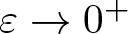
 $\varepsilon\to 0^{+}$.
Note that the Theorem 1.1 gives a relationship between the absorption potential  $Z$ and multiplicity and concentration of normalized solutions. It is worth mentioning that Theorem 1.1: (i) extends the result of Peng and Jia [Reference Peng and Jia37] to the constraint case; (ii) generalizes the results in [Reference Alves and Ji6, Reference Alves and Thin7, Reference Shen and Squassina42] since we have an additional nonlocal term in the equation. Then the arguments used in the cited papers do not apply and some modifications are needed. Moreover, our result is new even in the case
 $p=2$.
The proof of Theorems 1.1 is based on variational and topological arguments. The solutions are found as critical points of a suitable functional, and we need to show geometric and compactness properties. Some difficulties arise due to the presence of the logarithmic nonlinearity, the nonlocal term, and the fact that the domain is the whole space  $\mathbb{R}^{3}$. Moreover, estimates uniform in
 $\varepsilon$ have to be found.
The paper is organized as follows. In Section 2, we exhibit some preliminary results. Section 3 is devoted to show the existence of ground state for the autonomous problem, since it is a necessary step in order to study the problem in the semiclassical limit. The theorem is proved in Section 4, after some preliminary work.
Notations. From now on in this paper we use the following notations:
•
$C,C_1,C_2,...$ denote positive constants, whose value is not relevant.• If
$(X,\|\cdot\|_X)$ is a Banach its dual is denoted with
$(X^{*},\|\cdot\|_{X^{*}})$.•
$|\cdot|_\nu$ denotes the usual norm of the Lebesgue space
$L^{\nu}(\mathbb{R}^3)$, for all
$\nu \in [1,+\infty]$.•
$o_{n}(1)$ denotes a vanishing sequence as
$n \to +\infty$.• ‘
$\to$’ and ‘
$\rightharpoonup$’ stand, respectively, for the strong and weak convergence.


2. Variational setting and preliminaries
In this section, we introduce the variational setting including some fundamental concepts and properties concerning the Orlicz spaces (for more details, see Rao and Ren [Reference Rao and Ren41]) and give some preliminary results.
Let  $W^{1,p}(\mathbb{R}^{3})$ be the usual Sobolev space endowed with the norm
 \begin{equation*}\| u \|_{W^{1,p}(\mathbb{R}^{3})} ^{p} = |\nabla u|_{p}^{p} + |u|_{p}^{p}.\end{equation*}
Let also  $\mathcal{D}$ be the completion of
 $C_0^\infty(\mathbb{R}^3)$ with respect to the norm
 $\|\cdot\|_\mathcal{D}$ induced by the scalar product
 \begin{equation*}\langle u,v\rangle_\mathcal{D}=\int_{\mathbb{R}^3}
(\nabla u\nabla v+a^2\Delta u\Delta v)dx.\end{equation*}
Therefore,  $\mathcal{D}$ is a Hilbert space and there exists a continuous embeddings
 $\mathcal{D}\hookrightarrow D^{1,2}(\mathbb{R}^3)\hookrightarrow L^6(\mathbb{R}^3).$ Let us recall the following
Proposition 2.1. [Reference d’Avenia and Siciliano18, Lemma 3.1] The space  $\mathcal{D}$ is continuously embedded in
 $L^\infty(\mathbb{R}^3).$
For every fixed  $u\in W^{1,p}(\mathbb{R}^{3})$ (hence
 $u\in L^{t}(\mathbb{R}^{3})$ for any
 $t\in [p, 3p/(3-p)]$) the map
 \begin{equation*}\phi\in \mathcal{D} \longmapsto \int_{\mathbb{R}^{3}} \phi u^{2} \in \mathbb{R}\end{equation*}
is linear and continuous; in fact, if  $\phi_{n}\to 0$ in
 $\mathcal{D}$ then
 $|\phi_{n}|_{s}\to 0$ for every
 $s\in [6,+\infty]$. Then
 $2s^{\prime} \in[2, 12/5]$ and it follows that
 \begin{equation*}\Big|\int_{\mathbb{R}^{3}}\phi_{n} u^{2} \Big| \leq |\phi_{n}|_{s} |u|^{2}_{2s^{\prime}}\to 0\end{equation*}
as soon as  $p\in[6/5,12/5]$: in fact in this case
 $[p, 3p/(3-p)] \cap [2,12/5]\neq\emptyset$ and the Hölder inequality can be used. The Riesz Theorem implies that there exists a unique solution
 $\phi_u\in \mathcal{D}$ of the equation
 \begin{equation}
-\Delta \phi +a^{2}\Delta^{2} \phi = 4\pi u^{2}.
\end{equation}
In order to explicitly write such a solution we consider
 \begin{equation*}\mathscr{K}(x)=\frac{1-e^{-\frac{|x|}{a}}}{|x|}\end{equation*}
and recall the following useful properties of the kernel  $\mathscr{K}$, see [Reference d’Avenia and Siciliano18, Lemma 3.3].
Proposition 2.2. For  $y\in \mathbb{R}^3, \mathscr{K}(\cdot-y)$ solves in the sense of distributions
 \begin{equation*}-\Delta \phi+a^2\Delta^2\phi=4\pi\delta_y.\end{equation*}
Moreover,
(i) if
$f\in L^1_{loc}(\mathbb{R}^3)$ and, for a.e.
$x\in \mathbb{R}^3,$ the map
$y\mapsto \frac{f(y)}{|x-y|}$ is summable, then
$\mathscr{K} \ast f\in L^1_{loc}(\mathbb{R}^{3})$;(ii) if
$f\in L^t(\mathbb{R}^3)$ with
$t\in [1,\frac{3}{2}),$ then
$\mathscr{K}\ast f\in L^q$ for all
$q\in (\frac{3t}{3-2t},+\infty].$


In both cases  $\mathscr{K} \ast f$ solves
 \begin{equation}
-\Delta\phi+a^2\Delta^2\phi=4\pi f.
\end{equation}
In consideration of the above results, once  $u\in W^{1,p}(\mathbb{R}^{3})$ is fixed, the unique solution in
 $\mathcal{D}$ of the equation (2.1) has the explicit form
 \begin{equation}
\phi_u^a=\mathscr{K} \ast u^2=\int_{\mathbb{R}^3}
\frac{1-e^{-\frac{|x-y|}{a}}}{|x-y|}u^2(y)dy.
\end{equation}
Now  $u^{2}\in L^{t}(\mathbb{R}^{3})$ for any
 $t\in [p/2, 3p/2(3-p)]$ and then we need
 $p\geq2$. To apply (ii) of Proposition 2.2 we need
 $t\in[1,3/2)$ and this happens for
 $p\in[2,3)$.
Summing up, in order to have a unique solution for the second equation of the system by means of the Riesz Theorem given by  $\phi^{a}_{u}$, we need
 $p\in [2,12/5]$ and in such a case
 \begin{equation*}\phi^{a}_{u}\in L^{q}(\mathbb{R}^{3}) \quad \text{for every } \ q\in(3,+\infty ].\end{equation*}
Let us recall also the following useful results.
Lemma 2.3. (Gagliardo–Nirenberg inequality [Reference Agueh2]). For every  $p \lt s \lt p^*$, there exists an optimal constant
 $\textit{K}_{p,s} \gt 0$ (depending only on
 $p$ and
 $s$) such that
 \begin{equation}
|u|_{s} \leqslant \textit{K}_{p,s}
|\nabla u|_{p}^{\beta_s}|u|_{p}^{1-\beta_s},\ \ \forall u\in W^{1,p}(\mathbb{R}^3),
\end{equation}
where
 \begin{equation}
\beta_s :=
\frac{3(s-p)}{ps}.
\end{equation}
Lemma 2.4. (Hardy–Littlewood–Sobolev inequality [Reference Lieb and Loss32]). Given  $s,r \gt 1$ with
 $\frac{1}{s}+\frac{1}{r}+\frac{1}{3}=2,$ there is a constant
 $\textit{H}_{s} \gt 0$ such that for
 $f\in L^s(\mathbb{R}^3)$,
 $g\in L^r(\mathbb{R}^3)$,
 \begin{equation*}\int_{\mathbb{R}^3}\Big(\frac{1}{|\cdot|}\ast f\Big)(x)g(x)dx\leq \textit{H}_{s}|f|_s|g|_r.\end{equation*}
Since  $u\in L^{t}(\mathbb{R}^{3})$ for any
 $t\in[p,3p/(3-p)]$ and
 $p\in[2,12/5]$ it is
 $u\in L^{12/5}(\mathbb{R}^{3})$ and hence, for
 $s=r=\frac{6}{5},$ the Hardy–Littlewood–Sobolev inequality yields that
 \begin{equation}
\int_{\mathbb{R}^3}\phi_u^au^2dx\leq\int_{\mathbb{R}^3}\Big(\frac{1}{|\cdot|}\ast u^2\Big) u^2dx\leq \textrm{H}_{6/5} |u|_{\frac{12}{5}}^4.
\end{equation}
Let us list some properties of  $\phi_u^a$, obtained as in [Reference d’Avenia and Siciliano18, Lemma 3.4].
Proposition 2.5. For every  $u\in W^{1,p}(\mathbb{R}^3),$ we have the following results:
(i) for every
$y\in \mathbb{R}^3, \phi_{u(\cdot+y)}=\phi_u(\cdot+y)$;(ii)
$\phi_u\geq 0$;(iii) for each
$t \gt 0, \phi_{tu}^a=t^2\phi_u^a$;(iv) if
$u_n\rightharpoonup u$ in
$W^{1,p}(\mathbb{R}^3),$ then
$\phi_{u_n}\rightharpoonup\phi_{u}$ in
$\mathcal{D}$.


Finally, arguing as in [Reference Yang, Chen and Liu51, Lemma 2.3], we get the Brézis–Lieb splitting.
Lemma 2.6. Let  $u_n\rightharpoonup u$ in
 $W^{1,p}(\mathbb{R}^3)$ and
 $u_n\rightarrow u$ a.e. in
 $\mathbb{R}^3$. Then
 \begin{equation*}\lim_{n\to\infty} \int_{\mathbb{R}^{3}} \phi^{a}_{u_{n} } u_{n}^{2}dx -
\int_{\mathbb{R}^{3}}\phi^{a}_{u_{n}-u} (u_{n}-u)^{2}dx=
\int_{\mathbb{R}^{3}} \phi^{a}_{u} u^{2}dx.
\end{equation*}
The next preliminary concern is with a suitable setting for the logarithmic nonlinearity. Let us recall some basic facts on  $N$-functions.
Definition 2.7. An  $N$-function is a continuous function
 $\Phi:\mathbb{R}\to[0,+\infty)$ that satisfies the following conditions:
(i)
$\Phi$ is a convex and even;(ii)
$\Phi( t) = 0\Longleftrightarrow t= 0$;(iii)
$\lim\limits_{t\to 0}\frac{\Phi(t)}t= 0$ and
$\lim\limits_{t\to \infty}\frac{\Phi(t)}t=+\infty$.


We say that the  $N$-function
 $\Phi$ satisfies the
 $\Delta_{2}$-condition, denoted by
 $\Phi\in(\Delta_2)$, if
 \begin{equation*}
\Phi(2t)\leq k\Phi(t), \ \forall t\geq t_0
\end{equation*}
for some constants  $k \gt 0$ and
 $t_0\geq 0$.
The conjugate function  $\widetilde{\Phi}$ associated with
 $\Phi$ is obtained through Legendre’s transformation, defined as
 \begin{equation*}
\widetilde{\Phi}(s)=\max_{t\geq 0}\{st-\Phi(t)\} \ \text{for} \ s\geq 0
\end{equation*}
and it can be shown that it is also an  $N$-function. The functions
 $\Phi$ and
 $\widetilde{\Phi}$ are mutually complementary that is,
 $\widetilde{\widetilde{\Phi}}=\Phi$.
For an open set  $\Omega\subset\mathbb{R}^3$, we define the Orlicz space associated to an
 $N$-function
 $\Phi$ as follows
 \begin{equation*}
L^\Phi(\Omega)=\left\{u\in L_{\mathrm{loc}}^1(\Omega):\int_{\Omega}\Phi\left(\frac{|u|}{\lambda}\right)dx \lt +\infty,\ \ \text{for some} \ \lambda \gt 0\right\}
\end{equation*}
which is a Banach space endowed with the Luxemburg norm given by
 \begin{equation*}
\|u\|_{\Phi}=\inf\left\{\lambda \gt 0:\int_{\Omega}\Phi\left(\frac{|u|}{\lambda}\right)dx\leq1\right\}.
\end{equation*}
Then the Hölder and Young type inequalities hold, namely
 \begin{equation*}
st\leq\Phi(t)+\widetilde{\Phi}(s),\quad\forall s,t\geq 0
\end{equation*}
and
 \begin{equation*}
\left|\int_{\Omega}uvdx\right|\leq2\|u\|_{\Phi}\|v\|_{\widetilde{\Phi}},\quad u\in L^{\Phi}(\Omega), \ \ v\in L^{\widetilde{\Phi}}(\Omega).
\end{equation*}
The space  $L^\Phi(\Omega)$ is reflexive and separable provided that
 $\Phi,\widetilde{\Phi}\in(\Delta_2)$. Moreover, the
 $\Delta_{2}$-condition implies that
 \begin{equation*}
L^\Phi(\Omega)=\left\{u\in L_{\mathrm{loc}}^1(\Omega):\int_{\Omega}\Phi(|u|)dx \lt +\infty\right\}
\end{equation*}
and
 \begin{equation*}
u_{n}\rightarrow u\mathrm{~in~}L^{\Phi}(\Omega)\Longleftrightarrow\int_{\Omega}\Phi\left(|u_{n}-u|\right)dx\rightarrow0.
\end{equation*}
We then recall an important relation involving  $N$-functions that will be adopted later. Let
 $\Phi$ be an
 $N$-function of class
 $\mathcal{C}^1$ and
 $\widetilde{\Phi}$ its conjugate function. If
 \begin{equation}
1 \lt l\leq\frac{\Phi^{\prime}(t)t}{\Phi(t)}\leq m, \ t\neq0,
\end{equation}
then  $\Phi,\widetilde{\Phi}\in(\Delta_{2})$. Finally, we consider the functions
 \begin{equation*}
\xi_{0}(t):=\min\{t^{l},t^{m}\} \ \ \mathrm{and} \ \ \xi_{1}(t):=\max\{t^{l},t^{m}\}, \ \ t\geq 0.
\end{equation*}
It is possible to verify that, using (2.7), the function  $\Phi$ satisfies the inequalities below:
 \begin{equation}
\xi_{0}\left(\|u\|_{\Phi}\right)\leq\int_{\mathbb{R}^{3}} \Phi(u)dx\leq\xi_{1}\left(\|u\|_{\Phi}\right),\quad \forall u\in L^{\Phi}(\Omega).
\end{equation}
In our case, to deal with the logarithm nonlinearity, inspired by [Reference Alves and da Silva4–Reference Alves and Ji6], we define the functions  $F_1$ and
 $F_2$ as follows: fixed a small
 $\delta \gt 0$, let
 \begin{align*}
& F_1 (s)\\
&=\left.\left
\{\begin{array}{lr}
F_1 (-s), & s\leq0, \\
-\frac{1}{p}s^p\log s^p, &0 \lt s \lt (p-1)\delta, \\
-\frac{1}{p}s^p\big(\log\big((p-1)^{p}\delta^{p}\big)+p+1\big)+p\delta s^{p-1}-\frac{(p-1)^{p}\delta^p}{p(p-1)},&s\geq(p-1)\delta,
\end{array}\right.\right.
\end{align*}
and
 \begin{align*}
&F_2(s)\\
&=\left. \left\{\begin{array}{ll}0,&|s|\le(p-1)\delta, \\
\frac{1}{p}|s|^p\log\big(|s|^p/((p-1)\delta)^p\big)+p\delta|s|^{p-1}-\frac{p+1}{p}|s|^p-\frac{(p-1)^{p}\delta^p}{p(p-1)}, &|s|\ge(p-1)\delta,
\end{array}\right.\right.
\end{align*}
where  $p\in [2,3)$, so that we have the decomposition
 \begin{equation}
\frac{1}{p}|s|^p\log|s|^p=F_2(s)-F_1(s).
\end{equation}
Moreover,  $F_1$ and
 $F_2$ satisfy the following properties:
•
$(\mathscr{F}_1)$
$F_1\in \mathcal{C}^1(\mathbb{R},\mathbb{R})$, is even,
$F_1^{\prime}(s)s\geq 0$ and
$F_1(s)\geq 0$ for all
$s\in\mathbb{R}$ and is convex if
$\delta\approx0^+$;•
$(\mathscr{F}_2)$
$F_{2}\in \mathcal{C}^{1}( \mathbb{R},\mathbb{R})\cap \mathcal{C}^{2}((\delta,+\infty),\mathbb{R})$ and for each
$\widetilde{q}\in(\frac{12}{5}, p+\frac{p^2}{3})$, there exists a
$C_{\widetilde{q}} \gt 0$ such that
\begin{equation*}
|F_2^{\prime}(s)|\leq C_{\widetilde{q}}|s|^{\widetilde{q}-1},\quad\forall s\in\mathbb{R};
\end{equation*}•
$(\mathscr{F}_3)$
$s\mapsto\frac{F_2^{\prime}(s)}{s^{p-1}}$ is a nondecreasing function for
$s \gt 0$ and a strictly increasing function for
$s \gt \delta$;•
$(\mathscr{F}_4)$
$\operatorname*{lim}\limits_{s\to\infty}\frac{F_{2}^{\prime}(s)}{s^{p-1}} =\infty$.


Straightforward computations show the following result.
Lemma 2.8. The function  $F_{1}$ is an
 $N$-function. Moreover, if
 $2\leq p \lt 3$, it holds that
 $F_{1},\widetilde{F}_{1}\in(\Delta_{2})$.
Then we are allowed to consider the Orlicz space  $L^{F_1}(\mathbb{R}^3)$ endowed with its natural Luxemburg norm
 $\|\cdot\|_{F_1}$, and it is standard to prove the following result.
Corollary 2.9. The functional  $\Gamma:L^{F_1}(\mathbb{R}^3)\to\mathbb{R}$ given by
 $u\longmapsto\displaystyle\int_{\mathbb{R}^3}F_1(u)dx$ is of class
 $\mathcal{C}^1(L^{F_1}(\mathbb{R}^3))$ with
 \begin{equation*}
\langle\Gamma^{\prime}(u),v\rangle=\int_{\mathbb{R}^3}F_1^{\prime}(u)vdx,\quad \forall u,v\in L^{F_1}(\mathbb{R}^3).
\end{equation*}
For our purpose, the space  $u\in W^{1,p}(\mathbb{R}^{3})$ is too large since there are functions with
 $F_{1}(u)\not\in L^{1}(\mathbb{R}^{3})$. Then we need to consider as working space
 $\mathbb{X}:=W^{1,p}(\mathbb{R}^{3})\cap L^{F_{1}}(\mathbb{R}^{3})$ equipped with the natural norm
 \begin{equation*}
\|\cdot\|\triangleq\|\cdot\|_{W^{1,p}(\mathbb{R}^3)}+\|\cdot\|_{F_1}.
\end{equation*}
We conclude this section by recalling a Brezis–Lieb splitting for the logarithmic term.
Lemma 2.10. [Reference Shen and Squassina42, Lemma 2.4] Let  $\left\{u_{n} \right\}$ be a bounded sequence in
 $\mathbb{X}$ such that
 $u_{n}\to u$ a.e. in
 $\mathbb{R}^{3}$ and
 $\{|u_{n}|^{p}\log|u_{n}|^{p}\}$ is bounded in
 $L^1(\mathbb{R}^3)$. Then, up to a subsequence if necessary,
 \begin{equation*}
\begin{aligned}\lim_{n\to\infty}\int_{\mathbb{R}^3}\left(|u_n|^p\log|u_n|^p-|u_n-u|^p\log|u_n-u|^p\right)dx
=\int_{\mathbb{R}^3}|u|^p\log|u|^pdx.\end{aligned}
\end{equation*}
3. The autonomous problem
In this section, we study the existence of positive normalized solutions for the following autonomous logarithmic Schrödinger–Bopp–Podolsky system obtained by ‘freezing’ the potential  $Z$.
For  $\gamma\geq-1$, consider the autonomous problem
 \begin{equation}
\left\{
\begin{array}{lll}
-\Delta_pu+\gamma|u|^{p-2}u-\kappa\phi u=\lambda|u|^{p-2}u+|u|^{p-2}u\log|u|^p & \ \ \text{in}\ \mathbb{R}^3, \\
-\Delta\phi+a^2\Delta^2\phi=4\pi u^2 & \ \ \text{in}\ \mathbb{R}^3, \\
\displaystyle\int_{\mathbb{R}^3}|u|^pdx=d^p,\end{array} \right.\end{equation}
in the unknowns  $u, \phi:\mathbb{R}^{3}\to \mathbb{R}$ and
 $\lambda\in \mathbb{R}.$ From now on, we assume, without any other mention, that
 \begin{equation*}
2\leq p \lt \frac{12}{5}
\end{equation*}
is fixed once for all.
Applying the reduction argument introduced in d’Avenia and Siciliano [Reference d’Avenia and Siciliano18], system (3.1) can be reduced to the following system:
 \begin{equation}
\left.\left\{\begin{array}{l}
\displaystyle-\Delta_pu+\gamma|u|^{p-2}u-\kappa\phi_u^a u=\lambda|u|^{p-2}u+|u|^{p-2}u\log|u|^p \quad \text{in}~\mathbb{R}^3, \\
\displaystyle\int_{\mathbb{R}^3}|u|^pdx=d^p,\end{array}\right.\right.
\end{equation}
where  $\phi_u^a$ is given in (2.3). In the following, we will refer to this problem.
Recalling Lemma 2.8, it follows that  $(\mathbb{X},\|\cdot\|)$ is a reflexive and separable Banach space. Additionally, note that the imbeddings
 $\mathbb{X}\hookrightarrow W^{1,p}(\mathbb{R}^3)$ and
 $\mathbb{X}\hookrightarrow L^{F_1}(\mathbb{R}^3)$ are continuous. As a consequence, we deduce from the result in Section 2 that the functional
 \begin{eqnarray*}
\mathcal{I}_\gamma (u) &=&
\frac{1}{p}\int_{\mathbb{R}^3}\left(|\nabla u|^{p} +(\gamma+1)|u|^{p}\right)dx
-\frac{\kappa}{4}\int_{\mathbb{R}^3}\phi_u^a u ^2dx
-\frac{1}{p}\int_{\mathbb{R}^3}|u|^{p} \log |u|^{p}dx\\
&=&\frac{1}{p}\int_{\mathbb{R}^3}\left(|\nabla u|^{p} +(\gamma+1)|u|^{p}\right)dx
-\frac{\kappa}{4}\int_{\mathbb{R}^3}\phi_u^a u^2dx
+\int_{\mathbb{R}^3}F_1 (u)dx-\int_{\mathbb{R}^3}F_2 (u) dx
\end{eqnarray*}
is well defined on  $\mathbb{X} $,
 $\mathcal{I}_\gamma\in \mathcal{C}^1(\mathbb{X})$ with
 \begin{equation*}
\begin{aligned}
\langle\mathcal{I}_\gamma^{\prime}(u),v\rangle& =
\int_{\mathbb{R}^3}\left(|\nabla u|^{p-2}\nabla u\nabla v+(\gamma+1)|u|^{p-2}v\right)dx
-\kappa\int_{\mathbb{R}^3}\phi_u^auvdx \\
& \quad+\int_{\mathbb{R}^3}F_1^{\prime}(u)vdx-\int_{\mathbb{R}^3}F_2^{\prime}(u)vdx\end{aligned}
\end{equation*}
for all  $u,v\in \mathbb{X}$. Moreover, by straightforward computations, it is seen that its critical points restricted to the sphere
 \begin{equation*}
\mathbb{S}_{p}(d)=\left\{u\in \mathbb{X}:\int_{{\mathbb{R}^3}}|u|^pdx=d^p\right\}
\end{equation*}
give exactly the solutions of (3.2), where  $\lambda$ is the Lagrange multiplier associated to the critical point.
Note that in virtue of Lemma 2.6 and Lemma 2.10 the functional  $\mathcal{I}_{\gamma}$ has a Brezis–Lieb splitting: if
 $u_{n}\rightharpoonup u$ in
 $\mathbb{X}$ and
 $u_{n}\to u$ a.e. in
 $\mathbb{R}^{3}$ then
 \begin{equation*}\mathcal{I}_{\gamma} (u_{n} - u)= \mathcal{I}_{\gamma}(u_{n}) - \mathcal{I}_{\gamma}(u) +o_{n}(1).\end{equation*}
Setting
 \begin{equation*}
\mathfrak{i}_{\gamma,d}:=\inf_{u\in \mathbb{S}_{p}(d)}\mathcal{I}_{\gamma}(u)
\end{equation*}
we first prove the following result, which is true for any  $d \gt 0$; nevertheless, a restriction on the ‘mass’ will appear soon.
Lemma 3.1. The functional  $\mathcal{I}_{\gamma}$ is coercive and bounded from below on
 $\mathbb{S}_{p}(d)$. In particular
 $\mathfrak{i}_{\gamma,d} \gt -\infty$.
Proof. By  $(\mathscr{F}_2)$, for every fixed
 $\widetilde{q}\in\left(\frac{12}{5},p+\frac{p^{2}}{3}\right)$, there exists a constant
 $C_{\widetilde{q}} \gt 0$ such that
 \begin{equation*}
|F_2^{\prime}(u)|\leq C_{\widetilde{q}}|u|^{\widetilde{q}-1}
\end{equation*}
and then by the Gagliardo–Nirenberg inequality (2.4),
 \begin{equation*}\int_{\mathbb{R}^{3}} F_{2}(u)dx \leq C_{\widetilde q}|u|_{\widetilde q}^{\widetilde q} \leq C_{\widetilde q} \textrm{K}_{p,\widetilde q}^{\widetilde q}
|\nabla u|_{p}^{\widetilde q \beta_{\widetilde q}} d^{\widetilde q(1-\beta_{\widetilde q})}=: C^{\prime} d^{\widetilde q(1-\beta_{\widetilde q})} |\nabla u|_{p}^{\widetilde q \beta_{\widetilde q} }.\end{equation*}
Moreover, by (2.6), we obtain
 \begin{equation*}\frac{1}{4}\int_{\mathbb{R}^3}\phi_u^au^2dx \leq\frac{1}{4}\textrm{H}_{6/5} \textrm K_{p,12/5}^{4} |\nabla u|_{p}^{4 \beta_{12/5}} d^{4(1-\beta_{12/5})}
=: C |\nabla u|_{p}^{4 \beta_{12/5}} d^{4(1-\beta_{12/5})}.\end{equation*}
Hence
 \begin{equation*}
\begin{aligned}
\mathcal{I}_{\gamma}(u)& \geq\frac{1}{p}\int_{\mathbb{R}^{3}}|\nabla u |^{p}dx
-\frac{\kappa}{4}\int_{\mathbb{R}^{3}}\phi_u^a|u|^2dx
+\int_{\mathbb{R}^3}F_1 (u) dx-\int_{\mathbb{R}^{3}}F_2(u)dx
\\
&\geq \frac{1}{p}|\nabla u |_{p}^{p}- \kappa C d^{4(1-\beta_{12/5})}|\nabla u|_{p}^{4\beta_{12/5}}+\int_{\mathbb{R}^3}F_1 (u) dx
-C^{\prime} d^{\widetilde{q}(1-\beta_{\widetilde{q}})} |\nabla u |_{p}^ {\widetilde q \beta_{\widetilde{q}} }.\\
\end{aligned}
\end{equation*}
Note that  $4\beta_{12/5}\leq1$ and since
 $\widetilde{q}\in\left(\frac{12}{5},p+\frac{p^{2}}{3}\right)$, it is
 $\widetilde{q}\beta_{\widetilde{q}} \lt p$ by (2.5). Then as
 $\|u\|\to +\infty$, taking into account that by (2.8),
 \begin{equation*}\int_{\mathbb{R}^3}F_1 (u) dx\to+\infty\ \ \text{as}\ \ \|u\|_{F_1}\to+\infty,\end{equation*}
we easily get the conclusion.
The main result of this section is the following.
Theorem 3.2. Given  $\gamma\geq-1$, there exists a constant
 $d(\gamma) \gt 0$ such that for all
 $d \gt d(\gamma)$ system (3.2) has a solution
 $(\mathfrak{u}_{\gamma,d},\lambda_{\gamma,d})\in \mathbb{X}\times\mathbb{R}$ with
 \begin{equation*}\mathfrak{u}_{\gamma,d}(x) \gt 0 \quad \text{for all} \ x\in \mathbb{R}^3 \quad \text{and} \quad \lambda_{\gamma, d} \lt \frac{p}{d^{p}}\mathfrak{i}_{\gamma,d}.\end{equation*}
The proof of the above theorem will be obtained as a consequence of several lemmas. We start by establishing some properties of  $\mathfrak{i}_{\gamma,d}$ with respect to the parameter
 $\gamma\in[-1,+\infty)$. The next result is about a monotonicity behaviour.
Lemma 3.3. If  $\gamma\geq-1$ and
 $0 \lt d_{1} \lt d_{2} \lt +\infty$, then
 \begin{equation*}\frac{d_{1}^{p}}{d_{2}^{p}}\mathfrak{i}_{\gamma,d_{2}} \lt \mathfrak{i}_{\gamma,d_{1}}.\end{equation*}
Proof. Since  $\mathcal{I}_{\gamma}(u)=\mathcal{I}_{\gamma}(|u|)$ for each
 $u\in \mathbb{X}$, without loss of generality, we can suppose that
 $\{u_{n}\}\subset \mathbb{S}_{p}(d_{1})$ is a nonnegative minimizing sequence for
 $\mathfrak{i}_{\gamma,d_{1}}$, that is,
 \begin{equation*}
\mathcal{I}_{\gamma}\left(u_{n}\right)\to\mathfrak{i}_{\gamma,d_{1}} \ \ \text{as} \ \ n\to+\infty.
\end{equation*}
Letting  $\zeta:=\frac{d_{2}}{d_{1}} \gt 1$ and taking
 $v_{n}=\zeta u_{n}$, we see that
 $v_{n}\in \mathbb{S}_{p}(d_{2})$ for every
 $n\in\mathbb{N}.$ By the definition of
 $\mathcal{I}_{\gamma}$ and
 $ \mathfrak{i}_{\gamma,d_{2}},$ we obtain that
 \begin{align*}
&\mathfrak{i}_{\gamma,d_{2}}\leq \mathcal{I}_{\gamma}\left(v_{n}\right)\leq\zeta^{p}\mathcal{I}_{\gamma}\left(u_{n}\right)
-\frac{1}{p}\zeta^{p}\log\zeta^{p}\int_{\mathbb{R}^{3}}
\left|u_{n}\right|^{p}dx=\zeta^{p}\mathcal{I}_{\gamma}
\left(u_{n}\right)\\
&-\frac{1}{p}d_{1}^{p}\zeta^{p}\log\zeta^{p} \lt \zeta^{p}\mathcal{I}_{\gamma}
\left(u_{n}\right).
\end{align*}
Passing to the limit as  $n\to+\infty$ we deduce that
 $
\mathfrak{i}_{\gamma,d_{2}} \lt \zeta^{p}\mathfrak{i}_{\gamma,d_{1}},
$ which is exactly the conclusion
The next result states that the infimum of the functional on the sphere is negative; however, a restriction on the mass  $d$ has to be done.
Lemma 3.4. For any  $\widetilde \gamma \gt -1$ there is
 $ d_{\widetilde \gamma} \gt 0$ such that
 \begin{equation*}\mathfrak{i}_{\gamma,d} \lt 0\quad \forall \gamma\in[-1, \widetilde \gamma], \ d \gt d_{\widetilde \gamma}.\end{equation*}
Moreover, if  $\widetilde{\widetilde \gamma} \gt {\widetilde \gamma}$ then
 $d_{\widetilde{{\widetilde \gamma}}} \gt d_{\widetilde \gamma}$.
Proof. For  $\gamma\in[-1, \widetilde \gamma], u\in \mathbb{X}\setminus\{0\}$ and
 $t \gt 0$, it follows from a simple calculation that
 \begin{align*}
\mathcal{I}_{\gamma}( tu)& \leq\frac{t^p}{p}\int_{\mathbb{R}^{3}}\left(|\nabla u |^{p}+(\widetilde \gamma+1)|u|^{p}\right)dx
-\frac{t^4}{4}\kappa\int_{\mathbb{R}^{3}}\phi_u^a|u|^2dx \\
& \quad -\frac{t^p}{p}\int_{\mathbb{R}^{3}}|u|^{p}\log|u|^{p}dx -t^p\log t\int_{\mathbb{R}^{3}}|u|^pdx
\longrightarrow-\infty
\end{align*}
as  $t\to+\infty$. Hence, there is a sufficiently large constant
 $\widetilde{t} \gt 0$ such that
 \begin{equation*}\mathcal{I}_{\gamma}( tu)\leq -1\ \ \text{for all} \ t \gt \widetilde{t}.\end{equation*}
Then, we can choose  ${d}_{\widetilde \gamma}=\widetilde{t}|u|_p$ to reach the first conclusion. The second one follows the way in which
 $d_{\widetilde \gamma}$ is constructed.
Borrowing some ideas from [Reference Alves and Ji6, Theorem 3.2], we derive a compactness result on  $\mathbb{S}_{p}(d)$ which plays a major role in the proof of Theorem 3.2.
Theorem 3.5. (Compactness theorem on  $\mathbb{S}_{p}(d)$) Let
 $\widetilde \gamma \gt -1, d \gt {d}_{\widetilde \gamma}$ (the one given in Lemma 3.4) and
 $\gamma\in[-1,\widetilde\gamma]$. Let
 $\{u_n\}\subset \mathbb{S}_{p}(d)$ be a minimizing sequence for
 $\mathfrak{i}_{\gamma,d}$. Then, up to subsequence, either
(i)
$\{u_n\}$ is strongly convergent in
$\mathbb{X}$, or(ii) there exists
$\{y_n\}\subset \mathbb{R}^3$ with
$|y_n|\to+\infty$, such that, up to subsequences,
$v_n(\cdot)=u_n(\cdot+y_n)$ is strongly convergent in
$\mathbb{X}$.


In both cases the limit is a minimizer for  $\mathfrak{i}_{\gamma,d}$.
Proof. From Lemma 3.1, we know that  $\mathcal{I}_\gamma$ is coercive on
 $\mathbb{S}_{p}(d),$ so the sequence
 $\{u_n\}$ is bounded, and, passing to a subsequence,
 $u_n \rightharpoonup u$ in
 $\mathbb{X}$.
Case a) Assume  $u \not=0$.
If  $|u|_p=:b \not=d$, then we must have
 $b \in (0,d)$ and by the Brezis–Lieb Lemma (see e.g., [Reference Willem50, Lemma 1.32]) we have
 \begin{equation*}
|u_n|_p^{p}=|u_n-u|_p^{p}+|u|_p^{p}+o_n(1).
\end{equation*}
Letting  $h_n=|u_n - u|_p$ and supposing that
 $|u_{n} - u|_p \to h$, we get
 $d^p=b^p+h^p$. From
 $h_n \in (0,h)$ for
 $n$ large enough, we obtain that
 \begin{equation*}
\mathfrak{i}_{\gamma,d}+o_n(1)=\mathcal{I}_{\gamma}(u_n)=\mathcal{I}_{\gamma}(u_n - u)+\mathcal{I}_{\gamma}(u)+o_n(1)\geq \mathfrak{i}_{\gamma,h_n}+\mathfrak{i}_{\gamma,b}+o_n(1).
\end{equation*}
Together with Lemma 3.3, we deduce that
 \begin{equation*}
\mathfrak{i}_{\gamma,d}+o_n(1) \geq \frac{h_n^p}{d^p}\mathfrak{i}_{\gamma,d}+\mathfrak{i}_{\gamma,b}+o_n(1).
\end{equation*}
Hence, passing the limit as  $n \to +\infty$, we infer that
 \begin{equation}
\mathfrak{i}_{\gamma,d} \geq \frac{h^p}{d^p}\mathfrak{i}_{\gamma,d}+\mathfrak{i}_{\gamma,b}.
\end{equation}
Since  $b \in (0,d)$, using again Lemma 3.3 in (3.3), we get the following inequality
 \begin{equation*}
\mathfrak{i}_{\gamma,d} \gt \frac{h^p}{d^p}\mathfrak{i}_{\gamma,d}+\frac{b^p}{d^p}\mathfrak{i}_{\gamma,b}
\geq\left(\frac{h^p}{d^p}+\frac{b^p}{d^p}\right)\mathfrak{i}_{\gamma,d}=\mathfrak{i}_{\gamma,d}
\end{equation*}
which is impossible. This implies that  $|u|_p=d$, or equivalently,
 $u \in \mathbb{S}_{p}(d)$. Then
 $|u_n|_p=|u|_p=d$,
 $u_n \rightharpoonup u$ in
 $L^{p}(\mathbb{R}^3)$ and since
 $L^{p}(\mathbb{R}^3)$ is reflexive, it follows that
 \begin{equation}
u_n \to u \ \ \mbox{in}~ L^{p}(\mathbb{R}^3).
\end{equation}
Together with interpolation theorem in the Lebesgue space and  $(\mathscr{F}_2)$, we obtain that
 \begin{equation}
\int_{\mathbb{R}^3}F_2(u_n) dx\to \int_{\mathbb{R}^3}F_2(u) dx.
\end{equation}
Furthermore, by [Reference d’Avenia and Siciliano18, Lemma 5.1], we obtain that  $\int_{\mathbb{R}^3}\phi_{u_n}u_n^2dx\rightarrow\int_{\mathbb{R}^3}\phi_{u}u^2dx$. These limits together with
 $\mathfrak{i}_{\gamma,d}=\displaystyle \lim_{n \to +\infty}\mathcal{I}_\gamma(u_n)$,
 $F_1\geq 0$ in
 $(\mathscr{F}_1)$ and Proposition 2.5-
 $(ii)$ imply that
 \begin{equation*}
\mathfrak{i}_{\gamma,d}\geq \mathcal{I}_\gamma(u)
\end{equation*}
and then  $\mathcal{I}_\gamma(u)=\mathfrak{i}_{\gamma,d}$. Consequently, from
 $
\lim_{n \to +\infty}\mathcal{I}_\gamma(u_n)= \mathcal{I}_\gamma(u),
$ using (3.4) and (3.5), we get that
 \begin{equation}
\lim_{n\to\infty}\int_{\mathbb{R}^3}|\nabla u_n|^p dx=\int_{\mathbb{R}^3}|\nabla u |^p dx\quad \text{and} \quad
\lim_{n\to\infty}\int_{\mathbb{R}^3}F_1(u_n) dx=\int_{\mathbb{R}^3}F_1(u) dx.
\end{equation}
From (3.6) and the fact that  $F_1\in(\Delta_2)$ by Lemma 2.8, we deduce that
 $u_n \to u$ in
 $\mathbb{X}$.
Case b) Assume  $u=0$, i.e.,
 $u_n \rightharpoonup 0$ in
 $\mathbb{X}$.
We claim that there exists  $C \gt 0$ such that
 \begin{equation}
\int_{\mathbb{R}^3}F_2(u_n) dx\geq C \ \mbox{and} \ \int_{\mathbb{R}^{3}}\phi_{u_{n}}^au_{n}^2dx\geq C
\end{equation}
for  $n \in \mathbb{N}$ sufficiently large. Assuming by contradiction that there exists a subsequence of
 $\{u_n\}$, still denoted by itself, such that
 \begin{equation*}
\int_{\mathbb{R}^3}F_2(u_n) dx\to 0 \ \mbox{and} \ \int_{\mathbb{R}^{3}}\phi_{u_{n}}^a u_{n}^2dx\rightarrow 0
\end{equation*}
as  $n\to\infty$. By Lemma 3.4 and
 $(\mathscr{F}_1)$, we obtain that
 \begin{align*}
0& \gt \mathfrak{i}_{\gamma,d}=\lim_{n\to\infty}\mathcal{I}_\gamma(u_n) \\
& =\lim_{n\to\infty}\left(
\frac{1}{p}\int_{\mathbb{R}^{3}} (|\nabla u_n |^{p}+(\gamma+1)|u_n|^p)dx+
\int_{\mathbb{R}^3}F_1 (u_n) dx\right)\geq 0
\end{align*}
which is a contradiction. Therefore, (3.7) holds. Moreover, there exist  $R,C \gt 0$ and
 $\{y_n\}\subset \mathbb{R}^3$ such that
 \begin{equation}
\int_{B_R(y_n)}|u_n|^p dx\geq C \ \ \text{for all} \ \ n \in \mathbb{N}.
\end{equation}
In fact if (3.8) were false, then we deduce  $u_n\to 0$ in
 $L^{t}(\mathbb{R}^{3})$ for all
 $t\in (p,p^\ast)$ by the Vanishing Lemma of Lions, which implies that
 $F_2(u_n)\to 0$ in
 $L^1(\mathbb{R}^3)$ by
 $(\mathscr{F}_2)$ and
 $\int_{\mathbb{R}^{3}}\phi_{u_{n}}^a u_{n}^2dx\rightarrow 0$ by (2.6) and Proposition 2.5-
 $(ii)$. This contradicts (3.7).
Since  $u=0$, we further have in a standard way that
 $\{y_n\}$ has to be unbounded in
 $\mathbb{R}^3$. Then we may define
 $v_n(\cdot)=u_n(\cdot+y_n)$, so that
 $\{v_n\}\subset\mathbb{S}_{p}(d)$ and it is still a minimizing sequence for
 $\mathfrak{i}_{\gamma,d}$. Furthermore, due to (3.8), passing to a subsequence if necessary, there exists
 $v\in \mathbb{X}\setminus\{0\}$ such that
 \begin{equation*}v_n\rightharpoonup v \ \ \text{in}\ \mathbb{X} \quad
\text{and} \quad
v_n\to v \ \ \text{a.e. in}\ \mathbb{R}^3.\end{equation*}
But then, similar arguments to the first part of this proof, give that  $v_n\to v$ in
 $\mathbb{X}$ along a subsequence. Therefore, the proof is finished.
Proof of Theorem 3.2
Let  $\gamma\geq-1$ and choose
 $\widetilde \gamma \gt \gamma$. Let
 $ d_{\widetilde \gamma}$ as in Lemma 3.4 and set
 $ d(\gamma) : = d_{\widetilde{\gamma}}$. Let
 $d \gt d(\gamma) $ so that
 $-\infty \lt \mathfrak{i}_{\gamma, d} \lt 0$.
By Lemma 3.1 and Theorem 3.5, there exists  $\mathfrak{u}_{\gamma,d}\in \mathbb{S}_{p}(d)$ with
 $\mathcal{I}_\gamma(\mathfrak{u}_{\gamma,d})=\mathfrak{i}_{\gamma,d} $. Therefore, by the Lagrange multiplier theorem [Reference Willem50, Proposition 5.12], there exists
 $\lambda_{{\gamma},d}\in\mathbb{R}$ such that
 \begin{equation}
\mathcal{I}_\gamma^{\prime}(\mathfrak{u}_{\gamma,d})=\lambda_{\gamma,d}
\Psi^{\prime}(\mathfrak{u}_{\gamma,d})\ \ \mbox{in} \ \mathbb{X}^*,
\end{equation}
where  $\Psi: \mathbb{X} \to \mathbb{R}$ is given by
 \begin{equation*}
\Psi(u)=\frac{1}{p}\int_{\mathbb{R}^3}|u|^pdx
\end{equation*}
for all  $u \in \mathbb{X}.$ Therefore, by (3.9), the couple
 $(\mathfrak{u}_{\gamma,d},\lambda_{\gamma,d})\in \mathbb{S}_{p}(d)\times \mathbb{R}$ solves the following equation
 \begin{equation*}
-\Delta_pu +\gamma|u |^{p-2}u -\kappa\phi_u^au=\lambda|u |^{p-2}u +|u |^{p-2}u \log|u |^p
\ \ \text{in}\ \mathbb{R}^3.
\end{equation*}
By choosing  $\mathfrak{u}_{\gamma, d}\in \mathbb{S}_{p}(d)$ as a test function in the above equation, we have that
 \begin{align*}
\int_{\mathbb{R}^3}\left(|\nabla \mathfrak{u}_{\gamma, d}|^{p} +\gamma|\mathfrak{u}_{\gamma, d}|^{p}\right)dx
-\kappa\int_{\mathbb{R}^3}\phi_{\mathfrak{u}_{\gamma, d}}^a\mathfrak{u}_{\gamma, d}^2dx
-\int_{\mathbb{R}^3}|\mathfrak{u}_{\gamma, d} |^{p} \log|\mathfrak{u}_{\gamma, d} |^pdx
=\lambda_{\gamma,d}d^p
\end{align*}
which implies that
 \begin{align*}
0 \gt \mathfrak{i}_{\gamma,d}
& =\frac{1}{p}\int_{\mathbb{R}^{3}} \left( |\nabla \mathfrak{u}_{\gamma, d}|^{p}
+\gamma|\mathfrak{u}_{\gamma, d}|^p \right) dx-\frac{\kappa}{4}\int_{\mathbb{R}^{3}}\phi_{\mathfrak{u}_{\gamma, d}}^a \mathfrak{u}_{\gamma, d}^2dx\\
&\quad -\frac{1}{p}\int_{\mathbb{R}^{3}}|\mathfrak{u}_{\gamma, d}|^p\log|\mathfrak{u}_{\gamma, d}|^pdx \\
& \gt \frac{\lambda_{\gamma,d}}{p}d^p.
\end{align*}
Then the estimate on  $\lambda_{\gamma,d}$ follows. Since from
 $u\in \mathbb{S}_{p}(d)$ it follows
 $|u|\in \mathbb{S}_{p}(d)$ and
 $\mathcal{I}_\gamma(u)= \mathcal{I}_\gamma(|u|)$ for all
 $u\in \mathbb{X}$, we see that
 \begin{equation*}|\mathfrak{u}_{\gamma, d}|\in \mathbb{S}_{p}(d)
\ \ \text{and}\ \
\mathfrak{i}_{\gamma,d}=\mathcal{I}_\gamma(\mathfrak{u}_{\gamma, d})= \mathcal{I}_\gamma(|\mathfrak{u}_{\gamma, d}|).
\end{equation*}
Therefore, we can suppose that  $\mathfrak{u}_{\gamma, d}\geq 0$.
We show now that  $\mathfrak{u}_{\gamma,d}$ is positive, where we assume also
 $\kappa \gt 0$ sufficiently small. In fact, choosing a sufficiently small
 $\varepsilon \gt 0,$ by Proposition 2.5-
 $(ii)$, we have
 \begin{align*}
\Delta_p\mathfrak{u}_{\gamma,d}& = -\lambda_{\gamma,d}|\mathfrak{u}_{\gamma,d}|^{p-2}\mathfrak{u}_{\gamma,d}-|\mathfrak{u}_{\gamma,d}|^{p-2}\mathfrak{u}_{\gamma,d}\log|\mathfrak{u}_{\gamma,d}|^p\\
&\quad +\gamma|\mathfrak{u}_{\gamma,d}|^{p-2}\mathfrak{u}_{\gamma,d}-\kappa\phi_{\mathfrak{u}_{\gamma,d}}^a\mathfrak{u}_{\gamma,d} \\
& \leq (\gamma-\lambda_{\gamma,d})|\mathfrak{u}_{\gamma,d}|^{p-2}\mathfrak{u}_{\gamma,d}-|\mathfrak{u}_{\gamma,d}|^{p-2}\mathfrak{u}_{\gamma,d}\log|\mathfrak{u}_{\gamma,d}|^p \\
&\leq \wp_{\gamma}(\mathfrak{u}_{\gamma,d}) \qquad \ \mbox{in} \quad \{x\in \mathbb{R}^3: 0 \lt u(x) \lt \varepsilon\},
\end{align*}
where  $\wp_{\gamma}: (0,+\infty)\rightarrow\mathbb{R}$ is defined by
 \begin{equation*}
\wp_{\gamma}(s) = \left\{
\begin{array}{lll}
(\gamma-\lambda_{\gamma,d})|s|^{p-2}s-|s|^{p-2}s\log|s|^p &\mbox{if}\ \gamma \gt 0, \\
-\lambda|s|^{p-2}s-|s|^{p-2}s\log|s|^p &\mbox{if}\ -1\leq\gamma \lt 0
\end{array} \right.\end{equation*}
and  $\wp_{\gamma}(0):= \lim_{s\rightarrow0^+}\wp(u)=0$. The function
 $\wp_{\gamma}$ is continuous and nondecreasing as
 $s \gt 0$ is small enough. By a simple calculation we see that
 $\wp_{\gamma}(\sqrt[p]{e^{-\lambda}})=0$ if
 $-1\leq\gamma \lt 0$ and
 $\wp_{\gamma}(\sqrt[p]{e^{\gamma-\lambda}})=0$ if
 $\gamma \gt 0.$ Since
 $\mathfrak{u}_{\gamma,d}(x)\geq 0$ for all
 $x\in \mathbb{R}^3$, we can argue as in Step 1 of Lemma 4.11 and [Reference DiBenedetto21] to have
 $\mathfrak{u}_{\gamma,d}\in L^\infty(\mathbb{R}^3)\bigcap \mathcal{C}^{1,\tau}_{loc}(\mathbb{R}^3)$ for some
 $\tau\in(0,1),$ so
 $\mathfrak{u}_{\gamma,d}\in \mathcal{C}^{1}_{loc}(\mathbb{R}^3).$ Together with [Reference Vázquez46, Theorem 5], we can obtain
 $\mathfrak{u}_{\gamma,d} \gt 0.$ The proof of Theorem 3.2 is thereby concluded.
As a consequence of the existence of  $\mathfrak{u}_{\gamma,d}$ in Theorem 3.2, the following result is obtained.
Corollary 3.6. Given  $-1\leq \gamma_1 \lt \gamma_2$, let
 $d(\gamma_{2}) \gt 0$ associated to
 $\gamma_{2}$ as given by Theorem 3.2. Then
 \begin{equation*}\mathfrak{i}_{\gamma_1,d} \lt \mathfrak{i}_{\gamma_2,d} \lt 0 \quad \ \text{for all} \ \ d \gt d(\gamma_{2}).\end{equation*}
Proof. By Theorem 3.2 applied with  $\gamma=\gamma_{2}$, know there is
 $\mathfrak{u}_{\gamma_{2}, d}\in \mathbb{S}_{p}(d)$ such that
 $\mathfrak{i}_{\gamma_{2}, d} = \mathcal{I}_{\gamma_{2}}(\mathfrak{u}_{\gamma_{2}, d}).$ Then we obviously have
 \begin{equation*}
\mathfrak{i}_{\gamma_{1}, d} \leq \mathcal{I}_{\gamma_{1}}(\mathfrak{u}_{\gamma_{2}, d}) \lt \mathcal{I}_{\gamma_{2}}(\mathfrak{u}_{\gamma_{2}, d}) =\mathfrak{i}_{\gamma_{2}, d}
\end{equation*}
finishing the proof.
4. Proof of the main theorem
Now, we are ready to investigate the existence and concentration behaviour of positive solutions for system (1.7).
We first consider the two ‘limit’ functionals  $\mathcal{I}_{Z_{0}},\mathcal{I}_{Z_{\infty}}:\mathbb{S}_{p}(d)\to\mathbb{R}$. In the notation of the previous section, they correspond to the functional
 $\mathcal{I}_{\gamma}$ for
 $\gamma\in \{Z_{0} , Z_{\infty} \}$; namely
 \begin{align*}
\displaystyle \mathcal{I}_{Z_{0}} (u)&=
\frac{1}{p}\int_{\mathbb{R}^3}\left(|\nabla u|^{p} +(Z_0+1)|u|^{p}\right)dx
-\frac{\kappa}{4}\int_{\mathbb{R}^3}\phi_u^au^2dx\\
&\quad +\int_{\mathbb{R}^3}F_1 (u)dx-\int_{\mathbb{R}^3}F_2 (u) dx,
\\
\displaystyle \mathcal{I}_{Z_{\infty}} (u) &=
\frac{1}{p}\int_{\mathbb{R}^3}\left(|\nabla u|^{p} +(Z_\infty+1)|u|^{p}\right)dx
-\frac{\kappa}{4}\int_{\mathbb{R}^3}\phi_u^a u^2dx\\
&\quad +\int_{\mathbb{R}^3}F_1 (u)dx-\int_{\mathbb{R}^3}F_2 (u) dx
\end{align*}
which are bounded from below and coercive on  $\mathbb{S}_{p}(d)$. The corresponding minimization problems are, for
 $d \gt d(Z_{\infty}) \gt d(Z_{0})$
 \begin{equation*}
\mathfrak{i}_{Z_{0},d}=\inf_{u\in \mathbb{S}_{p}(d)}\mathcal{I}_{Z_{0}}(u)
=\mathcal{I}_{Z_{0}}(\mathfrak{u}_{Z_{0}, d})\ \quad \text{and}\ \quad
\mathfrak{i}_{Z_{\infty},d}=\inf_{u\in \mathbb{S}_{p}(d)}\mathcal{I}_{Z_{\infty}}(u)
=\mathcal{I}_{Z_{\infty}}(\mathfrak{u}_{Z_{\infty}, d}),
\end{equation*}
see Theorem 3.2 and Lemma 3.4. Since  $-1\leq Z_0 \lt Z_\infty \lt +\infty$ by the assumption
 $({\mathcal{Z}}_1)$, it follows from Corollary 3.6 that
 \begin{equation}
-\infty \lt \mathfrak{i}_{Z_{0},d} \lt \mathfrak{i}_{Z_{\infty},d} \lt 0 \quad \ \text{for all} \ \ d \gt d(Z_{\infty}).
\end{equation}
The solutions of (1.7) are the critical pints of  $\mathcal{I}_\varepsilon:\mathbb{X}\to\mathbb{R}$ given by
 \begin{align}
\mathcal{I}_\varepsilon (u) &=
\frac{1}{p}\int_{\mathbb{R}^3}\left(|\nabla u|^{p } +(Z(\varepsilon x)+1)|u|^{p}\right)dx
-\frac{\kappa}{4}\int_{\mathbb{R}^3}\phi_u^a u^2dx \nonumber\\
&\quad +\int_{\mathbb{R}^3}F_1 (u)dx-\int_{\mathbb{R}^3}F_2 (u) dx
\end{align}
constrained on  $\mathbb{S}_{p}(d)$. Note that the related minimization problem
 \begin{equation*}
\mathfrak{i}_{\varepsilon,d}=\inf_{u\in \mathbb{S}_{p}(d)}\mathcal{I}_{\varepsilon}(u)
\end{equation*}
is well defined since  $-\infty \lt \mathfrak{i}_{Z_{0}, d}\leq \mathfrak{i}_{\varepsilon, d}\leq \mathfrak{i}_{Z_{\infty}, d} \lt 0$ (for
 $d \gt d(Z_{\infty})$) and
 $\mathcal{I}_{\varepsilon}$ is coercive on
 $\mathbb{S}_{p}(d)$ being greater then
 $\mathcal{I}_{Z_{0}}$.
In the following, we shall verify that  $\mathcal{I}_\varepsilon$ satisfies a compactness condition; however, some preliminary work is needed.
Lemma 4.1. Let  $d \gt d(Z_{\infty})$. Then
 \begin{equation*}\limsup_{\varepsilon\to 0^+}\mathfrak{i}_{\varepsilon,d}\leq
\mathfrak{i}_{Z_{0},d}.\end{equation*}
It follows that  $\lim_{\varepsilon\to 0} \mathfrak{i}_{\varepsilon, d} = \mathfrak{i}_{Z_{0}, d}$ and then there exists
 $\varepsilon^\ast \gt 0$ such that
 $\mathfrak{i}_{\varepsilon,d} \lt \mathfrak{i}_{Z_{\infty},d}$ for all
 $\varepsilon\in(0,\varepsilon^\ast)$.
Proof. By Theorem 3.2 there exists  $\mathfrak{u}_{Z_{0},d}\in \mathbb{S}_{p}(d)$ such that
 $\mathcal{I}_{Z_{0}}(\mathfrak{u}_{Z_{0},d})=\mathfrak{i}_{Z_{0},d}$. Therefore,
 \begin{eqnarray*}
\mathfrak{i}_{\varepsilon,d}\leq \mathcal{I}_{\varepsilon}(\mathfrak{u}_{Z_{0},d})
&=&\frac{1}{p}\int_{\mathbb{R}^3}\left(|\nabla \mathfrak{u}_{Z_{0},d}|^{p } +(Z(\varepsilon x)+1)|\mathfrak{u}_{Z_{0},d}|^{p}\right)dx\\
&-&\frac{\kappa}{4}\int_{\mathbb{R}^3}\phi_{\mathfrak{u}_{Z_{0},d}}^a{\mathfrak{u}_{Z_{0},d}}dx
+\int_{\mathbb{R}^3}F_1 (\mathfrak{u}_{Z_{0},d})dx-\int_{\mathbb{R}^3}F_2 (\mathfrak{u}_{Z_{0},d}) dx.
\end{eqnarray*}
Invoking Lebesgue’s theorem and taking the limit as  $\varepsilon\to 0^+$, we deduce that
 \begin{equation*}
\limsup_{\varepsilon\to 0^+}\mathfrak{i}_{\varepsilon,d}\leq\limsup_{\varepsilon\to 0^+}
\mathcal{I}_{\varepsilon}(\mathfrak{u}_{Z_{0},d})=\mathcal{I}_{Z_{0}}(\mathfrak{u}_{Z_{0},d})=\mathfrak{i}_{Z_{0},d}
\end{equation*}
which implies the first part of the lemma. The second part follows by (4.1).
Remark 4.2. We observe the following useful fact. By  $(\mathcal{Z}_2)$, given an arbitrary
 $\delta \gt 0$, there exists
 $R \gt 0$ such that
 \begin{equation*}
Z(x)\geq Z_\infty-\delta \ \text{for all} \ |x|\geq R.
\end{equation*}
Hence, if  $\{w_{n}\}\subset X$ is any sequence such that
 $w_{n}\rightharpoonup 0$ in
 $\mathbb{X}$ and
 $w_{n}\to 0$ a.e. in
 $\mathbb{R}^{3}$, we have
 \begin{eqnarray*}
\mathcal{I}_{\varepsilon}(w_{n}) &=& \mathcal{I}_{Z_{\infty}}(w_{n}) + \frac{1}{p}\int_{\mathbb{R}^{3}} (Z(\varepsilon x) -Z_{\infty})|w_{n}|^{p}dx\\
&\geq&\mathcal{I}_{Z_{\infty}}(w_{n})+\frac{1}{p}\int_{B_{R/\varepsilon}(0)}(Z(\varepsilon x)-Z_\infty)|w_{n}|^pdx
-\frac\delta p\int_{B^c_{R/\varepsilon}(0)}|w_{n}|^pdx\\
&=& \mathcal{I}_{Z_{\infty}}(w_{n}) + o_{n}(1) -\delta C \\
&\geq& \mathfrak{i}_{Z_{\infty}, |w_{n}|_{p}} + o_{n}(1) -\delta C
\end{eqnarray*}
which is true for any  $\delta \gt 0$, and
 $C \gt 0$ is a constant independent on
 $\delta.$
We recall now a useful and well-known compactness condition. First of all we say that a sequence  $\{u_{n}\}\subset \mathbb{S}_{p}(d)$ is a Palais–Smale sequence for
 $\mathcal{I}_{\varepsilon} |_{\mathbb{S}_{p}(d)}$ at the level
 $c\in \mathbb{R}$ (for short
 $(PS)_{c}$ sequence), if
 \begin{equation*}\mathcal{I}_{\varepsilon} (u_{n})\to c \quad \text{and}\quad \mathcal{I}^{\prime}_{\varepsilon}(u_{n})|_{\mathbb{S}_{p}(d)} \to 0 \quad\text{in }\mathbb{X}^{*}.\end{equation*}
Then the functional is said to satisfy the Palais–Smale condition at the level  $c$ (for short
 $(PS)_{c}$ condition) if any
 $(PS)_{c}$ sequence is convergent up to subsequences. This is a compactness condition and, when satisfied, the limit of
 $(PS)_{c}$ sequences are critical points.
To address this issue, let us begin with the following result.
Lemma 4.3. Let  $d \gt d(Z_{\infty})$ and
 $\varepsilon^{*} \gt 0$ the one given in Lemma 4.1. Given
 $\varepsilon\in(0,\varepsilon^\ast)$, suppose that
 $\{u_n\}\subset \mathbb{S}_{p}(d)$ is such that
 \begin{equation*}
\lim_{n\to+\infty} \mathcal{I}_\varepsilon(u_n)=\widehat{c} \lt \frac{1}{2}(\mathfrak{i}_{Z_{0},d}+\mathfrak{i}_{Z_{\infty},d} ).\end{equation*}
Then there exists  $u\not=0$ such that
 $u_n\rightharpoonup u$ in
 $\mathbb{X}$ along a subsequence.
Note that the inequality in the Lemma make sense being  $\mathfrak{i}_{Z_{0},d} \leq\mathfrak{i}_{\varepsilon,d}\leq\widehat c \lt \frac{1}{2}(\mathfrak{i}_{Z_{0},d}+\mathfrak{i}_{Z_{\infty},d} ).$
Proof. Since  $\mathcal{I}_{\varepsilon}$ is coercive on the sphere,
 $\{u_n\}$ is bounded in
 $\mathbb{X}$. Passing to a subsequence if necessary, there exists
 $u\in \mathbb{X}$ such that
 $u_n\rightharpoonup u$ in
 $\mathbb{X}$ and
 $u_n\to u$ a.e. in
 $\mathbb{R}^3$. Assume by contradiction that
 $u\equiv0$. Due to Remark 4.2 we get
 \begin{equation*}
\widehat{c}+o_n(1) = \mathcal{I}_{\varepsilon}(u_{n})\geq \mathcal{I}_{Z_{\infty}}(u_n)
+o_{n}(1) - \delta C \geq\mathfrak{i}_{Z_{\infty, d}} +o_{n}(1) - \delta C.
\end{equation*}
Passing first to the limit as  $n\to+\infty$, then as
 $\delta\to 0^+$ and using (4.1) we get
 \begin{equation*} \mathfrak{i}_{Z_{\infty},d}\leq \widehat{c} \lt \frac12 (\mathfrak{i}_{Z_{0},d}+\mathfrak{i}_{Z_{\infty},d} ) \lt \mathfrak{i}_{Z_{\infty}, d} \end{equation*}
which is a contradiction.
Remark 4.4. Observe that, being  $\mathfrak{i}_{Z_{0}, d} \lt 0$, the proof we have done permits to prove the lemma in the biggest range
 $\widehat c \lt \mathfrak{i}_{Z_{\infty}, d}$; indeed all the proof works since we arrive to the final contradiction
 \begin{equation*} \mathfrak{i}_{Z_{\infty},d}\leq \widehat{c} \lt \mathfrak{i}_{Z_{\infty},d}.\end{equation*}
However, in order to have the strong convergence of  $u_{n}$ to
 $u$, namely the
 $(PS)_{\widehat c}$ condition satisfied, we need to assume the strongest condition
 $ \widehat{c} \lt \frac12(\mathfrak{i}_{Z_{0},d}+\mathfrak{i}_{Z_{\infty},d}) $. See Lemma 4.6.
Lemma 4.5. Let  $d \gt d(Z_{\infty})$ and
 $\varepsilon^{*} \gt 0$ the one given in Lemma 4.1. Given
 $\varepsilon\in(0,\varepsilon^\ast)$, let
 $\{u_n\}\subset \mathbb{S}_{p}(d)$ be a
 $(PS)_{\widehat{c}}$ sequence for
 $\mathcal{I}_\varepsilon|_{\mathbb{S}_{p}(d)}$ with
 \begin{equation*}\widehat{c} \lt \frac12(\mathfrak{i}_{Z_{0},d}+\mathfrak{i}_{Z_{\infty},d})\end{equation*}
and let  $u\in \mathbb{X}\setminus \{0\}$ be its weak limit (as guaranteed by Lemma 4.3).
If  $u_n\not\to u$ in
 $\mathbb{X}$, then there exists
 $\widehat{\delta} \gt 0$ such that, by decreasing
 $\varepsilon^*$ if necessary, there holds
 \begin{equation*}
\liminf_{n\to\infty}\int_{\mathbb{R}^3}|u_n - u|^pdx\geq\widehat{\delta}.
\end{equation*}
Actually as we will see by the proof, the constant  $\widehat \delta$ has the universal property that does not depend on
 $\varepsilon$ neither on the particular sequence
 $\{u_{n}\}$.
Proof. We define the functional  $\Psi: \mathbb{X}\to\mathbb{R}$ by
 \begin{equation*}
\Psi(u)=\frac{1}{p}\int_{\mathbb{R}^3}|u|^pdx
\end{equation*}
so that  $\mathbb{S}_{p}(d)=\Psi^{-1}(\{d^p/p\})$. Since by assumption
 $\|\mathcal{I}_\varepsilon^{\prime}(u_{n})|_{\mathbb{S}_{p}(d)}\|_{\mathbb{X}^\ast}\to 0$ as
 $ n\to\infty$, by [Reference Willem50, Proposition 5.12], there exists
 $\{\lambda_n\}\subset\mathbb{R}$ such that
 \begin{equation*}
\|\mathcal{I}^{\prime}_\varepsilon(u_n)-\lambda_n\Psi^{\prime}(u_n)\|_{\mathbb{X}^\ast}\to 0 \ \ \text{as}\ n\to\infty.
\end{equation*}
Since  $\{u_n\}$ is bounded in
 $\mathbb{X}$, we deduce that
 $\{\lambda_n\}$ is also bounded in
 $\mathbb{R}$. Passing to a subsequence if necessary, there exists
 $\lambda\in\mathbb{R}$ such that
 $\lambda_n\to \lambda.$ Observe that both
 $u$ and
 $\lambda$ depends on
 $\varepsilon$.
It is then standard to check that
 \begin{equation}
\mathcal{I}^{\prime}_\varepsilon(u )-\lambda \Psi^{\prime}(u )=0\ \ \text{in}\ \mathbb{X}^\ast.
\end{equation}
Setting for brevity  $v_{n}=u_{n}-u\rightharpoonup 0$, by Lemma 2.10, Lemma 2.6 and the Brezis–Lieb Lemma, we deduce that
 \begin{align*}
\langle \mathcal{I}^{\prime}_\varepsilon(v_n),v_n\rangle-\lambda \langle \Psi^{\prime}(v_n), v_n\rangle &=\langle \mathcal{I}^{\prime}_\varepsilon(u_n),u_n \rangle
-\langle \mathcal{I}^{\prime}_\varepsilon(u),u\rangle -\lambda\langle \Psi^{\prime}( u_n), u_n \rangle\\
&\quad +\lambda \langle \Psi^{\prime}( u ) ,u \rangle+o_n(1) \\
& =\langle\mathcal{I}^{\prime}_\varepsilon(u_n),u_n\rangle-\lambda_n\langle \Psi^{\prime}( u_n), u_n\rangle- \langle \mathcal{I}^{\prime}_\varepsilon(u),u \rangle\\
&\quad +\lambda \langle\Psi^{\prime}(u),u\rangle +o_n(1)\\
&=o_n(1)
\end{align*}
that explicitly is
 \begin{align*}
\int_{\mathbb{R}^3}(|\nabla v_n|^p+(Z(\varepsilon x)+1-\lambda)|v_n|^p)dx&= \kappa \int_{\mathbb{R}^{3}}\phi^{a}_{v_{n}} v_{n}^{2}-\int_{\mathbb{R}^{3}}F_{1}^{\prime}(v_{n})v_{n} \\
&\quad + \int_{\mathbb{R}^{3}}F_{2}^{\prime}(v_{n})v_{n} + o_{n}(1) .
\end{align*}
Then since  $F_1^{\prime}(s)s\geq 0$ for all
 $s\in\mathbb{R}$ by
 $(\mathscr{F}_1)$, using
 $(\mathscr{F}_2)$ and the Hardy–Littlewood–Sobolev inequality (2.6), we infer
 \begin{equation}
\int_{\mathbb{R}^3}(|\nabla v_n|^p+(Z(\varepsilon x)+1-\lambda)|v_n|^p)dx\leq
C_{\widetilde{q}}|v_n|_{\widetilde{q}}^{\widetilde{q}}+ \kappa\textrm{H}_{6/5}|v_n|_{\frac{12}{5}}^4+o_n(1)
\end{equation}
for some  $\widetilde{q}\in(\frac{12}{5},p+\frac{p^2}{3})$.
Since  $\{u_n\}\subset \mathbb{S}_{p}(d)$, we have that
 \begin{eqnarray*}
\mathfrak{i}_{Z_{\infty},d} & \gt & \widehat{c} \\
&=&\lim _{n\to\infty}\mathcal{I}_\varepsilon(u_n)\\
&=&\lim _{n\to\infty}
\left[\mathcal{I}_\varepsilon(u_n)-\frac{1}{p}\bigg(\langle\mathcal{I}^{\prime}_\varepsilon(u_n),u_n\rangle-\lambda\langle\Psi^{\prime}(u_n),u_n \rangle\bigg)\right] \\
&\geq& \frac\lambda pd^p
\end{eqnarray*}
and this shows that there exists  $\lambda^\ast:=\frac{p}{d^{p}} \mathfrak{i}_{Z_{\infty}, d}$, which does not depend on
 $\varepsilon\in(0,\varepsilon^\ast)$ neither on the particular sequence
 $\{u_{n}\} $, such that
 \begin{equation*}
\lambda\leq\lambda^\ast \lt 0, \quad \ \forall \varepsilon\in(0,\varepsilon^\ast).
\end{equation*}
Therefore, being  $Z(\varepsilon x) \geq Z_0\geq-1$ by
 $(\mathcal{Z}_1)$, there holds by (4.4)
 \begin{eqnarray*}
\int_{\mathbb{R}^3}(|\nabla v_n|^p -\lambda^\ast |v_n|^p)dx &\leq&
\int_{\mathbb{R}^3}(|\nabla v_n|^p+(Z(\varepsilon x)+1-\lambda)|v_n|^p)dx \\
&\leq & C_{\widetilde{q}}|v_n|_{\widetilde{q}}^{\widetilde{q}}+\kappa\textrm{H}_{6/5}|v_n|_{\frac{12}{5}}^4+o_n(1),\qquad \ \forall \varepsilon\in(0,\varepsilon^\ast).
\end{eqnarray*}
It follows from the continuous imbedding  $W^{1,p}(\mathbb{R}^3)\hookrightarrow L^q(\mathbb{R}^3)$ for all
 $q\in(p,p^*)$ that
 \begin{align}
\min\{1, -\lambda^{*} \}\|v_n\|_{W^{1,p}(\mathbb{R}^3)}^p &\leq C_{\widetilde q}|v_n|^{\widetilde{q}}_{\widetilde{q}}+\kappa\textrm{H}_{6/5}|v_n|_{\frac{12}{5}}^4+o_n(1) \cr
&\leq C \max\left\{\|v_n\|_{W^{1,p}(\mathbb{R}^3)}^{\widetilde{q}},\|v_n\|_{W^{1,p}(\mathbb{R}^3)}^{4}\right\},\qquad \ \forall \varepsilon\in(0,\varepsilon^*), \nonumber\\
\end{align}
where  $C \gt 0$ is just a suitable embedding constant, then independent of
 $\varepsilon\in(0,\varepsilon^*)$ and
 $\{v_{n}\}$.
Since  $p \lt 4$ and
 $p \lt \widetilde q$ the above estimate implies that
 \begin{equation*} \liminf_{n\to\infty}\|v_n\|_{W^{1,p}(\mathbb{R}^3)}\geq C^{\prime}_{\lambda^{*}},\ \ \forall \varepsilon\in(0,\varepsilon^\ast)\end{equation*}
for a suitable constant  $C_{\lambda^{*}}^{\prime} \gt 0$ that does not depend on the particular sequence
 $\{u_{n} \}$. But then coming back to (4.5) we infer
 \begin{equation*}
C^{\prime\prime} \leq \liminf_{n\to\infty} \Big(|v_n |_{\widetilde{q}}^{\widetilde{q}}+ |v_n |_{\frac{12}{5}}^{4}\Big),\quad \ \forall \varepsilon\in(0,\varepsilon^*)
\end{equation*}
for a suitable  $C^{\prime\prime} \gt 0$. By using the Gagliardo–Nirenberg inequality with
 $|\nabla v_n|_p^p \leq 1$ (since
 $v_{n}\rightharpoonup 0$ in
 $\mathbb{X}$), we obtain that
 \begin{eqnarray*}
C^{\prime\prime}& \leq & \liminf_{n\to\infty} \Big(|v_n |_{\widetilde{q}}^{\widetilde{q}}+ |v_n |_{\frac{12}{5}}^{4}\Big)\\
&\leq& \liminf_{n\rightarrow\infty}\Big( \textrm{K}_{p,\widetilde{q}}
|v_n |_p^{\widetilde{q}(1-\beta_{\widetilde{q}})}
+\textrm{K}_{p,12/5}|v_n |_p^{4(1-\beta_{12/5})}\Big)\\
&\leq& \liminf_{n\rightarrow\infty}\max\left\{|v_n |_p^{\widetilde{q}(1-\beta_{\widetilde{q}})},|v_n |_p^{4(1-\beta_{12/5})}\right\},
\end{eqnarray*}
that is,
 \begin{equation}
\max\left\{|v_n |_p^{\widetilde{q}(1-\beta_{\widetilde{q}})},|v_n |_p^{4(1-\beta_{12/5})}\right\} \geq C^{\prime\prime}.
\end{equation}
Therefore, we obtain the desired result for a suitable  $\widehat \delta$ and the proof is concluded.
We stress the fact that the constant  $\widehat \delta$ does not depend on the particular sequence, as it is evident by the last inequality (4.6) of the proof. This fact is fundamental in proving the next result, where
 $\widehat c$ has a further bound which involves exactly the constant
 $\widehat \delta$.
Lemma 4.6. Let  $d \gt d(Z_{\infty}) \gt 0$. If
 $\varepsilon\in(0,\varepsilon^\ast)$ is fixed, then the functional
 $\mathcal{I}_\varepsilon|_{\mathbb{S}_{p}(d)}$ satisfies the
 $(PS)_{\widehat{c}}$ condition with
 \begin{equation*}
\widehat{c} \lt \mathfrak{i}_{Z_{0},d}+
\varsigma \quad \text{where} \quad 0 \lt \varsigma:=\min\left\{\frac12,\frac{\widehat{\delta}}{d^p}\right\}(\mathfrak{i}_{Z_{\infty},d}-\mathfrak{i}_{Z_{0},d}).
\end{equation*}
Then the limit of any  $(PS)_{\widehat c}$ sequence is a critical point of
 $\mathcal{I}_{\varepsilon}$ on
 $\mathbb{S}_{p}(d)$ and the associated Lagrange multiplier
 $\lambda$ satisfies
 \begin{equation*}\lambda\leq \frac{p}{d^{p}} \mathfrak{i}_{Z_{\infty}, d} \lt 0.\end{equation*}
Proof. Let  $\{u_n\}\subset \mathbb{X}$ be a
 $(PS)_{\widehat c}$ sequence for
 $\mathcal{I}_\varepsilon|_{\mathbb{S}_{p}(d)}$ and define the functional
 $\Psi:\mathbb{X}\to\mathbb{R}$ by
 \begin{equation*}
\Psi(u)=\frac{1}{p}\int_{\mathbb{R}^3}|u|^pdx.
\end{equation*}
As in the proof of Lemma 4.5, there exists  $\{\lambda_n\}\subset\mathbb{R}$ such that
 \begin{equation*}
\|\mathcal{I}^{\prime}_\varepsilon(u_n)-\lambda_n\Psi^{\prime}(u_n)\|_{\mathbb{X}^\ast}\to 0\ \ \text{as}\ n\to\infty.
\end{equation*}
From Lemma 3.1, we obtain that  $\{u_n\}$ is bounded in
 $\mathbb{X}.$ Therefore, being
 $\widehat c \lt \frac12 (\mathfrak{i}_{Z_{0}, d} + \mathfrak{i}_{Z_{\infty}, d})$, Lemma 4.5 applies and there exists
 $u\in \mathbb{X}\setminus\{0\}$ such that, along a subsequence,
 $u_n\rightharpoonup u$ in
 $\mathbb{X}$,
 $u_n\to u$ a. e. in
 $\mathbb{R}^3$ and
 $\lambda_{n}\to \lambda \leq \lambda^{*}
= \frac{p}{d^{p}} \mathfrak{i}_{Z_{\infty}, d} \lt 0$. Let
 $v_n:= u_n-u\rightharpoonup 0$ in
 $\mathbb{X}$.
If it were  $v_n\not\to 0$ in
 $\mathbb{X}$, then it follows by Lemma 4.5 that
 \begin{equation}
\liminf_{n\to\infty}\int_{\mathbb{R}^3}|v_n|^pdx\geq\widehat{\delta}.
\end{equation}
Let  $h_n=|v_n|_p$ and
 $|u|_p= b$. By (4.7) and Lemma 4.3, we may suppose that
 $h_{n}^{p} = |v_n|^{p}_p\to h^{p}\geq \widehat \delta \gt 0$ and
 $b \gt 0,$, respectively. Furthermore, it holds that
 $d^p=b^p+h^p$ by Brézis–Lieb Lemma [Reference Willem50, Lemma 1.32]. By Remark 4.2 we infer
 $\mathcal{I}_\varepsilon(v_n)\geq \mathfrak{i}_{Z_{\infty},h_n} +o_n(1).$ Hence, combining Lemma 2.10, Lemma 2.6 and
 $Z(x)\geq Z_0$ for all
 $x\in\mathbb{R}^3$ by
 $(\mathcal{Z}_1)$, we get
 \begin{equation*}
\widehat{c}+o_n(1) =\mathcal{I}_\varepsilon(u_n)=\mathcal{I}_\varepsilon(v_n)+\mathcal{I}_\varepsilon(u )+o_n(1)\geq \mathfrak{i}_{Z_{\infty},h_n}
+\mathfrak{i}_{Z_{0},b}+o_n(1).
\end{equation*}
Since  $h_n\in (0,d)$ for
 $n\in \mathbb{N}$ large enough and
 $b\in(0,d)$, it follows from Lemma 3.3 that
 \begin{equation*}
\widehat{c}+o_n(1)\geq \frac{h_n^p}{d^p}\mathfrak{i}_{Z_{\infty},d}+\frac{b^p}{d^p}\mathfrak{i}_{Z_{0},d}.
\end{equation*}
Then passing to the limit as  $n\to\infty$, since
 $d^p=b^p+h^p$ and the assumption on
 $\widehat c$, we obtain that
 \begin{eqnarray*}
\mathfrak{i}_{Z_{0},d}+
\frac{\widehat \delta}{d^{p}} (\mathfrak{i}_{Z_{\infty}, d} - \mathfrak{i}_{Z_{0}, d}) \gt \widehat c&\geq& \frac{h^{p}}{d^{p}}\mathfrak{i}_{Z_{\infty}, d} +\frac{b^{p}}{d^{p}}\mathfrak{i}_{Z_{0}, d} \\
&\geq&\frac{\widehat \delta}{d^{p}} \mathfrak{i}_{Z_{\infty}, d} +\frac{d^{p} - h^{p}}{d^{p} } \mathfrak{i}_{Z_{0}, d}\\
&=&\frac{\widehat \delta}{d^{p}} \mathfrak{i}_{Z_{\infty}, d} +\mathfrak{i}_{Z_{0}, d} -
\frac{h^{p}}{d^{p}} \mathfrak{i}_{Z_{0}, d},
\end{eqnarray*}
namely
 \begin{equation*}
-\frac{\widehat \delta}{d^{p} }\mathfrak{i}_{Z_{0}, d} \gt -\frac{h^{p}}{d^{p} }\mathfrak{i}_{Z_{0}, d}
\end{equation*}
which is a contradiction since  $\mathfrak{i}_{Z_{0}, d} \lt 0$ and
 $\widehat \delta \leq h^{p}$. Therefore, we deduce that
 $v_n\to 0$ in
 $\mathbb{X}$, i.e.,
 $u_n\to u$ in
 $\mathbb{X}$. The final statement is obtained as in the beginning of the proof of Lemma 4.5, where it is shown that
 $\mathcal{I}_{\varepsilon}(u) - \lambda \Psi^{\prime}(u) = 0$ in
 $\mathbb{X}^{*}$ (see (4.3)) and the consequent estimate on
 $\lambda$.
In virtue of Lemma 4.6, we need to find Palais–Smale sequences for  $\mathcal{I}_{\varepsilon}|_{\mathbb{S}_{p}(d)}$ under the level
 $\mathfrak{i}_{Z_{0}, d} +\varsigma$.
In the following, by  $(\mathcal{Z}_2)$, we can fix
 $\varrho_0,r_0 \gt 0$ small enough to satisfy
•
$\overline{B_{\varrho_{0}}(x^{i})}\cap\overline{B_{\varrho_{0}}(x^{j})}=\emptyset$ for
$i\neq j$ and
$i,j\in\{1,\cdots,\ell\}$;•
$\bigcup\limits_{i=1}^{\ell}B_{\varrho_0}(x^i)\subset B_{r_0}(0)$;•
$\mathcal{L}_{\frac{\varrho_0}2}=\bigcup\limits_{i=1}^{\ell}\overline{B_{\frac{\varrho_0}2}(x^i)}$.


Define the barycentre-like function  $\mathcal{Q}_\varepsilon: \mathbb{X}\backslash\{0\}\to\mathbb{R}$ by
 \begin{equation*}
\mathcal{Q}_\varepsilon(u)=\frac{\displaystyle\int_{\mathbb{R}^3}\chi(\varepsilon x)|u|^pdx}{\displaystyle\int_{\mathbb{R}^3}|u|^pdx},
\end{equation*}
where  $\chi:\mathbb{R}^3\to\mathbb{R}^3$ is given by
 \begin{equation*}
\chi(x)=\begin{cases}x,&\text{if}~|x|\le r_0, \\ r_0\displaystyle\frac{x}{|x|},&\text{if}~|x| \gt r_0.\end{cases}
\end{equation*}
The next result states that for functions whose energy is near the ground state level of  $\mathcal{I}_{Z_{0}}$, the barycentre is near the minimum points of the external potential
 $Z$.
Lemma 4.7. Let  $d \gt d(Z_{\infty})$. Up to reducing
 $\varepsilon^{*}$, if
 $\varepsilon\in (0,\varepsilon ^{*})$, it follows
 \begin{equation*}u\in \mathbb{S}_{p}(d) \quad \text{and} \quad \mathcal{I}_{\varepsilon}(u)\leq \mathfrak{i}_{Z_{0},d}+\varepsilon^{*} \ \Longrightarrow \
\mathcal{Q}_\varepsilon(u)\in \mathcal{L}_{\frac{\varrho_0}2}.
\end{equation*}
Proof. By contradiction, we assume that for all  $n\in \mathbb{N}$, there exist
 $\varepsilon_n\to 0$ and
 $\{u_n\}\subset \mathbb{S}_{p}(d)$ such that
 \begin{equation*}\mathfrak{i}_{Z_{0},d}\leq \mathcal{I}_{\varepsilon_n}(u_n)\leq \mathfrak{i}_{Z_{0},d}+\frac{1}{n}
\quad \text{and} \quad
\mathcal{Q}_{\varepsilon_n}(u_n)\not\in \mathcal{L}_{\frac{\varrho_0}2}.
\end{equation*}
Therefore, we have that
 \begin{equation*}\mathfrak{i}_{Z_{0},d}\leq \mathcal{I}_{Z_{0}}(u_n)
\leq \mathcal{I}_{\varepsilon_n}(u_n)\leq \mathfrak{i}_{Z_{0},d}+\frac{1}{n}\end{equation*}
and so  $\{u_n\}\subset \mathbb{S}_{p}(d)$ is a minimizing sequence for
 $\mathfrak{i}_{Z_{0},d}$. By Theorem 3.5, passing to a subsequence if necessary, there exists
 $u\in \mathbb{S}_{p}(d)$ such that one of the following alternatives is true:
(i) there exists a function
$u\in \mathbb{S}_{p}(d)$ such that
$u_n\to u$ in
$\mathbb{X}$ as
$n\to\infty$;(ii) there exists a sequence
$\{y_n\}\subset\mathbb{R}^3$ with
$|y_n|\to+\infty$ such that
$v_n(\cdot )=u_n(\cdot+y_n)\to u$ in
$\mathbb{X}$.


 $\textbf{Claim 1.}$
 $(i)$ cannot occur.
Otherwise by the definition of  $\chi$, we have that
 \begin{equation*}
\lim_{n\to\infty}\int_{\mathbb{R}^3}\chi(\varepsilon_n x)|u_n|^pdx
=\lim_{n\to\infty}\int_{\mathbb{R}^3} \chi(0) |u|^pdx =0.
\end{equation*}
Therefore, we obtain that  $\mathcal{Q}_{\varepsilon_n}(u_{n})\in \mathcal{L}_{\frac{\varrho_0}2}$ for some
 $n\in \mathbb{N}$ large enough.
 $\textbf{Claim 2.}$
 $(ii)$ cannot occur.
Assume by contradiction that  $(ii)$ holds. Passing to a subsequence if necessary, we shall consider the following two cases:
Case a). Assume that  $|\varepsilon_ny_n|\to+\infty$ as
 $n\to+\infty$.
Since  $v_n\to u$ in
 $\mathbb{X}$, we obtain that
 \begin{eqnarray*}
\mathcal{I}_{\varepsilon_n}(u_n) & =&
\frac{1}{p}\int_{\mathbb{R}^3}\left(|\nabla u_n|^{p } +(Z(\varepsilon_n x)+1)|u_n|^{p}\right)dx
-\frac{\kappa}{4}\int_{\mathbb{R}^3}\phi_{u_n}^a u_n^2dx \\
&&+\int_{\mathbb{R}^3}F_1 (u_n)dx-\int_{\mathbb{R}^3}F_2 (u_n) dx \\
&=&
\frac{1}{p}\int_{\mathbb{R}^3}\left(|\nabla v _n|^{p } +(Z(\varepsilon_n x+\varepsilon_n y_n)+1)|v_n|^{p}\right)dx
-\frac{\kappa}{4}\int_{\mathbb{R}^3}\phi_{v_n}^a v_n^2dx \\
&&+\int_{\mathbb{R}^3}F_1 (v_n)dx -\int_{\mathbb{R}^3}F_2 (v_n) dx\\
&\longrightarrow& \mathcal{I}_{Z_{\infty} }(u).
\end{eqnarray*}
Since  $\mathcal{I}_{\varepsilon_n}(u_n)\leq \mathfrak{i}_{Z_{0},d}+\frac{1}{n}$, we obtain that
 \begin{equation*}
\mathfrak{i}_{Z_{\infty},d} \leq \mathcal{I}_{Z_{\infty} }(u) \leq \mathfrak{i}_{Z_{0},d}
\end{equation*}
which contradicts (4.1).
Case b). Assume that  $\varepsilon_ny_n\to y$ for some
 $y\in\mathbb{R}^3$ as
 $n\to+\infty$.
Exactly as in the previous case
 \begin{eqnarray*}
\mathcal{I}_{\varepsilon_{n}}(u_{n}) &= &
\frac{1}{p}\int_{\mathbb{R}^3}\left(|\nabla v _n|^{p } +(Z(\varepsilon_n x+\varepsilon_n y_n)+1)|v_n|^{p}\right)dx
-\frac{\kappa}{4}\int_{\mathbb{R}^3}\phi_{v_n}^a v_n^2dx\\
&&+\int_{\mathbb{R}^3}F_1 (v_n)dx -\int_{\mathbb{R}^3}F_2 (v_n) dx\\
&\longrightarrow& \mathcal{I}_{Z(y) }(u)
\end{eqnarray*}
and then
 \begin{equation*} \mathfrak{i}_{Z(y),d}\leq \mathfrak{i}_{Z_{0},d}.\end{equation*}
If  $Z(y) \gt Z_0$, from Corollary 3.6, we deduce that
 $\mathfrak{i}_{Z(y),d} \gt \mathfrak{i}_{Z_{0},d}$ which is impossible. Therefore,
 $Z(y)=Z_0$ meaning that
 $y=x^j$ for some
 $j\in\{1,\cdots,\ell\}$. Consequently, we have that
 \begin{equation*}
\lim_{n\to\infty}\int_{\mathbb{R}^3}\chi(\varepsilon_n x)|u_n|^pdx
=\lim_{n\to\infty}\int_{\mathbb{R}^3} \chi(\varepsilon_n x+\varepsilon_n y_n) |v_n|^pdx =x^j\int_{\mathbb{R}^3} |u|^pdx
\end{equation*}
which yields that  $\lim\limits_{n\to\infty}\mathcal{Q}_{\varepsilon_n}(u_n)=x^j\in \mathcal{L}_{\frac{\varrho_0}{2}}$ and so
 $\mathcal{Q}_{\varepsilon_n}(u_n)\in \mathcal{L}_{\frac{\varrho_0}{2}}$ for
 $n\in \mathbb{N}$ large enough. This is again a contradiction, and the proof is thereby complete.
For  $j\in\{1,\ldots,\ell\}$, we introduce the following notations that will be used later:
•
$\Theta_{\varepsilon}^{j}:=\{u\in \mathbb{S}_{p}(d):|\mathcal{Q}_{\varepsilon}(u)-x^{j}| \lt \varrho_{0}\}$,•
$\partial\Theta_{\varepsilon}^{j}:=\{u\in \mathbb{S}_{p}(d):|\mathcal{Q}_{\varepsilon}(u)-x^{j}|=\varrho_{0}\}, $•
$\beta_\varepsilon^j:={\inf}_{u\in\Theta_\varepsilon^j}\mathcal{I}_\varepsilon(u)$ and
${\widetilde{\beta}_\varepsilon^j}:=\inf_{u\in\partial\Theta_\varepsilon^j}\mathcal{I}_\varepsilon(u).$


Let us estimate these infima, actually uniformly in  $\varepsilon$.
Lemma 4.8. Let  $d \gt d(Z_{\infty})$. Then, for every
 $j\in\{1,\ldots, \ell\}$
 \begin{equation*}\lim_{\varepsilon\to 0^{+}} \beta^{j}_{\varepsilon} = \mathfrak{i}_{Z_{0}, d}.\end{equation*}
Moreover, for every  $\varepsilon\in (0,\varepsilon^{*})$ it holds
 $\beta_\varepsilon^j \lt \widetilde{\beta}_\varepsilon^j.$
Proof. By Theorem 3.2, there exists a function  $\mathfrak{u}_{Z_{0},d}\in \mathbb{S}_{p}(d)$ such that
 \begin{equation*}\mathcal{I}_{Z_{0}}(\mathfrak{u}_{Z_{0},d})=\mathfrak{i}_{Z_{0}, d}
\ \ \text{and}\ \ \mathcal{I}^{\prime}_{Z_{0}}(\mathfrak{u}_{Z_{0},d})=0\ \text{in}~\mathbb{X}^\ast.
\end{equation*}
For  $j\in\{1,\ldots,\ell\}$ define the function
 $\overline{u}_\varepsilon^j:\mathbb{R}^3\to\mathbb{R}$ by
 \begin{equation*}
\overline{u}_\varepsilon^j:=\mathfrak{u}_{Z_{0},d}(\cdot-x^j/\varepsilon).
\end{equation*}
By a simple change of variable, we have that
 \begin{eqnarray}\mathcal{I}_{\varepsilon}(\overline{u}_\varepsilon^j) &=&
\frac{1}{p}\int_{\mathbb{R}^3}\left(|\nabla \mathfrak{u}_{Z_{0},d} |^{p } +(Z(\varepsilon x+x^j)+1)|\mathfrak{u}_{Z_{0},d} |^{p}\right)dx \nonumber\\
&-&\frac{\kappa}{4}\int_{\mathbb{R}^3}\phi_{\mathfrak{u}_{Z_{0},d}}^a \mathfrak{u}_{Z_{0},d}^2dx
+\int_{\mathbb{R}^3}F_1 (\mathfrak{u}_{Z_{0},d} )dx-\int_{\mathbb{R}^3}F_2 (\mathfrak{u}_{Z_{0},d} ) dx \end{eqnarray}
which implies that
 \begin{equation}
\lim_{\varepsilon\to 0^+}\mathcal{I}_{\varepsilon}(\overline{u}_\varepsilon^j) =
\mathcal{I}_{Z_{0}}(\mathfrak{u}_{Z_{0},d}) =\mathfrak{i}_{Z_{0},d}.
\end{equation}
Moreover, we easily deduce that  $\mathcal{Q}_\varepsilon(\overline{u}_\varepsilon^j)\to x^j$ as
 $\varepsilon\to 0^+$ and so
 $\overline{u}_\varepsilon^j\in \Theta_{\varepsilon}^{j}$ (by decreasing
 $\varepsilon^\ast \gt 0$ if necessary). Therefore, we have
 \begin{equation*}\mathfrak{i}_{\varepsilon, d} =\inf_{u\in \mathbb{S}_{p}(d)} \mathcal{I}_{\varepsilon}(u) \leq\inf_{u\in\Theta_{\varepsilon}^{j}} \mathcal{I}_{\varepsilon} (u)= \beta_{\varepsilon}^{j}
\leq\mathcal{I}_{\varepsilon}(\overline u_{\varepsilon}^{j})\end{equation*}
and the first statement follows by (4.9) and Lemma 4.1.
In particular, decreasing  $\varepsilon^\ast \gt 0$ if necessary, by (4.9) it holds
 \begin{equation*}
\mathcal{I}_{\varepsilon}(\overline{u}_\varepsilon^j) \lt \mathfrak{i}_{Z_{0},d}+\frac{1}{4}\varepsilon^*,\quad \ \forall \varepsilon\in(0,\varepsilon^\ast)
\end{equation*}
and of course (eventually decreasing  $\varepsilon^{*}$),
 \begin{equation}
\beta_\varepsilon^j = \inf _{u\in \Theta_{\varepsilon}^{j}} \mathcal{I}_{\varepsilon}(u) \lt \mathfrak{i}_{Z_{0},d}+\frac14 \varepsilon^{*} \lt \mathfrak{i}_{Z_{0},d}+\varsigma,\quad \forall \varepsilon\in(0,\varepsilon^\ast).
\end{equation}
Finally if  $u\in\partial \Theta_{\varepsilon}^{j}$, we get
 \begin{equation*}
u\in \mathbb{S}_{p}(d)\ \ \text{and}\ \ |\mathcal{Q}_{\varepsilon}(u)-x^{j}|=\varrho_{0}
\end{equation*}
leading to  $\mathcal{Q}_\varepsilon({u})\not\in \mathcal{L}_{\frac{\varrho_0}{2}}$. It follows from Lemma 4.7 that
 \begin{equation*}
\mathcal{I}_{\varepsilon}(u) \gt \mathfrak{i}_{Z_{0},d}+\frac{1}{2}\varepsilon^\ast\quad \ \forall
\varepsilon\in(0,\varepsilon^\ast).
\end{equation*}
Therefore
 \begin{equation*}
\widetilde{\beta}_\varepsilon^j=\inf\limits_{u\in\partial\Theta_\varepsilon^j}\mathcal{I}_{\varepsilon}(u)\geq \mathfrak{i}_{Z_{0},d}
+\frac{1}{2}\varepsilon^\ast\quad\ \forall\varepsilon\in(0,\varepsilon^\ast).
\end{equation*}
and then, taking into account (4.10), we infer  $
\beta_\varepsilon^j \lt \widetilde{\beta}_\varepsilon^j$ for all
 $\varepsilon\in(0,\varepsilon^\ast)$. The proof is then concluded.
Now, we address the multiplicity of critical points for  $\mathcal{I}_\varepsilon$ constrained on
 $\mathbb{S}_{p}(d)$.
Proposition 4.9. Let  $d \gt d(Z_{\infty})$. For any
 $\varepsilon\in(0,\varepsilon^\ast)$ the functional
 $\mathcal{I}_\varepsilon|_{\mathbb{S}_{p}(d)}$ has at least
 $\ell$ different critical points
 $u_{\varepsilon}^{j}$ with associated Lagrange multiplier
 $\lambda_{\varepsilon}^{j}$ and they satisfy
(i)
$\sup_{\varepsilon\in(0,\varepsilon^{*})}\lambda^{j} \leq \frac{p}{d^{p}} \mathfrak{i}_{Z_{0}, d} \lt 0,$(ii)
$u^{j}_{\varepsilon}(x) \gt 0$ for any
$ x\in \mathbb{R}^{3}$.


Proof. Fixed  $\varepsilon\in(0,\varepsilon^{*})$ and
 $j\in\{1,\ldots,\ell\}$, by Ekeland’s variational principle, there exists
 $\{u_n^j\}\subset \mathbb{S}_{
p}(d)$ satisfying
 \begin{equation*}
\lim_{n\to+\infty}\mathcal{I}_\varepsilon(u_n^j)=\beta_\varepsilon^j
\end{equation*}
and
 \begin{equation*}
\mathcal{I}_{\varepsilon}(v)-\mathcal{I}_{\varepsilon}(u_{n}^{j})\geq-
\frac1n\|v-u_{n}^{j}\|,\ \ \forall v\in\Theta_{\varepsilon}^{j}\quad \mathrm{with}\ v\neq u_{n}^{j}.
\end{equation*}
By Lemma 4.8, we know that  $
\beta_{\varepsilon}^{j} \lt \widetilde{\beta}_{\varepsilon}^{j}
$ for all
 $\varepsilon\in(0,\varepsilon^\ast)$, therefore,
 $u_{n}^{j}\in \Theta_{\varepsilon}^{j}\backslash\partial\Theta_{\varepsilon}^{j}$ for
 $n$ sufficiently large. Defining
 \begin{equation*}\textrm{T}_{u_n^j}\mathbb{S}_{p}(d):= \left\{w\in \mathbb{X}: \int_{\mathbb{R}^3} |u_n^j|^{p-2}u_n^jwdx= 0\right\}\end{equation*}
the tangent space to the sphere, for all  $v\in \textrm{T}_{u_n^j}\mathbb{S}_{p}(d)$, there exists
 $\xi \gt 0$ such that the path
 $\Gamma:(-\xi,\xi)\to \mathbb{S}_{p}(d)$ defined by
 \begin{equation*}
\Gamma(t)= d\frac{u_n^j+tv}{|u_n^j+tv|_p}
\end{equation*}
is of class  $\mathcal{C}^1$ and satisfies
 \begin{equation*}
\Gamma(t)\in\Theta_{\varepsilon}^{j}\backslash\partial\Theta_{\varepsilon}^{j},\ \ \Gamma(0)=u_{n}^{j}\ \ \mathrm{and}\ \ \Gamma^{\prime}(0)=v.
\end{equation*}
Hence,
 \begin{equation*}
\mathcal{I}_{\varepsilon}(\Gamma(t))-\mathcal{I}_{\varepsilon}(u_{n}^{j})\geq-\frac{1}{n}\|\Gamma(t)-u_{n}^{j}\|,\ \ \forall t\in(-\xi,\xi)
\end{equation*}
and in particular,
 \begin{align*}
\frac {\mathcal{I}_{\varepsilon}(\Gamma(t))-\mathcal{I}_{\varepsilon}(\Gamma(0)))}{t}&=\frac{\mathcal{I}_{\varepsilon}(\Gamma(t))
-\mathcal{I}_{\varepsilon}(u_{n}^{j})}{t}\geq-\frac{1}{n}\left\|\frac{\Gamma(t)-u_{n}^{j}}{t}\right\|\\
&=
-\frac{1}{n}\left\|\frac{\Gamma(t)-\Gamma(0)}{t}\right\|
\end{align*}
for all  $t\in(0,\xi).$ Since
 $\mathcal{I}_{\varepsilon}\in \mathcal{C}^1(\mathbb{X}, \mathbb{R})$, passing to the limit as
 $t\to 0^+$, we obtain
 \begin{equation*}
\langle \mathcal{I}^{\prime}_{\varepsilon}(u_n^j),v\rangle\geq-\frac1n\|v\|.
\end{equation*}
By replacing  $v$ by
 $-v$ we deduce that
 \begin{equation*}
\| \mathcal{I}_{\varepsilon}|_{\mathbb{S}_{p}(d)}^{\prime}(u_{n}^{j})\|_{\mathbb{X}^{*}} = \sup\{|\mathcal{I}^{\prime}_{\varepsilon}(u_{n}^{j})v|:\|v\|\le1\}\le\frac{1}{n}.
\end{equation*}
Therefore, we get
 \begin{equation*}
\mathcal{I}_{\varepsilon}(u_{n}^{j})\to\beta_{\varepsilon}^{j} \ \ \mathrm{as}\ n\to+\infty
\ \ \mathrm{and}\ \ \|\mathcal{I}_{\varepsilon}|_{\mathbb{S}_{p}(d)}^{\prime}(u_{n}^{j})\|_{\mathbb{X}^\ast}\to 0 \ \ \mathrm{as}\ n\to+\infty,
\end{equation*}
i.e.,  $\{u_n^j\}$ is a
 $(PS)_{\beta_\varepsilon^j}$ sequence for
 $\mathcal{I}_\varepsilon$ restricted to
 $\mathbb{S}_{p}(d)$. Since by Lemma 4.8 it is
 $\beta_\varepsilon^j \lt \mathfrak{i}_{Z_{0},d}+\varsigma$, Theorem 4.6 guarantees the existence of
 $u^j_{\varepsilon}$ such that
 $u_n^j\to u^j_{\varepsilon}$ in
 $\mathbb{X}$. Therefore,
 \begin{equation*}
u^j_{\varepsilon}\in \Theta_\varepsilon^j,\quad \mathcal{I}_\varepsilon(u_{\varepsilon}^j) = \beta_\varepsilon^j \ \ \text{and}\quad
\mathcal{I}_\varepsilon|_{\mathbb{S}_{p}(d)}^{\prime}(u_{\varepsilon}^j) = 0.
\end{equation*}
Now for  $i\neq j$, since
 \begin{equation*}
\mathcal{Q}_{\varepsilon}(u_{\varepsilon}^{i})\in\overline{B_{\varrho_{0}}(x^{i})}, \quad \mathcal{Q}_{\varepsilon }(u_{\varepsilon}^{j})\in\overline{B_{\varrho_{0}}(x^{j})}\quad
\text{and}
\quad
\overline{B_{\varrho_{0}}(x^{i})}\cap\overline{B_{\varrho_{0}}(x^{j})}=\emptyset
\end{equation*}
we deduce that  $u_{\varepsilon}^i\neq u_{\varepsilon}^j$. Therefore,
 $\mathcal{I}_{\varepsilon}$ has at least
 $\ell$ nontrivial critical points
 $u_{\varepsilon}^j$ with associated Lagrange multipliers
 $\lambda_{\varepsilon}^j\leq\frac{p}{d^{p}} \mathfrak{i}_{Z_{0}, d} \lt 0$.
The fact that  $u^{j}_{\varepsilon} \gt 0$ follows as in the proof of Theorem 3.2. The proof is then finished.
4.1. Concentration as
$\varepsilon\to 0$

For what we have seen, for  $d \gt d(Z_{\infty})$ and
 $ \varepsilon^\ast \gt 0$ sufficiently small, for any
 $\varepsilon\in (0, \varepsilon^{*})$ there exist
 $\ell$ couples
 $(u^j_\varepsilon,\lambda^j_\varepsilon)\in \mathbb{X}\times\mathbb{R}$ of solutions, that satisfy:
1.
$u^j_\varepsilon\in \Theta_\varepsilon^j$ and
$u^j_\varepsilon(x) \gt 0$ for all
$x\in\mathbb{R}^3$,2.
$\mathcal{I}^{\prime}_\varepsilon(u^j_\varepsilon)-\lambda_\varepsilon^j\Psi^{\prime}(u^j_\varepsilon)=0$ in
$\mathbb{X}^\ast$,3. it is
\begin{equation*}\mathcal{I}_{Z_{0}}(u_{\varepsilon}^{j})\leq \mathcal{I}_{\varepsilon}(u_{\varepsilon}^{j})
\leq \sup_{\varepsilon\in(0,\varepsilon^{*})} I_{\varepsilon}(u_{\varepsilon}^{j}) \lt \mathfrak{i}_{Z_{0}, d} +\frac{1}{4}\varepsilon^{*} \lt \mathfrak{i}_{Z_{0},d} +\varsigma \lt 0, \end{equation*}4.
$\lim_{\varepsilon\to 0^{+}} \mathcal{I}_{\varepsilon}(u_{\varepsilon}^{j}) = \mathfrak{i}_{Z_{0}, d} \lt \mathfrak{i}_{Z_{\infty}, d} \lt 0$,5.
$ \sup_{\varepsilon\in( 0,\varepsilon^{*})} \lambda^j_{\varepsilon}\leq\displaystyle\frac{p}{d^{p}}\mathfrak{i}_{Z_{\infty}, d}$.


In particular, since for  $d \gt d(Z_{\infty})$ the functional
 $\mathcal{I}_{Z_{0}}$ is coercive on
 $\mathbb{S}_{p}(d)$, it follows that
 $\{u_{\varepsilon}^{j} \}_{\varepsilon\in(0,\varepsilon^{*})}$ has to be bounded in
 $\mathbb{X}$.
Let us begin to show that these solutions do not vanish in  $\varepsilon$. Recall that
 $x^{j}$ are the minimum points of the external potential
 $Z$.
Lemma 4.10. Let  $d \gt d(Z_{\infty})$. For every
 $j\in\{1,\ldots,\ell\}$, there exist
 $\alpha^{j}, R_{0}^{j} \gt 0$ such that (possibly decreasing
 $\varepsilon^{*}$) for any
 $\varepsilon\in (0, \varepsilon^{*})$ there is
 $y_{\varepsilon}^{j}\in\mathbb{R}^3$ in such a way that
 \begin{equation*}
\int_{B_{R_0}(y_\varepsilon^j)}|u^j_\varepsilon|^pdx\geq \alpha^j.
\end{equation*}
Moreover, the family  $\{\varepsilon y_\varepsilon^j\}_{\varepsilon\in(0,\varepsilon^{*})}$ is bounded and, passing to a subsequence if necessary,
 $\varepsilon y_\varepsilon^j\to x^j$ as
 $\varepsilon\to 0^+$.
Proof. By contradiction, we assume that there exists a sequence  $\{\varepsilon_n\}$ with
 $\varepsilon_n\to 0^+$ such that for all
 $R \gt 0$
 \begin{equation*}
\lim_{n\to\infty}\sup_{y\in\mathbb{R}^3}\int_{B_R(y)}|u^j_{\varepsilon_n}|^pdx=0.
\end{equation*}
By Lion’s Vanishing Lemma, we get that  $u^j_{\varepsilon_n}\to 0$ in
 $L^\nu(\mathbb{R}^3)$ for all
 $p \lt \nu \lt p^\ast$. Therefore,
 $F_2(u_n^{j})\to 0$ in
 $L^1(\mathbb{R}^3)$ by
 $(\mathscr{F}_2)$, and
 $\int_{\mathbb{R}^3}\phi_{u_{\varepsilon_{n}}^{j}}^a|u_{\varepsilon_{n}}^{j}|^2dx\rightarrow0$ by (2.6) and Proposition 2.5-
 $(ii)$. From
 $(\mathscr{F}_1),$ we obtain that
 $F_1(s)\geq 0$ for all
 $s\in\mathbb{R},$ and so
 $\lim\limits_{n\to\infty}\mathcal{I}_{\varepsilon_n}(u^j_{\varepsilon_n})\geq 0$ which contradicts the fact that
 $ \lim_{n\to\infty}\mathcal{I}_{\varepsilon_n}(u^j_{\varepsilon_n})=
\mathfrak{i}_{Z_{0},d} \lt 0.$
Therefore, the existence of  $y_{\varepsilon}^{j}, R_{0}^{j}, \alpha^{j}$ as in the statement of the Lemma is guaranteed.
We define  $\widetilde{u}^j_\varepsilon(\cdot):=u^j_\varepsilon(\cdot+y^j_\varepsilon)$ which is evidently bounded with respect to
 $\varepsilon\in(0,\varepsilon^\ast)$ and then there exists
 $\widetilde{u}^{j}\in \mathbb{X}\setminus\{0\}$ such that
 $\widetilde{u}_\varepsilon^j\rightharpoonup \widetilde{u}^j$ in
 $\mathbb{X}$ as
 $\varepsilon\to 0^+$ along a subsequence. Since
 $\{\widetilde{u}^j_\varepsilon\}\subset \mathbb{S}_{p}(d)$ we have
 \begin{equation*}
\mathcal{I}_{\varepsilon}(u^j_{\varepsilon })\geq \mathcal{I}_{Z_{0}}(u^j_{\varepsilon })
=\mathcal{I}_{Z_{0}}(\widetilde{u}^j_{\varepsilon })\geq \mathfrak{i}_{Z_{0},d}.
\end{equation*}
Since by Lemma 4.8 it is  $\lim_{\varepsilon\to 0^{+}} \mathcal{I}
_{\varepsilon} (u_{\varepsilon}^{j}) =\mathfrak{i}_{Z_{0}, d}$ we deduce that
 \begin{equation*}\lim\limits_{\varepsilon\to 0^+}\mathcal{I}_{Z_{0}}(\widetilde{u}^j_{\varepsilon })=\mathfrak{i}_{Z_{0},d}.\end{equation*}
Invoking Theorem 3.5, we obtain that  $\widetilde{u}^j_{\varepsilon }\to \widetilde{u}^{j}$ in
 $\mathbb{X}$ as
 $\varepsilon\to 0^+$. Now, we show that this convergence forces the convergence of
 $\{\varepsilon y_{\varepsilon}^{j}\}_{\varepsilon\in (0,\varepsilon^{*})}$.
Let us start by assuming by contradiction that  $\{\varepsilon y_\varepsilon^j\}_{\varepsilon\in(0,\varepsilon^{*})}$ is unbounded as
 $\varepsilon\to 0^{+}$, and so we may suppose that there exists a subsequence
 $\{\varepsilon_n y_{\varepsilon_n}^j\}$ such that
 $|\varepsilon_n y_{\varepsilon_n}^j|\to+\infty$ as
 $n\to+\infty$. Since
 $\widetilde{u}^j_{\varepsilon_n}\to \widetilde{u}^{j}$ in
 $\mathbb{X}$,
 $\widetilde u^{j}\in \mathbb{S}_{p}(d)$ and we deduce that
 \begin{eqnarray*}
\mathcal{I}_{\varepsilon_n}(u^j_{\varepsilon_n}) & =&
\frac{1}{p}\int_{\mathbb{R}^3}\left(|\nabla u^j_{\varepsilon_n}|^{p } +(Z(\varepsilon_n x)+1)|u^j_{\varepsilon_n}|^{p}\right)dx
-\frac{\kappa}{4}\int_{\mathbb{R}^3}\phi_{u^j_{\varepsilon_n}}^a|u^j_{\varepsilon_n}|^2dx\\
&&+\int_{\mathbb{R}^3}F_1 (u^j_{\varepsilon_n})dx -\int_{\mathbb{R}^3}F_2 (u^j_{\varepsilon_n}) dx \\
&=&
\frac{1}{p}\int_{\mathbb{R}^3}\left(|\nabla \widetilde{u}^j_{\varepsilon_n}|^{p } +(Z(\varepsilon_n x+\varepsilon_n y^{j}_{\varepsilon_{n}})+1)|\widetilde{u}^j_{\varepsilon_n}|^{p}\right)dx
-\frac{\kappa}{4}\int_{\mathbb{R}^3}\phi_{\widetilde{u}^j_{\varepsilon_n}}^a|\widetilde{u}^j_{\varepsilon_n}|^2dx\\
&&+\int_{\mathbb{R}^3}F_1 (\widetilde{u}^j_{\varepsilon_n})dx -\int_{\mathbb{R}^3}F_2 (\widetilde{u}^j_{\varepsilon_n}) dx\\
&\longrightarrow& \mathcal{I}_{Z_{\infty}}(\widetilde{u}^{j}) \geq \mathfrak{i}_{Z_{\infty}, d}
\end{eqnarray*}
and this is in contradiction with item 4 above.
Therefore, up to a subsequence if necessary,  $\varepsilon_{n} y_{\varepsilon_{n}}^j \to x_0^j$, for some
 $x_{0}^{j}$ in
 $\mathbb{R}^3$ as
 $\varepsilon\to 0^+.$
In what follows, we shall verify that  $x_0^j=x^j$, the minimum point of the potential
 $Z$. Indeed, we have
 \begin{align*}
\mathcal{I}_{\varepsilon_{n}}(u_{\varepsilon_{n}}^{j}) &=
\frac{1}{p}\int_{\mathbb{R}^{3}} \left( |\nabla \widetilde u_{\varepsilon_{n}}^{j}|^{p} +(Z(\varepsilon_{n}x +\varepsilon_{n} y_{\varepsilon_{n}}^{j})+1) |\widetilde u_{\varepsilon_{n}}^{j}|^{p}\right)dx
-\frac{\kappa}{4}\int_{\mathbb{R}^3}\phi_{\widetilde{u}^j_{\varepsilon_n}}^a|\widetilde{u}^j_{\varepsilon_n}|^2dx\\
&\quad +\int_{\mathbb{R}^3}F_1 (\widetilde{u}^j_{\varepsilon_n})dx -\int_{\mathbb{R}^3}F_2 (\widetilde{u}^j_{\varepsilon_n}) dx\\
&\longrightarrow \mathcal{I}_{Z(x_{0}^{j})}(\widetilde u^{j})
\end{align*}
and consequently
 \begin{equation*}\mathfrak{i}_{Z(x_{0}^{j}), d}\leq \mathcal{I}_{Z(x_{0}^{j})}(\widetilde u^{j}) = \mathfrak{i}_{Z_{0}, d}.\end{equation*}
If it were  $Z(x_{0}^{j}) \gt Z_{0}$ then by Corollary 3.6, we infer that
 $\mathfrak{i}_{Z(x_{0}^{j}),d} \gt \mathfrak{i}_{Z_{0},d}$ which is impossible. Therefore,
 $Z(x_{0}^{j})=Z_0$. Since
 $v_\varepsilon^j\in\Theta_\varepsilon^j,$ it is obvious to see that
 $\lim\limits_{n\to\infty}\mathcal{Q}_{\varepsilon_n}(u_{\varepsilon_{n}}^j)=x^j_0$. Therefore,
 $|x^j-x_0^j|\leq \varrho_0$ and we deduce that
 $x_0^j=x^j$. This finishes the proof.
Lemma 4.11. Let  $d \gt d(Z_{\infty})$ and
 $\kappa$ small enough. Fixed
 $\varepsilon\in(0,\varepsilon^\ast)$, for any
 $j\in\{1,\cdots,\ell\}$,
 $u_\varepsilon^j$ possesses a maximum point
 $\eta_\varepsilon^j$ satisfying
 \begin{equation*}Z(\varepsilon\eta_\varepsilon^j)\to Z(x^j) \quad \text{as } \quad \varepsilon\to 0^+,\end{equation*}
Proof. Let  $y_{\varepsilon}^{j}$ and
 $\widetilde{u}^j_\varepsilon = u^j_\varepsilon(\cdot+y^j_\varepsilon)$, as given in the previous Lemma. We know that
 $(\widetilde{u}^j_\varepsilon,\lambda^j_\varepsilon)$ satisfies
 \begin{equation}
\left\{
\begin{array}{ll}
\displaystyle - \Delta_p \widetilde{u}^j_\varepsilon+Z(\varepsilon x+ \varepsilon y_\varepsilon^j)
|\widetilde{u}^j_\varepsilon|^{p-2}\widetilde{u}^j_\varepsilon
-\kappa\phi_{\widetilde{u}^j_\varepsilon}^a\widetilde{u}^j_\varepsilon=\lambda_\varepsilon^j |\widetilde u^j_\varepsilon|^{p-2}\widetilde{u}^j_\varepsilon\\
+
|\widetilde{u}^j_\varepsilon|^{p-2}\widetilde{u}^j_\varepsilon\log|\widetilde{u}^j_\varepsilon|^p
\ \ \text{in}\ \mathbb{R}^3, \\
\displaystyle \int_{\mathbb{R}^3}|\widetilde{u}^j_\varepsilon|^pdx=d^p.
\end{array}
\right.
\end{equation}
By the proof of Lemma 4.10 we know that, as  $\varepsilon\to 0^+$,
 $\widetilde{u}^j_\varepsilon\to \widetilde{u}^{j}\not\equiv 0$ in
 $\mathbb{X}$,
 $\varepsilon y_\varepsilon^j\to x^j$ in
 $\mathbb{R}^3$ and is easy to see that
 $\lambda^j_\varepsilon\to \lambda^j$ in
 $\mathbb{R}$. So, using (4.11),
 $(\widetilde{u}^j,\lambda^j)$ satisfies
 \begin{equation*}
\left\{
\begin{array}{ll}
-\Delta_p \widetilde{u}_j+Z_0
|\widetilde{u}^{j}|^{p-2}\widetilde{u}^{j}-\kappa\phi_{\widetilde{u}_j}^a\widetilde{u}_j=\lambda^j |\widetilde{u}^{j}|^{p-2}\widetilde{u}^{j}+
|\widetilde{u}^{j}|^{p-2}\widetilde{u}^{j}\log|\widetilde{u}^{j}|^p
\ \ \text{in}\ \mathbb{R}^3, \\
\displaystyle \int_{\mathbb{R}^{3}} |\widetilde u^{j}|^{p} dx =d^{p}.
\end{array}
\right.
\end{equation*}
We divide the proof now into three steps.
 $\textbf{Step 1.}$ We show that
 $\widetilde{u}^{j}\in L^\infty(\mathbb{R}^3).$
Assume first that  $\widetilde u^{j}\geq 0$. Of course we can suppose that
 $+\infty \gt \textit{meas}\{x\in \mathbb{R}^{3} : \widetilde u^{j}(x) \gt 1\} \gt 0$. For all
 $L \gt 1$, we define the truncated function
 $\widetilde{u}_{L}:=\min\{\widetilde{u}^{j}, L\}$. For
 $\theta \gt 0$ choose
 $\psi=\widetilde{u}_{L}^{\theta p+1}\in \mathbb{X}$ as a test function in (4.11); we obtain
 \begin{equation}
\int_{\mathbb{R}^3} |\nabla \widetilde{u}^{j} |^{p-2}\nabla \widetilde{u}^{j} \nabla (\widetilde{u}_{L}^{\theta p+1}) dx
+\int_{\mathbb{R}^3} Z(\widetilde{u}^{j})|\widetilde{u}^{j}|^{p-2}\widetilde{u}^{j}\widetilde{u}_{L}^{\theta p+1}dx
-\kappa\int_{\mathbb{R}^3} \phi_{\widetilde{u}^{j}}^a \widetilde{u}^{j}\widetilde{u}_{L}^{\theta p+1}dx
\end{equation}
 \begin{equation*}
= \int_{\mathbb{R}^3}\left(F_2^{\prime}(\widetilde{u}^{j})-F'_1(\widetilde{u}^{j})+( \lambda-1)|\widetilde{u}^{j}|^{p-2}\widetilde{u}^{j}\right)\widetilde{u}_{L}^{\theta p+1}dx.
\end{equation*}
It is easy to see that
 \begin{equation}
\displaystyle \int_{\mathbb{R}^3} |\nabla \widetilde{u}^{j} |^{p-2}\nabla \widetilde{u}^{j}\nabla (\widetilde{u}_{L}^{\theta p+1}) dx=\frac{\theta p+1}{(\theta +1)^p}\int_{\mathbb{R}^3} |\nabla (\widetilde{u}_{L})^{\theta+1} |^pdx,
\end{equation}
 \begin{equation}
\displaystyle \int_{\mathbb{R}^3} |\widetilde{u}^{j}|^{p-2}\widetilde{u}^{j}\widetilde{u}_{L}^{\theta p+1}dx \geq \int_{\mathbb{R}^3} | (\widetilde u_{L})^{\theta+1}|^pdx.
\end{equation}
Consider  $(\mathscr{F}_2)$ with
 $\frac{12}{5} \lt \widetilde{q} \lt 3 \lt p+\frac{p^2}{3}$ and set
 \begin{equation*}
M:=\max\Big\{\|\widetilde u^{j}\|^{\frac{12-q}{3}}: j=1,\ldots, \ell\Big\}.
\end{equation*}
Then by  $(\mathscr{F}_1)$, the Hardy–Littlewood–Sobolev inequality, the interpolation inequality and the Sobolev embedding, we infer there exists a constant
 $\widetilde{C} \gt 0$ such that
 \begin{align*}
& \int_{\mathbb{R}^3}\Big(F_2'(\widetilde{u}^{j})\widetilde{u}^{j}-F'_1(\widetilde{u}^{j})\widetilde{u}^{j}+ \lambda |\widetilde{u}^{j}|^{p }+\kappa \phi_{\widetilde{u}^{j}}^a|\widetilde{u}^{j}|^2 \Big)dx \\
& \qquad \leq\int_{\mathbb{R}^3}(C_{\widetilde{q}}+|\lambda|)|\widetilde{u}^{j}|^{\widetilde{q} }dx
+\kappa \textrm{H}_{6/5} |\widetilde u^{j}|^{4}_{\frac{12}{5}}.\\
& \qquad \leq\int_{\mathbb{R}^3}(C_{\widetilde{q}}+|\lambda|)|\widetilde{u}^{j}|^{\widetilde{q}}dx
+\kappa \textrm{H}_{6/5}
\Big(\int_{\mathbb{R}^3}|\widetilde{u}^{j}|^{\frac{12-\widetilde{q}}{4}}dx\Big)^{\frac{4}{3}}
\Big(\int_{\mathbb{R}^3}|\widetilde{u}^{j}|^{\widetilde{q} }dx\Big)^{\frac{1}{3}}
\\
& \qquad \leq \int_{\mathbb{R}^3}(C_{\widetilde{q}}+|\lambda|)|\widetilde{u}^{j}|^{\widetilde{q}}dx+
\kappa \textrm{H}_{6/5} C\|\widetilde{u}^{j}\|^{\frac{12-q}{3}}
\Big(\int_{\mathbb{R}^3}|\widetilde{u}^{j}|^{\widetilde{q} }dx\Big)^{\frac{1}{3}} \\
&\qquad \leq \int_{\mathbb{R}^3}(C_{\widetilde{q}}+|\lambda|)|\widetilde{u}^{j}|^{\widetilde{q}}dx+
\kappa \textrm{H}_{6/5} {C} M
\Big(\int_{\mathbb{R}^3}|\widetilde{u}^{j}|^{\widetilde{q} }dx\Big)^{\frac{1}{3}}.
\end{align*}
Therefore, we obtain, for a suitable constant  $C_{\widetilde q, \kappa} \gt 0$, that
 \begin{equation*}
\int_{\mathbb{R}^3}\Big(F_2'(\widetilde{u}^{j})\widetilde{u}^{j}-F'_1(\widetilde{u}^{j})\widetilde{u}^{j}+ \lambda |\widetilde{u}^{j}|^{p }+ \kappa\phi_{\widetilde{u}^{j}}^a|\widetilde{u}^{j}|^2 \Big)dx\leq \int_{\mathbb{R}^3}(C_{\widetilde{q},\kappa}+|\lambda|)|\widetilde{u}^{j}|^{\widetilde{q} }dx.
\end{equation*}
By (4.12)–(4.14) and the Hölder inequality, we have (for a suitable constant  $C_{\widetilde q,\lambda, \kappa} \gt 0$)
 \begin{align}
\bigg(\int_{\mathbb{R}^3}|\widetilde{u}_{L}|^{(\theta+1)p^\ast}\bigg)^{\frac p{p^\ast}} &\leq C_{p^\ast}\|(\widetilde{u}_{L})^{\theta+1}\|^p_{W^{1,p}(\mathbb{R}^3)} \nonumber\\
&\leq C_{p^\ast}C_{\widetilde{q},\lambda, \kappa}(\theta+1)^p \int_{\mathbb{R}^3} |\widetilde{u}^{j}|^{\widetilde{q }}
(\widetilde{u}^{j}) ^{\, \theta p }dx \nonumber\\
& \leq C_{p^\ast}C_{\widetilde{q},\lambda,\kappa}(\theta+1)^p\left( \int_{\mathbb{R}^3} |\widetilde{u}^{j}|^{\widetilde{q }} dx\right)^{\frac {\widetilde{q}-p }q}
\left(\int_{\mathbb{R}^3} |\widetilde{u}^{j}| ^{(\theta+1)\widetilde{q} }dx\right)^{\frac{p}{\widetilde{q}}}.\end{align}
Passing to the limit as  $L\to+\infty$ in (4.15), we deduce that
 \begin{equation*}
\bigg(\int_{\mathbb{R}^3}|\widetilde{u}^{j}|^{(\theta+1)p^*}\bigg)^{\frac p{p^\ast}} \leq
C_{p^\ast}C_{\widetilde q,\lambda, \kappa}(\theta+1)^p\mathbb{T} (\widetilde{u}^{j})\left( \int_{\mathbb{R}^3} |\widetilde{u}^{j}|^{(\theta+1)\widetilde q }dx\right)^{\frac {p}{\widetilde{q}}},
\end{equation*}
where
 \begin{equation*}\mathbb{T} (\widetilde{u}^{j}):= \left(\int_{\mathbb{R}^3}|\widetilde{u}^{j}|^{\widetilde{q}}dx\right)^{\frac{\widetilde{q}-p}{p}},\end{equation*}
which is equivalent to
 \begin{equation}
\bigg(\int_{\mathbb{R}^3}|\widetilde{u}^{j}|^{(\theta+1)p^\ast}\bigg)^{\frac 1{(\theta+1)p^\ast}} \leq
\widetilde{C}_\ast^{\frac{1}{p(\theta+1)}} (\theta+1)^{\frac{1}{\theta+1}}\left( \int_{\mathbb{R}^3} |\widetilde{u}^{j}|^{(\theta+1)\widetilde q }dx\right)^{\frac {1}{(\theta+1)\widetilde{q}}},
\end{equation}
where  $\widetilde{C}_\ast:=C_{p^\ast} C_{\widetilde{q},\lambda, \kappa}\mathbb{T} (\widetilde{u}^{j}) \gt 0$. By setting
 $\theta=0$ in (4.16), we have that
 \begin{equation*}
\bigg(\int_{\mathbb{R}^3}|\widetilde{u}^{j}|^{\widetilde{q}\varpi }\bigg)^{\frac 1{\widetilde{q}\varpi}}\leq
\widetilde{C}_*^{\frac{1}{p}} \bigg(\int_{\mathbb{R}^3}|\widetilde{u}^{j}|^{\widetilde q} dx\bigg)^{\frac 1{\widetilde{q}}},
\end{equation*}
where  $\varpi=\frac{p^\ast}{\widetilde{q}}\geq1$. On the other hand, for
 $\theta+1=\varpi^{m}$ with
 $m\in \mathbb{N}^+$ in (4.16), it holds that
 \begin{equation*}
\bigg(\int_{\mathbb{R}^3}|\widetilde{u}^{j}|^{\varpi^{m+1}\widetilde q }dx\bigg)^{\frac{1}{\varpi^{m+1}\widetilde q}}
\leq\widetilde{C}_*^{\frac1{p\varpi^m}}\varpi^{\frac m{\varpi^m}}\bigg(\int_{\mathbb{R}^3}|\widetilde{u}^{j} |^{\varpi^m\widetilde{q}}dx\bigg)^{\frac{1}{\varpi^m\widetilde{q}}}.
\end{equation*}
Therefore, by iterating this procedure we arrive at
 \begin{equation*}
\bigg(\int_{\mathbb{R}^3}|\widetilde{u}^{j}|^{\varpi^{m+1}\widetilde q }dx\bigg)^{\frac{1}{\varpi^{m+1}\widetilde q}}
\leq \widetilde{C}_*^{\frac{1}{p} \sum_{j=0}^m\frac1{\varpi^j}}\varpi^{\sum_{j=1}^m\frac j{\varpi^j}}\bigg(\int_{\mathbb{R}^3}|\widetilde{u}^{j}|^{\widetilde{q}}dx\bigg)^{\frac{1}{\widetilde{q}}}.
\end{equation*}
Since  $\sum_{j=0}^\infty\frac1{\varpi^j}=\frac\varpi{\varpi-1}$ and
 $\sum_{j=1}^\infty\frac j{\varpi^j}=\frac{\varpi}{(\varpi-1)^2}$, we can pass the limit as
 $m\to+\infty$ and conclude that
 $\widetilde{u}^{j}\in L^\infty(\mathbb{R}^3)$.
If  $\widetilde{v}_j$ changes sign, then it is enough to argue as before on the positive and negative parts,
 $\left( \widetilde{u}^{j}\right)^{+} := \max\{\widetilde{u}^{j}, 0\}$ and
 $\left( \widetilde{u}^{j}\right)^{-} := \max\{-\widetilde{u}^{j}, 0\}$.
In addition, we could follow DiBenedetto [Reference DiBenedetto21] to conclude that  $\widetilde{u}_{\varepsilon}^j\in \mathcal{C}^{1,\alpha}_{\text{loc}}(\mathbb{R}^3)$ for some
 $\alpha\in(0,1)$. Hence,
 $\widetilde{u}^j_\varepsilon\in L^\infty(\mathbb{R}^3)$ and there exists a constant
 $C \gt 0$ independent of
 $\varepsilon$ such that
 $|\widetilde{u}^j_\varepsilon|_\infty\leq C$.
 $\textbf{Step 2.}$ There exists
 $\varrho^j \gt 0$, independent of
 $\varepsilon\in(0,\varepsilon^\ast)$, such that
 $|\widetilde{u}_\varepsilon^j|_\infty\geq \varrho^j$. Moreover
 \begin{equation*}\lim_{|x|\rightarrow+\infty}\widetilde{u}_\varepsilon^j(x)=0 \ \ \mbox{uniformly in} \ \varepsilon\in (0,\varepsilon^\ast).\end{equation*}
For the first statement, if it were, up to a subsequence,  $|\widetilde{u}_\varepsilon^j|_\infty\to 0$ as
 $\varepsilon\to 0^+$, then we get
 $\widetilde{u}_\varepsilon^j\to 0$ in
 $\mathbb{X}$ which is a contradiction.
Let us verify the uniform limit. In fact, for every  $R \gt 0$ and
 $0 \lt r\leq\frac{R}{2}$, we choose a cutoff function
 $\eta\in \mathcal{C}_0^{\infty}(\mathbb{R}^{3},[0,1])$ such that
 $\eta(x)=1$ if
 $|x|\geq R$, and
 $\eta(x)=0$ if
 $|x|\leq R-r$ as well as
 $|\nabla\eta|\leq\frac{2}{r}$. Given
 $\varepsilon\in(0,\varepsilon^*)$ and
 $L \gt 1$, define
 \begin{equation*}
\widetilde{u}_{\varepsilon,L}^j
:=\min\left\{\widetilde{u}_{\varepsilon}^j, L\right\}
\end{equation*}
and
 \begin{equation*}
\widetilde{z}^j_{\varepsilon,L }:=\eta^{p}
(\widetilde{u}_{\varepsilon,L}^j)^{p(\vartheta-1)}\widetilde{u}^j_{\varepsilon}\quad \ \mathrm{and }\quad \
\widetilde{\omega}^j_{\varepsilon,L}:=\eta \widetilde{u}^j_{\varepsilon}(\widetilde{u}_{\varepsilon,L}^j)^{\vartheta-1}
\end{equation*}
with  $\vartheta \gt 1$ to be determined later. Using
 $\widetilde{z}_{\varepsilon,L}^j$ as a test function in (4.11), we have
 \begin{align*}
& \int_{\mathbb{R}^{3}}\eta^{p}(\widetilde{u}_{\varepsilon,L}^j)^{p(\vartheta-1)}|\nabla \widetilde{u}^j_{\varepsilon}|^{p}dx + \kappa\int_{\mathbb{R}^{3}}\eta^{p}\phi_{\widetilde{u}_{\varepsilon}^j}^a
|\widetilde{u}_{\varepsilon}^j|^2
(\widetilde{u}_{\varepsilon,L}^j)^{p(\vartheta-1)} \\
&\quad =-p(\vartheta-1)\int_{\mathbb{R}^{3}}(\widetilde{u}_{\varepsilon,L}^j)^{p\vartheta-p-1}\eta^{p}
\widetilde{u}^j_{\varepsilon}|\nabla
\widetilde{u}^j_{\varepsilon}|^{p-2}\nabla \widetilde{u}^j_{\varepsilon}\nabla \widetilde{u}_{\varepsilon,L}^j dx\\
&\quad\quad -p\int_{\mathbb{R}^{3}}\eta^{p-1}(\widetilde{u}_{\varepsilon,L}^j)^{p(\vartheta-1)}
\widetilde{u}_{\varepsilon}^j|\nabla\widetilde{u}_{\varepsilon}^j|^{p-2}\nabla\widetilde{u}_{\varepsilon}^j\nabla\eta dx\\
&\quad\quad+\int_{\mathbb{R}^{3}}g(\widetilde{u}_{\varepsilon}^j)\eta^{p}
(\widetilde{v}_{\varepsilon,L}^j)^{p(\vartheta-1)}\widetilde{u}^j_{\varepsilon}dx
-\int_{\mathbb{R}^{3}}
Z_\varepsilon(x)|\widetilde{u}_{\varepsilon}^j|^{p}\eta^{p}
(\widetilde{u}_{\varepsilon,L}^j)^{p(\vartheta-1)}dx,
\end{align*}
where  $Z_\varepsilon(x)=Z(\varepsilon x+ \varepsilon x_\varepsilon^j)$ and
 \begin{eqnarray*}
g(\widetilde{u}_{\varepsilon}^j)&=&\lambda_\varepsilon^j |\widetilde{u}^j_\varepsilon|^{p-2}\widetilde{u}^j_\varepsilon+
|\widetilde{u}^j_\varepsilon|^{p-2}\widetilde{u}^j_\varepsilon\log|\widetilde{u}^j_\varepsilon|^p
+ \kappa\phi_{\widetilde{u}^j_\varepsilon}^a\widetilde{u}^j_\varepsilon \\
&=&
(\lambda_\varepsilon^j-1) |\widetilde{u}^j_\varepsilon|^{p-2}\widetilde{u}^j_\varepsilon+F'_2(\widetilde{u}^j_\varepsilon)-
F'_1(\widetilde{u}^j_\varepsilon).
\end{eqnarray*}
By  $(\mathscr{F}_1)$,
 $(\mathscr{F}_2)$ with
 $\widetilde{q}\in(\frac{12}{5},p+\frac{p^2}{3})$ and Hardy–Littlewood–Sobolev inequality, we obtain that
 \begin{equation*}
\int_{\mathbb{R}^{3}} g(\widetilde{u}_{\varepsilon}^j)\widetilde{u}_{\varepsilon}^jdx
\leq \int_{\mathbb{R}^{3}}(\lambda_\varepsilon^j -1) |\widetilde{u}^j_\varepsilon|^{p }dx +pC_{\widetilde{q}}\int_{\mathbb{R}^{3}}|\widetilde{u}^j_\varepsilon|^{\widetilde{q}}dx+ C\kappa(\int_{\mathbb{R}^3}|\widetilde{u}^{j}_{\varepsilon}|^{\frac{12}{5}}dx)^{\frac{5}{3}}.
\end{equation*}
Consequently, by using the same arguments as in the proof of Lemma 4.11 we get
 \begin{equation*}\int_{\mathbb{R}^{3}} g(\widetilde{u}_{\varepsilon}^j)\widetilde{u}_{\varepsilon}^jdx\leq
\int_{\mathbb{R}^{3}}(\lambda_\varepsilon^j -1) |\widetilde{u}^j_\varepsilon|^{p }dx +pC_{\widetilde{q}, \kappa}\int_{\mathbb{R}^{3}}|\widetilde{u}^j_\varepsilon|^{\widetilde{q}}dx.\end{equation*}
Therefore, we deduce that
 \begin{equation*}
\begin{gathered}
\int_{\mathbb{R}^{3}}\eta^{p}(\widetilde{u}_{\varepsilon,L}^j)^{p(\vartheta-1)}|\nabla \widetilde{u}^j_{\varepsilon}|^{p}dx
\leq
p\int_{\mathbb{R}^{3}}\eta^{p-1}(\widetilde{u}_{\varepsilon,L}^j)^{p(\vartheta-1)}
\widetilde{u}_{\varepsilon}^j|\nabla\widetilde{u}_{\varepsilon}^j|^{p-1}|\nabla\eta| dx\\
\ \ \ \ +pC_{\widetilde{q}}\int_{\mathbb{R}^{3}}\eta^{p}(\widetilde{u}_{\varepsilon,L}^j)^{p(\vartheta-1)}
\widetilde{u}^j_{\varepsilon}
|\widetilde{u}^j_\varepsilon|^{\widetilde{q}}dx
+(\lambda_\varepsilon^j -1-Z_0)\int_{\mathbb{R}^{3}}
|\widetilde{u}_{\varepsilon}^j|^{p}\eta^{p}
(\widetilde{u}_{\varepsilon,L}^j)^{p(\vartheta-1)}dx. \\
\end{gathered}
\end{equation*}
It follows from Young’s inequality that
 \begin{equation*}\begin{gathered}
\int_{\mathbb{R}^{3}}\left[\eta^{p}(\widetilde{u}_{\varepsilon,L}^j)^{p(\vartheta-1)}|\nabla \widetilde{u}^j_{\varepsilon}|^{p}
-(\lambda_\varepsilon^j -1-Z_0)|\widetilde{u}_{\varepsilon}^j|^{p}\eta^{p}
(\widetilde{u}_{\varepsilon,L}^j)^{p(\vartheta-1)} \right]dx
\\
\ \ \ \
\leq C_p\int_{\mathbb{R}^{3}}(\widetilde{u}_{\varepsilon,L}^j)^{p(\vartheta-1)}
|\widetilde{u}_{\varepsilon}^j|^p|\nabla\eta|^p dx+pC_pC_{\widetilde{q}}\int_{\mathbb{R}^{3}}\eta^{p}
(\widetilde{u}_{\varepsilon,L}^j)^{p(\vartheta-1)}
|\widetilde{u}^j_\varepsilon|^{\widetilde{q}}dx.
\end{gathered}
\end{equation*}
Arguing as the proof of Lemma 4.5, we obtain that  $\lambda_\varepsilon^j\leq (\lambda^*)^j \lt 0$ for all
 $\varepsilon\in(0,\varepsilon^\ast)$. By
 $(\mathcal{Z}_1)$, it holds that
 $Z_0+1\geq 0$. Furthermore, we have the following inequality
 \begin{equation*}
|\nabla\widetilde{\omega}^j_{\varepsilon,L}|^p\leq C_p\vartheta^p\left(
\eta^{p}(\widetilde{u}_{\varepsilon,L}^j)^{p(\vartheta-1)}|\nabla \widetilde{u}^j_{\varepsilon}|^{p}
+|\nabla\eta|^{p}(\widetilde{u}_{\varepsilon,L}^j)^{p(\vartheta-1)}|\widetilde{u}^j_{\varepsilon}|^{p}\right).
\end{equation*}
Combining with the Sobolev inequality, we have that
 \begin{align*}
\left(\int_{\mathbb{R}^{3}}|\widetilde{\omega}^j_{\varepsilon,L}|^{p^\ast}dx\right)^{\frac{p}{p^\ast}} &
\leq \widetilde{C}_p\vartheta^p\left(
\int_{\mathbb{R}^{3}}(\widetilde{u}_{\varepsilon,L}^j)^{p(\vartheta-1)}
|\widetilde{u}_{\varepsilon}^j|^p|\nabla\eta|^p dx \right.\\
&\quad \left.+\int_{\mathbb{R}^{3}}\eta^{p}
(\widetilde{u}_{\varepsilon,L}^j)^{p(\vartheta-1)}
|\widetilde{u}^j_\varepsilon|^{\tilde{q}}dx
\right)\\
& \leq
\widetilde{C}_{p,r}\vartheta^p\left(
\int_{R-r\leq|x|\leq R}
|\widetilde{u}_{\varepsilon}^j|^{p\vartheta} dx \right.\\
&\quad \left.+\int_{|x|\geq R-r}
(\widetilde{u}_{\varepsilon}^j)^{p(\vartheta-1)}
|\widetilde{u}^j_\varepsilon|^{\widetilde{q}}dx
\right).
\end{align*}
In the following, we shall fix  $t=\sqrt{r}$,
 $p^\ast \gt \frac{pt}{t-1}$ and
 $\chi=\frac{p^\ast(t-1)}{pt} \gt 1$. Therefore,
 \begin{align*}
\left(\int_{\mathbb{R}^{3}}|\widetilde{\omega}^j_{\varepsilon,L}|^{p^*}dx\right)^{\frac{p}{p^\ast}} &
\leq \widetilde{C}_p\vartheta^p\Bigg\{ \left(
\int_{R-r\leq|x|\leq R}
|\widetilde{u}_{\varepsilon}^j|^{\frac{p\vartheta t}{t-1}} dx
\right)^{\frac{t-1}{t}} \left( \int_{R-r\leq|x|\leq R}dx \right)^{\frac{1}{t}}\\
&\quad +
\left(
\int_{|x|\geq R-r}
|\widetilde{u}_{\varepsilon}^j|^{\frac{p\vartheta t}{t-1}} dx
\right)^{\frac{t-1}{t}} \left(\int_{|x|\geq R-r}|\widetilde{u}_{\varepsilon}^j|^{(\widetilde{q}-p)t}dx \right)^{\frac{1}{t}}
\Bigg\}.
\end{align*}
Taking  $\widetilde{q}=\frac{p(1+t)}{t}$ and using the Sobolev inequality, we obtain that
 \begin{equation*}
\left(\int_{\mathbb{R}^{3}}|\widetilde{\omega}^j_{\varepsilon,L}|^{p^\ast}dx\right)^{\frac{p}{p^\ast}}
\leq \widetilde{C}_{p}\vartheta^p
\left(
\int_{|x|\geq R-r}
|\widetilde{u}_{\varepsilon}^j|^{\frac{p\vartheta t}{t-1}} dx
\right)^{\frac{t-1}{t}}.
\end{equation*}
By the definition of  $\widetilde{\omega}^j_{\varepsilon,L}$, we obtain that
 \begin{eqnarray*}
\left(\int_{|x|\geq R}|\widetilde{u}^j_{\varepsilon,L}|^{p^\ast\vartheta}dx\right)^{\frac{p}{p^\ast}} &\leq&
\left(\int_{|x|\geq R}\eta^{p^\ast}|\widetilde{u}^j_{\varepsilon}|^{p^\ast}
|\widetilde{u}^j_{\varepsilon,L}|^{p^\ast(\vartheta-1)}dx\right)^{\frac{p}{p^\ast}} \\
&\leq&
\left(\int_{\mathbb{R}^{3}}|\widetilde{\omega}^j_{\varepsilon,L}|^{p^\ast}dx\right)^{\frac{p}{p^\ast}}\\
& \leq& \widetilde{C}_{p}\vartheta^p \left( \int_{|x|\geq R-r}
|\widetilde{u}_{\varepsilon}^j|^{\frac{p\vartheta t}{t-1}} dx
\right)^{\frac{t-1}{t}}.
\end{eqnarray*}
Taking the limit as  $L\to+\infty$ in the above inequality, there holds
 \begin{equation}
\left(\int_{|x|\geq R}|\widetilde{u}^j_{\varepsilon}|^{p^\ast\vartheta}dx\right)^{\frac{p}{p^\ast}}
\leq \widetilde{C}_{p}\vartheta^p
\left(
\int_{|x|\geq R-r}
|\widetilde{u}_{\varepsilon}^j|^{\frac{p\vartheta t}{t-1}} dx
\right)^{\frac{t-1}{t}}. \end{equation}
Setting  $\chi=\frac{p^\ast(t-1)}{pt}$ and
 $s=\frac{pt}{t-1}$, by (4.17), we obtain that
 \begin{equation*}
|\widetilde{u}^j_{\varepsilon}|_{L^{\chi^{m+1}s}(|x|\geq R)}\leq
\widetilde{C}_{p}^{\sum_{j=1}^{m}\chi^{-j}}
\chi^{\sum_{i=1}^{m}i\chi^{-j}}|\widetilde{u}^i_{\varepsilon}|_{L^{p^{\ast}}(|x|\geq R-r)}.
\end{equation*}
Therefore, we infer
 \begin{equation}
|\widetilde{u}^j_{\varepsilon} |_{L^\infty(|x|\geq R)}\leq
\widetilde{C}_{p}^{\sum_{j=1}^{m}\chi^{-j}}
\chi^{\sum_{j=1}^{m}i\chi^{-j}}|\widetilde{u}^i_{\varepsilon}|_{L^{p^\ast}(|x|\geq R-r)}.
\end{equation}
Since  $\widetilde{u}^i_{\varepsilon}\to \widetilde{u}^i$ in
 $\mathbb{X}$, (4.18) gives the conclusion.
 $\textbf{Step 3.}$ We verify that
 $u_\varepsilon^j$ possesses a maximum
 $\eta_\varepsilon^j$ satisfying
 \begin{equation}
Z(\varepsilon\eta_{\varepsilon}^j)\rightarrow Z(x^j).
\end{equation}
We suppose that  $\mu_\varepsilon^j$ is a maximum of
 $\widetilde{u}_\varepsilon^j$, so
 $|\widetilde{u}_\varepsilon^j(\mu_\varepsilon^j)|_\infty\geq\varrho^j$ by Step 2. Since
 $\lim\limits_{|x|\to\infty}\widetilde{u}_\varepsilon^j(x)=0$ uniformly in
 $\varepsilon$, there exists
 $h^j \gt 0$ independent of
 $\varepsilon$ such that
 $|\mu_\varepsilon^j|\leq h^j$. Clearly
 $y^j_\varepsilon+\mu_\varepsilon^j$ is a maximum of
 $\widetilde u^j_\varepsilon =u^j_\varepsilon(\cdot+y^j_\varepsilon) $. Defining
 $\eta^j_\varepsilon:=y^j_\varepsilon+\mu^j_\varepsilon$, by Lemma 4.10 and the bound
 $|\mu_\varepsilon^j|\leq h^j$, we deduce that
 $\varepsilon\eta^j_\varepsilon\to x^j$ as
 $\varepsilon\to 0^+$. Therefore, by the continuity of
 $Z$, we have that (4.19) is true. Consequently, the proof of Lemma 4.11 is completed.
Proof of Theorem 1.1
It follows by Proposition 4.9, Lemma 4.8 and Lemma 4.11 with  $z_\varepsilon^j=\varepsilon \eta_\varepsilon^j$.
Funding
S. Liang was supported by the Science and Technology Development Plan Project of Jilin Province, China (Grant YDZJ202201ZYTS582), the Young outstanding talents project of Scientific Innovation and entrepreneurship in Jilin ( 20240601048RC), the National Natural Science Foundation of China (Grant 12371455), the Natural Science Foundation of Changchun Normal University ( CSJJ2023004GZR), the Research Foundation of the Department of Education of Jilin Province (Grant JJKH20230902KJ) and the Innovation and Entrepreneurship Talent Funding Project of Jilin Province (Grant 2023QN21).
G. Siciliano was supported by Capes, CNPq, FAPDF Edital 04/2021 - Demanda Espontânea, Fapesp grants 2022/16407-1 and 2022/16097-2 (Brazil); PRIN PNRR, P2022YFAJH ‘Linear and Nonlinear PDEs: New directions and applications’, and INdAM-GNAMPA project n. E5324001950001 ‘Critical and limiting phenomena in nonlinear elliptic systems’ (Italy).
Data Availability Statement
Date sharing is not applicable to this article as no new data were created or analyzed in this study.
Competing interests
The authors declare that they have no competing interests.
Conflict of interest
The authors state no conflict of interest.
Author contributions
All authors contributed equally to the writing of this article. All authors read and approved the final manuscript.



