


 where ρ is the crack-tip radius, provide a preliminary estimate of the required notch acuity for fracture-toughness testing of saline ice.
Introduction
The effects of dynamic ocean forces on ice (e.g. wave-induccd flexure and break-up of ice sheets and the break-off of glacier tongues) have recently prompted interest in the fatigue strength of ice and the effect of cyclic loading on crack growth in ice. These investigations, presently being completed on fresh-water ice (Nixon and Weber, Reference Nixon and Weber.1991), used the results of a study on notch-acuity (or crack-tip sharpness) effects on the fracture toughness of fresh-water ice (Wei and others, Reference Wei, DeFranco, Dempsey, Ayorindc, Sinha and Sodhi1990), which is the analogue of this saline-ice study.
When considering the applicability of linear elastic fracture mechanics (LEFM) to a material, several criteria must be met. The crack in the fracture-toughness speci¬men must be large in comparison to the micro-structure, the crack-tip process zone must be very small with lespeet to the smallest dimension of the specimen and the crack-tip radius must be less than a certain, as yet unknown, radius. For fresh-water ice, Wei and others (Reference Wei, DeFranco, Dempsey, Ayorindc, Sinha and Sodhi1990) have established this radius to be approximately 0.01 mm.
The significance of the effects of notch acuity, or crack-tip sharpness, on the fracture toughness of ice was shown by Wei and others (Reference Wei, DeFranco, Dempsey, Ayorindc, Sinha and Sodhi1990) for S2 fresh-water columnar ice tit −10°C in that study, the apparent fracture tough¬ness was found, for specimens containing blunt notches, to be up to 96% higher than specimens containing sharp cracks. Cracks were fabricated by the authors using six different methods, namely, (A) drilling a 2 mm hole at the notch root, (B) cutting a notch with a band saw,
Effects of notch-root radii on KQ of fresh-water columnar ice at −10°C.

(C) cutting a notch with a 0.2 mm diamond-coated wire saw, (D) freezing in a lubricated razor blade, (E) scribing with a razor blade and (F) pre-cracking. The results of these experiments arc shown in Figure 1. The effect of notch acuity is shown to be quite significant in terms of increased apparent fracture toughness (KQ) and scatter of results for groups A, Β and C. For groups D, Ε and F, KQ is significantly lower in magnitude and scatter; for group D, it is interesting to note that the magnitude and scatter for KQ is lower than that for groups Ε and F. This was attributed by the authors to, possibly, a reduction of the fracture-surface energy at the crack tip due to lubricant applied to the razor blade before crack formation. Another salient feature of the study by Wei and others was the influence of the micro-structure on the apparent fracture toughness. For groups Β-D, in many instances, thin sections of cracked specimens revealed that fracture occurred at locations away from the notch root often at a grain boundary. In these cases, the load required to propagate the crack was typically much higher than those cases where fracture initiated from the notch root. Essentially, the micro-structure in the former cases is more influential because the “stress singularity” docs not dominate; therefore, groups Β-D also exhibit an in¬creased scatter of KQ results. Fracture usually occurred at the corners of the rectangular-ended notches of group B. This was attributed to the stress concentration at the corners of re-entrant notches of this type. For groups Ε and F, fracture always occurred from the scribed or pre-cracked notch tip. Major conclusions of that paper were that scribing a crack with a razor blade or pre-cracking produces a reliable, repeatable method of crack formation for fresh-water, columnar ice and that notch-acuity effects account for at least some of the scatter found in the literature for ice fracture-toughness results.
The effects of notch acuity on the fracture toughness of sea ice have for the most part been ignored by re-searchers, although, in the majority of studies, an attempt was made to induce sharp cracks in the notched-fracture specimens. Vaudrey (Reference Vaudrey1977), in a study of the mechanical properties of sea ice, found that the fracture toughness of in situ beams was apparently a function of the square root of the brine volume. In Figure 27 of his report, however, it can be seen that the data are very scattered around the small range of test temperatures and it might be surmised that some of the scatter was caused by notch-acuity effects of crack preparation or by notch blunting due to the crack tips being in contict with cold sea water. The cracks Vaudrey fabricated in his specimens arc described as “saw-cut notches” which were possibly very blunt.
Several other studies on the fracture toughness of sea ice exist in the literature, where a sharp crack was created by reshaping the band saw-cut notches by a razor blade having a radius of curvature of 0.1 mm (Urabe and others, Reference Urabe and Yoshitake.1980; Urabe and Yoshitake, Reference Urabe and Yoshitake.1981a, b). There is no description in those papers as to what reshaping means, although it is interpreted here to mean rubbing the razor along the crack front in order to sharpen the blunt notch. These tests were also performed in situ, again raising the question of notch blunting due to direct exposure to sea water.
Timco and Frederking (Reference Timco and Frederking1983) used a surgeon’s scalpel in order to generate sharp cracks in fracture-toughness specimens of Beaufort Sea ice. Like Vaudrey (Reference Vaudrey1977), they too found a brine volume influence on the fracture toughness, but with much less scatter in the fracture-toughness results than the previous author. The sea-ice specimens tested by Timco and Frederking were isothermal when tested, as the ice was transported to a cold room after being harvested. It is not clear whether the scalpel was used to scribe a crack or to “reshape” the crack, as mentioned previously.
Tuhkuri (1987) addressed the issue of notch-acuity effects on the fracture toughness of sea ice but found that the existence of a sharp crack did not influence the fracture-toughness results. Tuhkuri conjectured that either the sharpened notches were still too blunt or that, when subjected to loading, a large plastic zone developed at the crack tip, thereby blunting the sharp crack. Additionally, he included the possibility of crack-length effects and the existence of a micro-cracked zone at the crack tip instead of a plastic zone. The cracks were formed by first cutting a blunt notch with a chain saw and then sharpening the notch with a “specially machined sharpening blade”. All tests were performed in situ.
The above review of typical macro-crack formation procedures in sea ice is not intended to be comprehensive; instead it provides a general view of the current practice of fracture-toughness testing on sea ice. In this study, fracture-toughness tests were performed on saline ice using several methods of crack-tip formation. Some of the methods, as will be seen in the next section, are not useful for common fracture-toughness evaluation but serve to illustrate the importance of having a sharp crack in order to reduce scatter in the fracture-toughness results of sea ice and to duplicate more accurately the sharp-crack assumption of LEFM.
Experimental Procedure
The saline ice used in this study was grown in a cold room at Clarkson University during July and August 1990 in a 1.21 × 1.09 × 0.76 m3 tank using Potsdam tap water and Morton Purex salt (99.85% NaCl; Morton International, Inc. 1985). Due to the small size of the tank and brine drainage during solidification, NaCl was initially added to raise the salinity of the water to approximately 26%. Subsequent salinity measurements after harvesting revealed the salinity of the remaining water to be approximately 32 – 34% which is comparable to that of sea water.
The brine solution was cooled uniformly to temperatures near freezing by circulating the solution through the −25°C air above the tank. When the water temperature was approximately 0° −1°C, the water surface was spray-seeded by a cold saline solution (2G%„) in order to initiate columnar growth. The ice grew for approxi¬mately 48 h at −25°C to a thickness of 15 to 20 cm.
Upon harvesting, the rough cut beams were transferred to another cold room having an ambient temperature of −25°C. The beams were wrapped in plastic to prevent sublimation and stored with the top of the ice surface down in order to reduce brine drainage. Some brine drainage was apparent, however, on the top surface of the isothermal beams (−25°C) in the form of a thin, white ice layer. This layer was removed from each speci¬men during finid preparation. The beams were stored in these conditions for a minimum of 24 h to allow them to equilibrate to room temperature which, being below the eutectic point of −21.2°C, ensured a two-phase solid (ice - NaCl·2H2O; Assur, 1958).
Vertical thin sections showed a small layer of very finegrained ice about 5 mm thick at the top surface of the ice sheet and a columnar zone throughout the remaining thickness of each sheet. Horizontal thin sections revealed that the saline ice had a columnar structure with an average grain-size d av of approximately 15 mm and a randomly horizontal c-axis orientation which is typical of seeded ice formed under quiescent conditions. Salinity measurements of the ice were taken from the mcltwater of fractured specimens using a digital salinity meter with automatic temperature compensation and are given versus depth in Table 1. A depth of 0 mm indicates an orientation of the specimen side w closest to the top of the ice sheet whereas larger depths indicate salin¬ity measurements with increasing specimen thickness h and hence increasing ice-sheet depth. Density measurements were made recording the mass of a known volume of sea ice. The mass of each density sample was mea¬sured on a digital scale with an accuracy of 0.1 g and volume was measured using digital calipers accurate to 0.01 mm. Density measurements for each ice sheet tested are also given in Table 1.
Ice salinities and densities.

Specimens were formed for testing under four point loading by planing the rough cut beams with a planer-jointer. Orthogonality and parallelism of the sides of each specimen was ensured by this method and the planed sides of each specimen were measured to be parallel within 0.5 mm on a comparator. The geometry and orientation of the crack with respect to the micro-structure is shown in Figure 2 (S = 4w, D = 2w, ε = w/4, a/w = 0.5, h ≈ 75mm and w = 150mm). In each case, the crack front was parallel to the direction of columnar growth (i.e. radial cracking). The stress intensity factor for this geometry is given in Tada and others (Reference Tada, Paris and Irwin1973) and for fracture

where

and a, w, and hare defined in Figure 2.
Four-point bend geometry and ice orientation.

The formation of notches and cracks was accomplished by different methods for the specimens in each group. A drill of 3.175 mm in diameter was used to drill a small hole at the notch root for the specimens of group A. (A crack was initially formed using a band saw.) The average-root radius was measured to be approximately 1.60 mm. For group B, a 1.95 mm drill was used to create a notch-root radius of 1.1 ± 0.08 mm in a fashion identical to that of group A. The notches in the specimens of group C were simply cut by a band saw, resulting in a rectangular-ended root of width 1.8 ± 0.2 mm. For the specimens of group D, the notches were cut by a band saw and sharpened by scribing a hand-held razor blade across the notch just prior to testing. This generated a sharp crack of uneven length (∼ 2 mm long) from the band saw-cut notch. For group D, the crack length used in (1) was the sum of the band saw-cut notch and the average length of the sharp crack. All machining, storage and testing were performed at −25°C. Testing was performed on a displacement-controlled ATS 1100SE universal testing frame with a crosshead speed of 7.02 mm min−1 and data were sampled at 1000 Hz using a Keithlcy Series 500 analog to digital converter. All data were processed by a Zenith Z248 micro-computer.
Results and Discussion
Fracture initiating from the stationary macro-crack was unstable in each case. No previous crack growth occurred prior to catastrophic failure of each specimen. Figure 3 shows a typical plot of load versus time during the fracture experiment and the maximum load (Pf) from each plot was used in (1), as this was the load at instability in each case. The load versus time plot was essentially linear up to the maximum load for each fracture experi¬ment. Times to fracture ranged from 0.3 to 1.9 s, causing a loading rate Κ of 313 to
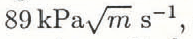
Due to the size of each specimen, it should be noted that only five specimens could be harvested from each ice sheet and, therefore, only a limited number of test results are available at this time. Preliminary results of fracture experiments arc shown in Figure 4, where each group is represented as an average of four experiments. It is recognized that a larger amount of data is required for each group and that a wider range of notch radii need to
Notch, geometries: (a) group A, (b) group B, (c) group C, (d) group D.

Typical load versus time plot for saline-ice beams.

Effects of notch-root radii on KQ of saline ice.

be examined for any conclusion to be statistically valid. From Figure 4, however, a trend of decreasing KQ with decreasing

An extremely interesting feature of the fracture of saline ice can be seen in photographs (5x magnification) of fractured specimens for each group (Fig. 5). In each photograph, fracture initiated in the direction parallel to the long direction of the pure-ice platelets which characterize the substructure of saline ice. Along the boundaries of the platelets are the brine inclusions which contain brine and solid salts (Weeks and Ackley, 1982). However, fracture did not always initiate as just described. In a few cases, the orientation of the sub-structure was apparently not an easy path for initiation and fracture occurred at angles to the ice platelets. It is not clear whether the fracture load was higher in these cases and only with more experiments will this issue be resolved. In Figures 5a and 5b, specimens A6 and B4, respectively, the arrows labeled A indicate the crack path while those labeled Β indicate damage created during thin sectioning.
Conclusions
• Photo-micrographs revealed that, in almost all cases, fracture initiated parallel to the platelet sub-structure of grains oriented most favorably to the crack tip.
• KQ for cold, saline ice of constant temperature (−25°C) shows an apparent decreasing trend with decreasing notch-root radius, although more work is needed to verify this trend experimentally.
• Saline ice is apparently not as sensitive to notch acu¬ity for intermediate notch-root radii as fresh-water columnar ice, at least at the temperature used for this study. This is believed to be caused by the extreme differences in the micro-structure of saline ice as compared to fresh-water columnar ice. It remains to be seen how the effects of higher brine volume in conjunction with notch acuity will affect the apparent fracture toughness.
• Scribing a crack is a rcpeatable and reliable method for forming a sharp crack in fracture-toughness specimens of saline ice.
Acknowledgements
The authors thank Mr Philip Parker for his assistance in the experimental phase of this study and Mr Carl Davcy for development of the four point loading apparatus. This research was supported in part by the U.S. Office of Naval Research under Grant no. N00014-90-J-1360 and in part by the U.S. National Science Foundation under Grant no. MSM-86-18798. Mr Parker was supported under a grant by the U.S. National Science Foundation’s Research Experience for Undergraduates Program.



