Among natural disasters, earthquake is associated with heavy casualties and economic damages because of the damages that are incurred to the infrastructure and lifelines, causing considerable mortality. Reference Kheradmand, Jahangiri and Sohrabizadeh1 Sudden occurrence, the nature of the risk, type of trauma that occurs, alongside destruction of infrastructures and hence loss or inefficiency of health-care diagnostic services increase the probability of mortality of the injured and victims of earthquake. Reference Jaiswal and Wald2,Reference Peng and Hu3 Due to the nature of the earthquake and the damage to residential buildings, most of the injuries to affected people are severe soft tissue injuries, musculoskeletal injuries, and physical injuries such as crush and compartment syndrome, fractures and trauma caused by falling debris, and being trapped under debris and prolonged immobility. But for those who survive this stage, there are still health risks. Reference Cohen, Agnelli and Anderson4,Reference Li, Lin and Chang5 Based on the studies, in addition to physical injuries and trauma resulting from earthquake, the incidence of cardiovascular disease including hypertension, myocardial infarction, heart failure, and Deep Vein Thrombosis (DVT) increases in earthquake survivors. Reference Sato, Sakamoto and Hashimoto6 The complications resulting from secondary traumas and absence of emergency health-care services on the 1 hand and the obligation to reside in cars or emergency shelters with high population density alongside factors, such as stress, little rest, and not consuming water because of lack of access to water or shortage of drinking water, all provide conditions to predispose the survivors to DVT. Reference Koenig and Schultz7–Reference Yokota, Kojima and Yamauchi9 DVT occurs when a thrombus (blood clot) forms in the deep veins of the body (usually in the lower limbs). This thrombosis can cause leg inflammation or pain, although it can be sometimes asymptomatic. Reference Paydar, Sabetian and Khalili10 The displacement and movement of the blood clot toward the heart and then its entrance to pulmonary artery cause the clot to be entrapped in pulmonary arteries, which is known as Pulmonary Embolism (PE). PE is the most common complication of DVT. Reference Konstantinides, Barco and Lankeit11,Reference Wells, Ginsberg and Anderson12 Hence, in earthquake-stricken people and those who are subject to trauma, the risk of developing DVT and then PE is very high. Reference Paydar, Sabetian and Khalili10 In the study by Ueda et al., regarding the prevalence of DVT among residents in temporary accommodation shelters following earthquake in the east of Japan, it was found that 2.2% of the injured people developed DVT, which is 200 times higher than the rate of this disease under normal conditions in Japan. Reference Ueda, Hanzawa and Shibata13 The report of increasing cases of PE and sudden death in the injured people because of Niigata-Chuetsu earthquake in 2004 caused the Japan’s health-care managers to set DVT diagnosis and treatment screening programs in their agenda to reduce the probability of mortality of the injured and survivors of the earthquake because of thromboembolism. Reference Shibata, Chiba and Sasaki14 Lack of preparation and planning by the health-care system to confront the detrimental consequences of natural disasters especially in low- and middle-income countries cause the health status of the public to be affected, whereby the crude mortality rate index increases. Reference Aghamohamadi, Hajinabi and Jahangiri15,Reference Goyet, Rayamajhi and Gyawali16 Conducting research and investigating patterns of diseases as well as the resulting injuries caused by earthquake can play a key role in planning to mitigate the detrimental consequences of disasters. Reference Tan, Lee and Chang17 In recent years, different field studies have been performed on examining the rate of DVT post-earthquake. However, after a comprehensive search, no study was found that has generally investigated all studies and reports of the total rate of DVT post-earthquake. Thus, the present study as the first systematic review and meta-analysis has dealt with exploring all studies performed in this regard. The findings can then be helpful in health-care policy-making and for planning to enhance the awareness of health-care providers as well as to reduce the harmful consequences of earthquake among the public.
Methods
Preferred Reporting Items for Systematic Reviews and Meta-Analyses (PRISMA) guideline was used for performing the present review study. Reference Moher, Liberati and Tetzlaff18 The protocol of this review study has been recorded in International Perspective Register of Systematic Review (PROSPERO) under the code of CRD42021290375.
Search Strategy
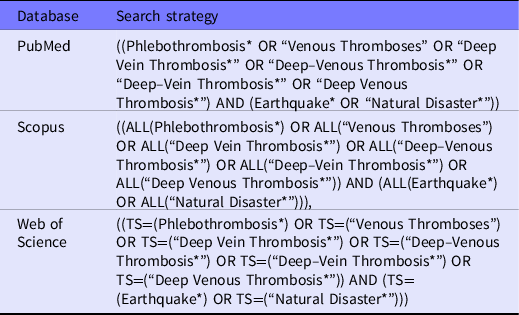
In this review study, to search and extract the relevant studies, English and Persian references including PubMed, Scopus, Web of Science, Science Direct, Google Scholar, Magiran, SID, and Embase were used. The searches were performed in Persian and English languages without time constraint until the end of December 2021. For the search, valid English keywords as well as their Persian equivalents including “Phlebothrombosis”, “Venous Thromboses”, “Deep Vein Thrombosis*”, “Deep-Venous Thrombosis*”, “Deep-Vein Thrombosis*”, “Deep Venous Thrombosis*”, Earthquake*, “Natural Disaster*” were used. Also, to develop the search strategy, keywords, search fields, and different types of operators were used. The developed search strategy has been mentioned in PubMed as follows, with Table 1 mentioning the search strategy in other types of databases.
Search strategy in different types of databases

The search strategy of PubMed included the following: (Phlebothrombosis* OR “Venous Thromboses” OR “Deep Vein Thrombosis*” OR “Deep-Venous Thrombosis*” OR “Deep-Vein Thrombosis*” OR “Deep Venous Thrombosis*”) AND (Earthquake* OR “Natural Disaster*”) (Table 1).
Inclusion and Exclusion Criteria
The inclusion criteria were studies that had reported rate of DVT among earthquake survivors (general population and patients) in Persian and English. Exclusion criteria included review studies, interventional studies, letter to editor-in-chief, lack of access to full text papers, studies other than Persian and English, studies that had reported rate of DVT among the victims of disasters other than earthquake, and the studies that had reported Venous Thromboembolism (VTE) and PE following earthquake.
Selection of Studies
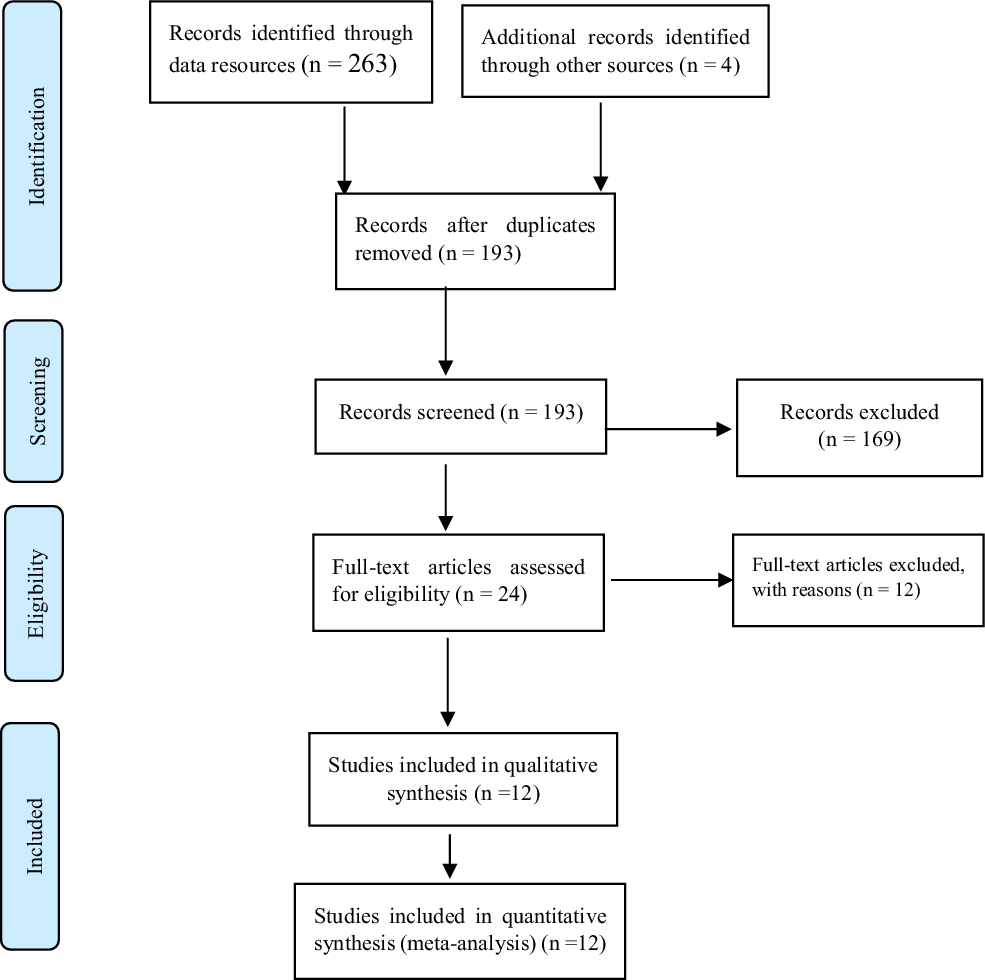
EndNote 7 software was used for managing the references. For this purpose, all initially identified studies were introduced into this software, and after removing the duplicate cases, 193 papers were screened in terms of title and abstract. Next, 2 researchers independently investigated the full text of 24 possibly relevant studies, and eventually chose 12 studies for qualitative assessment. Any disagreement between the 2 researchers was resolved through a third person.
Quality Assessment and Data Extraction
At this stage, 2 researchers independently performed quality assessment of the chosen studies through Appraisal tool for Cross-Sectional Studies (AXIS) tool. Reference Downes, Brennan and Williams19 This tool has a score range of 0-20, whereby the studies acquiring higher scores were included. For data extraction, 2 researchers independently and using an already prepared checklist extracted the required information including name of first author, place of study, year of study, year of earthquake, sample size, the number of women and men, site of screening, type of survivors, follow-up time, and rate of DVT. At these 2 stages, again any disagreement between the 2 researchers was resolved through a third researcher.
Statistical Analysis
I2 index was used to investigate heterogeneity across studies. Heterogeneity values less than 25%, 25-50%, 50-75%, and above 75% represent no heterogeneity, average heterogeneity, high heterogeneity, and very high heterogeneity. Reference Sahebi, Abdi and Moayedi20 Random effect model and subgroup analysis were used to reduce heterogeneity and identify the cause of heterogeneity across the studies. Sensitivity analysis was used to evaluate the effect of each study on the final results. The Begg test was used for examining publication bias in the study. To explore the relationship between year of earthquake and follow-up time as well as DVT rate, meta-regression was used. The data were analyzed by STATA 14 software.
Results
Results of Systematic Review
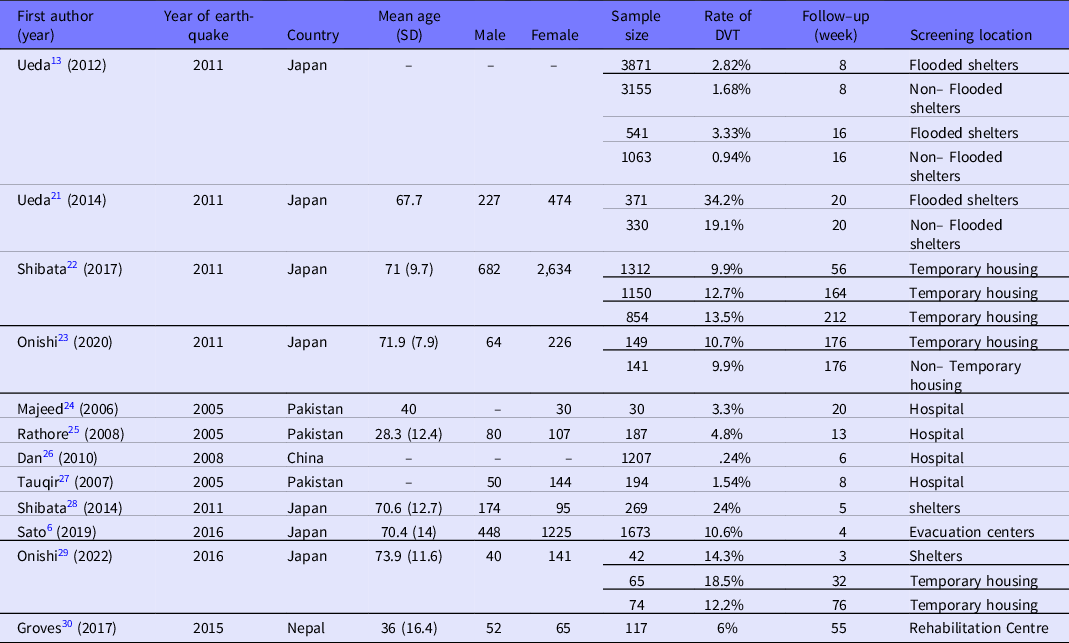
Based on the preliminary search, 267 papers were identified, and after removing the duplicate cases, 193 were screened. After the screening, 24 papers were chosen to examine their full text, and eventually 12 studies were chosen after quality assessment and then introduced into the meta-analysis stage (Figure 1). The results of quality assessment based on the AXIS tool were in the range of 13-18. In this study, 16795 individuals affected by the earthquake were screened in terms of DVT; 1830 of them were male and 5401 females. Also, among them were 1735 patients (with spinal cord injuries and fractures) and the rest were the general population. Follow-up time was considered from the time of the earthquake to the DVT screening. Since in most studies, follow-up time was considered in terms of weeks, in the present study, follow-up time in terms of weeks was considered. All included studies had observational methodology. All studies had been performed between 2006 and 2021. From among the 12 included studies, 7, 3, 1, and 1 had been performed in Japan, Pakistan, China, and Nepal, respectively (Table 2). In all studies, ultrasound had been used for diagnosing DVT.
Flowchart of the selection of studies based on PRISMA.

Characteristics of studies chosen for meta–analysis

Subgroup Analysis
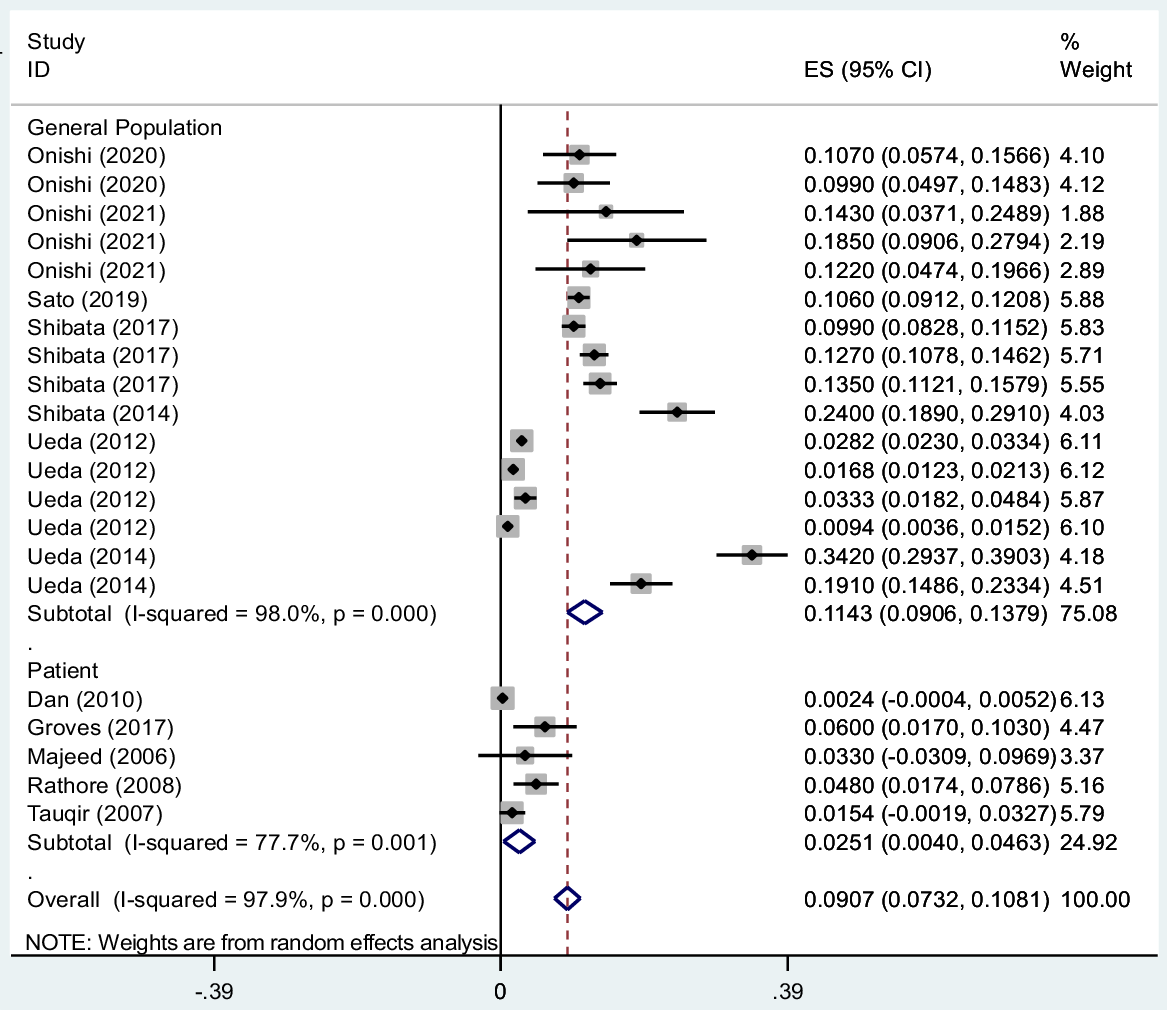
Based on the meta-analysis results, the total rate of DVT was 9.07% (95% confidence interval [CI]: 7.32-10.81; I2 = 97.9%; P = 0<0.001) (Figure 2). Subgroup analysis based on the type of survivors showed that rates of DVT the among the general population and patient survivors were 11.43% (95% CI: 9.06-13.79; I2 = 98%, P = 0<0.001) and 2.51% (95% CI: 0.04-4.63; I2 = 77.7%; P = 0.001), respectively (Figure 2). I2 index indicated that in reporting the total rate of DVT, the heterogeneity of studies has been very high.
DVT rate and 95% confidence interval for each of the examined studies and all studies. The point in the middle of each line segment indicates the rate of DVT, and the length of the line segment represents 95% confidence interval.

Publication Bias and Meta-Regression
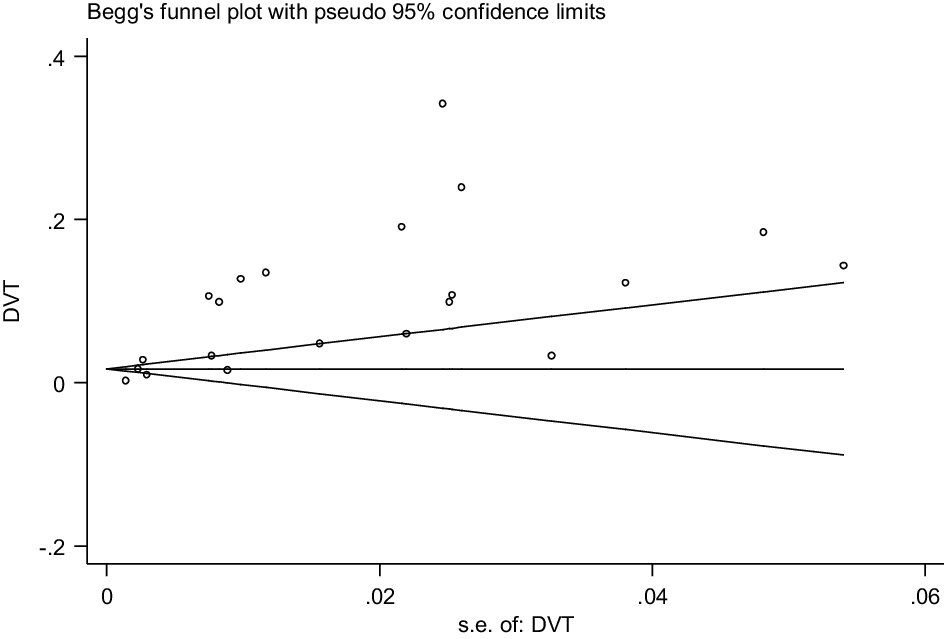
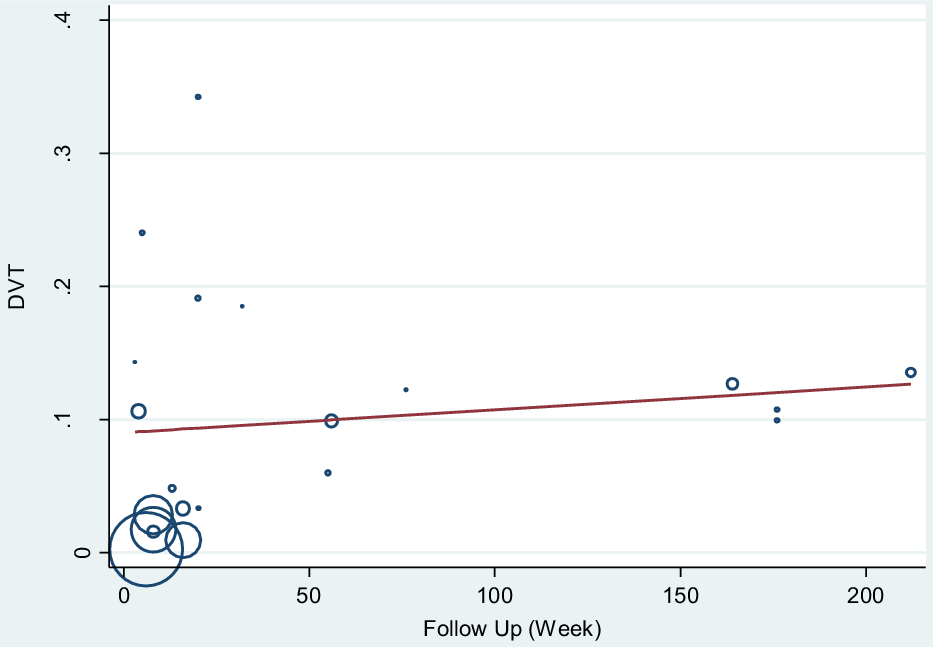
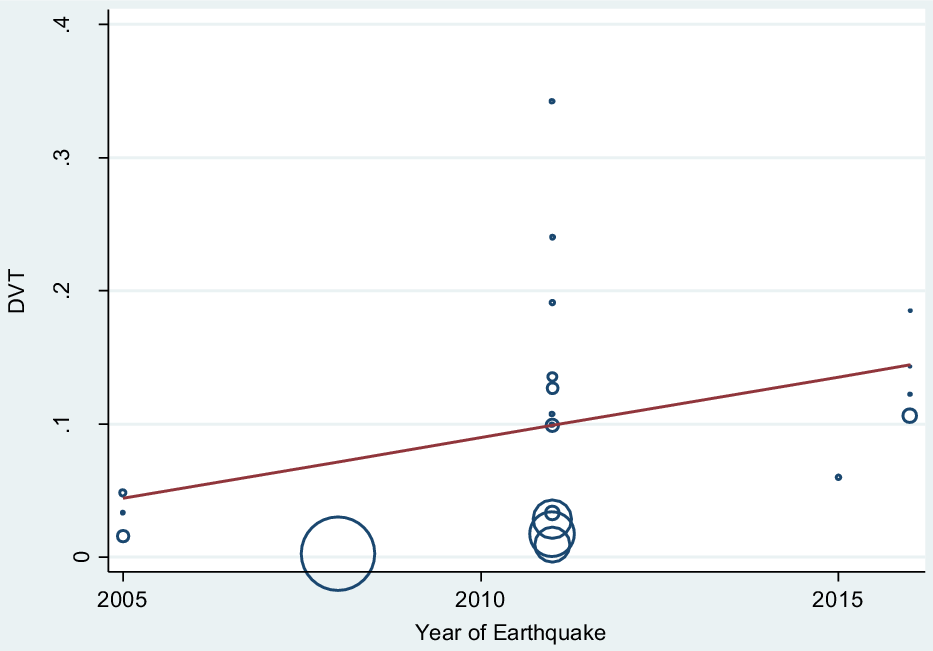
Based on the results of the Begg test (P = 0.516), the publication bias was not considerable (Figure 3). According to the meta-regression results, there is an increase in the DVT rate in terms of the variables of follow-up time and year of the earthquake (Figures 4 and 5).
Publication bias based on the Begg test.

Meta–regression of DVT rate based on follow–up time.

Meta–regression of DVT rate based on year of incidence of earthquake.

Sensitivity Analysis
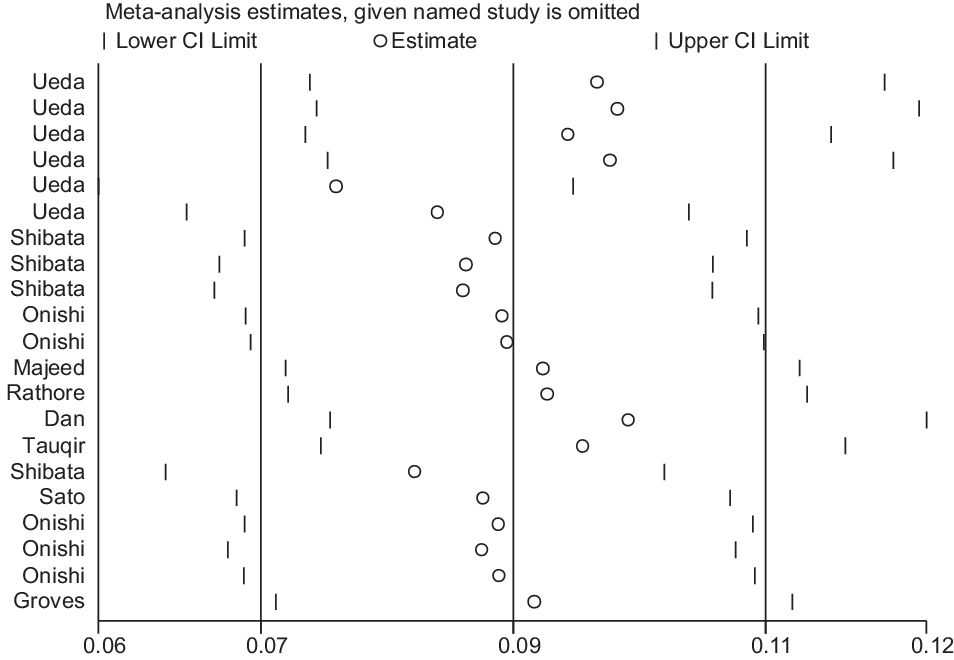
The results of the sensitivity analysis showed that the elimination of a study at a time had no effect on the overall results. Therefore, the study results are stable and robust (Figure 6).
Sensitivity analysis for the post–earthquake DVT rate.

Discussion
This review study dealt with examining DVT rate following earthquake, whereby 12 studies underwent meta-analysis. The study results showed that the total rate of DVT following earthquake was reported 9.07%. The results of a study examining DVT rate following earthquake in Italy in 2012 reported DVT rate of 11%. Reference Hanzawa31 The results of a study in China showed that the incidence of DVT among burn patients was 1.8%. Reference Peng, Yue and Gao32 Another study in 2016 in the United States examining the rate of incidence of DVT among orthopedic traumatic patients between 2006 and 2013 reported DVT rate of 0.84%. Reference Whiting, White-Dzuro and Greenberg33 PE has been one of the consequences of DVT, and the results of a study in 2013 showed that around 33.5% of DVT patients experience PE, and PE is one of the common causes of mortality. Reference Jackowski, Grabherr and Schwendener34,Reference Li, Wang and Huang35 Meanwhile, the most important strategy in DVT is prevention, and the most important preventive measure is pharmacotherapy and rehabilitation. Other preventive measures in DVT include active exercise, walking, massage, and elastic socks. Reference Koeda, Narita and Tsushima36 Furthermore, other factors affecting incidence of VTE including age, familial history, and patient’s weight should also be considered. Reference Oliver, Mackenzie and Lenart37 In investigating the results of studies with the present study, it can be concluded that DVT rate has been higher among earthquake victims compared with other injuries. Meanwhile, the severity and extent of physical injuries of earthquake have been greater than in other incidents. Thus, possibility of damage to veins exists both directly and indirectly following earthquake, and there is risk of thrombosis. Because DVT causes PE and the risk of mortality is high among these individuals, health-care providers should, in addition to providing life-saving care during the acute phase, also examine the lower limbs in terms of DVT signs, and if required take the necessary preventive measures.
The results of the present study showed that the rate of DVT in patients (2.51%) is lower than the general population (11.43%), a possible cause could be receiving anticoagulants in patients prone to DVT as soon as they are hospitalized. Thus, receiving prophylactic drugs reduces the risk of DVT in them compared with the general population. Also, the results of the present meta-regression showed that the DVT rate had an upward trend in terms of follow-up time and year of earthquake. The results of a study in 2021 in Japan to explore the rate of DVT among flood victims between 2017 and 2019 showed that the DVT rate did not have an ascending trend; various factors including place of residence of the evacuees who had been away from the destructive regions as well as active DVT screening have been among the reasons of this non-ascending trend. Reference Sunohara, Miura and Komatsu38 Also, the results of another study in the United States showed that tornado had no effect on increasing the rate of DVT. Reference Silva–Palacios, Casanegra and Shapiro39 Comparative examination of the studies shows that the results of the performed studies have not been line with the present study, and DVT trend has been ascending in earthquake, while not being increasing in other natural disasters. This may be because physical injuries, fractures, crush syndrome, and compartment syndrome are greater in earthquake compared with other natural disasters such as flood and tornado. Reference Vasei and Jahangiri40 These damages alongside lack of mobility, dehydration, and improper release from rubble, which sometimes causes permanent disabilities such as spinal cord injury, have caused increased risk of DVT. Accordingly, the possibility rate of DVT following earthquake increases, and these factors can justify the ascending trend of DVT post-earthquake. Thus, it seems that, in addition to notifying health-care providers in earthquake-stricken regions, preventive measures should be taken for reducing rate of DVT and the injured individuals as well as earthquake survivors should be screened in this regard. Hence, conducting proper research and increasing the awareness as well as knowledge about the damages and injuries resulting from earthquake can be an important factor in planning and mitigating the consequences resulting from earthquake in the affected population. One limitation of the present study was high heterogeneity across the studies, which was somehow mitigated through subgroup analysis. Another limitation was not reporting the DVT rate per gender, and as such it was not possible to calculate it in terms of gender. Another limitation was low distribution of the studied countries; the studies had been performed in only 4 countries. It is suggested to investigate the rate of DVT among earthquake victims in all earthquake-prone countries.
Conclusions
The results of this review study indicated that the DVT rate has been higher among earthquake victims compared with other disasters. Meanwhile, over time, the DVT rate following earthquake has had an ascending trend. Following occurrence of earthquake, the focus of the rescue and health-care teams is on the individuals with observable injuries and damages. On the other hand, the conditions promote higher rate of DVT among earthquake survivors because of various risk factors such as trauma, long immobility, remaining under rubble, and dehydration. Meanwhile, DVT is initially asymptomatic, but it has fatal consequences such as pulmonary embolism and sudden death. Thus, it should be incorporated in the assessment of the health status of earthquake-stricken people as well as screening programs by health-care providers.
Data availability
The datasets used and/or analyzed during the current study are available from the corresponding author on reasonable request.
Acknowledgments
This study is an outcome of a research proposal approved by the ethics code of IR.SBMU.PHNS.REC.1400.167 at Shahid Beheshti University of Medical Sciences, Tehran, Iran.
Author contributions
K.J. and A.S.: Study design and Supervision. A.S., K.J., and B.N.Z.: Data collection and data analysis. N.V. and B.N.Z.: Initial draft. All authors critically reviewed draft and approved the final manuscript.
Funding
The study was supported by Shahid Beheshti University of Medical Sciences, Tehran, Iran.
Conflict of interest
None. The authors declared no competing interests.
Ethical standard
This study was approved by the Research Committee of Shahid Beheshti University of Medical Sciences, Tehran, Iran (ethical code: IR.SBMU.PHNS.REC.1400.167).
Consent for publication
Not applicable.