




No CrossRef data available.
An integrative theory of attention-deficit/ hyperactivity disorder based on the cognitive and affective neurosciences
Published online by Cambridge University Press: 01 November 2005
Abstract
Attention-deficit/hyperactivity disorder (ADHD) is a behavioral syndrome that arises in early childhood, often co-occurs with conduct disorder and leads, developmentally, to antisocial behavior and substance abuse. Models from cognitive and affective neuroscience have been invoked in an effort to understand the development of ADHD, leading to a broad array of interrelated theories and hypothesized mechanisms. In this paper, we highlight core mechanisms that may cut across several theories and constructs, and thus provide some leverage for further study and conceptualization from a neuroscience perspective. We emphasize the joint operations of frontostriatal and frontocerebellar neural loops in detecting and predicting what and when important events in the environment will occur and their interaction with frontoamygdala loops in assigning emotional significance to these events. We note that weaknesses in the development of these basic operations could lead to decrement in the development of cognitive and affective control and other mental operations mediated by prefrontal cortex during development. In turn, such decrement could lead to many of the phenotypic cognitive and neuropsychological features seen in children with ADHD.
This work was supported by National Institute of Mental Health Grants R01-MH59105 and R01-MH63146 to J.T.N. and NIMH R01 MH63255 and NIDA R21 DA15882 to B.J.C.
Information
- Type
- Research Article
- Information
- Copyright
- © 2005 Cambridge University Press
Considerable overlap exists in neuroscience-based theories of dysregulatory disorders such as attention-deficit/hyperactivity disorder (ADHD), conduct disorder, alcoholism, and substance abuse, from both cognitive and affective perspectives. For example, various operations subsumed under the concept of executive functions (related to the cognitive neuroscience concept of cognitive control) are thought to be related to ADHD (Barkley, 1997), conduct disorder (Seguin, Boulerice, Harden, Tremblay, & Pihl, 1999), alcoholism (Nigg, Glass, Wong, Poon, Jester, Fitzgerald, Puttler, Adams, & Zucker, 2004; Pihl, Peterson, & Finn, 1990), and substance abuse/dependence (Giancola & Tarter, 1999). Likewise, dysfunctional reinforcement responses in the brain (related to affective response systems) are implicated in ADHD (Sagvolden, Aase, Zeiner, & Berger, 1998), conduct disorder/antisociality (Gorenstein & Newman, 1980; Raine, 2002), alcoholism (Finn, Mazas, Justus, & Steinmetz, 2002), and substance abuse. This overlap is not surprising, because ADHD and antisocial behavior/conduct disorder co-occur at high rates (Hinshaw, 1987). In addition, both ADHD and conduct disorder and their joint occurrence confer risk of future alcoholism and substance abuse. Indeed, some theorists have proposed that the same cognitive and affective mechanisms underlie all of the “dysregulatory” psychopathologies of hyperactivity, antisociality, substance abuse/dependence, impulsive aggression, and mania (Gorenstein & Newman, 1980).
However, clinical syndromes can be meaningfully, if partially, discriminated in the case of attention deficits/hyperactivity and conduct problems/aggression (Hinshaw, 1987). Likewise, the neuroanatomical correlates of these syndromes may be partially separable. For example, problems in cognitive control may predominate in ADHD, whereas deficits in affective responding (e.g., lack of fear conditioning or anxiety) may better characterize a subgroup with severe antisociality or psychopathy (Lorber, 2004; Nigg, 2003). Alternatively, it may be that similar neural systems (or the same psychological mechanisms) are involved in these overlapping disorders, and that the specific behavioral expression depends on learning history or other moderators during development.
It is not surprising that the neural systems implicated in the various mechanism-based theories of these impulse-control disorders overlap as well. Executive functions, reward, emotional regulation, and motivation, for example, all involve closely related neuroanatomical circuits and neurochemistry. It therefore may be possible to clarify our understanding of these mechanisms by drawing upon insights from cognitive and affective neuroscience, in conjunction with insights from developmental psychopathology. In this article, we emphasize behavioral regulation or cognitive control, defined as the ability to suppress inappropriate behaviors in response to contextual and temporal cues and adjust behavior accordingly. We consider how cognitive control may be related to affective response, and how both may be developmentally related to ADHD, which serves as our exemplar impulse-control/regulatory disorder.
Advances in neuroimaging tools and the growing integration of cognitive and affective neuroscience provide a fresh opportunity to describe the neurobiological basis of the cognitive and affective processes implicated in ADHD. A cognitive and affective neuroscience approach provides the opportunity to refine conceptions of these impulse-related psychopathologies and sharpen and clarify the core mechanisms that may cut across some of these diverse syndromes. We focus on ADHD while recognizing the likelihood of some overlap in our logic with what may be claimed about other, perhaps related, impulse-control disorders.
ADHD Phenotypic Features and Neuroanatomic Correlates
Clinical phenotype
We begin by briefly describing the phenotype to be explained. ADHD is an early-emerging behavioral syndrome, usually apparent by age 6 or 7 years, but thought to have developmental precursors much earlier than that. It is characterized by developmentally excessive activity, impulsivity, and disorganized, off-task behaviors. Hallmark behaviors include going off task with speech or activity, losing things, and having trouble staying organized, not seeming to pay attention to what is being said or done, excess activity (in children, running around “as if driven by a motor”), loud, reckless play, and impulsive, even dangerous behavior (e.g., blurting out something that should not be said; darting out into traffic without looking). As a result of these behaviors, children with ADHD are far more likely than nondisordered children to fall behind in school, to be suspended or expelled, to be rejected by peers and have few friends, and to be at risk for accidents and physical injuries (Hinshaw, 2002). The syndrome is more common in boys, at least in childhood, and relatively persistent, with a majority continuing to have some impairment into adolescence and a substantial percentage continuing to do so into adulthood (Mannuzza & Klein, 2000). These later impairing problems can include excess traffic accidents, marital problems, employment difficulties, injuries, as well as antisocial behaviors, alcohol and substance abuse and dependence, and aggression (Barkley, Murphy, & Kwasnik, 1996a, 1996b).
Groups of individuals diagnosed with ADHD are heterogeneous. DSM-IV specifies three subtypes: primarily inattentive, primarily hyperactive–impulsive, and combined (both inattentive and hyperactive–impulsive). Our focus in this paper is primarily on the ADHD-combined type.1
We thus use “ADHD” to mean the ADHD combined subtype. The ADHD combined type in DSM-IV is the most commonly studied group of children in the ADHD spectrum. This syndrome is closely related to what the ICD-10 calls hyperkinetic disorder of childhood, but the DSM-IV construct encompasses more children in part because it allows comorbid disorders such as conduct disorder; ICD-10 designates that group separately. The use of the models described here may help clarify the appropriate boundaries of the condition.
Despite the problem of heterogeneity, the literature admits of several clear group trends that can guide theorizing and application of neuroscience to the syndrome. Any such account may, in the end, account for a particular subset of the population with this behavioral phenotype. Yet, such accounts need to be developed so that those subgroups can eventually be properly identified and the diagnostic nosology refined in relation to etiological mechanisms.
Neurocognitive phenotype
The behavioral, cognitive, and neuropsychological phenotype of ADHD is relatively well characterized at this point. Thus, we know that, as a group, children with ADHD exhibit a range of context-dependent characteristic responses that cannot be fully explained by comorbid psychopathology (Nigg, Hinshaw, Carte, & Treuting, 1998; Nigg, Stavro, Ettenhofer, Hambrick, Miller, & Henderson, in press): (a) in slow, careful contexts, responses are hasty and inaccurate or inappropriate (clinically defined “impulsivity”); (b) in fast, accurate contexts, responses are slow and inaccurate (the “underaroused” hallmark; Oosterlaan, Logan, & Sergeant, 1998); (c) in fast decision contexts, the ability to interrupt a prepotent or prepared response is impaired (faulty “executive response inhibition”; Barkley, 1997; Logan, 1994; Nigg, 1999, 2001); (d) when complex organization of response is required, executive functioning is impaired, in the form of faulty planning, working memory, and integration (Barkley, 1997; Pennington & Ozonoff, 1996; Willcutt, Doyle, Nigg, Farone, & Pennington, in press); (e) in the presence of cues for reward or incentive, delay of reward is difficult, and immediate rewards are given disproportionate weight over larger but later rewards (Luman et al., 2005); and (f) temporal information processing is affected, with a tendency to overestimate time intervals (Barkley, Murphy, & Bush, 2001; Toplak, Rucklidge, Hetherington, John, & Tannock, 2003), a historical hallmark of impulsivity now being integrated with neuroscience theories (Castellanos & Tannock, 2002).
Several neurocognitive process theories have been developed to try to account both for the symptomatic behavior of individuals with ADHD, and for the preceding profile of cognitive and affective weaknesses, nearly all addressing aspects of self regulation in some form (Barkley, 1997; MacCoon, Wallace, & Newman, 2004; Sagvolden, Johansen, Aase, & Russell, 2005; Sergeant, Oosterlaan, & van der Meere, 1999). On the one hand, then, neuroscience has influenced ADHD theory substantially already (Barkley, 1997; Berger & Posner, 2000; Castellanos & Tannock, 2002; Pennington & Ozonoff, 1996; Sagvolden et al., 2005). On the other hand, theories remain relatively unintegrated from a cognitive and affective neuroscience point of view (Berger & Posner, 2000; Castellanos & Tannock, 2002). Furthermore, the developmental account in most theories is limited with regard to the interdependence of respective neural systems and cognitive abilities. We focus on how cognitive and affective neuroscience can help define the core computational mechanisms that may cut across some of these diverse theoretical accounts.
Neurodevelopment and ADHD
Development of the neural systems that support self-regulation (and are involved in ADHD), is expected to feature at least two key principals. The first is the mutual influence of components of regulatory control on one another during development, including the scaffolding of later abilities onto earlier abilities, assisted by the socialization context. Because of the importance of social interactions in this development, we often choose social interaction examples to illustrate our points later. Second, neural organization is expected to reflect increasing specialization during development in childhood as higher order cognitive abilities take hold (Johnson, 2001). Indeed, neural development of the cortical and subcortical pathways, at issue here, continues as late as early adulthood in the form of continued myelination, pruning, and specialization of circuitry (Benes, 2001; Casey, Tottenham, Liston, & Durston, 2005; Gogtay et al., 2004; Sowell, Thompson, Holmes, Jernigan, & Toga, 1999; Sowell, Thompson, Leonard, Welcome, Kan, & Toga, 2004). These processes mature at different rates in different cortical and subcortical areas, with the regions of prefrontal cortex most important for cognitive control completing synaptic specialization the latest (Bourgeois, Goldman–Rakic, & Rakic, 1994; Huttonlocher & Dabholkar, 1997).
Among the core computational mechanisms at issue here, the ability to predict temporal and contextual structure in the environment is central. This ability develops as early as infancy, as evidenced by infant looking times to events that violate their implicit predictions (Saffran, Aslin, & Newport, 1996). However, the ancillary ability to deliberately alter behavior in response to cues or unexpected events may not emerge until toddlerhood (Rothbart & Bates, 1998), as evidenced by toddler's ability to voluntarily override a cue to calm their own mood. This ability becomes refined with age in the cognitive domain as shown recently by Rueda, Fan, McCandliss, Halparin, Gruber, Lercari, and Posner (2004), who found that by age 7 years, attentional responses could be redirected from competing sources to the relevant one.
With development, these cognitive and neural systems become more differentiated as they are modulated both by experience and by the maturation of top-down cortical projections from prefrontal cortex that help the child alter behavior to achieve a goal when these predictions are violated. This increasing differentiation is observed, for example, when a simple ability to wait a short time for a reward (the toddler or preschooler who manages to wait quietly in anticipation of dessert) develops into the ability to plan and carry out several self-directed steps to realize a goal (as when a 10-year-old child assembles a model airplane or plans an elaborate game of house with her friends).
Early infant and toddler abilities to orient attention, respond to cues, and control their behavior may be framed as precursors to the mature development of (a) reflexive orienting (“where” orienting), guided by a parietal–thalamic circuit; (b) alerting and vigilance (“when” orienting), guided by noradrenergic activation of right-lateralized circuitry including the cerebellar–cortical circuits; (c) reinforcement learning and reward response, guided by frontolimbic circuitry; and (d) effortful regulation and voluntary planning of behavior and cognition, which involves frontostriatal circuitry.2
Some theorists believe motor circuitry is also involved in ADHD; in the interest of space, we do not explore that literature in this paper. For further discussion see Denckla and Rudell (1978); Eliasson, Rosblad, and Forssberg (2004); and Gilberg (2003). Moreover, Berger and Posner (2000) describe a right-lateralized alerting network that may be involved in ADHD; we conceive of it as related to our “when” circuit, although some conceptual differences remain in these circuits.
Of these basic circuits, three appear to be involved relatively more in the case of ADHD. Evidence for the involvement of the posterior reflexive orienting system has generally been negative (see meta-analysis by Huang–Pollock & Nigg, 2003). Thus children with ADHD generally do not have difficulty orienting to “where” a stimulus is expected. We therefore do not discuss that circuit further. However, more evidence suggests they have difficulty efficiently activating voluntary or effortful control systems (Nigg, 2001).
Their difficulty in doing so may emanate from difficulty in altering behavior in light of information contrary to predictions, perhaps in turn due to failure to form accurate predictions of two sorts. First, they may have difficulty adjusting to what is presented when it violates what was expected (or when predictions were ineffective). Second, they may have difficulty adjusting behavior to when (timing) something happened that was unexpected (or ineffectively predicted). Because these fundamental, somewhat mechanistic prediction abilities are presumed to underlie higher order behavioral control, and because that deliberate control is affected in ADHD, we focus most heavily on a detailed account of those fundamental “what” and “when” prediction abilities. If the myriad cognitive deficits associated with ADHD could be traced to these fundamental prediction mechanisms, it would enable a simplification and consolidation of neurobiological theories of the disorder.
However, we note also that the development of these cognitive control systems (experienced as voluntary or deliberate control) emerges in conjunction with reactive (relatively involuntary) affective response systems. ADHD co-occurs at above chance levels with affective disorders such as anxiety disorders and major depression (Pliszka, Carlson, & Swanson, 1999) and may be a precursor to severe unsocialized aggressive behavior and psychopathy, which may be accompanied by failure of normal affective reactions such as empathy. Moreover, the normal development of cognitive control may be thought of as presuming intact affect response systems and vice versa, because of the interdependent nature of these circuits functionally and their cross-talk during development. Therefore, we argue that a complete understanding of ADHD along with its comorbid and related disorders mandates integrating an account of these cognitive control systems with affect-related neural systems involved in detecting the emotional significance of events. We first summarize neural correlates of ADHD and then provide a more detailed account of the circuitry that appears to be involved and its functional significance. We conclude by summarizing potential distinct pathways to the disorder of ADHD.
Neural systems implicated in ADHD
Neuroimaging findings
The clinical neuroimaging literature has implicated three primary regions in ADHD. This circuitry includes portions of the prefrontal cortex, basal ganglia (especially the caudate), and cerebellum (especially the neocerebellum and in particular the vermis; for a review, see Swanson & Castellanos, 2002). Abnormalities in size, asymmetry, and/or glucose metabolism and blood flow are typically reported in studies based typically on either magnetic resonance imaging (MRI) or positron emission tomography. For example, MRI studies of ADHD have revealed abnormalities in the size and symmetry of the basal ganglia (Castellanos et al., 1996; Castellanos, Giedd, Eckburg, Marsh, King, Hamburger, & Rapoport, 1994) and recent functional MRI studies show decreased activity in prefrontal cortex and basal ganglia regions (Bush, Frazier, Rauch, Seidman, Whalen, Jenike, Rosen, & Biederman, 1999; Durston, Tottenham, Thomas, Davidson, Eigsti, Yang, Ulug, & Casey, 2003; Vaidya, Austin, Kirkorian, Ridlehuber, Desmond, Glover, & Gabrieli, 1998). Although fewer studies have examined the function of the cerebellum in these individuals, morphometry studies suggest reductions in the volume of its medial portions in ADHD (Berquin, Giedd, Jacobsen, Hamburger, Krain, Rapoport, & Castellanos, 1998; Mostofsky, Reiss, Lockhart, & Denckla, 1998). Thus, the basal ganglia, cerebellum, and prefrontal cortex appear to be involved in ADHD. What are the likely functional implications of abnormal development in these structures and the neural circuits in which they participate?
Functional implications of neural circuitry involved in ADHD
Several theories have been advanced to try to answer the question just posed. We choose a somewhat different approach here in an effort to tie ADHD more closely to specific findings of cognitive and affective neuroscience. From that perspective, the neural regions implicated in ADHD are likely to be involved in key elements of cognitive control and affective response. The neuroimaging findings likely implicate three interdependent but distinguishable neural circuits. Two of these circuits respectively support learning to predict what may occur in a given context and when it may occur, as well as then detecting a violation of those predictions. The circuits involved in this type of learning and prediction are the frontostriatal (what) and frontoneocerebellar (when) circuits. Although these systems will be described as discrete learning systems below, clearly they work together in monitoring the environment and altering behavior in the appropriate context. They appear to develop in a mutually influencing manner as well (Diamond, 2000). These circuits provide means to alter or adjust behavior via afferent and efferent connections within the prefrontal cortex. The third neural system implicated in ADHD is involved in approach–avoidance related behavior when detecting and evaluating the emotional significance of an event or situation, a function linked to the frontolimbic circuit.
As described, the first two of these circuits are involved in knowing (a) when and (b) what to expect in different contexts. These abilities are essential for a child in planning and maintaining appropriate thoughts and actions in different situations over time. For example, a child with ADHD may completely misjudge the outcome of an action; he may disrupt the class expecting the other children to laugh and like him more, and fail to anticipate that instead the teacher expels him from the class and the other children now shun him as a troublemaker. A child with ADHD may also misjudge when an action will have its effect; for example, instead of waiting the last 5 min of class quietly for the exit bell, she may decide to disrupt class to begin playtime now, due to failure to recognize the close temporal proximity of the current goal.
These examples, although over simplified, imply direct effects of a predictive error at the behavioral level. Such errors, however, may exert their effects in more subtle misdirection of behavior and failure to adapt it optimally to context, leading to a gradual erosion of goal attainment and other negative outcomes. This maladaptive process occurs because behavior is continually being adapted “on line” as situations unfold, with a continuing stream of predictions and expectations to be matched by these neural circuits. It is often commented that ADHD is not a failure of knowing what to do, but of doing what they know. From our perspective, children with ADHD may know what the correct behavior is in a situation once they identify the situation, but they may fail to identify that the current situation is that situation in which the expected behavior is demanded, because they have failed to accurately compute the effects and timing of those effects in relation to their behaviors.
Maintaining representations of such events and information likewise is essential in suppressing competing information and competing, but inappropriate, actions. Suppression problems are well established in children with ADHD (for reviews, see Barkley, 1997; Nigg, 2001). If basic expectations about the environment are inaccurate or less salient for the child with ADHD, then her ability to detect violations of expectation will be weakened, resulting in less top-down, cortically mediated control being recruited and exerted in response to such violations. Returning to our example of the child clowning around at the wrong moment in the classroom, the child may fail to accurately predict the teacher sanction for the misbehavior and as a result fail to accurately appraise the initial signals for the teacher's impending action (e.g., the teacher issues a verbal warning) when beginning the disruptive behavior. The ensuing sequence of behaviors in turn are not modulated with the new information and the child fails to adjust in time to avoid the expulsion and unintended negative consequences for herself, which another child might have either predicted (and so waited for a different moment to clown around) or foreseen and avoided, even after beginning the behavior, but then noting (implicitly, of course) that certain predictions were not being met.
The overall result for the child with ADHD would be less effective adaptation in a situation by situation manner, depending on how well the predicted situations match the actual ones. This difficulty, in turn, would interfere, in a potential cascadelike fashion, with development of a range of self-control skills during the neural specialization and consolidation that occurs throughout childhood. In the same vein, breakdowns in one or more of these basic abilities might weaken the ability to respond to reinforcers, to temporally predict events, to maintain appropriate arousal regulation, all of which are aspects of the disorder. For example, if a reinforcer does not occur when expected because the prediction of its occurrence was not temporally accurate (the children do not laugh at the clowning because it occurs too close to the teacher having issued a warning or because it occurs just before a test when children are studying), then the child will have difficulty learning a self-control skill.
Summary
To recap, the neural circuitry described here and relevant to ADHD includes (a) frontostriatal loops involved in response output control/response suppression, as well as in working memory and response selection; (b) frontocerebellar loops involved in temporal information processing that may therefore also be important in timing and in alerting to new information; and (c) frontolimbic loops involved in reinforcement learning and avoidance conditioning (approach and avoidance-related behavior). These circuits have functional implications for basic learning computations that undergird behavioral and cognitive control, as well as affect regulation and adjusting to changes in the context. We next describe the functioning of these circuits in more detail, focusing first on the cognitive control circuits and then on the affect regulation circuit, before suggesting their implications for pathways to ADHD.
Three Related Neural Circuits Involved in ADHD
Frontostriatal and frontocerebellar circuitry in relation to cognitive control
The frontostriatal and frontocerebellar loops share a number of characteristics that lead us to discuss them in concert. For example, both the cerebellum and the basal ganglia project to the prefrontal cortex via the thalamus. The primary neurotransmitter in both the basal ganglia and cerebellum is γ-aminobutyric acid (GABA), an inhibitory neurotransmitter. Glutamate, an excitatory neurotransmitter, is found in the prefrontal cortex and thalamus. Dopamine is a critical neuromodulator of both circuits (Braver & Cohen, 2001; Cohen & Servan–Schreiber, 1992; Montague, Dayan, & Sejnowski, 1996) that is expressed preferentially in portions of the prefrontal cortex, basal ganglia, and in the neocerebellum including the dentate nucleus and vermis, which are regions implicated in ADHD, namely lobules 9–10 (Hurley, Mash, & Jenner, 2003). Both circuits also receive noradrenergic projections (Berridge, 2001), which again are notable in cerebellar vermis (Powers, O'Connor, & Price, 1989) and both show changes in activation levels in response to methylphenidate administration (Anderson, Polcari, Lowen, Renshaw, & Teicher, 2002; Taylor & Jentsch, 2001).
These two circuits differ, however, in their specific functional computations. The detection of unpredicted rewarding or novel events (what) has been linked to frontostriatal functioning (Berns, Cohen, & Mintun, 1997; Schultz, Dayan, & Montague, 1997), whereas alerting, monitoring and detecting violations in the timing of events (when) has been linked to frontocerebellar function (Ivry, Spencer, Zelaznik, & Diedrichsen, 2002; Spencer, Zelaznik, Diedrichsen, & Ivry, 2003).
Casey (in press; Casey, Amso, & Davidson, in press) proposed that striatal and cerebellar neural systems may have discrete roles in learning from environmental inputs based solely on event frequencies and timing, even as they work together in monitoring the environment and altering behavior in the appropriate context. We propose that these brain regions are able to alter behavior via afferent and efferent connections within prefrontal cortex, which are fine-tuned with experience over the course of development in childhood. This experientially dependent fine-tuning would proceed more slowly if these systems started out being inefficient. In ADHD, we suggest that there is diminished ability to alter behavior when predictions about the environment are violated, that can be due to a diminished ability to (a) make accurate predictions (subcortical) or (b) adequately override a predicted action with the appropriate alternative one when predicted events do not match with the actual ones (cortical). This type of deficit could emerge from altered catecholinergic modulation of the circuitry, altered prefrontal projections, or poor prediction-related functions presumably related to altered development of striatal and/or cerebellar neuronal regions or connections.
The frontostriatal (i.e., basal ganglia thalamocortical) circuit is well described (Figure 1), and at least five different loops are identified (Alexander, Crutcher, & DeLong, 1991; Middleton & Strick, 2002). These circuits include oculomotor, motor (bypassed herein, see footnote 2), prefrontal (dorsolateral and lateral orbital, which we emphasize here), and limbic circuits (which we describe in the next section). Each parallel circuit involves the same projection regions (basal ganglia, thalamus, and cortex), but they differ in the exact projection zone within each region and in the set of thoughts and actions they support.

The basal ganglia and cerebellar thalamocortical loops.
The general organization of these circuits involves prefrontal projections to different areas of the striatum (i.e., putamen or caudate nuclei, depending on whether in motor or cognitive loops, respectively), and then projections to a direct or indirect pathway. The direct pathway involves an inhibitory projection to the internal capsule of the globus pallidus and substantia nigra, resulting in the dampening of an inhibitory projection to the thalamus (i.e., disinhibition). The behavioral result is that activation in this pathway is thought to facilitate top-down goal-oriented behavior and thereby simultaneously suppress alternative nongoal-oriented behaviors. The indirect pathway consists of an inhibitory GABA projection to the external capsule of the globus pallidus that dampens the inhibitory projection to the subthalamic nuclei, resulting in excitation of the internal capsule of the globus pallidus and substantia nigra and inhibition of the thalamus. The behavioral result is that activation in this pathway leads to interruption of on-going behavior, enabling the individual to orient to new or unexpected information and thus setting the stage for appropriate adjustment of behavior to the new information. That pathway may also be important for the interaction of affective and cognitive control systems, as described subsequently.
Because the prefrontal cortex projects directly to the basal ganglia and cerebellum and both project back to the prefrontal cortex via the thalamus, an account of suppression of competing actions may be described here in somewhat mechanistic terms. That is, the basal ganglia and cerebellum are assumed to monitor the relative frequency and/or timing of events, respectively (Hayes, Davidson, Keele, & Rafal, 1998; McClure, Berns, & Montague, 2003; Spencer et al., 2003). This allows the system to predict what and when an event will occur, essential components of cognitive control, a process presumably disrupted during development in individuals with ADHD. Top-down prefrontal regions are assumed to “kick-in” when these predictions are violated (as signaled by the subcortical circuits), so are critical in enabling effective adjustment of behavior when a situation changes unexpectedly. Thus, frontocerebellar and frontostriatal circuits may provide neural mechanisms for learning about structure in the environment and detecting violations in these predictions, which are fed to the prefrontal cortex for integration with goals represented in working memory. The result is facilitation of top-down control of behavior as well as altering of behavior in response to relevant changes in context.
In the case of the child with ADHD, the system may break down in a couple of ways. First, it may break down in failure to identify an expected event (e.g., if the child has not learned that the bell at the beginning of school is a signal to settle down and begin working within 1 or 2 min, instead judging that there are 5 or 10 min of cushion, then she may continue clowning around, which will now be disruptive). Second, without having accurately predicted (learned) aspects of this temporal association, the ability to detect a violation in expected outcome is hindered (others are no longer joining in the clowning around, but the significance of this is missed). Third, even after the violated prediction is identified, the deliberate control mechanisms that should be recruited to support adjusting of behavior may be slow to come into play. What is important here is that these simple learning and prediction mechanisms, when compromised, could result in poor learning of predicted events and thus poor detection of unexpected events that should signal the child to alter her behavior. This in turn could drive continued maladaptive behavior, even when a child “knows” the correct behavior in a hypothetical situation.
In this view, then, the basal ganglia and cerebellum learn to predict and detect violations of prediction in the (a) timing (cerebellum) and (b) nature or frequency of events (basal ganglia), providing the system with a way to shift out a behavioral set to a more adaptive prefrontally guided behavior when salient, or unexpected, events occur. Otherwise, when a goal-oriented behavior program is running, the basal ganglia and cerebellum act broadly to inhibit or interrupt competing thoughts and behaviors that would otherwise interfere with the prefrontally driven goal or behavior (Casey, Durston, & Fossella, 2001; Mink, 1996). Thus, this model of cognitive control (Casey, 2000, in press) suggests that the role of the basal ganglia and cerebellum is, in part, supported by inhibitory (GABAergic) projections that could serve to interrupt the ongoing behavior when expectations are violated, thus enabling the switching or shifting of attention elsewhere to accommodate that important new information. The prefrontal cortex, which consists primarily of excitatory (glutamergic) projections, is thus involved in guiding and maintaining relevant information for action.
In this view, disruption of the prefrontal cortex results in weakened ability to carry out actions that must be represented in working memory, that require monitoring of new information, and that require holding multiple goals in mind. This model is consistent with our hypothesis of the way in which the prefrontal cortex, basal ganglia, and cerebellum are involved in the suppression of inappropriate thoughts and behaviors. This view of cognitive control also is consistent with some others that specify the role of the basal ganglia in interrupting behavior (Kimberg & Farrah, 1998), but it contrasts with still other cognitive theories that emphasize the role of ventral and orbital prefrontal cortex in inhibitory functions (Diamond, 1990; Iversen & Mishkin, 1970).
In turn, if the basal ganglia are injured, we would expect the child to either have difficulty in (a) suppressing competing behaviors during goal-directed activity, and/or (b) accurately predicting the likely results of their actions in a real situation (as opposed to a hypothetical situation) and thus in choosing an appropriate action in response to these cues from peers, teachers, and parents. Finally, if the cerebellum is affected, we would expect difficulty in (c) accurately predicting when behaviors should change. For example, the child in the classroom may continue to clown around telling jokes even though the bell has rung to indicate that it is time to settle down and begin school work, because she has misjudged the implicit temporal window allowed by the teacher for children to settle immediately after the bell.3
MacCoon et al. (2004) propose a related concept of behavioral regulation in their theory of psychopathy, in which impulsive behavior is driven by failure to detect cues that should lead to interruption of behavior, that is, by a failure of selective attention. That view is somewhat consistent with ours. However, in our account, that failure of cue detection is due not to an attentional failure, but to a failure to set up the appropriate predictions when launching the behavioral sequence. Because the predictions are not in place, the significance of the cue is lost and behavior cannot be adjusted.
To summarize and recapitulate: how might breakdowns in frontostriatal and/or frontocerebellar circuitry contribute to the symptoms and behaviors observed in a disorder such as ADHD? Assuming that frontostriatal and frontocerebellar pathways serve to recruit top-down control when detecting changes in the environment, then their disruption may result in inefficient prefrontal recruitment in shifting and maintaining a behavioral set in different contexts. This might appear as poor sustained attention to multistep or complex tasks (because the expected changes in the context as the task unfolds would not be computed efficiently), slow response in rapid decision contexts (because the system is inefficient at computing new information), difficulty efficiently shifting from one response set to another, and inefficient response to changing reward or learning contexts, all of which are consistent with the behavioral profile of ADHD. More speculatively, early disruption of these mechanisms may lead to inefficiencies in learning and socialization during development, hampering the normal consolidation of self-regulation. For example, to benefit from parental attunement, reflection, explanation, or correction, the young child has to accurately link the response to her own behavior. This linkage then enables the child to further strengthen their learning and self-regulation abilities. Inefficiency in this link may lead to failure to benefit from the “expectable” amount of parental correction, guidance, or discipline.4
This account is similar to that by Sagvolden and colleagues (2005). However, although they argue that socialization breaks down in ADHD because of a steep temporal gradient between behavior and consequence (thus, consequences too far out in time, yet within the average expectable window for child development, fail to get incorporated into learning), we are further suggesting that failure to accurately predict the possible consequences of a behavior results in inefficient computations when consequences do occur, so that the system fails to incorporate this new information. The view of Sagvolden et al., however, is compatible with our view.
The proposed model implies an important mutual-influence process in which intact cerebellar and basal ganglia activation depends on “expectable” prefrontal cortical responsivity, and vice versa. Thus, breakdowns in a prefrontal cortex system could lead to maladaptation of behaviors that depend on the exquisite recognition and timing of prediction violations in the environment, the latter depending on cerebellar/basal ganglia operations. In this instance, we might expect overactivity of these subcortical structures in a maladaptive response. Conversely, atypical development of cerebellar and/or basal ganglia neural pathways could disrupt adaptive operation of prefrontally, goal-directed behavior (i.e., cognitive control).
Frontoamygdala circuitry in affect regulation
Although affect-related frontoamygdala circuits have received comparatively less attention to date in biological theories of ADHD, affect regulation, motivation, and reactive response are quite important to the disorder. For example, there is increasing recognition that in addition to their difficulties with impulsive behavior, children with ADHD (and other impulse-control disorders) also have difficulty with anger, mood, and affect regulation (Pliszka, Carlson, & Swanson, 1999), an observation that is completely congruent with the integrated neural circuitry we are describing. Indeed, emotional context affects the recruitment of cognitive control, and a substantial literature investigates problems with approach or avoidance related processes in ADHD (Luman, Oosterlaan, & Sergeant, 2005). Therefore, an account of affective neural circuitry is essential to a complete portrayal of the neuroscience of ADHD and its clinical and comorbid features.
At the most basic level, positive emotional valence (or expectation of reward) is related to approach, whereas negative valence (or expectation of nonreward) is associated with avoidance and withdrawal (Davidson, Ekman, Saron, Senulis, & Friesen, 1990; Hare, Tottenham, Davidson, Glover, & Casey, 2005; O'Doherty, Winston, Critchley, Perrett, Burt, & Dolan, 2003). Thus, interactions between cognitive and emotional processes play an important role in regulation of behavior in different incentive contexts. Although the neural basis of these interactions is not yet understood, reciprocal neural connections exist between prefrontal control regions and subcortical regions involved in affective response (Amaral, 1986; Groenewegen, Berendse, & Haber, 1993; Ghashghaei & Barbas, 2002; Haber, Groenewegen, Grove, & Nauta, 1985; Haber, Kunishio, Mizobuchi, & Lynd–Balta, 1995). Animal studies have shown the importance of the ventral striatum in appetitive (approach) conditioning (Garcia, Vouimba, Baudry, & Thompson, 1999; LeDoux, 1995; Parkinson, Cardinal, & Everitt, 2000; Parkinson, Dalley, Cardinal, Bamford, Fehnert, Lachenal, Rudarakanchana, Halkerston, Robbins, & Everitt, 2002) and of the amygdala in aversive (avoidance) conditioning. The ventral amygdala in particular has been implicated in fear conditioning and evaluating the emotional significance of a stimulus (LeDoux, 1998).
Human neuroimaging studies of affective control parallel the animal findings and show a role for top-down prefrontal modulation of subcortical regions (Hariri, Bookheimer, & Mazziotta, 2000; Hariri, Mattay, Tessitore, Fera, & Weinberger, 2003; Keightley, Winocur, Graham, Mayberg, Hevenor, & Grady, 2003; Nomura, Ohira, Haneda, Iidaka, Sadato, Okada, & Yonekura, 2004; Ochsner, Ray, Cooper, Robertson, Chopra, Gabrieli, & Gross, 2004). These studies show greater activation in the ventral amygdala when approaching negative information (i.e., fearful faces; Hare et al., 2005; Thomas, Hunt, Vizueta, Sommer, Durston, Yang, & Worden, 2004). The greater the amygdala activity, the slower the reaction times in detecting (approaching) negative information (e.g., fearful faces; Hare et al., 2005). Positive emotional stimuli influence behavior and neural activity differently (Hare et al., 2005). Compared to fearful expressions, happy expressions elicit greater activity in the nucleus accumbens, a region associated with reward and appetitive behavior (Nestler, 2004; Schultz, Tremblay, & Hollerman, 2000). Therefore, activation of the amygdala is associated with avoidance of potentially unpleasant events, while activation of the nucleus accumbens is related to approaching a potentially positive event. Previous imaging studies have shown an inverse correlation between prefrontal cortical activation and amygdala activity, which can be interpreted as reflecting top-down modulation of emotional processes (Drevets & Raichle, 1998). More recently, Hare and colleagues (2005) reported an inverse correlation between ventral striatum and amygdala activation, such that the activity of one inhibits or suppresses the other (Hare & Casey, 2005).
We now extend an affective component to our model of prefrontal modulation of subcortical systems in behavioral regulation. Signals to the prefrontal cortex from the ventral striatum enhance the tendency to approach positive (reward related or reinforcing) stimuli. Signaling from the ventral amygdala, in contrast, would invoke avoidance behavior (cue for nonreward cues). These signals then must be integrated with the existing behavior (goal directed or otherwise) of the child. Thus, when emotional information is irrelevant or contrary to the current goal, top-down connections from the prefrontal cortex to subcortical regions are critical for regulating the effects of affective information on behavior. Their ability to do so obviously depends both on the integrity of those top-down systems and on the intensity or strength of the affective response.
It is straightforward to imagine that impulsivity could result from unregulated approach to almost any potential reward, as well as from failure to avoid potential punishment. Historically, theories of impulsivity have often pointed to such possibilities, especially in conjunction with impaired frontal cortical function (Gray, 1971). For example, excess reward response easily translates, conceptually, into ill-conceived impulsive acts. If a child is working on his homework in class, but sees his friend leave his seat to sharpen a pencil, he may see the potential immediate reward in leaving his own seat to go and interact with his friend. If prefrontal modulation is weak, he may fail to hold in mind the goal of finishing his test preparation so that he can pass the test and earn the parental reward of spending the entire day with his friend this weekend. Impulsive behavior in defeat of the long-range goal results, as he leaves his seat and ultimately loses his weekend privilege.
Thus, it is rather straightforward to begin to imagine how these affective systems could contribute to ADHD, at least to its impulsive features. Others have developed this idea before, and the role of excessive approach responding in particular (i.e., overvaluing of immediate reward cues) is widely discussed in the ADHD literature (Douglas, 1989; Haenlein & Caul, 1987; Sagvolden et al., 1998, 2005). Clearly, a tendency to overweight immediate rewards could lead to failure to consider long-term consequences sufficiently, emanating in impulsive behaviors (the child leaves his seat, gets held after school, is unable to see his friend that weekend).
Likewise, failure of avoidance learning can, in principal, result in continuing to engage in behavior even when it is about to lead to negative consequences, which could have been predicted based on past event frequencies and timing, but this time because the negative valence is insufficiently weighted (i.e., the child fails to experience adequate anxiety when the teacher gives a warning, or is unaffected emotionally by the punishment or expulsion, so the behavior continues). Many impulsive and socially ineffective behaviors of individuals with ADHD could conceivably fit in one of these categories.
However, the empirical data in support of these “single vector” affective explanations of impulsivity in ADHD are rather weak. We comment briefly on each of these points. First, how likely is it that ADHD can be understood in light of an excess approach response or inadequate modulation of approach tendencies? One source of support for this view would come from studies that suggest that temperament or personality traits associated with approach (e.g., Extraversion or positive affectivity) are associated with ADHD. Studies on this question are few, and results are admittedly mixed (Nigg, John, Blaskey, Huang–Pollock, Willcutt, Hinshaw, & Pennington, 2002). Nigg, Blaskey, Huang–Pollock, and John (2002) found that ADHD was associated in most cases with low scores on the personality trait of constraint (associated conceptually with the frontostriatal circuitry we described earlier), but that only a small subgroup was associated with very high extraversion scores.
Efforts to assess reaction time and accuracy responses in relation to cues for reward in ADHD have yielded mixed findings as well (Iaboni, Douglas, & Baker, 1995), perhaps in part due to failure to control for conduct disorder and in part due to varying ages of samples. Physiological measures (e.g., heart rate response to cues for reward) have also shown an inconsistent picture (Iaboni, Douglas, & Ditto, 1997; Pliszka, Hatch, Borcherding, & Rogeness, 1993), although some support can be found. On balance, despite some supportive evidence, it seems likely that excess approach tendencies cannot by themselves account for ADHD (for a review, see Luman et al., 2005).
Second, how readily can ADHD be viewed as insufficient avoidance response (Quay, 1988)? Most performance-based research has failed to support the idea that children with ADHD are insensitive to cues for nonreward (Iaboni et al., 1995; for a review, see Nigg, 2001), although some physiological studies appear supportive. In contrast, an impaired avoidance response may be a feature of impulsive behavior in some cases of unsocialized conduct disorder and/or psychopathy (Newman & Wallace, 1993; Raine, 2002). This, in turn, would implicate a subset of children with ADHD with low anxiety and high aggression, who go on to develop these more serious problems characterized by primary disturbance of this affective response systems.
In short, it appears that support is incomplete at best for these two “single vector” attempts to explain ADHD via a breakdown in affective response neural systems. A more promising approach may be the recognition that ADHD can arise from discrete routes, but given the “crosstalk” among the neural circuits (Haber, 2003), may reflect the joint operation of the systems. The goal-directed behaviors that we have described in this paper and that appear disrupted in ADHD require continual processing of ongoing and complex chains of events. This updating of goal states in the context of the frequency, timing, and emotional valence of information can be reflected in the neural circuitry. Information can thus be channeled from limbic to cognitive and to motor circuits at the subcortical level, allowing for appropriate responses to environmental cues. Parallel circuits must work together, so that the coordinated behaviors are maintained, but also can be modified and changed according to the particular context and whether it was expected or not. The inability to protect specific actions related to later goals, or to adapt effectively to new environment cues, are core features of ADHD that can be reflected in the previously described neural circuitry that supports aspects of motor control, cognition, and motivation.
Summary, Consolidation, and Key Issues
Developmental pathways to ADHD
Collectively, this review of key clinical symptoms and the implicated neuroanatomical circuits indicates that prefrontal projections are a critical aspect of the basic elements of cognitive and affective control that are involved in ADHD. Developmental changes in prefrontal circuitry contribute to the emergence of mature cognitive control as well as well-regulated affective response. Therefore, development must be considered in delineating the contributions of different brain regions (e.g., prefrontal cortex, striatum, cerebellum, amygdala) to cognitive and affective control as relevant to impulsive or dysregulatory psychopathology generally and ADHD in particular. Given the protracted maturation of prefrontal cortex relative to subcortical regions, one would expect to see a shift from greater activity in subcortical regions like the amygdala and nucleus accumbens in childhood to increased prefrontally mediated processing in adults. A developmental delay view of ADHD may implicate such further protracted development of these systems.
An integrated cognitive and affective neuroscience understanding of ADHD would ideally consider components of cognitive control, affect regulation, and their mutual influence on one another in behavioral regulation and in development. An important principal that we noted earlier is that these systems support one another (or fail to do so) during early development. Because temperament can be thought of as implicating affective regulation, early temperamental predispositions may represent precursors to difficulty with cognitive control or affective (reactive) intensity (Rothbart & Bates, 1998). For example, very early in life infants can be reliably coded as tending to strongly approach novel stimuli (associated with weak physiological reactivity to those situations), versus tending to strongly withdraw (associated with strong physiological reactivity); the same features can be reliably coded in toddlers and preschoolers placed in a room with unfamiliar children (Kagan, 2003; Kagan, Reznick, & Snidman, 1987).
Similarly, toddlers can be reliably assessed in relation to their temperamental ability to deliberately redirect attention (Rothbart & Bates, 1998), a possible precursor to top-down cognitive control that may be indicative of successful prediction mechanisms. By contrast, these predispositions likely influence one another and are influenced by socialization during the toddler and preschool years, culminating in relatively stable patterns of behavior by the early elementary school years that enable characterization of behavioral syndromes such as ADHD.
Different types of temperamental tendencies may lead to ADHD, and ADHD itself then may represent the common final outcome of a discrete handful of developmental pathways, when viewed from the perspective of cognitive and affective neuroscience. Drawing upon principals of developmental psychopathology, this situation could exemplify equifinality (Cicchetti & Rogosch, 1996) in that somewhat distinct breakdowns in neural processing systems lead to a common behavioral phenotype. We summarize this state of affairs in Figure 2a. It illustrates that several types of breakdown in the prediction and learning circuits that underlie cognitive control might nonetheless result in similar surface symptoms at the level of ratings or observations of children's molar behavior.

A schematic illustration of the pathways to ADHD symptoms and syndrome: (a) equifinality in ADHD and neuroscience-based hypothesized computational mechanism breakdowns and (b) multiple pathways to related but partially distinct etiological phenotypes in ADHD.
Alternatively, and what we think is more likely, is that in addition to some equifinality, ADHD also exemplifies multiple pathways with somewhat different phenotypic outcomes that are still in the process of being validated as distinct etiological subgroups. We summarize these various pathways in Figure 2b. As it suggests, one route to ADHD might be via (a) breakdown in fundamental prediction mechanisms as we described earlier, leading secondarily to problems in cognitive control, “executive functioning,” with secondary problems in arousal regulation and affect regulation due to weakness in the “top-down” regulatory system. If this route was accompanied by relatively intact affect response systems, then the clinical picture might be relatively benign: it might yield ADHD characterized by ineffective, disorganized behavior, but without the severe comorbid picture that emerges when affective systems also break down.
Another route might be via primary dysfunction in the affective (b) approach or (c) avoidance systems. These routes may lead to somewhat different clinical phenotypes. For example, as noted, we suspect that faulty avoidance learning (characterized by lack of skin conductance responses to cues for nonreward or punishment), relatively well characterized in severe psychopathy or unsocialized conduct disorder, is a feature of impulsive/antisocial behavior (bottom route, Figure 2b). This route represents another subgroup of children with impulsive behavior problems, most of whom may initially be viewed clinically as having ADHD. However, they will go on to aggressive/or antisocial behaviors in many instances (for simplicity, we are omitting here discussion of the extensively described socialization experiences that moderate, mediate, and maintain that developmental pathway; see Snyder, Reid, & Patterson, 2003). The result would be that this pathways often yields a relatively severely disturbed group of youngsters with problems in impulsivity, aggression, social adaptation, and affective response, who are at risk for severe antisocial outcomes or psychopathy (Pliszka et al., 1999; Simonoff, Elander, Holmshaw, Pickles, Murray, & Rutter, 2004).
Still another possibility is that ADHD could emerge simply via extreme approach tendencies (i.e., extreme temperamental approach, probably related neurobiologically to reactivity of nucleus accumbens and associated circuitry as described earlier). This route might correspond to problems in reinforcement learning as described by Sagvolden et al. (2005). This pathway is illustrated in the middle route in Figure 2b. This group may have minimal cognitive problems and may not exhibit difficulties in “executive functioning,” cognitive control, or related measures. Nigg, Willcutt, Doyle, and Sonuga–Barke (2005) provide a discussion of the possibility that only some children with ADHD are characterized by neuropsychological executive function problems. Thus, this route as well may, in many instances, be relatively benign in its clinical course despite leading to diagnosis and to impairment at least early in development. Early emerging temperament traits thus may indicate precursors to eventual development of ADHD and map onto particular neural systems that may be involved in the disorder.
However, a further and more nuanced possibility bears consideration. That is that different components of the ADHD phenotype may be related to breakdowns in different neural circuits, but which then tend to co-occur in their breakdown more often than chance, leading to the observed syndrome of ADHD. One model (e.g., Sonuga–Barke, 2002) is that the inattention disorganization symptoms of ADHD are related to breakdown in cognitive control (response inhibition, or executive functions), whereas the impulsive symptoms of ADHD are related to breakdowns in affective responding (primarily in a poorly regulated approach system). This state of affairs can be visualized by considering the first two pathways in Figure 2b, not as distinct syndrome outcomes, but as dimensional behavioral domains.
Empirical tests of this possibility have been few. However, Nigg et al. (in press) created a latent “executive” or “control” variable using several clinical executive function tasks (including the stopping task, the Trailmaking Test, the Tower of London, and the Wisconsin Card Sort). They then regressed this score on latent variables for symptoms of inattention–disorganization (pooled from multiple informants) and impulsivity–hyperactivity. Only inattention–disorganization was uniquely related to the executive score, roughly congruent with our broad domain of cognitive control and consistent with our two-pathway model (Figure 2b).
Consistent with that finding, but approaching the question from a personality/temperament perspective, Nigg, John, et al. (2002) found that symptoms of inattention–disorganization were related to low trait Constraint after partialing hyperactivity–implusivity from scores for inattention–disorganization. Conversely, when inattention was partialed from impulsivity, the latter symptoms were related to high trait hostility but not to Constraint. This finding also is broadly consistent with the idea that the hyperactivity–impulsivity dimension may be related to breakdown in affective response systems, whereas the inattention–disorganization behavioral dimension may be related to breakdowns in cognitive control (including “what” and “when” prediction systems). Because these neural systems are needed in support of one another in day to day behavioral regulation, these problems tend to co-occur, and the integrated syndrome of ADHD is the result. However, experimentally it may be possible to partially dissociate these effects as illustrated in the cited studies.
Key developmental issues in ADHD neuroscience research
Self-regulation develops through mutual-influence processes both at the level of interdependent neural systems, and at the level of socialization (learning experiences) interacting with neural development. Social interactions help the developing nervous system consolidate into adaptive and functional regulatory capability that is increasingly at the command of the child as she develops. At the same time, neural development and maturation continue all the way into late adolescence in the neural structures involved in ADHD. At the neural level of analysis, evidence is converging on frontal–striatal/frontal–cerebellar circuitry as involved in ADHD.
These systems are involved in myriad self-regulatory behaviors and functions that emerge and consolidate throughout childhood and into adolescence. They include some of the latest maturing structures in the brain, and they include networks heavily dependent on catecholamines as well as GABAergic systems. As a result, several related but distinct cognitive process models of ADHD have been proposed, addressing different elements of the integrated self-regulatory system (effortful control, response inhibition, arousal regulation, activation, reinforcement response, temporal information processing). These different theories indicate that ADHD theory has already begun to be influenced by cognitive and affective neuroscience.
At the same time, these theories may be able to be simplified by considering that these two main circuits (frontal–striatal and frontal–cerebellar) share an integrated role in “cognitive control,” which requires expectation matching as to when and what is going to occur in response to a behavior. We have noted the evidence that children with ADHD have normally developed spatial orienting (“where;” Huang–Pollock & Nigg, 2003), but poor alerting (“when”; see Brandeis, van Leeuwen, Rubia, Vitacco, Steger, Pascual–Marqui, & Steinhausen, 1998; Nigg, Swanson, & Hinshaw, 1997) and poor ability to adjust to new information in rapid-response contexts (Nigg, 1999; Schachar, Tannock, & Logan, 1993), consistent with involvement of these core functional operations. Although this evidence is thus beginning to converge in ways that are quite promising, we close by noting two major issues that confront these theories and the scientific field going forward in neuroscience research on ADHD.
One issue is the need for continued elaboration of developmental dynamics at two key developmental periods. The first period is the rapid increasing specialization of neural networks during early to middle childhood, when ADHD is usually emerging and diagnosed. Failure of the normal process of specialization (perhaps via experience-dependent arborization and pruning in prefrontal–basal ganglia and cerebellar–cortical loops) may be related to the difficulty in consolidating cognitive control that we think is contributing to at least one major pathway ADHD. This is also a period when cognitive control is rapidly emerging and consolidating. For example, effortful control in the form of strategic attentional and impulse control continues to develop throughout childhood, yielding steady progress in the ability to ignore competing stimulus-driven responses over the second to fourth grade years (Huang–Pollock, Carr, & Nigg, 2002) and the ability to inhibit primary responses over the age period from about ages 5 to 7 and beyond (Carver, Livesey, & Charles, 2001). Likewise, Rueda et al. (2004) found that between ages 6 and 9 years the attentional selection network showed development to about age 7, whereas the alerting response continued to mature at least through age 10.
ADHD probably emerges in relation to differences or breakdowns in this developmental progression during the early childhood years. We are suggesting here that this breakdown may be related to breakdown in the basic mechanism of detecting what and when violations of expectations occur. A potential approach for examining these mechanisms in parallel is similar to an attention network task described by Rueda et al. (2004), which measures alerting, orienting, and conflict resolution within the same task. We developed a visual detection task (Davidson, Horvitz, Tottenham, Durston, Fossella, & Casey, 2003) wherein the predictability of events is manipulated in two ways. Either an expected or unexpected stimulus is presented at either an expected or unexpected time. On the majority of trials an expected event occurs at the expected time for predictions to occur, but for the conditions of interest either an unexpected event occurred or an event occurred at an unexpected time. Behavioral results using this paradigm showed increased reaction times and reduced accuracy for unexpected events, consistent with the notion that control processes may be needed to perform these trials. Developmental data from 36 subjects show that children perform worse than adolescents and adults. Imaging data using this paradigm suggested that the caudate nucleus appears to be more sensitive to stimulus violations (what), whereas the cerebellum is more sensitive to temporal violations (when) during performance of this task. These results provide further evidence for a functional distinction between frontostriatal and frontocerebellar circuitry in the human brain and suggest that this paradigm may serve as an exemplar task for use with children with ADHD to test our theory that basic stimulus and temporal prediction mechanisms are affected in ADHD.
To test the potential relevance of detecting the emotional significance of predicted events, the stimuli used in the paradigm could be emotional in nature (e.g., happy and fearful faces). This additional component to the task could provide important information on how competing limbic (amygdala) and reward neural systems (nucleus accumbens) implicated in approach and avoidance behavior play a role in the clinical phenotype of this disorder.
Another prediction that flows from our argument is that ADHD should be associated with failures in implicit learning (this has been examined in only a limited number of studies, usually involving patients with tic disorders or obsessive–compulsive disorder; Channon, Pratt, & Robertson, 2003). Several paradigms are available for such investigation. In all, we are suggesting that modified experimental paradigms may be useful in elucidating particular mechanistic breakdowns in ADHD, but that these must be integrated with a developmental account of how these mechanisms emerge and influence one another during childhood.
Following that last point, a second key period for developmental clarification is the adolescent transition, when relevant neural networks are consolidating and maturing. The ability to rapidly suppress unintended or prepotent responses continues to develop through adolescence (Bedard, Nichols, Barbosa, Schachar, Logan, & Tannock, 2002), presumably aided by ongoing myelination and pruning of frontal cortical neural networks (Benes, 2001) in conjunction with socialization and learning experiences. Symptomatically, in cases of ADHD, hyperactivity tends to improve, whereas impulsive and disorganized behaviors tend to become salient problems for children with ADHD in this developmental period. In addition, gender ratios appear to shift, with girls gaining in relative frequency of diagnosis. Hormonal effects may be important here as well.
Progress on these fronts will ensue in part from studies that examine developmental progressions in neural development (e.g., brain imaging over time; see Giedd, Vaituzis, Hamburger, Lange, Rajapakse, Kaysen, Vauss, & Rapoport, 1996) in relation to changes in behavioral expression (e.g., decrease versus continuity in impulsivity in adolescence; worsening of disorganization relative to peers in early childhood and elementary school). A key question here is the extent to which behaviors that are developmentally normal at one age (e.g., impulsive behavior at age 3 years) fail to consolidate in the context of cognitive control, instead persisting until they are developmentally inappropriate (e.g., similar age 3-year level impulsivity continuing at age 6 years). ADHD may in some cases reflect residual activation patterns that fail to diminish with maturation. However, at this point knowledge about even the normal progression of and individual differences in the neural systems at issue remains limited.
A second overarching issue that we highlight here is heterogeneity, both in the pathways to ADHD and in the phenotype of ADHD. We have been careful to posit that the mechanisms we are discussing likely apply to many children with ADHD and may cut across to include children with other disorders such as some cases of conduct disorder (most of which also have ADHD). However, multiple genetic and other etiologies likely are involved in ADHD. Individual differences in, for example, neural development, have not begun to be seriously explored in samples of children or adults with ADHD.
A number of other issues in ADHD development that could be related to neuroscience have been bypassed here in the interest of brevity. For example, literatures are beginning to emerge in terms of differences between ADHD DSM-IV subtypes, gender differences in ADHD symptoms and in concomitant neural activation patterns, hormone effects on ADHD, and the role of motor circuitry (see footnote 2). We defer discussion of those topics.
Conclusion
We sought here to identify bridging themes that can help to integrate a mixed literature on the neuropsychological and neurobiological basis of ADHD in our sketch of the elements of an integrative model. Viewing ADHD in terms of these elements of cognitive control may help to simplify and cut across the many, related conceptions of how self-regulation breaks down in this disorder from a neuroscience perspective. The basic assumption of this model is that learning when, what, and in which contexts to expect an event, is critical for the child in planning and maintaining appropriate thoughts and actions in different contexts over time. Adjusting behavior when these expectations are violated is an essential element of cognitive control, which presumes that the ability to accurately create these predictions is intact and mapped effectively onto the current context. Deficits in learning to detect regularities or irregularities in the environment could lead to less recruitment of cognitive control. This weakness could have a cascade effect during early development such that many aspects of regulatory control become affected. Likewise, poor cognitive control could lead to problems altering behavior when irregularities or violations in the environment occur. By examining the longitudinal progressions and individual variation observed within the disorder of ADHD, we may be better able to delineate neural systems and psychological mechanisms in pathways to ADHD, in its subtypes, and in related conditions with which it often overlaps.
References
REFERENCES
Alexander, G. E.,
Crutcher, M. D., &
DeLong, M. R.
(1991).
Basal ganglia thalamocortical circuits: Parallel substrates for
motor, oculomotor, prefrontal and limbic functions.
Progress in Brain Research
85,
119–145.Google Scholar
Amaral, D. G.
(1986).
Amygdalohippocampal and amygdalocortical projections in the primate
brain.
Advances in Experimental Medicine and Biology
203,
3–17.Google Scholar
Anderson, C. M.,
Polcari, A.,
Lowen, S. B.,
Renshaw, P. F., &
Teicher, M. H.
(2002).
Effects of methylphenidate on functional magnetic resonance
relaxometry of the cerebellar vermis in boys with ADHD.
American Journal of Psychiatry
159,
1322–1328.Google Scholar
Barkley, R. A.
(1997).
Behavioral inhibition, sustained attention, and executive functions:
Constructing a unifying theory of ADHD.
Psychological Bulletin
1,
65–94.Google Scholar
Barkley, R. A.,
Murphy, K. R., &
Bush, T.
(2001).
Variability in time reproduction: Difference in ADHD combined and
inattentive subtypes.
Journal of the American Academy of Child & Adolescent
Psychiatry
44,
169–176.Google Scholar
Barkley, R. A.,
Murphy, K. R., &
Kwasnik, D.
(1996a).
Psychological adjustment and adaptive impairments in young adults
with ADHD.
Journal of Attention Disorders
1,
41–54.Google Scholar
Barkley, R. A.,
Murphy, K. R., &
Kwasnik, D.
(1996b).
Motor vehicle driving competencies and risks in teens and young
adults with ADHD.
Pediatrics
98,
1089–1095.Google Scholar
Bedard, A. C.,
Nichols, S.,
Barbosa, J. A.,
Schachar, R.,
Logan, G. D., &
Tannock, R.
(2002).
The development of selective inhibitory control across the life
span.
Developmental Neuropsychology
21,
93–111.Google Scholar
Benes, F. M.
(2001).
The development of prefrontal cortex: The maturation of
neurotransmitter systems and their interactions. In
C. A. Nelson &
M. Luciana (Eds.),
Handbook of developmental cognitive neuroscience (pp.
79–92).
Cambridge, MA:
MIT Press.
Berger, A., &
Posner, M. I.
(2000).
Pathologies of brain attentional networks.
Neuroscience and Biobehavioral Reviews
24,
3–5.Google Scholar
Berns, G. S.,
Cohen, J. D., &
Mintun, M.
(1997).
Brain regions responsive to novelty in the absence of
awareness.
Science
276,
1272–1275.Google Scholar
Berquin, P. C.,
Giedd, J. N.,
Jacobsen, L. K.,
Hamburger, S. D.,
Krain, A. L.,
Rapoport, J. L., &
Castellanos, F. X.
(1998).
Cerebellum in attention-deficit hyperactivity disorder: A
morphometric MRI study.
Neurology
4,
1087–1093.Google Scholar
Berridge, C. W.
(2001).
Arousal- and attention-related actions of the locus
coeruleus–noradrenergic system: Potential target in the therapeutic
actions of amphetamine-like stimulants. In
M. V. Solanto,
A. F. T. Arnsten, &
F. X. Castellanos (Eds.),
Stimulant drugs and ADHD: Basic and clinical neuroscience
(pp.
158–184).
New York:
Oxford University Press.
Bourgeois, J. P.,
Goldman–Rakic, P. S., &
Rakic, P.
(1994).
Synaptogenesis in the prefrontal cortex of rhesus monkeys.
Cerebral Cortex
4,
78–96.Google Scholar
Brandeis, D.,
van Leeuwen, T. H.,
Rubia, K.,
Vitacco, D.,
Steger, J.,
Pascual–Marqui, R. D., &
Steinhausen, H. Ch.
(1998).
Neuroelectric mapping reveals precursor of stop failures in children
with attention deficits.
Behavioral Brain Research
94,
111–125.Google Scholar
Braver, T. S., &
Cohen, J. D.
(2001).
Working memory, cognitive control, and the prefrontal cortex:
Computational and empirical studies.
Cognitive Processing
2,
25–55.Google Scholar
Bush, G.,
Frazier, J. A.,
Rauch, S. L.,
Seidman, L. I.,
Whalen, P. J.,
Jenike, M. A.,
Rosen, B. R., &
Biederman, J.
(1999).
Anterior cingulate cortex dysfunction in ADHD revealed by fMRI and
the counting Stroop.
Biological Psychiatry
45,
1542–1552.Google Scholar
Carver, A. C.,
Livesey, D. J., &
Charles, M.
(2001).
Further manipulation of the stop-signal task: Developmental changes
in the ability to inhibit responding with longer stop-signal
delays.
International Journal of Neuroscience
111,
39–53.Google Scholar
Casey, B. J.
(2000).
Development and disruption of inhibitory mechanisms of
attention. In
R. S. Siegler &
J. L. McClelland (Eds.),
Mechanisms of cognitive development: The Carnegie Symposium on
Cognition
(Vol. 28).
Hillsdale, NJ:
Erlbaum.
Casey, B. J.
(in press).
Frontostriatal and frontocerebellar circuitry underlying cognitive
control. In
U. Mayr,
S. W. Keele, &
E. Awh (Eds.),
Developing individuality in the human brain.
Washington, DC:
American Psychological Association.
Casey, B. J.,
Amso, D., &
Davidson, M. C.
(in press).
Learning about learning and development with neuroimaging.
In
M. Johnsons &
Y. Munakata (Eds).
Attention and performance XXI: Processes of change in brain and
cognitive development
Cambridge, MA:
MIT Press.
Casey, B. J.,
Durston, S., &
Fossella, J. A.
(2001).
Evidence for a mechanistic model of cognitive control.
Clinical Neuroscience Research
1,
267–282.Google Scholar
Casey, B. J.,
Tottenham, N.,
Liston, C., &
Durston, S.
(2005).
Imaging the developing brain: What have we learned about cognitive
development?
Trends in Cognitive Sciences
9,
104–110.Google Scholar
Castellanos, F. X.,
Giedd, J. N.,
Eckburg, P.,
Marsh, W. L.,
King, A. C.,
Hamburger, S. D., &
Rapoport, J. L.
(1994).
Quantitative morphology of the caudate nucleus in attention-deficit
hyperactivity disorder.
American Journal of Psychiatry,
151,
1791–1796.Google Scholar
Castellanos, F. X.,
Geidd, J. N.,
Marsh, W. L.,
Hamburger, S. D.,
Vaituzis, A. C.,
Dickstein, D. P.,
Sarfatti, S. E.,
Vauss, Y. C.,
Lange, N.,
Kaysen, D.,
Krain, A. L.,
Ritchie, G. F.,
Snell, J. W.,
Pajapakse, J. C., &
Rapoport, J. L.
(1996).
Quantative brain magnetic resonance imaging in attention-deficit
hyperactivity disorder.
Archives of General Psychiatry
7,
607–616.Google Scholar
Castellanos, F. X., &
Tannock, R.
(2002).
Neuroscience of attention-deficit hyperactivity disorder: The search
for endophenotypes.
Nature Reviews: Neuroscience
3,
617–628.Google Scholar
Channon, S.,
Pratt, P., &
Robertson, M. M.
(2003).
Executive function, memory, and learning in Tourette's
syndrome.
Neuropsychology
17,
247–254.Google Scholar
Cicchetti, D., &
Rogosch, F. A.
(1996).
Equifinality and multifinality in developmental
psychopathology.
Development and Psychopathology
8,
597–600.Google Scholar
Cohen, J. D., &
Servan–Schreiber, D.
(1992).
Context, cortex and dopamine: A connectionist approach to behavior
and biology in schizophrenia.
Psychological Review,
99,
47.Google Scholar
Davidson, M. C.,
Horvitz, J. C.,
Tottenham, N.,
Durston, S. N.,
Fossella, J. A., &
Casey, B. J.
(2003).
FMRI investigation of circuitry modulated by violations in stimuli
and temporal expectations.
Proceedings of the Society for Neuroscience
[Abstract].Google Scholar
Davidson, R. J.,
Ekman, P.,
Saron, C. D.,
Senulis, J. A., &
Friesen, W. V.
(1990).
Approach-withdrawal and cerebral asymmetry: Emotional expression and
brain physiology.
International Journal of Personality and Social Psychology
58,
330–41.Google Scholar
Denckla, M. B., &
Rudell, R. G.
(1978).
Anomalies of motor development in hyperactive boys.
Annals of Neurology
3,
231–233.Google Scholar
Diamond, A.
(1990).
The development and neural bases of memory functions as indexed by
the AB and delayed response tasks in human infants and infant
monkeys.
Annals of the New York Academy of Sciences
608,
267–317.Google Scholar
Diamond, A.
(2000).
Close interrelation of motor development and cognitive development
and of the cerebellum and prefrontal cortex.
Child Development
71,
44–56.Google Scholar
Douglas, V. I.
(1989).
Can Skinnerian theory explain attention deficit disorder. A reply
to Barkley. In
L. M. Bloomingdale &
J. A. Sergeant (Eds.),
Attention deficit disorder: Current concepts and emerging trends in
attentional and behavioral disorders of childhood (pp.
235–254).
Elmsford, NY:
Pergamon Press.
Drevets, W. C., &
Raichle, M. E.
(1998).
Reciprocal suppression of regional cerebral blood flow during
emotional versus higher cognitive processes: Implications for interactions
between emotion and cognition.
Cognition Emotion
12,
353–385.Google Scholar
Durston, S.,
Tottenham, N.,
Thomas, K. M.,
Davidson, M. C.,
Eigsti, I. M.,
Yang, Y.,
Ulug, A. M., &
Casey, B. J.
(2003).
Differential patterns of striatal activation in young children with
and without ADHD.
Biological Psychiatry
53,
871–878.Google Scholar
Eliasson, A. C.,
Rosblad, B., &
Forssberg, H.
(2004).
Disturbances in programming goal-directed arm movements in children
with ADHD.
Developmental Medicine and Child Neurology
46,
19–27.Google Scholar
Finn, P. R.,
Mazas, C. A.,
Justus, A. N., &
Steinmetz, J.
(2002).
Early-onset alcoholism with conduct disorder: Go/No Go learning
deficits, working memory capacity, and personality.
Alcoholism: Clinical and Experimental Research
26,
186–206.Google Scholar
Garcia, R.,
Vouimba, R. M.,
Baudry, M., &
Thompson, R. F.
(1999).
The amygdala modulates prefrontal cortex activity relative to
conditioned fear.
Nature
402,
294–296.Google Scholar
Giancola, P. R., &
Tarter, R. E.
(1999).
Executive cognitive functioning and risk for substance abuse.
Psychological Science
10,
203–205.Google Scholar
Ghashghaei, H. T., &
Barbas, H.
(2002).
Pathways for emotion: Interactions of prefrontal and anterior
temporal pathways in the amygdala of the rhesus monkey.
Neuroscience
115,
1261–1279.Google Scholar
Giedd, J. N.,
Vaituzis, A. C.,
Hamburger, S. D.,
Lange, N.,
Rajapakse, J. C.,
Kaysen, D.,
Vauss, Y. C., &
Rapoport, J. L.
(1996).
Quantitative MRI of the temporal lobe, amygdala, and hippocampus in
normal human development: Ages 4–18 years.
Journal of Comparative Neurology
366,
223–230.Google Scholar
Gilberg, C.
(2003).
Deficits in attention, motor control, and perception: A brief
review.
Archives Disabled Children
88,
904–910.Google Scholar
Gogtay, N.,
Giedd, J. N.,
Lusk, L.,
Hayashi, K. M.,
Greenstein, D.,
Vaituzis, A. C.,
Nugent, T. F., III,
Herman, D. H.,
Clasen, L. S.,
Toga, A. W.,
Rapoport, J. L., &
Thompson, P. M.
(2004).
Dynamic mapping of human cortical development during childhood
through early adulthood.
Proceedings of the National Academy of Science of the United States
of America
101,
8174–8179.Google Scholar
Gorenstein, E. E., &
Newman, J. P.
(1980).
Disinhibitory psychopathology: A new perspective and a model for
research.
Psychological Review
87,
301–315.Google Scholar
Gray, J. A.
(1971).
The psychobiology of fear and stress.
Cambridge:
Cambridge University Press.
Groenewegen, H. J.,
Berendse, H. W., &
Haber, S. N.
(1993).
Organization of the output of the ventral striatopallidal system in
the rat: Ventral pallidal efferents.
Neuroscience
57,
113–142.Google Scholar
Haber, S. N.
(2003).
The primate basal ganglia: Parallel and integrative networks.
Journal of Chemical Neuroanatomy
26,
317–330.Google Scholar
Haber, S. N.,
Groenewegen, H. J.,
Grove, E. A., &
Nauta, W. J.
(1985).
Efferent connections of the ventral pallidum: Evidence of a dual
striato pallidofugal pathway.
Journal of Comparative Neurology
235,
322–335.Google Scholar
Haber, S. N.,
Kunishio, K.,
Mizobuchi, M., &
Lynd–Balta, E.
(1995).
The orbital and medial prefrontal circuit through the primate basal
ganglia.
Journal of Neuroscience
15,
4851–4867.Google Scholar
Haenlein, M., &
Caul, W. F.
(1987).
Attention deficit disorder with hyperactivity: A specific hypothesis
of reward dysfunction.
Journal of the American Academy of Child and Adolescent
Psychiatry
26,
356–362.Google Scholar
Hare, T., &
Casey, B. J.
(2005).
The neurobiology and development of cognitive and affective
control.
Manuscript submitted for publication.
Hare, T.,
Tottenham, N.,
Davidson, M. C.,
Glover, G. H., &
Casey, B. J.
(2005).
Contributions of striatal and amygdala activity in emotion
regulation.
Biological Psychiatry
57,
624–632.Google Scholar
Hariri, A. R.,
Bookheimer, S. Y., &
Mazziotta, J. C.
(2000).
Modulating emotional responses: Effects of a neocortical network on
the limbic system.
Neuroreport
11,
43–48.Google Scholar
Hariri, A. R.,
Mattay, V. S.,
Tessitore, A.,
Fera, F., &
Weinberger, D. R.
(2003).
Neocortical modulation of the amygdala response to fearful
stimuli.
Biological Psychiatry
53,
494–501.Google Scholar
Hayes, A. E.,
Davidson, M. C.,
Keele, S. W., &
Rafal, R. D.
(1998).
Toward a functional analysis of the basal ganglia.
Journal of Cognitive Neuroscience
2,
178–198.Google Scholar
Hinshaw, S. P.
(1987).
On the distinction between attentional deficits/hyperactivity
and conduct problems/aggression in child psychopathology.
Psychological Bulletin
101,
443–463.Google Scholar
Hinshaw, S. P.
(2002).
Is ADHD an impairing condition in childhood and adolescence?
In
P. S. Jensen &
J. R. Cooper (Eds.),
Attention-deficit hyperactivity disorder: State of the science, best
practices (pp.
5-1–5-21).
Kingston, NJ:
Civic Research Institute.
Huang–Pollock, C. L.,
Carr, T. H., &
Nigg, J. T.
(2002).
Development of selective attention: Perceptual load influences early
versus late attentional selection in children and adults.
Developmental Psychology
38,
363–375.Google Scholar
Huang–Pollock, C. L., &
Nigg, J. T.
(2003).
Searching for the attention deficit in attention deficit
hyperactivity disorder: The case of visuospatial orienting.
Clinical Psychology Review
23,
801–830.Google Scholar
Hurley, M. J.,
Mash, D. C., &
Jenner, P.
(2003).
Markers for dopaminergic neurotransmission in the cerebellum in
normal individuals and patients with Parkinson's disease examined by
RT-PCR.
European Journal of Neuroscience
18,
2668–2672.Google Scholar
Huttonlocher, P. R., &
Dabholkar, A. S.
(1997).
Regional differences in synaptogenesis in human cerebral
cortex.
The Journal of Comparative Neurology
387,
167–178.Google Scholar
Iaboni, F.,
Douglas, V. I., &
Baker, A. G.
(1995).
Effects of reward and response costs on inhibition in ADHD
children.
Journal of Abnormal Psychology
104,
232–240.Google Scholar
Iaboni, F.,
Douglas, V. I., &
Ditto, B.
(1997).
Psychophysiological response of ADHD children to reward and
extinction.
Psychophysiology
34,
116–123.Google Scholar
Iversen, S. D., &
Mishkin, M.
(1970).
Perseverative interference in monkeys following selective lesions of
the inferior prefrontal convexity.
Experimental Brain Research
26,
376–386.Google Scholar
Ivry, R. B.,
Spencer, R. M.,
Zelaznik, H. N., &
Diedrichsen, J.
(2002).
The cerebellum and event timing.
Annals of the New York Academy of Sciences
978,
302–317.Google Scholar
Johnson, M. H.
(2001).
Functional brain development in humans.
Nature Reviews: Neuroscience
2,
475–483.Google Scholar
Kagan, J.
(2003).
Behavioral inhibition as a temperamental category. In
R. J. Davidson,
K. R. Scherer, &
H. H. Goldsmith (Eds.),
Handbook of affective sciences (pp.
320–331).
New York:
Oxford University Press.
Kagan, J.,
Reznick, J. S., &
Snidman, N.
(1987).
The physiology and psychology of behavioral inhibition in
children.
Child Development
58,
1459–1473.Google Scholar
Keightley, M. L.,
Winocur, G.,
Graham, S. J.,
Mayberg, H. S.,
Hevenor, S. J., &
Grady, C. L.
(2003).
An fMRI study investigating cognitive modulation of brain regions
associated with emotional processing of visual stimuli.
Neuropsychologia
41,
585–596.Google Scholar
Kimberg, D. Y., &
Farrah, M. J.
(1998).
Is there an inhibitory module in the prefrontal cortex? Working
memory and the mechanisms underlying cognitive control. In
S. Monsell &
J. Driver (Eds.),
Control of cognitive processes: Attention and performance
XVIII (pp.
739–752).
Cambridge, MA:
MIT Press.
LeDoux, J.
(1998).
Fear and the brain: Where have we been, and where are we
going?
Biological Psychiatry
44,
1229–1238.Google Scholar
LeDoux, J. E.
(1995).
Emotion: Clues from the brain.
Annual Review in Psychology
46,
209–235.Google Scholar
Logan, G. D.
(1994).
A user's guide to the stop signal paradigm. In
D. Dagenbach &
T. Carr (Eds.),
Inhibition in language, memory, and attention (pp.
189–240).
San Diego, CA:
Academic Press.
Lorber, M. F.
(2004).
Psychophysiology of aggression, psychopathy, and conduct problems: A
meta-analysis.
Psychological Bulletin
130,
531–552.Google Scholar
Luman, M.,
Oosterlaan, J., &
Sergeant, J. A.
(2005).
The impact of reinforcement contingencies on AD/HD: A review and
theoretical appraisal.
Clinical Psychology Review
25,
183–213.Google Scholar
MacCoon, D. G.,
Wallace, J. F., &
Newman, J. P.
(2004).
Self-regulation: The context-appropriate allocation of attentional
capacity to dominant and non-dominant cues. In
R. F. Baumeister &
K. D. Vohs, (Eds.),
Handbook of self-regulation research (pp.
422–444).
New York:
Guilford Press.
Mannuzza, S., &
Klein, R. G.
(2000).
Long-term prognosis in attention-deficit/hyperactivity
disorder.
Child and Adolescent Psychiatric Clinics of North America
9,
711–726.Google Scholar
McClure, S. M.,
Berns, G. S., &
Montague, P. R.
(2003).
Temporal prediction errors in a passive learning task activate human
striatum.
Neuron
38,
1–20.Google Scholar
Middleton, F. A., &
Strick, P. L.
(2002).
Basal-ganglia “projections” to the prefrontal cortex of
the primate.
Cerebral Cortex
9,
926–935.Google Scholar
Mink, J. W.
(1996).
The basal ganglia: Focused selection and inhibition of competing
motor programs.
Progress in Neurobiology
50,
381–425.Google Scholar
Montague, P. R.,
Dayan, P., &
Sejnowski, T. J.
(1996).
A framework for mesencephalic dopamine systems based on predictive
Hebbian learning.
The Journal of Neuroscience
16,
1936–1947.Google Scholar
Mostofsky, S. H.,
Reiss, A. L.,
Lockhart, P., &
Denckla, M. B.
(1998).
Evaluation of cerebellar size in attention-deficit hyperactivity
disorder.
Journal of Child Neurology
9,
434–439.Google Scholar
Nestler, E. J.
(2004).
Molecular mechanisms of drug addiction.
Neuropharmacology,
47(Suppl. 1),
24–32.Google Scholar
Newman, J. P., &
Wallace, J. F.
(1993).
Diverse pathways to deficient self-regulation: Implications for
disinhibitory psychopathology in children.
Clinical Psychology Review
13,
690–720.Google Scholar
Nigg, J. T.
(1999).
The ADHD response inhibition deficit as measured by the Stop Task:
Replication with DSM-IV combined type, extension, and
qualification.
Journal of Abnormal Child Psychology
27,
391–400.Google Scholar
Nigg, J. T.
(2001).
Is ADHD an inhibitory disorder?
Psychological Bulletin
127,
571–598.Google Scholar
Nigg, J. T.
(2003).
Response inhibition and disruptive behaviors: Toward a multi-process
conception of etiological heterogeneity for ADHD combined type and conduct
disorder early onset type.
Annals of the New York Academy of Sciences
1008,
170–182.Google Scholar
Nigg, J. T.,
Blaskey, L. B.,
Huang–Pollock, C., &
John, O. P.
(2002).
ADHD and personality traits: Is ADHD an extreme personality
trait?
The ADHD Report,
10,
6–11.Google Scholar
Nigg, J. T.,
Glass, J. M.,
Wong, M. M.,
Poon, E.,
Jester, J. M.,
Fitzgerald, H. E.,
Puttler, L. I.,
Adams, K. M., &
Zucker, R. A.
(2004).
Neuropsychological executive function in children at elevated risk
for alcoholism: Findings in early adolescence.
Journal of Abnormal Psychology,
113,
302–314.Google Scholar
Nigg, J. T.,
Hinshaw, S. P.,
Carte, E. T., &
Treuting, J. J.
(1998).
Neuropsychological correlates of antisocial behavior and comorbid
disruptive behavior disorders in children with ADHD.
Journal of Abnormal Psychology
107,
468–480.Google Scholar
Nigg, J. T.,
John, O. P.,
Blaskey, L. G.,
Huang–Pollock, C. L.,
Willcutt, E. G.,
Hinshaw, S. P., &
Pennington, B.
(2002).
Big five dimensions and ADHD symptoms: Links between personality
traits and clinical symptoms.
Journal of Personality and Social Psychology
83,
451–469.Google Scholar
Nigg, J. T.,
Stavro, G.,
Ettenhofer, M.,
Hambrick, D.,
Miller, T., &
Henderson, J. M.
(in press).
Executive functions and ADHD in adults: Evidence for selective
effects on ADHD symptom domains.
Journal of Abnormal Psychology
114.
Nigg, J. T.,
Swanson, J., &
Hinshaw, S. P.
(1997).
Visual–spatial attention in boys with attention-deficit
hyperactivity disorder: Lateral effects, methylphenidate response, and
results for parents.
Neuropsychologia
35,
165–176.Google Scholar
Nigg, J. T.,
Willcutt, E.,
Doyle, A. E., &
Sonuga–Barke, J. S.
(2005).
Causal heterogeneity in ADHD: Do we need a neuropsychologically
impaired subtypes?
Biological Psychiatry
57,
1224–1230.Google Scholar
Nomura, M.,
Ohira, H.,
Haneda, K.,
Iidaka, T.,
Sadato, N.,
Okada, T., &
Yonekura, Y.
(2004).
Functional association of the amygdala and ventral prefrontal cortex
during cognitive evaluation of facial expressions primed by masked angry
faces: An event-related fMRI study.
NeuroImage
21,
352–363.Google Scholar
Ochsner, K. N.,
Ray, R. D.,
Cooper, J. C.,
Robertson, E. R.,
Chopra, S.,
Gabrieli, J. D., &
Gross, J. J.
(2004).
For better or for worse: Neural systems supporting the cognitive
down- and up-regulation of negative emotion.
NeuroImage
23,
483–499.Google Scholar
O'Doherty, J.,
Winston, J.,
Critchley, H.,
Perrett, D.,
Burt, D. M., &
Dolan, R. J.
(2003).
Beauty in a smile: The role of medial orbitofrontal cortex in facial
attractiveness.
Neuropsychologia
41,
147–155.Google Scholar
Oosterlaan, J.,
Logan, G. D., &
Sergeant, J. A.
(1998).
Response inhibition in AD/HD, CD, comorbid AD/HD+CD,
anxious, and control children: A meta-analysis of studies with the stop
task.
Journal of Child Psychology and Psychiatry
39,
411–425.Google Scholar
Parkinson, J. A.,
Cardinal, R. N., &
Everitt, B. J.
(2000).
Limbic cortical–ventral striatal systems underlying appetitive
conditioning.
Progress in Brain Research
126,
263–285.Google Scholar
Parkinson, J. A.,
Dalley, J. W.,
Cardinal, R. N.,
Bamford, A.,
Fehnert, B.,
Lachenal, G.,
Rudarakanchana, N.,
Halkerston, K. M.,
Robbins, T. W., &
Everitt, B. J.
(2002).
Nucleus accumbens dopamine depletion impairs both acquisition and
performance of appetitive Pavlovian approach behaviour: Implications for
mesoaccumbens dopamine function.
Behavioural Brain Research
137,
149–163.Google Scholar
Pennington, B. F., &
Ozonoff, S.
(1996).
Executive functions and developmental psychopathology.
Journal of Child Psychology and Psychiatry
37,
51–87.Google Scholar
Pihl, R. O.,
Peterson, J., &
Finn, P.
(1990).
Inherited predisposition to alcoholism: Characteristics of sons of
male alcoholics.
Journal of Abnormal Psychology
99,
291–301.Google Scholar
Pliszka, S. R.,
Carlson, C. L., &
Swanson, J. M.
(1999).
ADHD with comorbid disorders.
New York:
Guilford Press.
Pliszka, S. R.,
Hatch, J. P.,
Borcherding, S. H., &
Rogeness, G. A.
(1993).
Classical conditioning in children with attention deficit
hyperactivity disorder (ADHD) and anxiety disorders: A test of Quay's
model.
Journal of Abnormal Child Psychology
21,
411–423.Google Scholar
Powers, R. E.,
O'Connor, D. T., &
Price, D. L.
(1989).
Noradrenergic systems in human cerebellum.
Brain Research
481,
194–199.Google Scholar
Quay, H. C.
(1988).
Attention deficit disorder and the behavioral inhibition system:
The relevance of the neuropsychological theory of Jeffrey A. Gray.
In
L. M. Bloomingdale &
J. A. Sergeant (Eds.),
Attention deficit disorder: Criteria, cognition, intervention
(pp.
117–125).
Oxford:
Pergamon Press.
Raine, A.
(2002).
Biosocial studies of antisocial and violent behavior in children and
adults: A review.
Journal of Abnormal Child Psychology
30,
311–326.Google Scholar
Rothbart, M. K., &
Bates, J. E.
(1998).
Temperament. In
W. Damon (Series Ed.) &
N. Eisenberg (Vol. Ed.),
Handbook of child psychology: Vol. 3. Social, emotional, and
personality development (pp.
105–176).
New York:
Wiley.
Rueda, M. R.,
Fan, J.,
McCandliss, B. D.,
Halparin, J. D.,
Gruber, D. B.,
Lercari, L. P., &
Posner, M. I.
(2004).
Development of attentional networks in childhood.
Neuropsychologia
42,
1029–1040.Google Scholar
Saffran, J. R.,
Aslin, R. N., &
Newport, E. L.
(1996).
Statistical learning by 8-month-old infants.
Science
274,
1926–1928.Google Scholar
Sagvolden, T.,
Aase, H.,
Zeiner, P., &
Berger, D. F.
(1998).
Altered reinforcement mechanisms in attention
deficit/hyperactivity disorder.
Behavioral Brain Research
94,
61–71.Google Scholar
Sagvolden, T.,
Johansen, E. B.,
Aase, H., &
Russell, V. A.
(2005).
A dynamic developmental theory of
attention-deficit/hyperactivity disorder (ADHD) predominantly
hyperactive/impulsive and combined subtypes.
Behavioral Brain Science
28,
397–419.Google Scholar
Schachar, R. J.,
Tannock, R., &
Logan, G.
(1993).
Inhibitory control, impulsiveness, and attention deficit
hyperactivity disorder.
Clinical Psychology Review
13,
721–739.Google Scholar
Schultz, W.,
Dayan, P., &
Montague, R. R.
(1997).
A neural substrate of prediction and reward.
Science
275,
1593–1599.Google Scholar
Schultz, W.,
Tremblay, L., &
Hollerman, J. B.
(2000).
Reward processing in primate orbitofrontal cortex and basal
ganglia.
Cerebral Cortex
10,
272–283.Google Scholar
Seguin, J. R.,
Boulerice, B.,
Harden, P. W.,
Tremblay, R. E., &
Pihl, R. O.
(1999).
Executive functions and physical aggression after controlling for
attention deficit hyperactivity disorder, general memory, and IQ.
Journal of Child Psychology and Psychiatry
40,
1197–1208.Google Scholar
Sergeant, J. A.,
Oosterlaan, J., &
van der Meere, J.
(1999).
Information processing and energetic factors in
attention-deficit/hyperactivity disorder. In
H. C. Quay &
A. E. Hogan (Eds.),
Handbook of disruptive behavior disorders (pp.
75–104).
New York:
Kluwer/Plenum Press.
Simonoff, E.,
Elander, J.,
Holmshaw, J.,
Pickles, A.,
Murray, R., &
Rutter, M.
(2004).
Predictors of antisocial personality. Continuities from childhood to
adult life.
British Journal of Psychiatry
184,
118–127.Google Scholar
Snyder, J.,
Reid, J., &
Patterson, G.
(2003).
A social learning model of child and adolescent antisocial
behavior. In
B. B. Lahey,
T. E. Moffitt, &
A. Caspi (Eds.),
Causes of conduct disorder and juvenile delinquency (pp.
27–48).
New York:
Guilford Press.
Sonuga–Barke, E. J. S.
(2002).
Psychological heterogeneity in AD/HD: A dual pathways model of
motivation and cognition.
Behavioural Brain Research
130,
29–36.Google Scholar
Sowell, E. R.,
Thompson, P. M.,
Holmes, C. J.,
Jernigan, T. L., &
Toga, A. W.
(1999).
In vivo evidence for post-adolescent brain maturation in frontal and
striatal regions.
Nature Neuroscience
10,
859–861.Google Scholar
Sowell, E. R.,
Thompson, P. M.,
Leonard, C. M.,
Welcome, S. E.,
Kan, E., &
Toga, A. W.
(2004).
Longitudinal mapping of cortical thickness and brain growth in
normal children.
Journal of Neuroscience
24,
8223–8231.Google Scholar
Spencer, R. M.,
Zelaznik, H. N.,
Diedrichsen, J., &
Ivry, R. B.
(2003).
Disrupted timing of discontinuous but not continuous movements by
cerebellar lesions.
Science
300,
1437–1439.Google Scholar
Swanson, J. M., &
Castellanos, F. X.
(2002).
Biological bases of ADHD: Neuroanatomy, genetics, and
pathophysiology. In
P. S. Jensen &
J. R. Cooper (Eds.),
Attention-deficit hyperactivity disorder: State of the science, best
practices (pp.
7-1–7-20).
Kingston, NJ:
Civic Research Institute.
Taylor, J. R., &
Jentsch, D.
(2001).
Stimulant effects on striatal and cortical dopamine systems
involved in reward-related behavior and impulsivity. In
M. V. Solanto,
A. F. T. Arnsten, &
F. X. Castellanos, (Eds.),
Stimulant drugs and ADHD: Basic and clinical neuroscience
(pp.
104–133).
New York:
Oxford University Press.
Thomas, K. M.,
Hunt, R. H.,
Vizueta, N.,
Sommer, T.,
Durston, S.,
Yang, Y., &
Worden, M. S.
(2004).
Evidence of developmental differences in implicit sequence learning:
An fMRI study of children and adults.
Journal of Cognitive Neuroscience
16,
1339–1351.Google Scholar
Toplak, M. E.,
Rucklidge, J. J.,
Hetherington, R.,
John, S. C. F., &
Tannock, R.
(2003).
Time perception deficits in attention-deficit/hyperactivity
disorder and comorbid reading difficulties in child and adolescent
samples.
Journal of Child Psychology and Psychiatry and Allied
Disciplines
44,
1–16.Google Scholar
Vaidya, C. J.,
Austin, G.,
Kirkorian, G.,
Ridlehuber, H. W. Q.,
Desmond, J. E.,
Glover, G. H., &
Gabrieli, D. E.
(1998).
Selective effects of methylphenidate in attention deficit
hyperactivity disorder: A functional magnetic resonance study.
Proceedings of the National Academy of Sciences of the United States
of America
95,
14494–14499.Google Scholar
Willcutt, E. G.,
Doyle, A. E.,
Nigg, J. T.,
Faraone, S. V., &
Pennington, B. F.
(2005).
Validity of the executive function theory of ADHD: Meta-analytic
review.
Biological Psychiatry
57,
1336–1346.Google Scholar
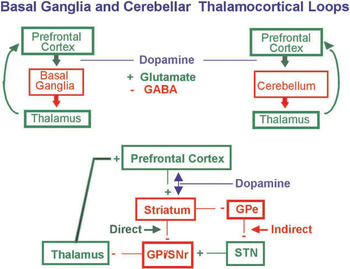
The basal ganglia and cerebellar thalamocortical loops.
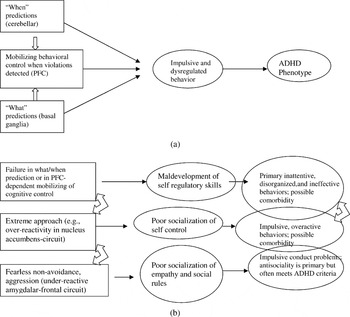
A schematic illustration of the pathways to ADHD symptoms and syndrome: (a) equifinality in ADHD and neuroscience-based hypothesized computational mechanism breakdowns and (b) multiple pathways to related but partially distinct etiological phenotypes in ADHD.
 You have
Access
- 342
- Cited by