Introduction
Methionine (Met) is an essential amino acid in birds and needs to be present in diets because is indispensable for animal maintenance, growth and development. The synthetic form of Met it is typically supplemented to fortify poultry and swine diets. There are two primary product forms of supplemental L-methionine (L-Met) commercially available for supplementation of Met deficient diets; 2-hydroxy-4-(methylthio) butanoic acid (HMTBA) most commonly available as an 88% solution with 12% water (for example Footnote 1 ALIMET® or Footnote 2 Rhodimet AT-88®), or as 84% dry Ca salt (Footnote 3 MHA®), and dry DL-methionine, (DL-Met, 99% powder). While these compounds both provide L-Met activity to birds, they are chemically different in that HMTBA has a hydroxyl group at the asymmetric carbon whereas DL-Met has an amino group. This chemical difference results in substantial differences in how and where the two molecules are absorbed, metabolised and converted to provide L-met to the animal as summarised by Dibner (Reference DIBNER2003) and Zhang et al. (Reference ZHANG, WONG and GILBERT2015). Because they are chemically different, the term bioequivalence is not appropriate. There are certain challenging conditions such as oxidative and heat stress in which HMTBA provides a benefit that cannot be matched by DL-Met. When compounds differ in their metabolism, as these do, they cannot be equivalent. They can, however, have the same bioefficacy with respect to a given outcome, such as protein synthesis or methionine availability or even body weight and feed efficiency. Therefore, it is more appropriate to use the term bioefficacy or bioavailability when chemically different compounds are being compared.
Both of these Met forms have been commercially available and used in animal production systems for over 50 years; however, there remains controversy and confusion with respect to relative bioefficacy. This situation is fuelled by publication of individual product comparisons as well as compilations of previously published results with apparently conflicting conclusions (Jansman et al., Reference JANSMAN, KAN and WIEBENGA2003; Vázquez-Añón et al., Reference VÁZQUEZ-AÑÓN, KRATZER, GONZALEZ-ESQUERRA, YI and KNIGHT2006a; Sauer et al., Reference SAUER, EMRICH, PIEPHO, LEMME, REDSHAW and MOSENTHIN2008; Vedenov and Pesti, Reference VEDENOV and PESTI2010). It has been postulated that the wide discrepancy in bioefficacy values between studies is due to the two Met sources having different bioefficacy values depending on where they are in their individual dose responses curves, and therefore, no single relative bioefficacy value can be determined.
The objective of this review is to summarise what is known concerning the similarities and differences of these compounds, how they are metabolised and used by the animal to support growth and the impact of these properties on their dose response curves. Furthermore, these differences are discussed in the context of the statistical methodologies used to compare their relative bioefficacy.
HMTBA and DL-Met are different compounds
As described previously by Dibner (Reference DIBNER2003), HMTBA and DL-Met differ chemically. While DL-Met is a DL racemic mixture of the amino acid Met, HMTBA is a DL racemic mixture of a naturally occurring organic acid (Dibner, Reference DIBNER2003). It occurs in animals as part of normal Met and thio-methyl metabolism but the nitrogen is added only during the process of its conversion to L-Met. Many organic acids like HMTBA exhibit antimicrobial activities at low pH (Geraert et al., Reference GERAERT, GRAULET, MERCIER, BECKER and VAN DER KLIS2005). This has been demonstrated for HMTBA as well for a variety of bacteria including E. Coli, Salmonella and Campylobacter spp. (Enthoven et al., Reference ENTHOVEN, VAN DEN HOVEN and VAN DIJK2002). The fact that HMTBA contains a hydroxyl instead of a nitrogen group influences where and how it is absorbed from the gastrointestinal tract as well as how it is transported and metabolised in the body. As an organic acid, it is lipophilic and absorbed primarily by diffusion (Knight and Dibner, Reference KNIGHT and DIBNER1984) following a concentration gradient going from high to low concentrations. It is more lipophilic at low pH and therefore, it is absorbed primarily in the upper gastro intestinal tract (GIT) before reaching the small intestine in broilers (Richards et al., Reference RICHARDS, ATWELL, VÁZQUEZ-AÑÓN and DIBNER2005). The small intestine and hindgut are capable of absorbing HMTBA as well (Martin-Venegas et al., Reference MARTIN-VENEGAS, SORIANO-GARCIA, VINARDELL, GERAERT and FERRER2006). While diffusion is the primary means of absorption, a portion of HMTBA is absorbed through a low affinity lactic acid carrier mechanism (Martin-Venegas et al., Reference MARTIN-VENEGAS, RODRIGUEZ-LAGUNAS, GERART and FERRER2007) as well. The absorption of HMTBA has been recently reviewed by Zhang et al. (Reference ZHANG, WONG and GILBERT2015).
The free form of HMTBA is an aqueous solution that contains 88% product in an equilibrium mixture of HMTBA monomer, dimer, and trimers. Once the concentrated product is in feed, the equilibrium shifts in the direction of monomer (Bruyer and Vanbelle, Reference BRUYER and VANBELLE1990a) resulting in the formation of salts of HMTBA (e.g. calcium salts). The amount of non-monomeric forms of HMTBA is highest in the supplement and decreases in feed and after ingestion (Dibner, Reference DIBNER2003).
Several in vitro and in vivo techniques have been used to elucidate the hydrolysis and fate of the HMTBA non-monomeric forms by the pancreatic intestinal enzymes (Lawson and Ivey, Reference LAWSON and IVEY1986), intestinal epithelial cells (Dibner, Reference DIBNER2003) and everted sacs (Martin-Venegas, et al., 2006), in vivo intestinal perfusion (Martin-Venegas et al., Reference MARTIN-VENEGAS, SORIANO-GARCIA, VINARDELL, GERAERT and FERRER2006) and growth performance studies (Bruyer and Vanbelle, Reference BRUYER and VANBELLE1990a; Reference BRUYER and VANBELLE1990b). These studies concluded that the HMTBA polymer fractions that accurately represent those found in the product are subject to hydrolysis into monomers by intestinal enzymes and mucosa and are not a limiting factor in the absorption or conversion of HMTBA.
Conversion of L- and D-HMTBA, and D-Met to L-Met
The conversion of L- and D-HMTBA and D-Met to L-Met is a two-step process, each compound being converted first to a keto-methionine intermediate called keto-methylthio-butanoic acid (KMB) and then transaminated to L-Met. The conversion has been well described in the literature (Dibner and Knight, Reference DIBNER and KNIGHT1984; McCollum et al., Reference MCCOLLUM, VAZQUEZ-ANON, DIBNER and WEBB2000) and summarised by Dibner (Reference DIBNER2003) and Zhang et al. (Reference ZHANG, WONG and GILBERT2015). The L isomer of HMTBA and the D isomer of Met are converted to KMB by an L-hydroxy acid oxidase (L-HAOX) and a D-amino acid oxidase (D-AAOX) respectively in peroxisomes found primarily in liver and kidney (Dibner and Knight, Reference DIBNER and KNIGHT1984) and other tissues including the gastrointestinal tract (McCollum et al., Reference MCCOLLUM, VAZQUEZ-ANON, DIBNER and WEBB2000), muscle, and brain (Dibner and Knight, Reference DIBNER and KNIGHT1984). The D isomer of HMTBA is converted to KMB by a D-hydroxy acid dehydrogenase (D-HADH) that is present in the mitochondria of all cells. The second step of the conversion is a transamination of the KMB to form L-Met. The enzymes needed for this step are present in all tissues and the conversion to Met is rapid enough such that there is no measurable pool of KMB (Dibner, Reference DIBNER2003).
HMTBA and DL-Met have different sites of metabolism in the body
The differences in chemical, enzymatic conversion and biological absorption between HMTBA and DL-Met impact how and where the sources are metabolised in the body. The location of the L-hydroxy acid oxidase enzyme in peroxisomes would suggest that the liver and the kidney would play a key role in the conversion of L-HMTBA to L-Met. However, the broad distribution of the D-HMTBA dehydrogenase enzyme raises the potential for every cell in the body to be able to convert D-HMTBA to L-Met. Isotope dilution infusion studies (Lobley et al., Reference LOBLEY, WESTER, CALDER, PARKER, DIBNER and VÁZQUEZ-AÑÓN2006; Wester et al., Reference WESTER, VÁZQUEZ-AÑÓN, DIBNER, PARKER, CALDER and LOBLEY2006) indicated that all tissues synthesised L-Met from HMTBA as suggested by the broad distribution of the D-HADH, with the greatest enrichment obtained in the liver and kidney in agreement with the presence of peroxisomes and L-HAOX enzymes. However, with the exception of the kidney, the HMTBA-derived L-Met was retained in the tissues in which it was converted. After kidney and liver, the upper small intestine exhibited the highest concentration, possibly due to being the first tissue in contact with HMTBA. From this stable isotope work it was elucidated that HMTBA is transported to the tissues primarily as HMTBA rather than Met, that circulating HMTBA is taken up by all body tissues and converted to L- Met locally, and that very little of it gets secreted back into circulation as L-Met (Lobley et al., Reference LOBLEY, WESTER, CALDER, PARKER, DIBNER and VÁZQUEZ-AÑÓN2006; Wester et al., Reference WESTER, VÁZQUEZ-AÑÓN, DIBNER, PARKER, CALDER and LOBLEY2006). These data provide the metabolic rationale for lower plasma free Met increase with HMTBA supplementation than DL-Met, as observed in the literature (Vázquez-Añón et al., Reference VÁZQUEZ-AÑÓN, WEHMEYER, WUELLING, HAMPTON, KNIGHT and DIBNER2003; Gonzalez-Esquerra et al., Reference GONZALEZ-ESQUERRA, VÁZQUEZ-AÑÓN, HAMPTON, YORK, FEINE, WUELLING and KNIGHT2007). Circulating free Met levels can have significant effects on feeding behaviour in animals and thus will be discussed later in terms of ad libitum feed consumption.
Implications of HMTBA metabolism during heat and oxidative stress
Recent work has pointed out the differential cell metabolism of HMTBA leading to its antioxidant effects, which can improve the anti-oxidative capacity, enhance the immune system and alleviate the stress response of the animals (Zhang et al., Reference ZHANG, WONG and GILBERT2015). Using Caco-2 cells, Martin-Venegas et al. (Reference MARTIN-VENEGAS, BRUFAU, GUERRERO-ZAMORA, MERCIER, GERAERT and FERRER2013) reported how HMTBA partially prevented inflammation and improve the antioxidant capacity of the cells whereas DL-Met was not. The protective role of HMTBA on intestinal epithelia barrier function is correlated with higher taurine and the reduced form of glutathione, which are products of L-Met conversion after trans-sulphuration (Zhang et al., Reference ZHANG, WONG and GILBERT2015). These results suggest that HMTBA might be preferentially diverted to the trans-sulphuration pathway (Martin-Venegas et al., Reference MARTIN-VENEGAS, SORIANO-GARCIA, VINARDELL, GERAERT and FERRER2006) and also the mechanism for its higher antioxidant capacity relative to DL-Met. Supplementation of HMTBA has been shown to partially prevent the growth depressing effect of heat exposure and alleviated oxidative damage caused by heat stress in broiler chickens (Willemsen et al., Reference WILLEMSEN, SWENNEN, EVERAERT, GERAERT, MERCIER, STINCKENS, DECUYPERE and BUYSE2011). Dibner et al. (Reference DIBNER, ATWELL and IVEY1992) and Knight et al. (Reference KNIGHT, WUELLING, ATWELL and DIBNER1994) reported growth benefits of HMTBA during intermittent exposure to heat stress and related these to the way HMTBA is absorbed via diffusion during a time when absorption capacity of the villi is compromised. In their studies, the rate of HMTBA uptake via diffusion increased, whereas, D-Met active transport decreased during heat stress conditions.
The new findings associating HMTBA with antioxidant metabolism brings further light to the benefits on HMTBA under heat and oxidative stress conditions, and other challenging nutritional conditions. Several studies have linked the overall improvements in antioxidant capacity observed in birds fed HMTBA with improvements in performance over DL-Met under low CP diets (Swennen et al., Reference SWENNEN, GERAERT, MERCIER, EVERAERT, STINCKENS, WILLEMSEN, LI, DECUYPERE and BUYSE2011) and when fed at adequate levels of Met (Agostini et al., Reference AGOSTINI, DALIBARD, MERCIER, VAN DER AAR and VAN DER KLIS2015a; Reference AGOSTINI, BUTTIN and VAZQUEZ-AÑON2015b; Zou et al., Reference ZOU, WANG, LIU, BAI, LIANG and ZHANG2015).
Differences in metabolism lead to changes in feed intake
It is well known that dietary Met affects feed intake, whereby both low and high concentrations of Met depress feed consumption (Sugahara and Kubo, Reference SUGAHARA and KUBO1992). Given the close association of circulating Met levels on voluntary feed intake and the fact that HMTBA is delivered to tissues as HMTBA rather than Met, it would appear likely that this metabolic difference could result in different ad libitum feeding patterns between HMTBA and DL-Met supplemented animals. In addition, this effect would be most pronounced at low levels of dietary Met since under those conditions the HMTBA converted to L-Met in the kidney and other tissues would remain in those tissues to support intracellular use and would not be secreted back into the plasma (Lobley et al., Reference LOBLEY, WESTER, CALDER, PARKER, DIBNER and VÁZQUEZ-AÑÓN2006).
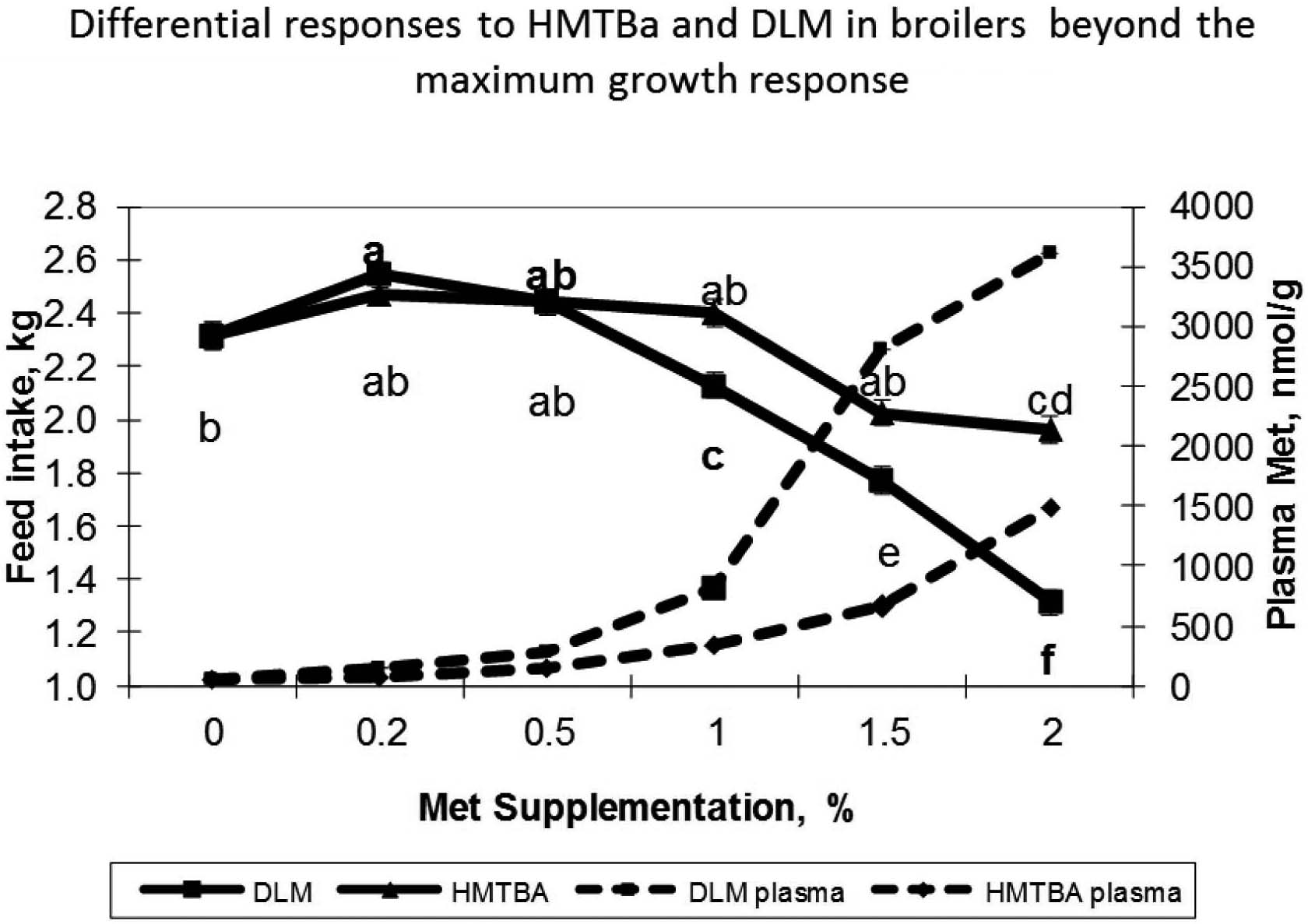
Several studies have examined the relationship between levels of HMTBA and DL-Met supplementation at deficient, adequate levels and above requirements on ad libitum feed consumption, plasma Met, and performance. Gonzalez-Esquerra et al. (Reference GONZALEZ-ESQUERRA, VÁZQUEZ-AÑÓN, HAMPTON, YORK, FEINE, WUELLING and KNIGHT2007) illustrated the association between plasma Met and feed intake for HMTBA and DL-Met. At lower levels of supplementation, plasma Met and feed intake responses to increasing DL-Met were greater than from HMTBA. In contrast, as level of supplementation increased, feed intake for HMTBA overtook that of DL-Met such that feed intake at requirement levels of supplementation for HMTBA was greater than DL-Met. At levels of supplementation above total sulphur amino acids requirements (1% or above) broiler feed intake and growth rate were significantly reduced; however, the magnitude of feed intake depression was less with HMTBA (Vázquez-Añón et al., Reference VÁZQUEZ-AÑÓN, WEHMEYER, WUELLING, HAMPTON, KNIGHT and DIBNER2003). Although, plasma free Met concentrations were elevated for both Met sources at these supplementation rates, DL-Met-supplemented chickens demonstrated significantly greater plasma free Met and homocysteine than for HMTBA (Vázquez-Añón et al., Reference VÁZQUEZ-AÑÓN, WEHMEYER, WUELLING, HAMPTON, KNIGHT and DIBNER2003; Dibner, Reference DIBNER2003), indicating a close association of differences in plasma free Met and differences in feed intake levels for HMTBA and DL-Met, as described in Figure 1 .
Thus, at greater levels of supplementation, higher plasma free Met is linked with a reduction of feed intake while at low levels of supplementation reduced plasma free Met is associated with increased feed intake. While the relationship between plasma free Met and feed intake appears to be obvious, an argument can still be made that plasma free Met is lower for HMTBA treatments because less of it is converted to L-Met. To address this concern, Knight et al. (Reference KNIGHT, DIBNER, GONZALEZ-ESQUERRA and VÁZQUEZ-AÑÓN2006) used paired-feeding studies to show that differences in performance between HMTBA and DL-Met were due to differences in intake and not inefficiency of conversion of HMTBA to L-Met. These results demonstrated that the differences in gain at the extremes of the total sulphur amino acid response curve were due to differences in feed consumption, because no differences in gain between the two Met sources were observed.
Differential feed intake and plasma Met concentration response to HMTBA and DL-Met in broilers beyond the maximum growth response. Adapted from Vázquez-Añón et al., Reference VÁZQUEZ-AÑÓN, WEHMEYER, WUELLING, HAMPTON, KNIGHT and DIBNER2003.

Dose responses in broilers
Although DL-Met and HMTBA are sources of Met, their chemical structure, manner and site of absorption, transport in the body and conversion to L- Met by the tissues, and metabolism are quite different. Because of these differences, the two compounds do not follow the same form of dose response (Kratzer and Littell, Reference KRATZER and LITTELL2006; Vázquez-Añón et al., Reference VÁZQUEZ-AÑÓN, GONZALEZ-ESQUERRA, SALEH, HAMPTON, RICTHER, FIRMAN and KNIGHT2006b; Gonzalez-Esquerra et al., Reference GONZALEZ-ESQUERRA, VÁZQUEZ-AÑÓN, HAMPTON, YORK, FEINE, WUELLING and KNIGHT2007) due partially to differences in intake and metabolism at the extreme ends of the dose response curves (Knight et al., Reference KNIGHT, DIBNER, GONZALEZ-ESQUERRA and VÁZQUEZ-AÑÓN2006).
There have been many studies that have demonstrated performance differences under specific conditions that have favoured each compound, which has contributed to the controversy. In the last fifteen years, a significant numbers of broiler studies where the two Met sources were evaluated concluded they were not different (Daenner and Bessei, Reference DAENNER and BESSEI2003; Motl et al., Reference MOTL, FRITTS and WALDROUP2005; Agostini et al., Reference AGOSTINI, DALIBARD, MERCIER, VAN DER AAR and VAN DER KLIS2015a; Reference AGOSTINI, BUTTIN and VAZQUEZ-AÑON2015b) or showed benefit of one source over the other one (Vázquez-Añón et al., Reference VÁZQUEZ-AÑÓN, GONZALEZ-ESQUERRA, SALEH, HAMPTON, RICTHER, FIRMAN and KNIGHT2006b; Swennen et al., Reference SWENNEN, GERAERT, MERCIER, EVERAERT, STINCKENS, WILLEMSEN, LI, DECUYPERE and BUYSE2011; Willemsen et al., Reference WILLEMSEN, SWENNEN, EVERAERT, GERAERT, MERCIER, STINCKENS, DECUYPERE and BUYSE2011; Montanhini Neto et al., Reference MONTANHINI NETO, CECCANTINI and FERNANDES2013; Zou et al., Reference ZOU, WANG, LIU, BAI, LIANG and ZHANG2015). The fact that there has been a wide range of bioefficacy estimates reported by meta-analyses of large numbers of poultry studies is partly driven by the different statistical dose response models used to determine relative bioefficacy (Jansman et al., Reference JANSMAN, KAN and WIEBENGA2003; Vázquez-Añón et al., Reference VÁZQUEZ-AÑÓN, KRATZER, GONZALEZ-ESQUERRA, YI and KNIGHT2006a; Sauer et al., Reference SAUER, EMRICH, PIEPHO, LEMME, REDSHAW and MOSENTHIN2008; Vedenov and Pesti, Reference VEDENOV and PESTI2010).
The most common methods used by scientists prior to 2005 to compare relative bioefficacy of DL-Met and HMTBA were linear and exponential slope ratio described by Finney, (Reference FINNEY1978) and later by Littell et al. (Reference LITTELL, LEWIS and HENRY1995). These methods were based on the assumption that the nutrients being compared were the same with differing concentration as the only variable and therefore have the same form of dose response and plateau. When the compounds being compared follow the same form of dose response, comparisons made in the most deficient portion of the curve are predictive of the entire dose response. Since DL-Met and HMTBA are different compounds, the assumption that they have identical dose response curves and common plateaus cannot be made.
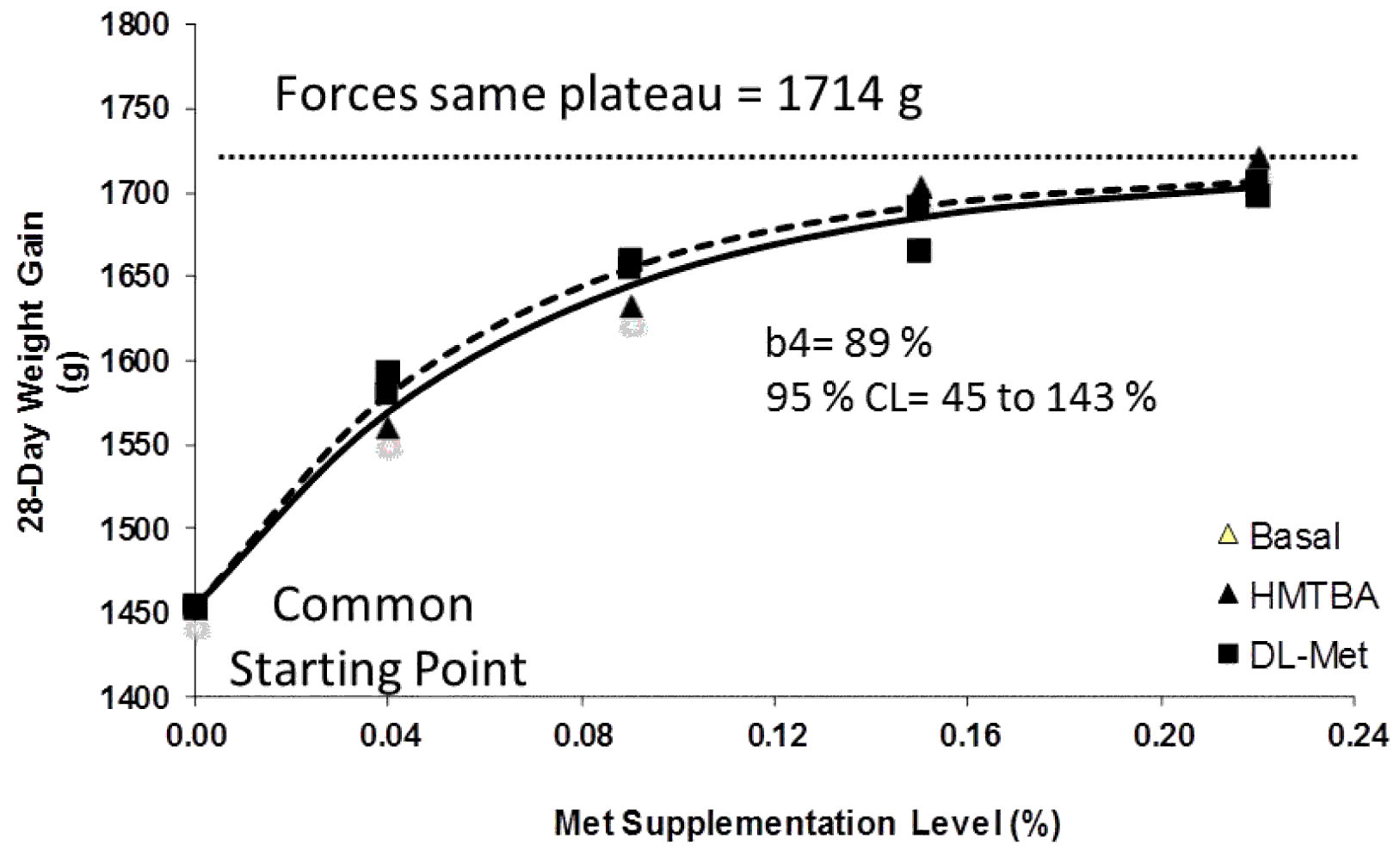
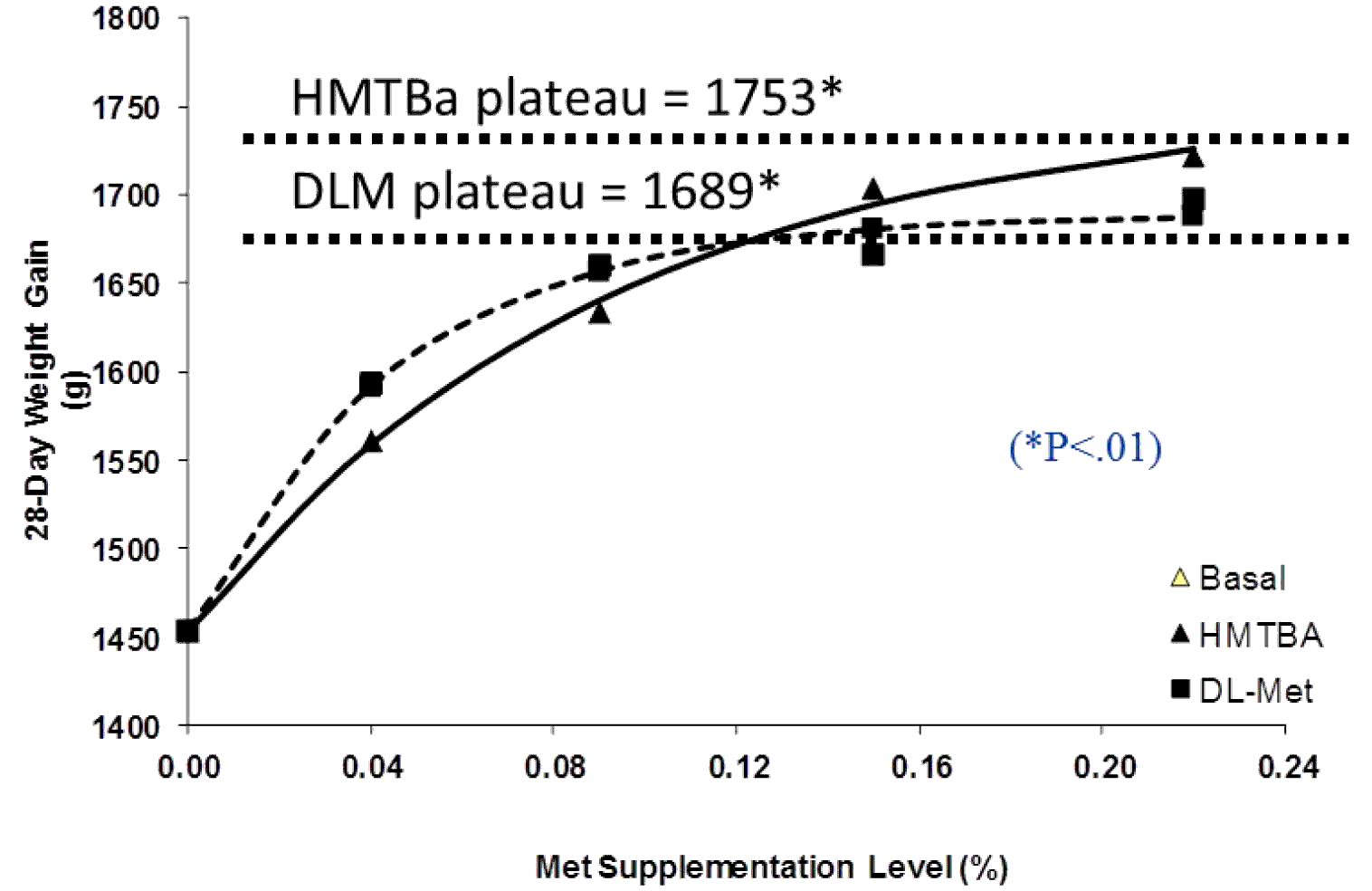
Kratzer and Littell (Reference KRATZER and LITTELL2006) reported an in-depth analysis of the application of the exponential slope ratio technique to measure HMTBA relative bioefficacy. The authors provided an example of the misapplication of the exponential slope ratio technique in a previously published paper by Schutte and De Jong (Reference SCHUTTE and DE JONG1996) and concluded that there was a better statistical method using an exponential model to fit the actual data for each Met source. With this model and using the actual data values reported, there were differences in the predicted plateau for the two Met sources ( Figure 2 and 3).
Mean values of 28-d body weight gains (g) in broiler chickens by Schutte and De Jong (Reference SCHUTTE and DE JONG1996). Use of the non-linear common plateau asymptotic regression model that forces a common plateau for the two sources of methionine; however, 95% confidence limits includes 100% efficacy, indicating no significant difference in relative biological efficacy. Adapted from Kratzer and Littell, Reference KRATZER and LITTELL2006.

Mean values of 28-d body weight gains (g) in broiler chickens as reported by Schutte and De Jong (Reference SCHUTTE and DE JONG1996). At very low levels of supplementation, birds fed HMTBA had numerically lower weight gain relative to DL-Met birds; however when fed at levels closer to requirements, birds fed HMTBA had numerically higher body weights. A t-test reveals that the predicted plateau for HMTBA was significantly higher than that for DL-M (P=0.001), which demonstrated that the dose responses of the 2 products are different. Adapted from Kratzer and Litell, 2006.

When significantly different plateaus exist, the use of slope ratio analysis to evaluate sources becomes invalid. The authors tested and rejected the hypothesis of equal plateaus for HMTBA and DL-Met across thirteen studies published in the literature and used in in a meta-analysis previously published by Jansman et al. (Reference JANSMAN, KAN and WIEBENGA2003). Using this exponential analysis, Kratzer and Littell, (Reference KRATZER and LITTELL2006) demonstrated that HMTBA and DL-Met do not have the same dose response characteristics, and therefore, have differing bioavailability estimates depending on where in the dose response curve the estimates are made. The authors in the paper put forward a new statistical method to determine relative bioefficacy that did not require the assumption of same form of dose response and provided an unbiased comparison of the products across the entire dose response.
Using the statistical methods outlined in Kratzer and Littell (Reference KRATZER and LITTELL2006), Vázquez-Añón et al. (Reference VÁZQUEZ-AÑÓN, GONZALEZ-ESQUERRA, SALEH, HAMPTON, RICTHER, FIRMAN and KNIGHT2006b) compared different Met sources by allowing the data to define the individual dose responses for each source and determined their relative performance by comparing the predictions of each model at the levels of expected use. They concluded that the two Met sources have different dose responses, with HMTBA outperforming DL-Met at commercial levels and DL-Met outperforming HMTBA for deficient sulphur amino acid levels. Several meta-analyses reported a wide range of relative bioefficacy values that ranged from 79 to 100%. Those that used exponential slope ratio with common plateau as statistical method concluded that HMTBA had the lowest relative bioefficacy (Jansman et al., Reference JANSMAN, KAN and WIEBENGA2003; Sauer et al., Reference SAUER, EMRICH, PIEPHO, LEMME, REDSHAW and MOSENTHIN2008). When meta-analysis was used that allowed for each source to define its own response curve, outcomes showed bioefficacy values for HMTBA of up to 100% (Vázquez-Añón et al., Reference VÁZQUEZ-AÑÓN, KRATZER, GONZALEZ-ESQUERRA, YI and KNIGHT2006a). This work illustrated the relevance of the statistical method in evaluating relative bioefficacy.
A practical approach to comparing HMTBA and DL-Met
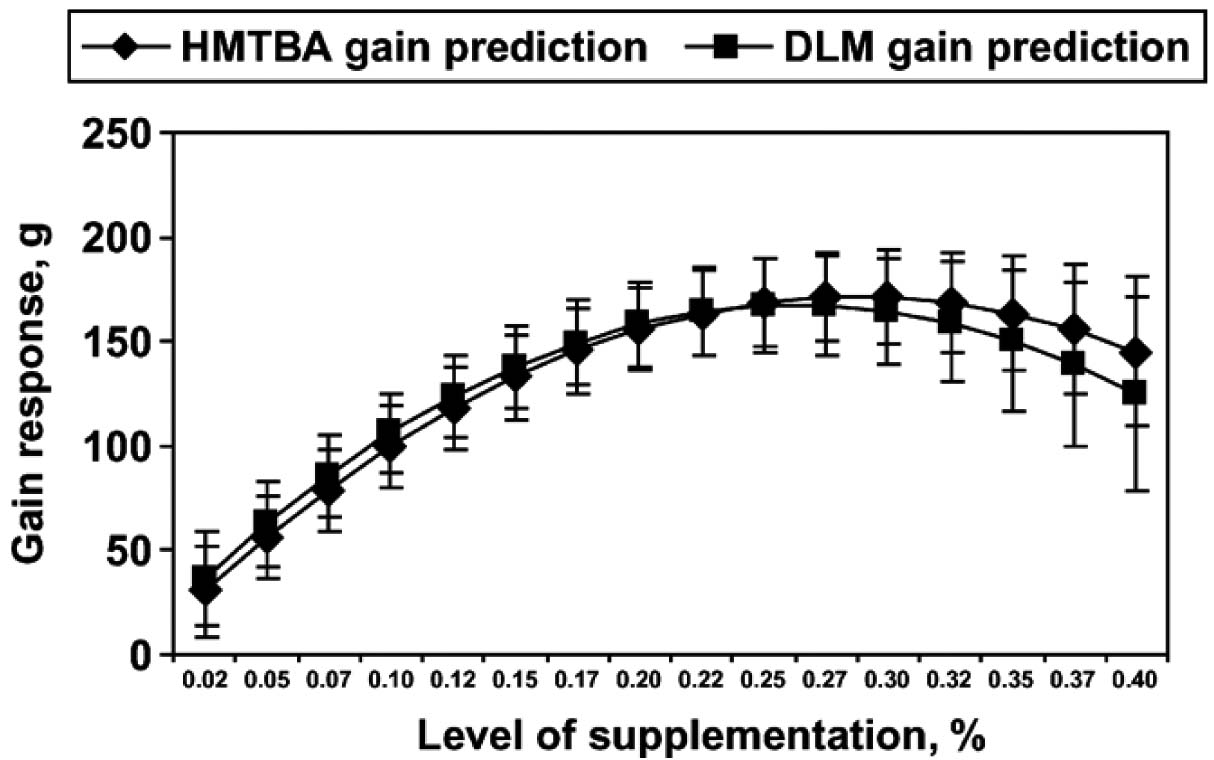
Extensive research evaluating the relative efficiency of HMTBA and DL-Met as sources of Met activity in broilers has generated a large number of studies over the last five decades. Efforts have been made to provide a comprehensive summary of the existing literature in which the environmental and nutritional factors that determine the response to HMTBA and DL-Met could be evaluated and help predict the response of the two Met sources under relevant commercial conditions with broader inference than a single study (Vázquez-Añón et al., Reference VÁZQUEZ-AÑÓN, KRATZER, GONZALEZ-ESQUERRA, YI and KNIGHT2006a). Under average experimental and commercial conditions, the predicted DL-Met and HMTBA dose responses for gain and feed conversion models were found to follow a quadratic response ( Figure 4 ).
The fact that the overall response to the two Met sources follows a quadratic response and not a plateau, results from the fact that over-supplementation of either product can cause reduced performance. Statistical methods have been provided that allow for valid comparisons of HMTBA and DL-Met across a wide range of doses and from the data reviewed it is clear that the level of total sulphur amino acids in the diet affect performance of animals fed HMTBA and DL-Met differently. Therefore, there is not a single relative bioefficacy value for two products with different dose response characteristics. The relative bioefficacy value determined in one part of the dose response will not predict the relative bioefficacy value in another. Lower growth may be seen when feeding HMTBA vs. DL-Met at deficient concentrations, whereas a greater maximum response is observed for HMTBA when fed at adequate or commercially relevant concentrations (Agostini et al., Reference AGOSTINI, DALIBARD, MERCIER, VAN DER AAR and VAN DER KLIS2015a; Reference AGOSTINI, BUTTIN and VAZQUEZ-AÑON2015b). Most nutritionists aim to feed growing animals at a level that allows for maximum performance. Therefore, it is relevant to evaluate the products at doses within the range of expected use and by feeding commercially relevant diets.
Comparison of the dose response predictions of HMTBA and DL-Met gain models under commercial conditions. The gain dose responses from each methionine source were compared under the feed nutrient profile and management practices reported by Agri Stats, Inc. (2004). The response curve followed a quadratic response and no differences were observed between HMTBA and DLM gain predictions across levels of supplementation. Adapted from Vázquez-Añón, 2006a.

Bioefficacy of HMTBA in other poultry species (turkeys and layers)
Evaluations have been published describing the performance of laying hens fed different sources of supplemental Met, including HMTBA (free acid or calcium salt) and DL-Met (Reid et al., Reference REID, MADRID and MAIORINO1982; Van Weerden et al., Reference VAN WEERDEN, SCHUTTE and BERTRAM1984; Scott and Shurman, Reference SCOTT and SHURMAN1987; Harms and Russell, Reference HARMS and RUSSELL1994; Liu et al., Reference LIU, BATEMAN, BRYANT, ABEBE and ROLAND2004; Reference LIU, BATEMAN, BRYANT, ZINNER and ROLAND2005). These studies were conducted under controlled conditions using practical feed ingredients, but with a wide array of experimental diets, strains of birds, production phases and cycles, age of birds and production conditions. In all studies, no significant differences were reported between the two Met sources, with the exception of the studies where the two Met sources were not compared on an equal molar basis (Liu et al., Reference LIU, BATEMAN, BRYANT, ABEBE and ROLAND2004). As a result, the study by Liu et al. (Reference LIU, BATEMAN, BRYANT, ABEBE and ROLAND2004) cannot be considered in the evaluation. Several of the studies evaluated the dose response of the two Met sources to assess its relative bioefficacy using slope ratio analysis. Using this technique the relative bioefficacy value for HMTBA varied from above to below that of DL-Met, but in all cases the 95% confidence interval around the mean bioefficacy value included 100%, concluding there were no differences between the two Met sources.
In turkeys, the body of information evaluating the bioefficacy of HTMBA relative to DL-Met is not extensive. Blair (Reference BLAIR1983) and Noll et al. (Reference NOLL, WAIBEL, COOK and WITMER1984) were the first to report the use of exponential slope ratio analysis as a method for comparing relative bioefficacy of HMTBA and DL-Met. Neither Blair (Reference BLAIR1983) nor Noll et al. (Reference NOLL, WAIBEL, COOK and WITMER1984) reported a significantly different relative bioefficacy value for HMTBA and DL-Met. One study conducted by Hoehler et al. (Reference HOEHLER, LEMME, ROBERSON and TURNER2005) reported the efficacy of HTMBA to be 55 to 74%, however, in this study, the two Met sources were not compared on an equal molar basis making any conclusion about their relative bioefficacy doubtful. Later on, Gonzalez-Esquerra et al. (Reference GONZALEZ-ESQUERRA, VÁZQUEZ-AÑÓN, HAMPTON, YORK, FEINE, WUELLING and KNIGHT2007) critically evaluated dose responses of turkey poults to HMTBA and DL-Met in sorghum- and corn-based diets to determine the best-fit prediction equations to describe the response and predict the efficacy of the two Met sources at various points of the total sulphur amino acid response curve. Similar to findings in other poultry, Gonzalez-Esquerra et al. (Reference GONZALEZ-ESQUERRA, VÁZQUEZ-AÑÓN, HAMPTON, YORK, FEINE, WUELLING and KNIGHT2007) reported that HMTBA and DL-Met elicit a different dose response in young turkey poults in which a lower growth may be obtained when feeding HMTBA vs. DL-Met at very deficient concentrations, whereas a greater maximum response is observed for HMTBA when fed at adequate or commercially relevant concentrations. The authors linked this effect, at least partially, to the differential effect of HMTBA and DL-Met on plasma free Met and the consequent effect on feed intake and growth. From the studies published in turkeys with appropriate comparisons it can be concluded that HMTBA has full bioefficacy value at the levels of intended use.
Conclusions
Differences in the chemical structure of the two Met sources lead to variance in how the molecules are absorbed and metabolised. This differential metabolism affects the growth dose response curves of animals depending on what doses are fed. At lower levels of the response curve, below TSAA requirement, HMTBA-fed animals may have lower growth than DL-Met while at higher levels, TSAA requirement and beyond, they may have greater growth. This provides evidence that an assumption that the two products have the same form of dose response cannot be made and that use of slope ratio techniques (either exponential slope ratio or linear slope ratio) to determine a single relative bioefficacy value for HMTBA is inappropriate. The performance response for either product at the extremes of the Met dose response curve is not representative of the relative bioefficacy value of either product at the maximum response levels. Field nutritionists use commercial doses of HMTBA or DL-Met at a total sulphur amino acid dietary levels capable of achieving maximum performance. At these levels, and based on the evidence found in the literature and summarised in this review, the full relative bioefficacy of HMTBA over DL-Met has been well proven.