1. Introduction: Eppure è MusicaFootnote 1
Cognitive studies of music have traditionally focused on the sonic-musical aspects that generate meaning within the listener. They have mainly searched for a potential relationship of causality between certain characteristics of music and the meaning derived from them by those who experience the music (Matyja and Schiavio Reference Matyja and Schiavio2013). From this perspective, we could say that music has been understood as a certain ‘language of emotions’ (Hunter et al. Reference Hunter, Schellemberg and Schimmack2010: 47). Without attempting a comprehensive review, an example of the aforementioned is Patrick Juslin and John Sloboda’s Handbook of Music and Emotions (Juslin and Sloboda Reference Juslin and Sloboda2010), which includes an extensive repository of theories and research regarding this perspective.
Nevertheless, the large majority – if not all – of these studies use musical stimuli from the tonal-harmonic tradition of Western music (Scherer Reference Scherer2004), in the form of both classic-romantic examples and current popular music, although the latter to a lesser extent. There is a limited amount of research produced around Western contemporary music, and it is even scarcer regarding acousmatic music. Some notable cases are Landy (Reference Landy2001, Reference Landy2006; Weale and Landy Reference Weale and Landy2010) and Weale (Reference Weale2006), who have sought to compare the intentions of the composer with what is perceived by the listeners in acousmatic music. As we shall see, the results of our cognitive approximation are quite similar to some of the ‘Something to Hold On’ factors described by Weale (Reference Weale2006). Another case is Mendoza (Reference Mendoza2014), who conducted a series of experiments aimed at identifying aspects such as segmentation, mimesis and meaning in acousmatic music.
On the other hand, some authors have claimed that, in general, contemporary music is ‘cognitively opaque’ (Lerdahl Reference Lerdahl1989: 25). In that respect, it is a known fact that contemporary music has developed hierarchical relationships among pitches other than tonality and has tended to elaborate rhythmic structures far removed from an organisation in pulses and regular accents, while the timbre characteristics of the sounds, for their part, adopt a central role. All these aspects make their study difficult, both in the traditional comprehensive systems of musical studies in general and musical cognition in particular. However, contemporary music is also music and there seems to be no reason preventing those who experience it from interpreting their musical experience in some way.
Along these lines, within the context of contemporary music, a case of special relevance is constituted by the systematic use of space (e.g. spatialisation of sound) as a structural element of the work (Dhomont Reference Dhomont1988), particularly in acousmatic music.
1.1. Spatiality and meaning
Spatial variables have not been part of the musical parameters traditionally formulated by musical theories. However, spatiality has always been linked to the musical phenomenon as a constituent factor, as music must necessarily be produced in a place with particular spatial–acoustic characteristics (García de la Torre Reference García de la Torre2011). The dynamic nature of the acoustic space determines a series of choices that the composer makes in terms of instrumental formats, use of dynamic resources, rhythmic or harmonic complexities. In fact, it is not the same to compose a piece intended for an Italian style theatre as another intended for an open space. Similarly, the listener’s perception of the piece may vary depending on the space where it is performed, and spatial semantic inconsistencies may occur, as in the case of a chamber music piece performed in an open stadium where the sound intimacy of the instrumental format becomes completely distorted.
Without a doubt, there is an obvious correspondence, even in instrumental music pieces rooted in the Western canonical tradition, between performance space, instrumental format and production grammars, to such an extent that it is difficult to conceive of the existence of Gregorian chant without the reverberating space of the Romanesque or gothic church for which it was intended (Byrne Reference Byrne2014). Conversely, the unintelligibility of the complex rhythmic and polyphonic textures of the Ars Nova (Fleming Reference Fleming1986) is also due to the incompatibility between the production grammars used and the acoustic performance space of the piece, inadequate for the perception of such grammars.
All in all, the relevance of the space for the reception of the acousmatic work is not merely restricted to the acoustic conditions of the representation space. In the listening experience, the spatiality of the sounds becomes an essential part of the cognitive processing of what is heard and not merely a factor that indirectly affects the sound properties of the piece.
However, paradoxically, references to the spatial aspect in music theories can be found only implicitly in the literature, as musical analysis has not yet developed theories that allow accounting for the spatial attributes of the work, both their internal and their external aspects, following the distinction proposed by Chion (1991). According to Delalande (Reference Delalande2003), this absence could be explained by the fact that the musical notation technologies used are only bi-dimensionally operative while the space is by definition tri-dimensional.
Nevertheless, spatiality is without a doubt a central element of the sensory-motor expertise of the sonic and musical experience, because our presence in the world is also spatial, and the localisation of sound stimuli is an essential source of information for our survival and understanding of the world surrounding us (Schiavio Reference Schiavio2014).
At this point, it is important to consider that concrete–acousmatic music was the first to systematically make use of spatial variables or spatialisation, in both the production mode and the acoustic performance of the piece (Schumacher and Fuentes Reference Schumacher and Fuentes2016). The aforementioned is reflected by an abundant literature that mainly addresses the use of the space linked to syntactic aspects involved throughout the production mode (the publications L’Espace du Son I, II and III published in 1988, 1991 and 2011, compiled by Francis Dhomont, summarise different approaches of composers in this regard). Likewise, a vocabulary of space or taxonomies of spatial perception have been proposed by Smalley (Reference Smalley2007) and Alexander (Reference Alexander2007) in the context of acousmatic music, and by Rumsey (Reference Rumsey1999, Reference Rumsey2002) and Nakayama, Tanetoshi, Osamu, Michio and Takeo (Reference Nakayama, Tanetoshi, Osamu, Michio and Takeo1971) in the context of the assessment of the spatial restitution qualities of sound reproduction systems.
An additional perspective in that regard has been the consideration of the perceptive and cognitive dimensions associated with the listening situation enabled by the electroacoustic device (Küpper 1988; Smalley Reference Smalley2007; Alexander Reference Alexander2007; Kendall and Ardila Reference Kendall and Ardila2008; Kendall Reference Kendall2010), which – given the acousmatic music composer’s simultaneous condition of producer and listener – are relevant for the use of these variables during the composition of the piece. The articles of Kendall (Reference Kendall2010) and Smalley (Reference Smalley2007) are of particular interest, and their formulations are fairly close to some models inspired by cognitive linguistics (Schumacher and Fuentes Reference Schumacher and Fuentes2016).
However, there is almost no empirical evidence about the role played by spatiality in the meaning derived by listeners from the acousmatic musical experience. In a previous study (Schumacher Reference Schumacher2015), the experimental results obtained suggested that the listeners assigned mainly a more affective rather than syntactic value to the spatiality in acousmatic music, in terms of whether this variable was perceptually operative regarding the clarification of the sound materials of the pieces they heard. In this study, the subjects described listening to an acousmatic fragment in a multichannel version as ‘more pleasant’ and ‘more natural’ than in a monophonic version. In accordance with the aforementioned, the discussion presented in this article both expands and problematises the role of spatiality in the meaning that listeners ascribe to the acousmatic sound stimulus when describing their listening experience.
1.2. Empathy
As we initially noted, recent studies in musical cognition have fundamentally searched for a potential link between certain characteristics of music and the meaning attributed to them by those who experience the music (Matyja and Schiavio Reference Matyja and Schiavio2013). Consequently, the multidimensional phenomenon of empathy acquires a central importance within the context of the role that, as revealed, it fulfils in the emotional experience elicited by music in its various expressions (Greenberg, Rentfrow and Baron-Cohen Reference Greenberg, Rentfrow and Baron-Cohen2015).
Having said that, we can define empathy as a multidimensional construct formed by dissociable neurocognitive components that interact and operate in a parallel manner (Blair Reference Blair2005; Shamay-Tsoory, Aharon-Peretz and Perry Reference Shamay-Tsoory, Aharon-Peretz and Perry2009; Baird, Scheffer and Wilson Reference Baird, Sheffer and Wilson2011; Decety Reference Decety2011; Zaki and Ochsner Reference Zaki and Ochsner2012), including cognitive, emotional and sensory-motor aspects. Cognitive empathy is, to a certain degree, similar to the construction of the theory of mind (Greenberg et al. Reference Greenberg, Rentfrow and Baron-Cohen2015), that is, the ability to explain, predict and interpret behaviour by attributing mental states such as desire, beliefs, intentions and emotions to oneself and other people (Decety and Svetlova Reference Decety and Svetlova2012). Emotional empathy, on the other hand, implies the ability to be affectively triggered by the emotions of others, commonly known as emotional contagion or empathic arousal.
For these reasons, our main objective is to find evidence that can guide us in the adoption and/or improvement of appropriate theoretical–methodological approaches to studying the role of the spatiality/spatialisation of sound and the cognitive/affective empathic processes involved in the acousmatic experience. Therefore, this study should specifically allow us to:
-
1. Address in an exploratory manner the role of spatiality in the signification processes of the acousmatic musical experience.
-
2. Investigate the role of the spatialisation of sound in the empathic processes of the listeners within the context of the acousmatic listening experience.
We consider it relevant to highlight two central results for the objectives of our study in the field of music and their relationship with empathy processes: those of Egermann and McAdams (Reference Egermann and McAdams2013), who demonstrated that the perception of the emotion induced by music is moderated by empathy; and of Wöllner (Reference Wöllner2012), who proved that people with higher levels of empathy are capable of perceiving and identifying the intentions of a musician more accurately than those with lower levels.
2. Methodological framework
We present a multimodal exploratory study, in this case qualitative and quantitative with a predominance of the qualitative approach (Mertens Reference Mertens2005; Hernandez Sampieri, Fernández and Baptista Reference Hernandez Sampieri, Fernández and Baptista2004). In general terms, our analytical approach is focused mainly on detecting inter-subjective convergences among subjects participating in a controlled listening experiment (Delalande Reference Delalande2013). The quantitative data was obtained from a complementary experimental study that will deepen our knowledge of the subjective dimension of the acousmatic listening experience reported in the first person through a semi-structured interview (qualitative data).
For this experimental study, we use a dimensional model for classifying emotions, specifically the chromatic model proposed by Díaz (Díaz and Flores Reference Díaz and Flores2001), in order to represent the positive or negative emotional valence identified by the listeners in different pieces of loudspeaker music. In parallel, we recorded the level of intensity or psychophysiological activation (arousal) regarding sound stimuli using an electrodermal activity (EDA) logging device. EDA has been used in previous experimental designs as an objective indicator of emotional arousal, which is expressed by changes in skin level conductance (Kallinen Reference Kallinen2008; Bosh, Salimpoor and Zatorre Reference Bosh, Salimpoor and Zatorre2013).
2.1. Stimuli
The selected fragments represent five subgenres of what we could describe as loudspeaker music: Electronic Music (in the historical sense of the term); Computer Music, Soundscape and Experimental Electronica (popular aspect); and Acousmatic. In particular, the selected pieces also comply with the following set of conditions:
-
∙ They are works whose acoustic representation is reproduced exclusively using loudspeakers.
-
∙ In general, they are created within the concrete–acousmatic production mode (production in a studio, use of sound sources that are not instrumental, acoustic representation integrated into the production process).
-
∙ Most of the fragments do not use production grammars where aspects such as melody or harmony, in the traditional sense, are relevant in the musical syntax.
-
∙ They are pieces that do not make references to sound and sound gestures associated with textures linked to traditional instruments.
-
∙ Each piece develops a spatial syntax to a greater or lesser degree.
2.2. Protocol of the listening experiment
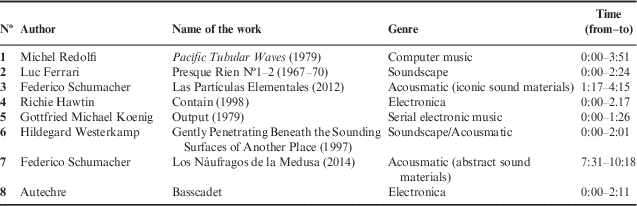
The listening experiment consists of listening to the eight sound fragments selected according to the conditions described in section 2.1 (Table 1). The length of each fragment varies between two and three minutes in order to respect the musical syntax developed in each work. In addition, the experimental situation involves the use of an electrodermal activity logging device by the subjects.
Presented fragments
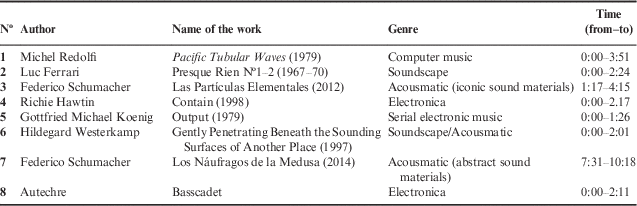
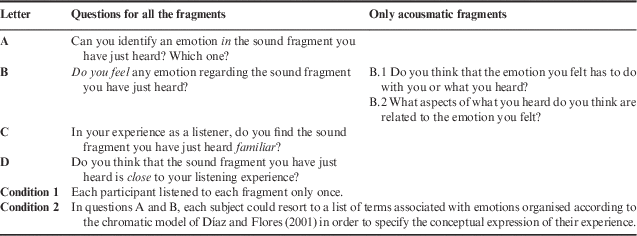
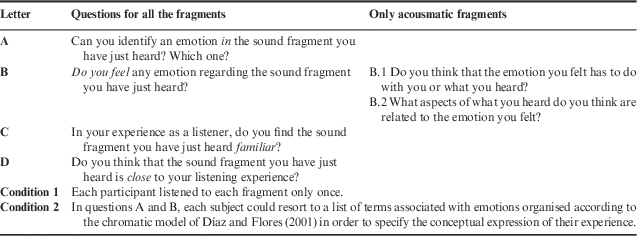
At the end of each fragment, a semi-structured interview was conducted with the questions and general conditions shown in Table 2. The interviews were fully recorded and then transcribed.
Interview protocol
2.3. Apparatus
The listening experiments were conducted at the Laboratory of Embodied Phenomenology and Musical Experience, at the Faculty of Psychology, Universidad Diego Portales, over a standard octophonic reproduction system within the context of an electroacoustic laboratory.
For the measurement of the electrodermal activity of the subjects, an Empatica E3 wristband was used (www.empatica.com). This wristband is attached firmly to the subject’s forearm and records various physiological indicators in real time, such as variations in blood pressure, heart rate and skin conductance.
2.4. Participants
The experimental phase (listening experiment) featured the participation of 40 subjects, who responded to an open invitation extended in social media. The 40 participants in the study were not considered as a sample that is statistically representative of a population because the study was merely exploratory. The data from one of the participants had to be excluded because they did not attend every test. From the participants, 21 were female and 18 were male, with an average age of 27.5 years. Some 85 per cent of the participants did not have musical training. For the EDA logging, the participants from the previous test were invited to attend voluntarily, resulting in a biased sample of 14 subjects, 7 men and 7 women, attending. Of these, 57.1 per cent had listened to acousmatic music before and 42.8 per cent declared that they were listening to it for the first time.
3. Results and discussion
3.1. Cognitive and affective processes of empathy
Questions A and B of Table 2 are aimed at exploring the degree of similarity between the emotion identified by the listener in the sound fragment, which Fernández-Pinto, López-Pérez and Márquez (Reference Fernandez Pinto, López-Pérez and Márquez2008) identify as Cognitive Process of Empathy (PCE by its initials in Spanish), and the emotion they declare to feel as their own (Affective Process of Empathy, or PAE by its initials in Spanish). For each of the questions addressed to the listener, they were asked to identify an emotion experienced while listening to each fragment. During the process of conceptually expressing their experience, the listener could make use of the set of 320 terms available in the Affective Chromatic Model of Díaz (Díaz and Flores Reference Díaz and Flores2001). In order to analyse the identified terms, they were classified in two categories: (1) positive valences, when the emotion experienced by the target individual is considered to be positive; and (2) negative valences, when the emotion experienced by the target individual is considered to be negative (Table 3). The terms classified under the category of identified emotional valence (IEV) and experienced emotional valence (EEV) were then compared. A third category was also considered for grouping the responses that expressed a non-identification of a particular emotion. For the aforementioned comparison, an extension of Fisher’s exact test was used for 3-by-3 contingency tables, developed by Freeman-Halton (Freeman and Halton Reference Freeman and Halton1951), which showed significant differences between the ratios of identified and experienced emotional valence (p<0.001).
Questions A and B: identified and experienced emotional valence contingency tables

The highest degree of correspondence between the identified emotion (the cognitive empathic process of emotional comprehension that implies the ability to recognise and comprehend the emotional states of others) and the experienced emotion (the affective empathic process that implies the ability to share the negative or positive emotions of another individual) (López-Pérez, Fernández-Pinto and Abad Reference López-Pérez, Fernández-Pinto and Abad2008) can be observed for fragments 3, 7 (which do not use a traditional musical grammar) and 8 (which does use a traditional musical grammar). In the rest of the sound fragments, the level of correspondence between identified and experienced emotion is not significant. Nevertheless the emotional valence doesnot seem to be clearly situated in most of fragments, except in the cases of fragments 3, 7 and 8; the same fragments where a higher degree of correspondence of IEV and EEV is reported. Fragment 8 is mainly rated with positive emotional valences (liking, happiness, etc.) and the acousmatic fragments, 3 and 7, with negative emotional valences (tension, fear, aversion, etc.). Another particular case is fragment 5 (serial electronic music), which nevertheless receives the highest amount of unidentified or ‘no emotion felt’ statements. We will discuss those results in section 3.4.2 regarding the electrodermal activity in the biased sample.
3.2. Familiarity
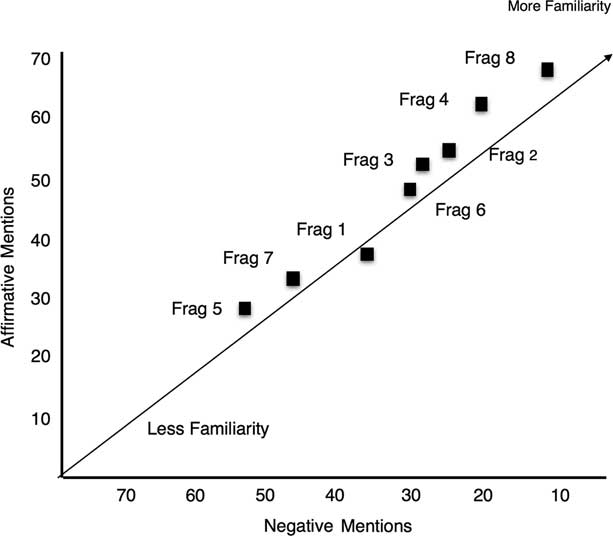
Questions C and D of Table 2 sought to identify the familiarity or degree of cognitive closeness of the listener’s relationship with the sound fragment as a representative sample of a genre of loudspeaker music. For this purpose, both questions included similar terms such as regular, usual, customary or common, which allowed the subject to better situate their responses. The answers to these questions were limited to ‘yes’ and ‘no’ in both questions. The results for the familiarity variable are presented in the graph shown in Figure 1 that situates the degree of familiarity assigned by the participants to each fragment.
Familiarity of the presented fragments. A greater amount of affirmative mentions (in Y) means more familiarity. A lower amount of negative mentions (in X) means more familiarity.
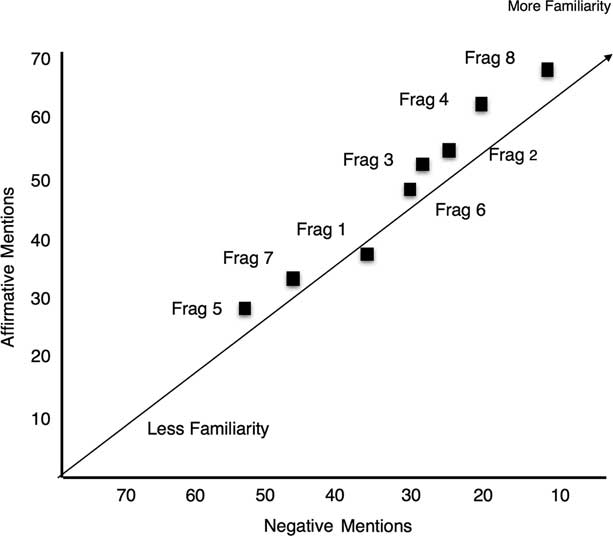
Regarding the depiction of higher or lower familiarity for the provided stimuli, in the ordinal scale created for the qualitative analysis (Figure 1), fragment 8 is assigned the highest degree of familiarity while fragments 3 and 7 are positioned in a medium and low degree of familiarity, respectively. An aspect that seems to influence this judgement significantly is the acknowledgement of musical grammars rooted in the Western musical tradition; in this case, the high familiarity of fragments 4 and 8 would relate to the regularity of rhythmical patterns that distinguishes them from the rest of the fragments. The inclination of human beings towards repetition patterns is known (Margullis Reference Margullis2014); examples here would be the rhythmical patterns present in 4 and 8, as seen in the sonogram of fragment 8 in Figure 4. Another aspect worth mentioning is the presence of sonorities whose sources are recognisable and identifiable; for example, in the soundscape examples (fragments 2 and 6) and in fragment 3, where one of the main aspects reported as significant by the listeners was the ‘moving steps’ (Figure 5). The difference reported above between the two acousmatic fragments, 3 and 7, could be partially explained by the more abstract character of the sound material of fragment 7, if we follow Greenberg’s suggestion (Greenberg Reference Greenberg2015). However, our results (as indicated at the end of 3.3) were uniformly distributed in all the variables considered for the analysis: genre, musical training and previous knowledge of acousmatic music.
3.3. Interviews
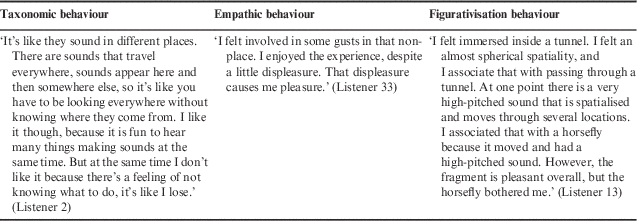
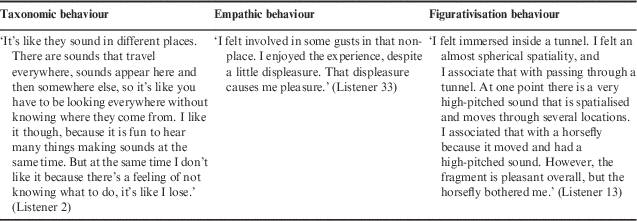
The analysis of the open questions asked regarding the acousmatic fragments (see Table 1) intends to generate analysis categories based on the recurrences, regularities and convergences detected in the discourse of the participants. In order to do this, discourse analysis methodology (Santander Reference Santander2011) was used based on the transcriptions of the recordings of the interviews, organised by the conventional tools of the Atlas-TI qualitative analysis software. Three groups of categories resulted from this analysis. The first is related with the metaphorical representation strategies that the subjects use during their account of their listening experience, resorting to metaphors that can be included within a global description strategy. This phenomenon had already been observed by Delalande (Reference Delalande2013) and Alcázar (Reference Alcázar2004), the latter specifically regarding acousmatic music stimuli, where each listener could be situated in one of the three listening mode behaviours proposed by Delalande: empathic, taxonomic and figurativisation. In only four cases it was not possible to detect any behaviour, as the subjects did not comply with the previous condition for conducting the interview, which was answering whether what they had felt as emotion was related to what they had heard or with the subject and what they had heard. Table 4 includes prototypical responses from various listeners for purposes of clarification.
Listeners’ descriptions of their listening experience by behavior
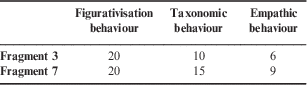
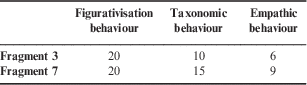
For both fragments, most of the participants expressed some type of listening behaviour, as seen in Table 5. However, some listeners change their listening behaviour from one fragment to another and even go from a figurative description of their experience to an empathic or taxonomic one for the same fragment, which had already been detected by Delalande (Reference Delalande2013: 43). This explains why the sum of expressed listening behaviours for each fragment may not coincide with the number of listeners. Our results corroborate the empirical data obtained in these previous studies, so we tend to confirm the effectiveness of this methodology for analysing the listening experience in order to gain more knowledge about how the listeners signify sound stimuli, particularly for the case of acousmatic music.
Number of listeners classified by listening behavior
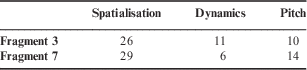
A second group of categories has to do with sonic aspects of the stimulus, which are identified and reported as significantly relevant in the felt emotion. These aspects are essentially reduced to three subcategories: spatialisation, dynamics and pitch (low-pitched and high-pitched sounds). Our results coincide with those reported by Landy (Weale Reference Weale2006: 7) in the category ‘Parameters’ of the Something to Hold On factor (Table 6).
Sound categories
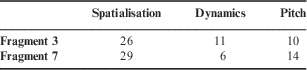
From the qualitative analysis of the subjects’ responses regarding the acousmatic fragments, we observe that the mention of the spatiality or spatial movements of the piece is the most frequent (see Table 4), which is reported as a distinctive aspect of acousmatic music regarding the assessment of the sound content of the stimulus. Additionally, the spatiality is frequently associated with a sort of emotional perplexity, that is, an initial difficulty to distinguish what type of emotion is experienced or might be expressed in the musical piece, as becomes evident in the expression included in Table 4 (taxonomic behaviour prototype): ‘I felt an almost spherical spatiality, and I associate that with passing through a tunnel. At one point there is a very high-pitched sound that is spatialised and moves through several locations’, or others such as ‘the movements, where the sources came from, were unknown. They evoked an everyday quality, but it was unknown’ (Listener 25). This condition of perplexity is reported transversally, regardless of the listening behaviour. The pre-eminence of the spatial aspect in the metaphorical descriptions also seems to be linked to the breach of semantic expectations (Choi, Bharadwaj, Bressler, Loui, Lee and Shinn-Cunningham Reference Choi, Bharadwaj, Bressler, Loui, Lee and Shinn-Cunningham2014), an effect that forces the participants to permanently update their attention. This breach is reported by the participants by means of expressions such as ‘the feeling of movement where I am not able to identify the particular sounds. The sound is travelling in a much accelerated manner without me being able to know what they are’ (Listener 11); or ‘I could have stayed listening for hours. The strength of the sounds, their variety, the fact that I heard them here, then to the right, then behind me, my mind was trying to identify where they appeared and that was fun’ (Listener 24). The relationship between the spatiality in acousmatic music and the breach of semantic expectations seems to be a hypothesis worth studying in the future.
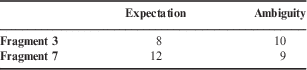
The third group of detected categories, though less frequent, are extra-sonorous references, which are associated with what we could identify in general terms as psychological dimensions of the listening experience (Table 7).
Extra-sonorous categories
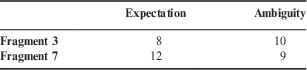
These dimensions prefigure a sort of uncertain, ambiguous listening where ‘displeasure causes pleasure’ (Listener 13) and ‘I like [what I hear] though, because it is fun to hear many things making sounds at the same time. But at the same time I do not like it because there’s a feeling of not knowing what to do, it’s like I lose’ (Listener 2). In addition to this, there are expressions such as ‘in terms of sound, I am intrigued beyond the fear and tension’ (Listener 4) or ‘what increases in intensity causes me anxiety’ (Listener 19). These categories seem to be linked to phenomena that have been profusely described in the literature about the psychology of music, such as expectation (Meyer Reference Meyer1956; Huron Reference Huron2007) and ambiguity (Meyer Reference Meyer1956; Zeki Reference Zeki2004; Hunter et al. Reference Hunter, Schellemberg and Schimmack2010). However, more evidence is required to support this apparent relationship.
These three groups of categories were uniformly distributed among the subjects, regardless of the variables genre, musical training and previous knowledge of acousmatic music.
3.4. Biased sample results
3.4.1. Data analysis
The analysis of the electrodermal activity (going forward, EDA) was conducted exclusively on the records obtained during fragments 3, 7 and 8. These fragments were selected in view of the higher degree of correspondence between the emotion declared as identified (PCE) and the experienced emotion (PAE) in the results of the qualitative analysis of the interview responses, described in Table 2. Delta scores were calculated for the electrodermal activity (EDA), that is, the difference between the values of the data during the execution of the stimulus (the musical work) and the values during one minute before the onset of each fragment of music in order to compare the listener’s EDA measurements while listening with the measurement taken prior to listening. The time window of the fragments was reduced to the first two minutes of each, due to their different lengths. The data was analysed with a Linear Model of Mixed Effects for an intra-subject design in the statistical package R, which allows us to compose a formula that includes both the stimuli and other non-controllable factors, such as noise. In addition, the relationship between the time series of the musical fragments and the delta score was analysed with a bivariate correlation model (Spiegel and Stephens Reference Spiegel and Stephens2002).
3.4.2. Results
Using a Linear Model of Mixed Effects with the variable Fragment as a factor (fragments 3, 7 and 8) and the EDA delta score as a dependent variable for a time window ranging from 0 to 2 minutes, the analysis revealed a significant effect of fragment 7.Footnote 2
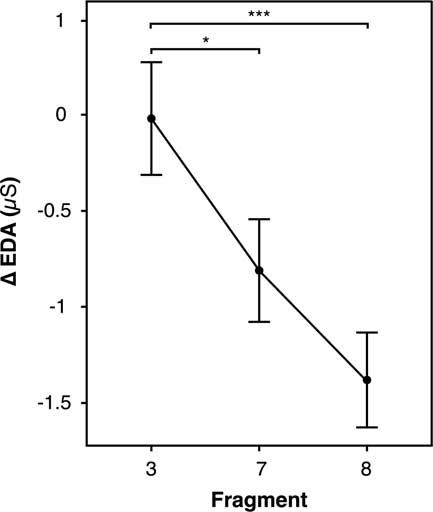
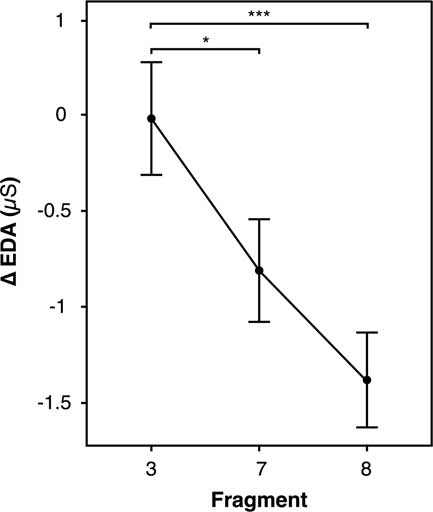
Simultaneous tests of multiple comparisons (Figure 2) tested the linear hypotheses with the Tukey method for fragments 3, 7 and 8.Footnote 3 Specifically, a significant difference was found between fragments 7 and 3,Footnote 4 and fragments 8 and 3. On the other hand, no significant differences were found between fragments 8 and 7.Footnote 5
Error bar chart.
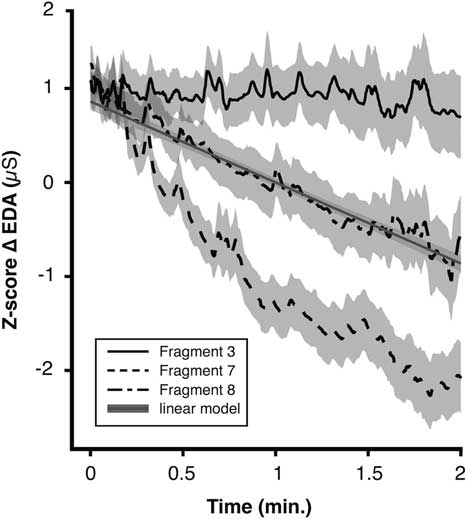
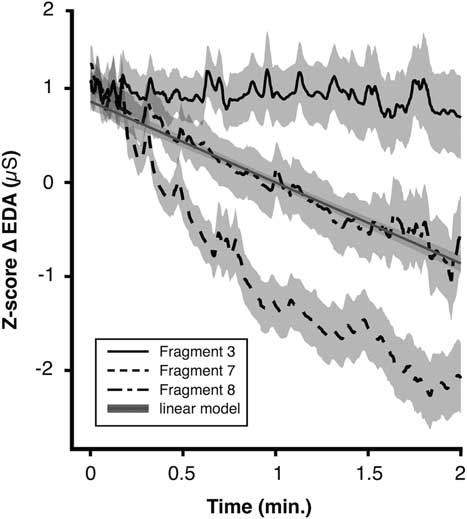
Regarding the analysis of the time series (Figure 3), a significant negative relationship was observed between the EDA delta score and the time,Footnote 6 that is, as the musical fragments advance in time, the normalised EDA delta score (i.e. the skin conductance level) decreases significantly.
Time series graph.
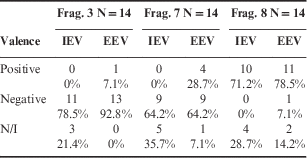
The responses for the identified and experienced emotional valence were compared using the same methodology as for the overall sample. The analysis showed significant differences between the ratios of identified and experienced emotional valence (p<0.001) (Table 8).
Identified and experienced emotional valence contingency tables for fragments 3, 7 and 8
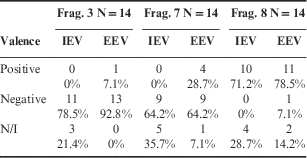
For both the identified emotional valence and the experienced emotional valence, the ratio identified/experienced as negative is significantly higher for fragments 3 and 7. However, this is inverted for fragment 8, where the ratio of emotional valence identified/experienced as positive is higher. These results are quite similar to those obtained in the main sample.
These results seem to suggest a relationship between the time series of the electrodermal activity during fragment 3 and the higher degree of negative emotional valences assigned by the subjects to the emotion experienced during the fragment (affective process of empathy). Although, in general, the skin conductance level (SCL) decreases as the fragments advance, fragment 3, after an initial peak, stays around positive values. On the other hand, fragment 8, associated mainly with emotions of positive valences, displays a time series whose electrodermal activity differs from the previous fragment and positions itself in negative values after the initial peak. In the case of fragment 7, it does not seem possible to suggest relationships between emotional valence and electrodermal activity, as the collected data does not show distinctive activity. The difference between the two acousmatic fragments 3 and 7 could be partly explained by the more abstract character of the sound material of fragment 7, contrary to fragment 3, where the sound material is constituted mainly by sounds whose source seems to be recognisable.
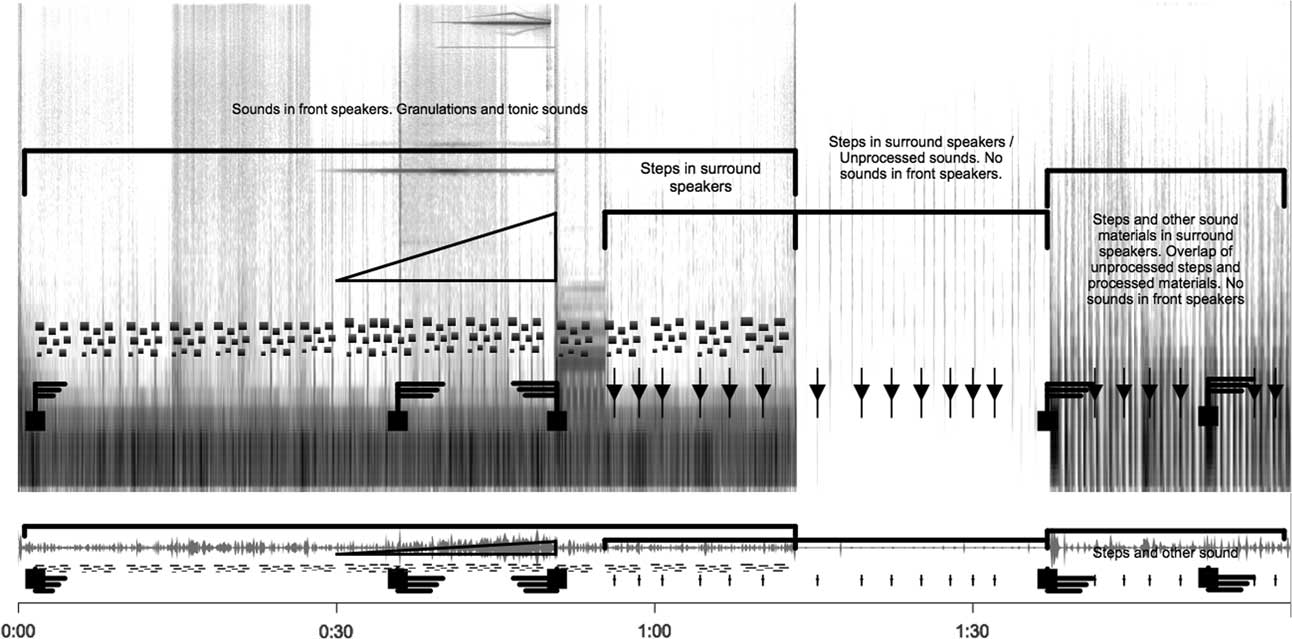
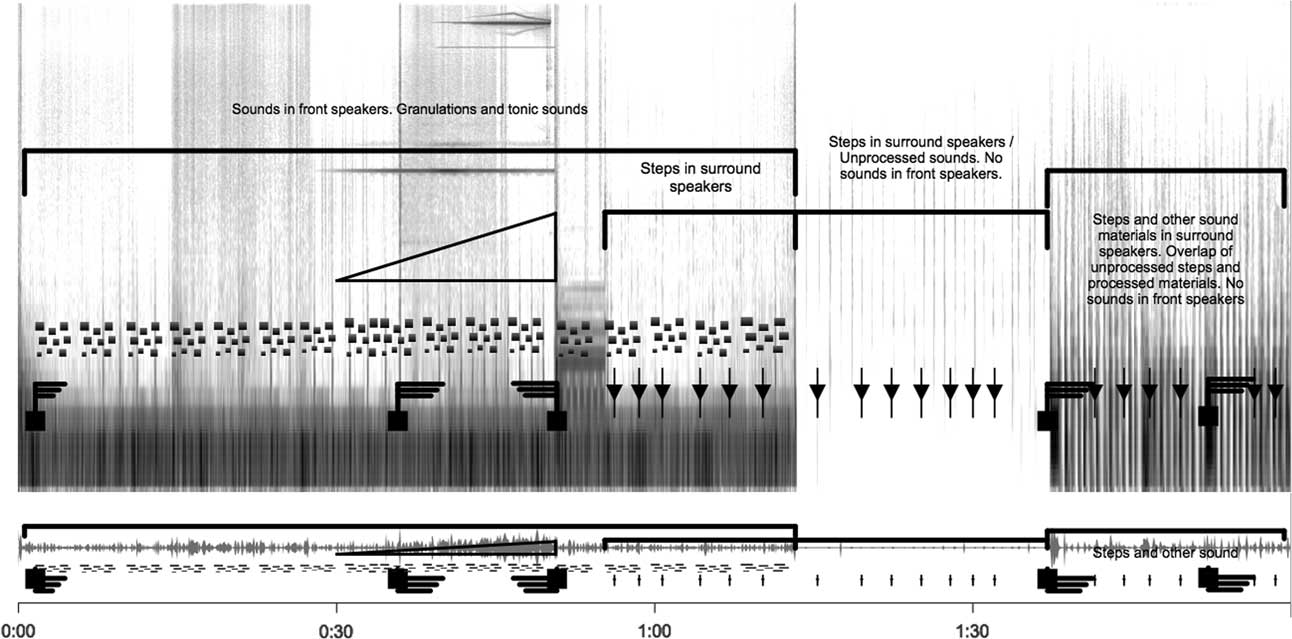
This can be deduced from the analysis of the reports of the subjects, where the sound source steps in fragment 3 is mentioned regularly: ‘The steps caused me despair and anxiety’ (Listener 20); ‘I imagine a story and these steps appear that might belong to a woman being followed by a monster’ (Listener 4). In the sonogram of the fragment (Figure 4), we see that the steps, symbolised by an inverted triangle crossed by a line, start to appear after 55 seconds, in the loudspeakers surrounding the listener, in three different forms: a) as additional material that overlaps with the granulations situated at the front speakers; b) as unique sound material, without transformations; and c) associated with other materials of the impulsion type, both tonic and complex sounds (Schaeffer Reference Schaeffer1966), always in the surround speakers. Additionally, in the sonogram, we can perceive three contrasting sections in the fragment, in terms of both dynamic intensity and density of the sound materials.
Sonogram of fragment 3.
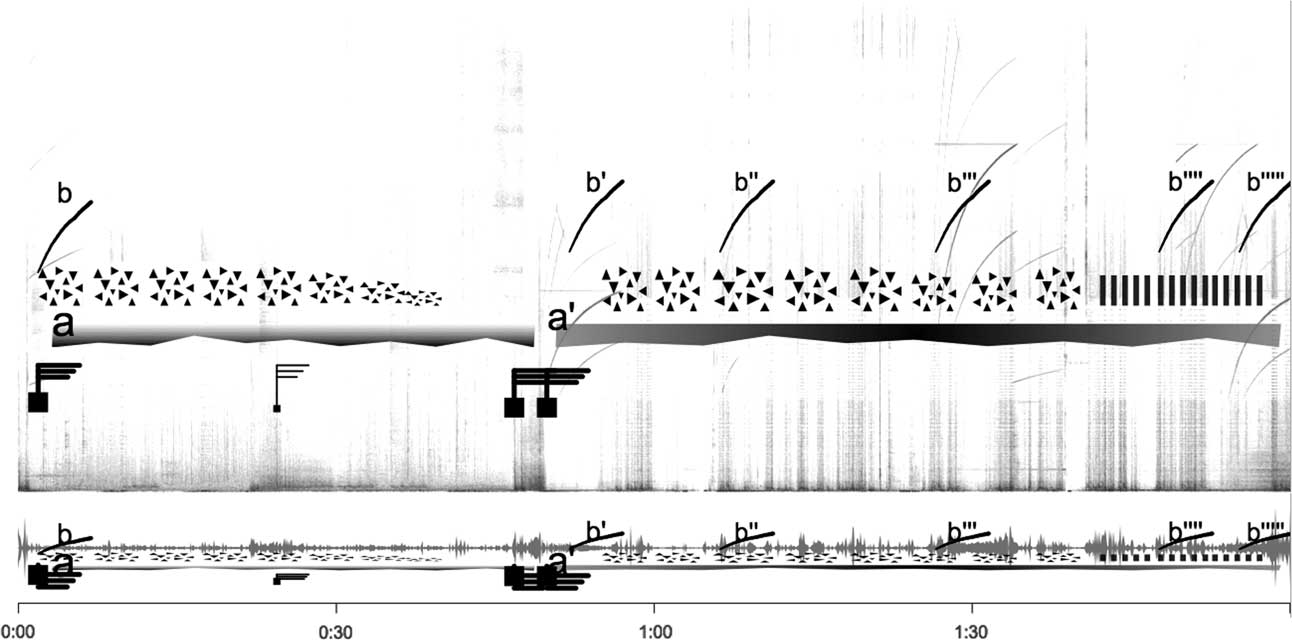
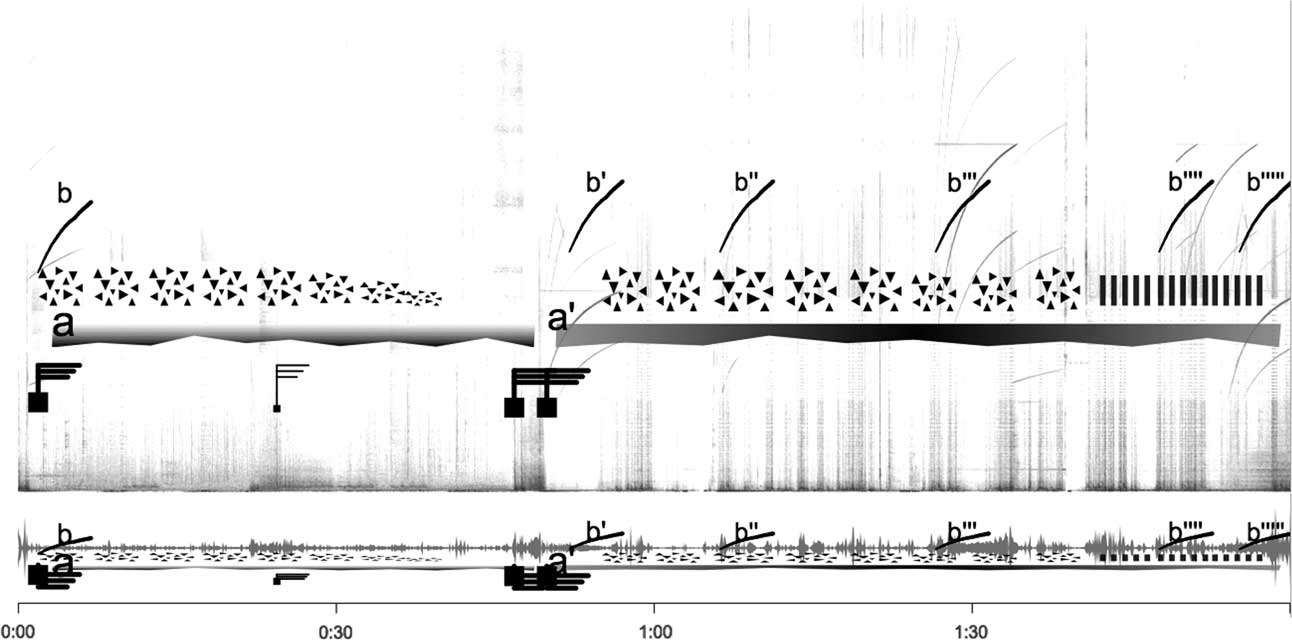
For fragment 7, most of the participants developed a figurative listening strategy, even though there are no convergences in the descriptions of the listeners that might be associated with an identifiable sound source or a stable narrative. Some listeners alluded to sounds such as ‘gusts’ (Listener 13) or the ‘breathing of an animal’ (Listener 15), which might have been references to sustained sounds of complex mass that move suddenly from one speaker to another during almost the entire fragment (indicated as a and a’ in the sonogram of Figure 5). Other mentions refer to high-pitched sounds, such as ‘hospital machines’ (Listener 39) or ‘defibrillator machines’ (Listener 3), which might relate to the sustained sounds, in glissandi from the medium-high to the super-high area of the spectrum (indicated as b in their different variations in the sonogram).
Sonogram of fragment 7.
The question can be raised here regarding the relationship between the negative appraisal of the acousmatic fragments and the low number of instances of non-identification of an emotion with both fragments – a result that arose, as we have seen, in both the overall qualitative analysis and the quantitative analysis of the biased sample. Why does the negative emotional experience in the subjects seem to keep them more attentive to the stimulus? How do the listeners account for their perplexity in understanding the emotion or cognitive processing? In the case of the analysis of the results with EDA, as the listening of the musical fragments advanced in time, the only fragment that did not decrease its normalised delta EDA score significantly was 3 (acousmatic). Fragment 8 decreased drastically, and 7 is located midway between 3 and 8. It is likely that the low number of instances of non-identification of an emotion manifested by the listeners is an important factor for the negative appraisal of the sound stimuli. This, then, would be what the downward curve of the normalised delta scores shows. Nevertheless, more evidence is required to understand the experience of familiarity, negative appraisal and the affective processing beyond the levels of activation or the electrophysiological responses relative to the semantic breach, regarding the acousmatic listening experience.
4. Conclusions
Our results extend those we had previously obtained (Schumacher Reference Schumacher2015). As we have seen in the acousmatic listening experience, spatiality as an aspect of the sound is linked to a complex response in the listeners, a response that finds an escape from the perspective of discourse through metaphorisation, mainly figurative. Moreover, the evidence collected suggests that for listeners, with or without previous knowledge of acousmatic music, spatiality is a significative element during the aesthetic experience of acousmatic music. This is in line with what has been widely expressed by acousmatic composers such as Denis Smalley – among others – who states that ‘Acousmatic music is the only sonic medium that concentrates on space and spatial experience as aesthetically central’ (Smalley Reference Smalley2007: 35).
Spatiality, as an important aspect of the acousmatic musical experience, also seems to play a central role in both cognitive and affective processes of empathy. This suggests a possible relationship between the perception of spatiality in acousmatic music and complex emotional states, expressed in feelings such as confusion or perplexity, such as were frequently reported in subjects’ descriptions of the listening experience during our experiment.
Nevertheless, although we have succeeded in finding empirical evidence of points of coincidence between the listeners’ accounts and the theoretical literature, the acquisition of more evidence of this possible relationship presents a major research challenge – both theoretically and methodologically – in order to perfect our understanding of the acousmatic aesthetic experience.
ACKNOWLEDGEMENTS
This work was supported by CONICYT, Chile. Sciences and technology funds under grant FONDECYT number 1130622.