Introduction
Sweden demonstrates a unique pattern in terms of smoking-related disease; male smoking-related morbidity and mortality are substantially lower than in other European countries (Rodu & Cole, Reference Rodu and Cole2004). Smoking among Swedish males has decreased to a larger extent than among women over the past 40–50 years, possibly related to the prevalent use of snus instead of cigarettes (Foulds et al., Reference Foulds, Ramström, Burke and Fagerström2003).
Swedish snus is associated with health risks that are radically lower than those caused by smoking (Royal College of Physicians, 2002; Lee, Reference Lee2011; Lee & Hamling, Reference Lee and Hamling2009). A recent overview of the available epidemiological evidence (Lee, Reference Lee2011) demonstrated that, after smoking adjustment, snus is unassociated with cancer of the oropharynx (meta-analysis relative risk 0.97, 95% CI 0.68–1.37), oesophagus (1.10, 0.92–1.33), stomach (0.98, 0.82–1.17), pancreas (1.20, 0.66–2.20), lung (0.71, 0.66–0.76) or other sites, or with heart disease (1.01, 0.91–1.12) or stroke (1.05, 0.95–1.15), with no clear associations evident in non smokers. However, an increased risk of some adverse pregnancy outcomes has been reported in snus users (Wikström et al., Reference Wikström, Cnattingius, Galanti, Kieler and Stephansson2010a; Wikström et al., Reference Wikström, Cnattingius and Stephansson2010b) possibly due to their nicotine exposure, which is comparable to that observed among smokers (Lee, Reference Lee2011).
Although snus has never been marketed for smoking cessation, snus is the most frequently reported cessation aid in Scandinavian population-based surveys (Lund et al., Reference Lund, McNeill and Scheffels2010; Ramström & Foulds, Reference Ramström and Foulds2006). Use of snus at the latest quit attempt was reported to be associated with higher rates of sustained quitting than other methods, such as nicotine replacement therapy. However, the role of snus for smoking cessation remains controversial. Critics have cited the lack of controlled clinical trials, as well as uncertainties regarding trying to export experiences from one country to another (Scientific Committee on Emerging and Newly Identified Health Risks (SCENIHR), 2008 (Accessed Oct 2010)).
Two randomised trials on the role of Swedish snus to improve quit rates among smokers were recently published. One (Joksić et al., Reference Joksic, Spasojevic-Tisma, Antic, Nilsson and Rutqvist2011) was conducted at two sites in Belgrade, Serbia, and the other (Fagerström et al., Reference Fagerström, Rutqvist and Hughes2011) at five sites in the USA. Both were placebo-controlled, double-blind trials testing whether ad lib provision of snus affected subsequent smoking habits among adult smokers. However, the trials were relatively small (319 randomised subjects in Serbia, and 250 in the USA) and success rates in absolute terms were relatively low. The fact that none of the trial sites had previous experience with smoking cessation interventions may help to explain the reported low success rates and accompanying low statistical precision of the effect estimates.
Although there are differences between the trials, there are enough similarities to make it worthwhile to combine the evidence from the two studies to allow a more powerful test of whether use of snus affects the rate of quitting smoking. It is reasonable to assume that a formal meta-analysis of appropriately defined endpoints would improve statistical precision and allow better insight into the main hypothesis of interest.
However, in order to ensure that such a meta-analysis can be considered a systematic review, it is necessary to ensure that no other relevant studies have been published. Although the lack of such data was noted by an EU-commissioned report in 2008 (Scientific Committee on Emerging and Newly Identified Health Risks (SCENIHR), 2008 (Accessed Oct 2010)), and reiterated by several Nordic public health officials in 2009 (Holm et al., Reference Holm, Fisker, Larsen, Puska and Halldórsson2009), we conducted literature searches to confirm this. This report may be regarded, therefore, as a systematic review of all the available data. It was conducted according to the PRISMA guidelines (Liberati et al., Reference Liberati, Altman, Tetzlaff, Mulrow, Gøtzsche, Ioannidis, Clarke and Moher2009).
Methods
Inclusion/exclusion criteria and literature searching
Relevant studies were defined as randomised clinical trials including smokers of the effect of provision of Swedish snus on smoking cessation outcomes. We were already aware of the two recently published trials in Serbia (Joksić et al., Reference Joksic, Spasojevic-Tisma, Antic, Nilsson and Rutqvist2011) and the US (Fagerström et al., Reference Fagerström, Rutqvist and Hughes2011). To determine whether there were other relevant trials, literature searches were conducted by one of the authors (PNL), limited to clinical trials, on PubMed, the Cochrane Library, and Embase using the search criteria: (‘quitting smoking’ OR ‘smoking cessation’ OR ‘smoking reduction’) AND (‘smokeless tobacco’ OR ‘snus’ OR ‘snuff’). We reviewed abstracts and, in some cases, full reports to determine whether identified publications met the mentioned inclusion/exclusion criteria.
Design of meta-analysis
The design was developed assuming that the only relevant studies would be those we were aware of, in Serbia (Joksić et al., Reference Joksic, Spasojevic-Tisma, Antic, Nilsson and Rutqvist2011) and in the US (Fagerström et al., Reference Fagerström, Rutqvist and Hughes2011). These studies had a design similar in terms of definitions, statistical methods, and biochemical verification of smoking cessation outcomes. In these regards, the trials adhered to recommendations by the Society for Research on Nicotine and Tobacco (SRNT) for smoking cessation trials (Hughes et al., Reference Hughes, Benowitz, Hatsukami, Mermelstein and Shiffman2004). The meta-analysis was also conducted according to these recommendations, having a pre-specified protocol including definitions of end-points and statistical methodology.
Data available
By courtesy of the study sponsor, and the contract research organisations responsible for data monitoring and data handling in the trials, the authors responsible for the current data analysis (PNL, JSF) were provided with individual subject data for each study based on the information included in the case record forms used in each trial. The meta-analysis thus used information on the following parameters for each randomised subject:
• site where the subject attended;
• gender;
• age;
• smoking history;
• history of quit attempts and use of cessation aids;
• baseline Fagerström score;
• date at which the subject was randomised;
• whether the subject was randomised to snus or placebo;
• results of the CO exhaled air test (weeks 0, 6, 10, 16 and 28 for the US study; weeks 0, 2, 6, 12, 18, 24, 30, 36, 42 and 48 for the Serbian study);
• self-reported smoking status for each week of the study;
• whether the subject used the study product (snus or placebo) for each week of the study;
• whether the subject completed the study or was withdrawn;
• date of completion or withdrawal.
History of past oral tobacco use was not recorded in either study.
Endpoints, objectives and populations
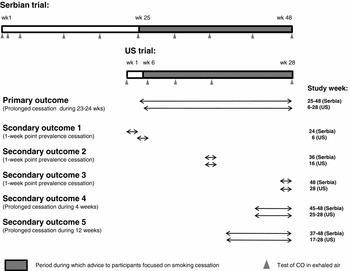
In deriving endpoints, we focused on the period following when the advice given to subjects concentrated on quitting, i.e. from week 5 in the US study and from week 24 in the Serbian study (see Figure 1 for details of the time-lines for each study).
Study time-lines and meta-analysis endpoints for the US and Serbian studies. The period during which the advice to participants focused on smoking-cessation is shown in grey, while the preceding period is shown in white. Triangles indicate timing of CO tests in exhaled air. Periods corresponding to the primary and secondary meta-analysis outcomes are indicated.

The primary objective of the meta-analysis was to examine if snus, compared to placebo, can increase the quit rate among cigarette smokers motivated to change their smoking habits, as quantified by prolonged, complete smoking cessation following advice to quit smoking. Thus, the primary outcome was defined for the US study as complete abstention during 23 weeks (weeks 6 to 28 after randomisation) verified by expired air CO less than 8 ppm at all clinical visits, and for the Serbian study as complete abstention during 24 weeks (weeks 25 to 48 after randomisation), verified by expired air CO less than 10 ppm at all clinical visits.
Secondary objectives of the meta-analysis involved comparison of CO confirmed quit rates at specific weeks and within specific periods. Thus, five secondary outcomes were defined based on confirmed quitting at the following times in the two studies:
1. week 6 USA and week 24 Serbia,
2. week 16 USA and week 36 Serbia,
3. week 28 USA and week 48 Serbia,
4. weeks 25–28 USA and weeks 45–48 Serbia, and
5. weeks 17–28 USA and weeks 37–48 Serbia.
The times selected for each of these secondary outcomes are as similar as possible for the two studies in relation to the period following when the advice to subjects concentrated on quitting was given, bearing in mind the availability of CO results (see Figure 1).
To avoid bias, analyses of the outcomes counted subjects with missing data, irrespective of the cause, as treatment failures (Hughes et al., Reference Hughes, Benowitz, Hatsukami, Mermelstein and Shiffman2004). Analyses were primarily conducted using the intention-to-treat population, defined as all eligible subjects who had a baseline evaluation and were randomised to receive one of the study products, irrespective of compliance and protocol violations. Some additional analyses were conducted restricted to compliant subjects, based upon the definition used for the Serbian study. For that study, this required the subject to use the study product on each day during weeks 1 to 24. For the US study, the definition used required that the subject used the study product on average at least once a day in each of weeks 1 to 5.
Statistical methods
Seven baseline characteristics were defined that might possibly be related to the outcomes; gender, age at entry, average number of cigarettes smoked per day in the year before baseline, age at starting to smoke, baseline Fagerström nicotine dependence score, whether or not previously attempted to quit smoking, and whether or not previously used pharmaceutical nicotine.
A preliminary analysis presented the distributions of these seven baseline characteristics within study and overall, and compared the two studies using exact tests for variables with two levels (gender, previous quit attempt, previous use of pharmaceutical nicotine) and Wilcoxon rank tests (Conover, Reference Conover, Bradley, Hunter, Kendall and Watson2003) for the remaining, continuous, variables.
The distribution of the seven baseline characteristics was compared between the active and placebo groups, as a test of failure of randomisation. Comparisons were made within study, and overall (adjusted for study). For the adjusted (‘stratified’) analysis, stratified chi-squared tests (Breslow & Day, Reference Breslow, Day and Davis1980) and stratified rank tests (Fry & Lee, Reference Fry and Lee1991) were used.
For each of the six defined outcomes, success rates were compared by level of each of the seven baseline characteristics, within study and overall (adjusted for study). For the continuous variables, levels were defined to include approximately equal number of subjects, and the analysis included a test for trend (Breslow & Day, Reference Breslow, Day and Davis1980; Fry & Lee, Reference Fry and Lee1991).
For each of the defined outcomes, success rates were then compared by treatment, within study and overall (adjusted for study). Statistical tests of treatment effects were conducted using exact tests, with the relative risk for active to placebo, and its 95% confidence interval (CI), estimated by methods appropriate for fixed-effect models based on the logit method (Breslow & Day, Reference Breslow, Day and Davis1980; Fleiss & Gross, Reference Fleiss and Gross1991; Katz et al., Reference Katz, Baptista, Azen and Pike1978). Alternative analyses (not shown) using the Mantel-Haenszel method (Greenland & Robins, Reference Greenland and Robins1985) gave very similar results. Tests for heterogeneity of the relative risk over study (Fleiss & Gross, Reference Fleiss and Gross1991) were conducted, but were never significant (p<0.05), so random-effects meta-analysis was not attempted.
Corresponding analyses were also carried out stratified for study site rather than study, and also, for each baseline characteristic, stratified both by study and by two levels of the characteristic, the levels being chosen to divide the population into two approximately equal groups.
In all analyses, p-values <0.05 (two-sided) were considered statistically significant. It should be noted that, as the p-values are based on exact tests, and the estimates of relative risk and CI are based on approximate, asymptotic, tests, it is possible for the CI not to include 1.0 when the exact p-value is >0.05.
Results
Literature searches
Based on the PubMed search, conducted in February 2012, 66 publications were identified. However, none of these concerned studies that satisfied the inclusion/exclusion criteria. The same was true for the Embase and Cochran library searches. This confirmed our original assumption that the studies in Serbia (Joksić et al., Reference Joksic, Spasojevic-Tisma, Antic, Nilsson and Rutqvist2011) and in the USA (Fagerström et al., Reference Fagerström, Rutqvist and Hughes2011) were the only ones that were relevant to our objectives.
The US and Serbian trials
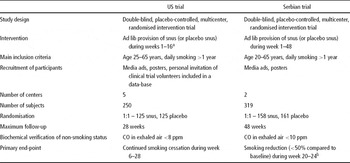
The main design features of the US and Serbian trials are summarised in Table 1 and described in more detail in the text that follows.
Selected design features of the US trial (Fagerström et al., Reference Fagerström, Rutqvist and Hughes2011) and the Serbian trial (Joksic et al., Reference Joksic, Spasojevic-Tisma, Antic, Nilsson and Rutqvist2011)

a Non-protocol use of smokeless tobacco products or pharmaceutical nicotine was allowed after week 16 in case of imminent danger of smoking relapse.
b Cessation outcomes similar to those in the US trial were included as secondary end-points.
Both randomised, placebo-controlled, double blind clinical trials were conducted to test whether ad lib provision of 0.5 or 1.0 g sachets of Swedish snus manufactured according to the GothiaTek standard (Rutqvist et al., Reference Rutqvist, Curvall, Hassler, Ringberger and Wahlberg2011), as compared to placebo sachets with no tobacco or nicotine, affects subsequent smoking habits. One (SM 08-01) was conducted in five sites in the US (Daytona Beach, Austin, Fort Worth, Portland and Evansville). The other (SM 07-01) was conducted in two centres in Belgrade, Serbia. Both studies involved subjects in a similar age range (USA: 25–65 years; Serbia: 20–65 years) and were restricted to subjects who had smoked daily for >1 year, with a similar minimum average consumption level in the preceding month (USA: 9 cigs/day; Serbia: 10 cigs/day), and to subjects who were in good health and who were motivated to change their smoking habits (USA: motivated to quit smoking by a smokeless tobacco (ST) product; Serbia: motivated to substantially reduce or quit smoking). Both studies also effectively excluded current users of ST, in the US by a specific exclusion criterion, and in Serbia by ST not being available on the market. Both studies excluded subjects who had used any type of pharmaceutical or other product for smoking cessation in the preceding three months, who had oral conditions that could be worsened by treatment, who abused alcohol or drugs, who had a history of cardiovascular disease, and who were pregnant or lactating. Both studies collected self-reported tobacco status data in a diary completed by the subject, and recorded exhaled carbon monoxide (CO) levels at intervals, as well as conducting a Fagerström test for nicotine dependence (Heatherton et al., Reference Heatherton, Kozlowski, Frecker and Fagerström1991).
The US study involved four periods, a screening period of two weeks to evaluate eligibility, a study product test period (weeks 1 to 4 post-randomisation) during which the subjects were instructed to use the study products when they felt an urge to smoke, initially without any requirement for complete abstention from cigarettes, an intervention phase (weeks 5 to 16) during which subjects were encouraged to stop smoking completely and to use their allocated study product instead of smoking if they felt an urge to smoke, and a follow-up phase (weeks 17 to 28). Subjects were encouraged to set a target quit date no later than the first day of week 6. Note that the study products were supplied only up to week 16, with subjects instructed to cut down on product use during weeks 14 to 16 to avoid too abrupt an ending of nicotine intake. The objectives of the US study included comparison of smoking quit rates measured by complete abstention during weeks 6 to 28, verified by a level of carbon monoxide in exhaled air (CO) <8 ppm (the primary objective), comparison of verified quit rates measured by complete abstention during weeks 6 to 16, and comparison of verified quit rates specifically at weeks 16 and 28.
The Serbian study involved a baseline visit, a smoking reduction stage (weeks 1 to 24 post-randomisation) and a smoking cessation stage (weeks 25 to 48). During the first 24 weeks subjects were instructed to cut down on smoking by taking a sachet of snus when they felt an urge to smoke, though if they still wished to smoke after 20–30 minutes they could do so. Subjects were also informed that although smoking cessation was preferable, the primary objective of the first 24 weeks of the study was smoking reduction. Subjects who failed to achieve smoking reduction at 24 weeks (as judged by a biologically verified 50% reduction in the self-reported number of cigarettes smoked daily in weeks 20 to 24) were not actively followed after week 24 and were counted as failures in all efficacy analyses. Continuing subjects were instructed to quit smoking completely by use of the sachets, but the concept of a target quit date was not used. While the primary objective of the Serbian study related to smoking reduction, other objectives related to smoking cessation, both at weeks 12 and 24, and at weeks 36 and 48.
It should be noted that while snus and placebo were only available to week 16 in the US study, snus and placebo were available to the subjects during the whole period post-randomisation (weeks 1 to 48) in the Serbian study. This difference arose because, while nicotine replacement therapy and various smokeless tobacco products are both readily available to all participants at a cost comparable to cigarettes in the USA, smokeless tobacco is not available in Serbia, and the cost of nicotine replacement therapy there is prohibitively high for most Serbian smokers.
The numbers of subjects randomised were 250 (125 allocated to snus, 125 to placebo) in the US trial and 319 (158 to snus, 161 to placebo) in the Serbian trial.
Baseline characteristics
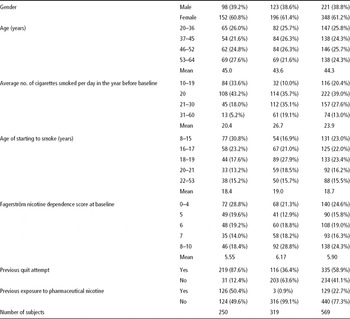
Table 2 shows the overall distribution of selected baseline characteristics in the two trials.
Distribution of selected baseline characteristics by studya

a: The table shows the number of subjects, and the percentage of the study population. Differences between studies were highly significant (p<0.001) for cigarette consumption, Fagerström nicotine dependence score, previous quit attempt and previous exposure to pharmaceutical nicotine, but not significant (p0.05) for other baseline characteristics.
Use of oral tobacco during the past 3 months was an exclusion criteria in the US study but data on ever-use of such products was not collected. The studies had a similar frequency of males, and the subjects were of similar age. However significant (p <0.001) differences were noted for five characteristics; compared to US subjects, those in Serbia had a higher mean average daily cigarette consumption at baseline (26.7 vs 20.4), a later age of starting to smoke (19.0 vs 18.4), a higher Fagerström nicotine dependence score (mean 6.17 vs 5.55), had less often previously attempted to quit (36.4%vs 87.6%), and had less often used pharmaceutical nicotine (0.9% vs 50.4%). There was no evidence for either study, or overall, of any failure of randomisation, the distribution of baseline characteristics being similar in the active and placebo groups (p-values always >0.1, data not shown).
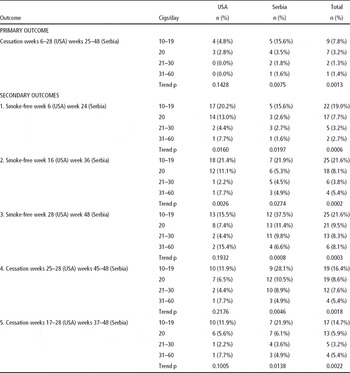
There was no statistically significant evidence, in either study, or overall, that any smoking cessation outcome varied by gender, having had a previous quit attempt or having previously used pharmaceutical nicotine. Nor was there any statistically significant increasing or decreasing trend for any outcome in relation to age, age of starting to smoke, or Fagerström score. However, as shown in Table 3, there was a clear tendency for all the outcomes to show a reducing trend in relation to increasing daily cigarette consumption.
Relationship of outcome to average daily cigarette consumption in the year before baselinea

a: The table shows the number (percentage) of subjects satisfying the criterion for a successful outcome.
The trend was statistically significant for all the outcomes for the overall data and for Serbia, but only significant for some of the secondary outcomes for the USA. This may partly reflect the smaller number of heavier smokers in the US study. Relative success rates in smokers of 10–19 cigarettes per day compared to smokers of 31–60 cigarettes per day ranged from 3 to 5 (5.0 for the primary outcome, and 4.8, 3.8, 3.0, 4.0 and 3.2 for secondary outcomes 1 to 5 respectively).
Effects of allocated treatment
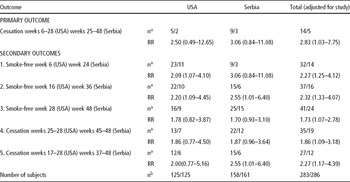
In the two studies combined, 19 subjects were successes as defined by the primary outcome: seven in the USA and 12 in Serbia (Table 4).
Meta-analysis of effects of treatment

a: First number is the number of successes in the active group, and the second the number in the placebo group.
b: First number is the number of subjects in the active group, and the second is the number in the placebo group.
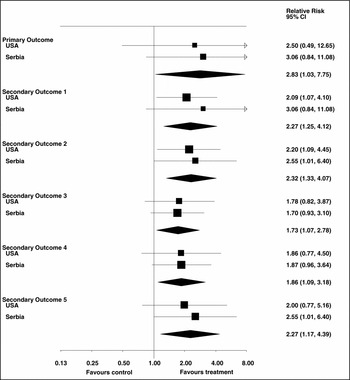
The success rate was higher in the active group in both studies, with similar relative risk estimates of 2.50 (USA) and 3.06 (Serbia). The meta-analysis estimate (2.83, 95% CI 1.03–7.75) was of borderline significance (exact p = 0.06, chi-squared p = 0.03).
All the secondary outcomes showed an advantage to the active group in both studies (Table 4). For the results meta-analysed over study, all estimates were statistically significant and indicated about a two-fold increase in the success rate for subjects allocated to snus.
There was no evidence (p = 0.85) of heterogeneity of the relative success rate estimates by study. As a result, random-effects estimates of the overall relative success rate over the two studies were identical to those shown in Table 4.
The relative success rates in the individual trials and the meta-analysis are displayed graphically as forest plots in Figure 2.
Forest plots of effect estimates. Effect estimates are shown for the primary outcome and for each of the five secondary outcomes. The estimates are shown numerically and graphically on a logarithmic scale. In the graphical representation, individual study estimates are indicated by a solid square, with the area proportional to the weight (inverse-variance of log relative risk), arrows indicating where the 95% confidence interval extends outside the range allocated. Combined estimates are shown by a diamond of width equal to the 95% confidence interval.

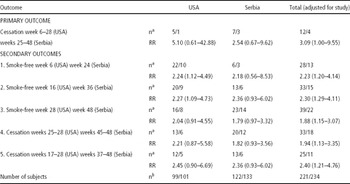
Table 5 presents analyses similar to those in Table 4, but restricted to compliant subjects.
Meta-analysis of effects of treatment among compliant subjects

a: First number is the number of successes in the active group, and the second the number in the placebo group.
b: First number is the number of subjects in the active group, and the second is the number in the placebo group.
These analyses were based on 200 subjects in the USA (99 active, 101 placebo) and 255 in Serbia (122 active, 133 placebo), with no statistically significant evidence in either study that non-compliance rates varied by treatment. The combined relative success rate estimates were similar to those for the intention-to-treat population, with a statistically significant advantage to the active treatment again seen for all secondary outcomes. For the primary outcome, the estimate, now based on 16 successful outcomes rather than 17, was 3.09 (95% CI: 1.00–9.55, exact p = 0.054, chi-squared p = 0.03).
Carrying out meta-analyses over study site rather than over study slightly reduced the relative risk estimate for the primary endpoint, to 2.36 (95% CI 0.92–6.05), but the statistical significance remained borderline (exact p = 0.06, chi-squared p = 0.03). Conclusions for the secondary endpoints were also little affected (data not shown). Although the relative success rate (adjusted for study) for the primary endpoint was higher for smokers of 20+ cigarettes a day at baseline (6.52, 95% CI 1.18–36.15), where 9 of the 10 successes were in the active group, than for smokers of 10–19 cigarettes a day (1.15, 95% CI 0.33–4.01) where five of the nine successes were in the active group, the relative success rates were not statistically heterogeneous (p = 0.10), and the overall estimate, adjusted for amount smoked, of 2.10 (95% CI 0.77–5.76) remained of borderline significance (exact p = 0.06, chi-squared p = 0.04). The increased success rate in the active group remained significant (p < 0.05) for all the secondary outcomes after adjustment for amount smoked.
There was no statistically significant evidence that the relative success rate with snus differed according to gender, age at entry, age at starting to smoke, baseline Fagerström score, previous quit attempt, or previous exposure to pharmaceutical nicotine (data not shown). However, the limited numbers of successes in subgroups by these characteristics limited the power to detect heterogeneity.
In the Serbian trial, 97% of participants in both the snus and placebo groups reported some daily use of their allocated study product during the first week post-randomisation. This proportion declined over time and was 52% after 48 weeks in the snus group compared to 60% in the placebo group. Among the daily users of snus the weekly average ranged from 3.5 to 4.7 g per day, but tended to increase over time. Those allocated to the placebo group had a marginally higher consumption. In the US trial participants in the snus group who used 1.0 g sachets consumed on average 3–4 sachets per day. The corresponding number for those who preferred the 0.5 g sachets was 4–8 sachets per day. Those allocated to placebo generally consumed a slightly higher number of sachets. Given that the participants were informed that, in terms of nicotine delivery, one 1.0 g sachet of snus roughly should be able to replace one cigarette, it is clear that the average participant in both studies used considerably less study product than might have been motivated by their baseline daily cigarette consumption.
Discussion
The literature searches conducted on MedLine, Cochrane Library, and Embase failed to identify any randomised clinical trial of the effect of snus on smoking cessation in addition to the US and Serbian studies. This observation concurs with previous statements (Holm et al., Reference Holm, Fisker, Larsen, Puska and Halldórsson2009; Scientific Committee on Emerging and Newly Identified Health Risks (SCENIHR), 2008 (Accessed Oct 2010)) as well as with a literature search published in September 2012 conducted by a Norwegian public health agency which had been commissioned by the Norwegian National Board of Health to identify clinical trials addressing the role of snus as a smoking cessation aid (Sæterdal et al., Reference Sæterdal, Harboe, Ringerike and Klemp2012). Their search concerned the following databases: Medline, Cochrane Library, Embase, PsycINFO, Centre for Reviews and Dissemination DARE, Web of Science, SveMed+, and PubMed. They also failed to identify randomised trials in addition to those included in the current systematic review. Due to the scarcity of experimental data on snus as a smoking cessation aid together with the cited need for such information (Holm et al., Reference Holm, Fisker, Larsen, Puska and Halldórsson2009; Scientific Committee on Emerging and Newly Identified Health Risks (SCENIHR), 2008 (Accessed Oct 2010)), the risk of publication bias is probably low for controlled clinical studies addressing this issue. Also, our search criteria were relatively wide so it seems highly likely that we did not miss any relevant randomised clinical trial.
The main strengths of both the US and Serbian trials are that they were placebo controlled and double-blind (although neither protocol included procedures to assess the success of the blinding). However, the trials included limited number of subjects and none of the involved trial sites had previous experience with smoking cessation interventions. The studies are to some extent different, partly because of the ready availability of smokeless tobacco products and pharmaceutical smoking cessation aids in the US, but not in Serbia, and the vastly different social contexts in terms of smoking habits and attitudes to smoking in the US compared to Eastern Europe. However, the designs of the studies are similar enough to allow valid meta-analysis of smoking cessation outcomes. In this regard, both studies adhered to the recommendations for smoking cessation trials published by the Society for Research on Nicotine and Tobacco (Hughes et al., Reference Hughes, Benowitz, Hatsukami, Mermelstein and Shiffman2004). Given that meta-analyses are frequently conducted for observational epidemiological studies, where there may be variation in study design (e.g. case-control or prospective cohort), type of exposure, and extent of adjustment for potential confounding variables, there can be no real objection to meta-analysis of relatively similar randomised controlled trials with the same active and placebo treatments.
A major strength of this meta-analysis is that it was based on individual subject data which allowed comparable definitions of outcomes and potential confounding variables, identical statistical analyses to be conducted for the two studies, and the calculation of exact rather than approximate probabilities for the statistical tests.
In the main analysis, based on the primary outcome among all randomised subjects of biochemically validated smoking cessation over a period of 23–24 weeks, there was an increased success rate in the group allocated to receive snus. However, this was based on a relatively small number of subjects, and the relative success rate of 2.83 was of borderline statistical significance (exact p = 0.06, chi-squared p = 0.03). However, this outcome represents a quite stringent criterion. Success rates were substantially higher, and the advantage to snus generally statistically significant, for criteria based on success at specific weeks, or based on shorter periods. This strongly suggests that there is a real advantage to snus in encouraging quitting. However, given the relatively low usage of allocated study products in both trials, further research is needed about the acceptability of snus in populations that have not traditionally had access to snus.
In the studies combined, there was a statistically significant tendency for outcome success rates to be higher in lighter smokers which confirms and extends previous information from other cessation studies. However, none of the outcomes were significantly related to gender, age, age of starting to smoke, nicotine dependence score, previous quit attempts, and exposure to pharmaceutical nicotine.
In Scandinavian population surveys snus is the most frequently reported smoking cessation aid and appears to be associated with higher rates of sustained quitting than other methods, such as, nicotine replacement therapy (Lund et al., Reference Lund, McNeill and Scheffels2010; Ramström & Foulds, Reference Ramström and Foulds2006). However, observations on reported quitting strategies and cessation outcomes in population surveys are probably to some extent biased by self-selection. Smokers with low nicotine dependence may more often choose to quit unassisted and succeed in remaining smoke free than smokers with high nicotine dependence. Among smokers who elect to use some form of cessation aid, self-selection between different aids is probably also a concern. Some individuals may experience oral problems with snus, and some simply do not favor snus for aesthetic or other reasons. Such individuals are unlikely to try snus for smoking cessation purposes. Self-selection mechanisms may also be related to the long-term outcome of quit attempts. Non-smoking status in population surveys is typically based on self-reports without biochemical validation. In view of these circumstances, one should be cautious in extrapolating conclusions based on observational survey data about the efficacy of different cessation strategies.
Despite the fact that many smokers in Sweden have switched from cigarettes to snus it has been suggested (Scientific Committee on Emerging and Newly Identified Health Risks (SCENIHR), 2008 (Accessed Oct 2010)) that this may simply represent a cultural phenomenon that is particular to Scandinavian males, and that snus may not perform similarly in other countries, among females, or in settings where pharmaceutical nicotine is readily available to smokers who want to quit. The results of the US and Serbian trials do not support these concerns: more than 60% of the participants in both studies were female and there was no evidence that snus had a differential effect according to gender; there is no traditional use of oral tobacco of any kind in Serbia; and there was no evidence (mainly based on the US results) that previous exposure to pharmaceutical nicotine modified the effect of snus.
This systematic review and meta-analysis of the available experimental data on snus as a smoking cessation aid confirms and extends previous information based on observational, epidemiological data in showing that provision of snus was associated with increased cessation rates among smokers motivated to quit. The effect estimates in the meta-analyses suggested a two to three-fold increase in cessation rates among subjects allocated to snus. However, because of the limited number of subjects, these estimates are associated with wide confidence intervals. This is an important issue because arguments in favor of tobacco harm reduction with smokeless tobacco products, including snus, probably hinge on the efficacy of such products to contribute to complete cessation. Complete, long-term cessation has well-documented, positive health effects, whereas the effects of smoking reduction, which may also occur as a result of dual use of cigarettes and smokeless products, are much more modest (Pisinger & Godtfredsen, Reference Pisinger and Godtfredsen2007), and to some extent controversial (Hughes & Carpenter, Reference Hughes and Carpenter2006). Therefore, there is an obvious need for more controlled trials addressing the efficacy of snus in terms of complete, biologically verified, long-term smoking cessation.
Acknowledgements
We thank Pauline Wassell and Diane Morris for typing the various drafts of the manuscript.
Financial support
The study was sponsored by Swedish Match AB, Stockholm, Sweden. The sponsor provided funding for transfer of subject data from the contract research organisations that had been responsible for data handling in the US and Serbian trials (Covance and i3 Research), and for all the work conducted by JSF and PNL.
Conflict of interest
LER is an employee of the official sponsor of the US and Serbian trials (Swedish Match AB). PNL, a director of P N Lee Statistics and Computing Ltd, is a consultant to various other tobacco companies and organisations. JSF works for P N Lee Statistics and Computing Ltd.
Ethical standards
The authors assert that all procedures contributing to this work comply with the ethical standards of the relevant national and institutional committees on human experimentation and with the Helsinki Declaration of 1975, as revised in 2008.