Introduction
Tens of thousands of people were involved in rescue, recovery and clean-up work following the 9/11 World Trade Center (WTC) terrorist attacks. The diverse group of people who responded to this disaster included traditional first responders such as police officers, firefighters and emergency medical technicians, along with non-traditional responders such as construction workers, operating engineers and other volunteers, most of whom had no prior training in disaster response (Herbert et al. Reference Herbert, Moline, Skloot, Metzger, Baron, Luft, Markowitz, Udasin, Harrison, Stein, Todd, Enright, Stellman, Landrigan and Levin2006). Rescue and recovery operations were carried out at Ground Zero and the Staten Island landfill, where workers were exposed to extraordinarily hazardous working conditions and toxic agents while searching for survivors and cleaning up debris. In addition to unsafe physical and chemical environmental conditions, these workers were exposed to unprecedented and potentially traumatic psychological stressors, including fear for personal safety, injury or illness, working long hours and performing arduous work in chaotic conditions, the loss of colleagues and friends, handling body parts, and inhaling the odor of decomposing bodies and debris (Landrigan et al. Reference Landrigan, Lioy, Thurston, Berkowitz, Chen, Chillrud, Gavett, Georgopoulos, Geyh, Levin, Perera, Rappaport and Small2004; Neria et al. Reference Neria, Gross and Susser2006).
In 2002, the Centers for Disease Control and Prevention (CDC) established medical monitoring and treatment programs for the WTC responders (now called the WTC Health Program; WTC-HP) to provide medical and mental health services to WTC rescue and recovery workers. The WTC-HP is a regional clinical consortium comprising five medical institutions in the greater New York City area that provides these services for police and other WTC responders; a separate program is available for New York City firefighters (Berninger et al. Reference Berninger, Webber, Cohen, Gustave, Lee, Niles, Chiu, Zeig-Owens, Soo, Kelly and Prezant2010a ). Data from the initial monitoring visit revealed that 11.1% of responders screened positive for post-traumatic stress disorder (PTSD), 8.8% for depression, 5.0% for panic disorder and 62% for a substantial stress reaction (Stellman et al. Reference Stellman, Smith, Katz, Sharma, Charney, Herbert, Moline, Luft, Markowitz, Udasin, Harrison, Baron, Landrigan, Levin and Southwick2008). Data from the WTC Health Registry similarly revealed a 12.4% prevalence of PTSD among WTC responders (Perrin et al. Reference Perrin, DiGrande, Wheeler, Thorpe, Farfel and Brackbill2007). This study further found that rates of PTSD differed across occupations with varying degrees of training and preparedness in disaster response, ranging from 6.2% in police to 21.2% in unaffiliated volunteers.
Several risk factors for PTSD in WTC responders have been identified. They include earlier arrival at the WTC site; evacuation from one of the WTC towers; dust cloud exposure; sustaining an injury at the site; witnessing trauma; longer work duration; and performing tasks atypical for their occupation (Perrin et al. Reference Perrin, DiGrande, Wheeler, Thorpe, Farfel and Brackbill2007). Risk factors for PTSD have also been found to vary by occupation. For example, witnessing trauma was associated with PTSD for non-traditional responders, and performing work for which responders were not trained (e.g. firefighting among police officers) was associated with PTSD in professional responders. In serial cross-sectional analyses of firefighters who responded to the WTC disaster, the prevalence of PTSD was persistently elevated at 7.4%, even a decade later (Soo et al. Reference Soo, Webber, Gustave, Lee, Hall, Cohen, Kelly and Prezant2011). In this study, early arrival and higher respiratory and digestive symptoms were associated with both persistent and delayed-onset PTSD.
A burgeoning body of research has begun to examine the longitudinal course of PTSD in WTC responders and other high-risk groups, such as war veterans (Bonanno et al. Reference Bonanno, Mancini, Horton, Powell, Leardmann, Boyko, Wells, Hooper, Gackstetter and Smith2012) and survivors of assault (Steenkamp et al. Reference Steenkamp, Dickstein, Salters-Pedneault, Hofmann and Litz2012), natural disaster (Norris et al. Reference Norris, Tracy and Galea2009), traumatic injury (deRoon-Cassini et al. Reference deRoon-Cassini, Mancini, Rusch and Bonanno2010) and chronic political violence (Hobfoll et al. Reference Hobfoll, Mancini, Hall, Canetti and Bonanno2011). In the WTC studies, chronicity of PTSD symptoms was found to be associated with prior trauma exposure or history of depression; 9/11-related exposure severity, longer work periods; early depressive symptoms after 9/11; and post-9/11 job loss, disability and low social support (Brackbill et al. Reference Brackbill, Hadler, DiGrande, Ekenga, Farfel, Friedman, Perlman, Stellman, Walker, Wu, Yu and Thorpe2009; Berninger et al. Reference Berninger, Webber, Cohen, Gustave, Lee, Niles, Chiu, Zeig-Owens, Soo, Kelly and Prezant2010a ,Reference Berninger, Webber, Niles, Gustave, Lee, Cohen, Kelly, Corrigan and Prezant b ; Cukor et al. Reference Cukor, Wyka, Mello, Olden, Jayasinghe, Roberts, Giosan, Crane and Difede2011b ). These studies have also observed persistently lower PTSD symptom levels in police officers compared to non-traditional responders (Wisnivesky et al. Reference Wisnivesky, Teitelbaum, Todd, Boffetta, Crane, Dellenbaugh, Harrison, Herbert, Jeon, Kaplan, Levin, Luft, Markowitz, Moline, Pietrzak, Shapiro, Southwick, Stevenson, Udasin, Wallenstein and Landrigan2011), extending analogous findings from cross-sectional studies (Perrin et al. Reference Perrin, DiGrande, Wheeler, Thorpe, Farfel and Brackbill2007; Luft et al. Reference Luft, Schechter, Kotov, Broihier, Reissman, Guerrera, Udasin, Moline, Harrison, Friedman-Jimenez, Pietrzak, Southwick and Bromet2012; Pietrzak et al. Reference Pietrzak, Schechter, Bromet, Katz, Reissman, Ozbay, Sharma, Crane, Harrison, Herbert, Levin, Luft, Moline, Stellman, Udasin, Landrigan and Southwick2012). A recent study of WTC police responders identified four groups on the basis of the absence or presence of probable PTSD 2–3 years and 5–6 years after 9/11 (Bowler et al. Reference Bowler, Harris, Li, Gocheva, Stellman, Wilson, Alper, Schwarzer and Cone2012). The majority of this sample were resilient (i.e. no PTSD at either visit; 81%), whereas 11.2% had delayed-onset PTSD, 5.3% chronic PTSD and 2.5% were recovered. Factors associated with a greater increase in PTSD symptom severity in this study included male sex, job loss after 9/11 and disability. Determinants of resilient, recovered and delayed-onset outcomes were not evaluated in this study.
PTSD symptoms may evolve in complex ways after a traumatic event and be characterized by heterogeneous trajectories. Common trajectories of PTSD symptoms include resistance or resilience (i.e. minimal to no symptoms over time); subsyndromal (i.e. mild to moderate symptoms over time); chronic (i.e. chronically elevated symptoms over time); delayed dysfunction (i.e. increasing symptoms over time); and recovery (i.e. declining symptoms over time) (e.g. Norris et al. Reference Norris, Tracy and Galea2009; deRoon-Cassini et al. Reference deRoon-Cassini, Mancini, Rusch and Bonanno2010). One powerful approach to characterizing PTSD symptom trajectories is latent growth mixture modeling (LGMM; Nagin & Tremblay, Reference Nagin and Tremblay2001; Curran & Hussong, Reference Curran and Hussong2003; Muthén, Reference Muthén and Kaplan2004), which can yield insight into the nature and evolution of PTSD symptoms after trauma exposure. This approach can also be used to identify determinants of longitudinal trajectories of PTSD symptoms. For example, data from people exposed to political violence revealed that lower resource loss and greater social support predicted improvement in PTSD symptoms over time (Hobfoll et al. Reference Hobfoll, Mancini, Hall, Canetti and Bonanno2011) and recent data on US military personnel found that delayed-onset PTSD may stem from a progressive worsening of lower-grade symptoms over time (Bonanno et al. Reference Bonanno, Mancini, Horton, Powell, Leardmann, Boyko, Wells, Hooper, Gackstetter and Smith2012). Importantly, both baseline (e.g. severity of trauma exposure, psychiatric history) and time-varying factors (e.g. secondary stressors) may be related differentially to longitudinal patterns of PTSD symptoms following a disaster (Hobfoll et al. Reference Hobfoll, Mancini, Hall, Canetti and Bonanno2011; Bonanno et al. Reference Bonanno, Mancini, Horton, Powell, Leardmann, Boyko, Wells, Hooper, Gackstetter and Smith2012; Kessler et al. Reference Kessler, McLaughlin, Koenen, Petukhova and Hill2012). To date, however, no study of which we are aware has used LGMM to characterize the nature and determinants of PTSD symptom trajectories in WTC responders. Such an examination is important, as it can help to identify predominant patterns of PTSD symptom trajectories, along with potentially modifiable determinants of resilience, recovery and dysfunction in this large population.
We had two objectives in the current study. First, we sought to characterize longitudinal trajectories of WTC-related PTSD symptoms an average of 3, 6 and 8 years after 9/11 in a large cohort of more than 10 000 police and non-traditional WTC-responders. Second, we sought to examine pre-, peri- and post-9/11 determinants of WTC-related PTSD symptom trajectories in these responders.
Method
Sample
Participants included 10 835 WTC responders, including 4035 police responders comprised predominantly (> 85%) of New York City police officers; and the remainder being Port Authority police, police from New York City and non-New York City sheriff's offices, and other non-New York City police departments; and 6800 non-traditional responders comprising 40% construction workers, 13% installation/maintenance/repair workers, 12% security guards and other non-police protective services, 7% transportation workers, and smaller numbers of workers in a range of heterogeneous occupations, including engineering, health care, media, administrative and others. Participants completed Visits 1, 2 and 3 [conducted an average of 3.3 (s.d. = 1.9, range 0.8–8.0), 5.7 (s.d. = 1.7, range 3.1–9.0) and 7.9 (s.d. = 1.3, range 5.3–10.1) years after 9/11] of the WTC-HP. Responders were recruited through outreach that included union meetings, mailings, media articles and some 50 000 telephone calls in multiple languages. Details regarding eligibility for this program are described elsewhere (Pietrzak et al. Reference Pietrzak, Schechter, Bromet, Katz, Reissman, Ozbay, Sharma, Crane, Harrison, Herbert, Levin, Luft, Moline, Stellman, Udasin, Landrigan and Southwick2012). Eighteen months after their first visit, participants were eligible to return for a second visit, with subsequent visits scheduled every 18 months thereafter. Institutional Review Boards of each affiliated site approved and monitored compliance with procedures for obtaining informed consent and protecting human subjects.
Assessments
Dependent variable
The PTSD Checklist Specific-Stressor Version (PCL-S; Weathers et al. Reference Weathers, Litz, Herman, Huska and Keane1993) is a 17-item self-report instrument based on DSM-IV criteria for PTSD that was used to assess WTC-related PTSD symptoms. In the current study, a PCL-S score ⩾44 was used to identify probable PTSD (Blanchard et al. Reference Blanchard, Jones-Alexander, Buckley and Forneris1996).
Independent variables
Sociodemographic characteristics assessed included age, sex, race/ethnicity, education, marital status and income.
Psychiatric history prior to 9/11 was assessed by asking respondents if they had ever been diagnosed by a health-care professional with depression, anxiety disorder or PTSD prior to 9/11. This variable was coded as ‘0’ = no diagnosis or ‘1’ = one or more of these diagnoses.
Stressful life events before and after 9/11 were assessed using questions from the Disaster Supplement of the Diagnostic Interview Schedule (Robins & Smith, Reference Robins and Smith1983). Fifteen negative life events (e.g. divorce/separation, personal illness, family illness or death) experienced the year before and since 9/11 were assessed (score range 0–15 events before and since 9/11).
WTC-related exposures were assessed by a clinician-administered interview. Exposures assessed included (1) early arrival (i.e. beginning work at the WTC worksite between 11 and 13 September 2001); (2) being caught in the dust cloud; (3) working primarily/adjacent to the collapse site, known as the ‘pit’ or the ‘pile’ during September 2001; (4) working more than the median number of hours on the WTC site; (5) exposure to human remains (i.e. any exposure to human remains between 11 September 2001 and 30 June 2002); (6) involvement in search and rescue efforts during September to October 2001; (7) sleeping on site; (8) traumatic death of a colleague, family member or friend on 9/11; and (9) being treated for an injury or illness while working on the WTC recovery effort; and (10) knowing someone who suffered an injury on 9/11. Both the total number (range 0–10) of WTC exposures and specific exposures were analyzed.
WTC-related medical conditions were assessed by comprehensive medical examinations. WTC-related medical illness burden was computed as the count of three of the most common WTC-related medical conditions [asthma, gastroesophageal reflux disease (GERD), sinusitis] that were diagnosed within 3 months of participants' initial visit to the WTC-HP.
Sources of family and work social support were assessed by asking respondents to endorse important sources of family and work support while working at the WTC site. Sources of support were summed to represent total number of family supports (sources of support assessed were spouse/partner, children and parent(s); range 0–5; analyzed as a continuous variable); and total number of work supports while working at the WTC site (sources of support assessed included supervisor and co-workers; range 0–2; coded as ‘0’ versus ‘1 or 2’ due to restricted range).
Data analysis
To characterize longitudinal trajectories of WTC-related PTSD symptoms, we conducted LGMM analyses using robust full-information maximum likelihood estimation in Mplus (Muthén & Muthén, Reference Muthén and Muthén2002); < 1.3% of participants failed to complete the PCL-S at any visit. LGMM analyses were conducted separately for police and non-traditional WTC responders. The number of PTSD symptoms endorsed at a ‘moderate’ or greater level (range 0–17), which corresponds to the DSM-based symptom cluster method of operationalizing symptom endorsement (Weathers et al. Reference Weathers, Litz, Herman, Huska and Keane1993; Blanchard et al. Reference Blanchard, Jones-Alexander, Buckley and Forneris1996), were entered into this analysis to facilitate comparisons of the final solutions to prior LGMM studies; we then plotted raw PCL scores in each of the groups to facilitate interpretability of these solutions. LGMM analyses proceeded in two steps. First, we compared one- to six-class unconditional latent growth mixture (LGM) models and assessed their relative fit using conventional indices, including Bayesian Information Criterion (BIC), Akaike's Information Criterion (AIC), entropy, the Lo–Mendell–Rubin likelihood test (LMR LRT; Lo et al. 2001) and the bootstrap likelihood ratio test (BLRT; McLachlan & Peel, Reference McLachlan and Peel2000). We identified the best-fitting models based on smaller BIC and AIC values, higher entropy values, and on results of the LRT and the BLRT, which quantify the likelihood that the data can be described by a model with one less trajectory. In addition to inspecting these formal criteria, we also considered class sizes, parsimony and interpretability of the various solutions, and aimed to select final models that contained at least 5% of the sample in the smallest class (Nylund et al. Reference Nylund, Asparouhov and Muthén2007). Second, to characterize determinants of longitudinal trajectories of WTC-related PTSD in WTC responders, we conducted multinomial logistic regression analyses. Each responder was assigned to the class having the greatest posterior probability. These class assignments were the dependent variables. Predictors in these analyses were selected on the basis of probable theoretical association with PTSD response. To reduce bias due to missing values of variables, multiple imputation using chained equations (van Buuren et al. Reference van Buuren, Brand, Groothuis-Oudshoorn and Rubin2006) was used. Continuous predictors were imputed using a multivariate normal model, range-restricted quasi-continuous predictors using a truncated regression model, dichotomous predictors using a logistic equation, and polytomous predictors using a multinomial logit equation. The percentage of observations imputed for each predictor variable is shown in Table 3. We created 10 imputed data sets for police and 75 for non-traditional responders, where missing data were more prevalent. Convergence of chains after burn-in of 100 iterations was verified by visual inspection of trace graphs. All data management and analyses other than fitting of LGM models were conducted using Stata version 12.1 (Stata Corp., USA).
Results
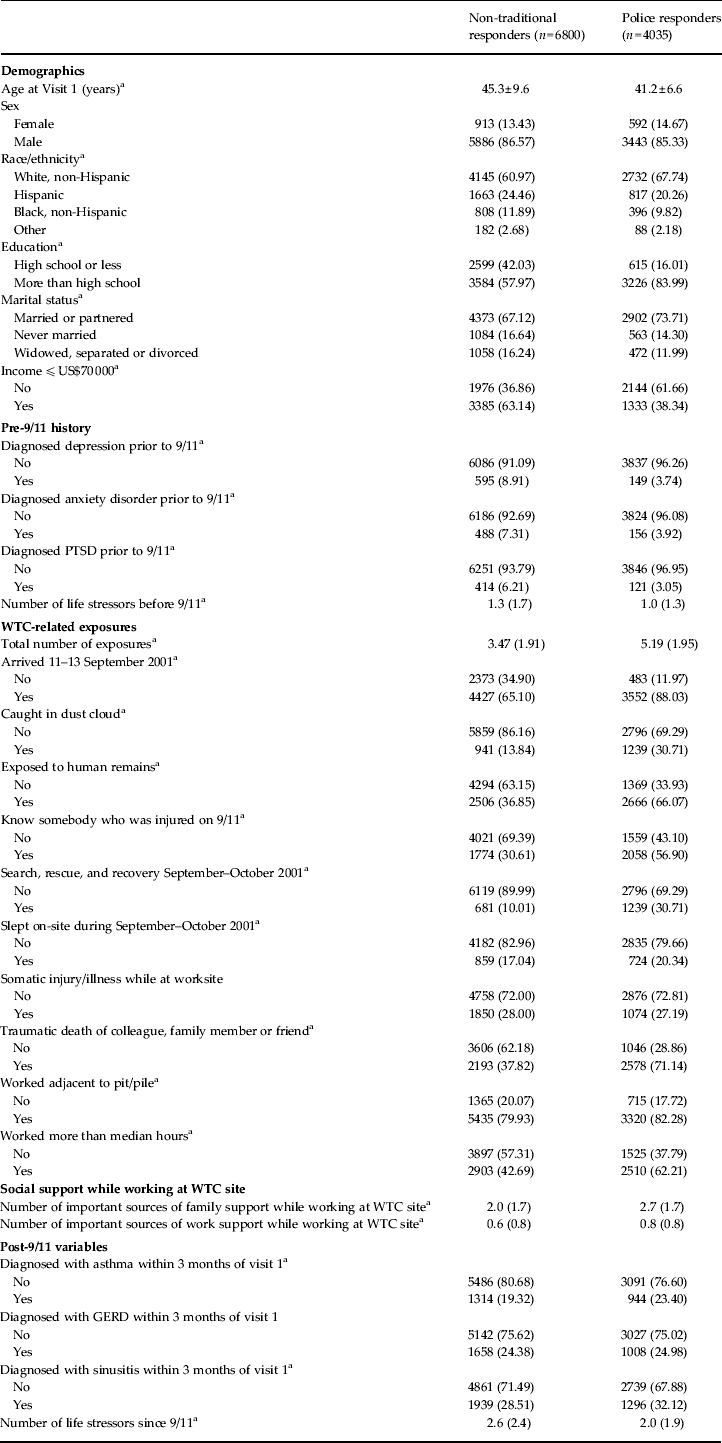
Table 1 shows demographic, WTC exposure and psychosocial characteristics of police and non-traditional responders. Compared to non-traditional responders, police responders were younger, more likely to be White/non-Hispanic, college or higher educated, married/partnered and to have an income ⩾ US$70 000/year. They also reported more total WTC-related exposures; more sources of family and work support while working at the WTC site; and were more likely to have been diagnosed with asthma and sinusitis within 3 months of their first visit to the WTC-HP. They were less likely to have been diagnosed with depression, anxiety and PTSD prior to 9/11; and reported fewer stressors in the years before and after 9/11. Sex and proportions of responders who reported having been treated for an injury or illness while working at the WTC site and diagnosis of WTC-related GERD did not differ.
Demographic, exposure and clinical characteristics of non-traditional and police WTC responders

WTC, World Trade Center; PTSD, post-traumatic stress disorder; GERD, gastroesophageal reflux disease.
Some frequencies do not sum to the total number of responders because of missing data.
a Groups differ, p < 0.001.
Values given as mean ± standard deviation or n (%).
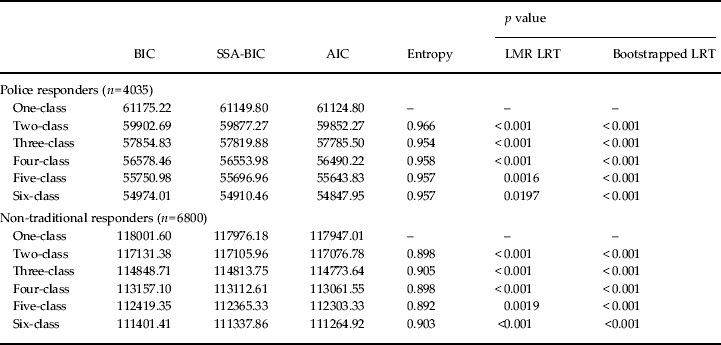
Table 2 shows results of LGMM analyses examining longitudinal trajectories of WTC-related PTSD symptoms. Based on fit indices, theory and parsimony, we selected the four-class solution as the optimal model for police WTC responders. Although LRT and BLRT results indicated that the five- and six-class solutions provided a better-fitting solution than the four-class solution in police WTC responders, these solutions were not parsimonious and contained two or more classes with less than 5% of the sample. Thus, we selected the four-class solution as the optimal solution, as it fit better than the one-, two- and three-class solutions, was parsimonious and theoretically defensible, and contained at least 5% of the sample in the smallest class. This solution was characterized by resistant (77.8%), chronic severe (5.3%), recovering (8.4%) and delayed-onset (8.5%) PTSD symptom trajectories. Among non-traditional responders, a six-class solution was determined to be optimal. This solution was characterized by resistant (58.0%), recovering (12.3%), severe chronic (9.5%), subsyndromal increasing (7.3%), delayed onset (6.7%) and moderate chronic (6.2%) trajectories. Figure 1 shows mean PCL-S scores as a function of visits to the WTC-HP for the four- and six-class models of WTC-related PTSD symptom trajectories for police and non-traditional WTC responders.
Trajectories of World Trade Center (WTC)-related post-traumatic stress disorder (PTSD) symptoms in (a) police WTC responders and (b) non-traditional WTC responders. PCL-S is the PTSD Checklist Specific-Stressor Version; PCL-S scores range from 17 to 85. Probable PTSD is indicated by a PCL-S score ≥44.

Fit indices for one- to six-class unconditional latent growth mixture (LGM) models of WTC-related PTSD symptoms in police and non-traditional WTC responders

WTC, World Trade Center; PTSD, post-traumatic stress disorder; BIC, Bayesian Information Criterion; SSA-BIC, sample size-adjusted BIC; AIC, Akaike's Information Criterion; LMR LRT, Lo–Mendell–Rubin likelihood ratio test.
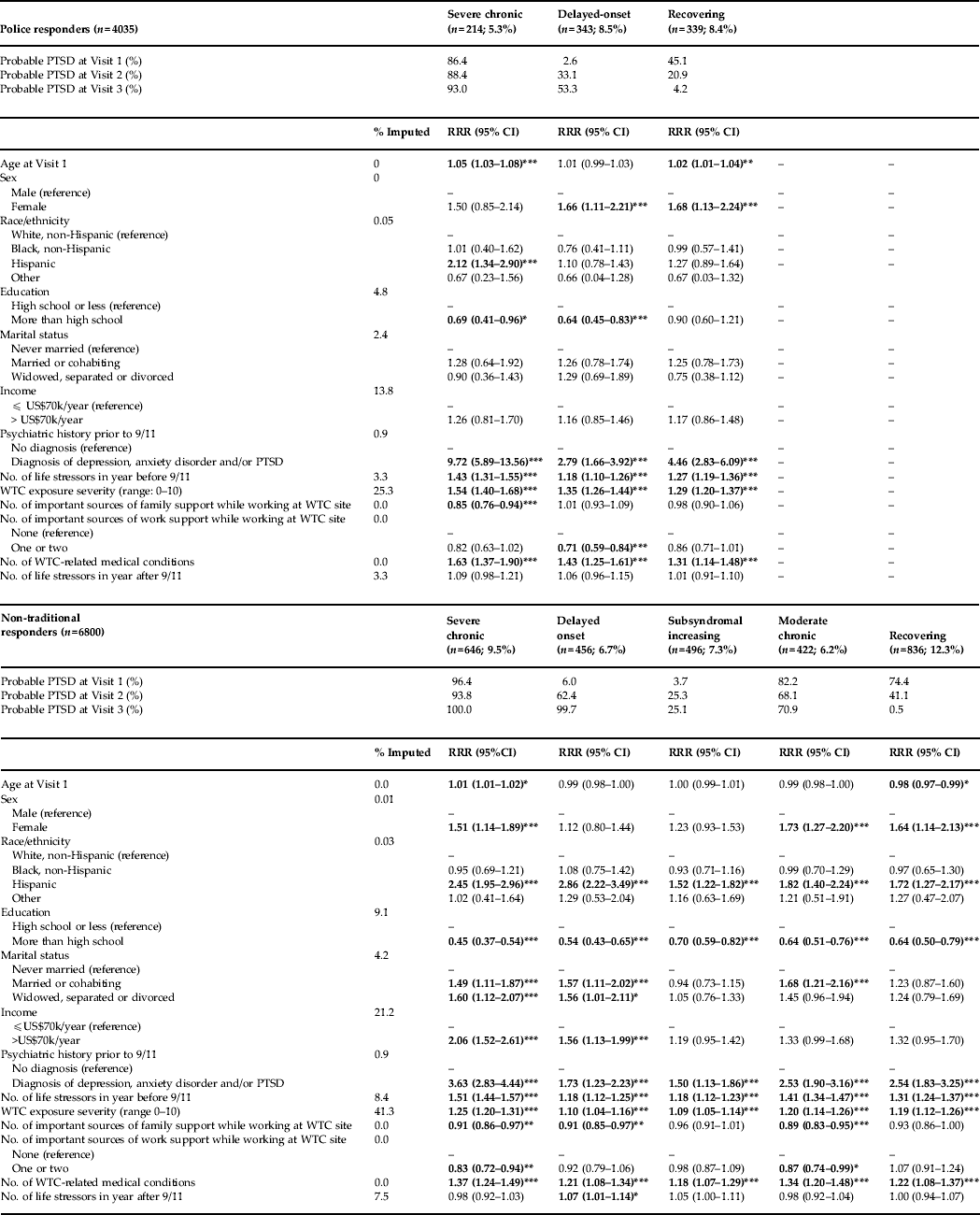
Table 3 shows the prevalences of probable PTSD at each visit, and the results of multinomial logistic regression analyses that evaluated determinants of WTC-related PTSD symptom trajectories in police and non-traditional WTC responders. Among police responders, those with a severe chronic, delayed-onset or recovering trajectory were more likely than those with a resistant trajectory to have been diagnosed with a psychiatric disorder prior to 9/11; report a greater number of stressors in the year before 9/11 and greater severity of WTC exposure; and to be diagnosed with more WTC-related medical conditions. Responders in the severe chronic group were additionally more likely to be older and Hispanic, whereas greater education and number of sources of family support while working at the WTC site were protective. Responders in the delayed-onset group were additionally more likely to be female, and greater education and having one or two sources of work support while working at the WTC site were protective. Responders in the recovering group were additionally more likely to be older and female.
Determinants of trajectories of WTC-related PTSD symptoms in police and non-traditional WTC responders

WTC, World Trade Center; PTSD, post-traumatic stress disorder; RRR, relative risk ratio; CI, confidence interval.
Reference group = resistant trajectory.
Probable PTSD: PTSD Checklist Specific-Stressor Version (PCL-S) score ⩾44.
Bolded RRRs (95% CI) indicate a significant association with the trajectory group, * p < 0.05; ** p < 0.01; *** p < 0.001.
Among non-traditional responders, those with a severe chronic, delayed-onset, subsyndromal increasing, moderate chronic and recovering trajectory were more likely than those in the resistant trajectory to be Hispanic; to have been diagnosed with a psychiatric disorder prior to 9/11; report a greater number of stressors in the year before 9/11 and greater severity of WTC exposure; and to be diagnosed with more WTC-related medical conditions; greater education was protective. Responders in the severe chronic group were additionally more likely to be older, female, married/cohabiting, widowed, separated or divorced, and have a higher income, whereas greater family and work support while working at the WTC site were protective. Responders in the delayed-onset group were additionally more likely to be married/cohabiting, widowed, separated or divorced, have a higher income, and to report a greater number of stressors in the year after 9/11; greater family support while working at the WTC site was protective. Responders in the moderate chronic group were additionally more likely to be female and married or cohabiting, whereas greater family and work support while working at the WTC site were protective. Responders in the recovering group were additionally more likely to be younger and female.
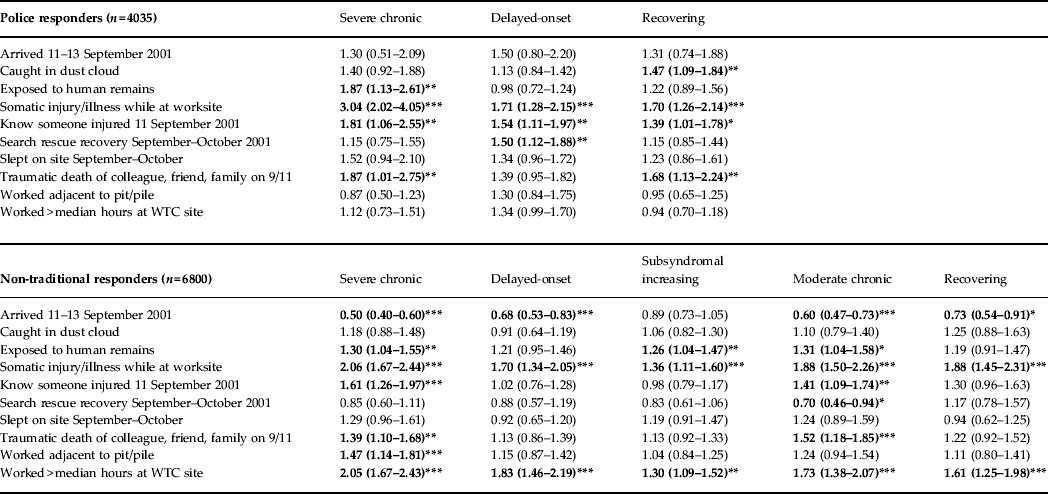
Table 4 shows specific WTC exposures associated with trajectories of WTC-related PTSD symptoms in police and non-traditional responders. Among police responders, enduring an illness or sustaining an injury while working at the WTC site and knowing someone who was injured on 9/11 were associated with severe chronic, delayed-onset and recovering trajectories. Exposure to human remains, and traumatic loss of colleague, friend or family member were additionally associated with a severe chronic trajectory. Other WTC-related exposures that were differentially associated with symptom trajectories are shown in Table 4.
Specific WTC exposures associated with trajectories of WTC-related PTSD symptom trajectories

WTC, World Trade Center; PTSD, post-traumatic stress disorder;
Values given as relative risk ratio (95% confidence interval).
Reference group = resistant trajectory.
Relative risk ratios are adjusted for all demographic and psychosocial characteristics shown in Table 3.
Bolded relative risk ratios (95% CI) indicate a significant association with the trajectory group, * p < 0.05, ** p < 0.01, *** p < 0.001.
Among non-traditional responders, enduring an illness or sustaining an injury while working at the WTC site and working more than the median number of hours at the WTC site were associated with each of the symptomatic trajectories. Knowing someone who was injured at the WTC site, having worked adjacent to the pit/pile, traumatic loss of colleague, friend or family member, and exposure to human remains were additionally associated with a severe chronic trajectory, whereas early arrival was negatively associated with this trajectory. Other WTC-related exposures that were differentially associated with symptom trajectories are shown in Table 4.
Discussion
The results of this study extend prior LGMM studies of PTSD symptom trajectories to suggest that WTC-related PTSD symptoms are characterized by heterogeneous trajectories in a large cohort of professional police and non-traditional WTC responders. The four-class solution observed among police responders is similar to that described by Bowler et al. (Reference Bowler, Harris, Li, Gocheva, Stellman, Wilson, Alper, Schwarzer and Cone2012) in a separate cohort of police WTC responders, and also in other trauma-exposed samples (e.g. Hobfoll et al. Reference Hobfoll, Mancini, Hall, Canetti and Bonanno2011; Bonanno et al. Reference Bonanno, Mancini, Horton, Powell, Leardmann, Boyko, Wells, Hooper, Gackstetter and Smith2012). Notably, the proportions of police responders exhibiting four different trajectories of symptoms were strikingly comparable to those observed in the aforementioned independent cohort of police responders, with an equivalent 5.3% of responders in both samples exhibiting a chronic dysfunction trajectory (Bowler et al. Reference Bowler, Harris, Li, Gocheva, Stellman, Wilson, Alper, Schwarzer and Cone2012). That police responders were significantly less likely to have clinically elevated patterns of WTC-related PTSD symptoms relative to non-traditional responders is likely related to their having a higher level of training and preparedness in responding to trauma; this finding accords with prior work demonstrating the protective role of preparedness in mitigating risk for PTSD (Alexander & Wells, Reference Alexander and Wells1991; Alexander, Reference Alexander1993; Johnson et al. Reference Johnson, Langlieb, Teret, Gross, Schwab, Massa, Ashwell and Geyh2005; Renshaw, Reference Renshaw2011; Goldmann et al. Reference Goldmann, Calabrese, Prescott, Tamburrino, Liberzon, Slembarski, Shirley, Fine, Goto, Wilson, Ganocy, Chan, Serrano, Sizemore and Galea2012); an additional possibility is that this may reflect under-reported symptoms or ‘selective survival’ of resilient police officers (Perrin et al. Reference Perrin, DiGrande, Wheeler, Thorpe, Farfel and Brackbill2007). Importantly, the finding that 5.3% of police responders and 9.5% of non-traditional responders experienced chronic WTC-related PTSD symptoms, with a considerable additional proportion exhibiting subsyndromal and delayed-onset symptoms, nearly a decade after this traumatic event underscores the need for continued monitoring and treatment of PTSD symptoms in this population.
Several factors were independently related to symptomatic trajectories of WTC-related PTSD symptoms in police and non-traditional responders. Factors consistently related to symptomatic WTC-related PTSD trajectories in both groups of responders included female sex, Hispanic race/ethnicity, lower education, prior psychiatric history, greater life stressors prior to 9/11, increased severity of WTC exposure, and greater number of WTC-related medical conditions. Inspection of the magnitudes of these associations suggested that prior psychiatric history, Hispanic race/ethnicity, severity of WTC exposure, and number of WTC-related medical conditions were most strongly associated with symptomatic PTSD trajectories. These findings accord with meta-analyses of risk factors for PTSD (Brewin et al. Reference Brewin, Andrews and Valentine2000; Ozer et al. Reference Ozer, Best, Lipsey and Weiss2003) and prior research on determinants of PTSD in WTC responders (e.g. Perrin et al. Reference Perrin, DiGrande, Wheeler, Thorpe, Farfel and Brackbill2007; Berninger et al. Reference Berninger, Webber, Cohen, Gustave, Lee, Niles, Chiu, Zeig-Owens, Soo, Kelly and Prezant2010a ; Bowler et al. Reference Bowler, Han, Gocheva, Nakagawa, Alper, DiGrande and Cone2010; Cukor et al. Reference Cukor, Wyka, Jayasinghe, Weathers, Giosan, Leck, Roberts, Spielman, Crane and Difede2011a ). Studies in trauma-exposed samples have also found higher rates of physical health problems in individuals with PTSD (Pietrzak et al. Reference Pietrzak, Goldstein, Southwick and Grant2011), and a growing number of studies of WTC responders have documented high co-morbidity of PTSD and WTC-related medical conditions, such as asthma, sinusitis and GERD (Brackbill et al. Reference Brackbill, Hadler, DiGrande, Ekenga, Farfel, Friedman, Perlman, Stellman, Walker, Wu, Yu and Thorpe2009; Li et al. Reference Li, Brackbill, Stellman, Farfel, Miller-Archie, Friedman, Walker, Thorpe and Cone2011; Wisnivesky et al. Reference Wisnivesky, Teitelbaum, Todd, Boffetta, Crane, Dellenbaugh, Harrison, Herbert, Jeon, Kaplan, Levin, Luft, Markowitz, Moline, Pietrzak, Shapiro, Southwick, Stevenson, Udasin, Wallenstein and Landrigan2011). Taken together, these results highlight the importance of prevention, screening and treatment efforts that target high-risk disaster responders, particularly those with prior psychiatric history, high levels of trauma exposure and work-related medical morbidities.
Family support while working at the WTC site was negatively associated with a severe chronic PTSD symptom trajectory in both police and non-traditional responders, whereas work support while working at the site was negatively associated with a delayed-onset trajectory in police responders, and severe chronic and moderate chronic trajectories in non-professional responders. This finding is consistent with prior research demonstrating the ‘buffering’ effect of social support on risk for PTSD (Charuvastra & Cloitre, Reference Charuvastra and Cloitre2008; Kaniasty & Norris, Reference Kaniasty and Norris2008). It also underscores the importance of preventive efforts to increase family and work social support during disaster response and recovery, as they may help to mitigate the deleterious effect of trauma and other risk factors, and promote resilience (Walsh, Reference Walsh2007; Landau et al. Reference Landau, Mittal and Wieling2008).
Certain WTC-related exposures were independently linked to symptomatic PTSD trajectories. Injury or illness while working at the WTC site was most strongly associated with symptomatic PTSD trajectories in both groups of responders, whereas traumatic loss or injury of a colleague, friend or family member was associated with severe chronic and recovering trajectories in police responders; and working more than the median number of hours was associated with all symptomatic trajectories in non-traditional responders. These findings, which corroborate prior work on WTC responders (e.g. Perrin et al. Reference Perrin, DiGrande, Wheeler, Thorpe, Farfel and Brackbill2007), suggest that, although there are common trauma exposures that may increase risk for symptomatic PTSD trajectories in both professional and non-traditional WTC responders, some determinants of these trajectories may be unique to these populations. Experiencing an injury or illness with enduring sequelae may serve as a ‘constant reminder’ of one's traumatic experience while working at the WTC site, which may in turn maintain chronicity of PTSD symptoms and vice versa (Friedman et al. Reference Friedman, Schnurr and McDonagh-Coyle1994). Traumatic loss and injury to others may be associated with bereavement, along with shame and guilt, both of which increase risk for PTSD (Wilson et al. Reference Wilson, Drozdek and Turkovic2006; Kristensen et al. Reference Kristensen, Weisæth and Heir2012). That an increased number of life stressors in the year after 9/11 was associated with a delayed-onset trajectory of WTC-related PTSD symptoms in non-traditional responders aligns with prior work linking secondary traumas/stressors to onset of mental disorders (Kessler et al. Reference Kessler, McLaughlin, Koenen, Petukhova and Hill2012).
Although some prior studies in professional WTC responders found an association between early arrival and higher PTSD symptom levels (Chiu et al. Reference Chiu, Niles, Webber, Zeig-Owens, Gustave, Lee, Rizzotto, Kelly, Cohen and Prezant2011; Soo et al. Reference Soo, Webber, Gustave, Lee, Hall, Cohen, Kelly and Prezant2011), in our sample of non-traditional responders early arrival was inversely related to symptomatic PTSD trajectories. It is likely that this finding is related to the heterogeneous occupational composition of our non-traditional responder sample, with possible delayed exposure to WTC-related traumas and atrocities in workers without first-response training and preparedness who joined the recovery and clean-up effort after the first wave of responders.
Methodological limitations of this study should be noted. First, the study population comprised a volunteer sample of WTC responders who completed at least three visits to the WTC-HP; these were conducted an average of 3, 6 and 8 years after 9/11. Thus, it is not clear whether the results may generalize to the broader WTC responder population or WTC-HP participants who have not yet completed three visits to this program, or who were assessed over different time intervals. Second, self-report measures were used to assess the majority of the constructs in this study, including WTC-related PTSD symptoms. Additional research using clinician-administered structured interviews is needed to confirm these results. Third, given that, on average, participants completed their first visit to the WTC-HP 3 years after 9/11, retrospective recall bias may have influenced reporting of remote events, such as specific WTC exposures, for some responders. Fourth, the current study focused solely on the nature and determinants of PTSD symptom trajectories; given that trauma exposure is associated with a broad range of psychiatric and medical morbidities (Farfel et al. Reference Farfel, DiGrande, Brackbill, Prann, Cone, Friedman, Walker, Pezeshki, Thomas, Galea, Williamson, Frieden and Thorpe2008; Bryant et al. Reference Bryant, O'Donnell, Creamer, McFarlane, Clark and Silove2010), additional research is needed to evaluate the nature and determinants of predominant trajectories of morbidities other than PTSD. Fifth, self-reported psychiatric history, which was among the strongest determinants of symptomatic PTSD trajectories, may be unreliable, as a considerable proportion of persons with a psychiatric disorder never present for treatment and may therefore never be diagnosed (Wang et al. Reference Wang, Lane, Olfson, Pincus, Wells and Kessler2005). Sixth, although the number of stressful life events before 9/11 was independently associated with symptomatic PTSD trajectories in both groups of responders, it is also possible that trauma exposures and sequelae experienced before and after 9/11, which were not assessed in the current study, may additionally increase risk for symptomatic WTC-related PTSD trajectories. Seventh, detailed mental health treatment history was not available. Thus, it is not clear whether participation in such treatment may be differentially associated with WTC-related PTSD symptom trajectories (e.g. recovery).
Despite these limitations, to our knowledge this study is the first to characterize the nature and determinants of longitudinal trajectories of WTC-related PTSD symptoms in WTC responders. The results reveal that PTSD symptom trajectories are heterogeneous in nature and characterized by differential patterns of symptoms over time, with police responders more likely to exhibit a resistant symptom trajectory compared to non-traditional responders. Prior psychiatric history, Hispanic race/ethnicity, the number of WTC-related medical conditions and severity of WTC exposure were most strongly associated with symptomatic trajectories in both groups of responders, whereas family and work support while working at the WTC site were protective against some of these trajectories. Additional research is needed to investigate other baseline and time-varying determinants of longitudinal trajectories of PTSD symptoms, such as biological factors, interactions of biological factors with pre-, peri- and post-trauma stressors and protective factors, in WTC and other disaster-response personnel; and to evaluate the effectiveness of targeting potentially modifiable risk and protective factors in preventing or modifying symptomatic trajectories of PTSD in this population.
Acknowledgments
This study was supported by the CDC/National Institute for Occupational Safety and Health (NIOSH) Contract no. 200-2011-41919. Preparation of this report was also supported in part by the National Center for Posttraumatic Stress Disorder. These funding sources had no further role in study design; in the collection, analysis and interpretation of data; in the writing of the report; or in the decision to submit the paper for publication. Neither this paper nor the WTC-HP would have been possible without the dedication and work of Dr S. Levin in promoting the health and well-being of workers over the course of his career. We can only hope that our own efforts live up to his standards and his memory.
Declaration of Interest
R.H.P. is a scientific consultant to CogState, Ltd. for work unrelated to this project. B.J.L. has served as a consultant for and has received royalties from Baxter Pharmaceuticals for work unrelated to this project.