Introduction
The shrimps Farfantepenaeus brasiliensis (Latreille, 1817) and F. paulensis (Pérez-Farfante, 1967), commonly known as pink-shrimps, are an important fishery resource (Dias-Neto Reference Dias-Neto2015), especially in southern and south-eastern Brazil, where they are one of the main targets of shrimp fishery (Costa et al., Reference Costa, Lopes, Castilho, Fransozo and Simões2008, Reference Costa, Bochini, Simões, Lopes, Sancinetti, Castilho and Fransozo2016; Pereira & D'Incao, Reference Pereira and D'Incao2012). Farfantepenaeus brasiliensis is widely distributed in the Atlantic Ocean and is found from North Carolina State (USA, 35°N) to Rio Grande do Sul State (Brazil, 29°S), while F. paulensis is restricted to the South Atlantic, from Bahia State (Brazil, 12°S) to the province of Buenos Aires (Argentina, 38.5°S) (Costa et al., Reference Costa, Fransozo, Melo and Freire2003).
In Cananéia (25°S), on the southern coast of São Paulo State, artisanal fishing is the main fishing activity, with F. brasiliensis and F. paulensis exploited as juveniles, which are caught in the lagoon-estuarine complex and in adjacent coastal areas with fishing gear known as ‘gerival’, and marketed as live bait, as well as sub-adults and adults that are fished from the coastal area to depths of ~80 m with double-rig trawls (Mendonça, Reference Mendonça2007).
Due to the high exploitation of these resources, the population stocks of both species suffered a significant decrease when compared with the stocks estimated between 1965–1994, that varied from an annual capture of 8861 t to 2100 t respectively (D'Incao et al., Reference D'Incao, Valentini and Rodrigues2002; Neto & Dornelles, Reference Neto and Dornelles1996; Mendonça, Reference Mendonça2007). Such decrease in stocks resulted in the establishment of the closed shrimp season in 1983 by Brazilian legislation, to reduce fishing pressure on juvenile pink shrimp that were being captured at the maximum level (Franco et al., Reference Franco, Schwarz Junior, Pierri and Santos2009). The period of the closed season was proposed based on the juvenile recruitment of the pink shrimp Farfantepenaeus spp. (Costa & Fransozo, Reference Costa and Fransozo1999; Heckler, Reference Heckler2010), so that juveniles are protected from fishing during their migration from the estuary towards deeper areas to meet the adult population. The regulation of the closed season was last amended in 2008, which prohibited trawl fishing with motorized traction for all shrimp species in the south-eastern and southern regions of Brazil during 1 March to 31 May (Normative instruction IBAMA, no. 189/23 September 2008).
The closed season has provided favourable results in some regions of Brazil. According to studies carried out in the Cananéia region, as well as Babitonga Bay (Santa Catarina state, 26°S) and Santos Bay (São Paulo state, 24°S), the highest abundance of juvenile and reproductive females of Xiphopenaeus kroyeri (Heller, 1862) coincided with months when fishing is prohibited (Heckler et al., Reference Heckler, Simões, Santos, Fransozo and Costa2013; Grabowski et al., Reference Grabowski, Negreiros-Fransozo and Castilho2016; Miazaki et al., Reference Miazaki, Santos, Salvati, Alves-Costa and Costa2016). Thus, these individuals are not being captured during this period, favouring the maintenance of the population stock.
However, some studies have shown that stocks of pink shrimp are unbalanced and remain in a critical state not only due to the fishing pressure but also due to degradation in the nursery areas as well as the several different periods in which the closure season was adopted in order to attend pressure from the stakeholders and production sector (D'Incao et al., Reference D'Incao, Valentini and Rodrigues2002; Amaral et al., Reference Amaral, Ribeiro, Mansur, Santos, Avelar, Matthews-Cascon, Leite, Melo, Coelho, Buckup, Buckup, Ventura, Tiago, Machado, Drummond and Paglia2008; Viana, Reference Viana2013). According to the Normative Instruction of the Ministry of the Environment (IN/MMA, no. 5 of 21 May 2004), the three species of pink shrimp that occur on the south-eastern Brazilian coast, F. brasiliensis, F. paulensis and F. subtilis (Pérez-Farfante, 1936), are overexploited, making it necessary to create fishery management plans and promote stock recovery (Boos et al., Reference Boos, Costa, Santos, Dias-Neto, Severino-Rodrigues, Rodrigues, D'Incao, Ivo, Coelho, Pinheiro and Boos2016).
Another worrying factor is that artisanal fishing in Cananéia can compromise juvenile pink shrimps, since small, non-motorized boats are still allowed to fish during the closed season (IBAMA, 2008). Despite the economic importance of the species, there is not enough information in the literature about the biology and population structure of pink shrimp in this region. Therefore, it is important to investigate whether the months in which the closed season is enforced are really helping protect these species and/or allowing individuals to recruit to the breeding population in the open sea.
Information about the population characteristics of the species helps establish better conservation and management strategies (Costa et al., Reference Costa, Lopes, Castilho, Fransozo and Simões2008). Thus, the present study investigated the sex ratio, growth of individuals and its parameters (asymptotic size, growth rate and longevity), natural mortality, juvenile recruitment period and development time until late juvenile phase of the shrimps F. brasiliensis and F. paulensis in the Cananéia-Iguape estuarine lagoon system and its adjacent coastal area, São Paulo, Brazil, to verify if the current closed season is appropriate for this region, as well as to collect important biological information about the species.
Materials and methods
Sampling
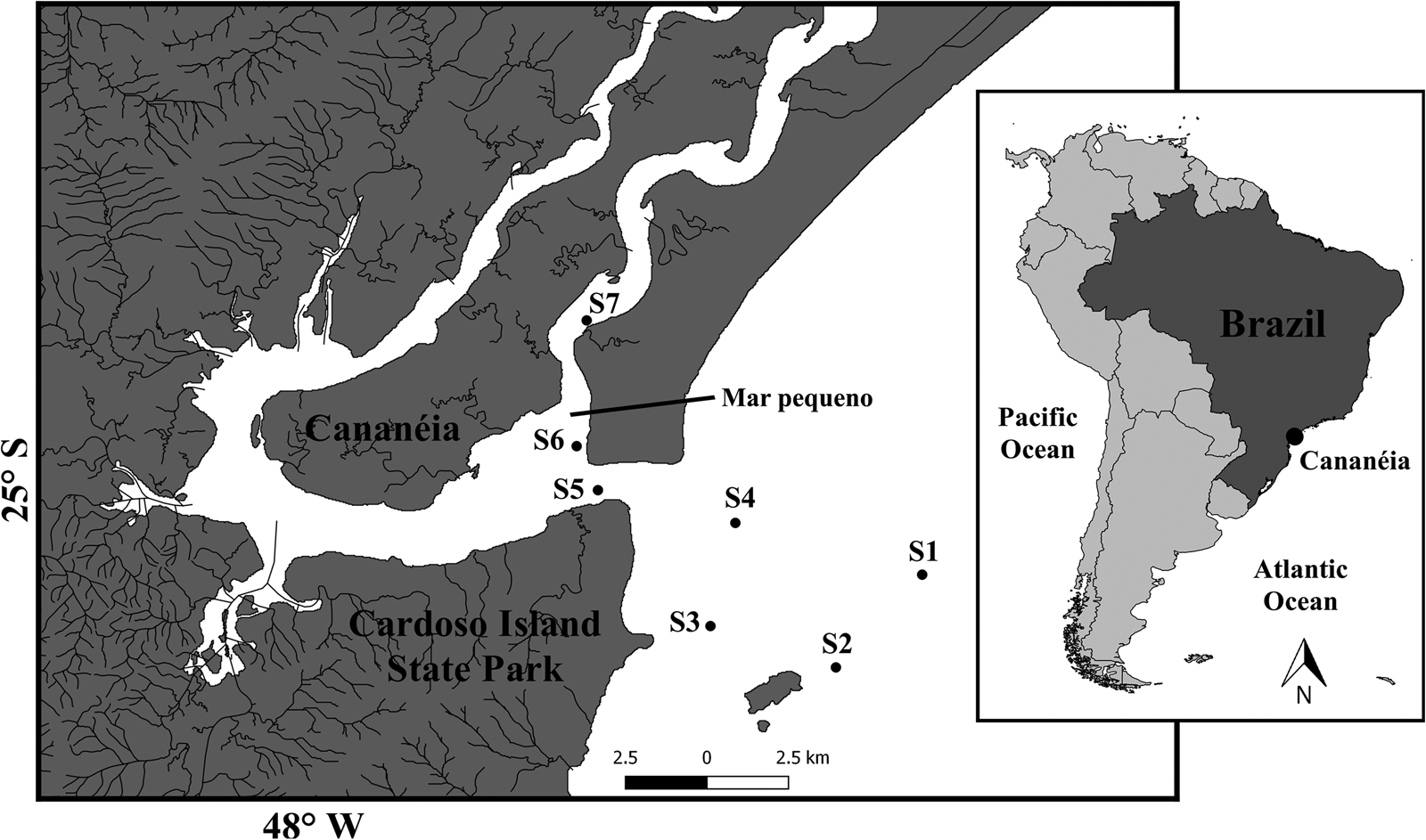
Shrimps were sampled monthly from July 2012 to June 2014 at the Cananéia-Iguape lagoon estuarine system (25°55′S 47°55′W), excluding March 2013 and February 2014 due to adverse environmental conditions. Sampling was conducted with a shrimp fishery boat equipped with ‘double-rig’ trawl nets at seven stations: four in the coastal adjacent area (S1, S2, S3 and S4) and three in the Mar Pequeno estuarine area (S5, S6 and S7) (Figure 1). The sampling effort at stations S1–S5 was 30 min trawl−1, encompassing an area of ~16,000 m2, and was 15 min trawl−1 at stations S6 and S7, encompassing an area of ~8000 m2. Bathymetry was registered from each sampling station with Eureka Multiparameter Sonde. The first year of sampling (July 2012 to June 2013) was labelled the first period and the second year (July 2013 to June 2014) was the second period.
Map of the Cananéia-Iguape estuarine lagoon system and adjacent coastal area, on the southern coast of São Paulo State, with sampling stations: S1, S2, S3, S4 (adjacent coastal area); and S5, S6, S7 (Mar Pequeno estuarine area). Adapted from Perroca et al. (Reference Perroca, Herrera, Castilho and Costa2020).

Juvenile population structure
Individuals were identified to species according to Costa et al. (Reference Costa, Fransozo, Melo and Freire2003), then were counted and measured for carapace length (CL mm). Shrimps with CL ≤ 25 mm were considered juveniles (Zenger & Agnes, Reference Zenger and Agnes1977; Costa et al., Reference Costa, Lopes, Castilho, Fransozo and Simões2008). Individuals with CL >25 mm, that had not recruited yet nor were reproductive were called sub-adults according to D'Incao (Reference D'Incao1991) and Chagas-Soares et al. (Reference Chagas-Soares, Pereira and Santos1995) and were also included in the analyses. The size of the individuals captured in each sampled area was identified.
Sex ratio
Individuals were sexed by the presence of thelicum in females and petasm in males (Pérez-Farfante & Kensley, Reference Pérez-Farfante and Kensley1997). The sex ratio was estimated per month as the quotient between the number of males and the total number of crabs captured, in which, a sex ratio higher or lower than 0.5 indicates that the population is skewed towards males or females, respectively (Miazaki et al., Reference Miazaki, Simões, Castilho and Costa2019). The Binomial test (α = 0.05) was used to observe deviations from the 1:1 sex ratio (Wilson & Hardy, Reference Wilson, Hardy and Hardy2002; Baeza et al., Reference Baeza, Furlan, Almeida, Barros-Alves, Alves and Fransozo2013).
Growth, longevity and natural mortality
The growth analysis was performed separately for males and females of each species. For each sampling month, the frequency of CL values was distributed in 1 mm size classes and modes were calculated using PeakFit software (PeakFit v. 4.06 SPSS Inc. for Windows Copyright 1991–1999, AISN Software Inc., Florence, OR, USA). Modes were plotted in dispersion graphs to follow the cohort's growth through time. All chosen cohorts were adjusted to the von Bertalanffy growth model (von Bertalanffy, Reference Bertalanffy1938), namely CLt = CL∞ [1–e−k(t−t0)], in which CLt is the carapace length at age t; CL∞ is the asymptotic size, k is the growth coefficient and t0 is the theoretical age the organism would have at size zero. These growth parameters were adjusted for each cohort using Solver supplement in Microsoft Excel, varying only k and t0 in the equation (D'Incao & Fonseca, Reference D'Incao and Fonseca1999; Ferreira & D'Incao, Reference Ferreira and D'Incao2008). In the study area, only juveniles and sub-adults were captured, that is, we did not obtain adult individuals with maximum carapace lengths found in nature. Thus, we fixed the maximum carapace length (CL∞) to avoid underestimating the results. For this, average values from the largest individuals of other studies were obtained for F. brasiliensis: Pérez-Farfante (Reference Pérez-Farfante1969), Zenger & Agnes (Reference Zenger and Agnes1977), Costa & Fransozo (Reference Costa and Fransozo1999) and Fernandes (Reference Fernandes2012); and for F. paulensis: Pérez-Farfante (Reference Pérez-Farfante1969), Zenger & Agnes (Reference Zenger and Agnes1977) and D'Incao et al. (Reference D'Incao1991). Therefore, the fixed CL∞ values in the analysis were: 55.25 ± 12.9 mm for females and 45.47 ± 18.40 mm for males of F. brasiliensis; and 56.55 ± 3.1 mm for females and 40.68 ± 1.20 mm for males of F. paulensis. The growth curves between sexes were compared with an F test (P = 0.05), according to Cerrato (Reference Cerrato1990).
The longevity was estimated through the von Bertalanffy (Reference Bertalanffy1938) inverse equation, with modifications suggested by D'Incao & Fonseca (Reference D'Incao and Fonseca1999), in which: t = (0 – (1/k) * ln (1–0.99)). The empirical natural mortality (M) was estimated based on the obtained growth parameters and by observing the decrease of abundance of a cohort over time using the methods proposed by Taylor (Reference Taylor1959) and Pauly (Reference Pauly1980). The average of both methods was calculated to avoid overestimating or underestimating the natural mortality.
The development time until the late juvenile phase was calculated by adding the time that individuals remained in Mar Pequeno and the time that they remained in the Coastal Area, before migrating to the open sea region. For this, the inverted von Bertalanffy equation was used: Tr = (t0−(1/k)*LN(1−(CLR/CL∞))), in which t0 is the theoretical age the organism would have at size zero; k is the growth coefficient; CLR is the maximum carapace length in the juvenile phase and CL∞ is the asymptotic size (King, Reference King1995). The CLR used were those found in the present study, that is, the sizes of the largest individuals caught in the Coastal Area: 28.3 mm for males and 31.9 mm for females of F. brasiliensis; 25.9 mm for males and 31.5 mm for females of F. paulensis.
Recruitment
The juvenile recruitment was graphically represented by the frequency distribution of individuals in size classes (1 mm) from all sampled months, separately for each sex. In order to identify the most suitable months for fishing closure in the Coastal Area, the period with the highest number of juvenile and sub-adult individuals was determined.
Results
Juvenile population structure
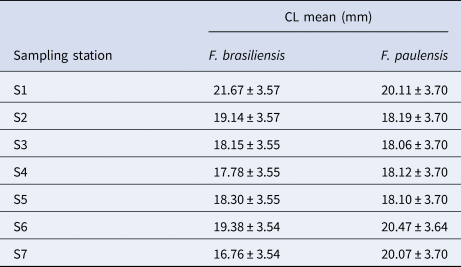
A total of 889 individuals of F. brasiliensis were analysed, 511 in the Mar Pequeno and 378 in the Coastal Area. Of this total, 848 were juveniles and 41 were sub-adults. The CL of females sampled in Mar Pequeno varied from 6.7–28.4 mm (18.3 ± 3.5) and the CL of males from 11.6–25.6 mm (17.9 ± 3.5). In the Coastal Area, females ranged from 8.1–31.9 mm CL (19.5 ± 3.6) and males from 12.5–28.3 mm CL (18.8 ± 3.6). The highest average size of individuals was observed at S1, while the lowest average was at S7 (Table 1).
Average size of carapace length (CL) of Farfantepenaeus brasiliensis (Latreille, 1817) and Farfantepenaeus paulensis (Pérez-Farfante, 1967) captured at each sampling station in the Cananéia-Iguape lagoon estuarine system and adjacent coastal area, from July 2012 to June 2014

For F. paulensis, a total of 848 individuals were analysed, 474 in Mar Pequeno and 374 in the Coastal Area. Of this total, 813 were juveniles and 35 were sub-adults. The CL of females sampled in Mar Pequeno ranged from 11.5–29.1 mm (18.8 ± 3.7) and the CL of males from 10.9–27.3 mm (19.2 ± 3.7). In the Coastal Area, females ranged from 11.7–31.5 mm CL (19.0 ± 3.7) and males from 11.9–25.9 mm CL (19.1 ± 3.7). The average size of individuals was similar among stations (Table 1).
Sex ratio
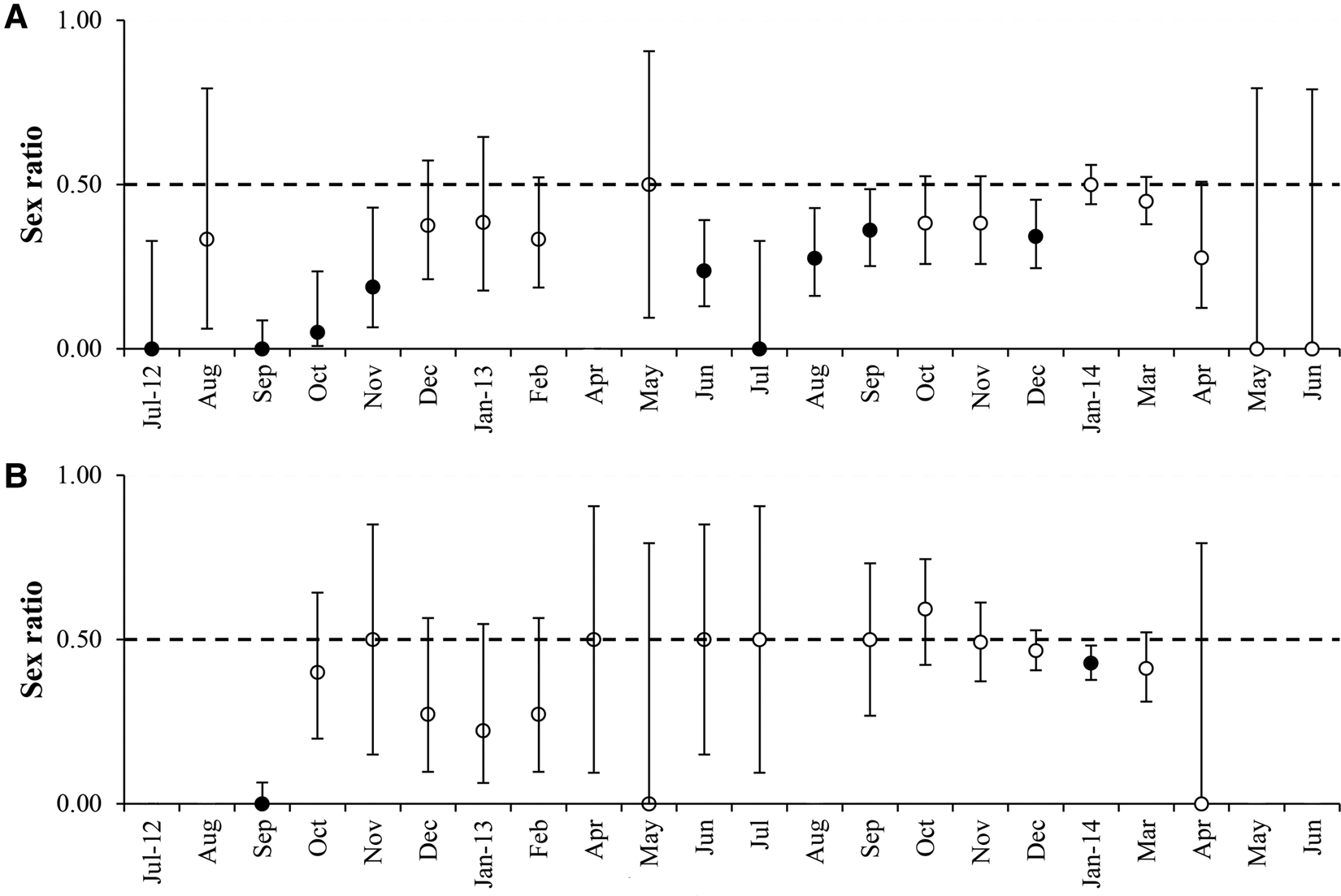
For F. brasiliensis 352 males and 537 females were identified. In general, there was no significant difference between sexes (Binomial test, P > 0.05). The monthly sex ratio leaned significantly towards females in July 2012, from September to November 2012, from June to September 2013 and in December 2013 (Figure 2A). No individuals were sampled in April 2013.
Monthly variation of the proportion of males and females (estimate ± SE) of (A) Farfantepenaeus brasiliensis (Latreille, 1817) and, (B) F. paulensis (Pérez-Farfante, 1967) sampled from July 2012 to June 2014, in the Cananéia-Iguape lagoon estuarine system and in the adjacent coastal area, São Paulo, Brazil. Black circles indicate a statistically significant difference from the 1:1 ratio (Binomial test, P < 0.005).

As for F. paulensis, 374 males and 474 females were sampled. The sex ratio differed significantly towards females (Binomial test, P < 0.001). Regarding months, there was a significant deviation in sex ratio towards females in September 2012 (Figure 2B). No individuals were sampled in July and August 2012, August 2013, and May and June 2014.
Growth, longevity and natural mortality
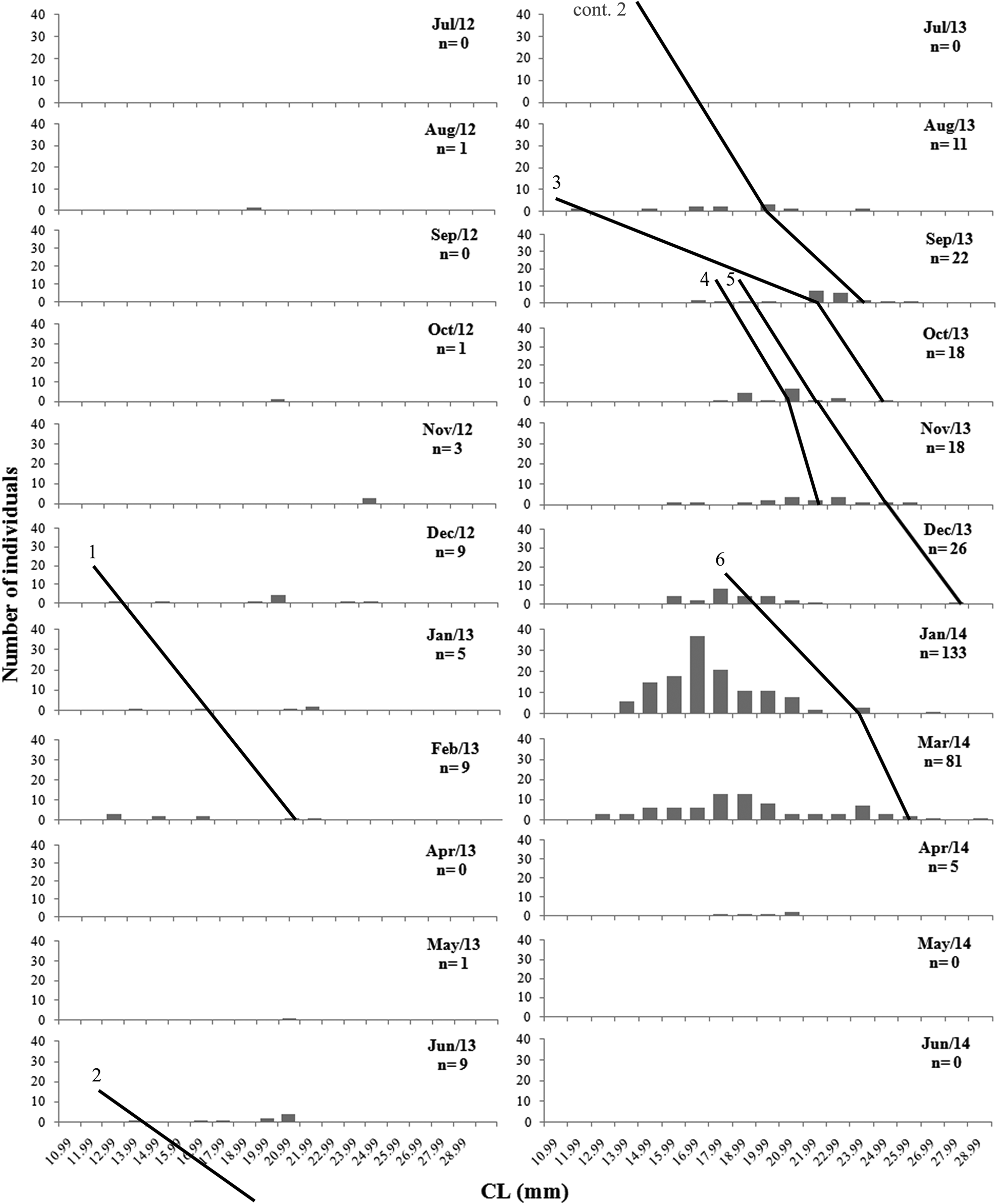
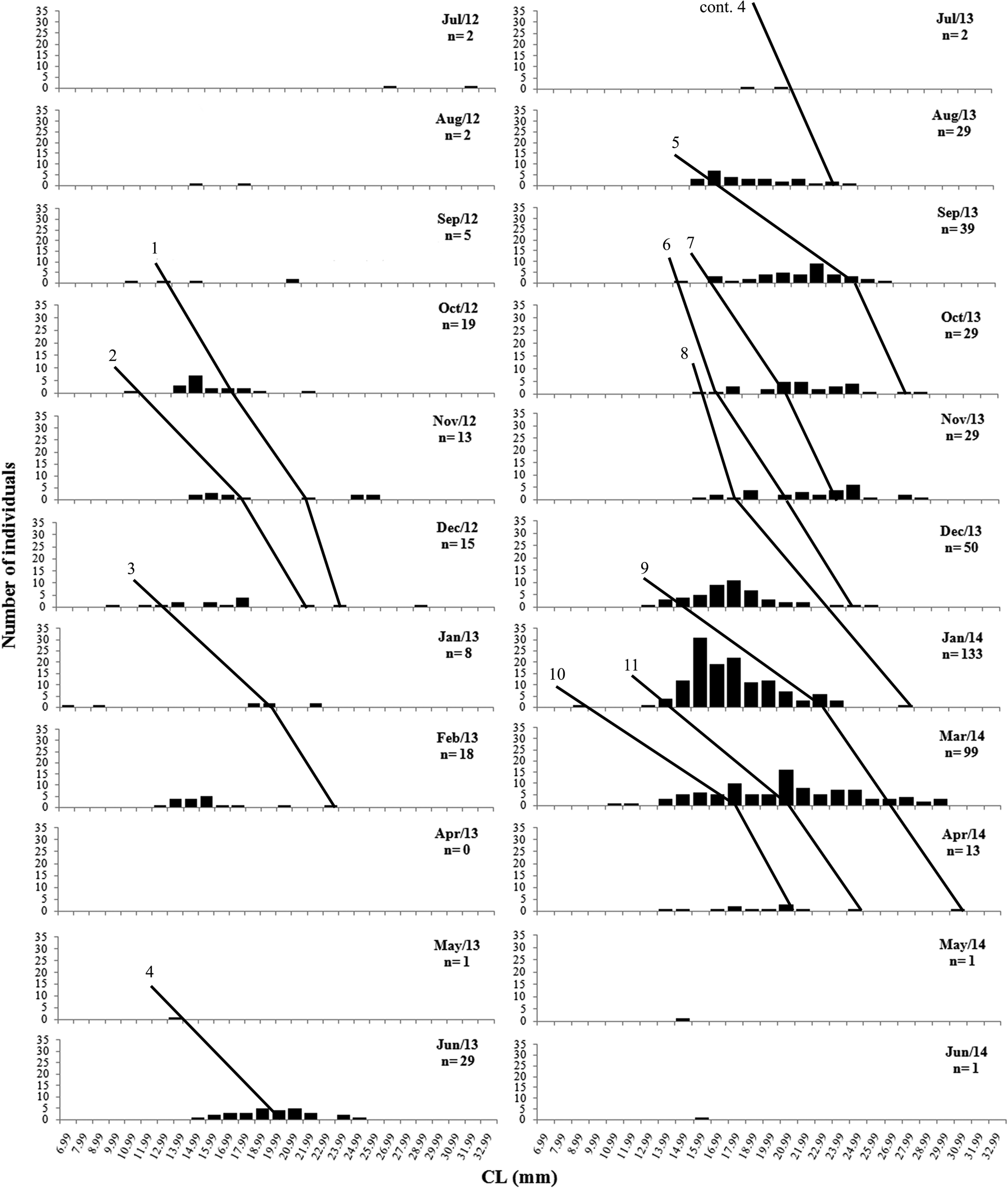
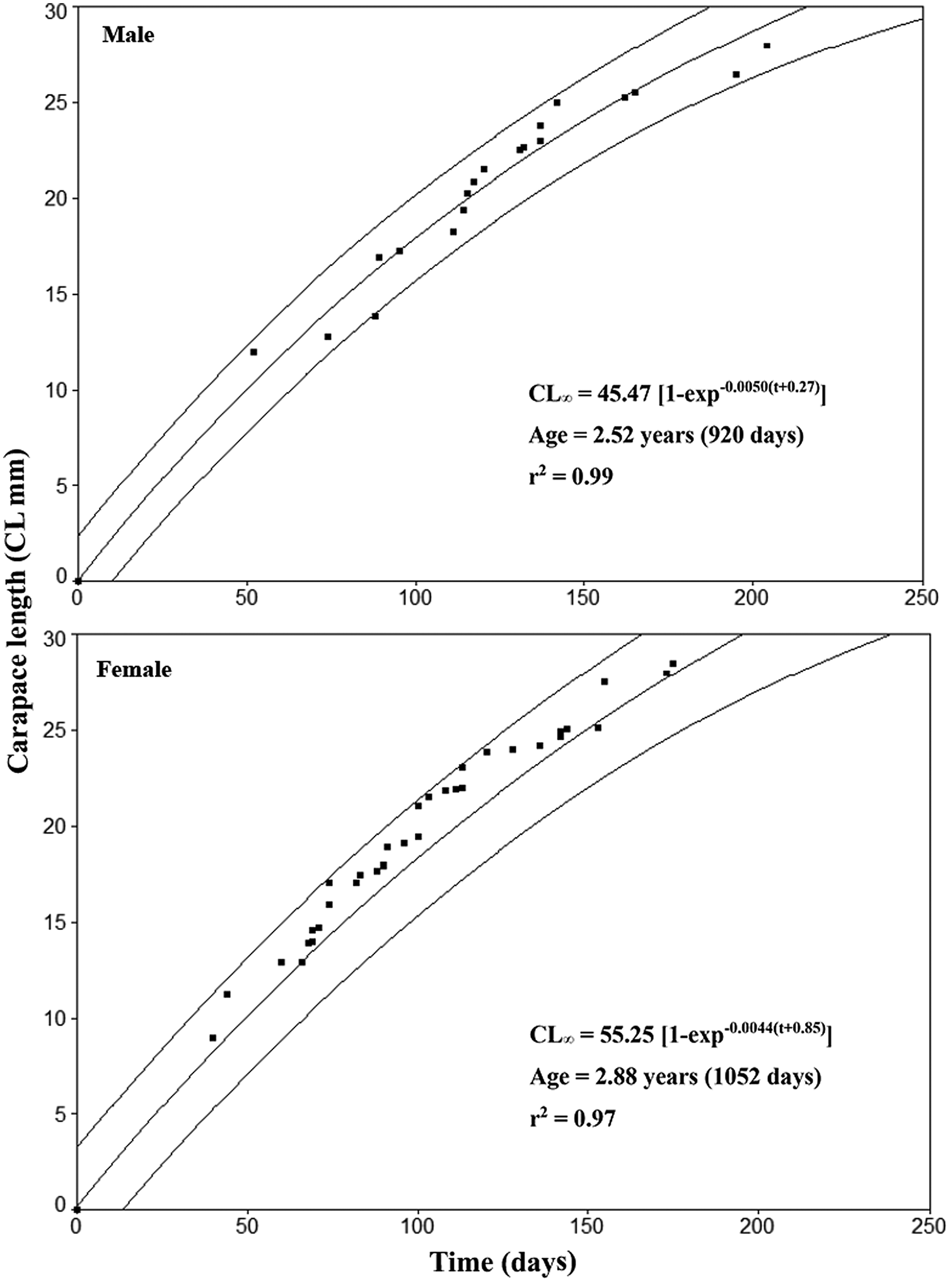
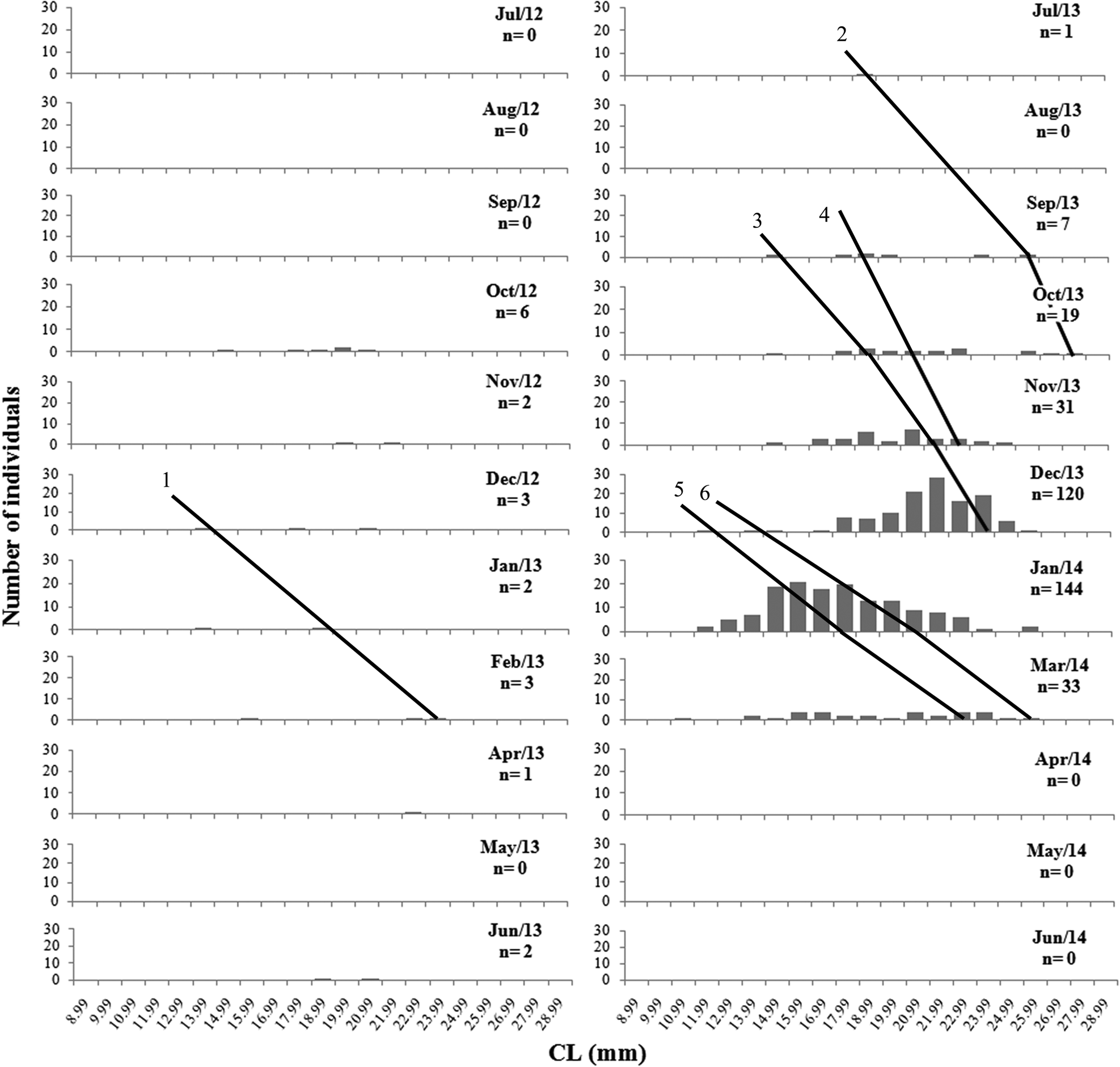
For F. brasiliensis, six cohorts were selected for males (Figure 3) and nine cohorts for females (Figure 4). The mean curve grouping of the cohort curves for males resulted in CL∞ = 45.47 mm, k = 0.0050 (1.18 year−1) and t0 = −0.27, and for females resulted in CL∞ = 55.25 mm, k = 0.0044 (1.16 year−1) and t 0 = −0.85 (Figure 5).
Monthly distribution of males by size classes and analysis of modal progression of cohorts of Farfantepenaeus brasiliensis (Latreille, 1817) sampled in the Cananéia-Iguape lagoon estuarine system and adjacent coastal area from July 2012 to June 2014. The lines represent the cohorts that were sampled to describe individual growth throughout the study period.

Monthly distribution of females by size classes and analysis of modal progression of cohorts of Farfantepenaeus brasiliensis (Latreille, 1817) sampled in the Cananéia-Iguape lagoon estuarine system and adjacent coastal area from July 2012 to June 2014. The lines represent the cohorts that were sampled to describe individual growth throughout the study period.

Farfantepenaeus brasiliensis (Latreille 1817). Growth curves and parameters of the Bertalanffy equation estimated separately for males and females that were sampled monthly in the Cananéia-Iguape estuarine lagoon system and the adjacent coastal area from July 2012 to June 2014. The centreline is the mean and the outer lines are the prediction intervals (95%).

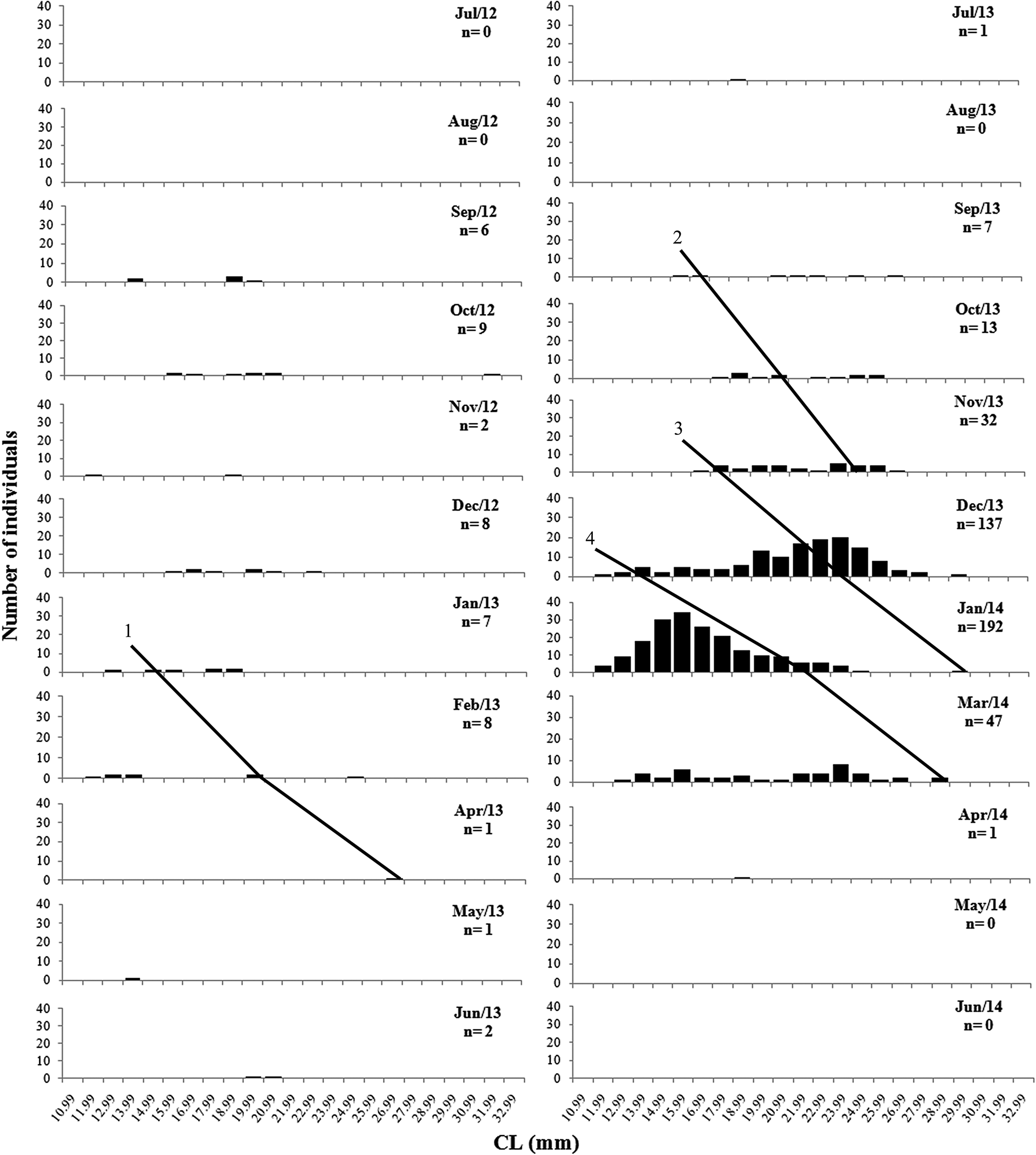
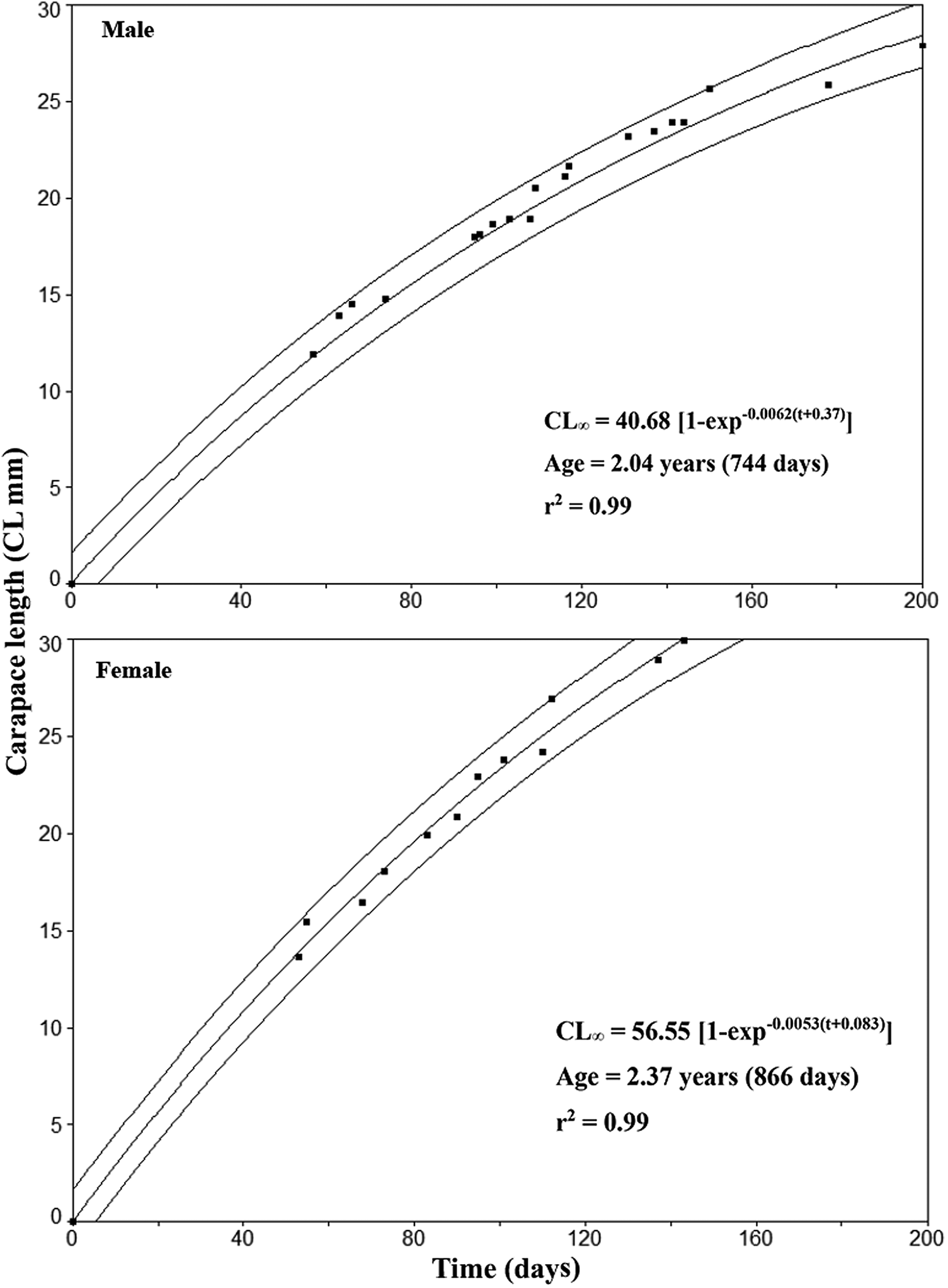
For F. paulensis, six cohorts were chosen for males (Figure 6) and four cohorts for females (Figure 7). The mean curve grouping the cohort curves for males resulted in CL∞ = 40.68 mm, k = 0.0062 (2.26 year−1) and t 0 = −0.37, and for females of CL∞ = 56.55 mm, k = 0.0055 (1.94 year−1) and t 0 = −0.083 (Figure 8).
Monthly distribution of males by size classes and analysis of modal progression of cohorts of Farfantepenaeus paulensis (Pérez-Farfante, 1967) sampled in the Cananéia-Iguape lagoon estuarine system and adjacent coastal area from July 2012 to June 2014. The lines represent the cohorts that were sampled to describe individual growth throughout the study period.

Monthly distribution of females by size classes and analysis of modal progression of cohorts of Farfantepenaeus paulensis (Pérez-Farfante, 1967) sampled in the Cananéia-Iguape lagoon estuarine system and adjacent coastal area from July 2012 to June 2014. The lines represent the cohorts that were sampled to describe individual growth throughout the study period.

Growth curves and parameters of the von Bertalanffy equation estimated separately for males and females of Farfantepenaeus paulensis (Pérez-Farfante, 1967) sampled monthly in the Cananéia-Iguape estuarine lagoon system and adjacent coastal area from July 2012 to June 2014. The centreline is the mean and the outer lines are the prediction intervals (95%).

The maximum longevity (tmax) was 920 days (2.52 years) for males and 1052 days (2.88 years) for females of F. brasiliensis (Figure 5). Statistical comparison (F test) between estimated curves for both sexes showed significant differences (Fcalc = 7.77 > Ftab = 3.14). The tmax values estimated for F. paulensis were 744 days (2.04 years) for males and 866 days (2.37 years) for females (Figure 8). The estimated curves for males and females differed significantly (Fcal = 27.62 > Ftab = 3.27).
Natural mortality was estimated for F. brasiliensis as 1.83 year−1 (0.15 month–1) and 1.61 year−1 (0.13 month–1) for males and females, respectively (Taylor method), and 1.61 year−1 (0.13 month–1) and 1.50 year−1 (0.12 month–1) for males and females, respectively (Pauly method). The mean M value was 1.71 year−1 (0.14 month–1) for males and 1.55 year−1 (0.13 month–1) for females. As for F. paulensis, natural mortality was 2.26 year−1 (0.19 month–1) and 2.01 year−1 (0.17 month–1) for males and females, respectively (Taylor method), and 2.53 year−1 (0.21 month–1) and 2.01 year−1 (0.17 month–1) for males and females, respectively (Pauly method). The mean M value was 2.39 year−1 (0.20 month–1) for males and 2.05 year−1 (0.17 month–1) for females.
According to the largest individuals of each sex captured in the Coastal Area, the development time until late juvenile phase of F. brasiliensis was 195 days (6.5 months) for males and 214 days (7.1) for females. For F. paulensis it was 163 days (5.4 months) for males and 154 days (5.1 months) for females.
Recruitment
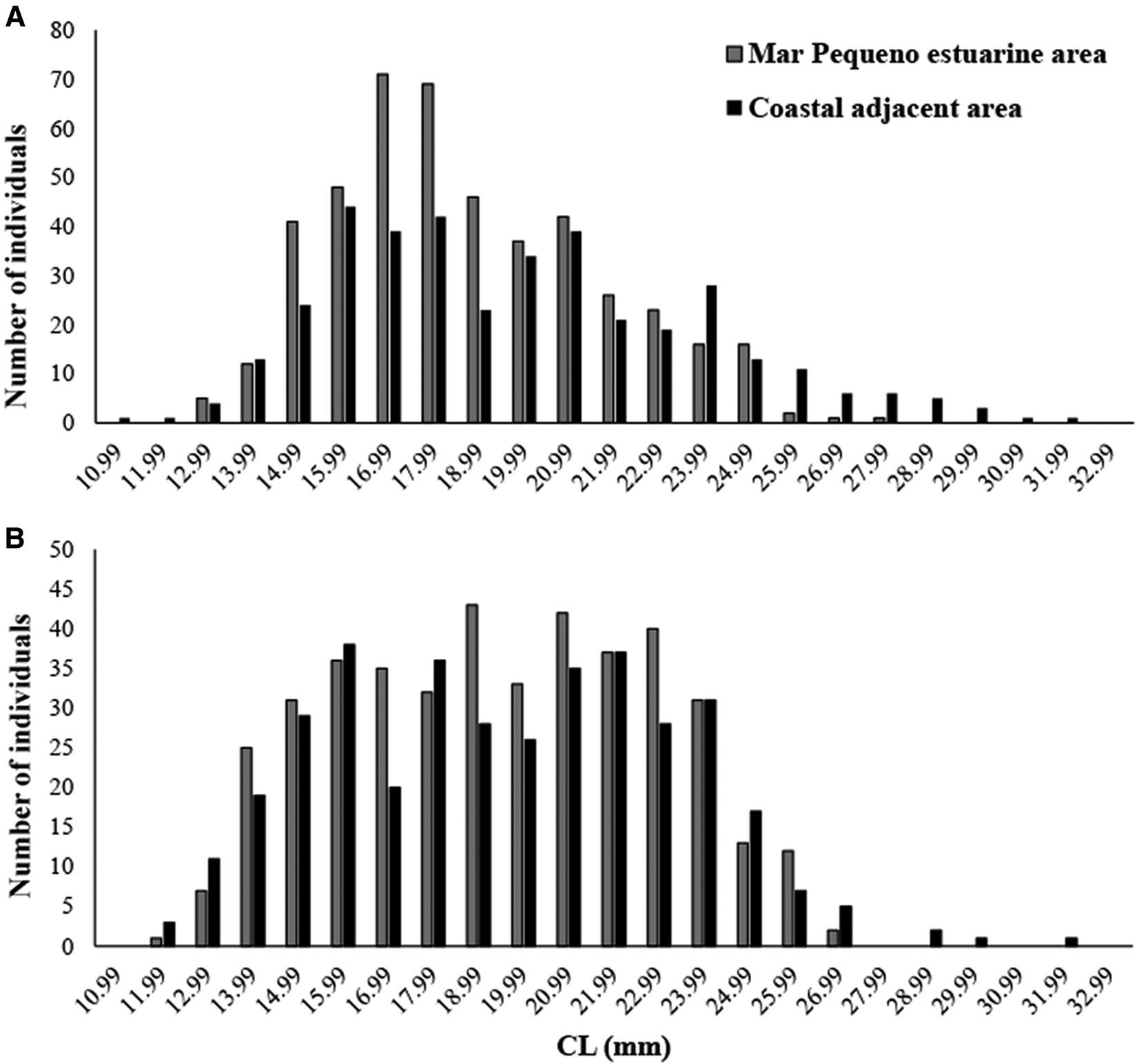
Analysing the smaller individuals present in the Coastal Area, juveniles of both species initiate migration to this area at ~12 mm CL, and this migration intensifies for F. brasiliensis with 18.99 mm CL and F. paulensis with 23.99 mm CL (Figure 9). In the first sampling period, the juvenile recruitment of F. brasiliensis occurred from October 2012 to February 2013; besides that, there was a clear increase in the number of captured juveniles in June 2013 (Figures 3, 4). In the second sampling period, juvenile recruitment occurred from January to March 2014, with a peak in January (Figures 3, 4).
Distribution per size class of (A) F. brasiliensis (Latreille, 1817) and (B) F. paulensis (Pérez-Farfante, 1967) individuals in each sampling area from July 2012 to June 2014.

Despite the low number of F. paulensis individuals captured in the first sampling period, there was a noticeable increase in juveniles in October 2012 and from December 2012 to February 2013 (Figures 6, 7). For the second sampling period, recruitment occurred from December 2013 to March 2014, peaking expressively in January (Figures 6, 7).
For both species, there was a low number of individuals captured in the months corresponding to the closed season in the first period (March–May), that is, only two individuals of F. brasiliensis and three of F. paulensis. In the second sampling period, the highest recruitment peaks for both species occurred in the months prior to the closed season, extending to the first month of the closed season (March 2014).
Discussion
The results of the present study reinforce the importance of the Cananéia-Iguape lagoon estuarine system and adjacent shallow area as a nursery for the pink-shrimp F. brasiliensis and F. paulensis. In the Mar Pequeno region, all individuals were juveniles and many of the smaller individuals were also found in the Coastal Area, where they remained until they grew to larger sizes (sub-adults) before emigrating to the adult population.
According to the mean size (CL mm) from each sampling station, the largest F. brasiliensis individuals occurred in the Coastal Area (S1), where salinity values were higher, on average 34‰ (Perroca et al., Reference Perroca, Herrera and Costa2019), while the average sizes of F. paulensis were similar between regions. This is related to the species' higher tolerance to lower salinities (Pérez-Fanfante, Reference Pérez-Farfante1969; Iwai, Reference Iwai1973; Tsuzuki et al., Reference Tsuzuki, Cavalli and Bianchini2000; Wasielesky, Reference Wasielesky2000; Costa et al., Reference Costa, Lopes, Castilho, Fransozo and Simões2008), allowing sub-adult individuals of F. paulensis to remain in the inner areas of the Mar Pequeno for longer (S6 and S7), where salinity oscillates more due to the low depth and the influence of continental waters (Perroca et al., Reference Perroca, Herrera and Costa2019).
Females of both species were more abundant than males and represent 60.4% and 55.9% of all the F. brasiliensis and F. paulensis captured, respectively. For peneids, deviations in sex ratios towards females are common and have been demonstrated in several studies (Santos et al., Reference Santos, Severino-Rodrigues and Vaz-dos-Santos2008; Costa et al., Reference Costa, Branco, Machado, Campos and Avila2010; Heckler et al., Reference Heckler, Simões, Santos, Fransozo and Costa2013; Garcia et al., Reference Garcia, Wolf, Costa and Castilho2016). Such deviation from the 1:1 sex ratio is usually related to differences in the life cycle, migration, mortality and growth rates, behaviour between males and females, ecdysis, dispersion and reproductive patterns (Wenner, Reference Wenner1972; Garcia & Le Reste, Reference Garcia and Le Reste1986).
Some studies have shown that a higher number of females in relation to males is advantageous for the reproduction of peneids (Peixoto et al., Reference Peixoto, Wasielesky, D'Incao and Cavalli2003, Reference Peixoto, Cavalli, Wasielesky, D'Incao, Krummenauer and Milach2004; Flor et al., Reference Flor, Oshiro, Costa, Fugimura, Rodrigues and Mattos2016). In laboratory conditions, the highest fertility and larvae hatching rates of F. brasiliensis occurred in the sex ratio of 1:2 towards females and indicated higher efficiency than the 1:1 ratio (Flor et al., Reference Flor, Oshiro, Costa, Fugimura, Rodrigues and Mattos2016). For F. paulensis, high results were observed in reproductive performance at 1: 1.5 in favour of females (Peixoto et al., Reference Peixoto, Wasielesky, D'Incao and Cavalli2003, Reference Peixoto, Cavalli, Wasielesky, D'Incao, Krummenauer and Milach2004).
The growth curves estimated for F. brasiliensis and F. paulensis revealed significant differences between sexes. Females of both species present larger asymptotic size in relation to males, as was estimated for populations of F. brasiliensis (Arreguím-Sanchez, Reference Arreguín-Sánchez1981; Leite & Petrere, Reference Leite and Petrere2006; Lopes, Reference Lopes2012) and F. paulensis (D'Incao, Reference D'Incao1991; Branco & Verani, Reference Branco and Verani1998; Peixoto et al., Reference Peixoto, D'Incao and Wasielesky2001; Leite & Petrere, Reference Leite and Petrere2006; Antunes, Reference Antunes2007; Lopes, Reference Lopes2012; Santana et al., Reference Santana, Silveira and Fabiano2015) in different localities. The size of the peneid females is very important for reproduction, as found in a study with F. brasiliensis in which, regardless of weight, females with larger body proportions were better able to reproduce (Flor et al., Reference Flor, Oshiro, Costa, Fugimura, Rodrigues and Mattos2016). For F. paulensis, the size of females more strongly affects the reproductive performance than the age of the individual (Peixoto et al., Reference Peixoto, Cavalli, Wasielesky, D'Incao, Krummenauer and Milach2004).
In Penaeidae, females present larger sizes (CL∞), but lower growth coefficients (k), which is the opposite of what is observed for males (Garcia & Le Reste, Reference Garcia and Le Reste1981). Rapid growth leads to high energy expenditure for the organism, and by reaching its maximum size in less time, the length and weight end up being smaller than they would be if growth occurred more slowly, as occurs in females (Fonteles-Filho, Reference Fonteles-Filho2011). This inverse tendency between the growth parameters CL∞ and k observed in the present study was also registered for other peneids, e.g. F. subtilis (Santos et al., Reference Santos, Perroca, Costa and Horse2020), Litopenaeus schmitti (Burkenroad, 1936) (Lopes, Reference Lopes2012; Santos et al., Reference Santos, Perroca, Costa and Horse2020), Rimapenaeus constrictus (Stimpson, 1874) (Garcia et al., Reference Garcia, Wolf, Costa and Castilho2016), Penaeus merguiensis de Man, 1888 (Saputra et al., Reference Saputra, Sholichin and Taufani2018), Parapenaeus fissuroides Crosnier, 1985 (Farhana & Ohtomi, Reference Farhana and Ohtomi2017) and X. kroyeri (Castilho et al., Reference Castilho, Bauer, Freire, Fransozo, Costa, Grabowski and Fransozo2015).
The longevity estimated for both species was around 2–3 years and females showed higher values in relation to males, which was similar to observations of other authors (Villela et al., Reference Villela, Costa and Valentin1997; Peixoto et al., Reference Peixoto, D'Incao and Wasielesky2001; Neto, Reference Neto2011; Lopes, Reference Lopes2012). Males presented higher values of natural mortality, since k and M are directly proportional, that is, the higher the growth rate is, the lower the longevity is and the higher the natural mortality (Vogt, Reference Vogt2012). The smaller size of males compared with females also results in higher natural mortality, since smaller individuals are more likely to be predated (Cohen et al., Reference Cohen, Pimm, Yodzist and Saldaña1993).
Juvenile recruitment occurred for F. brasiliensis in the first sampling period from October to February 2013 and in the second period from January to March 2014, and for F. paulensis in the first period from December to February 2013 and in the second from December to March 2014. In a six-year study in the Cananéia region (1976–1982), Chagas-Soares et al. (Reference Chagas-Soares, Pereira and Santos1995) registered recruitment peaks of F. brasiliensis and F. paulensis juveniles in July and August, respectively. The authors suggested that the Southern Ocean currents may displace these species post-larvae to the breeding site of Cananéia, and the post-larvae entrance in the Mar Pequeno between March and May resulted in juvenile recruitment in July and August.
Considering this hypothesis, the post-larvae pink-shrimp are probably entering the Cananéia breeding site at different times of the year due to sea currents, resulting in a different recruitment period than that observed by Chagas-Soares et al. (Reference Chagas-Soares, Pereira and Santos1995). Judging from the recruitment peaks observed in the present study, we suggest that the post-larvae are entering the Cananéia breeding site between September and November.
Similar to the present study, in the Ubatuba region (northern coast of São Paulo state), the juvenile recruitment of F. brasiliensis and F. paulensis occurred between January and March (Costa et al., Reference Costa, Bochini, Simões, Lopes, Sancinetti, Castilho and Fransozo2016). The juvenile recruitment of these shrimps in both São Paulo regions refuted the findings of Chagas-Soares et al. (Reference Chagas-Soares, Pereira and Santos1995). Considering that there is still no precise identification key for larvae and post-larvae peneids, along with the fact that there are several species of peneids in the region and that the pink shrimps and the white shrimp L. schmitti depend on the estuarine region in the post-larval phase, it is possible that there have been errors in the identification of such organisms, especially regarding the larval phase.
The closed season is governed annually from 1 March to 31 May from the coast of Espírito Santo State to Rio Grande do Sul State (IBAMA, 2008). When confronting this period with the higher abundance of pink shrimp, we found that the highest number of individuals caught in our study occurred in previous months up to the first month of closure, revealing that the main peaks of juvenile recruitment of both species are not fully synchronized with fishing closure.
Juveniles started leaving the estuarine area (Mar Pequeno) at 12 mm CL, which intensified from 18.99 mm CL for F. brasiliensis and around 23.99 mm CL for F. paulensis. These sizes are larger compared with the results of D'Incao (Reference D'Incao1983), who found that 17.1 mm male and 16.2 mm female F. paulensis juveniles emigrated from Patos Lagoon to the ocean (D'Incao, Reference D'Incao1983, Reference D'Incao1984, Reference D'Incao1991). According to this author, individuals may stay in the lagoon until they reach larger sizes and are 10 months old, due to the environmental conditions of the region that favour growth (D'Incao, Reference D'Incao1991).
However, this departure of juveniles from Cananéia did not seem to be permanent, with the smallest individuals moving between the estuary and the shallow coastal area, and as they grew and approached the end of the juvenile phase and became sub-adults, they concentrated in the coastal area, which turned out to be an auxiliary nursery area. According to our calculations of development time until the late juvenile phase, F. brasiliensis may remain in the Cananéia coastal area until 6.5 months (males) and 7.1 months (females), while F. paulensis remain in the area for 5.4 months (males) and 5.1 months (females). Although there are some larger individuals in the Mar Pequeno and the Coastal Area, there was a drop in the number of individuals from the size classes of 23–25 (CL mm) until no shrimp larger than 32 mm were caught, which may suggest the migration of these sub-adults to the open sea.
It is important to consider that fishing is the main source of income for many fishermen in the region (Mendonça, Reference Mendonça2007), making changes in the closed season complicated. On the other hand, it is essential that parts of the juvenile and sub-adult populations can reach the sea to reproduce and complete their life cycle (D'Incao, Reference D'Incao1991). Fishing activity in breeding areas is one of the most important factors to consider in south-eastern and southern Brazil (D'Incao, Reference D'Incao1991; Dias-Neto, Reference Dias-Neto2015) and broad capturing of these individuals before recruiting to the adult population can decrease post-larvae in breeding sites, due to the decrease in reproductive females (D'Incao, Reference D'Incao1991). Therefore, more studies with broader monitoring should be carried out in the Cananéia region to more precisely verify whether the months of fishing closure have helped replenish stocks of these fishing resources.
The information presented in this study contributes to a better understanding of the biology of these species and may help develop better fishery management plans in the Cananéia region. Even though much of the juvenile abundance does not occur within the closed season and these organisms can be captured when exposed in the Coastal Area, it is important to note that fishing in the lagoon and estuarine area is prohibited and that juveniles near adulthood intensively emigrate to the adult population very close to or during the closed season. Thus, we suggest that more long-term studies be carried out focusing on this factor, which could provide more concrete information regarding the ideal time for fishing closure considering environmental variations.
Our results, in addition to the knowledge that in other localities in the south-east coast such as Ubatuba, recruitment starts prior to the closed season in El Niño years and the many bays in the area play a nursery role due to the small estuaries (Costa et al., Reference Costa, Bochini, Simões, Lopes, Sancinetti, Castilho and Fransozo2016), and in the south coast, such as in Conceição Lagoon (Santa Catarina State), F. paulensis starts recruiting in the summer (prior to the closure) and F. brasiliensis recruits in early winter (post-closure) (Luchmann et al., Reference Luchmann, Freire, Ferreira, Daura-Jorge and Marques2008), lead us to suggest the adoption of a fishing exclusion zone in the shallow portions of the adjacent coastal areas of the south-eastern and southern coast (up to 10 m depth). Considering that the three localities mentioned are under the same closed season, adapting the period to each region in order to increase the protection of juveniles (i.e. including February for Cananéia and Ubatuba, and June for Conceição Lagoon), would lead to a migration of the fishing fleet between the areas. The adoption of such a fishing exclusion zone would help conserve these important fishing resources, and make sure that juveniles will not be captured as bycatch in fisheries targeting other species, such as the seabob shrimp X. kroyeri.
Acknowledgements
We are grateful to the staff of the Laboratório de Camarões Marinhos e de Água Doce (LABCAM) and the Núcleo de Estudos em Biologia, Ecologia e Cultivo de Crustáceos (NEBECC) for assistance in fieldwork.
Financial support
This work was supported by the São Paulo Research Foundation – FAPESP through grants 2015/15210-6 (Scholarship to DSS) and 2019/01308-5 (Scholarship to JFP) and Biota Thematic (# 2010/50188-8 and # 2018/13685-5 to RCC). RCC thanks the ‘Conselho Nacional de Desenvolvimento Científico e Tecnológico—CNPq’ for Research Scholarship PQ 306672/2018-9.