INTRODUCTION
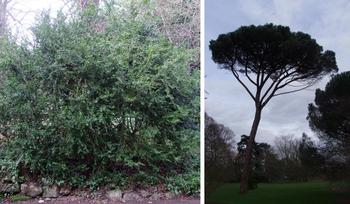
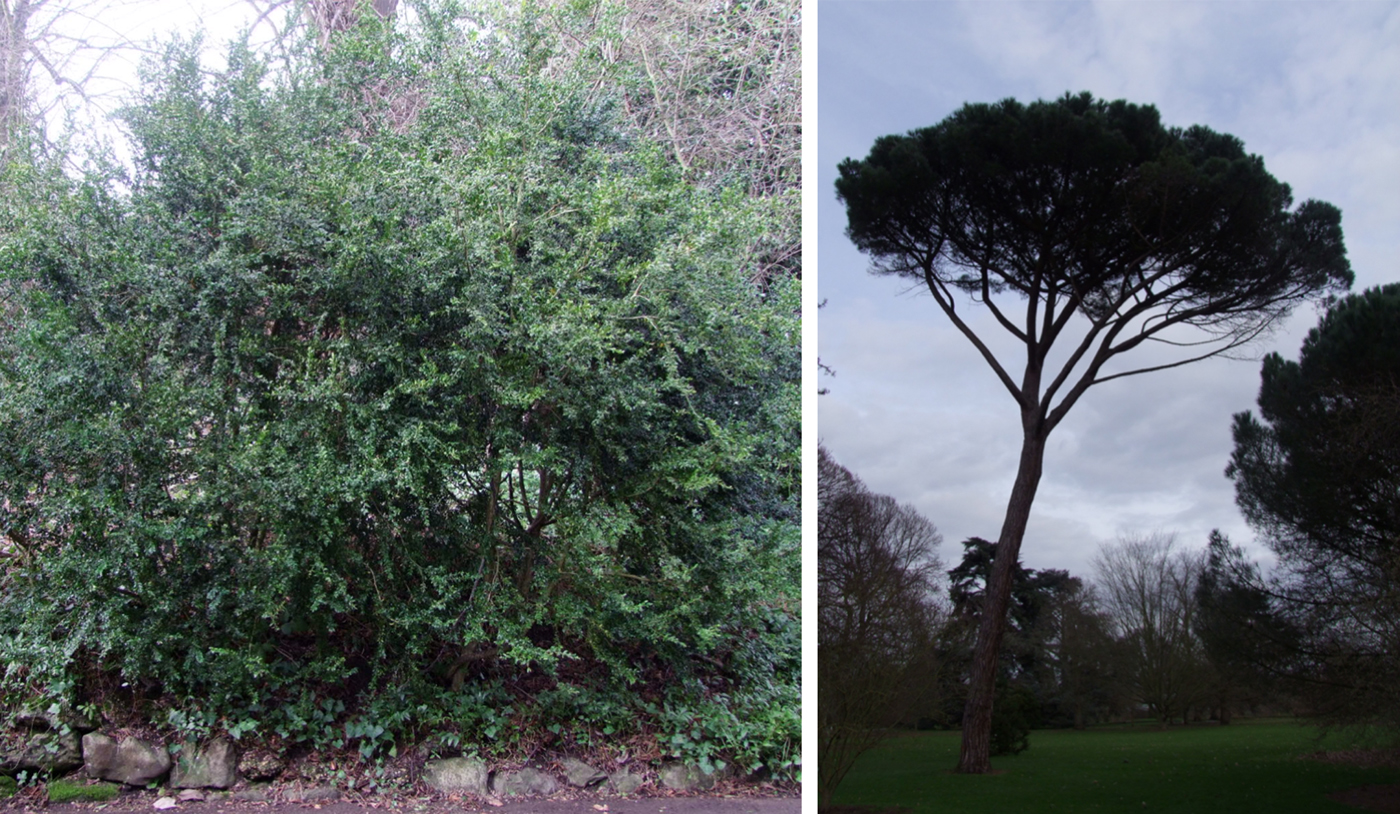
The introduction of a wide range of new plants in the Roman period marked a major change in the Holocene flora of Britain. While the presence of a diverse range of horticultural crops, including fruits, nuts, pulses, vegetables and flavourings, has received much attention, another category of plants, ornamental evergreen shrubs and trees, was also introduced.Footnote 1 Archaeobotanical evidence for the presence of box (Buxus sempervirens L.) and stone-pine (Pinus pinea L.) (fig. 1) in Roman Britain has been known of for over 100 years.Footnote 2 However, the wealth of new archaeobotanical data produced following the upsurge in developer-funded archaeology has yet to be used to develop a more nuanced understanding of the chronological and social patterns of these new plants.Footnote 3 Independent of these developments, several scholars have approached the translocation of plants in the Mediterranean, such as plane, citruses and cherry, through the lenses of élite behaviour, cultural change and environmental concerns, with particular focus on plants in private and public gardens, albeit largely drawing on a range of written evidence.Footnote 4 Globalisation, the intensification of connectivity, has previously been used to study the movement of food plants, but the translocation of ornamental plants also reflects the spread of material culture throughout the Roman world.Footnote 5 The limited exploration of the archaeobotanical evidence for introduced plants in Roman gardens is countered here by a focus on the province of Britannia which has an exceptional record of plant remains. The presence of introduced ornamental evergreen plants in Roman Britain has significance both for understanding the ecological impacts of Rome on its empire and for exploring the changing relationships between humans and plants.Footnote 6 Recent studies in the fields of anthropology, human geography and philosophy have highlighted the ways in which plants can affect or ‘act on’ humans, following in the wake of ‘the material turn’ and ‘the animal turn’.Footnote 7 This broad and vibrant field of human-plant studies is beginning to impact upon the field of archaeology, with the focus thus far placed on how plants can act upon humans in relation to the activities of farming and ritual, with no consideration yet given to ornamental plants.Footnote 8
Box (Buxus sempervirens) and stone-pine (Pinus pinea) trees growing at Kew Gardens, London, UK.
A reassessment of ornamental plants is crucial for understanding human-plant relationships in the past, but also in the present. Box is currently classed as a native plant in Britain, although its native status continues to be questioned in north-west Europe.Footnote 9 However, box is rare and is currently suffering from box blight and the box tree moth.Footnote 10 The status of box as a native or alien plant contributes to the extent of conservation and protection the plant receives today. This paper draws on the rich archaeobotanical dataset from the province of Britannia to identify the chronological, spatial and social distribution of box, stone-pine and norway spruce in Roman Britain, before assessing evidence for the movement of these plants to Britain and material culture and literary evidence for their meaning. The idea of plant materiality, that is recognising the agency of plants in human-plant relationships, is advanced through a consideration of the visual appearance, smell, physicality and temporality of introduced evergreen plants and plant items.
EVERGREEN PLANTS IN THE ARCHAEOLOGICAL RECORD
PRESERVATION
The recovery of evidence for the presence of ornamental plants at archaeological sites has long been recognised as a challenging field. In certain areas, such as Campania and Tunisia, the techniques of ‘garden archaeology’ have been utilised, most prolifically by Jashemski, to recognise planting holes, water systems and garden layouts.Footnote 11 In Britain, garden layouts have been recorded at a few sites, such as Bancroft, Fishbourne and Frocester villas, yet evidence for planting holes is rarely found and, instead, archaeobotanical evidence must be relied upon to provide information about garden composition.Footnote 12 The remains of evergreen plants are found through two modes of preservation in Britain. Charring, the partial combustion of plant remains in a reducing atmosphere, is unlikely to produce evidence for ornamental plants as these do not usually come into contact with fire. However, there are high numbers of charred stone-pine cones and nuts due to their occurrence in ritualised deposits. Waterlogging, the preservation of plant remains in permanently waterlogged anoxic sediments, either below the water table in pits or wells, or waterlogged in highly organic surface deposits, often preserves delicate plant remains, such as box leaves. However, waterlogged assemblages often contain plant remains of mixed origin, hindering their interpretation.Footnote 13 In addition, the distribution of sites with waterlogged sediments is biased towards gravel terraces and urban settlements. Box leaves recovered from inhumation burials are likely to have derived from a type of metal oxide mineralisation, yet these sites are all antiquarian finds and the precise form of preservation cannot be established.
The systematic recovery of plant remains from archaeological sites relies upon bulk sampling, not introduced on a wide scale until the late 1970s.Footnote 14 However, due to their relatively large size, box leaves and stone-pine cones were both collected by hand throughout the earlier twentieth century. While this produced a record of these plants, any smaller plant remains would not have been recovered, hence their relative distribution within a site and through time cannot be examined. A further recovery bias affecting where these plants have been recorded is the concentration of post Planning Policy Guidance 16 archaeobotanical work in the south-east of Britain, as well as at major modern settlements and route ways.Footnote 15 Archaeobotanical data can provide much more precise evidence for the types of plants growing than garden archaeology, yet these biases of preservation and recovery must be kept in mind when interpreting patterns in the data.
PREVIOUS WORK ON IMPORTED EVERGREEN PLANTS
Antiquarian excavations from the mid-nineteenth century onwards produced evidence for the presence of introduced evergreen plants in Roman Britain. The plant remains were sent to botanists for identification, for example box leaves from an inhumation burial at Chesterford, Essex were identified by Professor Henslow at the University of Cambridge. Likewise, box leaves from an inhumation at Cann were identified by the geologist and palaeobotanist Clement Reid. Even in this early work, the archaeobotanical evidence was related to the status of box as an introduced plant. To quote from Reid: ‘The box has been considered a doubtful native of Britain, but now we have it at two localities associated with Roman remains.’Footnote 16 Similarly, an object described as a ‘fir cone’ was recovered from waterlogged sediments at the New Royal Exchange site, London in the 1840s,Footnote 17 which in hindsight seems likely to have been a stone-pine cone. No significance was attached to the find and it was not until the mid-twentieth century, following the recovery of charred stone-pine remains from several religious sites, that their role in ritual activities was recognised.Footnote 18
The importance of these records from a botanical perspective was highlighted by Godwin in his seminal review of the flora of the British Isles.Footnote 19 In his synthesis of Roman agriculture, Applebaum did not include stone-pine, but instead listed deciduous trees as introductions to Roman Britain such as the ‘Spanish chestnut, horse chestnut, sycamore, walnut, holm-oak and possibly the Spanish laurel’,Footnote 20 all of which are now considered as doubtful introductions. Box was considered to be ‘not a Roman introduction, but may have been encouraged for this [funerary] and other uses'.Footnote 21 By the late 1970s, it had been firmly established that a range of exotic plants was introduced to Roman Britain.Footnote 22 The proliferation of rescue excavation produced further archaeobotanical finds of imported evergreen plants, many of which have remained unpublished in grey literature. Key examples are from villas at Stanwick, Northants., and Rectory Farm, Godmanchester.Footnote 23 Nevertheless the growing archaeobotanical evidence was incorporated within several key syntheses of Roman gardens in Britain. Cunliffe considered the introduction of new flora, including stone-pine and box, as a product of ‘intensive Romanisation’,Footnote 24 and concentrated instead on the architectural evidence for Roman gardens. A decade later, Zeepvat again focused on the evidence for garden layout at the villas at Fishbourne, Frocester and Bancroft, briefly noting that ‘the ubiquitous box was used as a hedging plant throughout the western Empire’.Footnote 25 While two key syntheses have briefly summarised the evidence for introduced evergreens alongside the main subject matter of food plants in Roman Britain,Footnote 26 the prevailing field of garden archaeology has subsumed the study of introduced plants within the locales of the villa and peristyle garden.Footnote 27
DATA COLLECTION AND INTERPRETATION
In order to produce a new understanding of the introduction and use of evergreen plants in Roman Britain, archaeobotanical reports have been reviewed from all Roman rural settlement sites, utilising the published and grey literature synthesised in the Roman Rural Settlement Project database,Footnote 28 and published data from urban and military sites. The presence of box leaves, stone-pine cones and nutshells, as well as other introduced evergreen plants has been recorded on a ‘record basis’, i.e. presence per major site phase.Footnote 29 Site classification follows that of the Roman Rural Settlement Project and period classification is as follows: activity from c. a.d. 43–end first century and into the second century (Early Roman); second and third centuries (Middle Roman); fourth century (Late Roman).
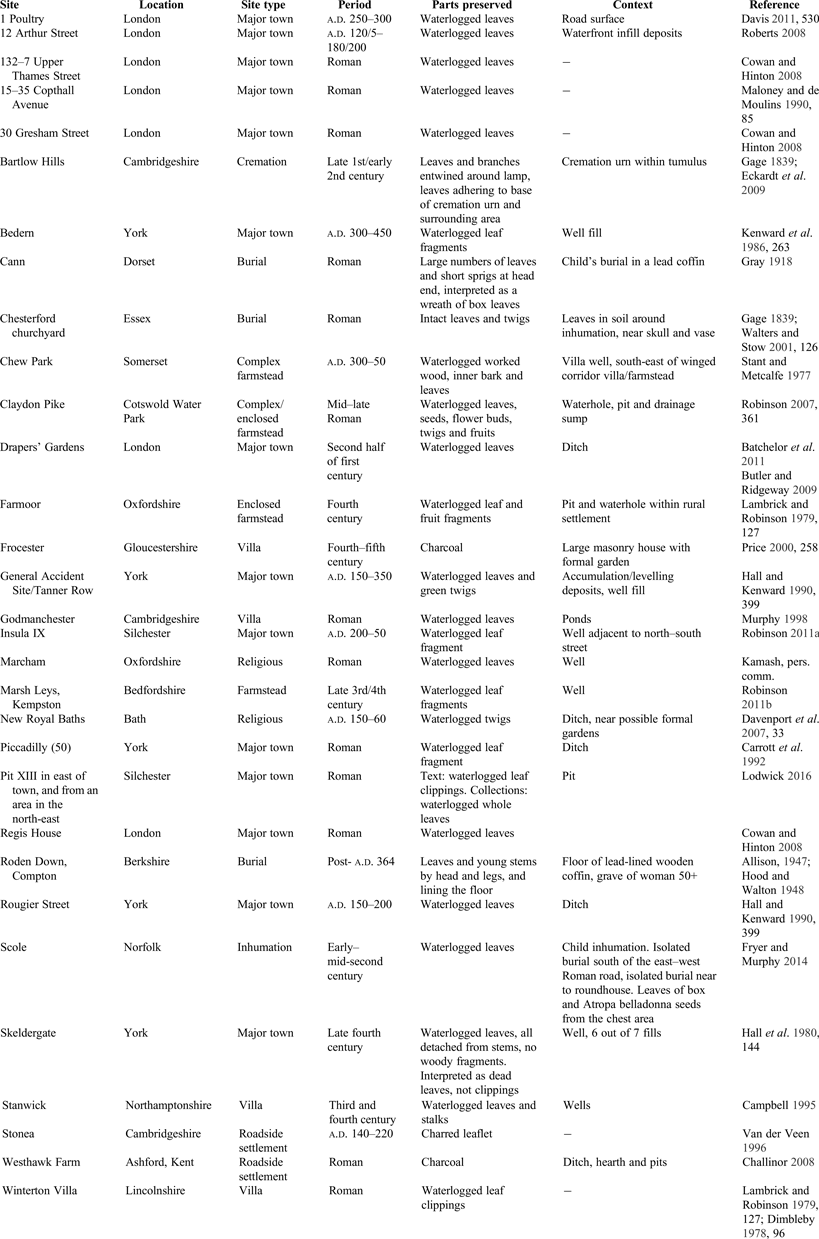
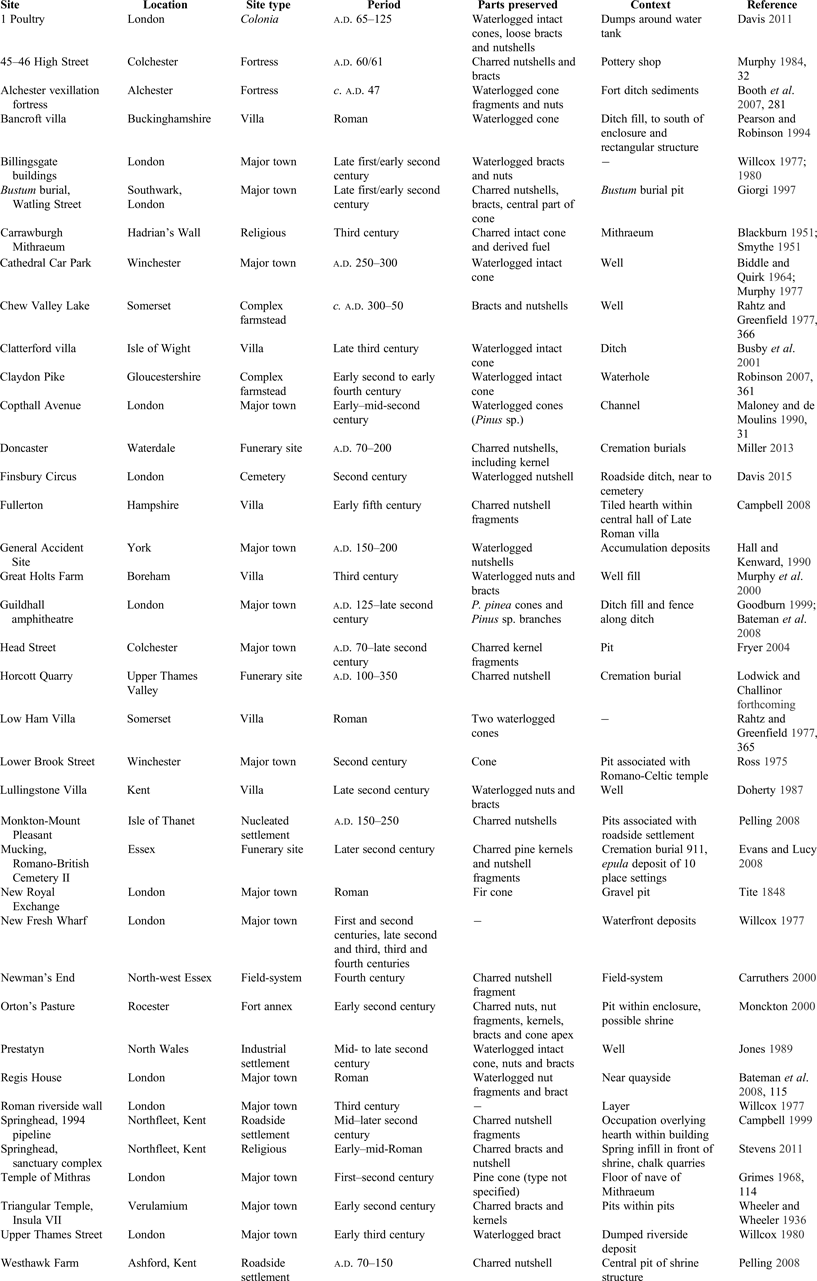
The focus in this paper is on plant remains which may have derived from trees and shrubs growing in Roman Britain. Artefactual evidence for objects made from boxwood and Abies alba L. (silver fir), such as combs and writing-tablets,Footnote 30 is not included, as their portability is considered to limit their ability to provide useful evidence for the presence of introduced evergreen plants. Macrofossils (seeds, leaves, cones), rather than pollen evidence, are the focus of this study as they are considered to provide more direct evidence for the presence of evergreen plants or plant items. Charcoal records have also been retrieved from the archaeobotanical computer database and by consulting specialists.Footnote 31 A list of archaeobotanical data and references is provided in Appendix Tables 1 and 2, while pollen studies are referred to where available.
In order to establish whether plant remains represent in-situ plants or portable plant-derived items, attention has been paid to the context and condition of plant remains. Where possible, taphonomic evidence for the plant remains themselves (charring and fragmentation)Footnote 32 and the context in which the plant remains were recorded have been noted.Footnote 33 The interpretation of the records draws on two areas of study. First, literary, artistic and archaeobotanical evidence from the Roman world has been used to evaluate to what extent the meaning of evergreen plants in Roman Britain can be established. Second, ethnographic studies are drawn upon within cultural geography which have highlighted how plants affect people through characteristics such as colour, structure and ecological temporalityFootnote 34 — considerations which closely correspond with multi-sensory approaches within classical archaeology.Footnote 35
EVERGREEN PLANTS IN ROMAN BRITAIN: RESULTS
BOX – Buxus sempervirens
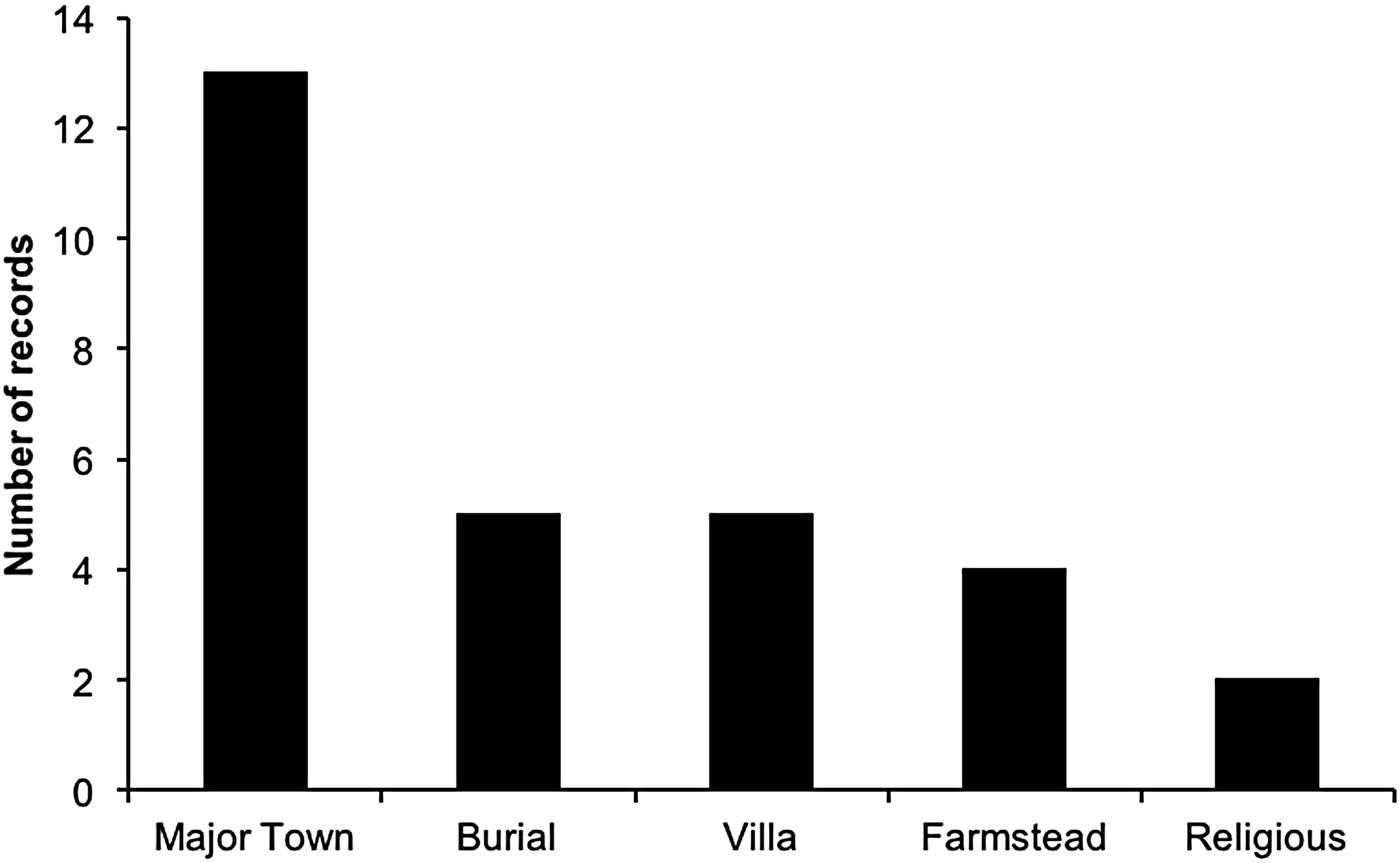
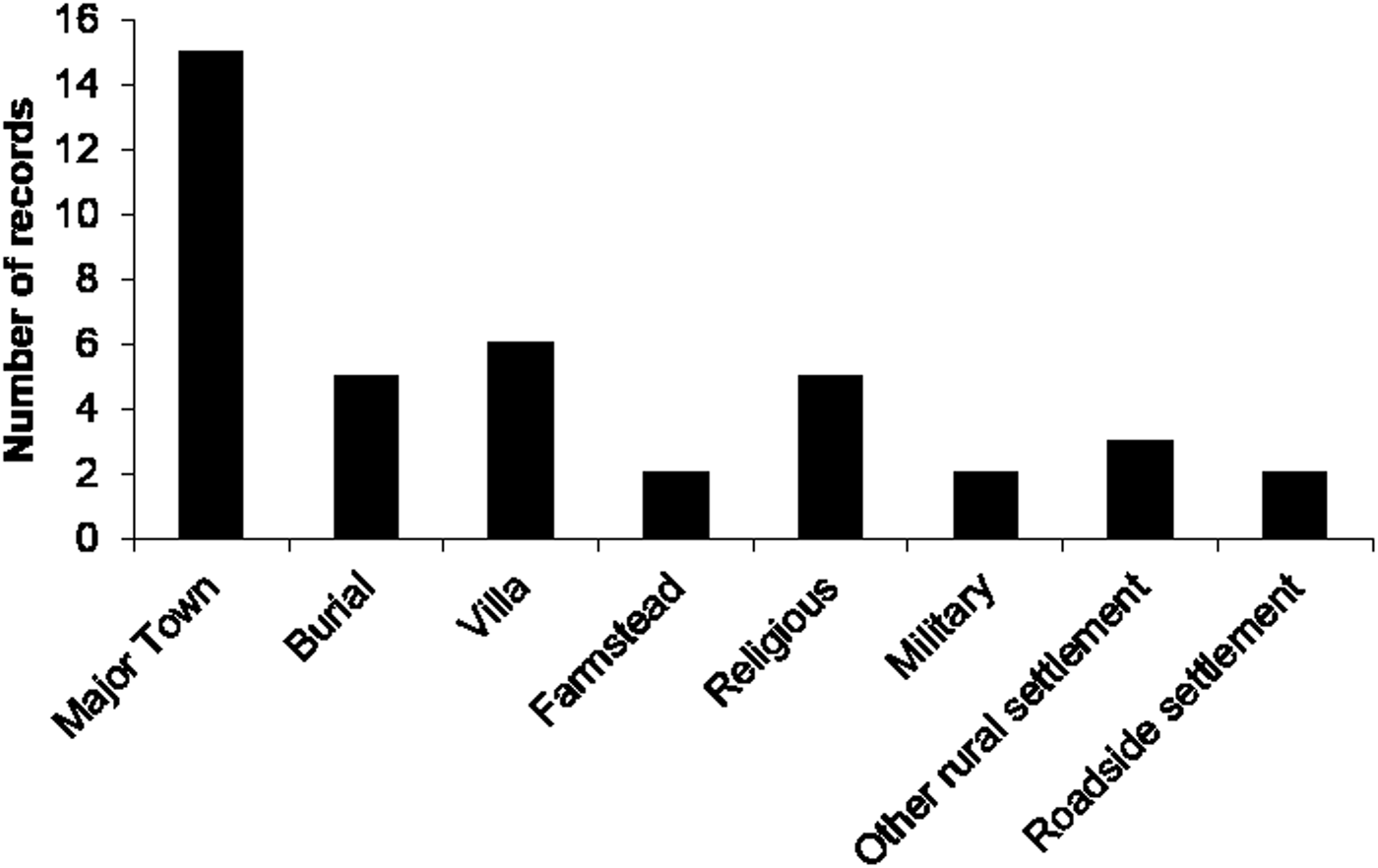
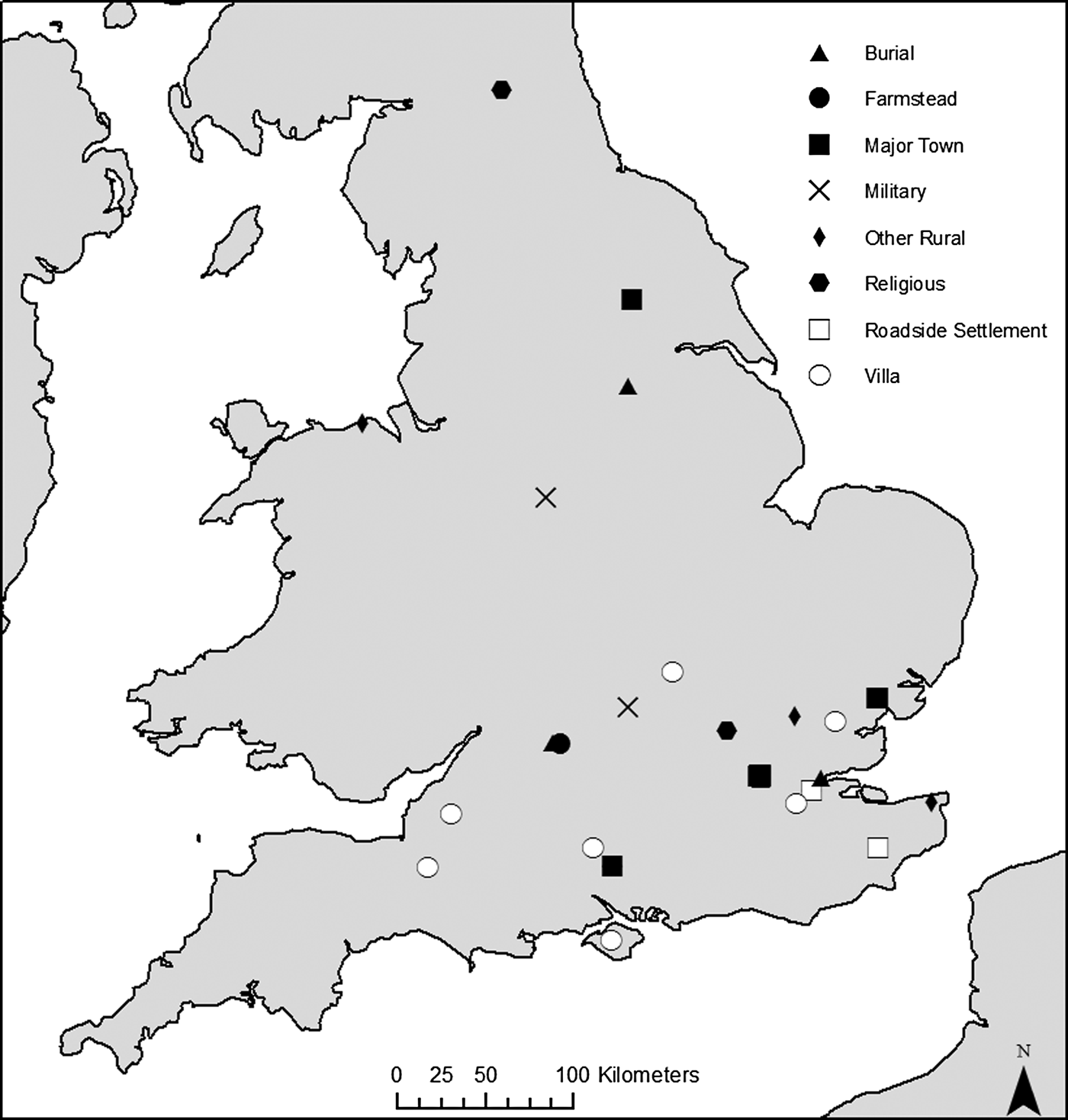
Box is an evergreen shrub or small tree, certainly native to southern Europe, northern Africa and western Asia.Footnote 36 In Britain today, it is found in woods and scrub on calcareous limestone escarpments, restricted to west Kent, Surrey, Berkshire, Buckinghamshire and west Gloucestershire.Footnote 37 Various ancient authors, including Pliny the Younger, describe the use of box in Roman villa gardens, particularly for topiary.Footnote 38 Box is also depicted in several fresco scenes, including at Livia's villa at Prima Porta, Rome.Footnote 39 By contrast, evidence for the use of box in Roman Britain is almost entirely based on archaeobotanical evidence. Macrofossil plant remains of box have been recovered from 31 sites in Roman Britain, 24 of which are waterlogged occurrences. Exceptions are a charred leaflet from Stonea, Cambs.,Footnote 40 charcoal from Frocester Villa, Glos., and Westhawk Farm, Kent,Footnote 41 and the likely metal oxide mineralised box leaves recovered from four burials at Bartlow Hills, Cann, Chesterford and Roden Down. The distribution of box by site type (fig. 2) shows that evidence for box has most commonly been recovered from major towns (14 records), followed by burials and villas (5 records each), four farmsteads and two religious sites (Bath and Marcham). However, it is also worth noting that the major towns are only London, Silchester and York, all sites which contain many archaeological deposits with waterlogged preservation and a long history of archaeobotanical investigation.Footnote 42
Distribution of waterlogged macrofossil finds of box by site type.

The burials are located in Dorset, Berkshire, Cambridgeshire and Norfolk and stretch from the Early to the Late Roman period. At the Bartlow Hills cemetery, box leaves and branches were found adhering to the base of a cremation urn and date to the late first/early second century.Footnote 43 Two of these burials are child inhumations. At Scole, Norfolk, a sample from the chest area of an early to mid-second-century inhumation contained box leaves and many fruits of deadly nightshade (Atropa belladonna L.).Footnote 44 These were considered to have been intentionally placed as a wreath, but no data were presented in the publication against which to evaluate this claim. An undated burial of a child in a lead coffin at Cann, Dorset, contained a large number of box leaves and short sprigs around the head. Again, these were interpreted as a wreath, but no detailed record was made.Footnote 45 A further example of a lead-lined coffin burial was that of an elderly (50+) woman from Roden Down, Berks., where box leaves and young stems were recorded as lining the base of a coffin and around the head and legs. The burial was dated to after a.d. 364.Footnote 46
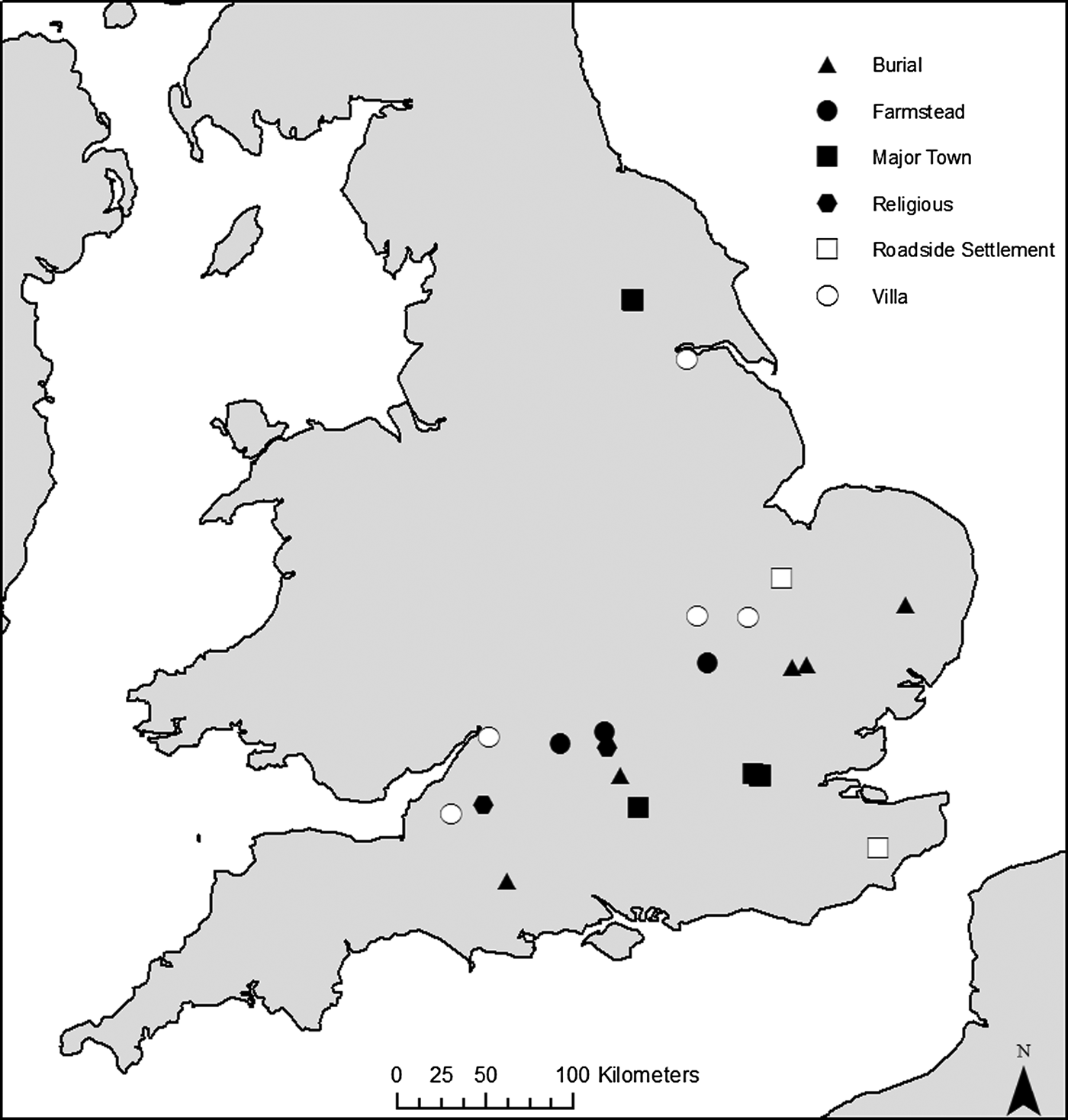
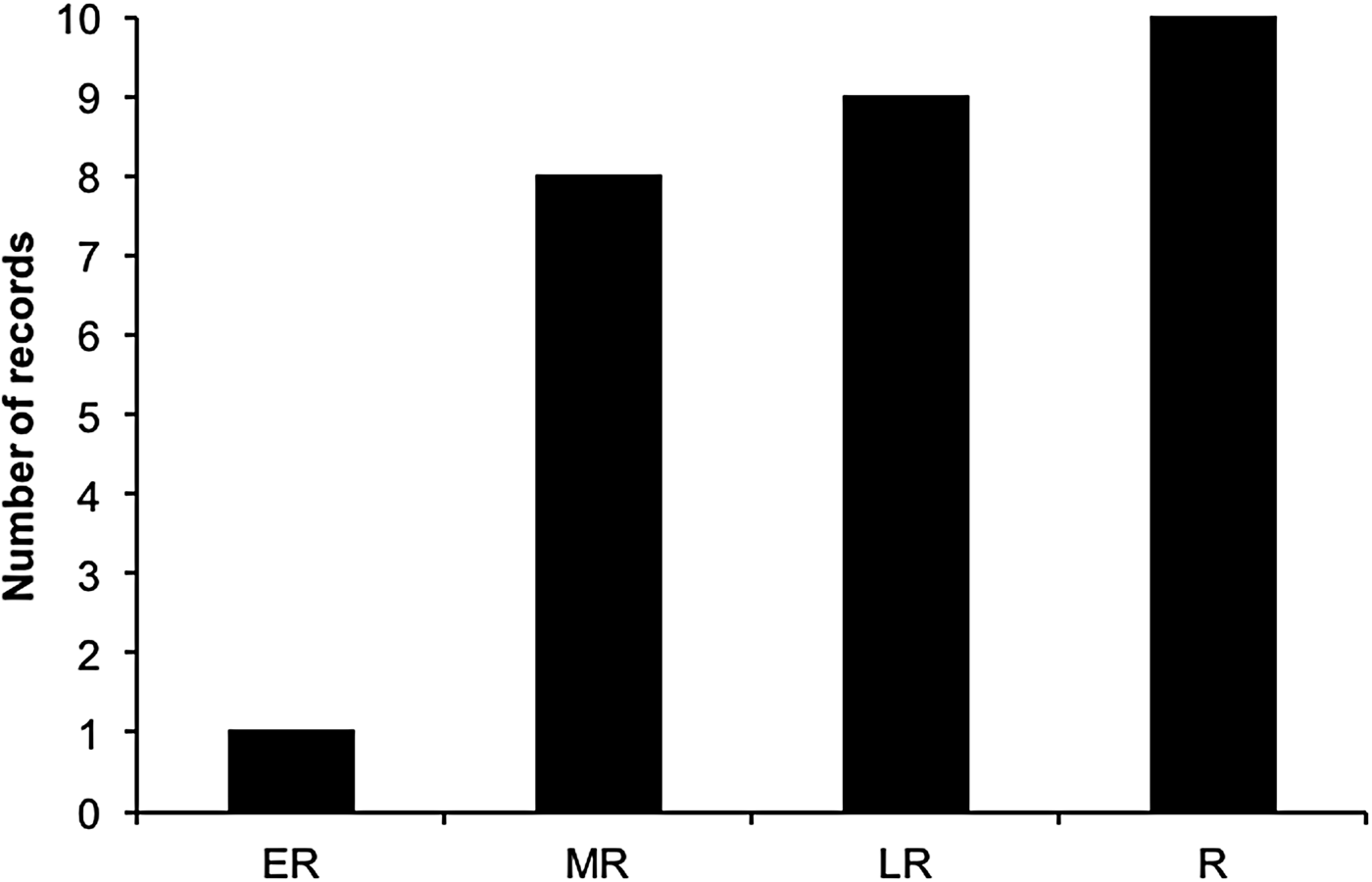
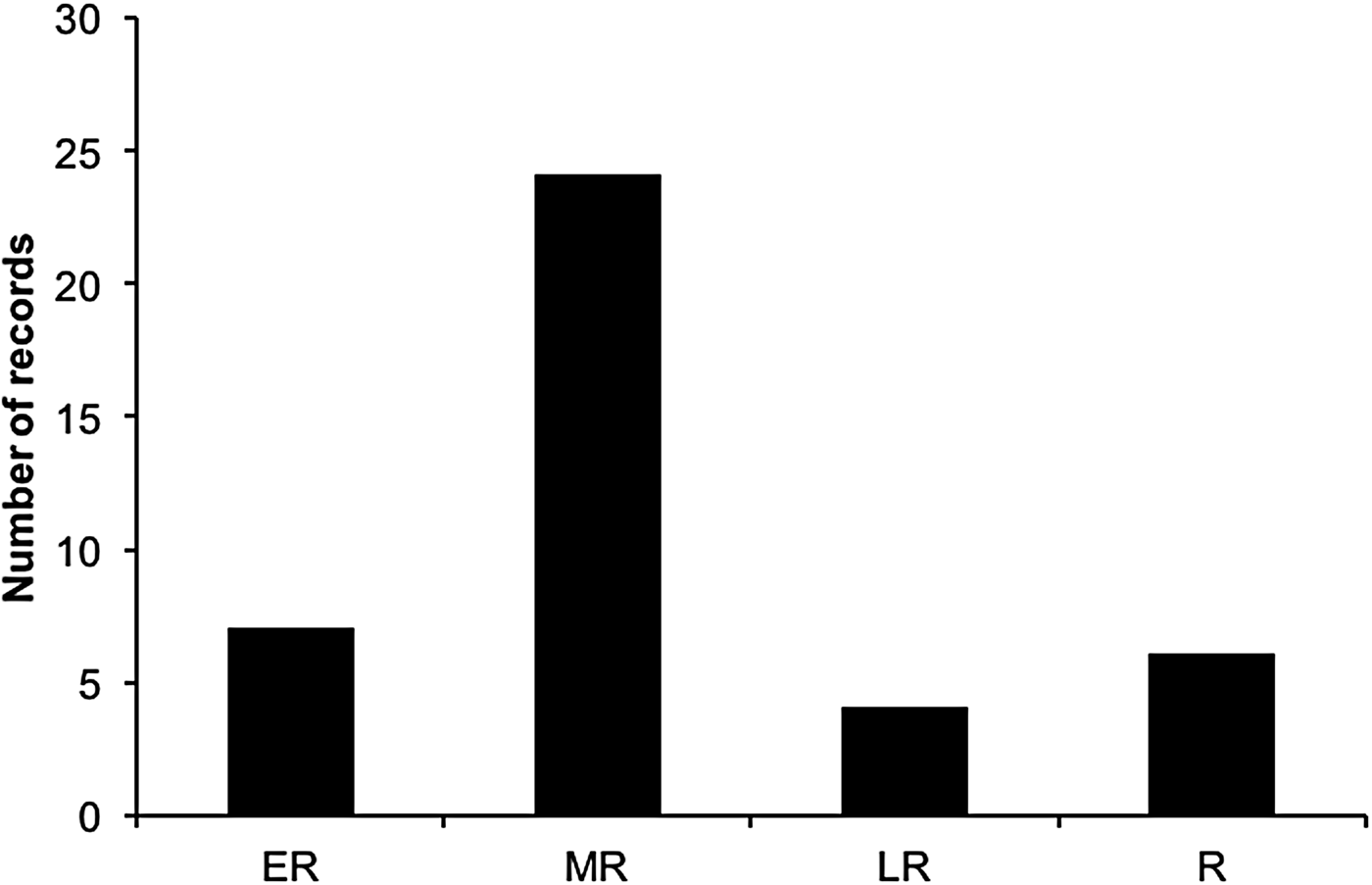
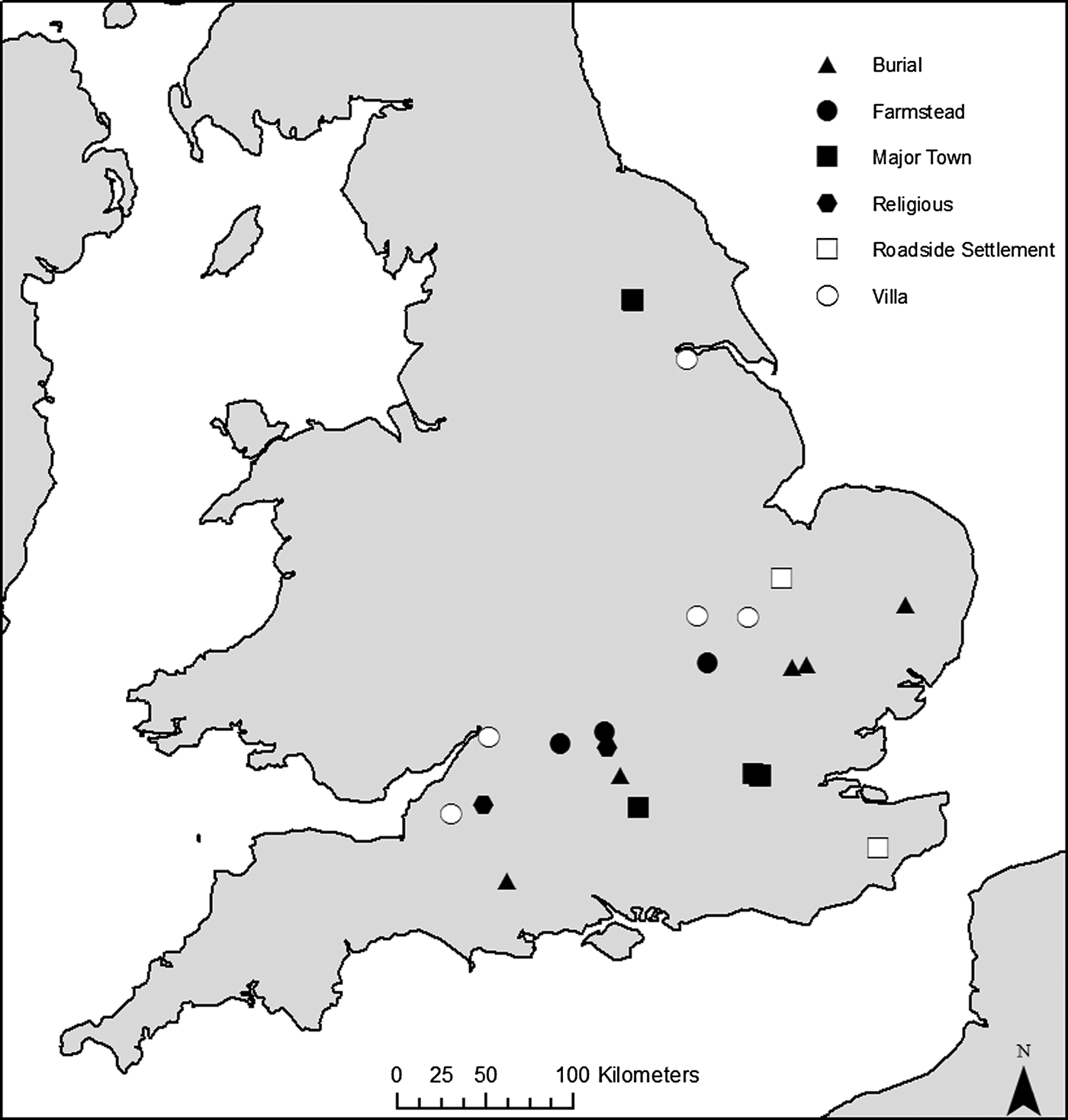
The spatial distribution of box is largely focused in central-southern Roman Britain, a pattern heavily affected by the distribution of sites with waterlogged preservation in the major river valleys of the Thames, Nene and Ouse (fig. 3). The rural farmsteads and roadside settlements where box has been recovered are located in the Upper Thames valley, the Ouse valley, Somerset and Suffolk, while the villas where box has been identified stretch from Godmanchester in Cambridgeshire to Winterton in Lincolnshire. The chronological distribution of box (fig. 4) shows that the presence of box leaves within settlements was largely confined to the second century onwards. The only Early Roman records are those of the box leaves at the Bartlow Hills cremation burial and at the Drapers' Garden site in London. Here, several intact box leaves were recovered from a ditch dating to the later first century.Footnote 47 At the New Royal Baths site in the south-west of Bath, box twigs were recovered from a ditch which was backfilled with late first- and early second-century ceramics.Footnote 48
Spatial distribution of macrofossil finds of box.
Chronological distribution of macrofossil finds of box.

Of the eight Middle Roman records, virtually all derive from the major towns of London, Silchester and York, as well as the religious centre at Bath. Box leaves have not been recovered from any other major towns. This pattern is largely due to preservation and sampling, as very few or no waterlogged samples have been analysed from other major towns such as Cirencester, Lincoln, Leicester or Colchester. Evidence for Middle Roman box has also been recovered from the eastern area of Roman Britain, from a child's burial at Scole and a charred box leaflet from the roadside settlement at Stonea. While there is no marked rise in the number of records in the Late Roman period (nine), box leaves have been found at a wider range of sites, including the villas at Frocester, Godmanchester and Stanwick, as well as rural farmsteads at Marsh Leys, Kempston and Farmoor. The examples dated only to the Roman period derive from antiquarian investigations of burials, villas and towns, as well as unpublished grey literature. The chronological pattern presented here is based on the number of sites per period, with the potential that the total number of sites investigated per period could differ. However, the same pattern was identified by the national review of Van der Veen et al., with an increase in the frequency of box within all waterlogged records from 1 per cent in the Early Roman period to 13 per cent in the Late Roman period.Footnote 49
Establishing a more precise understanding of the use of box at these settlements is difficult. Many box leaves do not have precise sampling information, either because they were hand-collected during excavation, as at 15–35 Copthall Avenue, London, or because no sampling information was included at publication. An inherent limitation of studying waterlogged plant remains is that waterlogged assemblages usually contain material from a diverse range of sources, making it difficult to identify the source of one component of a sample. Box leaves included in this category are the leaves from the waterfront infill deposits at 12 Arthur Street, London, and leaves from various levelling and accumulation deposits at General Accident Site/Tanner Row in York. It is conceivable that these box leaves may have derived from dumped rubbish originating from either the distant or immediate area. In some cases, a local source can be suggested based on the consistent presence of box leaves in an area, as with six out of seven of the well fills at Skeldergate, York. Exemplary sites where the spatial association of box remains can be established are at 1 Poultry, in the western suburb of Roman London. Here box leaves and stems, and cf. Pinaceae (conifer) leaves, were found interleaved in silting over a later third-century gravel road surface of the main west–east street through the town, close to a high-status building, providing a strong indication of a nearby box shrub. Similarly, at Silchester Insula IX, a fragment of box leaf was recovered from the backfill of a well in the eastern area, adjacent to the main north–south street. Aside from the archaeobotanical evidence, indirect evidence for the presence of box plants comes from planting trenches at Fishbourne. Sampling for plant macrofossils and pollen was unsuccessful. However, distinctive bedding trenches were cut into the gravel and clay soil along the pathways of the formal garden of the Flavian palace. These were filled with loamy soil, strongly indicating the planting of box, which naturally grows in calcareous soils.Footnote 50
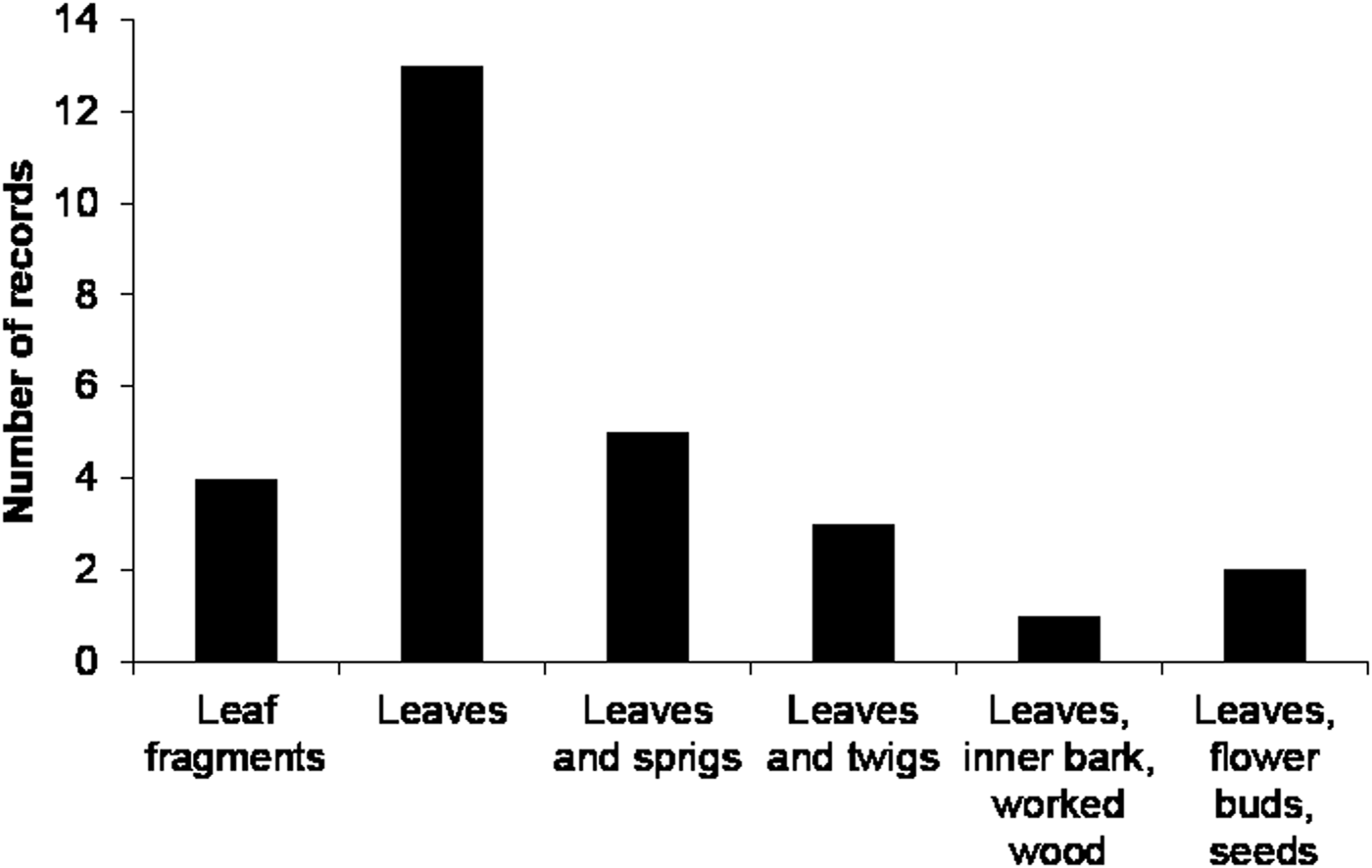
Archaeological box leaves are typically described as ‘clippings’, implying that these are stems and leaves of box clipped off from a box shrub as it was shaped for topiary. Indeed, the box leaves recovered from a villa at Wiesweiler, Rhineland, have been described as having straight cut edges, which was taken as evidence that these shrubs had been trimmed for topiary.Footnote 51 Unfortunately, distinguishing between a box leaf which has been cut by shears and one which has fragmented during or post deposition is not clear, as the condition of box leaves is rarely noted in archaeobotanical reports. At Winterton villa, no report is available, but a photograph of the box remains clearly shows c. 4 cm lengths of box stem with attached leaves.Footnote 52 In contrast, at Skeldergate, York, detached leaves without stems were interpreted as dead leaves, rather than clippings from topiary.Footnote 53 Other potential ways to identify the management of box shrubs would be the presence of pruning scars on stems, indicating that the shrub had been previously pruned. Clusters of flowers are situated in the leaf axils of box plants, which flower in April and May.Footnote 54 At two sites box fruits have been recovered: Claydon Pike and Farmoor, both rural settlements in the Upper Thames valley. Although the river gravels do not represent the natural habitat of box shrubs, perhaps these plants indicate planted hedges, not closely trimmed into topiary bushes and hence retaining their flowers until the fruits developed. fig. 5 shows the records of box classified by the parts recorded. In the majority of records (13), only leaves are present, not providing any evidence for topiary. Sprigs were present at five sites, but the majority of these are burials. At Chew Park, waterlogged worked wood, inner bark and leaves of box were recovered from a well, indicating that box was being used for woodworking.
Distribution of waterlogged box finds by part identified, where specified.

This review of the archaeobotanical records of box leaves has demonstrated that there are chronological and spatial trends in the presence of box plants. They were more common in towns than the countryside, and were more common over time.
STONE-PINE – Pinus pinea
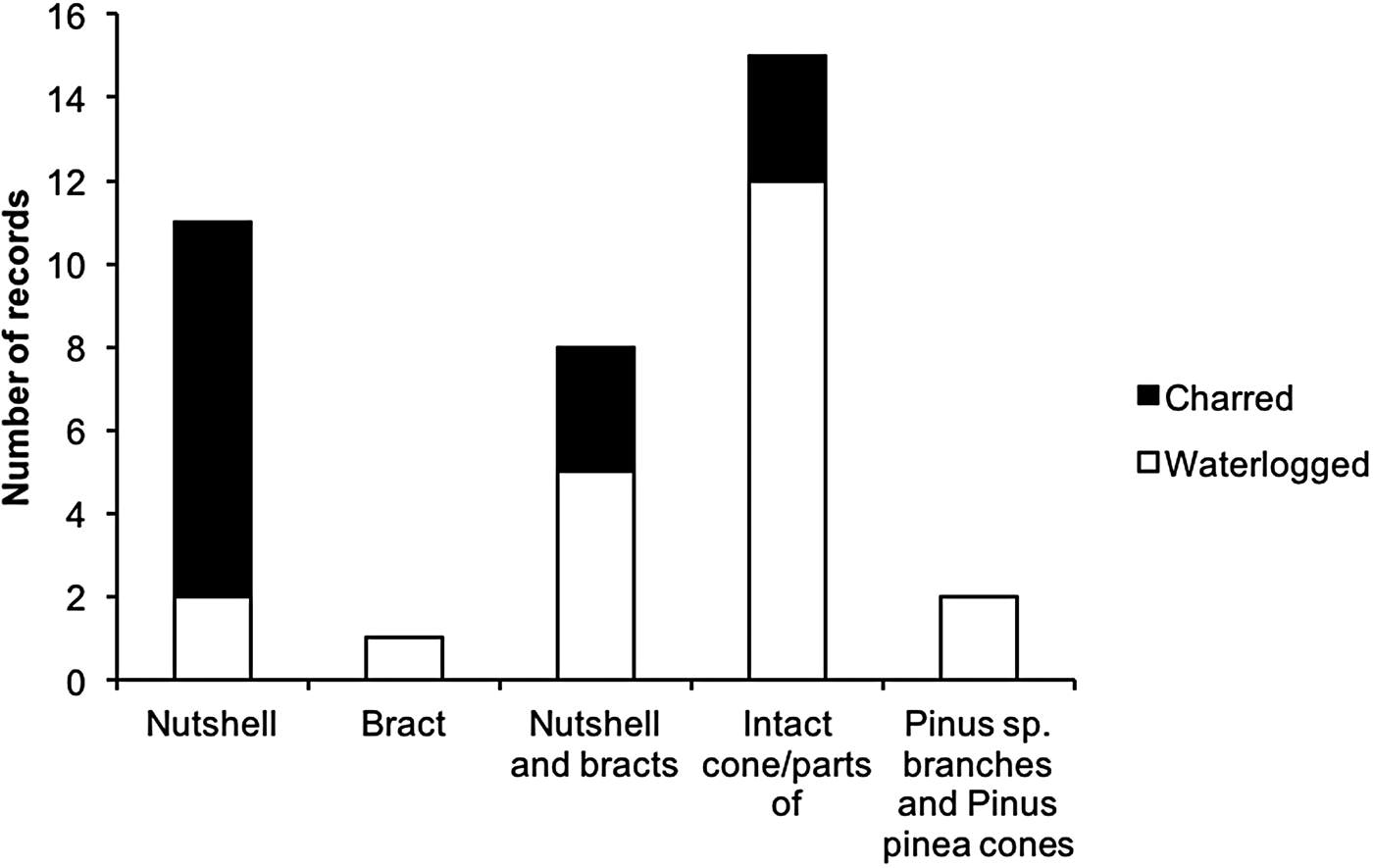
The second imported evergreen plant recorded in Roman Britain is the pine tree, variously known as the Mediterranean, stone or umbrella pine. Stone-pine is an evergreen plant native to wide areas of the Mediterranean.Footnote 55 A wealth of material culture evidence from the Roman world shows the significance of the pine-cone symbol, from hairpins, to mortuary tombstones, to fountains.Footnote 56 Furthermore, artistic evidence shows the inclusion of stone-pine alongside other ornamental garden plants in garden frescoes.Footnote 57 Pine nuts, harvested from wild forests, were a common food item in Roman cuisine, featuring in the recipes of Apicius, and the nutshells occur in refuse deposits where sampled.Footnote 58 Ritual offerings including stone-pine cones and nuts are common occurrences within public temples, household offerings and at funerary sites.Footnote 59 Indeed, recognition of the role of pine cones in ritual offerings is long established.Footnote 60 However, the extent to which stone-pine trees were cultivated beyond the Mediterranean, and their interaction with humans beyond explicit ritualised occasions, have not been investigated. Stone-pine cones and nutshell are present in 41 records from Roman Britain, of which 23 are waterlogged, 15 charred and three unspecified (fig. 6).
Distribution of stone-pine finds by part identified and preservation, where specified.

The majority of these stone-pine finds derive from the major towns (16), while many of the other site categories are located within major towns, such as the Triangular Temple at Verulamium, the Romano-Celtic temple complex at Lower Brook Street, Winchester, and the funerary site at Finsbury Circus, London. Smaller numbers of stone-pine cone remains have been recovered from villas, religious, funerary and military sites (fig. 7). The five funerary sites from which stone-pine remains have been recovered are all cremation cemeteries associated with a range of communities, from urban (Watling Street), to rural (Horcott Quarry, Mucking), to military (Doncaster). Rural finds of stone-pine consist of charred nutshell identified from roadside settlements and other rural sites in Essex, Hampshire and Kent, and whole cones from farmsteads at Chew Valley and Claydon Pike, as well as at several villas (Bancroft, Clatterford, Great Holts Farm, Lullingstone). Considering the profusion of excavated rural settlements in Roman Britain, there appears to be a genuine low presence of stone-pine in rural Britain beyond these villas and a few farmsteads.
Distribution of macrofossil finds of stone-pine by site type.

The chronological distribution of stone-pine records (fig. 8) shows that they are largely concentrated in the Middle Roman period, albeit with more Early Roman records than box. This pattern was also identified in the previous national review, which recorded Pinus pinea in 1.5 per cent of Early Roman, 3.5 per cent of Middle Roman and 2 per cent of Late Roman charred records.Footnote 61 Records from the second half of the first century are concentrated in the south-east of Britain, from the military fort at Alchester, occupation in London and Colchester, and the shrine site at Westhawk Farm, Kent. Middle Roman records are far more widespread, occurring also at rural farmsteads and villas, as well as in many records from towns and more widespread funerary and religious sites. The Late Roman records derive from three rural settlements (Fullerton villa, Newmans' End field-system and Chew Park farmstead) and sites in London. Of the broadly dated sites, some are more likely to derive from the Later Roman period (Bancroft and Low Ham villa). Stone-pine finds are more widely distributed than those of box (fig. 9), as the majority are charred records found outside of areas with waterlogged preservation. There is a particular focus of records in London and surrounding settlements with numerous sites located in Kent.
Chronological distribution of macrofossil finds of stone-pine.

Spatial distribution of macrofossil finds of stone-pine.

This review of the range of sites from which pine cone remains have been recovered shows that archaeobotanical finds of stone-pine originate from a diverse range of activities. Previous work has shown that it is not possible to identify ritualised deposition of plant items based on archaeobotanical evidence alone, as there is no correlation between the density of stone-pine remains and sites with clear sacred uses.Footnote 62 Furthermore, taphonomic details which could provide insights into the depositional pathways of pine cone remains, such as fragmentation rate, and full quantification of nutshell and bracts were rarely included in the reports reviewed here. Regardless, a broad consideration of site, artefacts and archaeobotanical remains groups sites into four main categories. The first includes those where stone-pine cones or nuts were clearly associated with funerary activity and are recovered from the fill of cremation burials. In particular, pine cone remains were found alongside distinctive assemblages of material culture at two sites.Footnote 63 At Waterdale, Doncaster, finds from a cremation cemetery associated with a nearby late first-century fort produced pine nut, olive, date, fig, grape and lentil, alongside ceramic oil lamps, glass unguentaria and amphorae. A late second-century cremation at Mucking, Essex, included an epula deposit of the remains of a ritual meal, containing pine nuts, date, hazelnuts and around ten place-settings, each including a ceramic oil lamp, coin, tazza, beaker and platter. The second category of sites are those where stone-pine remains were recovered from within an area of sacred architecture, either as an in-situ offering (Verulamium Triangular Temple) or redeposited in a nearby pit or pool (Westhawk Farm, Springhead). At the third category of sites, stone-pine cones have been recovered from features which are plausible locations of structured deposition (waterholes, wells, ditches). Examples are Clatterford villa, where a ditch to the south of the villa building produced a cone, and Claydon Pike, where a cone was recovered some distance from the main settlement area in a waterhole. Finally, at seven sites, pine nutshell fragments have been recovered from typical occupation deposits, such as hearths and refuse deposits. Examples are low-density finds of charred fragmented nutshell at Newman's End, Essex, and Springhead Roman town. Additionally, branches identified as Pinus sp. and several stone-pine cones were recovered from a ditch outside the London amphitheatre. Regardless of which category a stone-pine record may fit into, stone-pine cones were clearly being consumed in Roman Britain as food or ritualised offerings. The more interesting question, whether they were also growing in Britain, will be addressed in the next section.
NORWAY SPRUCE – Picea abies
Norway spruce, the tree most commonly used as a Christmas tree in Britain today, is the third introduced evergreen plant to be recorded in Roman Britain. Picea abies grew in central and north-east Europe during the Roman period and, as with stone-pine and box, the use of norway spruce in the Roman world ranged from providing timber for buildings and ships, to featuring alongside box in painted garden scenes.Footnote 64 Plant remains have been found at only four sites in Britain. At Rectory Field, on the north-eastern outskirts of Roman Godmanchester, an extensive farmstead and later villa settlement produced substantial evidence for an ornamental garden containing a range of introduced trees. Preliminary results include the identification of wood, leaves, twigs, cones and seeds of P. abies from the waterlogged sediments of several ponds. Wood identified from the site included yew, alder and hazel, while box leaves were also recovered; P. abies pollen was identified from other features.Footnote 65 Murphy has also stated that Pinaceae cones identified from the roadside settlement at Stonea Grange, Cambs., originally identified as Pinus sylvestris, the native tree scot's pine, were actually P. abies. Footnote 66 A possible record of needles originates from the London 1 Poultry excavations, where the same sample which contained laminated box leaves also produced cf. Pinaceae leaves.Footnote 67 Tentative evidence also comes from south-east England for the presence of P. abies, based on palynological records. At the site of Westhawk Farm, where charred stone-pine nutshells were recorded from the central pit of a shrine, P. abies pollen was recovered consistently from the upper 100 cm of a sample from a waterhole near to the shrine and was interpreted as originating from a nearby P. abies tree.Footnote 68 Indeed, Wiltshire has stated that Picea was growing more widely in south-east Britain in the Roman period. Picea pollen was recovered from the fills of a ditch dated to 100/50 b.c.–a.d. 50 from Zionhill's Copse, Hants.Footnote 69 Picea pollen was also recorded from various pollen cores from the Jubilee Line programme of excavation and coring in London. However, all occurrences of Picea are from undated cores or dated to the Iron Age. While the preservation of the Picea pollen was consistent with secure Holocene records, many of the deposits are fluvial with evidence for reworking; there is also a strong possibility of long-distance fluvial/marine transport of exotic pollen.Footnote 70
OTHER IMPORTED ORNAMENTAL PLANTS
While not specifically evergreen plants, single records of two Roman ornamental trees are significant finds and require mention here. Archaeobotanical evidence indicates that the plane tree was introduced to southern Italy in the Roman period, according to Pliny the Elder, to provide shade. Plane also had a strong connection with philosophy through its association with the Platonic Academy and it featured commonly in public and private parks. For instance, it has been suggested that plane trees lined the portico gardens of Pompey in Rome.Footnote 71 A single seed of Platanus orientalis, oriental plane, was recovered from a second-century pit alongside various food remains (including celery, coriander, cherry, plum) on the site of a high-status building on the corner of Akeman Street and the Via Devana in the small town of Cambridge.Footnote 72 However, no archaeobotanical report was provided and this record must be treated with caution.
A single fragment of laburnum wood charcoal (cf. Laburnum sp.) was identified from an Early Roman grave at Springhead, Kent. This plant has pendent racemes or long lengths of yellow flowers and, alongside a fragment of the flowering plant traveller's joy (Clematis vitalba), may represent the purposeful selection of flowering plants for a funerary associated fire.Footnote 73 Beyond these ornamental taxa, the frequency with which archaeobotanical evidence for fruit trees such as plum, cherry and apple/pear is encountered in Roman Britain has led to suggestions that these trees were cultivated by the Middle Roman period.Footnote 74
DISCUSSION
IMPORT OR CULTIVATION?
This review of archaeobotanical records for box, stone-pine and norway spruce in Roman Britain has demonstrated the presence of items originating from these trees, especially in Middle–Late Roman period London and other sites in the south-east of Britain. However, many of these items could potentially have derived from trade in plant parts rather than in-situ trees. For instance, fallow deer are represented by antler and foot bones in the Roman period of north-western Europe, suggesting the curation of these items as artefacts.Footnote 75 These two scenarios, of cultivation or import, have substantially different implications for understanding the effect of plants on people in Roman Britain.
In the case of box, some archaeobotanical examples do provide evidence of the use of box leaves and sprigs as items of material culture in burials. At Cann, box leaves were reportedly arranged in a wreath, while at Scole and Chesterford, concentrations of box leaves were reported around the chest and the skull respectively. Similarly, box leaves were found around a cremation urn at Bartlow Hills.Footnote 76 It is possible that these, and other fragments of box leaves from occupation deposits, derive from wreaths of box. Long garlands often featured in portico gardens, made from lengths of ivy, vine and smilax, while shorter garlands, wreaths and chaplets were made from scented plants, especially rose and violet, and, in the case of victory wreaths, laurel.Footnote 77 Imported plant foods, such as dates and figs, wooden artefacts and boxwood itself are known to have been traded throughout the Roman world.Footnote 78 However, the plausibility of wreaths of box leaves also being traded is here considered unlikely, as it is far more plausible that these box sprigs were from locally grown plants.
The debate over the native status of box in Britain has a long history. Godwin and, more recently, Mabey believe box to be native, citing charcoal identifications from the Neolithic site of Whitehawk Camp, Brighton, and a Flandrian pollen record from the Lake District, as well as Anglo-Saxon place-name evidence. However, the dating of the Whitehawk Camp charcoal record is considered dubious due to the presence of Castanea sativa (sweet chestnut), which is thought to be a medieval introduction.Footnote 79
A recent review of box in Europe cites single grain pollen records from three sites in Britain dated to after c. 5000 b.c., albeit supporting this limited evidence with the mortuary evidence from Roman Britain, to argue for a native status.Footnote 80 In Sussex, a single pollen grain was identified from a pollen core taken from the Caburn valley, the level dated to 7217–6939 cal bp. A pollen sequence from Stafford had a single pollen grain, interpreted as dating to the Late Iron Age/Early Roman period, and a single pollen grain was recovered from Ellerside Moss, Lancs.Footnote 81 These are all sites where local areas of steep calcareous slopes, suitable for box, were present. The Strata Florida manikin, a figurine carved from boxwood and recovered from central Wales, has also been radiocarbon dated to 43 b.c.–a.d. 67.Footnote 82 These finds indicate that there was a small established population of box in Britain. In contrast, Coates has recently suggested that box was a Roman introduction to Britain based on the co-occurrence of villa sites with place-names stemming from box, such as Boxmoor villa. They offer the interpretation that so-called native box populations in these locations resulted from the planting of box in the Roman period.Footnote 83 A recent review of the status of box in northern France has also concluded that the shrub was introduced in the Roman period.Footnote 84
Considering the spatial distribution of the box records synthesised in this paper, the site distribution is not a reflection of the underlying geology, as these settlements are not all on calcareous soils. The occurrence of box at archaeological sites in the non-calcareous areas of London, Silchester and York, as well as the Upper Thames and Ouse valleys, clearly shows that these are unlikely to be wild occurrences. However, it must be noted that calcareous soils are free draining, making the presence of waterlogged sediments and, hence, the recovery of box macrofossils very unlikely. The only finds from calcareous regions are leaves from a burial at Cann and charcoal from Westhawk Farm, Kent. While the native status of box continues to be debated, it is clear from this review of the Roman archaeobotanical data that the presence, and inferred use, of box plants on settlements is a phenomenon first recorded archaeologically in the Roman period and hence represents a major change in human relationships with box. Given the very limited presence of box prior to the Roman period, it seems plausible that at least some of the box plants growing in towns, villas and rural farmsteads were imported from the Continent rather than transplanted from the wild.
Norway spruce was present in central and north-east Europe by the Roman period, while no archaeobotanical records have been recorded in Holocene Britain before the Roman period.Footnote 85 Likewise, Pinus pinea is only native to the Mediterranean region, with no archaeobotanical records in Britain before the Roman period.Footnote 86 Positive evidence for the trade in stone-pine cones derives from the widespread occurrence of stone-pine cones and nutshells from regions beyond the native distribution of P. pinea, from the Eastern Desert of Egypt to Roman Britain. The find of 61 closed pine cones from a first-century b.c. shipwreck recovered off the coast of Toulon, southern France, provides direct evidence for their trade.Footnote 87 A Roman pottery shop at Colchester, destroyed during Boudica's rebellion in a.d. 60/61, produced evidence for various imported foods (lentils, figs, anise) as well as 27 nutshells and nine bracts, showing the early import of pine nuts to Roman Britain.Footnote 88 Kernels can survive for a long time within unopened nuts, while the extra transport costs of transporting unopened pine cones as opposed to extracted nuts is sizeable.Footnote 89 Hence, the recovery of pine cone bracts and intact, unopened cones strongly suggests that whole cones were purposefully imported. It is also possible that some pine cones were imported as plugs within wine amphorae. A shipwreck discovered at Albenga in Italy contained several wine amphorae sealed with pine cones. Columella suggested that the pine cones may also have been used to perfume and conserve the wine.Footnote 90 However, the more common materials used as amphora stoppers were cork, ceramic discs and wood.Footnote 91
The vast majority of archaeobotanical records are only of pine cones with no needles or wood and, given the evidence presented in the previous paragraph, all are likely to have been imported. There are, though, two exceptions. At the Guildhall amphitheatre, London, branches identified as Pinus sp. were recorded as lining a ditch located outside the eastern entranceway of the amphitheatre. Several pine cones were recovered from the base of the ditch. The branches appeared to have been freshly cut, with branchlets and bark still attached, suggesting that a pine tree was growing locally and that the branches may have been prunings from this tree.Footnote 92 Considering the rareness of stone-pine cones and pine branches, it seems highly likely that these items derive from the same single stone-pine tree. The second site is Clatterford Roman villa on the Isle of Wight, where a stone-pine cone was recovered from a ditch to the south of the main villa building dating to the late third–early fourth century; Pinus sp. pollen was also recorded in samples from a trench to the south-east of the villa from a late third-century peat layer.Footnote 93 Scot's pine (Pinus sylvestris) is considered to be absent from southern Britain at this point, but the pollen could have conceivably been transported long distance by wind or trapped in the pine cone.Footnote 94 Elsewhere, the frequency with which stone-pine remains have been recovered in Kent, an area of calcareous soils suitable for stone-pine trees, has been held as good evidence for the presence of stone-pine trees in the Roman period.Footnote 95 The presence of a charred pine nutshell in an early fifth-century hearth at Fullerton villa,Footnote 96 in the Test valley, is intriguing given the substantial decrease in trade in this period. Beyond the specific example of the London amphitheatre, it is currently unclear to what extent stone-pine trees would have been encountered in Roman Britain.
THE MEANING OF EVERGREEN PLANTS
The evidence for the presence of introduced evergreen plants in Roman Britain, both in part and in their entirety, leads to the questions of what were the meanings of these plants and why were the plants and plant items imported. The abundant evidence for pine cones in the material culture record provides numerous inferences to their meaning. Stone-pine cones are clearly associated with mourning and the afterlife.Footnote 97 They occur on numerous mortuary monuments, including tombstones at Brough, Cumbria, and Overborough, Lancs., as well as carved in limestone from within a walled cemetery in Roman Southwark.Footnote 98 Pine cones are also strongly linked with regeneration and water, occurring commonly as finials on fountains well into the medieval period. This trend begins in the Roman period, most iconically on the Fontana della Pigna in the Vatican City, but also on a bronze water fountain from Pompeii.Footnote 99 Pine cones also have clear associations with numerous deities, featuring as incense in Mithraic rituals. The pine tree is central to the myth of Attis and Cybele, with pine cones featuring on a bronze figurine of Attis from London, on a pine branch held in a bronze hand from a Romano-Celtic temple at Hockwold-cum-Wilton on the fen edge, and on a pine tree depicted on an altar of Cybele from London. The Triangular Temple in Verulamium, where charred pine remains were recovered, has also been associated with Cybele. Pine cones also feature on copper-alloy hands linked to the god Sabazios, while Silvanus is often depicted with pine cones or fruit within a mantle.Footnote 100 Pine cones also feature occasionally in scenes of religious offerings, such as on a relief from Rome dedicated to Claudius Gothicus, on a third-century altar from Rome, or in the lararium painting at the Caupona of Euxinus, Pompeii.Footnote 101
Box leaves feature less explicitly in religious life in the Roman world and do not appear as a common symbol or motif. The literary mentions of box clearly depict the plant's use in high-status ornamental gardens in Italy. Pliny the Elder describes in detail how to take cuttings of box for topiary bushes, while Pliny the Younger's description of his own garden layout has box hedges separating paths. In fact, the selection of box as an ornamental garden plant has been attributed largely to its suitability for topiary. While box does feature in fresco garden scenes, such as at the Villa of Livia, box was a native shrub of Italy. Unlike trees such as cherry, plane and citrus, it does not feature in the discussion of botanical imperialism whereby new species and varieties were introduced to Italy following military victories, sometimes explicitly featuring in military triumphs and being planted in public horti and the homes of the wealthy.Footnote 102 Boxwood is considered to have been a synonym for paleness. Box sprigs are used in the modern period as grave decoration and at funerals, while in France box is associated with immortality and eternity.Footnote 103 The cultivation of box shrubs in Roman Britain has been seen as a general indicator of an élite strategy of adopting ‘Roman’ status symbols,Footnote 104 yet the broader associations with mortality, combined with the mortuary evidence from Roman Britain, show that the shrub had a more diverse range of meanings.
Beyond explicit religious and literary associations, a broader range of evidence highlights the significance of evergreen plants in the past. Molecular analysis of resinous substances recovered from Late Roman ‘package’ burials across Britain has identified the presence of exotic resins including Pistachia sp. (mastic/terebinth), Boswellia sp. (frankincense/olibanum) and Pinaceae resins.Footnote 105 More broadly, the presence of ornamental gardens of exotic plants, alongside the evidence for game parks, has been interpreted as an association of the exotic with the sacred.Footnote 106 Evergreen shrubs have also been argued as having been sacred in the Iron Age. For example, a statue of a leader from the Glauberg, Hesse, had a headdress of the parasitic evergreen shrub mistletoe, while Pliny the Elder comments that mistletoe was sacred to Gaulish druids. The occurrence of holly and mistletoe alongside quernstone fragments, shoes and writing-tablets in wells has been suggested as significant, due to the occurrence of these plants in the gut contents of Lindow Man, found in late first-century b.c. to second-century a.d. Cheshire.Footnote 107 There is clearly a wide range of deities and meanings associated with evergreen plants, precluding the establishment of any single meaning from the recovery of plant remains. Furthermore, material culture studies have shown that an object has no inherent single meaning, but rather meanings are historically situated and are contingent upon interactions with events and people, which in turn varies depending upon a wide range of factors such as status, age and gender.Footnote 108 In order to investigate the significance of introduced evergreen plants and pine cones in Roman Britain, it is perhaps more useful to consider how these trees and objects affected human experience, rather than what they meant or why they were grown.
DETECTING THE PLANTY AGENCY OF BOX
The review of archaeobotanical evidence for the presence of introduced evergreen plants in Roman Britain has clearly demonstrated that some people, living in towns, villas and rural farmsteads, were dwelling alongside box plants, while a very limited number of people were living alongside the entirely new plants stone-pine and norway spruce. Recent work in the areas of cultural geography and anthropology has both encouraged a change in how we perceive the agency of plants in relation to humans and presented a range of characteristics of plants which can be considered within an archaeological context. These developments closely parallel studies within the developing field of classical multi-sensory studies, which have considered the olfactory aspects of plants.Footnote 109 Propositions for the active agency of plants in relationship to humans stem from philosophical considerations of how plants have been sidelined in Western thought, advances in identifying how plants are reactive and affective organisms within chemistry and biology, and the use of the relational approach stemming from the object-focused studies inspired by the works of Latour and Gell to consider all people, objects and animals as being related, to the extent that ‘objects and animals are actively involved in the processes of our world’.Footnote 110 Applying such relational approaches to plant remains has recently been conceived as ‘plant materiality’, but applications of these approaches have so far been limited.Footnote 111 Nearly a decade ago, Jones and Cloke argued for the need to be serious in the application of materiality to nature and, more recently, Head et al. have stated that: ‘Attention to the specific capacities of plants is important to understand the specifics of relationality and distributed agency in human-plant encounters’.Footnote 112 To do so, it is necessary to highlight particular material characteristics of plants which can be applied to archaeobotanical material.
Within the field of human-plant studies, several features of plants have been shown as key to affecting humans in some way. Here it will be demonstrated that these can be usefully applied to archaeobotanical material. Indeed, a major advantage of applying relational approaches to plant remains is that we can easily move from the species identification of a plant macrofossil, to having a fairly accurate understanding of the vibrancy the source plant had in its past life in terms of colour, temporality, smell, tactility and growth structure. Although it must be emphasised that attempts to detect planty agency are still developing, that is the effect of unique characteristics of plants on people,Footnote 113 here the factors of visual appearance, smell, physicality and temporality are considered in relation to archaeological evidence for imported evergreen plants. The visual appearance of plants within gardens is highlighted in ethnographic studies of gardeners in Britain, for instance Hitchings’ ethnographic work on allotments which showed that people became attached to plants with perceived greater aesthetic qualities.Footnote 114 Pitt focused on observations of the visual aspects of plants through time-lapse photography within community gardens to detect changes in the growth of seedlings and changes in foliage and flowers, which alerted her to planty agencies.Footnote 115
While not prominent within cultural geography, olfactory senses have received focus within classical multi-sensory studies. Smell is a pervasive sense which freely enters the body. The reception of smell is specific to individuals and cultures, yet techniques such as sensory maps have proved useful in considering the organisation of urban societies and the quality of life of the inhabitants.Footnote 116 Recently, Draycott has highlighted how evergreen plants, such as box, as opposed to deciduous plants, would smell all-year round.Footnote 117 The physical aspects of plants, that is their growth habit and form of reproduction, have also been shown to affect the formation of human-plant relationships. For instance, the selection of plants on pedestrian streets in Paris affected how people inhabited these streets, changing them from places of movement to places of dwelling.Footnote 118 Binding these aspects of plant materiality together is the temporality of plants, notably considered by Ingold, allowing us to consider how daily, seasonal and annual rhythms of plants affect humans and bind them up within the life of a plant. For example, a recent study of Australian vineyard workers encapsulated how the ‘ecological temporalities’ of plants, namely temporal changes in smell, colour and fruiting time, strongly affected the labour patterns and emotions of workers.Footnote 119
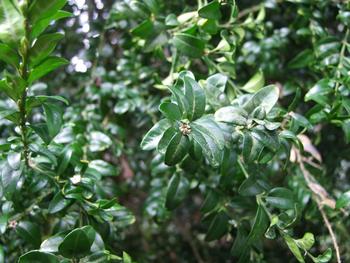
Considering these aspects of the most widely occurring plant, box, we can gain insights into how box would have contrasted with the wider flora of Britain and the effects this might have had on people. Box has glossy green leaves (fig. 10), which remain on the shrub throughout the year. Small white flowers appear in the spring, but the shrub has largely the same appearance year round. Box has a highly distinctive smell, described by Mabey as ‘malodorous’,Footnote 120 due to the presence of certain phenolic compounds, the production of which subtly varies with season.Footnote 121 Box shrubs are slow growing, but long lived, and can be grown easily from small cuttings. Plants typically reach up to 5 m tall, with dense foliage and toxic leaves unpalatable to herbivores.Footnote 122 Unifying these aspects is the temporality of box shrubs. Their appearance remains the same throughout the annual cycle, in contrast to the majority of deciduous plants in Britain. Furthermore, the long life-span of box means we can see shrubs as permanent fixtures in the lives of humans, in the same way that the temporality of Ingold's pear-tree is ‘consonant with that of human dwelling’.Footnote 123 Several evergreen plants were native to Britain: holly, yew and juniper, and scot's pine surviving in Scotland. The evergreen nature of these plants means that they represent the same ecological temporality as box. However, box differs by being more compact in its growth habit, non-edible to animals and a new occurrence in most areas of Roman Britain. While the archaeobotanical record of these native evergreen plants has not been interrogated, the argument for box as a Roman introduction presented in this paper, combined with the evidence for this shrub being present within settlements, shows that new human-plant relationships would have been experienced.
Image showing the leaves and flower buds of a box shrub.

Keeping these planty agencies in mind, the box shrub, which can be considered to have been growing on the edge of a busy road through Roman London at 1 Poultry, can be seen as acting as a physical barrier between a private property and a public thoroughfare;Footnote 124 a boundary which would not be damaged by animals and would provide both a physical and visual barrier between public and private property. Yet the distinctive visual and olfactory aspects of box, which contrast strongly with other native flora in Britain, would mean that this area of town had a distinctive multi-sensory landscape in comparison with other parts, while also encouraging people to dwell within the space and consider the novelty of a plant rarely encountered. The differing temporalities of box would mean that the sense of time and dwelling within the world would subtly differ between those urban inhabitants and visitors to London, Silchester and York, who were experiencing this plant on a daily basis, and the inhabitants of rural Roman Britain. Box has been recorded at five villas, as well as Fishbourne, and only four farmsteads, which given the far larger number of farmsteads studied archaeobotanically than villas, shows a contrast also between the ecological temporality of high-status villa dwellers and farmers. Where box has been recorded at farmsteads, the presence of leaves and fruit fragments at Farmoor and Claydon Pike suggests the plants were perhaps not managed as they were at the many urban and villa sites where only leaves are recorded, while the most common interaction of farmers with the natural world might have lessened the contrast between the temporality of box and that of the few native evergreen plants. Not only would urban and high-status villa dwellers no longer be included in the cycles of agricultural time, they would be encountering a new plant which obscures temporal changes between the seasons.
This section has followed material-culture studies by extending relationality to plants and considering physical characteristics of box as aspects of plant materiality. However, to truly advance the study of the Roman world, we need to consider what is distinctive about what plants did, as opposed to what material culture such as terra sigillata, or lamps, or brooches did. The key aspects of plant materiality that have been highlighted — temporality and smell — are on the basis that a plant is a living being, grounded in the ecological world. While plants could be translocated across the Roman world for a range of human motivations, once planted in the ground they created a new ecological niche, becoming enmeshed in the soil and the ecosystem. Following this train of thought, we can advance that plants did two key things. First, they changed the local environment, in terms of biodiversity, soil characteristics, insects and animals. Being tethered to the spot, plants would have affected the daily experience of thousands of people, in contrast to the personal relationships of individuals with portable material culture. The changes that plants made to the lived environment of the settlement would thus have affected the way the wider community experienced the world, as well as factors of health and well-being. The second point is that by being a living life form, box also became part of the living legacy of Roman Britain. Box became increasing common through the Roman period (fig. 4) and made a long-term contribution to the vegetation communities and landscape of the island.Footnote 125
RITUALISED DEPOSITION AND SENSORY EXPERIENCE
In the case of stone-pine cones, it is possible to consider the sensorial aspects of ritualised activities due to the recovery of the in-situ remains of offerings from several temples in Roman Britain. Whole stone-pine cones and pre-prepared stone-pine cone incense were being used within burnt offerings. Further to the considerations above of the experience of smell within urban space, Hamilakis has written on the sensory experience within Mycenaean sanctuaries, whereby the marked sensory experiences of burning flesh within dark enclosed spaces would have produced a strong and unified experience for those participating in the ceremonies.Footnote 126 Smellscapes would be very variable and affected by a myriad of local conditions, such as wind and architecture.Footnote 127 The distribution of the smell of burning pine cones thus would have been affected by the condition and quantity of pine cones, how they were burnt, where the offering took place and, above all, the lived experience of the individual making the offering. The consideration of the sensorial aspects of pine-cone smells does, though, increase our understanding of the effects of offerings in past places.
While the burning of plant material and wood occurred on a daily basis in Roman Britain, in the hearth, corn-drier or hypocaust, offerings of stone-pine cones would have produced a distinct sensory experience. Pine trees are considered to have been absent from southern Britain by at least 2000 b.c.,Footnote 128 and stone-pine cones were rare imports. Stone-pine cones have a distinctive smell due to the presence of the compounds limonene and α-pinene.Footnote 129 Where spatial evidence is available, records show that the remains of offerings containing stone-pine cones occurred within closed spaces, for instance in the Triangular Temple at Verulamium and at the Carrawburgh Mithraeum. At the first of these, charred pine cone remains were deposited within various pits within the temple, while at the Carrawburgh Mithraeum they were buried beneath new altars, or, in the case of pre-prepared pine cones, stored in an enclosed bunker.Footnote 130 These patterns indicate that the sensory experience of offering pine cones would have been restricted to the individuals visiting the temple, perhaps within a few hours. Beyond the strong and exotic smell, the visual aspects of flickering light produced by burning stone-pine cones would also heighten the sensory experience. In contrast, offerings made at the military enclosure at Orton's Pasture, Staffs., were conducted in the open; here we can imagine the smell from at least one burning pine cone drifting over the wider military camp.Footnote 131 Intriguingly, the deposition of the charred pine cone remains took place within a pit where layers of sand separated individual offerings. Once the strong multi-sensory aspects of the offering were experienced, the smell was soon closed off.
EVERGREEN PLANTS BEYOND BRITAIN
The archaeobotanically well-studied province of Britannia has been the focus of this article, but evergreen plants were also being encountered in ornamental gardens and ritual activities across the Roman world. Examples are presented here which indicate the range of locations in which ornamental plants have been recorded.Footnote 132 From Italy, a growing body of archaeobotanical data is beginning to provide evidence against which that of frescoes and literary evidence can be compared. At Modena, on the southern edge of the Po valley, box pollen has been identified from the Ex cinema capitol site, while waterlogged plant remains of cypress (Cupressus sempervirens), myrtle (Myrtus), plane (Platanus) and yew (Taxus) have been identified from the site of a Roman domus.Footnote 133 In Sicily, the presence of box shrubs has been suggested at the Greco-Roman theatre at Taormina, albeit the Buxus pollen was identified from undated pollen cores.Footnote 134 Plant macrofossils of box are also known from France and Germany. Excavations at a rural nucleated settlement at La Queue de Rivecourt, in the north-east of the Paris basin, recovered leaves and a seed of box, as well as an intact pine cone from a large pit near to some small private baths. This finding was reported as only the second find of box in France and was interpreted as evidence of a box shrub growing nearby.Footnote 135 In Germany, box leaves, seeds and pollen were identified from a villa at Wiesweiler in the middle Rhine region.Footnote 136 In Cologne, waterlogged box leaves have been recovered from a borehole sample in an area beyond the Roman town walls on the west bank of the Rhine, dated to the first/second century, while there are also unpublished finds from Xanten.Footnote 137
Archaeobotanical evidence for Pinus pinea in Europe corresponds with the evidence from Britain of pine cones being used in both ritualised and culinary contexts. The most recent summary of central Europe, which reported Pinus pinea remains in fewer than ten sites out of a database of 400, includes finds from both domestic contexts at the villa at Worb-Sunnhalde, Switzerland, and Vindonissa and from temple contexts in Mainz, Empel and Nijmegen.Footnote 138 Subsequently, the identification of Pinus pinea nutshell and cones has been reported from wider areas of Europe. In Rome, stone-pine cones were recovered from the fountain of Anna Perenna, alongside offerings of curse tablets, oil lamps and lead containers with figurines.Footnote 139 Pinus pinea remains have also been recovered from the east of the Empire, from settlements in Bulgaria, including the necropolis at Apolonia and the fort of Abritus, in Croatia at Veli Brijun, in Caesarea harbour, Israel, and from Quseir al-Qadim, Egypt.Footnote 140 A full review is beyond the scope of this paper, but it is clear that stone-pine cones were being traded throughout the Roman world. Unlike box, there is no known evidence for the ornamental planting of pine trees in Europe beyond their native distribution.
CONCLUSIONS
This synthesis of archaeobotanical data from a Roman province, which has benefited from intensive archaeobotanical investigation, has shown that the movement of ornamental plants into the north-western provinces was occurring in parallel with the movement of fruit and nut trees. There is widespread evidence for the cultivation of box, with the strong likelihood that some shrubs were introduced from the Continent, while box became a common feature in towns from the second century onwards. Norway spruce trees were introduced to Roman Britain on a small scale and there is debatable evidence for the cultivation of stone-pine trees in London. While stone-pine and, to a lesser extent, box have varied strands of meaning, drawn from literary and artefactual evidence, a consideration of plant materiality, that is the visual, olfactory and temporal aspects of these evergreen shrubs, has provided new insights into how they affected the experience of life for those encountering them in towns and in temples. We can never know what people experienced in the past, sensory reception being socially situated, but by starting from the point of known physical characteristics of plants, we can at least explore the variation in certain sensory experiences. The consideration of plants as vibrant living beings could also contribute in the future to numerous strands of study, including globalisation studies, the articulation of social status, funerary activities and the manipulation of the built environment, as well as long-term ecological studies, which currently overlook the introduction of evergreen plants.Footnote 141
The long-term impact of these plants in Britain is variable. Unlike stone-pine and norway spruce, populations of box shrubs are known from written evidence from the Domesday period and are now considered a native aspect of British flora. In order to more fully evaluate the changing human-plant relationships, biomolecular methods, namely DNA, will be required to establish the origins of present and past populations of box in Britain. There is growing evidence for the cultivation of introduced evergreen plants elsewhere in the Roman world, hence the continued application of archaeobotanical methods is vital to allow the evidence from Britain to be evaluated more broadly. It is hoped that the archaeobotanical evidence presented here will inform the discussions based upon the literary, artistic and architectural evidence for plant introductions to and from Italy. Much work within the Roman world over the last decade has focused on demonstrating the material agency of objects. It is perhaps time to give more consideration to the living beings in the Roman world.
APPENDIX TABLE 1. RECORDS OF BOX MACROFOSSILS IN ROMAN BRITAIN
APPENDIX TABLE 2. RECORDS OF STONE-PINE MACROFOSSILS IN ROMAN BRITAIN
ACKNOWLEDGEMENTS
This paper draws on ideas developed over several years and developed through several papers given within RAC/TRAC and TAG conference sessions. I am grateful for those who supplied data and references (Gill Campbell, Dana Challinor, Thomas Derrick, Hella Eckardt, Mark Robinson, Dan Young) and to those who discussed the potentials for plant agency in archaeology and Roman gardens (Ben Geary, Annalisa Marzano, James Morris, Suzi Richer). I am grateful to Michael Fulford for comments on the text and to the two anonymous reviewers for their stimulating comments. All faults remain my own.