



Depressive disorders are prevalent and disabling mental conditions that significantly affect global health.1 In recent decades, the incidence of depressive disorders has risen, affecting approximately 332 million individuals worldwide.2 However, high-quality epidemiological evidence on the burden of depressive disorders remains limited in many regions. The 2021 Global Burden of Disease study (GBD) offers a comprehensive analysis perspective, using the latest epidemiological data and methods to generate population-level health indicators for depressive disorders. Although there are valuable findings from existing research, further cross-national comparisons are needed because of the methodological heterogeneity and lack of a global overview. For instance, Ferrari and colleagues used GBD 2010 data to estimate the burden of depressive disorders by country, gender, age and year, focusing solely on disability-adjusted life-years (DALYs), but without addressing incidence, prevalence rates or the relationship with socioeconomic development.Reference Ferrari, Charlson, Norman, Patten, Freedman and Murray3 Similarly, a study using GBD 2017 data analysed depressive disorder burden in Brazil, but lacked a global, regional and national analysis.Reference Bonadiman, Malta, de Azeredo Passos, Naghavi and Melo4 Other studies have focused on specific populations, such as women, limiting the scope of their findings.Reference Gao, Cao, Liu, Yang and Liu5 Recently, the GBD 2021 estimated that depressive disorders accounted for 56.3 million DALYs globally (1.9% of total DALYs), including major depressive disorder and dysthymia,6 but these findings were only reported as an abstract, leaving a gap for a comprehensive global burden analysis of depressive disorders and attributable factors.
To provide further epidemiological evidence, track the progress of disease management and assist in developing targeted prevention and control strategies, a comprehensive analysis of the depressive disorder burden is necessary. Accordingly, this study used the latest GBD 2021 data to report on global, regional and national incidence, prevalence and DALYs, along with their underlying causes by age, gender and sociodemographic index (SDI), from 1990 to 2021.
Method
Overview
The GBD 2021 offers an in-depth assessment of health detriments associated with 371 diseases, injuries and impairments, along with 88 risk factors, across 204 countries and territories, including subnational estimates for 21 regions from 1990 to 2021.7 Supported by over 11 500 collaborators from 164 countries, GBD 2021 synthesises data from a wide range of sources, including surveys, censuses, vital statistics and other health-related sources. These data sources are used to estimate morbidity, illness and injury, and attributable risk, for 204 countries and territories from 1990 to 2021.8 We extracted and utilised repeated cross-sectional data, including numbers and age-standardised rates with the 95% uncertainty intervals (UIs), on incidence, prevalence and DALYs by gender, age, region and country for depressive disorders since 1990, and DALYs attributable to different risk factors through the Global Health Data Exchange query tool (https://vizhub.healthdata.org/gbd-results/). Details of the disease model can be found in the GBD 2021 methods appendices (https://www.healthdata.org/gbd/methods-appendices-2021).
Case definition and data source
In GBD 2021, depressive disorders were categorised into two categories according to the DSM-IV-TR or ICD-10 criteria,9,10 including major depressive disorders (DSM-IV-TR: 296.21–24, 296.31–34; ICD-10: F32.0–9, F33.0–9) and dysthymia (DSM-IV-TR: 300.4, ICD-10: F34.1), excluding cases caused by general medical conditions or substance-induced cases. According to DSM-IV-TR criteria, major depressive disorders require at least one episode of either a depressed mood or loss of interest/pleasure daily for at least 2 weeks, significantly affecting functioning. Dysthymia is characterised by a chronically depressed mood for most of the day, lasting at least 2 years in adults or 1 year in children and adolescents.
Data sources were obtained through a three-stage epidemiological systematic literature review, including searches of peer-reviewed databases, grey literature and expert consultation. Disease Modelling Meta-Regression (DisMod-MR) 2.1, a Bayesian meta-regression model, was used to model the epidemiological data for depressive disorders. Detailed information on disorder-specific modelling, output and sensitivity analyses has been published previously.8
Estimation of disease burden
In 2021, a comprehensive assessment was conducted to quantify the burden of depressive disorders, encompassing incidence, prevalence and DALYs. Additionally, the study delved into the demographic variables influencing the impact of depressive disorders, examining the distribution of the disease burden across age groups, SDI and genders. The burden of incidence, prevalence and DALYs during the study period were evaluated by age-standardised incidence rate (ASIR), age-standardised prevalence rate (ASPR), age-standardised DALY rate (ASDR) and estimated annual percentage change (EAPC) since 1990.
The SDI is closely related to depressive disorders,Reference Hong, Liu, Gao, Jin, Shi and Liang11 and we obtained the data-set online (https://ghdx.healthdata.org/gbd-2021). As a comprehensive indicator measuring a country's per capita income, education years and fertility status, it ranges from 0 to 1, with higher values indicating greater social and economic development. The relationship between the burden of depressive disorders and SDI for the 21 regions and 204 countries and territories was examined using smoothing splines models. We calculated the expected values considering the SDI and rates across all locations. Locally weighted scatterplot smoothing and Spearman correlation were used to estimate the R indices and P-values for the association between age-standardised rate with SDI.Reference Fu, Tian, Wang, Lu, Bian and Zhang12
The calculation method for EAPC involves using the year as the independent variable and fitting a log-linear regression model to the natural logarithm of the age-standardised rate (ASR) trend: y = a + bx + e, where y = ln(ASR), x = calendar year, a = intercept and e = error. EAPC = (exp(b) − 1) × 100, with 95% confidence intervals obtained from a linear regression model.Reference Yang, Lodder, Huang, Liu, Fu and Guo13 Thus, the ASR trend is regarded as declining when the upper limit of the EAPC 95% confidence interval is <0, and increasing when the lower limit of the EAPC 95% confidence interval is >0.
Decomposition analysis
To quantify the drivers of changes in the cases of depressive disorders, we conducted a decomposition analysis to examine what extent the forces of ageing, population growth and epidemiologic changes shaped depressive disorder epidemiology over the past decades. In the current study, we employed the decomposition method developed by Das Gupta.Reference Das Gupta14 For disease burden, the effect obtained from decomposition analysis represents the impact of a change in a certain factor on indicator changes when the year changes and other drivers remain unchanged. The sum of the effects of each driver should exactly equal the total change in this indicator.
Estimation of attributable risk factors
In GBD 2021, we included the following causes for depressive disorders: behavioral factors, bullying victimisation, childhood maltreatment, childhood sexual abuse and intimate partner violence. We also reported the proportion of DALYs attributable to each depressive disorder risk factor.
Statistical analysis
The incidence, prevalence and DALYs were represented as projections for per 100 000 individuals, along with their 95% uncertainty intervals. We also calculated and presented EAPCs with their 95% confidence intervals. All analyses and visualisations were performed using R software (version 4.3.3) for Windows.
Ethical approval
Ethical approval and consent to participate was not required for this study, as it used publicly available aggregate data. No patients were involved in setting the research question, outcome measures or in the study's design and implementation.
Results
Global level
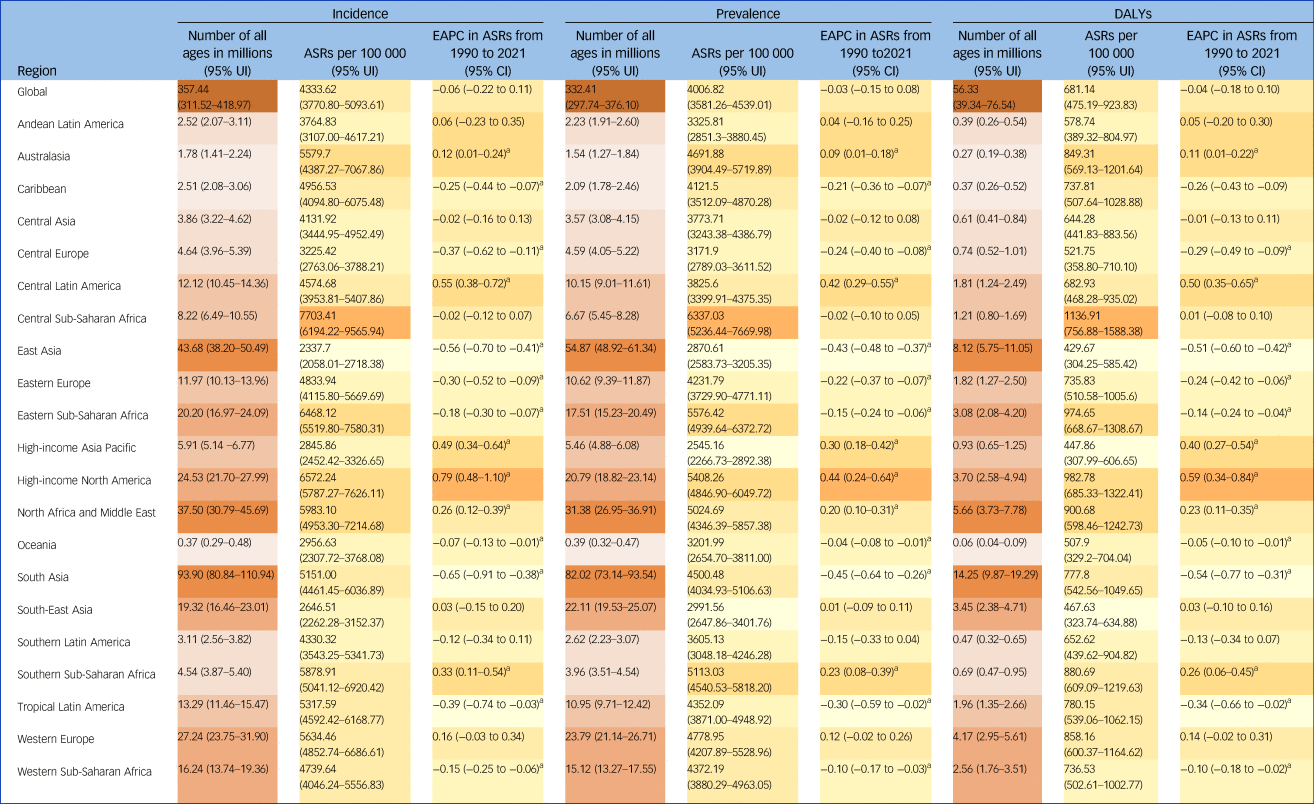
Globally, there were 357.44 million incident cases of depressive disorders in 2021, with an ASIR of 4333.62 per 100 000 persons, decreasing by 0.06% per year since 1990 (Table 1). Moreover, 332.41 million prevalent cases were reported, with an ASPR of 4006.82 per 100 000 persons, showing an average decrease of 0.03% annually (Table 1). The global DALYs attributable to depressive disorders in 2021 reached 56.33 million, with an ASDR of 681.14 per 100 000 persons, decreasing by 0.04% per year since 1990 (Table 1).
Incidence, prevalence and disability-adjusted life-years for depressive disorders in 2021, and estimated annual percentage changes in age-standardised rates per 100 000 persons, by the Global Burden of Disease region, from 1990 to 2021

Coloured keys indicate ranking for all regions. Number of all ages:  , with the 95% UI. ASRs in 2021:
 , with the 95% UI. EAPC in ASRs from 1990 to 2021:
 , with the 95% CI. EAPC is expressed as 95% CIs. DALY, disability-adjusted life-year; UI, uncertainty interval; ASR, age-standardised rate; EAPC, estimated annual percentage change; CI, confidence interval.
a. Indicates a significant increase or decrease.
Regional level
In 2021, Central Sub-Saharan Africa (7703.41), high-income North America (6572.24) and Eastern Sub-Saharan Africa (6468.12) had the highest ASIR for depressive disorders, whereas East Asia (2337.70), South-East Asia (2646.51) and high-income Asia Pacific (2845.86) had the lowest (Table 1). Central Sub-Saharan Africa (6337.03), Eastern Sub-Saharan Africa (5576.42) and high-income North America (5408.26) had the highest ASPR, whereas high-income Asia Pacific (2545.16), East Asia (2870.61) and South-East Asia (2991.56) had the lowest (Table 1). In terms of ASDR, Central Sub-Saharan Africa (1136.91), high-income North America (982.78) and Eastern Sub-Saharan Africa (974.65) reported the highest rates, whereas East Asia (429.67), high-income Asia Pacific (447.86) and South-East Asia (467.63) had the lowest (Table 1). Supplementary Figs 1–3, available at https://doi.org/10.1192/bjp.2024.266, show the ASIR, ASPR and ASDR by gender, for all regions in 2021.
During the period from 1990 to 2021, the largest increases in the EAPC of ASIR were observed in high-income North America (0.79%), Central Latin America (0.55%) and high-income Asia Pacific (0.49%), whereas South Asia (−0.65%), East Asia (−0.56%) and Tropical Latin America (−0.39%) experienced the largest decreases (Table 1). In the same period, the EAPCs of ASPR and ASDR showed a similar ranking of highest and lowest values (Table 1). Supplementary Figs 4–6 show the EAPCs of ASIR, ASPR and ASDR for depressive disorders by gender, respectively.
The incident cases of depressive disorders increased from 185.52 million in 1990 to 357.44 million in 2021. South Asia, East Asia and Western Europe had the highest incident cases in 2021, with North Africa and the Middle East ranking next (Supplementary Table 1). The prevalent cases increased from 176.33 million in 1990 to 332.41 million in 2021, with South Asia, East Asia and North Africa and the Middle East having the highest (Supplementary Table 2). The DALYs attributable to depressive disorders increased from 29.67 million in 1990 to 56.33 million in 2021, with the highest number in South Asia, East Asia and North Africa and the Middle East (Supplementary Table 3).
National level
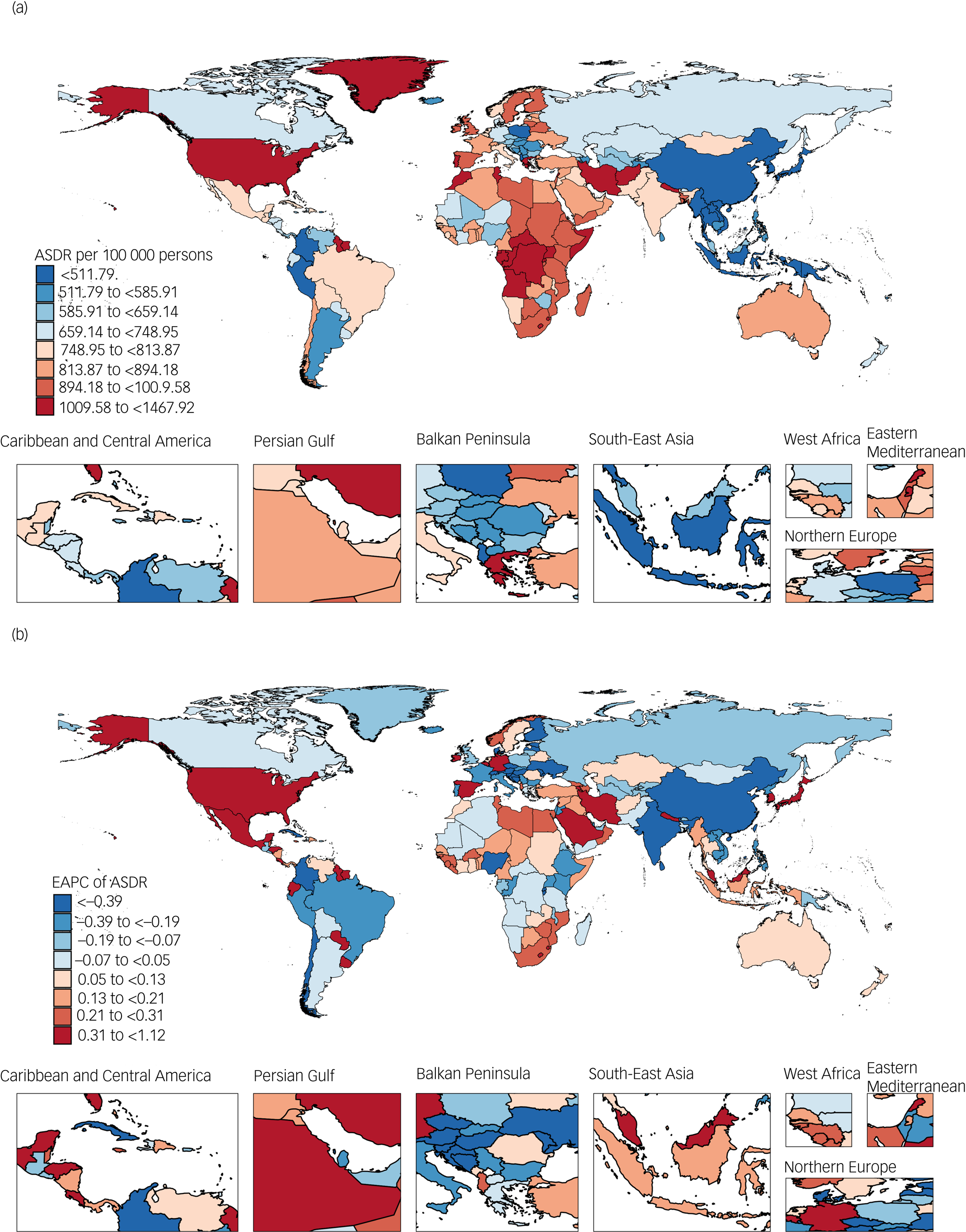
In 2021, the national ASIR of depressive disorders ranged from 1868.65 to 9885.55 per 100 000 persons. Greenland (9885.55), Uganda (9644.06) and Palestine (9361.05) had the highest ASIR, whereas Brunei Darussalam (1868.65), Taiwan (Province of China) (2032.37) and Myanmar (2067.69) had the lowest (Supplementary Fig. 7, Supplementary Table 4). The national ASPR ranged from 1857.73 to 7669.97 per 100 000 persons, with Uganda (7769.97), Greenland (7686.01) and Lesotho (7439.42) having the highest, and Brunei Darussalam (1857.73), Singapore (2750.56) and Republic of Korea (2420.46) having the lowest (Supplementary Fig. 8, Supplementary Table 5). The national ASDR ranged from 306.29 to 1467.92 per 100 000 persons, with the highest in Greenland (1467.92), Uganda (1419.57) and Palestine (1375.14), and the lowest in Brunei Darussalam (306.29), Myanmar (387.26) and Taiwan (Province of China) (389.89) (Fig. 1(a), Supplementary Table 6).
The (a) age-standardised DALY rate (ASDR) per 100 000 persons in 2021 and (b) estimated annual percentage changes (EAPCs) in the age-standardised DALY rate from 1990 to 2021, by 204 countries and territories. ASDR, age-standardised DALY rate; DALY, disability-adjusted life-year; EAPC, estimated annual percentage change.

From 1990 to 2021, Spain (1.26%), Mexico (1.05%) and the USA (0.85%) had the largest increases in EAPC of ASIR, whereas Singapore (−1.65%), Estonia (−1.11%) and the Maldives (−1.03%) had the largest decreases (Supplementary Fig. 9, Supplementary Table 4). During the same period, Spain (0.95%), Mexico (0.81%) and Uruguay (0.65%) had the largest increases in EAPC of ASPR, whereas the largest decreases were found in Singapore (−1.37%), Estonia (−0.88%) and Cuba (−0.82%) (Supplementary Fig. 10, Supplementary Table 5). For ASDR, Spain (1.12%), Mexico (0.96%) and Uruguay (0.75%) had the largest increases, whereas Singapore (−1.53%), Estonia (−1.01%) and Cuba (−0.95%) had the largest decreases (Fig. 1(b), Supplementary Table 6).
Age and gender patterns
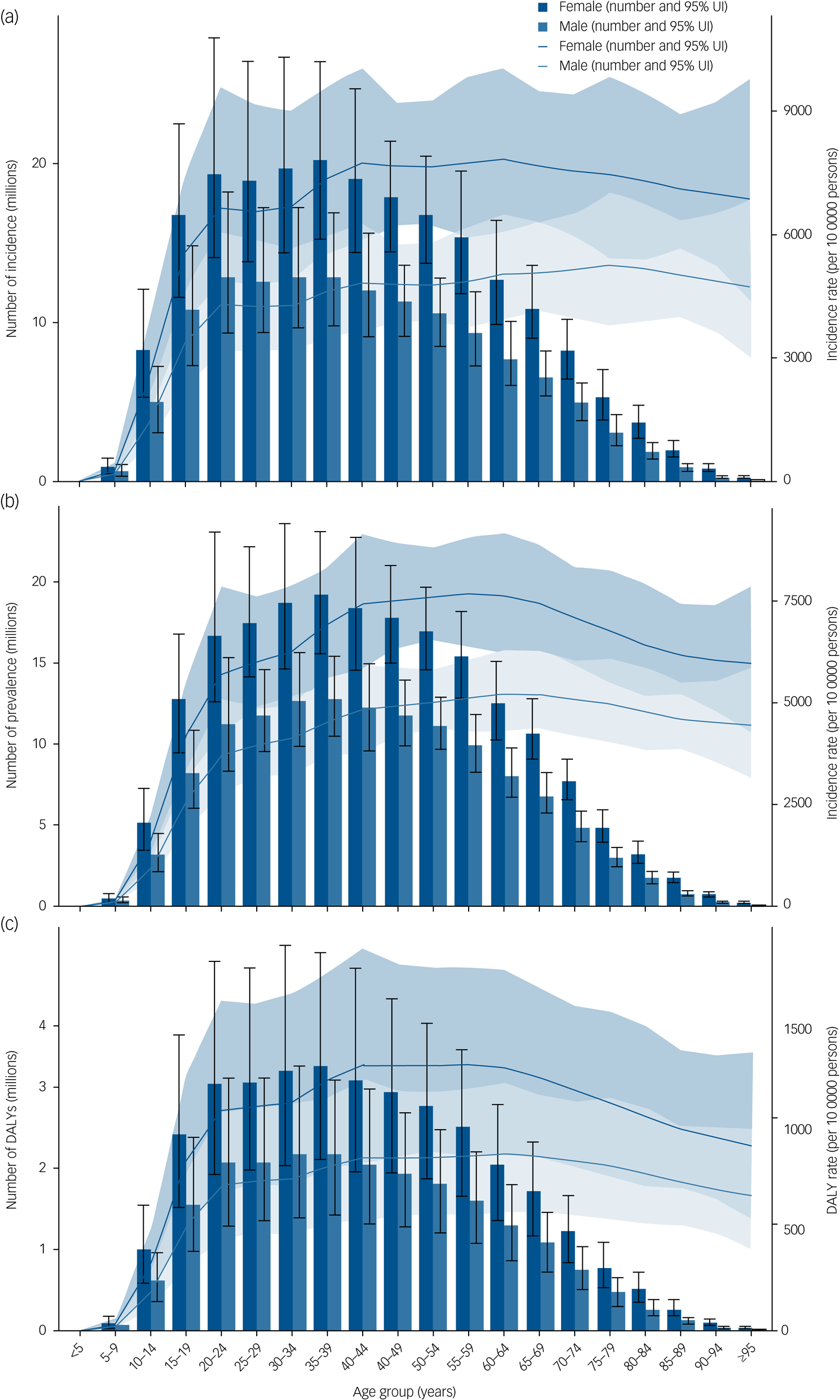
In 2021, the global incidence rates of depressive disorders increased, starting from the 5–9 year age group, peaking in the 60–64 year age group and then decreasing. The highest number of incident cases was observed in the 35–39 year age group, decreasing with age. Both the number and incidence of depressive disorders were higher in women across all age groups (Fig. 2(a)). The global prevalence rates also peaked in the 60–64 year age group, with women peaking in the 55–59 age group and men in the 60–64 age group, though women had higher rates overall. For both genders, the number of prevalent cases of depressive disorders was highest in the 35–39 year age group but then decreased with increasing age (Fig. 2(b)). The DALY rates attributable to depressive disorders worldwide peaked in the 60–64 year age group and decreased with age. For women, DALY rates were highest in the 55–59 year age group, whereas for men, rates peaked in the 60–64 year age group, with women having higher rates across all age groups. The number of DALYs peaked in the 35–39 year age group and decreased with age (Fig. 2(c)).
(a) Global incidence, (b) prevalence and (c) DALYs of depressive disorders by age and gender in 2021. Lines indicate cases with 95% uncertainty intervals for both men and women. DALY, disability-adjusted life-year.

Association with the SDI
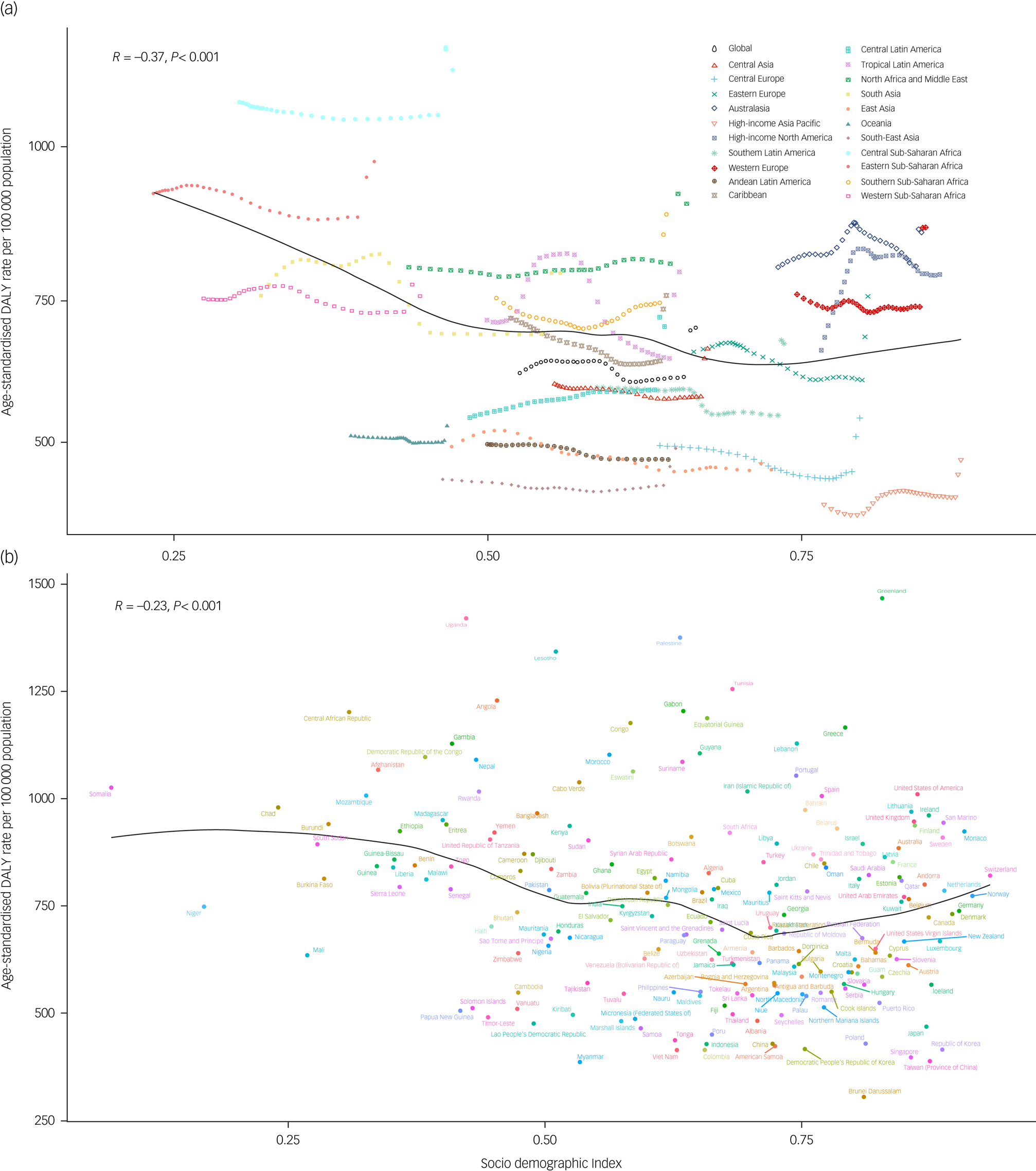
Regionally, we found a roughly U-shaped association between the SDI and ASDR from 1990 to 2021. As the SDI increased, the ASDR showed a decreasing trend up to an SDI of about 0.71, before increasing again. Central Sub-Saharan Africa, North Africa, the Middle East and Australasia had much higher than expected ASDRs based on their SDI since 1990. In contrast, Oceania, South-East Asia and high-income Asia Pacific had much lower than expected ASDRs (Fig. 3(a)). Similar patterns were observed for ASIRs and ASPRs (Supplementary Figs 11 and 12).
The age-standardised DALY rate of depressive disorders for (a) global burden of disease regions from 1990 to 2021 and (b) 204 countries and territories in 2021, by SDI. Expected values based on the SDI and disease rates in all locations are shown as the black line. Each point indicates the observed age-standardised DALY rate for each location. DALY, disability-adjusted life-year; SDI, sociodemographic index.

Nationally, in 2021, the ASDR of depressive disorders decreased with increasing SDI up to a value of about 0.71, and then increased. Uganda, Greenland and Lesotho had much higher than expected burdens, whereas Brunei Darussalam, Taiwan (Province of China) and Myanmar had much lower than expected burdens (Fig. 3(b)). Similar patterns were observed for ASIRs and ASPRs (Supplementary Figs 11 and 12).
Decomposition analysis
Globally, population growth, epidemiological changes and ageing contributed 66.57, 20.35 and 13.08%, respectively, to the global increase in depressive disorder DALYs from 1990 to 2021 (Supplementary Fig. 13, Supplementary Table 7). Regionally, population growth had the greatest impact in Western Sub-Saharan Africa (100.50%), Australasia (92.63%) and Central Sub-Saharan Africa (92.23%). Epidemiological changes were the main driver in Eastern Europe (90.84%), high-income North America (60.87%) and high-income Asia Pacific (60.29%), whereas ageing contributed most in Central Europe (85.43%), Eastern Europe (60.27%) and East Asia (58.82%) (Supplementary Fig. 13, Supplementary Table 7). These patterns were consistent across genders and were similar for depressive disorder incidence and prevalence (Supplementary Figs 14 and 15, Supplementary Tables 8 and 9). Decomposition analysis for 204 countries and territories is detailed in Supplementary Tables 10–12.
Risk factors
The proportion of DALYs caused by depressive disorders attributed to behavioral factors varies across GBD regions. Globally, childhood maltreatment (8.91%) contributed most to DALYs caused by depressive disorders (Supplementary Fig. 16). By gender, females had the highest proportion in intimate partner violence (8.13%), whereas males had the highest in childhood sexual abuse (11.54%). Supplementary Figs 17 and 18 show the proportion of DALYs attributable to depressive disorders caused by behavioral factors for men and women, respectively.
The proportion of DALYs attributable to depressive disorders caused by behavioral factors also varied by age group, peaking in the 15–19 year age group and decreasing with advancing age. Bullying victimisation was highest in the 15–19 year age group, but disappeared after the 50–54 year age group. Childhood maltreatment peaked in the 10–14 year age group, childhood sexual abuse in the 40–44 year age group and intimate partner violence in the 45–49 year age group (Supplementary Fig. 19). Proportions by age groups and gender are presented in Supplementary Figs 20 and 21.
Discussion
Principal findings
This study reported the burden of depressive disorders and attributable factors at the global, regional and national levels, based on GBD 2021 data. In 2021, depressive disorders accounted for 357.44 million incident cases, 332.41 million prevalent cases and 56.33 million DALYs worldwide. The absolute numbers of incident cases, prevalent cases and DALYs have increased since 1990, likely driven by population ageing and population growth, and increased life expectancy. Moreover, the ASIR, ASPR and ASDR have increased over time, likely influenced by socioeconomic changes, urbanisation and environmental stressors.Reference Ribeiro, Bauer, Andrade, York-Smith, Pan and Pingani15–Reference Obradovich, Migliorini, Paulus and Rahwan17 Despite a slight annual decrease in ASIR, ASPR and ASDR from 1990 to 2021, depressive disorders continue to present a significant global health burden.
Comparison with other studies
A study in 2022 reported that global age-standardised DALYs for depressive disorders in 2019 were 577.75 per 100 000 persons, with a decreasing trend from 1990 to 2019.Reference Yang, Lodder, Huang, Liu, Fu and Guo13 Our study found that in 2021, the global age-standardised DALYs for depressive disorders were 681.14 per 100 000 persons, with an average annual decrease of 0.04% since 1990. The differences may be attributed to the time intervals and methodologies used in the studies. Additionally, a recent study reported that depressive disorders resulted in 56.3 million DALYs globally, equivalent to 1.9% of total DALYs, but this was only presented as an abstract supplement without a full paper, and did not include in-depth analysis by regional or national level.6 Another study reported a 0.26% annual decrease in the ASIR of depression from 1990 to 2019,Reference Liu, He, Yang, Feng, Zhao and Lyu18 differing from our 0.06% finding. This discrepancy may be because of differences in study periods, especially as our analysis includes the COVID-19 pandemic, which likely affected depression rates. Although direct comparisons are challenging, our findings are consistent with the reported increase in both the absolute number and age-standardised DALYs for depressive disorders.
In 2021, the burden of depressive disorders was highest in South Asia, which was driven by several factors. Socioeconomic conditions, high population density and poverty in countries like India, Pakistan, Bangladesh and Nepal, are strongly linked to mental health, with economic hardships leading to increased stress and depression.Reference Smith and Mazure19 Cultural stigmatised of mental health often results in individuals concealing their symptoms, which delays or prevents treatment.Reference Rathod, Pinninti, Irfan, Gorczynski, Rathod and Gega20 Additionally, South Asia face a severe shortage and uneven distribution of mental health services, lacking qualified professionals and adequate treatment facilities. Moreover, environmental factors, such as natural disasters and climate change, also significantly affect mental health, contributing to the region's high burden of depressive disorders.Reference Obradovich, Migliorini, Paulus and Rahwan17 The region frequently experiences natural calamities, such as floods and earthquakes, which pose immediate threats to life and property and have lasting effects on mental health.
In our study, we presented ASIRs, ASPRs and ASDRs for depressive disorders across 204 countries and territories in 2021, along with EAPCs since 1990. This enabled a comparative analysis of depressive disorder burden among nations. However, since only a few countries had actual national data on depressive disorder burden, most findings rely on the Bayesian meta-regression model DisMod-MR 2.1.21 Additionally, differences in the definition and perception of depressive disorders across countries, influenced by varying cultural backgrounds, could skew time trends and cross-national comparisons. Consequently, country-level estimates should be interpreted with caution. We encourage the inclusion of depressive disorder data in national health surveys to ensure more representative data, which would strengthen future GBD studies, improve monitoring and aid in developing targeted prevention and treatment strategies. Implementing this strategy will require more coordinated global efforts.
The report shows that Greenland has the highest burden of depressive disorders, and the following aspects may explain this phenomenon. Greenland's socioeconomic challenges, including a declining working-age population and limited economic opportunities in rural areas, increase stress and anxiety, contributing to higher depressive disorder rates.22 The small, dispersed population of Greenland results in social isolation, a known risk factor for depressive disorders, and limited access to mental health services exacerbates the situation.Reference Christiansen, Qualter, Friis, Pedersen, Lund and Andersen23 Additionally, the extreme climate and environmental conditions, including long periods of darkness in winter and physical isolation, further contribute to mental health stressors, such as seasonal affective disorder, thereby increasing overall rates of depressive disorders.Reference Poppel, Kruse, Glomsrød, Duhaime and Aslaksen24 However, cultural differences in the definition and perception of depressive disorders across countries can also influence diagnosis and reporting, potentially skewing time trends and complicating cross-national comparisons.
Globally, the burden of depressive disorders is higher in women than men across all age groups, a difference substantiated by numerous studies. This difference is the result of a complex interplay of social, psychological and biological factors.Reference Chen, Feng, Li, Li, Wang and Zheng25 Socially, women are more likely to face gender-related stressors, including family responsibilities, workplace stress, gender discrimination and violence (such as intimate partner violence), which are notable risk factors for depressive disorders.Reference Li, Zhang, Cai, Zheng, Pang and Lou26 Biologically, women are more susceptible to hormonal fluctuations, like those during menopause, and differences in brain structure and stress response may further explain the gender disparity.Reference Qian, Li and Ren27 Psychologically, women tend to internalise emotions when dealing with life events and stress, making them more prone to depressive disorders,Reference Kuehner28 whereas men are more likely to externalise emotions, often manifesting as irritability or aggression.Reference Ferrari, Charlson, Norman, Patten, Freedman and Murray3 Hence, these gender differences should be considered in the development of mental health policies and intervention strategies.
Previous research indicated a potential U-shaped relationship between SDI and depressive disorder incidence,Reference Xu, Li, Hu, He, Zhang and Jin29 with higher rates in countries with low and high SDI, and lower rates in those with middle SDI, consistent with our findings. Although high SDI countries have higher educational and income levels, they often face fast-paced lifestyles, intense competition and high expectations, leading to frustration and depressive disorders.Reference Whiteford, Degenhardt, Rehm, Baxter, Ferrari and Erskine30 Moreover, weaker social connections and inadequate family and community support systems in these regions can increase loneliness and psychological stress.Reference Cacioppo and Cacioppo31 Urbanisation and industrialisation also add environmental pressures and lifestyle changes, negatively affecting mental health through pollution, noise and overcrowding, disrupting social networks and exacerbating mental health issues.Reference Khan32 Additionally, the work environment, including job strain and lack of support, has been identified as a significant contributor to the onset and exacerbation of depression.Reference Sultan-Taïeb, Villeneuve, Chastang and Niedhammer33 Conversely, low SDI regions face economic challenges such as high unemployment and poverty, which are significant risk factors for depressive disorders.Reference Kim, Servino, Bircher, Feist, Rdesinski and Dukhovny34 Inadequate mental healthcare systems in these areas may further hinder timely and effective treatment, contributing to high depressive disorder incidence rates.
The decomposition analysis indicates that although depressive disorder cases have significantly increased worldwide, the age-standardised rates have not risen substantially, and the EAPC shows a declining trend. This suggests that the growing burden of depressive disorders is primarily driven by population growth rather than an actual increase in incidence rates. The United Nations World Population Prospects report confirms that the global population continues to grow. Although the age-standardised rates are relatively stable or declining, the absolute number of cases is still rising.35 Additionally, an ageing population has contributed to the increase in cases, as older adults are more susceptible to depressive disorders due to factors such as physical health issues, decreased social support and other age-related pressures.36 This trend highlights the need to account for population dynamics in interpreting public health data interpretation, and to develop strategies that address the rising number of depressive disorder cases. Expanding mental health services and implementing preventive measures are essential for managing this growing burden.
Recent findings from the GBD 2019 underscore the substantial impact of childhood maltreatment on DALYs related to depressive disorders,Reference Yang, Lv, Kong, Chu, Li and Lu37 consistent with our result. Childhood maltreatment, including physical, emotional and sexual abuse, as well as neglect, disrupts emotional and cognitive development, increasing the risk of depressive disorders later in life.Reference Lippard and Nemeroff38 Notably, our study also reveals gender-specific patterns: women are particularly affected by intimate partner violence during childhood. Previous studies have shown that such violence often leads to chronic psychological trauma and an increased risk of depressive disorders in women.Reference Chandan, Thomas, Bradbury-Jones, Russell, Bandyopadhyay and Nirantharakumar39 For men, childhood sexual abuse is a leading cause of depressive disorders, with social stigma and underreporting of male victimisation exacerbating psychological harm and resulting in long-term mental health consequences. These findings highlight the need for gender-sensitive prevention and intervention strategies to reduce the global burden of depressive disorders.
Strengths and limitations of current study
To our knowledge, this is the first study to comprehensively analyse the burden of depressive disorders by using the extensive GBD 2021 data, enabling a detailed examination of global, regional and national trends. However, some limitations should be noted. The coverage of mental health data, particularly in low- and middle-income countries, is limited, potentially affecting accuracy, as GBD data rely on modelling that may underestimate the true burden. Low healthcare levels in some countries may lead to missed or misdiagnosed cases of depressive disorder, further contributing to data uncertainty. Conversely, there could also be overestimation issues in other types of countries because of differences in healthcare systems and reporting practices. Additionally, cultural differences in the definitions and perceptions of depression across countries could distort time trends and cross-national comparisons. Moreover, combining major depressive disorder and dysthymia in our analysis may overlook important epidemiological differences, as well as challenges associated with dysthymia's detection and underdiagnosis,Reference Schramm, Klein, Elsaesser, Furukawa and Domschke40 complicating the interpretation of results. Finally, the national-level focus of GBD data restricts subnational burden analysis. Despite these limitations, our study provides the most up-to-date estimates on the burden of depressive disorders and attributable factors, providing a scientific basis for global mental health policy development.
Policy implications
Depressive disorders represent a significant global public health challenge, incurring substantial healthcare and economic costs. Although the EAPCs in incidence, prevalence and DALY rates have decreased, the absolute number of cases and the age-standardised rates for incidence, prevalence and DALYs continue to rise. With population growth and an ageing population, depressive disorders are expected to become an even greater problem in the future. The global, regional and national burden of depressive disorders, along with attributable factors, provides a foundation for more precise projections of future disease burdens. These insights are crucial for policy makers to strategize control initiatives and allocate resources effectively, to meet the rising healthcare demands posed by depressive disorders.
Supplementary material
Supplementary material is available online at https://doi.org/10.1192/bjp.2024.266
Data availability
All data used in this study can be freely accessed at the Global Health Data Exchange (GHDx) query tool (https://vizhub.healthdata.org/gbd-results/).
Acknowledgements
We would like to thank the staff of the Institute for Health Metrics and Evaluation and its collaborators who prepared these publicly available data.
Author contributions
J.R. designed the study. J.R. and X.W. analysed the data and performed the statistical analyses. J.R. drafted the initial manuscript. P.C. and D.L. contributed to the interpretation of the results and critical revision of the manuscript for important intellectual content. All authors supervised and approved the final version of the manuscript. The corresponding author (D.Z.) attests that all listed authors meet authorship criteria and that no others meeting the criteria have been omitted.
Funding
This study was supported by the Anhui Province Natural Science Foundation (grant number 2208085MH194), Natural Science Research Project of Anhui Universities (grant number KJ2021ZD0028), Research Fund of Anhui Institute of Translational Medicine (grant number 2021zhyx-c67) and Research Fund Project of Anhui Medical University (grant number 2023xkj295). The funders had no role in the design of the study, the collection, analysis and interpretation of data or writing of the manuscript.
Declaration of interest
None.




eLetters
No eLetters have been published for this article.