Introduction
The current obesity epidemic has provided a strong impetus for research aimed at investigating the neurobiological basis of overeating. Mesocorticolimbic dopamine circuits are critically involved in motivated behavior. With cell bodies originating in the ventral tegmental area (VTA) and projecting to various regions including the nucleus accumbens (NAc), caudate putamen, amygdala, and prefrontal cortex,Reference Beier, Steinberg and DeLoach 1 dopamine neurons have long been studied in the context of motivation and drug addiction, as all drugs of abuse share the ability to stimulate dopamine neurotransmission.Reference Di Chiara and Imperato 2 Recently, dopamine circuits have emerged as an important mediator of food intake and overeating, and thus represent an ideal target for the development of drug therapies aimed at curbing overeating. The goal of the present review is to compare changes in mesolimbic dopamine function in human obesity with diet-induced obesity in rodents. Additionally, we will review the literature to determine if dopamine signaling is altered with binge eating disorder in humans or binge eating modeled in rodents. Finally, we assess modulation of dopamine neurons by neuropeptides and peripheral peptidergic signals occurring with obesity or binge eating. Obesity and binge eating represent 2 types of overeating, and both pathologies reveal significant alterations in dopamine function. Contrasting the similarities and differences in dopamine function between the two might provide important insights into these pathophysiological states. In the Diagnostic and Statistical Manual of Mental Disorders, Fifth Edition (DSM-5),Reference Call, Walsh and Attia 3 binge eating disorder (BED) is defined as “recurring episodes of eating significantly more food in a short period of time than most people would eat under similar circumstances, with episodes marked by feelings of lack of control.” Similar to humans, rodent obesity is defined as increased weight and adipose tissue compared to controls and often co-occurring with acquired insulin resistance and hyperleptinemia.Reference Woods, Seeley, Rushing, D’Alessio and Tso 4 In the first part of this review, we will contrast dopamine function in obesity and BED, with an emphasis on dopamine metabolism in striatal regions, the activity of the dopamine transporter, the main uptake mechanism of dopamine in the striatum, and the dopamine D2 receptor. In the second section, we will discuss how the hormonal and neuropeptide profiles observed in obesity and binge eating might explain the differences and similarities in dopamine function observed in the first section of the review.
Contrasting Mesolimbic Dopamine Function in Obesity and Binge Eating Disorder
Dopamine metabolism
Both human and animal studies demonstrate that striatal responses are altered in diet-induced obesity. In human studies, the direction of these effects is inconsistent. For example, functional magnetic resonance imaging (fMRI) studies using human obese subjects have demonstrated blunted striatal responses to the receipt of palatable foodsReference Stice, Spoor, Bohon and Small 5 – Reference Green, Jacobson, Haase and Murphy 7 and a cue predicting sucrose,Reference Frank, Reynolds and Shott 8 but increased striatal responses to visual palatable food stimuli.Reference Martin, Holsen and Chambers 9 – Reference Stoeckel, Kim, Weller, Cox, Cook and Horwitz 11 Based on these divergent findings, Carnell et al Reference Carnell, Gibson, Benson, Ochner and Geliebter 12 have proposed a “dynamic” model of striatal modulation in obesity with hypersensitivity to visual stimuli and hyposensitivity to the consumption of food reward. The rodent literature reveals more consistent results, with most studies showing blunted striatal dopamine in diet-induced obesity. Most studies use a 60% high fat diet or a cafeteria diet to induce obesity in rats or mice. However, there is considerable variability in the duration and onset of the exposure to the test diet. For the purposes of this review, only experiments using long-term dietary manipulations (minimum of 6 weeks) and demonstrating significant weight gain will be discussed. Diet-induced obesity is associated with decreased tyrosine hydroxylase (TH) expression, the rate-limiting factor in the synthesis of dopamine in dopamine-relevant brain regions.Reference Li, South, Han, Chen, Wang and Huang 13 – Reference Ahmed, Kashem, Sarker, Ahmed, Hargreaves and McGregor 15 Furthermore, blunted striatal dopamine concentrations in diet-induced obesity have been described using several techniques, including total dopamine concentrations and/or dopamine turnover in the striatum in brain punches,Reference Davis, Tracy and Schurdak 16 , Reference Zhang, Wei, Wang, Wang, Zhang and Zhang 17 decreased extracellular concentrations measured with microdialysis,Reference Hansen, Jensen, Overgaard, Weikop and Mikkelsen 18 , Reference Geiger, Haburcak, Avena, Moyer, Hoebel and Pothos 19 and decreased evoked release with electrochemistry.Reference Hansen, Jensen, Overgaard, Weikop and Mikkelsen 18 Only one study revealed an increase in nucleus accumbens dopamine measured with microdialysis in obesity prone rats on an 8-week high fat diet.Reference Narayanaswami, Thompson, Cassis, Bardo and Dwoskin 20 Taken together, in rodent models of diet-induced obesity, there is a decrease in striatal dopamine concentration.
A limited number of studies have measured dopamine concentration in subjects with binge eating disorder. An interesting study conducted by Wang et al Reference Wang, Geliebter and Volkow 21 found that food stimuli and the administration of methylphenidate (a weak, long-acting catecholamine transporter inhibitor) induced a significant increase in striatal dopamine in obese binge eaters but not in obese subjects without binge eating disorder. This study suggests that dopamine tone is elevated in binge eating disorder. Elevated striatal dopamine tone has also been observed in animal models of binge eating, including rats given intermittent access to 10% sucrose and chow followed by 12 hours of food restrictionReference Rada, Avena and Hoebel 22 and in rats on a restricted feeding schedule with access to sucrose or water followed 2 hours later by chow.Reference Hajnal and Norgren 23 It is important to note that in these animal studies, periods of food restriction are used to induce bingeing behavior. A large body of evidence indicates that food restriction and weight loss augment dopamine tone (reviewed in CarrReference Carr 24 ), limiting our ability to make conclusions about dopamine tone enhancement in these bingeing models. While c-fos activation in VTA TH positive neurons has been observed with an intermittent access to high fat diet model of binge eating that does not require food restriction,Reference Valdivia, Cornejo, Reynaldo, De Francesco and Perello 25 dopamine metabolism in animal models of bingeing without food restriction has not been measured. Taken together, preliminary evidence suggests that diet-induced obesity and binge eating may have different effects on dopamine concentration in the NAc, such that dopamine concentration is decreased in obesity, but likely increased with binge eating. Further studies are required to determine if this difference is due to a degree of adiposity associated with obesity and not binge eating, or if there are other factors underlying this difference.
D2 receptors
Most studies examining the relationship between human obesity and dopamine D2 (and D4) receptor availability have revealed a decrease in D2 receptor availability in obesity,Reference de Weijer, van de Giessen and van Amelsvoort 26 – Reference Wang, Volkow and Logan 28 although increased availability has also been reported in fasted obese subjects.Reference Dunn, Kessler and Feurer 29 One important caveat with some of the human literature is that raclopride, which is used in positron emission tomography (PET) studies, has lower affinity for the D2 receptor than dopamine.Reference Kung, Pan and Kung 30 Thus, conditions with high dopamine concentration would appear as low D2 receptor binding. However, other studies using fallypride have also demonstrated decreased D2 receptor availability obese subjects.Reference Guo, Simmons, Herscovitch, Martin and Hall 31 An important question is what is the underlying cause of decreased D2 receptor availability in obesity? For example, overconsumption leading to obesity may induce decreased D2, genetic differences in expression of D2 receptor leading to increased susceptibility of weight gain, or both factors may occur together. Variants in the Taq1A allele of the ANKK1 gene (neighboring the 3′ untranslated region of the DRD2 gene)Reference Fossella, Green and Fan 32 are associated with decreased D2 receptor expression.Reference Ritchie and Noble 33 Some studies have observed positive correlations between the TaqIA allele with body mass index,Reference Roth, Hinney, Schur, Elfers and Reinehr 34 , Reference Thomas, Critchley, Tomlinson, Cockram and Chan 35 while others have failed to observe this correlation.Reference Southon, Walder and Sanigorski 36 Additionally, the DRD4-L allele has also been associated with higher body mass index (BMI) in humans, including individuals with bulimia nervosa.Reference Kaplan, Levitan, Yilmaz, Davis, Tharmalingam and Kennedy 37 Taken together, high BMI is associated with decreased D2 receptor availability in the striatum. However, it is important to consider the metabolic state of the individual (fasted or sated) when they are being assessed, and whether obesity induces decreased D2 receptor function or if this is a trait that infers susceptibility to obesity.
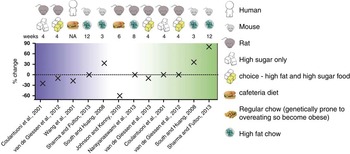
In rodents, studies examining the effects of diet-induced obesity on D2 receptor expression have yielded mixed results. High-fat feeding and cafeteria feeding have been shown to reduceReference Johnson and Kenny 38 – Reference Colantuoni, Schwenker and McCarthy 40 and increaseReference Huang, Yu, Zavitsanou, Han and Storlien 41 – Reference Sharma and Fulton 43 striatal D2 receptor expression. Putative reasons for differences include the availability of choice,Reference van de Giessen, la Fleur, de Bruin, van den Brink and Booij 44 the macronutrient composition of the diet,Reference van de Giessen, la Fleur, Eggels, de Bruin, van den Brink and Booij 45 and the method employed to measure D2 receptor expression. In an attempt to identify important factors, we mapped out differences in D2 receptor expression across different studies (mostly focusing on animal studies and receptor expression, not mRNA) and identified the region of the striatum examined (ventral vs. dorsal), the species (rat vs. mouse), the type of diet, and the length of diet exposure. However, as observed in Figure 1, obesity does not predict alterations in D2 receptor expression. One important caveat with many of these studies is that antibodies for D2 receptors are generally not selective, and many of these studies did not show controls for D2 antibody selectivity. Thus, more studies using more selective methods to measure D2 receptor expression or function are needed to clarify how the development of diet-induced obesity impacts striatal D2 receptors.
Dopamine D2 expression in diet-induced obesity. Variations in the effects of diet composition and duration on D2 receptors expression (% of experimental control group in each study) in subregions of the striatum (purple: dorsal striatum, green: ventral striatum, white: unspecified). Some studies report more than one subregion and are thus, represented for each subregion.

The association between the expression and function of striatal D2 receptors and binge eating behavior has received very little attention in the literature. In a study comparing the genotypes of obese individuals with and without binge eating disorder, Davis et al Reference Davis, Levitan and Reid 46 report that binge eating is associated with increased frequency of a gain of function allele (A2 homozygosity) in the dopamine D2 receptor gene. Furthermore, in rodents, bingeing on sugar is associated with a significant decrease in D2 receptor binding.Reference Colantuoni, Schwenker and McCarthy 40 , Reference Bello, Lucas and Hajnal 47 Thus, future studies are required to assess if binge eating is associated with alterations in D2 receptor expression or function.
The dopamine transporter (DAT)
Animal studies have reported alterations in DAT expression and function in diet-induced obesity, although human studies have yet to reveal consistent effects. Thomsen et al Reference Thomsen, Ziebell, Jensen, da Cuhna-Bang, Knudsen and Pinborg 48 observed no correlation between body mass index and striatal DAT availability in the striatum, caudate nucleus, and putamen and no significant group difference between obese and severely obese and normal weight controls. Similarly, in a study of 123 participants, the authors report no association between BMI and striatal DAT availability.Reference van de Giessen, Hesse and Caan 49 However, low striatal DAT levels were associated with elevated BMI in 50 human participants using single-photon emission computed tomography (SPECT).Reference Chen, Yang and Yeh 50 Mixed results were obtained in animal models of obesity. Cone et al Reference Cone, Chartoff, Potter, Ebner and Roitman 51 report a deficit in the rate of dopamine uptake by the DAT in rats exposed to a high-fat diet for 6 weeks but no change in mRNA. It is important to note that the rats did not develop obesity in this study. Likewise, South et al Reference South and Huang 42 and Narayanaswami et al Reference Narayanaswami, Thompson, Cassis, Bardo and Dwoskin 20 report a reduction in DAT expression in obese rodents. Importantly, many of these studies use a variety of types and duration of diets to induce obesity, and a few measure hyperleptinemia or insulin resistance. Given that both leptin and insulin can also modulate DAT expression and function,Reference Perry, Leinninger and Chen 52 , Reference Mebel, Wong, Dong and Borgland 53 it is important to consider the metabolic state of the animal in these experiments. Furthermore, a recent study by Hryhorczuk et al Reference Hryhorczuk, Florea and Rodaros 54 demonstrates that the type of dietary fat is an important determinant of DAT function, as exposure to saturated fat, but not monounsaturated fat, induced significant reductions in DAT expression. Taken together, in rodents, obesity, leptin, insulin, and saturated fat can modulate DAT number or function. In human studies, there is no consistent effect of DAT availability in obese subjects.
The relationship between binge eating disorder and DAT has exclusively been examined in studies aimed at identifying genetic polymorphisms in dopamine transporter genes. To date, one polymorphism for DAT has been identified. In the 3′ untranslated region of the dopamine transporter gene (DAT1), the frequency of a short allele was significantly higher in a cohort of Japanese women with BED, and this polymorphism has been associated with lower DAT function.Reference Shinohara, Mizushima and Hirano 55 However, a Canadian study failed to replicate these findings.Reference Davis, Levitan and Kaplan 56 In an animal model of bingeing, restricted feeding with scheduled sucrose access resulted in an upregulation of the rat DAT.Reference Bello, Sweigart, Lakoski, Norgren and Hajnal 57 Taken together, binge eating may be associated with increased dopamine reuptake.
Conclusions
Deficits in dopamine function observed in humans and animals have led to the “reward deficiency” hypothesis of obesity,Reference Blum, Sheridan and Wood 58 which proposes that reduced dopamine tone leads to overeating as an attempt to restore striatal dopamine concentrations. However, it is important to also consider dopamine’s role in energy expenditure, such that decreased dopamine function may simply reduce movement and thus energy expenditure, leading to obesity.Reference Beeler, Faust, Turkson, Ye and Zhuang 59 Furthermore, striatal dopamine is thought to encode a reward prediction error (the difference between actual and expected reward), therefore reduced blood-oxygen-level dependent (BOLD) signal or dopamine concentration upon food receipt may result from increased reward anticipation and hence a reduced reward prediction error signal.
Influence of Obesity and Binge Eating on Orexigenic or Anorexigenic Peptide Modulation of Dopamine Neurons
A variety of neuropeptides and circulating hormones acts on VTA dopamine neurons to influence their activity and output. For example, peptides that typically promote food intake increase the activity of dopamine neurons and dopaminergic output. In contrast, anorexigenic peptides administered in the VTA decrease food consumption, but their modulation of dopamine does not necessarily predict feeding. Most studies examining the role of neuropeptides and peripheral hormones on dopamine neurons have been explored in naïve animals, and this work has been reviewed in detail elsewhere.Reference Liu and Borgland 60 However, less is known about how dopamine neurons are modulated by peptides during obesity or during binge eating. In this section, we outline the evidence for orexigenic and anorexigenic modulators of dopamine neurons in obesity and binge eating.
Ghrelin
Ghrelin, a peptide hormone produced from the enteroendocrine cells of the stomach,Reference Kojima, Hosoda, Date, Nakazato, Matsuo and Kangawa 61 is implicated in hunger and meal initiation. Circulating levels increase prior to expected mealtimes and decrease with feeding.Reference Cummings 62 Ghrelin injections robustly stimulate food intake rapidly and transiently primarily by increasing appetitive feeding behaviors.Reference Jerlhag, Egecioglu, Dickson, Douhan, Svensson and Engel 63 In naïve adult animals, ghrelin in the VTA increases locomotor activity, palatable food consumption, and a robust motivated feeding response via its only known receptor, growth hormone secretague receptor (GHSR).Reference Jerlhag, Egecioglu, Dickson, Douhan, Svensson and Engel 63 – Reference Egecioglu, Jerlhag and Salomé 67 Furthermore, ghrelin increases excitatory plasticity onto dopamine neuronsReference Abizaid, Liu and Andrews 68 and increases dopamine release in the NAc.Reference Cone, Chartoff, Potter, Ebner and Roitman 51 , Reference Jerlhag, Egecioglu, Dickson, Douhan, Svensson and Engel 63 , Reference Kawahara, Kawahara and Kaneko 65 , Reference Quarta, Di Francesco, Melotto, Mangiarini, Heidbreder and Hedou 69 , Reference Cone, Roitman and Roitman 70 Therefore, ghrelin’s actions at promoting appetitive behaviors may be mediated by the VTA.
In opposition to increased ghrelin levels in response to energy deficiency, ghrelin levels are depressed with weight gain resulting from high caloric dietsReference Moesgaard, Ahrén, Carr, Gram, Brand and Sundler 71 – Reference Lindqvist, de la Cour, Stegmark, Håkanson and Erlanson-Albertsson 73 or overfeeding by intragastric gavage.Reference Williams, Grill, Cummings and Kaplan 74 Because ghrelin action on dopamine neurons increases food motivation, one might expect alterations in ghrelin modulation of the mesolimbic system in obesity. Indeed, it has been proposed that ghrelin’s ability to enhance the reward value of food by its actions in the VTA might drive overeating, leading to obesity.Reference Murray, Tulloch, Gold and Avena 75 , Reference van Zessen, van der Plasse and Adan 76 However, it is not clear how ghrelin signals in the VTA once obesity has set in. Using search terms such as “ghrelin/VTA/obese” or “ghrelin/dopamine/obese” in PubMed, it appears that there are no published reports of alterations of ghrelin signaling in the VTA or ghrelin-mediated dopamine output using models of obese animals. In a rodent model of binge eating disorder, where ad libitum fed rodents were exposed to a high fat diet 2 hours per day for 4 days (intermittent access to a high-fat diet), significant c-fos activation in VTA dopamine neurons was observed with escalating food intake.Reference Valdivia, Cornejo, Reynaldo, De Francesco and Perello 25 This effect was not observed in GHSR knockout mice or in high-fat diet fed controls,Reference Valdivia, Cornejo, Reynaldo, De Francesco and Perello 25 which suggests that ghrelin signaling is required for escalation of food intake associated with binge eating.
Orexin
Intracranial administration of the lateral hypothalamic peptide orexin, also known as hypocretin, promotes food intake.Reference Mahler, Moorman, Smith, James and Aston-Jones 77 Interestingly, ghrelin-induced conditioned place preference for high-fat foodReference Perello, Sakata and Birnbaum 78 or ghrelin-induced food intakeReference Cone, McCutcheon and Roitman 79 was blocked with orexin receptor antagonists in the VTA, suggesting that ghrelin modulation of reward value of food requires orexin signaling. Importantly, orexin modulates VTA dopamine neurons to promote motivated food intake.Reference Thompson and Borgland 80 Orexin increases neuronal firing,Reference Korotkova, Sergeeva, Eriksson, Haas and Brown 81 synaptic efficacy,Reference Borgland, Taha, Sarti, Fields and Bonci 82 and outputReference Vittoz and Berridge 83 , Reference España, Oleson, Locke, Brookshire, Roberts and Jones 84 of dopamine neurons in naïve animals. In rats that have been self-administering high-fat pellets, orexin-mediated potentiation of excitatory synaptic transmission onto dopamine neurons is enhanced.Reference Borgland, Chang and Bowers 85
Using obesity models, reports have indicated that there is increased expression of orexin 1 (OX1R) and orexin 2 (OX2R) receptors in the rostral lateral hypothalamus of obesity prone, but not obesity resistant, Sprague Dawley rats on a chow diet.Reference Teske, Levine, Kuskowski, Levine and Kotz 86 Notably, the obesity resistant rats had increased food consumption and spontaneous locomotor activity induced by intracerebroventricular orexin administration,Reference Teske, Levine, Kuskowski, Levine and Kotz 86 suggesting that orexin signaling may provide resistance to the development of obesity. Consistent with this, mice overexpressing orexin peptides on a high-fat diet were resistant to weight gain compared to wild type mice, due to increased energy expenditure. These effects were mediated via the OX2R.Reference Funato, Tsai and Willie 87 Mice already obese from an 8-week high-fat diet showed decreased number of immunopositive orexin neurons in the lateral hypothalamus,Reference Nobunaga, Obukuro and Kurauchi 88 which might decrease orexin’s impact energy expenditure once animals are obese. In an obese state, where there is hyperleptinemia and leptin receptor deficiency, one might predict an increase in orexin-induced feeding, as leptin is known to suppress this activity in naïve animals.Reference Zhu, Yamanaka, Kunii, Tsujino, Goto and Sakurai 89 , Reference Horvath and Gao 90 However, leptin and orexin appear to act cooperatively to coordinate energy sensing and behavior. In naïve animals, orexin neurons receive primarily excitatory input expressing cannabinoid 1 receptors (CB1Rs). However, in the obese state, the ratio of CB1-expressing inputs to orexin neurons is predominantly inhibitory. In obese animals, leptin treatment restores excitatory CB1R-terminal bias onto orexin neurons similar to that of lean mice.Reference Cristino, Busetto and Imperatore 91 Taken together, obesity changes signaling at inputs onto orexin neurons that may influence orexin release in target regions.
In the VTA, a 6-week high-fat diet increases OX1R expression compared to chow-fed controls.Reference Teegarden, Nestler and Bale 92 However, so far, it remains to be determined how orexin signaling in the VTA is altered in the obese state. Acute high fat diet consumption (2 h) increases c-fos activation of both orexin neurons and that of dopamine neurons in the VTA. Increased high-fat diet-induced c-fos activation in the VTA is blocked by a systemic OX1R antagonist.Reference Valdivia, Patrone, Reynaldo and Perello 93 Using a binge-feeding model of intermittent access to a high-fat diet, these authors found increased c-fos expression in the VTA and escalation of food consumption. However, this was not blocked with an OXR1 antagonist.Reference Valdivia, Cornejo, Reynaldo, De Francesco and Perello 25 Taken together, these studies suggest that while orexin signaling may be protective against obesity, orexin signaling may be altered once animals are in an obese state. A high-fat diet may increase activation of dopamine neurons in an orexin-dependent manner, but orexin signaling does not appear to underlie escalation of food intake associated with binge eating.
Anorexigenic peptides
Leptin
Hyperleptinemia and leptin receptor (LepRb) resistance is typically observed in the arcuate nucleus during obesity.Reference Ahima and Flier 94 , Reference El-Haschimi, Pierroz, Hileman, Bjørbaek and Flier 95 In addition to targeting hypothalamic circuits, leptin signals on VTA dopamine neurons via activation of LepRb and phosphorylation of signal transducer and activator of transcription 3 (pSTAT3)Reference Hajnal, Margas and Covasa 39 , Reference Colantuoni, Schwenker and McCarthy 40 or extracellular signal-regulated kinase-1 and -2 (pERK1/2).Reference Trinko, Gan, Gao, Sears, Guarnieri and DiLeone 96 Leptin decreases the firing rate of VTA dopamine neuronsReference Trinko, Gan, Gao, Sears, Guarnieri and DiLeone 96 , Reference Hommel, Trinko and Sears 97 and suppresses excitatory synaptic transmission onto dopamine neurons.Reference Thompson and Borgland 98 Leptin’s effects on dopamine release are dependent on the satiety and motivational state of the animal.Reference Liu and Borgland 60 For example, in food-restricted animals, leptin decreases dopamine release in the NAcReference Krügel, Schraft, Kittner, Kiess and Illes 99 and food-cue–induced dopamine release.Reference van der Plasse, van Zessen and Luijendijk 100 In leptin deficient ob/ob mice, evoked dopamine release in the NAc is diminished, but can be restored with leptin administration into the VTA or NAc.Reference Fulton, Pissios and Manchon 101 , Reference Roseberry, Painter, Mark and Williams 102 In mice fed a high fat diet for 6 months or in mice overexpressing leptin, cellular resistance to leptin signaling was observed in the VTA and the arcuate nucleus, but not in other hypothalamic regions.Reference Matheny, Shapiro, Tümer and Scarpace 103 Furthermore, central administration of leptin diminished preference for palatable food in the control group, but not in the obese animals.Reference Matheny, Shapiro, Tümer and Scarpace 103 In contrast, intra-VTA leptin decreased food intake in Sprague Dawley rats on a 16-week high fat diet similar to rats on a control diet.Reference Bruijnzeel, Qi and Corrie 104 However, there was no difference in weight gain on these diets, nor was peripheral leptin resistance measured, and therefore, it was unclear if hyperleptinemia occurred. When the high-fat diet–fed rats were separated into top and bottom quartiles of weight gain, those in the bottom quartile (diet-resistant) had a greater intra-VTA leptin-induced inhibition of food intake compared to rats in the top quartile (diet-induced obesity), indicating the possibility of leptin resistance in the VTA of rats that gain the most weight.Reference Bruijnzeel, Qi and Corrie 104 In contrast to this, male Wistar rats were given free choice to a high-fat, high-sugar diet for 7 days that induced peripheral hyperleptinemia, but no change in central leptin’s effect on food intake.Reference van den Heuvel, Eggels, Fliers, Kalsbeek, Adan and la Fleur 105 Central leptin decreased TH expression in the VTA of control rats, but not those fed the high fat/high sugar diet for 7 days. Taken together, the duration and type of diet may play a key role in determining if leptin resistance can occur in the VTA, and if this may influence leptin’s effect on food intake.
Insulin
Plasma insulin levels rise prior to meal consumption in a cephalic response to cues predicting food, including sight, smell, and mealtime.Reference Powley 106 Higher concentrations of insulin are released postprandially and can act in the ventral medial hypothalamus and VTA to inhibit food intake.Reference McGowan, Andrews and Grossman 107 Insulin receptors as well as intracellular substrates of insulin receptor activation, including insulin receptor substrate 2 (IRS2) and phosphatidylinostitol (3,4,5)-triphosphate, a product of phosphatidyl-inositol 3 kinase (PI3K), are expressed on dopamine neurons.Reference Figlewicz, Evans, Murphy, Hoen and Baskin 108 – Reference Liu, Labouèbe, Karunakaran, Clee and Borgland 110 Insulin in the VTA induces a long-term depression (LTD) that is mediated by endocannabinoid suppression of excitatory synapses.Reference Labouèbe, Liu and Dias 111 This LTD is selective for excitatory but not inhibitory synapses onto dopamine neurons of the VTA.Reference Labouèbe, Liu and Dias 111 Insulin in the VTA also decreases somatodendritic dopamine via a PI3K dependent mechanisms and increased reuptake through dopamine transporters.Reference Mebel, Wong, Dong and Borgland 53 In normal weight animals, insulin in the VTA decreases hedonic feeding in sated animalsReference Mebel, Wong, Dong and Borgland 53 or that evoked by administration of mu-opioids to the VTA.Reference van de Giessen, Hesse and Caan 49 Consistent with this effect, insulin in the VTA can increase the threshold for brain stimulation reward.Reference Figlewicz, Evans, Murphy, Hoen and Baskin 108 Finally, intra-VTA insulin decreases preference for a context previously associated with palatable food in a dose dependent manner and reduces food anticipatory behaviors, but has no effect on the effort required to obtain palatable reinforcers.Reference Bruijnzeel, Corrie, Rogers and Yamada 112 Few studies have explored how intra-VTA insulin signaling or insulin’s effects on food intake are altered by obesity. However, in mice with chronic loss of insulin receptors on TH-positive neurons exhibit increased body weight, fat mass, and hyperphagia.Reference Könner, Hess and Tovar 113 Furthermore, in a mouse strain exhibiting higher plasma insulin levels, insulin-induced LTD onto dopamine neurons was suppressed, even though other forms of synaptic transmission onto dopamine neurons were intact.Reference Liu, Labouèbe, Karunakaran, Clee and Borgland 110 In a model of early life obesity, whereby litter ‘size was restricted, postnatal overfeeding led to an increase in insulin’s ability to induce phosphorylation of downstream signaling cascades in the VTA, indicating increased insulin receptor sensitivity on dopamine neurons without any changes in peripheral insulin signaling.Reference Portella, Silveira and Laureano 114 These results suggest the possibility that insulin signaling in the VTA may be a region that does not succumb to insulin resistance, as has been observed with some areas in the hypothalamus.Reference Steculorum, Solas and Brüning 115 The relevance of regional differences in obesity-induced insulin receptor insensitivity has not been determined. However, one can speculate that some intracellular cascades coupling to insulin receptors may be more vulnerable to desensitization than others. Taken together, insulin in the VTA decreases excitatory transmission to dopamine neurons as well as different aspects of hedonic food intake. Further study is required to determine if insulin resistance in the VTA can occur with obesity.
Glucagon-like peptide (GLP-1)
GLP-1 is released from the distal gut and neurons of the nucleus tractus solitarius (NTS) and stimulates insulin release from pancreatic beta-cells.Reference Rinaman 116 – Reference Larsen, Tang-Christensen, Holst and Orskov 118 GLP-1 neurons of the NTS make monosynaptic connections with neurons of the VTA and NAc,Reference Alhadeff, Rupprecht and Hayes 119 and GLP-1 receptors are expressed in both of these regions.Reference Merchenthaler, Lane and Shughrue 117 , Reference Campos, Lee and Drucker 120 Intra-VTA application of the stable GLP-1 agonist, exendin-4, increases TH expression and decreases food intake, possibly via modestly increasing presynaptic glutamate release.Reference Mietlicki-Baase, Ortinski and Rupprecht 121 Consistent with this report, chemogenetic-mediated endogenous release of GLP-1 from NTS terminals in the VTA decreased high-fat food intake, an effect that was blocked by a systemic GLP-1 antagonist, exendin-9.Reference Wang, Liu, Xia, Liu, Mirabella and Pang 122 However, in contrast to previous studies, stimulation of GLP-1 receptors on NAc-projecting dopamine neurons suppressed excitatory, but not inhibitory, synaptic transmission.Reference Wang, Liu, Xia, Liu, Mirabella and Pang 122 This discrepancy is likely due to differences in GLP-1 receptor expressing subpopulations of dopamine neurons. Because GLP-1 plays a role in stimulating insulin release, it has been proposed to be an anti-obesity agent.Reference Heppner and Perez-Tilve 123 Indeed, chronic exendin-4 in weaned ratsReference Chen, Simar and Morris 124 and short-term extendin-4 in pre-weaned ratsReference Chan, Saad and Simar 125 reverse effects of diet-induced obesity and insulin resistance in offspring from obese dams. Interestingly, a systemic GLP-1R agonist can reduce binge eating in female mice on an intermittent high-fat diet.Reference Cao, Xu and Oyola 126 At the time of writing, there are no reports on whether GLP-1R agonists administered in the VTA can reduce feeding in obese or binge-eating animals. However, a GLP-1R agonist has shown to be effective in reducing weight gain, cardiovascular measures, and binge eating episodes in obese nondiabetic humans,Reference Robert, Rohana, Shah, Chinna, Wan Mohamud and Kamaruddin 127 suggesting that GLP-1 receptors may be a promising pharmacotherapeutic target for treatment of binge eating.
Conclusion and Future Considerations
In obesity, human studies reveal decreased activation of regions involved in food reward upon the presentation of food-predicting cues and upon consumption of palatable foods. Consistent with this, most rodent models of diet-induced obesity show reduced striatal dopamine concentration due to decreased TH expression or increased dopamine reuptake. Decreased D2 receptor expression is associated with increased BMI in humans. However, it is important to consider that different radioligands used for PET imaging may give different results as well as the metabolic state of the individual (ie if the individual is fasted) may influence D2 receptor occupancy. In rodent studies, there appears to be no consensus on whether D2 receptor expression is altered with obesity. However, there are several issues that may influence the differing results among these studies. First, the type (high-fat, high-sucrose, or cafeteria diet) and duration (anywhere from 5 days to 16 weeks) of the diet may influence D2 receptor expression. Second, the strategy used to measure D2 receptor expression may also influence the findings.
Neuromodulation of VTA dopamine neurons by orexigenic or anorexigenic peptides in obese animals has only begun to be explored. While orexin signaling may be protective against obesity due its effect on increased energy expenditure,Reference Teske, Levine, Kuskowski, Levine and Kotz 86 it is unclear if any of these effects is mediated by the VTA. Obesity increases inhibitory input to lateral hypothalamic orexin neuronsReference Cristino, Busetto and Imperatore 91 ; thus reduced orexin release in target regions would likely be expected with obesity. Consistent with this, increased OX1Rs were observed in the VTA with obesity.Reference Teegarden, Nestler and Bale 92 Anorexigenic agents such as insulin or leptin also target the VTA. In diet-induced obesity, studies conflict as to whether leptin or insulin signaling becomes desensitized. This factor may be due to the types and durations of diets used, and thus, direct measures of peripheral leptin or insulin resistance should be recorded along with measures of leptin or insulin signaling in the VTA. Indeed regionally selective insulin resistance has been observed in the hypothalamus, with the arcuate nucleus most susceptible to insulin resistance.Reference Steculorum, Solas and Brüning 115
Binge eating does not necessarily require animals or humans to be obese, and therefore different alteration in dopamine signaling may be expected. Indeed, dopamine metabolism may be increased in binge eating humans. In rodents, food restriction is often employed to promote escalating food intake modeling binge eating. However, because food restriction and weight loss can augment dopamine tone,Reference Carr 24 it is difficult to draw conclusions on how dopamine is modulated during binge eating. However, increased activation of VTA dopamine neurons was observed using intermittent access to a high-fat diet, which promotes escalation of food intake without food restriction.Reference Valdivia, Cornejo, Reynaldo, De Francesco and Perello 25 This effect was dependent on ghrelin, but not orexin, signaling.Reference Valdivia, Cornejo, Reynaldo, De Francesco and Perello 25 Future studies are required to elucidate the mechanism associated with increased c-fos expression in binge eating animals. Finally, targeting insulin, leptin, or GLP-1 receptor, which are known to depress synaptic transmission onto dopamine neurons, may provide a good pharmacotherapeutic strategy for treatment of binge eating disorders.
Disclosures
Stephanie Borgland has the following disclosures: Canadian Institutes of Health Research, Principal Investigator, CIHR Grant MOP 102617; Natural Science and Engineering Research Council, Principal Investigator, NSERC Grant MOP 372517. Kimberley Pitman and Lindsay Naef have nothing to disclose.