In Japan, the ability to speak and understand English is widely regarded as essential for communication in a ‘globalized’ world. At the same time, however, many Japanese are reluctant to communicate in English because they perceive themselves (and are often perceived by others) to be poor speakers of English, despite the fact that they will have studied English for at least six years in junior and senior high school. In response to this, the Japanese Ministry of Education, Culture, Sports, Science and Technology (MEXT) has recently revised the national syllabus for English teaching. The revised syllabus places more emphasis on developing oral communication skills, and proposes a much greater use of communicative language teaching (CLT) methodology in order to bring this about. This paper describes the present situation of CLT in Japan based on questionnaire data obtained from 48 Japanese university students, and proposes that a more effective and practical approach to CLT and English teaching more generally may be obtained by adopting a ‘World Englishes’ point of view.
1. The Japanese ELT context
The MEXT Japanese English education program consists of grammar, reading, writing, and oral communication components. While Japanese English teachers feel that they know how to teach the first three of these effectively, many of them are less confident about their speaking abilities. In the past, this has often resulted in teachers avoiding oral communication activities, or only using them very occasionally. It is for this reason that MEXT has recently revised the syllabus of English education in elementary school, junior high school, and senior high school. The syllabus insists on nurturing spontaneous communicative competence among students and emphasizes the need for more exposure to English. At the elementary school level, English teaching was established nationwide in 2011. This is in line with the generally held view in Japan that the earlier students start learning English, the more likely it will be that they will be able to communicate confidently in the language. In junior and senior high school, the new syllabus specifies that students should engage in CLT activities which encourage them to exchange opinions and deliver short speeches in English, and that senior high school students should also do activities that require them to communicate in English spontaneously. Especially with regard to high school classes, the new MEXT program recommends that instructors teach only in English.
2. Investigating the current CLT situation in Japan
In order to gain some insight into whether and to what extent the MEXT reforms are having a tangible impact on the actual implementation of CLT in Japanese English schools, the author distributed a questionnaire to a group of students majoring in Commercial Science at Meiji University in Tokyo. The students had an average age of 19, and had graduated from high school in March 2011. The questionnaire consisted of 32 questions altogether, divided into the following four main themes:
1. CLT in their junior and senior high schools
2. Their reasons for studying English
3. Their awareness of a variety of Englishes
4. Their views on how CLT should be taught in the future
As we will see in the following discussion, the results of this questionnaire provide interesting insights into the young generation's point of view about the present approach to CLT, and identifies issues of interest to English teachers in Japan who wish to ensure that they are teaching English in a way that will get students interested in the language and enable them to use it in practice as global citizens.
2.1 CLT in junior and senior high school
According to the questionnaire, 45% of the students described CLT as ‘fun’ in junior high school, but only 24% of them still felt the same in high school. As for frequency of CLT instruction, once a week was the most common experience in both junior and senior high schools, although it is also worth noting that one third of the respondents said that they did not have any CLT at all in junior high school. The CLT activities experienced by the respondents were mostly conversations and games in junior high school, while listening exercises as preparation for exams occupied 40% of all CLT activities in senior high school. Unfortunately, the overall assessment of 75% of the students was that six years of CLT was unsatisfying or useless for building up practical communication skills in English.
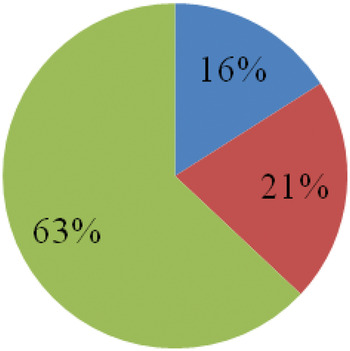
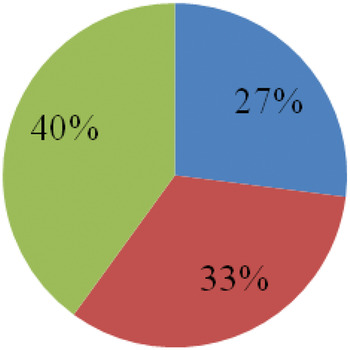
Regarding their CLT instructors, 63% of respondents said that junior high school classes were team taught by both a Japanese English teacher and a native English speaker. For senior high schools, this figure drops to 40%. Only 21% of students had exclusively English speaking teacher instruction in junior high school, while 33% reported having that type of instruction in senior high school (see Figure 1A and 1B). Known nationalities of these native English speakers were American, British, Canadian, Australian, Irish, French, and Filipino. The ratio of native English speakers' instruction (except for French and Filipino) is high in number in both junior and senior high schools.
Who taught CLT when you were a junior high school student?
• 63% Japanese & native (Team teaching)
• 21% Only native speakers
• 16% Only Japanese teachers

Who taught CLT when you were a senior high school student?
• 40% Japanese & native (Team teaching)
• 33% Only native speakers
• 27% Only Japanese teachers

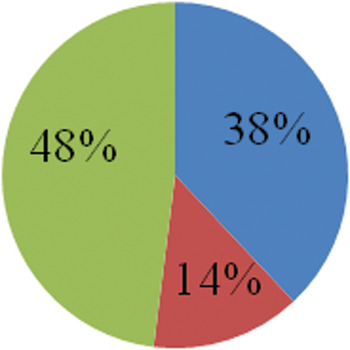
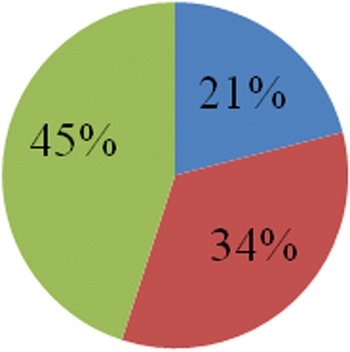
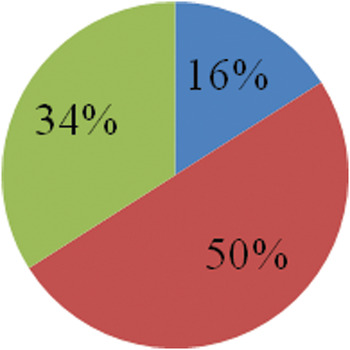
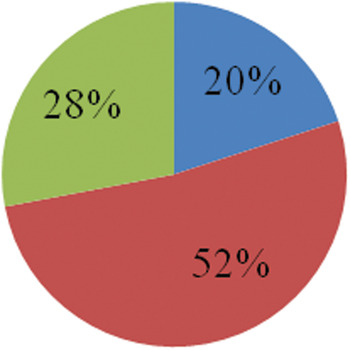
Regarding the concept of teacher-student time, the results show that 62% of the students said they did not have enough time to speak with native English speaking teachers out of class in junior high school, while in senior high school 79% of respondents said they had even less time to speak with them. (See Figure 2A and 2B.) Interestingly, more than half of the students expressed the wish that they could communicate more with English speaking teachers at school. (See Figure 3A and 3B.) That is, it seems that most students are interested in communicating with English speakers even though they have negative feelings toward CLT in junior and senior high schools, viewing it as not effective in developing their communicative competence.
Did you have enough time to talk with an English speaker in junior high school?
• 48% Not enough
• 38% Enough
• 14% No time at all

Did you have enough time to talk with an English speaker in senior high school?
• 45% Not enough
• 34% No time at all
• 21% Enough

We wanted to talk with English speakers more at junior high school
• 50% Yes
• 34% Unsure
• 16% No

We wanted to talk with English speakers more at senior high school
• 52% Yes
• 28% Unsure
• 20% No

2.2 Students' reasons for studying English
Eighty-nine percent of the students said that they wanted to communicate in English, and 84% of them expressed the desire to become ‘Japanese who have competence to communicate in English’ (Eigo-ga-tsukaeru-nihonjin; 英語が使える日本人). This is a kind of catchphrase aimed at improving English education in Japan, and is promoted by MEXT.
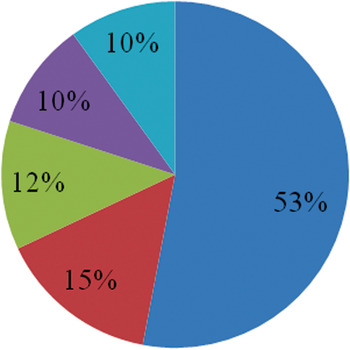
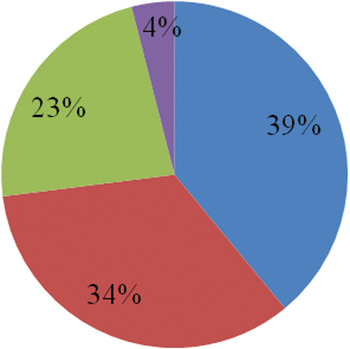
Regarding their aims for studying English, the results show that 53% of the students reported that their main purpose for studying English was to communicate easily with foreign people, 39% wanted to use it practically in business, and 34% wanted to use it in tourism. (See Figures 4A and 4B.) In short, it seems that they want to learn basic and practical communication skills in English rather than achieve native-like proficiency in English. This finding is particularly interesting as it supports Mckay's (Reference Mckay2002) critique of the assumption that gaining native-like competence is the goal of English language learning. She points out that students should be given full consideration of what the goal of their second language acquisition is. In other words, teachers need to know what students want to learn in practice and advise them regarding the extent to which they should master the communication skills in English by the end of the term.
Reason for studying English
• 53% Communication with foreigners
• 15% Tourism
• 12% Economic advantage
• 10% Getting information
• 10% Other

Where do you want to use English practically?
• 39% Business
• 34% Tourism
• 23% Hobbies (music, movies)
• 4% Other

2.3 Students' awareness of World Englishes
The Japanese sound system is much simpler than that of English, consisting of five vowels /a, i, u, e, o/, and a set of consonant-vowel syllables. Because of this, most foreign words, such as loanwords in Japan, are changed phonetically when they are transcribed into Japanese. For example, the Japanese would produce ‘berry’ instead of the English ‘very’, or ‘bus’ instead of ‘bath’ in English. Beginners in particular tend to substitute one of the Japanese sounds for its more complicated English equivalent (e.g. [v] is replaced by [b], [θ] is replaced by [s], and [æ] is replaced by [a]).
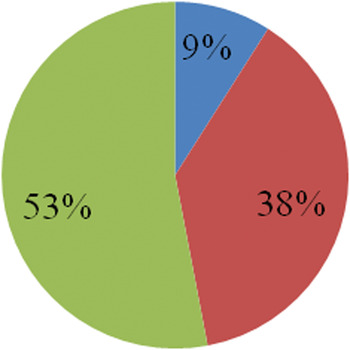
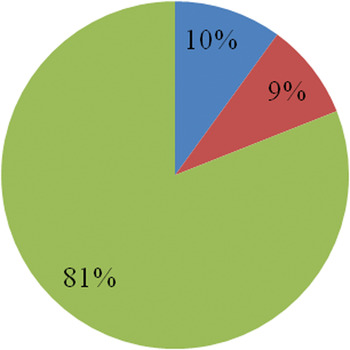
According to the question about intelligibility of their own English, only 9% of the students thought English with a Japanese accent could be intelligible, while others expressed anxiety at the thought of being unintelligible, which suggests that they do not have very much confidence in their Japanese English accent. (See Figure 5.) The reasons for their lack of confidence are poor pronunciation and lack of practice in speaking and listening in CLT. Their negative attitude toward Japanese English seems to lead as much as 81% of them to hope to study abroad where English is spoken as the first language, in order to learn native-like speech patterns and expressions. (See Figure 6A and 6B.)
Do you think Japanese English is intelligible?
• 53% No
• 38% Not sure
• 9% Yes

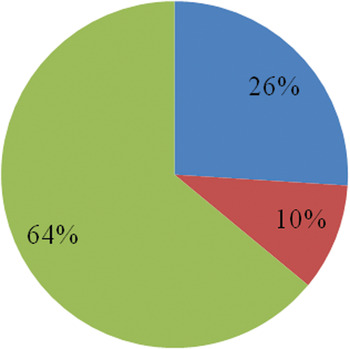
What is the most important thing for English conversation?
• 64% Native-like speech and expression
• 26% Good instruction
• 10% Variety of Englishes

What country would you choose for studying abroad?
• 81% Native English speaking countries
• 10% Anywhere
• 9% Non-native speaking countries

Considering their responses, the ‘native speaker fallacy’ (Canagarajah, Reference Canagarajah1999) seems to be prevalent among Japanese students. According to Mckay (Reference Mckay2002: 42), the ‘native speaker fallacy’ is the idea that the native speakers' English is standard and worth trying to achieve as the best knowledge about English language use. In fact, all the audio materials accompanying English textbooks in junior and senior high school are recorded by native western English speakers. Therefore, most students may naturally have a belief that the native western speakers' English is the only correct and authentic form of English. It may be that this general belief causes Japanese people to lose confidence in their own English. If this is the case, teachers of CLT have a responsibility to tell students about the concept of World Englishes, in order to prevent them from having a prejudice against their own English, or against other national varieties. Students need to be aware of the fundamental purpose of learning English, which is not to mimic native speakers' English but to use their own English to communicate with other English speakers, be they natives or non-natives.
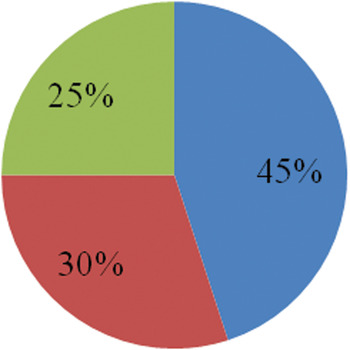
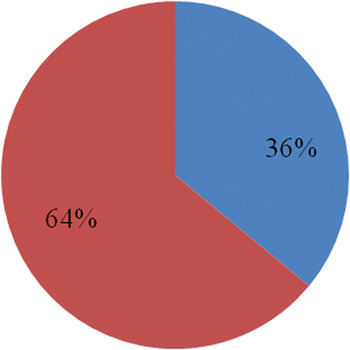
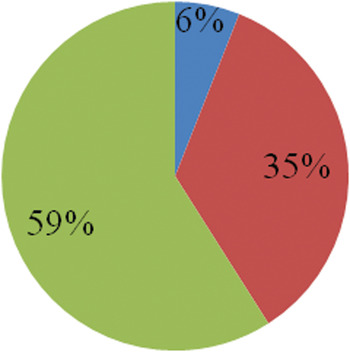
Meanwhile, and somewhat counter to the tendency to overestimate the importance of the native speaker model discussed above, the questionnaire suggests that 75% of the students seem to have a positive attitude towards World Englishes, while 45% of them do not care about English pronunciation no matter who is speaking English. Only 30% expressed the view that non-native speakers' English is more intelligible than native speakers' English. (See Figure 7.) Regarding the concept of standard English, the results show that as much as 64% of the students think ‘standard English’ includes not only native speakers' English but also non-native speakers' English. (See Figure 8.) In addition to that, more than half of them show an interest in non-native English speaking countries as a topic in English class. (See Figure 9.) These findings are particularly heartening, suggesting as they do that the younger generation in Japan is much more able than previous generations to accept linguistic and cultural variation without prejudice. This suggests that Jenkins' (Reference Jenkins2009) concepts of World Englishes and English as a Lingua Franca will help Japanese students realize the value of studying English, and will further encourage them to develop a broad mindset toward English language, culture, and the real significance of understanding varieties of English.
What do you think of non-native speaker speech?
• 45% Don't care
• 30% Intelligible
• 25% Unintelligible

What do you think about “Standard English”?
• 36% Native English speakers' English
• 64% Variety of Englishes as an International language

What country are you interested in?
• 59% Various countries
• 35% Native English-speaking countries
• 6% Japan

3. Proposals for CLT teaching methods and materials in Japan
3.1 Teaching style
When asked to make recommendations for improving CLT in the future, students made a number of suggestions. Regarding teaching style, flexibility was identified as a missing ingredient. Teachers should ensure that the Japanese, who have Confucian values, try to learn the language that people who have Western values speak. Researchers of World Englishes make the point that the communication styles of Japanese and Westerners are completely different. Japanese students are typically reserved and have a group-oriented consciousness in class, while English speaking Western students tend to be more active and individually oriented in class (Brown, Reference Brown2007). Since CLT puts the focus on learner-centered learning such as group activities and individual development, discussions and presentations are often thought to be useful. Every teacher agrees that the more students speak English, the better they are at speaking English. However, speaking can be stressful for students. Therefore, teachers of CLT need to adapt their ways of teaching to Japanese students and explain the effectiveness of group work. As Holliday (Reference Holliday2005: 84) points out, because ‘Japanese students find it difficult to accept the individualism and freedom derived from Western values’, a flexible approach is needed in the classroom: ‘learner-centered some of the time and teacher-centered at other times, depending on the type of activities employed’ (2005:70).
3.2 Materials
With respect to materials for CLT, another interesting response from the students surveyed was that movies were the most popular topic for oral communication, followed by music and current issues, and thirdly by culture. Furthermore, 63% of the students said the content level of the CLT textbooks they used was adequate, which means that the English words and phrases used in these books were not overly difficult for them. Being satisfied with the level of English in the textbook, they seem to be interested in more casual, relaxed, and contemporary topics. In other words, fixed textbooks filled with serious topics can make students bored easily. This suggests that teachers need to add original current topics in order to engage students in class. The latest and hottest news on the world's issues that the young generation wants to know about can now easily be found on the Internet and in newspapers.
Regarding the countries that students want to visit for CLT study purposes, 59% said they were interested in visiting countries all over the world, while 35% were particularly interested in native English speakers' countries such as the US and England. (See Figure 9.) Fostering an interest in many other countries, not just native English speakers' countries, should raise students' awareness of the existence of not only varieties of English, but also the various usages of English.
As an example, there are different styles of greeting between English and other languages. In Chinese, the expression ‘Where are you going?’ or ‘Are you going out?’ is sometimes used as a friendly greeting with no expectation of an explicit answer. According to Cutting (Reference Cutting2008: 19), ‘this question may be intrusive and disrespectful’ in British culture, where greetings may be restricted to more neutral topics such as the weather: ‘Hi, bit colder today.’ Learning English with a cross-cultural perspective and realizing that all English usage is culture-bound may encourage students to use their own English more confidently. Kachru (Reference Kachru2008) insists that trying to understand culture and sociocultural contexts as shared knowledge is essential for making interpretations of verbal acts. In sum, the questionnaire suggests that if teachers select CLT materials that cover various cultures and not just Anglo-centric culture, this may help students to appreciate and value different varieties of English – including their own - which may in turn have a positive influence on their verbal communicative ability.
Unfortunately, only 6% of the students said they were interested in learning about their own country, Japan. (See Figure 9.) As Mckay (Reference Mckay2002) suggests, the content in teaching English as an International Language needs to supply information not only about the target language culture, but also about international cultures in general and the learners' own culture in particular. Japanese English learners must know Japanese culture as common sense. Given that Japanese culture will be entirely familiar to Japanese students, discussing it in English may stimulate them to speak English more confidently. They may even be challenged to explain their own culture to others in English spontaneously.
4. Future CLT instructors in Japan
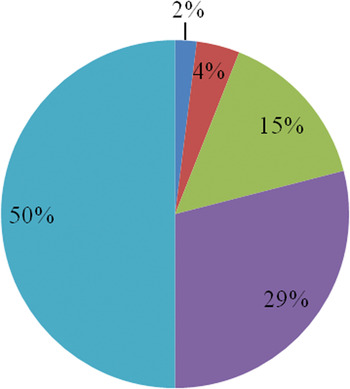
The picture of Japanese students' views of the English language and of CLT in Japan that has emerged so far is somewhat contradictory. Their beliefs include accepting a wide range of varieties of English as forms of standard English, and not just native speakers' English. At the same time, they still prefer native English speakers as teachers, especially in CLT classes. Regarding the concept of suitable instructors for the future CLT, the results show that 50% of the students would prefer to be taught exclusively by native English speakers who have an English as a second language (ESL) teaching qualification (many native speaker teachers in Japanese schools do not have any such qualification in practice), while 29% of them expressed a preference for team teaching by a Japanese English teacher and a native English speaker. In this case, students do not seem to care about whether the native speaking member of the team has an ESL qualification. However, and again somewhat contradictorily, 79% of the students expressed a preference for people who teach English from the Inner Circle countries over those from the Outer and the Expanding Circle countries (Kachru, Reference Kachru, Quirk and Widdowson1985), where English is spoken as a second and a foreign language. (See Figure 10.)
Who is the most suitable instructor for teaching CLT in the future?
• 50% Only native speaker (qualified)
• 29% Japanese teacher & native speaker (not qualified)
• 15% *English speaker (qualified) & Japanese teacher
• 4% Only non-native speaker (qualified)
• 2% Japanese teacher & non-native speaker (qualified)

All things considered, the questionnaire suggests that future CLT in Japan needs instructors who understand the value of the concept of World Englishes and enthusiasm for teaching students. Only English speaking teachers qualified for teaching ESL should teach, and MEXT would need to accept more English speaking teachers from different countries around the world. Increasing the number of English speaking teachers (whether they are native English speakers or not) is necessary because Japanese students have few opportunities to speak with them. As the data shows, more than half of the students surveyed wanted to communicate with English speakers at school. (See Figure 3A and 3B.) School teachers need to provide more opportunities for students to speak with English speakers not only during English class, but also in daily school life. Communicating with a non-Japanese English speaker face to face is completely different from repeating after a CD in class. As Widdowson (Reference Widdowson1978: 67) observes, ‘Overemphasis on drills and exercises for the production and reception of sentences tends to inhibit the development of communicative abilities.’ Students will be accustomed to speaking in English naturally by having friendly interaction with English speaking teachers. Moreover, Japanese English teachers may have the opportunity to introduce English speaking teachers from the Outer and Expanding Circles to students who are familiar with only native English speakers. Students who can see English from different perspectives may then go on to take a more general interest in the countries that these different English speaking teachers come from. They may then begin to notice that communicating in a variety of Englishes is both practical and fun, and that they too can perceive themselves as intelligible to other English speakers all over the world. The awareness of English as an International Language may encourage them to speak English without having an overemphasis on pronunciation and grammar. They will have confidence in their own English.
At the same time, with respect to accepting more English speaking teachers from throughout the world, we need to take into account their ‘qualifications, expertise, and experience rather than their native language’ (Holliday, Reference Holliday2005: 160). Consequently, English speakers who have knowledge of teaching ESL and who understand the goals of the MEXT syllabus in Japan should collaborate with other teachers in order to develop students' communicative competence in English.
Conclusion
The results of the questionnaire described in this article present a generally encouraging prospect for English teaching in Japan. In particular, they indicate that Japanese students would like to speak more with English speaking teachers at school, and that they appreciate that standard English is no longer to be exclusively equated with native English speakers' English. On the basis of these observations, this article has argued that introducing the concept of World Englishes in Japanese English education will provide Japanese students with greater confidence in their own English, by raising students' awareness of the significance of communicative competence in English and increasing their motivation. However, there are still some negative aspects of CLT as it is currently practiced in Japanese schools. In particular, there is currently a lack of practice in speaking and listening, and few opportunities to speak with English speakers. It is hoped that this article will stimulate teachers and curriculum developers alike to develop strategies and resources that will address these problems in the future.
 EMIKO ABE was an English teacher in middle and senior high school in Japan for thirteen years. She obtained her Master's degree in TESL at California State University, Dominguez Hills in 2012 and now teaches ESL classes at the state-administered Adult School in California. She is interested in creating an effective communicative language teaching style. Email: 3322aunteimi@gmail.com