Introduction
The cultures of Aboriginal and Torres Strait Islander peoples (also referred to as Indigenous)Footnote a are among the longest surviving cultures in the world. Before British colonization of the Australian continent in the late 1700s there were at least 260 distinct language groups, each with their own distinct history, culture, and social, religious and spiritual activities.Reference Dudgeon, Wright, Paradies, Garvey and Walker 1 The contemporary population is comprised of an estimated 649,171 persons (91% of whom identify as Aboriginal, 5% Torres Strait Islander and 4% both) and constitutes ~3% of the total Australian population. 2
Similar to other colonized Indigenous populations internationally, Aboriginal and Torres Strait Islander peoples overall, have a large disparity in health outcomes when compared with non-Indigenous peoples. For example, the burden of disease among the Indigenous population is 2.3 times that of non-Indigenous Australians. 3 For Indigenous families, these statistics are reflected in lower life expectancy, higher rates of infant and maternal mortality, and a higher prevalence of low birth weight and adult obesity.Reference Anderson, Robson and Connolly 4 A developmental origins of health and disease framework emphasizes that genetic and environmental factors are associated with health outcomes.Reference Suzuki 5 For Aboriginal and Torres Strait Islander peoples the environmental aspect is imbued with social and cultural factors. In Australia, there is a specific Indigenous societal positioning inclusive of a history of trauma resulting from colonization, dispossession of lands, destruction of culture, disruption of family and community life, and multi-level racism.Reference Biddle and Swee 6 – Reference Pulver, Haswell and Ring 9 As a result, poorer health outcomes are intricately entwined with deeply embedded socio-economic disadvantage and political and cultural marginalization.
Exploring influences on Aboriginal and Torres Strait Islander children’s health needs to be framed within Indigenous standpoints, rather than a purely medical focus. Indigenous perspectives on health and well-being typically involve not only physical health, but include Indigenous-specific factors such as connection to Country and the environment; connection to family and community; sense of Indigenous identity and culture; self-determination and autonomy; and spiritual well-being.Reference Biddle and Swee 6 , 7 , Reference Yap and Yu 10 , Reference Kilcullen, Swinbourne and Cadet-James 11
The general health literature increasingly postulates that understanding the influence of culture on health and well-being is fundamental for all children. 12 Understanding the influence of culture is arguably a particularly vital endeavour for Indigenous peoples, with both Australian and international literature highlighting the importance of cultural, family, and community factors for the health and well-being of Indigenous children and mothers pre- and post-birth.Reference Colquhoun and Dockery 13 – Reference Simpson, Adams and Oben 16 Involvement in cultural and community activities has been demonstrated as key for developing connection to culture, self-identity and confidence, which in turn has been shown to be associated with improved resilience and overall well-being for Indigenous children.Reference Biddle and Swee 6 , Reference Burgess, Johnston and Berry 17 – Reference Zubrick, Dudgeon and Gee 21 However, in Australia, with the exception of a small number of quantitative studies,Reference Biddle and Swee 6 , Reference Burgess, Johnston and Berry 17 most of this evidence is qualitative,Reference Colquhoun and Dockery 13 , Reference Lohoar, Butera and Kenned 14 with the lack of quantitative data identified as a significant gap in the research literature.Reference Dockery 22
This paper contributes to filling this gap in quantitative evidence about the contribution of social and cultural factors to the development of Aboriginal and Torres Strait Islander children. The first aim of this paper is to review a selection of literature on what has been learned about early life influences on the well-being of Aboriginal and Torres Strait Islander children from Footprints in Time, the Longitudinal Study of Indigenous Children (LSIC). 23 This data set, now in its 11th annual wave of data collection, provides a robust platform for investigating elements related to the physical and social and emotional well-being (SEWB) of Aboriginal and Torres Strait Islander children across the early and middle childhood and adolescent years. The second aim is to identify the opportunities that this unique, but currently under-utilized, data set presents for further exploration.
LSIC
The LSIC is a national study of 1759 Indigenous children living in diverse social and cultural environments across urban, regional and remote Australia. 24 , 25 Research questions guiding the study were designed in partnership with the LSIC Steering Committee, a group of academics consisting of a majority of Aboriginal and Torres Strait Islander people, who retain on-going responsibility for ensuring the relevance and appropriateness of the study’s topics, content and implementation for its participants. Deliberately designed to be broad and positively focussed, three of these overarching research questions are directly applicable to the developmental origins of health and disease:
∙ What do Aboriginal and Torres Strait Islander children need to have the best start in life to grow up strong?
∙ What helps Aboriginal and Torres Strait Islander children to stay on track or get them to become healthier, more positive and strong?
∙ What is the importance of family, extended family and community in the early years of life and when growing up?
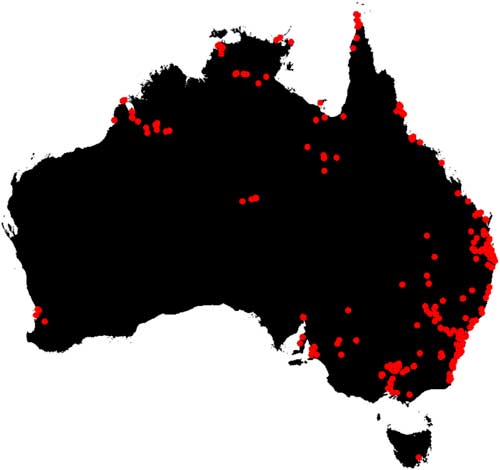
A purposive sampling method was used to recruit Aboriginal and Torres Strait Islander children, in two age-cohorts, aged 6–18 months and 3½_ years, from 11 sites across Australia (Fig. 1). 24 Potential participants were identified through Indigenous identification in Australian Government administrative data sets (Centrelink and Medicare) and the sample was supplemented by word of mouth within Indigenous communities. Greater detail regarding study design and sample are available elsewhere. 24 , Reference Hewitt 26 While not a random sample, LSIC participant locations are generally representative of the population distribution of Aboriginal and Torres Strait Islander children across levels of remoteness in Australia, where ~75% of LSIC children live in urban and regional areas and just under 25% of children live in more remote, predominantly Aboriginal population, communities. 27
Location of the Longitudinal Study of Indigenous Children (LSIC) families (n=1255) participating in LSIC Wave 8.

Every year Aboriginal and Torres Strait Islander interviewers conduct face-to-face interviews with the participating children and one or two of their caregivers. While all children in the study are Aboriginal and Torres Strait Islander, not all caregivers are Indigenous. The primary caregiver is most often the child’s mother, but in some cases is the child’s father, grandmother, aunty or another caregiver who knows the child well. In Wave 1, 1671 families participated, 24 with an additional 88 families joining the study in Wave 2, 25 providing a total sample of over 1700 Aboriginal and Torres Strait Islander children and their families. Over 1230 families have participated in each annual survey, representing an over-time retention rate of over 70%.
LSIC collects standard health measures such as measured weight and height and self-reported medical conditions, then also asks participants about a range of topics including, but not limited to: identity, cultural engagement, language use, community strengths and problems, housing, life stressors, racism, SEWB and distress, health service use, family and household relationships. 24 , Reference Thurber, Banks and Banwell 28 LSIC children also complete age-appropriate assessments on vocabulary, reasoning, reading and mathematics. In the first years of the study, primary caregivers were asked about pregnancy and the birth of the child, including birth weight, gestational age, drug and alcohol exposures, and health conditions during pregnancy, breastfeeding, weaning, hospitalization, sleep routines, playgroup and childcare. Later Waves of the study have then focussed on children’s growth and development.
It is a proud culture and a strong cultureFootnote b
The LSIC data set also includes a small number of ‘free-text’ items which contextualize some of the quantitative data.Reference Fredericks and Pearce 29 , Reference Martin and Mirraboopa 30 These free-text items include responses to ‘What are (child’s name) strengths?’ and ‘How do you (will you) teach (child’s name) how to deal with racism?’ which can be thematically analyzed in their own right.Reference Tavener, Chojenta and Loxton 31 , Reference Rich, Chojenta and Loxton 32
LSIC participants
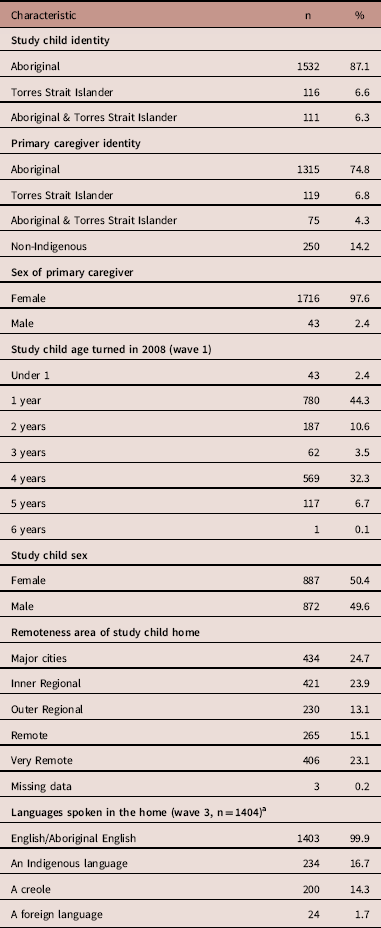
The LSIC children are diverse, both culturally and geographically. More than 80 Aboriginal or Torres Strait Islander tribal groups, language groups or clans are identified among the LSIC children, with the most commonly identified being Wiradjuri, Arrernte, Yorta Yorta, Gamilaroi and Waanyi. 24 LSIC children speak 52 different Indigenous languages and two creoles; 37 of these languages are classified as endangered, having very few speakers, or no longer spoken. 33 Table 1 details baseline socio-demographic characteristics of participating children and their primary caregivers as established in Waves 1 and 2 of LSIC.
Socio Demographic Characteristics of LSIC Participants in Wave 1 and 2

a Sums to >100% as multiple languages could be spoken at home
The literature on early life influences impacting well-being
The following section overviews published literature related to early life influences on well-being using data from LSIC. Nutritional factors and weight status (breastfeeding and obesity) are explored first followed by investigation of socio-emotional, cultural and societal positioning factors (experience of major life events, cultural factors and the influence of racism and discrimination).
Breastfeeding
Exclusive breastfeeding in the first 6 months of life is recommended for optimal infant health and development; the World Health Organization (WHO) has set global targets to raise the prevalence of exclusive breastfeeding from current levels (38%) to 50%. 34 Optimal breastfeeding practices, recommended by the WHO, include continued breastfeeding for up to 2 years of age and beyond. Australian studies of non-Indigenous women show that maternal attitude towards pregnancy, psychological adjustment and early breastfeeding difficulties are significant predictors of exclusive breastfeeding intention and duration.Reference De Jager, Broadbent and Fuller-Tyszkiewicz 35 Australian studies with sub-samples of Aboriginal and Torres Strait Islander women, however, demonstrate a variance in breastfeeding patterns from the non-Indigenous Australian results.Reference Craig, Knight and Comino 36 , Reference Mclachlan, Shafiei and Forster 37
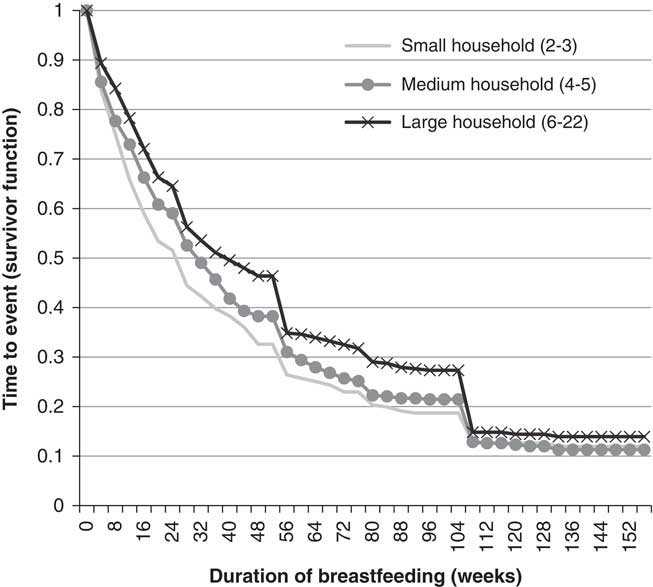
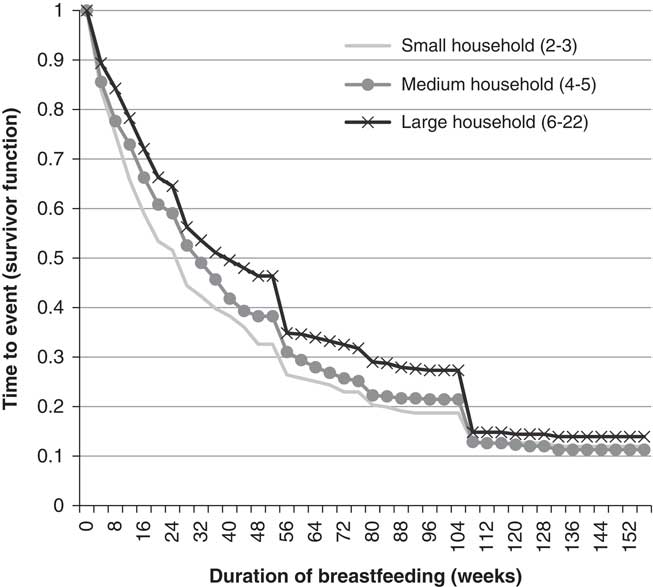
These differing results are replicated in studies undertaken using the LSIC data. Bennetts Kneebone found that in the LSIC cohort, any breastfeeding (with or without complementary feeding of formula and/or solids) was significantly more likely for mothers who: lived in remote compared with non-remote areas, were partnered v. single, and had education beyond year 10 v. year 10 or below. Breastfeeding without introducing formula (with or without introduction of solids) for 6 months or more was more likely in remote v. non-remote areas, for mothers aged over 25 years v. younger, and for those who had not experienced postnatal depression. As shown in Fig. 2, LSIC mothers in medium sized (4–5 person) and larger (6–22 person) v. smaller (<4 persons) households had significantly longer breastfeeding duration, which held even after adjusting for remoteness, postnatal depression, living with partner, being a young mother, smoking during pregnancy, and mother’s education.Reference Bennetts Kneebone 38
Proportion of the Longitudinal Study of Indigenous Children (LSIC) mothers breastfeeding by child’s age (in weeks) for mothers in small, medium and large households (of those who breastfed at all).
A recent study by Dunbar and Scrimgeour on the introduction of alternative milk formulas for LSIC babies, found that ‘a gradual move from breastfeeding started from two months of age with over half of the cohort drinking formula milks by six months’.Reference Dunbar and Scrimgeour 39 ‘Not having enough breast milk’ was the most common reason LSIC new mothers gave for stopping breastfeeding.
Obesity
The rising prevalence of child obesity is of national and international concern for health and longevityReference De Onis, Blossner and Borghi 40 , Reference Ho, Olds and Schranz 41 with obesity in childhood associated with an increased risk of obesity in adulthood, which has multiple comorbidities including cardiovascular diseases, diabetes and some cancers.Reference Lakshman, Elks and Ong 42 – Reference Rayfield and Plugge 44 Obesity has been shown to disproportionately impact Indigenous children compared to non-Indigenous children in countries including Australia, Canada, New Zealand and the United States.Reference Anderson, Robson and Connolly 4 , Reference Azzopardi, Sawyer and Carlin 45
Research by Thurber et al. Reference Thurber, Dobbins and Kirk 46 indicates that LSIC children born large for their gestational age, and who were exposed to smoke in utero, had a significantly higher body mass index (BMI) at age 3–8 years. Findings were also consistent with an increased BMI for children whose mothers had diabetes or gained ‘too much’ weight during the child’s pregnancy.Reference Thurber, Dobbins and Kirk 46 Maternal risk factors for high birth weight and high child BMI (i.e. obesity, smoking and diabetes during pregnancy) are common in the Indigenous Australian population;Reference Hilder, Zhichao, Parker, Jahan and Chambers 47 – Reference Thurber 53 these factors are therefore likely to contribute to the high prevalence of overweight and obesity observed among Aboriginal and Torres Strait Islander children.Reference Thurber 53
Longitudinal analysis of LSIC data by Thurber et al. Reference Thurber, Dobbins and Neeman 54 has also identified a high prevalence of obesity among Aboriginal and Torres Strait Islander children in the first years of life, and a rapid onset of overweight and obesity from age 3 to 9 years. In addition, this research identified the potential role of sugar-sweetened beverage consumption in contributing to the rapid development of obesity among Aboriginal and Torres Strait Islander children.Reference Thurber, Dobbins and Neeman 54 Thurber et al. have also explored the social, cultural and environmental context of dietary behaviours, with analysis showing that sugar-sweetened beverage consumption is shaped by social and environmental factors such as housing and parental education,Reference Thurber, Bagheri and Banwell 55 and that many social, cultural and environmental barriers prevent optimal intake of fruits and vegetables.Reference Thurber, Banwell and Neeman 56
Major life events and mothers’ mental health
SEWB for Aboriginal and Torres Strait Islander children and families encompasses mental health as well as broader components such as spiritual, cultural and social well-being, and overall community well-being.Reference Swan and Raphael 57 – 59 The concept of SEWB is viewed generally as more relevant to Aboriginal and Torres Strait Islander peoples than the concept of mental health in that it recognizes the underlying trauma and impact of Indigenous history within the Indigenous mental health burden.Reference Tse, Lloyd and Petchkovsky 60 , Reference Koolmatrie and Williams 61 Other Australian research from an urban Aboriginal cohort indicates that children experiencing higher numbers of major life events are more likely to have social and emotional difficulties, as measured by the Strengths and Difficulties Questionnaire (SDQ).Reference Williamson, Mcelduff and Dadds 62
LSIC collects data annually from the participating child’s primary caregiver on the number of major life events experienced by the family during the previous 12 months. These events include financial stress, relationship dissolution, caregivers losing or gaining work, serious illness or death of a close relative or friend. Twizeyemariya et al. Reference Twizeyemariya, Guy and Furber 63 found that more than 60% of LSIC children had experienced three or more stressful life events in at least one wave of data collection (2008–2011). Results from Kikkawa indicate that LSIC children who experienced more major life events were at a significantly higher risk of experiencing social and emotional difficulties.Reference Kikkawa 64 Research by Kikkawa also established that higher levels of maternal mental health are associated with improved child SDQ (lower risk of social and emotional difficulties)Reference Kikkawa 64 for LSIC children, independent of the number of life events experienced.Reference Kikkawa 64
Culture and racism
Studies among Indigenous populations in the United States and Canada have shown that increased cultural participation promotes resilience and is a protective factor for Indigenous health and well-being.Reference Currie, Wild and Schopflocher 65 , Reference Wexler 66 In Australia, Lovett has established that, for LSIC children, greater attendance at cultural events and time spent with Indigenous family members living outside of the child’s household is associated with higher levels of resilience.Reference Lovett 67 Martin analyzed caregivers’ free-text responses to the question: ‘What is it about being Aboriginal or Torres Strait Islander that will help your child grow up strong?’Reference Martin 68 Subsequent analysis identified eight key themes: family, culture, personal traits (such as respect for elders), identity, heritage, relationships, history and land/country. Similarly, Armstrong et al. Reference Armstrong, Buckley and Lonsdale 69 identified that stronger parent/caregiver cultural identity is associated with better social, emotional and behavioural outcomes for LSIC children. In addition, Dockery identified that for LSIC children, a measure of strong kinship was associated with better child health and school attendance.Reference Dockery 22
Exposure to racism both directly and indirectly (e.g. vicarious racism, second-hand exposure to racism) has been shown in Australian literature to have lasting negative consequences across health and well-being, educational and social outcomes for Aboriginal and Torres Strait Islander people.Reference Priest, Paradies and Trenerry 70 – Reference Priest, Perry and Ferdinand 72 The pervasive pejorative impact of racism on Indigenous children and families is also demonstrated in analyses of LSIC data. Shepherd et al. Reference Shepherd, Li and Cooper 73 found the experience of direct racial discrimination was reported for 14% of LSIC children and nearly half (45%) of the children’s families. Both primary caregiver’s and children’s experience of racism were associated with poorer mental health, sleep difficulties, obesity and asthma among LSIC children. Longitudinal analyses also identified that primary carers’ higher cumulative exposure to racism was associated with increased odds of poor mental health, sleep difficulties and asthma for LSIC children aged 5–10 years. A study by Bodkin-Andrews et al. Reference Bodkin-Andrews, Whittaker and Cooper 74 found that racism experienced by Aboriginal and Torres Strait Islander primary caregivers, their child, or their family was associated with reduced global health scores and increased levels of anger, worry and depression for the primary caregiver.
Using LSIC data in your research
Over the past decade the Council of Australian Governments has jointly agreed to health, education and employment targets to close the gap between Indigenous and non-Indigenous Australians. 75 The Australian Institute of Health and Welfare estimates that social determinants of health such as income, education, overcrowding and employment, are responsible for nearly a third (34%) of the health gap, and that risk factors disproportionately affecting Aboriginal and Torres Strait Islander peoples such as smoking, alcohol consumption and obesity, explain an additional 19–30% of the health gap. 76 There is a strong need to understand why these gaps persist within the Aboriginal and Torres Strait Islander population.
There is an increasing emphasis in Australian public policy on the need to focus on protective factors and build on strengths. 77 Cultural determinants of health have to date been under-researched (including in comparison to social determinants) and offers the chance to focus on strengths and protective factors such as identity and belonging, 78 and to further address the impact of societal issues such as racism. As a longitudinal data source collecting a breadth of data across health, social, cultural and environmental factors, LSIC – purposefully designed according to strength-based principles – provides the opportunity to further disentangle these relationships and identify points of intervention.
As argued by Walter et al. for researchers using data from LSIC, ‘[O]ur shared overwhelming desire is to make the future for Aboriginal and/or Torres Strait Islander children better’.Reference Walter, Dodson and Barnes 79 There is, therefore, an imperative for more researchers, especially Indigenous researchers, to use LSIC data to help Indigenous children to ‘grow up strong’. Strengths of the LSIC data include the study’s high retention rate; the collection of a broad range of measures across social, cultural and environmental determinants of health and well-being; the collection of qualitative and quantitative data; and the focus on strengths of Aboriginal and Torres Strait Islander children, families and communities. These characteristics of the study reflect the consultation and engagement processes that occurred during study development and continue throughout the study.Reference Thurber, Banks and Banwell 28 , 33 , Reference Walter, Dodson and Barnes 79
As a longitudinal study that is now in its 11th year of annual data collection, 23 LSIC is accumulating a wealth of meaningful information about the health and well-being of Indigenous children, their caregivers and communities. This information provides the opportunity to identify what contributes to Indigenous children ‘growing up strong’ holistically and over time. Data from Waves 1 to 9 are currently available to researchers, 80 enabling investigation of a vast number of research topics.
More than 300 researchers have licenses to use LSIC data, with all researchers invited to apply for access. Further information about the study can be found at http://www.dss.gov.au/lsic. In addition to security and confidentiality protocols that apply, prospective LSIC data users are required to consider and acknowledge their standpoint (worldview) before applying to use LSIC data.Reference Walter, Ezzy and Habibis 81 – 83
Acknowledgements
The authors acknowledge the traditional owners of all the lands LSIC children and families are from and currently reside on. The authors also pay their respects to the LSIC children, their families and their elders, past, present and future. M.S. (Yuin) and R.L. (Wongaibon, Ngiyampaa) with K.A.T. are researchers at the National Centre for Epidemiology and Population Health at ANU on Ngunnawal country (Canberra). M.W. (palawa) is a member of the LSIC Steering Committee and Professor of Sociology at the University of Tasmania. F.S., J.G. and L.B.K. are non-Indigenous people living on Ngunnawal country and working with Footprints in Time at the National Centre for Longitudinal Data within the Department of Social Services. This paper uses unit record data from LSIC. LSIC was initiated and is funded and managed by the Australian Government Department of Social Services (DSS). The findings and views reported in this paper, however, are those of the authors and should not be attributed to DSS or the Indigenous people and their communities involved in the study.
Financial Support
None.
Conflicts of Interest
None.
Ethical Standards
The authors assert that all procedures contributing to this work comply with the ethical standards of the relevant national guidelines on human experimentation and with the Helsinki Declaration of 1975, as revised in 2008. Ethical clearance for the study is obtained for each pilot, run each year in preparation for the following wave of data collection, and each main wave of data collection from the Australian Government Department of Health Human Research Ethics Committee. Additional ethics clearance is also sought from jurisdictional ethics committees in most States and Territories and, in relation to teacher surveys, from State and Territory Government Departments of Education and relevant bodies representing independent schools. Researchers using the data often seek ethical clearance for their specific projects from their own institutions.