Introduction
Farmers’ markets in the USA have expanded rapidly over time providing consumers with increased access to locally grown food. According to the U.S. Department of Agriculture (USDA) (2014), the number of farmers’ markets in the USA has increased from 1,755 in 1994 to 8,284 in 2014. Farmers’ markets can serve as a link between small farmers and consumers, and may provide a key function in local food systems by integrating production, distribution and consumption to enhance the economic, environmental and social health of communities (Feenstra, Reference Feenstra2002; Stephenson et al., Reference Stephenson, Lev and Brewer2008).
Farmers’ markets offer a different shopping experience, when compared with conventional supermarkets or other retail outlets and many consumers shop at farmers’ markets to help local farmers, support their community and guard agricultural open space (Hunt, Reference Hunt2007). Through direct marketing, farmers gain a larger share of the food dollar, while interacting directly with consumers, which provides farmers direct information about consumer preferences (Hunt, Reference Hunt2007; Conner et al., Reference Conner, Montri, Montri and Hamm2009).
The Special Supplemental Nutrition Program for Women, Infants and Children (WIC) is the third largest federal food assistance program in the USA. In FY 2015, the total federal grant for the WIC Program was more than US $6.67 billion (USDA, 2016b). The California WIC Program, the focus of this paper, is the largest state agency in the nation with federal grant appropriations in FY 2015 of US $1.189 billion, nearly 18% of the total national allocation. In addition to supporting health care and nutrition education, the WIC Program provides nutritious food, including fresh fruits and vegetables, at no cost to low-income pregnant and postpartum women, infants and children up to 5 years of age.
Motivated by the documented benefits associated with farmers’ markets and with fruit and vegetable consumption, the USDA Food and Nutrition Service (FNS) expanded some WIC food packages in October 2009 to include a cash-value voucher for participants to purchase fruits and vegetables (7 CFR 246). These new regulations also allowed state WIC agencies to offer participants the option of redeeming cash-value vouchers for fruits and vegetables [referred to as fruit and vegetable checks (FVCs)] at farmers’ markets.
This paper is the first to investigate California WIC participants’ use of farmers’ markets to redeem their FVCs. First, CA WIC redemption data are used to establish the extent to which CA WIC participants are currently utilizing farmers’ markets to redeem their FVCs. CA WIC participant shopping patterns are also investigated. In addition to analysis of redemption data from CA WIC, survey results of both farmers’ market managers and WIC-authorized farmer vendors are analyzed to ascertain some of the barriers to participation in the farmers’ market FVC program for markets, farmers and WIC participants and examine the potential opportunities and challenges associated with expanding this aspect of the WIC Program.
Background: Farmers’ Market Fruit and Vegetable Programs
WIC Program participants are able to purchase fruits and vegetables at farmers’ markets through two distinct programs: (i) the Farmers’ Market Nutrition Program (FMNP) and (ii) by redeeming their FVCs at an authorized farmers’ market. These two programs are vastly different from one another in terms of their scope, dollar value of benefits provided, and thus their potential to increase revenue for farmers selling produce at farmers’ markets.
Congress enacted the FMNP in 1992 to provide fresh, nutritious, unprepared fruits and vegetables to WIC participants, while expanding the awareness, use and sales at farmers’ markets (7 CFR 248). The FMNP is funded through grants awarded annually by the USDA FNS and is administered through WIC State Agencies. In FY 2014, the CA WIC Agency received more than US $2 million for the FMNP (USDA, 2016a, b), and more than 360,000 eligible participants received one US $20 voucher for the 2014 season (May—November) to purchase fresh fruits and vegetables (CDPH WIC, 2016). FMNP benefits are in addition to participants’ regular WIC benefits and can only be redeemed at authorized farmers’ markets.
The CA WIC Agency authorized the first farmers’ markets to accept FVCs in May 2010. In contrast to the FMNP program, FVCs need not be redeemed at farmers’ markets and instead can be redeemed for fresh, frozen or canned fruits and vegetables at any authorized WIC vendor, which include traditional supermarkets, supercenters, many convenience stores and WIC-only stores. Over 5,000 such vendors were authorized in CA in 2014. Currently, children 1–5 years of age receive US$8 each per month in FVCs and breastfeeding, pregnant and post-partum women receive US $11 each per month in FVC benefits.
Government and non-profit organizations have attempted to address diet quality issues by providing financial incentives, primarily through matching expenditures, to purchase fresh produce at farmers’ markets (Dimitri et al., Reference Dimitri, Oberholtzer, Zive and Sandolo2015). One example currently in use in California is the Market Match Program, facilitated by the Ecology Center with grants from the California Department of Food and Agriculture (CDFA), Specialty Crop Block Grant Program and USDA, which matches dollar for dollar customers’ federal nutrition assistance benefits (both CalFresh/SNAP and WIC) at more than 180 farmers’ markets in California in 2015 (Market Match 2016a).
Funding to stimulate point-of-sale purchases of fruits and vegetables was expanded in the most recent Farm Bill with the introduction of the Food Insecurity Nutrition Incentive (FINI) Grant Program. Dedicated to supporting projects to increase the purchase of fruits and vegetables among low-income consumers participating in SNAP, FINI grants will provide up to US $100 million in funding across the USA from 2015 to 2019. In 2015, the Ecology Center was awarded US $3.7 million to fund California's Market Match Program for 2 years. However, FINI grant dollars must be used to promote SNAP participant purchases. Thus, the restrictions placed on these funds further limits the development of the California WIC FVC program at farmers’ markets as the Ecology Center is forced to fund WIC matching dollars from other sources (e.g., CDFA).
The Market Match (2016b) program reports that in 2014, 61% of customers surveyed reported that Market Match was a very important consideration in their decision to spend their benefits at a farmers’ market. In the same survey, 79% of respondents indicated that their consumption of fruits and vegetables increased as a result of the Market Match program (Market Match, 2016b). On the farmer side, the Market Match program incentivizes new shoppers to come to farmers’ markets and increases farmer revenues according to a survey of farmers selling their products at markets supported by the Market Match program (Market Match, 2016c).
In 2014 FVC redemptions in California totaled US$87.5 million, but only about US $73,000 were redeemed at farmers’ markets, meaning FVC redemptions represent a significant, but largely untapped, potential revenue source for farmers selling at farmers’ markets. In addition to a direct expansion of sales, increased WIC FVC redemptions at farmers’ markets can potentially expand the consumer base of farmers’ markets (Joy et al., Reference Joy, Bunch, Davis and Fukii2001). In fact, studies show that the FMNP has increased participant awareness and use of farmers’ markets (Anliker et al., Reference Anliker, Winne and Drake1992; Joy et al., Reference Joy, Bunch, Davis and Fukii2001; Racine et al., Reference Racine, Smith Vaughn and Laditka2010) and that farmers who participated in the FMNP program reported increased market sales (National Association of Farmers’ Market Nutrition Programs, 2003).
While FMNP is a more seasoned program that has been in place nearly 20 years longer, expansion of FVC redemptions at farmers' markets could have even greater influence on participants’ propensity to patronize farmers’ markets than the FMNP research suggests. Given that FVC checks are part of a participant's regular monthly WIC benefits, the annual aggregate dollar amount associated with FVC benefits is much larger than the total benefits received from the FMNP. For example, consider a woman enrolled in WIC for a year period wherein she is pregnant and subsequently breastfeeding. As part of her monthly WIC benefits, she would receive US $11/month in FVCs, an annual benefit value of US $132. During that same year, she would be eligible to receive a one-time US $20 benefit from the FMNP. Note that this amount would be higher by US $72, more than 50%, if this new mother already had one child aged 1–5 enrolled in WIC.
WIC participants who shop at farmers’ markets are able to obtain fresh, locally grown produce and possibly expand the purchasing power of their FVC checks. Some research suggests that farmers’ markets are price competitive with supermarkets for fresh fruits and vegetables sold in season (King et al., Reference King, Hand, DiGiacomo, Clancy, Gomez, Hardesty, Lev and McLaughlin2010; Martinez, Reference Martinez2015; Valpiani et al., Reference Valpiani, Wilde, Rogers and Stewart2016). Moreover, participants may be better able to fully redeem their FVCs when shopping at farmers’ markets, compared to traditional retail outlets where transactions costs may present a barrier to full redemption. For example, if a shopper selects a bundle of fruits and vegetables with a value less than the FVC value, a farmers’ market vendor might add additional items so that the FVC can be fully redeemed. On the other hand, when shopping at a supermarket, participants may not know the value of their bundle of fruits and vegetables until it is scanned at checkout, where it would be difficult to obtain additional items to fully redeem the FVC.
Research also suggests that farmers’ markets are an important strategy for addressing limited food access in low-income areas (Young et al., Reference Young, Karpyn, Uy, Wich and Glyn2011); yet few studies have focused on quantifying the degree to which farmers’ markets mitigate food access issues in underserved communities (Dimitri et al., Reference Dimitri, Oberholtzer and Nischan2013) or among low-income populations receiving food assistance. Larson and Gilliland (Reference Larson and Gilliland2009) find that the introduction of a farmers’ market in a low food access area increased the availability of healthy food, while lowering overall food costs in the neighborhood surrounding the market.
From a WIC agency perspective, expanding the number of markets authorized to accept FVCs may also help address concerns surrounding participant access to healthy foods. Given that supermarkets and grocery stores often underserve low-income neighborhoods (Bitler and Haider, Reference Bitler and Haider2011; Young et al., Reference Young, Karpyn, Uy, Wich and Glyn2011), farmers’ markets have the potential to expand participant healthy food choice options in low food access areas. Yet, research focused on food access identifies many impediments associated with farmers’ markets, including markets operating a limited number of days with restricted hours of operation. Further, some markets only operate seasonally and often their location mitigates their ability to effectively expand food access (Dimitri et al., Reference Dimitri, Oberholtzer, Zive and Sandolo2015). Further, research suggests that ease of access significantly affects consumers’ choice to shop at farmers’ markets (Shi and Hodges, Reference Shi and Hodges2015), and this will likely be a more significant factor for low-income WIC participants who are more constrained in terms of their access to transportation.
Methods and Data
As part of research contracts between the CA Department of Public Health and the University of California, Davis, we obtained transaction-level data detailing every WIC Program FVC redeemed in California. These transaction-level data contain the type of FVC (i.e., total cash value), the value for which the FVC was redeemed (i.e., the amount spent by the participant), participant identification number and vendor identification number. We work specifically with data from the time period June 2010, shortly after farmers’ markets were authorized to accept FVCs in California, through February 2015. In order to supplement these data, two surveys were administered to ascertain the opinions of farmers’ market managers and farmer vendors at farmers’ markets authorized to accept FVCs in California.
Survey instruments and sampling
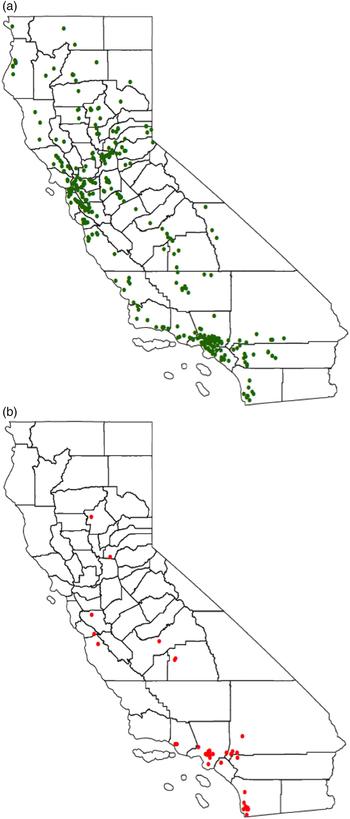
In Spring and Summer 2014, when the survey instruments were developed and sampling procedures were designed, California had a total of 380 farmers’ markets authorized to accept FMNP vouchers, of which 36 were authorized to also accept FVCs. The markets authorized to transact both types of vouchers are located in 13 different counties in California: Los Angeles (12), San Diego (7), San Bernardino (4), Tulare (2), Ventura (2), and Butte, Fresno, Monterey, Orange, Placer, Riverside, Santa Clara and Santa Cruz, with one each. Figure 1 shows the location of FMNP-authorized markets (panel A) and markets authorized to redeem FVCs (panel B).
Locations of FMNP only and FMNP and FVC Authorized Farmers’ Markets in California. Panel A: FMNP Authorized Farmers’ Markets (380). Panel B: FMNP and FVC Authorized Farmers’ Markets (36).

The large difference in the number of markets authorized for the two programmatic options is due to multiple factors. First, the FMNP program has been in place almost 20 years longer than the FVC program. Secondly, the CA WIC Agency was advised by USDA to authorize a critical mass of markets for FVC redemption, in close geographic proximity, in large WIC-participant population areas. Based on this advice, CA WIC began by authorizing markets in Los Angeles and San Diego counties and has gradually expanded locations across the California landscape over time. Subsequent to our survey, 20 additional farmers’ markets have been authorized by the CA WIC program to redeem FVCs, including seven in Placer County; five in Butte County; two in Alameda, Glenn, Sacramento and Stanislaus counties; and one in Riverside County.
In designing the survey of WIC authorized market managers, the chosen sample stratification was based on geography (county) and authorization (FMNP only versus both FMNP and FVC). In counties where two or fewer markets were authorized for both FMNP and FVC, all of the authorized markets in that county were selected. In the counties where more than two markets were authorized to accept both types of vouchers, a random sample rate of 50% was used to select markets. Given the prevalence and geographic diversity of the markets authorized for FMNP vouchers only (see Fig. 1, panel A), sampling of these markets was done, by county, at random to match the number of markets sampled in the FMNP and FVC category. The result of this methodology was to survey 24 FMNP-only markets and 24 FMNP and FVC markets across 13 counties in California.
Market manager surveys were conducted via phone between October and December 2014. Twenty of the 48 markets selected for the survey chose to participate, a response rate of approximately 42%. Survey instruments were tailored for FMNP only and FMNP and FVC markets. Each of the surveys contained four sections, including: (i) basic market and manager characteristics, (ii) perception of the authorization procedure, (iii) perceived demand for FMNP and/or FVC authorization by farmers and participants and (iv) perceived costs for or barriers to FMNP and/or FVC authorization by farmers.
To ascertain authorized farmers’ opinions on the WIC farmers’ market redemption programs, a survey instrument was designed and targeted to all farmers authorized to redeem FVCs, 149 in total at the time that the survey was designed. Surveys in both English and Spanish were mailed to all FVC-authorized farmers in January 2015. After initial contact and one follow-up, 61 completed responses were returned, a response rate of 41%.
Analysis of redemption data
In order to supplement the information that was acquired by surveying market managers and farmer vendors, analysis of transaction-level FVC redemption data was conducted in order to investigate how vendor choice (e.g., farmers’ market versus large supermarket) affects participants’ ability to fully utilize the dollar value of their vouchers.
A potential benefit to WIC participants from redeeming their FVC at farmers’ markets is greater ease in utilizing the full dollar value of the voucher. CA WIC divides vendors into peer groups, including: (i) farmers’ markets, (ii) above-50 (A–50) vendors who derive more than 50% of their food sales from WIC redemptions, (iii) full-line grocers delineated by number of cash registers to proxy for size and (iv) non-full-line grocers. A probit regression model was estimated to determine how the participant's choice of vendor type influenced the probability that the dollar value of the FVC would be fully utilized.
The dependent variable (y) in the model is binary and equal to one if the participant fully utilizes the dollar value of her voucher. The independent variables xi in the model are included to control for the type of vendor (i.e., peer group) where the FVC is redeemed. The probit model takes the form Pr(yi = 1) = Φ(xi′β), where Pr denotes probability and Φ is the cumulative distribution function for the standard normal distribution with the parameters, β, estimated via maximum likelihood. While the coefficients are not easily interpreted in isolation, the marginal effects (∂Φ/∂x i) can be evaluated to determine the estimated probabilities that a voucher redeemed at a vendor in a specific peer group will be fully utilized.
Results
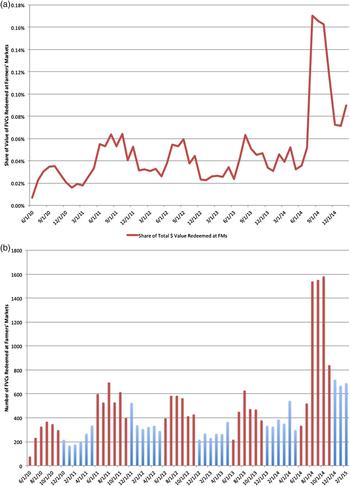
Analysis of the transaction-level FVC redemption data indicates that the share of FVCs redeemed at farmers’ markets, compared with commercial WIC-authorized vendors, in California is very small. Figure 2 shows the total dollar value of FVCs redeemed at any authorized location in the State and the share of total FVC redemptions at farmers’ markets from June 2010 through December 2014. For most months, total FVC redemptions in the State have varied between US $6 and 8 million, while the farmers’ market share of FVC redemptions were, on average, about 0.05% of this total for most months, with some seasonal increases during the summer months. The farmers’ market share rose substantially, to above 0.15% in the summer of 2014, before declining quickly again in the Fall/Winter. Focusing specifically on 2014, the most recent year for which there is complete redemption data, just over US $73,000 in FVCs were redeemed at CA farmers’ markets, approximately 0.08% of total FVC redemptions in the State.
CA WIC FVC Redemptions. Pane 1: Share of Total Value Redeemed at Farmers’ Markets. Pane 2: Total Number of FVCs Redeemed at Farmers’ Markets by Month.
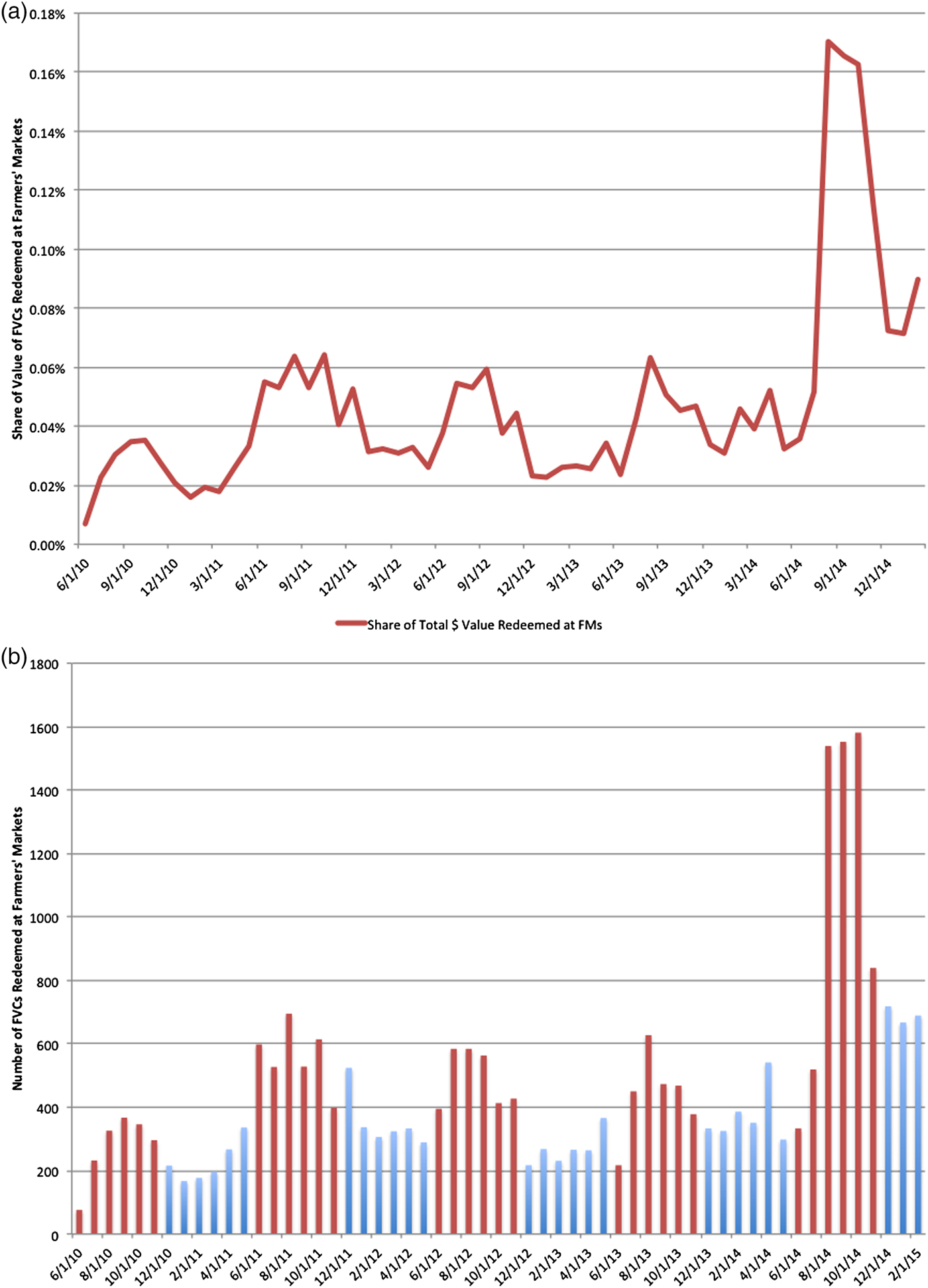
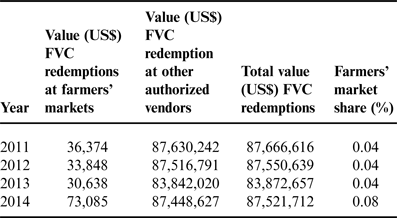
Table 1 delineates the total dollar value of FVCs redeemed in California annually at farmers’ markets and at authorized WIC vendors. The statewide figures do not paint a complete picture given that authorized farmers’ markets are relatively concentrated geographically (Fig. 1, panel B), and thus most participants in the State lack access to a farmers’ market that is authorized for FVC checks. We thus compared redemptions of FVCs at farmers’ markets relative to other authorized vendors for CA counties that have at least one farmers’ market authorized to accept FVCs.
FVCs redeemed at farmers’ markets and WIC authorized vendors in California.

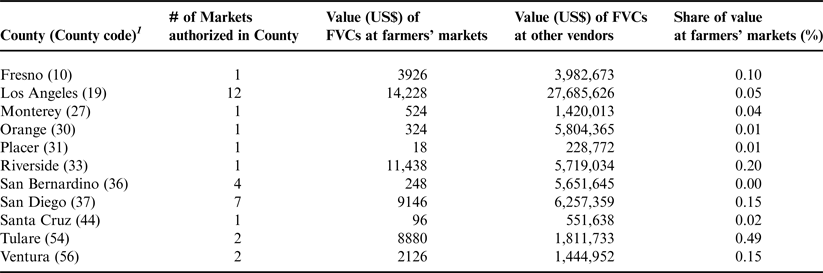
Table 2 summarizes the comparison of redemption shares across program authorization status of the market. The average share of FVC redemptions at farmers’ markets in counties in California with at least one authorized market is 0.11%, but large differences in redemption rates are revealed across counties. In Fresno County, only one farmers’ market is authorized and redeems 0.10% of FVCs. In contrast, both Placer and Santa Cruz counties each have one farmers’ market authorized to redeem FVCs, which account for only 0.01 and 0.02% of FVC redemptions in the county, respectively. Given that WIC participants visit a WIC clinic to receive their vouchers and also receive nutrition education, it is possible that clinic-level information or outreach calling attention to the ability of participants to use farmers’ markets to redeem FVCs is a driver in the variation that we observe across counties. Thus, increasing the number of farmers’ markets authorized to redeem FVC is only one small component to increasing the share of FVC redemptions at farmers’ markets.
FVCs redeemed in 2014 in select counties in California.

1 Counties that had farmers’ markets authorized to accept FVCs as of April 15, 2014 when market manager survey stratification was designed.
As noted, a potential benefit to WIC participants from redeeming their FVC at farmers’ markets is greater ease in fully utilizing the full dollar value of the voucher. Results from our farmer survey indicate that 40% of authorized farmers provide participants with more fruits and vegetables than the dollar value of their voucher. To test if in fact FVCs redeemed at farmers’ markets are more fully utilized than when redeemed at other authorized WIC vendors, we analyzed participant-level data from June 2014 to February 2015.
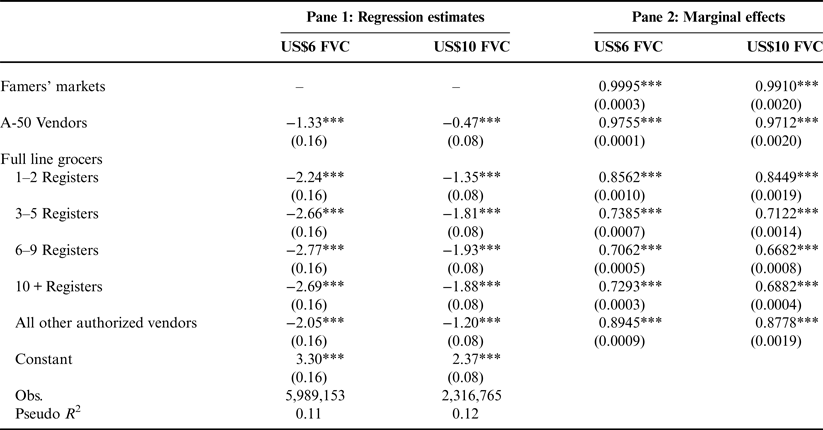
Table 3 contains the results of this analysis for the two different FVCs redeemed by participants during this time period, US $6 and 10. The dollar value of FVCs was increased in June 2014 from US $6 to 8/month for children ages 1–5 and in October 2014 the amount increased from US $10 to 11/month for pregnant, post-partum and breastfeeding women. The left side of the table (pane 1) contains the regression estimates and the right side of the table (pane 2) contains predicted marginal effects, evaluated at the data means. Considering the regression estimates first, the results for both the US $6 and 10 FVCs indicate that farmers’ markets, the reference category in the regression, have the highest probability of WIC participants fully utilizing their FVCs. The coefficient estimates for all of the other peer groups are negative and statistically significant at the 1% level. Further, Chi-square (χ2) tests for coefficient equality indicate that the coefficient estimates for each peer group are statistically different from the farmers’ market estimate (reference category). The marginal effects pane provides probability estimates when data are evaluated at their means. Thus, for the US $6 FVC, the probability that a participant will fully utilize the FVC value at a farmers’ market is 99.1%, compared with a probability of only 66.8% if the FVC is redeemed at a full-line grocer with 6–9 cash registers. For both FVCs (i.e., the US $6 and 10) redeemed by participants, the highest probability of full utilization occurs when a participant redeems her benefits at a farmers’ market.
How vendor choice influences probability of fully redeeming FVCs: probit regression results and marginal effect estimates.

Standard errors in parenthesis. ***P < 0.01, **P < 0.05, *P < 0.10.
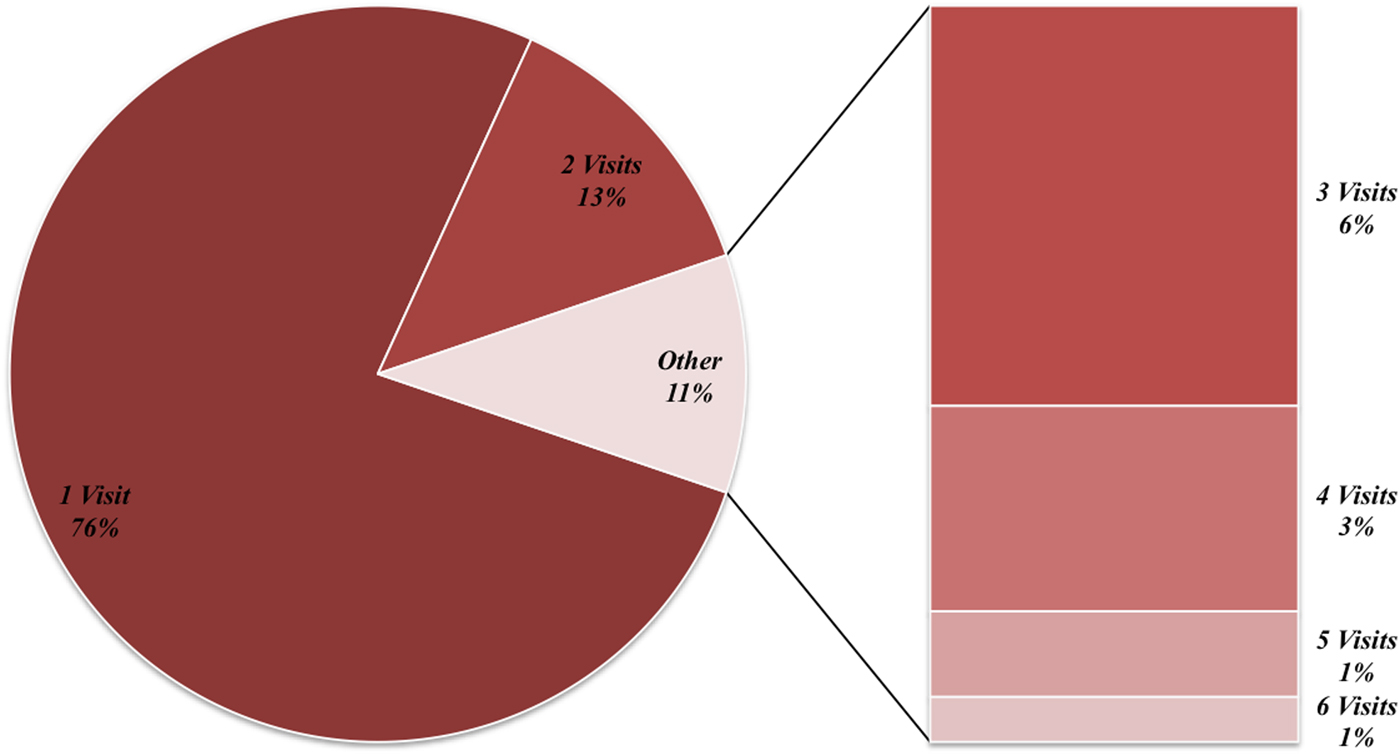
CA WIC redemption data also show that participants who do visit farmers’ markets to redeem FVCs generally do not return. We considered the 6-month period from June 2014 through November 2014 and tracked where participants redeemed their FVCs. We focused on this particular period, as this is the season when the most farmers’ markets are operating, have the greatest amount of produce for sale, and are months when the most FVCs are redeemed at farmers’ markets (Fig. 2, pane 2). The results of the frequency-of-visits analysis are shown in Fig. 3. Among 2,524 participants who redeemed an FVC at a farmers’ market during the 6-month window, 76% did not return to that market or another farmers’ market during that time period. This ‘attrition’ rate is high, indicating that many participants who tried redeeming their FVCs did not find it worthwhile or feasible to return to redeem their benefits again. In contrast, at more traditional food retailers, the majority of participants return to the same vendor to redeem WIC benefits, including fresh fruits and vegetables, at least twice during a 6-month period. For example, using the same procedure, McLaughlin (Reference McLaughlin2015) finds that only 39% of participants redeeming a popular (non-FVC) voucher fail to return to the same vendor to redeem this voucher the next month. While this difference may due to the comparatively sparse operation hours of farmers’ markets or lack of widespread availability, this finding does suggest that the option to redeem WIC FVCs at farmers’ markets has not proved valuable or feasible for most participants.
WIC Participant Visits to Farmers’ Markets in California to Redeem US$6 FVCs, June 2014–November 2014.

Of the remaining 24%, 426 participants redeemed FVCs at farmers’ markets twice during the 6-month window. Only 344 participants redeemed FVCs at farmers’ markets three or more times. Because participants are entering and exiting the WIC program on a continuous basis, it is possible that attrition was being driven by participant exit from the WIC program. However, the vast majority of participants who only visited a farmers’ market once (97% or 2,451 out of 2,542) remained in the WIC program during the 6-month period and redeemed FVCs at other WIC-authorized vendors (i.e., not farmers’ markets). This indicates that for the most part the failure to continue patronage at a farmers’ market was not due to exit from the program.
Market manager survey results
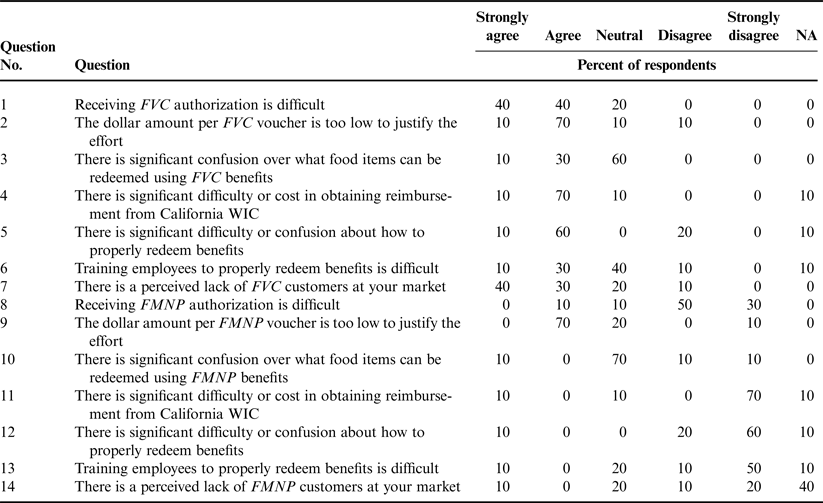
Table 4 summarizes key results of the market manager survey, focusing on the responses from the managers whose markets are authorized to accept both FMNP and FVC vouchers in order to isolate responses that compare the two programs. Questions 1–7 in Table 4 are specific to the FVC program, while questions 8–14 focus on the FMNP. Comparing responses across the two sections clearly indicates that market managers perceive the FVC program's authorization process as more difficult than its FMNP counterpart. For example, 80% of market managers strongly agree or agree that receiving FVC authorization is difficult (question 1), compared with only 10% giving a similar response when asked about the FMNP (question 8). Market managers also perceive that farmers’ cost and/or difficulties associated with obtaining reimbursement from CA WIC are more substantial for the FVC Program, when compared with the FMNP (questions 4, 5, 11 and 12). Training employees how to properly redeem FVCs is also regarded as more challenging than vouchers for the FMNP (questions 6 and 13).
Summary of California farmers’ market manager survey responses (N = 20).

Examining these concerns in more detail, although the authorization procedures for the FNMP and FVC programs are somewhat similar, the FVC program's process does appear to impose more of a burden on farmers and markets. For both programs, the CA WIC program must authorize both the market and the individual farmer vendors in that market. Each must also be certified by the CA Department of Food and Agriculture. In addition, farmers’ market managers and farmers seeking authorization must attend in-person or interactive training sessions given by CA WIC Staff. Different training sessions are required for each program, and the FVC authorization requires additional training compared with FMNP and reauthorization every 3 years.
As to the reimbursement process for FMNP vouchers compared with FVCs, authorized farmers can deposit FMNP checks into their bank accounts and checks can be deposited any time on or before December 31st of each year. Because the FMNP redemptions are provided in addition to regular WIC benefits and are funded through a separate grant, FMNP redemptions are processed through the State Treasurer's Office. FVCs, however, must be redeemed through a dedicated online portal, a process that requires specific training, and the timeline to submit FVCs for payment is much tighter. Vendors have only 45 days from the ‘first day of use’ indicated on the check to redeem it. Given that FVCs are issued to participants on a monthly basis and expire every 30 days (i.e., the participant has 30 days to redeem it), the farmer may in some cases have as few as 15 days to submit checks for reimbursement.
Another interesting result was the differences in perception by the managers regarding the economic potential of the FMNP and FVC programs at their markets. As noted, the annual value of FVC dwarfs that for FMNP. However, 80% of managers strongly agreed or agreed with the proposition that the dollar amount per FVC voucher was too low to justify authorization. Further, 70% of managers strongly agreed or agreed that there was a perceived lack of FVC customers at their market. When the same manager was asked the same questions about the FMNP at their market, 70% strongly agreed or agreed that the dollar value of the FMNP voucher was too low to justify authorization. Yet, managers perceived that there were more potential customers who would potentially redeem benefits at their market (i.e. only 10% strongly agreed or agreed that there was a perceived lack of FMNP customers at their market).
Authorized farmer survey results
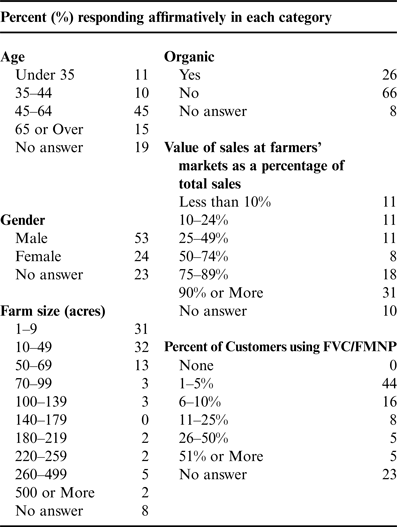
Table 5 summarizes the demographic characteristics of the farmer respondents, which represent 41% of the farmers authorized to accept FVCs at farmers’ markets at the time of the survey. Overall WIC authorized farmer respondents are predominantly male (53%) and not certified by USDA as organic (66%). Majority of farmers have relatively small farms (63% have 49 acres or less of land) and sell the majority of what they grow through farmers’ markets (56% of respondents sell more than half of their production via farmers’ markets). Finally, most respondents (60%) indicate that <10% of their customers use WIC vouchers (FVC or FMNP) to purchase produce.
Summary of demographic characteristics of WIC authorized farmers (N = 61).

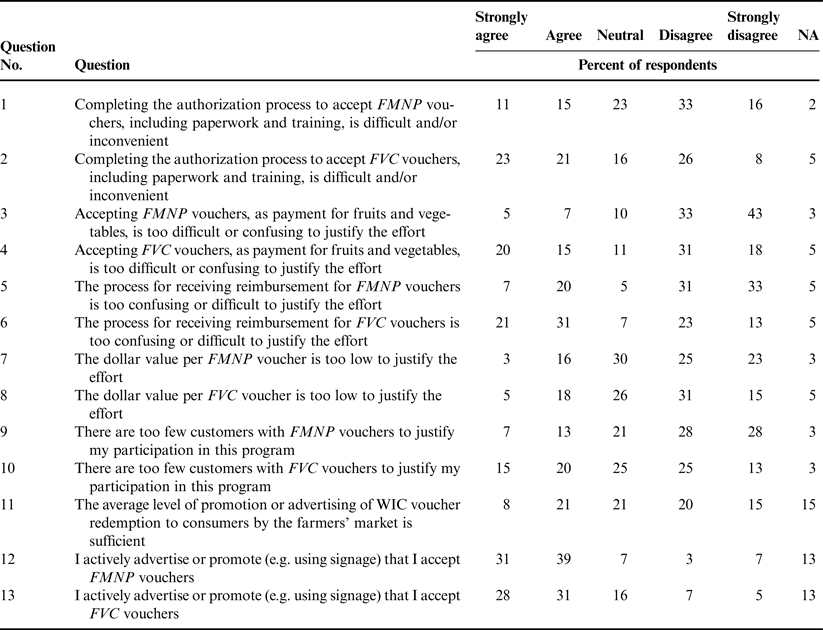
Table 6 summarizes farmer responses to a subset of the survey questions. Given that all farmers were authorized to accept FMNP and FVC vouchers, we asked farmers to provide opinions on both aspects of the WIC program in three broad categories: (i) ease of administration (questions 1–6), (ii) participant demand (questions 7–10) and (iii) advertising and promotion (questions 11–13).
Summary of California WIC-authorized farmer survey responses (N = 61).

Farmer survey responses confirm that the authorization process is perceived as significantly more challenging for FVCs compared with the FMNP program. Forty-three percent of respondents indicated (strongly agree or agree) that the FVC authorization process and administrative activities surrounding redemption are difficult. When asked the same question regarding the FMNP program, only 26% of respondents offered a similar opinion. Comparably, when asked whether accepting FVC vouchers was too confusing/difficult to justify the effort, 35% strongly agreed or agreed with the statement, whereas only 12% of respondents offered the same opinion about the FMNP. Based on farmer responses, it appears that the most significant challenge with FVC program is the reimbursement process. Fifty-one percent of farmers say that receiving reimbursement for FVCs is too confusing and/or difficult to justify the effort, compared to only 27% of respondents strongly agreeing or agreeing with the same statement relating to the FMNP.
When asked about participant demand, participating farmers were evenly split on whether there were too few FVC customers to justify the effort, but more disagreed than agreed with the proposition that the dollar value of the FVC was insufficient to justify participation in the program. In general, farmers were less pessimistic than market managers about the economic value of participating in the FVC program.
In the area of promotion and advertising to communicate with WIC participants, 25% of farmers indicate they believe that the amount of advertising surrounding FVC and FMNP redemption is not sufficient. However, 59% of farmers indicate that they individually promote that they accept FVC vouchers, and 70% of farmers promote that they accept FMNP benefits.
Discussion and Recommendations
Despite the potential of the FVC program to increase the revenue of participating farmers and to provide fresh, locally grown fruits and vegetables to WIC participants, analysis of the current redemptions of FVCs at farmers’ markets and survey responses from participating farmers and market managers indicate that significant barriers stand in the way of the program's success in California. One factor is the limited number of markets authorized to date to accept FVCs. An issue in this regard is that no supplemental federal funds are provided to state WIC Agencies to facilitate the redemption of FVCs at farmers’ markets. Thus, the costs of training, authorization and monitoring markets must be paid from the general Agency administration budget.
With markets available to only a small subset of WIC participants, it is difficult for the CA WIC agency to provide widespread information to participants of their opportunity to redeem benefits at farmers’ markets without causing confusion among participants who lack access. Moreover, state agencies are precluded under FNS regulations from taking actions that appear to favor one type of vendor relative to another. Publicizing the availability of redemption of FVCs in areas with participating farmers’ markets could be construed as a violation of this regulation. Thus, even when participants have access to the authorized farmers’ markets, they may be unaware of such markets’ existence and that they are able to redeem their FVCs at those locations.
However, as results of analysis of the redemption data demonstrated, redemptions are only marginally higher in counties with one or more participating markets than the statewide average, indicating the presence of other barriers to participation. Market managers indicate they perceive that most WIC-eligible customers at their markets are not interested in redeeming their FVCs at farmers’ markets (80% of market managers surveyed characterized WIC-eligible customers as ‘uninterested’ or ‘very uninterested’). Lack of information and promotion may be one of the factors driving a perceived lack of interest on the part of WIC participants. Another factor may be WIC participants’ unfamiliarity with how to prepare certain types of fresh produce. In order to mitigate this issue, some farmers’ markets have started, including cooking demonstrations, taste testing and sampling, and distribution of recipe cards to increase consumer information and awareness (Markowitz, Reference Markowitz2010).
Another challenge may be overcoming market manager and farmer perceptions of the benefits and costs associated with WIC authorization. Only 20% of market managers considered the FVC program important to bringing new customers to the market or increasing the sales at the market generated by existing customers. It is unlikely that market managers holding such views will actively pursue FVC authorization. Although farmer respondents to our survey were more optimistic about financial potential of participating in the FVC program, expanding market authorizations unquestionably increases the burden placed on farmer vendors who may be making sales transactions under as many as three different food assistance programs (SNAP, FMNP and FVC), all with different rules and reimbursement protocols.
Another major challenge in terms of increasing redemptions of FVC at farmers’ markets is low return rate of WIC participants who shopped at farmers’ markets. Results from analysis of CA WIC redemption data (Fig. 3) indicated that 76% of participants who redeemed an FVC at a farmers’ market during a 6-month window did not return to that market or another farmers’ market during that time period. One factor likely contributing to participant dissatisfaction is that under current federal regulations WIC participants must use their FVCs at a single farmer vendor. Unlike SNAP-authorized farmers’ markets, WIC regulations do not allow participants to visit a central point-of-sale location at the market and get smaller dollar-value denomination scrip or tokens to then use at different vendors at the market. Thus, depending on the market and on the farmer vendor, participants may have limited product choices (e.g., apples or grapes, but not both), further discouraging participation (Hardesty et al., Reference Hardesty, Leff, Baameur, Aguiar, Jimenez, Zeltser and Kaiser2015).
As this study has shown, there is a limited market manager interest in having their markets authorized, farmer vendors have shown little interest in their own authorization, given limited sales and a high administrative burden from participation, and most participants who have tried the program have apparently not found it worthwhile, given the high attrition rate revealed here. These challenges limit the potential for the program to expand via ‘word-of-mouth’ endorsements.
Our suggestions center around achieving a ‘critical mass’ of farmers’ markets authorized to accept FVCs such that participant access is expanded, and also obtaining a greater rate FVC redemptions at authorized markets. We believe that such a comprehensive strategy is necessary to solve the simultaneity of ‘chicken or the egg’ problem of disinterest among farmers and markets because demand is so low, and lack of information and interest for participants because few markets are participating.
At the policy level, additional dedicated resources from either the Federal or State level may be needed to support development and expansion of the farmers’ market portion of the WIC Program. Program administrators currently face a tradeoff between allocating scarce budgetary resources to expansion of the farmers’ market program or to other program objectives. Until the program reaches a threshold level of adoption among farmers' markets wherein the state agencies can effectively publicize the farmers’ market option to participants, most participants, market managers and farmer vendors may remain uninformed and/or uninterested.
Because WIC participants must visit WIC clinics to pick up their vouchers, the clinic can be a source of information about farmers’ markets. Responses from market managers and farmers indicate that the acceptance of WIC FVC is being advertised at participating markets and in most instances at each individual farmer stall. Yet most program participants likely remain unaware of the farmers’ market option, even when it is accessible to them. Thus, disseminatrion of this information at the clinic level, or more broadly at the Agency level, would make participants more aware of the availability of farmers' markets as a choice for redemeption of their FVC.
At the implementation level, the CA WIC agency has recently made some significant changes that have streamlined the authorization process, and thereby expanded the number of markets authorized and vendors approved to accept FVCs. These changes and others may merit widespread adoption among state agencies. In cases where individual farmers at an FVC-authorized market are not authorized, the market manager can now accept and redeem FVCs on behalf of the farmer who sells WIC-eligible food items to a WIC participant. Allowing market managers to act as an intermediary expands the farmers from whom participants can choose to redeem their FVCs and likely expands their product choices as well. This also alleviates some of the administrative burden and cost associated with the program from farmers’ perspectives, as they no longer have to undergo training and ongoing re-authorization on an individual basis.
However, unintended consequences may be on the horizon that could retard progress in utilizing farmers’ markets for FVC redemptions. By October 1, 2020, all WIC agencies are required to move to an electronic benefit transfer (EBT) system to distribute food benefits to participants. This will present challenges for the WIC farmers’ market FVC program, given the redemption requirements. As noted, regulations prohibit token or scrip systems. Thus, under an EBT system, each farmer vendor would need to have the technology to redeem WIC EBT benefits at his/her stall, versus centrally with a token system as utilized for SNAP.
These costs may be prohibitive for many farmer vendors, resulting in fewer options for WIC participants, if regulations are not updated to address the implementation of EBT for WIC at farmers’ markets. CA WIC agency employees reported to us that states recently converting to an EBT system (e.g., Oregon) have experienced significant reductions in FVC redemptions at farmers’ markets due to these regulations that require individual farmer technology adoption. Regulations that continue to allow market managers to make FVC redemptions once EBT is implemented can reduce the negative impact of the WIC EBT transition on farmer vendors.
Acknowledgment
The authors gratefully acknowledge funding provided through the California Department of Food and Agriculture's Speciality Crop Block Grant Program. We also thank farmers' market vendor operations section staff of the California Department of Public Health WIC Program for helpful consultations and discussions.