Introduction
It is well known that the ladybird beetles (Coleoptera: Coccinellidae) prey upon and consume a broad range of prey, including aphids (Hemiptera: Aphidoidea) and other soft-bodied insects, mites (Acariformes), and fungi, as well as pollen, nectar, and other plant products (Hodek and Honek Reference Hodek and Honek1996; Dixon Reference Dixon2000). The efficacy of aphids as a source of nourishment for ladybird beetles’ growth, development, survival, and reproduction varies (Pervez and Omkar Reference Pervez and Omkar2004; Nyaanga et al. Reference Nyaanga, Kamau, Pathak and Tuey2012). However, an aphid species suitable for one ladybird may not be suitable for other ladybirds. Some ladybirds appear to attack and consume many species of prey, whereas others have been recorded to selectively attack and consume few prey species. This may be due to differences in the chemical constituents of different aphid species and the differential nutritional requirements of ladybirds (Dixon Reference Dixon2000). Ladybirds demonstrate habitat specialisation, and whether they attack a few or many prey species may be related in part to the number of prey species they regularly encounter in their respective habitats (Hodek and Honek Reference Hodek and Honek1996) and the beetles’ own nutritional requirements.
Many reports exist on the impact of different prey species on insect predators (Stamp and Meyerhoefer Reference Stamp and Meyerhoefer2004; Ishiguri and Toyoshima Reference Ishiguri and Toyoshima2006). Due to their economic and biological value, several ladybird beetle species have been studied for prey-dependent reactions, namely Propylea quatuordecimpunctata Linnaeus (Rogers et al. Reference Rogers, Jackson and Eikenbary1994), Coelophora saucia (Mulsant) (Pathak Reference Pathak2008), Scymnus frontalis Fabricius (Gibson et al. Reference Gibson, Elliott and Schaefer1992), Harmonia axyridis Pallister (Kalaskar and Evans Reference Kalaskar and Evans2001), Coccinella septempunctata Linnaeus (Kalushkov and Hodek Reference Kalushkov and Hodek2004), P. dissecta (Omkar and Mishra Reference Omkar and Mishra2005), Anegleis cardoni (Weise) (Afroze Reference Afroze2000; Omkar et al. Reference Omkar, Kumar and Sahu2011), and many more, but experimental evolution studies on prey–predator interactions regarding this beetle and other insect predator species are few.
Previous research has shown that when H. axyridis larvae were grown on Aphis spiraecola (Hemiptera: Aphididae) (Patch), a considerable number of individuals lived to maturity (70%) but with low oviposition status (Michaud Reference Michaud2000). Other research that involved Lipaphis pseudobrassicae Linnaeus (Hemiptera: Aphididae) showed it was high-quality prey for C. septempunctata but not appropriate for the development of Micraspis discolour (Fabricius) (Coleoptera: Coccinellidae) (Agarwala et al. Reference Agarwala, Das and Bhaumik1987). When Menochilus sexmaculatus (Fabricius) (Coleoptera: Coccinellidae) was provided with the aphids Melanaphis sacchari (Zehntner), Hyadaphis coriandri (Das), and Brevicoryne brassicae (Linnaeus), the maximum reproduction was found with M. sacchari, followed by H. coriandri and B. brassicae (Bind and Omkar Reference Bind and Omkar2004). Regardless of so many lucid experiments on prey species having been undertaken, many questions remain regarding the study of experimental evolution. In the present analysis, we determined the impact of prey suitability on the F1 and F15 generation developmental variants (i.e., slow and fast developers) of P. dissecta and whether the selection has a major effect on the developmental and reproductive attributes of the two variants when fed on four different prey species.
Materials and methods
Stock maintenance
Adults of P. dissecta were gathered from aphid-infested agricultural fields and gardens surrounding Lucknow, Uttar Pradesh, India (26o 50′ N, 80o 54′ E) and brought to the laboratory for initial stock maintenance. They were reared in plastic Petri dishes (9.0 × 2.0 cm) with pea aphid, Acyrthosiphon pisum (Harris) (Hemiptera: Aphididae), and maintained on broad bean, Vicia faba Linnaeus (Fabaceae), taken from maintained glasshouse cultivation. Following Siddiqui et al. (Reference Siddiqui, Omkar, Paul and Mishra2015), the Petri dishes were kept under standard laboratory conditions in biological oxygen demand incubators. Ten-day-old, sexually mature male and female P. dissecta were paired in the aforementioned Petri dishes. The first five days of oviposition were observed. Following that, eggs were separated into individual Petri dishes. After hatching, larvae were provided aphid prey, as described before, supplemented every 24 hours. Individual P. dissecta that had just emerged were maintained individually under the aforementioned laboratory conditions, and the necessary stages were used for the study.
Selection for developmental rate lines
A total of 200 individual P. dissecta (i.e., 100 males and 100 females) were collected from the captive stock described above. For line separation, we reared beetles on the aforementioned aphid prey for normalisation to avoid errors. To maintain the stock, the rearing method was followed as described before for 15 generations. Following Mishra and Omkar (Reference Mishra and Omkar2012), all newly emerged individuals of each generation were separated and categorised as either “slow developers” or “fast developers” and were reared individually until maturation. Neonates with a short total developmental stage were categorised as “fast developers” (test-driven development, in days ± standard error: 10.21 ± 0.01), whereas those with a prolonged developmental stage were categorised as “slow developers” (test-driven development, in days ± standard error: 12.10 ± 0.01). Further separation processes were performed by following Siddiqui et al. (Reference Siddiqui, Omkar, Paul and Mishra2015).
Experimental design
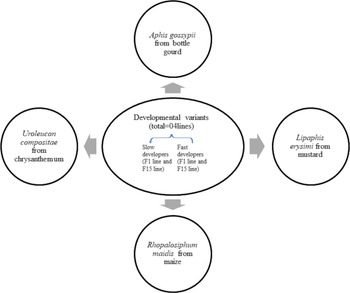
Aphis gossypii Glover from bottle gourd, Lagenaria vulgaris Seringe (Cucurbitaceae), Lipaphis erysimi (Kaltenbach) from mustard, Brassica campestri Linnaeus (Brassicaceae), Rhopalosiphum maidis (Fitch) from maize, Zea mays Linnaeus (Poaceae), and Uroleucon compositae (Theobald) from chrysanthemum, Chrysanthemum indicum Linnaeus (Asteraceae) were the aphid–host plant complexes that were chosen for the experimental design illustrated in Figure 1.
Aphid–host complexes chosen for experimental design for Propylea dissecta on four different aphid prey for both slow and fast developers of both F1 and F15 generations, respectively.

Ten-day-old unmated P. dissecta adults that had been identified and isolated as slow and fast developers were paired with their developmental type. Each separated line and the control were able to mate in their separate plastic Petri dishes (9.0 × 2.0 cm), where they were fed with any of the four prey species, namely A. gossypii, L. erysimi, R. maidis, and U. compositae. The first five days of oviposition (= 300 eggs from each line) of each line on the above prey species were examined. Until adult emergence, P. dissecta hatchlings were raised separately in Petri dishes (size as before) on the same prey species as their parents had been. The larvae were monitored twice a day for survival and moulting. The second and third instars of each prey were given to each P. dissecta line’s hatched larvae. Using an electronic balance (Sartorius CP225-D; 0.01 mg precision; Sartorius, Goettingen, Germany), aphids were weighed (aphid prey weighed approximately 30 mg for the first- and second-instar beetles, and approximately 50 mg for the third- and fourth-instar beetles and for the adults). Based on their total developmental duration, the beetle instars were classified as slow or fast developers for both the control and selected lines, according to Mishra and Omkar (Reference Mishra and Omkar2012). Emerging adult beetle body mass was measured after 6 hours of emergence.
Statistical analysis
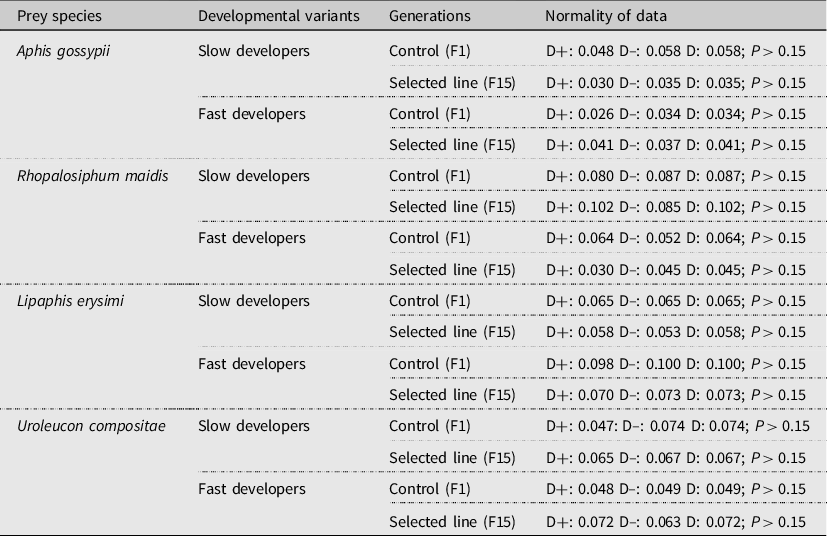
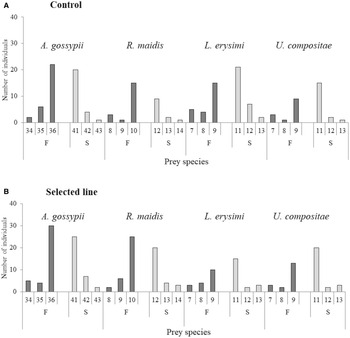
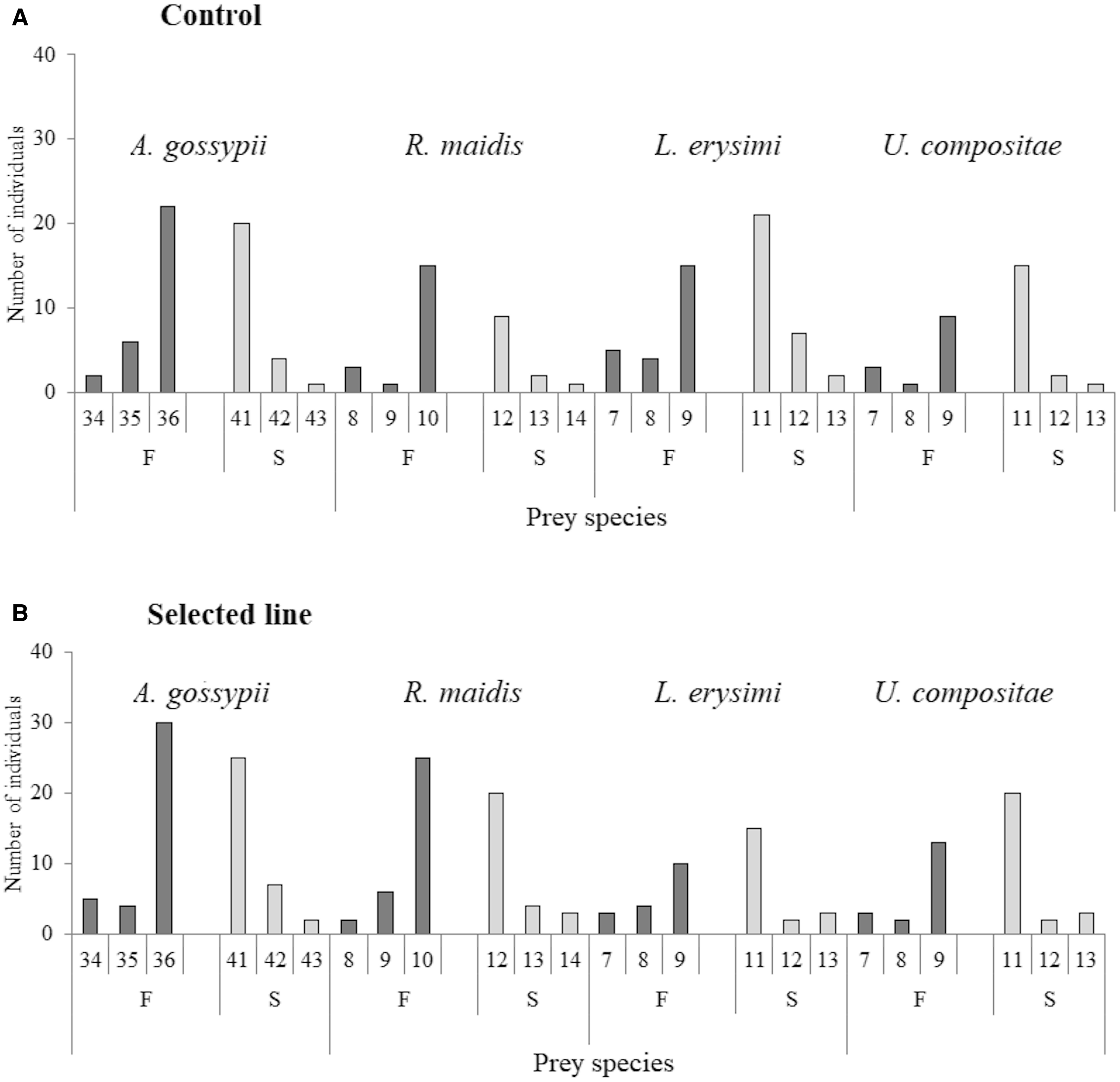
To test bimodal distribution, data on the total developmental duration for both control and selected P. dissecta lines fed on each prey species were tested by the Kolmogorov–Smirnov normality test (Table 1), and frequency data on the same were found to be bimodal (Fig. 2). For the comparison of (1) slow and quick emergence ratios and (2) overall survival, a Chi-square “goodness of fit” analysis was performed. The data were calculated using a general linear multivariate analysis of variance with generation (control and selected line), prey species, and developmental variation (slow versus fast) as independent variables and total developmental duration and adult body mass as dependent variables.
Normality of duration of developmental variants in control (F1) and selected line (F15) of Propylea dissecta on different prey species.

Frequency distribution of total developmental duration (TDD; in days) of A, F1 and B, F15 generation of slow and fast developers on four different prey species. Bars indicated number of individuals emerging at each development duration. “F” indicates fast developers, and “S” indicates slow developers of each prey species. Prey species are Aphis gossypii from Lagenaria vulgaris, Lipaphis erysimi from Brassica campestri, Rhopalosiphum maidis from Zea mays, and Uroleucon compositae from Chrysanthemum indicum.
Before the analysis of variance, percent data were arcsine-transformed, and Tukey’s post hoc comparison of means was used before subjecting the fecundity and percent egg viability data to a three-way analysis of variance. The data on generation (F1 and F15 generations), prey species, and developmental variation (slow versus fast) were assessed for normal distribution. Post hoc Tukey’s test of honestly significant difference at 5% levels was used to determine differences between activity means. We used Minitab 15.0 software (https://www.minitab.com/en-us/products/minitab) for all statistical analyses.
Results
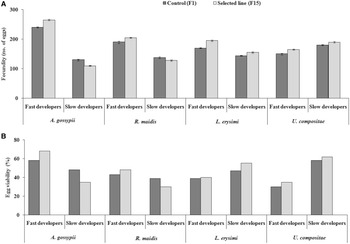
The fecundity of postselected (F15) fast-developing P. dissecta females was higher than that of preselected (F1, or control) fast-developing females, but the opposite was found for slow-developing P. dissecta reared on A. gossypii. Both the selected slow developers and selected fast developers showed enhanced fecundity on L. erysimi and U. compositae diet (Fig. 3A). Results of two-way analysis of variance revealed that the impacts of prey species and generation on the fecundity of both developmental variations of P. dissecta were statistically significant, but the interaction between prey species and generation (preselected and postselected) on the reproductive attribute was statistically negligible.
A, Fecundity and B, percentage egg viability of control (F1) and selected lines (F15) of developmental variants of Propylea dissecta on different prey species, Aphis gossypii, Lipaphis erysimi, Rhopalosiphum maidis, and Uroleucon compositae.
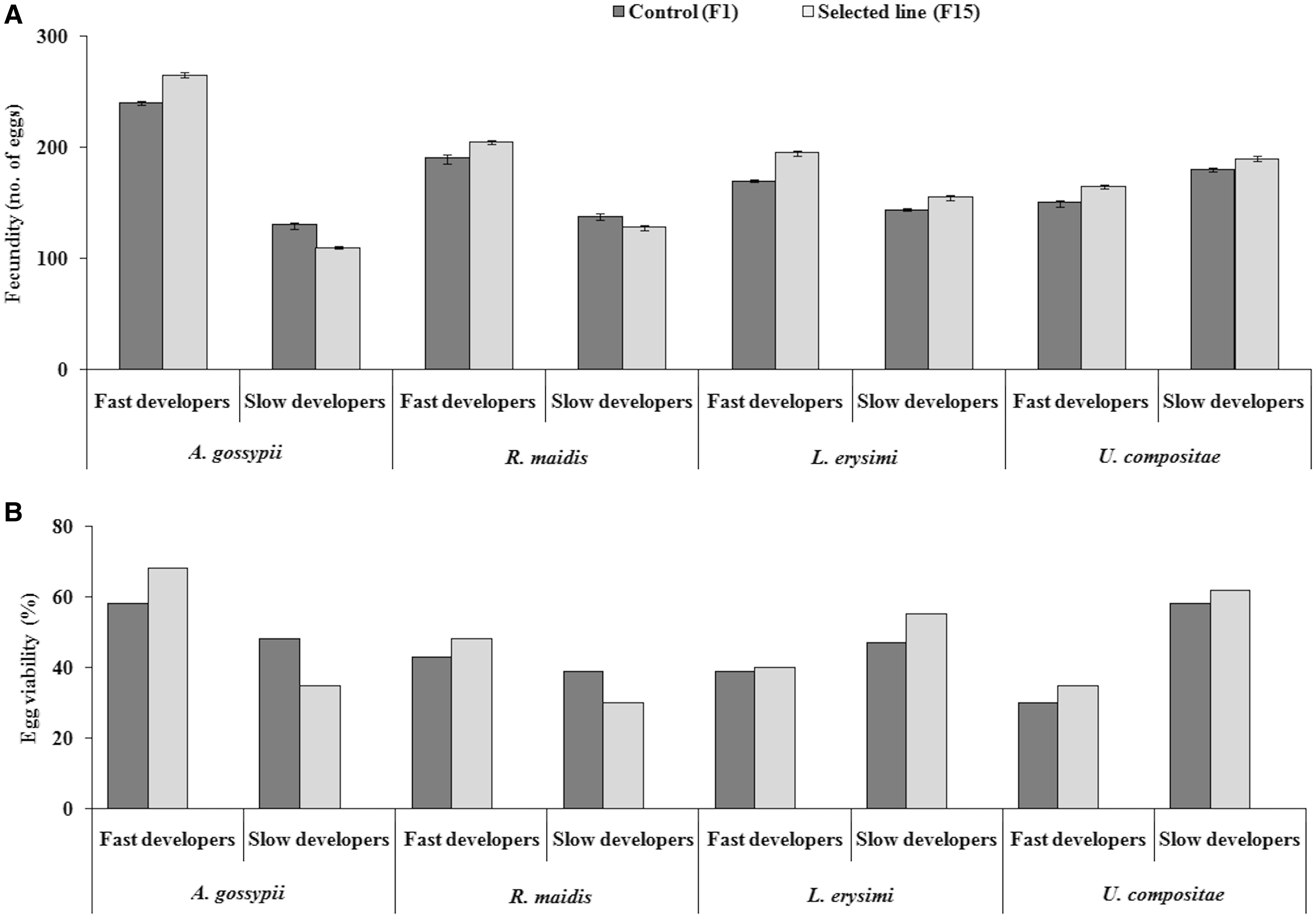
The percent egg viability of selected fast-developing P. dissecta females was higher than that of preselected fast-developing females, but the opposite was found for slow-developing P. dissecta reared on A. gossypii. Selected slow-developing P. dissecta showed enhanced fecundity on L. erysimi and U. compositae (Fig. 3B).
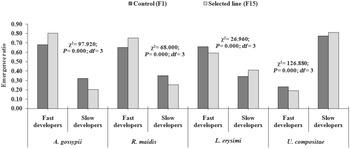
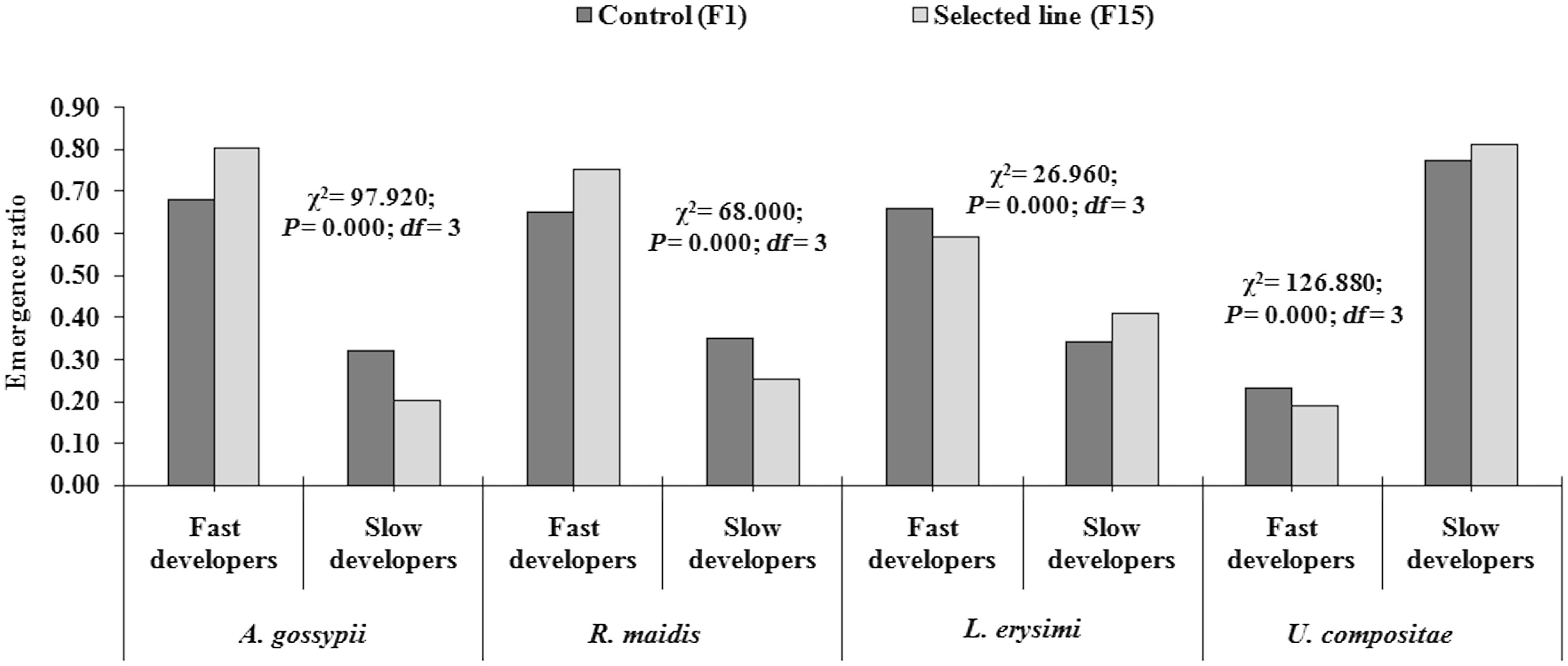
The emergence ratio of pre- and postselected slow- and fast-developing P. dissecta reared on different prey species differed significantly (Fig. 4). When the beetle larvae were fed U. compositae, the proportion of selected slow-developing specimens was highest; when larvae were fed A. gossypii, the slow-developing proportion was lowest. The maximum proportion of selected fast-developing P. dissecta was observed when larvae were fed A. gossypii, and the minimum was observed in the control group of fast-developing P. dissecta that were reared on U. compositae (Fig. 4).
Effect of prey species Aphis gossypii, Lipaphis erysimi, Rhopalosiphum maidis, and Uroleucon compositae on emergence ratio of developmental variants of control (F1) and selected line (F15) of Propylea dissecta. Chi-square (χ 2) value reveals comparison between developmental variants of both control and selected line.
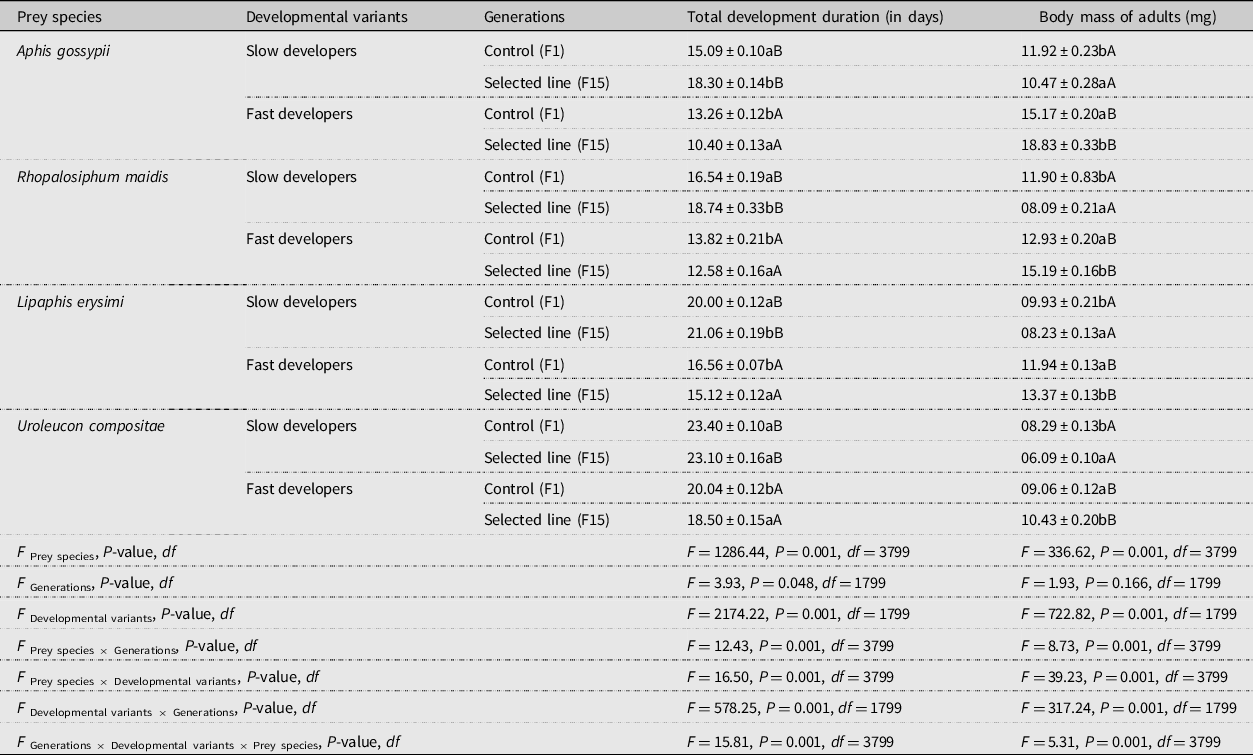
Prey species, generation, and developmental variations had statistically significant influences on the total duration of the development of slow and fast developers. The interactions were also significant (Table 2). Postselected fast developers developed more quickly than preselected fast developers did and gained maximum adult body mass regardless of which prey species they were reared on. Preselected slow developers developed more quickly than selected slow developers, gaining elevated adult body mass regardless of the prey species. In both pre- and postselected fast developers, the shortest total developmental period occurred when the larvae were fed A. gossypii, and the longest total developmental period occurred when the larvae were fed U. compositae. The opposite was observed in slow developers, which developed quickest on U. compositae and slowest on A. gossypii.
Total development duration and body mass of control and selected line of slow and fast developers of Propylea dissecta on different prey species. Multivariate analysis of variance shows effect of prey species, generation, and developmental variants and their interactions on these parameters.
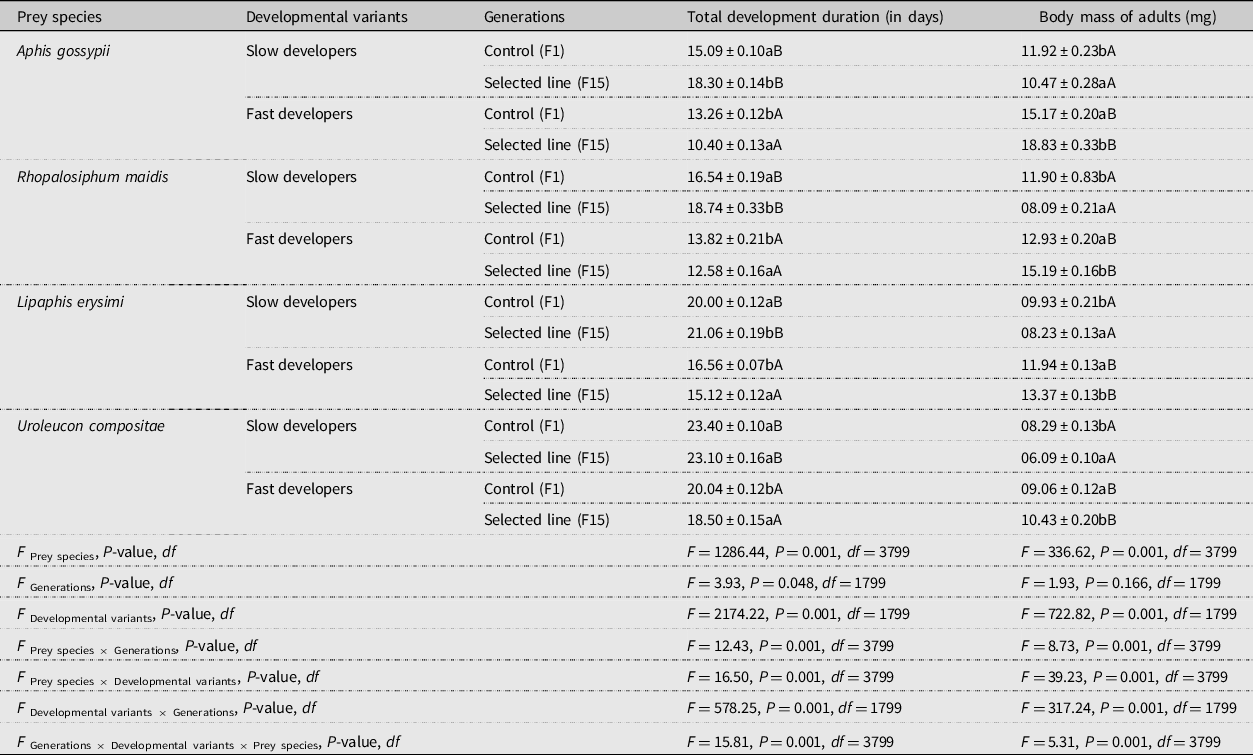
Values are mean ± standard error.
Lower-case letters represent comparison of means between slow–slow and fast–fast developers of both generations on each prey species.
Upper-case letters represent comparison of means between slow and fast developers of control and selected line within a prey species.
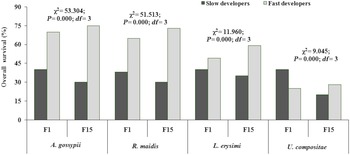
The overall survival percentages of the control and selected lines of slow and fast developers were found to differ substantially. The greatest survival occurred in selected fast developers fed on A. gossypii and the least survival occurred in selected slow developers fed on U. compositae (Fig. 5).
Effect of prey species Aphis gossypii, Lipaphis erysimi, Rhopalosiphum maidis, and Uroleucon compositae on overall survival of control (F1) and selected line (F15) of developmental variants of Propylea dissecta.

Discussion
Plasticity was found in the development of immature stages of P. dissecta from egg to adult for up to 15 generations. The coexistence of two developmental rate variants within an egg batch has been observed in a variety of taxa, including ladybirds (Singh and Mishra Reference Singh and Mishra2016) and other insects (Gouws et al. Reference Gouws, Gaston and Chown2011), and after intrinsic selection of slow and fast developers, Siddiqui et al. (Reference Siddiqui, Omkar, Paul and Mishra2015) observed a well-marked difference in predatory response of P. dissecta.
It is clear from the results of the present study that prey consumption by different life stages of ladybirds varied with aphid prey. In Propylea dissecta, the selected line of fast developers showed a well-marked feeding preference for various aphid species, with highest consumption of A. gossypii and lowest consumption of U. compositae. This might be due to conditional rearing, wherein the larvae must survive on available resources. The rate of consumption by selected lines of fast-developing P. dissecta may also be affected by the aphid prey species and their various biological constituents (Dixon Reference Dixon2000). According to Colburn and Asquith (Reference Colburn and Asquith1970) and Obata (Reference Obata1986), aphid-produced chemicals (kairomones) may also make predators more voracious at different stages of their life cycles, likewise permitting fast-developing individual to become more capable of responding to A. gossypii than to U. compositae. Aphid size may be another factor: as prey size increases, the capture rate by predators declines because larger prey are better able to escape (Chau and Mackauer Reference Chau and Mackauer1997); that is, small aphid prey are more easily caught by fast-developing P. dissecta, and because catching larger prey requires more time and effort, fast-developing predators typically avoid larger prey. Slow developers, on the other hand, appear to have a contradictory response: Siddiqui et al. (Reference Siddiqui, Omkar, Paul and Mishra2015) observed that slow-developing predators had the greatest attack rate and the longest handling time, suggesting that these predators enhance their energy returns by feeding on large prey (Schoener Reference Schoener1969).
In the present study, both control and selected fast-developing P. dissecta reared on U. compositae had poor growth and reproductive performance, perhaps because of chemicals produced by the aphids’ host plant (Seiber et al. Reference Seiber, Nelson and Lee1982; Morsy et al. Reference Morsy, Rahem and Allam2001). However, control and selected slow-developing P. dissecta reared on U. compositae were not affected. The differences in growth and performance that were observed may be due to differences in prey compatibility, which is based on the physiological state of the host plant, aphid efficiency, and nutritional budgets (Soares et al. Reference Soares, Coderre and Schanderl2004).
The nutritional composition of aphid populations might explain the significant variation in predator reproduction. Aziz et al. (Reference Aziz, Hyder and Ali1970) reported a species-specific feeding preference in C. septempunctata, which laid more eggs when fed on L. erysimi than on A. gossypii. However, in the present study, higher fecundity was found in postselected fast developers than in pre- and postselected slow developers; this can probably be attributed to the early maturation of an increased number of ovarioles, which is also likely to be dependent on the prey consumption and nutritional quality of A. gossypii. In previous research, selected fast developers were also observed to have higher consumption than pre- and postselected slow developers on A. pisum (Siddiqui et al. Reference Siddiqui, Omkar, Paul and Mishra2015), and the consumption study should be extended to support this concept on other aphid prey species as well.
Bueno and Lopez-Urrutia (Reference Bueno and Lopez-Urrutia2012) provided another study model, which indicated that an organism with a shorter developmental time produces more offspring. The findings, however, highlighted a trade-off between reproduction and survival (Scannapieco et al. Reference Scannapieco, Sambucetti and Norry2009; Lazarevic et al. Reference Lazarevic, Tucic, Jovanovic, Vecera and Kodrik2012). Slow developers invest most of their resources in physiological maintenance (Kuzawa Reference Kuzawa2008).
With changes in prey organisms, the ratio of pre- (control = F1 generation) to postselected (selected = F15 generation) slow- and fast-developing ladybird beetles changed. As observed in the present study, the optimal prey promotes faster development, results in lower mortality of larvae (Chen et al. Reference Chen, Xie and Li2012), and yields larger adults (Michaud Reference Michaud2005). As a result, selected fast-developing P. dissecta fed on A. gossypii and L. erysimi probably were able to develop more effectively and in greater numbers than the F1 (control) generation was able to. More slow-developing P. dissecta were found on U. compositae, which are known to be suboptimal prey, having low nutrition (Omkar and Bind Reference Omkar and Bind2004). Such a stressful diet may be unsuitable for fast-developing predators, and their increased mortality on U. compositae may have skewed the ratio in favour of slow developers under less favourable conditions, as was found in the present study. The varying ratios of slow versus fast developers according to prey species may indicate increases in the mortality of particular developmental predator variants (slow versus fast developers) unable to meet the required threshold mass for the next developmental stage when fed on each prey species. As a result, we found that the overall fitness promoted by prey species, or the overall suitability of prey species for selected fast developers, was ranked as follows:
 $$A.\,gossypii \gt R.\,maidis \gt L.\,erysimi \gt U.\,compositae$$
The present study shows that each aphid species had a considerable impact on the life qualities of the developmental variants of both generations (F1 and F15) of P. dissecta, with some prey species being more suitable than others. The existence of both developmental variants on all prey species in both the F1 and F15 generations changed with the prey species. We observed elevated performance in selected (F15) fast developers compared to that in preselected (F1) fast developers, and we recorded the most selected fast developers on A. gossypii, which was probably the most nutritious prey, and fewest on U. compositae, which was the least nutritious prey. Fast developers were observed to be heavier than slow developers, and the selected fast developers fed on A. gossypii produced more eggs with greater egg viability. Preselected (F1) slow developers gained the most body mass within a depressed developmental time than selected slow developers did. In this way, the study indicates increased survival of predators on better-suited prey species that was achieved through a process of selection that generally resulted in increased fitness after generational rearing, in comparison to lower survival of predators on less-suited food conditions or in a preselected generation of predator (= F1 generation or control individuals).
Acknowledgements
The Department of Science and Technology, New Delhi, India provided financial assistance to A.S. and G.M. under the Fast Track Young Scientist Scheme. Omkar is grateful to the Department of Higher Education, Government of Uttar Pradesh, Lucknow, India for funding this project under the Centre of Excellence initiative.
Disclosure statement
The authors have declared no conflicts of interests.