


David Albert (Reference Albert2000) has recently argued that classical electrodynamics is not invariant under time reversal. In Albert's discussion, time reversal changes the sign of neither the electric and magnetic fields. It does, however, change the direction of the charge (3-) current; the result is that the time-reversed fields and currents do not furnish a model of electrodynamics. David Malament (Reference Malament2004) has responded to Albert by arguing for a novel conception of time reversal supporting the conventional view that the magnetic field flips, together with the charge current; from this, Malament concludes that electrodynamics is indeed time-reversal invariant.
I will here argue that Malament has come up with an interesting notion of time reversal, but it is not one that supports the conventional view against Albert. The transformation Malament proposes is a passive transformation—a change of coordinates—however, what is of most interest in determining symmetry properties of electrodynamics (or any other theory) are active transformations, and in fact it was these with which Albert was concerned. Now it is possible to read off an active time-reversal transformation from Malament's presentation. Under this, electrodynamics is indeed time-reversal invariant; however, the active counterpart of Malament's transformation is one under which the magnetic and electric fields both flip.
I will begin with a rapid summary of Malament's approach. No such summary can do justice to Malament's elegant presentation; for the reader who wants to understand the issues, there is no substitute for reading Malament. My only purpose in giving a quick précis is to orient the reader to how I am reading the paper, so that he can get a better sense of why I think that what is presented therein is a passive transformation.
The leading idea in Malament's account is to think of the 4-velocity of a particle at a space-time point as a conventional representation of the particle's worldline near that point. Taking it as a given that we will represent the worldline at x by a unit 4-vector tangent to the worldline at x, what is chosen by convention is the orientation of the 4-velocity: there are two unit vectors pointing along the worldline, and we choose the one that lies in the same lobe of the light cone as the conventionally chosen forward-pointing time vector. Now Malament points out that in principle it is possible to think of electrodynamics as proceeding without ever introducing such a convention. In such an approach, the electromagnetic field may be thought of as (represented by) a map X that at each point determines, for any worldline L and charge q, the force X(L, q) that would be felt by a particle whose worldline at x is L and whose charge is q; here the force is represented by a spacelike vector that is well-defined independently of time orientation. The advantage of choosing a time orientation and, thereby, a single vector to represent each worldline is that we can then represent our map X by a map from timelike to spacelike vectors; this turns out to be given by a tensor field, namely, the familiar Fab: if L is a worldline represented by the 4-vector ηa, then X(L, 1) is Fabηb. Had we chosen the opposite time orientation, X would have been represented by −Fab. Malament similarly treats the 4-current as (represented by) a map K that can be specified without choice of time orientation, namely, one from a worldline L at a point to the charge density that would be experienced by an observer with worldline L at that point. Upon our choice of time orientation, and with this our choice of which 4-vectors represent observers, the 4-current is represented by a vector Ja; if ηa represents the observer, Jaηa gives the charge density. As for the electric and magnetic fields, Malament treats these as 4-vectors: if ηa is a forward time-directed unit field representing an observer, then at each point Ea is Fabηb. There is a similar formula (involving a conventionally chosen volume element) for the magnetic field Ba.
We come now to Malament's treatment of time reversal. The crucial sentence is the following: “The time reversal operation is naturally understood as one taking fields on M as determined relative to one temporal orientation to corresponding fields on M as determined relative to the other” (Reference Malament2004, 306). Now notice that, for Malament, the fields alluded to here—F, J, E, and B—are all time-orientation-dependent representations of physical realities, which also have representations that do not depend on a choice of temporal orientation, namely, X and K. The contrast between F, J, E, and B, on the one hand, and X and K, on the other, can thus be compared with the familiar case of physical realities that have both coordinate-framework-dependent representations and coordinate-framework-independent representations.Footnote 1 This is the context in which most of us learned the distinction between passive and active transformations. A passive transformation maps one coordinate representation—in this context an assignment of matrices to space-time points—of some physical reality (say, the electromagnetic [E-M] field) to another such representation, namely, the one induced by changing coordinate bases (at each space-time point). By contrast, an active transformation takes one physical reality—for example, a state of the E-M field—to another. If our physical reality allows a representation by tensor fields, as the E-M field does, an active transformation can be represented by a map from one tensor field G to another G′. If we fix our coordinate framework, such a map can also be represented as a map from one matrix to another (at each space-time point), but the meaning of the matrix map is entirely different than in the passive case. Here, the matrix map represents the transformation—the map between states of the E-M field; in the passive case the matrix map is the transformation, since the transformation consists in replacing one assignment of matrices by another.
In the particular case of the E-M field, the fact that any state of the field can be represented by two different tensor fields, depending on our choice of time orientation, allows us to define another variety of passive transformation, namely, that from one tensor field representation to another. I think it is clear that this is what Malament has in mind by speaking of time reversal as taking a “field … determined relative to one temporal orientation” to one determined relative to another. For Malament, both (tensor) fields correspond to the same X; they leave untouched not only X but what X represents, namely, the state of the E-M field. They are passive transformations—changes of representations, not of physical realities. Likewise for the change in the current vector induced by a change in temporal orientation: here K and what it represents (the location of charge in space-time) are left fixed—only the representation Ja changes.
Albert, by contrast, is pretty plainly interested in active transformations: he wants to know whether “for any sequence of … states SI … SF which is in accord with the dynamic laws of electrodynamics, SF … SI is too” (Reference Albert2000, 20) and, thus, whether given one possible history another distinct history is also possible. What about the writers of the texts—the texts in which we learn that time reversal changes the magnetic but not electric fields? Well, as it turns out, the standard passive (coordinate) transformations are formally the same as the active transformations they induce (in a sense I am about to explicate); this fact, combined with the tendency of physicists to be a little careless about the distinction between the two, is guaranteed to produce some unclarity about which of the two is of greater interest to the writers of the texts. It seems to me that they are interested in both: those who are interested in the form invariance of the Maxwell equations and the connection of this with a ‘privileged’ direction of time tending to emphasize the passive transformation, and those who are concerned with the behavior of particles and fields under symmetry operations tending to be more concerned with the active transformation.
So it seems natural to ask whether Malament's general approach leads to a notion of active time inversion, if only because otherwise he and Albert are speaking past each other.Footnote 2 Now, there is a general method that, when we are given a passive transformation, allows us to find an active transformation that in a natural way corresponds to it. In the case of coordinate framework transformations, the method—one version of it, anyway—goes as follows: suppose that our passive transformation takes the matrix representation R of some physical situation in coordinate framework 1 to another matrix representation, f(R), of the same physical situation but relative to another coordinate framework.Footnote 3 Then the corresponding active transformation takes a situation that is represented in framework 1 by R to the situation that is also represented in framework 2 by R and, therefore, in framework 1 by f−1 (R)2. To turn this into a general prescription, one that applies to the case of Malament's transformation, all we need to do is delete the words ‘matrix’ and ‘coordinate’ from the above description. The appropriate Rs are not matrices but tensor fields, but we still have a clear notion of alternative ‘frameworks’—that is, temporal orientations—and of the map f from a representation R in one framework to the representation f(R) of the same physical situation (X and K). So it is straightforward to define an active transformation corresponding to Malament's passive one. Let us look at the details.
First, suppose that the force f on a particle at x is represented relative to the time orientation τ by the spacelike vector f. How is the same force represented if we change the time orientation to −τ? We know the answer to this: our representation of force is independent of time orientation; relative to the new orientation, the same f is represented by f. The passive transformation is thus identity. It is obvious that the active transformation is also the identity transformation, but just to be explicit about method and notation, let us do it slowly. Let us notate the active transformation as taking f to its time reversal f T; this transformation can be represented, relative to a fixed-time orientation τ, by a map from f, the (4-) vector representing f relative to τ, to what we will call fT, the (4-) vector representing f T relative to τ. If P is our passive transformation, then
 $\mathrm{P}\,(\mathrm{f}\,^{\mathrm{T}\,}) =\mathrm{f}\,$
; this says that the force represented relative to τ by fT (this force is, of course, fT) is represented relative to −τ by f. Since P is identity,
 $\mathrm{f}\,^{\mathrm{T}\,}=\mathrm{f}\,$
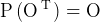
. Let us use a similar notation from here on: if O is a vector or tensor (field) representing some physical reality R relative to the time orientation τ, P(O) will represent R relative to −τ, OT will represent the time reversal of R relative to τ, and we will expect to find the relationship
 $\mathrm{P}\,(\mathrm{O}\,^{\mathrm{T}\,}) =\mathrm{O}\,$
.
Let us now ask for the time inversion of the electromagnetic field tensor, represented relative to the orientation τ by the tensor Fab. This tensor, Fab, represents a map X from the worldline L of a charged particle (with charge 1) to a force; given the orientation τ, L is represented by a unit vector ηa tangent to L, such that
 $\eta ^{\mathrm{a}\,}\tau _{\mathrm{a}\,}.> 0$
.Footnote 4 Then if
 $\mathrm{X}\,(\mathrm{L}\,,\, 1) =f$
, we have
 $\mathrm{F}\,^{\mathrm{a}\,}_{\mathrm{b}\,}\eta ^{\mathrm{b}\,}=\mathrm{f}\,^{\mathrm{a}\,}$
, for fa the representation of f relative to τ. Under the orientation −τ, L is represented by −ηa, so X will be represented relative to −τ by a tensor Gab such that
 $\mathrm{G}\,^{\mathrm{a}\,}_{\mathrm{b}\,}(-\eta ^{\mathrm{b}\,}) =\mathrm{f}\,^{\mathrm{a}\,}$
, fa being the representation of f relative to −τ.Footnote 5 Manifestly, Gab must be −Fab. This tells us the passive time inversion of
 $\mathrm{F}\,^{\mathrm{a}\,}_{\mathrm{b}\,}\thinspace{:}\thinspace \mathrm{P}\,(\mathrm{F}\,^{\mathrm{a}\,}_{\mathrm{b}\,}) =-\mathrm{F}\,^{\mathrm{a}\,}_{\mathrm{b}\,}$
(again in agreement with Malament). As for the active transformation, let us suppose (we will reconsider this a little later) that the usual relation between active and passive holds good here:
 $\mathrm{P}\,(\mathrm{F}\,^{\mathrm{aT}\,}_{\mathrm{b}\,}) =\mathrm{F}\,^{\mathrm{a}\,}_{\mathrm{b}\,}$
. Then active time reversal is represented in τ by the map
 $\mathrm{F}\,^{\mathrm{a}\,}_{\mathrm{b}\,}\rightarrow -\mathrm{F}\,^{\mathrm{a}\,}_{\mathrm{b}\,}$
. Notice that this can be read back to tell us the time inversion of the map X from
 $\mathrm{worldline}\,+\mathrm{charge}\,$
to (4-)force vector: it takes a worldline with charge q to a force vector directed oppositely to the vector that is its image under X.
We next want to ask about Ja, the charge-current vector. Vector Ja represents the map K that takes an observer (represented by a timelike worldline L) to the charge density as seen by that observer; under the orientation τ, the observer will be represented by a unit vector η tangent to the worldline, with
 $\eta ^{\mathrm{a}\,}\tau _{\mathrm{a}\,}> 0$
; then
 $\mathrm{K}\,(\mathrm{L}\,) =\mathrm{the}\,$
scalar
 $\mathrm{J}\,^{\mathrm{a}\,}\eta _{\mathrm{a}\,}$
. Under passive time inversion, the fact that L will be represented in −τ by −ηa (together with our assumption that charge is not orientation dependent) means that K must be represented relative to −τ by −Ja (again we agree with Malament). What about the active transformation of K? Well, according to our guiding assumption,
 $\mathrm{P}\,(\mathrm{J}\,^{\mathrm{aT}\,}) =\mathrm{J}\,^{\mathrm{a}\,}$
; that is, the vector that represents the time reversal of K with respect to −τ is the vector that represented K with respect to τ, namely, Ja. The time reversal of K must then be represented with respect to τ by −Ja. In short,
 $\mathrm{J}\,^{\mathrm{aT}\,}=-\mathrm{J}\,^{\mathrm{a}\,}$
. Notice that −Ja represents a quite different map than does Ja: if, relative to an particular observer whose time orientation is τ, the charge current happens to be represented by a future-pointing Ja, the observer will see a positive charge; had the charge current been one represented with respect to the same observer and time orientation by −Ja, she would have seen a negative charge. Active time reversal switches charge. (Notice that this does not mean that whether a certain particle or stream of particles is positively charged is a matter of temporal orientation: if my orientation is τ, and the charge current is represented by a future-pointing Ja, so that the charge density I experience is positive, changing my temporal orientation to −τ changes the representation to −J, which I still count as future pointing and thus still represents a positive density.)
Let us pause to make two remarks. The first is that the formula
 $\mathrm{P}\,(\mathrm{O}\,^{\mathrm{T}\,}) =\mathrm{O}\,$
is not sacrosanct. What is I think is undeniable is that it should hold for the representations O of some physical quantities: without this, I think that we would have no way to say that an active transformation in any sense corresponds to, or can be read off from, a passive one. But it may be that, having used this formula to discover the active transformations of some physical quantities X, Y, Z, … , the active transformations of other quantities V, W, … , are forced on us because of their relations with X, Y, Z, … , conceivably in ways that conflict with our formula. It is encouraging that no such problem arises here: applying our formula to Ja, Fab, and f a (f a the total force on the current), we end up with
 $(\mathrm{F}\,^{\mathrm{a}\,}_{\mathrm{b}\,}) ^{\mathrm{T}\,}(\mathrm{J}\,^{\mathrm{b}\,}) ^{\mathrm{T}\,}=(f^{\mathrm{a}\,}) ^{\mathrm{T}\,}$
; the defining relations connecting our physical quantities are consistent with transforming them individually according to
 $\mathrm{P}\,(\mathrm{O}\,^{\mathrm{T}\,}) =\mathrm{O}\,$
.
The second remark is that if instead of taking J as the basic quantity representing the motion of charged particles, we had represented the motion of particles individually, each by a pair (η, q) consisting of a future-pointing unit tangent to the worldline of the particle and the charge of the particle, then it might have seemed plausible to transform, both actively and passively, by transforming η and leaving q unchanged. In the case of the passive transformation, this agrees with what we had above: under change of time orientation from τ to −τ, the particle will now be represented by the vector −ηa, and the pair (−ηa, q) is essentially the same as our −Ja. But what is the corresponding active transformation of the particle's worldline L? There is no worldline that is represented relative to τ by −ηa, since −ηa is not future pointing relative to τ. If we had to say how L transforms (actively), I see no plausible alternative to saying that LT is just L, in which case either we stick with the idea that q does not change sign on time reversal, in which case the entire active time-reversal transformation works out to be the identity, or we change q to −q ‘by hand’ with no justification that I can see. Taking charged currents as the basic quantity, we are led to the same transformation, but this time with a justification.
I come now to the electric field E. Here, in contrast to his treatment of the E-M field as a whole, Malament does not first give an orientation-free characterization of the electric field; he moves directly to a characterization of E as a frame of reference dependent quantity, where the frame of reference—a smooth future-directed unit timelike field ηa—picks out (at each space-time point) both an observer with his plane of simultaneity and a temporal orientation. Given ηa, E is given as Fabηb, and Malament reads off the transformation properties from those of Fab and ηa: we know that under (passive) time reversal, Fab goes to −Fab; with the change in time orientation, ηa goes to −ηa; and the result is that E is unchanged under time reversal.
Notice that if we think in terms of an observer at a point, now represented by a worldline O, then that observer will experience the same electric field, whatever time orientation he chooses. For suppose that he represents himself by the future-pointing (relative to his time orientation) tangent to his worldline ηa and represents the E-M field as his location by Fab. If he changes time orientation, he will represent himself by −ηa, but he will also represent the E-M field by −Fab, so the contraction of tangent and field vector, that is, the electric field, is the same as before. This means that Malament might easily have offered a time-orientation-independent characterization of E, parallel to that he offered for F and J, and I propose that we do so here. Take the electric field as a map from an observer (worldline) O at a point x and a charge q to a force, one that will be experienced by that observer if he is carrying charge q. Then, given observer and time orientation τ, the representation relative to τ of the electric field-for-this-observer is got at each point by contracting Fab, representing the full electromagnetic field, with the future-pointing unit tangent to the observer's worldline.
What is the passive transformation of E? We have just been through the argument: time orientation, future-directed tangent, and E-M field vector all flip their signs; the contraction of the last two gives the electric field vector, which is unchanged, as Malament claims.
Consider now the active transformation of the electric field. Suppose that the observer is represented at point x, relative to τ, by ηa; the electromagnetic field at x by Fab; and the electric field (for that observer, at x) by the contraction of the two, say E. We already know the active transformation of Fab: it is −Fab. The observer represents himself relative to τa by ηa, so the electric field he experiences is the contraction of ηa with −Fab, that is, −E.
This is the first time that we have found a difference in the formulas for active and passive transformations, and we need to see why it arises. I noted above that Malament apparently arrives at the passive transformation by simply transforming everything in the equations
 $\mathrm{E}\,^{\mathrm{b}\,}=\mathrm{F}\,^{\mathrm{a}\,}_{\mathrm{b}\,}\eta ^{\mathrm{b}\,}$
, taking the time inverse of ηa as −ηa. Why does this not hold for the active transformation? To see why not, begin by asking, what is the active time-reversal transformation of ηa—that is, what vector field represents relative to τa the same observer that, relative to −τa, is represented by ηb? Well, ηb cannot represent an observer relative to −τ, since in that orientation ηb is past pointing, and observers are represented by future-pointing vectors; the question makes no sense. Even if it did make sense, it would be the wrong question. Just as we specify an active boost transformation by showing the relation between the vector representations of a particle's 4-momentum and that momentum when boosted in one and the same fixed coordinate system, so to specify the active transformation of E-relative-to-observer-O, we should be asking how the representation of the time reversal of E-relative-to-O relates to the representation of E-relative-to-O under a single fixed time orientation. This means that we leave fixed our time orientation—say, the orientation represented by τ—when we calculate both E-relative-to-O and E(time-reversed)-relative-to-O. And this means that if ηa is the tangent to O in the direction of τ, then we should not be asking how ηa transforms: we should contract it, first with Fab and then with −Fab to calculate E-relative-to-O and the time reversal of E-relative-to O, as these are described in the fixed time orientation τ. So ET is −E. The situation with Ba is similar; Ba is determined as a contraction of the volume element, the observer, and Fab. To describe the magnetic field corresponding to the (actively) time-reversed E-M field, as it appears in our original coordinate system, we use the same volume element and ηa that define this coordinate system; since Fab gains a minus sign, B does too.
The upshot is that, with F, J, E, and B all switching their signs, the Maxwell equations are satisfied. Electromagnetism is time invariant in this picture: a flow of charge becomes a flow of the opposite charge, but along the same space-time path; this is acted on by minus the original E-M field and so produces the same accelerations we had originally.
An oddity of the present treatment is that it cannot, so far as I can see, be extended to include particles of neutral charge.Footnote 6 This is for a reason given earlier: such a particle would have to be represented simply by a worldline (together with a specification of mass and other ‘internal’ properties); relative to any τ, it will be represented by a future-pointing timelike vector ηa. Under change of time orientation from τ to − τ, the particle is represented by the vector −ηa. The corresponding active transformation will represent the particle by the same −ηa, only relative to the time orientation τ. But there is no particle with this representation, since −ηa is past pointing with respect to τ.
Coming finally to the question with which we began: Has Malament succeeded, as he promised, in defending orthodoxy? Not quite. The orthodoxy that Albert challenged was one according to which the active transformation of the E-M field changes the sign of the magnetic but not the electric fields; Malament's active transformation changes both, and it is only his passive transformation that formally resembles the orthodox transformation (in either its active or passive versions). This does not mean, I think, that either Malament or orthodoxy is wrong about this. Rather, what is perhaps a little clearer now than it had been before is that choosing a direction of time plays two different roles in classical E-M, which tend to be conflated when—to speak of flat space-time (the reader can do the mutatis muntandisses for curved space-time)—we choose a basis of unit vectors and thereby give time coordinates to all of space-time. One role is exactly analogous to that of the spatial directions, namely, as one of the four choices that allow us to label every point in space-time. Given such a labeling, we can now invent label-switching coordinate transformations and thereby discover corresponding symmetries, following the path from passive to active transformations that we have been concerned with throughout. The other role that the timelike basis vector e0 plays for us is to specify a time orientation: it is customary, though by no means necessary, to assign vectors to worldlines, currents, and the electric and magnetic fields according to the time orientation in whose future light cone e0 lies. But these two roles are quite unconnected: one can pick a time orientation, as Malament does, without bothering to pick an observer or a basis; picking a basis does not force us to align the future in the direction of the time basis vector. And it is not surprising that these two roles lead, quite legitimately, to distinct active transformations. One is the conventional one, in which the passive change of label on each space-time point leads to an active transformation that moves positions of particles in space-time. The other changes a different kind of label—the association of vectors and tensors with physical quantities, which is induced by the time orientation; the effect its active version has on charges and fields seems hard to describe in a unified way, but it too is a symmetry, a different one.
One last remark. As far as a defense of the orthodox viewpoint is concerned, Malament's discussion (Reference Malament2004) in the first few pages of his paper may not be enough to satisfy him or Albert, but it seems fine to me; in any case, nothing I say here is meant to cast any doubt on it. To paraphrase Malament—but in a way that postpones talking about orientation-dependent quantities as long as possible—the usual active transformation arises by our standard procedure from a particular passive transformation: that in which we shift from coordinates in some orthonormal coordinate system to those in a system with the same origin, and with the same spacelike basis vectors, but with a flipped time-basis vector. The corresponding active shift moves an object located (relative to the original frame) at (t, x, y, z) to a new location, the one with coordinates, in the same frame, −t, x, y, z). If one supposes that the active shift of an entire chunk of the history of the world relocates all particle positions such that they keep their old coordinates in the new coordinate system, then we can read off the transformation of worldlines and (assuming
 $\mathrm{F}\,=\mathrm{ma}\,$
) 4-forces. Making as always the assumption that charges of particles are unaffected and that the map X characterizing the E-M field continues to map worldlines to forces, we can now read off the transformation of X. Time orientation has played no role so far—even our convention of aligning the future with the direction of the time-basis vector has not mattered, as we may notice from the fact that our active transformation can be described without choice of a basis. But, of course, we can introduce a time orientation and thereby describe, relative to that orientation, how Ea and Ba change when we change X, and change thereby the Fab that represents X relative to our time orientation. In describing how Ea, Ba, and Fab change, we refer all of them to our original time orientation; this is just one more case of our general procedure of describing the active switch in an entity by describing it before and after in the same coordinate system. So referred, Fab is transformed in the orthodox way—the one according to which in any coordinate system Ea is unchanged and B changes sign. I have no problem with any of this, but it has no connection with Malament's own transformation, either passive or active.



