


Political science has mirrored the political culture even as it has explained it. Nowhere is the power of the culture's influence on what and how the discipline knows more evident than in the gender politics of political science. By “gender politics of political science,” we mean the processes through which the discipline has itself been shaped by prevailing beliefs about the intersection of biological sex, socially constructed gender, and political life. At critical times, the gendering of political science has left it unprepared to explain notable changes in political life.
Dating back to the classical texts of Western political philosophy, those who have written about politics have assumed a fundamental division between public and private life. Political science has located its most central concepts, particularly power and the state, in the public, and like society generally, has aligned what it means to be a man or woman with public and private. Men have been viewed as public, and thus political, actors; women generally have not. Given these assumptions and the fact that most of its practitioners have been male, it is not surprising that the discipline itself would be gendered. As a result, political scientists would be unlikely to see questions of gender until the numbers of women in the discipline increased and events external to the discipline caused a reexamination of the assumption that women are not political.1
For the development of gender as an analytical construct, as well as its varying uses in the discipline, see Carroll and Zerilli 1993, Burns 2002, and Hawkesworth 2005.
Earlier scholarship analyzing the relationship between gender and politics was the foundation for the work of those who have begun to articulate theories of gendered institutions and a gendered state (Acker 1992; Kenney 1996; Duerst-Lahti 2002, 2006; McBride Stetson 2002), and various political scientists have implicitly or explicitly employed this perspective to analyze institutions including legislatures, the executive branch, campaigns, and social and foreign policy (e.g., Duerst-Lahti, 2002, 2006; Josephson 1997; Leatherman 2005; Thomas 2005). Although the framework of gendered institutions has not been used before to look at political science itself, it provides an excellent lens through which to analyze gender in the discipline.
Sociologist Joan Acker theorized that institutions are gendered because gender is “present in the processes, practices, images and ideologies, and distributions of power in [them]” (1992, 567). Institutions inevitably take on the characteristics and preferences of their founders and of powerful external actors (Duerst-Lahti 2006); in this case, the characteristics and preferences are those of masculinity. All actors within an institution have gender; members' experiences within the institution vary according to gender; and most important, gendered institutions “produce, reproduce, and subvert gender,” according to Sally Kenney (1996, 456–57). In this essay we examine political science as a gendered institution across three critical time periods: the founding era of the discipline, the 1970s and 1980s, and the present. For each period, we assess the presence, position, and experiences of women in the profession; the norms of gender within the discipline; and the way political science has dealt with women and gender as subject matter.
THE FOUNDING ERA: THE TURN OF THE CENTURY
Political science became institutionalized as a discipline during the Progressive Era, a period when women were very active in social reform movements ranging from settlement houses to temperance to child labor reform. Although women did not achieve national suffrage in the United States (despite local exceptions) until the Nineteenth Amendment was added to the Constitution in 1920, the suffrage movement itself had been active since 1848 and was very visible by the time the American Political Science Association was founded in 1903 and the American Political Science Review published its first issue in 1906.

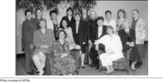
Former Presidents of the Women's Caucus for Political Science gather in Atlanta to celebrate the Caucus' thirtieth anniversary. Back row (L–R): Barbara Nelson, Mary Hawkesworth, Susan Tolchin, Karen O'Connor, Molly Shanley, Arlene Saxonhouse, Naomi Lynn, Jennifer Hochschild, and Marie B. Rosenberg. Front row (L–R): Georgia Duerst-Lahti, Carol Nackenoff, Toni-Michelle Travis, M. Margaret Conway, Rita Mae Kelly, Jane Mansbridge, and Marianne Githens.
The magnitude of women's activism outside the academy stood in stark contrast to the roles and views of women within the newly forming discipline. Not only were women absent from the list of those commonly considered as the founders of political science, but also women were nearly absent from the discipline. Only 10 women received Ph.D.'s in political science between 1890 and 1919, an estimated 5.5% of all doctorates awarded across the three decades. Women Ph.D.'s increased in number to 27 in the 1920s and to 51 in the 1930s, but those totals represented only 9% of all Ph.D. recipients in each decade (Cook 1983, Table 1).2
Apparently all of these women were white. The first African American woman to receive a political science Ph.D. was Merze Tate (Harvard University and Radcliffe College, 1941), followed by Jewel L. Prestage (Iowa, 1954). See Woodward 2005 and Martin 2005.
The experiences of Sophonisba Breckinridge, the most famous woman to receive a doctorate in political science in its formative years, illustrate the barriers that capable women faced. Breckinridge earned her doctorate from the University of Chicago in 1901, but, “Although I was given the Ph.D. degree magna cum laude,…no position in political science or in Economics was offered me. The men…went off to positions in College and University faculties” (quoted in Fitzpatrick 1990, 82). Instead, she worked as an assistant to the dean of women and as the assistant head of a women's dormitory. When Chicago opened a law school in 1902, Breckinridge enrolled in its inaugural class and became its first woman J.D. Her former employer, the dean of women, was instrumental in securing an instructorship at Chicago for her after she graduated from law school, but not in political science: it was in the new Department of Household Administration.
Breckinridge went on to have a major impact on the field of social work, teaching the first course in public welfare administration, introducing the case study method of social work, founding the journal Social Service Review, and writing and editing more than 30 books (Fitzpatrick 1990). One of them, Women in the Twentieth Century (1933), included four chapters on women's involvement in politics, making it the first major book on women to be written by a political scientist. This book was largely ignored by the discipline until recently. It was not cited in such noteworthy works as V.O. Key's Politics, Parties, and Pressure Groups ([1942] 1964), David Truman's The Governmental Process (1955), or The American Voter (Campbell et al. 1960). Its first citation in a political science journal came in 1980, according to the Social Science Citation Index.
One of the most successful and well published of the cohort of women political scientists to follow Breckinridge was Louise Overacker, a student of Charles Merriam at Chicago, who spent her career at Wellesley from 1925 until her retirement in 1957 (Department of Political Science at Wellesley College). Following Breckinridge's advice, Overacker initially tried to find a position at a Ph.D.-granting institution. Although the chair of the political science department at a major state university did offer her such a position, he later retracted it on the grounds that sharing an office with a male professor would be inappropriate for a woman (Cook 1983, 16–17). Like Breckinridge and Overacker, the less renowned women of their cohorts also had careers that were shaped and constrained to a large degree by their gender.
The gender politics of political science in its early years also was evident in its published scholarship. Before the Review, the Political Science Quarterly was the major journal in the field. Despite women's heightened public involvement during the Progressive Era and the importance of a massive expansion of suffrage to the structure and processes of American politics, Political Science Quarterly published only 10 articles dealing with women (out of 1038) between 1886 and 1925 (Nelson 1989, 6). Similarly, the Review published only three articles (out of 406) on women in the years between its birth in 1906 and 1924 (Shanley and Schuck 1974).
John Burgess, who has been called the father of political science in the United States (Somit and Tanenhaus 1967, 3), founded both Political Science Quarterly and one of the first two graduate programs in political science (at Columbia University). By all accounts, Burgess was an opponent of women's suffrage (Nelson 1989; Dietz and Farr 1998), but he was hardly alone. His anti-suffrage views were widely shared by other political scientists (Dietz and Farr 1998).3
President Woodrow Wilson, a political scientist, was instrumental in the passage of the Nineteenth Amendment, but, apparently, from expediency rather than belief (Graham 1983–1984).
In an analysis of the four major textbooks identified by the Haines Committee, Barbara Nelson found them to take a “state-centered construction of politics,” emphasizing masculine domains (1989, 8). Early political scientists focused on the state as their central theoretical and analytical construct (Somit and Tanenhaus 1967), and Dietz and Farr (1998) have demonstrated convincingly that the state was conceived in distinctly masculine terms, even to the point of referring to the state as a “man.” Their state-centric focus and masculine biases prevented the first generation of political scientists from seeing or understanding the lasting political relevance of women's public involvement in the period; instead, it was left to be unearthed and explained decades later—largely by historians (e.g., Baker 1984; Cott 1987).
The seeming loosening of some gender role strictures during the 1920s and the 1930s and the full mobilization of men's and women's energies during World War II were followed, not by continued change, but by a return to views of the differences between the sexes as extremely deep and broad. The number of women earning doctorates in political science increased in the 1950s and 1960s, but the proportion of female Ph.D.'s fell from its “peak” of 10% in the 1930s to less than 6% of all political science doctorates in the 1950s (Schuck 1969).
In political science scholarship, which had never understood women's mobilization during the Progressive Era, the extant masculine biases entered a comfortable marriage with the flourishing new behavioralism of the 1960s. With few exceptions, the bias took the form of relatively unquestioned assumptions about relationships between biological sex and political behavior—notably, that women were politically disengaged, unsuited to political life, and predisposed to conservatism. The discipline was satisfied to leave these assumptions untested, or tested badly, in ways that the energetic young behavioralists would not have accepted in their other research. Sex was frequently employed as an independent demographic variable in the survey research of the period, but not yet evident was any idea of gender as an analytical construct that “…illuminates areas of inquiry, frames questions for investigation, identifies puzzles in need of exploration, and provides concepts, definitions, and hypotheses to guide research” (Hawkesworth 2005, 144).
Philip Converse's noted essay, “The Nature of Belief Systems in Mass Publics” (1964), provides a classic example of the absence of gender as an analytical construct. Converse “explained” away women's political engagement (or lack thereof): “The wife is very likely to follow her husband's opinions, however imperfectly she may have absorbed their justifications at a more complex level” (233); his only evidence for this assertion came from dividing his sample by sex and assuming that aggregate results for women reflected their general “opinion follower” status. Later work illuminated the continuum of interactions between gender roles, ideology, belief systems, and political engagement (e.g., Burns, Schlozman, and Verba 2001; Carroll 1989; Tolleson Rinehart 1992). At the time, though, the omission of gender as a theoretical and analytical construct left the discipline unprepared to explain what was about to happen.
DECADES OF CHANGE: THE 1970s AND 1980s
The contemporary women's movement erupted in the 1960s, and by 1969, political science was beginning to feel the effects of feminism outside and within the discipline. Women entered political science in much larger numbers in the 1960s; the number of doctorates awarded to women in 1967 and 1968 alone reversed the decline begun in the 1950s and brought political science's proportion of women with Ph.D.'s closer to that of other fields. Women who had established successful careers during the 1950s despite the obstacles they faced, like Victoria Schuck at Mount Holyoke, Marian Irish at Florida State University, and Roberta Sigel at SUNY-Buffalo and later Rutgers, were role models for their students in the 1960s. New women political scientists, many of whom were active in the women's movement, began to demand and capitalize on professional opportunities their predecessors never knew, and the discipline as a whole became more reflective about its position as a gendered institution. Major scholarly breakthroughs would follow the transition from using “sex” as a demographic variable to using “gender” as an analytical and theoretical construct in both qualitative and quantitative research.
By the late-1960s, feminist women political scientists were using their growing understanding of the influence of gender to change the discipline. Concerned political scientists, men as well as women, petitioned the APSA to study the status of women in the discipline, and in response the APSA established the Committee on the Status of Women in the Profession (CSWP) in the spring of 1969 (Mitchell 1990). Later that year, at the APSA conference in New York, women scattered handwritten notices around the halls, announcing a meeting to create an organization of women political scientists to apply external pressure on the APSA. That meeting marked the beginning of the Women's Caucus for Political Science (WCPS)—replete with the “consciousness raising” stories with which women resocialized themselves in the women's movement of the day. Kirsten Amundsen offered a resolution at the business meeting condemning the Roosevelt Hotel, where the meeting was held, for denying her entry into the Men's Bar, the only place in the hotel where food was available by the time the business meetings had concluded. Virginia Gray told of going to the University of North Carolina Press booth to examine new scholarly works, only to be given a copy of the Wildflowers of North Carolina, which the press representative had brought along for the “little ladies” (Glad 1979).
Throughout the 1970s and 1980s, the WCPS, usually in coalition with the CSWP, demanded of the APSA Council that women be placed on all committees, forwarded recommendations of women for APSA offices and committee posts, supported open job listings, and pressured the association to provide child care at its meetings (Glad, 1979). The WCPS also spearheaded a successful effort to prevent the APSA from meeting in states that had failed to ratify the Equal Rights Amendment, forcing the association to move its 1979 conference out of Chicago.
Female political scientists did not just craft an agenda of change for the discipline; they were also filling scholarly lacunae. The emergence of “women and politics” scholarship in the 1970s sought to make visible women's political lives and political roles, and to correct the distorted picture of women depicted in the earlier literature. Exemplars of this work illustrate the synthesis of a new critical perspective with a kind of feminist praxis. Jeane J. Kirkpatrick named her path-breaking book Political Woman (1974). Jane S. Jaquette called her anthology Women and Politics (1974). Susan Bourque and Jean Grossholtz directly challenged the discipline in their essay “Politics an Unnatural Practice: Political Science Looks at Female Participation” (1974), and Marianne Githens and Jewel L. Prestage titled their edited volume A Portrait of Marginality (1977) as rebuttals to earlier assumptions that women's political roles were inconsequential and their political identities moribund. Similarly, Susan Moller Okin exposed the gendered biases of the Western canon in Women in Western Political Thought (1979).
As the women's movement was reaching its peak of effectiveness in the 1980s, changes in the profession and its scholarship were also accelerating. In the 1980 election, men and women appeared to cast their votes for different candidates, and the “gender gap” was born (Mueller 1988). By no means did all of political science acknowledge the gender gap or its significance to electoral and policy outcomes, but this external event brought greater interest and visibility to women and politics research. So, too, did the battles waged over issues associated with women's movements, such as the Equal Rights Amendment and reproductive rights, and the increasing numbers and influence of women public officials in the United States and elsewhere.
Although political science as a discipline had not anticipated these developments, a host of new research projects examining and explaining them were pursued by some of the steadily increasing numbers of women who earned doctorates and joined faculty ranks throughout the 1970s and 1980s (e.g., Carroll 1985; Randall 1987; Gelb and Palley 1982; Katzenstein and Mueller 1987; Mansbridge 1986). The journal Women & Politics, first published in 1980, served as an outlet for some of this new scholarship, and other new work began to find its way into the “mainstream” political science journals. More women political scientists and more published scholarship helped the discipline grasp the significance of and analyze feminism's influence on political life to a much greater extent than had been true decades earlier, when the discipline failed to explore the suffrage movement and women's activism in the Progressive Era.
In 1986, after years of organizing the gender politics panels at APSA meetings, the WCPS appointed a committee that established an Organized Section on Women and Politics Research, thus separating the activities of professional advocacy from those of scholarship on gender (Aragon 2003, 38). The name of the Organized Section notwithstanding, one of the most important developments of the late 1970s and 1980s was the transition from the earlier “women and politics” scholarship that attempted to make visible women's political involvement to “gender politics.” Gender politics research neither replaced nor displaced the earlier women and politics work but, rather, explicitly introduced gender as an analytical and theoretical framework. Gender politics work also opened new opportunities to explore within-sex differences as well as between-sex differences—for example, by analyzing intersections of race and gender and ideology and gender, or by plumbing the still largely unexamined influence of gender on men's political orientations.
Gender politics research emerged in virtually all subfields of political science by the mid-1980s, and became a formal field of doctoral study when Rutgers University created the first women and politics graduate program within a department of political science.
THE VIEW FROM MIDSTREAM: ONE CENTURY AFTER THE FOUNDING
As the Review oberves its centennial, political science is midstream in the process of becoming a gender-inclusive discipline. The glass is half full when viewed against the backdrop of the founding era, but half empty when judged against the objectives of gender parity in professional life and seamless incorporation of gender politics scholarship into the canon.
Women certainly have far more professional opportunities and occupy a more central role in the discipline today than they did in the early 1900s or even the 1970s and 1980s. Perhaps the major sign of progress for women is their presence in leadership positions in the APSA. Year after year, the WCPS, frequently in alliance with the Committee on the Status of Women, advocated for the nomination of women to the APSA Council and to the position of President of APSA. Eventually their efforts paid off. After choosing a succession of 84 male presidents, the association chose Judith N. Shklar as the first woman president of APSA in 1989.4
Shklar did not identify with feminism (Hoffmann 1989, 833) but her career was marked by gender nonetheless. The Harvard Government Department employed her in a permanent, part-time lectureship despite her two books (with Princeton and Harvard University Presses) and numerous articles. Only in 1971 did she become a tenured Harvard professor and the first female member of the department (Hoffman 1989, 833).
Women have made progress at the entry level of the discipline as well, earning larger proportions of Ph.D.'s than in the past. They earned 37% of political science doctorates in 2000, 33% in 2001, and 42% in 2002 (APSA 2005a, 3). Women are now as likely as men to be hired at major research institutions (Lopez 2003). Despite that progress, however, women still constitute less than one-fourth of all political science faculty across the country, and they are concentrated in the lower ranks. In 2006, women were 37% of assistant professors and instructors, 29% of associate professors, and only 18% of full professors in American political science departments; women currently chair approximately 20% of baccalaureate and masters departments, and 17% of Ph.D.-granting departments (Brintnall 2006). Perhaps most troubling however, women are more likely than are men to be hired into non-tenure-track jobs as full-time or part-time instructors (APSA 2005a, 4); they held 40% of adjunct positions and 30% of visiting positions in 2006 (Brintnall). Women of color are especially underrepresented on political science faculties (APSA 2005a, 11).
Substantial evidence suggests that the experiences of women in political science still differ from those of men and that the dominant culture of political science is still less comfortable for women than for men—in short, that political science is still very much a gendered institution. The climate for women in political science remains, in the words of Judith Shklar, the first woman president of APSA, “far from ideal” (quoted in Hoffmann 1989, 833). The APSA convened a National Science Foundation-funded workshop in 2004 to consider the status of women in academic political science in the United States. The official report (APSA 2005a), presenting the findings and recommendations of those in attendance, identified major problem areas contributing to the continued under-representation of women in political science, including an inhospitable institutional climate, a culture of research that devalues collaboration, and the chronological overlap between the demanding pre-tenure years and the years when family responsibilities are greatest.
The graduate school experience clearly remains influenced by gender. Although women are not significantly more likely than men to leave graduate school before completing a degree, their reasons for leaving differ. For men the most common reason is the lack of employment opportunities; for women the most common reason is their perception that the work environment is unfriendly or unsupportive. Among graduate students, women are less likely than men to report encouragement to publish or assistance in publishing, and they are more likely to report receiving no help in initial job searches (APSA 2005a, 4, 29, 30).
Women faculty also face a gendered work environment, although one where gender dynamics vary from one department to another and are generally more subtle than in the past. The 2005 APSA report observes, “Because political science has long been, and remains, a male-dominated profession at the top, the discipline has a distinctive culture and organizational structure” (APSA 2005a, 6). The effects of this culture are difficult to document because women may not speak out about gender-related difficulties for fear of sanctions. Some departments still have only one or two women, and given the small proportion of women political scientists who are full professors, it is not uncommon for junior women faculty to be without senior women in their departments, leading Committees on the Status of Women at both national and regional levels to urge departments to implement career mentoring programs for junior faculty. Balancing work and family responsibilities is another problem that needs attention; easing conflict between the two will benefit both female and male faculty (Ackelsberg et al., 2004).
As with the status of women in the profession, there are signs of recent improvement in the position of gender-related scholarship within the discipline. In general, gender-related scholarship has become more institutionalized, and women and politics has become more securely entrenched as an enduring subfield within political science. Two new journals have joined Women & Politics (recently renamed Journal of Women, Politics & Policy and redefined as more interdisciplinary in focus) in publishing gender-related scholarship. The International Journal of Feminist Politics has published work on gender politics since 1999, and the first issue of Politics & Gender, the official journal of the Organized Section for Women and Politics Research, appeared in 2005. The Organized Section has grown into one of the largest APSA sections, with more than 600 members (APSA 2005b). Scholars have organized around more specialized interests as well; one example is the Feminist Theory and Gender Studies Section of the International Studies Association (ISA), which has more than 200 members and sponsors more than 20 sessions at ISA conferences (Feminist Theory and Gender Studies Section 2005). Finally, centers that conduct research, education, and programming related to women and politics have been established on campuses across the county in recent years (e.g., American University, Iowa State University, University of Massachusetts-Boston, and Nicholls State University), joining the Center for American Women and Politics (CAWP) at Rutgers University, the first such center founded in 1971.
The production of scholarship focused on women, gender, and feminism has grown considerably over the past several decades. Whereas in the mid- to late-1970s a scholar could conceivably read everything that had ever been written or published on women and politics across the entire discipline, in 2006 the same scholar would have difficulty merely keeping abreast of gender-related research and writing in her or his specific subfield (e.g., American politics, political theory, comparative politics, or international relations). At the 2005 Annual Meeting of the APSA, by our count, nearly 80 papers focusing on gender and politics were presented on 21 different panels, with 16 panels devoted exclusively to gender-related topics. More gender-related research is finding its way into disciplinary journals as well. For example, the Review published only 24 articles on women between 1906 and 1991, including three articles in the 1970s and seven in the 1980s (Kelly and Fisher 1993, 544–45). In contrast, in the five years between 2001 and 2005, the Review has by our count published seven gender-related articles, equal to the number published in the 1980s, plus a response to one of these articles.
Since 1991, the journals that Kelly and Fisher (1993) identified as the “top 15” have published more than 370 articles, catalogued by key words “women, gender, or feminism” in Worldwide Political Science Abstracts.
The scope as well as the quantity of gender politics scholarship has grown. Building on the research of the 1970s and 1980s, some scholars have continued to expand our understanding of women's political roles and influence across a variety of contexts both inside and outside the United States. Others have raised new questions and moved research in new directions, including recent work that focuses on under-studied subgroups of women, especially women of color (see Cohen 2003); on the significance of constructions of masculinity (e.g., Beckwith 2001); on the importance of new concepts such as gender consciousness and feminist consciousness (e.g., Tolleson Rinehart 1992); on broadening our conception of the “political” by examining grassroots activism or challenging the public/private split (e.g., Ackelsberg 2003); on analyzing state feminism (e.g., Lovenduski 2005); on contesting fundamental theoretical assumptions and political concepts such as “power” (e.g., Hawkesworth 2005); and on challenging conventional epistemological assumptions and approaches (e.g., Phelan 1994).
CONCLUSION
Political science, as a gendered institution, has shown itself to be capable of change over its first century. The status of women has improved, the professional environment has in many ways become more women-friendly, and scholarship on gender has expanded in scope and quantity. Nevertheless, gender parity remains an elusive goal. Women are underrepresented at virtually every level of the discipline, from graduate school to APSA leadership, and they continue to face gender-related obstacles in their professional lives. Moreover, women and politics scholarship remains somewhat marginalized in the discipline.
Scholars of women and politics maintain that no aspect of politics can be understood without an understanding of the ways that gender influences underlying assumptions and dynamics, just as the history of political science in its first century cannot be fully understood without an examination of its own gender politics. Although the study of gender and politics poses important epistemological, theoretical, and empirical challenges for the discipline (e.g., Carroll and Zerilli 1993; Flammang 1997), many political scientists remain unfamiliar with gender politics research, even in their areas of expertise. We hope it will not take another century for the discipline fully to appreciate just how critical gender is to our understanding of both politics and political science.



Comments
No Comments have been published for this article.