Introduction
In order to reduce the high prevalence of depression, early interventions for people at risk are warranted (Andrews et al. Reference Andrews, Issakidis, Sanderson, Corry and Lapsley2004; Cuijpers et al. Reference Cuijpers, Van Straten, Smit, Mihalopoulos and Beekman2008). Although such interventions are available and effective in reducing depressive symptoms and preventing the onset of depression, only a small proportion of people participate. Possible ways to increase the participation rate is to reduce the stigma associated with mental illnesses and to focus the intervention on depression as well as on other mental illnesses (Cuijpers et al. Reference Cuijpers, Donker, Van Straten, Li and Andersson2010). Early interventions should meet the following criteria: implementation within a positive framework to avoid the stigma associated with depression; targeting generic risk factors for multiple mental illnesses; and promoting positive mental health as well as reducing psychological distress, because a sound mental health prevents the onset of clinical disorders (Keyes et al. Reference Keyes, Dhingra and Simoes2010; Wood & Joseph, Reference Wood and Joseph2010). In this study an early intervention, based on acceptance and commitment therapy (ACT) and meeting these criteria, was offered to adults with mild to moderate depressive symptomatology as a guided self-help programme consisting of a manual ‘Living to the full’ (a positive frame) and email support by a counsellor. The intervention targets both experiential avoidance (EA) that can be considered a generic risk factor for mental illnesses (Biglan et al. Reference Biglan, Hayes and Pistorello2008) and positive mental health. A group format of this intervention has shown promising effects (Fledderus et al. Reference Fledderus, Bohlmeijer, Smit and Westerhof2010; Bohlmeijer et al. Reference Bohlmeijer, Fledderus, Rokx and Pieterse2011a). In this study two different levels of email support by a counsellor were explored (minimal and extensive) to assess optimal treatment intensity. We hypothesized that both ACT interventions would show superior effects in reducing depressive symptoms and other mental distress (anxiety, fatigue) and in increasing positive mental health when compared with a waiting list. Furthermore, we expected positive effects in the process measures EA and mindfulness.
Method
Participants
In September 2009, participants were recruited through advertisements in Dutch newspapers. Inclusion criteria were an age of 18 years or older and mild to moderate depressive symptoms [>10 and <39 on the Center of Epidemiological Studies – depression scale (CES-D); Radloff, Reference Radloff1977] and anxiety symptoms [>3 and <15 on the Hospital Anxiety and Depression Scale – anxiety subscale (HADS-A); Zigmond & Snaith, Reference Zigmond and Snaith1983]. People with severe depressive symptomatology and/or anxiety (more than 1 standard deviation above the population mean on the CES-D (cut-off score ⩾39; Bouma et al. Reference Bouma, Ranchor, Sanderman and Van Sonderen1995) and/or HADS-A (cut-off score ⩾15; Olssøn et al. Reference Olssøn, Mykletun and Dahl2005) were excluded, because severe distress would require more intensive individual diagnostics and treatment. For the remaining participants it was checked who were still responding positively to a screener for a depressive disorder [Web Screening Questionnaire (WSQ; Donker et al. Reference Donker, Van Straten, Marks and Cuijpers2009) Q1 ⩾6 and Q2=1]. As the WSQ yields a high number of false positives (Donker et al. Reference Donker, Van Straten, Marks and Cuijpers2009), those who were screened as having a depressive disorder underwent a telephone interview that employed the depressive episode module of the Mini International Neuropsychiatric Interview (MINI; Sheehan et al. Reference Sheehan, Lecrubier, Sheehan, Amorim, Janav, Weiller, Hergueta, Baker and Dunbar1998). People whom the MINI diagnosed as having a severe depressive episode were excluded.
Other exclusion criteria were: (a) few depressive symptoms (⩽10 on the CES-D) and/or anxiety (⩽3 on the HADS-A); (b) receiving psychological or psychopharmacological treatment within the last 3 months; and (c) high suicide risk (Q15=3 on the WSQ).
Procedure
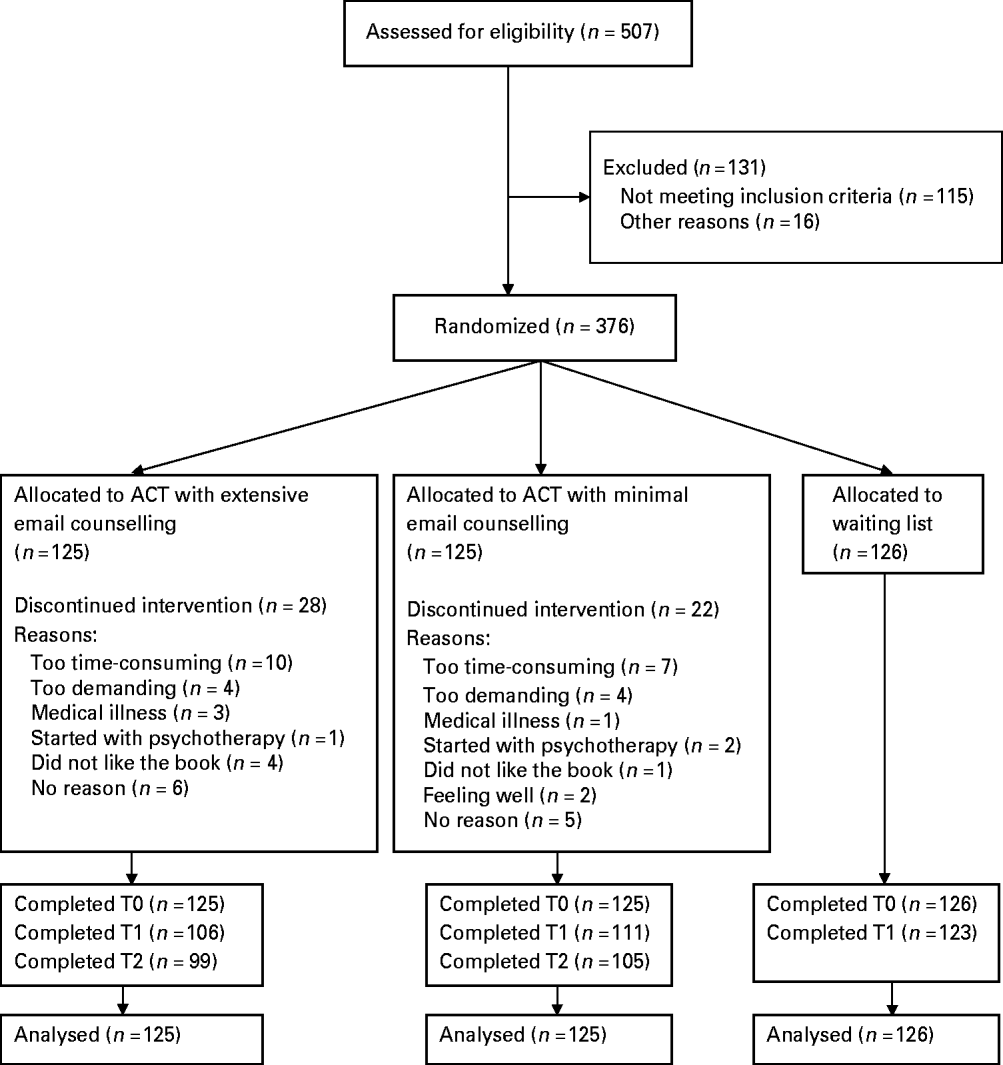
A total of 625 people responded to the advertisements and received an information sheet explaining the study and an informed consent form. This was signed by 507 people who then received a screening questionnaire comprising the CES-D, HADS-A and WSQ. First, 54 respondents were excluded because they had severe depression and/or anxiety according to their scores on CES-D and HADS-A. They were advised to contact their general practitioner. Second, 44 respondents were diagnosed by the WSQ as having a depressive disorder and subsequently underwent a telephone interview using the MINI. These interviews were conducted by Masters students of psychology who were being trained and supervised by a clinical psychologist (K.M.G.S.). Of the 43 respondents (one respondent could not be contacted), two were diagnosed with a severe depressive episode and were excluded and advised to contact their general practitioner. A further 75 respondents were excluded because they had few depression and/or anxiety symptoms (n=58), did not complete the screening questionnaire (n=15), could not be contacted for the interview (n=1) or currently received psychological treatment (n=1). Hence a total of 376 participants were randomly assigned to the following three conditions: the ACT intervention with minimal email support (ACT-M; n=125), the same intervention with extensive email support (ACT-E; n=125) or to a waiting list (W-L; n=126). A block randomization was carried out for the three groups with stratification on gender and age (<50 and ⩾50 years), using computer-generated random sequences of numbers.
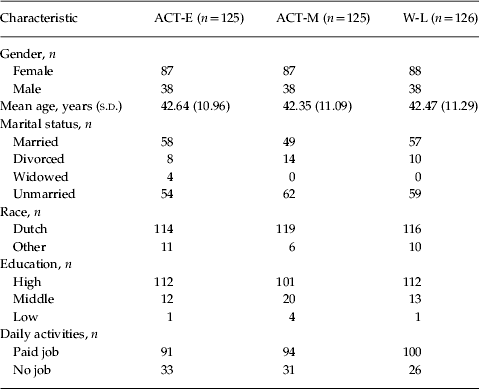
Table 1 shows an overview of the participants' characteristics. Their mean age was 42 years (range 18–73 years). The majority was female (70%) and of Dutch origin (93%). Most of the participants had a high level of education (86%), a paid job (76%) and were not married (47%).
Characteristics of participants
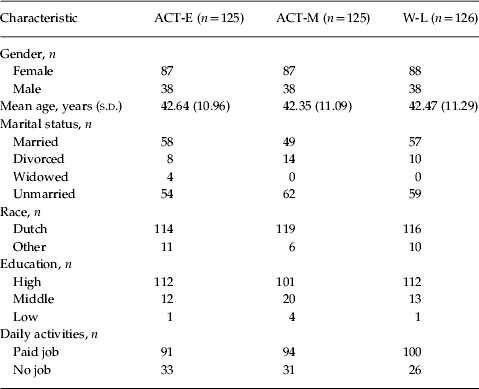
ACT-E, Acceptance and commitment therapy with extensive email support; ACT-M, acceptance and commitment therapy with minimal email support; W-L, waiting list control; s.d., standard deviation.
Power analysis
A sample size of 100 participants per condition at post-intervention was needed to detect an effect size of 0.40 (Cohen's d) for the primary outcome with a statistical power of (1 – β)=0.80 in a two-tailed test (p<0.05). Taking into account a drop-out rate of 20%, we needed to recruit 375 people.
Measures
All participants completed measures on two occasions: at baseline (T0) and at post-intervention at 9 weeks (T1; directly after the intervention). Those assigned to the experimental conditions completed a third measure at the 3-month follow-up (T2; 5 months after baseline). The W-L group received the intervention after the waiting list period of 9 weeks. All questionnaires were administered online. The primary outcome measure was the level of depressive symptomatology as measured with the CES-D (20 items, score 0–60). Higher scores mean more depressive symptoms (Radloff, Reference Radloff1997; Haringsma et al. Reference Haringsma, Engels, Beekman and Spinhoven2004).
Secondary outcome measures were anxiety, fatigue and a positive mental health. Anxiety was measured with the HADS-A (seven items, score 0–21) for assessing the presence and severity of anxious symptoms. Higher scores mean more anxiety symptoms (Spinhoven et al. Reference Spinhoven, Ormel, Sloekers, Kempen, Speckens and Van Hemert1997; Zigmond & Snaith, Reference Zigmond and Snaith2003). The subjective fatigue subscale of the Checklist Individual Strength was used to assess the severity of fatigue (eight items, score 8–56). A high score indicates severe fatigue (Vercoulen et al. Reference Vercoulen, Alberts and Bleijenberg1999). Positive mental health was assessed with the Mental Health Continuum short form that measures emotional well-being (three items), social well-being (five items) and psychological well-being (six items). Participants were asked to rate how often they had experienced feelings of well-being in the past month on a scale ranging from 1 (never) to 6 (daily). A mean score across the individual items was computed for each component of well-being. Higher scores indicate greater emotional, social and psychological well-being (Keyes, Reference Keyes2005; Lamers et al. Reference Lamers, Westerhof, Bohlmeijer, Ten Klooster and Keyes2010).
Process measures included assessments of EA and mindfulness. The Acceptance and Action Questionnaire-II was used to measure the ability to accept aversive internal experiences and to pursue values in the presence of these experiences (10 items, score 10–70). Higher scores indicated lower levels of EA (Jacobs et al. Reference Jacobs, Kleen, De Groot and A-Tjak2008; Bond et al., Reference Bond, Hayes, Baer, Carpenter, Guenole, Orcutt, Waltz and Zettle2011). The Five Facet Mindfulness Questionnaire (FFMQ) was used to measure five facets of mindfulness: observing (eight items), describing (eight items), acting with awareness (eight items), non-judging (eight items) and non-reactivity (seven items) (all scores range from 8–40, except non-reactivity facet range from 7 to 35). Higher scores indicate more mindfulness (Baer et al. Reference Baer, Smith, Hopkins, Krietemeyer and Toney2006; Bohlmeijer et al. Reference Bohlmeijer, Ten Klooster, Fledderus, Veehof and Baer2011b). All outcome measures showed good psychometric properties.
To evaluate the satisfaction of the participants after the intervention, the Client Satisfaction Questionnaire (CSQ-8) was used which consists of eight items on a scale from 1 (very negative) to 4 (very positive). A mean score across individual items was computed (Attkisson & Zwick, Reference Attkisson and Zwick1982; De Brey, Reference De Brey1983). Also a question was included on how the participants evaluated the programme on a scale from 1 to 10.
Counsellors
The email support was provided by five psychology Masters students of the University of Twente. They received a 2-day workshop from a clinical psychologist with ample experience in ACT. The student counsellors studied the self-help manual and performed all the exercises included in the manual. In the workshop they learned the processes of ACT and practised writing emails in the role of both client and counsellor. Each student provided 25 participants with minimal email support and 25 participants with extensive email support during a period of 9 weeks. The emails were supervised by a clinical psychologist. On average the counsellor spent 9 min on the extensive email support and 3 min on the minimal email support.
Intervention and email support
Participants of the experimental conditions received the self-help book ‘Living to the full’ (Bohlmeijer & Hulsbergen, Reference Bohlmeijer and Hulsbergen2008) by regular mail. The book comprises nine modules, divided into three parts. The participants were instructed to complete one module per week. The modules are based on six core processes of ACT that together promote psychological flexibility: acceptance (active and aware embracement of aversive internal experiences), cognitive defusion (creating a context in which undesirable functions of thoughts disappear), contact with the present moment, self as context (experiencing that one is more than one's thoughts, feelings and experiences), choosing values in different life domains, and commitment to choices on the basis of these values (Hayes et al. Reference Hayes, Luoma, Bond, Masuda and Lillis2006).
In the first part of the book, participants reflect on their avoidance and control strategies and whether these are effective in the long run. In the second part, participants learn how to come into contact with their present experiences without trying to avoid or control them. Cognitive defusion and experiencing self as context are practised. In the third part, the focus is on becoming aware of the most important personal values and making decisions based on these values. Each module uses experiential exercises and metaphors for illustrating the processes of ACT. Furthermore, the participants were asked to do daily mindfulness exercises, based on mindfulness-based stress reduction (Kabat-Zinn, Reference Kabat-Zinn1990, Reference Kabat-Zinn1994). The mindfulness exercises lasted on average 10–15 min and were on an audio compact disc which was provided with the book.
Both experimental conditions received the same frequency of email support. The participants received a standardized email from the counsellors every week on the same day concerning the module that they had carried out in the previous week. Participants were expected to respond within 2 days, after which they received a feedback email from the counsellor. In the minimal email support the standardized email comprised questions on their progress (e.g. did you perform all the exercises?), which was met with positive and encouraging feedback from the counsellor. In the extensive email support the standardized email also comprised questions on what they had discovered or experienced in the previous week (e.g. what did you experience when you performed the exercises?). Furthermore, participants were allowed to ask a question on the text or exercises. The counsellor responded both to the question and to the experiences of the participants and offered advice and instruction with regard to the text and exercises.
Participants assigned to the W-L group received the self-help book by regular mail after the post-intervention assessment. Email counselling was not provided.
Statistical analyses
The statistical analyses were done using PASW 18 (Predictive Analytics Software; IBM, USA). One-way analysis of variance (ANOVA) and χ2 tests showed that there were no significant differences at baseline between the experimental conditions and the W-L group for any of the demographic variables or outcome measures, indicating successful randomization.
Intention-to-treat analyses were conducted with the use of PASW Missing Value Analysis (SPSS Inc., USA) to impute all missing data on the continuous measures with the expectation-maximization method. This method computes missing values based on maximum likelihood estimates using observed data in an iterative process (Dempster et al. Reference Dempster, Laird and Rubin1977). The total percentage of missing data was 7.9% due to unanswered items (0.7%) or incomplete assessments (7.2%). These missing values at baseline, post-intervention and follow-up were imputed. A comparison of results based on the imputed intention-to-treat sample versus the observed data revealed similar outcomes. Therefore, only the results from the intention-to-treat analyses are reported. Comparisons were two-tailed and interpreted with a significance of p<0.050.
To examine differences between the conditions on all the outcome measures, a 3 (group)×2 (time) ANOVA was used. In the case of significant time×group interactions, the post hoc test Tukey's honestly significant difference (HSD) test was used. To examine the change from post-intervention to follow-up in the experimental conditions, paired t tests and a 2 (group)×2 (time) ANOVA were used. To identify whether gender, educational level (high v. low), the level of depression, anxiety and EA at baseline moderated the effect of the intervention on the change of depressive symptomatology from baseline to post-intervention, regression analyses were used. The medians on the scores on depression, anxiety and EA at baseline were used as cut-off scores for recoding them as dichotomous variables. In a linear regression model the intervention dummy variable (experimental conditions=1 v. W-L=0), interaction term with the potential moderator as a dichotomous variable and their main effects were entered.
Effect sizes at post-intervention were calculated with Cohen's d using the means and the pooled standard deviations of the measurements of the conditions (effect size of 0.56–1.2 was considered large, 0.33–0.55 as moderate, and less than 0.33 as small) (Lipsey et al. Reference Lipsey and Wilson1993).
With the Jacobson and Truax methodology, the proportion of participants was determined who made a clinically significant change on the CES-D from baseline to post-treatment (Jacobson & Traux, Reference Jacobson and Truax1991). First, the reliable change was calculated with the reliable change index (a reduction of ⩾12 points). Second, because we studied a population with mild to moderate depressive symptomatology and people with mild to moderate depressive disorders, the scores below one standard deviation of the mean pre-test scores on the CES-D were considered the recovery criterion (a score ⩽16). The score of 16 also has been found in previous research as the cut-off score to indicate the presence of clinically relevant depressive symptoms (Beekman et al. Reference Beekman, Deeg, Van Limbeek, Braam, De Vries and Van Tilburg1997; Smit et al. Reference Smit, Ederveen, Cuijpers, Deeg and Beekman2006). A clinically significant change on the CES-D is thus defined as having a reliable change (a reduction of at least 12 points) between the measurements and thereby crossing the cut-off of 16. Participants that had a clinically relevant change were either coded 1 (implying favourable treatment response, ‘success’) or 0 (‘failure’). The binary outcome was used to calculate the odds ratio (OR) using logistic regression. Based on the clinically significant change proportions, the number needed to treat (NNT) was calculated (Cook & Sackett, Reference Cook and Sackett1995).
Results
Drop-out
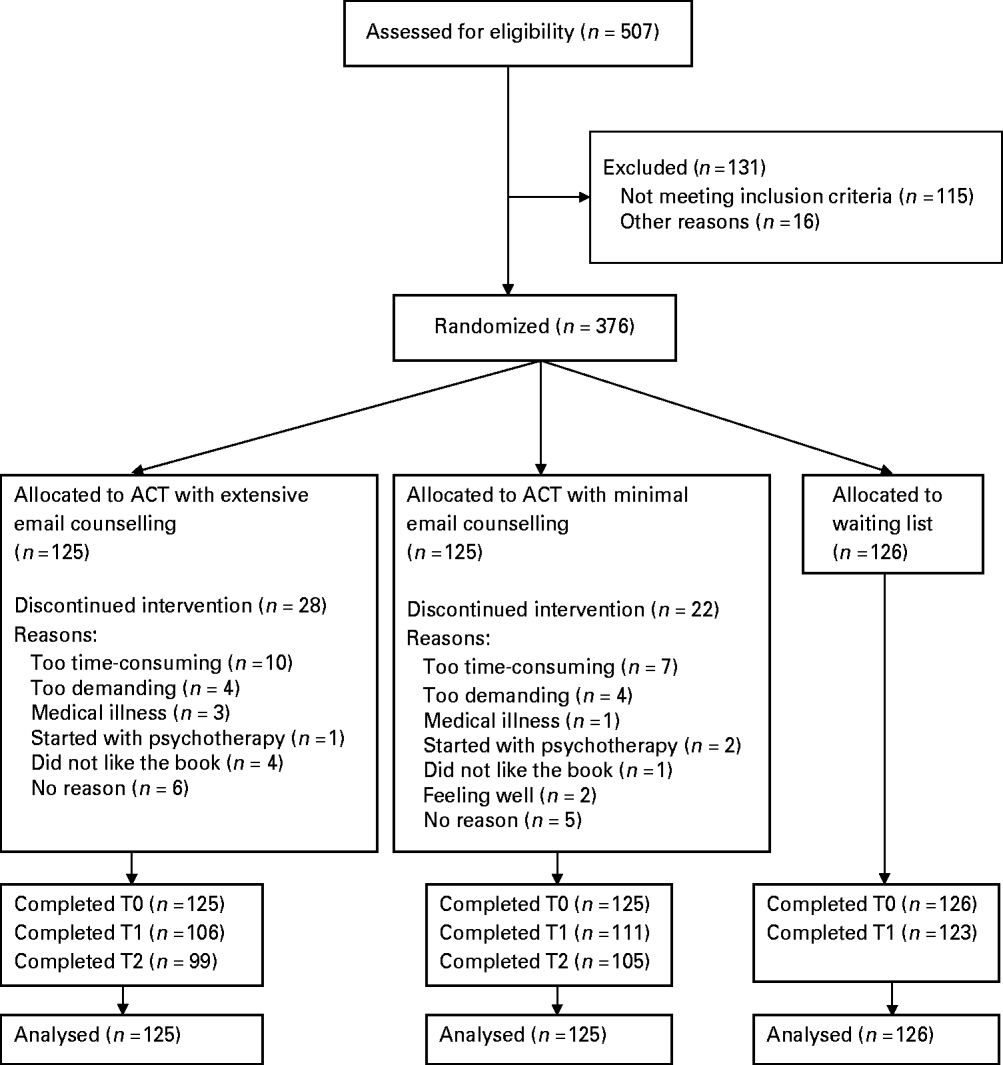
In Fig. 1 the flow of participants is given. At post-intervention, data were available for 340 participants (drop-out rate 9.6%) and at follow-up for 204 participants (drop-out rate 18.4%). There were no significant differences at baseline on all the measures between participants who completed the assessments and those who did not.
Participant flow. ACT, Acceptance and commitment therapy; T0, baseline; T1, post-intervention at 9 weeks (directly after the intervention); T2, 3-month follow-up (5 months after baseline).
Intervention adherence and participants' satisfaction
There were 22 participants (17.6%) in the ACT-M group and 28 (22.4%) in the ACT-E group that did not fully adhere to the intervention. The main reasons given for non-completion were that the intervention was too time-consuming or too demanding. There were no significant differences between participants that adhered to the ACT-M and ACT-E intervention in the average number of weeks completed, number of emails sent, time spent weekly (in hours) on the self-help programme or the participant's satisfaction. They completed on average 7.1 weeks (n=188, range 4–8 weeks) and sent on average 7.4 emails (n=200, range 1–9 emails). The participants spent on average 4 h per week on the self-help programme. On the CSQ-8 participants evaluated the intervention with 3.2 (scale from 1 to 4) (s.d.=0.44, n=188). On a scale from 1 to 10 the intervention was evaluated with a 7.7 (s.d.=1.01, n=194).
Outcome of the interventions
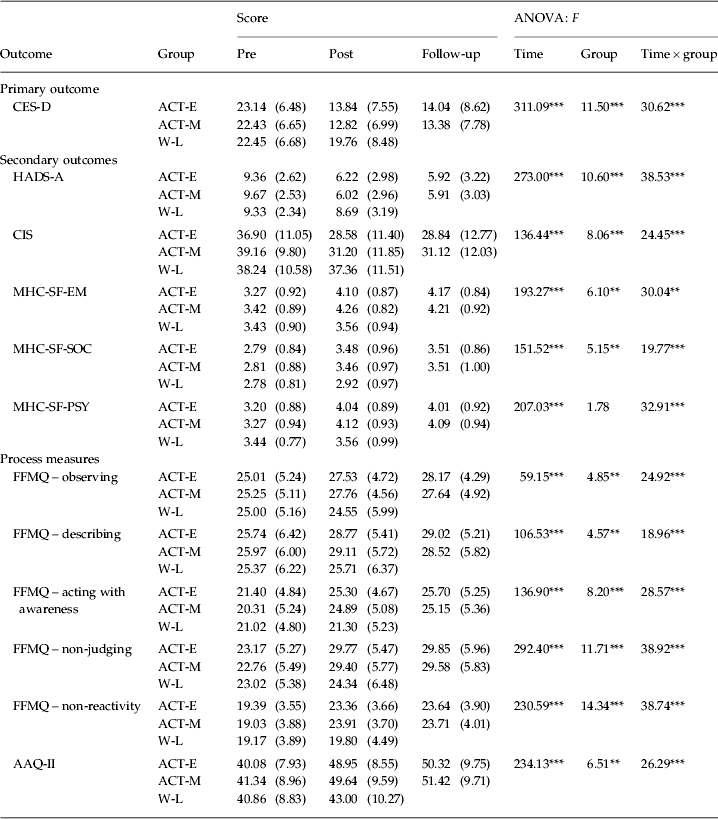
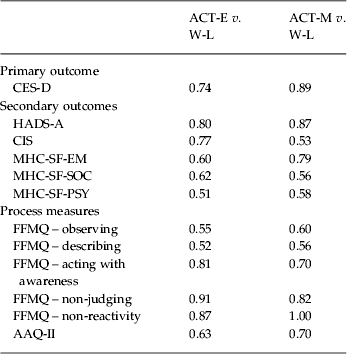
Means and standard deviations for all the outcome measures as well as the results from the repeated-measures ANOVA are presented in Table 2. For all the outcome measures significant interactions were found [F(2, 373)=18.96–38.92, all p<0.001]. Post-hoc testing with the Tukey HSD test revealed that both the ACT-M and ACT-E participants were significantly improved from baseline to post-intervention compared with the W-L condition. The two intervention conditions did not significantly differ on improvement from baseline to post-intervention on any of the outcome measures. In Table 3 the results of the effect sizes between the conditions at post-intervention are presented. On all the outcome measures, moderate to high effect sizes were found for the ACT-M and ACT-E groups compared with the W-L condition.
Scores for all outcome measures and the results from the repeated-measures ANOVA
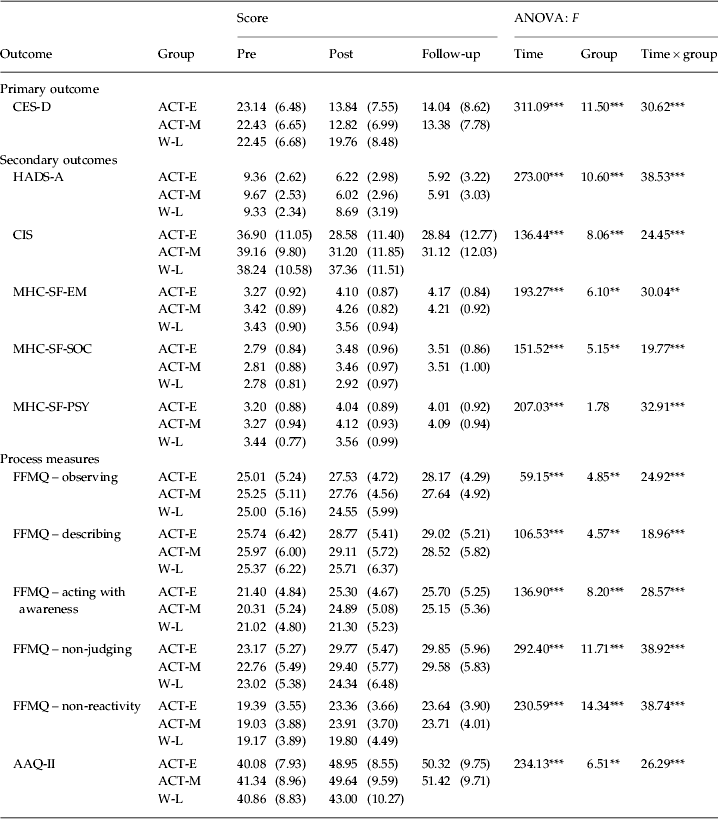
ANOVA, Analysis of variance; CES-D, Center for Epidemiologic Studies Depression Scale; ACT-E, acceptance and commitment therapy with extensive email support; ACT-M, acceptance and commitment therapy with minimal email support; W-L, waiting list control; HADS-A, Hospital Anxiety and Depression Scale – anxiety subscale; CIS, Checklist Individual Strength; MHC-SF, Mental Health Continuum – short form; EM, emotional; SOC, social; PSY, psychological; FFMQ, Five Facet Mindfulness Questionnaire; AAQ-II, Acceptance and Action Questionnaire-II.
Data are given as mean (standard deviation).
** p<0.01, *** p<0.001.
Effect sizes (Cohen's d) between conditions at post-intervention
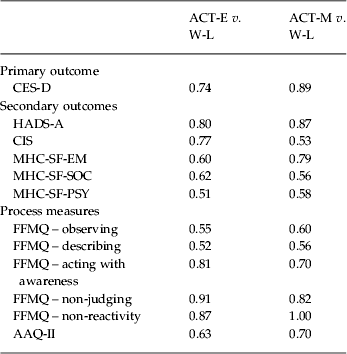
ACT-E, Acceptance and commitment therapy with extensive email support; W-L, waiting list control; ACT-M, acceptance and commitment therapy with minimal email support; CES-D, Center for Epidemiologic Studies Depression Scale; HADS-A, Hospital Anxiety and Depression Scale – anxiety subscale; CIS, Checklist Individual Strength; MHC-SF, Mental Health Continuum – short form; EM, emotional; SOC, social; PSY, psychological; FFMQ, Five Facet Mindfulness Questionnaire; AAQ-II, Acceptance and Action Questionnaire-II.
Change from post-intervention to follow-up
Both experimental groups showed maintenance of the effects on the primary and secondary measures from post-intervention to follow-up. Significant reductions in EA were found from post-intervention to follow-up in the ACT-E group [t(124)=−2.64, p=0.009] and in the ACT-M group [t(124)=−4.14, p<0.000]. With regard to mindfulness, improvements were observed for the FFMQ-observe in the ACT-E group [t(124)=−2.16, p=0.033] and deteriorations in the FFMQ-describe in the ACT-M group [t(124)=2.27, p=0.025]. Overall these findings suggest that on all measures the effects were maintained or improved at the 3-month follow-up, except for the mindfulness facet ‘describe’. Repeated-measures ANOVA revealed no significant differences between ACT-E and ACT-M on the change in outcome measures from post-intervention to follow-up.
Moderator analyses
A significant interaction was found for the condition by the baseline level of depressive symptoms (<23=0 and ⩾23=1) on the primary outcome (β=−0.175, p=0.007). Participants with a higher level of depressive symptoms at baseline showed greater reduction in depression after completion of the intervention compared with the W-L group. Between-group effect size at post-intervention was higher for people with higher levels of depression at baseline (Cohen's d CES-D<23=0.71, Cohen's d CES-D⩾23=1.08). No significant interactions were found for the condition by gender, level of education (high or low), the level of anxiety symptoms at baseline (<10=0 and ⩾10=1) and the level of EA at baseline (<40=0 and ⩾40=1).
Clinically relevant change
The proportion of participants that reached a clinically significant change on the CES-D in the ACT-E group was 42/125 (34%) versus 7/126 (6%) in the W-L group [OR 8.60, 95% confidence interval (CI) 3.69–20.08, p<0.001, NNT=3.57]. In the ACT-M group, 49/125 (39%) reached a clinically significant change, which also resulted in a significant difference compared with the W-L group (OR 10.96, 95% CI 4.72–25.46, p<0.001, NNT=2.98). There were no significant differences between the experimental conditions on the proportions of clinically relevant change.
Medication use
Of the participants, 10 in the intervention groups (ACT-E=4, ACT-M=6) and three in the control group reported at baseline to have started more than 3 months previously with a psychopharmacological treatment (and were thus not excluded from the study). During the intervention seven participants started with medication (ACT-E=2, ACT-M=2, W-L=3) and seven participants stopped (ACT-E=1, ACT-M=5, W-L=1). Due to these small numbers and the equal distribution over the conditions, it is unlikely that the present findings can be explained by changes in medication use preceding or during the trial.
Discussion
Effects on psychological distress and positive mental health
Participants who received the guided ACT self-help intervention had significantly more reduction in depressive symptoms directly after the intervention compared with participants in the W-L group, and this reduction was sustained at the 3-month follow-up. The large effect sizes (Cohen's d=0.74–0.89) found in this study are largely consistent with meta-analyses with guided self-help treatment for depression (Gregory et al. Reference Gregory, Canning, Lee and Wise2004; Gellathy et al. Reference Gellathy, Bower, Hennessy, Richards, Gilbody and Lovell2007). As such, the results confirm earlier studies that showed that interventions for people with subthreshold depression are effective in reducing depressive symptomatology (Cuijpers et al. Reference Cuijpers, Smit and Van Straten2007). Our study further showed that the intervention resulted in a particularly large effect size among participants with relatively high baseline levels of depressive symptomatology (Cohen's d=1.08). As the presence of clinically relevant depressive symptoms is known to be an important risk factor for clinical depression (Cuijpers & Smit, Reference Cuijpers and Smit2004), this outcome suggests that guided ACT self-help early intervention decreases the risk of developing a (future) full clinical depression. Moreover, the ACT intervention resulted in significant large reductions in anxiety and fatigue after the intervention and at the 3-month follow-up. This finding corroborates earlier studies that showed that ACT is effective in reducing anxiety and fatigue (Forman et al. Reference Forman, Herbert, Moitra, Yeomans and Geller2007; Lappalainen et al. Reference Lappalainen, Lehtonen, Skarp, Taubert, Ojanen and Hayes2007; Bohlmeijer et al. Reference Bohlmeijer, Fledderus, Rokx and Pieterse2011a).
The ACT intervention also significantly improved positive mental health, confirming previous research showing that ACT interventions promote emotional well-being (e.g. life satisfaction or quality of life) in patients with anxiety or depression (e.g. Forman et al. Reference Forman, Herbert, Moitra, Yeomans and Geller2007; Lappalainen et al. Reference Lappalainen, Lehtonen, Skarp, Taubert, Ojanen and Hayes2007). Also psychological and social well-being were improved, suggesting that an intervention that is aimed at increasing acceptance and value-based actions is supportive for a positive, engaged and meaningful life.
Effects on EA and mindfulness
Large effect sizes were found on EA at post-intervention and at follow-up further reductions were found in the experimental conditions. This finding corroborates previous studies that showed that EA can be substantially reduced by ACT. It indicates that the participants are more inclined to accept their undesirable feelings, thoughts or body sensations without trying to avoid the form or frequency (Hayes et al. Reference Hayes, Luoma, Bond, Masuda and Lillis2006). This is also confirmed by the large effect sizes that were found on the FFMQ subscales ‘non-judging’ and ‘non-reactivity’. This means that the participants have a more non-evaluative stance toward thoughts and feelings and allow them to come and go (Baer et al. Reference Baer, Smith, Hopkins, Krietemeyer and Toney2006). On the other subscales of the FFMQ also large effects sizes were found in the experimental conditions after the intervention. Future research could examine the possibly mediating role of EA or mindfulness.
Level of support
No significant differences in the level of email support provided by counsellors were detected. This appears to be in line with earlier studies that have found that minimal contact with a counsellor is enough for a self-help programme to be as effective as face-to-face therapy (Cuijpers et al. Reference Cuijpers, Donker, Van Straten, Li and Andersson2010). Although our study was not powered to detect smaller effect size differences between two effective interventions (Cohen's d<0.40) and thus more subtle differences could have been missed, the similarities in the effects were highly consistent. In both the minimal and extensive email support, moderate to large effect sizes were found on all outcome measures and the participants in both conditions were highly satisfied with the intervention. This implies that for this intervention minimal email support suffices and more extensive email counselling does not further improve outcomes. It should be noted that the intensity of email contact differed, not the frequency, as this was held constant in both conditions. Further research could examine whether even less frequent contact could be effective, such as merely providing a clear scheduled deadline for finishing the programme (e.g. Nordin et al. Reference Nordin, Carlbring, Cuijpers and Andersson2010) or as an online intervention with automatic feedback.
Limitations
This study has several limitations. The use of a W-L control group is suboptimal, because of a lack of control for non-specific factors. Also, it would have strengthened the design if a longer follow-up period and a follow-up assessment for the control group had been included. With the present study it cannot be demonstrated that the effects at the 3-month follow-up were attributable to the ACT intervention and not, for example, to spontaneous remission.
Our participants were mainly highly educated females, so generalization of the results has to be made with prudence. However, reaching this group is not uncommon for self-help (e-health) interventions (e.g. Carlbring et al. Reference Carlbring, Gunnarsdottir, Hedensjö, Andersson, Ekselius and Furmark2007). Furthermore, moderator analyses showed that there were no significant intervention effects for gender or education, indicating that the intervention is potentially broadly applicable.
Another limitation is that only partial and limited use was made of a diagnostic instrument. The MINI was used for diagnosing severe depressive episodes with people who scored positively on the WSQ but who did not meet the exclusion criterion of a severe depressive disorder. Hence the sample in this study consisted of both people with clinically relevant depressive symptomatology and people with mild to moderate depressive disorders. However, this limitation can also be seen as a strength. Apparently, the inclusion of a heterogeneous population with regard to their range of depressive symptomatology did not negatively affect treatment effectiveness. This underscores the generalizability of the findings.
Implications and future directions
This study is the first to show that ACT is effective as an early intervention offered as a guided self-help programme to participants with mild to moderate depressive symptomatology. Offering an early intervention in a positive frame and as a self-help programme might be less stigmatizing for participants than the traditional mental health services. Our study has shown that the ACT intervention not only affected depressive symptomatology but also symptoms of anxiety and fatigue. Apparently, by targeting a general risk factor (EA), a broad spectrum of psychological distress can be reduced. This implies that a generic preventive intervention could extend to other mental disorders as well.
In our study positive mental health was a secondary outcome. There is a growing body of knowledge that underscores positive mental health as a major public health goal. Recent studies have shown that having positive mental health protects against the risk of mental illnesses (Keyes et al. Reference Keyes, Dhingra and Simoes2010; Wood & Joseph, Reference Wood and Joseph2010). Furthermore, Fava et al. (Reference Fava, Rafanelli, Ottolini, Ruini, Cazzaro and Grandi2001) found that even when clinical symptoms are absent, low positive mental health can be seen as a risk factor for future relapse among recovering patients. There is also growing evidence of interventions aiming at enhancing positive mental health both in clinical practice (e.g. Fava et al. Reference Fava, Ruini, Rafanelli, Finos, Salmaso, Mangelli and Sirigatti2005) and in public mental health (e.g. Fledderus et al. Reference Fledderus, Bohlmeijer, Smit and Westerhof2010). In future studies positive mental health could therefore be considered as a primary outcome of interventions aiming at people with low positive mental health.
Future research could examine whether a guided self-help ACT intervention is effective in reducing the onset of a major depressive disorder. Though a drop-out rate of 18% is acceptable and similar to other self-help studies (e.g. Seekles et al. Reference Seekles, van Straten, Beekman, van Marwijk and Cuijpers2011), it is an important issue to prevent drop-out from self-help interventions. Future studies could examine how lower drop-out rates can be achieved, for example, to tailor a self-help treatment according to the patient profile (e.g. Andersson et al. Reference Andersson, Estling, Jakobsson, Cuijpers and Carlbring2011). Furthermore, it could be examined whether the intervention could be tailored to people with a low social economic status, as this status is clearly associated with depression (Lorant et al. Reference Lorant, Croux, Weich, Deliège, Mackenbach and Ansseau2007). One important modification could be the use of comics to illustrate the main concepts and metaphors of the intervention.
Acknowledgements
The study was funded by the Netherlands Foundation for Mental Health (Fonds Psychische Gezondheid). It was approved by an independent medical ethics committee (METIGG; no. 9212) and recorded in the Dutch primary trial register for clinical trials (NTR1985).
Declaration of Interest
None.