Introduction
Dementing disorders, such as Alzheimer's disease (AD), are associated with great patient suffering, important caregiver burden, and significant societal expense (Alzheimer Society of Canada, 2010). With the aging population, there is considerable concern that the prevalence of these disorders will rise exponentially (Alzheimer Society of Canada, 2010). In spite of substantial efforts to develop effective treatments for AD, to date there is no cure and existing treatments, including cholinesterase inhibitors and N-methyl-D-aspartate receptor (NMDA) inhibitors, have proven to be only modestly beneficial (Lanctot et al., Reference Lanctot2003). With the recent discovery that AD deposits, including β-amyloid and tau, may accumulate years before the onset of active disease, and with the limited success of existing anti-amyloid compounds when applied to patients with established AD, there has been a shift in the research focus from patients with active disease to subjects who are prodromal or have Mild Cognitive Impairment (MCI). For the purpose of our review we will define prodromal dementia (PrD) as patients with both normal cognition (NC) and MCI.
Although it has been long understood that subtle changes in behavior, such as apathy (Vicini Chilovi et al., Reference Vicini Chilovi, Conti, Zanetti, Mazzu, Rozzini and Padovani2009), may commonly precede the onset of dementia by many years, the current definition of MCI makes no reference to behavioral symptoms (Petersen, Reference Petersen2011). In fact, much of the research focus to date on neuropsychiatric symptoms (NPS) of dementia has been on patients with moderate to advanced stages of the disease, where NPS dominate the clinical picture. This is somewhat surprising given studies to date suggest that NPS are in fact common in MCI, with a prevalence intermediate between NC and established dementia (Lyketsos et al., Reference Lyketsos, Lopez, Jones, Fitzpatrick, Breitner and Dekosky2002). Moreover, there is convincing data suggesting that the presence of NPS in MCI may be a harbinger of a worse prognosis and associated with increased conversion to dementia (Palmer et al., Reference Palmer, Berger, Monastero, Winblad, Backman and Fratiglioni2007). This suggests that there may be utility in viewing NPS as a clinical biomarker of AD.
In view of these facts, recently experts in the field of NPS as it pertains to AD (International Society to Advance Alzheimer's Research and Treatment (ISTAART)) have developed a construct referred to as Mild Behavioral Impairment (MBI), which is meant to capture subjects with prodromal disease, such as NC or MCI, who present with NPS (Ismail et al., Reference Ismail2016). Much of the research to date focusing on patients with early behavioral changes has focused on apathy and symptoms in the mood spectrum, which appear to be much more common relative to other NPS (Vicini Chilovi et al., Reference Vicini Chilovi, Conti, Zanetti, Mazzu, Rozzini and Padovani2009). There has been comparatively less emphasis on psychosis, possibly because these symptoms generally are thought to emerge later in the disease course (Piccininni et al., Reference Piccininni, Di Carlo, Baldereschi, Zaccara and Inzitari2005).
Psychosis in its diverse forms and independently of the age of onset can be considered to have a neurotoxic effect on the brain or, seen in another way, the presence of psychotic symptoms is the hallmark of a severely disturbed brain and overshadows the prognosis of the underlying mental disorder responsible for those symptoms. One of the consequences of this neurotoxicity is the possibility of an increased risk of dementia, as we will show later. The spectrum of psychiatric conditions exhibiting possible psychotic symptoms is wide and extends itself from the severe mental disorders such as schizophrenia to dementing disorders such as AD or frontotemporal dementia (FTD), even in their prodromal or very early phases. Subthreshold, isolated psychotic symptoms, can also be found in community-dwelling people usually not seeking psychiatric help (van Os and Reininghaus, Reference Van Os and Reininghaus2016).
This paper will review the existing literature on psychosis in PrD (including normal aging and MCI) and also examine the risk of dementia in patients presenting with established psychotic disorders. In addition, we will examine the clinical impact of psychosis across the disease spectrum, from normal aging to established dementia. The review will focus on recently published papers (within the last five years) that are methodologically rigorous, incorporating search terms such as psychosis, late onset psychosis, very late schizophrenia-like psychosis, NPS, psychotic symptoms, dementia and AD. We postulate that psychosis in PrD is likely more common than previously understood and likely has an adverse effect on prognosis.
Psychotic symptoms in the general population and dementia risk
The presence of isolated psychotic symptoms in community-dwelling individuals is more widespread than one may think (Nuevo et al., Reference Nuevo, Van Os, Arango, Chatterji and Ayuso-Mateos2013) especially among those who do not seek psychiatric help (Kaymaz et al., Reference Kaymaz2012). These psychotic symptoms that do not fully meet standard diagnostic criteria for a formal diagnosis of a psychotic disease, especially among the elderly population, may be associated with incident dementia. Kohler et al. (Reference Kohler2013) studied a sample of 11,916 adults age 65 years or older without dementia who were followed at 2, 6, and 10 years from baseline. A total of 330 participants reported baseline symptoms of a psychotic nature, representing 13.4% of the older general population without dementia. Compared with normal subjects, individuals with psychotic symptoms showed worse cognitive functioning, and displayed more rapid cognitive decline from baseline to a six-year follow-up, especially in non-memory functions. They also had an almost threefold increased risk of developing dementia that increased with the number of psychotic symptoms and was highest in people age 65–74 years. This association was independent of baseline cognition, depression, anxiety, and vascular risk factors.
Data of this kind fully support the concept of MBI. The proportion of these subjects that will finally develop late-onset psychosis versus dementia or remain in the same clinical status is unknown, but all of them certainly suffer from MBI and could be captured by an instrument such as the MBI-Checklist (Ismail et al., Reference Ismail2017). Those who will develop cognitive impairment and ultimately a dementia may be diagnosed earlier under the framework of MBI.
Psychotic disorders and dementia risk
Before reviewing the prelevance of psychotic symptoms in patients without dementia in the context of MBI, it is important to take into account the fact that most severe psychiatric conditions may confer a greater risk of dementia in later life, even after adjusting for diseases or risk factors that are common in the elderly population such as diabetes, heart disease, cerebrovascular disease, or smoking (Zilkens et al., Reference Zilkens, Bruce, Duke, Spilsbury and Semmens2014). Patients with severe mental disorders such as schizophrenia, independently of their age, often suffer from cognitive disturbances in addition to other characteristic symptoms such as delusions, hallucinations, or mood symptoms. The increased risk of subjects with severe mental illness developing dementia as they age and the overlap with dementing diseases such as AD has been the subject of many studies.
Schizophrenia is a disease affecting around 1% of the population with a more common but not exclusive juvenile onset. Three peaks of incidence of schizophrenia have been described (Castle and Murray, Reference Castle and Murray1993). The largest in number of patients is the well-known onset between 15 and 25 years of age. Incidence falls from that age on, but increases again around the age of 45–55 falling afterwards but increasing again from the age of 65 onwards. Thus, increasing age is a risk factor for psychosis in the elderly and affects a non-negligible number of senior subjects (van Os et al., Reference Van Os, Howard, Takei and Murray1995). These late (or very-late) onset psychotic disorders (LOPD) patients may be confounded with those experiencing the first NPS of dementia. Emil Kraepelin described dementia praecox as a disorder of progressive cognitive decline (Kraepelin, Reference Kraepelin1904). Cognitive deficits in what was later called schizophrenia have been established long ago. They affect most patients with a juvenile onset of the illness (Nuechterlein et al., Reference Nuechterlein, Barch, Gold, Goldberg, Green and Heaton2004) and have also been regularly described in late onset schizophrenia or very-late schizophrenia-like psychosis (Howard et al., Reference Howard, Rabins, Seeman and Jeste2000). Despite differences in age, cognitive deficits in late-onset schizophrenia are closer to those found in early-onset patients (Hanssen et al., Reference Hanssen2015), also when measured by modern standardized neurocognitive batteries such as MATRICS (Rajji et al., Reference Rajji2013). The profile of cognitive deficits in patients with schizophrenia is different than those related to AD (Howard et al., Reference Howard, Rabins, Seeman and Jeste2000)
Whether there is an elevated long-term risk of dementia in patients with schizophrenia of juvenile onset has been the subject of controversies but recent extensive studies reveal an increased risk with respect to psychiatrically healthy elderly persons, supporting the fact of a neurodegenerative component of schizophrenia to be added to its well-known neurodevelopmental origin, at least for a significant proportion of patients (Shah et al., Reference Shah, Qureshi, Jawaid and Schulz2012). In this review of 20 longitudinal studies addressing the risk of cognitive decline in patients with schizophrenia over time, authors found mixed results, with 12 studies signaling evident cognitive decline and 8 without that outcome. One of the most extensive population-based studies published to date examined a cohort of more than 2.8 million persons aged 50 years or older in Denmark that included a total of 20,683 individuals with schizophrenia (Ribe et al., Reference Ribe2015). After a follow-up of 18 years, 136,012 subjects – including 944 with schizophrenia – developed dementia. Schizophrenia conferred more than a two-fold a higher risk of all-cause dementia, even after adjusting for medical comorbidities, such as cardiovascular diseases or diabetes. This dementia risk could not be explained by established dementia risk factors.
Whether this increased risk of dementia is related to the typical AD changes is still a matter of study. A systematic review of 14 studies focusing on A-beta levels in schizophrenic, AD, or normal subjects found lower cortical A-beta levels in patients with schizophrenia than in patients with AD with no association between A-beta deposition and the cognitive decline experienced by schizophrenia patients (Chung et al., Reference Chung2016). Although some studies have signaled increases in plaques and neurofibrillary tangles in elderly patients with schizophrenia, there is no clear evidence for a higher association of these neuropathological hallmarks of AD in this population. However, increases in AD-related neuropathology below the threshold for a neuropathological diagnosis of AD can be related to dementia severity, once established in elderly schizophrenia patients and this risk is increased in the presence of genetic risk factors such as ApoE 4 carrier status (Rapp et al., Reference Rapp2010) This may suggest a decreased cerebral reserve in such patients.
In fact, an interesting theory suggests that schizophrenia may be a disease that causes accelerated aging, reducing life expectancy by producing an impact in some body functions that equal those suffering the disease to people 10– 20 years older (Kirkpatrick et al., Reference Kirkpatrick, Messias, Harvey, Fernandez-Egea and Bowie2008). In terms of cognitive functioning, 50- to 60-year-old people with schizophrenia show performance on tests of processing speed and episodic verbal memory that are similar with that of healthy individuals 70–80 years of age, while 50- to 60-year-old healthy individuals perform markedly better on these two tasks than do similar aged people with schizophrenia. These age-related differences in performance are especially relevant in individuals aged more than 70 years (Loewenstein et al., Reference Loewenstein, Czaja, Bowie and Harvey2012). The theory of accelerated aging may explain the increased risk of dementia among people with schizophrenia, although the underlying mechanism still needs clarification.
This brings us finally to the question on whether forms of schizophrenia appearing in mid or later life, namely late-onset schizophrenia and of very-late schizophrenia-like psychosis (Howard et al., Reference Howard, Rabins, Seeman and Jeste2000) have also an increased risk of dementia as their juvenile onset counterparts seem to have. Many (but not all) studies focusing on patients with late-onset psychosis have suggested that the cognitive deficits experienced by the patients are not progressive in nature as the exponent of a static encephalopathy (Reeves and Brister, Reference Reeves and Brister2008). But a long-enough follow-up time may reveal that a substantial proportion of these patients may indeed develop dementia as was signaled by Brodaty et al. (Reference Brodaty, Sachdev, Koschera, Monk and Cullen2003) who first suggested no increased risk of conversion to dementia in a sample of late onset schizophrenia patients followed for 1 and 2 years, but reported that as many as 47.4 per cent of this sample had converted to AD within a final five year follow-up.
Future studies are required to further delineate the relationship between psychotic illnesses especially those of late-onset and dementia. These studies may also guide the research of NPS such as delusions or hallucinations in established AD. Additionally, future studies should also investigate the appearance of psychotic symptoms in the early or prodromal phases of dementia (as covered by the MBI concept) and examine the possibility of an accelerated conversion to full-blown dementia or a more severe course of the disorder when they are present.
Psychosis in PrD and dementia risk. The prevalence of NPS in general in MCI is rated by most studies as ranging between 35% and 75% (Lyketsos et al., Reference Lyketsos, Lopez, Jones, Fitzpatrick, Breitner and Dekosky2002; Apostolova and Cummings, Reference Apostolova and Cummings2008). Epidemiological studies to date suggest that mood, apathy, amotivation, and anxiety symptoms dominate the clinical picture in MCI while psychotic symptoms are comparatively less common (Vicini Chilovi et al., Reference Vicini Chilovi, Conti, Zanetti, Mazzu, Rozzini and Padovani2009). One of the challenges in identifying the prevalence of psychosis in PrD relates to its variable presence in different dementia subtypes. In established AD, psychotic symptoms are common and estimated to occur in approximately one third to one-half of patients with AD with a point prevalence of approximately 10% per year (Fischer and Sweet, Reference Fischer and Sweet2016). Conversely, it is possible that psychotic symptoms may be even more common in certain forms of dementia, such as Dementia with Lewy Bodies (DLB) or Parkinson's Disease related Dementia (PDD), occurring in as many as 50% of patients (Fischer and Sweet, Reference Fischer and Sweet2016). Moreover, in most cases they emerge much earlier in the disease course, are part of the clinical criteria for diagnosis, and thus may be more likely to appear in the MCI phase. Alternatively, psychotic symptoms are surprisingly rare in other neurodegenerative conditions, such as frontal-temporal dementia (FTD) (Fischer and Sweet, Reference Fischer and Sweet2016), and are thus rarely identified in prodromal FTD.
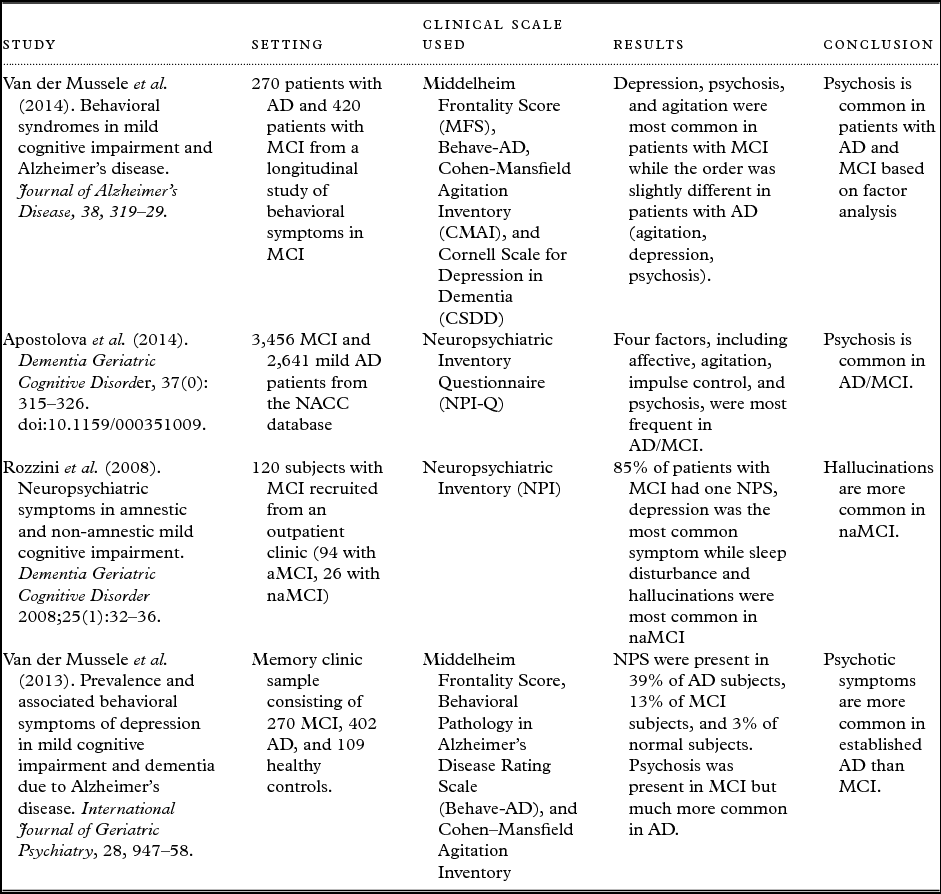
The vast majority of studies exploring psychotic symptoms in AD suggest they emerge in the moderate and advanced stages of the disorder, once dementia is established (Copeland et al., Reference Copeland2003). A previous retrospective autopsy study of 100 subjects suggested an evolution from mood symptoms to psychosis across the dementia spectrum (Jost and Grossberg, Reference Jost and Grossberg1996), with psychosis often being coincident with a dementia diagnosis, possibly reflecting increasing neuropathological burden. According to a study by Muangpaisan et al. (Reference Muangpaisan, Intalapaporn and Assantachai2008) psychotic symptoms, specifically hallucinations, were more common in MCI patients over the age of 65, possibly reflecting prodromal DLB (Muangpaisan et al., Reference Muangpaisan, Intalapaporn and Assantachai2008). One of the challenges related to defining the prevalence of psychosis in patients with PrD has to do with the fact that the presence of LOPD's is often viewed as an exclusionary diagnosis. Nevertheless, factor analysis studies do provide some surprising conclusions suggesting that psychosis, at least in classic MCI, may be more common than previously suspected (see Table 1). Van der Mussele et al. (Reference Van Der Mussele2014) used factor analysis to identify the prevalence of NPS clusters in 270 patients with AD and 420 patients with MCI, leveraging cross-sectional data from an existing longitudinal study. He concluded that depression, psychosis, and agitation were most frequent in patients with MCI while the order was slightly different in patients with AD (agitation, depression, psychosis). Notably, psychosis was a factor both in AD and MCI and in patients with MCI it preceded agitation in frequency. In a similar study Apostolova et al. (Reference Apostolova2014) used factor analysis to clarify the prevalence of NPS in AD/MCI and found four factors, including affective, agitation, impulse control, and psychosis, explained most of the variance. Moreover, younger age was strongly associated with psychosis while being married was protective. In addition, there was no difference in the prevalence of hallucinations between amnestic MCI (aMCI) and non-amnestic (naMCI) subjects, contrary to previous reports (Ellison et al., Reference Ellison, Harper, Berlow and Zeranski2008; Rozzini et al., Reference Rozzini2008) which suggested that hallucinations were more common in naMCI, given they are more likely to be associated with the ultimate development of non-AD dementias such as DLB and PDD.
Prevalence of psychosis in MCI and AD

Other studies have attempted to quantify the prevalence of NPS in PrD. In a recent study Van der Mussele et al. (Reference Van Der Mussele2013) examined the baseline rate and impact of NPS in a well-characterized study sample of subjects ranging from cognitively normal to active AD. He found moderate to severe NPS were present in 39% of AD subjects, 13% of MCI subjects, and 3% of normal subjects. Notably, psychotic symptoms were present among patients with MCI but were observed to be much more common among patients with frank AD. In another study Rozzini et al. (Reference Rozzini2008) attempted to quantify NPS in patients with MCI, concluding that 85% of patients had one or more NPS, depression was most common and that sleep disturbance and hallucinations were much more common in patients with naMCI (Rozzini et al., Reference Rozzini2008). In a separate study Serra et al. (Reference Serra2010) examined NPS across a spectrum of patients with varying levels of cognitive decline from cognitively normal to moderate dementia and found that mood disorders, anxiety, and agitation were common in aMCI and AD while psychotic symptoms were more prominent in AD.
The prevalence of NPS has also been examined across the disease spectrum in other neurodegenerative disorders such as PD. In one such study, Leroi et al. (Reference Leroi, Pantula, Mcdonald and Harbishettar2012) examined the prevalence of NPS in patients with PD who were cognitively normal, those with MCI and those with frank dementia. Psychosis was observed in 12.9% of those who were cognitively normal, in 16.7% of those with MCI and in 48% of those with frank dementia. Apathy was the single symptom that most distinguished patients with preclinical disease from patients with frank dementia. In summary, there is evidence based on research to date to suggest that psychosis is present in patients with PrD, with a frequency mid-way between NC and frank dementia. However, the fact that LOPD's are an exclusion in most PrD studies suggests that the prevalence may be considerably higher. Moreover, it is possible that the prevalence may vary depending on the subtype of MCI (amnestic vs. non-amnestic), reflecting the variability in presentation among different dementia subtypes. Further research is required to clarify the presence of psychosis in PrD and the question of whether LOPD's should be excluded needs to be addressed.
Phenomenology and clinical course
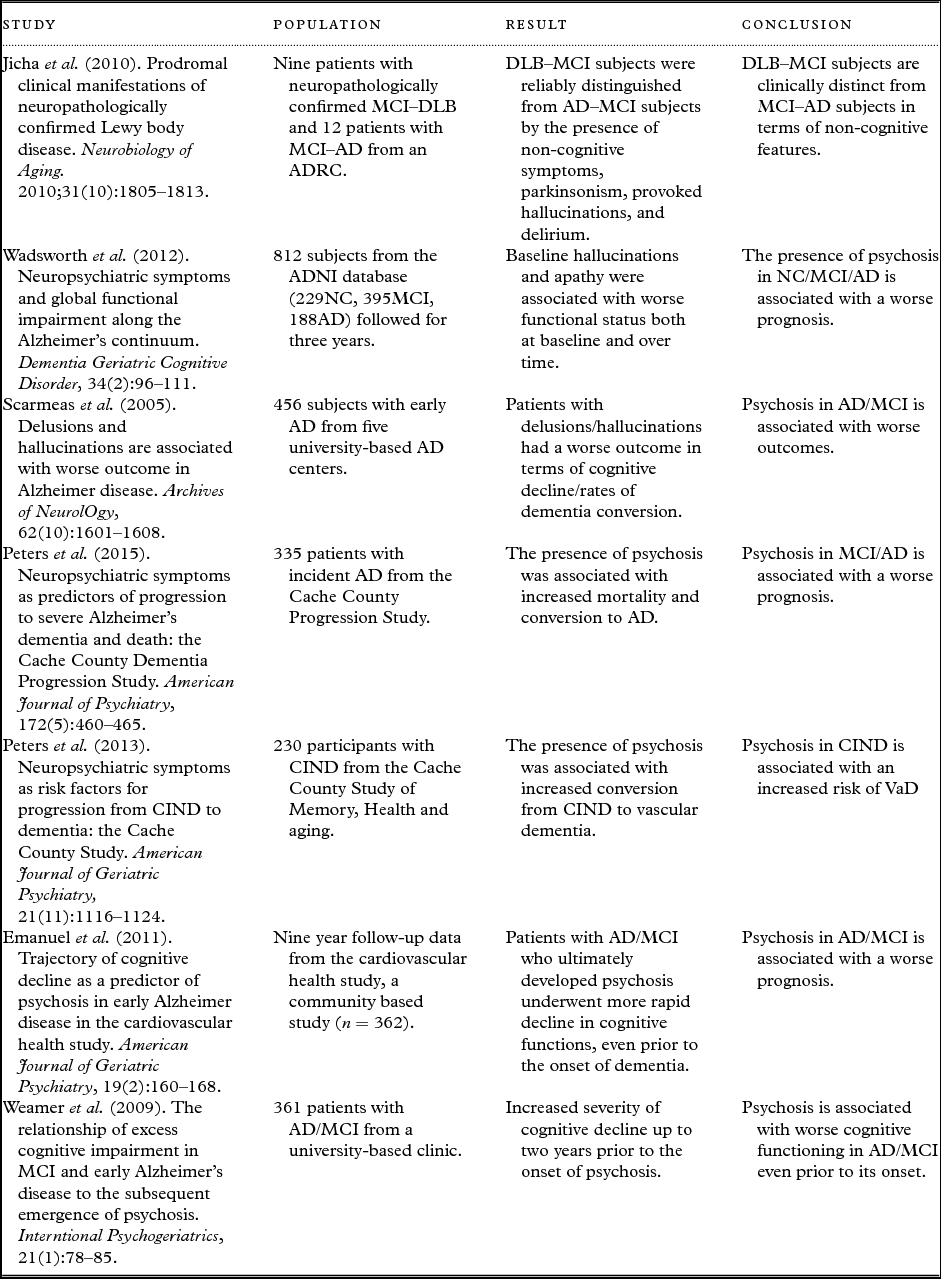
The presence of NPS in MCI in general is thought to confer an increased risk of developing dementia according to recent studies (Modrego and Ferrandez, Reference Modrego and Ferrandez2004; Palmer et al., Reference Palmer, Berger, Monastero, Winblad, Backman and Fratiglioni2007) thus reinforcing the importance of the MBI construct. It is also evident based on recent studies that MCI subtypes may evolve into different dementia subtypes, which has significant implications in terms of NPS profile. For example, there is substantial evidence that patients with naMCI are significantly more likely to develop DLB while patients with aMCI are significantly more likely to develop AD (Ferman et al., Reference Ferman2013). Accordingly, hallucinations may be much more common in naMCI compared to aMCI, stemming from the fact that many patients with naMCI may go on to develop DLB (Rozzini et al., Reference Rozzini2008). There is some question as to whether AD and DLB differ in terms of their prodromal stage. According to a study by Jicha et al. (Reference Jicha2010), DLB–MCI subjects were reliably distinguished from AD–MCI subjects by the presence of non-cognitive symptoms, including parkinsonism, provoked hallucinations, and delirium. Other studies have attempted to identify which NPS are associated with worsening prognosis. According to a study by Wadsworth et al. (Reference Wadsworth2012) in patients with AD, MCI, and NC, baseline hallucinations and apathy were associated with worse functional status both at baseline and over time (Wadsworth et al., Reference Wadsworth2012). Similar studies have shown an increased risk of disease progression and death among mild AD patients with psychosis (delusions and hallucinations) (Scarmeas et al., Reference Scarmeas2005).
Whether or not the emergence of psychosis in AD is preceded by a prodrome, as is observed in other psychiatric disorders, is not yet clear. It is conceivable that subtle signs of psychosis, such as withdrawal or the expression of overvalued ideas, may be an early harbinger of more overt psychosis which may perhaps be ignored or minimized by caregivers in the early stages. Clinical outcomes associated with the presence of psychosis in established dementia are universally poor. In fact, when compared to patients without psychosis, AD patients with psychosis may have worse outcomes in a number of areas including ability to function, rates of cognitive decline, caregiver burden, behavioral issues, and premature placement (Fischer and Sweet, Reference Fischer and Sweet2016). Moreover, AD patients with psychosis may have a higher burden of NPS in general, including aggression, agitation, and depression (Fischer and Sweet, Reference Fischer and Sweet2016). This raises the question of whether the emergence of psychosis in patients with PrD is similarly associated with worse outcomes. Although the literature is limited, there are early studies to suggest this is the case (see Table 2), supporting the idea of a universal neurotoxic effect of psychosis whatever its origin or time of onset.
Impact of psychosis on clinical course in AD/MCI

According to a recent study by Peters et al. (Reference Peters2015) the presence of psychosis was associated not only with more rapid progression of dementia but also significantly with increased mortality in a sample of 335 participants from Cache County. In a separate study looking at the same cohort, Peters et al. (Reference Peters2013) found the presence of hallucinations in patients with cognitive impairment no dementia (CIND) strongly predicted the onset of vascular dementia (VaD). A recent study by Emanuel et al. (Reference Emanuel2011) looked at nine year follow-up data from the Cardiovascular Health Study. Patients at study entry were cognitively normal though a subset developed AD/MCI. Patients with AD/MCI who ultimately developed psychosis had a much more rapid decline in cognition, particularly in the earliest stages of the disease, prior to the onset of psychosis. Weamer et al. (Reference Weamer2009) found similar results when looking at cognitive changes prior to the onset of psychosis in 361 subjects with incident AD/MCI, finding an association with severity of cognitive decline up to two years prior to the onset of psychosis. There is also data to suggest that cognitively normal persons with isolated psychotic symptoms may be at increased risk of developing dementia according to a recent study by Korner et al. (Reference Korner, Lopez, Lauritzen, Andersen and Kessing2009). He found that compared to healthy controls patients with psychosis were eight times more likely to develop dementia while compared to patients with a control condition, osteoarthritis, the risk was 11 fold.
Treatment considerations
The vast majority of treatment studies to date in the area of AD and psychosis have focused on patients with moderate disease. Given psychosis in PrD has traditionally thought to be quite rare there are no studies to date that have looked at the management of psychosis as a presenting symptom of dementia. Nevertheless, the presence of psychosis in patients with PrD may have important treatment implications. Failure to identify and adequately treat psychosis in its earliest stages may in some cases lead to poor adherence with other medications that may further accelerate cognitive decline. However, there are many reasons why these medications may not be prescribed. First, clinician's may be reluctant to prescribe these medications as antipsychotic medications prescribed to patients with established dementia have been shown to be associated with increased mortality(Schneider et al., Reference Schneider, Dagerman and Insel2005). Thus, there may be resistance to starting medication unless symptoms are severe. It is also possible based on studies to date that existing treatments, such as antipsychotics, are only minimally effective (Tariot et al., Reference Tariot2006). Furthermore, treatment may not be required in all cases, particularly if the psychotic symptoms are not distressing for the patient. In fact, given the fluctuant nature of psychosis and other NPS suggests treatment, even if initiated, should be revisited to ensure the minimum required medication dose is used. Finally, it is not clear based on studies to date that treating psychosis at an early stage in any way impacts the risk of conversion to dementia. Based on our existing understanding of these symptoms a better approach might be careful surveillance of patients presenting with psychosis, early deployment of disease modifying therapies and judicious use of antipsychotic medication with frequent re-evaluation. As well, non-pharmacological approaches involving for example education of caregivers, should be deployed whenever possible given the risks associated with pharmacological treatment.
One question that has yet to be answered is whether or not early identification and treatment of psychosis in patients with PrD might alter the course of the disease. This is much in the same way that aggressive management of late-life depression might alter the course of cognitive decline. With the advent of new disease modifying therapies, these questions become more important. At minimum, patients with PrD and psychosis should be considered an at risk population that merits close surveillance and early application of disease modifying treatments. Whether treating psychosis aggressively would alter the disease course remains to be seen. Unfortunately, psychiatric co-morbidity and utilization of psychoactive medication such as antipsychotic medication is often an exclusion criterion for clinical drug trials. What is required in the future are further prospective studies incorporating neurodegenerative biomarkers focusing on patients with late onset psychiatric disorders and better surveillance of such patients, much in the same way we currently manage patients with MCI. This will help to inform our understanding of psychosis and its role in PrD. The recent development of scales to track psychosis and other NPS symptoms over the course of cognitive decline, such as the MBI checklist (Ismail et al., Reference Ismail2017), will assist in our understanding of these symptoms and their relevance to dementia. The scale probes for persecutory delusions, such as the delusion of theft, which are often detected in early AD, as well as grandiose delusions, generalized suspiciousness, and perceptual disturbances such as auditory and visual hallucinations. The latter may be observed most commonly in DLB, thus covering a broad spectrum of dementias.
Discussion
Psychotic symptoms based on research to date are much more common in PrD than previously understood. Based on our review of the literature, there are numerous studies both in normal aging, MCI, and in patients with pre-existing psychotic disorders to support this conclusion (Lyketsos et al., Reference Lyketsos, Lopez, Jones, Fitzpatrick, Breitner and Dekosky2002; Apostolova and Cummings, Reference Apostolova and Cummings2008; Kohler et al., Reference Kohler2013; Ribe et al., Reference Ribe2015). There may be multiple reasons for this. First, data support a higher risk of dementia in patients with preexisting severe mental disorders that present with psychotic symptoms. This is clear from out review of the literature in this area (Ribe et al., Reference Ribe2015). Second, it is possible that patients and caregivers may be more reluctant to divulge information about psychotic symptoms for fear of being stigmatized. Third, it is an established fact that many clinical trials exclude patients with psychosis. Moreover, patients with early or late onset psychosis may be less likely to present to memory clinics given their paranoia and suspiciousness. Finally, many of the instruments used in current practice to evaluate progression of dementia do not incorporate measures of psychosis. This reinforces the importance of newly developed tools such as the MBI-checklist for detecting NPS.
There appears to be unanimous agreement in the literature that the emergence of psychosis in PrD is associated with a worse prognosis in terms of mortality, rates of dementia conversion, and risk of cognitive decline (Fischer and Sweet, Reference Fischer and Sweet2016). Moreover, patients with primary psychiatric disorders, such as schizophrenia, appear to be at increased risk of developing dementia (Zilkens et al., Reference Zilkens, Bruce, Duke, Spilsbury and Semmens2014). For these reasons, it is critical that we clarify the neurobiological substrates of these symptoms. Future studies utilizing advanced imaging techniques, such as functional MRI, and disease specific biomarkers, such as β-amyloid and tau, are clearly required to further delineate the neurobiological substrates of all NPS, including psychosis in PrD, as very few studies to date exist. As well, further clinical studies characterizing the profile of psychotic symptoms in patients with PrD are needed. Finally, the role of early intervention with both antipsychotic medication and disease modifying AD treatments in patients with PrD and psychosis needs to be clarified.
In conclusion, the construct of MBI (Ismail et al., Reference Ismail2016) and the utilization of the MBI-C (Ismail et al., Reference Ismail2017) will have significant implications for the field moving forward. How this concept intersects with similar constructs such as MCI or Mild Neurocognitive Disorder in DSM-5 (MND) (American Psychiatric Association, 2013) remains to be seen. All of these concepts refer to patients with prodromal symptoms but both MND and MCI tend to exclude patients with other Axis I disorders such as schizophrenia, bipolar disorder, etc. Whether these disorders will be included in MBI is as yet unknown. The presence of psychotic symptoms presenting de novo in older persons currently is often a source of confusion for clinicians. The incorporation of psychotic symptoms in the construct of MBI will allow clinicians to monitor these patients more closely for the emergence of cognitive disorders, so disease modifying treatments can be applied at the earliest possible opportunity, ultimately leading to improved treatment outcomes. Moreover, we may come to better understand the psychotic phenotypes most likely to be associated with conversion to dementia versus those most likely to be associated with primary psychopathology. Finally, we may come to a better understanding of the complex overlap between psychosis and cognition.
Conflict of interest
None.
Description of the authors’ roles
Both authors contributed to the creation of the manuscript in terms of intellectual content, editing and formatting.