


Introduction
Paranoia describes a range of social threat beliefs, and is common in the general population (Bebbington et al., Reference Bebbington, McBride, Steel, Kuipers, Radovanoviⓒ, Brugha and Freeman2013) as well as in clinical groups in the form of persecutory delusions at its most severe. Epidemiological research supports the conceptualization of paranoia as a distinct dimensional trait (Ronald et al., Reference Ronald, Sieradzka, Cardno, Haworth, McGuire and Freeman2014; van Os et al., Reference van Os, Hanssen, Bijl and Ravelli2000). The modest benefits of current psychological treatments for psychosis, including clinical paranoia (see Jones et al., Reference Jones, Hacker, Cormac, Meaden and Irving2012; Jones et al., Reference Jones, Hacker, Meaden, Cormac, Irving, Xia, Zhao, Shi and Chen2018), has led to a change in the focus of psychological research from diagnostically based interventions (e.g. for schizophrenia) to studies examining specific processes (e.g. paranoia) (Garety and Freeman, Reference Garety and Freeman2013). To date, this approach has been useful in shaping targeted interventions for particular cognitive biases and worry, for example (Freeman et al., Reference Freeman, Bradley, Waite, Sheaves, DeWeever, Bourke and Garety2016). However, the role of intrusive images and memories in the maintenance of paranoia remains largely unexamined.
Intrusive images are repetitive mental representations that can be triggered involuntarily and cause significant distress (Hackmann and Holmes, Reference Hackmann and Holmes2004). Morrison and colleagues investigated the prevalence of intrusions in people with psychosis (n = 35), and found that the majority (74%) reported recurrent, distressing images. Most of these images were associated with traumatic memories, and linked to beliefs about the self, world or others (Morrison et al., Reference Morrison, Beck, Glenworth, Dunn, Reid, Larkin and Williams2002). Schulze et al. (Reference Schulze, Freeman, Green and Kuipers2013) found similar results for people with persecutory delusions (n = 40). Again, the majority (73%) reported recurrent, distressing intrusive images, typically described as vivid and threatening. The prevalence of imaginal intrusions in non-clinical paranoia is unknown.
Intrusions are often linked to aversive past experiences and cause distress in a range of mental health problems (Brewin et al., Reference Brewin, Gregory, Lipton and Burgess2010). Intrusions drawn from autobiographical memory are often heavily dependent on image-based content, which typically activates more powerful emotional responses than verbally processed material; as a result, intrusive images and related memories are a key maintaining factor in many presentations (Holmes and Matthews, Reference Holmes and Mathews2010).
Imagery rescripting (IR) is a transdiagnostic technique that is effective in targeting distressing memory-based intrusions. IR involves recalling and re-evaluating past events by bringing present-day knowledge to bear, for example by inviting the person to imagine the adult self enter a childhood memory and intervene in any way that would help the child. In this way, IR allows people to process and thereby change the meaning and impact of traumatic memories (Arntz and Weertman, Reference Arntz and Weertman1999). Early studies demonstrated changes in meaning and distress linked to intrusions associated with childhood abuse (Arntz and Weertman, Reference Arntz and Weertman1999; Smucker et al., Reference Smucker, Dancu, Foa and Niederee1995). Subsequently, IR has been shown to be effective for people with depression (Brewin et al., Reference Brewin, Wheatley, Patel, Fearon, Hackmann, Wells and Myers2009), social phobia (Lee and Kwon, Reference Lee and Kwon2013; Wild et al., Reference Wild, Hackmann and Clark2008) and PTSD (Arntz et al., Reference Arntz, Sofi and van Breukelen2013). A meta-analysis of 19 trials (Morina et al., Reference Morina, Lancee and Arntz2017) showed that IR is effective in reducing primary outcomes (typically defining symptoms) across a range of presentations, and that these gains are maintained at follow-up. The current literature demonstrates the impact of IR on memory characteristics (level of intrusions, vividness, distress, encapsulated belief – the meaning of the intrusion and linked memory, emotion intensity and frequency) and the presenting problem (depression or anxiety presentation). Although the evidence for the effectiveness of IR is growing, the mechanisms of change continue to be debated (Arntz, Reference Arntz2012; Dibbets and Arntz, Reference Dibbets and Arntz2016).
There are a number of hypotheses regarding change mechanisms in IR. Arntz (Reference Arntz2011; Arntz and Weertman, Reference Arntz and Weertman1999) proposes that IR modifies the meaning of aversive memories and thus the content of schematic representations of self. He argues that following IR, reminders of past events trigger cognitive-affective responses that reflect more adaptive and less distressing self-representations. In contrast, Brewin (Reference Brewin2006) argues that IR changes the accessibility of schemas rather than their content. Importantly, these competing accounts agree that IR alleviates distress through effecting change in self-representation, although differ as to whether these are changes in content (meaning) or accessibility. In support of this hypothesis, Çili et al. (Reference Çili, Pettit and Stopa2017) used a within-subject design to show that single session IR in a non-clinical group improved two aspects of self-representation – self-esteem and self-concept clarity (the stability and certainty of self-representations) – as well as having beneficial effects on memory characteristics and affect, as have typically been found when using IR with clinical groups.
To date, few studies have examined the use of imagery rescripting in paranoia, and none has explored hypothesized mechanisms of change. In two single case studies, CBT focusing on distressing images associated with persecutory delusions led to reductions in distress, belief conviction, preoccupation (Morrison, Reference Morrison2004) and frequency of paranoid beliefs (Serruya and Grant, Reference Serruya and Grant2009). In the first study of IR with psychosis, Ison et al. (Reference Ison, Medoro, Keen and Kuipers2014) examined the impact of single-session IR with four people who heard voices and reported intrusive imagery. Data were gathered over four sessions – at initial contact, IR (1 week later), initial follow-up (1 week later) and subsequent follow-up (1 month later). Participants chose whether to rescript the intrusion or related memory, primarily based on which was most distressing. IR resulted in reductions in distress, negative affect, perceived control and encapsulated beliefs linked to the intrusions and related memories (measured in subjective units of distress) for three of the four participants. Interestingly, few changes were seen in secondary measures of psychotic experience, raising questions about the role of intrusions in the maintenance of psychosis. A recent review of the impact of trauma interventions on psychosis found small effects on positive symptoms that were not maintained at follow-up, and small effects on trauma symptoms that were only significant at follow-up (Brand et al., Reference Brand, McEnery, Rossell, Bendall and Thomas2018). A case series of imagery rehearsal for nightmares in people with psychosis also found reductions in nightmare-related distress but not psychosis (Sheaves et al., Reference Sheaves, Onwumere, Keen and Kuipers2015), and a clinical case series of imaginal reprocessing based on individualized formulation of people’s trauma and psychosis showed promising results, although more conclusively in measures of trauma than psychosis (Keen et al., Reference Keen, Hunter and Peters2017).
It may be necessary to target intrusions directly associated with paranoid beliefs to have an impact on these psychotic symptoms. Taylor et al. (Reference Taylor, Bee, Kelly and Haddock2018) present a series of five cases in which imagery interventions directly targeted intrusions linked to persecutory delusions, and provide preliminary evidence that the approach is feasible and acceptable, and may result in reductions in paranoia.
These studies are valuable but progress is slow 15 years after Morrison and colleagues demonstrated high rates of distressing intrusions linked to traumatic memories, particularly given the now well-established association between childhood adversity and psychosis for many people (Bendall et al., Reference Bendall, Jackson, Hulbert and McGorry2008; Cutajar et al., Reference Cutajar, Mullen, Ogloff, Thomas, Wells and Spataro2010; Matheson et al., Reference Matheson, Shepherd, Pinchbeck, Laurens and Carr2013; Morrison et al., Reference Morrison, Frame and Larkin2003; Read et al., Reference Read, van Os, Morrison and Ross2005), and growing evidence for a dose–response relationship (Varese et al., Reference Varese, Smeets, Drukker, Lieverse, Lataster and Viechtbauer2012; Wickham and Bentall, Reference Wickham and Bentall2016) and paranoia being linked to neglect specifically (Bentall et al., 2012; Sitko et al., Reference Sitko, Bentall, Shevlin and Sellwood2014; Wickham and Bentall, Reference Wickham and Bentall2016).
Effective psychological interventions depend on understanding the mechanisms of therapeutic change (Teasdale, Reference Teasdale1993). In a synthesis of the literature on childhood adversity and psychosis, Hardy (Reference Hardy2017) proposes three vulnerability factors for the development of psychosis: people’s emotional responses to early events, trauma memory characteristics, and beliefs about self and others. For example, a history of neglect and bullying may leave someone habitually subjugating their emotional needs and hypervigilant to threat, distressed by fragmented and uncontextualized memories of being harmed, and seeing the self as weak and others as dangerous. Importantly, there are clear parallels between the vulnerability factors identified in Hardy’s account, and the hypothesized mechanisms of change in IR, namely, impact on memory characteristics, self-representations and affective responses. This suggests that IR targeting trauma memories linked to specific paranoid beliefs may enable the person to contextualize, integrate and update the memory, as well as challenging the conclusions (or generalization of those conclusions) about self and others. In this way, IR may also lead to reductions in paranoid symptoms.
The current paper examines the impact of IR for people with high levels of trait paranoia, to test the hypothesis that IR leads to changes in the same cognitive-affective processes demonstrated in people with depression and anxiety presentations, to see whether IR can also lead to reductions in paranoia. As a pilot study, we used a within-subject design to explore the effects of single-session IR on memory characteristics, self-representation variables, affect and paranoia. Single-session IR has been used to examine the impact of the intervention in affective presentations (Arntz, Reference Arntz2012) and psychosis (Ison et al., Reference Ison, Medoro, Keen and Kuipers2014). We predicted that IR would result in reductions in memory characteristics, improvements in self-representation variables (self-esteem, self-concept clarity) and positive affect, and reduced negative affect and paranoia. We also hypothesized that these changes would be maintained at 1-week follow-up.
Method
Design
The study used a within-subject design. The independent variable was time (baseline, IR session and 1-week follow-up) and the dependent variables were:
memory characteristics: level of intrusions, vividness, distress, encapsulated belief strength, emotion intensity and frequency;
self-representation variables: state self-esteem and state self-concept clarity;
state positive and negative affect;
paranoia.
Participants
A college student sample was recruited from a university pool in exchange for course credits. Inclusion criteria were:
high non-clinical paranoia, defined as a score above 42.7 on the Paranoia Scale (PS; Fenigstein and Vanable, Reference Fenigstein and Vanable1992) (mean score for validation sample);
presence of a recurrent memory of a distressing event, which involved other people (assuming an interpersonal memory would be more relevant to paranoid beliefs) and had occurred at least 6 months before (to ensure we were targeting a difficult memory that had persisted for a significant period of time).
Exclusion criteria were:
severe depressed mood, defined as a score of 19 or above on the Patient Health Questionnaire (PHQ-9; Spitzer et al., Reference Spitzer, Kroenke and Williams1999);
current thoughts of self-harm or suicide, defined as a score of 1 or above on question 9 of the PHQ-9;
moderate PTSD symptoms, defined as a score of 38 on the PTSD Checklist for DSM-5 (PCL-5; Weathers et al., Reference Weathers, Litz, Keane, Palmieri, Marx and Schnurr2013).
We used a stringent set of exclusion criteria. For ethical reasons, we decided that participants who met these criteria should be directed to mental health services rather than take part in the study. We screened 379 people, 74 of whom met the inclusion criteria and were invited to take part. Twenty-three people agreed to take part, although eight no longer met criteria or dropped out. Fifteen participants met criteria and completed the study.
Based on the medium to large effect sizes reported in previous IR studies (Arntz, Reference Arntz2012; Morina et al., Reference Morina, Lancee and Arntz2017), a priori power analysis using G*Power version 3 (Faul et al., Reference Faul, Erdfelder, Lang and Buchner2007) indicated that 12 participants were required to obtain sufficient statistical power to detect a large effect, and 24 for a medium effect, at the recommended .80 level (Cohen, Reference Cohen1992). The final sample consisted of 15 participants. The majority were female (13). Participants identified as White British (4), Chinese (4), any other White background (3) or other (4). Participants’ ages ranged from 18 to 30 years (mean = 20.67, SD = 2.92).
Materials
Paranoia Scale (PS; Fenigstein and Vanable, Reference Fenigstein and Vanable1992)
The 20-item PS was developed to assess paranoia in college students. Items are rated on a 5-point scale (1 = not at all applicable, 5 = extremely applicable). Scores range from 20 to 100, with higher scores indicating greater levels of paranoia. The scale has good internal consistency (α = .84) and test–retest reliability (r = .70).
Patient Health Questionnaire (PHQ-9; Spitzer et al., Reference Spitzer, Kroenke and Williams1999)
The 9-item PHQ-9 measures symptoms of depression. Question 9 screens for presence and duration of suicidal ideation. Items are rated on a 4-point scale (0 = not at all, 3 = nearly every day). Scores range from 0 to 27, with higher scores indicating more severe depression. The measure has good internal reliability (α = .89) and excellent test–retest reliability (r = .84) (Kroenke et al., Reference Kroenke, Spitzer and Williams2001).
PTSD Checklist for DSM-5 (PCL-5; Weathers et al., Reference Weathers, Litz, Keane, Palmieri, Marx and Schnurr2013)
The PCL-5 is a 20-item measure of PTSD symptoms. Items are rated on a 5-point scale (0 = not at all, 4 = extremely). Scores range from 0 to 80, with higher scores indicating more severe symptomatology. The PCL-5 has excellent internal consistency (α = .94) and good test–retest reliability (r = .82) (Blevins et al., Reference Blevins, Weathers, Davis, Witte and Domino2015).
Imagery interview and memory characteristics
We used a semi-structured interview to elicit and rate memory characteristics, adapted from Hackmann and colleagues (Hackmann et al., Reference Hackmann, Surawy and Clark1998). Participants are asked to recall a recurrent, distressing memory and describe this in the past tense. Participants are then asked to close their eyes and re-create the memory as vividly as possible in their mind’s eye and to rate vividness and distress on a scale of 0 (not at all) to 10 (extremely). Participants are asked to identify the emotion they feel while imagining the memory and rate the intensity of this emotion using the same scale. The interview also elicits the ‘encapsulated belief’ related to the memory, rated from 0 (do not believe it at all) to 100 (totally believe it). Finally, participants are asked to rate how frequently they think about the memory from 0 (not at all) to 10 (several times a day).
Impact of Event Scale-Revised, Intrusions Subscale (IES-R; Weiss and Marmar, Reference Weiss, Marmar, Wilson and Keane1997)
The IES-R is a 22-item self-report measure that assesses subjective distress caused by traumatic experiences. The intrusions subscale consists of eight items related to intrusive symptoms such as dreaming about the event and spontaneous images. Items are rated on a 5-point scale (0 = not at all distressing, 4 = extremely distressing). Scores range from 0 to 32, with higher scores indicating greater levels of distressing intrusions. The intrusions subscale has excellent internal consistency (α = .90) (Beck et al., Reference Beck, Grant, Read, Clapp, Coffey, Miller and Palyo2008). Internal consistency for the current sample was good at initial assessment (α = .80) and acceptable at follow-up (α = .76).
State Self Esteem Scale (SSES; McFarland and Ross, Reference McFarland and Ross1982)
The 12-item SSES measures positive and negative explicit self-esteem ‘right now.’ Items are rated on an 11-point scale (1 = not at all, 11 = extremely). Scores range from 12 to 66 for each subscale, and 12–132 for the total, with higher scores indicating higher self-esteem. The scale has excellent internal consistency (total α = 92; Heatherton and Polivy, Reference Heatherton and Polivy1991). In the current sample, internal consistency for positive self-esteem ranged from good to excellent (α = .80–.99) across the six time points. For negative self-esteem, internal consistency was .63 at initial assessment and ranged from good to excellent (α = .81–.93) across all remaining time points.
State Self Concept Clarity Scale (SSCCS; Nezlek and Plesko, Reference Nezlek and Plesko2001)
This 4-item measure assesses the stability and certainty of self-representations ‘right now’. Items are rated on a 5-point scale (1 = strongly disagree, 5 = strongly agree). Scores range from 5 to 25, with higher scores indicating higher self-concept clarity. The scale has excellent daily reliability (r = 98). Internal consistency for the current sample was good (α = .82–.87) across the six time points.
Positive and Negative Affect Schedule (PANAS; Watson et al., Reference Watson, Clark and Tellegen1988)
The 20-item PANAS measures positive (10 items) and negative (10 items) affect ‘right now’. Items are rated on a 5-point scale (1 = very slightly, 5 = extremely). Scores range from 10 to 50 for each subscale, with higher scores indicating stronger emotion. Both scales have good internal consistency (PA α = .89; NA α = .85) in a non-clinical sample (Crawford and Henry, Reference Crawford and Henry2004). In the current sample, internal consistency for PA ranged from acceptable to excellent (α = .78–.94) across the six time points. NA was poor at initial assessment (α = .45) although good to excellent (α = .80–.91) across the remaining five time points.
Rescripting protocol
We followed the three-stage rescripting protocol developed by Arntz and Weertman (Reference Arntz and Weertman1999), slightly adapted for the non-clinical sample. Participants were reminded of the memory, linked emotion and encapsulated belief reported at initial interview. They were advised that during the coming session they would explore their memory in detail and look at it in different ways. Participants were asked to close their eyes and recreate the memory in as much detail as possible and rate the memory characteristics (vividness, distress, etc.) again. Participants were then guided through the IR. In stage 1, they were asked to keep their eyes closed and retell the memory in the present tense from the perspective of their past self (i.e. self at the time of the incident). While the original protocol does not require recall of the entire memory, as we were working with a non-clinical sample, we asked participants to run briefly through the whole memory to ensure full activation of the memory, which is required in order to complete the rescript. In stage 2, they were asked to retell the memory again, this time from the perspective of their current self, observing what was happening to their past self and intervening wherever helpful. In stage 3, participants retold the memory once more, this time from the perspective of their past self, and encouraged to ask their current self for anything else they needed to help manage the distressing experience.
Procedure
Participants completed the screening measures online (PS, PHQ-9, PCL-5). Those who met inclusion criteria were invited to attend three face-to-face sessions, each between 7 and 10 days apart (broadly in line with Ison et al., Reference Ison, Medoro, Keen and Kuipers2014). At session 1,Footnote 1 participants repeated the PS to ensure that they still met study criteria for non-clinical paranoia, and the state measures. The researcher then guided the person through the imagery interview and ratings. The highest reported emotion (HRE) during this interview was recorded. Following the imagery interview participants repeated the state measures. In session 2, participants repeated the state measures, assessment of memory characteristics and HRE from the imagery interview. Where the HRE differed from session 1, participants rated both emotions reported. The researcher guided the person through the IR protocol. They then repeated the state measures, assessment of memory characteristics and HRE. Where this differed once more, participants rated each HRE reported. The researcher used a brief positive mood induction to counteract any distress elicited during IR. This involved visualizing a happy event and then writing about this for 10 minutes. Session 2 lasted 45–60 minutes and was video recorded. A random selection (20%) of interviews were rated for adherence to the IR protocol using the coding framework manual (Salter et al., Reference Salter, Parker, Brown, Leithy and Wheatley2015). In session 3, participants completed the state measures, imagery interview including assessment of memory characteristics and HREs, state measures and measure of paranoia, and were then debriefed.
Data analysis strategy
We used IBM SPSS 23 for Windows (SPSS, 2015) to inspect the distribution of data and confirm normality and homogeneity of variance and calculate correlations.
To examine changes in memory characteristics (vividness, distress, encapsulated belief strength, emotion intensity), we completed a series of repeated measures ANOVAs, with one within-subject factor (time – four levels: session 1; session 2 pre-IR; session 2 post-IR; session 3) to test the hypotheses, and a series of post-hoc t-tests to explore simple effects. To examine changes in frequency and intrusiveness of memories we completed paired t-tests to assess differences between sessions 1 and 3.
To examine changes in self-representation (state self-esteem and state self-concept clarity) and affect (positive and negative), we completed a series of repeated measures ANOVAs, with one within-subject factor (time – six levels: session 1 pre-imagery interview; session 1 post-imagery interview; session 2 pre-IR; session 2 post-IR; session 3 pre-imagery interview; session 3 post-imagery interview) to test the hypotheses, and a series of post-hoc t-tests to explore simple effects.
To examine changes in paranoia, we completed paired t-tests to assess differences between sessions 1 and 3.
Results
Visual inspection of the data indicated approximately normal distributions. Full datasets were elicited for the 15 participants who completed the study. The data were therefore analysed using parametric tests as planned.
Memory characteristics
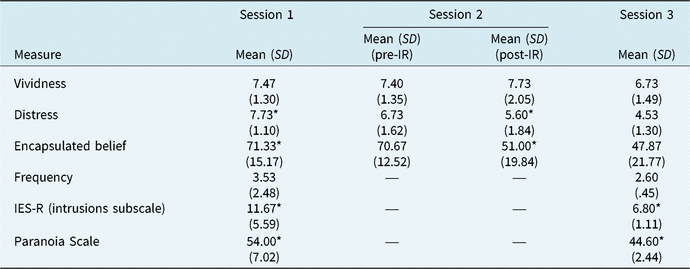
Table 1 shows descriptive statistics for the memory characteristics measures.
Descriptive statistics for memory characteristics and paranoia

IR, imagery rescripting; IES-R, Impact of Events Scale (Revised).
* Significant difference between time points.
Vividness
There was no significant difference in vividness ratings across time points, Wilks’ lambda = .72, F (1,14) = 1.59, p = .25.
Distress
Mauchly’s test indicated that the assumption of sphericity had been violated for this measure, χ2 (5) = 14.92, p = .011, so Greenhouse–Geisser corrected tests of one-way repeated measures ANOVA are reported (ε = .59). The results showed that there was a main effect of time on distress, F (1,14) = 17.22, p = .000, η2 = .55. Distress reduced between session 1 and following IR (p = .002). This was maintained at session 3.
Emotion intensity
There was a main effect of time for the highest reported emotion (HRE) given in session 1 (mean = 7.87, SD = 1.55), Wilks’ lambda = .16, F (1,14) = 21.42, p < .001, η2 = .84. These emotions were all ‘negative’ (for example, ‘lonely’ and ‘sad’) and reduced following IR (mean = 4.27, SD = 2.05, p = .018) and then reduced further at session 3 (mean = 4.13, SD = 1.41, p < .001). Seven participants reported a different (also ‘negative’) HRE just prior to IR (mean = 7.73, SD = 1.34). Mauchly’s test indicated that the assumption of sphericity had been violated, χ2 (7)=6.71, p = .040, so Greenhouse–Geisser corrected tests of one-way repeated measures ANOVA are reported (ε = .58). The results showed there was a main effect of time for this second HRE, F (1,6) = 7.85, p = .025, η2 = .57, which reduced following IR (mean = 4.47, SD = 2.30, p = .002) and then further reduced at session 3 (mean = 4.00, SD = 1.65, p < .001). In addition to reductions in distressing emotions, 12 participants reported ‘positive’ emotions following IR in session 2, such as ‘relief’ and ‘calm’ (mean = 6.42, SD = 1.44). Ratings for these emotions were maintained at session 3 (mean = 6.92, SD = 1.73), t (12) = 1.03, p = .324.
Encapsulated belief strength
Mauchly’s test indicated that the assumption of sphericity had been violated, χ2 (5) = 11.66, p = .040, so Greenhouse–Geisser corrected tests of one-way repeated measures ANOVA are reported (ε = .61). The results showed there was a main effect for time on belief ratings, F (1,14) = 14.51, p < .005; η2 = .51. Strength of belief reduced following IR (p = .01) and this was maintained at session 3.
Frequency
There was no differences in mean ratings of intrusion frequency between session 1 and session 3, t (14) = 1.54, p = .145.
Distressing intrusions
There was a significant decrease in mean scores on the IES-R, intrusions subscale, between session 1 and session 3, t (14) = 2.68, p = .018, η2 = .34. The mean decrease in scores was 4.87 with a 95% confidence interval ranging from .97 to 8.76.
Self-representation variables
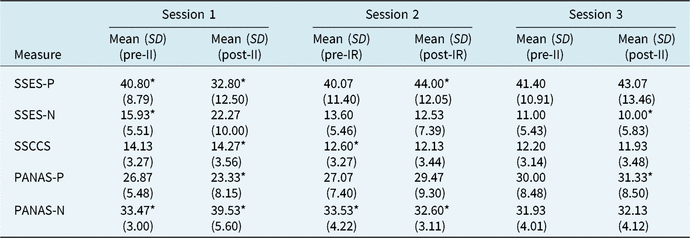
Table 2 shows descriptive statistics for state self-esteem and self-concept clarity.
Descriptive statistics for self-representation variables and affect

II, imagery interview; IR, imagery rescripting; SSES, State Self Esteem Scale; SSCCS, State Self Concept Clarity Scale; PANAS, Positive and Negative Affect Scale.
* Significant difference between time points.
State self-esteem
There was a main effect of time on positive self-esteem, Wilks’ lambda = .21, F (1,14) = 7.34, p = .004, η2 = .79. Positive self-esteem reduced following the imagery interview in session 1 (p = .005). This had returned to baseline prior to IR in session 2 and increased following IR (p = .005). This effect was maintained at session 3.
Mauchley’s test indicated that the assumption of sphericity had been violated for the SSES-N, χ2 (14) = 31.97, p = .005, so Greenhouse–Geisser corrected tests of one-way repeated measures ANOVA are reported (ε = .55). The results showed there was a main effect of time on negative self-esteem, F (1,14) = 13.48, p < .005, η2 = .49. Negative self-esteem reduced between session 1 and session 3 (p = .025).
State self-concept clarity
Mauchley’s test indicated that the assumption of sphericity had been violated for this measure, χ2 (14) = 31.56, p = .005, so Greenhouse–Geisser corrected tests of one-way repeated measures ANOVA are reported (ε = .50). The results showed there was a main effect of time on self-concept clarity, F (1,14) = 5.94, p < .004, η2 = .30. Self-concept clarity reduced between that reported after the imagery interview in session 1 and prior to IR in session 2 (p = .038).
Affect
Table 2 also shows descriptive statistics for positive and negative affect. There was a main effect of time on positive affect, Wilks’ lambda = .28, F (1,14) = 5.12, p = .014, η2 = .79. Positive affect increased between that reported after the imagery interview in session 1 and after the final imagery interview at session 3 (p = .01).
Mauchley’s test indicated that the assumption of sphericity had been violated for the PANAS-N, χ2 (14) = 24.99, p = .038, so Greenhouse–Geisser corrected tests of one-way repeated measures ANOVA are reported (ε = .611). The results showed there was a main effect of time on negative affect, F (1,14) = 10.59, p < .005, η2 = .43. Negative affect increased (p = .035) following the imagery interview in session 1. This had returned to baseline prior to IR in session 2 (p = .01) and reduced following IR (p = .003). These effects were maintained at session 3.
Paranoia
Table 1 includes results for the PS completed in sessions 1 and 3. There was a significant reduction in paranoia between session 1 and session 3, t (14) = 3.89, p = .002, η2 = .52. The mean decrease in scores was 9.4 with a 95% confidence interval ranging from 4.21 to 14.59.
Discussion
People with clinical levels of paranoia report frequent and distressing memory intrusions, often linked to past trauma (Morrison, Reference Morrison2004; Serruya and Grant, Reference Serruya and Grant2009). IR yields demonstrable benefits across diagnoses (Arntz, Reference Arntz2012; Morina et al., Reference Morina, Lancee and Arntz2017) but is rarely offered to people with psychosis, probably due to poor understanding of the effects of IR on postulated mechanisms of change, as well as the absence of a robust evidence base. This study aimed to determine whether IR in people with high trait paranoia leads to changes in the same cognitive-affective processes as have been demonstrated in people with depression and anxiety presentations, and in level of paranoia.
As predicted, single-session IR effected change in memory characteristics, self-esteem, affect and paranoia. We found large effect sizes and changes were maintained at 1-week follow-up. State self-concept clarity did not increase. This was contrary to our prediction and requires replication before drawing conclusions. Overall, the results show a similar pattern of changes to memory characteristics, self-representation, affect and presenting problem as has been demonstrated in clinical and experimental studies of IR with other populations (Arntz, Reference Arntz2012; Morina et al., Reference Morina, Lancee and Arntz2017). Participants reported reductions in intrusiveness, distress, emotion intensity and encapsulated belief strength. A majority also reported enduring ‘positive’ emotions following IR, such as ‘relief’ and ‘calm.’ Interestingly, like others (e.g. Nilsson et al., Reference Nilsson, Lundh and Viborg2012; Wild et al., 2007) we did not find differences in vividness or frequency of intrusions. This may suggest that intrusions remain but become less compelling and distressing following IR, or that one session is insufficient to achieve change in these areas. Positive affect increased and negative affect decreased following IR. We also found reductions in reported levels of paranoia. This is consistent with research demonstrating the impact of IR on primary outcomes across other presentations (Arntz, Reference Arntz2012; Morina et al., Reference Morina, Lancee and Arntz2017).
The study is limited by the lack of a control group. While a within-subject, repeated measures design is useful for the preliminary exploration of novel interventions, controlled experimental and outcome studies are needed to determine if effects can be directly attributed to the intervention. In the absence of a control group, an alternative explanation for the results is that multiple assessments led to the changes observed rather than the IR. It is unlikely although possible that the brief mood induction had an impact on data collected the following week. We recruited a small, predominantly female sample, excluded people with significant low mood, suicidality or trauma symptoms, and did not take other relevant measures such as cannabis or other drug use into account. We may have risked type 1 errors having administered several repeated measures with a small sample, although the consistently large effect sizes suggest robust results. The measures and intervention were delivered by the same person, which may have resulted in reporting bias. Our effect sizes were large, but we cannot assume they are generalizable to clinical groups.
Notwithstanding these limitations, this is the first study to investigate the impact of IR on hypothesized mechanisms of change in people with non-clinical paranoia, and suggests that people respond to IR as predicted by cognitive theory and similarly to those with depression and anxiety presentations. In people with high trait paranoia, IR appears to affect the mechanisms that maintain distressing intrusions transdiagnostically, which are the same or similar processes that contribute to an enduring vulnerability to paranoia in clinical populations (Hardy, Reference Hardy2017), and so results in a corresponding reduction in paranoid beliefs.
Clinically, IR may enable someone who has learnt to subjugate their emotional needs and be hypervigilant to threat, to start to rescript intrusive memories in context – perhaps as understandable reactions to past neglect and bullying – and learn to see themselves as having done all they could to survive early adversity, and that many people in their life now are safe.
An open trial or feasibility randomized control trial would be an appropriate next step. IR is likely to be a valuable intervention for people with clinical levels of paranoia, the majority of whom experience distressing memory intrusions and may benefit in terms of both trauma and paranoia.
Author ORCID
Katherine Newman-Taylor, 0000-0003-1579-7959
Acknowledgements
The authors thank Dr Sheena Au-Yeung for her help in running this study.
Ethical statement
The authors have abided by the Ethical Principles of Psychologists and Code of Conduct as set out by the APA: http://www.apa.org/ethics/code/. Ethical approval for the study was granted by the University of Southampton.
Conflicts of interest
The authors have no conflicts of interest with respect to this publication.
Financial support
This research received no specific grant from any funding agency, commercial or not-for-profit sectors.



Comments
No Comments have been published for this article.