1. Introduction
Let X be a Banach space with closed unit ball BX, unit sphere SX, and topological dual space  $X^*$. We say that X has the Daugavet property if the equation
 \begin{equation}
\| \text{Id} + T \| = 1+\|T\|
\end{equation}
holds for every rank-one bounded linear operator from X to itself, where Id denotes the identity operator on X. Given 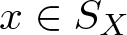 $x \in S_X$ and ɛ > 0, let us denote by
 $\Delta_\varepsilon (x) = \{y \in B_X : \| y- x\| \geq 2 -\varepsilon\}$. By the geometric characterization in [Reference Kadets, Shvidkoy, Sirotkin and Werner19], X has the Daugavet property if and only if, for every
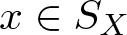 $x \in S_X$ and ɛ > 0, we have
 $B_X \subseteq \overline{\text{co}} \,\Delta_{\varepsilon}(x)$.
The following related (weaker) property is introduced in [Reference Ivakhno and Kadets14]: a Banach space X is with bad projections if, for every rank-one projection P, we have
 \begin{equation}
\| \text{Id} - P \| \geq 2.
\end{equation}
Let us mention that this property was studied in [Reference Abrahamsen, Hájek, Nygaard, Talponen and Troyanski2, Reference Becerra Guerrero, López-Pérez and Rueda Zoca6] under the names of local diameter two property + and diametral local diameter two property. There is a similar characterization for this property [Reference Ivakhno and Kadets14]: a Banach space X is with bad projections if and only if for every 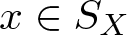 $x \in S_X$ and ɛ > 0, we have
 $x \in \overline{\text{co}} \,\Delta_{\varepsilon}(x)$.
There have been numerous efforts in the study of the Daugavet property and its related properties as it turned out that they could significantly affect the isomorphic structure of a Banach space. For instance, a Banach space with the Daugavet property contains an isomorphic copy of  $\ell_1$ [Reference Kadets, Shvidkoy, Sirotkin and Werner19]; it does not have an unconditional basis [Reference Kadets18]. Moreover, if a Banach space is with bad projections and has an unconditional basis, then the unconditional suppression basis constant must be at least 2. Classical examples of Banach spaces having the Daugavet property include
 $C(K), L_1 (\mu)$, and
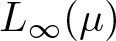 $L_\infty (\mu)$, provided that K is perfect and µ is non-atomic [Reference Daugavet9, Reference Lozanovskii22, Reference Werner29], the space of Lipschitz functions
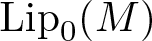 ${\mathrm{Lip}}_0 (M)$ over a metrically convex space M [Reference Ivakhno, Kadets and Werner15], and the Banach algebra of bounded holomorphic functions
 $H^\infty$ [Reference Jung16, Reference Werner30, Reference Wojtaszczyk32]. For background on the Daugavet property and its related properties including being with bad projections, we refer to [Reference Kadets and Werner20, Reference Martín and Rueda Zoca24, Reference Werner31] and references therein.
The pointwise version of the Daugavet property and the diametral local diameter two property were first introduced in [Reference Abrahamsen, Haller, Lima and Pirk3] and studied in [Reference Abrahamsen, Lima, Martiny and Troyanski5, Reference Dantas, Jung and Rueda Zoca8, Reference Jung and Rueda Zoca17, Reference Veeorg26, Reference Veeorg27]: given a Banach space X and a point 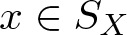 $x \in S_X$, x is said to be
(i) a Daugavet point if, for every ɛ > 0, δ > 0, and
 $x^* \in S_{X^*}$, there exists $y \in S(x^*,\delta)$ such that $\|y-x\| \gt 2 - \varepsilon$,
(ii) a Δ-point if, for every ɛ > 0, δ > 0 and
$x^* \in S_{X^*}$ with $x \in S(x^*,\delta)$, there exists $y \in S(x^*,\delta)$ such that $\|y-x\| \gt 2 - \varepsilon$,
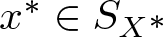


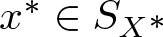



where 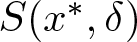 $S(x^*,\delta)$ is a slice of BX, i.e.,
 $S(x^*,\delta)=\{y \in B_X : \text{Re}\,x^* (y) \gt 1-\delta\}$. For the spaces
 $L_1 (\mu)$ and L 1-predual spaces, the notions of Daugavet point and Δ-point coincide [Reference Abrahamsen, Haller, Lima and Pirk3, Reference Martín and Rueda Zoca24]. However, in general, there exists a Δ-point, which is not a Daugavet point (see, for instance, [Reference Abrahamsen, Haller, Lima and Pirk3, example 4.7] and [Reference Jung and Rueda Zoca17, example 4.4]).
In this article, we introduce the concepts of Daugavet constant and Δ-constant (see definition 2.1 for definitions) of points in order to analyse how close or how far the points in Banach spaces are from becoming Daugavet points or Δ-points. The aim of this work is to initiate a systematic investigation of Daugavet and Δ-constants, as well as to extend several known properties and results on Daugavet and Δ-points from a quantitative point of view.
The Daugavet index of thickness, which quantifies how far a Banach space is from having the Daugavet property, was first introduced in [Reference Rueda Zoca25], and its variations are deeply studied in [Reference Haller, Langemets, Lima, Nadel and Rueda Zoca10]. Motivated by the question of whether or not a super-reflexive space admits Δ-points, the authors of [Reference Abrahamsen, Lima, Martiny and Perreau4] investigated a Banach space that admits almost Daugavet (or, Δ-) points. These are weaker than assuming the existence of Daugavet and Δ-points in Banach spaces. For instance, c 0 does not have any Δ-points, while it admits almost Δ-points. It turns out that Daugavet indices of thickness and the existence of almost Dauagvet or Δ-points are closely related to the quantitative approach of Daugavet and Δ-points, so these will be one of our main aim of the study.
Throughout the article, 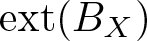 $\text{ext}(B_X)$ and
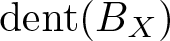 $\text{dent}(B_X)$ denote the set of all extreme points and all denting points, respectively, of BX, where a point
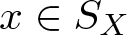 $x \in S_X$ is said to be a denting point if there is a slice of BX containing x with an arbitrary small diameter. Recall that a Banach space X has the Radon-Nikodým property if every non-empty bounded subset
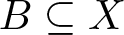 $B \subseteq X$ is dentable, that is, B contains a slice with an arbitrary small diameter. It is immediate that a Banach space with Daugavet property (or, diametral local diameter two property) fails the Radon–Nikodým property as it has no denting points. In contrast to this, a surprising example of a Banach space with the Radon–Nikodým property and a Daugavet point was constructed in [Reference Veeorg26]. Recently, it turned out that every infinite-dimensional Banach space can be renormed with a Δ-point [Reference Abrahamsen, Aliaga, Lima, Martiny, Perreau, Prochazka and Veeorg1], and a Daugavet point provided that it has an unconditional weakly null Schauder basis [Reference Haller, Langemets, Perreau and Veeorg12] (hence,
 $\ell_2$ can be renormed with a Daugavet point). Let us also mention that a Banach space with a sub-symmetric basis cannot have Δ-points [Reference Abrahamsen, Lima, Martiny and Troyanski5].
The outline of the article is as follows. In §2, we investigate the general properties of Daugavet and Δ-constants. We give the definitions of Daugavet and Δ-constant and obtain some general observations on them in §2.1. Moreover, we study their relation with some operator-norm inequalities, which extends the well-known relation [Reference Abrahamsen, Haller, Lima and Pirk3] between Daugavet points (resp. Δ-points) and the equality (DE) (resp. (Δ E)). §2.2 is devoted to study the relation between our new notions and extremal points of the unit ball. Namely, we show that the set of points with vanishing Δ-constant coincides with the set of denting points of BX. Furthermore, we provide precise values of the Daugavet constant of a locally uniformly rotund point of the unit ball and Δ-constant of a point lying in the unit ball of a Hilbert space. In §2.3, we link our two new notions to global estimations of Daugavet and diametral local diameter two properties introduced in [Reference Haller, Langemets, Lima, Nadel and Rueda Zoca10, Reference Rueda Zoca25]. More precisely, we first observe that the characterization for X to admit almost Daugavet points can be done using the supremum of Daugavet constants of x over all points in SX. Also, the infimum of Daugavet constants of x over all points in SX is shown to be, by its nature, the same as the Daugavet index of thickness of X. Finally, we construct a Banach space whose infimum of Δ-constants is zero, while there are no points with vanishing Daugavet constants.
In §3, we present a number of estimations on Daugavet and Δ-constants of a point in certain classical Banach spaces, including c 0, L 1-spaces, uniform algebras, and Lipschitz-free spaces. We present some optimal calculations of those values, while for others, we discuss possible bounds on the values that the Daugavet and Δ-constant can have. It is observed as a consequence that behaviours of Daugavet constant and Δ-constant are totally different in the case of c 0 spaces, while those two constants coincide in certain L 1-spaces. Finally, through the ideas used to study Daugavet and Δ-points in Lipschitz-free spaces, we are able to construct a Banach space with a Δ-point whose Daugavet constant is zero.
In §4, we explore some related stability results. These results from a quantitative standpoint generalize several stability results that have already been discussed in many literatures. As an application, we estimate lower bounds for Daugavet and Δ-constants of points in spaces of absolute sums such as  $\ell_1$- and
 $\ell_\infty$-sums.
2. General results on Daugavet and Δ-constants
2.1. The Daugavet and Δ-constant
In the following, all Banach spaces are assumed to be over the real field:
Definition 2.1. Let X be a Banach space and 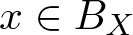 $x \in B_X$.
(i) The Daugavet constant of the point x is
\begin{equation*}
\text{dc}(x) := \sup \left\{\alpha \geq 0 | \begin{array}{l} \forall \varepsilon,\delta \gt 0, y^* \in S_{X^*},\,\exists \, y \in S(y^*,\delta) \\
\text{such that } \|y-x\| \gt \alpha - \varepsilon \end{array}\right\}.
\end{equation*}(ii) The Δ-constant of the point x is
\begin{equation*}
{\delta}c(x) := \sup \left\{\alpha\geq 0 | \begin{array}{l} \forall \varepsilon,\delta \gt 0, y^* \in S_{X^*} \text{with } x \in S(y^*,\delta), \\
\exists \, y \in S(y^*,\delta) \text{so that } \|y-x\| \gt \alpha - \varepsilon \end{array}\right\}.
\end{equation*}


Notice that the definition remains equivalent without the use of ɛ. However, we include it in the definition so that the supremums are indeed maximums. Also, it is clear by definition that 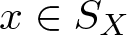 $x \in S_X$ is a Daugavet point (resp. Δ-point) if and only if
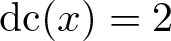 $\text{dc}(x) = 2$ (resp.
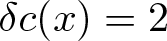 ${\delta}c(x) =2$).
Observe from the definition 2.1 of Daugavet and Δ-constant that
 \begin{equation*}
1-\|x\| \leq \text{dc}(x) \leq {\delta}c(x) \leq 1+\|x\|
\end{equation*}
and  $\text{dc}(x) = \text{dc} (-x)$ and
 ${\delta}c (x) = {\delta}c(-x)$ for every
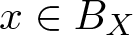 $x \in B_X$. By definition, we have that
 \begin{eqnarray}
\sup_{y\in S} \|x-y\| \geq \text{dc}(x) \, \text{for any slice } S \text{of } B_X.
\end{eqnarray}
On the other hand, for any slice S 0 of BX and ɛ > 0, there exists 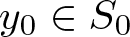 $y_0 \in S_0$ so that
 $\|x-y_0\| \geq \sup_{y\in S_0} \|x-y\| - \varepsilon.$ This, combined with (2.1), shows that
 \begin{equation*}
\text{dc}(x) = \inf_{\substack{S \subseteq B_X \text{slice }} } \sup_{y \in S} \|x-y\|.
\end{equation*}
Similarly, one can show that
 \begin{equation*}
{\delta}c(x) = \inf_{\substack{S \subseteq B_X \text{slice } \\ x \in S} } \sup_{y \in S} \|x-y\|.
\end{equation*}
In this regard, following the terminology in [Reference Martín, Perreau and Rueda Zoca23, §5], we can say a point 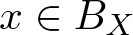 $x \in B_X$ is a Daugavet point (resp. Δ-point) if and only if
 $\text{dc}(x) = 1+\|x\|$ (resp.
 ${\delta}c(x) = 1+\|x\|$).
Remark 2.2. Note that  $x \in B_X \mapsto \text{dc}(x)$ is a 1-Lipschitz map. In fact, let
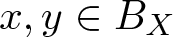 $x, y \in B_X$ be given. Given a slice S and ɛ, choose
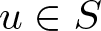 $u \in S$ so that
 $\| x - u \| \gt \text{dc}(x) - \varepsilon$. Then,
 \begin{equation*}
\| y -u\| \geq \|x - u \| - \| x - y\| \gt \text{dc} (x) - \| x-y\| -\varepsilon.
\end{equation*}
This implies that  $\text{dc}(y) \geq \text{dc}(x) - \|x-y\|$. By changing the role of x and y, we obtain
 $\text{dc}(x)\geq \text{dc}(y) - \|x-y\|$. It follows that
 $|\text{dc}(x)-\text{dc}(y)| \leq \|x-y\|$.
Let us observe the following as a direct application of the Hahn–Banach theorem, which may be considered as a quantitative counterpart of the geometric characterization of being a Daugavet and a Δ-point.
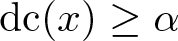
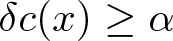
Proposition 2.3. Let X be a Banach space and  $0 \lt \alpha \leq 2$,
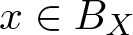 $x \in B_X$ be given.
(i)
$\text{dc}(x) \geq \alpha$ if and only if $B_X \subseteq \overline{\text{co}} \,\Delta_{2-\alpha+\varepsilon}(x)$ for every ɛ > 0.(ii)
${\delta}c(x) \geq \alpha$ if and only if $x \in \overline{\text{co}} \,\Delta_{2-\alpha+\varepsilon}(x)$ for every ɛ > 0.


Recall from [Reference Abrahamsen, Haller, Lima and Pirk3] that:
(i)
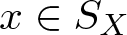
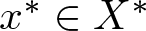
$x \in S_X$ is a Daugavet point if and only if, for every non-zero $x^* \in X^*$, the rank-one operator $T = x^* \otimes x$ satisfies $\|\text{Id} + T\| = 1+\|T\|$.(ii)
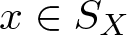
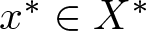
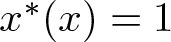
$x \in S_X$ is a Δ-point if and only if, for every $x^* \in X^*$ with $x^* (x)=1$, the projection $P=x^* \otimes x$ satisfies $\| \text{Id} - P\| \geq 2$.




In the following theorem, we present generalizations of these results in terms of the Daugavet constant and the Δ-constant.
Proposition 2.4. Let X be a Banach space with  $\dim (X) \geq 2$ and
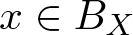 $x \in B_X$.
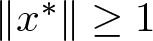
(i) For every rank-one operator
$T = x^* \otimes x$ with $\| x^* \| \geq 1$, we have
\begin{equation*}
\| \text{Id} + T \| \geq (\text{dc}(x) - 1)\|x^*\| + 1.
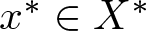
\end{equation*}(ii) For every rank-one projection
$P = x^* \otimes x$ with $x^* \in {X^*}$ satisfying $x^* (x)=1$, we have
\begin{equation*}
\| \text{Id} - P \| \geq {\delta}c (x).
\end{equation*}



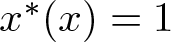

Proof. (i): If 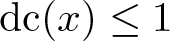 $\text{dc}(x) \leq 1$, then the inequality is trivial since
 \begin{equation*}
\|\text{Id} + T\| \geq 1 \geq (\text{dc}(x) - 1)\|x^*\| + 1,
\end{equation*}
so we may assume that 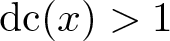 $\text{dc}(x) \gt 1$. Let
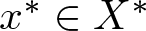 $x^* \in {X^*}$ with
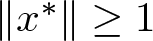 $\|x^*\| \geq 1$, δ > 0 and
 $0 \lt \varepsilon \lt \text{dc}(x) -1$ be given. Suppose first that
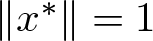 $\|x^*\| = 1$. Since
 $\text{dc}(-x)=\text{dc}(x)$, we can find
 $y \in S(x^*, \delta )$ so that
 $\|y+x\| \gt \text{dc}(x) - \varepsilon \gt 1$. This implies that
 \begin{align*}
\| \text{Id} + x^* \otimes x\| &\geq \|y + x^* (y) x\| \geq \|y+x\| - \delta \gt \text{dc}(x) - \varepsilon - \delta.
\end{align*}
Since δ > 0 and ɛ > 0 were chosen arbitrarily, we conclude that  $\| \text{Id} + x^* \otimes x\| \geq \text{dc}(x)$.
Next, suppose that 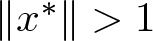 $\|x^*\| \gt 1$. Fix
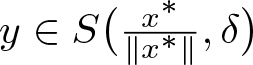 $y \in S\bigl(\frac{x^*}{\|x^*\|}, \delta \bigr)$ so that
 $\|x+y\| \gt \text{dc}(x) - \varepsilon \gt 1$. For a small enough δ > 0 such that
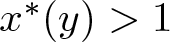 $x^*(y) \gt 1$, we have
 \begin{align*}
\| \text{Id} + x^* \otimes x\| &\geq \|y + x^* (y) x\| \geq x^*(y) \|y+x\| -x^*(y) +1 \\
& \gt x^*(y) (\text{dc}(x) - \varepsilon -1) +1 \gt \|x^*\| (1-\delta) (\text{dc}(x) - \varepsilon -1) +1.
\end{align*}
Again from the choice of δ > 0 and ɛ > 0, it follows that  $\| \text{Id} + x^* \otimes x\| \geq (\text{dc}(x)-1) \|x^*\| +1$.
(ii): First note that in at least 2-dimensional Banach space X, the inequality is trivial if 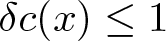 ${\delta}c(x) \leq 1$. For
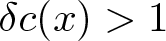 ${\delta}c(x) \gt 1$, fix
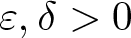 $\varepsilon, \delta \gt 0$ small and find
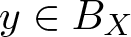 $y \in B_X$ such that
 $x^*(y) \gt 1- \delta$ and
 $\|x- y\| \gt {\delta}c(x) -\varepsilon \gt 1$. If
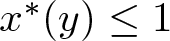 $x^*(y) \leq 1$, then
 \begin{equation*}
\|\text{Id} - P \| \geq \|y - x^*(y) x\| \geq \|y - x\| - \delta \gt {\delta}c(x) - \varepsilon - \delta.
\end{equation*}
If 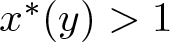 $x^*(y) \gt 1$, then
 \begin{align*}
\|\text{Id} - P \| &\geq \|y - x^*(y) x\| \\
&\geq x^*(y) \|x-y\| - x^*(y) +1 \\
& \gt x^*(y) ( {\delta}c(x) - \varepsilon - 1) + 1 \gt (1-\delta)({\delta}c(x) - \varepsilon - 1) + 1.
\end{align*}
As ɛ and δ were arbitrary, this concludes the proof.
In order to show that the notion of Daugavet and Δ-points coincide for an L 1-predual space, the equality  $S_X \cap \big( \cap_{\varepsilon \gt 0}\, \overline{\text{co}} \, \Delta_\varepsilon^X (x) \big) = S_X \cap \big( \cap_{\varepsilon \gt 0}\, \overline{\text{co}} \, \Delta_\varepsilon^{X^{**}} (x) \big)$ for any
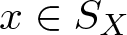 $x \in S_X$ is proved in [Reference Abrahamsen, Haller, Lima and Pirk3, lemma 3.5]. Here,
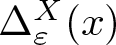 $\Delta_\varepsilon^X (x)$ is the set
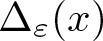 $\Delta_\varepsilon (x)$ and
 $\Delta_\varepsilon^{X^{**}} (x) = \{z \in B_{X^{**}} : \|z-x\| \geq 2- \varepsilon\}$. We would like to extend this result by replacing the constant 2 in the definition of
 $\Delta_\varepsilon$ with
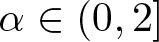 $\alpha \in (0,2]$.
Given 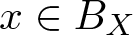 $x \in B_X$, the notation
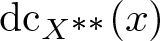 $\text{dc}_{X^{**}} (x)$ and
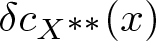 ${\delta}c_{X^{**}} (x)$ denotes the Daugavet constant and Δ-constant, respectively, of the point x, where x is considered as an element of
 $X^{**}$. Just to emphasize, let us denote by
 $\text{dc}_X (x) = \text{dc} (x)$ and
 ${\delta}c_X (x) = {\delta}c (x)$ in the proposition below.
Proposition 2.5. Let X be a Banach space, 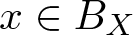 $x \in B_X$, and
 $0 \lt \alpha \leq 2$. Then,
 \begin{equation}
B_X \cap \overline{\text{co}} \,\Delta_{2-\alpha}^{X^{**}} (x) \subseteq \cap_{\varepsilon \gt 0}\, \overline{\text{co}} \,\Delta_{2-\alpha +\varepsilon}^{X} (x).
\end{equation}
In particular, we have the following:
(i)
$\text{dc} (x) \geq \text{dc}_{X^{**}} (x)$.(ii)
${\delta}c (x) ={\delta}c_{X^{**}} (x)$.


Proof. The inclusion (2.2) can be proved similarly as in [Reference Abrahamsen, Haller, Lima and Pirk3, lemma 3.5]. For the sake of completeness, we present the proof. Let ɛ > 0 be given. Let 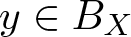 $y \in B_X$,
 $y_1^{**}, \ldots, y_{m}^{**} \in \Delta_{2-\alpha}^{X^{**}} (x)$, and
 $\lambda_1,\ldots, \lambda_m \gt 0$ be such that
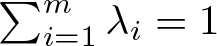 $\sum_{i=1}^m \lambda_i = 1$ and
 $\|y - \sum_{i=1}^m \lambda_i y_i^{**} \| \lt \frac{\varepsilon}{2}$. Put
 $E = \text{span} \{x, y, y_1^{**}, \ldots, y_m^{**} \} \subseteq X^{**}$ and let
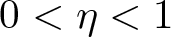 $0 \lt \eta \lt 1$ be such that
 $(1-\eta)\alpha \gt \alpha-\varepsilon$. By Principle of Local Reflexivity, there exists a linear operator
 $T : E \rightarrow X$ such that
(i) Te = e for every
$e \in E \cap X$;(ii)
$(1-\eta)\|e\| \leq \|Te\| \leq (1+\eta) \| e\|$ for every $e \in E$.



It follows that  $\|x - Ty_{i}^{**}\| = \|Tx - Ty_i^{**}\| \geq (1-\eta) \alpha \gt \alpha - \varepsilon$. That is,
 $Ty_i^{**} \in \Delta_{2-\alpha+\varepsilon}^X (x)$ for
 $i=1,\ldots, m$. Moreover,
 \begin{align*}
\left\| y - \sum_{i=1}^m \lambda_i T y_i^{**} \right\| = \left\| Ty - \sum_{i=1}^m \lambda_i T y_i^{**}\right\| \leq (1+\eta)\frac{\varepsilon}{2} \lt \varepsilon.
\end{align*}
It follows that  $y \in \overline{\text{co}} \,\Delta_{2-\alpha +\varepsilon}^{X} (x)$.
(i) By proposition 2.3, if
$\text{dc}_{X^{**}} (x) \geq \alpha$, then $B_{X^{**}} \subseteq \overline{\text{co}} \Delta_{2-\alpha+\varepsilon}^{X^{**}} (x)$ for every ɛ > 0. Let us fix ɛ > 0. Note that if $y \in B_X$, then $y \in \overline{\text{co}} \Delta_{2-\alpha+\varepsilon}^{X^{**}} (x)$. By (2.2), we have that $y \in \overline{\text{co}} \Delta_{2-\alpha+\varepsilon+ \eta}^{X} (x)$ for every η > 0. In particular, $y \in \overline{\text{co}} \Delta_{2-\alpha+2\varepsilon}^{X} (x)$, which shows that $B_X \subseteq \Delta_{2-\alpha+2\varepsilon}^{X} (x)$. As this holds for every ɛ > 0, by proposition 2.3, we conclude that $\text{dc} (x) \geq \alpha$.(ii) Note from proposition 2.3 that
$x \in \overline{\text{co}} \Delta_{2-{\delta}c(x)+\varepsilon}^{X} (x)$ for every ɛ > 0, which is, by (2.2), equivalent to that $x \in \overline{\text{co}} \Delta_{2-{\delta}c(x)+\varepsilon}^{X^{**}} (x)$ for every ɛ > 0. It follows that ${\delta}c (x) \geq \alpha$ if and only if ${\delta}c_{X^{**}}(x) \geq \alpha$.


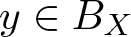




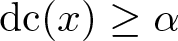


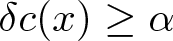

Remark 2.6. Let Y be a subspace of X and let 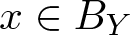 $x \in B_Y$. Let us denote by
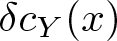 ${\delta}c_Y (x)$ the Δ-constant of x when the point x is considered as a point of Y. Given
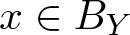 $x \in B_Y$, ɛ > 0 and a slice
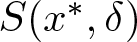 $S(x^*,\delta)$ of BX containing x, consider
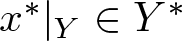 $x^* \vert_Y \in Y^*$, which satisfies clearly that
 $x^*\vert_Y (x) \gt 1-\delta$. Then, we may find
 $u \in B_Y \cap S(x^*, \delta)$ such that
 $\|u-x\| \gt {\delta}c_Y (x) -\varepsilon$. This implies that
 ${\delta}c_X (x) \geq {\delta}c_Y (x)$, which, in particular, shows that
 ${\delta}c_{X^{**}} (x) \geq {\delta}c_X (x)$ and that Δ-points pass to superspaces.
2.2. Relationship to extremal points
By nature, the concept of a Δ-point can be understood as being diametrically opposed to that of a denting point. The following confirms the intuition by showing that the set of denting points is precisely the set of points with vanishing Δ-constant.
Proposition 2.7. Let X be a Banach space. Then, we have
 \begin{equation*}
\text{dent}(B_X) = \{x \in S_X : {\delta}c(x) = 0 \}.
\end{equation*}
Proof. Suppose first that 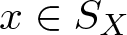 $x \in S_X$ satisfies
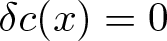 ${\delta}c(x)=0$. Let η > 0 be given. Then, there exist ɛ > 0, δ > 0, and
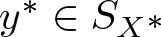 $y^* \in S_{X^*}$ such that
 $x \in S(y^*,\delta)$ and
 $\|y-x\| \leq \eta - \varepsilon$ for every
 $y \in S(y^*,\delta)$. Thus,
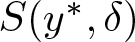 $S(y^*,\delta)$ is a slice of BX containing x such that
 $\text{diam} S(y^*,\delta) \leq 2(\eta-\varepsilon)$. Since η > 0 was arbitrary, it follows that x is a denting point of BX.
On the other hand, let  $x \in \text{dent}(B_X)$ and η > 0 be given. Fix δ > 0 and
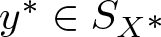 $y^* \in S_{X^*}$ such that
 $x \in S(y^*,\delta)$ and
 $\text{diam} S(y^*,\delta) \lt \eta/2$. Then
 $\|y-x\| \leq \eta/2$ for every
 $y \in S(y^*,\delta)$, so
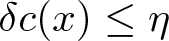 ${\delta}c(x) \leq \eta$. This finishes the proof.
We refer to theorem 3.14 for the remark that the same kind of result cannot be guaranteed in the case of Daugavet constants. On the other hand, it is observed in [Reference Jung and Rueda Zoca17, proposition 3.1] that Daugavet points have to be far from the set of denting points. In general, this result can be interpreted as follows by using the Daugavet constant, which will be used in §3.4.
Lemma 2.8. Let X be a Banach space and 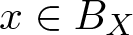 $x \in B_X$. If
 $y \in \text{dent}(B_X)$, then
 $\|x-y\| \geq \text{dc}(x)$.
Proof. Suppose that  $y \in \text{dent}(B_X)$ and
 $\|x-y\| \lt \text{dc}(x)$. Take a slice
 $S = S(x^*, \delta)$ containing y such that
 $\text{diam} (S) \lt \eta$, where
 $0 \lt 2\eta \lt \text{dc}(x) - \|x-y\|$. Find
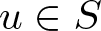 $u \in S$ so that
 $\|x-u\| \gt \text{dc}(x) -\eta$. Then,
 \begin{equation*}
\|x-y\| \geq \|x-u \| - \|u-y\| \gt \text{dc}(x) - \eta -\eta \gt \|x-y\|,
\end{equation*}
which is a contradiction.
Recall that a Banach space X is said to have the Kadec property if the norm topology and the weak topology coincide on SX. It is known that X is strictly convex with the Kadec property if and only if every point in SX is a denting point of BX [Reference Lin, Lin and Troyanski21]. It is well known that X has the Radon–Nikodým property if and only if every bounded closed convex subset of X is the closed convex hull of its denting points. As a direct consequence of proposition 2.7, we obtain the following:
Corollary 2.9. Let X be a Banach space.
(i) If X is strictly convex with the Kadec property (in particular, X is locally uniformly rotund), then
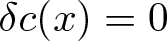
${\delta}c(x)=0$ for every $x \in S_X$.(ii) If BX is dentable, then we have
$\inf_{x \in S_X} {\delta}c(x)=0$. Moreover, if X has the Radon–Nikodým property, then $B_X = \overline{\text{co}}\{x \in S_X : {\delta}c(x) = 0 \}$.
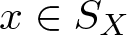


In the case of locally uniformly rotund (for short, LUR) points  $x \in B_X$, we can compute the exact value of
 $\text{dc}(x)$. Recall that
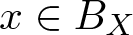 $x \in B_X$ is a LUR point if
 $\|x_n - x \| \rightarrow 0$ whenever a sequence
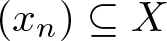 $(x_n) \subseteq X$ with
 $\|x_n\| \rightarrow \|x\|$ satisfies that
 $ \|x_n+x\| \rightarrow 2\|x\|$. Observe that
 $x \in X \setminus \{0\}$ is a LUR point if and only if
 $\| x_n - x/\|x\| \| \rightarrow 0$ whenever a sequence
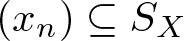 $(x_n) \subseteq S_X$ satisfies that
 $ \|x_n + x\| \rightarrow 1 + \|x\|$.
Proposition 2.10. Let X be a Banach space, and let 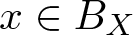 $x \in B_X$ be a LUR point. Then, we have
 $\text{dc}(x) = 1-\|x\|$.
Proof. It is clear that  $\text{dc}(x) \geq 1- \|x\|$ from the definition. In order to show that
 $\text{dc}(x) \leq 1 - \|x\|$, let ɛ > 0 be given and fix
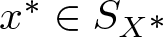 $x^* \in S_{X^*}$ such that
 $x^*(x) = \|x\|$. We claim that there exists δ > 0 such that if
 $x^*(y) \gt 1-\delta$ for some
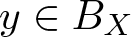 $y \in B_X$, then
 $\bigl\|y-x/\|x\|\bigr\| \lt \varepsilon$. Otherwise, we may choose
 $y_n \in S(x^*, 1/n)$ for each
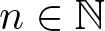 $n \in \mathbb{N}$ such that
 $\bigl\| y_n - x/\|x\| \bigr\| \geq \varepsilon$ for all
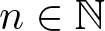 $n \in \mathbb{N}$. But notice that
 \begin{equation*}
\|y_n+x\| \geq x^*(y_n) +x^*(x) \gt 1+\|x\|-\frac{1}{n};
\end{equation*}
thus, since x is a LUR point, we can deduce that  $\|y_n - x/\|x\|\| \rightarrow 0$. This contradicts the choice of
 $(y_n)$. Now, observe that for every
 $y \in S(x^*,\delta)$,
 \begin{equation*}
\|y-x\| \leq \left\|y - \frac{x}{\|x\|}\right\| + 1- \|x\| \lt 1-\|x\|+\varepsilon.
\end{equation*}
Since ɛ > 0 was arbitrary, this shows that  $\text{dc}(x) \leq 1 - \|x\|$.
Dealing with Hilbert spaces, we can compute the Δ-constant of points in the unit ball. Note that for the 1-dimensional Hilbert space H, it is obvious that  ${\delta}c(x) = 1-\|x\|$ for
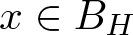 $x \in B_H$.
Proposition 2.11. Let H be a Hilbert space with  $\dim(H) \geq 2$, and
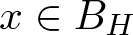 $x \in B_H$. Then, we have
 ${\delta}c(x) = \sqrt{1-\|x\|^2}$.
Proof. Consider the slice  $S=\{u \in B_H : \big\langle u, \frac{x}{\|x\|} \big\rangle \gt \|x\| - \delta\}$ with δ > 0, where
 $\langle \cdot, \cdot \rangle$ denotes the inner product on H. It is clear that
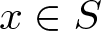 $x \in S$. For
 $y \in S$, observe that
 \begin{equation}
\|x-y\|^2 = \|x\|^2+\|y\|^2 - 2\langle x , y \rangle \leq \|x\|^2 + 1 - 2 \|x\| (\|x\|-\delta).
\end{equation}
By letting 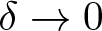 $\delta \rightarrow 0$, the right-hand side of (2.3) tends to
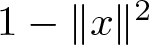 $1-\|x\|^2$. This implies that
 ${\delta}c(x) \leq \sqrt{1-\|x\|^2}$. For the reverse inequality, let
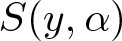 $S(y, \alpha)$ be a slice containing the point x. Since
 $\dim(H) \geq 2$, we can find
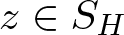 $z \in S_H$, which is orthogonal to x, i.e.,
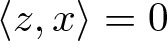 $\langle z,x\rangle = 0$. By changing the sign if necessary, we may assume that
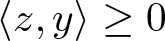 $\langle z, y \rangle \geq 0$. Note that
 $x+ \sqrt{1-\|x\|^2 }\, z \in S_H$ and
 $x+ \sqrt{1-\|x\|^2 }\,z \in S(y, \alpha)$ since
 \begin{equation*}
\langle y, x+ \sqrt{1-\|x\|^2 } \, z \rangle \geq \langle y, x\rangle \gt 1 - \alpha.
\end{equation*}
Note from  $\| x -( x+ \sqrt{1-\|x\|^2 }\,z) \| = \sqrt{1-\|x\|^2 }$ that
 ${\delta}c(x) \geq \sqrt{1-\|x\|^2 }$.
2.3. On global estimations of Daugavet and Δ-constants
Recall from [Reference Abrahamsen, Lima, Martiny and Perreau4] that X admits almost Daugavet points (resp. almost Δ-points) if, for every ɛ > 0, there exists 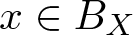 $x \in B_X$ such that
 $B_X \subseteq \overline{\text{co}} \,\Delta_\varepsilon(x)$ (resp.
 $x \in \overline{\text{co}} \,\Delta_\varepsilon(x)$). From proposition 2.3, we have the following characterization, which shows that the behaviour of the Daugavet constant of points in the unit sphere SX completely determines whether X admits almost Daugavet points or not:
Proposition 2.12. Let X be a Banach space. Then, X admits almost Daugavet points if and only if  $\sup_{x \in S_X} \text{dc}(x)=2$.
Proof. The proof of the ‘if’ part is clear. Assume that X admits almost Daugavet points. Let ɛ > 0 and 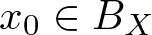 $x_0 \in B_X$ be so that
 $B_X \subseteq \overline{\text{co}} \,\Delta_{\varepsilon/2} (x_0)$. By proposition 2.3, it is clear that
 $\text{dc} (x_0) \geq 2-\frac{\varepsilon}{2}$. Note that
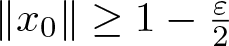 $\|x_0\| \geq 1 - \frac{\varepsilon}{2}$. Thus, putting
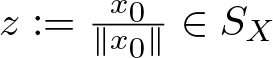 $z:=\frac{x_0}{\|x_0\|} \in S_X$, we have that
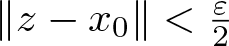 $\|z - x_0\| \lt \frac{\varepsilon}{2}$. Since the mapping
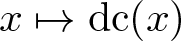 $x \mapsto \text{dc} (x)$ is 1-Lipschitz (see remark 2.2), we have
 \begin{equation*}
\text{dc} (z) \geq \text{dc} (x_0) - | \text{dc}(z) - \text{dc}(x_0)| \geq \text{dc} (x_0) - \|z-x_0\| \gt \left(2-\frac{\varepsilon}{2}\right) - \frac{\varepsilon}{2} = 2 - \varepsilon,
\end{equation*}
which implies  $\sup_{x \in S_X} \text{dc}(x) =2$.
Let us point out that it is unclear whether or not an analog result for almost Δ-points holds in general. In fact, given a point 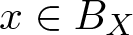 $x \in B_X$ satisfying that
 $x \in \overline{\text{co}} \, \Delta _\varepsilon (x)$, we cannot expect the normalization
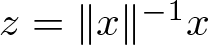 $z= \|x\|^{-1} x$ of the point x to satisfy
 $z \in \overline{\text{co}} \, \Delta _\varepsilon (z)$. Moreover, the mapping
 $x \in B_X \mapsto {\delta}c (x)$ is not a Lipschitz map in general (see remark 3.4 for instance). Nevertheless, we note for certain Banach spaces that a result similar to proposition 2.12 holds.
Proposition 2.13. Let X be a Banach space such that 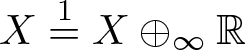 $X \stackrel{1}= X \oplus_\infty \mathbb{R}$. Then, X admits almost Δ-points if and only if
 $\sup_{x \in S_X} {\delta}c (x) = 2$.
Proof. It suffices to show that for 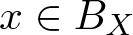 $x \in B_X$, there exists
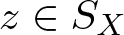 $z \in S_X$ such that
 ${\delta}c(z) \geq {\delta}c(x)$. Let
 $x \in B_X \setminus \{0\}$ be given. We claim that
 ${\delta}c((x,1)) \geq {\delta}c(x)$. Let ɛ > 0, δ > 0 and
 $(x^*, \beta) \in S_{X^* \oplus_1 \mathbb{R}}$ with
 $(x,1) \in S:= S\bigl( (x^*, \beta), \delta\bigr)$ be given. Put
 $z:= (-\|x\|^{-1} x, 1 )$ and observe that
 $z \in S$. Also,
 $\|z-(x,1) \| = 1+\|x\| \geq {\delta}c(x) \gt {\delta}c(x) -\varepsilon$. Next, assume that
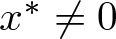 $x^* \neq 0$. Note that we have
 \begin{equation*}
\frac{x^*}{\|x^*\|} (x) \gt \frac{1}{\|x^*\|}(1-\delta -\beta).
\end{equation*}
Thus, there exists 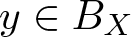 $y \in B_X$ such that
 $\|x^*\|^{-1} x^* (y) \gt \|x^*\|^{-1} (1-\delta -\beta)$ and
 $\|y-x\| \gt {\delta}c(x) - \varepsilon$. Set
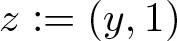 $z:=(y,1)$ and observe that
 $z \in S$ since
 $(x^*, \beta) (y,1) \gt 1-\delta-\beta+\beta= 1-\delta$. It is clear that
 \begin{equation*}
\|z- (x,1)\| = \|y-x\| \gt {\delta}c(x) -\varepsilon.
\end{equation*}
This proves that  ${\delta}c( (x,1)) \geq {\delta}c(x)$.
Recall from [Reference Martín, Perreau and Rueda Zoca23] that a point 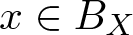 $x \in B_X$ is called a super Daugavet point if
 $\sup_{y \in V} \|x-y\| = 1+\|x\|$ for every non-empty relatively weakly open subset V of BX. Thus, it is also natural to consider the super Daugavet constant of a point x in BX, denoted by
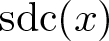 $\text{sdc}(x)$. That is,
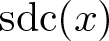 $\text{sdc}(x)$ is the constant given by
 \begin{equation*}
\text{sdc}(x) := \sup \left\{\alpha \geq 0 | \begin{array}{l} \forall \varepsilon \gt 0 \text{and a relatively weakly open } V \subseteq B_X, \\
\exists \, y \in V \text{such that } \|y-x\| \gt \alpha - \varepsilon \end{array}\right\}.
\end{equation*}
By definition, it is clear that  $\text{dc}(x) \geq \text{sdc}(x)$ for every
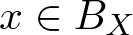 $x \in B_X$. Although we introduced the notion of super Daugavet constant, we will focus on Daugavet and Δ-constants in the following sections.
In [Reference Rueda Zoca25], the Daugavet index of thickness of a Banach space X, denoted by  $\mathcal{T}(X)$, is introduced. Namely,
 \begin{equation*}
\mathcal{T} (X) = \inf \left\{r \gt 0 | \begin{array}{c} \exists \, x \in S_X \text{and a relatively weakly open } W \text{of } B_X \\
\text{such that } \emptyset \neq W \subseteq B(x,r):=\{u \in B_X : \|u-x\|\leq r \} \end{array}\right\}.
\end{equation*}
Afterwards, a related Daugavet index 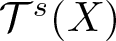 $\mathcal{T}^s (X)$ is introduced in [Reference Haller, Langemets, Lima, Nadel and Rueda Zoca10] as follows:
 \begin{equation*}
\mathcal{T}^s (X) = \inf \left\{r \gt 0 | \begin{array}{c} \exists \, x \in S_X \text{and a slice } S \text{of } B_X \\
\text{such that } S \subseteq B(x,r)\end{array}\right\}.
\end{equation*}
The following shows that those indexes are indeed the infimum of (super) Daugavet constant of points over the unit sphere:
Proposition 2.14. Let X be a Banach space. Then,
(i)
$\inf_{x\in S_X} \text{dc} (x) = \mathcal{T}^s (X)$.(ii)
$\inf_{x\in S_X} \text{sdc}(x) = \mathcal{T}(X)$.


Proof. As the statements (i) and (ii) can be proved in a very similar way, we only prove (i). Suppose that 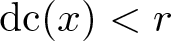 $\text{dc}(x) \lt r$ for some
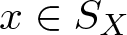 $x \in S_X$. Then, there exist ɛ > 0 and
 $S=S(x^*,\delta)$ such that
 $\|x-y\| \leq r-\varepsilon$ for every
 $y \in S$. This implies that
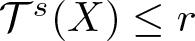 $\mathcal{T}^s (X) \leq r$. Conversely, suppose that
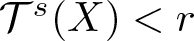 $\mathcal{T}^s (X) \lt r$. Let ɛ > 0 be such that
 $\mathcal{T}^s (X) \lt r- \varepsilon \lt r$, and find
 $\mathcal{T}^s (X) \lt t \lt r-\varepsilon$ such that there exist
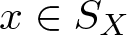 $x \in S_X$ and
 $S=S(x^*,\delta)$ satisfying
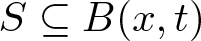 $S \subseteq B(x,t)$. That is,
 $\|x-y\| \leq t \lt r-\varepsilon$ for every
 $y \in S$. This implies that
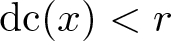 $\text{dc}(x) \lt r$.
Remark 2.15. It is also natural to think of the Δ-version of the Daugavet index of thickness, which was once considered in [Reference Haller, Langemets, Lima, Nadel and Rueda Zoca10]. Given a Banach space X, let us define
 \begin{equation*}
\mathcal{T}^\delta (X) := \inf \left\{r \gt 0 | \begin{array}{c} \exists \text{a slice } S \text{of } B_X \text{and } x \in S \cap S_X \\
\text{such that } S \subseteq B(x,r)\end{array}\right\}.
\end{equation*}
Notice that  $\mathcal{T}^s (X) \leq \mathcal{T}^\delta (X)$ and, arguing as in proposition 2.14, observe the following:
 \begin{equation*}
\inf_{x\in S_X} {\delta}c(x) = \mathcal{T}^\delta (X).
\end{equation*}
One may ask whether it can happen that  $\inf_{x \in S_X} \text{dc} (x) = 0$ while
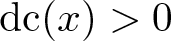 $\text{dc} (x) \gt 0$ for every
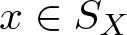 $x \in S_X$, and a similar question for the Δ-constant. The following shows that there is indeed such a Banach space X, and its construction relies on the fact [Reference Haller, Langemets, Lima, Nadel and Rueda Zoca10, theorem 2.7].
Theorem 2.16 There exists a Banach space X such that  $\inf_{x \in S_X} {\delta}c (x) = 0$ while
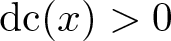 $\text{dc} (x) \gt 0$ for every
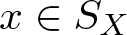 $x \in S_X$.
Proof. The result [Reference Haller, Langemets, Lima, Nadel and Rueda Zoca10, proposition 2.8] guarantees that for any 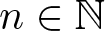 $n \in \mathbb{N}$, there exists a Banach space Xn satisfying that
 $\mathcal{T}^s (X_n) = 1/2^n$. As a matter of fact, a careful investigation of the proof shows that
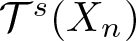 $\mathcal{T}^s (X_n)$ in fact coincides with
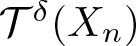 $\mathcal{T}^\delta (X_n)$. Observe also that
 $\mathcal{T}^\delta (E_1 \oplus_1 E_2)\leq \mathcal{T}^\delta (E_1)$ for any Banach spaces E 1 and E 2, which is a consequence of proposition 4.11 in §4 and remark 2.15.
Now, set 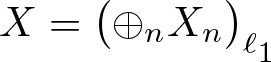 $X = \bigl(\oplus_n X_n\bigr)_{\ell_1}$. Then, we have that
 \begin{equation*}
0\leq \mathcal{T}^s (X) \leq \mathcal{T}^\delta (X) \leq \min \{\mathcal{T}^\delta (X_n) , \mathcal{T}^\delta (Y_n)\} \leq \frac{1}{2^n},
\end{equation*}
where  $Y_n = \bigl(\oplus_{k \neq n} Y_k\bigr)_{\ell_1}$ for each
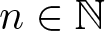 $n \in \mathbb{N}$. This shows that
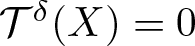 $\mathcal{T}^\delta (X) =0$.
Next, we claim that 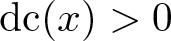 $\text{dc}(x) \gt 0$ for every
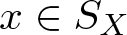 $x \in S_X$. Let
 $x= (x_n) \in S_X$ be given. If there exists
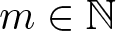 $m \in \mathbb{N}$ such that
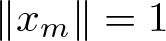 $\|x_m\| = 1$, then we have
 \begin{equation*}
x = (0,\ldots, 0, x_{m}, 0, \ldots ) =: (x_m, 0) \in X_m \oplus_1 Y_m.
\end{equation*}
Note that  $\text{dc}(x)=\text{dc}(x_m, 0) \geq \text{dc}(x_m) \geq 2^{-m}$ (see proposition 4.2 for its justification). So, suppose that
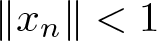 $\|x_n\| \lt 1$ for every
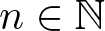 $n \in \mathbb{N}$. Let
 $y^*= (y_n^*) \in S_{X^*}$, ɛ > 0, δ > 0 be given. Find
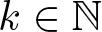 $k \in \mathbb{N}$ so that
 $\|y_k^* \| \gt 1- \delta$; so there is
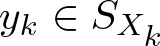 $y_k \in S_{X_{k}}$ such that
 $y_k^* (y_k) \gt 1-\delta$. Letting ιk be the embedding from Xk into X, observe that
 $\iota_k (y_k) \in S(y^*, \delta)$ and
 \begin{equation*}
\| \iota_k (y_k) - x \| = \|y_k - x_k\| + \sum_{n\neq k } \|x_n\| \geq 1 - \|x_k\| + (1- \|x_k\|) \geq 2 -2 \sup_{n \in \mathbb{N}} \|x_n\|.
\end{equation*}
This implies that  $\text{dc} (x) \geq 2 - 2 \sup_{n \in \mathbb{N}} \|x_n\| \gt 0$.
3. Daugavet and Δ-constants of points in some classical spaces
3.1. On the Banach space c 0
The following example shows that even a Banach space with the Radon–Nikodým property (indeed, a finite dimensional Banach space) may have only finitely many elements whose Daugavet constant is zero.
Proposition 3.1. Let  $N \in \mathbb{N}$. For every
 $x = (x_n)_{n=1}^N \in B_{\ell_\infty^N}$, we have
 \begin{equation*}
\text{dc}(x) = \max \{1 - |x_n| : n = 1,\ldots, N\}.
\end{equation*}
In particular, when N = 2, we have
 \begin{equation*}
{\delta}c(x) = \text{dc}(x) = \max \{1 - |x_1|, 1-|x_2| \}.
\end{equation*}
Proof. Let  $x = (x_n)_{n=1}^N \in B_{\ell_\infty^N}$ be given. Let ɛ > 0, δ > 0, and
 $y^*=(y_n^*)_{n=1}^N \in S_{\ell_1^N}$ be given. If we let
 $y:=(\text{sgn} (y_n^*) )_{n=1}^N \in S_{\ell_\infty^N}$, then
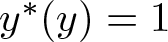 $y^*(y)=1$; hence
 $y \in S(y^*,\delta)$. Notice that
 \begin{equation*}
|x_n - \text{sgn} (y_n^*)| \geq 1 - |x_n|.
\end{equation*}
Thus,  $\| x- y\| \geq \max \{1-|x_n| : n=1,\ldots, N\}$. This argument shows that
 $\text{dc} (x) \geq \max \{1-|x_n| : n=1,\ldots, N\}$.
Next, assume to the contrary that  $\text{dc} (x) \gt \max \{1-|x_n| : n=1,\ldots, N\}$. Without loss of generality, we may assume that
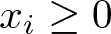 $x_i \geq 0$ for every
 $i=1,\ldots, N$. Then, we can find η > 0 such that
 $x_i \gt 1 - \eta \gt 1 - \text{dc}(x)$ for every
 $i =1,\ldots, N$. Let δ > 0 be sufficiently small so that
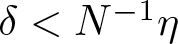 $\delta \lt N^{-1} \eta$, and
 $y^* = N^{-1} (1,\ldots, 1) \in S_{\ell_1^N}$. If
 $y = (y_1,\ldots, y_N) \in S(y^*, \delta)$, then by a standard argument, we have
 \begin{equation*}
y_i \gt 1 - N \delta \gt 1- \eta \quad \text{for } i =1,\ldots, N.
\end{equation*}
It follows that  $|x_i - y_i| \lt \eta$ for every
 $i=1,\ldots, N$, that is,
 $\|x-y\| \lt \eta$. This implies that
 $\text{dc}(x) \leq \eta \lt \text{dc}(x)$, which is a contradiction.
Finally, when N = 2, it suffices to show that  ${\delta}c(x) \leq \max \{1 -|x_1|, 1-|x_2|\}$. Without loss of generality, we may assume that
 $x_1 \geq x_2 \geq 0$. Thus,
 $\max \{1 -|x_1|, 1-|x_2|\} = 1-x_2$. Again, assume to the contrary that
 ${\delta}c(x) \gt 1-x_2$. Find η > 0 so that
 $x_2 \gt 1 - \eta \gt 1 - {\delta}c(x)$. If
 $y^* = (1/2, 1/2) \in S_{\ell_1^2}$, then
 \begin{equation*}
y^*(x) = \frac{x_1+x_2}{2} \gt \frac{x_1}{2} + \frac{1-\eta}{2} =: 1 - \delta.
\end{equation*}
Observe that if  $y=(y_1,y_2) \in S(y^*, \delta)$, then
 \begin{equation*}
y_1 + y_2 \gt x_1 + (1-\eta).
\end{equation*}
This implies that
 \begin{equation*}
x_1 -y_1 \lt \eta \ \text{and } \ x_2 -y_2 \leq x_1 - y_2 \lt \eta.
\end{equation*}
If 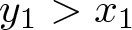 $y_1 \gt x_1$, then
 $|x_1-y_1| = y_1 - x_1 \leq 1 -x_1 \lt \eta$. Also, if
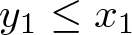 $y_1 \leq x_1$, then
 $|x_1 - y_1| = x_1 - y_1 \lt \eta$; hence
 $|x_1 - y_1| \lt \eta$ in any case. Similarly,
 $|x_2 - y_2| \lt \eta$, therefore
 $\|x-y\| \lt \eta$. Since
 $y \in S(y^*, \delta)$ is chosen arbitrarily, we obtain that
 $\|x-y\| \lt \eta$, which contradicts that
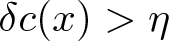 ${\delta}c(x) \gt \eta$.
It should be noted that computing the precise value of the Δ-constant of points in  $\ell_{\infty}^N$ is significantly more difficult, even for N = 3. In particular, it is not true in general for
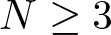 $N \geq 3$ that
 ${\delta}c(x) = \max \{1-|x_n|: n = 1,...,N\}$ when
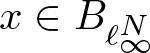 $x \in B_{\ell_\infty^N}$ (see example 3.4 and figure 1).
As an infinite dimensional version of proposition 3.1, we shall see that the Daugavet constant of a point x in the space c 0 is precisely computed as follows, which can be considered as an improvement of [Reference Abrahamsen, Lima, Martiny and Perreau4, lemma 6.5].
Proposition 3.2. For every 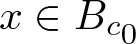 $x \in B_{c_0}$, we have
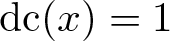 $\text{dc}(x)=1$.
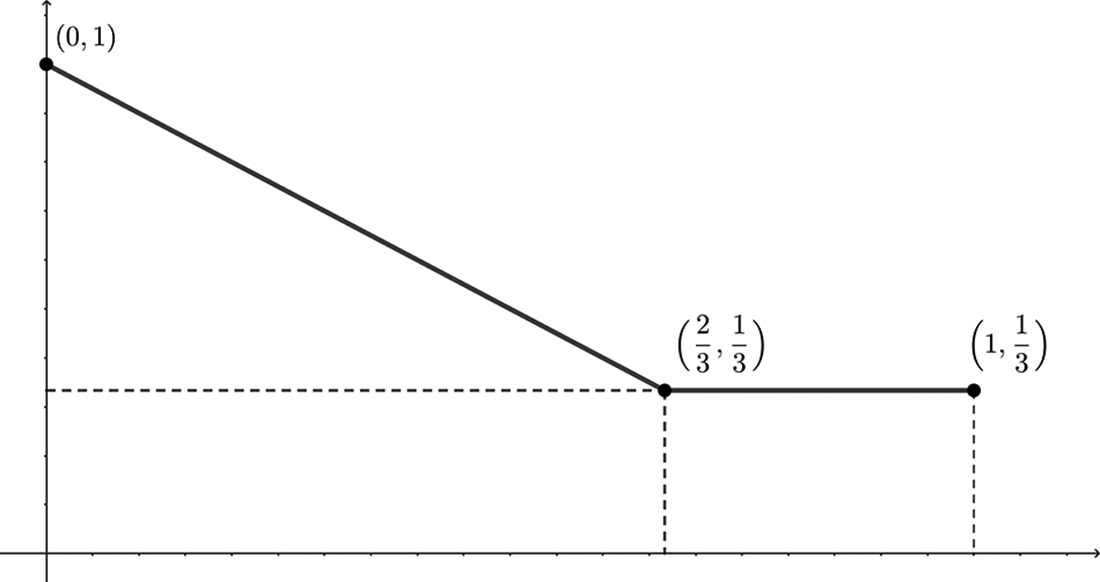
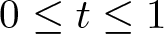
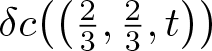
The value of 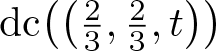 $\text{dc} \big(\big(\frac{2}{3}, \frac{2}{3}, t \big)\big)$,
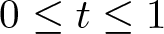
 $0\leq t \leq 1$.

Proof. We first show that 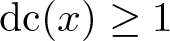 $\text{dc}(x) \geq 1$ for every
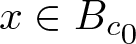 $x \in B_{c_0}$. Observe that it suffices to prove that
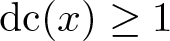 $\text{dc}(x) \geq 1$ for every
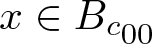 $x \in B_{c_{00}}$. Fix
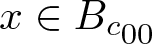 $x \in B_{c_{00}}$ and we may write
 $x = (x_1, \ldots, x_m, 0, \ldots)$ for some
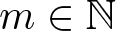 $m \in \mathbb{N}$. Let ɛ > 0, δ > 0 and
 $y^* = (y_n^*) \in S_{\ell_1}$ be given. Pick any
 $y = (y_n) \in S(y^*,\delta/3) \cap S_{c_0}$ and choose k > m such that
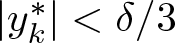 $|y_k^*| \lt \delta/3$. If we define
 $z = (z_n) \in S_{c_0}$ by
 $z_n = y_n$ for each
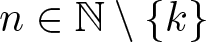 $n \in \mathbb{N} \setminus \{k\}$ and
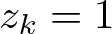 $z_k = 1$, then
 \begin{align*}
y^*(z) \geq \sum_{i \neq k} y_i^*y_i - \frac{\delta}{3} \geq y^*(y) - \frac{2\delta}{3} \gt 1- \delta,
\end{align*}
which yields  $z \in S(y^*,\delta)$. The conclusion follows from
 $\|z-x\| \geq |z_k-x_k| =1$.
Now, suppose that 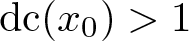 $\text{dc}(x_0) \gt 1$ for some
 $x_0 = (x_n) \in B_{c_0}$. Let
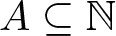 $A \subseteq \mathbb{N}$ be the finite subset of all indices such that
 $|x_i| \geq (\text{dc}(x_0) - 1)/4$ for each
 $i \in A$, where A is non-empty since
 $\|x_0\| \geq \text{dc}(x_0) - 1$. For
 \begin{equation*}
\varepsilon_0 = \frac{\text{dc}(x_0)-1}{2}, \,\delta_0 = \frac{\text{dc}(x_0)+1}{2|A|}\, \text{and }\, y_0^* = \frac{1}{|A|} \sum_{i \in A} \text{sgn} (x_i) e_i^* \in S_{\ell_1},
\end{equation*}
there must exist  $y_0 = (y_n) \in S(y_0^*,\delta_0)$ such that
 \begin{equation*}
\|y_0-x_0\| \gt \text{dc}(x_0) - \varepsilon_0 = \frac{1}{2} \left( \text{dc}(x_0) + 1 \right).
\end{equation*}
However, observe that, for each  $i \notin A$, we have
 \begin{equation*}
|y_i - x_i| \leq \frac{1}{4} \left(\text{dc}(x_0) -1 \right) + 1 \lt \frac{1}{2} \left( \text{dc}(x_0) + 1 \right).
\end{equation*}
It follows that there must exist 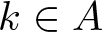 $k \in A$ such that
 \begin{equation*}
|y_k - x_k | = \| y_0 - x_0\| \gt \frac{1}{2} \left( \text{dc}(x_0) + 1 \right) \gt 1.
\end{equation*}
This, in particular, implies that  $\text{sgn} (y_k) \neq \text{sgn} (x_k)$. Moreover,
 \begin{equation*}
|y_k| \gt \frac{1}{2} (\text{dc}( x_0) - 1).
\end{equation*}
Thus, we have
 \begin{align*}
y_0^*(y_0) = \frac{1}{|A|} \sum_{i \in A} \text{sgn} (x_i) y_i &= \frac{1}{|A|} \sum_{i \in A \setminus \{k\}} \text{sgn} (x_i) y_i - \frac{1}{|A|} |y_k| \\
&\leq \frac{|A|-1}{|A|} - \left( \frac{\text{dc}(x_0)-1}{2|A|}\right) = 1 - \left( \frac{\text{dc}(x_0)+1}{2|A|}\right).
\end{align*}
This contradicts that  $y_0 \in S(y_0^*, \delta_0)$.
Recall from proposition 2.13 and [Reference Abrahamsen, Lima, Martiny and Perreau4, lemma 6.4] that  $\sup_{x \in S_{c_0}} {\delta}c(x) = 2$. This, compared with proposition 3.2, shows that the Daugavet constant and the Δ-constant of a point behave totally differently. We present an estimation of the Δ-constant for points in c 0.
Theorem 3.3 Let  $x = (x_n) \in B_{c_0}$. Define
 $f_n: [0,1] \to \mathbb{R}$ for each
 $n \geq 3$ by
 \begin{equation*}
f_n(t) = \begin{cases}
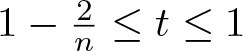
1+|t| &\text{if }\, 0 \leq |t| \leq 1 - \dfrac{2}{n} \\
(n-1)(1-|t|) &\text{if }\, 1 - \dfrac{2}{n} \leq |t| \leq 1.
\end{cases}
\end{equation*}
Then, we have
 \begin{equation*}
{\delta}c (x) \geq \min \{f_n(x_{i_1}), \ldots, f_n(x_{i_n}) \}
\end{equation*}
for every  $n \geq 3$ and for every set of indices
 $\{i_1, \ldots, i_n\} \subseteq \mathbb{N}$.
Proof. We may assume 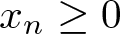 $x_n \geq 0$ for each
 $n \in \mathbb{N}$ for convenience. Let
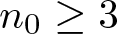 $n_0 \geq 3$ and
 $\{i_1, \ldots, i_{n_0}\} \subseteq \mathbb{N}$ be given. For simplicity, let us say for some
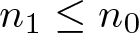 $n_1 \leq n_0$ that
(i)
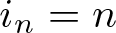
$i_n = n$ for $n =1, \ldots, {n_0}$;(ii)
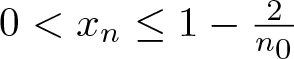
$0 \lt x_n \leq 1 -\frac{2}{n_0}$ for $n = 1,\ldots,n_1$;(iii)
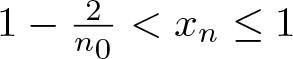
$1 -\frac{2}{n_0} \lt x_n \leq 1$ for $n = n_1+1, \ldots, n_0$.



Define  $w_1, \ldots, w_{n_0} \in c_0$ by
 \begin{align*}
w_1 &= \left( \phantom{....} -1,\phantom{....} \frac{n_0 x_{2} + 1}{n_0 - 1}, \cdots, \frac{n_0 x_{n_1} + 1}{n_0 - 1} , \phantom{.......}1 ,\phantom{..........} 1 \phantom{..}, \cdots, \phantom{w..........}1 ,\phantom{w.........}\! x_{n_0 + 1}, x_{n_0 + 2}, \cdots\vphantom{\frac{n_0 x_{2} + 1}{n_0 - 1}} \right), \\
w_2 &= \left( \frac{n_0 x_1 + 1}{n_0-1}, \phantom{....} -1 \phantom{....}, \cdots, \frac{n_0 x_{n_1} + 1}{n_0 - 1} , \phantom{.......}1 ,\phantom{..........} 1 \phantom{..}, \cdots, \phantom{w..........}1 ,\phantom{w.........}\! x_{n_0 + 1}, x_{n_0 + 2}, \cdots\vphantom{\frac{n_0 x_{2} + 1}{n_0 - 1}} \right), \\
&\phantom{..............}\vdots \phantom{............} \vdots \phantom{w....} \ddots \phantom{...........} \vdots \phantom{..............} \vdots \phantom{............} \vdots \phantom{....} \ddots \phantom{.............} \vdots \\
w_{n_1} &= \left( \frac{n_0 x_1 + 1}{n_0-1}, \frac{n_0 x_{2} + 1}{n_0 - 1}, \cdots, \phantom{.....} -1 , \phantom{.....} \phantom{.......}1, \quad\phantom{......} 1 \phantom{..}, \cdots, \phantom{w..........}\! 1,\phantom{w........} x_{n_0 + 1}, x_{n_0 + 2}, \cdots \right), \\
w_{n_1+1} &= \left( \frac{n_0 x_1 + 1}{n_0-1}, \frac{n_0 x_{2} + 1}{n_0 - 1}, \cdots, \frac{n_0 x_{n_1} + 1}{n_0 - 1} , n_0x_{n_1+1} - (n_0-1) , \phantom{..}1\phantom{..} , \cdots, \phantom{.}1 ,\phantom{..........} x_{n_0 + 1}, x_{n_0 + 2}, \cdots \right), \\
&\phantom{..............}\vdots \phantom{............} \vdots \phantom{w....} \ddots \phantom{...........} \vdots \phantom{..............} \vdots \phantom{............} \vdots \phantom{....} \ddots \phantom{.............} \vdots \\
w_{n_0} &= \left( \frac{n_0 x_1 + 1}{n_0-1}, \frac{n_0 x_{2} + 1}{n_0 - 1}, \cdots, \frac{n_0 x_{n_1} + 1}{n_0 - 1} , \phantom{w.....}1, \quad \phantom{.....}1\phantom{..}, \cdots, n_0x_{n_0} - (n_0-1) , x_{n_0 + 1}, x_{n_0 + 2}, \cdots \right).
\end{align*}
Then, we have 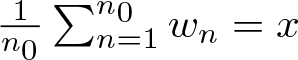 $\frac{1}{n_0} \sum_{n=1}^{n_0} w_n = x$ and
 $\|w_n-x\| \geq f_{n_0}(x_n)$ for
 $n = 1,\ldots,n_0$. Indeed, one can see that
 $\|w_n-x\| \geq 1 + x_n$ for
 $n=1,\ldots,n_1$ and
 $\|w_n-x\| \geq (n_0-1)(1-x_n)$ for
 $n = n_1+1,\ldots,n_0$. This shows that
 $x \in \operatorname{co} \Delta_{2-\min \{f_{n_0}(x_1), \ldots, f_{n_0}(x_{n_0}) \}} (x)$, and thus
 ${\delta}c(x) \geq \min \{f_{n_0}(x_1), \ldots, f_{n_0}(x_{n_0}) \}$.
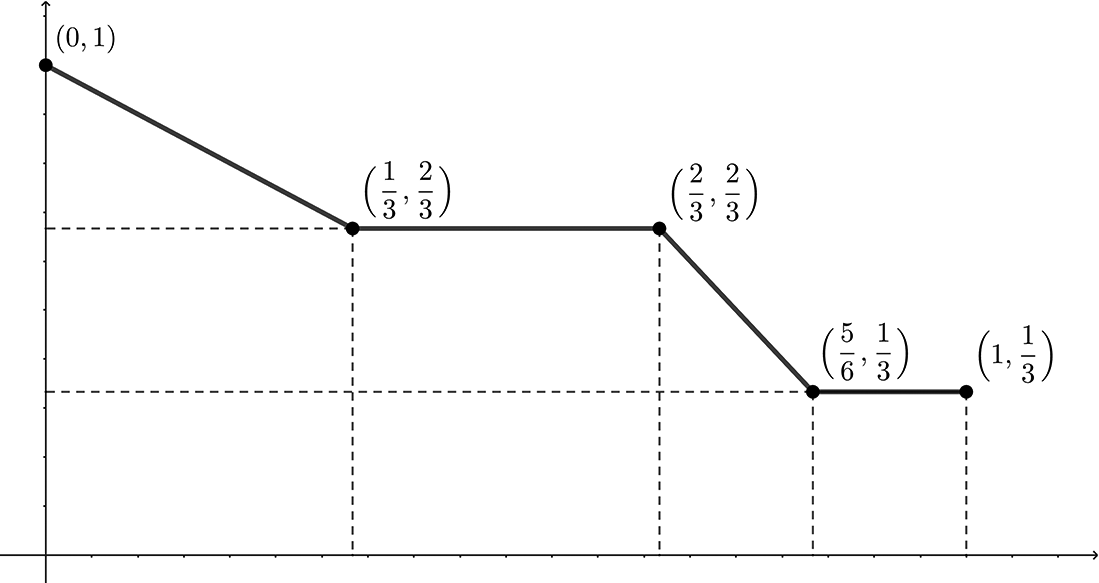
As a consequence of theorem 3.3 (or a similar technique), we obtain the following:
(i) Let
$x = (x_1,x_2,x_3) \in B_{\ell_\infty^3}$ be given. Define $f: [0,1] \to \mathbb{R}$ by
\begin{equation*}
f(t) = \begin{cases}
1+|t| &\text{if }\, 0 \leq |t| \leq \dfrac{1}{3} \\
2(1-|t|) &\text{if }\, \dfrac{1}{3} \leq |t| \leq 1.
\end{cases}
\end{equation*}Then, we have
\begin{equation*}
{\delta}c (x) \geq \max\Big\{\min \{f(x_1),f(x_2),f(x_3) \} , 1-|x_1|, 1-|x_2|, 1-|x_3| \Big\}.
\end{equation*}Note that this, in particular, shows that a version of proposition 3.1 for the Δ-constant does not hold (see figure 2).
(ii) Recall again from proposition 2.13 that
$\sup_{x \in S_{c_0}} {\delta}c(x) = 2$. This can be shown explicitly by theorem 3.3: let $n \geq 3$ be given and consider
\begin{equation*}
u = e_1 + \sum_{k=2}^{n+1} \left( 1- \frac{2}{n}\right) e_k \in S_{c_0}.
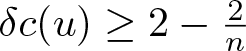
\end{equation*}A direct computation shows that the corresponding vector z in theorem 3.3 has norm
$2-\frac{2}{n}$; thus, ${\delta}c(u) \geq 2-\frac{2}{n}$.(iii) Let
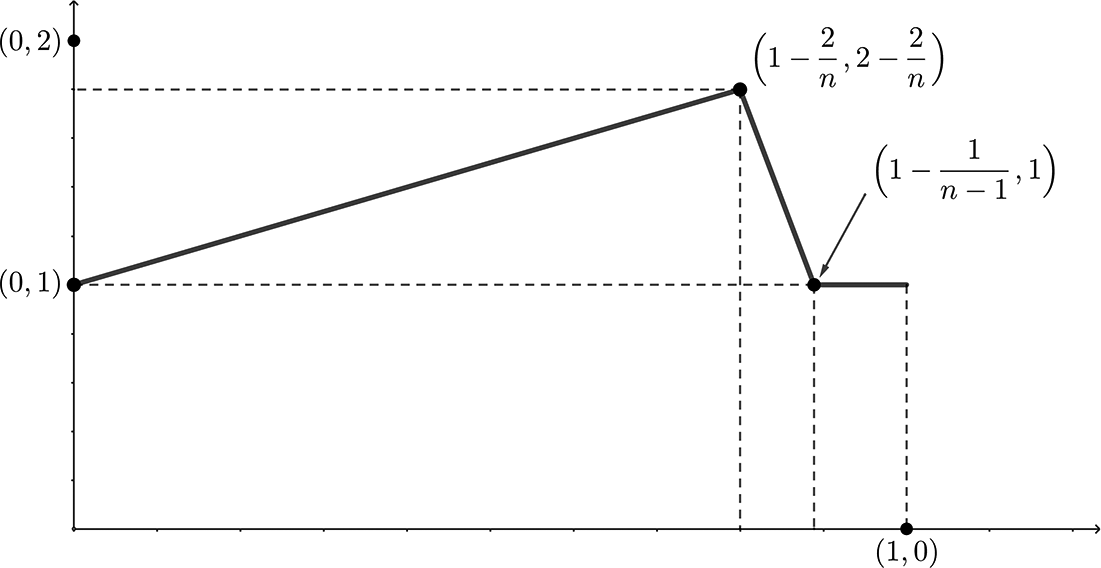
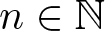
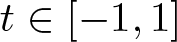
$n \in \mathbb{N}$ and $t \in [-1, 1]$ be given. Considering the element $\sum_{k=1}^n te_k \in B_{c_0}$, we have(⋄)\begin{equation}
{\delta}c \left(\sum_{k=1}^n te_k \right)= \min \Big \{1+|t| , \max \{1, (1-|t|)(n-1) \} \Big\}.
\end{equation}Let us mention that this example shows that the mapping
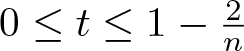
$x \in B_X \mapsto {\delta}c (x)$ does not need to be Lipschitz (see figure 3). In order to obtain the equality in (⋄), we distinguish three cases. Without loss of generality, assume that $t \geq 0$. First, if $0\leq t\leq 1-\frac{2}{n}$, it is clear that ${\delta}c \big(\sum_{k=1}^n te_k \big) \leq 1+t$. Second, suppose that $1-\frac{2}{n} \leq t \leq 1$. Consider
\begin{equation*}
y^* = \Big(\frac{1}{n},\ldots, \frac{1}{n},0,\ldots \Big) \in S_{\ell_1}.
\end{equation*}Figure 2.The lower bound for
${\delta}c \big(\big(\frac{2}{3}, \frac{2}{3}, t \big)\big)$, $0\leq t \leq 1$.Figure 3.The graph of
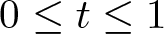
$f(t)= {\delta}c \big(\sum_{k=1}^n te_k \big)$, $0\leq t \leq 1$.Then,
$y^* \big(\sum_{k=1}^n te_k \big) = t \gt t -\delta$ for any δ > 0. By a standard convex combination argument, if $y=(y_n) \in S(y^*, 1-t+\delta)$, then $y_i \geq 1- (1-t+\delta)n$ for every $i=1,\ldots, n$. It follows that(†)\begin{equation}
\left\|y- \left (\sum_{k=1}^n te_k \right) \right\| \leq \max\{1, (1-t)(n-1) + n\delta\}.
\end{equation}Letting
$\delta \rightarrow 0$, the right-hand side of (†) tends to $\max\{1,(1-t)(n-1)\}$. This implies that ${\delta}c \big(\sum_{k=1}^n te_k \big) \leq \max\{1,(1-t)(n-1)\}$.





















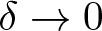


We finish this section considering the space 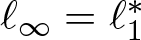 $\ell_\infty = \ell_1^*$. For a dual Banach space
 $X^*$, we can consider natural weak
 $^*$ versions of the Daugavet and Δ-constant of a point by considering weak
 $^*$ slices instead of slices. For a point
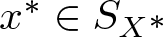 $x^* \in S_{X^*}$, the weak
 $^*$ Daugavet constant of x is defined as follows:
 \begin{align*}
\textit{w}^*dc(x^*) & := \sup \left\{\alpha \geq 0 | \forall \varepsilon,\delta \gt 0, y \in S_{X}, \exists \, y^* \in S(y,\delta) \ \text{so that } \|y^*-x^*\| \gt \alpha - \varepsilon\right\},
\end{align*}
where  $S(y, \delta) = \{z^* \in B_{Y^*} : z^*(y) \gt 1-\delta\}$. The weak
 $^*$ Δ-constant of x, denoted by
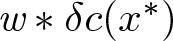 $\textit{w}^*{\delta}c (x^*)$, can be defined in a similar way. It is clear that for a point
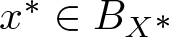 $x^* \in B_{X^*}$,
 \begin{equation}
\text{dc}(x^*) \leq \textit{w}^*dc(x^*) \leq \textit{w}^*{\delta}c(x^*) \text{and } \text{dc}(x^*) \leq {\delta}c(x^*) \leq \textit{w}^*{\delta}c(x^*).
\end{equation}
Moreover, if we write J, the canonical isometric embedding from X into  $X^{**}$, then
 \begin{equation}
\text{dc}(x) = \textit{w}^*dc(J(x)).
\end{equation}
As a matter of fact, it is clear by definition that  $\text{dc}(x) \leq \textit{w}^*dc(J(x))$. For the reversed inequality, let ɛ > 0 and S be a slice of BX. Considering S be a weak
 $^*$ slice of
 $B_{X^{**}}$, we find
 $z \in S_{X^{**}} \cap S$ such that
 $\|z-J_X (x)\| \gt \textit{w}^*dc(J_X (x))-\varepsilon$. By Goldstine’s theorem and using the lower weak
 $^*$ semicontinuity of the norm in dual spaces, we can find
 $u \in B_X \cap S$ such that
 $\|u-x\| \gt \textit{w}^*dc(J_X (x))-\varepsilon$; hence
 $\text{dc}(x) \geq \textit{w}^*dc(J_X (x))$.
Combining the observations (3.1) and (3.2), we reprove the item (i) of proposition 2.5 that  $\text{dc}(x) \geq \text{dc}(J(x))$. We now present the following result concerning the weak
 $^*$ Daugavet constant of points in
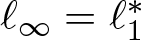 $\ell_\infty = \ell_1^*$.
Proposition 3.5. For every 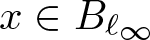 $x \in B_{\ell_\infty}$, we have
 $\textit{w}^*dc(x) = 1+ \limsup_n |x_n|$.
Proof. Let 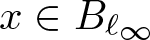 $x \in B_{\ell_\infty}$ be given. First, let
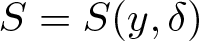 $S=S(y,\delta)$ be a weak
 $^*$-slice of
 $B_{\ell_\infty}$ with
 $y=(y_n) \in S_{\ell_1}$. Find
 $z=(z_n) \in S_{c_0}$ so that
 $z \in S(y,\delta/3)$. Choose
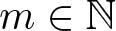 $m \in \mathbb{N}$ such that
 $\sum_{n=m+1}^\infty |y_n| \lt \delta/3$. Consider
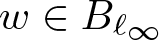 $w \in B_{\ell_\infty}$ given by
 \begin{equation*}
w = (z_1,\ldots, z_m, -\text{sgn}(x_{m+1}), \text{sgn}(x_{m+2}), \ldots ).
\end{equation*}
Then,  $\langle y, w\rangle \geq \sum_{n=1}^m y_n z_n - \sum_{n=m+1}^\infty |y_n| \geq \langle y, z \rangle - 2 \sum_{n=m+1}^\infty |y_n| \gt 1 - \delta/3 - 2\delta/3$; thus
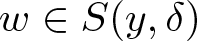 $w \in S(y,\delta)$. Moreover,
 \begin{equation*}
\|x-w\| \geq \sup_{n \geq m+1} | x_n + \text{sgn}(x_n) | = 1+ \sup_{n \geq m+1} |x_n| \geq 1+ \limsup_n |x_n|.
\end{equation*}
This proves that  $\textit{w}^*dc(x) \geq 1+\limsup_n |x_n|$.
Next, assume that  $\textit{w}^*dc(x) \gt 1+\limsup_n |x_n|$. Find δ > 0 sufficiently small so that
 \begin{equation*}
\textit{w}^*dc(x) - \delta \gt 1 + \limsup_n |x_n|.
\end{equation*}
Let 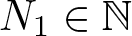 $N_1 \in \mathbb{N}$ and consider the vector
 \begin{equation*}
y^{(1)} := \left(\frac{\text{sgn}(x_1)}{N_1}, \ldots, \frac{\text{sgn}(x_{N_1})}{N_1},0,0,\ldots\right) \in S_{\ell_1}.
\end{equation*}
Then, there exists  $z \in S(y^{(1)}, 1/N_1)$ such that
 $\|x-z\| \gt \textit{w}^*dc(x) - \delta \gt 1+\limsup_n |x_n|$. Note that if there exists
 $i \in \{1,\ldots, N_1\}$ so that
 $\text{sgn}(x_i) \neq \text{sgn}(z_i)$, then
 \begin{equation*}
\frac{N_1-1}{N_1} \geq \frac{1}{N_1} \sum_{n \in \{1,\ldots,N_1\}\setminus\{i\}} \text{sgn}(x_n) z_n \gt \frac{1}{N_1} \sum_{n=1}^{N_1} \text{sgn}(x_n) z_n \gt 1 - \frac{1}{N_1},
\end{equation*}
which is a contradiction. Thus,  $\text{sgn}(x_i)=\text{sgn}(z_i)$ for every
 $i=1,\ldots ,N_1$. In particular, this implies that there exists
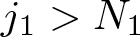 $j_1 \gt N_1$ such that
 $|x_{j_1} - z_{j_1}| \gt \textit{w}^*dc(x)-\delta$. Thus,
 $|x_{j_1}| \gt \textit{w}^*dc(x)-\delta-1$. Now, take
 $N_2 \gt j_1 \gt N_1$ and consider the element
 \begin{equation*}
y^{(2)} := \left(\frac{\text{sgn}(x_1)}{N_2}, \ldots, \frac{\text{sgn}(x_{N_2})}{N_2},0,0,\ldots\right) \in S_{\ell_1}.
\end{equation*}
Arguing in the same way, we end up with finding 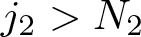 $j_2 \gt N_2$ such that
 $|x_{j_2}| \gt \textit{w}^*dc(x)-\delta-1$. In this way, we find a sequence of natural numbers
 $\{N_1 \lt j_1 \lt N_2 \lt j_2 \lt \cdots\}$. Passing to a subsequence, we may assume that
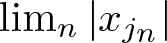 $\lim_n |x_{j_n}|$ exists, so
 \begin{equation*}
1+ \lim_n |x_{j_n}| \geq \textit{w}^*dc(x) - \delta \gt 1 + \limsup_n |x_n|,
\end{equation*}
which is a contradiction. This shows that  $\textit{w}^*dc(x) \leq 1 + \limsup_n |x_n|$ and completes the proof.
3.2. On a Banach space ${L_1}$

Let µ be a measure on some σ-algebra Σ on a set Ω. Recall that a set 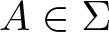 $A \in \Sigma$ is called an atom if
 $0 \lt \mu(A) \lt \infty$ and whenever
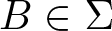 $B \in \Sigma$ with
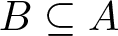 $B \subseteq A$ satisfies
 $\mu(B) \lt \mu(A)$, then
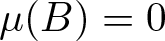 $\mu(B) = 0$. A σ-finite measure on
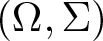 $(\Omega, \Sigma)$ is called atomic if every measurable set of positive measure contains an atom. In this case, there exists a countable partition of Ω formed by atoms up to a null set. In this subsection, we shall assume that all measures are σ-finite.
For simplicity, we denote by  $L_1 (\mu)$ the space
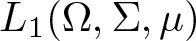 $L_1 (\Omega, \Sigma, \mu)$. Notice that a measurable function is almost everywhere constant on an atom. We start by giving the exact value of the Daugavet constant of an element in
 $L_1 (\mu)$ provided that µ is atomic.
Proposition 3.6. Given a σ-finite atomic measure µ on 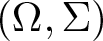 $(\Omega, \Sigma)$, let
 $(A_n)$ be a countable partition of Ω formed by atoms up to a null set. For every
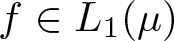 $f \in {L_1 (\mu)}$ with
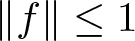 $\|f\| \leq 1$, we have
 \begin{equation*}
\text{dc}(f)= 1+\|f\| -2 \sup \left\{ |f \vert_{A_n} |\, \mu (A_n) : n \in \mathbb{N} \right\}.
\end{equation*}
Proof. Let 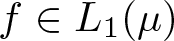 $f \in L_1 (\mu)$ with
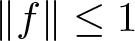 $\|f\| \leq 1$ and δ > 0. Without loss of generality, let each An be an atom for µ. Note first that
 $|f\vert_{A_n}|| \mu(A_n)| \leq \|f\|$ for every
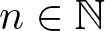 $n \in \mathbb{N}$. Since µ is σ-finite,
 $L_1 (\mu)^* = L_\infty (\mu)$. Pick
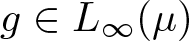 $g \in L_\infty(\mu)$ with
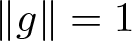 $\|g \| = 1$. For each
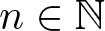 $n \in \mathbb{N}$, let
 $I_n : = \{x \in A_n : |g(x)| \gt 1-\delta/2\}$. Then, there exists
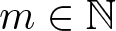 $m \in \mathbb{N}$ such that Im has a positive measure, which implies that
 $\chi_{I_m} = \chi_{A_m}$ almost everywhere.
Note that 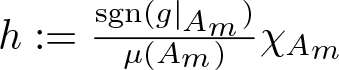 $h:= \frac{\text{sgn} (g |_{A_m}) }{\mu(A_m)} \chi_{A_m}$ satisfies that
 \begin{equation*}
g(h) = \int_{A_m} \frac{\text{sgn} (g |_{A_m}) }{\mu(A_m) } g \, d\mu = \int_{I_m} \frac{| g |_{A_m} | }{\mu(I_m) } \, d\mu \geq 1-\frac{\delta}{2} \gt 1- \delta.
\end{equation*}
Observe that
 \begin{align*}
\|f-h\| &= \int_{A_m} \left | f- \frac{\text{sgn}(g|_{A_m})}{\mu (A_m)} \right| \, d\mu + \int_{\cup_{n\neq m} A_n} |f| \, d\mu \\
&= | \text{sgn} (g|A_m) - f|_{A_m} \mu (A_m) | + \|f \| - |f|_{A_m}| \mu(A_m) \\
&\geq 1- |f|_{A_m}| \mu (A_m) + \|f \| - |f|_{A_m}| \mu(A_m) = 1+ \|f\| - 2 | f|_{A_m}| \mu(A_m).
\end{align*}
This shows that  $\text{dc}(f) \geq 1+ \|f\| - 2 | f|_{A_m}| \mu(A_m)$.
Next, assume that
 \begin{equation}
\text{dc}(f) \gt 1+ \|f\| - 2 \sup \left\{ |f \vert_{A_n} |\, \mu (A_n) : n \in \mathbb{N} \right\}.
\end{equation}
For simplicity, we may assume that  $|f|_{A_1}| \mu(A_1) = \sup\left\{|f|_{A_n}| \mu(A_n) : {n\in\mathbb{N} } \right\}$. If
 $|f|_{A_1}| \mu(A_1) = \|f\|$, then this would imply that
 \begin{equation*}
f = {f \vert_{A_1}} \chi _{A_1}.
\end{equation*}
It is not difficult to check that  $\text{dc} (f) = 1 - \|f\|$ in such a case, which contradicts to (3.3).
Thus, we assume that  $|f|_{A_1}| \mu(A_1) \lt \|f\|$. Take
 $S=S(\text{sgn}(f |_{A_1} ) \chi_{A_1} , \delta)$ with δ > 0 sufficiently small so that
 \begin{equation*}
\delta \lt \text{dc}(f) - \bigl( 1+ \|f\| - 2 |f|_{A_1}| \mu(A_1)\bigr) \, \text{and } \, \delta \lt \|f\| - |f|_{A_1}| \mu(A_1).
\end{equation*}
Let us pick 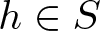 $h \in S$ with
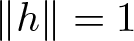 $\|h\|=1$ such that
 $\|f-h\| \gt \text{dc}(f) - \delta$. That is,
 \begin{equation*}
\text{sgn} ( f|_{A_1} ) h |_{A_1} \mu(A_1) \gt 1- \delta \geq \|f \| - \delta,
\end{equation*}
and
 \begin{equation*}
\| f-h\| \gt \text{dc}(f)-\delta \gt 1+ \|f\| - 2|f|_{A_1}| \mu(A_1).
\end{equation*}
Note, in particular, that  $\text{sgn} ( f|_{A_1} ) h |_{A_1} \mu(A_1) \gt |f|_{A_1}| \mu(A_1)$. Observe that
 \begin{align*}
\|f-h\| &= \int_{A_1} |f-h| \, d\mu + \int_{\cup_{n\geq 2} A_n} |f-h| \, d\mu \\
&= | \text{sgn} ( f|_{A_1} ) h |_{A_1} \mu(A_1) - |f|_{A_1}|\mu(A_1)| + \int_{\cup_{n\geq 2} A_n} |f-h| \, d\mu \\
&\leq \text{sgn} ( f|_{A_1} ) h |_{A_1} \mu(A_1) - |f|_{A_1}|\mu(A_1) + \|f\| - | f|_{A_1}| \mu(A_1) + 1 - | h_{A_1}| \mu(A_1) \\
&\leq 1 + \|f\| - 2 | f|_{A_1}| \mu(A_1),
\end{align*}
which is a contradiction.
Next, we obtain an upper bound for the Δ-constant of an element 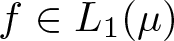 $f \in L_1 (\mu)$ in terms of an atom A contained in
 $\text{supp} (f)$, and the idea of the proof comes from [Reference Abrahamsen, Haller, Lima and Pirk3, theorem 3.1], where it is proved that
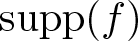 $\text{supp}(f)$ does not contain any atom for µ if and only if
 $\text{dc}(f) \text{(or, } {\delta}c(f)\text{)} = 2$.
Proposition 3.7. Let 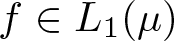 $f \in L_1 (\mu)$ with
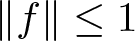 $\|f\| \leq 1$. If A is an atom in
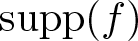 $\text{supp} (f)$, then
 \begin{equation*}
{\delta}c (f) \leq 1+\|f\|- 2|f \vert_{A}| \mu(A).
\end{equation*}
Proof. By considering −f instead of f when  $c:= f \vert_A$ less than or equal to 0, we may assume that
 $c \geq 0$. Assume to the contrary that
 ${\delta}c (f) \gt 1+\|f\| -2c \mu(A)$. Let ɛ > 0 be such that
 $\varepsilon \lt {\delta}c(f) - ( 1+\|f\| - 2c \mu(A))$. Suppose that
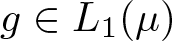 $g \in L_1 (\mu)$ satisfies that
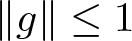 $\|g\| \leq 1$ and
 $\|f-g\| \geq {\delta}c (f) - \varepsilon$. Put
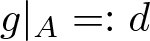 $g \vert_A =: d$ and observe that
 \begin{align*}
{\delta}c(f) - \varepsilon \leq \int_\Omega |f-g| \,d\mu &= \int_A |f-g|\,d\mu + \int_{\Omega\setminus A} |f-g|\,d\mu \\
&\leq \int_A |f-g|\,d\mu + \left( \|f\| -\int_A |f| \, d\mu \right) + \left( 1 - \int_A |g| \, d\mu \right) \\
&\leq |c-d|\mu(A) + \|f\| + 1 - c \mu(A) - |d| \mu(A).
\end{align*}
This implies that
 \begin{equation}
c\mu(A) + d\mu(A) \leq 1+\|f\| - {\delta}c(f) +\varepsilon + |c-d| \mu(A).
\end{equation}
If  $c \leq d$, then (3.4) implies that
 \begin{equation*}
2c \mu (A) \leq 1 + \|f\| -{\delta}c (f) + \varepsilon,
\end{equation*}
which contradicts the choice of ɛ. Thus,  $c \geq d$, and we have from (3.4) that
 \begin{equation*}
c \mu(A) + d\mu(A) \leq 1+\|f\| -{\delta}c(f) + \varepsilon + (c-d) \mu(A).
\end{equation*}
It follows that
 \begin{equation}
g\vert_A = d \leq \frac{1}{2\mu(A) } ( 1+ \|f\| -{\delta}c(f) + \varepsilon).
\end{equation}
Now, by (iii) of proposition 2.3, we obtain that  $f \in \overline{\text{co}} \,\Delta_{2-{\delta}c (f) + \eta}(f)$ for every η > 0. In particular,
 $f \in \overline{\text{co}} \,\Delta_{2-{\delta}c (f) + \varepsilon}(f) = \overline{\text{co}} \,\{g \in B_{L_1 (\mu)} : \|f-g\| \geq {\delta}c (f) - \varepsilon\}$. However, if
 $g_1, \ldots, g_m \in \Delta_{2-{\delta}c (f) + \varepsilon} (f)$ and
 $\lambda_1,\ldots, \lambda_m$ are positive scalars so that
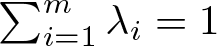 $\sum_{i=1}^m \lambda_i = 1$, then
 \begin{align*}
\left\| f - \sum_{i=1}^m \lambda_i g_i \right \| &\geq \int_A \left | \sum_{i=1}^m \lambda_i (c- d_i) \right |\,d\mu \quad (d_i := g_i \vert_{A}, \, i=1,\ldots, m) \\
&= \int_A \sum_{i=1}^m \lambda_i (c- d_i) \,d\mu \quad (\text{since } c \geq d_i, \, i=1,\ldots, m) \\
&\geq \int_A c - \frac{1}{2\mu(A) } ( 1+\|f\| -{\delta}c(f) + \varepsilon) \, d\mu \quad (\text{by } (3.5)) \\
&= \frac{1}{2} \bigl[ 2c \mu(A) - (1+\|f\| -{\delta}c(f) +\varepsilon) \bigr] \gt 0.
\end{align*}
This contradicts  $f \in \overline{\text{co}} \,\Delta_{2-{\delta}c (f) + \varepsilon}(f) $.
Remark 3.8. Observe that there is another way to complete the proof of proposition 3.7. For instance, note that the assumption on ɛ > 0 is equivalent to say
 \begin{equation*}
\int_A f \, d\mu \gt \frac{1}{2} ( 1+\|f\| -{\delta}c (f) + \varepsilon).
\end{equation*}
Thus, by definition, there exists 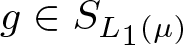 $g \in S_{L_1 (\mu)}$ such that
 $\|f-g\| \gt {\delta}c (f) - \varepsilon$ and
 \begin{equation*}
d \mu (A) = \int_A g \, d\mu \gt \frac{1}{2} ( 1+\|f\| -{\delta}c (f) + \varepsilon),
\end{equation*}
where 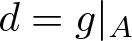 $d = g \vert_A$, which contradicts (3.5).
Combining propositions 3.6 and 3.7, we obtain the following.
Corollary 3.9. Let 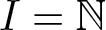 $I = \mathbb{N}$ or
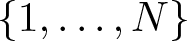 $\{1,\ldots, N\}$ with
 $N \in \mathbb{N}$. For every
 $x = (x_n) \in B_{\ell_1 (I)}$, we have
 \begin{equation*}
\text{dc} (x) = {\delta}c (x)= 1+\|x\| -2\sup \{|x_n| : n \in I \}.
\end{equation*}
Moreover,
 \begin{equation*}
\textit{w}^*dc (x) = \textit{w}^*{\delta}c(x) = 1+\|x\| -2\sup \{|x_n| : n \in I \}.
\end{equation*}
Proof. The equalities for  $\text{dc}(x)$ and
 ${\delta}c(x)$ are immediate from propositions 3.6 and 3.7. For their weak
 $^*$ constants, it suffices to observe that
 $\textit{w}^*{\delta}c(x)\leq 1+\|x\| -2\sup \{|x_n| : n \in I \}$. Indeed, note that in the case of
 $\ell_1$, the slice used in remark 3.8 is nothing but a weak
 $^*$ slice determined by
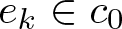 $e_k \in c_0$ for some
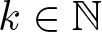 $k \in \mathbb{N}$.
3.3. On a uniform algebra
Given an infinite compact Hausdorff space K and 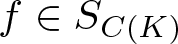 $f \in S_{C(K)}$, it is known that f is a Δ-point (or, Daugavet point) if and only if
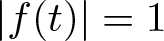 $|f(t)| = 1$ for some limit point
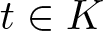 $t \in K$ [Reference Abrahamsen, Haller, Lima and Pirk3, theorem 3.4]. Afterwards, it is generalized in [Reference Martín and Rueda Zoca24, theorem 3.2] to L 1-predual cases.
Under certain assumptions about extreme points of  $B_{X*}$, the following result provides an upper bound for the Δ-constant of a point x in a general Banach space X, allowing us to estimate an upper bound for the Δ-constant of a certain element of uniform algebras.
Proposition 3.10. Let X be a Banach space and 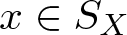 $x \in S_X$. Suppose that
 \begin{equation}
\exists \,\varepsilon \gt 0 \text{such that } \{e^* \in \text{ext} (B_{X^*}) : |e^* (x)| \gt 1 - \varepsilon\} \text{is finite. }
\end{equation}
Then,
 \begin{equation}
{\delta}c(x) \leq 1+ \sup \{|e^*(x)| : e ^* \in \text{ext} (B_{X^*}), \, |e^*(x)| \lt 1 \} \,\,( \lt 2).
\end{equation}
Proof. By the assumption that the set in (3.6) is finite, and by the Krein–Milman theorem, observe that  $\{e^* \in \text{ext} (B_{X^*}) : e^* (x) = 1 \}$ is non-empty and finite. Let us say
 \begin{equation*}
\{e^* \in \text{ext} (B_{X^*}) : e^* (x) = 1 \} = \{e_1^*, \ldots, e_n^*\}.
\end{equation*}
It follows that
 \begin{equation*}
\alpha:= \sup \{|e^*(x)| : e^* \in \text{ext} (B_{X^*}) \setminus \{\pm e_i^* :i=1,\ldots, n\} \} \lt 1.
\end{equation*}
Consider the slice  $S=S\bigl(g,\frac{1 - \alpha}{2n}\bigr)$, where
 $g = \frac{1}{n} \sum_{i=1}^n e_i^*$. If
 $y \in S$, then it is not difficult to check that
 $y \in S\bigl(e_i^*, \frac{1 - \alpha}{2}\bigr)$ for every
 $i =1,\ldots, n$. In particular,
 $|e_i^* (x -y)| \lt \frac{1 + \alpha}{2}$ for every
 $i =1,\ldots, n$. Thus, we observe that
 \begin{align*}
\|y-x\| &=\sup \{|e^*(y-x)|: e^* \in \text{ext} (B_{X^*})\} \\
&\leq \max \bigl\{1+\alpha, \max\{ |e_i^* (y-x)|: i=1,\ldots, n\} \bigr\} = 1 +\alpha \lt 2.
\end{align*}
Since this holds for every  $y \in S$, we conclude (3.7).
Let K be an infinite compact Hausdorff space. We say 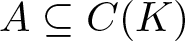 $A \subseteq C(K)$ is a uniform algebra if it is a closed subalgebra of A, which separates points of K and contains the constant functions. Recall that the Choquet boundary for A is defined by
 \begin{equation}
\partial A = \{t \in A : \delta_t \vert_A \text{is an extreme point of } B_{A^*} \}.
\end{equation}
Given 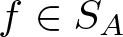 $f \in S_A$, notice from (✦) that the assumption (3.6) in proposition 3.10 is equivalent to say that
 \begin{equation*}
\exists \,\varepsilon \gt 0 \text{such that } \{t \in \partial A : |f(t)| \gt 1 - \varepsilon \} \text{is finite,}
\end{equation*}
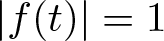
which is, in turn, equivalent to that there exists no limit point 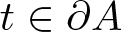 $t \in \partial A$ so that
 $|f(t)| = 1$. In this case,
 $H := \{t \in \partial A : |f(t)| = 1\}$ is a set of isolated points and
 \begin{equation*}
\sup \{|f(t)| : t \in \partial A \setminus H \} = \max \{|f(t)| : t \in \partial A \setminus H \} \lt 1.
\end{equation*}
Having this in mind, we obtain the following as a consequence of proposition 3.10:
Corollary 3.11. Let 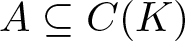 $A \subseteq C(K)$ be a uniform algebra and
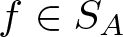 $f \in S_{A}$. Suppose that there is no limit point
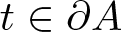 $t \in \partial A$ such that
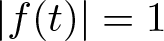 $|f(t)| = 1$. If
 $H=\{t \in K : |f(t)| = 1\}$, then
 \begin{equation}
{\delta}c(f) \leq 1+ \max\{|f(t)|:t\in \partial A \setminus H\} \lt 2.
\end{equation}
3.4. On a Lipschitz-free space $\mathcal{F}(M)$
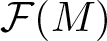
Let us start by recalling some basic definitions about Lipschitz-free spaces. Given a pointed metric space M with a distinguished point 0, we denote by 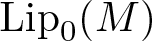 ${\mathrm{Lip}}_0 (M)$ the space of all real-valued Lipschitz functions f on M, which vanish at 0 equipped with the norm
 \begin{equation*}
\|f\| = \sup \left \{\frac{|f(x)-f(y)|}{d(x,y)}:x,y\in M, \, x\neq y \right\}.
\end{equation*}
For each point 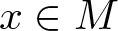 $x \in M$, let δx be the evaluation functional on
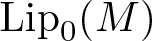 ${\mathrm{Lip}}_0 (M)$, that is,
 $\delta_x (f) = f(x)$ for every
 $f \in {\mathrm{Lip}}_0 (M)$. The norm closed linear span of
 $\{\delta_x : x \in M \}$ in
 ${\mathrm{Lip}}_0 (M)^*$ is called the Lipschitz-free space over M and denoted by
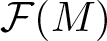 $\mathcal{F}(M)$. We refer the reader to [Reference Weaver28] for background on Lipschitz-free spaces.
In the following, we investigate a quantitative version of the result [Reference Veeorg26, theorem 2.1] by following the original idea and finally obtain the converse of lemma 2.8 is valid in the case of Lipschitz-free spaces. Recall that  $[u,v]_\delta := \{p \in M : d(u, p) + d(v, p) \lt d(u,v)+\delta\}$.
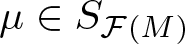
Theorem 3.12 Let M be a metric space, 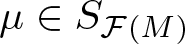 $\mu \in S_{\mathcal{F} (M)}$, and
 $0 \lt \alpha \leq 2$ be given. Then, the following are equivalent:
(i)
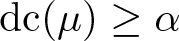
$\text{dc} (\mu) \geq \alpha$,(ii) for every
$\nu \in \text{dent} (B_{\mathcal{F} (M)})$, we have $\| \mu-\nu \| \geq \alpha$,(iii) if for
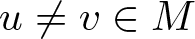
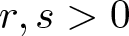
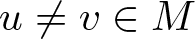
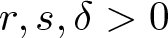
$u \neq v \in M$ and $r, s \gt 0$, there exists δ > 0 such that
\begin{equation*}
[u,v]_\delta \subseteq B(u,rd(u,v)) \cup B(v, sd(u,v)),
\end{equation*}then
$\| \mu - m_{u,v} \| \geq \alpha - 2 (r+s)$.




Before we present the proof, we recall some necessary lemmas.
Lemma 3.13. Let M be a metric space.
(i) [Reference Jung and Rueda Zoca17, theorem 2.6] Let
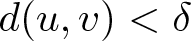
$\mu \in S_{\mathcal{F}(M)}$. Then, for every ɛ > 0, there exists δ > 0 such that if $u\neq v \in M$ satisfy $d(u,v) \lt \delta$, then $\| \mu - m_{u,v} \| \geq 2-\varepsilon$.(ii) [Reference Veeorg26, lemma 1.2] Given
$x,y,u,v \in M$ with x ≠ y, u ≠ v, and ɛ > 0, the following are equivalent:(a)
$\| m_{x,y} + m_{u,v} \| \geq 2- \varepsilon$,(b)
$d(x,v) + d(u,y) \geq d(x,y) + d(u,v) - \varepsilon \max \{d(x,y), d(u,v) \}$.
Furthermore, the equalities in (i) and (ii) hold simultaneously and in that case
\begin{equation*}
\| m_{x,y} + m_{u,v} \| = \frac{d(x,v)+d(u,y) + |d(x,y) - d(u,v)|}{\max \{d(x,y) , d(u,v) \}}.
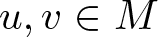
\end{equation*}(iii) [Reference Veeorg26, lemma 2.4] If M is complete,
$u,v \in M$ and $r,s,\delta \gt 0$ with $r+s \lt d(u,v)$ are such that
\begin{equation*}
[u,v]_\delta \subseteq B(u,r) \cup B(v,s),
\end{equation*}then there exists
$x \in B(u,r)$ and $y \in B(v,s)$ such that $m_{x,y}$ is a denting point.







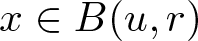
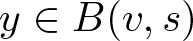

Proof. Proof of theorem 3.12
(i)  $\Rightarrow$ (ii): It is a direct consequence of lemma 2.8.
(ii)  $\Rightarrow$ (iii): Arguing as in the proof of (ii)
 $\Rightarrow$ (iii) in [Reference Veeorg26, theorem 2.1], it is enough to prove the case when M is complete. Let
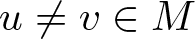 $u \neq v \in M$,
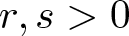 $r,s \gt 0$ such that there exists δ > 0 satisfying
 \begin{equation*}
[u,v]_\delta \subseteq B(u,rd(u,v)) \cup B(v, sd(u,v)).
\end{equation*}
If  $r+s \geq \alpha/2$, then there is nothing to prove; so we assume that
 $r+s \lt \alpha/2$. By lemma 3.13(iii), there exist
 $x \in B(u, r d(u,v))$ and
 $y \in B(v, s d(u,v))$ such that
 $m_{x,y}$ is a denting point. By the assumption, we then have that
 $\|\mu - m_{x,y} \| \geq \alpha$. Note that
 \begin{equation*}
d(u,x) + d(v,y) \leq r d(u,v) + s d(u,v) \lt \frac{\alpha}{2} d(u,v) \leq d(u,v).
\end{equation*}
Thus, we may find η > 0 such that
 \begin{equation*}
d(x,u) + d(v,y) = d(u,v) + d(x,y) - \eta \max \{d(x,y), d(u,v)\}.
\end{equation*}
By applying lemma 3.13(ii), we obtain that
 \begin{align*}
\|m_{x,y} - m_{u,v}\|&=\| m_{x,y} + m_{v,u} \| \\
&= \frac{d(u,x)+d(v,y) + |d(u,v) - d(x,y)|}{\max \{d(u,v), d(x,y) \}} \\
&\leq \frac{2d(u,x) + 2 d(v,y)}{\max \{d(u,v), d(x,y) \}} \leq 2 \frac{rd(u,v)+s d(u,v)}{\max \{d(u,v),d(x,y)\}} \leq 2(r+s).
\end{align*}
Consequently,
 \begin{equation*}
\| \mu - m_{u,v}\| \geq \| \mu - m_{x,y} \| - \| m_{x,y} - m_{u,v} \| \geq \alpha - 2(r+s).
\end{equation*}
(iii)  $\Rightarrow$ (i): Fix ɛ > 0 and a slice
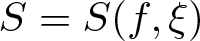 $S= S(f,\xi)$ of
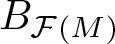 $B_{\mathcal{F} (M)}$. Let
 $u_0 \neq v_0 \in M$ be such that
 $f(u_0)-f(v_0) \gt (1-\xi) d(u_0,v_0)$. By lemma 3.13(i), there exists γ > 0 such that if
 $x\neq y \in M$ satisfy
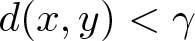 $d(x,y) \lt \gamma$, then
 $\| \mu - m_{x,y} \| \geq 2-\varepsilon$. Let
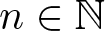 $n \in \mathbb{N}$ and δ > 0 be such that
(i)
$f(u_0)-f(v_0) \gt (1-\xi) (1+\delta)^n d(u_0,v_0)$;(ii)
$\left(1-\dfrac{\varepsilon}{4} + \delta\right)^n d(u_0,v_0) \lt \gamma$.


If  $\| \mu - m_{u_0, v_0}\| \geq \alpha- \varepsilon$, then there is nothing to prove. Suppose that
 $\| \mu - m_{u_0,v_0} \| \lt \alpha -\varepsilon$. Then, by the assumption, there exists
 \begin{equation*}
p \in [u_0,v_0]_{\delta d(u_0,v_0)} \setminus \left( B\left(u_0, \frac{\varepsilon}{4}d(u_0,v_0)\right) \cup B\left(v_0, \frac{\varepsilon}{4} d(u_0,v_0)\right) \right).
\end{equation*}
This allows us to choose  $u_1, v_1 \in M$ such that
(i)
$f(u_1)-f(v_1) \gt (1-\xi) (1+\delta)^{n-1} d(u_1,v_1)$;(ii)
$d(u_1, v_1) \lt \left(1-\dfrac{\varepsilon}{4}+\delta \right) d(u_0,v_0)$


(for its detail, see the proof of (iii)  $\Rightarrow$ (i) in [Reference Veeorg26, theorem 2.1]). Assume for
 $k \in \{1,\ldots, n-1\}$ that
(i)
$f(u_k)-f(v_k) \gt (1-\xi) (1+\delta)^{n-k} d(u_k,v_k)$;(ii)
$d(u_k, v_k) \lt \left(1-\dfrac{\varepsilon}{4}+\delta \right)^k d(u_0,v_0)$.


If  $\| \mu - m_{u_k,v_k}\| \geq \alpha -\varepsilon$ for some k, then we finish the proof. If not, we end up with the case:
(i)
$f(u_n)-f(v_n) \gt (1-\xi) d(u_n,v_n)$;(ii)
$d(u_n, v_n) \lt \left(1-\dfrac{\varepsilon}{4}+\delta \right)^n d(u_0,v_0) \lt \gamma$; implying that $\| \mu - m_{u_n, v_n}\| \geq 2- \varepsilon$.



Therefore, in any case, we find 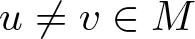 $u \neq v \in M$ so that
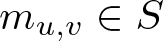 $m_{u,v} \in S$ and
 $\| \mu - m_{u,v}\| \geq \alpha-\varepsilon$.
With the help of the structure of Lipschitz-free space, we can construct a Banach space in which a particular point exhibits diametrically opposed behaviours concerning its Daugavet constant and Δ-constant. It should be noted that a similar discussion has already taken place in [Reference Abrahamsen, Aliaga, Lima, Martiny, Perreau, Prochazka and Veeorg1, §3], where the authors constructed a Banach space X with a Δ-point, which is a limit of strongly exposed points of BX (thus, answering [Reference Martín, Perreau and Rueda Zoca23, question 7.13] in the positive).
Theorem 3.14 There exists a Banach space X with a point 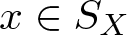 $x \in S_X$ such that
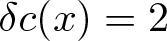 ${\delta}c(x)=2$ and
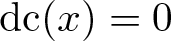 $\text{dc}(x)=0$.
Proof. Let us consider
 \begin{equation*}
M:= ( [0,1]\times \{0\}) \cup\left\{\left(0,\frac{1}{n}\right),\left(1,\frac{1}{n}\right) : n \in \mathbb{N} \right\}\subseteq (\mathbb R^2,\Vert\cdot\Vert_2).
\end{equation*}
Put 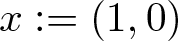 $x:=(1,0)$,
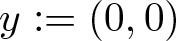 $y:=(0,0)$,
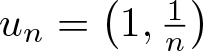 $u_n = \bigl(1,\frac{1}{n}\bigr)$, and
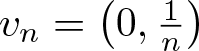 $v_n = \bigl(0,\frac{1}{n}\bigr)$ for each
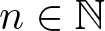 $n \in \mathbb{N}$. As there is a (1-Lipschitz) path connecting x and y, by [Reference Jung and Rueda Zoca17, proposition 4.2], the molecule
 $m_{x,y}$ is a Δ-point, i.e.,
 ${\delta}c (m_{x,y})=2$.
Let us fix 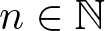 $n \in \mathbb{N}$, and note that
 $[u_n,v_n]=\{u_n,v_n\}$. Thus, it is clear to see that there exist sufficiently small
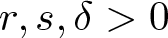 $r,s,\delta \gt 0$ with
 $r+s \lt d(u_n,v_n)=1$ such that
 \begin{equation*}
[u_n,v_n]_\delta := \{p \in M : d(u_n, p) + d(v_n, p) \lt d(u_n,v_n)+\delta\} = \{u_n,v_n\},
\end{equation*}
 $B(u_n,r) = \{u_n\}$, and
 $B(v_n, s)=\{v_n\}$. Applying (3) of lemma 3.13, we obtain that
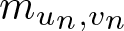 $m_{u_n, v_n}$ is a denting point.
Suppose that  $\text{dc} (m_{x,y} ) \gt 0$. Take α > 0 so that
 $\text{dc}(m_{x,y})\geq \alpha \gt 0$. By theorem 3.12, it follows that we have
 $\| m_{u_n,v_n} - m_{x,y} \| \geq \alpha$ for every
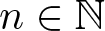 $n \in \mathbb{N}$. However, the distance between molecules can be estimated as follows (see [Reference Cascales, Chiclana, García-Lirola, Martín and Rueda Zoca7, lemma 1.3]):
 \begin{equation*}
\| m_{u_n,v_n} - m_{x,y} \| \leq 2 \frac{d(x,u_n) + d(y, v_n) }{\max \{d(x, y), d(u_n,v_n)\}} = \frac{4}{n} \rightarrow 0.
\end{equation*}
This contradicts  $\text{dc} (m_{x,y}) \geq \alpha \gt 0$; hence we conclude that
 $\text{dc}(m_{x,y})=0$.
4. Stability results
A norm N on  $\mathbb{R}^2$ is called absolute if
 \begin{equation*}
N(a,b) = N(|a|,|b|) \quad \text{for all } (a,b)\in\mathbb{R}^2,
\end{equation*}
and normalized if  $N(1,0)=N(0,1)=1$. Let X and Y be Banach spaces and N an absolute normalized norm on
 $\mathbb{R}^2$. We denote by
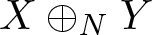 $X \oplus_N Y$ the product space X × Y endowed with the norm
 \begin{equation*}
\|(x,y)\|_N = N(\|x\|,\|y\|) \quad \text{for all } x\in X \text{and } y \in Y.
\end{equation*}
The behaviour of Daugavet and Δ-points while taking direct sums with absolute normalized norm N is first analysed in [Reference Abrahamsen, Haller, Lima and Pirk3]. Afterwards, the study of the stability for Daugavet and Δ-points is continued in [Reference Haller, Pirk and Veeorg13]. In this section, we study how Daugavet and Δ-constants behave under taking absolute sums. As the Daugavet and Δ-constants have been shown to be closely related to the notions of certain Daugavet indexes of thickness (see proposition 2.14), we find several results in [Reference Haller, Langemets, Lima, Nadel and Rueda Zoca10] concerning the stability of Daugavet indexes of thickness useful in our scenario. For simplicity, we shall consider only points in the sphere of 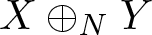 $X\oplus_N Y$.
4.1. Stability for the Daugavet constant
We start with the following result, which is motivated by [Reference Haller, Langemets, Lima, Nadel and Rueda Zoca10, proposition 2.2]. The proof is similar, but we present the proof for the sake of completeness.
Proposition 4.1. Let X and Y be Banach spaces, N be an absolute normalized norm on  $\mathbb{R}^2$, and γ > 0 is such that
 $N(\cdot) \geq \gamma \|\cdot\|_1$. Then, we have the following: For
 $(x,y) \in S_{X \oplus_N Y}$,
 \begin{equation*}
\text{dc}((x,y)) \geq
\begin{cases}
2\gamma \left( \min \left\{\text{dc} \left( \dfrac{x}{\|x\|} \right) , \text{dc} \left( \dfrac{y}{\|y\|}\right) \right\} - 1 \right) &\text{when } x \neq 0, y \neq 0, \\
2\gamma (\text{dc}(x) - 1) &\text{when } y =0,\\
2\gamma( \text{dc}(y)-1) &\text{when } x=0.
\end{cases}
\end{equation*}
Proof. Assume first that x ≠ 0 and y ≠ 0. Assume also  $\min \left\{\text{dc} \bigl( \frac{x}{\|x\|} \bigr) , \text{dc} \bigl( \frac{y}{\|y\|}\bigr) \right\} \gt 1+\varepsilon \gt 1$ for some ɛ > 0 (otherwise, there is nothing to prove). Let
 $S=S\bigl((x^*,y^*),\delta\bigr)$ be a slice of
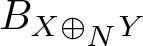 $B_{X\oplus_N Y}$ with
 $\|(x^*,y^*)\| =1$. Take
 $(u,v) \in S_{X\oplus_N Y}$ so that
 $x^* (u) + y^* (v) \gt 1 - \delta' \gt 1-\delta$ for some
 $0 \lt \delta' \lt \delta$. Fix η > 0 so that
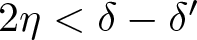 $2\eta \lt \delta-\delta'$, and consider
 \begin{equation*}
S_1 = \begin{cases}
\bigl\{z \in B_X : x^*(z) \gt x^* \bigl(\frac{u}{\|u\|}\bigr) - \eta\bigr\} &\text{when } u \neq 0 \\
B_X &\text{when } u = 0
\end{cases}
\end{equation*}
and
 \begin{equation*}
S_2 = \begin{cases}
\bigl\{w \in B_Y : y^*(w) \gt y^* \bigl(\frac{v}{\|v\|}\bigr) - \eta\bigr\} &\text{when } v \neq 0 \\
B_Y &\text{when } v = 0.
\end{cases}
\end{equation*}
Observe that there exist 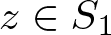 $z \in S_1$ and
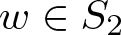 $w\in S_2$ such that
 $\bigl\|z - \frac{x}{\|x\|}\bigr\| \gt \text{dc}\bigl( \frac{x}{\|x\|}\bigr) - \frac{\varepsilon}{2}$ and
 $\bigl\|w - \frac{y}{\|y\|}\bigr\| \gt \text{dc}\bigl( \frac{y}{\|y\|}\bigr) - \frac{\varepsilon}{2}$. Note that
 \begin{equation*}
\left\|z - \frac{x}{\|x\|}\right\| \gt \text{dc}\left( \frac{x}{\|x\|}\right) - \frac{\varepsilon}{2} \gt (1+\varepsilon) - \frac{\varepsilon}{2} = 1 + \frac{\varepsilon}{2}.
\end{equation*}
Then,
 \begin{equation*}
\bigl\|x - \|u\| z \bigr\| = \left\| \|x\| \frac{x}{\|x\|} + \|u\| (-z) \right\| \geq (\|x\| + \|u\|) \left (\text{dc}\left( \frac{x}{\|x\|}\right) - \frac{\varepsilon}{2} - 1\right),
\end{equation*}
where we used the fact: if  $e_1, e_2 \in B_X$ satisfy
 $\|e_1+e_2\|\geq 1+\alpha$ for some
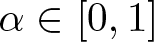 $\alpha\in [0,1]$, then
 $\|\lambda e_1 + \mu e_2\| \geq (\lambda+\mu)\alpha$ for all
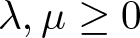 $\lambda,\mu\geq 0$. Similarly, we obtain
 \begin{equation*}
\bigl\|y-\|v\| w\bigr\| \geq (\|y\| + \|v\|) \left (\text{dc}\left( \frac{y}{\|y\|}\right) - \frac{\varepsilon}{2} - 1\right).
\end{equation*}
Note that  $(\|u\| z, \|v\| w) \in B_{X\oplus_N Y}$ and if
 $u \neq 0, v\neq 0$, then
 \begin{align*}
(x^*, y^*) (\|u\| z, \|v\| w) &= \|u\| x^*(z) + \|v\| y^* (w) \\
& \gt \|u\| \left( x^* \left(\frac{u}{\|u\|} \right)-\eta \right) + \|v\| \left( y^*\left(\frac{v}{\|v\|}\right) -\eta \right) \\
& \gt 1-\delta' - 2\eta \gt 1-\delta.
\end{align*}
If one of u and v is 0, say v = 0, then 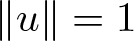 $\|u\|=1$ and
 \begin{align*}
(x^*, y^*) (\|u\| z, \|v\| w) &= x^*(z) \gt x^*(u) - \eta \gt 1-\delta' -\eta \gt 1-\delta.
\end{align*}
Thus, in any case,  $(\|u\| z, \|v\| w) \in S$. Now, observe that
 \begin{align*}
\| (x,y) &- (\|u\| z, \|v\| w) \|_N \\
&= N\bigl( \|x- \|u\|z \|, \|y - \|v\|w\|\bigr) \\
&\geq N\left( (\|x\| + \|u\|) \left (\text{dc}\left( \frac{x}{\|x\|}\right) - \frac{\varepsilon}{2} - 1\right), (\|y\| + \|v\|) \left (\text{dc}\left( \frac{y}{\|y\|}\right) - \frac{\varepsilon}{2} - 1\right) \right) \\
&\geq \min \left\{\text{dc}\left( \frac{x}{\|x\|}\right) - \frac{\varepsilon}{2} - 1, \text{dc}\left( \frac{y}{\|y\|}\right) - \frac{\varepsilon}{2} - 1 \right\} N\bigl( \|x\|+\|u\|, \|y\|+\|v\|\bigr) \\
&\geq 2\gamma \min \left\{\text{dc}\left( \frac{x}{\|x\|}\right) - \frac{\varepsilon}{2} - 1, \text{dc}\left( \frac{y}{\|y\|}\right) - \frac{\varepsilon}{2} - 1 \right\}.
\end{align*}
Next, assume that x = 0 or y = 0. We only prove the case when y = 0. Assume that  $\text{dc}(x) \gt 1+\varepsilon$ for some ɛ > 0, otherwise there is nothing to prove. Let
 $S=S((x^*,y^*),\delta)$ be a slice of
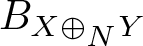 $B_{X\oplus_N Y}$ with
 $\|(x^*,y^*)\| =1$. Take
 $(u,v) \in S_{X\oplus_N Y}$ as above with some
 $0 \lt \delta' \lt \delta$. Fix η > 0 and consider
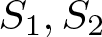 $S_1, S_2$ as above too. Find
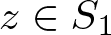 $z \in S_1$ such that
 $\|z - x \| \gt \text{dc}(x) - \frac{\varepsilon}{2}$. Let
 $w \in S_2 \cap S_Y$ be arbitrarily given. Arguing as above,
 $(\|u\| z, \|v\| w) \in S$. Moreover,
 \begin{align*}
\bigl\|(x,0) - (\|u\| z, \|v\| w) \bigr\|_N &= N\bigl(\|x - \|u\|z\| , \|v\|\bigr) \\
&\geq N \left( (1 + \|u\|) \left(\text{dc} (x) - \frac{\varepsilon}{2} - 1\right), \|v\|\right) \\
&\geq \left(\text{dc} (x) - \frac{\varepsilon}{2} - 1\right) N\bigl( 1+\|u\|, \|v\| \bigr) \\
&\geq 2\gamma \left(\text{dc} (x) - \frac{\varepsilon}{2} - 1\right).
\end{align*}
This finishes the proof.
When the absolute normalized norm N on  $\mathbb{R}^2$ in proposition 4.1 is actually
 $\ell_1$-norm, then for
 $x \neq 0, y \neq 0$, we have
 \begin{equation*}
\text{dc}((x,y)) \geq 2 \left( \min \left\{\text{dc} \left( \frac{x}{\|x\|} \right) , \text{dc} \left( \frac{y}{\|y\|}\right) \right\} - 1 \right).
\end{equation*}
However, in the case of  $\ell_1$-norm, the following improved lower bound for
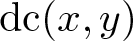 $\text{dc} (x,y)$ can be obtained.
Proposition 4.2. Let X and Y be Banach spaces, and  $(x,y) \in S_{X \oplus_1 Y}$. Then, we have the following:
(i)
$\text{dc} ((x,y)) \geq \min \left\{\text{dc}\left( \dfrac{x}{\|x\|}\right), \text{dc}\left( \dfrac{y}{\|y\|}\right) \right\}$ when x ≠ 0 and y ≠ 0.(ii)
$\text{dc} ((x,y)) \geq \text{dc}(y)$ when x = 0.(iii)
$\text{dc} ((x,y)) \geq \text{dc} (x)$ when y = 0.



Proof. (i): Let  $S=S\bigl( (x^*, y^*), \delta\bigr)$ be a slice of
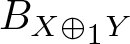 $B_{X\oplus_1 Y}$ with
 $\|(x^*,y^*)\|=1$ and ɛ > 0. Without loss of generality, we may assume that
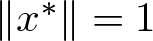 $\|x^*\| = 1$. Find
 $u \in S(x^*, \delta)$ so that
 $\bigl\|u- \frac{x}{\|x\|}\bigr\| \geq \text{dc} \bigl(\frac{x}{\|x\|} \bigr) - \varepsilon$. Note that
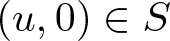 $(u,0) \in S$ and
 \begin{align*}
\|(u,0)-(x,y)\| = \|u-x \| + \|y\| &\geq \left\| u - \frac{x}{\|x\|}\right\| - \left\| \frac{x}{\|x\|} - x \,\right\| + \|y\| \\
&\geq \text{dc}\left(\frac{x}{\|x\|}\right) - \varepsilon - (1-\|x\|) + \|y\| \\
&= \text{dc}\left(\frac{x}{\|x\|}\right) -\varepsilon.
\end{align*}
This implies that  $\text{dc} ((x,y)) \geq \text{dc} \bigl(\frac{x}{\|x\|}\bigr)$. Notice that if
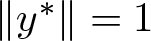 $\|y^*\| = 1$, then, by changing the role of x and y, we observe
 $\text{dc} ((x,y)) \geq \text{dc} \bigl(\frac{y}{\|y\|}\bigr)$.
As the proofs of (ii) and (iii) are very similar, we only prove (ii): Let  $S=S\bigl( (x^*, y^*), \delta\bigr)$ be a slice of
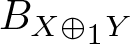 $B_{X\oplus_1 Y}$ and ɛ > 0. Suppose that
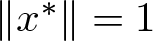 $\|x^*\| = 1$. Then, there exists
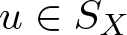 $u \in S_X$ so that
 $x^*(u) \gt 1-\delta$. In other words,
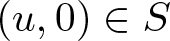 $(u,0) \in S$. In this case,
 $\|(0,y)-(u,0)\| = \|u\| +\|y\| = 2$. If
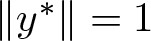 $\|y^*\| = 1$, then we can pick
 $v \in S(y^*, \delta)$ so that
 $\| v-y\| \gt \text{dc} (y)-\varepsilon$. This implies that
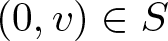 $(0,v) \in S$ and
 $\|(0,y)-(0,v)\| = \|v-y\| \gt \text{dc}(y)-\varepsilon$. In any case, we obtain a point in S, which is a distance of
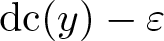 $\text{dc}(y)-\varepsilon$ from
 $(0,y)$. This proves that
 $\text{dc} ((0,y))\geq \text{dc} (y)$.
If the norm N on  $\mathbb{R}^2$ in proposition 4.1 is
 $\ell_\infty$-norm, then we may obtain the result on
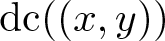 $\text{dc}((x,y))$ for
 $(x,y)\in S_{X\oplus_\infty Y}$ by taking
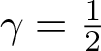 $\gamma = \frac{1}{2}$. However, the following direct computation produces a better lower bound.
Proposition 4.3. Let X and Y be Banach spaces, and  $(x,y) \in S_{X \oplus_\infty Y}$. Then, we have the following:
 \begin{equation*}
\text{dc} ((x,y)) \geq
\begin{cases}
\text{dc}(x) &\text{when } \|x\|=1, \\
\text{dc}(y) &\text{when } \|y\| =1.
\end{cases}
\end{equation*}
Proof. We only prove the case when 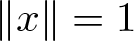 $\|x\|=1$: Let
 $S=S( (x^*, y^*), \delta)$ be a slice of
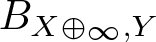 $B_{X\oplus_\infty, Y}$ with
 $\|(x^*, y^*)\| =1$ and ɛ > 0. Note that
 $\|x^*\| +\|y^*\| =1$. If
 $x^* \neq 0$, then find
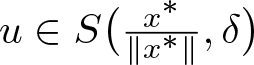 $u \in S\bigl(\frac{x^*}{\|x^*\|}, \delta\bigr)$ such that
 $\|u-x\| \gt \text{dc}(x)-\varepsilon$. Pick
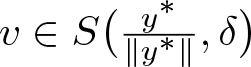 $v \in S\bigl(\frac{y^*}{\|y^*\|}, \delta\bigr)$ if
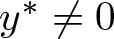 $y^* \neq 0$ and
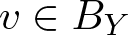 $v \in B_Y$ arbitrarily if
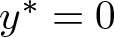 $y^* =0$. In any case,
 $(x^*,y^*) (u,v) = x^*(u) +y^*(v) \gt 1-\delta$, that is,
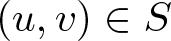 $(u,v) \in S$. Note that
 \begin{equation*}
\|(x,y)-(u,v)\| = \max \bigl\{\|x-u\| ,\|y-v\|\bigr\} \gt \text{dc}(x)-\varepsilon.
\end{equation*}
It remains to consider the case when 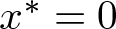 $x^* = 0$. In this case,
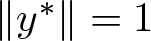 $\|y^*\| =1$. Then
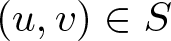 $(u,v) \in S$ for any
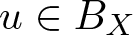 $u \in B_X$ and
 $v \in S(y^*, \delta)$. Note that
 \begin{equation*}
\|(x,y)-(-x,v)\| = \max \bigl\{\|2x\| , \|y-v\| \bigr\} =2.
\end{equation*}
Consequently, whether  $x^*$ is 0 or not, we can always find a point in S, which is (
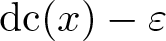 $\text{dc}(x)-\varepsilon$)-away from (x, y). So,
 $\text{dc}((x,y)) \geq \text{dc}(x)$.
In [Reference Haller, Pirk and Veeorg13], the authors generalized the notion of positively octahedrality [Reference Haller, Langemets and Nadel11] of an absolute norm on X by introducing the so-called A-octahedrality for a subset A of SX. With this notion, they were able to complete describing the class of absolute norms that admit a Daugavet point. Following their ideas, we will provide a lower bound for the Daugavet constant of a point lying in an absolute sum 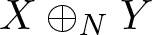 $X\oplus_N Y$ given that the absolute norm N is A-OH.
Definition 4.4. Let X be a Banach space and 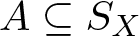 $A \subseteq S_X$. We say the norm on X is A-octahedral (for short, A-OH) if, for every
 $x_1,\ldots, x_n \in A$ and ɛ > 0, there exists
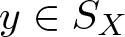 $y \in S_X$ such that
 $\|x_i + y \| \geq 2-\varepsilon$ for every
 $i=1,\ldots, n$.
Let N be an absolute normalized norm on  $\mathbb{R}^2$. Put
 $c = \max \{s : N(s,1)=1\}$ and
 $d = \max \{t: N(1,t) = 1 \}$, and define
 $A = \{(c,1), (1,d)\}$. We will consider from now on this specific set A. If an absolute norm N is A-OH, then, by definition, we can find
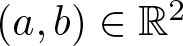 $(a,b) \in \mathbb{R}^2$ with
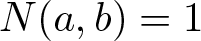 $N(a,b) =1$,
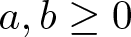 $a,b \geq 0$ such that
 \begin{equation}
N\bigl((c,1)+(a,b)\bigr)=2 \quad \text{and} \quad N\bigl((1,d)+(a,b)\bigr) = 2.
\end{equation}
Proposition 4.5. Let X and Y be Banach spaces, 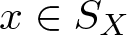 $x \in S_X$,
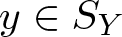 $y \in S_Y$, and let N be an A-OH norm with (a, b) as in (⋆). Then,
 $(ax,by) \in S_{X \oplus_N Y}$ satisfies that
 \begin{equation*}
\text{dc} ((ax,by)) \geq 2 \bigl( \min \bigl\{\text{dc}(x), \text{dc}(y)\bigr\} -1\bigr).
\end{equation*}
Proof. Let  $(x^*, y^*) \in S_{(X\oplus_N Y)^*}, \alpha \gt 0$ and ɛ > 0. Choose δ > 0 so that
 $\delta N(1,1) \lt \varepsilon$. Find
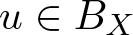 $u \in B_X$ and
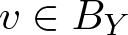 $v \in B_Y$ such that
 \begin{equation*}
x^* (u) \geq \left( 1- \frac{\alpha}{2}\right) \|x^*\| \quad \text{and} \quad y^*(v) \geq \left( 1-\frac{\alpha}{2}\right) \|y^*\|,
\end{equation*}
 $\|x-u\| \gt \text{dc}(x)-\delta$ and
 $\|y-v\| \gt \text{dc}(y)-\delta$. Find
 $k \geq 0, \ell \geq 0$ such that
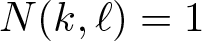 $N(k,\ell)=1$,
 $N\bigl((a,b)+(k,\ell)\bigr)=2$, and
 $k\|x^*\| + \ell \|y^*\| = 1$. Note that
 \begin{equation*}
(x^*,y^*)(ku,\ell v) = kx^*(u) +\ell y^*(v) \geq \left(1-\frac{\alpha}{2}\right) (k\|x^*\| +\ell \|y^*\| ) = 1-\frac{\alpha}{2},
\end{equation*}
which implies that  $(ku, \ell v) \in S( (x^*,y^*), \alpha)$. By triangle inequality, we obtain
 $\|ax-ku\| \geq (a+k)(\text{dc}(x)-\delta-1)$ and
 $\|by-\ell v\| \geq (b+\ell) (\text{dc}(y) -\delta-1)$. Thus,
 \begin{align*}
\| (ax,by) - (ku,\ell v)\|_N &= N\bigl(\|ax-ku\|, \|by- \ell v\| \bigr) \\
&\geq N\bigl( (a+k)(\text{dc} (x)-\delta-1), (b+\ell)(\text{dc}(y)-\delta-1) \bigr) \\
&\geq N\bigl( (a+k)(\text{dc} (x)-1), (b+\ell)(\text{dc}(y)-1) \bigr) - 2 \varepsilon \\
&\geq \min \bigl\{\text{dc}(x)-1, \text{dc}(y)-1 \bigr\} N(a+k, b+\ell) - 2 \varepsilon \\
&=2 \min \bigl\{\text{dc}(x)-1, \text{dc}(y)-1 \bigr\} - 2 \varepsilon,
\end{align*}
as desired.
Arguing very similarly, we can obtain the following result in the special case when a = 0 or b = 0.
Proposition 4.6. Let X and Y be Banach spaces, 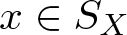 $x \in S_X$,
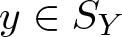 $y \in S_Y$, and let N be an A-OH norm with (a, b) as in (⋆).
(i) If a = 0, then
$\text{dc}((0,y)) \geq 2(\text{dc}(y) -1)$.(ii) If b = 0, then
$\text{dc}((x,0)) \geq 2 (\text{dc} (x)-1)$.


Remark 4.7. Note that  $\ell_1$- and
 $\ell_\infty$-norm are A-OH. For instance, if we consider
 $\ell_1$-norm on
 $\mathbb{R}^2$, then the corresponding set A turns out to be
 $\{(0,1), (1,0)\}$. In this case, any point
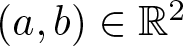 $(a,b) \in \mathbb{R}^2$ with
 $a+b=1, a,b \geq 0$ satisfies (⋆). Given
 $(x,y) \in S_{X\oplus_1 Y}$, writing
 $(x,y) = \bigl(\|x\|\frac{x}{\|x\|}, \|y\|\frac{y}{\|y\|}\bigr)$ if
 $x\neq0, y\neq 0$, propositions 4.5 and 4.6 show that
 \begin{equation*}
\text{dc}((x,y)) \geq \begin{cases}
2 \left( \min \left\{\text{dc} \left( \dfrac{x}{\|x\|} \right) , \text{dc} \left( \dfrac{y}{\|y\|}\right) \right\} - 1 \right) &\text{when } x \neq 0, y \neq 0. \\
2 (\text{dc}(x) - 1) &\text{when } y =0.\\
2( \text{dc}(y)-1) &\text{when } x=0.
\end{cases}
\end{equation*}
In the case of  $\ell_\infty$-norm on
 $\mathbb{R}^2$, given
 $(x,y) \in S_{X\oplus_\infty Y}$, one can obtain a similar lower bound for
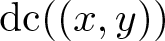 $\text{dc} ((x,y))$.
We finish this subsection by presenting the following result, which gives an upper bound for 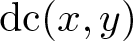 $\text{dc}(x,y)$. It can be obtained by simply arguing as in [Reference Haller, Langemets, Lima, Nadel and Rueda Zoca10, proposition 2.4], so we omit the proof.
Proposition 4.8. Let X and Y be Banach spaces, N be an absolute normalized norm on  $\mathbb{R}^2$, and
 $\Gamma \gt 0$ is such that
 $N(\cdot)\leq \Gamma \|\cdot\|_\infty$. Then, we have the following:
(i) If
$(0,1)$ is an extreme point of $B_{(\mathbb{R}^2, N)}$, then $\text{dc}( (x,0)) \leq \Gamma$ for every $x \in S_X$.(ii) If
$(1,0)$ is an extreme point of $B_{(\mathbb{R}^2, N)}$, then $\text{dc}( (0,y)) \leq \Gamma$ for every $y \in S_Y$.

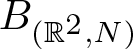

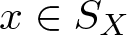

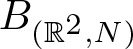

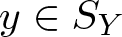
In particular, for  $1 \lt p \lt \infty$,
 $\text{dc}((x,0)) \leq 2^{1/p}$ and
 $\text{dc} ((0,y))\leq 2^{1/p}$ whenever
 $(x,0) \in S_{X \oplus_p Y}$ and
 $(0,y) \in S_{X \oplus_p Y}$.
As a consequence of proposition 4.8 combined with proposition 4.1, we have that for  $1 \lt p \lt \infty$,
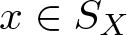 $x \in S_X$ and
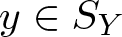 $y \in S_Y$,
 \begin{equation*}
2^{1/p} (\text{dc} (x)-1) \leq \text{dc} ((x,0)) \leq 2^{1/p} \,\text{and }\, 2^{1/p} (\text{dc} (y)-1) \leq \text{dc} ((0,y)) \leq 2^{1/p}.
\end{equation*}
4.2. Stability for the Δ-constant
In the proof of proposition 4.1, if we start with a slice S containing the given point (x, y), then we may take  $(u,v) = (x,y)$ and proceed as before. Thus, a similar result with respect to Δ-constants can be obtained. However, we will see that an even stronger claim holds in this case.
Recall that the diametral local diameter two property (for short, DLD2P) behaves well under absolute sums, that is, for any absolute normalized norm N on  $\mathbb{R}^2$, both X and Y have the DLD2P if and only if
 $X \oplus_N$ has the DLD2P [Reference Ivakhno and Kadets14, theorem 3.2]. In this regard, it is natural to expect some stability result of the Δ-constant.
Proposition 4.9. Let X and Y be Banach spaces, N an absolute normalized norm on  $\mathbb{R}^2$, and
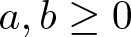 $a,b\geq 0$ with
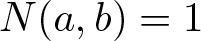 $N(a,b) = 1$. Given
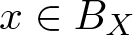 $x \in B_X$ and
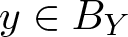 $y \in B_Y$, we have
 \begin{equation*}
{\delta}c ((ax,by)) \geq \min \bigl\{{\delta}c(x), {\delta}c(y)\bigr\}.
\end{equation*}
Moreover, we have the following:
(i) If b = 0, then
${\delta}c((x,0)) \geq {\delta}c(x)$.(ii) If a = 0, then
${\delta}c((0,y)) \geq {\delta}c(y)$.


Proof. Let ɛ > 0 and 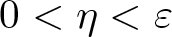 $0 \lt \eta \lt \varepsilon$. By proposition 2.3, we can find
 $x_1, \ldots, x_m \in \Delta_{2-{\delta}c(x) +\varepsilon} (x)$ and
 $y_1,\ldots, y_m \in \Delta_{2-{\delta}c(y)+\varepsilon} (y)$ such that
 \begin{equation*}
\left\| x - \frac{1}{m} \sum_{i=1}^m x_i \right\| \lt \eta \, \text{and } \, \left\| y - \frac{1}{m} \sum_{i=1}^m y_i \right\| \lt \eta,
\end{equation*}
where we applied [Reference Abrahamsen, Haller, Lima and Pirk3, lemma 4.1] to choose the same number of vectors in X and Y. Note that
 \begin{equation*}
\left\| (ax,by) - \frac{1}{m} \sum_{i=1}^m (ax_i, by_i) \right\|_N = N \left( a \left\|x- \frac{1}{m} \sum_{i=1}^m x_i\right\| , b \left \| y- \frac{1}{m} \sum_{i=1}^m y_i\right\| \right) \leq \eta.
\end{equation*}
Moreover, for each  $i =1,\ldots, m$,
 \begin{equation*}
\bigl\| (ax,by)-(ax_i,by_i) \bigr\|_N = N\bigl(a \|x-x_i\|, b\|y-y_i\| \bigr) \geq \min \bigl\{{\delta}c(x)-\varepsilon, {\delta}c(y)-\varepsilon \bigr\}.
\end{equation*}
Thus, by again proposition 2.3, we conclude that  ${\delta}c((ax,by)) \geq \min \bigl\{{\delta}c(x), {\delta}c(y)\bigr\}$.
When a = 0 or b = 0, the above argument proves the estimates (i) and (ii).
In case of  $\ell_1$-sum or
 $\ell_\infty$-sum, we have the following direct consequences:
Corollary 4.10. Let X and Y be Banach spaces. Then, we have the following:
(i) For
$(x,y) \in S_{X\oplus_1 Y}$,
\begin{equation*}
{\delta}c ((x,y)) \geq
\begin{cases}
\min \left\{{\delta}c \left( \dfrac{x}{\|x\|} \right) , {\delta}c \left( \dfrac{y}{\|y\|}\right) \right\} &\text{when } x \neq 0, y \neq 0, \\
{\delta}c(x) &\text{when } y =0, \\
{\delta}c(y) &\text{when } x=0.
\end{cases}
\end{equation*}(ii) For
$(x,y) \in S_{X\oplus_\infty Y}$,
\begin{equation*}
{\delta}c ((x,y)) \geq \min \bigl\{{\delta}c(x), {\delta}c(y)\bigr\}.
\end{equation*}




Proof. For the assertion (i), we apply proposition 4.9 with 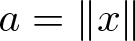 $a = \|x\|$ and
 $b = \|y\|$. For (ii), use again proposition 4.9 with a = 1 and b = 1.
If one of the components is zero in case of  $\ell_1$-sum, then the above inequality is indeed an equality.
Proposition 4.11. Let X and Y be Banach spaces. Then,  ${\delta}c((x,0)) = {\delta}c(x)$ for every
 $(x,0) \in S_{X \oplus_1 Y}$.
Proof. Thanks to corollary 4.10, it suffices to show for every  $(x,0) \in S_{X \oplus_1 Y}$ that
 ${\delta}c((x,0)) \leq {\delta}c(x)$. Assume that
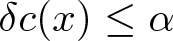 ${\delta}c(x) \leq \alpha$, then there exists a slice
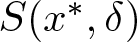 $S(x^*,\delta)$ with
 $x \in S(x^*,\delta)$ such that
 $\|y-x\| \lt \alpha$ for every
 $y \in S(x^*,\delta)$. Given
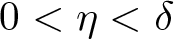 $0 \lt \eta \lt \delta$, by [Reference Ivakhno and Kadets14, lemma 2.1], we can find
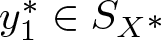 $y_1^* \in S_{X^*}$ satisfying that
 \begin{equation*}
x \in S(y_1^*,\eta) \subseteq S(x^*,\delta).
\end{equation*}
Note that for  $(u,v) \in S( (y_1^*, 0), \eta)$, we have
 $y_1^* (u) \gt 1-\eta$ and
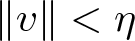 $\|v\| \lt \eta$. This implies that
 \begin{equation*}
\|(u,v) - (x,0)\| = \|u-x\| + \|v\| \lt \|u-x\| + \eta,
\end{equation*}
where  $u, x \in S(x^*,\delta)$. As it is clear that
 $(x, 0) \in S( (y_1^*, 0) , \eta)$ and η can be chosen arbitrarily small, we conclude that
 ${\delta}c((x,0)) \leq \alpha$.
Acknowledgements
The authors are grateful to the anonymous referee for the careful reading of the manuscript and for providing a number of suggestions that have improved its final form. M.J. was supported by a KIAS Individual Grant (MG086601) and by the June E Huh Center for Mathematical Challenges (HP086601) at the Korea Institute for Advanced Study.
Conflicts of interest
There is no conflict of interest.
Data availability
No data were used for the research described in the article.