Introduction
The use of blood serum from immunized animals to treat diseases in humans – serotherapy – marks an important development in the history of science and the history of pharmacy at the end of the nineteenth century. I deliberately distinguish between history of pharmacy and history of science because, as I have argued elsewhere, pharmacy has had great difficulty in finding its place in the history of science due to its unapologetically practical orientation (Simon Reference Simon2005). This incompatibility was, of course, particularly true when the history of science concerned itself primarily with the history of ideas, and experiment was regarded as the simple handmaiden of theory. Nevertheless, the last few decades have witnessed a shift in the history and philosophy of science towards a re-consideration of the place of experimental practice, although even here, physics has remained the dominant model, with biology and chemistry following behind. Thus, the central question for historians and philosophers alike remains how experiment relates to theory rather than how practical productivity fits into the complex world of techno-science, and in this context the paradigmatic model remains experimental physics (Shapin and Schaffer Reference Shapin and Schaffer1985; Galison Reference Galison1987; Pickering Reference Pickering1995). From this perspective, pharmacy has the handicap of being at once both science and commerce, with its theory too often “sullied” by an orientation towards practical commercial applications, and, as in the case of serotherapy, theoretical knowledge regularly lags behind the commercial production and clinical use of “scientific” innovations (Geison Reference Geison1995; Lesch Reference Lesch2007). Nevertheless, if one is prepared to abandon the purist approach of identifying science with theory and to consider the issues raised by commercial science-based technology, serotherapy provides an interesting bridge between science and industry, illustrating how the one was already indissociable from the other at the end of the nineteenth century, long before Mode 2 knowledge production is supposed to have developed (Gibbons et al. Reference Gibbons, Limoges, Nowotny, Schwartzman, Scott and Trow1994).
On the side of “pure” science, serotherapy played an important role in the development of the field of immunology, a discipline of unquestionable importance in the life sciences and even more so in the medical sciences. The riddles of immunity and the opposition between Metchnikoff's cellular theory and Behring's humoral theory all played out against the background of the commercial and clinical development of serotherapy, giving it a key role in informing the discipline (Silverstein Reference Silverstein1989). Opening up towards the applications of science to society, it is clear that serotherapy occupies a very important place in the history of medicine. Right from its introduction, it was perceived by the majority, if not all doctors as an effective treatment against a terrible childhood disease. Thus, along with newly developing surgical techniques and a handful of chemotherapies, it participated in a technical empowerment of physicians who could now offer their patients a small but growing range of innovative “scientific” therapies. From this point of view, serotherapy was much more important than the rabies vaccine, for example, which, although it did provide a scientific therapeutic response to what was seen as a hopeless clinical situation, concerned too few patients to have any widespread impact (Geison Reference Geison1995). While the rabies vaccine was only administered by Pasteur in Paris, diphtheria and later tetanus serum were both distributed throughout the country (and beyond) to be injected by local doctors. Furthermore, the first diseases that were treated by serotherapy – diphtheria and tetanus – killed thousands of people a year throughout Europe in the nineteenth century.
Much has already been written about the development and management of serotherapy both in France and Germany (Weindling Reference Weindling and Morange1991; Löwy Reference Löwy1994; Throm Reference Throm1995), and the other contributions to this issue treat the German case in some detail. For this reason, the present paper is focused exclusively on the French case, and principally exploits a hitherto unexplored source, a small collection of registers recording the day-to-day operation of the French center of production at Garches, which are now held at the Archives of the Pasteur Institute. Using this source, the paper considers the apparently unrewarding mundane aspects of serum production, in particular the management of horses at the largest serum production site in France. I describe this routine functioning not only for its own interest in terms of early pharmaceutical production technique, but also to suggest that this commercial side of immunology continued to offer potential interest for scientific research. Thus, while no longer constituting laboratory work in its strict sense, serum production could still contribute to the developing science of immunology, not only by providing essential funds, but also by supplying potentially interesting data. Finally, this analysis will close with some reflections on the place of this pharmaceutical industry of “biologicals” at the beginning of the twentieth century.
The Origins of French Serotherapy and the Pasteur Institute
In his report on the serotherapy service, prepared in May 1895, Émile Roux offers us a brief overview of the history of the production of the serum for the treatment of diphtheria by the Pasteur Institute in Paris. According to this version, the technique for producing the serum was developed between 1892 and 1893 by the team of Émile Roux, Louis Martin, and Edmond Nocard (Archives de l'Institut Pasteur a). Indeed, the toxin associated with the often fatal bacterial infection had first been isolated by Émile Roux and Alexandre Yersin in 1888 (the year in which the Pasteur Institute was officially founded), although this work constituted part of a classic Pasteurian program aimed at developing a vaccine by attenuation (Mendelsohn Reference Mendelsohn1996). Yersin left in September 1890 to take his Pasteurian microbiology to Asia (Mollaret and Brossollet Reference Mollaret and Brossollet1993). It was Louis Martin, another junior medical doctor, who was selected to replace Yersin as Roux's principal collaborator in the diphtheria research, and who took on a large part of the responsibility for the Pasteur Institute's serotherapy program. Edmond Nocard, on the other hand, provided the essential veterinary link in the quest to find an appropriate domesticated animal for large-scale serum production, once this new therapeutic principle had been proposed by Behring and Kitasato in 1890 (Behring and Kitasato Reference Behring and Kitasato1890). The German history of the discovery and production of serum against diphtheria and tetanus forms a major part of the context in which the French team put their own serum production into place, with techniques exchanged by publications and personal visits. Nevertheless, the German side of this story is covered by other contributions in this issue, so, despite its importance, I will not make very much reference to it in what follows.
The work of Roux's group took place at the recently founded Pasteur Institute located between the rue Dutot and the rue des Fourneaux in a lightly populated region south east of Paris, as well as at Nocard's home institution, the national veterinary school at Maisons Alfort, a suburban village south west of Paris. Although there were facilities for a few large animals at the Pasteur Institute, many of the experiments were carried out at the veterinary school, which enjoyed a much larger site that was specifically adapted to large-animal experiments. From the time it was established in the second half of the eighteenth century, the veterinary school had its own research herds of cows, sheep, and horses. In the process of developing a vaccination technique suitable for generating large volumes of serum in France, several horses and cows and at least one donkey died. The issue of who paid for these relatively expensive animals refers us back to the special status of the Pasteur Institute, which, while a private non-profit enterprise, was to a large extent funded by the state and local government – both directly, and, as in this case, indirectly.
Horses were identified as the most productive large animals for the serum, a choice – according to Roux at least – that was based on tetanus-serum research performed by Roux and Vaillard.Footnote 1 The first French experimental use of the horse-based antitoxin to treat children at the Hôpital des Enfants Malades took place at the beginning of February 1894, and the initial serum for these clinical tests was produced under Nocard's direction at Maisons Alfort. By September 1894, production was also taking place at the Pasteur Institute using around a dozen horses donated by individuals and companies, as described in Le Figaro.Footnote 2
Thus, if you go to the Pasteur Institute, at the foot of the garden, you can see around ten young cab horses between six and nine years old. They are comfortably installed in their stalls, marvelously well cared for and groomed, admirably fed, and can't possibly miss their exhausting billets in Batignolles or Montrouge, to which fate had initially destined them. (Calmette Reference Calmette1894a, 1)
The demand for serum increased rapidly in the months following the high-profile announcement of the results achieved by Roux with the serum on the occasion of the Eighth International Congress on Hygiene and Demography in September 1894 in Budapest. Here, Roux announced the positive results of a trial of the serum performed at the children's hospital in Paris, and this information was relayed by a large number of specialist and non-specialist journals and newspapers. Following the dramatic rise in interest in serotherapy, the Pasteur Institute was obliged to expand its commitment from supplying the Paris hospitals to supplying first the Paris region and then the whole of France. To realize these goals, Roux needed to dramatically increase production. Public funds were also mobilized to support this new treatment of what was a particularly tragic disease, with its highest mortality rate in young children. The department of the Seine, for example, provided the Institute with stables for its horses at the Grenelle slaughterhouses and in Villejuif (Anon. 1894b). This temporary accommodation for the animals was soon followed by the transfer of serum production to the converted military stables at Marnes-la-Coquette (Garches) to the west of Paris, a sizeable estate that the government had made available to Pasteur for his rabies research in 1884. Indeed, it was here that Pasteur would die in September 1895, at the height of the regime of serum production at this center.Footnote 3
Returning for a moment to questions of funding, it is important to bear in mind not only that the initial production was tied to a celebration of public generosity and sympathy concerning this new treatment for the disease, but also that there was a more down-to-earth practical organization that lay behind this publicity. Roux claims that the initial impulse for fund-raising to aid in the production of serum came from mothers who had either lost their children to diphtheria or feared this terrible fate. The most visible side of the fund-raising campaign was the subscription launched by the newspaper Le Figaro on the 20th of September 1894, a fortnight after Roux announced the treatment's success at the Hôpital des Enfants Malades at the International Hygiene Congress in Budapest. The subscription, launched by Gaston Calmette, a journalist on Le Figaro and the brother of a prominent member of the Pasteur Institute, surpassed all expectations, with an initial demand for 30,000 francs raising half a million by the year's end (for more on the fundraising and regional production, see Volker Hess' contribution in this issue). Le Figaro's campaign and the attendant publicity in much of the press points to a huge wave of national enthusiasm around this treatment, regularly interpreted as a French discovery offering a measure of scientific revenge against the Germans. Indeed, the emblematic stories about generous donations of retired race horses, and the organization of special fundraising events make it difficult to form an accurate idea of the real income and expenditure of the Pasteur Institute's serum service. Looking at the example of the origin of the horses used to produce the serum, we can read a touching story in Le Figaro from the 29th of October 1894.
M. Gaston Dreyfus, the well known sportsman, has offered us, for the same service [the Pasteur Institute's diphtheria service], a thoroughbred horse, Salifou, who has previously enjoyed success on several racetracks. Believe me when I tell you that this is the first time a thoroughbred horse has entered the Pasteur Institute's stables. M. Eugène Erhard, 8 rue Nicole, and M. Jacques Balsan have also each donated a horse. (Calmette Reference Calmette1894b, 2)
Nevertheless, such donations, despite their publicity value, represented a small minority of the horses used by the Institute. In the same month, the Institute had bought sixteen horses for its serum production service from among the animals retired from the French cavalry that would normally have been sold at auction. While, thanks to the intercession of the Minister of Finance, the Pasteur Institute was given first choice from among the 39 available horses, the army did not offer any special concessions on the sale price (Anon. 1894c). Not all was charitable Republican euphoria.
To understand the public enthusiasm around the early history of the production of the diphtheria antitoxin, we need to consider the other contemporary breakthroughs in the treatment of major diseases. When reflecting on the history of the Pasteur Institute, rabies is the most obvious example, but the association with Robert Koch's tuberculine is probably more significant. Koch's discovery of what he believed to be a cure for tuberculosis was made in 1890, only four years before Roux's Budapest announcement of the success of the anti-diphtheria serum, and many remembered the false hopes that had been raised throughout Europe by tuberculine. Indeed, the announcement of Koch's discovery was spread rapidly by word of mouth and newspaper coverage, bringing thousands of people suffering from tuberculosis to Berlin in the hope of being saved (Gradmann Reference Gradmann2005, chap. 3). In light of the disappointment due to the apparent inefficacy of this new treatment, many were skeptical about the announcement of a new treatment for diphtheria only four years later. This skepticism was expressed by many French doctors, as we can see in this citation from a doctor writing on serotherapy in 1895:
After the deception produced four years ago by Koch in Berlin with the treatment of tuberculosis using the lymph that bears his name, was it not permitted to doubt the efficacy and harmlessness of the new remedy recommended by Dr Roux? (Lancial Reference Lancial1895, 1)
Despite this context of medical skepticism concerning microbiological therapeutic innovation, the story that Roux tells about the first months of serum production evokes an enthusiasm similar to that around the earlier announcement of Koch's discovery, now translated to Paris.
Requests for serum came from everywhere, and like a rising tide threatened to submerge the bacteriologists. As for us, we would not have believed such a rapid success possible, we thought that like all good things, the serotherapy for diphtheria would only be introduced slowly, and so we only prepared enough horses to supply the hospital services, and our poor animals, even at the cost of giving up all their blood, would not be capable of furnishing one hundredth of the required quantity. (Archives de l'Institut Pasteur a)
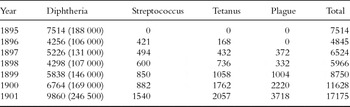
Clearly the period from September 1894 until the end of the year was crucial in establishing the regime for the production of serum, taking it out of the initial small-scale form that provided material for the trials at the Hôpital des Enfants Malades and setting it up as a large-scale process undertaken at Garches. While this was no doubt an important, if somewhat frustrating period for Roux and Martin, there is relatively little information in the archive of the Institute Pasteur about the handling of the horses. There are papers from December 1894 that suggest that at this time there were some forty horses treated with either the toxin or the bacilli taken from six (probably deceased) diphtheria patients at the Hôpital des Enfants Malades in Paris (Archives de l'Institut Pasteur b). Nevertheless, as this information is relatively isolated in time, it is hard to draw conclusions concerning the early functioning of the serum-production system at the Pasteur Institute, although we can see from the production figures that a large-scale production system was already in place by 1895 (see Table 1). In what remains of this article, therefore, I will be focusing on the production at the dedicated facility at Garches in a slightly later, more stabilized period of the “industrial” production of the serum. To this end, I will use the surviving registers to give an impression – as far as it is possible – of the day-to-day functioning of the facility, and the resources mobilized for the production of this serum that was so central to the economy and the public image of the Pasteur Institute. Furthermore, I want to explore how the production methods and monitoring processes aimed at coping with the individuality of each manufacturing unit – each individual horse – by deploying industrial strategies. Thus, a program of bioassays dictated the short- and long-term fate of individual horses in the system, as well as providing the all-important evaluation of the serum's therapeutic quality. Finally, I want to suggest how researchers such as Roux – back at the Paris laboratory of the Pasteur Institute – could use these same methods, intended to standardize and control production, to learn something about the “clinical” nature of the disease (and later diseases) that were the object of the serotherapy. The instruments for monitoring the stable effectively provided a long-term large-scale experiment, the value of which lay in the imposed constancy of conditions over large numbers of events, rather than the more customary variation of conditions associated with scientific experimentation.
Production of blood for serum at Garches from 1895 to 1901 (liters of blood). (Approximate number of 20 cm3 doses in brackets).

The Installation at Garches and Serum Production
It appears that the transfer of the Pasteur Institute's serum production to Garches was completed early in 1895. Thus, according to a report in Le Figaro from the very beginning of that year, out of a total of 136 horses used for serum production, 79 were to be found at Garches, compared with only about 30 at the end of October 1894 (Anon. 1894a), 42 were still in the stables at Grenelle near the Pasteur Institute, and a further 15 under Nocard's care at Maisons Alfort (Calmette Reference Calmette1895). The installation at Garches was run by Louis Martin, with the assistance of Dr. Amedée Borel and a veterinary surgeon, M. Prévost, who was in charge of the bleeding operations. In addition to these qualified personnel, there was one laboratory assistant, one piqueur (probably responsible for the various injections involving the guinea pigs as much as the horses), and seven grooms. This seems like a relatively small staff to take care of the operations, particularly as the number of horses was rising, and also bearing in mind that there were some 3,000 guinea pigs that had to be kept alive before being injected with serum and toxin.Footnote 4 Be that as it may, it seems that in the course of February 1895 the full serum production of the Pasteur Institute moved to the facility at Garches.
The Production Site
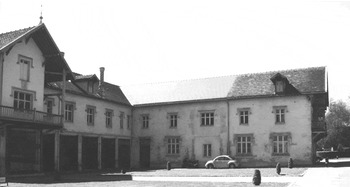
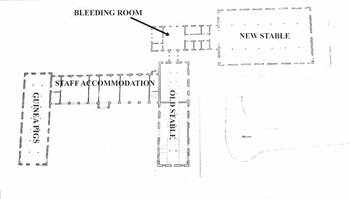
The Pasteur Institute's serum production facility was located in a former military stable that had been made available to Louis Pasteur for his rabies research. At the end of 1894, this small complex of buildings set in impressively large grounds was returned to something close to its original use (see fig. 1). The old structure was in a horseshoe shape, with the living quarters in a central two-storey building. The former stable that made up the east wing was filled with cages for the 3,000 guinea pigs, while the two stables on the west wing were returned to their original function, with stalls for 45 horses. Building work, paid for by the generous contributions to the Pasteur Institute via the campaign in Le Figaro, joined a new stable (with space for 68 horses) perpendicularly to this old one and included a small building (25 meters by 9) on the corner where the two met (see fig. 2). This small building contained the “bleeding room” where the horses' blood was collected. Thus, horses from any of the stables could be led directly into the bleeding room (8 meters by 9) without stepping outside, although exercise outside in the grounds of the property constituted part of the horses' routine. Adjoining the bleeding room was a small laboratory (4 meters by 6), presumably for keeping the blood in aseptic conditions, as well as storage rooms for the glassware and tubing needed for the bleeding operation. In the original version of this building, the blood would have probably been left to coagulate within or next to the bleeding room, after having been carefully labeled. It would then be shipped to the Pasteur Institute in Paris (either with or without the coagulated red-blood-cells still in it) where the serum was put in phials ready for distribution around the country. It seems that it was only sometime around 1900 that a laboratory was installed on the floor above the stable in the west wing of the old building. The space that had been used to store feed was converted into a space for the laboratory facilities in order to enable the blood to be processed into serum on site in close proximity to where the horses were bled. The installation of elevators in the early 1900s no doubt helped with handling the blood.
The building at Garches as it is today, view of the staff accommodation and old stables. Photograph by the author.

Plan of serum production service of the Pasteur Institute at Garches (1894–1895). Courtesy of the Archives of the Pasteur Institute. Labelling added by the author.

Toxin Production
The first step in producing the serum for treating diphtheria was the immunization of the horses against the toxin produced by the bacterium. This required injecting increasing doses of the toxin into the horses until their immunity was considered to be at a sufficient level to enter them into the serum production process.Footnote 5
While the horses and guinea-pigs were housed at Garches starting from 1895, it seems that the toxin was – at least initially – produced in Paris and shipped to Garches (probably on the train that passed very close to the site). The cultivation of the diphtheria toxin was a crucial step in the serum-production process, and part of Louis Martin's cursus at the head of the Pasteur Institute's serum service consisted in preparing a thesis on precisely this topic (Martin Reference Martin1897). This research into the production of the toxin pursued two directions. First, the search for a productive strain of bacterium that was capable of generating a large amount of toxin. Second, Martin experimentally varied production conditions (adjusting the culture medium, aeration, filtration, and other variables) to find the best possible technique for producing the toxin. He found two means to increase the yield of toxin. First, it was essential to have a strain of bacteria capable of producing large quantities, and so the Institute continued its program of cultivation and selection. Second, Martin showed that the continual passage of air over the culture favored toxin production.
The Routine at Garches
Once the horses had been immunized, they were then bled, and the serum separated off and put in small phials for distribution to pharmacies, hospitals, and other centralized depots. Thanks to a certain number of registers that have survived, it is possible to reconstitute the main features of the serum production process at the Pasteur Institute's facility at Garches. Thus, using registers from the turn of the century (1900–1901), we will present the routine as it was in place at that point.
As we have already said, the main operations took place on the ground floor of the buildings at Garches, with additional laboratory facilities being installed on the first floor only around 1900. Bleedings took place twice a week, on Tuesdays and Fridays, except for Christmas and New Year's Day, when, it seems, the staff (as well as the horses) had time off. The registers note each bleeding, with the horses listed by number (a number that was branded onto a hoof – for the first hundred horses on the left hoof, and then for the rest on the right hoof, earning them the prefix “D” for droite). In general, the horses were gathered into groups of nine. The horses in each group were bled four times consecutively and then were given a minimum of two weeks without any bleeding so that they could recover. The patterns of grouping can be seen in Table 2, although the fact that rejected horses were removed from the rota breaks up the unity of the groups of horses over time. The standard amount of blood that was taken at each bleeding was six liters, although this was quite often reduced to four liters, possibly to respond to reduced demand for serum, or because of the perceived frailty of a horse. What is certain is that this reduction to four liters was not a measure to deal with insufficient protective power of the serum, as a low evaluation of the serum's efficacy meant that the horse in question was taken out of the bleeding rota entirely.
Bleeding Rota for 4 months (August to December) in 1900. Note that the “rejected” horses are only listed for 20 November 1900.

Thus, every Tuesday and Friday morning, some 54 liters of blood (and often twice this volume) were left to coagulate, before the serum was separated off using a foot-operated pumping system devised by Roux. This serum then had to be tested using “fresh” guinea pigs in order to determine its effectiveness in defending organisms against the lethal effects of the diphtheria toxin. Once the quality of a batch of serum had been evaluated it could then be distributed into small (twenty cubic centimeters) phials for injection. Each bleeding of nine horses generated 54 liters of blood, giving approximately 20 liters of serum, or 130 units for intraperitoneal injection.
The Evaluation of the Quality of the Serum
The immunizing power of the serum was evaluated using the two to three thousand guinea-pigs housed at the facility. Production for the year 1900 is reported to have been 6,764 liters of blood (see Table 1), which implies approximately 1,200 bleedings. Each bleeding required – in principle if not in practice – three separate 350- to 400-gram guinea pigs, which would mean an annual consumption of some 3,500 largish guinea pigs. These guinea pigs represented peculiar logistical problems of their own, as they not only had to be fed, but also needed to be kept at the right temperature. Not only are guinea pigs sensitive to low temperatures, but 3,000 of them also make a great deal of noise (Anon. 1894a). Furthermore, out of the three guinea-pigs supposedly involved in each test, one would certainly die, while the two others would normally survive but could not be re-used for further tests because the initial tests necessarily affected their immunity to the diphtheria toxin. As with the approximately 3,000 liters of coagulated blood per year, it is hard to imagine how the staff at the Garches facility managed to dispose of all these guinea pigs.
What was the fate of the three guinea pigs involved in testing each batch of blood serum? The first one was used for testing the lethal nature of the toxin that would serve in subsequent tests (the fatal dose needed to kill the guinea pig within twelve hours), although presumably this test did not need to be repeated once the toxicity of a particular batch of toxin had been established. The next two tests involved injecting two different guinea pigs with well-defined quantities of serum (1/50,000th and 1/100,000th of the animal's body weight) followed by a lethal dose of the toxin. If the guinea pigs survived this lethal dose of toxin (an amount that killed a control animal within twelve hours, as presented above) then the serum was assigned a value of 150 or 200 units respectively. This system of evaluation was based on Behring's original technique for determining the efficacy of the serum, and the Pasteur Institute chose to keep it in place, even after German manufacturers had adopted Paul Ehrlich's much more sophisticated toxoid neutralization process (Hardy Reference Hardy2006). In a comparative assessment of the French and German sera, while Thorvald Madsen indicated several weaknesses in the French approach, Roux was able to point to problems associated with the German testing procedure (Madsen Reference Madsen1897). As Roux noted, each assessment using the German method required the use of three different materials – the serum under test, a standard serum, and a standard toxin – rather than the two used in France (at Garches, no standard serum was used). Nevertheless, while it was never made explicit, the major problem with Ehrlich's approach was that adopting this procedure would undermine the independence of the Pasteur Institute, and – worse still – make it dependent on Germany, as the standard serum and toxin would inevitably be supplied by Ehrlich's Institute in Frankfurt.
Indeed, as early as 1894, Roux had defended the French tradition of evaluating the serum in print, giving a clear impression that Ehrlich's standardization was more work than it was worth:
To tell the truth, we don't attach a great deal of importance to all these complicated definitions [Ehrlich & Behring's standard for the diphtheria antitoxin] and we believe that the search for this degree of precision that is not found in nature is too much [unnecessary] effort. The essential thing is to understand one another: in our opinion, it was easier when one simply said of a serum that its immunizing power was 1,000 or 100,000 with respect to a toxin or a virus that killed control animals in so many hours. (Roux and Martin Reference Roux and Martin1894, 621)
This attitude seems to have persisted for a long time in French serum production. Nevertheless, although it might seem to be thoroughly pragmatic, and was no doubt influenced by the small number of workers at Garches, it also reflected a desire not to align French serum production with its German counterpart. Thus, the enduring attachment to this relatively primitive form of evaluation represented a means for the French to avoid becoming dependent on the German standard toxin.
The Results of Evaluation
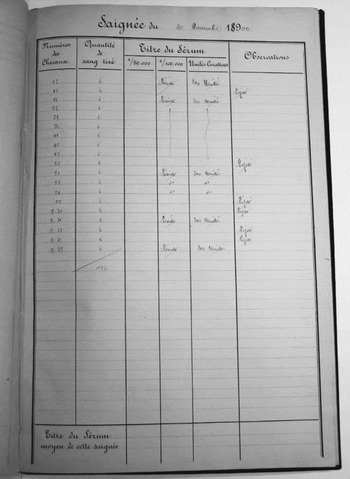
What were the possible consequences that could result from the evaluation process for the production of serum? In particular what would happen if a batch of serum failed the evaluation, and the guinea pigs were found not to be protected against the toxin by the sample of serum used? First of all, there was an administrative response: the horses whose serum failed these tests were marked in the registers that followed the horses (distinct from the registers used to record the results of the tests on the guinea pigs) as “rejected” (see fig. 3) and were not bled the next time their turn came around. With bleedings on Tuesday and Friday, this meant the tests were completed within two days. We should also note that each batch of six (or sometimes four) liters of blood would have to be kept separate and be labeled to identify the horse it came from until the testing procedure was completed. This separation of batches was essential both for the inactive serum to be disposed of (as it could not be distributed for use) and for the correct horse to be excluded from the bleeding rota (as the horse was now identified as no longer providing effective serum). Thus, looking at Table 2, we can see, for example, that after the bleeding of Tuesday 20 November 1900, the serum from horses 15, 55, 95, D.30, D.32, and D.37 failed the test procedure, and so on Friday 23 November, they were not bled with the other horses from their group (13, 17, 23, 29, 38, 41, 42, 45, 91, 92, 94, D.31, and D.39). Thus, with relatively few employees, the production center at Garches managed a large number of horses, and a large quantity of blood with what approximates industrial efficiency. This was also the case for the increasingly complex task of distributing the toxin, which reflected a rapid move from local (Paris and the nearby regions) to national serum supply by the Pasteur Institute.
Page from a register of “saignées” (bleedings) listing the horses bled and the results of the assays for 20 November 1900. Courtesy of the Archives of the Pasteur Institute.

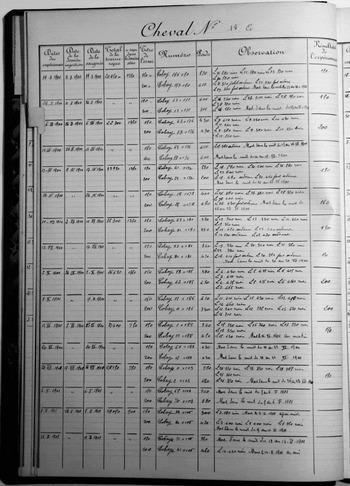
While we can see how the functioning of Garches was set up for the efficient management of large-scale production of the antitoxin, we should not neglect the other side of these test procedures for evaluating the efficacy of serum and the productivity of horses. It was evident that this product, which was going out to be injected into the abdomen of children threatened by death at a rate of around 40 per cent (if they were indeed infected with diphtheria), needed to be proven effective before it left the premises. Nevertheless, this is only one side of the monitoring, as the same horse/guinea-pig system was used for monitoring the productive agents themselves – that is to say the horses. Thus, we see horses whose serum fails the evaluation tests pass out of the bleeding rota to return at various intervals. Meanwhile, they continued their regime of injections with diphtheria toxin, as was the case, for example, with horse 15 on Monday 24 December 1900 (see fig. 4).
Page from a register recording serum production of “essais” (testing) at Garches from 1900–1901. This page lists the results of tests on the serum produced by horse number 15. Courtesy of the Archives of the Pasteur Institute.

Over the long term, therefore, the horses would continue to be used to produce serum until one of three things happened. First, there was the possibility of the horse dying. Indeed, while mild local (cutaneous) reactions almost always followed injection of the toxin, the death of horses became a regular occurrence starting around 1900. At the beginning of serum production at Garches, it seems as though death rarely resulted from injection with the toxin, although one horse had already died of pulmonary congestion by the end of 1894. Later, however, such lethal reactions became more common, and I will return to this topic at the end.
Second, the horse could be transferred for use in producing serum against other diseases, particularly tetanus, as this second area of serum production was built up at Garches (see Table 1). Indeed, some horses were doubled up to produce serum active against the two infections at once, in itself representing an interesting experiment in both serum production and immunology. Finally, several horses were transferred to other production sites, in particular the serum production service in the French city of Lille.
As is illustrated by the case of horse No. 15 (see Table 2 and fig. 4), horses could and did come in and out of the bleeding rota depending on the status of the immunizing power of their serum. Nevertheless, the reappearance of a number in the bleeding rota did not necessarily mean the return of the same horse, as following a horse's death it could be replaced by another immunized horse assigned the same number. Thus, it needs to be borne in mind that the units of serum production – the horses – were not reliable machines or even standardized animals, and it was one role of the careful monitoring of the stables to provide the means for identifying production failure in an animal, and trying to redress the situation. Most importantly, though, these checks were used to alter the use made of the animal, taking it out of or putting it back into the bleeding rota as necessary. This monitoring was, however, more than the simple management of production units. There was a significant scientific aspect to this procedure. The researchers at the Pasteur Institute sought to learn from the failure of the animals within this system of mass production. Serotherapy of diphtheria was, after all, a treatment that had been put into practice without any great certainty concerning how it worked and little more concerning the tolerance of animals and humans to the toxin produced by the bacteria.
The case of a horse called BardacFootnote 6 serves to illustrate this point. The records for the last months of this horse's life can be found among Roux's papers at the Pasteur Institute rather than with the registers and other documents kept at the facility at Garches. The records start on the first of February 1896, and note the temperature of the horse morning and evening of each day. On 26 February the horse received “antitetanic serum,” making it reasonable to suppose that Bardac was either being transferred from the diphtheria service or being prepared for the first time to produce tetanus serum. It subsequently received five injections of tetanus toxin, two in March, two in April, and one on 13 May, which were systematically followed by day-long fevers. On 22 March, this horse also received an injection of malleine, a test to check for the presence of glanders, which suggests again that once the immunity had been established, the horse would be pressed into productive service. Nevertheless, it was never bled for serum, but instead died at seven in the morning on 15 May after a vigorous day-long fever. As we remarked above, the death of a horse as a reaction to the injection of toxins was relatively rare, but this was certainly not the first case.
Why, then, do we find these records preserved among Roux's papers? Why did he bring these temperature charts and records for this horse to Paris? Is it just an accident that only the records for this horse survived among Roux's papers? I suspect not, but would suggest that this was part of the use of the production enterprise as a supplement to the more traditional Pasteurian experiments used to investigate the disease. From this perspective, the whole production process can be seen as a large-scale experiment with the same uniform approaches being applied to a multitude of variable units. After all, the horses ranged from former celebrity thoroughbreds to retired taxi-cab horses, so it seems reasonable to expect different reactions among these individuals. If this amount of detailed information that we find for the last months of Bardac was available for all the horses at all times, and there is no reason to suppose it wasn't, then any exceptional event might provide a clue to the functioning of the induction of immunity to diseases like tetanus and diphtheria, physiological functions that held considerable interest to the researchers at the Pasteur Institute.
As time passed, different information became available. A few years into the program, horses started to die regularly, with a pattern of changing resistance to the toxin that allowed the staff at Garches to alter their handling of these horses. Whereas beforehand they might have continued to treat the horses with toxin in the hope of its recovering its immunity, by 1900 they were regularly killing a horse once it failed three or four evaluation tests in a row. Thus the experimental role of the serum production plant at Garches is brought back full circle, with the techniques intended to guarantee the quality of the serum issuing from the plant in turn allowing the more rational handling of its production units.
Conclusion
This description of the large-scale production of serum in France represents a move away from the usual focus of studies of serotherapy in the history of science or the history of medicine. The interest in serum in the former domain has been the various theories proposed to explain the action of the product and its relationship to immunity, while the latter looks more at the effect of the serum on public health, and, more recently, the perception of scientific medicine by doctors, public-health administrators, and patients alike (Hammonds Reference Hammonds1999). What questions does this move into the context of production open up? First, there is the issue suggested by Rheinberger in his reflection on experimental systems (Rheinberger Reference Rheinberger1997): What changes when a scientific experiment developed in the context of cutting-edge research becomes the basis for a standardized routine while simultaneously falling far behind the front lines of science? While this process is well-studied in engineering, under the general term of scaling up, it is not very often considered in contexts of large-scale manufacturing involving animals as the units of production. Here, we see how the productive animals (the horses) are put into a systematic relationship with the test animals (the guinea pigs) to constantly verify the quality of the product and the producer, with each animal in turn deciding the long- or short-term fate of the other within the site. Evidently, the reliability of the guinea pigs becomes crucial to the whole process, as it underwrites the quality of the serum. Here, we see another example of a force pushing towards the standardization of animals for use in scientific experiments (Rader Reference Rader2004; Gaudillière and Löwy Reference Gaudillière and Löwy1998). Although to one side of bioassays in the context of scientific experimentation, it is clear that there was much to learn about animal models of diphtheria and immunology from this production plant in which the same routine was repeated over and over again. Thus, it is no accident that both Louis Martin and his successor Gaston Ramon made significant contributions to the theory and practice of serology and vaccination.
Finally, considering production rather than research in immunology throws national differences into even more dramatic relief. While this paper has only dealt with the French side, other papers in the present volume make it clear how different the German situation was. Despite both direct competition and personal exchange between Behring and his colleagues and Roux's team, it is clear that they pursued different research paths. Furthermore, while their research environments resembled one another in important respects (Weindling Reference Weindling, Cunningham and Williams1992), the context of production was radically different, with a single essentially charitable institution dominating the French serum market and a number of private for-profit companies competing for a share of the market in Germany. Moreover, while private German companies like Hoechst developed research facilities and hired leading research scientists in Germany, there was never the same direct integration with the official research institutes that was seen in France. Thus, the Pasteur Institute intimately combined research and production in the field of microbiology. This placed the Institute in a position where researchers in Paris could directly profit from the experience gained in the production site, without relying on the various state-imposed checks and regulations – primarily intended to ensure the quality of the product – to benefit from this kind of information (Hardy Reference Hardy2006). Thus, as I have been arguing here, the fact that the Pasteur Institute located production at a different site from its research center in Paris does not mean that it was disconnected from the production of scientific knowledge about immunity. This production facility not only provided valuable experience for the researcher-managers given the responsibility of running the service at Garches (like Louis Martin and Gaston Ramon), but also served as a source of information for other scientists in the Institute, including Roux himself.
Acknowledgments
The research for this article was supported by the German Research Foundation (Volker Hess DFG HE 2220 “Industrialization of experimental knowledge”). I would like to thank my colleagues on this project and the anonymous reviewers of this article.