



Introduction
“Their corpses will reach the base of Heaven” (Cooper Reference Cooper1986: 34): so the god Ningirsu promised the Sumerian king Eannatum would be the result of his battle against the city of Umma, graphically portrayed on the Stele of the Vultures (Figure 1; Winter Reference Winter1985). Burial mounds full of enemy corpses are a well-known symbol of both punishment and victory in Mesopotamian inscriptions (Richardson Reference Richardson and Laneri2007), especially in the third millennium BC, but no archaeological examples have so far been recovered. Although there are no written references from the third millennium BC to memorialisation through mortuary practices of those who fell in war, it has been argued that the Stele of the Vultures shows exactly that (Selz & Niedermayer Reference Selz, Niedermayer, Dittman and Seltz2015). A unique vertical cemetery excavated in the 1990s on the left bank of the Middle Euphrates in Syria—part of the Banat/Bazi settlement complex—provides the first possible example of such a practice in northern Mesopotamia. Labelled Tell Banat North (see Porter Reference Porter2002a), this tall, conical mound was built in at least three phases. The fragmentary remains of multiple individuals were brought from elsewhere to be (re)interred in a single event, forming the last phase of this mound. These secondary interments were placed in distinct patterns and marked by mortuary inclusions that suggest not only a military identity, but also specific functions in battle. The contents and formal organisation of these remains suggest a state-controlled force—even if an ad hoc one.
Stele of the Vultures (reverse), redrawn after Elizabeth Simpson in Winter (Reference Winter1985: fig. 8).

It cannot, however, be assumed that this represents a straightforward example of collective memory, where the state imposes an official view of the past onto the landscape to condition the memories of its people. If monuments serve to anchor memories in place, those memories are nevertheless informed by an individual's relation to, and understanding of, the events or persons commemorated (Van Dyke Reference Van Dyke2019). At Tell Banat North, the incorporation of an earlier monument, differently configured and with its own symbolism, within this war memorial, may signal a range of ideas to different audiences: an idealised view of a communal society; an ancestral past; the subordination of one sector of society by another; or even resistance. But first we must establish who was buried here.
Tell Banat North (the White Monument)
At 32ha, Tell Banat formed the centre of the Banat/Bazi complex (Figure 2) that spanned the third and parts of the second millennium BC (Porter Reference Porter and Otto2018). Tell Banat was located on a promontory jutting north from a small mountain named Jebel Bazi. Two hundred metres to the north of Banat/Bazi stood the small, steep mound of Tell Banat North, measuring 22m in height and 100m in diameter. Excavations at Banat and Banat North were directed by McClellan and Porter from 1988–1999 in advance of flooding of the river valley by the Tishreen Dam. Jebel (or Tall) Bazi was excavated separately under the direction of Adelheid Otto and Berthold Einwag from 1993 onwards, revealing an unusual gateway (Bazi building two) on its summit dating to the third millennium BC (Otto Reference Otto2006).
The Banat/Bazi settlement complex, showing the location of excavation trenches A–G (figure courtesy of the Euphrates Salvage Project).

Geophysical surveys conducted in 1997 by Bruce Bevan and Tatiana Smekalova suggest that Tell Banat North began as one of a number of small earthen tumuli that were probably erected over burials (Porter Reference Porter and Morganin press). Tell Banat North is nicknamed ‘the White Monument’ due to the way its exterior glistened in sunlight (Figure 3)—an effect attributable to gypsum and marl used in the mound's construction, washed down its sides by erosion. Excavations focused on the south-west and north-west quadrants, although a narrow band of the south-east quadrant was also investigated. The earliest phase exposed—phase C—was a tall, smooth-surfaced mound. Its date is unknown, as it could not be excavated before the reservoir filled.
Looking north to Tell Banat North from Jebel Bazi, prior to excavation (figure courtesy of the Euphrates Salvage Project).

White Monument phase B
Superimposed on, and sometimes dug partially into, a pale gypsum coating that covered phase C was a series of small, loose, stone-and-earth tumuli, described below (McClellan Reference McClellan and Lebeau1998). These tumuli constituted construction phase B, dated to 2700/2600–2450 BC (Banat period IV; Porter Reference Porter2002a). Four tumuli were excavated. Each contained the fragmentary, disarticulated remains of multiple individuals (Wilhelm Reference Wilhelm2006), ranging from a minimum number (MNI) of five to two (see Table S1 in the online supplementary material (OSM)), in association with animal bones, ceramics and biconical earthen pellets.
As piles of earth and thinly distributed stone, these tumuli had little structural integrity. They were unified and preserved by encasement in an exterior coating (Porter Reference Porter2002a) of the same white gypsum that covered phase C. The phase-B gypsum surface, however, was compiled in a series of pisé (rammed earth) bands, resulting in a distinctive corrugated effect (Figure 4), unlike the smooth surface of phase C. The whiteness of the phase-B gypsum casing added to both the prominence of the structure and its luminosity. Susceptible to erosion, the corrugated gypsum bands were clearest on the north-western side of White Monument B, but not surviving to the west (where there were indications of several resurfacings), and visible again in the south-west.
Corrugated surface of White Monument B (figure courtesy of the Euphrates Salvage Project).

This phase of the monument was later the focus of a series of enigmatic ritual events. A rectangular pit (pit one) with rounded ends, approximately 2.90 × 1.50m, was dug through the corrugated surface on the lower southern flank of the mound. Skeletal elements of at least two individuals (deposit ten (D10)) were placed in this pit, arranged in two layers. The upper layer contained parts of a mandible and left femur, along with fragments of a right fibula and midshaft of a left humerus, all covered by a thin, ashy, gravelly layer. The lower layer contained the incomplete cranium and mandible of a 23–30-year-old female and parts of a left femur, probably from a male of indeterminate age. Overall, the bones here were better preserved than those found inside the tumuli of White Monument B.
The pit was then deliberately sealed by a series of five thin, white, waterlogged plaster layers, which were 875mm thick in total. The densest concentration of non-human materials found at Tell Banat North was placed around the pit, directly on the corrugated surface of White Monument B. These included beads, ceramic vessels, alabaster bowls, an incised bone fragment, biconical pellets and animal bones (Figure 5). Mixed with these objects were fragments of human bone from three individuals, including an infant (18–30 months) tibia, a complete right tibia (adult) and the midshaft of a second right tibia (adult). These bones were labelled D11.
Plan of deposits in White Monument A. The inset shows the deposits in the Intermediate Phase; WMB = White Monument B (figure courtesy of the Euphrates Salvage Project).

While it is possible that the bones of D11 came from an interior tumulus of White Monument B, disturbed when the pit was dug, no corresponding spoil heap was detected, and the density of objects is certainly atypical of the material from the inner tumuli of White Monument B. The pit contained adult human bones only, whereas the bones of an infant were found around the pit; it is therefore equally possible that human bones were deposited as part of periodic rituals enacted at White Monument B. A parallel for the ritual deposition of infants is found in the third-millennium BC mortuary complex at Umm el Marra, where infant remains were recovered together with equid skeletons in ‘installations’ associated with an elite burial complex (Weber Reference Weber, Porter and Schwartz2012). While the waterlogging of the white plaster layers covering the pit may have been caused by spring and autumn rains that had left runnels down the sloping side of the mound in all phases, eroding some faces severely, the plaster had not been washed into the pit. It was deliberately laid to seal it. Each layer was soaked and, after an unknown interval, another was laid. As no distinct alternating layers of water/plaster—comparable to the covering of the pit—were identified on the surface of the mound (see Figure 6), a liquid may have been poured over the pit's plaster at regular intervals as part of a commemorative ritual. The pouring of such libations is a well-attested component of mortuary practice in greater Mesopotamia (e.g. Pollock Reference Pollock and Bray2003: 25–26).
Section showing inner tumulus three and corrugated surface of White Monument B with platforms and slopes of White Monument A (previously published in Porter Reference Porter2002b: 162).

White Monument phase A
This article focuses on the third, and final, construction phase of Tell Banat North: White Monument A (2450–2300 BC, Banat Period III; Porter Reference Porter2002a). Rather than a simple extension of the earlier mound, this phase is different both in exterior form and inner content. Here the mound was expanded in horizontal stages approximately 1m wide and 0.50m high, the edges of which have long since eroded (Figure 6). The original appearance would have resembled a stepped pyramid rather than the rilled dome shape of White Monument B. Soil was deposited against the slope of phase B on top of the horizontal stages, resulting in a series of alternating slopes and platforms. The whitish covering on the exterior of Tell Banat North indicates that this phase may also have been covered in gypsum.
There were no inner tumuli in White Monument A. Collections of human bone were deposited in the fill as the horizontal stages were built up. They were placed directly on the soil, with no special covering or demarcation, rather than being placed in pits dug through the exterior of the mound. It is highly unlikely that these were random bones, imported inadvertently from a cemetery alongside the soil used to build White Monument A. With the exception of a pile of Ottoman coins and a pipe found just below the top of the mound, all datable materials belong to the same period, c. 2450–2300 BC. Furthermore, although small, fragmentary and somewhat diffuse, the bones were nevertheless intentionally placed in discrete groupings across White Monument A. D1 for example, was found across a ~2 × 0.50m ovoid area, while D6 extended approximately 1.30 × 0.90m across an area of undefined shape.
The most convincing evidence for intentionality in the deposition of human bone during construction of White Monument A consists of the patterning evident both within and between the deposits (Table 1). Eighteen out of 22 deposits initially identified as containing human bone yielded usable information (Table 1). D1, D5, D10 and D11 were excluded from the analysis. D1 comprised only animal bone, while D5 contained no identifiable bone at all. D10 (the deposits in pit 1) and D11 (the materials found around the outside of pit one) were also excluded, as they belong to an intermediate phase between White Monument B and White Monument A (see Table S1).
White Monument A mortuary inclusions by deposit.

In general, the bones within these 18 deposits were highly fragmented and represented very small portions of an individual human body. Figure 7 illustrates the number of tumuli and deposits containing bones from different parts of the body. The difference in sample size between the four tumuli of White Monument B and the 18 deposits of White Monument A complicates comparisons, but it is evident that femora and ribs are well represented in both phases, while few other bones occur across more than four locations (see Table S2). Many bones were unsided, and few allowed for age or sex estimations. The minimum number of individuals (MNI) determinable for each deposit ranged from one to three, with 50 per cent of all deposits containing an MNI of two individuals. The poor preservation of the bones, however, means that the true number of individuals originally interred in each deposit may be underestimated (Knüsel & Robb Reference Knüsel and Robb2016: 661).
a) White Monument B: number of tumuli (from a total of four) with securely identified bones, mapped by bone/anatomical region; b) White Monument A: number of deposits (from a total of 18) with securely identified bones, mapped by bone/anatomical region. No distinction was made between right, left and unsided bones (base anatomical figure by Kazukiokumura; Wikimedia Commons CC BY-SA 3.0).

Regardless of these limitations, notable patterns emerge that differ from those evident in White Monument B. The deposits of the individual tumuli of White Monument B were kept apart from each other, while the groups in White Monument A were all in the same, undifferentiated matrix. Furthermore, there is more variability in the age, sex and number of individuals interred within each tumulus of White Monument B than in the deposits of White Monument A. In the latter, there is an unusually high representation of adults and sub-adults; the ages of these sub-adults, when determinable, range from 8–10 up to 20 years old (plus two infants). Typical pre-industrial mortuary population distributions are U-shaped, where the majority of the dead belong to under-five and over-65 age groups (Waldron Reference Waldron1994: 16–20). No older adults were recognised in White Monument A, while at least one was found in White Monument B.
Six out of seven (86 per cent) of the bone deposits in the mound's north-west quadrant contain a MNI of two individuals (D2–4, D6–7, D18) vs two out of 10 (20 per cent) in the south-west quadrant (D13 & D19). In both quadrants, most deposits with a MNI of two are adult/sub-adult pairs: four out of six (67 per cent) in the north-west (D2–6) and two out of two (100 per cent) in the south-west quadrant (D13 & D19). D12 also contains an adult/sub-adult pair, in addition to the infant bones that represent the third individual in that deposit. In the south-east quadrant, only one deposit (MNI = two) was excavated (D22); it contained the calvarium bones of a neonate mixed with calvarium bones of an adult.
Two deposits in the south-west quadrant, D9 and D17, stand out. Both contained a single individual. In D9 the extant bones (scapula, two humeri, os ilium and fibula) were few but more intact than usual, possibly compatible with a highly flexed, primary deposit (see Duday et al. Reference Duday, Mort and Tillier2014: fig. 5). They were surrounded by a greater quantity and diversity of objects than found in any other deposit in White Monument A, including two rings and a model of a covered wagon (Table 1). D17 included an incised bone tube and 20 pellets.
The most significant pattern, however, is a clear spatial distinction between the artefacts and animal bones associated with the human bone deposits. Five out of seven (71 per cent) of the human deposits in the north-west quadrant contain equid remains, whereas only one out of ten (10 per cent) deposits in the south-west quadrant includes equid bones. Nine out of 10 deposits (90 per cent) in the south-west quadrant contain biconical pellets (D9 is the exception), whereas they appear in only two out of seven (29 per cent) deposits in the north-west quadrant. The sole deposit in the south-east quadrant contains neither equid bones nor pellets. Adult/sub-adult pairs buried with equid remains were therefore restricted to the north-western part of the mound. These two zones, however, are not sharply demarcated, as indicated by a deposit containing equid remains (D15) adjacent to several pellet deposits (Figure 5) possibly displaced there by downslope erosion.
Who was buried in White Monument A?
Equids and pellets have restricted and specific associations in third-millennium BC Syria. At Banat/Bazi, equid bones as mortuary inclusions only occur in White Monument A, although a donkey burial was located in the foundations of building six at Banat (Porter Reference Porter2002b). Equid burials, both on their own and associated with human interments, are comparatively common across Mesopotamia and the Levant (Way Reference Way2012; Recht Reference Recht, Nebelsick, Wawrzeniuk and Zeman-Wiśniewska2018). Studies of this phenomenon demonstrate that equids may have had varied functions, but their interment also has a symbolic significance. Close to Banat/Bazi, the equids in the installations at Umm el Marra have been identified as kunga (Weber Reference Weber, Porter and Schwartz2012)—a type of equid known from Ebla documents to have been bred at ancient Nagar (Tell Brak) and highly prized (Archi Reference Archi and Lebeau1998).
In White Monument A, equids are teamed with human adult/sub-adult pairs, suggesting a symbiotic relationship behind the selection or function of these pairs. Like the human bone, the equid remains were highly fragmented, precluding more specific taxonomic identification. A single, complete metacarpus was morphometrically consistent with kunga bones from Umm el-Marra. Unlike the cattle bones recovered from White Monument A, equid bones were limited to those of the skull and extremities, and are therefore more likely to have come from skins with hoof and head attached than from food remains. Kunga were mainly used for pulling vehicles. In addition to the equid bones, among the very few objects other than biconical pellets were an equid figurine with bridle, the model of a covered wagon, and a wheel, all made of clay.
If equids were included in the deposits of White Monument A as markers of elite social status, it is strange that there is little other evidence to suggest this standing. It is possible that these equid remains instead indicate the profession or activities of the dead with whom they are associated. The common grave goods found in other tombs at Banat (Porter Reference Porter and Felli2016)—beads, metal weapons, pins and jewellery—are absent from the north-western deposits and are rare in the south-western deposits. If such objects were part of the primary deposition of these bodies, they were not included on relocation in White Monument A. As it is difficult to mistake equid teeth or jaws for human examples, the deposition of equid remains seems to have been intentional.
Equids, representations of other elements of transport, biconical pellets and even the mound itself, may indicate an association with mobile pastoralists, as previously argued (Porter Reference Porter2002a). Tumuli are related to both marginal environments and mobile societies in a variety of contexts, while the biconical pellets are typical of the kind of projectile shepherds use to fend off predators (Hole Reference Hole1999; see Forouzan et al. Reference Forouzan, Glover, Williams and Deocampo2012: 3539). Moreover, the making and use of pellets can be mastered by small children, who often tend domestic herds in the vicinity of settlements. The consistent pattern of interring adult/sub-adult pairs in association with equids, however, has little obvious connection with pastoralism, although it is associated with third-millennium BC practices of warfare that are vividly attested in both image and text. War wagons (commonly called ‘battle-cars’), such as the four-wheeled type shown on the famous Standard of Ur, are drawn by equids and manned by teams of two individuals. It has been argued that such four-wheeled vehicles were never used in actual battle, given their slow speed and poor manoeuvrability (Littauer & Crouwell Reference Littauer and Crouwel1979); the fixed front axle did not pivot, so the vehicle could barely turn. Several third-millennium BC images, however, portray the charioteer holding the reins and sitting or standing directly over the rear, rather than front, axle of the vehicle (Figure 8), counter-intuitively far from the animals he was controlling. Behind the charioteer is an extended ‘running board’, on which is depicted a second figure, often shown in the process of mounting the vehicle. It is proposed here that this figure acted as a counter-balance to the front of the vehicle (the driver was at the fulcrum point). By jumping on the running board, the front axle was lifted sufficiently to allow the battle-car to turn in concert with the animals.
Seals from Tell Brak; a–c) redrawn from Oates (Reference Oates, Oates, Oates and MacDonald2001: fig. 313); d) redrawn from Jans & Bretschneider (Reference Jans, Bretschneider and Lebeau1998: cat 6).

At ancient Nagar, the source of the kunga trade, four-wheeled war wagons are well attested on seals (Jans & Bretschneider Reference Jans, Bretschneider and Lebeau1998). Furthermore, human skeletal elements in a ritual deposit that included equids provide physical evidence of the highly developed lower-limb musculature associated with human acrobats (Oates et al. Reference Oates, Molleson and Sołtysiak2008). Ebla texts record a category of functionary purchased with the kunga: the HUBki. This term has been associated with both acrobats and horsemen (Catagnoti Reference Catagnoti1997; Archi Reference Archi and Lebeau1998: 11), suggesting that one of the roles of the HUBki may have been to act as ‘jumpers’ for the ‘battle cars’ (Oates et al. Reference Oates, Molleson and Sołtysiak2008). Given such a demanding role in chariotry, it is hardly surprising that the Banat pairs associated with equids consistently include a sub-adult 15–20 years old. Moreover, a comparison with the skeletal remains from Nagar shows that gracile individuals, as found in D6, are appropriate to this function (Oates et al. Reference Oates, Molleson and Sołtysiak2008: 393).
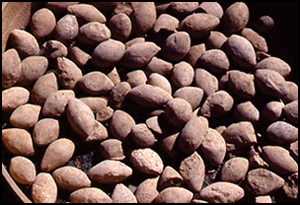
Biconical pellets (Figure 9) are not found in burials in third-millennium BC Syria beyond White Monuments B and A. They were, however, found thickly packed in the entrance of the monumental gateway at Bazi (building two; Figure 10) that dates to the same period as White Monument A. Otto (Reference Otto2006) interprets the pellets as evidence of an attack. Although their efficacy as weapons has been questioned (Alizadeh Reference Alizadeh2003: 88), the most convincing interpretation for the role of the biconical pellet in the Syrian context is as a projectile used in slings (Einwag & Mack Reference Einwag and Mack2009), rather than as tablets, bullae or sealing blanks (e.g. Weiss et al. Reference Weiss, Manning, Ristvet, Mori, Besonen, Mccarthy, Quenet, Smith, Bahrani and Weiss2012: 167, fig. 10). Flattened and shattered pellets have been found in northern Syria, at Late Chalcolithic Hamoukar, where they were used to attack the walled city (Reichel Reference Reichel and Stein2009), and in association with Tell Sweyhat's third-millennium BC city wall (Stout Reference Stout1977). Approximately 20 000 pellets were stored in a stairwell behind the courtyard of the third millennium BC palace at Nagar (Oates & Oates Reference Oates, Oates, Oates, Oates and MacDonald2001: 90).
Biconical pellets from Tell Banat North (figure courtesy of the Euphrates Salvage Project).

Bazi building two entranceway with pellets (copyright Einwag/Otto, the Tall Bazi project).

The sling allows for a ‘hail’ of projectiles to rain down on an enemy (Kubikova Reference Kubikova2013: 58–59)—especially one closely spaced in a phalanx formation (see Figure 1)—hampering progress in ways ranging from the merely painful to the lethal. Not only may pellets be an effective weapon, but they could also be readily produced and used, even by children. While only one of the deposits with equids contains more than a single pellet (D8, the only deposit in this group containing a single individual), all but D18 (north-west) and D22 (south-east) have them in varying quantities. A sub-adult aged 8–10 years was also present in the south-west group (D19). Those individuals interred in White Monument A without equid bones may also be combatants, with a different role in battle to the individuals located in the north-west quadrant of the mound.
If the Bazi pellets are evidence of an attack, it would not be unreasonable to propose that the dead in White Monument A are those who fell in that battle, the pellets symbolising their service. While this seems plausible, we should recall that the function of this unusual gateway is unclear. The excavators of Bazi argue for an entrance to a ‘citadel’ (Otto Reference Otto2006), whereas we see parallels to religious structures. It should be noted that the pellets from both Tell Banat North and the Bazi building are neither flattened nor shattered, as at Hamoukar, although some are broken. Experiments show that pellets do not always break when they hit a target (Stout Reference Stout1977). Moreover, pellets are present in White Monument B, which pre-dates the Bazi structure. Therefore, the same symbolic meaning that warranted their inclusion in White Monument B could apply to their presence in the Bazi gateway, where they may have been placed in the entrance as votive/commemorative objects rather than as ammunition.
It is difficult to determine the nature of such symbolism. The original function of the pellet is as a projectile used for protection, in its broadest sense. While this concept may be shared between White Monuments B and A and the Bazi gateway, the patterns of pellet distribution suggest a very specific deployment in White Monument A. Does this imply, then, that the individuals in the White Monument B tumuli were also soldiers? While possible, there is no further evidence to support this. We should not expect the same symbolism to have been maintained either temporally, from the mid to the late third millennium BC, or spatially, from tomb to temple. Moreover, the slingshot is as applicable to shepherding as it is to soldiering. White Monument B, where some of the inner tumuli contained family-like groupings in contrast to the pairs deposited in White Monument A, may refer to the pastoralist kin groups that are argued to have built the settlement complex (Porter Reference Porter2002a). As military and pastoralist identities were hardly mutually exclusive—as clearly attested in the second-millennium BC Mari letters (Durand Reference Durand1998)—White Monument A may represent a deliberate invocation of this traditional group identity. It remains open whether the appropriation of White Monument B by White Monument A indicates that the individuals in the two phases came from the same sector of society, or whether “the communal imagery of an idealized past was appropriated by the ruling elite in perpetuation of their own interests” (Porter Reference Porter2002a: 28).
It is clear, however, that through the incorporation of parts of many individuals within a single structure, the White Monument represented the image of a collective ideal that was ultimately at odds with a more restrictive operation of power displayed in other parts of the complex. Neither White Monuments B nor A demonstrate the celebration of individual identities or material attributes of power commonly found in contemporaneous monumental mortuary structures in Mesopotamia. The shared access to White Monument B, manifest in the inclusion of individual tumuli within a single structure, portrays relationships extending beyond a single individual or family. The appearance of uniformity across the White Monument A deposits suggests the continuation of that idea. Yet this study of the mortuary inclusions associated with the human deposits in White Monument A nuances the interpretation put forward by Porter (Reference Porter2002a). Patterns emerge suggesting that the individuals placed in White Monument A not only participated in battle but did so in a formalised way: they were part of an organised army, divided into waggoneers and foot soldiers. The single individual in D9—potentially a primary deposit with additional objects—may have been an important figure in that conflict who died long after the battle (if the secondary deposits represent its victims). The association of equids or their skins with adult/sub-adult pairs in one sector, and the prominence of pellets in the other, is unlike any other mortuary context in the Near East. The specific organisation of these deposits as the putative remains of different kinds of military combatants, in conjunction with evidence for chariotry in the north-west quadrant, suggests a state-administered army. As widespread changes are evident across the settlement complex in conjunction with the construction of White Monument A, the possibility of internal conflict that saw one sector ultimately triumph over another (Porter Reference Porter2002b) must be taken into consideration.
Conclusion: conquest or commemoration?
Whether the outcome of an internal or external conflict, the possibility that White Monument A is a physical representation of the victor's disposal of the enemy, as known from inscriptions, is negated by several lines of evidence. The inclusion of limited yet specific materials, especially compared with other burials at Banat and elsewhere at this time, speaks of deliberate intent. Victorious or defeated, the careful deposition and spatial segregation of human remains show a concern for representing an identity. The arrangement of the bones is inconsistent with the haphazard piling of bodies implied by Mesopotamian victory inscriptions and shown so vividly in images (Figure 1). As the White Monument A remains are not those of the newly dead, we must consider whether the victors would have collected the bones of their enemies and constructed the monument long after the battle itself. Instead, we conclude that White Monument A was compiled as a memorial to those who served, if not died, in a local conflict, whether the dead belonged to the victors or the vanquished.
While taphonomic conditions in White Monument A doubtlessly played a role in the fragmentary condition of the secondary interments, the situation of the first disposition—the primary burial—the processes of collecting and curating the remains, and the time elapsed before re-interment would also have contributed to the fragmentation of the remains. The bones could have come from an old battleground or from a cemetery. Regardless, they were selected, arranged and ultimately monumentalised with care, long after death. That monumentalisation comprised a single, large-scale construction event visible not just to the residents of Tell Banat, but also to inhabitants of this stretch of the river valley and the steppe beyond. As a war memorial, then, White Monument A was a signal to a broader constituency and may, depending on the identity of the conflicting parties commemorated, have given rise to ideologies of resistance, as much as it established acquiescence to a new regime.
Acknowledgements
Project directors T. McClellan and A. Porter wish to thank the many participants in the project and personnel of the Directorate-General of Antiquities and Museums, Syria, for their unfailing support. Our heartfelt gratitude goes to the people of Tell Banat for their patience and hospitality. We also thank two anonymous reviewers for suggestions that immeasurably improved this manuscript.
Funding statement
We thank all those who generously funded this work: National Humanities Foundation (grants RK-20146-94 and RK-20176-95); the National Science Foundation (grant 9706385); the Arrison Family Foundation; Wenner-Gren; the Oriental Institute, University of Chicago; INSTAP; and numerous private donors.
Supplementary material
To view supplementary material for this article, please visit https://doi.org/10.15184/aqy.2021.58



