Introduction
Red clover (Trifolium pratense L.) is an important legume forage and widely planted in temperate area. It could provide a high-protein feed for grazing livestock with a lower degree of protein degradation during ensiling. In comparison to Lucerne (Medicago sativa L.), red clover could be rapidly established in spring and adapt well in wet and acid soils (Bertrand et al., Reference Bertrand, Bipfubusa, Castonguay, Rocher, Szopinska-Morawska and Papadopoulos2016). Nevertheless, as a promising legume forage, the exploration of bacterial compositions in red clover silages fall behind that of other forage crops, such as Italian ryegrass (Ni et al., Reference Ni, Minh, Tu, Tsuruta, Pang and Nishino2017a; Yan et al., Reference Yan, Li, Guan, Huang, Ma, Peng, Li, Nie, Zhou, Yang, Cai and Zhang2019), Lucerne (Zheng et al., Reference Zheng, Niu, Jiang, Zuo and Xu2017; Hu et al., Reference Hu, Niu, Tong, Chang and Ma2020) and whole-plant maize (Gharechahi et al., Reference Gharechahi, Kharazian, Sarikhan, Jouzani, Agh Da Si and Salekdeh2017; Hu et al., Reference Hu, Chang, Yu, Li and Niu2018). Characterizing the bacterial community during the ensiling could provide new insights into approaches to further improve the silage quality of red clover.
Recently, the high-throughput sequencing technology combined with predicted functional analyses based on 16S rRNA gene has been widely used to elaborate the dynamic changes of microbial community and metabolic pathways during ensiling. Gharechahi et al. (Reference Gharechahi, Kharazian, Sarikhan, Jouzani, Agh Da Si and Salekdeh2017) evaluated the dynamic behaviour of the bacterial community during the ensiling of whole-plant maize, and found that the functional metagenome prediction exhibited an association between the ensilage process and enrichment of pathways for propionate and bile acid metabolism and those for degradation of toxic compounds such as ethylbenzene, xylene and naphthalene. Wang et al. (Reference Wang, He, Xing, Zhou, Pian, Yang, Chen and Zhang2019) investigated the 16S rRNA gene-predicted functional profiles of Moringa oleifera leaf silage, and reported that the metabolism of amino acid including proline, serine, alanine, threonine, glycine and arginine was closely correlated with the formation of ammonia nitrogen during ensiling. Moreover, Du et al. (Reference Du, Sun, Chen, Lin, Yang and Cai2021) assessed the bacterial community structure and metabolic gene clusters during the ensiling of paper mulberry, and concluded that amino-acid and carbohydrate metabolism both played critical roles in bacterial metabolic pathways that affected the final fermentation product of silage. However, to the best of our knowledge, there is a paucity of information regarding the bacterial community and their 16S rRNA gene-predicted functional profiles in red clover silages. Also, most researches just investigated the changes of fermentative parameters of silage without analysing the complicated bacterial community dynamics, bacterial interactions and their functional shifts.
Therefore, the purpose of this study was to evaluate the fermentative profiles, bacterial community dynamics and their 16S rRNA gene-predicted functional characteristics in red clover silage.
Materials and methods
Silage preparation
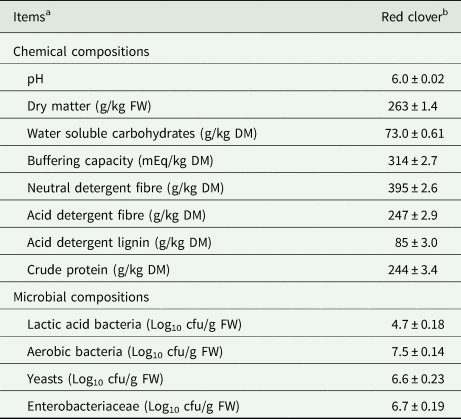
Red clover (T. pratense L.) was cultivated in the experimental field of Nanjing Agricultural University (32°2′N, 118°50′E). This area has a subtropical monsoon climate with an average temperature of 15.7 °C, average elevation of 24.8 m and mean annual precipitation of 1105 mm. Red clover (Variety: Ruide; Purchased from Barenbrug Company, Tianjing, China) was sowed in September 2019, and harvested at initial flowering stage in April 2020. Then red clover was wilted in the field, tedded every 1 h by hand for 5 h (the dry matter (DM) content was about 260 g/kg after wilting) based on the local weather condition in southeast district of China, and carried to laboratory. Red clover was cut by a forage chopper (93ZT-300; Xingrong, Guangzhou, China) to a theoretical 2–3 cm length. The chemical parameters and microbial counts of fresh red clover are shown in Table 1. Without any additives, approximately 7.80 kg of chopped red clover was packed in a plastic silo (10 litres capacity; ensiled density: 780 kg/m3 fresh weight (FW)) and sealed with a screw top and plastic tapes. Silages were conserved at ambient temperature (25–30°C), and ensiling was performed in triplicate. The three replicated silos were opened after 1, 3, 7, 15, 30 and 60 days of ensiling respectively for analysing the fermentation parameters and bacterial community.
Chemical and microbial compositions of red clover prior to ensiling

a DM, dry matter; FW, fresh weight; mEq, milligram equivalent; cfu, colony-forming units.
b Data are mean values and standard deviations for triplicate samples.
Chemical analysis
When taking out samples, the whole content of each silo was mixed uniformly in a clean plastic container. According to the method of Shao et al. (Reference Shao, Zhang, Shimojo, Wang and Masuda2005), 35 g of fresh forage or silage was mixed with 70 ml of distilled water and preserved at 4°C for 24 h. Then we filtered the extracts using a filter paper and two layers of cheesecloth. The filtrate was stored at −20°C for analysing ethanol, organic acids and ammonia nitrogen (NH3-N). The pH of fresh forage or silage was immediately tested by a glass electrode pH meter (PHSJ-5; LEICI, Shanghai, China). The buffering capacity of fresh material was determined by the hydrochloric acid-sodium hydroxide method of Playne and McDonald (Reference Playne and McDonald1966). The ethanol and organic acid contents were determined with the high-performance liquid chromatography method by Agilent HPLC 1260 (Agilent Technologies, Inc., Santa Clara, USA; column: Carbomix H-NP5, Sepax Technologies, Inc., Santa Clara, USA; detector: refractive index detector, Agilent Technologies, Inc.; eluent: 2.5 mmol/l H2SO4, 0.5 ml/min; temperature: 55°C). The NH3-N content was determined using the phenol-hypochlorite reaction method of Broderick and Kang (Reference Broderick and Kang1980).
One-hundred grams of fresh forage or silage was freeze-dried to test DM, and then milled to pass a 1 mm sieve for later analysis. The milled sample was used for total nitrogen (TN), water-soluble carbohydrate (WSC), mono- and disaccharides contents and fibre analysis. The contents of TN were measured according to Kjeldahl method (Krishnamoorthy et al., Reference Krishnamoorthy, Muscato, Sniffen and Van Soest1982). The contents of crude protein were calculated by multiplying TN by 6.25. The WSC contents were tested using anthrone colorimetry method (Thomas, Reference Thomas1977). Sub-sample of ground lyophilized samples was utilized to analyse mono- and disaccharides concentrations (fructose, sucrose and glucose) according to the methods of Desta et al. (Reference Desta, Yuan, Li and Tao2016). The acid detergent fibre, acid detergent lignin and neutral detergent fibre contents were determined by the method of Van Soest et al. (Reference Van Soest, Robertson and Lewis1991).
For enumeration of the microorganisms, 10 g pre-ensiled sample or silage was shaken well with 90 ml of sterilized saline solution (0.85% NaCl) at 120 rpm for 2 h. Then 1 ml solution was used for tenfold serial dilution for microorganism counting, and then the remaining solution was filtered through four layers of medical gauze and stored in the −80°C refrigerator for DNA extraction. The colonies of lactic acid bacteria (LAB) were counted on MRS agar medium after incubation in an anaerobic incubator (N2:H2:CO2 = 85:5:10, YQX-II; CIMO Medical Instrument Manufacturing Co., Ltd., Shanghai, China) at 37°C for 3 days. Aerobic bacteria were cultured and counted on nutrient agar medium (Nissuiseiyaku Ltd., Tokyo, Japan). Yeasts were counted on potato dextrose agar (Nissuiseiyaku Ltd.) and acidified with sterilized tartaric acid solution to pH 3.5. These agar plates were incubated at 37°C for 3 days. Enterobacteriaceae was counted on the Violet Red Bile Glucose Agar medium after 24 h of incubation at 37°C under aerobic conditions. The microbial data were obtained as colony-forming units (cfu) and transformed to a logarithmic scale on a FW basis.
High-throughput sequencing assay
The bacterial community varies greatly at the initial stage of fermentation, and final state of silage is critical for researchers to evaluate the fermentation quality. Hence, the raw materials (RCFM), and silage samples on day 3 (RC-3) and day 60 (RC-60) were selected to investigate their bacterial diversity and functional characteristics through the high-throughput sequencing technology as described by Wang et al. (Reference Wang, Zhao, Dong, Li and Shao2020).
The solution for DNA extraction was centrifuged at 10 000 × g for 15 min to create a pellet for subsequent DNA extraction, which was conducted using the FastDNA® SPIN Kit and the FastPrep® Instrument (MP Biomedicals, Santa Ana, CA, USA) according to the manufacture's protocols. The quantity and quality of DNA were evaluated by NanoDrop 2000 UV-vis spectrophotometer (Thermo Scientific, Wilmington, USA).
The V3–V4 region of the bacterial 16S ribosomal RNA gene was amplified by polymerase chain reaction (PCR) using the primers 338F and 806R (Li et al., Reference Li, Ni, Zhang, Lin and Yang2019). The PCR products were purified using the AxyPrep DNA Gel Extraction Kit (Axygen Biosciences, Union City, CA, USA) and quantified using QuantiFluor™-ST (Promega, USA) according to the manufacturer's protocol. The DNA samples were paired-end sequenced on an Illumina MiSeq PE300 platform (Illumina Inc., San Diego, CA) at Majorbio Bio-Pharm Technology Co., Ltd. (Shanghai, China).
All the raw reads were checked using FLASH (version 1.2.11), and low-quality sequences (quality scores below 20) were discarded according to the QIIME quality control process (version 1.7.0). The UPARSE pipeline was used to assign operational taxonomic units (OTUs) to the 16S rRNA at a cut-off level of 0.03 on the Usearch software platform (version 7.1). The alpha-diversities including Chao1, Shannon, Sobs, Ace, Coverage and Simpson indexes were performed using Mothur (version 1.30.1). Community structure was determined at the phylum and genus levels using the Silva database (Release 132) with a confidence threshold of 70%. The principal coordinate analysis (PCoA) was conducted through R software (version 4.0.5). Correlation analysis of heatmap was analysed by Corrplot package in R software (version 4.0.5) to describe the correlations among the fermentation characteristics, chemical compositions and microbial counts of red clover silages on days 3 and 60. The metabolic potential of the bacterial community and the composition of functional genes were postulated by assigning 16S rRNA marker gene sequences to functional annotations of sequenced metagenomic sequences based on the Kyoto Encyclopedia of Genes and Genomes (KEGG) on the second and third levels, using Tax4Fun (version 0.3.1) as described by Aßhauer et al. (Reference Aßhauer, Bernd, Rolf and Peter2015).
Statistical analysis
The Statistical Packages for the Social Sciences (SPSS, version 17.0) was used for data analysis. The polynomial analysis of variance was used to determine the response to increased ensiling days. Statistical differences among means were measured through Tukey's multiple comparison (Wang et al., Reference Wang, Li, Dong, Chen and Shao2018). Differences were regarded significant at P < 0.05.
Results
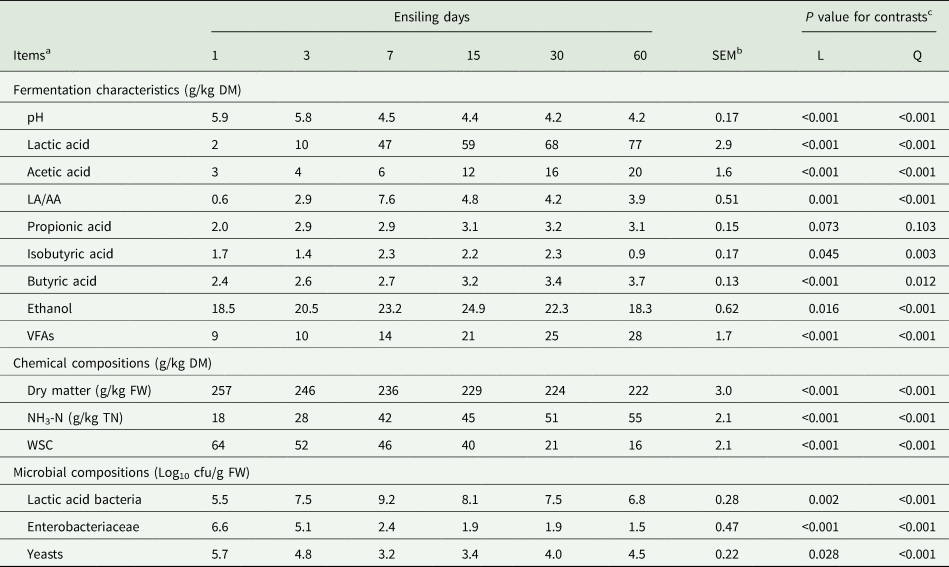
Changes in fermentation characteristics and microbial compositions during ensiling of red clover are described in Table 2. With the increase of ensiling days, the pH, DM and WSC contents, Enterobacteriaceae and yeast counts were linearly (P < 0.05) decreased, while lactic acid, acetic acid, ratio of lactic acid to acetic acid (LA/AA), isobutyric acid, butyric acid, ethanol, total volatile fatty acids (VFAs) and NH3-N contents, and LAB counts were linearly (P < 0.05) increased. Moreover, the pH, lactic acid, acetic acid, LA/AA, isobutyric acid, butyric acid, ethanol, VFAs, DM, NH3-N and WSC contents, LAB, Enterobacteriaceae and yeast counts were quadratically (P < 0.05) affected by the increased ensiling time.
Changes in fermentation characteristics and microbial compositions during ensiling of red clover
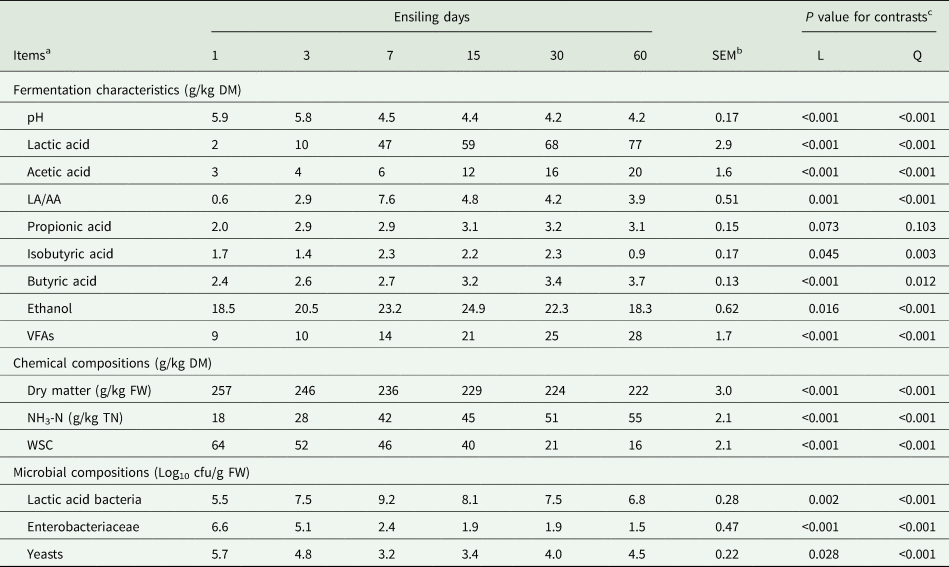
a DM, dry matter; FW, fresh weight; VFAs, total volatile fatty acids; LA/AA, ratio of lactic acid to acetic acid; NH3-N, ammonia nitrogen; TN, total nitrogen; WSC, water soluble carbohydrate; cfu, colony-forming units.
b SEM, standard error of the mean.
c L and Q represent linear and quadratic effects of ensiling day.
The pH decreased largely on day 30, and then pH remained this level until day 60 of ensiling. The lactic acid contents increased during the early 7 days of fermentation, and achieved the maximum value on day 60. The acetic acid contents tended to increase during the entire ensiling process. The LA/AA increased during the initial 7 days and reached the highest value on day 7, and then tended to decrease. A relatively stable level in propionic acid contents was observed during ensiling. The isobutyric acid contents decreased after 30 days of fermentation. The butyric acid contents gradually increased during the whole ensiling stage. Ethanol contents accumulated slowly during the early 15 days, achieved the maximum content on day 15, and then decreased on day 60. VFA contents tended to increase during fermentation, achieving the maximum value on day 60. A downward trend in DM contents was observed during ensiling. The NH3-N concentrations increased from day 1 and continuously increased to the maximum value on day 60. Compared with the fresh red clover, WSC contents in silages decreased largely within initial 7 days, and then exhibited a decline until the final stage of fermentation. The LAB numbers increased during the initial 7 days and reached the highest value on day 7, and then gradually decreased on day 60. The Enterobacteriaceae numbers decreased largely within initial 7 days as compared with the fresh red clover, and then exhibited a gradual decline until the final stage of fermentation. The yeast numbers decreased during the first 7 days and reached the lowest value on day 7 and 15, and then gradually increased on day 60.
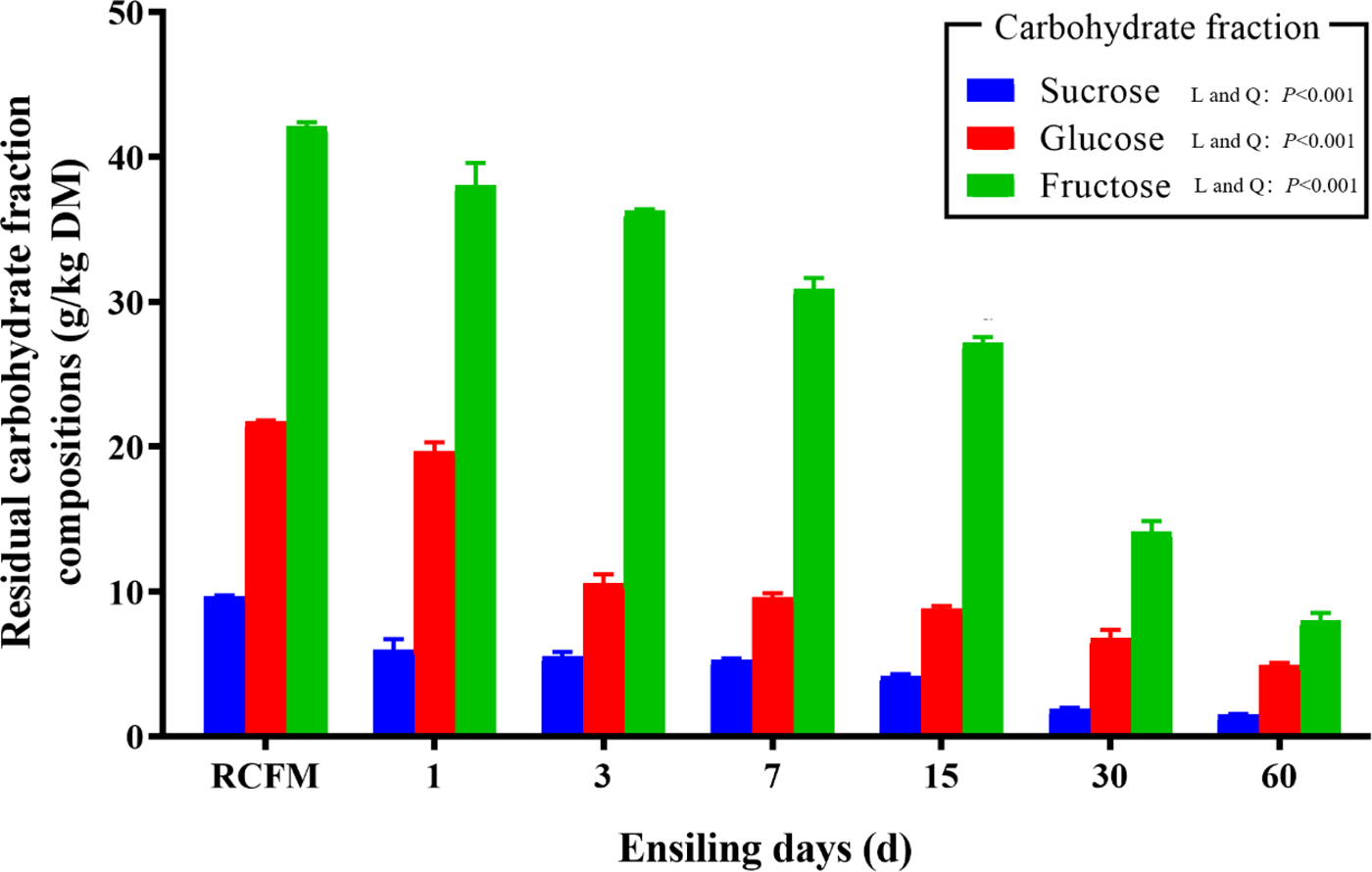
Changes in carbohydrate fractions of fresh red clover and red clover silages are reflected in Fig. 1. The sucrose, glucose and fructose contents were linearly (P < 0.001) and quadratically (P < 0.001) affected by the increased ensiling time. Compared with the fresh red clover, all the contents of sucrose, glucose and fructose decreased on 1 day of ensiling. The fructose contents exhibited a notable decline within 7 days of fermentation, and then continuously declined at the final stage of the ensiling. The glucose contents decreased during the initial 3 days, and then continuously declined on day 60. The sucrose contents decreased during the initial 15 days, and then slowly decreased on day 60. The rate of decline in carbohydrate fractions was sorted as following: glucose > fructose > sucrose during the early 15 days of fermentation.
Colour online. Changes in mono- and di-saccharides in fresh red clover and red clover silages. RCFM, fresh red clover; DM, dry matter; d, days. L and Q represent linear and quadratic effects of ensiling day.

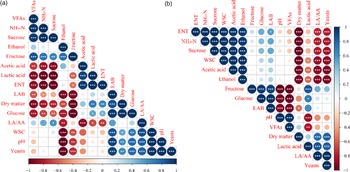
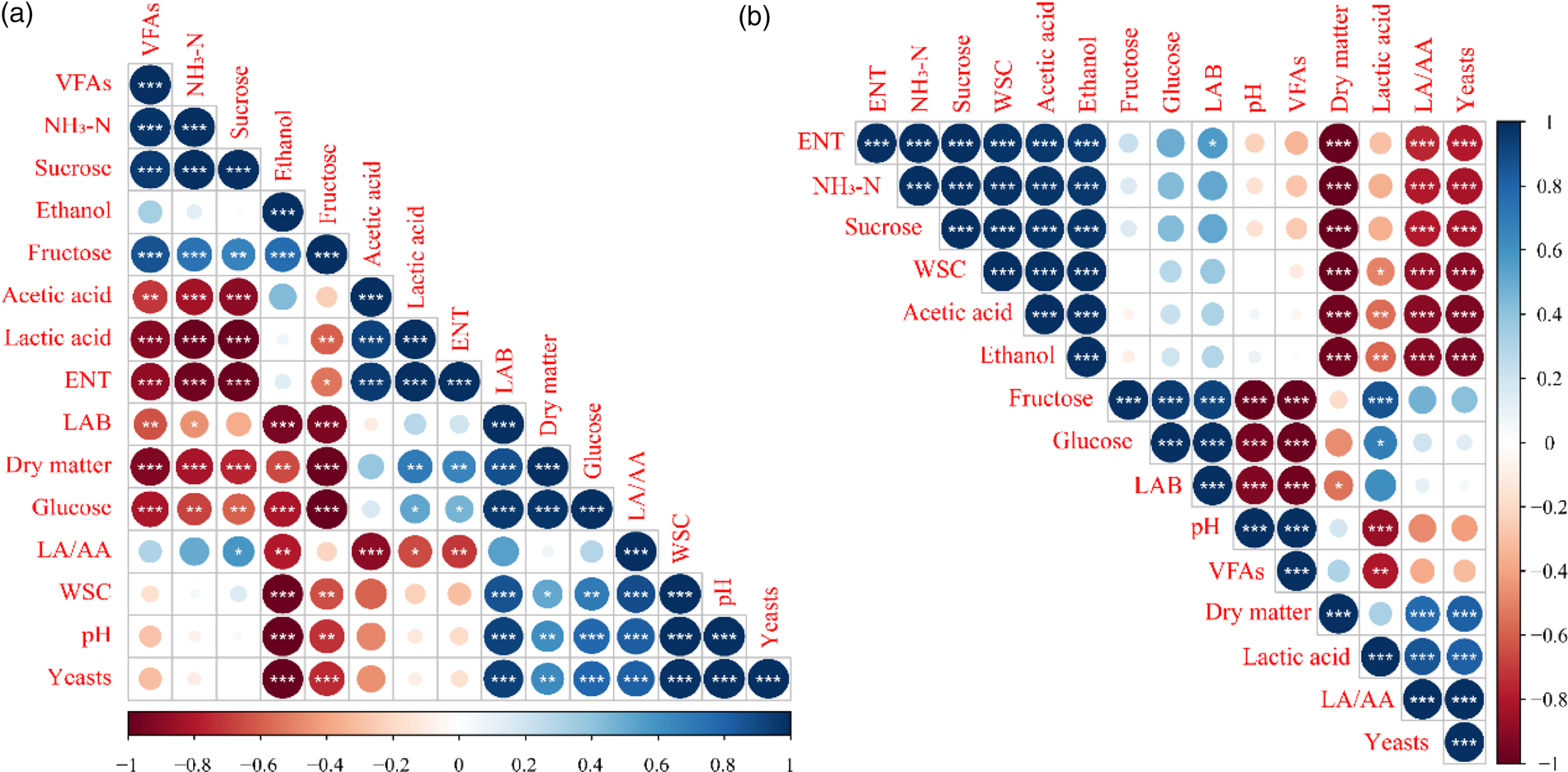
Correlation analysis of heatmap among the chemical compositions, fermentation products and microbial populations of red clover silages during the early and late stages of ensiling is shown in Fig. 2. After 3 days of ensiling (Fig. 2(a)), lactic acid contents were positively (P < 0.05) related to glucose contents, while negatively (P < 0.01) related to fructose contents. Enterobacteriaceae and yeast populations exhibited a positive correlation (P < 0.05) with glucose contents. After 60 days of fermentation (Fig. 2(b)), lactic acid concentrations showed a positive correlation (P < 0.05) with fructose and glucose contents. Enterobacteriaceae populations exhibited a positive correlation (P < 0.001) with sucrose contents.
Colour online. Correlation analysis of heatmap among the fermentation characteristics, chemical compositions and microbial counts of red clover silages after 3 days (a) and 60 days (b) of ensiling. VFAs, total volatile fatty acids; NH3-N, ammonia nitrogen; ENT, Enterobacteriaceae; LAB, lactic acid bacteria; LA/AA, ratio of lactic acid to acetic acid; WSC, water soluble carbohydrates. *0.01 < P ≤ 0.05; **0.001 < P ≤ 0.01; ***P ≤ 0.001.
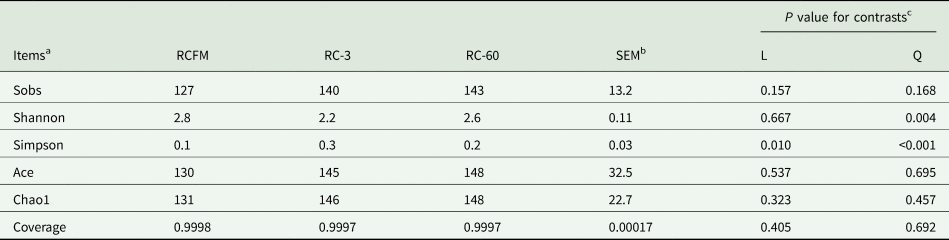
The diversity and richness indexes of bacterial community in RCFM and red clover silages on day 3 and 60 are illustrated in Table 3. The Simpson indices were linearly (P < 0.05) affected by the increased ensiling time, and the Shannon and Simpson indices were quadratically (P < 0.01) affected by the increased ensiling time. The Shannon index in RCFM was higher than that of RC-3 and RC-60. RC-3 had relatively higher indexes of Simpson, but lower indexes of Shannon, Ace and Chao1 compared with RC-60. The coverage indexes in all samples were higher than 0.9997.
Richness and diversity indices of microbial communities in fresh red clover and red clover silages during ensiling
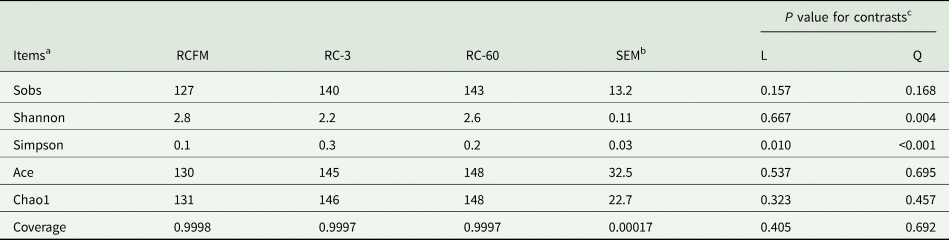
a OTUs, operational taxonomic units; RCFM, fresh red clover; RC-3, red clover silage after 3 days of ensiling; RC-60, red clover silage after 60 days of ensiling.
b SEM, standard error of the mean.
c L and Q represent linear and quadratic effects of ensiling day.
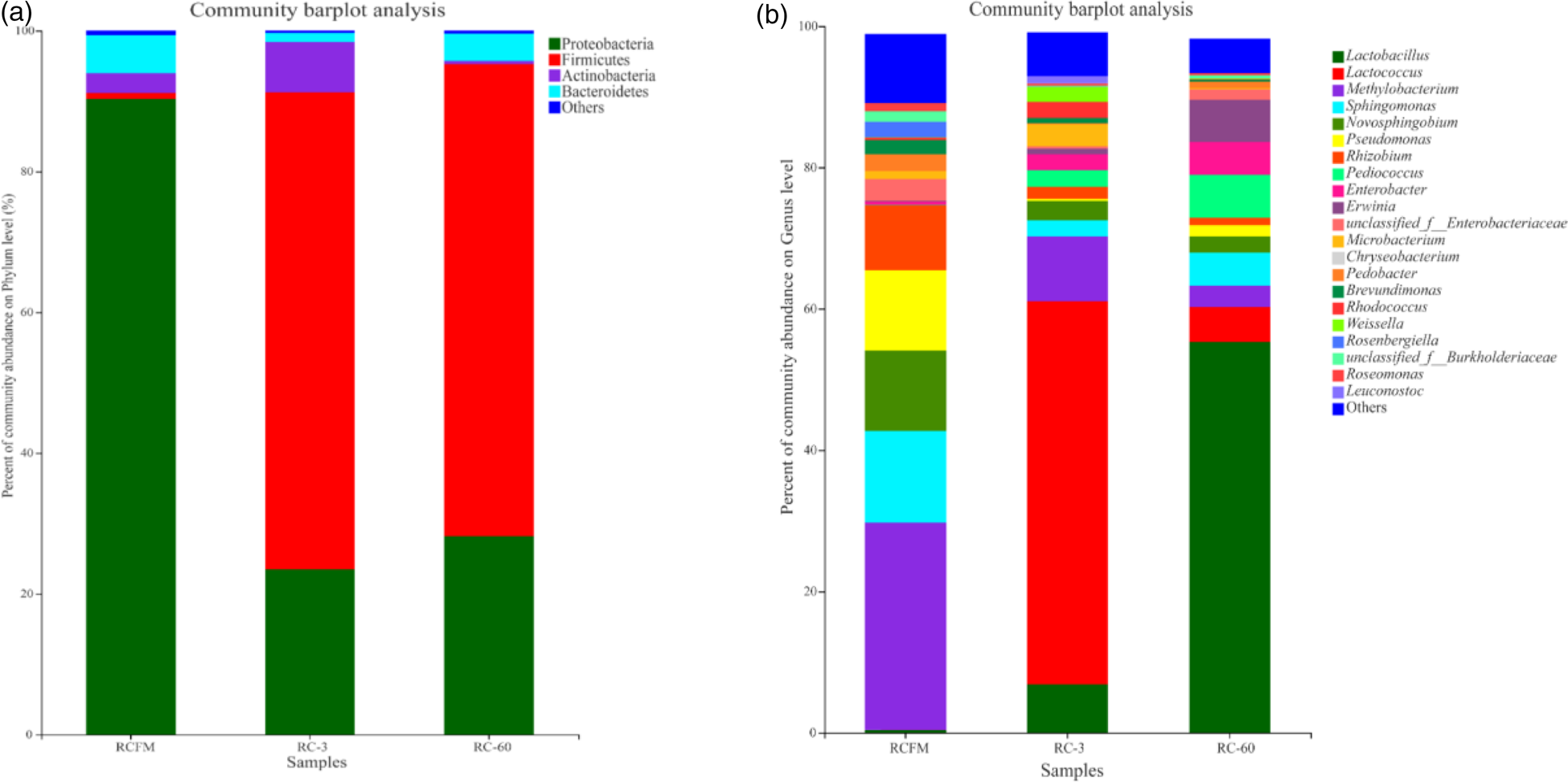
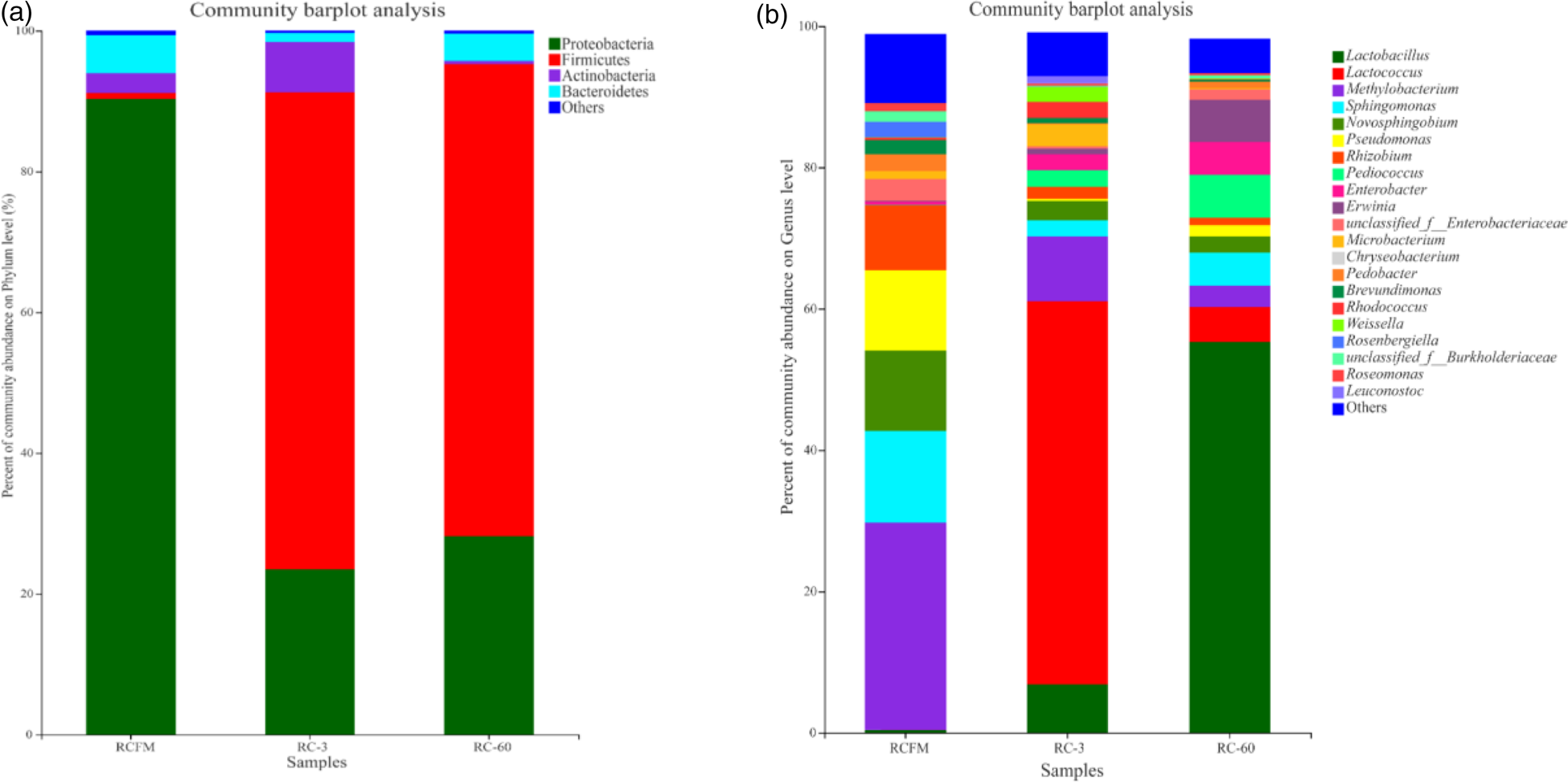
Phylum and genus-level compositions of bacterial community in RCFM and red clover silages are shown in Fig. 3. As described in Fig. 3(a), Proteobacteria was the most predominant phylum (0.90) in fresh red clover, followed by Bacteroidetes (0.05). Nevertheless, the most abundant phylum during the initial 3 days of fermentation was Firmicutes (0.68), and remained this level (0.67) until to the end of ensiling. After ensiling, the Proteobacteria still accounted for 0.24 and 0.28 on days 3 and 60, respectively. As seen in Fig. 3(b), the most dominant genus in RCFM was Methylobacterium (0.29), followed by Sphingomonas (0.13), Novosphingobium (0.11), Pseudomonas (0.11) and Rhizobium (0.09). At the initial stage of ensiling, Lactococcus (0.54) rapidly became predominant on day 3, followed by Lactobacillus (0.07) and Microbacterium (0.03). At the end of ensiling, the dominant role of Lactococcus was replaced by Lactobacillus (0.55) on day 60, followed by Erwinia (0.06), Lactococcus (0.05), Sphingomonas (0.05) and Enterobacter (0.05). The relative abundance of Pediococcus increased from 0.02 on day 3 to 0.06 on day 60, while the relative abundance of Methylobacterium decreased from 0.09 on day 3 to 0.03 on day 60.
Colour online. Phylum (a) and genus (b) level compositions of the bacterial community in fresh red clover and red clover silages. RCFM, fresh red clover; RC-3, red clover silages after 3 days of ensiling; RC-60, red clover silages after 60 days of ensiling.
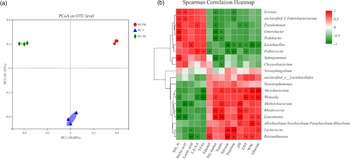
The variance of the bacterial community is clearly reflected by the result of PCoA in Fig. 4(a). Principle coordinate 1 (PC1) and 2 (PC2) accounted for 50.06 and 41.92% of the total variance, respectively. Basically, a distinct separation and difference of bacterial community was observed among RCFM, RC-3 and RC-60 groups.
Colour online. Principal co-ordinates analysis (PCoA) of bacterial communities in fresh red clover and red clover silages (a). RCFM, fresh red clover; RC-3, red clover silages after 3 days of ensiling; RC-60, red clover silages after 60 days of ensiling. Spearman correlation heatmap of bacterial genera and fermentation parameters of red clover silages after 3 and 60 days of ensiling (b). The scale colours denote whether the correlation is positive (closer to 1, red squares) or negative (closer to −1, green squares) between the taxa and the production parameters. NH3-N, ammonia nitrogen; LA/AA, the ratio of lactic acid to acetic acid; VFAs, total volatile fatty acids; WSC, water soluble carbohydrate; ENT, Enterobacteriaceae. *0.01 < P ≤ 0.05; **0.001 < P ≤ 0.01; ***P ≤ 0.001.

The correlations between fermentation parameters and bacterial abundance of red clover silages are illustrated by Spearman correlation heatmap in Fig. 4(b). Methylobacterium was negatively related to contents of lactic acid and acetic acid, while positively correlated with pH and yeast numbers. Sphingomonas showed a negative relationship with DM contents. Lactobacillus was positively related to lactic acid contents, while negatively related to contents of WSC, sucrose, fructose and glucose, pH, and Enterobacteriaceae populations. Enterobacteriaceae was positively correlated with contents of NH3-N and acetic acid, while negatively correlated with contents of DM and fructose. Lactococcus exhibited a negative correlation with lactic acid contents, while a positive correlation with contents of sucrose, fructose and glucose. Pediococcus was positively connected with VFAs and LA/AA, while negatively connected with contents of sucrose, fructose and ethanol, and Enterobacteriaceae populations.
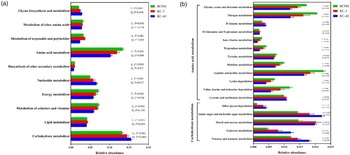
The differences of predicted functional characteristics on second and third pathway levels are described in Fig. 5. During the ensiling of red clover, the metabolism of amino acid, energy, cofactors and vitamins was linearly (P < 0.01) reduced, while metabolism of nucleotide and carbohydrate and glycan biosynthesis and metabolism were linearly (P < 0.01) enhanced (Fig. 5(a)). As shown in Fig. 5(b), the amino acid metabolism including glycine, serine, threonine, nitrogen, beta-alanine, tryptophan, tyrosine, histidine, proline, arginine, valine, lysine, isoleucine and leucine was linearly (P < 0.05) reduced during ensiling. In contrast, the carbohydrate metabolism including fructose, mannose, starch, galactose, nucleotide sugar, amino sugar, other glycan and sucrose was linearly (P < 0.05) enhanced during ensiling.
Colour online. Bar graphs showing statistical differences of 16S rRNA gene-predicted functional profiles on the second (a) and third (b) pathway levels obtained with Tax4Fun. KEGG, Kyoto Encyclopedia of Genes and Genomes. RCFM, fresh red clover; RC-3, red clover silages after 3 days of ensiling; RC-60, red clover silages after 60 days of ensiling. L and Q represent linear and quadratic effects of ensiling day.

Discussion
It is well documented that the decomposition of cells and release of plant juices are prerequisites for producing large amounts of lactic acid during ensiling. The pH values dropped sharply and lactic acid contents increased rapidly over the early 7 days, indicating that lactic acid was rapidly accumulated during the early stage. This finding was in agreement with the reports of Shao et al. (Reference Shao, Zhang, Shimojo, Wang and Masuda2005), who reported that the initial fermentation characteristics are critical to the success or failure of silage making. The forages were chopped into short sections to ensure the rapid release of plant juice, which promotes the LAB growth at the initial stage. The acetic acid is principally produced by Propionibacterium, enterobacteria and hetero-fermentative LAB on substrates (McDonald et al., Reference McDonald, Henderson and Heron1991). The increases in acetic acid concentrations during fermentation suggested the activity of some heterofermentative LAB. The ratios of lactic acid to acetic acid increased first and then decreased, indicating that there was a noticeable change from homo-fermentation to hetero-fermentation during ensiling.
The isobutyric and butyric acids in silages are harmful to the silage quality. Trace amounts of propionic acid, isobutyric acid and butyric acid were determined during the fermentation. It was attributed to the quick decline in pH values due to the rapid accumulation of lactic acid, restricting the growth of clostridia and other undesirable microorganisms. Ammonia nitrogen in silage is an indicator reflecting the degree of protein degradation which impairs the nutritive value of forages. The continuous increase of NH3-N contents from day 1 of ensiling was related to the formation of some ammonia from other substrates such as the decomposition of nitrites and nitrates, by the action of Enterobacteriaceae and plant enzymes (McDonald et al., Reference McDonald, Henderson and Heron1991).
The LAB populations were reduced after 15 days of fermentation, which may be due to the acidic environment and insufficient substrates in red clover silage. The populations of Enterobacteriaceae and yeast and their rates of decline could be used as accurate indicators of silage quality. Pahlow et al. (Reference Pahlow, Muck, Driehuis, Oude Elferink and Spoelstr2003) reported that the fast-initial acidification is the key to controlling the growth of Enterobacteriaceae, which can grow until an inhibitory concentration of non-dissociated acids, sufficiently low pH or both are achieved. The increase of yeast numbers in silages after 15 days of ensiling was probably because some yeasts could grow in the anaerobic and acidic environment (Santos et al., Reference Santos, Ávila, Pinto, Carvalho, Dias and Schwan2015).
Compared with fresh red clover, the contents of sucrose, glucose and fructose in red clover silages rapidly declined on day 1 of ensiling. Similar to the results of Shao et al. (Reference Shao, Zhang, Shimojo, Wang and Masuda2005), they found that the contents of glucose, sucrose and fructose in guineagrass silages exhibited the maximum decline during the early 0.5 day of fermentation. In the present study, small amounts of organic acids were produced on day 1, so the loss of residual carbohydrate fraction on day 1 mainly resulted from the plant respiration. During the ensiling of red clover, glucose contents decreased more rapidly on day 3 than fructose and sucrose contents, while fructose contents decreased more sharply on day 7 than sucrose contents. It demonstrated that the glucose and fructose were considered as the first and second fermentation substrates, respectively. Rooke and Hatfield (Reference Rooke and Hatfield2003) also reported that the decomposition rate of sucrose to glucose and fructose is ever rate-limiting in the silage fermentation. Hence, the speed of decline in carbohydrate fractions during the 15 days of fermentation was sorted as following: glucose > fructose > sucrose, indicating that fructose and glucose may be more preferred by microbes than sucrose. Furthermore, it was not surprising that fructose contents in fresh red clover or red clover silages were much higher than glucose and sucrose, because fructan is the most abundant resource of WSC in temperate grass and fructan could be hydrolysed into fructose and glucose (McDonald et al., Reference McDonald, Henderson and Heron1991).
The correlations among the ensiling characteristics, chemical compositions and microbial counts of red clover silages during the early and late stages of ensiling are depicted by heatmap analysis. The positive relationships between glucose and lactic acid contents were observed over the entire period of ensiling. In contrast, the correlations between fructose and lactic acid contents shifted from a negative state at the early stage to a positive state at the late stage of fermentation. It indicated that glucose was more preferred than fructose in accelerating the production of lactic acid, especially at the early stage. After 60 days of ensiling, the positive correlation between Enterobacteriaceae populations and sucrose might indicate that sucrose may be conducive to the growth of harmful microorganisms at the late stage of ensiling.
The coverage values were higher than 0.9997, suggesting that the sampling depth had adequately captured most of the bacterial communities and was sufficient for reliable analysis of the bacterial community. The higher Shannon index in RCFM than RC-3 and RC-60 indicated that the epiphytic bacterial community in RCFM was more diverse. The higher Simpson and lower Shannon indexes in RC-3 than RCFM suggested that the anaerobic conditions during the ensiling can quickly decrease the bacterial diversity and richness during the initial stage of ensiling. When the silo is sealed, the internal environment in silos shift from aerobic to anaerobic conditions, whilst anaerobic microbes would adapt and grow well, leading to a noticeable decrease in bacterial diversity and richness at the beginning of fermentation. Wang et al. (Reference Wang, Zhao, Dong, Li and Shao2020) also observed a noticeable reduction in bacterial abundance and variety during the initial stage of fermentation.
Once ensiled, the dominant phylum Proteobacteria on fresh red clover was quickly replaced by Firmicutes. Keshri et al. (Reference Keshri, Chen, Pinto, Kroupitski, Weinberg and Sela Saldinger2018) reported that the anaerobic and acidic environments are conducive to the growth of Firmicutes. Hence, the quick change of predominant phylum from Proteobacteria to Firmicutes within 3 days of fermentation was mainly due to the formation of anaerobic environment in red clover silages. Ma et al. (Reference Ma, Fang, Sun, Han, He and Huang2018) found that Proteobacteria play a critical role in degrading organic matter, nitrogen and carbon cycle during anaerobic digestion. Notably, a higher abundance of Actinobacteria was noticed after 3 days of fermentation. Ventura et al. (Reference Ventura, Canchaya, Tauch, Chandra, Fitzgerald and Chater2007) reported that Actinobacteria were widely distributed in both terrestrial and aquatic ecosystems, especially in soil, and they exhibited diversely physiological and metabolic properties, such as the production of extracellular enzymes and formation of various secondary metabolites.
After ensiling, Lactococcus and Lactobacillus became the dominant genera, albeit they were both lower than 0.01 of community abundance on fresh red clover. After ensiling, the environment in silos shifted from a stable-state to a new state in which better-adapted microorganisms started to occupy the fermentation. Genus Lactococcus was dominant during the early 3 days of fermentation, and then, it was substituted by Lactobacillus on day 60 of ensiling. This coincided with the findings of Keshri et al. (Reference Keshri, Chen, Pinto, Kroupitski, Weinberg and Sela Saldinger2018), who reported that while the bacterial diversity varied dramatically at the beginning of fermentation, Lactobacillus dominated the final silage due to their acid-tolerant characteristics. It is well documented that the acidic environment was adverse to cocci-LAB strains, while a large proportion of Pediococci was found in red clover silages after 60 days of ensiling. It was suggested that some Pediococci could accelerate the rapid accumulation of lactic acid even at the end of ensiling. It agreed with the findings of Nishino et al. (Reference Nishino, Li, Wang and Parvin2012), who found that some cocci LAB strains could exist over the fermentation process in some silages.
In the PCoA plot, a clear separation and difference among RCFM, RC-3 and RC-60 groups suggested that ensiling time possessed a remarkable effect on fermentative profiles and bacterial community structure during the early and late stages of ensiling. Ni et al. (Reference Ni, Wang, Zhu, Yang, Zhou, Pan and Zhong2017b) concluded that the difference of fermentative characteristics can be explained by the difference of bacterial community.
The heatmap of Spearman correlation was utilized to describe correlations between fermentation products and bacterial community. The negative relationship between Lactobacillus and contents of WSC, sucrose, fructose and glucose indicated that Lactobacillus was mainly responsible for the depletion of WSC and mono- and disaccharide contents during the ensiling of red clover. The positive correlation between Lactococcus and contents of sucrose, fructose and glucose suggested that these mono- and disaccharides could promote the growth of Lactococcus during the ensiling. It also indirectly proved that the sucrose, fructose and glucose contents were pivotal for lactate fermentation during the early stage of fermentation. Lactobacillus were positively correlated with lactic acid and negatively related to Enterobacteriaceae populations. This was similar with the findings of Cao et al. (Reference Cao, Cai, Takahashi, Yoshida, Tohno, Uegaki, Nonaka and Terada2011), who reported that the lactic acid and other volatile acids produced by Lactobacillus can restrict the growth of harmful microbes (e.g. yeasts, moulds, pathogenic bacteria).
The prediction of the functional capabilities of a microbial community based on marker gene data such as 16S rRNA would be highly beneficial (Aßhauer et al., Reference Aßhauer, Bernd, Rolf and Peter2015). Our study firstly revealed the KEGG metabolic pathways of bacterial community in fresh red clover and red clover silages based on the predicted functional characteristics by Tax4Fun. The fermentative process of silage is modulated by bacterial activities via different metabolic pathways to convert substrates to various metabolites. The KEGG pathway database with Tax4Fun was thus applied to predict the metabolic pathways of red clover silages. Bai et al. (Reference Bai, Ding, Ke, Xu, Wang, Huang, Zhang, Liu and Guo2021) found that the metabolism of energy, carbohydrates, nucleotide, amino acid, vitamins and cofactors was closely correlated with the metabolic pathways during the ensiling process. Hence, we selected these metabolic pathways, including glycan biosynthesis and metabolism, metabolism of other amino acids, lipid, terpenoids and polyketides, and biosynthesis of other secondary metabolites for statistical analysis. In the present study, amino acid metabolism was inhibited during ensiling, which was probably because the rapid acidification during ensiling suppressed the amino acid metabolism resulted from harmful microbes like Enterobacter, Clostridium and Hafnia (Flythe and Russell, Reference Flythe and Russell2004). Pessione et al. (Reference Pessione, Lamberti and Pessione2010) found that, arginine deamination, decarboxylation of amino acid and malate are the primary energy metabolism pathways in LAB, which could promote the production of lactic acid during the ensiling. However, the energy metabolism herein was reduced during the ensiling. It was opposite to the findings of Xu et al. (Reference Xu, Wang, Rinne, Ke, Weinberg, Da, Bai, Zhang, Li and Guo2021), who found that energy metabolism was predicted to be promoted in well-preserved whole-crop corn silage. This may be due to the different forage types. Moreover, the nucleotide metabolism was accelerated during ensiling, which was inconsistent with the tendency of energy metabolism. Kilstrup et al. (Reference Kilstrup, Hammer, Jensen and Martinussen2005) reported that nucleotides could be used as substrates to produce DNA, and as the primary energy source for cellular processes. It is thus essential to utilize some omics tools like metabolomics and proteomics to further describe the functional annotations of bacterial communities in silages.
Most amino acid metabolic pathways were markedly inhibited during ensiling, which was consistent with the relatively lower NH3-N contents in red clover silages. This might be because the rapid decrease in pH during the early stage of fermentation inhibited the protein degradation by undesirable microorganisms (McDonald et al., Reference McDonald, Henderson and Heron1991). Notably, the metabolism pathways of D-Alanine, D-Glutamine, D-glutamate, cysteine and methionine were not affected or even enhanced during ensiling. It was speculated that these amino acids had lesser impact on the formation of ammonia nitrogen during the ensiling of red clover. Furthermore, most carbohydrate metabolic pathways were promoted with the increase of ensiling days. This agreed with our findings that the mono- and disaccharide contents were mainly consumed by the dominant genus Lactobacillus. However, similar abundances of starch and sucrose metabolism on days 3 and 60 were observed. It indirectly demonstrated that starch and sucrose contents were not preferred than fructose and glucose during the fermentation of red clover.
Conclusion
After 60 days of ensiling, the silage quality of red clover was good, indicated by high lactic acid concentrations, and low pH values and contents of butyric acid and ammonia nitrogen. At the early stage of fermentation, fructose and glucose were more preferred than sucrose for microbes, and glucose was the first fermentable substrate over the ensiling period. The predominant genus Lactococcus on day 3 was replaced by Lactobacillus on day 60. The metabolism of amino acid, energy, cofactors and vitamins was gradually reduced, while metabolism of nucleotide and carbohydrate was enhanced after ensiling. Overall, the high-throughput sequencing technology combined with 16S rRNA gene-predicted functional analyses is recommended to reveal the differences during the early and late stages of red clover silage not only for distinct bacterial community but also for specific functional traits. It could provide some new insights into the enhancement of silage quality. Notably, differing varieties and growing environments (e.g. field locations, soil conditions) of red clover might influence the abovementioned results, thus more batches and research need to be conducted to examine the effects of differing varieties and growing environments on the silage quality, bacterial community and their functional characteristics in red clover.
Author contributions
Siran Wang and Zhihao Dong conceived and designed the study. Siran Wang, Tao Shao and Junfeng Li conducted data gathering. Siran Wang and Jie Zhao performed statistical analyses. Siran Wang wrote the article.
Financial support
This work was partially supported by China Postdoctoral Science Foundation (2021M691607), and Research and demonstration on the key technology of crop straw and agricultural and sideline products feeding (2019C10010).
Conflict of interest
We certify that there is no conflict of interest with any financial organization regarding the material discussed in the manuscript.
Ethical standards
This article does not contain any studies with human participants or animals performed by any of the authors.