Temper tantrums are sudden, overt, negative emotional displays that typically last a few minutes and are disproportionate to the eliciting event (Daniels et al., Reference Daniels, Mandleco and Luthy2012; Potegal et al., Reference Potegal, Kosorok and Davidson2003). Temper tantrums, sometimes referred to as emotional outbursts, rages, anger outbursts, meltdowns, etc. (Carlson et al., Reference Carlson, Danzig, Dougherty, Bufferd and Klein2016), are characterized by a sudden onset of behaviors reflecting anger, such as shouting, that peak near the start of the temper tantrum, followed by behaviors indicative of distress, such as sobbing, which become more common throughout the course of the temper tantrum (Einon & Potegal, Reference Einon, Potegal, Potegal and Knutson1994; Potegal & Davidson, Reference Potegal and Davidson2003; Potegal et al., Reference Potegal, Kosorok and Davidson2003). Although temper tantrums are common in toddlerhood and the early preschool years, the characteristics of normative and transient temper tantrums versus temper tantrums likely to be markers of later risk have remained unclear despite the fact that this is an area of high parental concern and confusion.
Temper tantrums are a key behavioral feature of pediatric irritability, and in the context of the irritability literature are often referred to as “phasic irritability” (Stringaris et al., Reference Stringaris, Vidal-Ribas, Brotman and Leibenluft2018). A growing literature has demonstrated that elevated and dysregulated levels of irritability represent a transdiagnostic, cross-cutting phenotype of both internalizing and externalizing psychopathology (Beauchaine & Tackett, Reference Beauchaine and Tackett2020; Stringaris et al., Reference Stringaris, Vidal-Ribas, Brotman and Leibenluft2018; Wakschlag et al., Reference Wakschlag, Perlman, Blair, Leibenluft, Briggs-Gowan and Pine2018) that is associated with risk for both concurrent and later psychopathology (Dougherty et al., Reference Dougherty, Smith, Bufferd, Kessel, Carlson and Klein2015; Vidal-Ribas et al., Reference Vidal-Ribas, Brotman, Valdivieso, Leibenluft and Stringaris2016; Wiggins et al., Reference Wiggins, Briggs-Gowan, Estabrook, Brotman, Pine, Leibenluft and Wakschlag2018). Reflecting the transdiagnostic nature of temper tantrums and irritability, tantrum behaviors are a feature of various diagnoses, including autism spectrum disorders (Beauchamp-Châtel et al., Reference Beauchamp-Châtel, Courchesne, d’Arc and Mottron2019; Dellapiazza et al., Reference Dellapiazza, Audras-Torrent, Michelon and Baghdadli2021), mood and anxiety disorders (Belden et al., Reference Belden, Thomson and Luby2008; Wakschlag et al., Reference Wakschlag, Choi, Carter, Hullsiek, Burns, McCarthy, Leibenluft and Briggs-Gowan2012), and externalizing disorders (Wakschlag et al., Reference Wakschlag, Perlman, Blair, Leibenluft, Briggs-Gowan and Pine2018). As such, temper tantrums are often included as an item on childhood psychopathology assessments (Achenbach & Rescorla, Reference Achenbach and Rescorla2001; Eyberg & Pincus, Reference Eyberg and Pincus1999). Although there is a robust literature on irritability and psychopathology, far fewer studies have focused specifically on temper tantrums as a key aspect of irritability. Additionally, temper tantrums can include a wide range of behaviors (e.g., hitting others, throwing objects, screaming), and few studies have focused on differentiating which characteristics of temper tantrums during the preschool period predict risk for concurrent or later psychopathology. To begin to address this, we utilize a prospectively assessed, longitudinal study enriched for children with early onset psychopathology to characterize the features of preschool-age temper tantrums that predict risk for later or persistent psychopathology.
Temper tantrums in early childhood
Temper tantrums are common in young children, with studies finding that children 3–4 years of age have an average of one temper tantrum per day (Chamberlin, Reference Chamberlin1974; Jenkins, et al., Reference Jenkins, Bax and Hart1980; Macfarlane, et al., Reference Macfarlane, Allen and Honzik1954; Potegal & Davidson, Reference Potegal and Davidson2003; Potegal et al., Reference Potegal, Kosorok and Davidson2003). Temper tantrums represent one of the most common behavioral concerns reported by parents of young children (Beers, Reference Beers2003; Castiglia, Reference Castiglia1988; Ticehurst & Henry, Reference Ticehurst and Henry1989; McCurdy et al., Reference McCurdy, Kunz, Sheridan, Bear and Minke2006). Temper tantrum prevalence in early childhood follows a quadratic trajectory across the first few years of life (Bhatia et al, Reference Bhatia, Dhar, Singhal, Nigam, Malik and Mullick1990; Jenkins et al., Reference Jenkins, Bax and Hart1980; MacFarlane et al., Reference Macfarlane, Allen and Honzik1954; Potegal & Davidson, Reference Potegal and Davidson2003), with high prevalence in 18- to 24-month-olds (87% of children) slightly increased (91%) in 30- to 36-month-olds, and then sharply decreased (59%) in 42- to 48-month-olds (Potegal & Davidson, Reference Potegal and Davidson2003). Additionally, temper tantrums characterized by high anger, including behaviors such as screaming, kicking, and hitting, have been found to decrease with age, and temper tantrums characterized by lower levels of anger have been found to be more common in older children (Potegal & Davidson, Reference Potegal and Davidson2003).
Research exploring temper tantrums and psychopathology more broadly suggests that temper tantrums largely stem from issues with frustration (Wakschlag et al., Reference Wakschlag, Estabrook, Petitclerc, Henry, Burns, Perlman, Voss, Pine, Leibenluft and Briggs-Gowan2015) and emotion dysregulation (Vogel et al., Reference Vogel, Jackson, Barch, Tillman and Luby2019; Wakschlag et al., Reference Wakschlag, Choi, Carter, Hullsiek, Burns, McCarthy, Leibenluft and Briggs-Gowan2012). Across early childhood, children develop rapidly in their capacity to manage emotional displays (Calkins & Perry, Reference Calkins, Perry and Cicchetti2016; Cole et al., Reference Cole, Michel and Teti1994). As a result of these normative improvements in both regulatory and cognitive skills, subsequent decreases in the intensity, severity, and frequency of temper tantrums occur during this developmental period (McCurdy et al., Reference McCurdy, Kunz, Sheridan, Bear and Minke2006). Perhaps because of this typical developmental improvement in emotion regulation, stable or worsening temper tantrums during the transition from toddlerhood to preschool may be indicative of risk for persistent behavioral problems (Daniels et al., Reference Daniels, Mandleco and Luthy2012; Grover, Reference Grover and Berkowitz2008; Wakschlag et al., Reference Wakschlag, Choi, Carter, Hullsiek, Burns, McCarthy, Leibenluft and Briggs-Gowan2012).
For example, in a prior study with the same sample used in the current study but using only baseline data from a single developmental time point, Belden and colleagues (2008) found that preschoolers with depression, a disruptive disorder (i.e., Attention Deficit Hyperactivity Disorder [ADHD], conduct disorder [CD], and/or oppositional defiant disorder [ODD]), or a combination of both were significantly more likely to engage in violent, verbally aggressive, destructive, or self-injurious behaviors than preschoolers with no psychopathology diagnoses. Moreover, certain types of tantrum behaviors, such as self-injurious behaviors, emerged as particularly important indicators of concurrent depression-related impairment (Belden et al., Reference Belden, Thomson and Luby2008), suggesting that assessing tantrum behaviors in the preschool years may be important for understanding preschool psychopathology.
Longitudinal studies investigating temper tantrum outcomes
Whereas multiple studies have demonstrated that severe temper tantrums in early childhood are associated with concurrent psychopathology and impairment (Belden et al., Reference Belden, Thomson and Luby2008; Wakschlag et al., Reference Wakschlag, Choi, Carter, Hullsiek, Burns, McCarthy, Leibenluft and Briggs-Gowan2012), few studies have examined the relationship between preschool temper tantrums and psychopathology across childhood and adolescence. Such longitudinal associations have the potential to identify which tantrum manifestations during the preschool period signal heightened risk for persistent psychopathology. In the Multidimensional Assessment of Preschool study – a longitudinal study of more than 400 high risk preschoolers with a focus on assessing disruptive behavior – temper tantrums, as measured using the temper loss scale on the Multidimensional Assessment Profile of Disruptive Behavior, in preschool predicted concurrent psychiatric internalizing and externalizing diagnoses/impairment, as well as ODD, ADHD, separation anxiety symptoms, and overall impairment 16 months later (Wakschlag et al., Reference Wakschlag, Estabrook, Petitclerc, Henry, Burns, Perlman, Voss, Pine, Leibenluft and Briggs-Gowan2015). Although this study assessed various components of temper tantrums, such as destructiveness and aggression, the assessment period of this study lasted only into the early school years, and it is unclear whether preschool temper loss predicts psychopathology in later childhood or adolescence.
Additional research has examined how temper tantrums occurring during childhood are associated with concurrent and later psychopathology and impairment. In a sample of school-aged children who were clinically referred for treatment for temper outbursts, angry behaviors during tantrums (e.g., hitting, kicking, screaming) were associated with increased internalizing and externalizing symptomology, while distress-related behaviors during tantrums (e.g., crying, whining) were associated with higher levels of internalizing symptomology (Hirsch et al., Reference Hirsch, Davis, Cao and Roy2021). In the Great Smokey Mountains Study, investigators assessed temper tantrums/temper outbursts from ages 9–16 years, and found that tantrums alone predicted utilization of specialized mental health services, anxiety and depressive symptoms one year later (Copeland et al., Reference Copeland, Brotman and Costello2015). Caspi et al. (Reference Caspi, Elder and Bem1987) found that increased temper tantrum severity in late childhood predicted a variety of maladaptive outcomes in adulthood, including lower educational achievement and more employment difficulties (e.g., more frequent unemployment, more frequent changes in employment) in men and increased likelihood of divorce in both men and women.
The current study
Given the lack of research exploring the association between preschool tantrum behaviors and later psychopathology, the current study explores the links between preschool-age tantrum behaviors and psychopathology symptoms persisting or arising in later childhood and adolescence. We capitalize on a rich, longitudinal dataset that is oversampled for children at-risk for depression and externalizing disorders. We sought first to identify relevant groupings of tantrum behaviors using an exploratory factor analysis. We next sought to clarify associations between different types of preschool tantrum behaviors, both independently and jointly, and early childhood psychopathology severity. We hypothesized that increased severity of tantrum behaviors would be associated with increased psychopathology in early childhood, across diagnostic domains (e.g., internalizing and externalizing behaviors). Finally, we examined whether different types of preschool tantrum behaviors, both independently and jointly, predicted later psychopathology trajectories. The current study builds on prior, cross-sectional research on this sample (Belden et al., Reference Belden, Thomson and Luby2008) by including seven additional time points and examining the association between preschool tantrums and various domains of psychopathology (i.e., anxiety, ADHD, ODD, CD). We hypothesized that more internally directed (i.e., self-harming) and severe (i.e., a higher number of tantrum behaviors displayed) preschool temper tantrums would predict a trajectory of heightened, and worsening, behavioral and emotional problems across childhood into adolescence. Given prior research suggesting sex-related differences in tantrum behaviors (Wakschlag et al., Reference Wakschlag, Choi, Carter, Hullsiek, Burns, McCarthy, Leibenluft and Briggs-Gowan2012) and the well-established association between adverse childhood experiences and behavioral problems more generally (Bevilacqua et al., Reference Bevilacqua, Kelly, Heilmann, Priest and Lacey2021; Clarkson Freeman, Reference Clarkson Freeman2014; Humphreys & Zeanah, Reference Humphreys and Zeanah2015), we opted to examine these constructs for inclusions as possible covariates in our models.
Methods
Participants
Participants included a subsample of children enrolled in the Preschool Depression Study (PDS; Luby, Belden, et al., Reference Luby, Belden, Pautsch, Si and Spitznagel2009; Luby, Si, et al., Reference Luby, Si, Belden, Tandon and Spitznagel2009). The PDS is a prospective, 15-year longitudinal study conducted by the Washington University School of Medicine (WUSM) Early Emotional Development Program, designed to investigate the longitudinal course of preschool depression (see Figure 1 for PDS overview). Parental consent and child verbal assent were obtained prior to study participation. The WUSM Institutional Review Board approved all procedures in accordance with institutional ethical guidelines. At Time 1 (baseline), children (N = 306) between the ages of 3 and 5.11 years (M = 4.45, SD = 0.80) and their primary caregivers (95.4% biological/foster/adoptive mothers; see Supplemental Table S1 for primary caregiver demographics across time points) were recruited from daycares, preschools, and primary care sites. The Preschool Feelings Checklist (Luby et al., Reference Luby, Heffelfinger, Koenig-McNaught, Brown and Spitznagel2004) was used to oversample for children with increased symptoms of depression and those with elevated symptoms of disruptive behaviors. Children participated in up to eight diagnostic and developmental assessments on a regular basis (range 1–3 years) from preschool through adolescence (data collection ages 11.5–15.8 years, M = 13.6 years). The current study includes children whose parents reported on their temper tantrums at the first developmental assessment wave and had at least one follow up assessment, yielding a final sample of 299 children (98% of children with a baseline assessment). This final sample was 47.8% female, 54.5% White (32.1% Black and 13.4% other race) and had an average income-to-needs ratio of 2.07 (SD = 1.18, range 0–3.93; suggesting that the average family in the sample had an income just over twice the federal poverty line). The prevalence rates of psychopathology in the final sample at each time point included in the current study is included in Supplemental Table S2. Of this final sample of 299, 19 children did not provide data after the preschool waves. There were no significant differences between children who did and did not provide data at the later waves on any demographic or psychopathology variables (e.g., sex, income-to-needs, depression, anxiety, ODD, etc.).
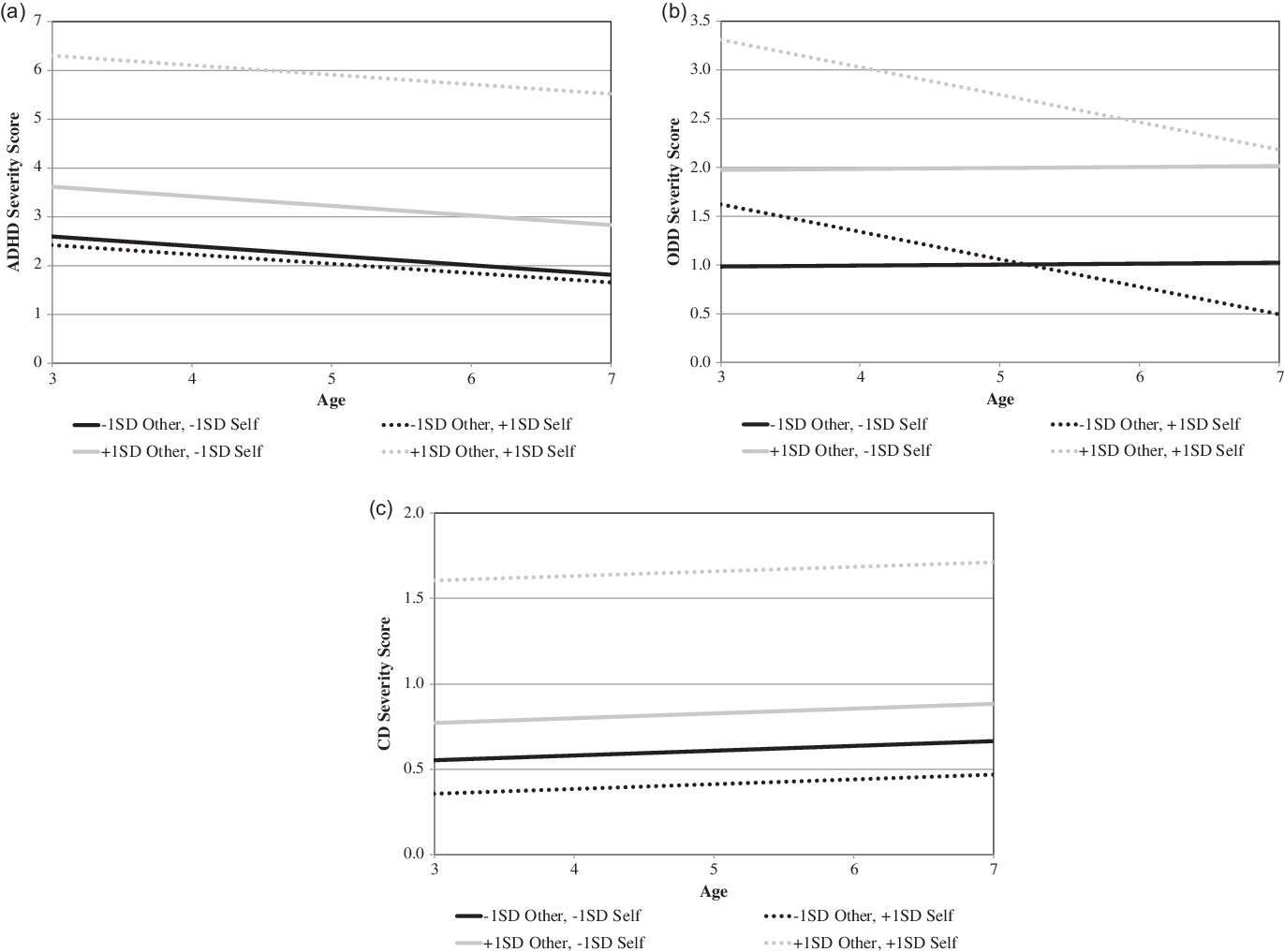
Significant interactions between temper tantrum factors in predicting trajectories of concurrent/preschool psychopathology. Note. other = tantrums characterized by aggression towards others/objects; self = tantrums characterized by aggression towards self.

Measures
Preschool temper tantrums
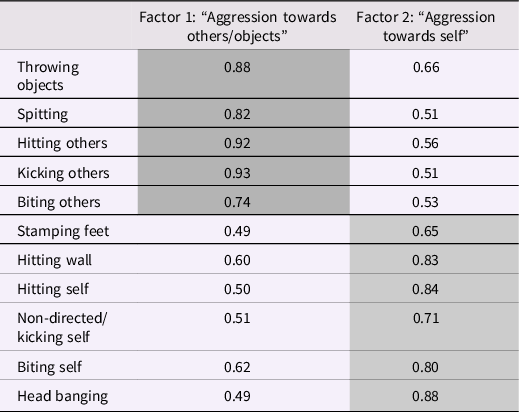
Preschool temper tantrums were assessed at Time 1 using items from the conduct problems module of the Preschool-Age Psychiatric Assessment (PAPA; Egger et al., Reference Egger, Ascher and Angold2003). The PAPA is well-validated, parent-informant measure that assesses DSM-IV criteria for childhood disorders (Egger et al., Reference Egger, Erkanli, Keeler, Potts, Waltr and Angold2006). The temper tantrums section of the PAPA includes a list of 14 common tantrum behaviors (e.g., “throwing objects,” “hitting others,” “hitting self”) and an “other” behavior item. For each item, parents were asked whether their child displayed this behavior during their temper tantrums. To dimensionally reduce and combine across the assessed dichotomous tantrum behaviors, we used a factor analysis with a goemin, oblique rotation and a robust weighted least squares estimator that allowed for correlated factors. Factor analysis was conducted in Mplus version 8.5 (Muthén & Muthén, Reference Muthén and Muthén2017). The item indexing “other” tantrum behaviors was not included in the factor analysis as this item could plausibly index a wide variety of behaviors. The two-factor solution fit significantly better than the one-factor solution (χ2 = 54.08, p < .001), and the three-factor solution fit significantly better than the two-factor solution (χ2 = 23.28, p = .006). However, a Parallel Test (Horn, Reference Horn1965), in which a scree plot of the data is plotted against the scree plot of normally distributed, random data, suggested that two factors represent a meaningful signal (i.e., the point at which the data scree plot is equivalent to the random scree plot). This suggests that a solution with two factors would be the most appropriate for the data (see Supplemental Table S3 for three-factor solution). As the two-factor solution made more theoretical sense and showed adequate fit statistics (Root Mean Square Error of Approximation = 0.053 [90% CI: 0.03–0.07], Comparative Fit Index = 0.99, Tucker-Lewis Index = 0.98), this solution was selected as the final model. Factor loadings for the two-factor solution are included in Table 1. One variable, “holding breath” had factor loadings of less than .40 on both factors, and thus did not surpass our threshold for inclusion, and was excluded from further analysis. Two variables “kicking objects” and “breaking toys/objects” did not clearly load onto either factor and were both excluded from further analysis. The items retained in factor 1 appeared to index aggression towards objects/others and included: (a) throwing objects, (b) spitting, (c) hitting others, (d) kicking others, and (e) biting others. The items retained in factor 2 appeared to index aggression towards self and included: (a) stamping feet, (b) hitting wall, (c) hitting self, (d) non-directed/kicking self, (e) biting self, and (f) head banging. Factors 1 and 2 were highly correlated (r = .47). Factor sum scores were calculated as the number of “aggression towards objects/others” behaviors endorsed (max 6) and the number of “aggression towards self” behaviors endorsed (max 7). Of note, "aggression towards self" is an imperfect descriptor of factor 2. However, as all of the behaviors that load onto factor 2 reflect the potential for aggression towards self, we believe that this is the most parsimonious descriptor for this factor. Prevalence rates for each of the tantrum behavior that were included in the two-factor solution are reported in Supplemental Table S4.
Factor loadings from factor analysis with tantrum variables

Note. Gray boxes denote which items loaded onto each factor.
Factors 1 and 2 correlation: r = .47.
The temper tantrums section of the PAPA also assesses the frequency and average duration of temper tantrums for children whose parents endorsed that they had temper tantrums. In our study, information about frequency and duration was only collected if a parent endorsed that their child had tantrums over the past three months. We opted not to infer a response about tantrum frequency/duration if a parent was not explicitly asked about tantrum frequency/duration. Accordingly, in our sample, approximately 210 children had information on the frequency and duration of preschool temper tantrums. Higher scores on both temper tantrum factors (i.e., aggression towards other/objects and self) were associated longer tantrum durations, but only higher scores on the aggression towards others/objects factor was associated with greater tantrum frequency (see Supplemental Table S5). Given the reduced and restricted number of children with frequency/duration data, we opted to focus our analysis on the derived tantrum factors.
Psychopathology
Psychopathology was assessed at each time point/wave using either the PAPA when the child was age 7 or younger (Times 1–4; described above) or the Child-Age Psychiatric Assessment (CAPA; Angold & Costello, Reference Angold and Costello2000) when the child was age 8–17 years (Times 4–8). The PAPA and the CAPA are diagnostic interviews that assess the child’s psychiatric symptoms across all major categories and assign a DSM-IV diagnoses. Parent informants were used for the PAPA, and both child and parent informants were used for the CAPA. Symptoms endorsed by either informant counted toward diagnoses and severity scores on the CAPA. Satisfactory calibration/inter-rater reliability procedures in the current study for the PAPA and CAPA interviews have been previously reported (Luby, Belden, et al., Reference Luby, Belden, Pautsch, Si and Spitznagel2009; Gaffrey et al., Reference Gaffrey, Tillman, Barch and Luby2018; Gilbert et al., Reference Gilbert, Whalen, Tillman, Barch, Luby and Jackson2019; Whalen et al., Reference Whalen, Belden, Tillman, Barch and Luby2016). Briefly, raters were trained to reliability and blind to the child’s diagnostic status. All interviews were audiotaped, and 20% of cases were reviewed and, if necessary, recoded by master raters in consultation with an experienced clinician.
Severity across five domains of psychopathology were assessed in the current study: (a) depression severity – indexed by the number of depression symptoms endorsed, (b) anxiety severity – indexed by the number of symptoms of generalized anxiety disorder, separation anxiety disorder, and post-traumatic stress disorder endorsed, (c) ADHD severity – indexed by the number of ADHD symptoms endorsed, (d) ODD severity – indexed by the number of ODD symptoms endorsed, and (e) CD severity – indexed by the number of CD symptoms endorsed. Psychopathology severity was calculated separately at preschool time points (Times 1 and 2) and child/adolescent time points (Times 3–8). Temper tantrums (“losing temper”) is included as a symptom of ODD on the PAPA. To reduce the overlap between our predictor and outcome variables, ODD severity, based on the PAPA, was calculated without the temper tantrum item.
Covariates
Three plausible covariates, (a) child sex, (b) child race, and (c) preschool adverse childhood experiences (ACEs), were examined based on prior associations with temper tantrums and psychopathology (Hughes et al., Reference Hughes, Bellis, Hardcastle, Sethi, Butchart, Mikton, Jones and Dunne2017; Roberts et al., Reference Roberts, Curtis, Estabrook, Norton, Davis, Burns, Briggs-Gowan, Petitclerc and Wakschlag2018; Wakschlag et al., Reference Wakschlag, Choi, Carter, Hullsiek, Burns, McCarthy, Leibenluft and Briggs-Gowan2012). Preschool ACEs were calculated separately at Times 1 and 3, following the same approach as Barch et al. (Reference Barch, Belden, Tillman, Whalen and Luby2018). ACEs scores were calculated as the sum of three variables: (a) the number of traumatic life events experienced by the child (e.g., physical abuse), as measured on the PAPA, (b) whether the child was living in poverty based on the family’s income-to-needs ratio, and (c) parental psychopathology (e.g., substance abuse, suicide attempts) as measured on the Family Interview for Genetic Studies (Maxwell, Reference Maxwell1992). Higher ACEs scores reflect increased child exposure to stressors.
General linear regression models with the temper tantrum factor scores as the outcome variables and the possible covariates (child sex, race, and preschool ACEs) as the independent variables in separate models were conducted to determine significant associations between the potential covariates and the two temper tantrum factors. Male sex was significantly associated with higher scores on the “aggression towards objects/others” factor and greater preschool ACEs was significantly associated with higher scores on both factors, but race was not associated with either factor. Therefore, sex and preschool ACEs were included as covariates in all models of the “aggression towards objects/others” factor, and preschool ACEs was included as a covariate in all models of the “aggression towards self” factor.
Statistical analysis
SAS version 9.4 (SAS Institute Inc., 2013) was used to investigate whether temper tantrums in early childhood were associated with the severity of (a) early childhood psychopathology (using a repeated measures mixed modeling approach; O’Connell et al., Reference O’Connell, Dai, Jiang, Speiser, Ward, Wei, Carroll and Gebregziabher2017) and (b) later psychopathology (using a longitudinal multi-level modeling [MLM] approach). Early childhood psychopathology was defined as that which occurred at developmental assessment Times 1 and 2 (age 3.0–6.11 years). Later psychopathology was defined as psychopathology that occurred from Times 3–8 (age 4.11–15.8 years). The modeling approaches used allowed us to fully utilize the longitudinal nature of our data, modeling our psychopathology outcomes at each time point for both the early childhood and later models. Each tantrum factor (i.e., aggression towards others/objects and aggression towards self) was first investigated in separate models to examine the independent effects of tantrum type on trajectories of early childhood psychopathology (i.e., Times 1 and 2, as both time points occur when the child is preschool-aged) and later psychopathology (i.e., Times 3–8), and then in the same model to examine how both temper tantrum factors jointly predict trajectories of early childhood and later psychopathology. Each category of psychopathology (i.e., depression, anxiety, ADHD, ODD, and CD) was also examined in separate models. Overall, 30 models were fitted, three forms of the tantrum predictor (only aggression towards self, only aggression towards others/objects, and both aggression towards self and others/objects), and five forms of psychopathology (i.e., depression, anxiety, ADHD, CD and ODD), across two time periods (early childhood and later).
Time was centered at age 5 in the early childhood psychopathology models and centered at age 9 in the later psychopathology models. We opted to center the time variables at ages 5 and 9 years, for the early childhood and later psychopathology models, respectively, to reflect the median age of assessment of the outcomes in each model. These centering choices affect our interpretation of the intercept value in these models (e.g., age 5 for early childhood psychopathology and age 9 for later psychopathology) but do not affect the overall model fitting process. In the later psychopathology models (i.e., those models with >3 time points), a quadratic age term (i.e., age squared) was evaluated for inclusion in all models to allow for non-linear trajectories of change. Similarly, interactions between the temper tantrum factor scores and age (slope) were evaluated for inclusion in all models. In the models of later psychopathology severity, prior levels of the relevant domain of psychopathology in preschool were included as a control variable in addition to the covariates described above. To determine our final models, we used the model-building approach outlined in Ene et al. (Reference Ene, Smiley and Bell2013) to evaluate model fit based on several fit indices, including change in pseudo R 2. Quadratic age terms and interaction terms were removed if they did not lead to significant improvement in model fit. The models included both random intercept and slope components and assumed an unstructured covariance structure. In all models, missing data were handled using maximum likelihood estimation (Allison, Reference Allison2012).
A false discovery rate (FDR) correction, an approach to reducing the rate of the detection of false positives in null hypothesis testing across multiple tests, was used to account for multiple comparisons within each of six sets of analyses (1) preschool psychopathology severity and the “aggression towards others/objects” factor, (2) preschool psychopathology severity and the “aggression towards self” factor, (3) preschool psychopathology severity and both tantrum factors, (4) later psychopathology severity and the “aggression towards others/objects” factor, (5) later psychopathology severity and the “aggression towards self” factor, and (6) later psychopathology severity and both tantrum factors. Within each of these sets, FDR correction was separately applied to (a) the age by factor interactions (the FDR correction included accounting for tests of the age by factor interactions that were not significant and excluded from the final model as well), (b) the main effect of factor scores without any of the interactions in the model, and for analyses (3) and (6) for the interaction between tantrum factors and the three-way interactions between both tantrum factors and age. All significant results presented have been FDR corrected.
Results
Preschool temper tantrums and preschool psychopathology
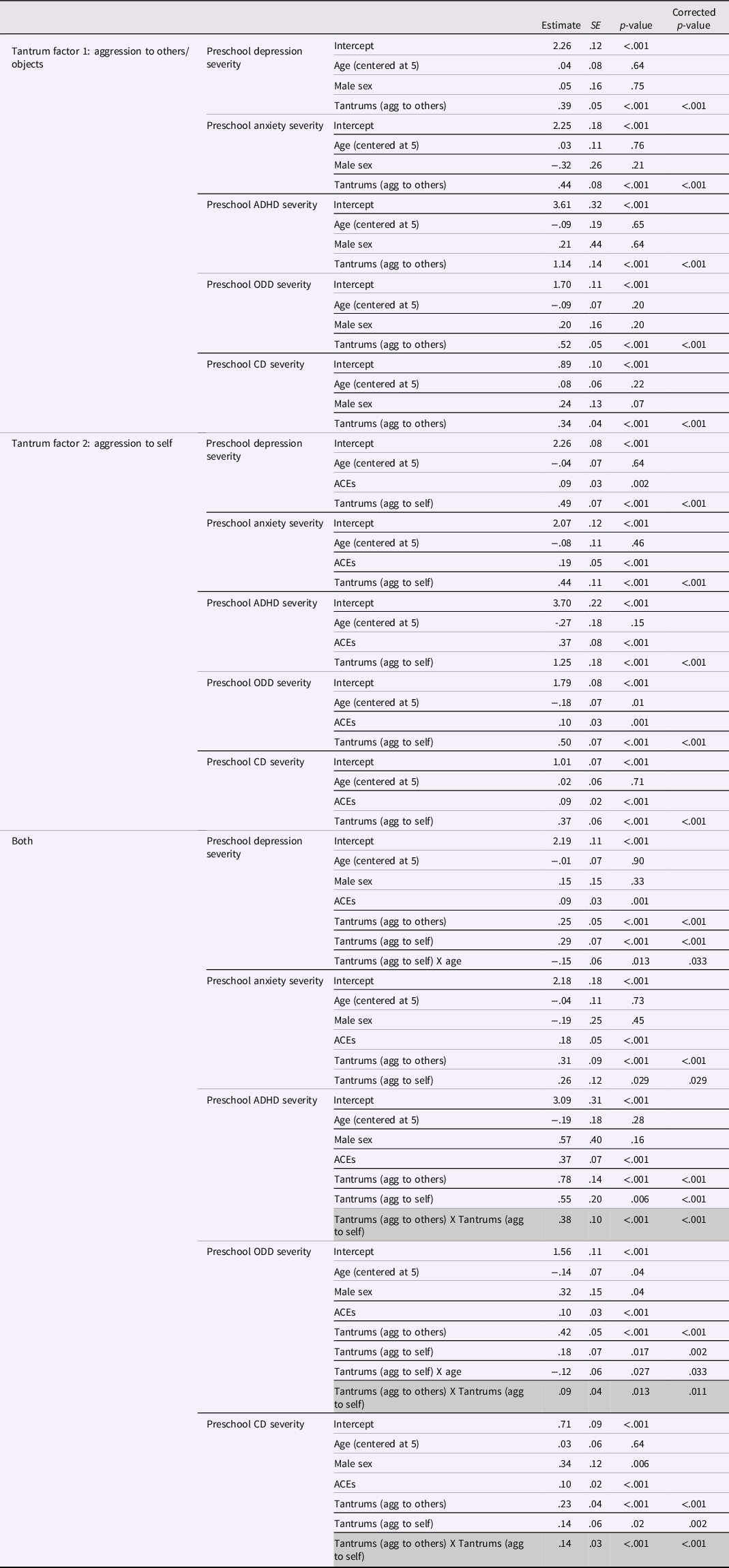
Descriptive statistics and correlations between all of the predictors included in the multi-level modelings are presented in Supplemental Table S5. In the models that examined how tantrums characterized by aggression towards objects and others predict early childhood psychopathology (see Table 2), significant intercept values were found in each model, indicating that psychopathology across each domain at age 5 was non-zero. No significant slope/change values were found, indicating that psychopathology was not changing significantly across the two time points across the preschool time period. Preschool temper tantrums characterized by aggression toward others/objects significantly predicted early childhood severity of each disorder examined in this study – depression, anxiety, ADHD, ODD, and CD, when controlling for child sex and preschool ACEs. These findings suggest that preschoolers experiencing more temper tantrums characterized by aggression towards others/objects also had overall more severe depression, anxiety, ADHD, ODD, and CD during preschool.
Models examining concurrent associations between preschool temper tantrum factors and preschool psychopathology

Note. ACEs = adverse childhood experiences; agg = aggression; ADHD = Attention Deficit Hyperactivity Disorder; CD = Conduct Disorder; ODD = Oppositional Defiant Disorder. Gray boxes indicate significant interactions that are plotted in Figure 1.
In the models that examined how tantrums characterized by aggression towards self predicted early childhood psychopathology (see Table 2), significant intercept values were found in each model, indicating that psychopathology across each domain at age 5 was non-zero. The only significant slope/change parameter was found in the model of preschool ODD severity, indicating that ODD severity decreased across the preschool period. Preschool temper tantrums characterized by aggression towards self were significantly associated with severity of early childhood depression, anxiety, ADHD, ODD, and CD, when controlling for preschool ACEs. These findings indicate that preschoolers experiencing more temper tantrums characterized by aggression towards self also had overall more severe depression, anxiety, ADHD, ODD, and CD during early childhood.
In the models that that included both tantrum factors (see Table 2), we again found significant intercept parameters and a significant slope/change parameter, but only for preschool ODD severity. In all models, the main effects of each tantrum factor indicated tantrums significantly predicted psychopathology severity, with children experiencing more temper tantrums having overall, more severe psychopathology. In the models examining how preschool tantrums predict early childhood externalizing psychopathology severity (i.e., ADHD, ODD, and CD severity), significant interactions between tantrum factors emerged. Across all externalizing domains, children with higher levels of both tantrums characterized by aggression to others/objects and tantrums characterized by aggression towards self had the most severe early childhood externalizing psychopathology (see Figure 1).
Preschool temper tantrums and later psychopathology
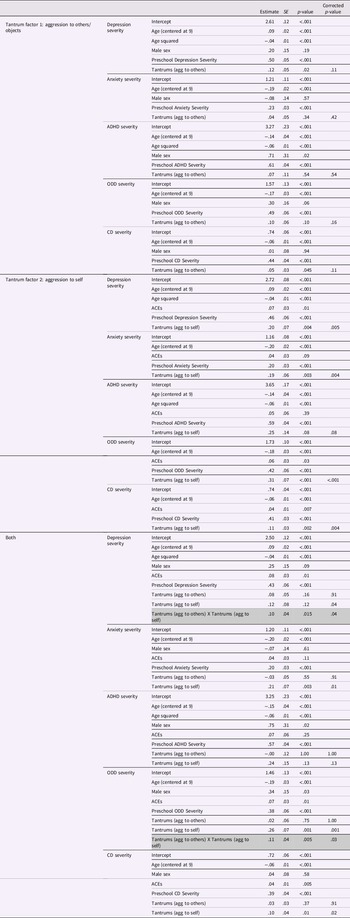
In the models that examined how tantrums characterized by aggression towards objects and others predict later psychopathology (see Table 3), significant intercept values were found in each model, indicating that psychopathology across each domain at age 9 was non-zero. The models for anxiety, ODD and CD severity included a significant linear slope parameter, suggesting that symptom severity across these domains were decreasing across childhood to adolescence. The models for depression and ADHD severity included a significant quadratic slope, suggesting that symptom severity in these domains was showing a non-linear, but decreasing, trajectory across childhood to adolescence. Preschool temper tantrums characterized by aggression towards other/objects did not significantly predict later severity of any form of psychopathology.
Longitudinal multi-level models examining the association between preschool temper tantrum factors and later psychopathology

Note. ACEs = adverse childhood experiences; agg = aggression; ADHD = Attention Deficit Hyperactivity Disorder; CD = Conduct Disorder; ODD = Oppositional Defiant Disorder.
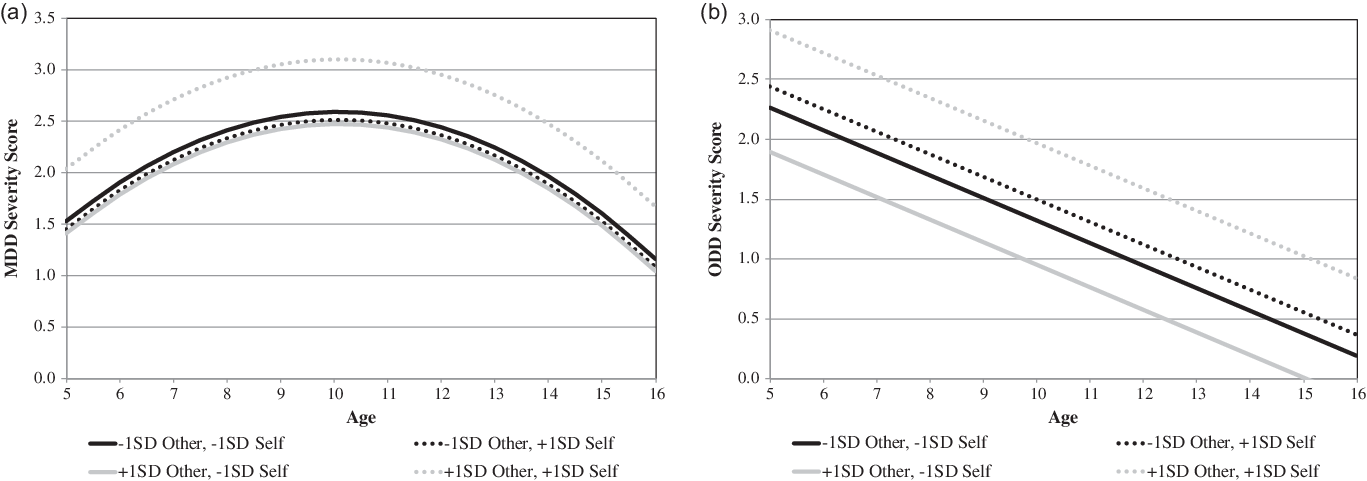
Gray boxes indicate significant interactions that are plotted in Figure 2.
In the models that examined how tantrums characterized by aggression towards self predict later psychopathology (see Table 3), significant intercept values were found in each model, indicating that psychopathology across each domain at age 9 was non-zero. As above, the models for anxiety, ODD and CD severity included a significant linear slope parameter, suggesting that symptom severity across these domains were decreasing across childhood to adolescence. The models for depression and ADHD severity included a significant quadratic slope, suggesting that symptom severity in these domains was showing a non-linear, but decreasing trajectory across childhood to adolescence. Preschool temper tantrums characterized by aggression towards self significantly predicted more severe depression, anxiety, ODD, and CD across childhood into adolescence, even when controlling for prior severity in these domains. These findings indicate that preschoolers experiencing more temper tantrums characterized by aggression towards self during preschool had overall more severe depression, anxiety, ODD, and CD across childhood/adolescence.
In the models that examined how both tantrum factors predicted later psychopathology (see Table 3), we again found the same pattern of significant intercept and slope parameters as described above. In the models examining anxiety, ADHD, and CD severity, preschool temper tantrums characterized by aggression towards self were associated with overall more severe later anxiety, ADHD, and CD (respectively), even when controlling for aggression towards others/objects. In the models examining later depression and ODD severity, significant interactions emerged between the temper tantrum factors. Children with higher levels of both tantrums characterized by aggression to others/objects and tantrums characterized by aggression towards self had the most severe later depression and anxiety (see Figure 2).
Significant interactions between temper tantrum factors predicting trajectories of later psychopathology. Note. other = tantrums characterized by aggression towards others/objects; self = tantrums characterized by aggression towards self.

Discussion
Temper tantrums are a common concern in early childhood and a key behavioral feature of irritability. Given the importance of irritability as a transdiagnostic phenotype associated with risk for both internalizing and externalizing psychopathology, it is crucial to better understand how this particular aspect of irritability is associated with psychopathology. To this end, the current study sought to identify the characteristics of preschool temper tantrums that predict risk for psychopathology, both in early childhood and throughout childhood and adolescence. Using a data-driven approach to characterize preschool tantrum behaviors, we identified two unique groupings of tantrum behaviors – one characterized by aggression towards others/objects (e.g., hitting others, breaking toys) and the other characterized by aggression toward self (e.g., hitting self, banging head). When examined in separate models, both tantrum types were significantly associated with preschool depression, anxiety, ADHD, ODD, and CD severity. However, only tantrum behaviors characterized by aggression towards self significantly predicted subsequent psychopathology. When both tantrum factors were examined in the same model, children with higher levels of both tantrums characterized by aggression to others/objects and tantrums characterized by aggression towards self had the most severe early childhood externalizing psychopathology (i.e., ADHD, ODD, and CD). Similarly, children with higher levels of both tantrums characterized by aggression to others/objects and tantrums characterized by aggression towards self had the most severe later depression and ODD. These findings identify aggression towards self as a feature of preschool temper tantrums that is particularly predictive of later psychopathology, either alone or in conjunction with tantrums characterized by aggression towards others/objects. These findings may aid clinicians in identifying which preschool tantrum behaviors put children most at-risk for subsequent psychopathology.
Temper tantrums characterized by aggression towards others/objects and aggression towards self alone were significantly associated with preschool-aged children’s greater severity of early childhood depression, anxiety, ADHD, ODD, and CD, and in conjunction, were associated with more severe early childhood externalizing problems. These findings are consistent with prior research documenting associations between preschool temper tantrums and both internalizing and externalizing psychopathology in early childhood (Belden et al., Reference Belden, Thomson and Luby2008; Wakschlag et al., Reference Wakschlag, Choi, Carter, Hullsiek, Burns, McCarthy, Leibenluft and Briggs-Gowan2012). Importantly, our findings add to this literature by identifying data-driven characteristics of temper tantrums associated with early childhood psychopathology. This data-driven approach demonstrates aggressive behaviors toward others/objects versus self are separable and each symptom group has unique associations. Future research on preschool temper tantrums may focus specifically on these tantrum behavioral factors.
When examining how temper tantrums predict later psychopathology, temper tantrums characterized by aggression towards others/objects alone were not significantly associated with later psychopathology across any domain. However, temper tantrums characterized by aggression towards self was non-specific, predicting children’s greater subsequent severity of all forms of psychopathology examined. Taken together, these findings suggest that although both types of aggression (i.e., towards others/objects and towards self) appear to confer risk for young children’s psychopathology, temper tantrums characterized by aggression towards self appear to be more predictive of persistent (or later) psychopathology. Speculatively, children who engage in aggression towards self during their tantrums may have more severe/impairing tantrums overall and may continue to show such aggression in other contexts later in life. Tantrums characterized by aggression towards self may be an early manifestation of a tendency towards self-harm behaviors that later appears as increased severity of other forms of psychopathology.
Interestingly, although temper tantrums typically include the types of aggressive behaviors often characteristic of externalizing diagnoses, the present study revealed significant predictive relationships with internalizing diagnoses, similar to prior findings by Wakschlag et al. (Reference Wakschlag, Estabrook, Petitclerc, Henry, Burns, Perlman, Voss, Pine, Leibenluft and Briggs-Gowan2015). Temper tantrums characterized by aggression towards self uniquely predicted increased anxiety severity across childhood and adolescence when controlling for temper tantrums characterized by aggression towards others/objects. Moreover, children who exhibited both greater aggression towards others/objects and greater aggression towards self in their temper tantrums had more severe depression severity across childhood and adolescence. Future research should examine whether there are specific symptom characteristics of depression other than severity (e.g., anhedonia, sleep problems, suicidal ideation) that are more associated with each grouping of tantrum behaviors. Clinically, our findings support monitoring children whose temper tantrums include aggression towards self for other symptoms of depression and anxiety, as well as encouraging early interventions that seek to reduce temper tantrums through improving emotion regulation capacities, such as parent-child interaction therapy - emotion development (PCIT-ED) (Luby et al., Reference Luby, Barch, Whalen, Tillman and Freedland2018; Luby et al., Reference Luby, Donohue, Gilbert, Tillman and Barch2020).
Notably, preschoolers whose temper tantrums were characterized by high levels of both aggression towards others/objects and aggression towards self developed the most severe later depression and ODD. The added contribution of both tantrum domains underscores the importance of assessing both domains. Together, these findings indicate that children presenting with high levels of both types of tantrum behaviors, and perhaps more severe temper tantrums overall, appear to be at particular risk for subsequent conduct disorders extending through adolescence. Importantly, we did not collect systematic tantrum severity information from our participants, so it is not clear whether these effects are primarily due to the fact that children showing high levels of both tantrum types just have more severe tantrums, and it is tantrum severity that is meaningfully associated with psychopathology outcomes. Future research should explore whether our more qualitative conceptualization of tantrum type provides additional information beyond that which is provided by tantrum severity.
Overall, our study has multiple strengths, extending a literature by using a data-driven approach to identifying clusters of tantrum behaviors, and then using these clusters to show the utility of using tantrum behaviors for predicting psychopathology well into adolescence. However, there were also limitations to this work. Because our study oversampled for depression and other early psychopathology, these findings will need to be replicated in samples normative, non-enriched community populations. Additionally, our study relied on parent and child reports via semi-structured, diagnostic interviews to quantify both temper tantrums and psychopathology, which may impact results that are attributable to shared method variance. Future research incorporating additional methodologies and informant reports should seek to confirm these findings. Additionally, our measure of preschool tantrums focused on the first assessment time point (ages 3–5.11 years). Given this relatively large age span, some of the children in the sample (e.g., the 5-year-olds) may have been older than the age span in which tantrums are normative. The inclusion of these older children in the sample might have affected our measure of temper tantrums, as some of these children may have already “aged out” of developmentally normative tantrums, and those who still had tantrums were, by definition, more severe. Future research may benefit from using a narrower age window for assessing tantrums. Moreover, because parents were only asked about frequency and duration of tantrums if they indicated that tantrums were a problem for their child, this study could not adequately examine the impact of these tantrum features on later child psychopathology. Future studies that collect this information in all participants will be important to examine the impact of specific features of tantrums on subsequent child outcomes.
In sum, we used a data-driven approach to demonstrate that tantrum behaviors in early childhood can be parsed into two factors reflecting (a) aggression toward self and (b) aggression toward others/objects. Both aggression toward self and objects/others indicated risk for later psychopathology but when considered together aggression toward self indicated greater overall risk of later severity of psychopathology. Overall, when assessing temper tantrums in children, most children will have a decrease in intensity and frequency with age, but children with aggression toward self should be considered for ongoing clinical assessments and interventions. Thus, when providing expectant management for parents, it is important to remind families that temper tantrums, even destructive ones, do not portend lifelong outbursts. They may, however, reflect an increased risk for the later emergence of other forms of psychopathology and should be addressed if possible. Additionally, future efforts to develop streamlined assessment instruments for early childhood temper tantrums might consider focusing explicitly on behaviors associated with aggression towards self and others/objects as these behaviors might be clinically informative about propensity for current and future psychopathology.
Supplementary material
The supplementary material for this article can be found at https://doi.org/10.1017/S0954579422000359
Funding statement
All phases of this study were supported by a National Institutes of Health (NIH) grant, R01 MH064769-06A1. Dr Hoyniak’s work was supported by NIH grant: K23 MH127305-01 (PI: Hoyniak). Dr Donohue’s work was supported by NIH grant: K23MH125023-01 (PI: Donohue). Dr Perino’s work was supported by NIH grant: K99HD105002 (PI: Perino). Drs. Quiñones-Camacho, and Vogel were supported by NIH grant: T32 MH100019 (PI’s: Barch and Luby).
Conflicts of interest
None.