Introduction
Worry is a universal experience; however, it can become pathological when it is difficult to control, pervasive, and associated with somatic symptoms (Ruscio & Borkovec, Reference Ruscio and Borkovec2004). A key component of generalized anxiety disorder (GAD) is pathological worry that occurs for at least 6 months, along with significant distress and impairment (APA, 1994). The content of worry may vary across patients with GAD, but often involves everyday, routine life circumstances (job responsibilities, finances, being late), and health concerns for self or other family members (Becker et al. Reference Becker, Goodwin, Hölting, Hoyer and Margraf2003). In conjunction with difficult to control worry, patients must also have at least three of the following symptoms to meet the diagnostic criteria of GAD: restlessness or feeling keyed up or on edge, being easily fatigued, difficulty concentrating or mind going blank, irritability, muscle tension, or sleep disturbance.
Although the core symptom of GAD is worry, it is the somatic symptoms associated with GAD that often prompt patients to seek treatment, typically from their primary care physician (Ballenger et al. Reference Ballenger, Davidson, Lecrubier, Nutt, Borkovec, Rickels, Stein and Wittchen2001; Culpepper, Reference Culpepper2002). The presentation of GAD within the primary care setting is challenging because of the combination of the persistent, and sometimes diverse, somatic and psychological symptoms associated with GAD (Lydiard, Reference Lydiard2000). Patients may present with symptoms that are frustrating or unexplained (Ballenger et al. Reference Ballenger, Davidson, Lecrubier, Nutt, Borkovec, Rickels, Stein and Wittchen2001). Fluctuations in GAD severity over time, intervening symptoms or syndromes, and high rates of co-morbidity are other factors that contribute to the difficulty in recognizing and treating GAD (Ballenger et al. Reference Ballenger, Davidson, Lecrubier, Nutt, Borkovec, Rickels, Stein and Wittchen2001; Culpepper, Reference Culpepper2002).
Duloxetine and venlafaxine extended-release (XR) have been approved by the US Food and Drug Administration as serotonin noradrenaline reuptake inhibitors (SNRIs) that have demonstrated efficacy in the treatment of adults with GAD (Rickels et al. Reference Rickels, Pollack, Sheehan and Haskins2000; Hartford et al. Reference Hartford, Kornstein, Liebowitz, Pigott, Russell, Detke, Walker, Ball, Dunayevich, Dinkel and Erickson2007; Koponen et al. Reference Koponen, Allgulander, Erickson, Dunayevich, Pritchett, Detke, Ball and Russell2007; Rynn et al. Reference Rynn, Russell, Erickson, Detke, Ball, Dinkel, Rickels and Raskin2008). The present trial examined the efficacy of duloxetine 20 mg/day, 60–120 mg/day and venlafaxine XR 75–225 mg/day compared with placebo in the acute treatment of patients with GAD. This study was designed to be nearly identical to a previous study (Hartford et al. Reference Hartford, Kornstein, Liebowitz, Pigott, Russell, Detke, Walker, Ball, Dunayevich, Dinkel and Erickson2007) to allow for pooling of data for a non-inferiority comparison between duloxetine 60–120 mg/day and venlafaxine XR 75–225 mg/day treatment. The result of the non-inferiority analyses was that duloxetine met clinical and statistical criteria for non-inferiority compared with venlafaxine XR. Full details of the rationale and results of the pooled analyses are reported elsewhere (Allgulander et al. Reference Allgulander, Nutt, Detke, Erickson, Spann, Walker, Ball and Russellin press), and therefore this paper does not report direct comparisons between the active treatments. Instead, the objective of this study was to examine the efficacy and tolerability of duloxetine and venlafaxine XR for the treatment of GAD relative to placebo. A secondary aim was to compare the efficacy of each treatment with placebo on psychic and somatic symptoms associated with GAD.
Method
Study design
Adult out-patients diagnosed with GAD were included in this multi-center, randomized, double-blind, placebo- and active comparator-controlled trial. Patients completed a 3- to 30-day screening phase and were then randomly assigned to duloxetine 60–120 mg once daily, duloxetine 20 mg once daily, venlafaxine XR 75–225 mg once daily, or placebo in a 2:1:2:2 ratio for a 10-week double-blind treatment period. Assignment to therapy was determined by a computer-generated random sequence using an Interactive Voice Response System (IVRS). Because drug registration in Europe requires demonstration of a minimum effective dose, a duloxetine 20 mg once daily dose was included in this study to explore whether doses of duloxetine <60 mg/day were effective in the treatment of GAD. Patients in this group started with a 20 mg dose that remained fixed during the study. For patients in the duloxetine 60–120 mg/day group, treatment was initiated at 30 mg/day for 1 week and then increased to 60 mg/day. For the venlafaxine XR 75–225 mg/day group, treatment began with 37.5 mg/day for 1 week and then increased to 75 mg/day. Flexible dosing was allowed in increments of duloxetine 30 mg/day or venlafaxine XR 75 mg/day up to a maximum dose of duloxetine 120 mg/day or venlafaxine XR 225 mg/day respectively, based on the investigator's judgment. However, a dose increase was required if the Clinical Global Impression Improvement (CGI-I; Guy, Reference Guy1976) scale score was ⩾3 (minimal improvement, no change, or worse) after 3 weeks of treatment. Dose of study medication could be decreased a total of two times for tolerability reasons, provided the patient maintained a minimal dose of duloxetine 60 mg/day or venlafaxine XR 75 mg/day. Doses were stabilized after 6 weeks of treatment. Patients taking duloxetine 20 mg/day who required a dose increase received additional placebo capsules to maintain blinding. The IVRS automatically dispensed medication for all treatment arms based on physician assessment.
Approval for the conduct of the study was obtained by each site's Institutional Review Board, and written informed consent was obtained from all patients before any study procedures. The implementation of the study was consistent with Good Clinical Practice (GCP) standards and The Declaration of Helsinki (World Medical Association, Reference Papakostas, Thase, Fava, Nelson and Shelton2000).
Patients
Male and female out-patients aged ⩾18 years presenting with GAD were recruited over 21 months (from 12 April 2005 to 24 January 2007) from 33 study centers in eight countries (Australia, Argentina, Belgium, Canada, Mexico, Russia, Taiwan and the UK). Inclusion criteria required that patients were assessed with the Mini International Neuropsychiatric Interview (MINI; Sheehan et al. Reference Sheehan, Lecrubier, Sheehan, Amorim, Janavs, Weiller, Hergueta, Baker and Dunbar1998) and diagnosed with GAD according to DSM-IV (APA, 1994) criteria. The diagnosis was also confirmed by a study psychiatrist. Disease severity was required to be at least of moderate intensity as defined by a Hospital Anxiety Depression Scale (HADS; Zigmond & Snaith, Reference Zigmond and Snaith1983) anxiety subscale score of ⩾10 and a Covi Anxiety Rating Scale (CAS; Covi et al. Reference Covi, Lipman, McNair and Czerlinsky1979) score ⩾9. To ensure that anxiety symptoms were predominant, patients were also required to have their CAS score >the Raskin Depression Scale (RDS) score, with none of the five RDS items scoring >3. In addition, patients were required to have a CGI Severity (CGI-S; Guy, Reference Guy1976) score ⩾4 (moderate) at baseline and at randomization.
Exclusion criteria included the presence of any current and primary DSM-IV Axis I diagnosis other than GAD, including major depressive disorder (MDD), within the past 6 months, history of antisocial behavior that would interfere with compliance with the study, or serious risk of suicide. Patients were ineligible if they had a history of alcohol or any psychoactive substance abuse or dependence within the past 6 months; benzodiazepine use 14 days prior to randomization visit; or treatment with a monoamine oxidase inhibitor (MAOI) or fluoxetine within 30 days of randomization. Patients were also excluded if their current episode of GAD had failed to respond to two or more adequate trials of antidepressants, benzodiazepines, or other anxiolytics at a clinically appropriate dose for a minimum of 4 weeks, or if they initiated or changed the intensity of psychotherapy or other non-drug therapies within 6 weeks prior to enrolment.
Outcome measures
The Hamilton Anxiety Rating Scale (HAMA; Hamilton, Reference Hamilton1959) was the primary efficacy measure for changes in severity of anxiety symptoms. The HAMA is a 14-item clinician-administered rating scale that measures the severity of anxiety based on the frequency and impairment of symptoms during the past week. Each item is rated on a five-point scale of 0 (not present) to 4 (very severe). Higher scores indicate a greater degree of symptom severity. The Structured Clinical Interview Guide for the HAMA (SIGH-A) was used for the study assessments as it has been shown to have good reliability and validity (Shear et al. Reference Shear, Vander Bilt, Rucci, Endicott, Lydiard, Otto, Pollack, Chandler, Williams, Ali and Frank2001). To become approved raters in this study, study personnel from each site were trained in the SIGH-A version and underwent evaluation using a modified version of the Rater Applied Performance Scale (RAPS; Lipsitz et al. Reference Lipsitz, Kobak, Feiger, Sikich, Moroz and Englehardt2004). Based on mock interviews, raters were evaluated for their interview skills (interview style, standardization of questioning, and inter-rater scoring ability). Following the completion of training, raters then scored a standardized video interview of a patient with GAD. The inter-class correlation coefficient (ICC) for raters was 0.91. Recalibration during the study occurred by raters assessing a different videotaped HAMA interview of a patient with GAD. The recalibration ICC was 0.87, indicating high inter-rater reliability.
A secondary objective of this trial was to assess the efficacy of duloxetine 60–120 mg/day and venlafaxine XR 75–225 mg/day on the HAMA psychic and somatic factor scores. The HAMA psychic anxiety factor score is the sum of HAMA items 1–6 [anxious mood, tension, fears, insomnia, intellectual (cognitive) and depressed mood] and item 14 (behavior at interview) and the somatic anxiety factor score is the sum of HAMA items 7–13 [somatic (muscular), somatic (sensory), cardiovascular, respiratory, gastrointestinal, genitourinary, and autonomic symptoms].
Additional outcome measures included the Sheehan Disability Scale (SDS; Sheehan, Reference Sheehan1983), HADS, CGI-I and Patient Global Impression Improvement (PGI-I; Guy, Reference Guy1976) ratings. The SDS global score consists of the total of the scores of the three individual items (work, social, and family/home management) that are each rated on an 11-point scale (0=not at all, 10=extremely). The HADS is the sum of two seven-item scales, with higher scores indicating greater symptom severity. The clinician-rated CGI-I and the patient-rated PGI-I scales are rated from 1 (indicating very much improved) to 7 (indicating very much worse). All outcome measures were translated from English into the native language for each participating country and were independently reverse translated to assure face validity.
Treatment-emergent adverse events (TEAEs) were collected by spontaneous report at baseline and at each visit to assess tolerability. An adverse event was considered treatment emergent if it occurred following the first dose of study medication and was either new or more severe compared with baseline.
Statistical analyses
All analyses presented here were conducted on an intent-to-treat (ITT) basis that consisted of all patients with a baseline and at least one post-baseline measurement. Baseline was defined as the last non-missing observation at or before randomization, and endpoint was defined as the last non-missing post-baseline measurement [last observation carried forward (LOCF)].
Approximately 560 patients were planned to be randomly assigned in this study to duloxetine 20 mg/day, duloxetine 60–120 mg/day, venlafaxine XR 75–225 mg/day, or placebo. Power determination was calculated based on the primary objective of comparison between duloxetine and placebo. This study had approximately 90% power to detect a difference of −2.3 points in the baseline-to-endpoint mean change on the HAMA total score between duloxetine 60–120 mg/day and placebo. Based on a previous study, the sample size was determined using a two-sided test with α=0.05, assuming a common standard deviation of 6.0 and that 10% of the patients would have missing post-baseline data on the HAMA total score (Hartford et al. Reference Hartford, Kornstein, Liebowitz, Pigott, Russell, Detke, Walker, Ball, Dunayevich, Dinkel and Erickson2007).
The primary efficacy analysis was the mean change from baseline to endpoint in the HAMA total score during the 10-week double-blind acute therapy phase. Mean changes in HAMA scores (total, psychic and somatic) were each analyzed using an analysis of covariance (ANCOVA) model with treatment and investigator as fixed effects and baseline score as a covariate. A priori demographic subgroup analyses were completed for the HAMA total score for age (<55 years, ⩾55 years), sex (male, female), and origin (Caucasian, Hispanic, East Asian, African, West Asian) using the ANCOVA model with treatment, subgroup, and treatment-by-subgroup interaction as fixed effects and baseline score as the covariate.
Following review of the results of these a priori analyses, a select post hoc analysis of effect size and its confidence interval was performed for change in HAMA total score for a stratum in the sex subgroup to further explore unexpected results observed within the corresponding subgroup analysis. The effect size was calculated as the difference in mean change between the placebo group and an active treatment group (a positive difference indicates drug superiority) divided by the pooled sample standard deviation of the two treatment groups. The study was powered to detect a clinically relevant difference between placebo and duloxetine, which translates to an effect size >0.30 (Hedges & Olkin, Reference Hedges and Olkin1985).
Secondary efficacy analyses also considered changes over time for HAMA scores using a mixed-model repeated measures (MMRM) analysis that included the treatment, investigator, treatment-by-visit interaction as fixed effects, and the continuous covariates of baseline score and baseline-by-visit interaction. CGI-I and PGI-I scores at endpoint were analyzed using an analysis of variance (ANOVA) model with treatment and investigator as fixed effects. Response was defined as a ⩾50% reduction from baseline in HAMA total score at endpoint. Remission was defined as a HAMA total score ⩽7 at endpoint (Doyle & Pollack, Reference Doyle and Pollack2003). A Cochran–Mantel–Haenszel test (CMH) for general association, controlling for investigator, was used to analyze these categorical efficacy measures. Fisher's exact test was used to analyze categorical measures (TEAEs, rates of discontinuation) when cell sizes were small. Baseline severity of illness was assessed using an ANOVA model with treatment as the main effect.
Statistical comparisons were based on two-sided, 0.05 significance levels. Mean change refers to the least-squares mean obtained from the specified ANOVA model unless specified otherwise.
Results
Patient characteristics and disposition
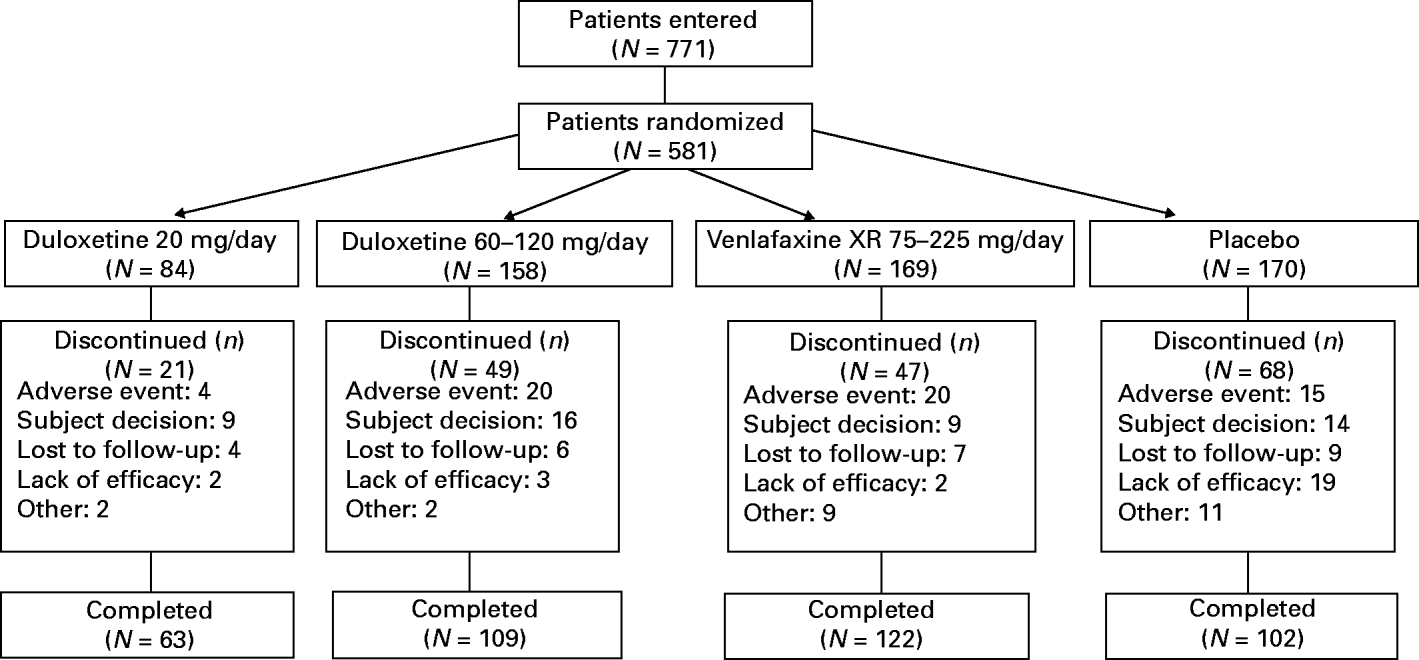
Of the 771 patients who entered the study, 190 did not meet study entry criteria or decided not to participate. The remaining 581 patients were randomly assigned to receive duloxetine 20 mg/day (n=84), duloxetine 60–120 mg/day (n=158), venlafaxine XR 75–225 mg/day (n=169), or placebo (n=170) (Fig. 1). No significant treatment group differences were observed in demographics or in baseline severity of illness. The total sample consisted of 332 (57.1%) women and 249 (42.9%) men (p=0.137), with a mean age of 42.8 years (p=0.473). The majority of patients were Caucasian (n=392, 67.5%), with the remaining patients being Hispanic (n=128, 22.0%) or of another ethnicity (n=61, 10.5%) (p=0.986). The baseline HAMA total score was 27.4, indicating moderately severe GAD illness (p=0.872). Baseline scores for HAMA psychic factor score, HAMA somatic factor score, HADS anxiety subscale score, and SDS global functioning score were 15.2, 12.2, 14.7 and 17.8 respectively (p>0.60 for all comparisons).
Patient enrollment and disposition during the study. Category of ‘other’ consists of patients who discontinued due to protocol violations, physician decisions and/or entry criteria exclusion, or had missing data.

The discontinuation rate from the study was 25.0% for duloxetine 20 mg/day, 30.4% for duloxetine 60–120 mg/day, 27.8% for venlafaxine XR 75–225 mg/day, and 40.0% for placebo. Fewer patients discontinued from the duloxetine 20 mg/day and venlafaxine XR 75–225 mg/day arms compared with placebo (p⩽0.05, both comparisons). Significantly more placebo-treated patients discontinued due to lack of efficacy compared with each of the three active treatment groups (duloxetine 20 mg/day, p⩽0.05; duloxetine 60–120 mg/day and venlafaxine XR 75–225 mg/day, p⩽0.001 for both comparisons), but there were no significant differences among groups for other categories of reason for discontinuation (Fig. 1).
For patients in the duloxetine 60–120 mg/day treatment group, 29.3% of patients had one dose escalation and 53.4% had two dose escalations. The mean final dose for this group was 90 mg/day (s.d.=31.4 mg/day). For patients in the venlafaxine XR 75–225 mg treatment group, 33.6% had one dose escalation and 47.3% had two escalations. The mean final venlafaxine XR dose was 151.3 mg/day (s.d.=69.5 mg/day). There was no significant difference between duloxetine and venlafaxine XR in frequency of dose escalation (p=0.618).
Efficacy
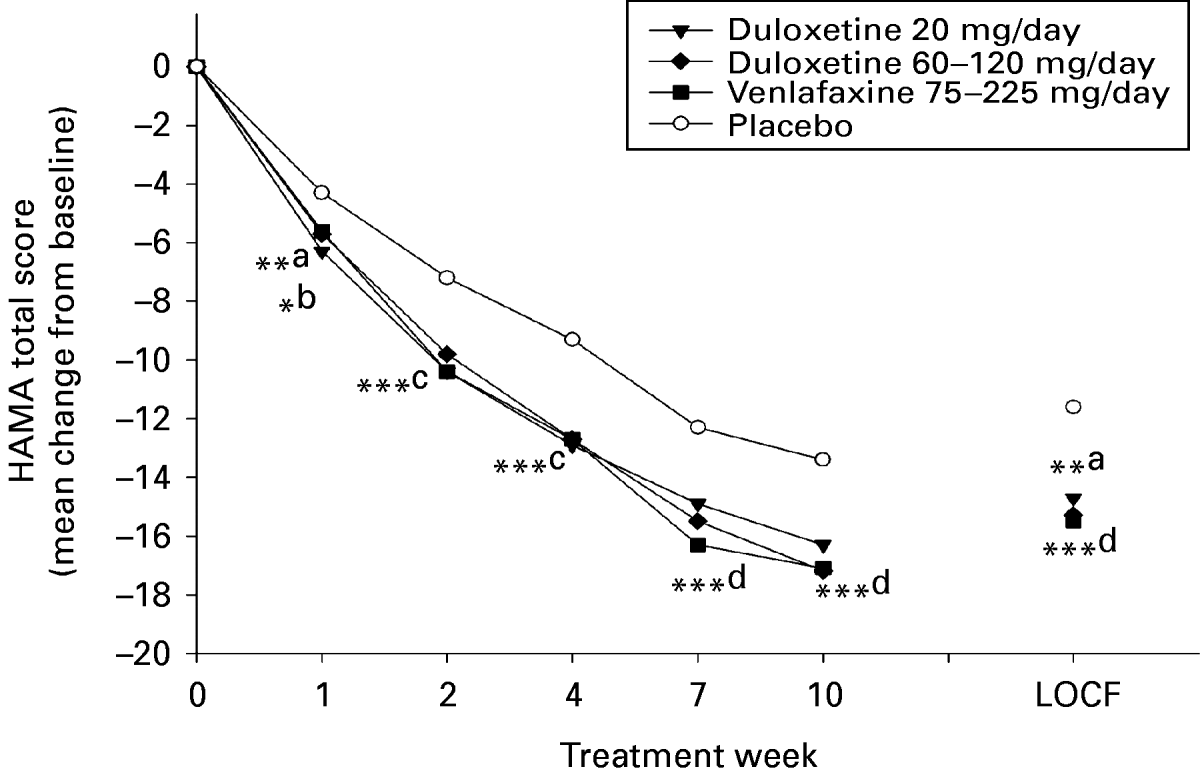
Compared with placebo, all three active treatment groups demonstrated significant improvement on the HAMA total score using both MMRM and LOCF analyses (Fig. 2). In the LOCF analysis, for duloxetine 20 mg/day (n=83), baseline was 27.7 (s.d.=8.0), endpoint was 12.5 (s.d.=10.8), and mean change was −14.7 (s.e.=1.0). For duloxetine 60–120 mg/day (n=151), baseline was 27.7 (s.d.=7.3), endpoint was 11.9 (s.d.=9.7), and mean change was −15.3 (s.e.=0.7). For venlafaxine XR 75–225 mg/day (n=158), baseline was 27.4 (s.d.=7.6), endpoint was 11.7 (s.d.=8.9), and mean change was −15.5 (s.e.=0.7). For placebo (n=163), baseline was 27.3 (s.d.=7.3), endpoint was 15.8 (s.d.=9.4), and mean change was −11.6 (s.e.=0.7) (duloxetine 20 mg/day versus placebo, p⩽0.01; duloxetine 60–120 mg/day and venlafaxine XR 75–225 mg/day versus placebo, p⩽0.001 for both comparisons).
Mean change from baseline to endpoint in Hamilton Anxiety Rating Scale (HAMA) total score by treatment week [mixed-model repeated measures (MMRM)] and at endpoint [week 10, last observation carried forward (LOCF)]. **a p⩽0.01 duloxetine 20 mg/day versus placebo; *b p⩽0.05 duloxetine 60–120 mg/day and venlafaxine XR 75–225 mg/day versus placebo; ***c p⩽0.001 duloxetine 20 mg/day, duloxetine 60–120 mg/day and venlafaxine XR 75–225 mg/day versus placebo; ***d p⩽0.001 duloxetine 60–120 mg/day and venlafaxine XR 75–225 mg/day versus placebo.

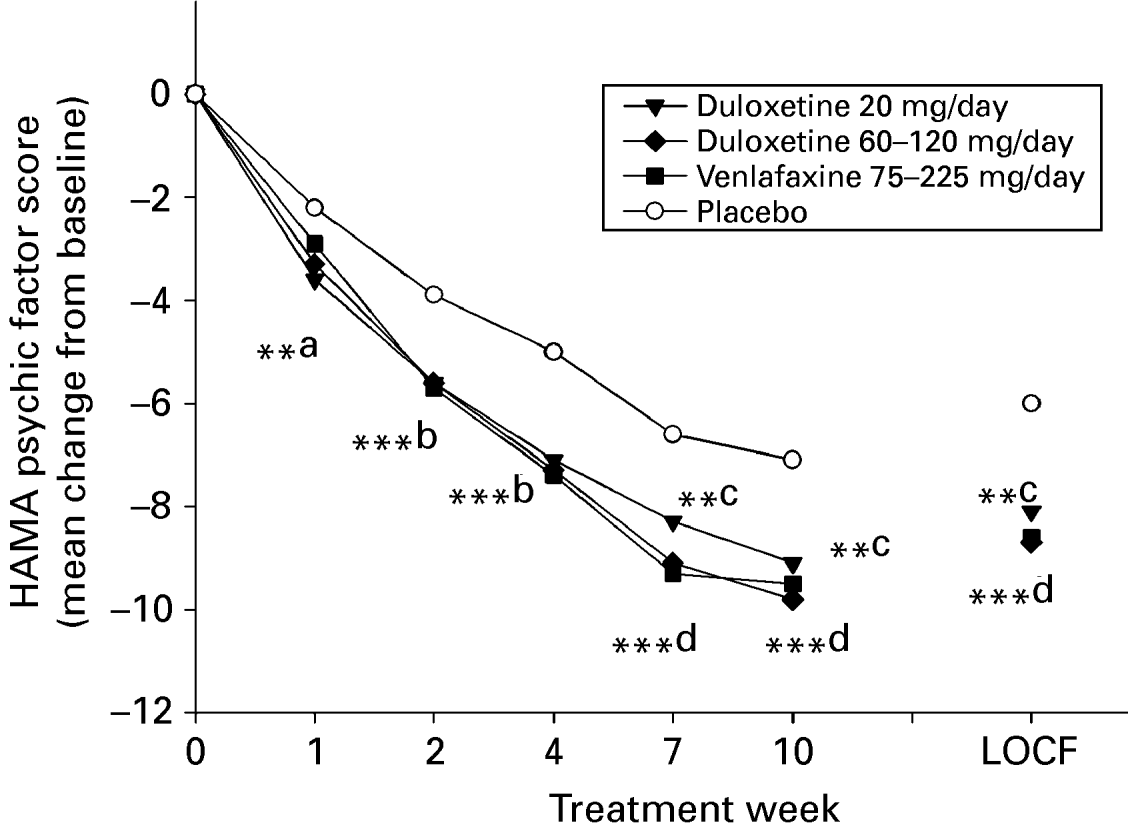
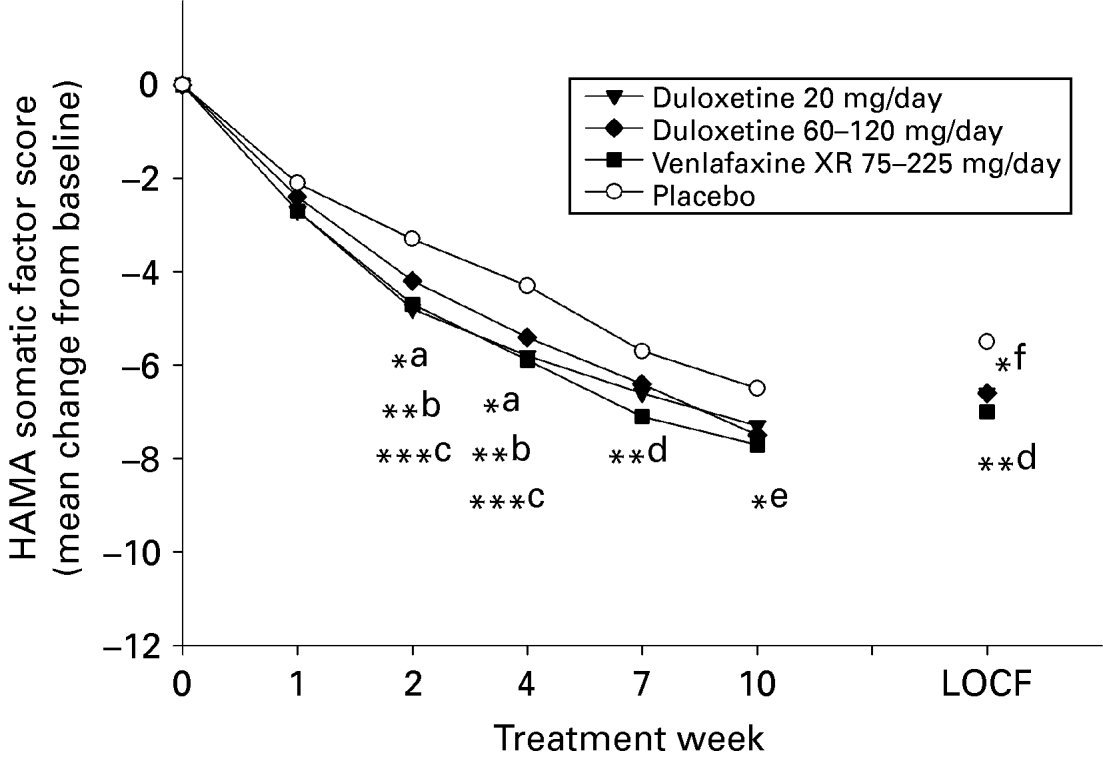
For the HAMA psychic factor scores, with both the LOCF and MMRM analyses, each of the active treatment groups demonstrated significantly greater improvement compared with placebo. In the LOCF analysis, for duloxetine 20 mg/day (n=83), baseline was 15.1 (s.d.=4.0), endpoint was 6.8 (s.d.=6.0), and mean change was −8.1 (s.e.=0.6). For duloxetine 60–120 mg/day (n=151), baseline was 15.3 (s.d.=3.3), endpoint was 6.3 (s.d.=5.4), and mean change was −8.7 (s.e.=0.4). For venlafaxine XR 75–225 mg/day (n=158), baseline was 15.3 (s.d.=3.5), endpoint was 6.5 (s.d.=5.1), and mean change was −8.6 (s.e.=0.4). For placebo (n=163), baseline was 15.1 (s.d.=3.8), endpoint was 9.1 (s.d.=5.8), and mean change was −6.0 (s.e.=0.4) (duloxetine 20 mg/day versus placebo, p⩽0.01; duloxetine 60–120 mg/day and venlafaxine XR 75–225 mg/day versus placebo, p⩽0.001 for both comparisons) (Fig. 3). The analyses for the HAMA somatic factors showed significant differences among groups using both the MMRM and LOCF analyses (Fig. 4). In the HAMA somatic anxiety LOCF analysis, for duloxetine 20 mg/day (n=83), baseline was 12.5 (s.d.=4.8), endpoint was 5.7 (s.d.=5.4), and mean change was −6.6 (s.e.=0.5). For duloxetine 60–120 mg/day (n=151), baseline was 12.4 (s.d.=5.1), endpoint was 5.5 (s.d.=4.8), and mean change was −6.6 (s.e.=0.4). For venlafaxine XR 75–225 mg/day (n=158), baseline was 12.1 (s.d.=5.0), endpoint was 5.2 (s.d.=4.4), and mean change was −7.0 (s.e.=0.4). For placebo (n=163), baseline was 12.2 (s.d.=4.8), endpoint was 6.7 (s.d.=4.3), and mean change was −5.5 (s.e.=0.3) (duloxetine 20 mg/day versus placebo, p=0.07; duloxetine 60–120 mg/day versus placebo, p⩽0.05; venlafaxine XR 75–225 mg/day versus placebo, p⩽0.01).
Mean change from baseline to endpoint in Hamilton Anxiety Rating Scale (HAMA) psychic factor by treatment week [mixed-model repeated measures (MMRM)] and at endpoint [week 10, last observation carried forward (LOCF)]. **a p⩽0.01 duloxetine 60–120 mg/day and venlafaxine XR 75–225 mg/day versus placebo; ***b p⩽0.001 duloxetine 20 mg/day, duloxetine 60–120 mg/day and venlafaxine XR 75–225 mg/day versus placebo; **c p⩽0.01 duloxetine 20 mg/day versus placebo; ***d p⩽0.001 duloxetine 60–120 mg/day and venlafaxine XR 75–225 mg/day versus placebo.

Mean change from baseline to endpoint in Hamilton Anxiety Rating Scale (HAMA) somatic factor by treatment week [mixed-model repeated measures (MMRM)] and at endpoint [week 10, last observation carried forward (LOCF)]. *a p⩽0.01 duloxetine 20 mg/day versus placebo; **b p⩽0.05 duloxetine 60–120 mg/day; ***c p⩽0.001 venlafaxine XR 75–225 mg/day versus placebo; **d p⩽0.01 venlafaxine XR 75–225 mg/day versus placebo; *e p⩽0.05 venlafaxine XR 75–225 mg/day; *f p⩽0.05 duloxetine 60–120 mg/day.

Response and remission rates were significantly higher for all three active treatment groups compared with the placebo group: response rates were 60% (50/83) for duloxetine 20 mg/day (p⩽0.01), 65% (98/151) for duloxetine 60–120 mg/day, 61% (97/158) for venlafaxine XR 75–225 mg/day (p⩽0.001 for both comparisons versus placebo), and 42% (69/163) for placebo. The frequency of patients who met remission criteria at endpoint was 42% (35/83) for duloxetine 20 mg/day, 44% (67/151) for both duloxetine 60–120 mg/day and venlafaxine XR 75–225 mg/day (70/158), and 20% (32/163) for placebo (p⩽0.001 for each comparisons versus placebo).
In all efficacy subgroup analyses on mean changes in HAMA total score, there were no significant treatment-subgroup interactions (all p⩾0.10). Within the age subgroup, patients treated with duloxetine 60–120 mg/day or venlafaxine XR 75–225 mg/day separated significantly from placebo for both age categories (p⩽0.01 for each comparison); however, there was no statistically significant separation between duloxetine 20 mg/day and placebo in patients <55 years of age (p=0.054). For the origin subgroup, duloxetine and venlafaxine XR treatments were statistically significant from placebo for Caucasian patients (p⩽0.01 for each comparison); for all other strata, origin subgroups did not demonstrate significant differences compared with placebo (p⩾0.12, all comparisons). For sex, the subgroup analysis showed that men in each of the three active treatment groups had significantly greater mean improvement in HAMA total score compared with placebo (−15.3 for duloxetine 20 mg/day, −15.7 for duloxetine 60–120 mg/day, −15.3 for venlafaxine XR 75–225 mg/day, and −10.9 for placebo, p values range 0.05 to 0.001); women had significantly greater HAMA total score improvements when treated with duloxetine 60–120 mg/day (−15.8, p⩽0.01) or venlafaxine XR 75–225 mg/day (−16.2, p⩽0.01), but not when treated with duloxetine 20 mg/day (−14.8, p=0.138) compared with placebo (−12.1). Effect size (95% confidence intervals) was 0.17 (−0.20 to 0.53) for women taking duloxetine 20 mg/day. Comparatively, effect size was 0.31 (0.02–0.60) for women taking duloxetine 60–120 mg/day and 0.30 (0.01–0.59) for women taking venlafaxine XR 75–225 mg/day.
Overall improvement ratings at endpoint were greater for duloxetine-treated patients (20 mg/day or 60–120 mg/day) and venlafaxine XR-treated patients compared with placebo-treated patients by the CGI-I scores (p⩽0.001, each comparisons). The mean CGI-I rating at endpoint for the duloxetine 20 mg/day, duloxetine 60–120 mg/day, and venlafaxine XR 75–225 mg/day treatment groups was approximately 2.3 (s.e.=0.1), indicating average improvement between ‘very much’ and ‘much improvement’, whereas the mean value for the placebo group was 3.0 (s.e.=0.1), which is consistent with ‘minimal improvement’. Similarly, patients in the active treatment groups also rated themselves as more improved on the PGI-I than patients in the placebo groups (p⩽0.001, each comparison). Mean improvement ratings by patient report ranged from 2.4 to 2.6 (s.e.=0.2 for duloxetine 20 mg/day; s.e.=0.1 for duloxetine 60–120 mg/day and venlafaxine XR 75–225 mg/day) in the duloxetine and venlafaxine XR groups compared with a mean endpoint rating of 3.1 (s.e.=0.1) for the placebo group.
Compared with placebo, all three active treatments demonstrated significant improvement on the HADS anxiety and depression subscale scores. Mean HADS anxiety subscale score improvement from baseline to endpoint using LOCF analysis was −7.0 (s.e.=0.5) points for duloxetine 20 mg/day, −7.7 (s.e.=0.4) points for duloxetine 60–120 mg/day, −6.9 (s.e.=0.4) points for venlafaxine XR 75–225 mg/day, and −4.9 (s.e.=0.4) points for placebo (p⩽0.001 for all comparisons). Mean HADS depression subscale score improvement from baseline to endpoint using LOCF analysis was −3.3 (s.e.=0.4) points for duloxetine 20 mg/day, −3.5 (s.e.=0.3) points for duloxetine 60–120 mg/day, −3.6 (s.e.=0.3) points for venlafaxine XR 75–225 mg/day, and −1.9 (s.e.=0.3) points for placebo (p⩽0.001 for all comparisons).
Role functioning also significantly improved for patients in all three active treatment groups compared with the placebo as measured by the SDS global functioning improvement score. The mean improvement in the global functioning score was −8.5 (s.e.=0.8) for the duloxetine 20 mg/day group (p⩽0.05), −8.9 (s.e.=0.6) for the duloxetine 60–120 mg/day (p⩽0.01), −9.1 (s.e.=0.6) for the venlafaxine XR 75–225 mg/day treatment group (p⩽0.001), and −6.2 (s.e.=0.6) for the placebo treatment group.
Tolerability
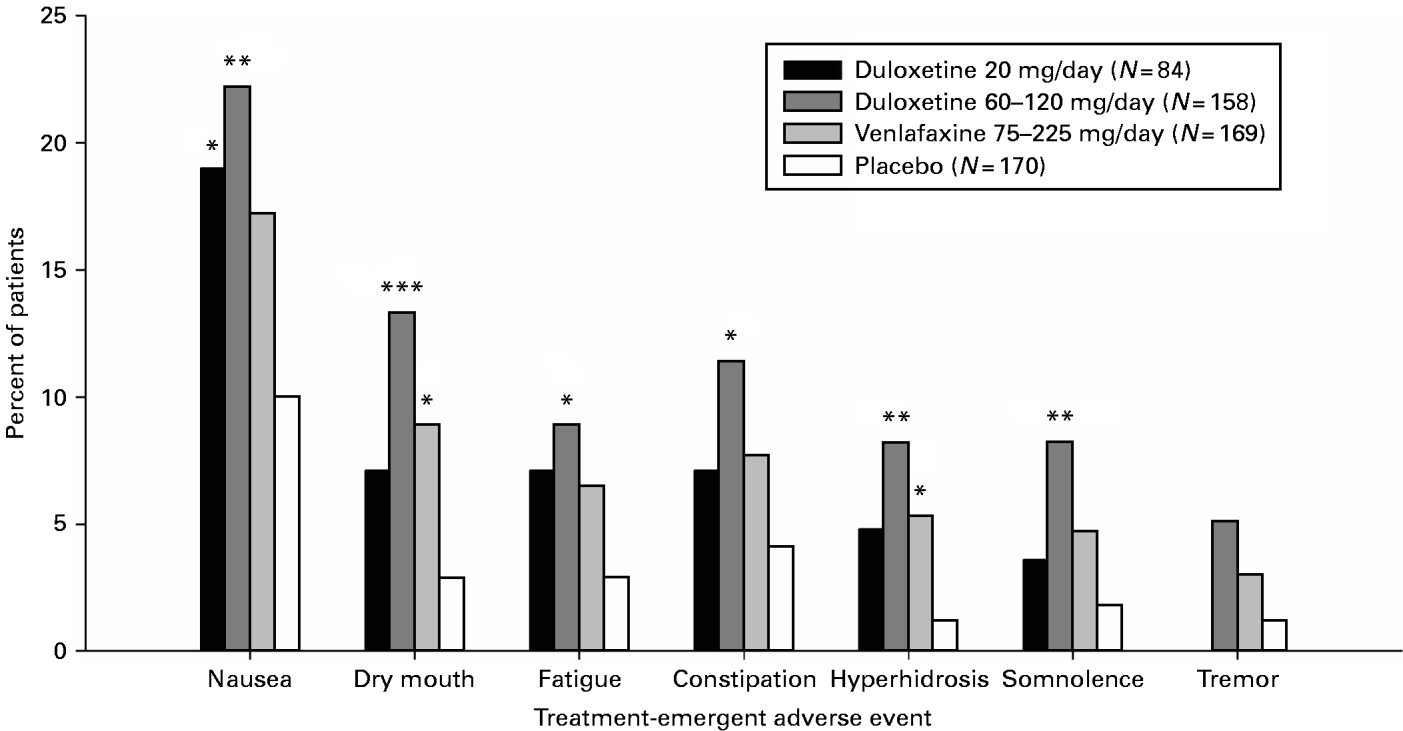
Treatment groups did not differ significantly in their rate of study discontinuation due to any adverse events (duloxetine 20 mg/day, 4.8%; duloxetine 60–120 mg/day, 12.7%; venlafaxine XR 75–225 mg/day, 11.8%; placebo, 8.8%) or any specific TEAEs. Nausea and dizziness were the most frequent TEAEs that resulted in study discontinuation within the entire study sample (1.7% and 1.0% respectively). Seven TEAEs occurred at a frequency ⩾5% within a treatment arm and at twice the placebo rate (p⩽0.05 for all comparisons) (Fig. 5).
Treatment-emergent adverse events (TEAEs) occurring with a frequency of ⩾5% in an active treatment group and at twice the rate of the placebo group. * p⩽0.05, ** p⩽0.01, *** p⩽0.001.

Discussion
Duloxetine 20 mg/day, 60–120 mg/day, and venlafaxine XR 75–225 XR were each effective in the improvement of the severity of anxiety symptoms as well as role functioning compared with placebo. The global improvements ratings on the CGI-I and PGI-I at endpoint, as well as the significantly greater response and remission rates, indicate that both patients and clinicians noted clinically relevant improvements in anxiety with active treatments compared to placebo.
Within the context of the improvement in the HAMA symptom domains, both duloxetine 60–120 mg/day and venlafaxine XR 75–225 mg/day were effective in reducing somatic as well as core psychic symptoms associated with GAD. These findings are in contrast to those that were observed in the nearly identical sister study, in which neither duloxetine 60–120 mg/day nor venlafaxine XR 75–225 mg/day was effective on the HAMA somatic factor score compared with placebo (Hartford et al. Reference Hartford, Kornstein, Liebowitz, Pigott, Russell, Detke, Walker, Ball, Dunayevich, Dinkel and Erickson2007). However, the present results are an independent replication of the results from another large multi-center trial that showed that duloxetine 60 mg and duloxetine 120 mg were each superior to placebo in somatic symptom improvement (Koponen et al. Reference Koponen, Allgulander, Erickson, Dunayevich, Pritchett, Detke, Ball and Russell2007). Venlafaxine XR has previously been observed to be effective for greater HAMA somatic factor score reduction compared with placebo in a pooled analysis of five clinical trials for GAD, with subsequent analyses suggesting that improvement in somatic symptoms with venlafaxine may require longer treatment duration (Meoni et al. Reference Meoni, Hackett and Lader2004; Stahl et al. Reference Stahl, Ahmed and Haudiquet2007). Nonetheless, the findings that both duloxetine and venlafaxine XR were effective for the somatic symptoms with GAD suggest that SNRI treatments may be particularly useful for primary care physicians, where somatic symptoms are often the presenting complaint (Kessler & Wittchen, Reference Kessler and Wittchen2002; Wittchen et al. Reference Wittchen, Kessler, Beesdo, Krause, Hofler and Hoyer2002).
As noted earlier, the duloxetine 20 mg/day arm was included in this trial for drug registration purposes as part of the requirement of demonstrating a minimum effective dose. Given that, previously, duloxetine 20 mg/day has been inconsistent in terms of demonstrating efficacy for MDD (e.g. Joubert et al. Reference Joubert, du Plessis, Faries and Gagiano1997), it was hypothesized that this dose would not be significantly different from placebo and that 60 mg/day would be supported as the minimum effective dose. Contrary to expectations, the 20 mg/dose arm did separate from placebo in this study. Compared with the MDD data, it is possible that some unspecified disease characteristic associated with GAD influenced this outcome. Despite the efficacy of this arm in this study, we express reservations about a conclusion that duloxetine 20 mg/day is the minimum effective dose for GAD. In particular, besides the historical inconsistent outcomes with duloxetine 20 mg/day, our subgroup analyses within this study indicated a lack of efficacy in an important patient population, particularly women. Using 0.30 as a reference point as a clinically relevant effect size, we interpret the HAMA total score effect size for women taking duloxetine 20 mg/day to be insignificant (0.17) compared with women taking duloxetine 60–120 mg/day or venlafaxine XR 75–225 mg/day (0.30–0.31). Although the lack of differences among groups may be due to lack of statistical power due to sample size from the randomization allotment, it was nonetheless concerning that, for the 20 mg/day dose arm within women, the lower boundary of the confidence interval of the effect size included numerical zero whereas confidence intervals for duloxetine 60–120 mg/day and venlafaxine XR 75–225 mg/day did not include zero. As approximately 2/3 of patients with GAD are women (Olfson et al. Reference Olfson, Shea, Feder, Fuentes, Nomura, Gameroff and Weissman2000; Kessler et al. Reference Kessler, Berglund, Demler, Jin, Merikangas and Walters2005), we would hesitate to recommend the 20 mg dose as effective.
The results of the tolerability assessments were consistent with those observed in previous studies (Allgulander et al. Reference Allgulander, Hartford, Russell, Ball, Erickson, Raskin and Rynn2007; Hartford et al. Reference Hartford, Kornstein, Liebowitz, Pigott, Russell, Detke, Walker, Ball, Dunayevich, Dinkel and Erickson2007) and indicate that all three active treatments have similar tolerability profiles. There were no statistically significant or clinically relevant differences among treatment groups in discontinuations due to specific adverse events, and the TEAEs experienced were generally rated as mild to moderate.
The present study has several strengths and some limitations related to the study design. The entry criteria chosen for this study allowed for the selection of a homogeneous GAD study population. Disease severity at entry was independently assessed by the HADS rather than the HAMA, which avoids a potential for inflation of the HAMA total scores at baseline in an effort to meet inclusion criteria. Rigorous rater training, use of the SIGH-A version of the HAMA, and the assessment of raters using the RAPS may have enhanced the reliability of the interviews and the consistency of the ratings across sites.
This study included both placebo- and active-control groups, which allowed for more precise estimates of treatment benefit; however, the study was not designed to make direct comparisons between active treatments. As noted, duloxetine did meet criteria for non-inferiority compared with venlafaxine XR in the pooled, pre-specified non-inferiority analyses (Allgulander, Reference Allgulander, Nutt, Detke, Erickson, Spann, Walker, Ball and Russellin press). Although the 10-week duration of the study was adequate to determine acute efficacy, which can generally be determined in 8–10 weeks, it may not have been long enough to adequately assess remission, which should be the ultimate goal of treatment (Pollack, Reference Pollack2001; Doyle & Pollack, Reference Doyle and Pollack2003). With remission rates ranging from 42% to 44% in the active treatment groups, it is possible that longer treatment duration may lead to higher remission rates (Doyle & Pollack, Reference Doyle and Pollack2003) and greater somatic symptom improvement (Stahl et al. Reference Stahl, Ahmed and Haudiquet2007). As GAD is often co-morbid with MDD in clinical practice, the exclusion of patients with MDD may make these results less generalizable to clinical practice, although scientifically relevant in terms of efficacy for the specific disease state.
In conclusion, treatment with the SNRIs duloxetine and venlafaxine XR was effective and similarly tolerated for patients with GAD compared with placebo. Although some meta-analytic studies have begun to suggest that SNRIs may have a slight incremental benefit compared with selective serotonergic reuptake inhibitors (Papakostas et al. Reference Papakostas, Thase, Fava, Nelson and Shelton2007) for MDD, further studies are needed to determine whether the potentiation of both serotonin and norepinephrine rather than serotonin alone is more effective in the treatment of GAD. Nonetheless, the efficacy of both SNRI treatments across the broad spectrum of psychic and somatic symptoms associated with GAD highlight the potential of this class of medication to become a preferred first-line treatment intervention for this illness.
Acknowledgements
We thank all of the patients who participated in this study and the following principal investigators: Yuri Alexandrovsky, Jose De Jesus Castillo Ruiz, Alfredo Cía, Nan-Ying Chiu, Herwig Colaert, Juan Bautista Corral Garcia, David Crompton, Lieven De Weirdt, Carlos Alberto Finkelsztein, Tom George, Andrew Hall, Shih-Chieh Hsu, Chieh-Liang Huang, Martin Katzman, Keven Kjernisted, Natalie Krapivensky, Valery Krasnov, Paul Latimer, Joseph Lejune, Christian Maria Lupo, Miguel Marquez, Jacqui Maroni, Carlos Morra, Sergey Mosolov, Felipe De Jesus Ortega Zarzosa, Irina Pavel, Jacques Plamondon, Leo Ruelens, Ricardo Secin, Anatoly Smulevich, Dirk Steemans, Michael Theodoros, and Mei-Chih Tseng.
Declaration of Interest
Dr Nicolini has received research funding from Eli Lilly and Company, Wyeth Pharmaceuticals, and the National Institute of Mental Health. Dr Bakish has received grant support, and has served as a consultant and a member of the speaker's bureau for Eli Lilly and Company. Drs Duenas, Spann, Ball, Sagman and Russell and C. Hallberg are employees and shareholders of Eli Lilly and Company. Dr Erickson was a former employee of Eli Lilly and Company.