Introduction
Approximately 1 billion individuals of all ethnicities and ages, which are nearly 15% of the world population, are vitamin D-deficient (<20 ng/ml or 20–30 ng/ml) (Iqbal & Khan, Reference Iqbal and Khan2010). Vitamin D is crucial for bone health and a deficiency increases the likelihood of many diseases, including chronic diabetes, respiratory diseases and adverse pregnancy outcomes (Wacker & Holick, Reference Wacker and Holick2013). Vitamin D deficiency has also been linked to the progression of osteoporosis and bone fractures. Sufficient level of vitamin D helps prevent rheumatoid arthritis, diabetes, heart disorders, metabolic ailments, depression, nervous disorders, respiratory diseases and it also lowers all-cause mortality (Shiekh et al., Reference Sheikh, Saeed, Jafri, Yazdani and Hussain2012; Riaz et al., Reference Riaz, Finlayson, Bashir, Hussain, Mahmood, Malik and Godman2016). The main drivers of vitamin D deficiency are inadequate exposure to natural ultraviolet B (UVB) radiation from sunlight, dietary insufficiency, age and less physical activity. This is often complicated by factors like body mass index (BMI), skin pigmentation and environmental conditions, i.e. latitude, altitude and meteorological conditions, which affect circulating vitamin D levels. Lack of exposure to sunlight is probably the predominant risk factor for vitamin D deficiency (Roth et al., Reference Roth, Abrams, Aloia, Bergeron, Bourassa, Brown and Whiting2018).
Vitamin D deficiency is an under-diagnosed and under-treated dietary inadequacy in many countries, including Pakistan, yet the published data on vitamin D deficiency does not address differences by age, sex, income and place of residence (Riaz et al., Reference Riaz, Finlayson, Bashir, Hussain, Mahmood, Malik and Godman2016). According to Pakistan’s National Nutrition Survey (NNS) conducted by UNICEF in 2018, the prevalence of vitamin D deficiency in the country was 69% in pregnant women, 67% in non-pregnant women and 63% in children under the age of 5, with severe deficiency in a significant proportion of all children (13.2%). The prevalence is slightly higher in girls (63%) than in boys (62%) and more common in urban (84%) than in rural areas (77%). The prevalence increased from 2011 to 2018 (UNICEF, 2018). A study on immigrant Pakistanis in Norway in 2005 found that vitamin D deficiency was more prevalent in Pakistani men and women than in the indigenous Norwegian population (Holvik, 2015). This study found that about 10% of women and 8% of men of Pakistani origin had vitamin D serum levels (25(OH)D) of 50 nmol/l or more, whereas a higher percentage of people of Norwegian background (86%) achieved this level. A survey in Pakistan showed that 12.6% of healthy women and 33% of pregnant women had many biochemical abnormalities in their serum, with deficiencies in calcium, phosphorus and alkaline phosphatase, which were corrected by vitamin D administration (Rab, Reference Rab1976).
Community Knowledge, Attitude and Practices (KAP) influence the risk of diseases such as those affected by vitamin D deficiency (Bolek-Berquist, et al., Reference Bolek-Berquist, Elliott, Gangnon, Gemar, Engelke, Lawrence and Hansen2009; Vu et al., Reference Vu, van der Pols, Whiteman, Kimlin and Neale2010; Christie & Mason, Reference Christie and Mason2011; Al Bathi et al., Reference Al-Bathi, Al-Zayed, Al-Qenai, Makboul and El-Shazly2012; Zhou et al., Reference Zhou, Zhuang, Yuan, Li and Cai2016; Aljefree et al., Reference Aljefree, Lee and Ahmed2017; O’Connor et al., Reference O’Connor, Glatt, White and Revuelta Iniesta2018; AlBishi et al., Reference AlBishi, Prabahar, Albalawi, Albalawi, Abosalem and Alqarni2018). A study based on the Vietnamese population showed a significant inverse relationship between vitamin D level in the blood and age (Ho-Pham et al., Reference Ho-Pham, Nguyen, Lai, Eisman and Nguyen2011). An immigrant groups health study in Norway identified that there was widespread vitamin D deficiency in people born in Pakistan, Turkey, Sri Lanka, Iran and Vietnam residing in Oslo (Holvik et al., Reference Holvik, Meyer, Haug and Brunvand2005). The prevalence was higher in women than in men, and higher in Pakistani individuals and lower in those born in Vietnam compared with other ethnic groups (Holvik et al., Reference Holvik, Meyer, Haug and Brunvand2005). Lower concentrations of vitamin D were seen in Asians compared with Chinese individuals and in women compared with men. These findings also demonstrated the importance of sex and race in identifying those most at risk (Hawkins, Reference Hawkins2009).
There are other risk factors for vitamin D deficiency, i.e. latitude, age and urbanization (Mays et al., Reference Mays, Prowse, George and Brickley2018). A study on vitamin D deficiency has been conducted in Swat, Pakistan, by Haq et al. (Reference Haq, Khan and Mustehsan2017), but the present study is the first to examine this issue in Gilgit Baltistan – the northern-most territory administered by Pakistan. According to the 2018 NNS survey, the prevalence of Vitamin D deficiency among non-pregnant women was 81.9% and 76.0% in pregnant women in Gilgit Baltistan. The NNS 2018 was the first large survey in Pakistan to assess vitamin D deficiency using biochemical data (UNICEF, 2018). The purpose of the present study was to assess this population’s general knowledge, nutritional knowledge, general habits, dietary habits, attitudes and general practices regarding vitamin D and their correlation with selected factors.
Methods
Study population and area
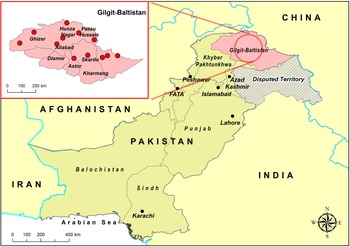
The study was performed in the self-governing territory of Gilgit Baltistan, Pakistan. This has seven districts with a total population of 1.24–1.8 million (2013–2015). It borders Azad Kashmir to the south, the province of Khyber Pakhtunkhwa (KPK) to the west, Afghanistan to the north, the Xinjiang region of China to the east and the Indian-administered state of Jammu and Kashmir to the south-east (Wikipedia, 2011). Gilgit Baltistan has many poor regions and districts. The targeted regions of this study were Skardu, Chitral, Hunza, Kailash and Shigar. The red dots on Figure 1 show the study population and regions (Benz, Reference Benz2013). Most of the population of these areas are ignorant of the effects of a healthy diet and disease prevention due to poverty, illiteracy and lack of facilities.
Map of Pakistan showing the regions of Gilgit Baltistan targeted in the study. The red dots represent the sampling sites.

Study design and data collection
The study was conducted between February 2019 and December 2020. A self-administered questionnaire was used with 75 questions divided into different sections: 21 questions were related to general knowledge and awareness of vitamin D; 8 related to nutrition knowledge and medical conditions; 18 were regarding attitudes (social and cultural factors); and 20 were about the practices of people in relation to vitamin D. The structured questionnaire was designed to gather data on knowledge, attitudes, general behaviors and perceptions of the public towards vitamin D within the underprivileged areas of Gilgit Baltistan. It was designed based on prior research on vitamin D (Christie & Mason, Reference Christie and Mason2011; Haq et al., Reference Haq, Khan and Mustehsan2017).
Academic nutritionists and experts validated the questionnaire before use. Pilot testing was carried out by the research advisor, with help from experts. Sections 1 and 2 gathered data on knowledge and attitudes regarding vitamin D and the factors affecting these, including sun exposure habits and use of sun protection. Section 3 was designed to determine participants’ behaviour and practices with reference to vitamin D. Questions related to knowledge, perceptions and behaviour were adapted from various approved questionnaires and guidelines (Bolek-Berquist et al., Reference Bolek-Berquist, Elliott, Gangnon, Gemar, Engelke, Lawrence and Hansen2009). Each section contained questions and multiple-choice answers. A survey link was generated using Google Forms for participants who found it more convenient to do the survey online. For that purpose, an invitation was sent through social media (Twitter®, Facebook® and WhatsApp®) and emails were sent to people if they were willing to participate in the study. Each potential participant was assessed to ensure they met the selection criteria.
The questionnaire was developed from literature associated with knowledge and practices towards vitamin D deficiency. It was translated into Urdu (the national language of Pakistan) for the convenience of participants. It was distributed among students, housewives and workers. Illiterate participants were interviewed separately as they were unable read or write and respond to the questionnaire. Data on socio-demographic factors, i.e. age, sex, education level, place of residence, employment and profession, were collected. Information on behavioural risk factors like smoking and other health conditions was also collected.
Participants (N = 594) were made aware of the objective of the study and were also informed that their answers would remain anonymous and confidential. They were able to withdraw from the study at any time as participation was voluntary for adults. Verbal consent was taken before data collection. Participants signed a written consent form while illiterate participants gave verbal consent. For children, informed consent was provided by their parents or guardians.
Statistical analysis
Data were entered into a Microsoft Excel spreadsheet. Responses to each question were assessed by calculating the frequency distribution and percentages. Queries regarding knowledge and practice were scored and a total ‘knowledge and practice’ score was enumerated for each participant. KAP scores were obtained by combining scores for their respective columns. Individual variables were scored based upon what percentage of symptoms or sources participants knew. A prospective study was conducted to check the applicability and viability of the tools. Analysis was done using R statistical package and SPSS. Data were presented quantitatively using descriptive statistics and frequencies and percentages. Means and standard deviations were calculated for different intervals and ratio variables. Correlations or associations among different variables were tested using Pearson’s correlation coefficient r with a significance level of p<0.05. This measures the association or relationship between two variables. Generally, an r value greater than 0.7 is considered a strong correlation, while an r of less than 0.4 suggests a weak or no correlation. Any value between 0.5 and 0.7 is a moderate correlation. A one-way analysis of variance (ANOVA) was used to determine whether there were any statistically significant differences between the means of three or more independent (unrelated) groups.
Results
Socio-demographic characteristics of participants
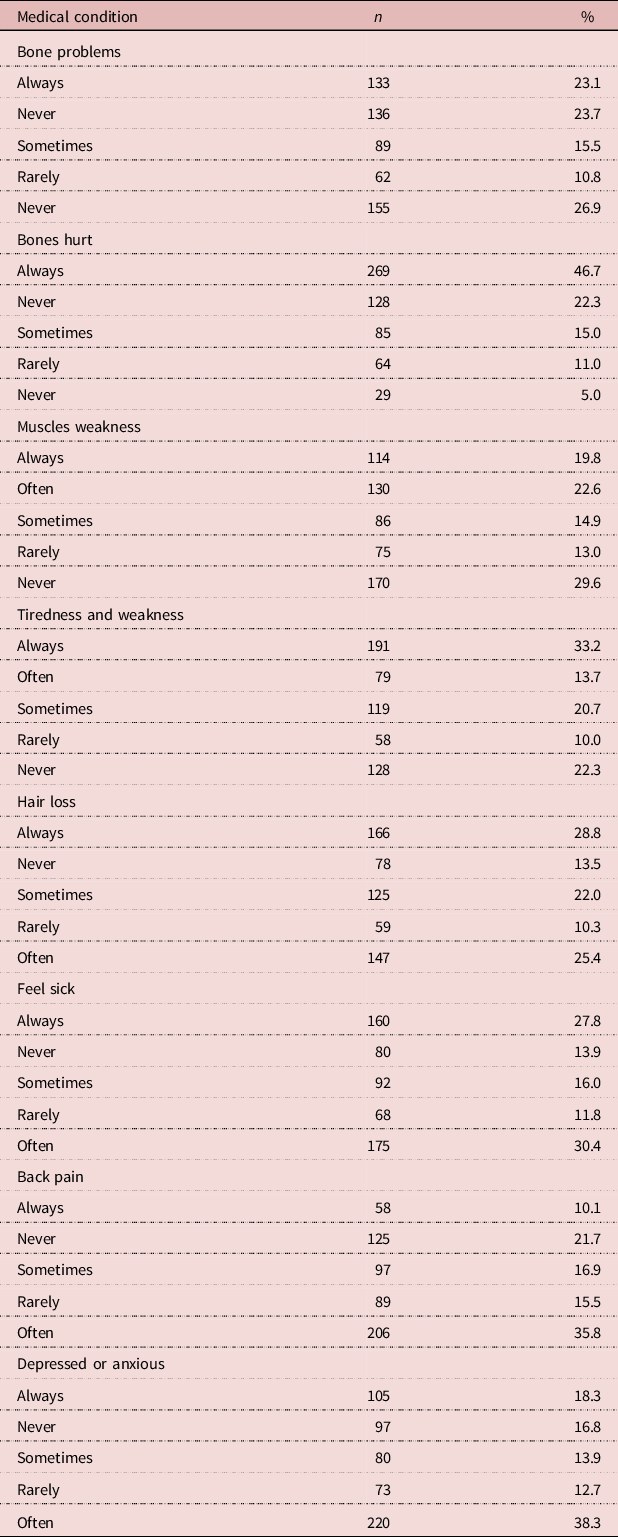
A total of 575 individuals (54.0% female, 46.0% male) were included in the study. Of these, 40.0% were aged 19–25 years and approximately 30.3% were illiterate. The majority of participants (52.0%) were students of 10th grade (Matric) or university graduates (Master’s degree). Most of the uneducated (no formal education) participants were farmers or shopkeepers. Regarding medical conditions, 23.1% participants had bone problems on a permanent basis, 46.7% had pain in their bones, 33.2% always had face tiredness and weakness while 19.8% have muscle weakness. The participants’ demographic characteristics and medical conditions are summarized in Tables 1 and 2.
Frequency distribution of the socio-demographic characteristics of study participants, N = 575

Medical conditions reported by participants, N = 575

Knowledge about vitamin D
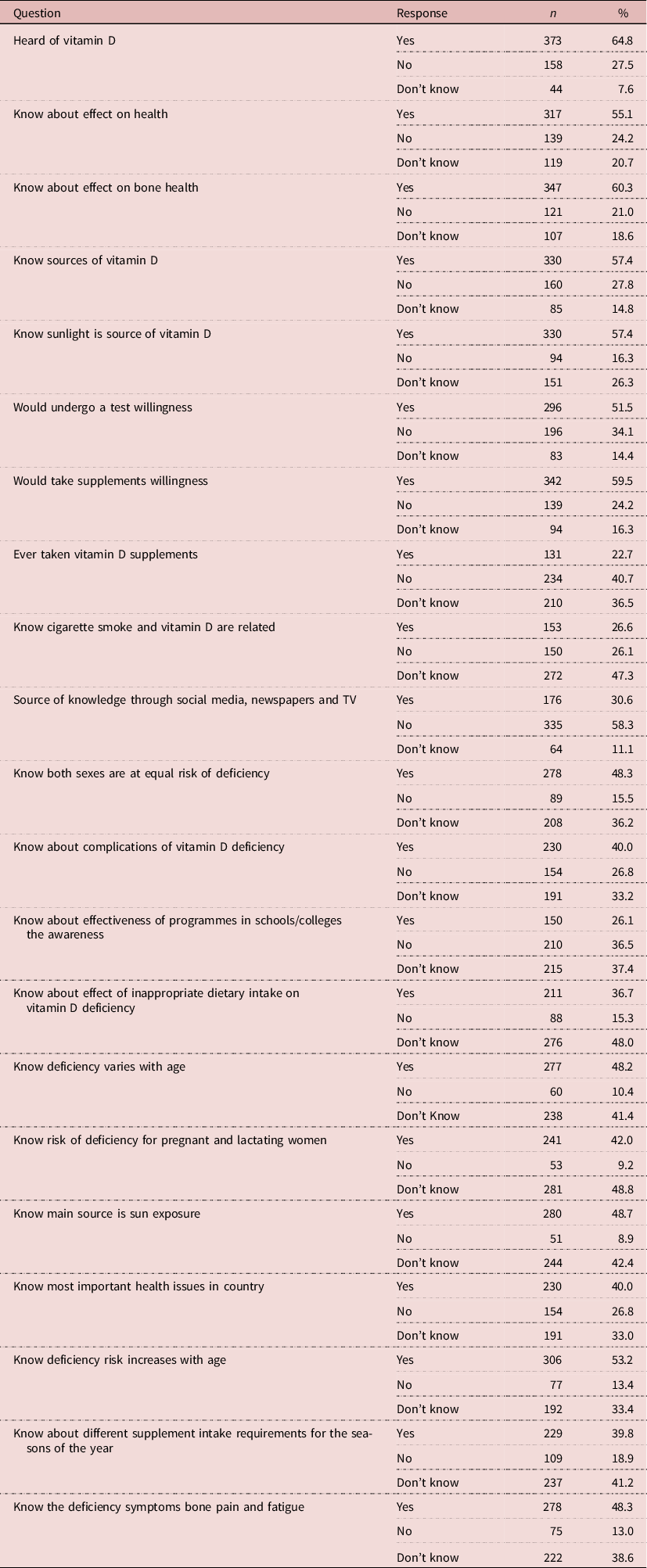
Table 3 shows the participants’ knowledge of vitamin D. Most (64.8%) had heard of vitamin D; 30.6% agreed that the most common sources of information about vitamin D were social media, newspapers and television, while 58.3% disagreed. Over half of participants knew that vitamin D has an impact on bone health and knew the sources of the vitamin; 53.2% thought that older people were at higher risk of vitamin D deficiency, 48.2% thought that it varied with age. That the main source of vitamin D is sun exposure was agreed with by 57.4% of participants, while 16.3% disagreed and 26.3% had no knowledge about it. Among deficiency risk factors 26.6% agreed that smoking and vitamin D are related. That there are various symptoms of vitamin D deficiency, such as bone fracture and fatigue, was agreed with by 48.3% of participants, and 13.0% disagreed and 38.6% had no idea. Deficiency risk being equal in both sexes was agreed with by 48.3% of participants, while 15.5% disagreed and 36.2% had no knowledge about this (Table 3).
Participants’ knowledge about vitamin D, N = 575

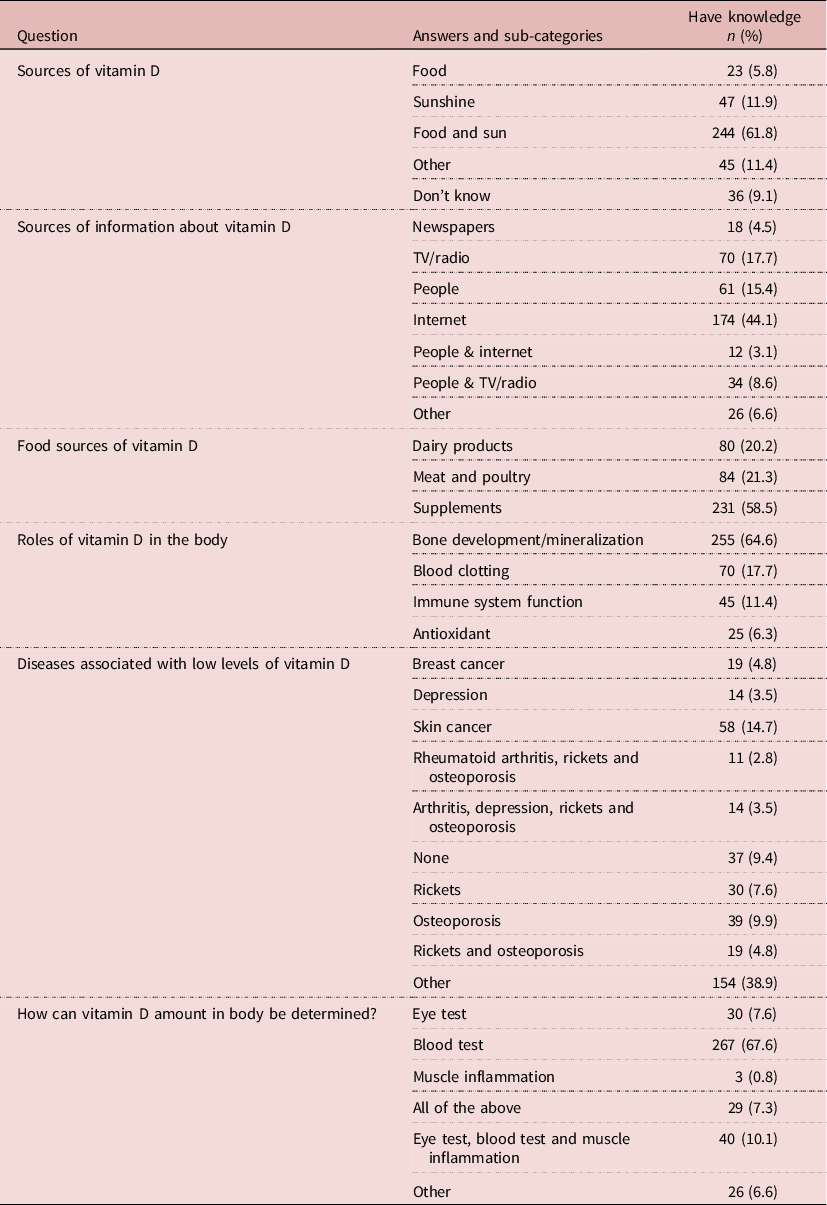
Table 4 shows the vitamin D knowledge of educated participants. Their overall knowledge regarding sources of vitamin D was as follows: food 5.8%, sunshine 11.9%, food and sun 61.8% and other 11.4%. The majority (as compared with other mentioned options) of people thought that a deficiency can result in carcinoma.
Knowledge about source of vitamin D among educated population (N = 395)

Attitudes to vitamin D
Table 5 shows participants’ attitudes towards vitamin D. A total of 26.1% were unsure whether urbanization prevented sun exposure and the production of required vitamin D, but 17.7% strongly agreed, 34.9% agreed and 10.8% disagreed. A high proportion (40.9%) strongly disagreed that Islam doesn’t allow women to travel outside, and very few (17.0%) agreed. In addition, 21.9% strongly disagreed that wearing Hijab (veiling in Islam) could be a reason for vitamin D deficiency and only (17.2%) agreed. An important cultural factor is ‘permission’, with 25.4% agreeing that ‘People (men) don’t allow females to go outside the house’ but 31.5% strongly disagreed with this statement.
Attitudes of participants to vitamin D, N=575

Almost half the participants (40.3%) agreed that ‘It becomes difficult to go outside and work during the winter’, and 15.3% strongly agreed with the statement, although 16.7% disagreed and 9.0% were unsure. There was general agreement that a shortage of public places for outdoor activities prevents people receiving the sun exposure required for adequate absorption of vitamin D, with 34.1% agreeing that this was the case and only 13.9% disagreeing.
A large proportion of people (30.6%) had no concept of the requirement for enough vitamin D. Only 23.7% thought that they had enough vitamin D, and 21.2% thought they hadn’t. On the question ‘Lack of education makes people unaware of the production of vitamin D’, the majority of people (33.5%) agreed or strongly agreed (30.3%) while only 7.8% disagreed. As for the statement ‘Indoor life prevents the required amount of Vitamin D due to less exposure to the sun’, 36.1% agreed and 19.7% strongly agreed, and 25.2% were unaware with even fewer (9.4%) showing disagreement. Additionally, 31.3% of the respondents stated that permanent usage of sunscreen products on the face, neck and hands prevents the sun exposure required for vitamin D production (Table 5).
As for use of vitamin D supplements, 44.5% did not know whether this was more effective than other means, 15.7% strongly agreed, 25.6% agreed and 9.7% disagreed. Nearly 27.1% thought that an unwillingness to take vitamin D supplements results in deficiency and is a barrier to having sufficient vitamin D; and 34.1% responded positively to the statement that ‘the high cost of Vitamin D dietary source is actually a barrier to providing the nutrient’ (Table 5).
Practices related to vitamin D
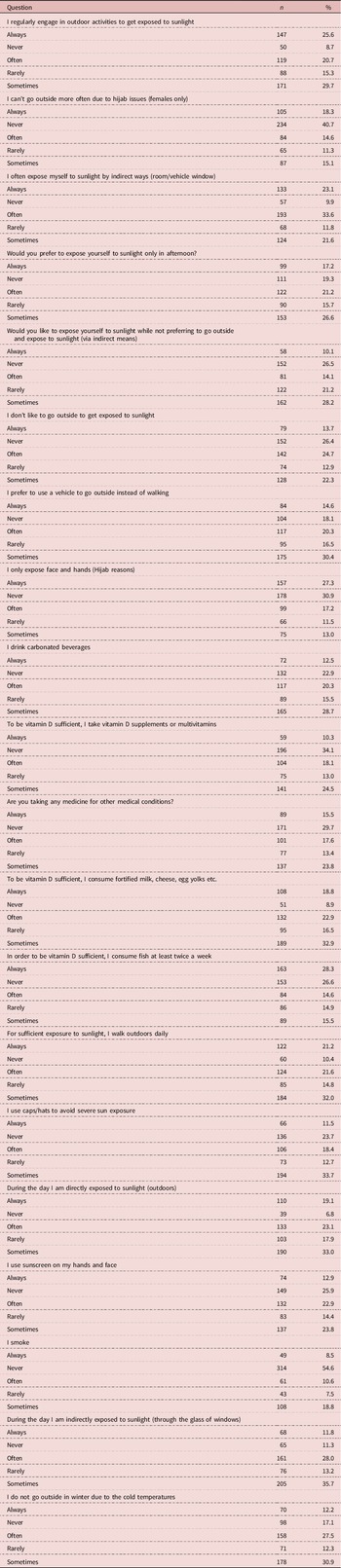
Table 6 represents participants’ practices related to vitamin D deficiency. Almost 25.6% indicated that they regularly engaged in outdoor activities to get exposed to sunlight. Almost 33.6% responded they ‘often’ exposed themselves to daylight – 23.1% ‘always’ and 21.6% ‘sometimes’.
Practices among participants regarding vitamin D, N = 575

Only 15.1% of women agreed that it sometimes becomes difficult for them to go outside due to Hijab issues, and 17.2% preferred to expose themselves to the sun only during the afternoon. Nearly 13.7% preferred to stay inside as they didn’t like sunlight. Moreover, 30.4% claimed that they sometimes used vehicles to avoid walking. Regarding indirect exposure to sunlight (through room windows), 11.8% indicated they ‘always’ did while 11.3% ‘never’ did so.
When questioned on whether they ate dairy products and other foods, 22.9% said they often consumed fortified milk, cheese and egg yolks in order to be vitamin D sufficient: 18.8% ‘always’, and 8.9% ‘never’. Only 10.3% said they always took multivitamins and/or vitamin D supplements, 24.5% used these sometimes while 34.1% never took them. Medication can also affect the level of absorption of vitamin D and its level in the body, so participants were asked if they were taking any other supplementation or medicine for any health condition: 23.8% reported sometimes doing so, 13.4% did so rarely 29.7% never did so and 15.5% always have done so. Eating fish increases vitamin D levels: 28.3% of participants said they consumed fish twice a week, 26.6% said they never ate fish for this purpose, 14.6% did often, 14.9% said they rarely ate fish, while 15.5% consumed it sometimes (Table 6).
Relationship between knowledge, attitudes and practices
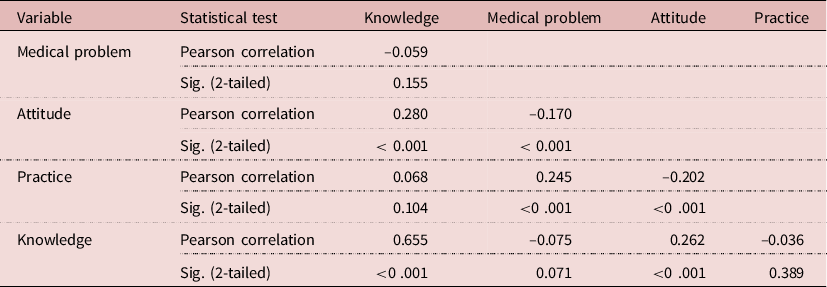
Table 7 presents the results of the statistical analysis showing the associations between participants’ education and their knowledge, attitude and practices related to vitamin D using the Pearson correlation.
Associations between knowledge, education, attitudes and practices

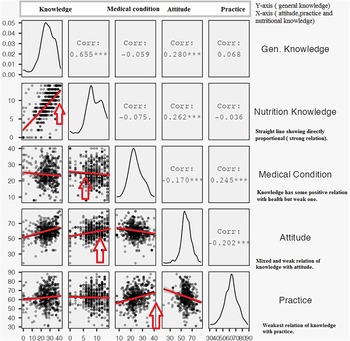
Medical problems and knowledge had r = –0.059, showing no correlation. Furthermore, the correlation between knowledge and attitude gave r = 0.280 (p< 0.001), while its association with practice gave r = 0.068 (p = 0.104). Attitude had a significant but weak association with practice (r = –0.202, p = 0.001). The correlation between medical issues and attitude was also negative (–0.170, p = 0.001). A lower attitude score was correlated with increased medical issues. Moreover, medical conditions were weakly correlated with practices (r = 0.245, p = 0.001) (Figure 2).
Correlations of knowledge with other parameter of attitude and practice.

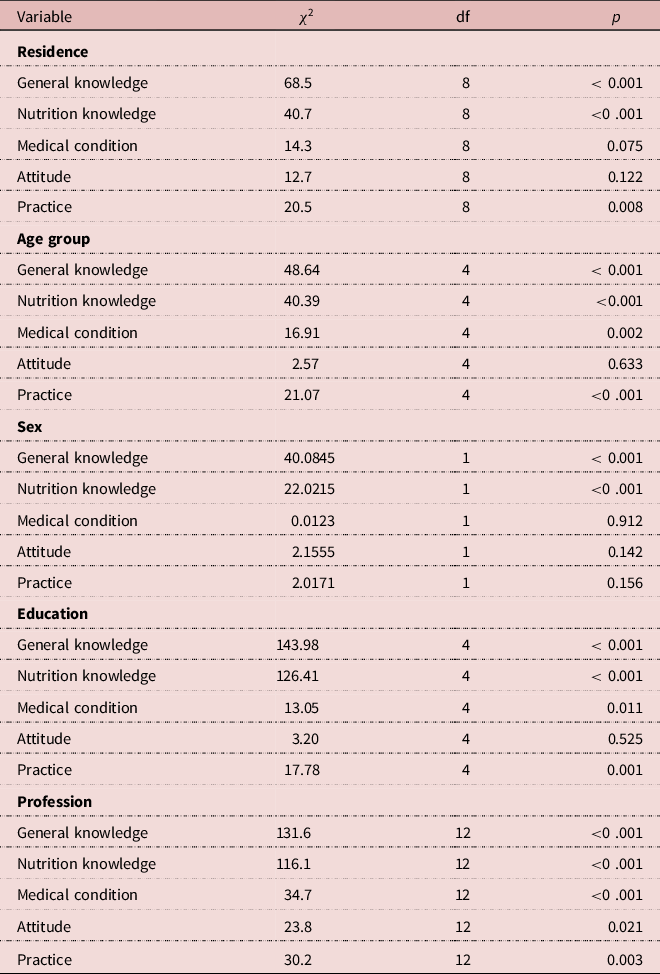
The differences between the groups (residence, age group, gender, education and profession) showed great variation (Table 8).
ANOVA comparison between groups and within groups

Residence comparison
The region with the highest mean knowledge score was Hunza (30) and that with the lowest was Kailash (18). The mean (SD) attitude score in the Hunza region was highest at 62 (11), and the lowest was in Kailash at 58. The highest practice score was in Gilgit (65) and the lowest was in Kailash (57).
Age comparison
The 19–25 age group had the best mean knowledge score (28) and the lowest mean score was in the 50+ age group (21). Similarly, the mean attitude score was highest in the 19–25 age group (60) and lowest in the 50+ group (59). The practice score was highest in the 19–25 group (64) and lowest in the 31–50 group (60).
Education comparison
The scores among uneducated and educated groups are shown in Table 8, and suggest that education level is directly linked to knowledge and awareness of vitamin D. The practice score was highest in higher secondary school students (65) and lowest in secondary school students (62).
Sex comparison
The knowledge score among females (29) was higher than that among males (24) with a standard deviation. Moreover, the attitude and practice scores of females (60, 63) were also higher than those of males (59, 62).
Discussion
This study in Gilgit Baltistan quantitatively examined the population’s knowledge, attitudes and perceptions of vitamin D. The general population had a good level of knowledge about vitamin D, and a moderately good attitude towards the importance of vitamin D. The main socio-demographic factors assessed in the study, i.e. age, sex, rural/urban residence, education level and profession, were found to have both direct and indirect effects KAP. Of the 575 participants, most were female and aged 19–25 years. Most participants resided in Skardu (22.0%) followed by Gilgit (17.0%) and then Hunza (16.0%). The people living in these specific areas are generally better educated than those living in other areas of Gilgit Baltistan, and show great differences in awareness of vitamin D deficiency and resources. This might be because of the better development of these areas, along with the presence of good educational facilities (Benz, Reference Benz2013).
Of the 575 respondents, 64.8% knew about vitamin D and its role in health; 57.4% correctly identified the sun as a source of vitamin D, 55.1% knew its effects on health and 5.8% knew about food sources of vitamin D; nevertheless, their specific knowledge of dietary food sources was poor. A lack of consistency was observed between attitude towards sunlight exposure and knowledge of vitamin D. Haq et al. (Reference Haq, Khan and Mustehsan2017), in their study among medical college students in Swat, Pakistan, found that student’s knowledge about vitamin D was good but their attitude towards sun exposure and dietary practices did not correspond to their knowledge.
Recent studies have been conducted to access the knowledge, attitude and practices regarding vitamin D in Ethiopia (Mekonnen et al., Reference Mekonnen, Feleke, Desalegn, Tarekegne, Lambisso and Haidar2020), Denmark (Özel et al., Reference Özel, Cantarero-Arevalo and Jacobsen2020), Malaysia (Shahudin et al., Reference Shahudin, Sameeha, Mat Ludin, Manaf, Chin and Jamil2020), UK (O’Connor et al., Reference O’Connor, Glatt, White and Revuelta Iniesta2018; Burchell et al., Reference Burchell, Rhodes and Webb2020), Saudi Arabia (AlBishi et al., Reference AlBishi, Prabahar, Albalawi, Albalawi, Abosalem and Alqarni2018; Geddawy et al., Reference Geddawy, Al-Burayk, Almhaine, Al-Ayed, Bin-Hotan and Bahakim2020), Pakistan (Tariq et al., Reference Tariq, Khan and Basharat2020), United Arab Emirates (Anwar et al., Reference Anwar, El-Dahiyat, Jairoun, Raed, Butt, Abdel-Majid and Abdelgadir2019) and Poland (Zadka et al., Reference Zadka, Pałkowska-Goździk and Rosołowska-Huszcz2018).
Attitudes toward vitamin D in the present study were found to be were mixed. Only 59.5% of the population were willing to use supplements, but most individuals (51.5%) were willing to test their vitamin D levels. Furthermore, the consumption of fortified foods was acknowledged by two-thirds of the population as important, but vitamin D supplement use was low (22.7%). Aljefree et al. (Reference Aljefree, Lee and Ahmed2017), in their study conducted in Saudi Arabia, showed that women were willing to improve their vitamin level.
Many of the individuals who worked mainly indoors responded that they did not like to be exposed to the sun, despite their recognition that vitamin D was good for health. This finding was consistent with the reality that many Asians, despite living in tropical regions, have vitamin D insufficiency or deficiency (Nimitphong & Holick, Reference Nimitphong and Holick2013). A similar study conducted in Ho Chi Minh City, Vietnam, showed that there was a negative attitude towards sunlight exposure and lack of knowledge of vitamin D, which could adversely affect bones and general health of the community (Ho-Pham et al., Reference Ho-Pham, Nguyen, Lai, Eisman and Nguyen2011).
The present study examined various factors, including sun exposure, religion, culture and weather. About a third of participants believed that urbanization prevented sun exposure as studied by (Mays et al., Reference Mays, Prowse, George and Brickley2018) and 17.0% believed that religion might be a factor preventing women from going outside and being exposed to sunlight. In addition, 25.4% agreed that cultural reasons could hinder sun exposure. Similar studies have been conducted in Islamic countries, including Iran and Saudi Arabia (Faghih et al., Reference Faghih, Abdolahzadeh, Mohammadi and Hasanzadeh2014; Christie & Mason, Reference Christie and Mason2011). Weather might be one of the reasons people are not exposed to enough sun, especially during the winter (Kashi et al., Reference Kashi, Saeedian, Akha, Gorgi, Emadi and Zakeri2011), and in the present study 40.3% agreed that it becomes difficult to go outside due to cold weather. Poverty is one of the reasons for lacking knowledge on nutrition (Haque et al., Reference Haque, Salam, Hussain, Iqbal, Zafar, Tayyab and Javed2010), as is education, with around a third of this study’s participants recognizing the importance of education for understanding vitamin D. Over 31.3% of the respondents knew that the use of sunscreen on the face, neck and hands prevented vitamin D production. A similar study on workers in urban offices in Brisbane, Australia, suggested that there was a lack of sun-protective behavior due to some confusion about vitamin D and sun exposure (Vu et al., Reference Vu, van der Pols, Whiteman, Kimlin and Neale2010).
A quarter of participants regularly engaged in outdoor activities and exposed themselves to sunlight, while slightly fewer often consumed food to increase their vitamin D levels. Only 22.7% had ever taken supplements. A study in the UK suggested that supplementation and fortification, alongside education strategies, may be an effective way to improve vitamin D health among the UK populations (O’Connor et al., Reference O’Connor, Glatt, White and Revuelta Iniesta2018).
The main sources of participants’ knowledge about vitamin D were social media, newspapers and TV. A study in China showed that social media and health professionals were mostly responsible for students’ knowledge of vitamin D (Zhou et al., Reference Zhou, Zhuang, Yuan, Li and Cai2016). Knowledge of issues like vitamin D should be disseminated by medical professionals rather than social media in Pakistan.
A weak correlation was found between vitamin D knowledge, attitudes and practices. The study results suggest overall people’s behaviour (‘practice’) is disappointing despite good knowledge and attitudes. A study conducted in the Saudi population (AlBishi et al., Reference AlBishi, Prabahar, Albalawi, Albalawi, Abosalem and Alqarni2018) showed that the population had some knowledge and understanding of vitamin D and its effects on the cardiovascular system, yet they had poor practices related to sun exposure. The public need continuing education to increase awareness and knowledge about the importance of vitamin D. In Riyadh City, Saudi Arabia, a study identified differences between knowledge and practice among primary health care physicians. The confusion could be partly attributed to different sources of information and guidelines. AlBisihi et al. (Reference AlBishi, Prabahar, Albalawi, Albalawi, Abosalem and Alqarni2018) showed that online sources and medical education were the most common sources of information about vitamin D among the physicians studied.
The ANOVA (Kruskal–Wallis) results indicated significant differences in knowledge, attitudes, practices and medical conditions for almost all demographic factors (Table 8). The findings suggest that most of the target population had knowledge regarding vitamin D sources, dietary intake and its role in the body, but most had poor attitudes and practices related to reducing the risk of deficiency. Other studies in Kuwait have found that most participants had limited knowledge, poor practices and negative attitudes toward vitamin D (Al-Bathi et al., Reference Al-Bathi, Al-Zayed, Al-Qenai, Makboul and El-Shazly2012). Pludowski et al. (Reference Pludowski, Holick, Grant, Konstantynowicz, Mascarenhas and Haq2018), in their study in Poland, found that only a few respondents took vitamin D supplements, or gave them to their children. While most mothers knew very little about the role of vitamin D in the body, they did know at least one of its functions but had a low level of knowledge about its dietary sources.
There are factors that may limit the production of vitamin D in the body, including high latitude, being indoors, living in a highly polluted area, using a large quantity of sunscreen, having darker skin, diet, being overweight, age, gut health, kidney health, liver health and pregnancy or breastfeeding (Tsiras & Weinstock, Reference Tsiaras and Weinstock2011; Mazahery & von Hurst, Reference Mazahery and von Hurst2015; Harvard Health, 2017). These factors should be considered and awareness of them increased in the general public. The participants from the study area had experienced tiredness, fatigue, hair loss and other symptoms. Moreover, better knowledge, attitude and practices were shown by people residing in better environmental conditions (districts) compared with small towns (more underprivileged/fewer educational facilities).
The study had few limitations. In particular, the questionnaire did not include questions on working hours, so although questions on exposure to sunlight were asked, potential barriers to exposure were possibly overlooked. Secondly, the questionnaire lacked detailed enquiry into dietary habits. These factors should be investigated in more detail. Future studies should include more groups, such as pregnant or breastfeeding women, menopausal women and individuals aged over 65 years. This study enrolled few of these groups and so the results may be unrepresentative. Participants were from Gilgit Baltistan and their lifestyle and cultural background may be different from those of other populations, so the present findings might not be generalizable to other parts of the world.
Despite the limitations, the study provides important indications on the prevention of vitamin D deficiency in the general population in Gilgit Baltistan, Pakistan, and could be helpful in designing more appropriate and better public health initiatives around vitamin D deficiency. The findings suggest that younger women, especially those who with a negative perception of sunlight exposure, should be targeted with education. Mass media campaigns with national coverage may be preferable to educational materials or talks in community organizations, since the main sources of information for this group are mainly radio, newspapers and television. Future research should include a nationwide study taking into consideration the restrictions discussed here and authenticating this questionnaire. In particular, correlating knowledge, attitudes and perceptions with serum 25(OH)D may be useful.
In conclusion, this study showed that 64.8% of participants had heard of vitamin D and its importance for health. Younger people had higher knowledge scores. Vitamin D supplementation was positively viewed by most of the study participants, suggesting that fortification and supplementation may be a useful means to improve vitamin D health. There is a need to improve the education system for providing basic awareness regarding micronutrients. Seminars, awareness activities and different forms of media can play a vital role in this, especially in small towns and rural areas of Gilgit Baltistan.
Acknowledgments
The authors are thankful to the study participants from Gilgit Baltistan, Pakistan.
Funding
This research received no specific grant from any funding agency, commercial entity or not-for-profit organization.
Conflicts of Interest
The authors have no conflicts of interest to declare.
Ethical Approval
The work has been approved by the ethics review board of COMSATS University Islamabad (CUI), Islamabad under approval No. CIIT/Bio/ERB/21/02.
Author Contributions
SM collected the data and wrote the manuscript following discussions with HA. SM and SS contributed equally to this study. NAS helped design the study. WH did the statistical analysis. SM, MSA, NB and RZA revised the paper. ADB revised critically and improved the technical quality of the manuscript. All authors approved the final version of the paper.