Interviewer: So did [Medicaid officials] ask for advocacy help on this?
State interest group leader: Oh yes, they absolutely did. They came to us and asked us and said “we need your help to support this bill.” Oh yeah. All of the groups. Hospital, medical, we all had to support it.
Multiple research traditions acknowledge that bureaucrats are potentially influential players in the policy process. Bureaucrats have the ability to shape not only the activities of their agencies but also the legislation that authorises and funds those activities. As policy experts with valuable information, agency officials can influence the public agenda and the decisions that legislators make through direct advocacy or information sharing. Bureaucrats can also influence the legislature indirectly by leveraging the lobbying power of interest groups. Through this strategy, which we term indirect bureaucratic lobbying, bureaucrats can avoid legal or normative restrictions on agency lobbying, and may increase the likelihood of realising their preferred legislative outcomes. Although existing research does acknowledge indirect bureaucratic lobbying, there is very little systematic empirical evidence of its application, and there is no theoretical account of when bureaucrats are likely to use this strategy.
The outward appearance of indirect bureaucratic lobbying can vary from quiet conversations about committee vote counts in state capitol hallways to explicit requests for advocacy from interest groups and their members. In the story underlying the quote above, state Medicaid officials asked interest groups to support an agency-sponsored bill that ushered the Medicaid programme through the aftermath of the 2008–2009 recession by reducing costs without making drastic eligibility cuts. In the data we present in this article, such behaviour is common: about half of the interest group leaders we spoke to reported that Medicaid bureaucrats asked for their lobbying help on a recent Medicaid bill. Respondents reported this behaviour in all survey states but one.
When should we expect bureaucrats to use this strategy to attempt to influence legislatures? This study uses an elite survey both to uncover evidence of indirect bureaucratic lobbying by state Medicaid bureaucrats and to test hypotheses about the institutional conditions under which this behaviour is most likely to occur. We find that bureaucrats use this strategy as a way of attempting influence when the agency’s prestige (and thus its likelihood of direct influence) is relatively low. Our findings also suggest that bureaucrats have increased incentives to lobby indirectly when powerful governors pose a threat to their agencies, and perhaps also when legislators are relatively uninformed. These findings provide a new perspective on bureaucrats’ engagement in the policy process.
State Medicaid agencies offer an ideal setting for this study, for two reasons. First, as federal regulations require state Medicaid agencies to gather community input on policy changes through “medical care advisory committees”, Medicaid bureaucrats are assured of regular communication with relevant interest groups (e.g. health services providers, consumer groups), and have similar channels for indirect bureaucratic lobbying in all states.Footnote 1 This should make Medicaid policy a “most likely” case for indirect bureaucratic lobbying to take place. Second, although issues and groups are relatively similar across states, there is variation in the preferences of actors and in key elements of the institutional environment, including the capacity and prestige of Medicaid agencies, the professionalism of the legislature, and the institutional power of the executive. We take advantage of this variation to test our hypotheses about the effects of preferences and institutional characteristics on bureaucratic behaviour.
Bureaucrats, interest groups and lobbying
A number of studies (Aberbach et al. Reference Aberbach, Putnam and Rockman1981; Wilson Reference Wilson1989; Eisner Reference Golden1993; Rieselbach Reference Rieselbach1995; Carpenter Reference Carpenter2000, Reference Carpenter2001; Nicholson-Crotty and Miller Reference Nicholson-Crotty and Miller2012; Workman Reference Workman2015) have argued that bureaucrats’ influence on the policy process is not limited to administrative rulemaking and policy implementation, the stages of the process under their formal purview. These studies contend that bureaucrats exercise influence at the policy-formulation stage, including the legislative process. Many classic theories of the policy process also include a role for bureaucrats at the legislative stage, from the old subgovernments or “iron triangle” model (see McCool Reference McCool1990 for a review) to more recent network (e.g. Heclo Reference Heclo1978), garbage can (e.g. Kingdon Reference Kingdon1984), punctuated equilibrium (e.g. Baumgartner and Jones Reference Baumgartner and Jones1993) and advocacy coalition framework (e.g. Sabatier Reference Sabatier1988; Sabatier and Jenkins-Smith Reference Sabatier and Jenkins-Smith1993) models. In all of these theories, bureaucrats are among the actors capable of defining the policy agenda and influencing policy decisions.
When and how are bureaucrats able to exercise influence over legislative policy? Carpenter (Reference Carpenter2000, Reference Carpenter2001) offers a compelling account, drawing on the networks literature to develop a theory of bureaucratic influence based on reputation and prestige. In Carpenter’s model, bureaucrats build reputations among networks in relevant sectors (e.g. interest groups, policy experts, key legislative staff) by demonstrating effective management. Once established, this reputation or prestige makes bureaucrats influential in the legislative process. There are two pathways through which this influence can manifest itself. First, a bureaucrat may “lobby” or otherwise influence legislators and their staff directly, either reactively (by answering questions) or proactively (by defining policy problems and offering solutions). This is the path of influence measured by Krause (Reference Krause1996) in his study of the influence of regulators over securities legislation and by Nicholson-Crotty and Miller (Reference Nicholson-Crotty and Miller2012) in their study of legislators’ perceptions of bureaucratic influence.
The second path of influence is what we call indirect bureaucratic lobbying. In this case, bureaucrats take advantage of external networks in a different way, by calling on interest groups within those networks to lobby legislators on their behalf. There are a few systematic studies of this second path, and none that are recent. Aberbach et al.(Reference Aberbach, Putnam and Rockman1981), in a non-systematic comparative study, acknowledge the existence of “political” bureaucrats who involve themselves in the policy process by making contacts with both legislators and clientele groups. Abney and Lauth (Reference Abney and Lauth1986) provide the best systematic evidence of indirect bureaucratic lobbying to date. Using a mail survey of department heads in 50 states, they gather self-reported requests for interest group resources, including “support for departmental legislative program” on any issue in the past year. However, Abney and Lauth do not theorise or examine conditions under which this behaviour is likely to occur, and they focus solely on department heads, ignoring the mid-level bureaucrats Carpenter finds to be important entrepreneurs.
Perhaps the path of indirect bureaucratic lobbying is little studied because existing theories do not distinguish between the two pathways in terms of empirical predictions. In Carpenter’s account, both pathways require bureaucratic prestige, and as such may actually be complementary pieces of a single strategy. Furthermore, studies that focus on overall influence are not well positioned to distinguish specific bureaucratic influence strategies. We argue that indirect bureaucratic lobbying is a distinct strategy available to bureaucrats, one that they may choose to use under different circumstances than direct lobbying. In the following section, we lay out a theory of indirect bureaucratic lobbying, and use it to generate a number of hypotheses about conditions under which bureaucrats are more likely to engage in this behaviour. We leverage variation in state institutional conditions and the preferences of key actors to test the theory.
Theory and hypotheses
For bureaucrats, the major benefit of proactive engagement in the legislative process is the increased likelihood of desired policy outcomes. Bureaucrats’ preferred outcomes may take a number of legislative forms: they may want to kill nonpreferred bills, increase the chances of passage for preferred bills, or change legislative language. Their goals in doing so may include maintaining their discretion (Lowi Reference Lowi1979; Peters Reference Peters1981; Krause Reference Krause2003), maximising their budgets (Niskanen Reference Niskanen1971) or furthering specific policy goals (Rieselbach Reference Rieselbach1995; Krause Reference Krause2003, Reference Krause2010). Likewise, lobbying also benefits interest groups by increasing the likelihood of groups’ desired policy outcomes. In the Medicaid arena, this is likely to mean outcomes that favour service providers or beneficiaries. In some cases, these interests may be well aligned with those of bureaucrats.
We propose that bureaucrat-lobbyist alignment is the key condition that makes indirect bureaucratic lobbying possible. Accordingly, we draw a parallel between indirect bureaucratic lobbying and Hall and Deardorff’s (Reference Hall and Deardorff2006) theory of lobbying as information subsidy, which explains lobbyists’ tendency to lobby their allies. In contrast with older lobbying theories that focussed on persuasion of opposed or undecided legislators (Hansen Reference Hansen1991; Austen-Smith and Wright Reference Austen-Smith and Wright1994; Wright Reference Wright1996), Hall and Deardorff argue that lobbyists mobilise legislative allies by providing policy or political information that increases legislators’ ability to act on behalf of a mutually preferred policy.Footnote 2 The idea that bureaucrats can provide policy information to interest groups to support their lobbying is plausible – after all, relative even to lobbyists who specialise in health issues, Medicaid bureaucrats are policy specialists in Medicaid. Medicaid bureaucrats may also be able to supply lobbyists with political intelligence, for example, by reporting that certain legislators are opposed to a preferred policy or that a governor is not prepared to fight for the Medicaid budget.Footnote 3
If sharing information with interest groups may elicit lobbying support for bureaucrats’ preferred policies, what would prevent bureaucrats from engaging in this behaviour all the time? First, changing lobbyists’ positions should be costly for bureaucrats, and for this reason a high degree of bureaucrat-lobbyist agreement should be a precondition for indirect bureaucratic lobbying. We have information on bureaucrat-lobbyist agreement in our elite survey and are able to test whether this is the case. Indirect bureaucratic lobbying also brings potential costs associated with loss of control over the message: bureaucrats risk having their messages to legislators changed, diluted or disregarded by interest groups. In addition, any political activism carries potential costs of formal or informal censure if bureaucrats’ political principals learn of the activity and disapprove. Although there are a few actual legal restrictions on bureaucratic advocacy in the states,Footnote 4 the norms against this type of activity are quite strong in some states, and are often mistaken for laws. Given the potential costs, bureaucrats must weigh the likelihood of realising benefits when choosing to engage in this behaviour. We propose that characteristics of state legislatures, Medicaid agencies and governors interact with bureaucrat-lobbyist policy agreement to influence this cost-benefit calculation.Footnote 5
First, like many scholars of legislative behaviour (e.g. Fenno Reference Gray, Lowery and Benz1973), we assume that legislators are motivated to achieve desired policy outcomes. Following Hall and Deardorff (Reference Hall and Deardorff2006), we argue that achieving these outcomes requires effort and information – commodities in short supply even in the offices of the US Congress, and especially scarce in many state legislatures. Medicaid policy is complex, and making judgements about statutory language, budget requirements and policy effects is costly for legislators (Huber and Shipan Reference Huber and Shipan2002). Moreover, problems are unwieldy, and policy solutions are hard to come by, making sources of reliable expertise in Medicaid policy particularly desirable for legislatures (Baumgartner and Jones Reference Baumgartner and Jones2015). The key question of the present analysis is what sources of external expertise they are likely to find most trustworthy: Medicaid agencies or outside groups representing the interests of providers and patients? Legislators have a choice about whether to listen to agencies, interest groups or both. We contend that this choice is heavily influenced by agency performance and reputation.
Recent research, building on Carpenter’s work on bureaucratic prestige, has shown that strong agency performance is associated with direct influence on legislators (Nicholson-Crotty and Miller Reference Nicholson-Crotty and Miller2012). Similarly, Workman (Reference Workman2015, 57) argues that legislators are more likely to trust bureaucrats than interest groups to the extent that bureaucrats provide more accurate, reliable and consistent information. However, legislators may be more inclined to listen to interest groups than bureaucrats if agency performance is poor, or if bureaucrats are seen as budget maximisers or supporters of unpopular gubernatorial policies. Where interest groups have higher perceived credibility or objectivity than bureaucrats, indirect bureaucratic lobbying will be a more useful strategy for bureaucrats than attempts at direct influence. We expect, therefore, that lower-performing agencies will be more likely to solicit interest groups’ support, as they are less able to pursue direct influence strategies. The effect of agency performance on indirect bureaucratic lobbying should also depend on the existence of bureaucrat-lobbyist agreement on policy. Hypothesis 1 summarises these predictions.
H1: Bureaucrats are more likely to solicit interest group lobbying in states where agency performance is low, conditional on bureaucrat-lobbyist agreement.
The idea that agency performance matters for access to legislators but not for access to interest groups departs from Carpenter in an important respect. Legislators can choose among several sources of expertise, but interest groups in a particular state do not have a choice of Medicaid agencies with which to work, and are dependent on those agencies for administrative policies that benefit them. This dependence on agency policy is reflected by the amount of energy interest groups expend on agency lobbying (Balla Reference Balla1998; Golden Reference Eisner1998; Yackee and Yackee Reference Yackee and Yackee2006; Woods Reference Woods2009; McKay Reference McKay2011; Boehmke et al. Reference Boehmke, Gailmard and Patty2013).
Although agency performance and reputation influence the “supply side” of policy information for legislators, there is also likely to be considerable variation in the demand for such information across state legislatures. In states with less professionalised legislatures – measured by session length, legislative staff, term limits and other factors – legislators should be more dependent on external sources of policy expertise, including both bureaucrats and interest groups. Furthermore, where legislative professionalism is low, bureaucrats and interest groups should be motivated to intervene in legislative decisionmaking in order to forestall poor decisions or increase the likelihood of preferred policy.Footnote 6 For these reasons, we expect that there will be more indirect bureaucratic lobbying in states with low legislative capacity regardless of supply-side factors such as agency reputation. Again, we expect that the effect of legislative capacity on indirect bureaucratic lobbying will depend on the existence of bureaucrat-lobbyist agreement on policy. Hypothesis 2 summarises these predictions.
H2: Bureaucrats are more likely to solicit interest group lobbying in states where legislative capacity is low, conditional on high bureaucrat-lobbyist agreement.
Finally, we assume that governors are also motivated to achieve policy goals. However, most gubernatorial policymaking requires some level of cooperation from legislatures. Governors’ formal powers relative to legislatures affect the likelihood that their policy and budget proposals succeed, although formal gubernatorial powers vary widely across states (Beyle and Ferguson Reference Beyle and Ferguson2008; Kousser and Phillips Reference Kousser and Phillips2012; Krupnikov and Shipan Reference Krupnikov and Shipan2012). A governor who lacks formal authority may need more political support from interest groups to achieve his or her policy objectives. Where gubernatorial power is low and agreement between bureaucrats and governors is high, bureaucrats should be motivated to request support from interest groups. In contrast, governors with relatively high degrees of formal authority may not need support from interest groups to achieve their legislative objectives. However, powerful governors are not always enthusiastic supporters of Medicaid: notwithstanding potential ideological concerns about means-tested entitlement programmes, Medicaid presents constant challenges to state executives because Medicaid spending growth increasingly crowds out finding for other policy areas (National Association of State Budget Officers 2014). Therefore, where gubernatorial power is high and bureaucrat-governor agreement is low, we expect to see more indirect bureaucratic lobbying because bureaucrats are motivated to subvert governors they see as hostile to Medicaid programmes. Where gubernatorial power is high and bureaucrat-governor agreement is high, bureaucrats should be less likely to lobby indirectly because there is less need for interest group support. Hypotheses 3 and 4 reflect these predictions.
H3: Bureaucrats are more likely to solicit interest group lobbying if gubernatorial power is low, conditional on high bureaucrat-governor agreement.
H4: Bureaucrats are more likely to solicit interest group lobbying if gubernatorial power is high, conditional on low bureaucrat-governor agreement.
We note that all of these factors (interest alignment, agency and legislative capacity, gubernatorial power) may also influence the lobbying strategy of interest groups. For example, interest groups that are highly aligned with a Medicaid agency with low prestige may already plan to lobby intensely on behalf of the agency’s preferred policies, as they may understand that the agency cannot lobby effectively. Bureaucrats, in turn, may not see a need to request help if they think allied groups are already likely to be active in the legislative arena. Dynamics such as these would militate against confirmation of our hypotheses. We argue that such scenarios should be relatively rare, because bureaucrats are unlikely to possess perfect information about interest groups’ priorities or awareness of agency limitations. Instead, bureaucrats in need of lobbying help should want to encourage allied groups to be active if they deem requests for lobbying worth the potential costs.
Research design
To conduct a systematic study of indirect bureaucratic lobbying, we created a data set containing information on legislation-related communications between state Medicaid bureaucrats and state health lobbyists over the 2011 and 2012 state legislative sessions. We gathered these data through a telephone survey of state health interest group members in 25 states, conducted from September to December 2012. This approach facilitates a more direct examination of bureaucrats’ behaviour than research that finds evidence of influence but requires readers to infer the mechanism underlying that influence.
Our decision to survey lobbyists about their communications with bureaucrats, rather than ask bureaucrats themselves, was informed by a set of 11 in-depth preparatory interviews with Medicaid advocates and current and former state bureaucrats. These interviews suggested that lobbyists are comfortable discussing political communications and participation in legislative strategy, whereas bureaucrats are not, perhaps because of the norms for bureaucratic behaviour discussed above. Bureaucrats’ discomfort with this line of questioning would therefore have significantly biased responses. In addition, interviews suggested that the bureaucrats who seek interest group support hold different positions in Medicaid agency hierarchies across states; therefore, rather than guess which bureaucrats to survey, we asked lobbyists about contacts with bureaucrats at several levels. During the survey itself, many lobbyist respondents perceived the question about bureaucrats’ requests for lobbying as controversial and sought additional assurances of anonymity. Some expressed concerns about endangering the careers of Medicaid officials, saying things such as “Be careful about how you present this – I wouldn’t want to get anyone in trouble”. For these reasons, we rarely asked respondents to identify the particular Medicaid official who did the requesting. Although this approach hinders our ability to examine individual bureaucrat-lobbyist relationships, the benefits to data-gathering outweigh the drawbacks.
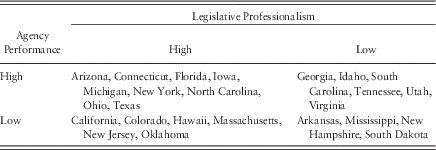
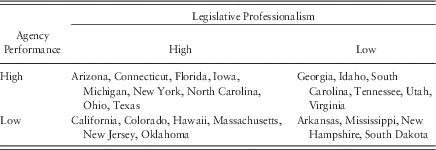
We developed the sample of states by identifying those that fell near the top and near the bottom of established legislative and agency capacity rankings. We used Squire’s professionalism index (Reference Squire2007) as a legislative capacity measureFootnote 7 and a measure of state agency performance that reflected overall management capacity, as assessed by the Government Performance Project (GPP) (Barrett and Greene Reference Barrett and Greene2008). We selected states to ensure variation in both agency performance and legislative professionalism, as shown in Table 1.Footnote 8
Survey states by agency performance and legislative professionalism
Within each state, we began the survey with a purposive sample of health service provider groups that are comparable across states, including state hospital associations, primary care associations (which represent community health centres) and long-term care associations. These groups are reliably involved in Medicaid advocacy because they depend on Medicaid for reimbursement. We then used snowball sampling – asking respondents for referrals – to identify additional provider groups involved in Medicaid advocacy. These included medical societies (which represent physicians) and dental associations. We also used this technique to identify consumer advocacy groups involved in Medicaid because these groups are not as comparable across states and are difficult to identify in advance. In each state, we first called the hospital association and the primary care association, and thus referral chains began in a similar way across survey states. These groups were credible sources of referrals to other potential respondents, which is important for snowball sampling (Biernacki and Waldorf Reference Biernacki and Waldorf1981). We identified two to three respondents in each state ahead of time and an average of two per state by referral. The average number of respondents per state was slightly more than four (4.24), ranging from two to seven in individual states.
Given that we started with major healthcare provider associations and identified a high proportion of respondents by referral, the respondent sample is not representative of all health lobbyists in our sample states. Our sampling strategy is another aspect of our study that makes it a “most likely” case, because many provider associations are very active in the legislative arena and because respondents identified by referral were more likely to be included if they had a larger list of contacts or were more active lobbyists (Kalton and Anderson Reference Kalton and Anderson1986). Although our sampling strategy prevents us from making generalisations about the experiences of every state-level health lobbyist in the United States, we are still able to make meaningful inferences about the behaviour of state bureaucrats with respect to major Medicaid stakeholder organisations in their states. We reiterate that our sample spans 25 states that are representative in terms of key variables, and therefore our study is unlikely to overstate the existence of indirect bureaucratic lobbying at the state level.
In the majority of cases, we made initial contact by e-mail with a staff person identified on organisations’ Websites as having responsibility for government relations, and we followed up by phone. If there was no government relations staff person publicly identified, we emailed or called executive directors or vice presidents and asked for the name of the person responsible for state-level advocacy. The response rate for the survey was 72%.
The focus of the surveys was the piece of Medicaid legislation considered by respondents to have been the most significant during the two most recent legislative sessions (in 2011 and 2012). If there was no recent important policy authorisation, the default was the most recent Medicaid appropriation bill. The first respondent identified the bill that then became the survey topic for each subsequent respondent within a particular state.Footnote 9 Once the bill for the survey focus was identified, we asked the lobbyist to describe his or her communications related to the bill with a variety of actors in terms of frequency, agreement and who initiated conversations. We also asked an open-ended question about whether Medicaid bureaucrats at any level asked the survey respondent (the lobbyist) to coordinate on legislative strategy for that bill or on any other bill, or shared information intended to change the respondent’s advocacy emphasis, and if so how the request was phrased and how explicit or implicit it was.Footnote 10 This question was intended to capture subsidies of both policy and political information (Hall and Deardorff Reference Hall and Deardorff2006). In some cases, bureaucrats may subsidise interest group lobbying efforts with helpful policy information about the workings of the Medicaid programme. In others, they may offer to share valuable political information (e.g. vote counts, descriptions of discussions with legislators) in an effort to support the lobbying efforts of allied groups.
In our conversations with lobbyists, we found evidence of both types of information subsidy. In some cases, respondents described a division of labour in which a Medicaid bureaucrat supplied technical information, whereas the lobbyist relied on his or her (presumably greater) political expertise to incorporate this information into the lobbying effort. Indeed, some lobbyists scoffed at the notion that the Medicaid agency would tell them how to do their jobs as lobbyists, while simultaneously affirming the value of the policy information provided by bureaucrats. In other cases, however, groups clearly described information subsidies consisting of political information and seemed to understand them as “information”. For example, one hospital association executive said, “They never gave us [policy or technical] information that wasn’t publicly available, but we do keep each other informed, ask each other what have your conversations [with legislators] been like”. Some lobbyists even viewed a request itself as a helpful piece of information, conveying that the bureaucrat believed significant effort was needed to achieve or avoid a particular outcome: “Yes, it’s a hallway conversation saying ‘I need your help, we need to have folks testify on this because I’m not going to be able to kill it on my own’”.
Data
Dependent variable
The dependent variable, Requests, reflects whether the lobbyist survey respondent reported that he or she was asked for lobbying support – phrased as “requests to coordinate on advocacy” or “[sharing] information in order to change your advocacy emphasis” – on the survey bill or other recent legislation by any Medicaid bureaucrats including Medicaid directors, agency staff under directors or department secretaries senior to directors. There are 106 observations, equal to the number of respondents.
Where respondents denied the existence of indirect bureaucratic lobbying altogether or described bureaucratic information sharing that they saw as purely neutral or technical, answers were coded as “no request” (which takes a value of 0). An example is as follows:
Respondent: They’re very good about not doing that. No, they’ve always just toed the line. They’ve never tried to influence me one way or another. It’s been more information-sharing and reiterating the party line. It’s very formal. You feel like you’re going to be arrested in that building – you’re escorted to meetings.
We also coded observations as “no request” if respondents reported a request for lobbying support by the Medicaid agency but clearly referred to communication that occurred during a previous administration.
We coded answers as “request” (taking a value of 1) if anyone in the Medicaid agency or the health departments containing Medicaid agencies verbalised a request for lobbying, or if respondents viewed bureaucratic information sharing as an implied request for lobbying support. Explicit requests were much more common, although we also included implicit requests because they are no less strategic on the part of bureaucrats.
An example of an explicit request is as follows:
Respondent: Absolutely. They’ll say, “If I were doing this, this might be something I would look at.” That direct. They’re really good. Like back on the adult dental piece, it’s very clear. They’ll say to keep on working this. We get encouragement. It’s pretty blunt.
An example of an implicit request is as follows:
Respondent: Definitely. That came up with the line items for the administrative staff and for the money for the ACA implementation. They would put the budget out and we would advocate for it at the statehouse.
Interviewer: Did you strategize on advocacy with them?
Respondent: In the advocates meeting we would talk about it.
Interviewer: Were Medicaid people there?
Respondent: Yes.
Interviewer: So was it more a matter of you saying how you were going to work it, or did they make any suggestions?
Respondent: The former – they didn’t tell us how to do our jobs, but they released the budget information to us and knew what we were going to do with it.
Although we believe that responses such as these constitute evidence of strategic behaviour on the part of bureaucrats, even if requests for lobbying are not verbalised, some readers may disagree. To ensure that this coding decision does not drive our results, we also conduct a robustness test by estimating a model in which we code implicit requests as “no request” (results displayed in Appendix 3, available online). Although effect sizes differ, the core interactive results are similar to those reported here.
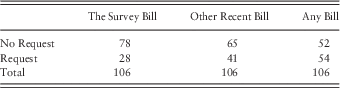
Table 2 shows the distribution of different versions of Requests, where “any bill” is coded as yes if there was an affirmative report for either the bill that was the focus of the survey or another recent Medicaid bill. The number of affirmative reports for the survey bill and other recent bills does not add up to the number for “any bill” because some respondents reported requests for both. We use the variable capturing indirect bureaucratic lobbying requests on any bill, as we believe it is more likely to be representative of typical bureaucratic behaviour in each state and less likely to be affected by political factors unique to individual bills.Footnote 11
Distribution of Requests
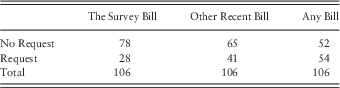
The distribution of Requests is a finding in and of itself: bureaucrats’ requests for lobbying assistance on any recent Medicaid bill were reported by half of the lobbyist respondents in the survey, and bureaucrats requested lobbying help in all states but one. These findings are intriguing because they suggest that indirect bureaucratic lobbying is an influence strategy that is available to most bureaucrats, rather than only those working in agencies with outstanding reputations. We provide additional descriptive data in Appendix 2 (available online), including distributions of requests by legislative content and group type. We find only minor differences in reported requests across these categories.
Independent variables
To measure bureaucrat-lobbyist policy alignment, we asked lobbyist survey respondents to assign agreement scores to four levels of the state Medicaid bureaucracy: Medicaid directors, senior Medicaid staff under directors, cabinet secretaries above Medicaid directors (if any) and governors. These scores were assigned on a scale from 1 to 5, where 1 is disagreement and 5 is complete alignment. Respondents chose agreement scores with respect to the bill that was the focus of the surveys in each state.Footnote 12 Where complex bills contained numerous provisions, survey respondents sometimes assigned a 2, 3 or 4 as an average of their agreement with state actors across several provisions. Requests has one observation per lobbyist; for each lobbyist, we average the agreement scores they assigned to different agency leaders (excluding governors or gubernatorial staff) to create a variable called Average bureaucrat-lobbyist agreement.Footnote 13
To estimate agreement between Medicaid bureaucrats and governors, we take the absolute value of the difference between average bureaucrat-lobbyist agreement and the agreement scores that respondents assigned to governors, and then reverse the values. This is a continuous variable with a range from 0 to 4, where 0 indicates agency disagreement with governors about the surveyed bill and 4 indicates strong agreement. For example, if a lobbyist respondent assigned a 5 to agency officials and a 5 to governors, the difference is a value of 0. We flip the scale so that the 0 becomes a 4, the maximum value, meaning that the governor and the agency were in alignment. If the lobbyist assigned a 2 to the governor and a 4 to agency officials, the difference indicates some discord between the governor and the agency.Footnote 14 We average the estimated governor-bureaucrat agreement scores across lobbyists in each state to create Average governor-bureaucrat agreement.
State agency performance is from the GPP, which measures performance across agencies in each state (Barrett and Greene Reference Barrett and Greene2008). The GPP is not specific to health departments or Medicaid, but there is evidence that it is a good indicator of Medicaid agency performance.Footnote 15 A possible related criticism of this measure is that it assumes cross-state differences in agency performance and reputation matter for political behaviour within each state. After all, legislators do not assess agency performance in other states when they choose whether to seek expertise from bureaucrats or interest groups in their own state. However, the GPP grade for each state gives us information about agency performance that reflects the value of agency expertise relative to that of interest group expertise. For legislators making Medicaid policy decisions, the key question is not whether the Medicaid agency is better or worse than the state department of education, but whether the Medicaid agency has a track record of providing reliable information to legislators as compared with interest groups (see Workman 2015). We assume that this reputation for providing reliable information has a basis in the actual competence of the agency, which is correlated with the GPP measure. Following Nicholson-Crotty and Miller (Reference Nicholson-Crotty and Miller2012), we use this measure as a proxy for agency reputation, converting the GPP letter grades to numbers, where F=0, D−=1, D=2 and so on.
All other independent variables are also from sources outside of the survey. Legislative capacity is from Squire’s (Reference Squire2007) index of legislative professionalism. Gubernatorial power is a measure constructed by Krupnikov and Shipan (Reference Krupnikov and Shipan2012), based on surveys conducted by the National Association of State Budget Officers. These are coded from 1 to 5, where 5 is the highest gubernatorial budget power relative to legislatures. Although scholars of gubernatorial power tend to make distinctions between policy power and budget power (Kousser and Phillips Reference Kousser and Phillips2012), the policy-budget distinction is sometimes a fuzzy one when it comes to Medicaid: many of the bills that were the topics of our survey phone calls were budget bills that had significant impacts on Medicaid policy and were the only recent Medicaid-relevant legislation in those states. For these reasons, gubernatorial budget power is the most appropriate power index for our analysis.
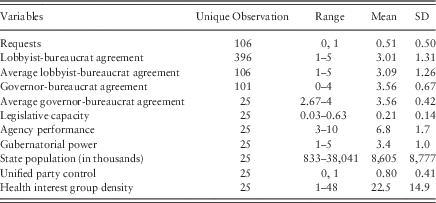
We also include several control variables. State population is from the 2010 Decennial Census, coded in thousands. We use the log of population in analyses because state population is skewed. We include population as a control because institutional capacity and state population are correlated (ρ=0.57 for legislative capacity and population), perhaps reflecting that large states devote proportionally more resources to state government. Controlling for population ensures that whatever results we find related to agency or legislative capacity are not simply an artefact of state population size. Unified party control is from information on party control from the National Council of State Legislatures. We include this variable as a simple proxy for Medicaid agency alignment with the legislature. Presumably, agreement between Medicaid bureaucrats and legislators will play some role in the relative usefulness of direct and indirect bureaucratic lobbying, given the tendency of decisionmakers to accept information from those aligned with them (Calvert Reference Calvert1985; Hall and Deardorff Reference Hall and Deardorff2006), but it is unclear whether this will matter at the institutional level.Footnote 16 Finally, we control for the nature of the state interest group environment using the Gray et al. (Reference Fenno2013) ranking of states by Health interest group density, which reflects the number of health-related interest groups adjusted for state population.Footnote 17 We include this variable to account for the possibility that bureaucrats may take the nature of the state health interest group environment into account in their strategic decisions – for example, it is possible that indirect bureaucratic lobbying may be of less use in a crowded interest group environment where legislators hear from many competing voices.
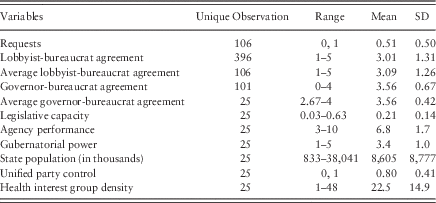
Table 3 presents descriptive statistics for all variables.
Descriptive statistics
Findings
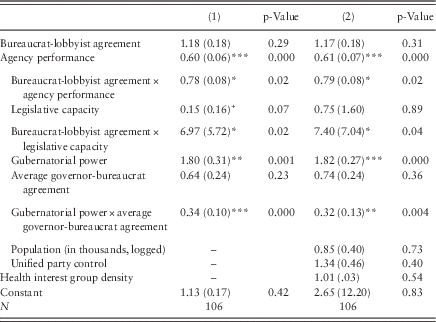
In this section, we analyse the data on attempts to leverage interest group lobbying via requests for lobbying support. We centre all continuous variables used in interaction terms at their means, and estimate the following model using logistic regression, with clustered standard errors by state. We present the results in Table 4.
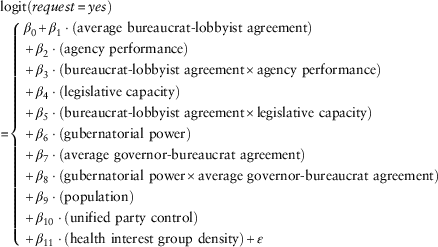 $$\eqalignno{ & {{\rm logit}\left( {request\,{\equals}\,yes} \right)}\cr & {\equals}\left\{ \matrix{ \beta _{0} {\plus}\beta _{1} \cdot \left( {{\rm average\ bureaucrat{\hbox -}lobbyist\ agreement}} \right) \hfill \cr {\plus}\beta _{2} \cdot \left( {{\rm agency\ performance}} \right) \hfill \cr {\plus}\beta _{3} \cdot \left( {{\rm bureaucrat{\hbox -}lobbyist\ agreement}{\times}{\rm agency\ performance}} \right) \hfill \cr {\plus}\beta _{4} \cdot \left( {{\rm legislative\ capacity}} \right) \hfill \cr {\plus}\beta _{5} \cdot \left( {{\rm bureaucrat{\hbox -}lobbyist\ agreement}{\times}{\rm legislative\ capacity}} \right) \hfill \cr {\plus}\beta _{6} \cdot \left( {{\rm gubernatorial\ power}} \right) \hfill \cr {\plus}\beta _{7} \cdot \left( {{\rm average\ governor{\hbox -}bureaucrat\ agreement}} \right) \hfill \cr {\plus}\beta _{8} \cdot \left( {{\rm gubernatorial\ power}{\times}{\rm average\ governor{\hbox -}bureaucrat\ agreement}} \right) \hfill \cr {\plus}\beta _{9} \cdot \left( {{\rm population}} \right) \hfill \cr {\plus}\beta _{{10}} \cdot \left( {{\rm unified\ party\ control}} \right) \hfill \cr {\plus}\beta _{{11}} \cdot \left( {{\rm health\ interest\ group\ density}} \right){\plus}{\varepsilon} \hfill \cr} \right.$$}
Logit models of Requests for lobbying on recent Medicaid bills
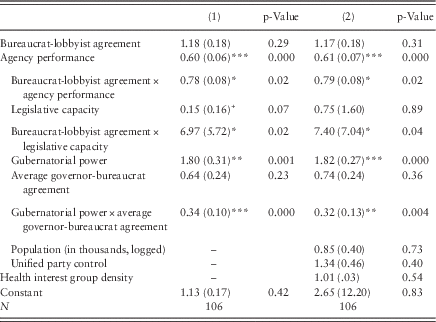
Coefficients are odds ratios. Standard errors, in parentheses, are clustered by state.
***p<0.001; **p<0.01; *p<0.05; +p<0.10.
Column (1) in Table 4 excludes the controls, and column (2) includes all variables. The coefficients for the control variables are not statistically significant and do not materially impact the odds ratios for the interaction terms. Although there are valid theoretical reasons to expect that factors such as executive-legislative alignment and health interest group density would affect the strategic calculations involved in indirect bureaucratic lobbying, we do not find evidence of such effects at this level of analysis. We refer to the estimates in column (2) throughout this section.
Agency performance (H1)
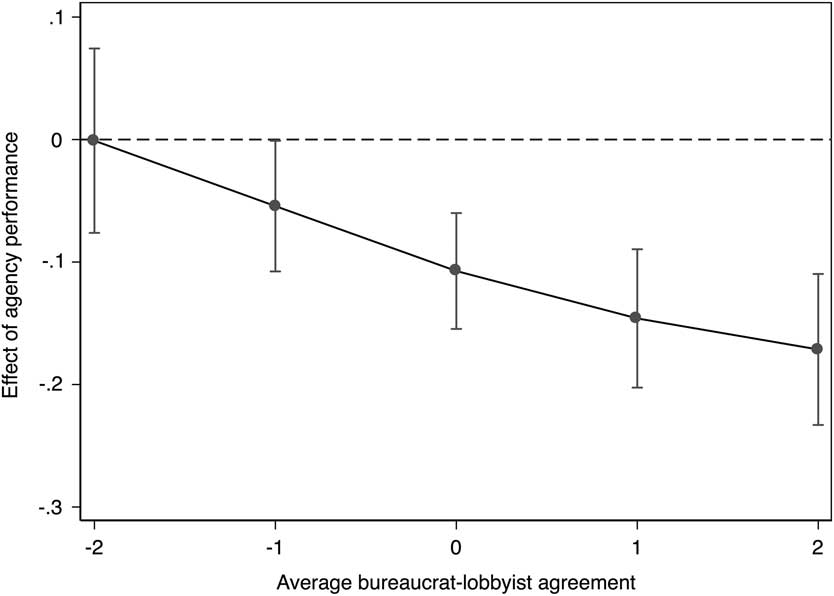
The odds ratio for the interaction of agency performance and bureaucrat-lobbyist agreement is statistically significant, but difficult to interpret because the variables are continuous. Therefore, we present a plot of the expected change in the probability of requests for lobbying for a one-unit increase in agency performance at representative levels of bureaucrat-lobbyist agreement, holding all other variables at their means (Figure 1).Footnote 18
Change in probability of Requests for unit increases in agency performance at different levels of agreement (values centred at means).
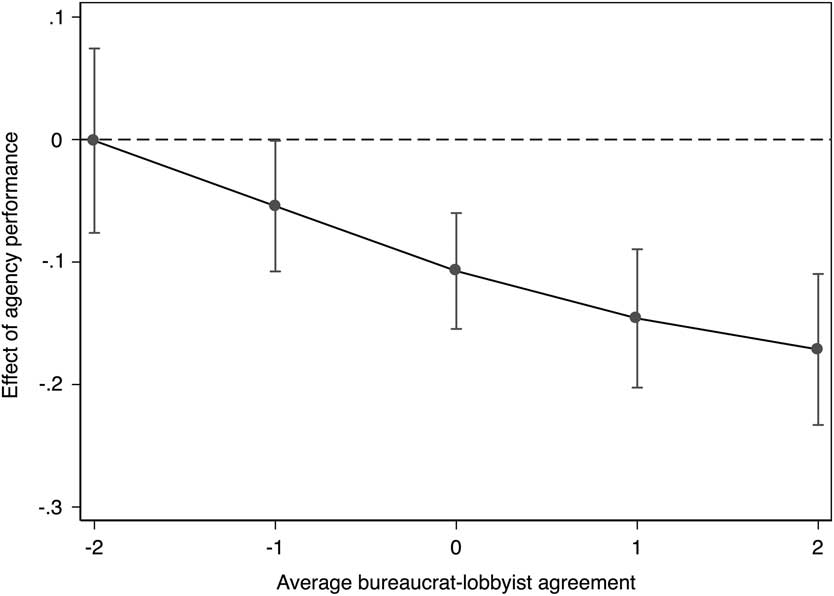
Figure 1 provides clear support for H1: where bureaucrats and lobbyists agree on policy, bureaucrats are more likely to lobby indirectly as agency performance decreases. The effect of a unit increase in agency performance is negative except where there is low agreement, and the magnitude of the effect increases as agreement increases. Estimates at low levels of agreement are not statistically significant. To illustrate, for a state with the lowest performance score and the highest level of agreement, with other values held at their means, the model predicts a 99% probability of a request. Holding all other values constant and increasing the performance score to its median value results in a predicted probability of 61%, whereas increasing the performance score to its maximum value reduces the predicted probability to just 8%.
The finding that bureaucrats are more likely to lobby indirectly in states where agency performance is relatively low is consistent with our theory and suggests that bureaucrats believe legislators in these states privilege Medicaid policy information from interest groups. This result presents an interesting contrast with the findings of other scholars on the positive effect of agency performance on bureaucrats’ direct influence on legislators (Nicholson-Crotty and Miller Reference Nicholson-Crotty and Miller2012). When held up against those findings, our result suggests that state agency leaders try to leverage interest group power as a way of circumventing the political limitations imposed by lower agency reputation.
Legislative capacity (H2)
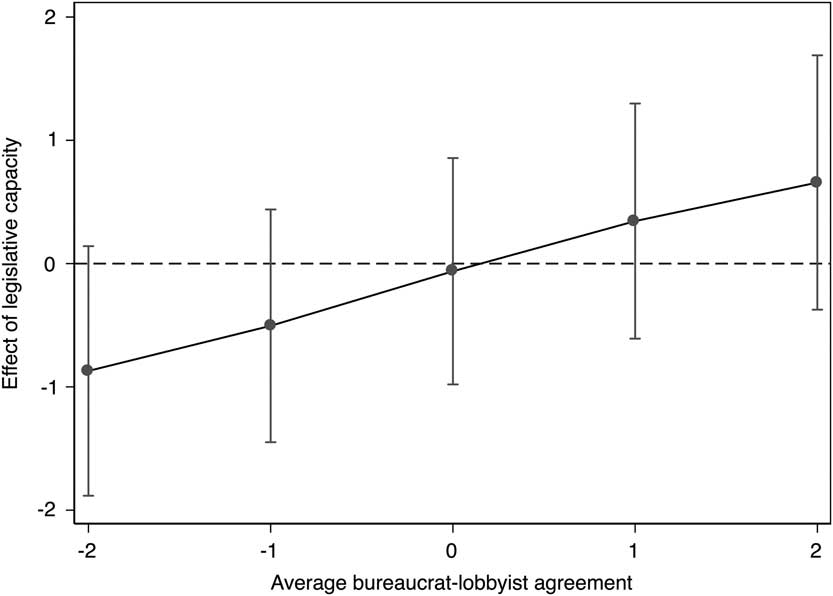
The odds ratio for the interaction of legislative capacity and average bureaucrat-lobbyist policy agreement in Table 4 is also statistically significant. To interpret this result, we plot the marginal effect of increases in legislative capacity at different levels of bureaucrat-lobbyist policy agreement, holding all other variables at their means (Figure 2).
Change in probability of Requests for unit increases in legislative capacity at different levels of agreement (values centred at means).
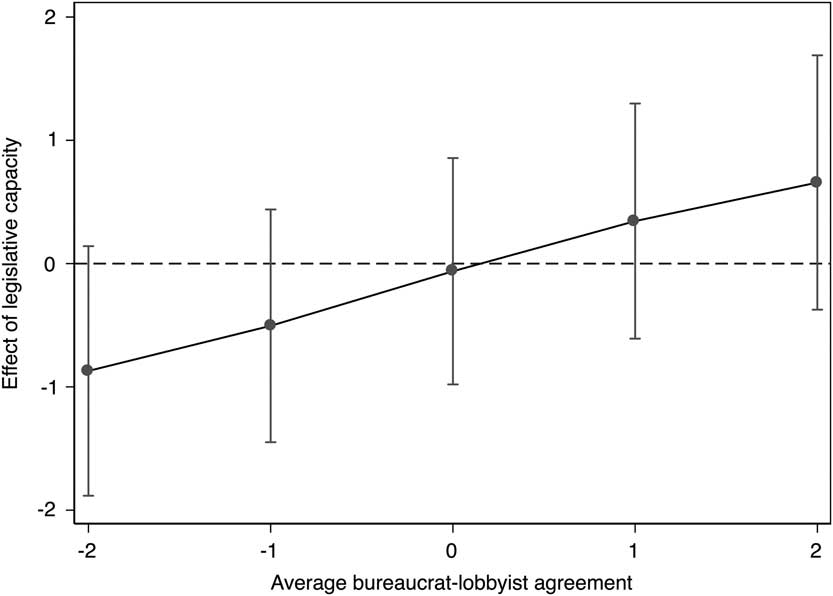
Figure 2 shows that the marginal effect of legislative capacity is not statistically significant at any level of bureaucrat-lobbyist agreement, although the direction and magnitude of the insignificant effect both change over the range of the agreement variable. The pattern is the opposite of that predicted by H2. We expected to see a negative effect of legislative capacity at high levels of agreement, reflecting the idea that bureaucrats should engage in more indirect lobbying where legislatures require more outside expertise, but Figure 2 suggests a positive effect. At low levels of agreement, there is a possible negative effect of legislative capacity. This suggests that bureaucrats may be so interested in providing information to low-capacity legislatures that they are willing to incur costs associated with making lobbying requests of, and potentially attempting to persuade, interest groups with dissimilar positions. When bureaucrats and lobbyists are in agreement, the likelihood of indirect bureaucratic lobbying may increase as state legislative capacity increases. If bureaucrats are eager to supply information to legislators even where there is less demand for policy expertise from the executive branch, bureaucrats may rely on indirect lobbying as an influence strategy. These interpretations are tentative, however, given the lack of statistically significant effects.Footnote 19
Gubernatorial power (H3 and H4)
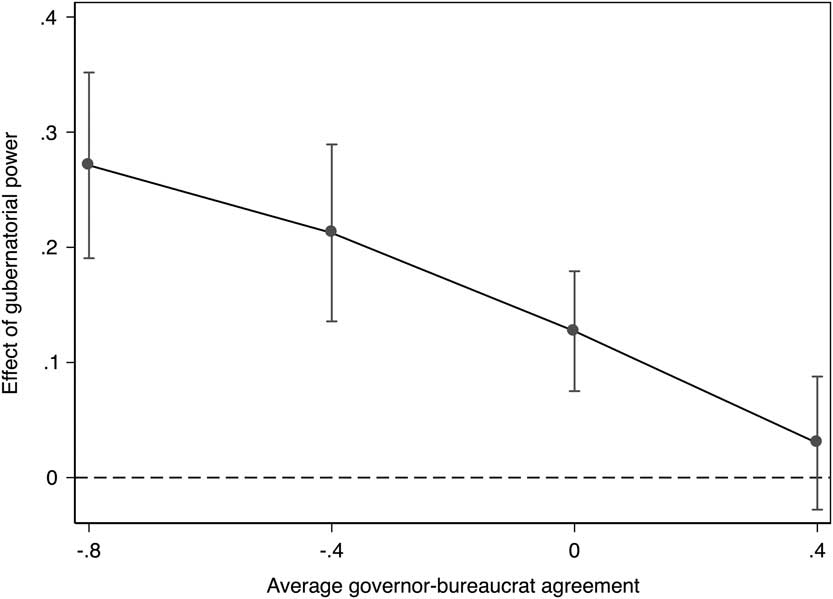
Again, because gubernatorial power and governor-bureaucrat agreement are continuous variables and the meaning of their interaction is difficult to interpret, we use the full model to find the effects of unit increases in gubernatorial power at various levels of governor-bureaucrat agreement, holding all other variables at their means (Figure 3).
Change in probability of Requests for unit increases in gubernatorial power at different levels of governor-bureaucrat agreement (values centred at means).
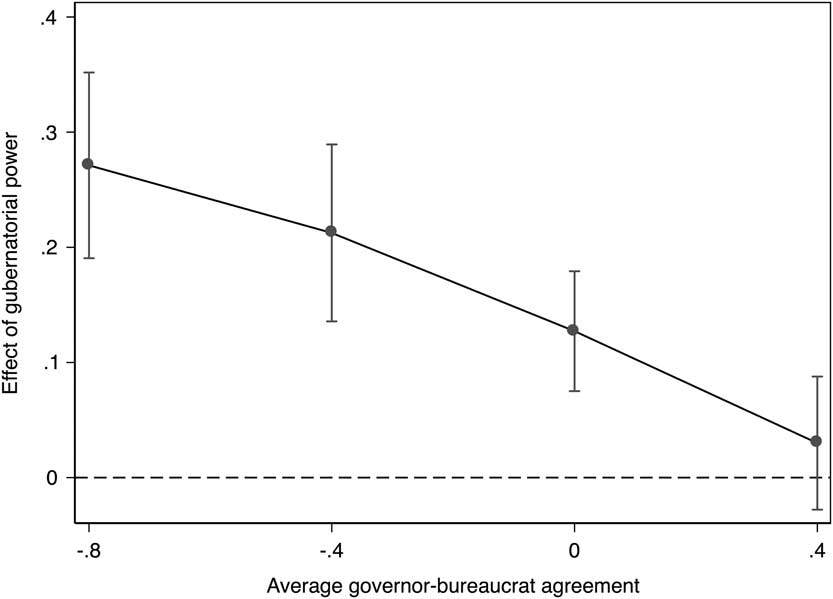
Figure 3 provides clear support for H4 and evidence against H3: increasing gubernatorial power has a significant and positive effect on the likelihood of an indirect bureaucratic lobbying request for all but the highest level of governor-bureaucrat agreement. The strength of this effect increases as agreement decreases. That is, where bureaucrats do not agree with governors, they are more likely to lobby indirectly as gubernatorial power increases, perhaps in an effort to counteract proposals of strong governors they see as unfriendly to Medicaid. Lack of support for H3 suggests that bureaucrats see less need to lobby indirectly, or are unwilling to incur costs associated with doing so, where their interests are aligned with governors.
To illustrate these findings, the model predicts that a bureaucrat in a state with low gubernatorial power has a 16% chance of making an indirect lobbying request at the lowest level of governor-bureaucrat agreement, whereas a bureaucrat with the same level of agreement in a state with high gubernatorial power has an 89% chance of making a request, a statistically and substantively significant jump. By contrast, at the highest (and modal) level of governor-bureaucrat agreement, the model predicts a 44% chance of a request by a bureaucrat in a weak-governor state compared with a 53% chance in a strong-governor state, a relatively small difference.Footnote 20 Several survey respondents’ descriptions of indirect bureaucratic lobbying also help illustrate this result. These respondents described governors as interested in cutting the Medicaid programme, whereas Medicaid agency leaders and staff work to protect it (although this is by no means uniformly true across states). An example of this is as follows:
Respondent: There’s always been a history among Medicaid leadership to encourage the community – they know they can’t do it directly – they can’t go into the legislature – they make their budget pitch, but they can’t advocate. […] It actually is rather explicit. If we’re in a meeting with the Medicaid director and his staff, and it’s a group of advocates, they’re pretty clear about asking us, saying hey, you all can make a difference by talking to legislators.
Although this is technically the governor’s budget proposal that the Medicaid director is described as fighting for, the governor was not expected to protest budget cuts made by the legislature. In this scenario, the results shown in Figure 3 are intuitive – it makes sense that we might see more indirect bureaucratic lobbying on behalf of Medicaid programmes where powerful governors are perceived as generally unsupportive of Medicaid.
Discussion and conclusions
In this study, we show that state agency staff routinely take advantage of interest group power in attempts to influence legislation. Although our sample does not permit us to generalise to all lobbyists, it appears that active health-sector lobbyists receive such requests fairly often. We also provide the first systematic evidence of the conditions under which this bureaucratic behaviour is likely to occur. These findings suggest that indirect bureaucratic lobbying is a distinct strategy from direct lobbying, likely to be used under different institutional arrangements, although they may be complementary in some instances.
Specifically, we find that bureaucrats in low-performing agencies are more likely to use indirect lobbying, conditional on bureaucrat-lobbyist agreement. This finding extends, in specific ways, two related lines of enquiry about bureaucratic activism. First, as noted above, the negative effect of agency performance on indirect bureaucratic lobbying presents an intriguing contrast with the recent study by Nicholson-Crotty and Miller (Reference Nicholson-Crotty and Miller2012) that shows a positive relationship between high agency performance and direct bureaucratic influence on legislators. Taken together, these studies suggest that bureaucrats in both high- and low-performing agencies have methods for influencing legislators, although the tools for doing so are quite different. Soliciting lobbying help from ally interest groups may enable bureaucrats to circumvent limitations to their political power resulting from lower agency reputation. Of course, it is important to note that simply because this strategy is available to bureaucrats does not necessarily mean that it will be successful. Further research is needed to evaluate the effectiveness of indirect bureaucratic lobbying.
Second, our findings on the effect of agency performance expand on Carpenter’s (Reference Carpenter2000, Reference Carpenter2001) work on sources of agency autonomy during the Progressive Era. Carpenter focusses on explaining why particular agencies were very influential, arguing that their reputations for expertise and placement in private-sector networks caused legislators to defer to them. Our study shows that stellar agency reputations are not required for individual bureaucrats to be part of policy networks or to use those networks to attempt influence. We also show that bureaucrats request help from interest groups in order to influence single pieces of legislation on which they agree. These coalitions therefore occur in issue-contingent, short-term ways. Indirect bureaucratic lobbying constitutes a common, everyday political strategy that is available to most bureaucrats.
In addition, we find that bureaucrats appear to use indirect lobbying as a strategy to counter the influence of powerful governors hostile to their policy interests. This is a striking finding for several reasons. First, we can infer that disagreement with governors serves as a powerful motivator because the potential costs to bureaucrats of this kind of policy activism are very high. This finding also supports the idea that governors and agencies can have distinguishable policy positions, and that differences in these positions matter for agency behaviour. This is important because political science research often bundles governors with the agencies they oversee (e.g. Huber and Shipan Reference Huber and Shipan2002), in part because estimating their respective preferences is very difficult. Bureaucrats’ ability to ask interest groups for help in opposing a governor’s policy position is, to our knowledge, a previously unexamined mechanism for agency power, and one that highlights opportunities for additional fruitful research on governor-agency interactions and interbranch bargaining.
Finally, we find weak evidence of an interactive effect of bureaucrat-lobbyist agreement and legislative capacity. These results suggest that bureaucrats working in states with low-capacity legislatures may be so concerned about filling legislative information gaps that they sometimes attempt to persuade non-ally interest groups of their preferred policy position. By contrast, when bureaucrats and interest groups are in alignment, higher legislative capacity may make indirect bureaucratic lobbying more attractive, possibly because legislators are less likely to seek expert opinions from bureaucrats when legislatures are well staffed. Although these are intriguing possibilities, the statistical insignificance of the legislative capacity effect across the entire range of the agreement variable indicates that we should be cautious about drawing inferences from these patterns.
This study has several limitations worth noting. Regularised contact between Medicaid administrators and a well-defined set of stakeholder organisations may make Medicaid policy especially conducive to indirect bureaucratic lobbying. Our sampling strategy targets these groups, and as such our findings may not generalise to other policy domains. Second, although we acknowledge the potential importance of individual-level characteristics (e.g. personal relationships between bureaucrats and lobbyists), the sensitive nature of indirect bureaucratic lobbying (and bureaucratic lobbying in general) prevented us from incorporating such characteristics in our study. Finally, this research is, to our knowledge, the first to systematically examine indirect bureaucratic lobbying and the conditions under which it is most likely to occur. As such, it is important that we are specific about the mechanism underlying this behaviour. The information subsidy theory of lobbying (Hall and Deardorff Reference Hall and Deardorff2006) provides a plausible mechanism that receives mixed support from our findings on bureaucrat-lobbyist policy agreement. Further studies are necessary to determine whether bureaucrats are always able to provide information subsidies to interest groups, or whether, under conditions such as low agreement or high interest group resources, bureaucrats use other mechanisms to solicit interest group lobbying.
This study points to other avenues for further research in addition to those mentioned above. We wonder whether observations of indirect bureaucratic lobbying would increase when there are relatively more bills that expand Medicaid. Our survey asked about legislation in a period when many state Medicaid programmes were under severe budget stress and the only major legislation simply cut provider reimbursement rates (2011–2012). Several respondents suggested that this timing exerted downward pressure on bureaucrats’ indirect lobbying because of low levels of bureaucrat-lobbyist alignment. This study also points to the need for additional work on the limitations and conditionality of political control of the bureaucracy. Bureaucrats may be able to circumvent both statutory and procedural controls if they are able to leverage interest group power in order to influence legislation. Overall, these findings highlight the need for greater attention to agency activism before the passage of legislation. Further research on this topic has the potential to increase our understanding of the interplay of state institutions as well as states’ policy choices.
Acknowledgements
The authors are grateful for comments and suggestions from Chuck Shipan, Rick Hall, Peter Jacobson, Christy Harris Lemak, Steve Balla, Peter John (the editor) and three anonymous reviewers. K. W. V. B. acknowledges support from the Gerald R. Ford Fellowship and Research Grant at the University of Michigan. J. H. acknowledges support from the Robert Wood Johnson Foundation Scholars in Health Policy Research Program at the University of Michigan.
Supplementary material
To view supplementary material for this article, please visit https//doi.org/10.1017/S0143814X16000246