Introduction
Over 30 years ago, David Barker observed that maternal nutrition during pregnancy and birth weight were related to adult health including rates of ischemic heart disease Reference Barker and Osmond1,Reference Barker, Osmond, Winter, Margetts and Simmonds2 . Those observations led him to suggest that poor fetal nutrition could “increase the susceptibility to the effects of an affluent diet” which could then increase the risk of cardiovascular disease in later life Reference Barker, Godfrey, Gluckman, Harding, Owens and Robinson3 . Thus, he hypothesized that suboptimal environments during pregnancy could affect development, influencing the risk of adult chronic diseases Reference Barker and Osmond1–Reference Wadhwa, Buss, Entringer and Swanson4 .
Barker’s hypothesis inspired an onslaught of studies eventually leading to the emergence of the field now known as the Developmental Origins of Health and Disease (DOHaD). DOHaD has grown into the dominant theoretical framework that is used to investigate how environmental exposures during embryonic, fetal, neonatal, child, and adolescent life can shape the development and occurrence of chronic diseases and disorders Reference Barker5–Reference Hertzman8 . Specifically, DOHaD research has inspired a series of large-scale longitudinal cohort studies that start early during development to investigate these exposure–outcome relationships Reference Boyd, Golding and Macleod9–Reference Richter, Norris, Pettifor, Yach and Cameron13 .
Despite important advances in DOHaD knowledge, our understanding of the role that early life exposures have on poor health outcomes and our ability to prevent these outcomes and enrich for resiliency remain limited. These limitations are due in part to the highly complex nature of exposure–outcome relationships and the tendency of most studies to focus on single variables, often through a biomedical lens, when most outcomes have multivariable origins. Therefore, a comprehensive list of exposures, or their interactions, associated with health trajectories is difficult to generate, which limits our ability to predict risk or resiliency. Further, the dissemination of information to individuals, caregivers, and policy-makers has also been limited.
We conducted a Rapid Evidence Review (RER) to better understand the complex relationships between early life exposures and their contributions to later health outcomes and asked the following question: what are the major risk and resiliency factors in early life that are associated with adult-onset disease pathways that could be used to predict health and disease trajectories? There is a strong need to integrate and consolidate available information on the social, environmental, and biomedical determinants of health Reference Bircher and Kuruvilla14 into the DOHaD framework. We aimed to identify geographical trends and socioeconomic and cultural groups that are captured by DOHaD studies. These findings may have implications for policy, public health, education, and well-being Reference Suzuki15 .
Methods
We conducted an RER following guidelines provided by the National Collaborating Centre for Methods and Tools 16 . Additionally, our study adhered to a modified version of the Preferred Reporting Items for Systematic review and Meta-Analysis (PRISMA) checklist Reference Moher, Liberati, Tetzlaff and Altman17 (Supplementary Table S1).
Information sources and search terms
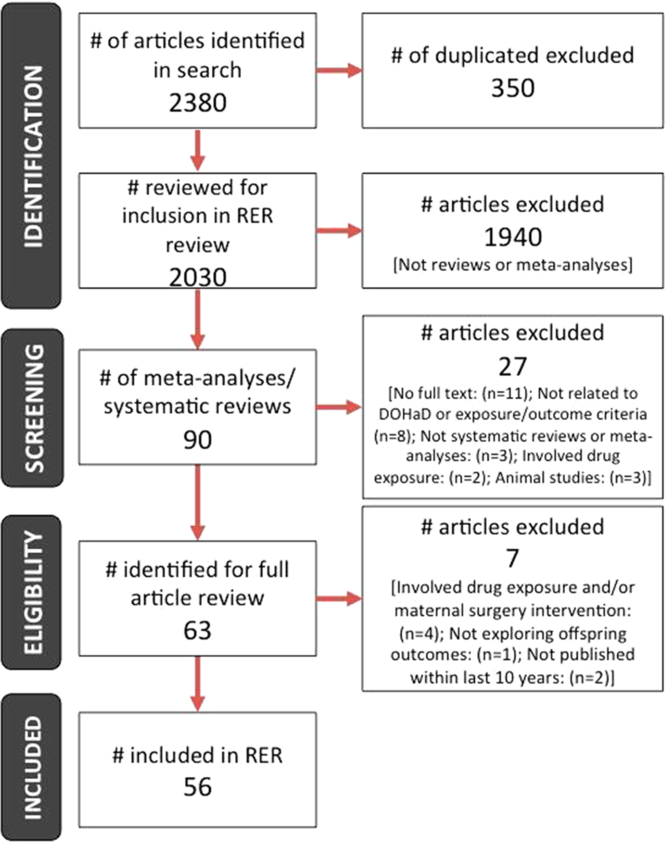
A literature search was conducted between May 6 and May 10, 2019, using the search engines CINAHL, PubMed, ProQuest, and Web of Science. The following search string was used: (Maternal* OR Paternal*) AND (weight OR obes* OR nutrition OR diet* OR stress OR social support) AND (child OR infant) AND (Programming AND Development); Mother–child relation* AND Programming; Child* AND development AND Programming AND (stress OR depression OR anxiety OR sensitivity OR temperament) AND mental health; Parent–child relation* AND Programming; Programming AND *natal; Development* AND Origins AND Programming; Development* Origins of Health and Disease; (Maternal* OR Paternal*) AND (gene* OR immune* OR metabol* OR inflam* OR brain OR neuro* OR cardio* respiratory) AND (development OR growth OR Programming) AND (child OR infant). The search was limited to articles published within the last 10 years, between January 1, 2009 and April 19, 2019. This search yielded 2380 articles in the English language (Fig. 1), in which 2030 articles were retained after deduplication. EndNote Basic was used as a reference manager application.
Flow diagram of the review of citations identified by the search the initial capture resulted in 2380 articles using identified search terms. After deduplication, abstracts and title of records underwent level 1 screening to identify which were systematic reviews or meta-analysis, where 1940 articles were excluded, resulting in 90 articles. At level 2, full text of articles was reviewed to assess for the outlined inclusion criteria, after which 26 were excluded, resulting in 64 articles. At level 3, an additional 8 studies were deemed to not fit the outlined inclusion criteria, and a final total of 56 studies were obtained.

Inclusion criteria
Due to a large volume of results initially captured (n = 2380), we narrowed our search to include only systematic reviews and meta-analyses. Further inclusion criteria included: (1) human studies, (2) studies that looked at health and disease origins with exposures during the preconception, prenatal, or postpartum periods and outcomes during birth or after birth, (3) studies that looked at health and disease origins with exposures applicable to the mother, father, or offspring and outcomes affecting the offspring, (4) studies that involved assessing risk or resilience outcomes, and (5) access to full text. Studies of drug effects on adult-onset disease pathways were excluded.
Creation of exposure and outcome domains
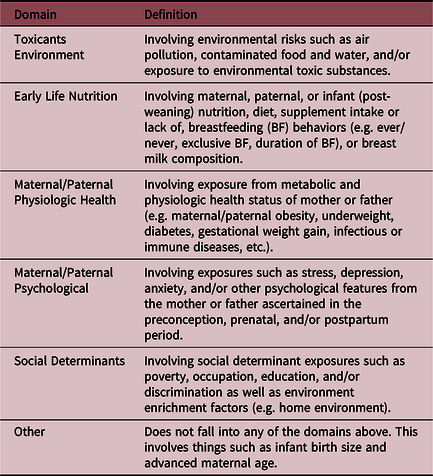
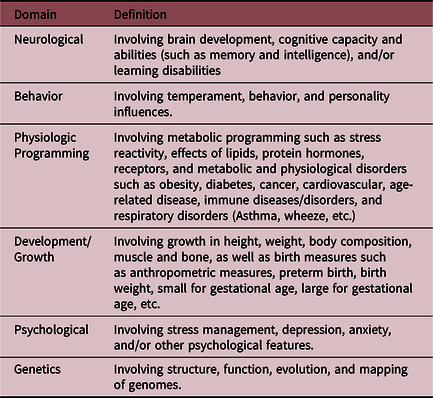
Studies were categorized into discrete domains based on the main exposures and outcomes investigated (Tables 1 and 2). This is an approach that has been used in the DREAM BIG consortium Reference Wazana, Evans, Pearson, Tiemeir and Meaney18 and builds on approaches used by ALSPAC and GENERATION-R cohorts Reference Cecil, Lysenko and Jaffee19,Reference Rico-Campà, Martínez-González and Alvarez-Alvarez20 . The exposure domains were developed after consideration of the developmental era during which the exposure was experienced (preconception, prenatal, or postpartum), biological risks and exposures, and exposures applicable to the mother, father, or offspring. The most frequently studied fields of exposures were identified through a preliminary search of DOHaD literature and expert consensus. Outcomes present at any developmental era after birth were considered. Studies that involved multiple exposures or outcomes were included in multiple domains, as appropriate.
Classifications for exposure domains

Classification for outcome domains

Article screening and data extraction
A 3-level screening process (Fig. 1) was performed by three independent reviewers. In the case where there was disagreement, the issue was resolved by discussion. At level 1, articles evaluated based on title and abstract were screened out if they were not a systematic review or meta-analysis. References for 90 articles were obtained for full-text review in level 2. Articles were excluded if there was no full-text access (n = 11), were not related to DOHaD or discussed exposure or outcome criteria on offspring (n = 8), were not systematic reviews/meta-analyses (n = 3), assessed drug exposure (n = 2), or contained animal studies (n = 3), leaving 63 articles for review and data extraction. At the third-level screening, articles were further excluded for examining drug exposure and maternal surgery intervention, which were not specified exposures in inclusion parameters (n = 4), primarily focused on maternal outcomes and not offspring (n = 1), and were not within the search date range (n = 2). For the third screening stage, extracted data for n = 56 included PECO data (patient/population, exposure [time period and specific type of exposure], comparison group(s), outcome [specific type of outcome)] descriptions), follow-up times (categorized into discrete developmental periods of 0–4 years, 5–10 years, 11–14 years, 15–19 years, 20 years+), themes (domains) for exposures, and themes (domains) for outcomes. The 56 included systematic reviews/meta-analyses were reviewed to determine if some of the same studies were included in multiple reviews/meta-analyses. There was no overlap of studies within the 56 systematic reviews/meta-analyses included in this RER.
To determine the magnitude of effect of the various exposures on outcomes of interest within each of the 56 studies, pooled summary statistics for the most significant or primary findings, as reported in the full text of the studies, were extracted. Summary statistics were either reported as an Odds Ratio (OR), Risk Ratio (RR), Relative Index of Inequality (RII), Pearson’s correlation, mean difference (weighted or standard), Cohen’s d, range, or a beta value. For summary statistics that could be converted to OR, a point estimate for the odds ratio is provided in the figure legend. In the case where the studies reported inconclusive main findings or summary statistics, no value was retained.
Data synthesis
Graphical Overview for Evidence Reviews (GOfER) diagrams (21) were created to visualize exposure–outcome relationships and present key data collected from reviews such as size, design, follow-up, participant characteristics, and outcomes used Reference Stahl-Timmins21 . We grouped studies within a GOfER diagram based on exposure domains identified in Table 1 and displayed the value and type of pooled summary statistics extracted from each study as applicable. Other data visualizations were created using RStudio software (version 0.97.551 for heatmaps, stacked area graphs) or RAWGraphs Reference Mauri, Elli, Caviglia, Uboldi and Azzi22 (for Alluvial diagrams).
Study quality appraisal
Study quality was determined based on the quality assessments reported in the 56 reviews and categorized on a scale consisting of low-, moderate-, and high-quality categories. Reviews containing either a majority of low- or a majority of high-quality studies were categorized as low or high, respectively. Other studies that included a mixture of low- and high-quality evidence were categorized as moderate. Due to the heterogeneity of the studies within and between the 56 reviews, it was not possible to conduct an independent formal quality assessment of the methodology and evidence.
Results
Assessing global trends
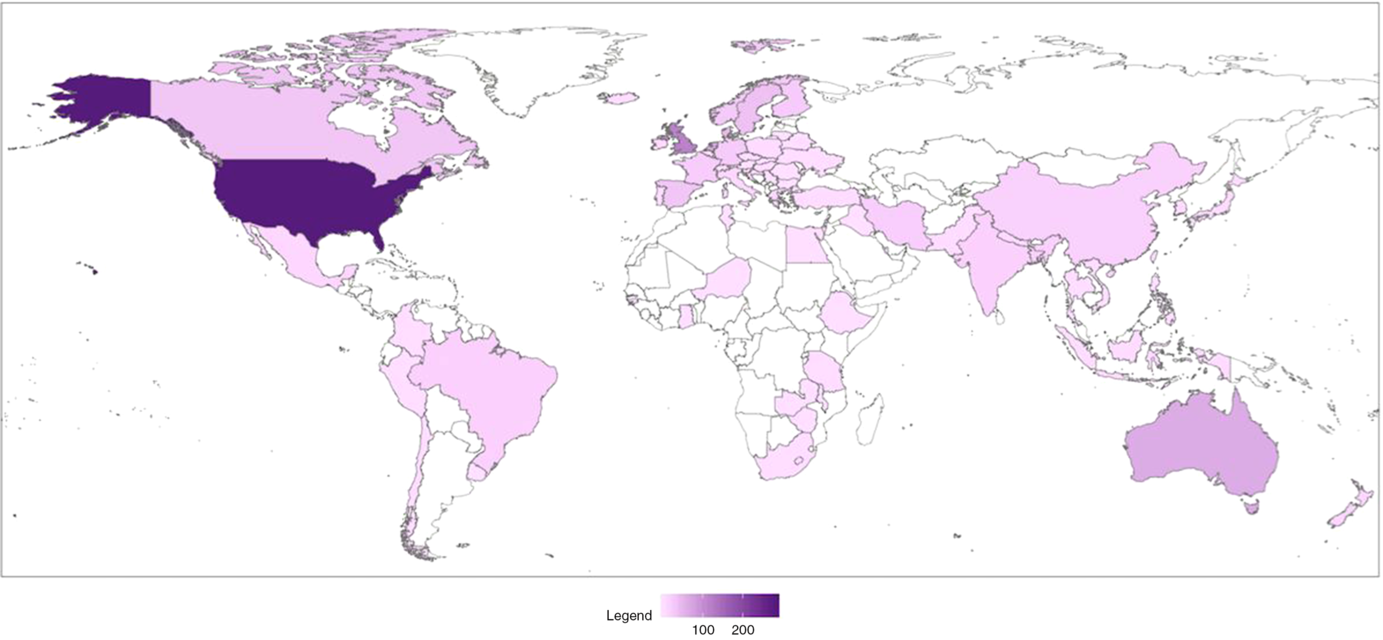
We first evaluated global trends in the 56 captured studies Reference Alvarez-Bueno, Cavero-Redondo, Lucas-de la Cruz, Notario-Pacheco and Martinez-Vizcaino23–Reference Zwink, Jenetzky and Brenner78 by identifying countries where studies took place or where study populations or cohorts originated. Studies included within the reviews assessed in the RER were from a diverse range of countries (Fig. 2). However, the majority of cohorts or study populations originated from high-income countries, predominantly the United States, followed by the United Kingdom and Australia (Fig. 2). Fewer studies were from South American, African, and South East Asian countries, suggesting that the effects of early life exposures on lifecourse health outcomes may not be as extensively documented in these regions.
Heatmap of distribution of each study contained within the systematic reviews/meta-analyses by country where the study took place or where cohort or study population were based. Data values of the country count are represented as colors where the darker to lighter gradient represents higher study counts to lower study counts of countries where studies were based. Data are shown for 50 studies.

Domain distributions
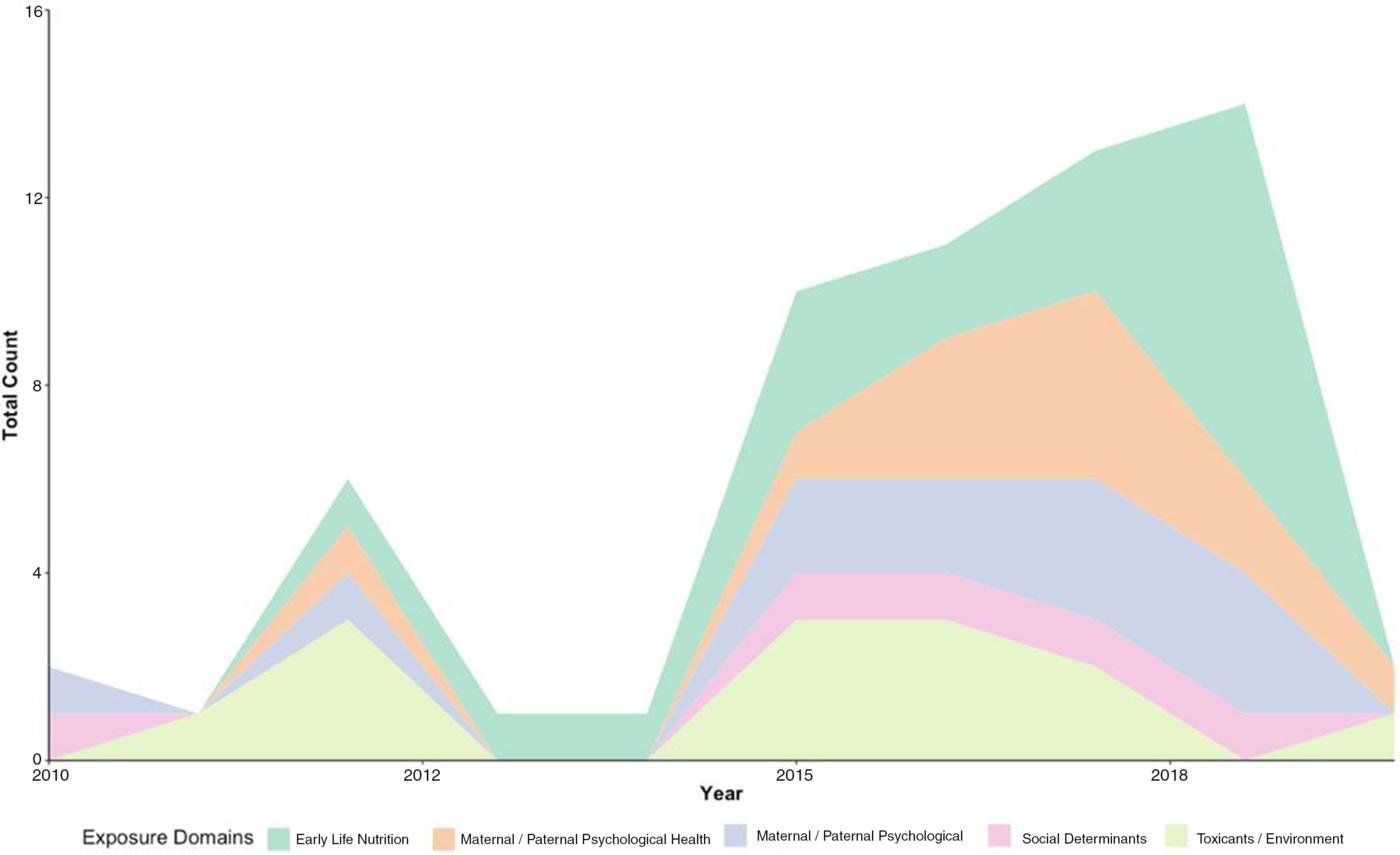
To understand trends between early life exposure variables and health outcomes, we evaluated the frequency of exposures being represented in the literature over time (Fig. 3). Within the exposure domains, 19 articles fell under “Early Life Nutrition”; 12 under “Maternal/Paternal Physiologic Health”; 9 under “Maternal/Paternal Psychological Health”; 12 under “Toxicants/Environment”; 5 under “Social Determinants”; and 3 under “Other”. More studies are published at a later date indicating that research in the DOHaD field is increasing within these exposure domains (Fig. 3). Within the outcome domains, 23 articles were related to “Development/Growth”; 24 were related to “Physiological Programming”; 20 were related to “Neurological/Cognitive”; 5 were related to “Genetics”; 5 were related to “Psychological”; and 7 articles were related to “Behavior”.
Stacked area graph displaying the total number of studies published within each exposure domain over time, pulled from studies included in the 56 systematic reviews/meta-analyses. Each stack as coded by color in the figure legend represents a total count of that particular exposure domain within the included systematic reviews/meta-analyses over the last 9 years. Higher stacks at a particular year indicate a greater total count of the exposure domain for that time point.

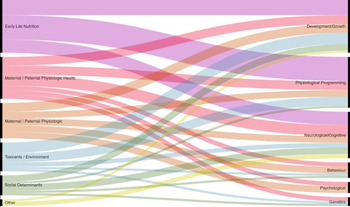
We also aimed to identify where evidence for DOHaD relationships may be greatest or lacking. Studies that involved “Early Life Nutrition”, which was the most studied exposure domain, explored mostly development/growth, physiological programming, and neurological/cognitive outcomes (Fig. 4). The second (Maternal/Paternal Health) and third (Maternal/Paternal Physiological) most commonly studied exposure domains explored outcomes across all categories.
Alluvial diagram of exposure and outcome domains showing the flow of weighted links between exposure and outcome domains indicating the number of studies included in the RER that explore that particular exposure–outcome relationship.

Associations between early life exposures and health outcomes
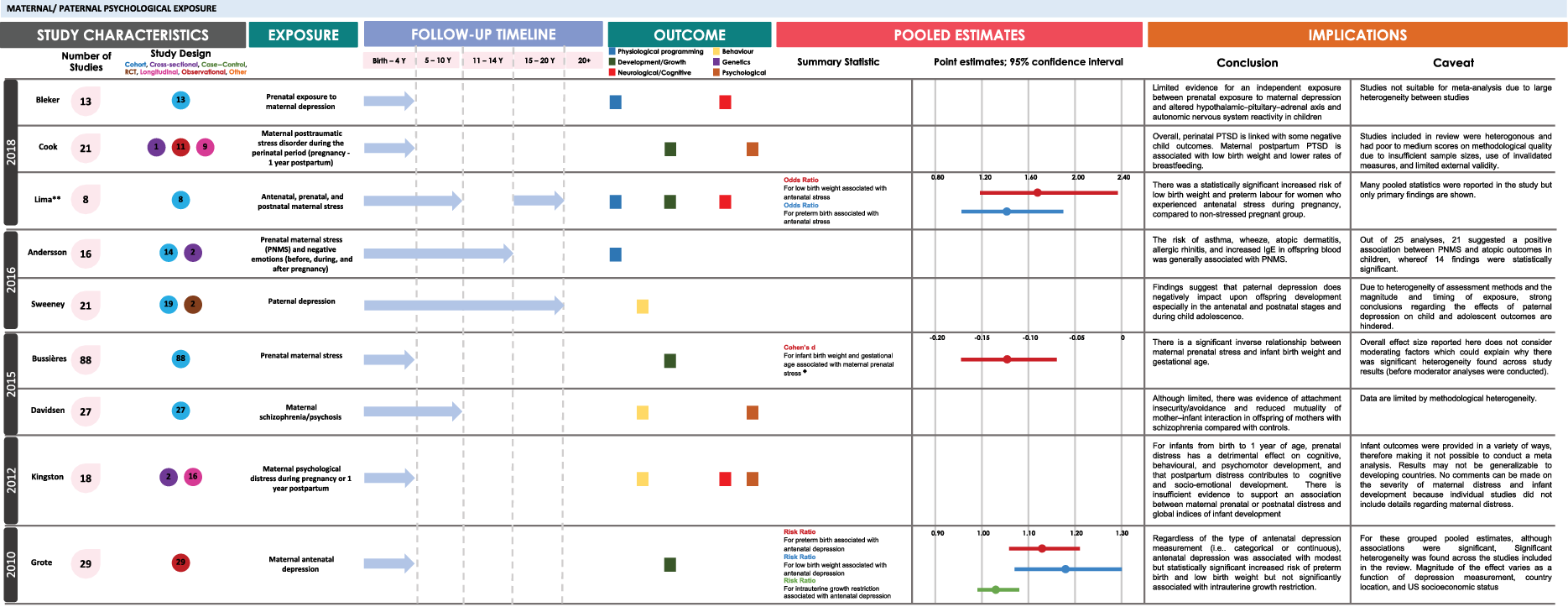
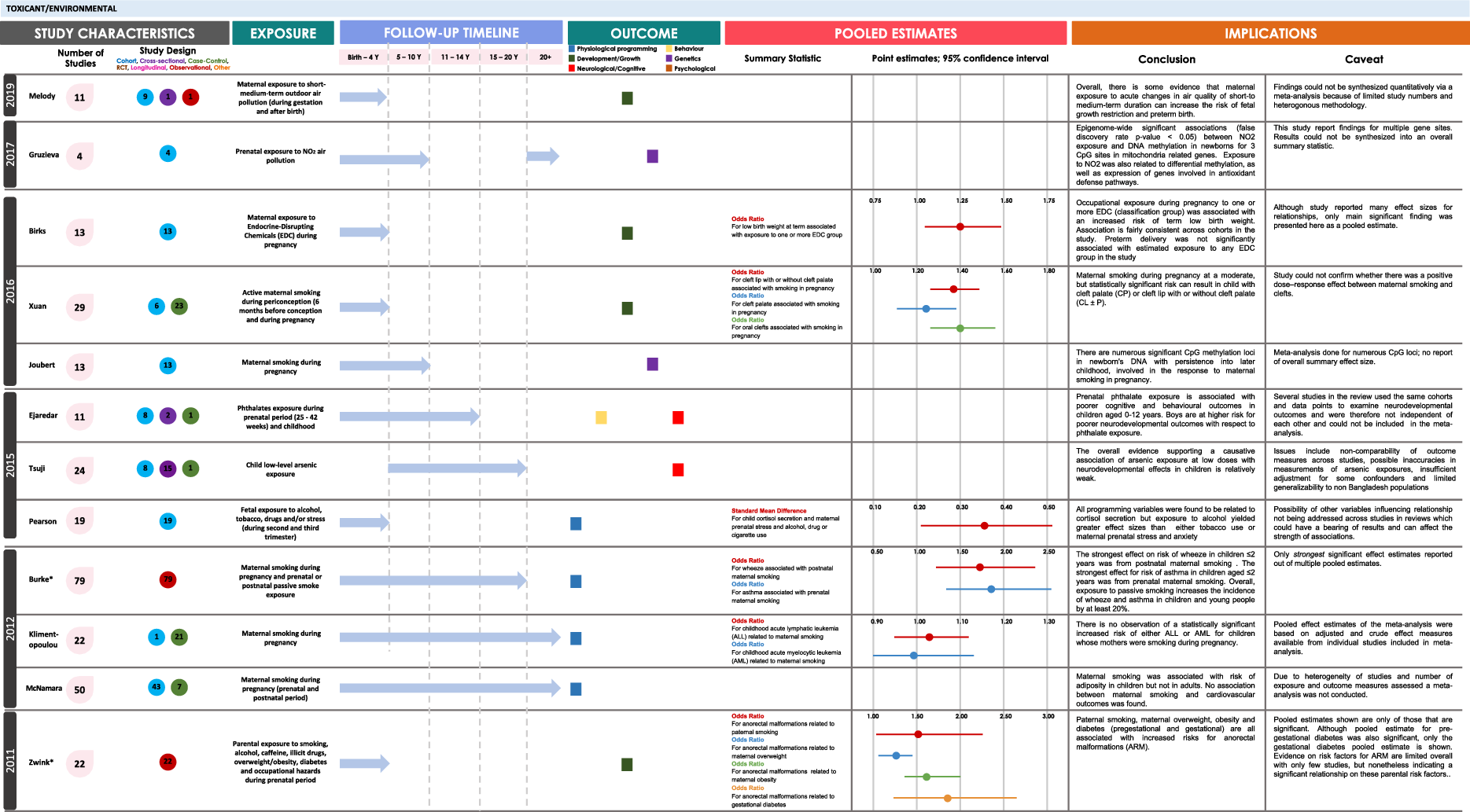
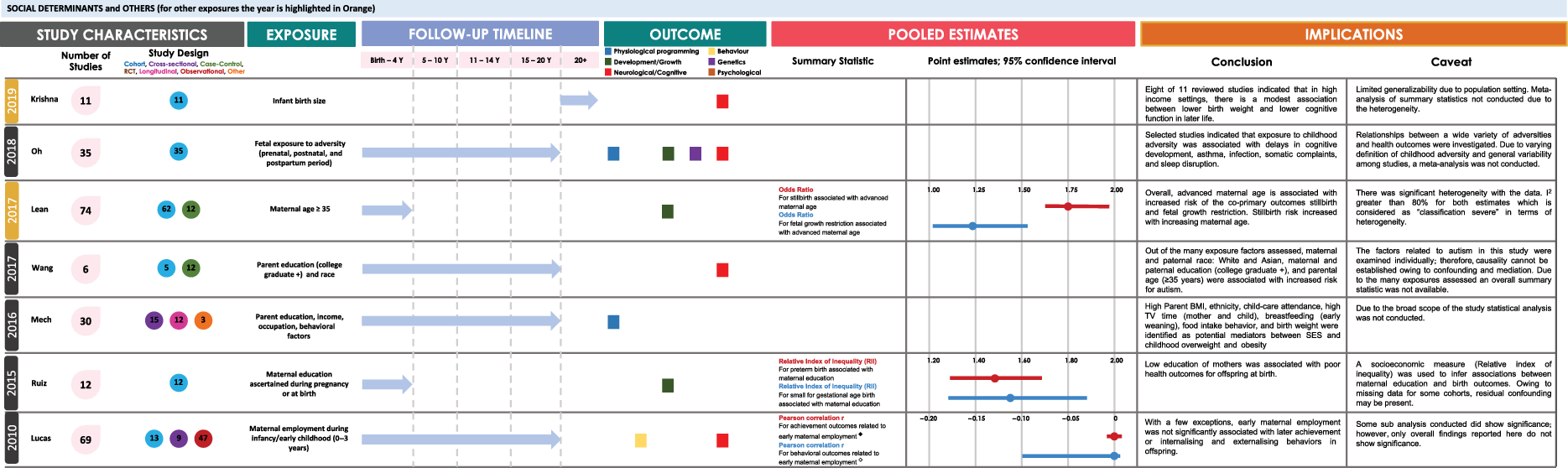
The 56 systematic reviews/meta-analyses included in the RER were grouped according to exposures studied and organized into GOfER diagrams to visualize exposure and outcome relationships and trends within the six domains (Fig. 5–9).
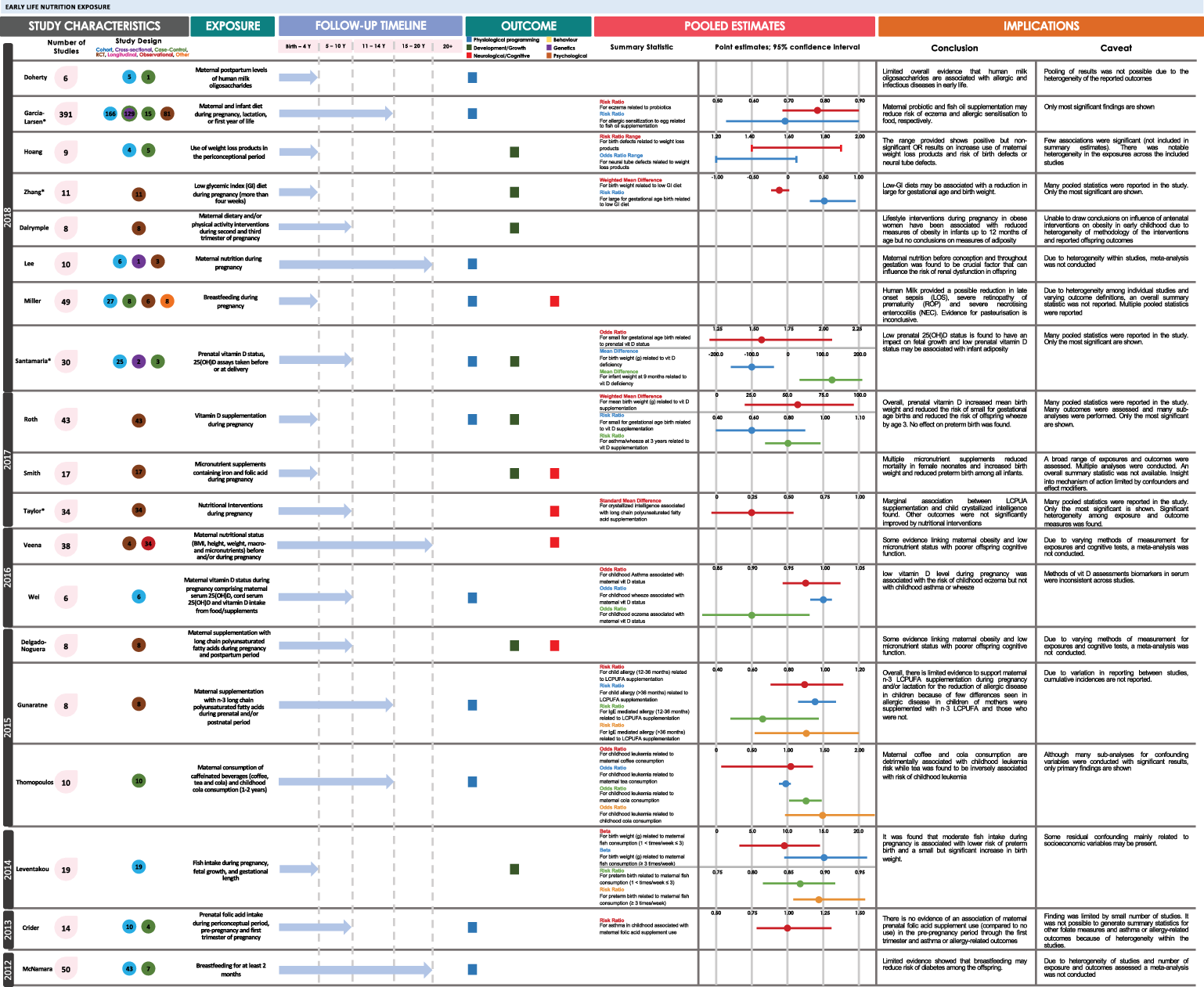
Summary of studies within the early life nutrition exposure domain.

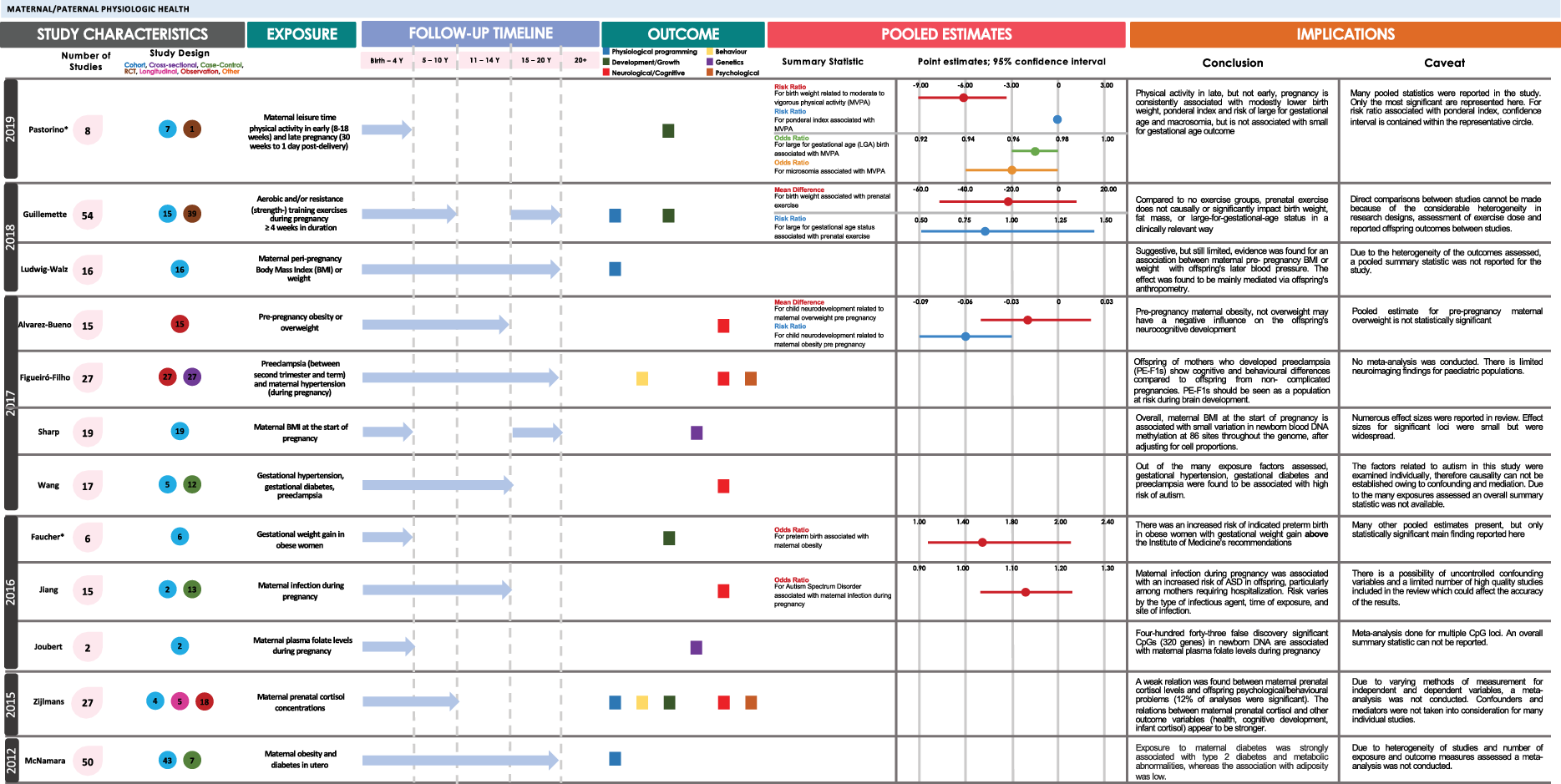
Summary of studies within maternal/paternal health exposure domain.

Summary of studies within maternal/paternal psychological exposure domain.

Summary of studies within toxicant/environment exposure domain.

Summary of studies with Social Determinants and Others exposure domains.

Articles investigating exposures related to parental and/or infant diet and nutrition were categorized under the domain early life nutrition (Fig. 5). Out of the 19 articles grouped in this domain, 14 found moderate to significant associations with summary statistics obtained for 11 studies. According to one meta-analysis, studies investigating maternal nutrition during pregnancy found that maternal probiotics and fish oil supplements are associated with decreased risk of eczema and allergies in the offspring Reference Garcia-Larsen, Ierodiakonou and Jarrold38 . Meta-analytic evidence also showed that moderate fish intake during pregnancy was also found to be associated with lower risk of preterm birth and increased birth weight Reference Leventakou, Roumeliotaki and Martinez52 . Resiliency factors in this domain include lifestyle interventions (i.e. diet and physical activity) during pregnancy adopted by women who have obesity that were associated with reduced measures of obesity in infants Reference Dalrymple, Martyni-Orenowicz, Flynn, Poston and O’Keeffe31 . Another study exploring breastfeeding behaviors found human milk to be protective of physiological programming and neurological/cognitive outcomes (i.e. late-onset sepsis, severe premature retinopathy, and severe necrotizing colitis) Reference Miller, Tonkin and Damarell58 . Furthermore, meta-analyses revealed that vitamin D supplementation was found to be positively associated with increased birth weight, decreased risk of small for gestational age at birth, and reduced risk of wheeze in children, while low vitamin D status was associated with infant adiposity and risk of childhood eczema Reference Roth, Leung, Mesfin, Qamar, Watterworth and Papp63,Reference Santamaria, Bi and Leduc65,Reference Wei, Zhang and Yu74 . Another nutritional exposure, long-chain polyunsaturated fatty acid supplementation during pregnancy, was associated with improvement in child crystallized intelligence Reference Taylor, Fealy and Bisquera69 and reduction of allergic disease Reference Gunaratne, Makrides and Collins42 as shown through a meta-analysis. Only physiological programming, development/growth, and neurological/cognitive outcome domains were studied in this exposure domain. No studies investigated associations between early life nutrition exposures and psychological, behavioral, and/or genetics outcomes.
Studies investigating exposures related to parental physiologic or metabolic health were grouped under the domain maternal/paternal physiologic health (Fig. 6). A total of 12 articles fell under this domain, with 10 reporting moderate to significant findings. Within this domain, obesity and overweight during pregnancy were commonly investigated. High maternal BMI and obesity were found to be associated with development/growth (e.g. risk of preterm birth) Reference Faucher, Hastings-Tolsma, Song, Willoughby and Bader36 and, according to meta-analysis results, genetic (e.g. variation in DNA methylation) Reference Sharp, Salas and Monnereau66 and physiological programming (e.g. increased risk of Type II diabetes) Reference McNamara, Gubhaju, Chamberlain, Stanley and Eades55 . Preeclampsia, maternal hypertension, and infection during pregnancy were found to be risk factors for neurocognitive development Reference Figueiró-Filho, Mak and Reynolds37 and, as determined through meta-analyses, for autism spectrum disorders as well Reference Jiang, Xu and Shao44,Reference Wang, Geng, Liu and Zhang73 . The most studied outcome domain in this exposure domain was neurological/cognitive, with autism and neurocognitive measures appearing as specific common variables.
The exposure domain maternal/paternal psychological, contained articles exploring features of parental psychological exposures, such as stress during preconception to the postpartum period (Fig. 7). Nine studies were grouped in this domain, where eight found moderate to strong associations. Prenatal maternal stress was studied in three articles and found to be associated with physiological programming and development/growth outcomes in offspring, specifically increased risk of allergic disorders Reference Andersson, Hansen, Larsen, Hougaard, Kolstad and Schlunssen24 . Two of these three studies were meta-analytic studies that observed an association between prenatal maternal stress and low birth weight and preterm labor Reference Bussières, Tarabulsy, Pearson, Tessier, Forest and Giguère28,Reference Molina Lima, El Dib and Kron Rodrigues59 . One study examined paternal depression during the antenatal and postnatal period and found an association with poor behavioral development in offspring Reference Sweeney and MacBeth68 . Another study explored maternal schizophrenia and found it to be linked to attachment insecurity/avoidance in offspring Reference Davidsen, Harder, MacBeth, Lundy and Gumley32 .
Studies exploring exposures to environmental risk factors or toxicants during the prenatal period or through childhood were categorized under the toxicant/environment domain (Fig. 8). A total of 12 articles studied exposures within this domain with 11 reporting moderate to strong associations with outcome variables. Air pollution as an exposure was found to be associated with development/growth (e.g. fetal growth restriction, preterm birth) Reference Gruzieva, Xu and Breton40 and genetic outcomes (e.g. differential DNA methylation determined through meta-analytic evidence) Reference Melody, Ford, Wills, Venn and Johnston57 . Phthalate exposure was found to be associated with poor cognitive and behavioral outcomes Reference Ejaredar, Nyanza, Ten Eycke and Dewey35 . Maternal smoking during pregnancy was the most common studied exposure in this domain, with six studies exploring its effects on health outcomes through the lifecourse. Through mainly meta-analyses results, smoking was found to be associated with offspring physiology and metabolic outcomes (i.e. wheeze and asthma Reference Burke, Leonardi-Bee and Hashim27 and childhood adiposity Reference Barker55), development/growth outcomes, specifically birth defects (i.e. cleft lip, cleft palate Reference Xuan, Zhongpeng and Yanjun75 , and anorectal malformations Reference Zwink, Jenetzky and Brenner78 ), and genetic outcomes (i.e. differential DNA methylation Reference Joubert, den Dekker and Felix45 ).
Five studies involving social determinant exposures were grouped under the social determinants domain (Fig. 9). Studies in this domain explored factors such as exposure to adversity during pregnancy (e.g. abuse, neglect, trauma, household dysfunction), parent education, race, income, occupation, and behavioral factors. Exposure to childhood adversity was associated with delays in cognitive development, asthma, infection, and sleep disruptions Reference Oh, Jerman and Marques60 . One meta-analysis reported parent education and race (White and Asian) to be associated with increased risk of autism Reference Wang, Geng, Liu and Zhang73 . The reasons for these associations are not evident. This finding should, therefore, be interpreted with caution, and future studies to confirm or contradict those results must be conducted and, if findings were confirmed, mechanistic studies should be carried out to explain observed associations. Another study found that ethnicity, childcare attendance, and high TV time were mediators of childhood overweight and obesity Reference Mech, Hooley, Skouteris and Williams56 . Three studies were grouped under the domain “Other” (Fig. 9). One of these studies examined birth size as the exposure and found an association between lower birth weight and lower cognitive function in high-income settings Reference Krishna, Jones and Maden49 . Another meta-analytic study looking at advanced maternal age found it to be associated with increased risk of stillbirth and fetal growth restriction Reference Lean, Derricott, Jones and Heazell50 . In the third study, exposures such as fetal distress, labor type, and cesarean delivery were associated with increased risk of developing autism as determined through a meta-analysis Reference Wang, Geng, Liu and Zhang73 .
Risk vs. resiliency
Of the 56 articles, most explored risk factors for poor development and adverse health outcomes are summarized for each domain in Fig. 5–9. Resiliency factors were explored in 11 articles in the early life and nutrition domain (Fig. 5) and two articles in the Maternal/Paternal Health domain (Fig. 6). Factors that conferred resiliency factors included maternal dietary-related items (i.e. fish, tea) Reference Dalrymple, Martyni-Orenowicz, Flynn, Poston and O’Keeffe31,Reference Leventakou, Roumeliotaki and Martinez52,Reference Thomopoulos, Ntouvelis and Diamantaras70 ; dietary interventions, micronutrient supplementation (established through a meta-analysis) such as vitamin D, iron folate, and fish oil supplements Reference Garcia-Larsen, Ierodiakonou and Jarrold38,Reference Roth, Leung, Mesfin, Qamar, Watterworth and Papp63,Reference Smith, Shankar and Wu67 ; and as determined by meta-analytic evidence, breastfeeding compared to formula (exclusive vs. any) Reference Miller, Tonkin and Damarell58 , and physical activity in pregnancy Reference Pastorino, Bishop and Crozier61 .
Critical assessment
Information regarding critical appraisal reports by authors of the studies were extracted and organized into broad categories. Of the 56 studies, 15 did not perform or report concrete critical appraisal or quality assessment information. Of the 39 studies that did perform quality assessment, 12 included high-quality studies, 8 articles rated their studies as low quality, and the remaining articles (21) rated included studies as moderate quality.
Discussion
This analysis of systematic reviews and meta-analyses provides the first comprehensive perspective on the known early life exposures across biomedical, social, and environmental contexts affecting developmental and health trajectories. Here we analyzed the existing evidence on the complex relationships between early life exposures and offspring outcomes, aiming to pinpoint factors that could be used to predict health and disease.
Results from GOfER analyses revealed that the three most studied exposure domains were early life nutrition, maternal/paternal (physiologic/metabolic) health, and toxicants/environment. The three major outcome domains studied were development/growth, physiologic programming, and neurological/cognitive. Social determinants exposures and psychological, behavioral, and genetics outcomes were least represented. The importance of nutrition for a healthy pregnancy, fetus, and child has been well documented Reference Rando and Simmons79 . Although early life nutrition emerged as the most commonly studied domain, there is a need for increased research involving culturally/geographically influenced dietary practices, and breastfeeding behaviors. The increased global consumption of processed food warrants research in risks related to those dietary items, as part of early nutrition Reference Rico-Campà, Martínez-González and Alvarez-Alvarez20 . Similarly, studying population-specific diet and nutrition, as well as breastfeeding behavior, mother–father/child bonding, and other differences found across cultures, would contribute to the growing DOHaD literature Reference Gutierrez80 .
Within the psychological exposure domain, most studies provided a qualitative synthesis related to psychological and behavioral outcomes. One study within this domain investigated maternal schizophrenia as an exposure, whereas most others focused on maternal stress and depression. In regard to mental health, it is important to consider the complex challenges associated with development and treatment to improve care and prevent adverse outcomes Reference Lake and Turner81 . This RER highlights the need for more research in the origins and outcomes of psychological and mental health-related exposures beyond parental depression and stress, such as mood, personality, and addiction disorders.
Health risk prevention was found to be a dominant theme within the toxicant/environment domain. Many studies explored maternal smoking as an exposure, which is expected since adverse offspring outcomes related to smoking have been consistently identified in research Reference Wehby, Prater, McCarthy, Castilla and Murray82 . More novel findings revealed that air pollution is a potential risk factor for fetal growth restriction, preterm birth, and differential methylation patterns Reference Gruzieva, Xu and Breton40,Reference Melody, Ford, Wills, Venn and Johnston57 . This is important for understanding the effects of environmental disruption on fetal health programming and may have implications for clinical interventions and public policy Reference Heindel, Balbus and Birnbaum6 .
Geographical trends revealed a higher research focus in high-income countries. The effect of early life exposures on developmental trajectories and health is vastly underexplored in Asian (12.8% of the studies reviewed) and African populations (only 1.7% of the studies reviewed), suggesting that less attention has been paid to the developmental programming hypothesis in these regions Reference Mandy and Nyirenda83,Reference Miranda, Kinra, Casas, Davey Smith and Ebrahim84 . In the global context, this bias toward Western, Educated, Industrialized, Rich, and Democratic (WEIRD) populations leaves gaps in our understanding of DOHaD. More DOHaD research in developing countries and traditional societies is needed to explore different population characteristics, experiences, and environment influences for the subsequent development of context-sensitive policy and population-specific interventions that can reduce disease risks and enrich for resiliency Reference Mandy and Nyirenda83,Reference Miranda, Kinra, Casas, Davey Smith and Ebrahim84 .
Trends on published research over time revealed gaps in certain outcome domain representation. For example, studies evaluating the effects of early life nutrition did not investigate psychological, genetics, and behavior outcomes in offspring. Exploring the relationship between early life nutrition and psychological and behavioral outcomes is very important since diet has been linked with mental health, where healthy nutrition can improve mental health and well-being Reference Lim, Kim, Kim, Lee, Choi and Yang85 , human capital, and the ability to integrate into society Reference Akhter and Wohab86 . These findings highlight the importance of developing models that can capture the complexity of multiple interactions between exposures and outcomes. Despite the link between socioeconomic determinants and mental health being well established Reference Maselko, Bates and Bhalotra87 , psychological and behavioral outcomes are underrepresented by studies exploring the social determinants of health.
Importantly, research in the DOHaD field has begun to shift from entirely exploring developmental factors that affect the onset of disease pathways to those that promote health and resilience Reference Hanson and Gluckman88 . Nonetheless, we still found a higher proportion of studies focused on DOHaD risk factors (78.3%) compared to resiliency factors (21.7%). Of those that have been recognized for providing resiliency or have the potential to correct suboptimal development in early life, diet and exercise are the most well-represented factors in our review. Yet, studying resiliency factors and understanding how they interact with risk factors are paramount to informing interventions tailored to prevent or mitigate adverse health outcomes. For example, while one study in the early life nutrition domain looked at vitamin D deficiency and found an association with decreased fetal growth, another article found vitamin D supplements to be associated with improved birth size Reference Roth, Leung, Mesfin, Qamar, Watterworth and Papp63,Reference Santamaria, Bi and Leduc65 . While the findings in our evidence synthesis are limited for resiliency factors, several studies have emerged that provide recommendations on building resilience throughout the lifecyclefactors Reference Hanson, Cooper, Aihie Sayer, Eendebak, Clough and Beard89–Reference Cosco, Howse and Brayne91 . Yet, it is our understanding that the evidence in this area is still not clear, and more research on resiliency needs to be conducted to identify and test productive interventions.
The largest limitation observed within the 56 included studies relates to the heterogeneity in the methodology, interventions, characteristics of controls, and data collection and analysis procedures used. For example, regarding intervention and outcome differences, studies would vary in how they defined “stillbirth” Reference Lean, Derricott, Jones and Heazell50 or “employed individual” Reference Lucas-Thompson, Goldberg and Prause53,Reference Mech, Hooley, Skouteris and Williams56 . Subsequently, these studies used different methodologies to obtain and report the magnitude of effect for exposure–outcome relationships with some reviews not obtaining a pooled summary statistic due to the high heterogeneity cited by study authors. Additionally, few studies included a longitudinal follow-up in adulthood; most explored outcomes in birth or infancy. A lack of follow-up data limits our understanding of whether outcomes observed in early life persist into adulthood, knowledge that is critical to better understand lifecycle health and develop tools to predict long-term health and disease outcomes. This limitation could be explained by the high cost of conducting follow-up studies, attrition over time, and complexity of working with large longitudinal cohorts Reference Hoffman, Reynolds and Hardy92 . Additionally, many study cohorts were recently initiated; thus, many cohort participants in follow-up studies are still younger. There was also a lack of studies accounting for paternal effects Reference Sharp, Lawlor and Richardson93 , even though early life programming of development and health is not limited to maternal contributions Reference Hoffman, Reynolds and Hardy92 .
While our analysis of the existing literature suggests that there are several areas in which information remains limited, the data available suggest this preliminary set of initial recommendations for research and policy consideration:
-
Increased focus on research exploring decisive early life exposures and health outcomes in low income and developing countries as well as marginalized groups, a concern identified as important in literature Reference Mandy and Nyirenda83,Reference Miranda, Kinra, Casas, Davey Smith and Ebrahim84,Reference Snow, Tweedie and Pederson94 .
-
Increased focus on paternal factors that contribute to offspring health outcomes to identify major early life exposures that may have been overlooked due to a larger focus on maternal factors Reference Sharp, Lawlor and Richardson93–Reference Sharp, Schellhas, Richardson and Lawlor95 .
-
○ Additionally, increased focus on long-term effects of household dynamics, including maternal and paternal stress on child emotional and cognitive development Reference Härkönen, Bernardi and Boertien96 .
-
-
Increased study of resiliency factors, which can help inform public policy and public health interventions that support resiliency throughout the lifecycle and allow individuals to reach their full potential.
-
Tailored recommendations for micronutrient supplementation to specific groups or for specific needs for optimal benefit for mothers, fathers, and children Reference Oh, Keats and Bhutta97 .
-
○ For example, the benefits of maternal vitamin D supplementation have been established, Reference Mithal and Kalra98–Reference Thiele, Senti and Anderson100 and more recently, recommendation on increased vitamin D supplementation for pregnant women has been explored Reference Palacios, Trak-Fellermeier and Martinez101 . This information can be used by health professionals to determine specific micronutrient requirements for pregnant women and accommodate them accordingly.
-
-
Prioritize emotional intelligence, conflict resolution, and mental health-specific education, screening and treatment of new mothers and fathers to improve health outcomes for both mother and child, since maternal and paternal stress and mental health exposures have been shown to be highly correlated with negative outcomes during pregnancy Reference Satyanarayana, Lukose and Srinivasan102–Reference Fisher104 .
Despite the comprehensive nature of our study, there were some limitations to our review. First, due to the large number of articles initially captured (n = 2380), we limited further screening and analyses to only systematic reviews and meta-analyses. This prevented the exploration of other studies that could have provided additional insight and data on DOHaD relationships. Nonetheless, our findings represent a necessary first step to understanding the breadth of current research and to identify major risk and resiliency factors. Additionally, certain relationships identified in the RER were found to be underrepresented, for example, studies with social determinant-related exposures and psychological and behavioral outcomes were few. Yet, we know from the Research Advancement through Cohort Cataloguing and Harmonization (ReACH) cohort database that cognition/personality and psychological outcomes are commonly measured Reference O’Donnell, Gaudreau and Colalillo105 .
There was a high degree of heterogeneity between the included studies. The approach used in each of the 56 studies to analyze and report the magnitude of effect varied, making a consistent analysis of effect sizes difficult. As a result, a summary statistic for studies included in the RER could not be generated. Instead, pooled estimates were reported when the original review provided them. Furthermore, we were limited in comparing effect sizes within an exposure domain because of the various ways studies reported them (i.e. as odds ratios, as standard or weighted mean differences, etc.). Finally, a critical appraisal could not be performed in a rigorous and consistent manner due to the diversity in methodology and analysis within the systematic reviews and meta-analyses. Instead, the quality assessments reported by the original reviews (if available) were used for our assessment, potentially biasing the validity of our synthesis.
Although included studies were limited to systematic reviews and meta-analyses, these reviews help in summarizing the research landscape in a comprehensive way. They enable decision-makers to quickly gain knowledge of synthesized evidence, allowing for a better assessment of current research and existing gaps. This is particularly advantageous for an incredibly diverse field like DOHaD, where heterogeneity in the topics studied can create barriers for their use by non-experts and those making policy-related decisions. Moreover, this review synthesized evidence on exposure–outcome associations and identified where gaps in evidence exist, or associations are under investigated. These findings are important to consider when translating DOHaD research into practice, including its applications in education, public health, and policy fields. Additionally, due to the rapid research output and diverse nature of DOHaD publications, data mining and interpretation become increasingly difficult. Future studies may necessitate the use of artificial intelligence and/or machine learning to leverage knowledge synthesis and translation toward improved practice and policy. As a next step, research in the field should focus on using the available evidence to generate predictive models integrating risk and resiliency variables. Informative tools that predict health trajectories can be used to aid in health decision making, develop targeted interventions that optimize development in early life, and to promote participatory and bottom-up health care Reference Sagner, McNeil and Puska106 .
Acknowledgments
K.L.C., A.A., A.K., S.T., J.B., L.B., J.R.G., C.D., S.T.D., I.F., D.G., P.N., and A.W. conceptualized the ideas presented in this paper. A.A., A.K., S.T., and K.L.C. planned the methodology, investigated the evidence, analyzed the data, and drafted the manuscript. All authors contributed to the review and revision of the final paper.
Financial Support
This research received no specific grant from any funding agency, commercial, or not-for-profit sectors.
Conflicts of Interest
The authors declare no conflicts of interest.
Supplementary material
To view supplementary material for this article, please visit https://doi.org/10.1017/S2040174420000689