Disasters are “a serious disruption of the functioning of a community or a society causing widespread human, material, economic or environmental losses which exceed the ability of the affected community or society to cope using its own resources.”1 Disasters affect many countries in one way or another. In 2017, the Emergency Events Database indicated that 318 natural disasters occurred, affecting 122 countries. These natural disasters resulted in 9503 deaths, affected 96 million people, and caused US $314 billion in economic damages.2
In order to foster optimal resuscitation and life-support methodologies, “the Club of Meinz” was founded in 1976 by 10 concerned resuscitation experts from 7 countries. In 1985, the club was renamed “World Association for Disaster and Emergency Medicine” to reflect the more global membership of the organization.Reference Rottman3 The past 30 years have witnessed the development of disaster medicine (DM), which has gradually extended into governmental actions based on academic studies in some countries.
Disaster medicine is defined as the study of the association between disasters (natural or man-made)Reference Wassenhove4 and human health. It is interdisciplinary and is related to such disciplines as sociology, management, and psychology.Reference De5 Disaster medicine is the quest for efficient and reliable disaster relief. Under the ever-changing and dynamic circumstances, more generally, DM has been an integral component of disaster relief.
According to previous research, the development of scientific specialties, like that of most natural phenomena, takes the form of logistic curve.Reference Gupta, Sharma and Karisiddappa6, Reference Small7 This means that the development of DM is passing through the following series of periods: the initiation period, the rapid growth period, the slow growth period, and the platform period. In the initiation period, researchers make efforts to promote the development of DM to realize the rudiments. Then DM enters the rapid growth period with significant achievements, during which the fundamental theories are gradually improved with substantial contents, and more scientific methods are adapted. With the deepening of research, DM undergoes a bottleneck period with some obstacles, named the slow growth period. Researchers are expected to make breakthrough progress and overcome obstacles allowing the development of DM to enter the platform period. At present, DM has been at the slow growth period for a long time. It is of utmost urgency to identify the main obstacles to the further development of DM.
As a useful supplement to other research evaluation measures,Reference Phelan8 bibliometric analysis has been widely used for evaluating the literature in different disciplines,Reference Osareh9 including 2 dimensions: quality (or performance) and quantity (or productivity).Reference Cattell10 Bibliometric analysis has been employed to reveal historical development and trendsReference Choudhri, Siddiqui and Khan11–Reference Khan, Ullah and Riaz13 with citation analysisReference Cole14, Reference Schutz and Six15 or with significant informetric indicators (ie, authors, institutions, countries, and journals).Reference Braun, Glänzel and Grupp16–Reference Ugolini, Parodi and Santi18 In this study, a bibliometric analysis is conducted for analyzing the development of DM and identifying current obstacles.
METHODS
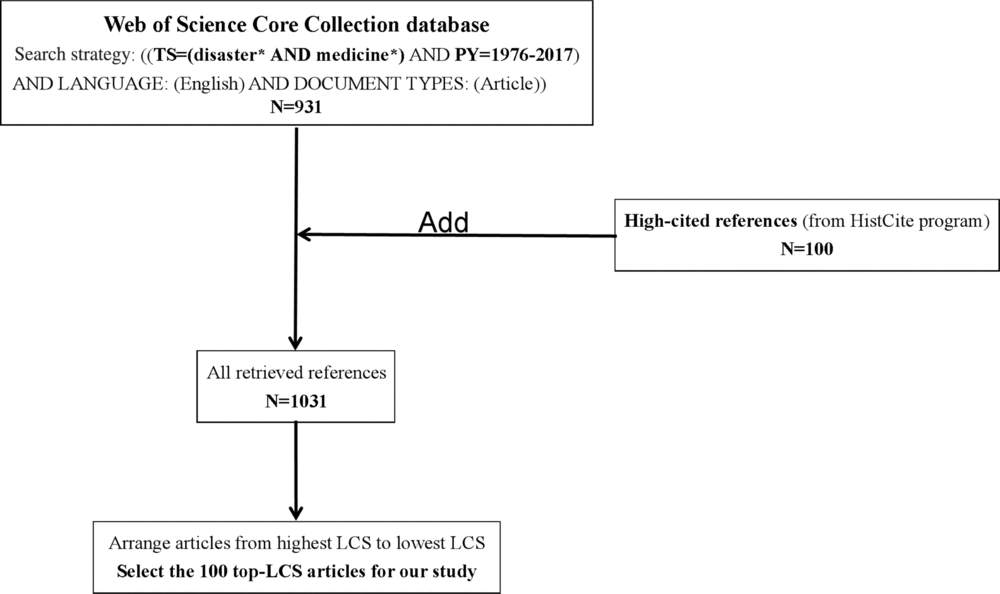
As a world-renowned academic publisher, Web of Science (WoS; formerly ISI Web of Knowledge) covered all available, authoritative, and professional research information. We retrieved all articles from the WoS Core Collection database, using the following search strategy: ((TS = (disaster* AND medicine*) AND PY = 1976-2017) AND LANGUAGE: (English) AND DOCUMENT TYPES: (Article). TS, which stands for topic, covered various types of disasters such as earthquakes, tsunamis, floods, drought, and famine. The abbreviation PY is short for year published; DM originated in 1976, as described in the Background section. We identified 931 peer-reviewed English-language articles during the period of January 1, 1976, through December 31, 2017. Then we added another 100 high-cited references with the aid of HistCite software. As a result, we retrieved 1031 articles.
Local citation score (LCS) refers to the citation score of an article inside the knowledge domain.Reference Garfield, Paris and Stock19 The number of LCSs an article receives is an important indication of its impact and contribution to DM. The higher the LCS an article has, the more likely it is to be described as seminal. There was a paucity of literature concerning top-LCS articles in the DM field. Thus, of the 1031 articles, we selected the 100 top-LCS articles for further analysis in this study (Appendix 1). See Figure 1 for a flow diagram of the study selection.
Flow Diagram of Study Selection

HistCite is a software tool for analyzing and visualizing direct citation linkages among articles.Reference Garfield, Paris and Stock19 Its inputs were bibliographic records (with cited references) from WoS. Its outputs were various tables and graphs with informetric indicators about the knowledge domain under study. HistCite software could export the historiography in a Pajek file format. Then UCINET software was used to transform the Pajek file format into an executable file format that can be directly imported into programs like VOSviewer. VOSviewer was used to construct maps of the 100 top-LCS articles based on co-citation data or to construct maps of key words based on co-occurrence data.Reference Eck and Waltman20 To ensure high data quality, we performed data cleaning in Trifacta Wrangler,Reference Hartig and Curé21 which changed or deleted singular-plural pairs and meaningless terms.
Using HistCite, we analyzed the 100 top-LCS articles (see supplementary online Appendix), constructed the historiography of DM, and summarized the informetric indicators. Then, using tools of UCINET, Trifacta Wrangler, and VOSviewer, we constructed a themes network and drew a key word co-occurrence map.
RESULTS
Informetric Indicators
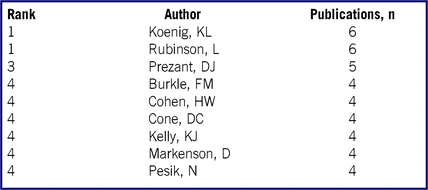
Of 1031 articles, the 100 top-LCS articles (Appendix) were published from 1983 through 2013 and had LCSs ranging from 5 to 32 times. The 100 articles had a total of 460 authors, of which 384 (83.5%) contributed to 1 article. In order to examine the concentration of author productivity, we listed the 9 most productive authors (publishing more than 4 articles) in Table 1. Koenig and Rubinson contributed the most articles (n = 6), and Prezant ranked third (n = 5), followed by Burkle (n = 4), Cohen (n = 4), Cone (n = 4), Kelly (n = 4), Markenson (n = 4), and Pesik (n = 4). Although these authors are commonly accepted as research pioneers, there was a lack of major specialist groups and key researchers in the DM field.
Authors With 4 or More Publications on the List of 100 Papers With the Highest Local Citation Scores

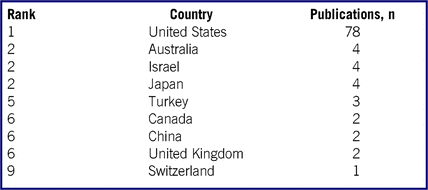
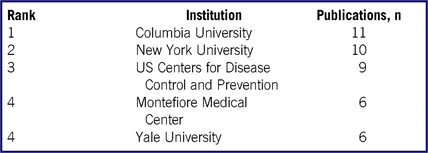
Table 2 shows the contributions of countries, and Table 3 presents the top 5 most-productive institutions (publishing more than 5 articles). The United States was the largest contributor (n = 78), followed by Australia (n = 4), Israel (n = 4), Japan (n = 4), Turkey (n = 3), Canada (n = 2), China (n = 2), the United Kingdom (n = 2), and Switzerland (n = 1). China was the only developing country in the list. Additionally, all of the top 5 institutions were located in the United States, and 3 of them were universities. The United States took a core position in the DM field, and there was a lack of key institutions.
Countries with Publications on the List of 100 Papers With the Highest Local Citation Scores

Institutions With 5 or More Publications on the List of 100 Papers With the Highest Local Citation Scores

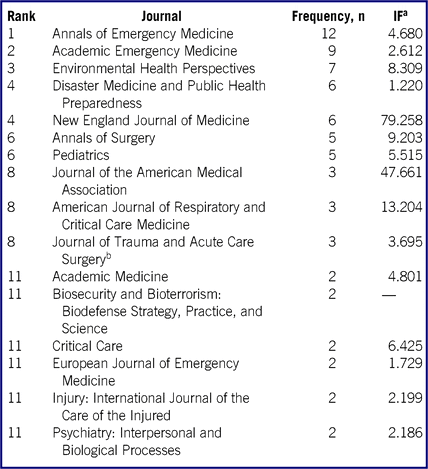
Table 4 illustrates the commonly cited journals (publishing more than 1 article). The vast majority were high-quality and influential journals, which indirectly reveals that the 100 top-LCS articles we analyzed were the seminal papers in the DM field. Researchers can assess useful information about DM research from these journals. However, most of them were classified as emergency medicine periodicals; there was a lack of transdisciplinary research.
Journals With 2 or More Publications on the List of 100 Papers With the Highest Local Citation Scores

a 2017 International Scientific Indexing Impact Factor.
b Formerly the Journal of Trauma Injury Infection and Critical Care.
Historiography
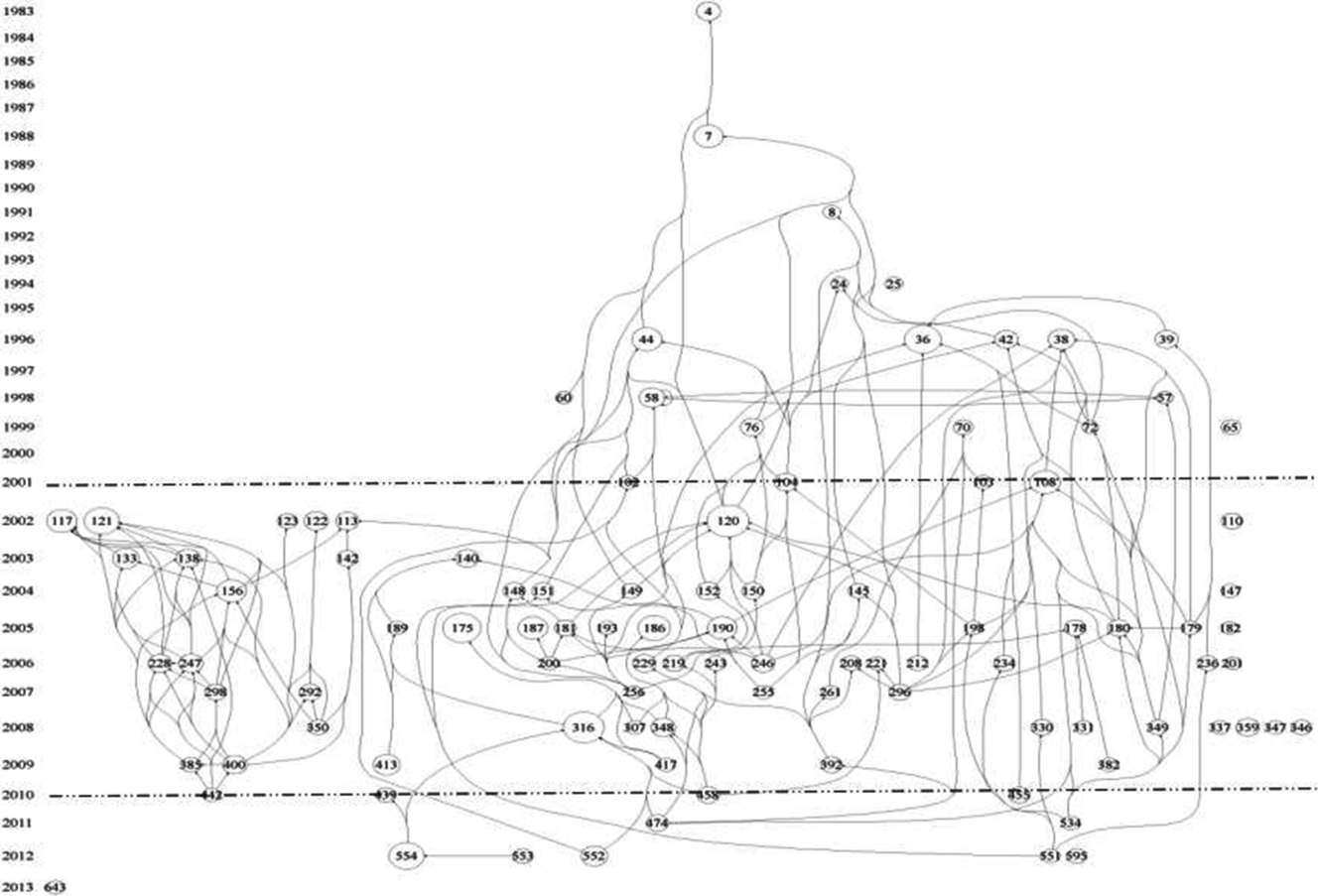
In order to trace the dynamic changes in DM, we constructed the historiography of DM (Figure 2). The development of DM was divided into 3 consecutive periods, namely the initiation period (1983-2001), the rapid growth period (2001-2010), and the slow growth period (2010 and onwards). Consistent with previous research,Reference Lennquist22 the initiation period was a slow and painful but necessary process lasting 18 years. Then, in the next 10 years (2001-2010), rapid development was made in DM research. As we all know, the World Trade Center in New York was attacked unexpectedly by international terrorists on September 11, 2001. After that, experts and scholars stepped up efforts to work on DM research. In a sense, the September 11 incident was viewed as a milestone in the development of DM. During the 10-year period that followed, great progress was achieved, and the United States in particular contributed greatly to the growth and development of the DM field (ie, the Incident Command SystemReference Thomas, Hsu and Kim23). Since 2010, DM has entered into a slow growth period. Only 12 of the 100 top-LCS articles were published in 2010 or later, although this may have been influenced by the publishing time. Reference Pepe and Kurtz24 What’s more, there have been some obstacles to the further development of DM.
Historiography of Disaster Medicine

Research Topics
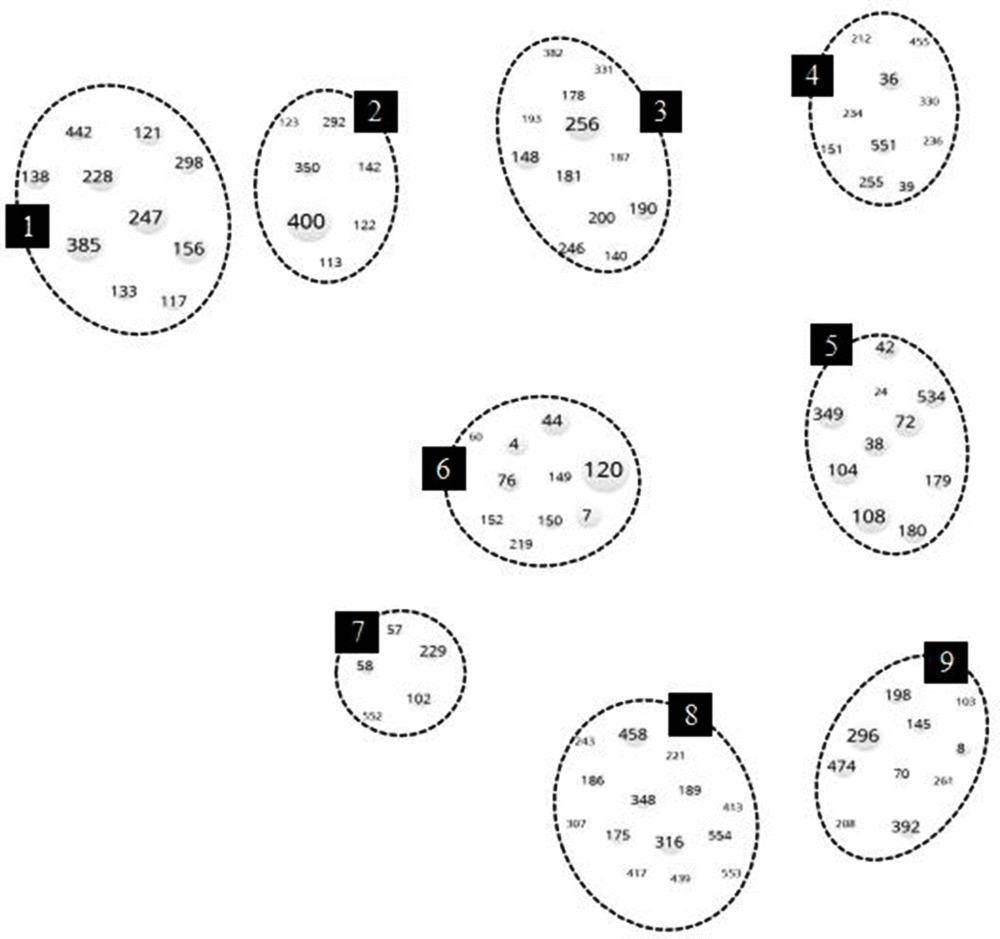
Co-citation cluster analysis, a technique based on counting the occurrences of pairs of references in the reference lists of scientific publications, has become a popular and widely used method of assessing articles in recent years.Reference Zhao, Cui and Yang25 Preliminary analysis showed that 12 out of the 100 articles were independent and had no connection to the others. The themes network of the remaining 88 articles, as shown in Figure 3, was divided into 9 clusters:
1. Environment and occupational health—rescue workers in the September 11, 2001 attacks (firefighters’ respiratory system)
2. Posttraumatic stress disorder
3. Public health—bioterrorism, epidemic
4. Earthquake—the care of crush-related injuries and surge capacityFootnote a
5. Triage—medical triage,Footnote b psychosocial triageFootnote c
6. The principles of emergency rescue
7. Emergency medical responders
8. Training and education—medical students, all health professionals
9. Pediatric disaster medicine
Themes Network

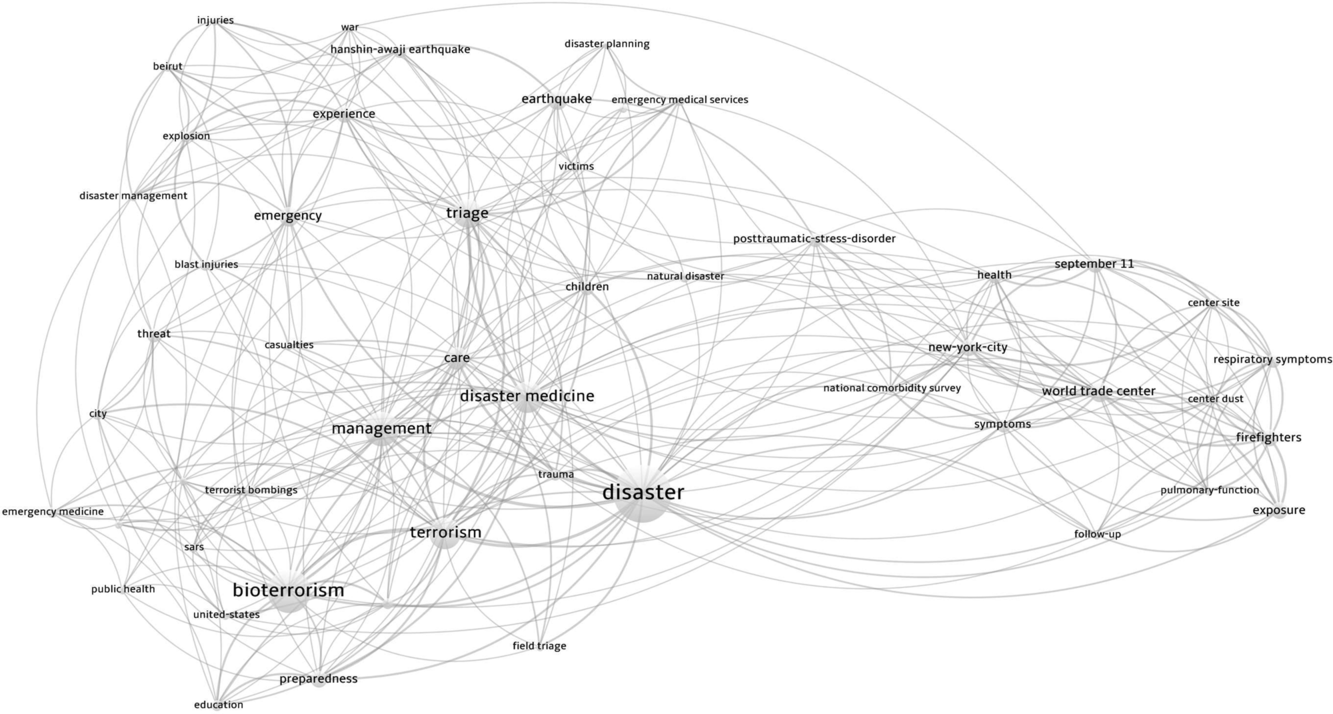
Key words, including author key words and key words plus,Reference Garfield26 can reveal the research trends and topics.Reference Liu, Zhan and Hong27, Reference Ji, Pang and Zhao28 They are category labels given by authors and act as a significant liaison between authors and readers. Key word analysis reveals the main themes of DM research.Reference Jung and Chung29 A total of 498 key words were included, of which 52 were extracted for mapping key word co-occurrence (occurrence frequency higher than 3) according to Price’s law.Reference Egghe30 The common terms were disaster, bioterrorism, management, terrorism, and disaster medicine. In comparison, firefighters and follow-up were relatively new terms.
The key word co-occurrence map (Figure 4) is consistent with the themes network (Figure 3). The research topics within DM have established a solid foundation, and all key words have formed a comparatively intact research chain.
Key Word Co-occurrence Map

DISCUSSION
Obstacles to the Development of Disaster Medicine
As can be seen in the historiography (Figure 2), the development of DM has been in the slow growth period since 2010, and the field faces some obstacles.
Lack of Scientist Communities
Scientist communities are the core elements of scientific research.Reference Xie31 In this study, scientist communities refers to the major specialist groups and key researchers and institutions working on DM research; these are the source of the construction and development of DM. Of 460 authors (of the 100 top-LCS articles), 384 (83.5%) contributed only once; there are no obvious major specialist groups and key researchers. In terms of the contributions of countries, developed countries gain the advantage over developing countries. In addition, the publication outputs are concentrated in a few institutions, with no obvious key institutions. These results suggest a lack of scientist communities in the DM field.
Lack of Transdisciplinary Research
As we all know, DM is a comprehensive subject that combines wide-ranging fields such as medicine, management, and psychology.Reference De5 Transdisciplinary research can broaden the knowledge domain and promote the development of related disciplines and enhance their influence on academic progress. With respect to the commonly cited journals, most of them are emergency medicine periodicals. This is frankly unfavorable to the linkage and common development of related disciplines as well as inimical to the influence of the field on academic progress.
Lack of Innovative Research Perspectives
Although almost all the cases studied are classic, they are too monotonous, such as the September 11 attacks and the Hanshin-Awaji earthquake. This is an example of herd behavior. In addition to these cases, there are, of course, many other significant events that deserve to be explored in depth. They may be very similar to the classic cases, but including them will add valuable comparison and detail to the research. With regard to research topics or themes, most concentrate on injury, preparedness, trauma, and care, as expected. The results undoubtedly illustrate a lack of innovative research perspectives in the DM field.
Lack of Continuous Research
Examination of key words reveals 498 key words appearing in the 100 top-LCS articles, 383 (76.9%) of which were used only once. According to Chuang et al. (2007),Reference Chuang, Huang and Ho32 this pattern indicates that most scholars lack continuous research and there is a wide disparity in research focuses. Lack of continuous research will inevitably influence the quality of research, cause inefficient use of research resources, and ultimately hinder the development of DM.
As suggested by Gupta et al. (1995),Reference Gupta, Sharma and Karisiddappa6 researchers must address these obstacles broadly and systemically to move the field into the platform period. Focusing on current obstacles, we put forward some proposals.
Strategies for the Development of Disaster Medicine
Accelerate the Development of Scientist Communities
Scientist communities are the aggregate of major specialist groups, key researchers, and institutions. To accelerate the development of scientist communities, we must first improve information and knowledge sharing. To our knowledge, DM is a new and rapidly progressing discipline,Reference De5 in which many unexplored areas are worthy of being examined and conquered by researchers. Some authoritative research institutions should establish a mechanism for information and knowledge sharing regarding DM. This will expand the influence of DM and attract the ever-growing attention of researchers in related areas, thus accelerating the development of scientist communities. Secondly, we must promote the “civil-military integration pattern.” In most countries, as Burkle et al. (1984)Reference Burkle, Sanner and Wolcott33 delicately put it, the military seems to have the only system which is always ready and funded to provide instant communication, short response time, trained medical personnel, needed equipment and supplies, airlift capability, extrication and rescue technology, and authoritative leadership and organization, which are required for the resuscitation of victims of mass disasters. There are more opportunities for military institutes to obtain abundant and valuable relevant information in the DM field; however, none of the 100 top-LCS articles are from relevant military institutes. Researchers should place stress on the promotion of the civil-military integration pattern, as well as the development of scientist communities. Last but not least, developing countries should intensify DM research and cultivate more (essential) professionals. In China, for example, the Ministry of Education has not yet promulgated a complete DM education plan, namely curriculum design, training pattern, teaching quality standards, etc. Quite evidently, there is an urgent need for an organized professional training program to be proposed.
Strengthen Transdisciplinary Research
Transdisciplinary research makes the development of DM break through traditional spatial and temporal limits and enables DM to integrate knowledge from other fields (management, psychology, sociology and organizational behavior, etc).Reference Holbrook34 To facilitate transdisciplinary research, we should construct superior subject-groups with multiple basic disciplines. This will not only optimize the subject structure, but also advance the development of related areas.
Open Innovative Research Perspectives
A classic case has its own value, as well as realistic limitations. Similarly, the perspective of authoritative study also has its own limitation. Many disasters occur in the world every year, and none are identical. However, researchers often ignore their own respective characteristics through a simple classification. Researchers should not be afraid of speaking their mind, not follow others almost blindly, and then make some breakthroughs in the DM field.
Increase the Continuity of Research
Researchers should place more emphasis on continuous research by providing consistent funding for research and training programs.Reference Chuang, Huang and Ho32 The shortage of scientific research funds is a general problem, but unsuitable investments and waste still exist in the investment of the limited funding. Thus, funding should be used to support scientist communities, improve the quality and efficiency of research, and increase the continuity of research.
Limitations
Two limitations should be considered in our study. One is the omission on the contributions of coinstitutions and/or cocountries. In this study, we only summarize the main contributions provided by institutions and origin countries of the first authors. Additional research should be able to cope with this limitation. Another is that we retrieve articles from WoS Core Collection database with TS strategy. Future research can replicate our study in other databases with some key words or TS strategy.
CONCLUSIONS
Under the complicated background of disasters, DM has become an increasingly important hot topic in the wider medical community. Dealing with the 100 top-LCS articles, our study proposes some significant points on the worldwide research trends of DM. So far, DM has undergone 3 periods, that is the initiation period (1983-2001), the rapid growth period (2001-2010), and the slow growth period (2010 onwards). It has been at the slow growth period for a long time. Some deficiencies severely impede its further development, mainly in 4 aspects: scientist communities, transdisciplinary research, innovative research perspectives, and continuous research. As our study suggests, multiaspect, scientific, and effective measures should be taken to overcome these shortcomings: accelerate the development of scientist communities, strengthen transdisciplinary research, open innovative research perspectives, and increase continuity in research. Although impaired by certain limitations, our study will, we hope, inspire new studies on DM in the future.
Acknowledgments
My sincere thanks to my supervisor, who always supported my study and proposed many valuable suggestions for me. Thanks to Peng Tian for checking language. Then, I’d like to commemorate my dear grandmother with this paper, who passed away during my research, and give very special thanks to her for accompanying me until the final moment of her life.
Author Contributions
Xinxin Hao contributed with study design and wrote the original article. Xinxin Hao and Yunling Liu did the data acquisition. All authors contributed to the discussion and interpretation. All authors approved the final manuscript to be published.
Declaration of Conflicting Interests
The authors declared no potential conflicts of interest with respect to the research, authorship, and/or publication of this paper.
Funding
No specific funding source was utilized to support development of this manuscript.
Supplementary material
To view supplementary material for this article, please visit https://doi.org/10.1017/dmp.2019.31.