





Introduction
The nexus of physical education and environmental education
Acknowledging that human existence is inherently interwoven with worldly ecologies (Braidotti, Reference Braidotti2019; Riley et al., Reference Riley, Jukes and Rautio2024), the field of environmental education has, over time, turned into a subject/practice with its own paradigmatic assumptions, methodological approaches, organisational structures and practical solutions (Hart, Reference Hart2022). In responding to different socio-ecological crises (Casas et al., Reference Casas, Pormon, Manus and Lejano2021; Stickney & Skilbeck, Reference Stickney and Skilbeck2020), environmental education has undergone a remarkable historical journey and, as a field, undertakes intense reflections about its development, progress and trends (Carter & Simmons, Reference Carter, Simmons, Bodzin and Weaver2010; Gough, Reference Gough, Stevenson, Dillon and Wals2013, Reference Gough2024; Palmer, Reference Palmer2002). This dynamic development also finds its expression in the Australian Journal of Environmental Education as a 40-year-old academic journal promoting exchange in the scientific sphere of environmental education since its inception in 1984. One immanent feature of environmental education is its strong inter-/transdisciplinary focus, integrating teaching and learning across different fields including biology, geography, chemistry, geology, physics, economics, sociology, natural resources management, law, politics, arts-based practices and outdoor education (Adsit-Morris, Reference Adsit-Morris2017; Raven et al., Reference Raven, Berg and Hassenzahl2008). As these connections provide the opportunity to work together with other disciplines and share knowledge mutually (Carlin, Reference Carlin2016; Leahey et al., Reference Leahey, Beckman and Stanko2017), it is indicated to reflect on potential synergies but also tensions in relation to other scientific fields. Despite inter/transdisciplinary openness, it is important that curricular and pedagogical enactments in environmental education remain integral to the overarching aims and purposes of the field (Vincent & Focht, Reference Vincent and Focht2011). While integration or the synthesis of knowledge is the stated goal, all disciplines are not equal but exist in a hierarchy. For example, formal knowledge is privileged over lived stories or local knowledges, and pure sciences are more highly valued than the social sciences, humanities and fine arts. Thus, careful attention is needed to ensure that inter/transdisciplinary approaches work to enrich environmental education, rather than jeopardise, or delegitimise, the field.
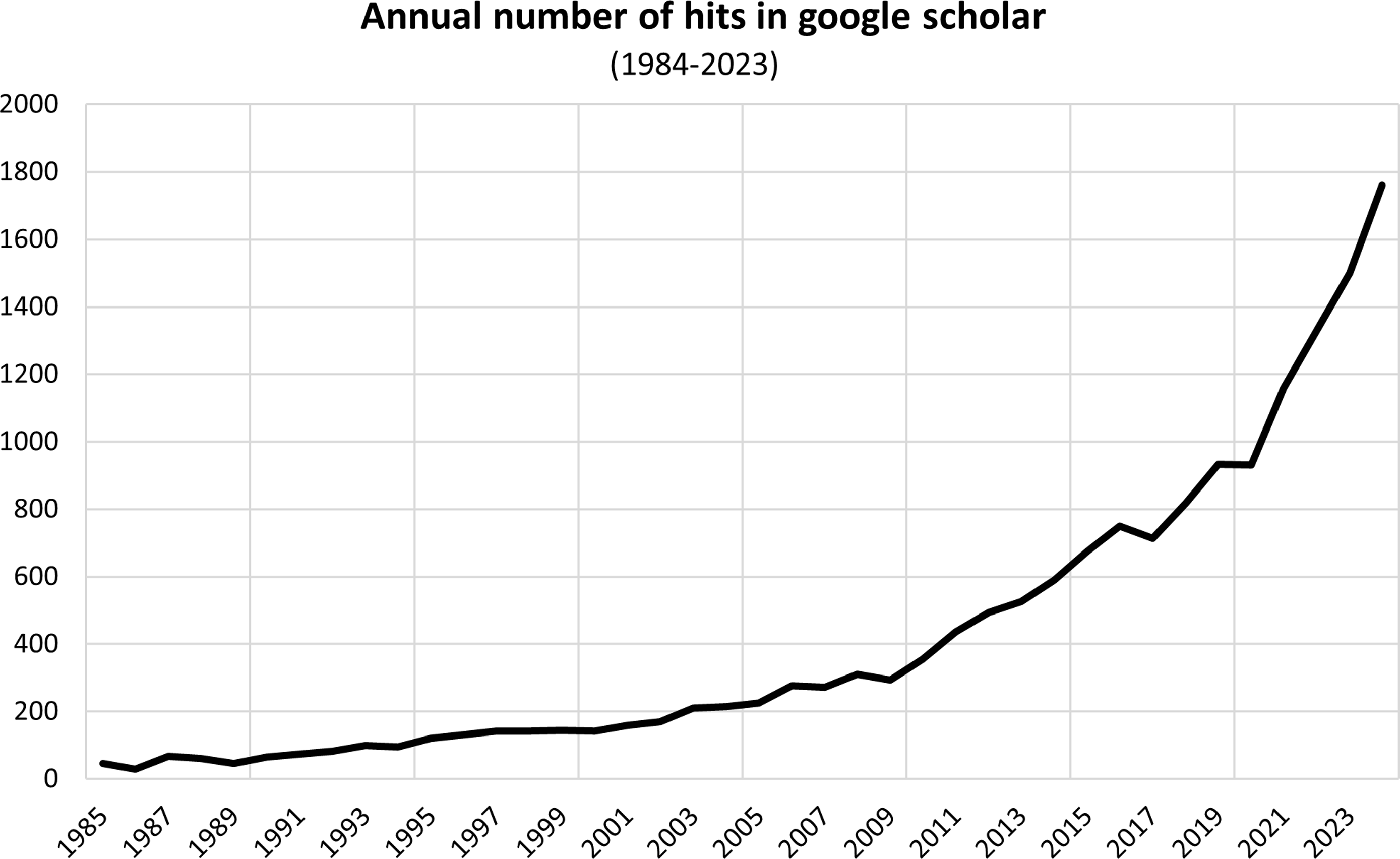
One scientific field that is mentioned less frequently when explicitly discussing disciplinary and practical ‘points of contact’ of environmental education is research on physical education. Human movement can be observed from different angles (Balagué et al., Reference Balagué, Torrents, Hristovski and Kelso2017) – the adopted perspectives can, for instance, be medical, sociological, biomechanical, psychological, or historical – and physical education emphasises the learning that can and does occur for individuals when they have opportunities to move (Johnson & Turner, Reference Johnson and Turner2016); accordingly, the perspective of physical education on human movement is pedagogical in nature. As human movement, in accordance with existentialist assumptions, always occurs in an environmental space (Whitehead, Reference Whitehead2007), it is worth reflecting about corresponding points of contact between physical education and environmental education. Indeed, when exploratorily combining the search terms “physical education” and “environmental education” (conditional link through the Boolean operator “AND”) and chronologically mapping the corresponding search hits from the database google scholar, it turns out that the number of scientific contributions at this disciplinary “nexus” (Riley & Proctor, Reference Riley and Proctor2022) has increased exponentially within the last four decades (see Figure 1). Targeting these ‘points of contact’ between environmental education and physical education, it is obvious that analyses about these synergies and conflicts are identified within the pedagogical sphere.
Development of the annual hits with the terms “physical education” and “environmental education” in the google scholar database in the last 40 years.
Physical literacy
Interestingly, researchers of both environmental education and physical education have intensively discussed different forms of ‘literacy’ (Bailey, Reference Bailey2022; Carl, Barratt, Töpfer, Cairney & Pfeifer Reference Carl, Barratt, Töpfer, Cairney and Pfeifer2022; Carter et al., Reference Carter, Simmons, Bodzin and Weaver2010; Maurer & Bogner, Reference Maurer and Bogner2020; McBride et al., Reference McBride, Brewer, Berkowitz and Borrie2013) that enable and empower individuals to master essential demands in their domain. A bibliometric analysis has recently modelled the growing number of annual studies for the field of environmental literacy (Vijaykumar & Naseema, Reference Vijaykumar and Naseema2021). Two studies have also identified an exponential increase in studies on physical literacy (PL) (Bailey, Reference Bailey2022; Carl et al., Reference Carl, Barratt, Töpfer, Cairney and Pfeifer2022) as the respective conceptualisation for the corporeal sphere. Among the available pedagogical models, such as cooperative learning, sport education and teaching games for understanding, PL embodies different assumptions as a result of a hybridisation (Fernandez-Rio & Iglesias, Reference Fernandez-Rio and Iglesias2024). One asset of PL can be identified in the narrative that the concept detaches from a mere orientation on physical aspects by also encompassing cognitive (e.g., knowledge and understanding), affective (e.g., enjoyment, motivation and confidence) and social aspects (e.g., communication skills, sense of belonging) when describing movement (Barnett et al., Reference Barnett, Jerebine, Keegan, Watson-Mackie, Arundell, Ridgers, Salmon and Dudley2023; Keegan et al. Reference Keegan, Barnett, Dudley, Telford, Lubans, Bryant, Roberts, Morgan, Schranz, Weissensteiner, Vella, Salmon, Ziviani, Okely, Wainwright and Evans2019). The scientific field has yielded many definitions (Bailey, Reference Bailey2022), amongst which the Australian framework understands PL as the “integrated physical, psychological, social and cognitive capabilities to support health promoting and fulfilling movement and physical activity – relative to their situation and context – throughout the lifespan” (Keegan et al., Reference Keegan, Barnett, Dudley, Telford, Lubans, Bryant, Roberts, Morgan, Schranz, Weissensteiner, Vella, Salmon, Ziviani, Okely, Wainwright and Evans2019). This definition also informed the subsequent analysis (see the methodology section).
PL takes a holistic, person-centred view and conceptualises a lifelong, personal “journey” for individuals’ physical activity (Holler et al. Reference Holler, Jaunig, Amort, Tuttner, Hofer-Fischanger, Wallner, Simi, Müller, van Poppel and Moser2019; Santos, Newman, Aytur & Farias Reference Santos, Newman, Aytur and Farias2022). PL is based is on profound philosophic assumptions (Whitehead, Reference Whitehead2007). Under a monist umbrella, PL assumes that the physical, cognitive, affective and social aspects mentioned above are deeply intertwined and form one integral unit. Under an existentialist umbrella, PL assumes that human behaviour cannot be separated from the social and physical environment. Under a phenomenological umbrella, PL assumes that individual perspectives are unique and require idiosyncratic observations (Whitehead, Reference Whitehead2007). Although the term “physical literacy” first emerged in 1884 in a description of the physicality of an Indigenous culture (Cairney et al., Reference Cairney, Kiez, Roetert and Kriellaars2019), the term has gained more attention since the 2000s and, in the meantime, spread into different spheres, including physical education (Dudley et al., Reference Dudley, Cairney, Wainwright, Kriellaars and Mitchell2017). Nowadays, PL finds political and strategic support on the global level through its inclusion in important documents of UNESCO (e.g., Quality Physical Education Guidelines for Policymakers; see UNESCO, 2015). Given that research and policy in physical education has more strongly adopted a PL lens recently, the goal of the present study was to examine how the scholarly work at the nexus between physical education and environmental education stands in compatibility with PL. Encouraged by the fact that single PL articles in the recent past already delved into ecological aspects (Carl et al., Reference Carl, Abu-Omar, Bernard, Lohmann, White, Peters, Sahlqvist, Ma, Duncan and Barnett2024; Lyngstad & Saether, Reference Lyngstad and Saether2021; Riley et al., Reference Riley, Froehlich Chow, Wahpepah, Houser, Brussoni, Stevenson, Erlandson and Humbert2023), we systematically mapped the inter-/transdisciplinary field from a meta perspective by theoretically looking through this “literacy” lens with its holistic, empowering perspective. In this regard, the current article follows the question: which PL aspects are discussed at the nexus, when physical education experiences an environmental nuance or when environmental education becomes ‘physical’?
Methodology
Among the various review types suggested in the academic literature (Sutton et al., Reference Sutton, Clowes, Preston and Booth2019), we have applied an integrative review methodology which allows for the combination of different study designs (e.g., experimental and non-experimental research) and data formats for synthesis (Whittemore & Knafl, Reference Whittemore and Knafl2005). Compared to other review methods, the integrative review does not exclusively concentrate on quantitative studies (e.g., extracting effects for meta-analyses) or qualitative studies (e.g., student experiences for qualitative meta-synthesis) but is both paradigmatically and methodologically open for integration on a higher level. This explicit breadth was required, as we anticipated a large spectrum of goals and approaches among the primary articles. We adhered to the following steps: (a) problem identification (see introduction), (b) literature search, (c) data evaluation, (d) data analysis and (e) presentation (Whittemore & Knafl, Reference Whittemore and Knafl2005).
Literature search and eligibility criteria
After several search trials, we decided to use the following term combination adhering to Boolean notation: (“environmental education” OR “outdoor education”) AND (“physical activity” OR “physical education”). We have added “outdoor education” to the “environmental education” term and “physical activity” to the “physical education” term to ensure that we have also covered relevant articles from neighbouring academic fields. In this regard, we proactively acknowledged outdoor education to be a distinct field that is more defined by the “where” rather than the “what” involving teaching, learning and experiencing in an outdoor and/or out-of-school environment (Becker et al., Reference Becker, Lauterbach, Spengler, Dettweiler and Mess2017). We ran this combination in a total of 16 databases via the meta-database EBSCOhost (for details, see Supplementary File 1). In the first step, the first author (JC; postdoctoral researcher) screened titles and abstracts of the search hits. We formulated the following inclusion criteria: (a) full article format (i.e., not only conference contribution); (b) English language; (c) research at the intersection of physical education and environmental education; (d) educational claim (i.e., not only physical activity in the outdoor context); (e) publication in year 2000 or later (due to the dynamic development of the environmental education field: Palmer, Reference Palmer2002). Accordingly, we excluded, for instance, (a) editor notes, (b) Spanish full texts, (c) outdoor physical activity concepts with a restorative wellbeing function (e.g., clinical) or virtual reality studies, (d) adventure sports without explicit pedagogical note and (e) articles that were older than 25 years. Afterwards, JC generated a first categorisation suggestion based on the broad goals of the articles. In the second step, the same person checked all full-text articles and assigned the articles to the inductively derived categories (double coding permitted) to handle different purposes and functions of the articles separately. JC read all full-text articles for eligibility and extracted the most essential information from a PL perspective (for the theoretical assumptions, see next section). Across the entire eligibility and extraction process, reassignment, double-coding and removal of any article was permitted. It was assumed that extractable aspects overlapped between the different categories.
Analysis
The data extraction contained: (a) author and year information; (b) study design and findings section; and (c) a PL interpretations section. The first author analysed all articles per inductive category, attempting to identify commonalities (maximisation of homogeneity) and differences (maximisation of heterogeneity) across the primary studies. The derivation of findings followed an inductive approach, working with the primary material/summary without pre-defined synthetic endeavours. The PL field has spawned many assumptions about the concept since its “academic birth” at the turn of the 21st century (Edwards, Bryant, Keegan, Morgan & Jones Reference Edwards, Bryant, Keegan, Morgan and Jones2017; Young, O’Connor & Alfrey Reference Young, O’Connor and Alfrey2020). Considering it is impossible to concentrate on all assumptions characterising the “idealist” (Edwards et al. Reference Edwards, Bryant, Keegan, Morgan, Cooper and Jones2018; Young, O’Connor & Alfrey Reference Young, O’Connor and Alfrey2023) core of the concept, we focused on the following assumptions for analysing and interpreting research at the nexus: (a) PL incorporates a holistic understanding of learning encompassing physical, cognitive, affective and sometimes even social domains for physical activity (Carl et al., Reference Carl, Barratt, Töpfer, Cairney and Pfeifer2022; Keegan et al., Reference Keegan, Barnett, Dudley, Telford, Lubans, Bryant, Roberts, Morgan, Schranz, Weissensteiner, Vella, Salmon, Ziviani, Okely, Wainwright and Evans2019); (b) these learning domains are linked and interwoven (i.e., also embodied); (c) PL is a never-ending journey, advocating for lifelong learning (Young et al., Reference Young, O’Connor and Alfrey2020); (c) PL is linked to the environment with its opportunities and affordances (see existentialism: Whitehead, Reference Whitehead2007); (d) PL questions the value of mere competitive orientations and holds inclusive premises; (e) PL places the individual in the focus of pedagogical attention and, therefore, favours student-centred (instead of norm- or criterion-centred) approaches (Santos et al., Reference Santos, Newman, Aytur and Farias2022).
Results
Search process and overview
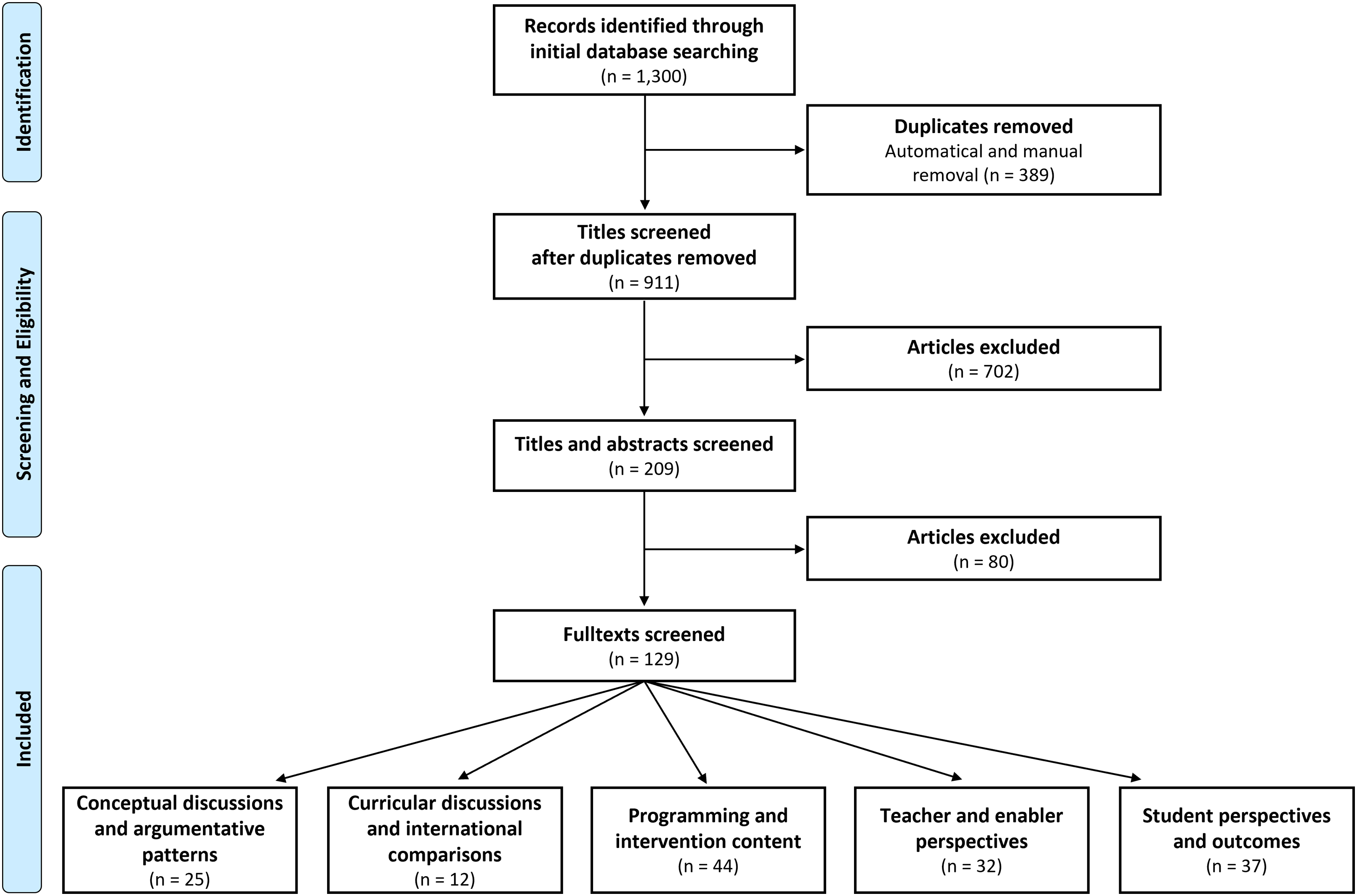
The search yielded exactly 1300 initial hits. The removal of duplicates resulted in 911 articles entering title and abstract screening. Among these, a total of 209 articles still underwent the integrative full-text screening and, if deemed eligible, data extraction (Figure 2). We finally assigned 129 articles to five different categories. These categories were inductively derived to structure the results and accounted for the fact that the articles approached the nexus between physical education and environmental education with different functions and purposes, thus requiring separate reporting. More specifically, n = 25 articles contained “conceptual discussions and argumentative patterns,” n = 12 articles contained “curricular discussions and international comparisons,” n = 44 articles contained “programming and intervention content,” n = 32 articles contained “teacher and enabler perspectives,” and n = 37 articles contained “student perspectives and outcomes.” Information about double coding can be retrieved from Supplementary Table 2. The following sections considered the number of assigned articles to appropriately guide the length of the respective category reports.
Flow chart of the review process.
Note: full-text screened articles could be double categorised (for details, see Supplementary Table 2).
Conceptual discussions and argumentative patterns
The discussion at the disciplinary nexus between physical education and environmental education is hallmarked by different terms and concepts, including, for instance, eco-motricity (Pazos-Couto, Arevalo, Middleton & Kawada Reference Pazos-Couto, Arevalo, Middleton and Kawada2021), outdoor physical education (Attali & Saint-Martin, Reference Attali and Saint-Martin2017), wilderness education (Fleishack, Reference Fleishack2012), nature-based physical activity (Gruno & Gibbons, Reference Gruno and Gibbons2020), “friluftsliv” (Beery, Reference Beery2013; Lyngstad & Saether, Reference Lyngstad and Saether2021; Sjödin, Quennerstedt & Öhman Reference Sjödin, Quennerstedt and Öhman2023), or outdoor adventure education (Stratton, Reference Stratton2022; Williams & Wainwright, Reference Williams and Wainwright2016a). Therefore, attention was warranted to not further blur the terminological boundaries and not attribute disproportionate claims to certain concepts (Martin & McCullagh, Reference Martin and McCullagh2011). While most articles argued through a physical education lens to stress the inspiring or enriching potential of certain outdoor elements (Frühauf et al., Reference Frühauf, Kopp and Greier2023; González, Reference González2001; Rose, Reference Rose2001; Stratton, Reference Stratton2022), Riley and Proctor (Reference Riley and Proctor2022) underscored the value of an authentic transdisciplinary endeavour to effectively nourish this interface or nexus. In summary, we recognised parallels and overlaps with discussions on PL. For instance, many researchers highlighted holistic (e.g., bio-psycho-social) health potentials or multidimensional (e.g., physical, cognitive, affective, social) learning outcomes (Bortolotti, Reference Bortolotti2021; Gruno & Gibbons, Reference Gruno and Gibbons2020; Martin & McCullagh, Reference Martin and McCullagh2011; Pignato, Patania, Manzo & Coppola Reference Pignato, Patania, Manzo and Coppola2021; Stratton, Reference Stratton2022; Williams & Wainwright, Reference Williams and Wainwright2016a). There was also an interesting parallel drawing on the pedagogical metaphor of a “journey” (Fleishack, Reference Fleishack2012; Quay, Reference Quay2002; Williams & Wainwright, Reference Williams and Wainwright2016b), denoting experiential and developmental processes (Green et al., Reference Green, Roberts, Sheehan and Keegan2018; Taplin, Reference Taplin and Whitehead2019). Moreover, conceptual articles strongly underlined human-nature bonds (Beery, Reference Beery2013; Gruno & Gibbons, Reference Gruno and Gibbons2020; Luthe et al., Reference Luthe, Häusler and Roth2007; Lyngstad & Saether, Reference Lyngstad and Saether2021; Pignato et al., Reference Pignato, Patania, Manzo and Coppola2021; Quay, Reference Quay2002), thus directly or indirectly corroborating existentialist descriptions of PL about interactions with the physical (and social) environment (Durden-Myers et al., Reference Durden-Myers, Bartle, Whitehead and Dhillon2021; Riley & Proctor, Reference Riley and Proctor2023; Whitehead, Reference Whitehead2007). Similarly, researchers underlined that nature basically provides opportunities to be physically active without competitive aspirations (Beery, Reference Beery2013; Rose, Reference Rose2001; Sjödin et al., Reference Sjödin, Quennerstedt and Öhman2023). Both the outdoor education and the PL literature shared a narrative that portrayed a development away from objective and normative standards (e.g., competencies that have to be mastered) toward individual experiences and responsibilities (Cosgriff, Reference Cosgriff2008; Sjödin et al., Reference Sjödin, Quennerstedt and Öhman2023; Williams & Wainwright, Reference Williams and Wainwright2016a). Some scholars, however, criticised this human-centered view, as the modern era also emphasises person-(ego)centred acting and requests a shift towards sustainability, environmental awareness and connections with Earth (Martin & McCullagh, Reference Martin and McCullagh2011; Mikaels, Reference Mikaels2018; Pazos-Couto et al., Reference Pazos-Couto, Arevalo, Middleton and Kawada2021; Sjödin et al., Reference Sjödin, Quennerstedt and Öhman2023). In this regard, there is risk that the academic discussions of both subjects — physical education and environmental education — might go into diverging directions in the future. If the diverse voices of physical education tend to more strongly stress student-centred acting with rejecting external orientations, whereas environmental education increasingly focuses goals external to humans’ experiences (e.g., along with increasing pressure from climate change), both subjects might develop in opposite directions. As a result, incompatibilities might arise and the nexus, with its potential applications, might reduce. Thus, caution must be warranted when cultivating an overly positive standpoint for the future nexus.
Curricular discussions and international comparisons
On the curricular level, Tortella et al. (Reference Tortella, Ceciliani, Fumagalli, Jidovtseff, Wainwright and Fjortoft2021) generated a multinational position statement that emphasised the role of outdoor movement education in fostering holistic experiences by promoting “not only motor skills and competence but also the cognitive, social, relational and affective development of the child” (p. 452). Accordingly, curricular frameworks should encapsulate a wide range of pedagogical skills and holistic student outcomes (Atencio & Tan, Reference Atencio and Tan2016). Regarding the “domains” to be addressed, there appeared to be a strong parallel to, and compatibility with, the corresponding curricular debates on PL (Brown & Whittle, Reference Brown and Whittle2021; Wainwright et al., Reference Wainwright, Goodway, Whitehed, Williams and Kirk2016). The Scandinavian concept ‘friluftsliv’ with its plea for outdoor experiences and outdoor life was conceptualised to transport values of democracy and equity (Backman, Reference Backman2011a). While the equity claim is, for instance, explicitly reflected in inclusive potential of PL (Arbour-Nicitopoulos et al., Reference Arbour-Nicitopoulos, Boross-Harmer, Leo, Allison, Bremner, Taverna, Sora and Wright2018; Pushkarenko, Causgrove Dunn & Wohlers Reference Pushkarenko, Causgrove Dunn and Wohlers2021), there were few explicit conceptual connections of PL to democracy (Land & Vidotto, Reference Land and Vidotto2021; Lyngstad & Saether, Reference Lyngstad and Saether2021; Santos et al., Reference Santos, Newman, Aytur and Farias2022). Apart from these few thematic overlaps, only parallels in the narratives for curricular discussions could be drawn. For instance, similar to PL, researchers criticised ‘old-fashioned’ versus ‘contemporary’ conceptualisations of education. Curricular concepts in outdoor education have moved from military and mental toughness functions to adventurous approaches as well as more lifestyle-oriented, progressive and ultimately critical understandings (Atencio & Tan, Reference Atencio and Tan2016; Rodrigues & Payne, Reference Rodrigues and Payne2017). Another parallel to PL was the finding that outdoor education criticised the dominance of curricular performance codes (Backman, Reference Backman2008, Reference Backman2011a), conceptual ambiguities (Boyes, Reference Boyes2000) and the lack of transfer of the curriculum into practice (Backman, Reference Backman2008, Reference Backman2011b; Sutherland & Legge, Reference Sutherland and Legge2016). Fröberg et al. (Reference Fröberg, Wiklander and Lundvall2023) broadly analysed the Swedish curriculum from a sustainability perspective and found many aspects that were also voiced by PL literature, such as the inclusion of health promoting behaviours into daily routines, the planning of activities, ethical aspects, empowerment, planning of activities (knowledge), moving in different contexts and testing of different activity forms.
Combined, this nexus category was strongly informed by insights from outdoor education. The discussions share certain narratives about the developments of outdoor education and physical education over the last decades. Commonalities through the applied PL lens largely refer to more overarching aspects of education (e.g., the multidimensional nature of learning goals, democracy) instead of permeating to tangible ideas on how to specifically design education. A large portion of articles from this category stemmed from the Scandinavian or the Pacific region, which limits the current debate to single geographical regions and challenges the generalisability of potential conclusions.
Programming and intervention content
In the two previous sections, we discovered a variety of different concepts studied; this heterogeneity was also recognised when examining the intervention content through the lens of PL. Concrete goals or postulated outcomes in the context of a programme were often structured in line with multidimensional (often physical, cognitive, affective and social) goals in the activity context. For instance, Finn, Yan and McInnis (Reference Finn, Yan and McInnis2018) targeted physical growth, provided information about healthy living, aimed to develop students’ self-accomplishment and fostered team building. Similarly, Schwab and Dustin (Reference Schwab and Dustin2014) separately listed technical skill building, critical thinking, enjoyment, and social interaction. A total of six additional articles formulated content relatable to all four PL domains (physical, cognitive, affective, social) and met the claim of a “complete” list (Casado-Robles, Viciana, Guijarro-Romero & Mayorga-Vega Reference Casado-Robles, Viciana, Guijarro-Romero and Mayorga-Vega2022; Clocksin, Reference Clocksin2006; Cook, Boyan, Mendelsohn, Green & Woolvett Reference Cook, Boyan, Mendelsohn, Green and Woolvett2007; Floresca, Reference Floresca2019; Hall, Robinson, Bradford & Costa Reference Hall, Robinson, Bradford and Costa2022; Philippi & Mulhearn, Reference Philippi and Mulhearn2023). Interestingly, the outdoor education programme by Nguyen (Reference Nguyen2015) was split into different sessions and consequently defined distinct psychomotor, cognitive and affective goals for each day. The adventure education programme for physical education teachers by Kurtzman, Beddoes and Gaudreault (Reference Kurtzman, Beddoes and Gaudreault2023) clearly prioritised affective and social domains. From a methodological perspective, we identified strong compatibility with PL when favouring non-linear over linear/directive teaching styles (Colella & D’Arando, Reference Colella and D’Arando2021), student-centred over teacher-centred approaches (Hall et al., Reference Hall, Robinson, Bradford and Costa2022; Lamoneda, González-Víllora, Evangelio & Fernandez-Rio Reference Lamoneda, González-Víllora, Evangelio and Fernandez-Rio2024; Nguyen, Reference Nguyen2015) and meaningful activity experiences over performance orientation (González, Reference González2001; Gruno & Gibbons, Reference Gruno and Gibbons2021; Lamoneda et al., Reference Lamoneda, González-Víllora, Evangelio and Fernandez-Rio2024). Many researchers in that space have employed approaches of experiential learning (Bentsen et al., Reference Bentsen, Mygind, Elsborg, Nielsen and Mygind2022; Finn et al., Reference Finn, Yan and McInnis2018; Lamoneda et al., Reference Lamoneda, González-Víllora, Evangelio and Fernandez-Rio2024; McNamee & Timken, Reference McNamee and Timken2017), offering student exploration and PL-compatible identification of activity preferences. However, many scholarly endeavours at the nexus outlined the potential to enrich existing physical education through a series of outdoor activities (Chen, Reference Chen2016; Clocksin, Reference Clocksin2006; Cook et al., Reference Cook, Boyan, Mendelsohn, Green and Woolvett2007; Finn et al., Reference Finn, Yan and McInnis2018; Gagnon, Reference Gagnon2024; Gruno & Gibbons, Reference Gruno and Gibbons2020; Kurtzman et al., Reference Kurtzman, Beddoes and Gaudreault2023). Albeit probably not explicitly intended, the corresponding presentation logically tended to follow an activity-centred rather than student- or learning-centred reporting, implying that an important tenet of PL-enriched pedagogy would be violated when prioritising a task or activity orientation (Young et al., Reference Young, O’Connor and Alfrey2020). In line with this activity-centred reporting, it was not always easy to interpret intervention content through the theoretical PL lens, as the concept is not a programme per se and rather has the potential to dictate the ‘stance’ or ‘atmosphere’ in the background. Although many researchers stressed the importance of autonomous learning elements (Casado-Robles et al., Reference Casado-Robles, Viciana, Guijarro-Romero and Mayorga-Vega2022; Colella & D’Arando, Reference Colella and D’Arando2021; Lamoneda et al., Reference Lamoneda, González-Víllora, Evangelio and Fernandez-Rio2024) and opportunities for students to “self-select activities that match their abilities and interests” (Menear et al., Reference Menear, Smith and Lanier2006, p. 23), not many articles provided explicit didactical differentiations.
In summary, for this section on “programming and intervention content,” we identified considerable differences between outdoor education and environmental education. Articles adopting an outdoor education perspective predominantly maintained a physical activity or physical education focus and were, therefore, inherently interested in fostering individuals’ familiarisation process towards an active lifestyle. Some articles even embodied an explicit lifetime orientation for their programme (Gagnon, Reference Gagnon2024; McNamee & Timken, Reference McNamee and Timken2017; Nguyen, Reference Nguyen2015; Schwab & Dustin, Reference Schwab and Dustin2014), which harmonised with the PL aspiration for “engagement in physical activities for life” (International Physical Literacy Association, 2017, front page). In turn, an environmental education perspective within the nexus emphasised sustainability aspects, in which physical activities served as a means toward environmental goals, such as environmental knowledge, attitudes, or behaviours (Gómez Quintana et al., Reference Gómez Quintana, Hidalgo Castro, Díaz Cabrera, Pozo Contrera and Ramos Pérez2023; Gruno & Gibbons, Reference Gruno and Gibbons2020; Li, Reference Li2022; Mischenko et al., Reference Mischenko, Kolokoltsev, Romanova, Bayankin, Kispayev, Vrachinskaya, Loginov, Aganov and Guryanov2023; Santos-Pastor, Ruiz-Montero, Chiva-Bartoll, Baena-Extremera & Martínez-Muñoz Reference Santos-Pastor, Ruiz-Montero, Chiva-Bartoll, Baena-Extremera and Martínez-Muñoz2022). These extrinsic functions may be negatively called an ‘instrumentalisation’ of physical education or physical activities and do partially conflict with the person-centred and idealist PL orientations toward individual’s PA.
Teacher and enabler perspectives
Teachers are central actors for educational processes, with studies providing insights on their experiences at the nexus. Indeed, several studies have revealed that teachers aim to promote holistic development, learning and outcomes (Becker, Grist, Caudle & Watson Reference Becker, Grist, Caudle and Watson2018; Blakey, Reference Blakey2018; Cooley et al., Reference Cooley, Cumming, Holland and Burns2015; Gilkes, Wintle & Reed Reference Gilkes, Wintle and Reed2024; Timken & McNamee, Reference Timken and McNamee2012). However, although elements from different learning domains could be identified (e.g., cognitive, social, affective), most reports did not specify these multidimensional descriptions in the physical activity context directly serving to promote active lifestyles. Instead, the majority of these articles extracted generalised goals independent from the physical education sphere (e.g., personality aspects or transferable skills). Dahl, Standal and Moe (Reference Dahl, Standal and Moe2019) conducted focus groups with more experienced teachers who encountered decreasing physical abilities (physical domain of PL) and regressing interest, abilities and experiences regarding outdoor activities (friluftsliv) among the student cohorts over time. Interestingly, several studies independently found that teachers were aware of the particular role of affective and emotional experiences in students (Braga et al., Reference Braga, Jones, Bulger and Elliott2017; Gilkes et al., Reference Gilkes, Wintle and Reed2024; Legge, Reference Legge2022), with educators having the responsibility to orchestrate pupils’ emotions (Thomas, Reference Thomas2015). Teachers were also cognisant of the relevance to create affordable and outdoor education-friendly environments (Dyment & Bell, Reference Dyment and Bell2007, Reference Dyment and Bell2008; Jidovtseff, Kohnen, Belboom, Dispa & Vidal Reference Jidovtseff, Kohnen, Belboom, Dispa and Vidal2021) to let interactions of students with places and nature “thrive.” Moreover, teachers were interested in also creating a fair and inclusive environment (Dahl et al., Reference Dahl, Standal and Moe2019; Fröberg et al., Reference Fröberg, Wiklander and Lundvall2022), which aligned with the claims of PL to promote human flourishing based on experiential and embodied engagement with movement from one’s situated context (Pushkarenko et al., Reference Pushkarenko, Causgrove Dunn and Wohlers2021). Admittedly, many screened studies did not allow us to draw any interpretations through, or implications for, PL. In these studies, the scholarly focus was not placed on students (e.g., professional teacher development) or the research questions referred to aspects of environmental education or sustainability concurrently exhibiting loose links to PA. Nevertheless, teachers welcomed the outdoors as an opportunity to repress traditional sport and competition in favour of cooperation and positive social interactions (Gilkes et al., Reference Gilkes, Wintle and Reed2024; McNamee & Timken, Reference McNamee and Timken2017). Furthermore, the facilitators themselves expressed the hope that corresponding activities should contribute to enhancing lifetime physical activity and healthy habits (McNamee & Timken, Reference McNamee and Timken2017; Osborne, Reference Osborne2012; Timken & McNamee, Reference Timken and McNamee2012). Despite these positive aspects voiced by teachers, the screening of the literature also uncovered some negative aspects related to outdoor education. For instance, teachers often levelled concerns regarding their didactical ability to provide outdoor education (Atencio et al., Reference Atencio, Tan, Ho and Ching2015; Dyment, Reference Dyment2005; Mañanas-Iglesias et al., Reference Mañanas-Iglesias, Galán-Arroyo, Rojo-Ramos and Adsuar2023; Richards et al., Reference Richards, Jacobs, Wahl-Alexander and Ressler2018) and faced considerable challenges when intending to organise educational activities at the nexus (Ayotte-Beaudet et al., Reference Ayotte-Beaudet, Berrigan, Deschamps, L’Heureux, Beaudry and Turcotte2024; Jidovtseff et al., Reference Jidovtseff, Kohnen, Belboom, Dispa and Vidal2021; McNamee & Timken, Reference McNamee and Timken2017). Taken together, teachers voiced openness and interest regarding educational activities at the nexus. Across the articles screened, physical education more frequently served as a starting point than environmental education. Although the alignment of education with PL appeared realistic through the lens of teachers, most dominant challenges referred to teacher skills and organisational barriers. Studies are lacking with other relevant enabler or stakeholder groups, such as school administrators or parents (Becker et al., Reference Becker, Grist, Caudle and Watson2018; Dyment & Bell, Reference Dyment and Bell2008).
Student outcomes and perspectives
As the PL concept inherently embodies a student-centred understanding (Santos et al., Reference Santos, Newman, Aytur and Farias2022), the category of ‘student outcomes and perspectives’ was of particular importance. Many studies have integrated an assessment of students’ PA, whilst often even employing objective measurement devices (e.g., accelerometers). Almost all studies — irrespective of whether the programme referred to geocaching (Battista & West, Reference Battista and West2018), loose parts (Engelen et al., Reference Engelen, Wyver, Perry, Bundy, Chan, Ragen, Bauman and Naughton2018), nature preschools (Ernst et al., Reference Ernst, Burgess and Bruno2021; Fyfe-Johnson et al., Reference Fyfe-Johnson, Saelens, Christakis and Tandon2019), outdoor concepts (Casado-Robles et al., Reference Casado-Robles, Viciana, Guijarro-Romero and Mayorga-Vega2022; Hernawan et al., Reference Hernawan, WİDyawan, Mukhtar, Nugraha and Haqiyah2024; Mygind, Reference Mygind2007; Peacock et al., Reference Peacock, Bowling, Finn and McInnis2021), or orienteering (Mandrillon, Desplanques & Gottsmann Reference Mandrillon, Desplanques and Gottsmann2024) — registered higher values of children’s physical activity levels compared to a baseline or a regular programme. In line with this operationalisation priority, many studies at the nexus assessed the final outcome of PL (i.e., the actual activity engagement). When analysing student outcomes pertaining to the domains of PL lens, only few articles adopted a holistic perspective on learning outcomes. Floresca (Reference Floresca2019) directly quantified the learning portion of a nature walk programme for physical education and localised 50% of individuals’ learning effects on the affective, 27% on the cognitive, 9% on the social and 14% on the physical level. Interestingly, several programmes emphasised affective variables (Armour & Sandford, Reference Armour and Sandford2013; Bonavolonta et al., Reference Bonavolonta, Cataldi and Fischetti2021; Brewer & Sparkes, Reference Brewer and Sparkes2011; Gatzemann et al., Reference Gatzemann, Schweizer and Hummel2008; Samsudin et al., Reference Samsudin, Kamalden, Aziz, Ismail, Yaakob and Farizan2021) and indirectly corroborated this quantification. Cotterill and Brown (Reference Cotterill and Brown2018) evaluated the effects of a dinghy sailing programme with a qualitative design and extracted a myriad of positive outcomes across the different PL domains. Likewise, the students in the mixed-methods study by Mandrillon et al. (Reference Mandrillon, Desplanques and Gottsmann2024) verbalised many positive lessons learned from orienteering activities that could be clustered to the different PL domains. Adopting a self-critical perspective, Finn et al. (Reference Finn, Yan and McInnis2018) admonished future studies to complement existing outcome categories with operationalisation such as well-being, attitudes, or learning. Two studies harmonised well with PL for other reasons than the learning domains: a practical epistemology analysed students’ meaning making of being outdoors and their connection to place with illustrative existentialist descriptions whilst yielding intensive feelings, elaborate reflections, social statements and embodied experiences (Lundvall & Maivorsdotter, Reference Lundvall and Maivorsdotter2021); Sanderud et al. (Reference Sanderud, Gurholt and Moe2020) described the continuous transformations of children in interaction with winter landscapes resulting in competence gains in the dynamic environment and embodiment manifestations between existential knowledge and skills. In summary, however, several articles did not hold any implications or interpretations for PL. Studies cultivating an environmental education claim logically concentrated more on environmental learning outcomes (Cuenca-Soto et al., Reference Cuenca-Soto, Martínez-Muñoz, Chiva-Bartoll and Santos-Pastor2023; Fang WeiTa et al., Reference Fang WeiTa, Ng and Chang MeiChuan2017; Huang & Reynoso, Reference Huang and Reynoso2018; Lavie Alon, Reference Lavie Alon2015; Mischenko et al., Reference Mischenko, Kolokoltsev, Romanova, Bayankin, Kispayev, Vrachinskaya, Loginov, Aganov and Guryanov2023; Santos-Pastor et al., Reference Santos-Pastor, Ruiz-Montero, Chiva-Bartoll, Baena-Extremera and Martínez-Muñoz2022).
Discussion
This article intended to examine how PL stands in compatibility with the scholarly work at the nexus between physical education and environmental education. To achieve this, we globally summarised research at the nexus between physical education and environmental education using an integrative review methodology. Finally, we inductively extracted five categories spanning “conceptual discussions and argumentative patterns,” “curricular discussions and international comparisons,” “programming and intervention content,” “teacher and enabler perspectives,” and “student outcomes and perspectives” from the identified articles. Depending on the disciplinary access of the concerning authors, articles approached the nexus more with either an environmental education or a physical education interest, but rarely from an authentic inter-/transdisciplinary perspective. To avoid conflation or co-option between disciplines, it is essential to retain important disciplinary differentiations, such as environmental education, adventure-based education, or outdoor education (Williams & Wainwright, Reference Williams and Wainwright2016a, Reference Williams and Wainwright2016b; yet also acknowledge their deep interconnections and pedagogical and curricular alignments across practices. The present article with its pragmatic and balanced search terms revealed that relatively more articles initially set a physical activity or physical education scenery to introduce their topic. This finding might reflect that physical education — in some countries the subject designation is connected with a “health” attribute (Annerstedt, Reference Annerstedt2008; Macdonald, Reference Macdonald2013) — still has a stronger curricular support (e.g., separate school subject) at the formal level worldwide as compared to environmental education. For instance, there is a discrete learning area “Health and Physical Education” in Australia whilst environmental education may be woven into “Science,” “Geography,” or “Humanities and Social Sciences.” Given the opportunity, or maybe even necessity, of environmental education to cultivate inter-transdisciplinary connections, the adoption of a PL lens is worth considering to connect the moving body with earthly ecologies, as the concept has gained increasing attention in academic discussions and in practices worldwide (Bailey, Reference Bailey2022; Carl et al., Reference Carl, Bryant, Edwards, Bartle, Birch, Christodoulides, Emeljanovas, Fröberg, Gandrieau, Gilic, van Hilvoorde, Holler, Iconomescu, Jaunig, Laudanska-Krzeminska, Lundvall, De Martelaer, Martins, Mieziene and Elsborg2023). Specifically for environmental education, PL in its idealist sense (Edwards et al., Reference Edwards, Bryant, Keegan, Morgan, Cooper and Jones2018; Young et al., Reference Young, O’Connor and Alfrey2023) offers to describe students who sensitise strong connections to their body during movement, with flow states allowing the individual to also connect to the world and benefiting learning during educational practices (Boniface, Reference Boniface2000). Teachers are invited to acknowledge that an authentic involvement of the body might promote quality education across subjects by meeting goals from several subjects that were previously considered as subjectively incompatible.
From a thematic standpoint, the synthesis regarding the first two categories (i.e., the conceptual and curricular discussions at the nexus) has basically endorsed the opportunity to realise teaching and learning in compatibility with PL. It is didactically possible to coalesce physical, social, cognitive and effective learning goals for lifelong engagement in lifelong physical activity whilst prompting students for environmental knowledge, ecological awareness and sustainable practices (Thomas et al., Reference Thomas, Grenon, Morse, Allen-Craig, Mangelsdorf and Polley2019). Importantly, PL philosophically assumes that physical activities cannot be separated from their physical and social environment (Elsborg et al., Reference Elsborg, Melby, Kurtzhals, Kirkegaard, Carl, Rask, Bentsen and NIelsen2024; Land & Vidotto, Reference Land and Vidotto2021; Riley & Proctor, Reference Riley and Proctor2023; Whitehead, Reference Whitehead2007), and indeed being with nature holds promise to broaden the spectrum of human activity locations. Simultaneously, this review demonstrated that the corresponding literature has yielded few best practice examples on how to transform the conceptually compatible ideas into pedagogical practices. Relatedly, most evaluations of teacher and student outcomes assigned less priority to holistic experiences with physical activities. In summary, we identified a contrast between the theoretical opportunities as expressed in the first two categories (conceptual aspects and argumentative patterns, curricular aspects and international comparisons) and the more applied and empirical findings in the last three categories (programming and intervention content, teacher and enabler perspectives, student outcomes and perspectives). Two major implications arise from this situation. First, the PL literature itself should further explore and discuss applications at the nexus (e.g., outdoor activities, environmental education, education for sustainable development, adventure-based learning) to overcome the theory-practice disconnect. Similar to other research activities related to PL, the stakeholders should prevent “un-couplings” from idealist PL conceptions (Young et al., Reference Young, O’Connor and Alfrey2020). Second, researchers can benefit from escaping their silos (O’Connor & Jess, Reference O’Connor and Jess2020) to intensify debates at the nexus under authentic inter-/transdisciplinary perspectives (Riley & Proctor, Reference Riley and Proctor2022) with an explication of inclusive, student-centred, embodied and multidimensional learning goals for PA. The different academics, however, should be clear of their expertise and scientific positionality along with the potential advantages and risks arising from such a collaboration.
With its focus on education in, about and for the outdoors usually enacting some form of movement (Priest, Reference Priest1986), outdoor education is positioned as an important interlocutor between physical education and environmental education. Thus, outdoor education is a crucial inter-/transdisciplinary area of inquiry that has the potential to promote both ecological and physical literacy for a more ecologically attuned and motivated mover (Riley & Proctor, Reference Riley and Proctor2023). Wattchow and Brown (Reference Wattchow and Brown2011) claimed that traditional teaching and learning practices of adventure and challenge in the outdoors are not necessarily commensurate with environmental ethics in outdoor education, especially when outdoor education is disciplined and constrained by dominant discourses in physical education that relegates the outdoors to a ‘gymnasium’ through an over-emphasis on fitness pursuits and the objectification of bodies and the Earth. Therefore, PL with its similar narrative rejecting objectifications might serve as an appropriate theoretical lens to nourish and operationalise the nexus. However, although PL is a popular concept that can inform physical education practices and inspire inter-/transdisciplinary work (Riley & Proctor, Reference Riley and Proctor2022), the present study has also shown that research at the nexus between physical education and environmental education has hesitantly adopted the idealist aspects of PL. From an environmental education perspective, there may also be good reasons for this finding. PL congruently assumes person-centredness (Holler et al., Reference Holler, Jaunig, Amort, Tuttner, Hofer-Fischanger, Wallner, Simi, Müller, van Poppel and Moser2019; Santos et al., Reference Santos, Newman, Aytur and Farias2022), while environmental education inherently requests a stronger focus on the environment (Vincent & Focht, Reference Vincent and Focht2011). Remaining vigilant to the various hierarchies that proliferate through disciplines, physical education may be positioned as the more dominant subject of inquiry. To grapple with this tension, it is crucial that practitioners working at the nexus between physical education and environmental education pay close attention to disciplinary nuance and the distinctions and differences that uphold the integrity of each field of inquiry; while also activating possibilities for ecologically attuned movers and individual/collective and social/ecological wellbeing within relational entanglements of physical education and environmental education.
Limitations
Although this review has taken an inter-/transdisciplinary perspective and has permitted different study designs (both qualitative and quantitative) entering the synthesis, the present study exhibited the following limitations. First, we used a narrative approach for reporting the primary studies. Although we applied a standardised term combination (Supplementary File 1) and the algorithm was balanced to ensure fair representation between physical education and environmental education, the search was purposeful and not systematic (e.g., not drawing on the PRISMA guidelines: Page et al., Reference Page, McKenzie, Bossuyt, Boutron, Hoffmann, Mulrow, Shamseer, Tetzlaff, Akl, Brennan, Chou, Glanville, Grimshaw, Hróbjartsson, Lalu, Li, Loder, Mayo-Wilson, McDonald, McGuinness, Stewart, Thomas, Tricco, Welch, Whiting and Moher2021). As the present study already included 129 documents, it would not have been manageable to achieve a complete and exhaustive search. Similarly, only one person submitted the included studies to review and synthesis. Second, we did not systematically assess study quality. Of course, we indirectly considered study quality in informing the evidence of the categories (e.g., via different study designs) but the synthesis might have benefited from a rigorous assessment. Third, the PL lens made it necessary to analyse the included studies at a meta level. Although we pre-defined PL assumptions, our five selected criteria could not logically cover “all” conceptual discussions (see already the number of PL aspects seven years ago: Edwards et al., Reference Edwards, Bryant, Keegan, Morgan and Jones2017). Another interesting approach for future research could be to lead conversations with some of the research groups whose literature was included in this review to inquire about their perspective on the concept.
Conclusion
This narrative integrative review has broadly illuminated the inter-/transdisciplinary nexus between physical education and environmental education. We inductively retrieved five categories from this integrative synthesis to have a differentiated view on where compatibility was given between the nexus and PL, spanning theoretical, curricular, interventional and evaluative aspects. The field is characterised by multifaceted heterogeneity, from disciplinary perspectives and theoretical assumptions to research goals, study designs and methodological approaches. Truly holistic analyses only mark a small part of the nexus, which undermines the simultaneous achievement of physical, cognitive, affective and social learning goals. Theoretical studies more strongly harmonised with PL assumptions than empirical and applied studies, uncovering a theory-practice disconnect on how educational work is operationalised through a person-centred lens to promote more ecologically attuned and motivated movers. The literature can benefit considerably from the identification of solutions balancing environmental and movement-related goals. Although PL as gained considerable popularity in recent educational discussion and demonstrates potential to inspire work at the nexus, also caution is warranted that environmental education is not jeopardised in its paradigmatic character and goals.
Supplementary material
The supplementary material for this article can be found at https://doi.org/10.1017/aee.2025.6.
Acknowledgements
We want to thank all researchers who have contributed to the literature of the field, thus enabling the completion of such a comprehensive review.
Financial support
The present study has not been funded by external bodies.
Competing interests
The authors would like to disclose that Dr Kathryn Riley and Associate Professor Peta White are in the Editorial Executive of The Australian Journal of Environmental Education (AJEE). In accordance with AJEE protocols, neither were involved in the editorial process or decision making regarding this manuscript.
Ethical standard
Nothing to note.
Author Biographies
Johannes Carl is a Post-doctoral Research Fellow at the Institute for Physical Activity and Nutrition at Deakin University, Burwood, Australia. His research activities consistently adopt an interdisciplinary perspective on health-enhancing physical activity, thereby also informing health and physical education. He is the principal investigator for the development of a “Global Physical Literacy Action Framework” and of a large European network examining the alignment of research, policy and practice with the concept of physical literacy across 40 countries.
Kathryn Riley is an Assistant Professor with the Faculty of Education at the University of Manitoba. Kathryn’s research focuses on relational ontologies, pedagogies for (w)holistic wellbeing and an anticolonial praxis for social and ecological justice. Kathryn is the Principal Investigator in the Movement as Artivism project, exploring physical activity and arts-based practices in response to eco-anxiety with middle-years teachers and learners. Kathryn recently published a book (Re)Storying human/earth relationships in environmental education: Becoming (partially) Posthumanist. Kathryn is an Associate Editor with the Australian Journal of Environmental Education.
Jacqui Peters is a lecturer in health and physical education within the School of Education at Deakin University. She passionate about teaching and has a range of research interests including Health and Physical Education curriculum, assessment and policy and the experiences of early career teachers. Jacqui Peters is a board member of the Australian Council for Health, Physical Education and Recreatio Victoria.
Peta J. White is an Associate Professor in Science and Environmental Education at Deakin University. She co-directs the Centre for Regenerating Futures - a Faculty Centre that explores Anthropocene challenges and decolonising practices while building researcher capacity. She is the Editor-In-Chief of the Australian Journal of Environmental Education. Her current research follows three narratives: science and biology education; sustainability, environmental and climate change education; and collaborative/activist methodology and research.



 Open access

