The River Clyde is the third longest river in Scotland, draining an area of approximately 3000km2, which contains more than 30% of Scotland's 5 million inhabitants. From its source in S Lanarkshire, the Clyde flows in a N and then NW direction through an agricultural landscape, prior to reaching the Greater Glasgow urban area, which hosts a population of about 1.2 million (Vane et al. Reference Vane, Chenery, Harrison, Kim, Moss-Hayes and Jones2011). Past and present industries of Glasgow and surrounding conurbations include shipbuilding, iron and steel manufacture, engineering, coal and other mining chemical production, as well as paper and textile manufacture. The majority of these industries are situated in close proximity to the Clyde riverfront, facilitating the rapid transport of raw materials and discharge of waste effluents. Although these industrial activities have declined from their 19th- and early 20th-Century peaks, shipbuilding and engineering continues at Scotstoun and Govan. Further out to sea, the Firth of Clyde and connecting lochs (fjords) are also important areas for Scotland's salmon and shellfish aquaculture industry, which is the largest in Europe. Consequently, knowledge of the Clyde's environmental status, including sediment quality, is necessary to monitor any effects of vital industrial activity and municipal infrastructure on the sustainable growth of Scotland's aquaculture industry, as well as to comply with overarching European environmental legislation (OSPAR 2004).
A previous investigation of Hg in Clyde estuarine surface sediments (n=16), collected in 1982 extending 17 miles from Glasgow Bridge (a location just downstream of the tidal limit), to a site S of Port Glasgow, reported Hg contents ranging from ∼0.05 to 3.68mg kg–1 dry wt. and a mean Hg content of 0.61mgkg–1 dry wt. (Craig & Moreton Reference Craig and Moreton1986). A subsequent sediment survey in 1983 (n=17), covering 12 miles of the Clyde estuary from Glasgow Bridge downstream to Dumbarton (e.g., sites 29–50; Fig. 1) found Hg ranging from 0.04 to 1.52mgkg–1 dry wt. and a mean of 0.43mgkg–1 dry wt. with the high values observed at the dockyards close to Scotstoun (1.28mgkg–1 dry wt.) and a site at Erskine (1.52mgkg–1 dry wt.) (Craig & Moreton Reference Craig and Moreton1986). In addition, the 1982 survey reported methyl-Hg content ranging from 0.05 to 17ngg–1, which demonstrated a strong correlation with total Hg (R 2=0.88) and sulphide content (R 2=0.70), the latter being a broad indicator of anoxic conditions. An earlier study reported Hg and methyl-Hg from six sites from the main shipping channel covering Glasgow Bridge to a site 10 miles downstream within the inner estuary (approximately sites 29–44 herein; Fig. 1; Bartlett et al. Reference Bartlett, Craig and Morton1978). This study showed that total Hg content varied in a non-systematic manner downstream, with values ranging from 0.4 to 4.4mgkg–1 dry wt., with a mean total Hg of 1.4mgkg–1 dry wt., and a mean methyl-Hg content of 2.7μgkg–1 (Bartlett et al. Reference Bartlett, Craig and Morton1978). Overall, these studies suggest a general decrease in Hg values from Glasgow to the outer Clyde, overprinted by a few highly polluted sites. However, these previous studies were focussed on the active portions of the estuary, and were rather limited in terms of sampling density and spatial (lateral) extent. They did not consider the extensive fluvial (freshwater) reaches of the Clyde or more seaward reaches toward the Firth of Clyde.
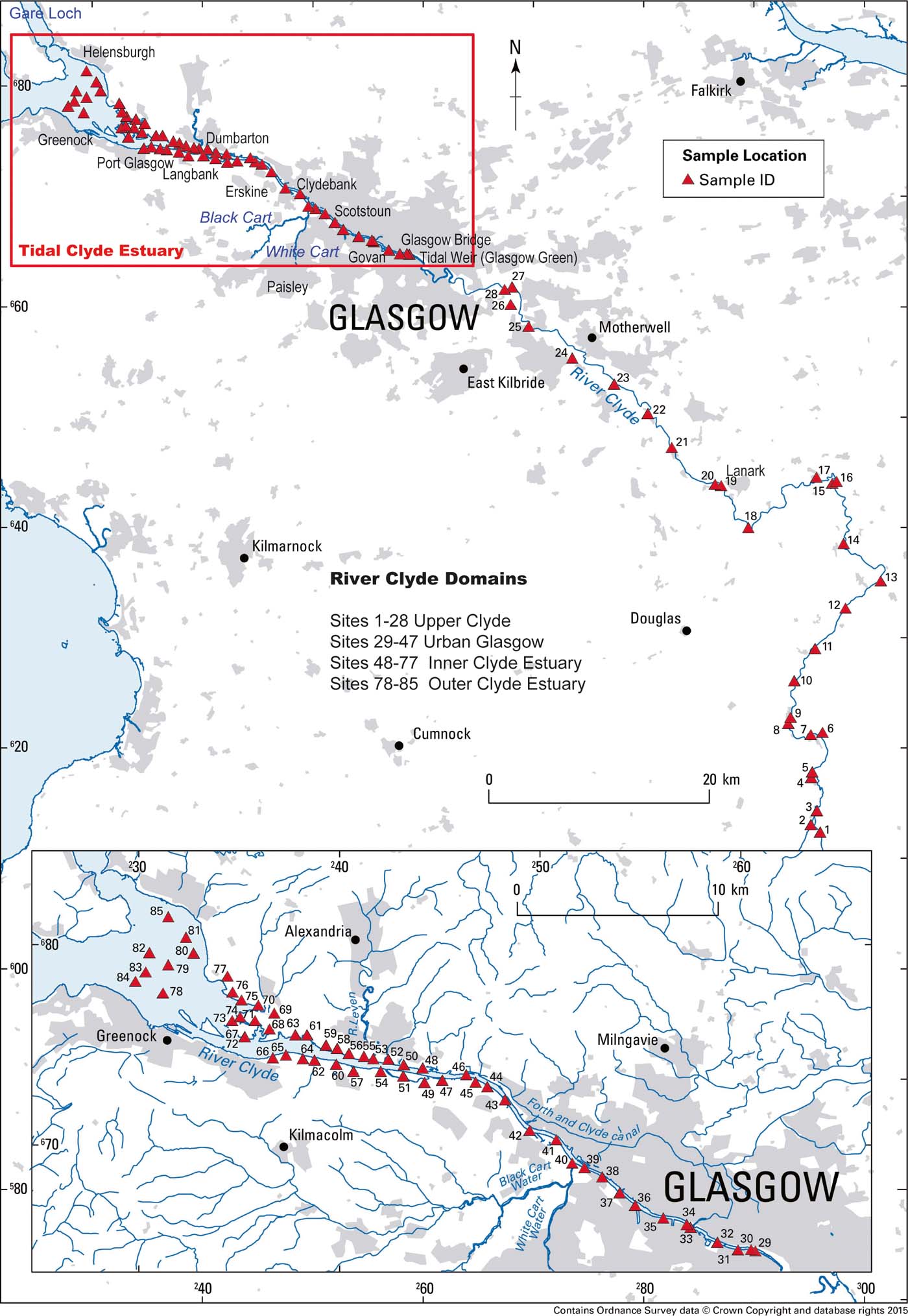
Location of surface sediment sample sites in the River Clyde.

Hydrocarbons in river–estuarine–coastal sediments originate from both natural and anthropogenic sources (Boehm & Requejo Reference Boehm and Requejo1986; Vane et al. Reference Vane, Harrison, Kim, Moss-Hayes, Vickers and Horton2008; Vane et al. Reference Vane, Harrison, Kim, Moss-Hayes, Vickers and Hong2009a). However, river estuaries and coastal sediments situated in close proximity to urban and industrial centres accumulate hydrocarbon products derived from crude oils, vehicular lubricating oils, refined petroleum fuels and road run-off (asphalt), which mask the lower concentrations of natural hydrocarbons (Boehm & Requejo Reference Boehm and Requejo1986). These primary (e.g., crude oil) and secondary (e.g., refinery mediated) molecular characteristics are further modified by physical, chemical and biological processes, collectively termed ‘weathering', that occur during transport in water–air–sediment media, and which affect each hydrocarbon group differently. Microbiological mediated decay causes major quantitative losses to n-alkanes and branched isoprenoid hydrocarbons, resulting in reduced gas chromatographic (GC) resolved hydrocarbons, and an increase in unresolved hydrocarbons (Douglas et al. Reference Douglas, Bence, Prince, McMillen and Butler1996; Frysinger et al. Reference Frysinger, Gaines, Xu and Reddy2003; White et al. Reference White, Xu, Lima, Eglinton and Reedy2005; Stout & Wang Reference Stout and Wang2007). Unresolved hydrocarbons are observed during analysis by GC methods, as a single, very broad envelope, depending on heating profile and structural chemical complexity. This rising baseline is termed an unresolved complex mixture (UCM), or is informally known by petroleum geochemists as a ‘hump' (Gough et al. Reference Gough, Rhead and Rowland1992; Sutton et al. Reference Sutton, Lewis and Rowland2005; Mao et al. Reference Mao, Weghe, Lookman, Vanermen, Brucker and Diels2009). These UCMs can at least be partially resolved by GC–GC methods (Frysinger et al. Reference Frysinger, Gaines, Xu and Reddy2003; Mao et al. Reference Mao, Weghe, Lookman, Vanermen, Brucker and Diels2009).
Sediments impacted by different petroleum sources can yield distinct UCM profiles. For example, Frysinger et al. (Reference Frysinger, Gaines, Xu and Reddy2003) showed that salt marsh sediment contaminated with a historic diesel spill displayed a UCM centred at the retention times (RTs) of C19–20 alkanes; whereas sediment from Narragansett Bay, impacted by motor oil, urban run-off and sewage effluent, had a UCM centred at C31–32 RT. However, these distinctions are not always observable due to preferential degradation, concurrent (rather than serial) biodegradation and the technical limitations of standard GC analysis.
The main purpose of the present research was to provide a survey of sediment toxic metal Hg content through the entire Clyde river–estuarine continuum in order to assess: (1) lateral changes in Hg and its correlation with four domains, riverfront activities and broad-scale regional land usage; (2) to benchmark against non-statutory legislative guidelines for the management disposal of dredged material; (3) to compare these values to other UK and international aquatic sediments; (4) to explore the influence of total organic carbon (TOC) content on sediment-hosted total Hg; and (5) to investigate parallel organic hydrocarbon contents at selected sites spanning the upper rural–urban–inner and outer estuary in order to provide a more holistic (organic and heavy metal) view of pollution in the Clyde.
1. Methods
1.1. Sample collection and preparation
Surface sediments from the upper reaches of the River Clyde, including samples from its headwaters and at the junctions with the main tributaries, were collected in October 2010 (Fig. 1). Sediment was recovered from the active water channel using a steel trowel (∼0–10cm depth) and transferred to Rilsan sampling bags (polyamide). Surface sediments from the Clyde estuary (∼0–10cm depth) were collected in October 2003 using a stainless steel van Veen grab and transferred into polyethylene sealed bags (Fig. 1; Vane et al. Reference Vane, Harrison and Kim2007). All sediments (n=85 sites) were kept in the dark in cool boxes at approximately 4°C and subsequently frozen (−18°C) in a commercial freezer prior to transport to British Geological Survey laboratories. Upon return to the laboratory, each sample was freeze-dried, disaggregated, passed through a brass sieve with an aperture of 2mm and milled in agate to approximately <40μm. This method was chosen as a statistically robust protocol suitable for the precise and accurate quantification of hydrocarbons (Beriro et al. Reference Beriro, Vane, Cave and Nathanail2014).
1.2. Mercury (Hg) analysis
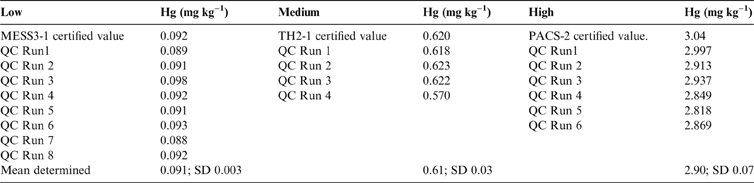
Total Hg analysis was performed on sieved (<2mm) and milled sediment using a Milestone DMA-80, direct Hg analyser (MA122) instrument, which is a direct atomic absorption spectrophotometer (AAS) that uses a cold vapour method with gold amalgamation. For each sample, approximately 100mg of Clyde sediment was weighed, dried for 1min at 120°C, and pyrolysed at 850°C for 2.5min. The products were then trapped at 120°C for 45s, and the Hg released upon heating at 950°C for Hg measurement following an automatic zero adjustment. The AAS was operated with an O2 flow rate of 200mlmin–1 and absorption was measured at 253.65nm (Vane et al. Reference Vane, Beriro and Turner2015). Quality control (QC) was accomplished by analysing three referenced materials spanning a wide range of concentrations, namely low MESS3-1 (0.092mgkg–1 Hg), medium TH2-1 (0.620mgkg–1 Hg) and high PACS-1 (3.04mgkg–1 Hg). A total of 18 QC analyses were conducted at regular intervals throughout the analysis of the samples (Table 1). These were in good agreement with the low, medium and high certified Hg values, suggesting that the method was accurate (Table 1). The error (two times standard deviation) for MESS3-1 was ±0.01mgkg–1 dry wt.; for TH2-1, it was ±0.05mgkg–1 dry wt.; and for PACS-2, it was ±0.13mgkg dry wt. The limit of quantification was 0.002mgkg–1 dry wt.
Quality control for Hg analyses using certified reference sediments. Abbreviations: Hg = mercury; QC = quality control; SD = standard deviation.

1.3. TOC (%)
Sediments were analysed for TOC content using an Elementar VarioMax C analyser after acidification with HCl (50% v/v) to remove carbonate. The limits of quantification for a typical 300mg sample were 0.18% (Vane et al. Reference Vane, Harrison and Kim2007; Newell et al. Reference Newell, Sorensen, Chambers, Wilkinson, Uhlemann, Roberts, Gooddy, Vane and Binley2015).
1.4. Gas chromatography (GC) of saturated hydrocarbons
Sediments (0.5g) were spiked with tetracosane-D50, squalene and hexatriacontane-D74 at 10ngμL–1, and allowed to equilibrate for 3h. They were then mixed with clean sand (43g) and copper powder (6g), prior to extraction with dichloromethane/methanol (9:1v/v) at 75°C and 750psi, using an accelerated solvent extraction system (ASE Dionex 200; Newell et al. Reference Newell, Vane, Sorensen, Gooddy and Moss-Hayes2016). Extracts were reduced to dryness using a TurboVap, and reconstituted in a minimum volume of dichloromethane for column chromatography. Saturated hydrocarbons were separated using a glass pipette alumina oxide column (Al2O3–5×0.5cm) eluted with 4ml n-hexane/DCM (9:1 v:v), then reconstituted in 0.5mL volume of n-hexane for GC analysis. Saturates were analysed on a Hewlett Packard 6890 series GC-FID system fitted with an Agilent J&W DB-1 column (60m length, 0.25mm id., 0.1μm film thickness), 1μL was injected at 280°C in splitless mode for 0.7min, split 1:30 thereafter. Helium carrier gas was 1mLmin–1. The oven temperature programme ranged from 60°C (isothermal for 1min) to 320°C (isothermal for 15min) at 10°Cmin–1. Peak area integrations were determined using Clarity software.
1.5. Statistical treatment of chemical data
Analysis of variance (ANOVA) was used to test for differences between the group means for both Hg and TOC within the sampled sediments from the four reaches of the Clyde (Figs 2, 3). The four reaches of the river were: (i) the rural upper Clyde (sites 1–28); (ii) urban Glasgow (sites 29–47); (iii) inner Clyde estuary (sites 48–77); and (iv) outer Clyde estuary (sites 78–85). The concentrations of both Hg and TOC were log10 transformed to adhere to critical assumptions of ANOVA (normal population distribution). After the ANOVA, significant differences between groups were determined using Tukey's honest significant difference test (TukeyHSD). Relationships between Hg and TOC concentrations in the sediments were assessed using Spearman's rank correlation. All statistical analysis was carried out using the R statistical programming language (R Core Team 2016).
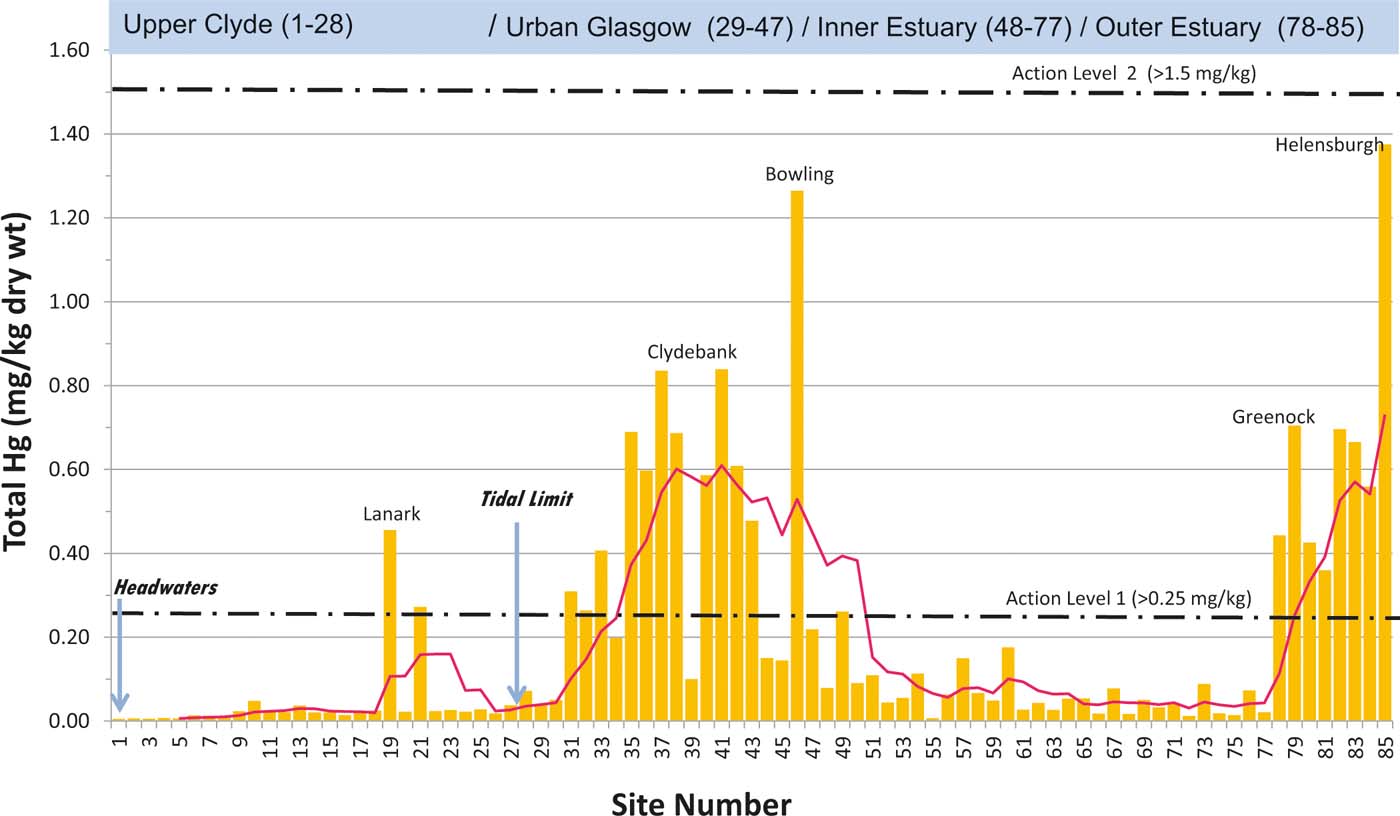
Spatial distribution of Hg in surface sediments of the River Clyde. Sediment quality Action Levels 1 and 2 are based on those reported by Marine Scotland (2011). Line represents five-point running average.

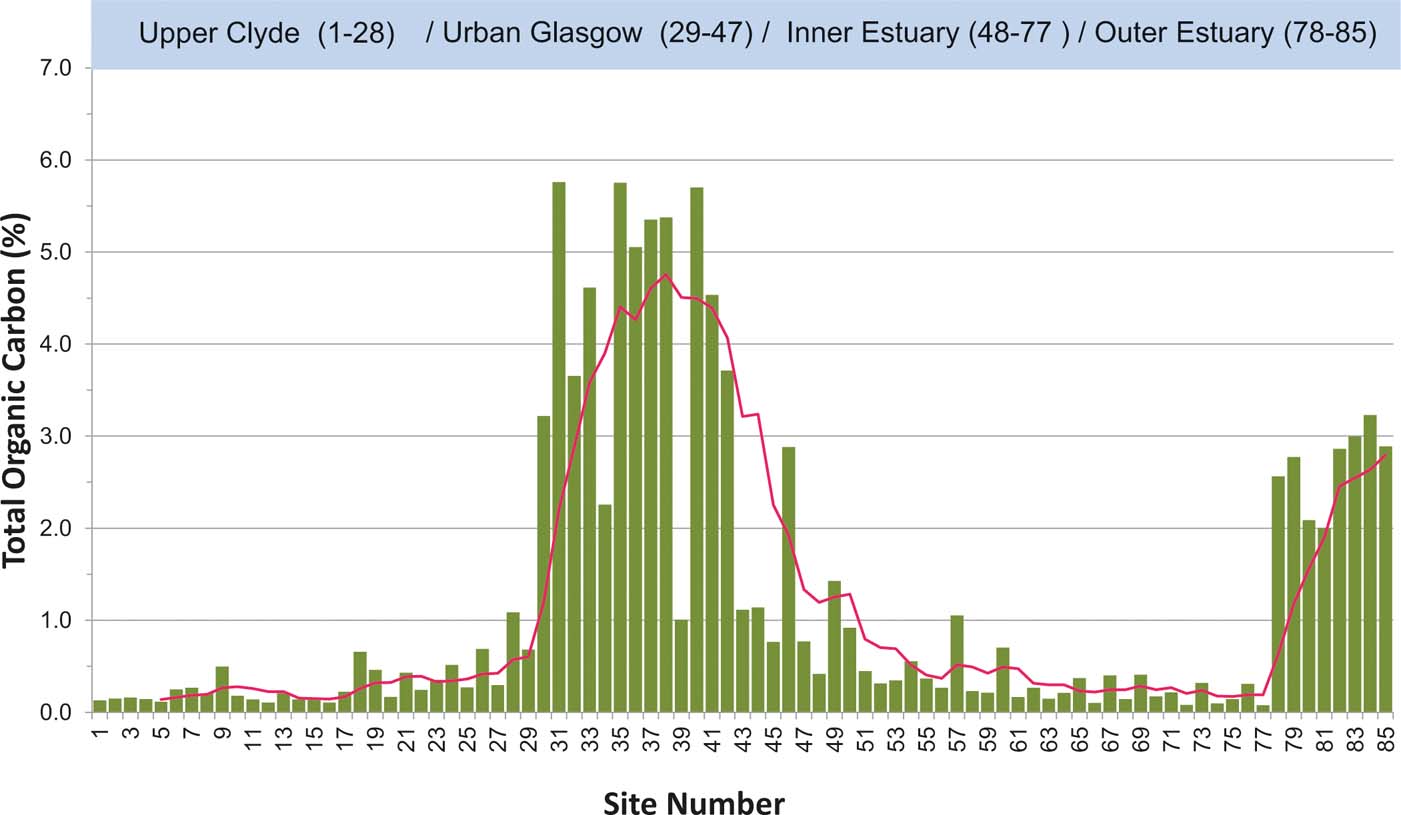
Spatial distribution of total organic carbon in surface sediments of the River Clyde.

2. Results and discussion
2.1. Spatial variation in surface sediment Hg
Total Hg concentrations of surface sediments from the Clyde river-estuarine transect ranged from 0.01 to 1.38mgkg–1 dry wt., with a mean 0.20mgkg–1 dry wt. The lowest Hg concentrations of 0.01mgkg–1 dry wt. were in the upper Clyde headwaters (sites 1–8) and those just downstream at mainly rural locations (sites 9–28), with Hg concentrations of between 0.02 and 0.07mgkg–1 dry wt. (Figs 1, 2). Overall, the Hg concentrations for the rural upper Clyde domain (sites 1–28) are considered low (mean 0.05mgkg–1 dry wt.). Two exceptions were sites 19 and 21, with Hg contents of 0.46 and 0.27mgkg–1 dry wt., respectively (Fig. 2). Site 19 is located ∼50m downstream of Lanark sewage treatment works (STW), and Site 21 a little further downstream. This suggests local point-source discharges from the STW as an explanation. Other UK river-estuarine studies, including those in the Thames estuary, have shown a similar correspondence between Hg and geographic proximity to major STW discharge points, due to controlling factors of sorption to TOC coatings and complexation with fine mineral particles (clay/silt) (Vane et al. Reference Vane, Beriro and Turner2015; Lopes dos Santos & Vane Reference Lopes dos Santos and Vane2016). In the current study, measurement of the TOC content at sites 19 (0.46%) and 21 (0.43%) did not reveal particularly high TOC values, suggesting some other factor may be controlling the sediment Hg content at these locations (Fig. 3). One explanation is that a greater input/discharge of particulate matter with high Hg contents occurs in this locality; however, the relatively low spatial sampling density of this study precludes a definitive environmental forensic conclusion.
Inspection of the sediment Hg concentrations from the urban Glasgow domain sites (29–47) directly downstream of the tidal-limit weir at Glasgow Green, an artificial under-sluice barrier built in 1901 in order to maintain the upstream water level, showed little difference to the rural background concentrations noted upstream of the weir. By contrast, a major increase in sediment Hg was found a little further downstream at Site 31, and this then increased downstream through central Glasgow City and reached elevated values at sites 37–41 at Clydebank, a major shipbuilding area (Fig. 1). Overall, the urban Glasgow city domain (sites 29–47) has higher sediment Hg values than the adjacent upstream rural upper Clyde counterparts (sites 1–28; P<0.05, t-test). The Hg concentrations in the urban Glasgow domain surface sediments are some of the highest in the Clyde, ranging from 0.04 to 1.26mgkg–1 dry wt., with a mean of 0.45mgkg–1 (Fig. 2). This clear spatial correspondence with the urban centre of Glasgow was not unexpected, given Glasgow's significant industrial heritage, which centred on shipbuilding, textile manufacture and chemical production, as well as a high degree of urbanisation. This anthropogenic association has been demonstrated previously in Clyde sediment cores using persistent and emerging organic pollutants (Vane et al. Reference Vane, Ma, Chen and Mai2010, 2011).
Figure 4a shows a boxplot comparison of sediment Hg concentration in the different reaches of the river. An ANOVA analysis of the Hg concentration in the sediment groupings indicated significant differences between the groups (P<0.001). A further TukeyHSD test showed there was no significant difference between the outer estuary and urban Glasgow groups (P>0.05). All other group pairings were significantly different (P<0.001), apart from the upper Clyde/inner estuary pairing, which was significant, but at a higher p-value (P<0.015).
Boxplot comparison of sediment total organic carbon (TOC) (a) and Hg (b) in the different reaches of the River Clyde in down-river order (left to right). Statistical methods are reported in Section 1.5.

Progressing downstream, the high sediment Hg concentrations of the urbanised reaches of Clyde were followed by a return to lower values ranging from 0.01 to 0.26mgkg–1 dry wt. (mean 0.06mgkg–1 dry wt.) throughout the inner estuary (sites 48–77; Fig. 2). This downstream decrease in Hg concentrations is explained by a general fall in present-day industrial land use (although the area is flanked by land that has seen a range of past heavy industries and receives run-off from urban conurbations, e.g., Dumbarton, Langbank). In addition, the 10-km stretch of the inner estuarine domain had lower TOC values (mean 0.36%) than the Glasgow reaches (mean 3.48%; Fig. 3), suggesting that this area of the estuary has lower overall affinity for Hg accumulation. Taken together, the consistently lower Hg contents in this portion of the Clyde are possibly explained by both lower overall input of metals such as Hg and the greater sediment dilution and differing characteristics (particle size and TOC) from the outer Clyde estuary.
The sediments of the outer estuarine domain, spanning sites 78–85, had consistently higher Hg concentrations ranging from 0.44 to 1.38mgkg–1 dry wt. relative to other sites in the Clyde, with elevated mean values of 0.65mgkg–1 dry wt. (Fig. 2). A number of factors explain this unexpected rise in sediment Hg compared to those of the adjacent inner estuarine domain. Firstly, the area has a long history of shipyards, docks and marinas situated on the southern bank at Port Glasgow and Greenock (Fig. 1). Secondly, it has been reported previously that the outer Clyde estuary received wastes from various municipal and industrial sources, including dredge spoil (Goodfellow et al. Reference Goodfellow, Cardoso, Eglinton, Dawson and Best1977). Thus, it seems probable that the increase in Hg content observed here may in part be attributed to elevated metal loadings from local anthropogenic activities, and possible remobilisation of legacy pollution. Other, less likely sources include possible sediment transport from a connecting sea loch (Gareloch), which hosts a major naval base and/or discharge from municipal inputs and industries on the northern bank, such as Helensburgh (Fig. 1).
Previous published studies of sediment-hosted Hg in the Clyde did not report this lateral geochemical rise because the study area was just outside of the Clyde survey area (Craig & Moreton Reference Craig and Moreton1986). Taken together, the total Hg data from all four aforementioned Clyde reaches – namely, rural upper Clyde, urban Glasgow, inner estuary and outer estuary – show an unusual (low–high–low–high) pattern, which can be explained by a combination of laterally changing anthropogenic pollution and controlling factors such as sorption to organic matter as well as varying hydrodynamic conditions controlling sediment dilution.
2.2. Effect of organic carbon content on Hg concentration and sediment quality criteria
Figure 4b shows a boxplot comparison of the TOC in the different reaches of the river. The ANOVA analysis of the TOC concentration in the sediment groupings (P<0.001) indicated significant differences between the groups (P<0.001). Further TukeyHSD tests showed there was no significant difference between the outer estuary and urban Glasgow groups and the upper Clyde and inner estuary groups (P>0.05). All other group pairings were significantly different (P<0.001).
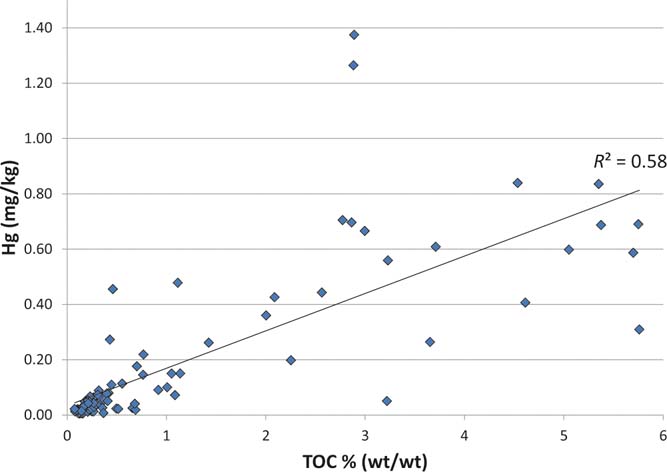
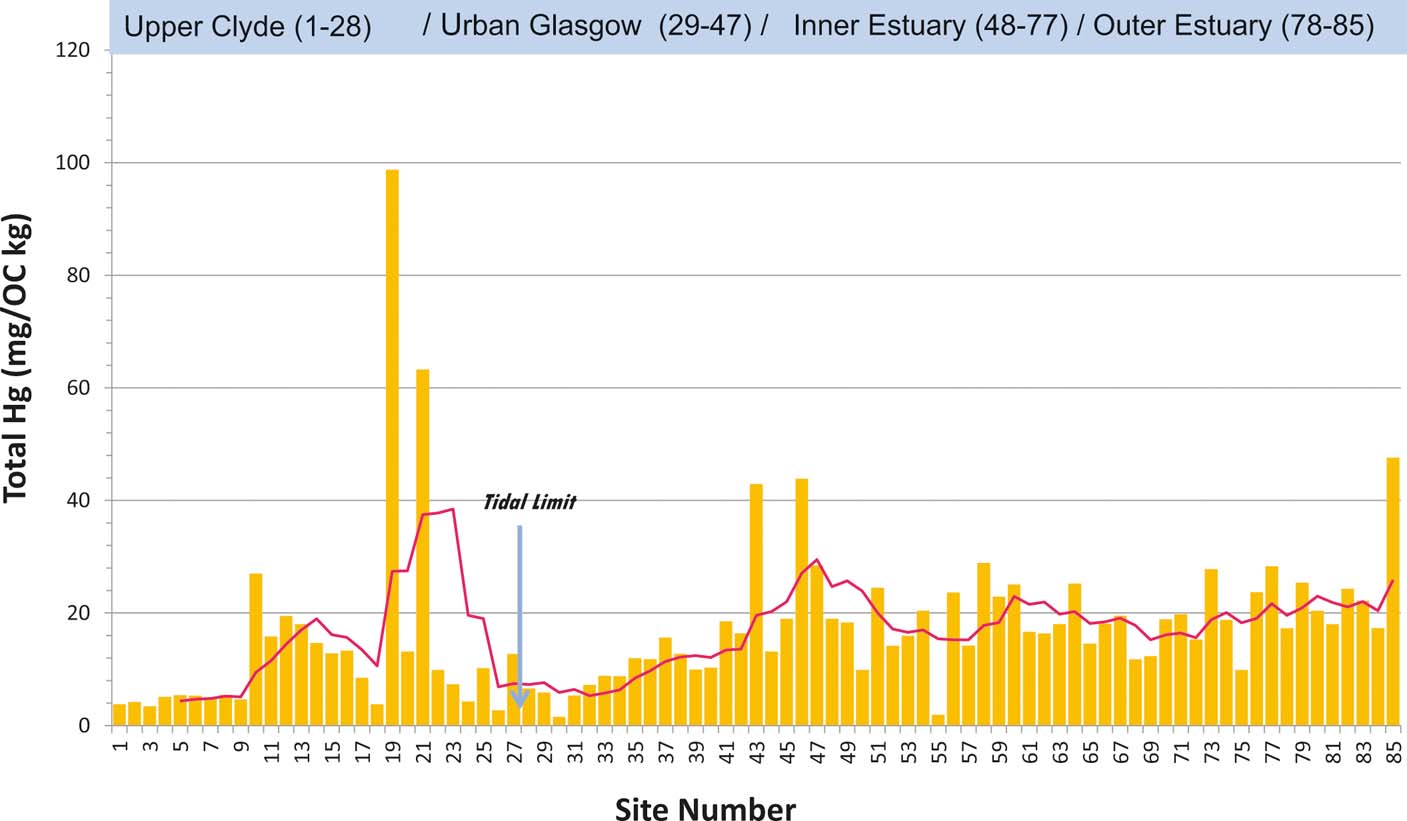
Sorption of Hg to the organic matter that typically coats mineral surfaces, by the complexation of HgII with sulphur, is demonstrated in laboratory experiments. This is not always apparent in sediments from river estuaries due the diverse range of physico-chemical conditions encountered and confounding issues of sediment mixing and co-variance with other contaminants and point sources (Haitzer et al. Reference Haitzer, Aiken and Ryan2003; Bengtsson & Picado Reference Bengtsson and Picado2008; Vane et al. Reference Vane, Beriro and Turner2015). However, given the clear low–high–low–high downstream pattern in TOC, a convincing case may be made (Fig. 3). For example, inspection of the Hg-to-TOC bi-plot for all Clyde surface sediments (n=85) and statistical analysis showed a strong Spearman's rank correlation coefficient of 0.86 (P<0.001), which confirms the idea that in the Clyde, higher amounts of pollution, including total Hg, bind to sediments with a higher TOC content (Fig. 5). Given this correlation, the total Hg concentrations were normalised to the TOC content and it was found that the upper, urban and outer estuary domains were similar (Fig. 6). It is also known that Hg contained in intertidal and sub-tidal river-estuarine sediments exhibits a strong affinity for the fine sediment fraction (clays and fine silts), as compared to coarser sediment fraction (silts and sands) (Vane et al. Reference Vane, Beriro and Turner2015). Therefore, it is plausible that some of the downstream changes in Hg values in the Clyde are also due to confounding variations in sediment size-fraction distributions (Figs 2, 4).
Bi-plot of total Hg concentration versus total organic carbon (TOC) content from River Clyde surface sediments (n=85).

Spatial distribution of Hg (total organic carbon (TOC)-normalised) in surface sediments of the River Clyde.

Comparison of the Clyde surface sediment Hg concentrations (dry wt.) against non-statutory Marine (Scotland) guidelines, designed in part to support applications for removal/disposal of sediment/dredge spoil, suggested that none of the sites surpassed 1.5mgkg–1 dry wt. (Action Level 2 threshold). Twenty-two sites fell between 0.25 and 1.5mgkg–1 dry wt. (Action Level 1), and 63 sites fell below Action Level 1 and were, therefore, of no immediate concern (<0.25mgkg–1 dry wt.). A similar conclusion may be drawn by benchmarking the data against other UK criteria (e.g., Centre for Environmental Fisheries and Aquaculture guidelines). Specifically, none of the sites exceeded >3mgkg–1 dry wt. (Action Level 2), whereas 20 sites (located in the urban Glasgow and outer estuary domains) had values between 0.3 and 3mgkg–1 dry wt. (Further Assessment Required) and 65 sites fell below the 0.3mgkg–1 dry wt. (Action Level 1). The considerable spatial (lateral) variability in Hg concentrations (non-organic carbon (OC) normalised) suggests that the urban Glasgow and outer estuary reaches are well above what might be considered background levels. However, given the Clyde's long history of heavy industrial activity, this is not entirely unexpected.
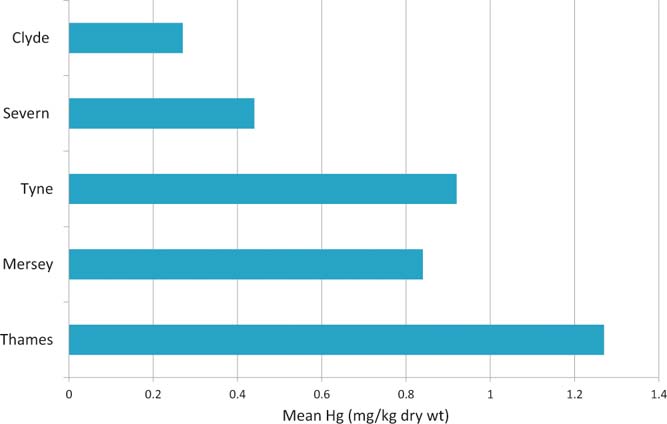
Total Hg concentrations from surface sediments of comparably large UK estuaries are presented in Figure 7. Notwithstanding confounding factors, such as varied sampling strategies (e.g., depth of grab, which can be difficult to control), analytical methodologies and differing sediment characteristics, this broad national-level comparison with the River Clyde is interesting. It suggests that the tidal portion of the Clyde examined herein (sites 29–85) has a lower mean sediment Hg content than the Thames, Tyne or Mersey rivers, but is fairly similar to the tidal reaches of the River Severn, a major estuary in the SW of the UK (Fig. 7; Bryan & Langston Reference Bryan and Langston1992; Langston et al. Reference Langston, Chesman, Burt, Hawkins, Readman and Worsfold2003; Vane et al. Reference Vane, Beriro and Turner2015).
Comparison of total Hg in surface sediments from major industrial UK estuaries. Clyde estuary (n=57; this work); Thames estuary (n=56; Vane et al. Reference Vane, Beriro and Turner2015); Mersey estuary (n=82; Vane et al. Reference Vane, Jones and Lister2009b); Tyne estuary (Bryan & Langston Reference Bryan and Langston1992). n=numbers of sediments analysed.

2.3. n-Alkanes (GC-resolved hydrocarbons)
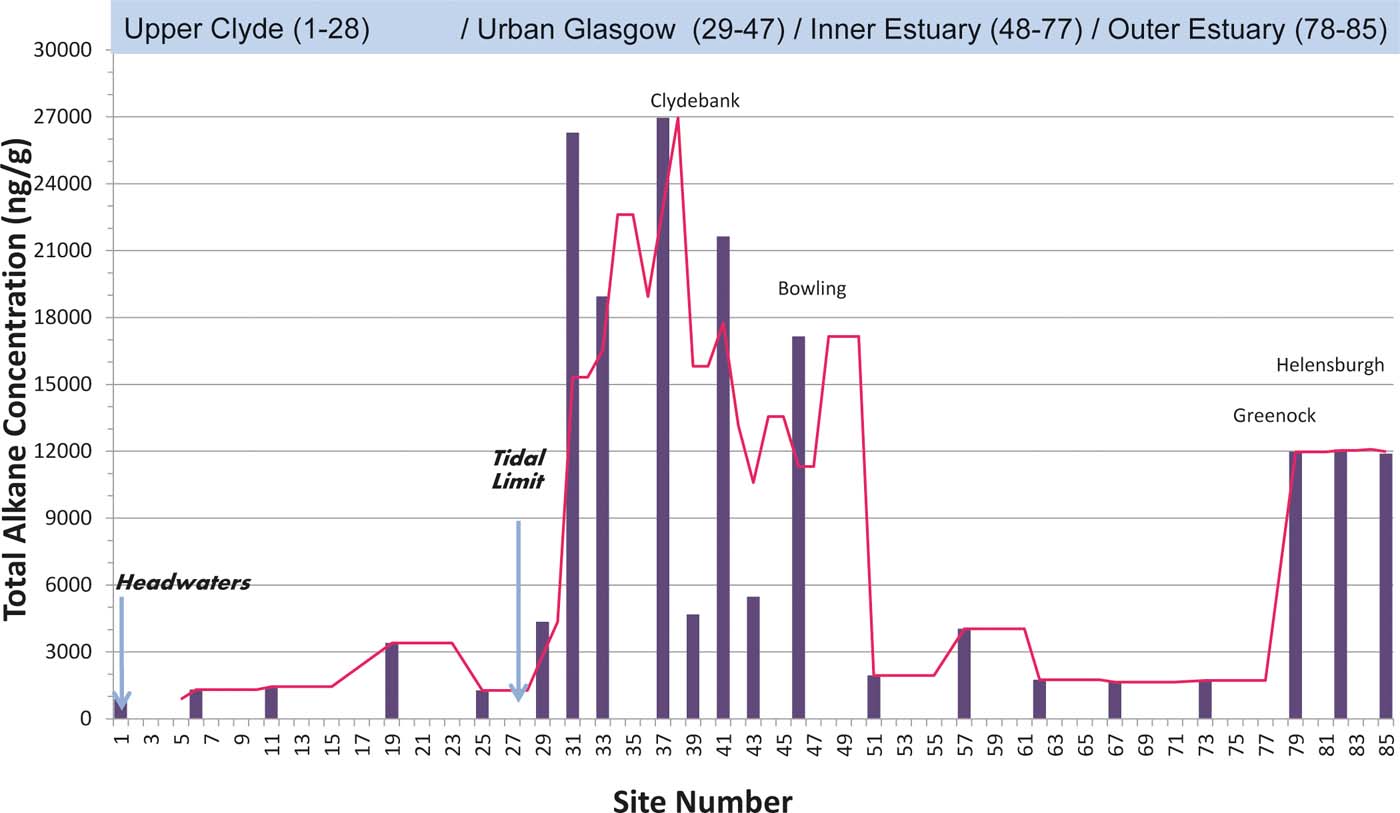
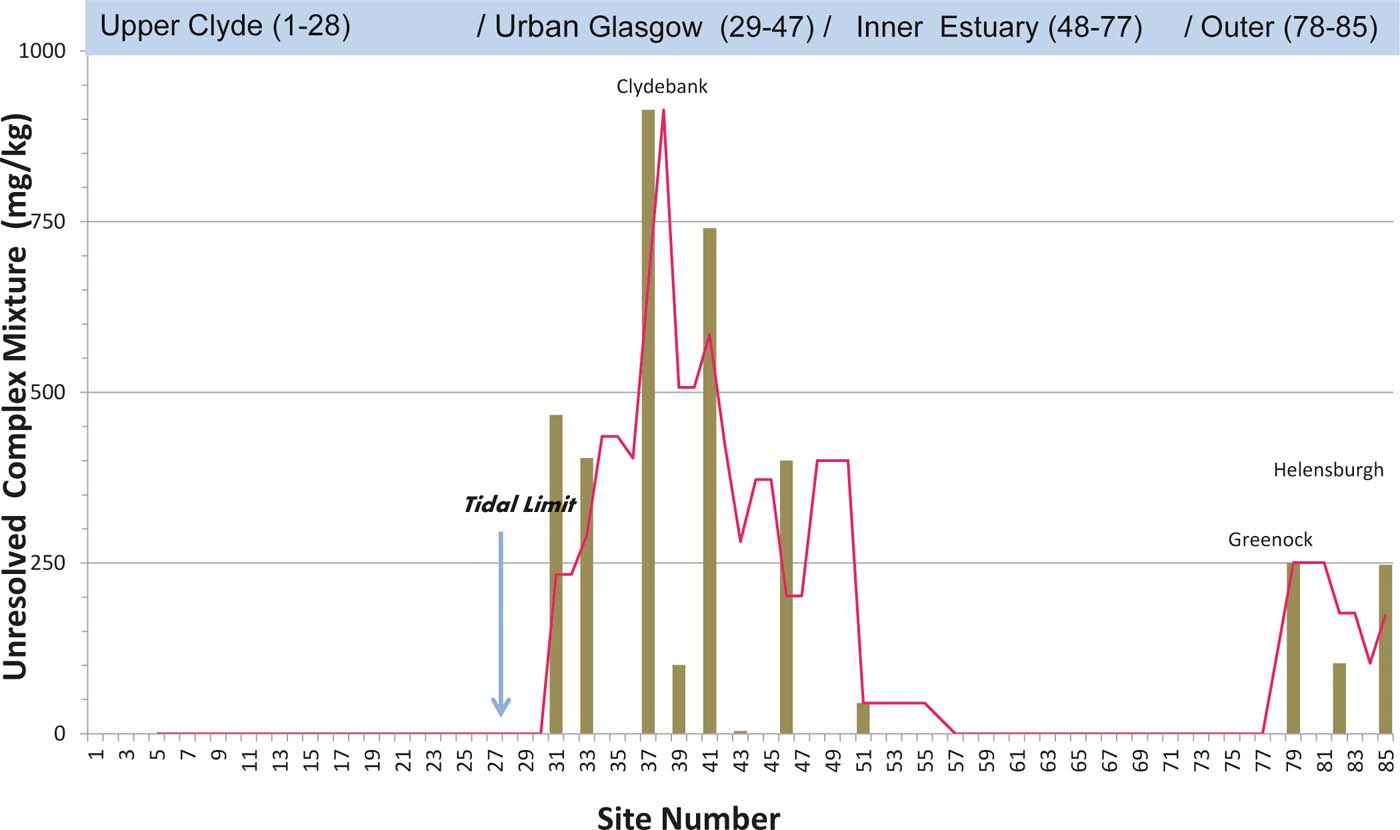
Example gas chromatograms of the saturated hydrocarbons from the upper Clyde domain (Site 6), urban Glasgow (Site 37), inner Clyde estuary (Site 67) and outer Clyde estuary Greenock–Helensburgh (Site 79) are presented in Figure 8a–d, and the total n-alkane distributions are presented in Figure 9. Inspection of the n-alkane profiles from the freshwater upper Clyde domain (Site 6) showed n-alkanes between C17 and C33, and a predominance of high molecular weight n-alkanes (C29, C31). These, together with resolved alkane concentrations of 1.3mgkg–1 dry wt., suggest natural terrestrial organic matter sources such as that from primary grass or tree leaf waxes, and/ or secondary geological natural inputs, e.g., soils and riparian peat (Eglinton & Hamilton Reference Eglinton and Hamilton1967; Lamb et al. Reference Lamb, Gonzalez, Huddart, Metcalfe, Vane and Pike2009; Rosemary & McInerney Reference Rosemary and McInerney2013; Newell et al. Reference Newell, Vane, Sorensen, Gooddy and Moss-Hayes2016). Four sites from the freshwater upper Clyde gave similar overall n-alkane concentrations of 0.88–4.35mgkg–1 dry wt., but n-alkane distributions were maximal at C22 or C24, which possibly suggests a natural bacterial contribution, or some other natural organic matter input (Grimalt & Albaiges Reference Grimalt and Albaiges1987). Hydrocarbons in the Glasgow reaches (e.g., Site 37) were mainly composed of UCMs (88%) as compared to resolved hydrocarbons (12%). For example, Site 37 gave an elevated UCM concentration of 914mgkg–1 dry wt., augmented by resolved n-alkanes at 27mgkg–1 dry wt., which ranged between C15 and C35 mgkg–1 dry wt. and maximised at C31. The isoprenoids pristane and phytane were present at higher concentrations than their C17 and C18 n-alkane counterparts, possibly due to the greater resistance of the former branched alkanes to microbial biodegradation (Fig. 8). Sediments from the inner Clyde estuary (e.g., Site 67, Fig 8c.) had n-alkane concentrations of about 1.65mgkg–1 dry wt., maximal at C29 and a flat baseline, confirming no discernible UCMs of hydrocarbons. The inner Clyde estuary sites 51, 57, 62, 67, 73 displayed a bimodal distribution with maxima at C21 and C31, and no discernible UCM, which suggested possible mixing of natural marine and terrestrial organic matter, with no discernible overprinting by anthropogenic inputs. By contrast, hydrocarbon profiles from the outer Clyde estuary (Site 79) were dominated by UCM hydrocarbons (251mgkg–1 dry wt.) and lower amounts of n-alkanes at 2mgkg–1 dry wt., which ranged between C16 and C35, with the highest n-alkane abundance at C31 (Figs 8, 9).
Example gas chromatograms of the saturated hydrocarbon fraction from different sections of the River Clyde (normalised so the integrals equal unity). (a) Site 6: upper River Clyde freshwater. (b) Site 37: Glasgow urban area. (c) Site 67: inner Clyde estuary. (d) Site 79: Clyde estuary, Greenock–Helensburgh. Sites suffering hydrocarbon pollution (b, d) show enrichment in unresolved complex mixture (UCM) ‘hump'. Abbreviations: I.S.=internal standard.

Spatial distribution of n-alkane hydrocarbons in surface sediments of the River Clyde.

2.4. Organic matter provenance (n-alkane ratios)
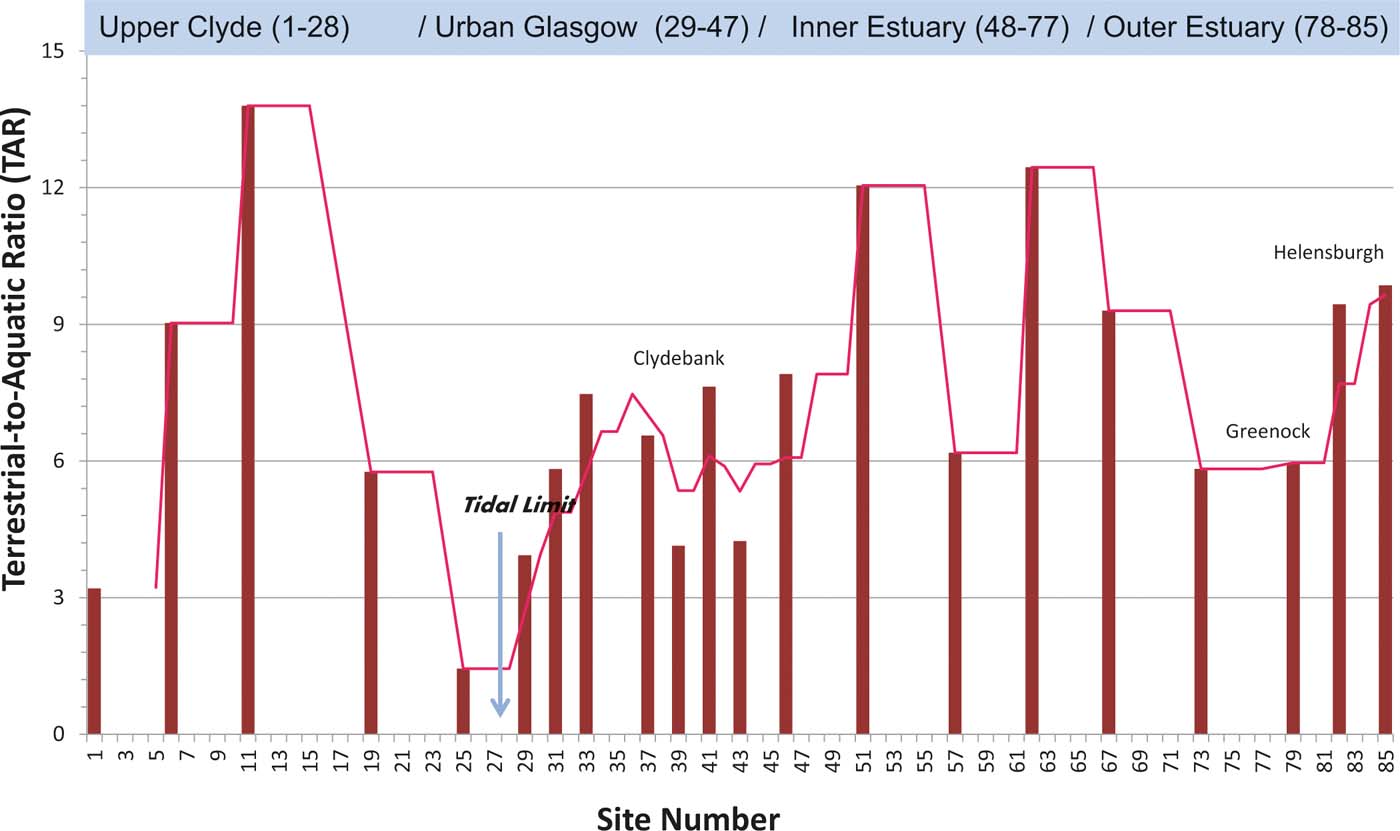
Numerous studies have shown that aquatic sources of organic matter (phytoplankton) synthesise n-alkanes centred at lower chain lengths C15, C17, C19, whereas terrestrial organic matter synthesise n-alkanes dominated by C27, C29, C31 (Eglinton & Hamilton Reference Eglinton and Hamilton1967; Rosemary & McInerney Reference Rosemary and McInerney2013). These biochemical characteristics, distilled in the Terrestrial-to-Aquatic Ratio (TAR; Meyers Reference Meyers1997) (C27 + C29 + C31)/(C15 + C17 + C19), can be used in pristine environments to infer vascular plants (TAR >1) as compared to aquatic sources (TAR <1). In the current study, the Clyde TAR values ranged from 1.44 to 13.8, which suggests that the OM in the Clyde is mainly sourced from vascular plants (Fig. 10). However, it should be considered that the TAR proxy is biased toward vascular plant assignment because aquatic OM contains lower amounts of n-alkanes than vascular plant tissues. Therefore, the TAR proxy may in some instances be insensitive to moderate increases in aquatic OM inputs. In the current study, inspection of the downstream Clyde TAR profile shows considerable variability, with higher TAR in the upper River Clyde (e.g., TAR of 9 and 13.8), suggesting input from, for example, moorland peats and/or agricultural soils (Fig. 10). However, the expected decrease in TAR downstream, corresponding to increasing aquatic OM, is not apparent. For example, the lower values (TAR 3.9–7.9) in the urban Glasgow reaches are followed downstream by a return to higher values in the inner estuary (TAR 5.8–12.5) and then a decrease in the outer estuary (TAR 5.7–9.8). This lack of correspondence with the expected TAR trend is most likely due to overprinting from anthropogenic hydrocarbon pollution, which would cause a decrease in the TAR values. Evaluation of the TAR at, or just downstream of, major Clyde tributaries (e.g., White and Black Cart Water; sites 39–41) did not show any discernible perturbation that might be expected due to the delivery and deposition of terrestrial OM (Fig. 1). This confirms the notion that the variations in TAR are caused by changes in the amount and type of anthropogenic (oil and distilled oil products)-sourced n-alkanes.
Terrestrial-to-Aquatic Ratio (TAR) in surface sediments of the River Clyde.

2.5. UCMs
Evaluation of the overall UCM and n-alkane sediment concentrations across the entire 160-km upper rural–urban–estuarine River Clyde continuum revealed clear lateral (land to sea) hydrocarbon distributions that followed a low–high–low–high (upper–urban Glasgow–inner estuary–outer estuary) trend (Fig. 11). In sites in close proximity to urban Glasgow, the UCM ‘hump' concentration ranged from 380 to 914mgkg–1 dry wt. and n-alkanes ranged from 4.70 to 27.0mgkg–1 dry wt. In the outer estuary, hydrocarbon UCM concentrations ranged from 103 to 251mgkg–1 dry wt., with total n-alkane concentrations of 11.9–12.0mgkg–1 dry wt. (Figs 8, 9, 11). Conversely, in upper freshwater Clyde sediment, the extracts had no UCM, and n-alkanes ranged between 0.82 and 4.35mgkg–1 dry wt. The inner Clyde estuary sediment extracts had no UCM (with one exception) and total n-alkanes in the range 1.7–4.0mgkg–1 dry wt. It is likely that the hydrocarbons (UCM and n-alkanes) in the urban Glasgow and outer estuary reaches originated from multiple sources, such as road run-off, discharges from shipping, industrial oil spills, coal and coal product waste, as well as waste-water effluents. The spatial concentration trends clearly suggest increased pollution from anthropogenic hydrocarbons delivered from Glasgow and, to a lesser extent, in the outer Clyde estuary in the vicinity of Greenock–Helensburgh, which mirrors that of the Hg concentrations (Fig. 2). A similar urban overprinting of the natural organics accumulating in tidal Thames sediments has been shown using naturally occurring soil and marine lipids (glycerol alkyl glycerol tetraethers), close to London's major sewage treatment discharge points (Lopes dos Santos & Vane Reference Lopes dos Santos and Vane2016).
Unresolved complex mixture (UCM) hydrocarbon concentrations in surface sediments of the River Clyde.

Comparison of mean UCM concentrations from this work (inner and outer estuarine Clyde 104–914mgkg–1) with those from other UK estuaries (Mersey 104mgkg–1, Tamar 42mgkg–1 and Dee 10mgkg–1) suggests that the Clyde would rank highest, confirming the notion that the Clyde is polluted with hydrocarbons (Readman et al. Reference Readman, Fillmann, Tolosa, Bartocci, Villeneuve, Catinni and Mee2002 and references therein). On a worldwide basis, the saturated UCM hydrocarbon concentrations from the estuarine Clyde are lower than those reported from chronically polluted sediments of the Saudi Arabian Gulf (6–5300mgkg–1) or the East Coast of the USA (8000mgkg–1), and similar to those reported for Victoria Harbour Hong Kong (56–626mgkg–1) (Readman et al. Reference Readman, Preston and Mantoura1986; White et al. Reference White, Xu, Lima, Eglinton and Reedy2005).
The toxicity of sediment bound-UCM hydrocarbons on sediment-dwelling aquatic biota is not particularly well understood, due, in part, to the presence of thousands of compounds contained within hydrocarbon UCMs (Scarlett et al. Reference Scarlett, Galloway and Rowland2007). Studies with Mytilus edulis (mussels) suggest that the aqueous aromatic fraction causes an overall reduction in health status (Booth et al. Reference Booth, Scarlett, Lewis, Belt and Rowland2008). Laboratory exposure of amphipod Corophium valuator to sediment from the Avon estuary, UK, spiked with environmentally realistic (chronic) concentrations of whole oil (500mgkg–1 dry wt.), as well as aliphatic (saturate) fraction (133–417mgkg–1 dry wt.), showed observable reduction in growth and reproduction after 35 days of incubation (Scarlett et al. Reference Scarlett, Galloway and Rowland2007). Significant population-level changes in the weathered oil-spiked sediments were attributed to the cumulative effect of numerous UCM hydrocarbon compounds, even though the concentration of each compound class was low individually. Consequently, it has been suggested that both saturate (aliphatic) and aromatic UCM hydrocarbons elicit adverse effects on biota and should, therefore, be considered in sediment quality risk assessments. Given the sediment exposure tests of Scarlett et al. (Reference Scarlett, Galloway and Rowland2007), it is plausible that the UCM concentrations observed at the majority of sites in the urban Glasgow reaches (e.g., sites 31, 33, 37, 41, 46; Figs 1, 11) may have a potentially toxic effect on sensitive sediment-dwelling biota.
2.6. Chemical Anthropocene
The distribution of Hg and hydrocarbons within the Clyde catchment and estuary sediments has direct relevance to the putative Anthropocene epoch. The Anthropocene is a newly proposed geological epoch (Crutzen & Stormer Reference Crutzen and Stoermer2000; Zalasiewicz et al. Reference Zalasiewicz, Williams, Smith, Barry, Bown, Rawson, Brenchley, Cantrill, Coe, Cope, Gale, Gibbard, Gregory, Hounslow, Knox, Powell, Waters, Marshall, Oates and Stone2008; Waters et al. Reference Waters, Zalasiewicz, Williams, Ellis, Snelling, Waters, Zalasiewicz, Williams, Ellis and Snelling2014) that reflects the global signature of the human process. In order to ratify the Anthropocene as a formal geological epoch, the International Commission on Stratigraphy (the formal administrative body that sanctions the geological timescale) requires the existence of a permanent, global signal, distinct to the human process and that has a high potential of preservation in the geological record (Zalasiewicz et al. Reference Zalasiewicz, Williams, Fortey, Smith, Barry, Coe, Bown, Gale, Gibbard, Gregory, Hounslow, Kerr, Pearson, Knox, Powell, Waters, Marshall, Oates, Rawson and Stone2011). One of the best candidate signatures is provided by geochemical-based datum-markers, such as long-lived organic pollutants and metals that are either entirely man-made or well above the natural background (Vane et al. Reference Vane, Chenery, Harrison, Kim, Moss-Hayes and Jones2011; Gałuszka et al. Reference Gałuszka, Migaszewski, Zalasiewicz, Waters, Zalasiewicz, Williams, Ellis and Snelling2014). These organic pollutants and metals are bonded to fine fluvial sediments within sedimentary environments that are likely to be preserved in the face of human-related sea-level rise (e.g., IPCC Reference Stocker, Qin and Plattner2013; Kemp et al. Reference Kemp, Bernhardt, Horton, Kopp, Vane, Peltier, Hawkes, Donnelly, Parnell and Cahill2014; Khan et al. Reference Khan, Vane, Horton, Hillier, Riding and Kendrick2015), and land subsidence or compaction of low-lying wetlands (Syvitski et al. Reference Syvitski, Kettner, Overeem, Hutton, Hannon, Brakenridge, Day, Vörösmarty, Saito, Giosan and Nicholls2009; Kemp et al. Reference Kemp, Hawkes, Donnelly, Vane, Horton, Hill, Anisfield, Parnell and Cahill2015; Brain et al. Reference Brain, Kemp, Hawkes, Engelhart, Vane, Cahill, Hill, Engelhart, Donnelly and Horton2017). Consequently, a number of studies have explored the possibility of using organic pollution profiles in the Clyde estuary as an exemplar, due, in part, to its long industrial activity, coupled with industrial–urban expansion in the 19th and 20th centuries and changing land use in the 21st Century (Vane et al. Reference Vane, Ma, Chen and Mai2010, Reference Vane, Chenery, Harrison, Kim, Moss-Hayes and Jones2011). The results reported here (Figs 2–10) demonstrate that the relevant chemical profiles tend to extend downstream but not upstream of the relatively large coastal city (Glasgow) and are clearly related to human activities.
3. Conclusions
(1) The spatial distribution of total Hg in surface sediments of the River Clyde follows a distinct pattern of very low concentrations (0.05mgkg–1) in the upper freshwater Clyde, high concentrations in the urban Glasgow section of the river (0.45mgkg–1), low in the inner estuary (0.10mgkg–1) and high in the outer estuary (0.65mgkg–1). The elevated Hg concentrations in the Glasgow city reaches are attributed to numerous point-source inputs and a legacy of industrial activities in and around the Glasgow urban–industrial centre. The pattern of elevated sediment-Hg extends about 5km downstream of central Glasgow, reflecting the location of past and present industry, as well as the general movement of all sediments downstream, and sorption of Hg to natural organic carbon. The high sediment-Hg concentrations in the outer estuary are attributed to either past dredge/dumping activities and/or pollution from Greenock/Port Glasgow. On average, the Hg concentrations in the urban/anthropogenic portions of the Clyde are about ten times higher than the background. Given that many of the world's coastal mega-cities have ports situated someway downstream of the main urban centre, we hypothesise that this lateral spatial pattern (low–high (city)–low–high (port)) may be observed globally (e.g., Vancouver, Long Beach Shanghai, Shenzhen, Ningbo Singapore, Tokyo, Kerlang, Port Said Rotterdam, Antwerp, Bremerhaven, Southampton, etc.).
(2) From a river estuary sediment management standpoint, the sediment-hosted Hg concentrations of the upper Clyde are of no immediate concern, with the exception of two sites close to Lanark STW. Conversely, the majority of sediments in close proximity to Glasgow city had Hg concentrations greater than Marine Scotland Action Level 1 (>0.25mgkg–1), but were lower than the conservative Action Level 2 (>1.5mgkg–1). These may require a response; if they were dredged, they could potentially be classified as unsuitable for disposal at sea. The Glasgow and outer estuary Hg sediment concentrations reported here suggest that some adverse ecological effect may be possible, but fall between these clear-cut assessment benchmarks.
(3) Assessment of the hydrocarbon content of the Clyde (n-alkane-resolved hydrocarbons and UCM-unresolved hydrocarbons) showed clear interference from petrogenic hydrocarbons. These distinctions were based on the presence or absence of a quantitatively dominant UCM (‘hump'), which indicates overprinting of the natural hydrocarbon signature by refined petroleum products, lubricating oils and those components of crude oils that are relatively resistant to biodegradation. Although measurement of individual compounds within the UCM is technically challenging, we conclude that a simple quantification of the UCM provides a rapid and simple way of identifying urban pollution in river-estuarine sediments. Based on previously published toxicological studies, the concentration of UCM in sediments from the Glasgow urban and outer estuary reaches of the Clyde may have adverse effects on sediment-dwelling biota (Booth et al. Reference Booth, Scarlett, Lewis, Belt and Rowland2008).
(4) This study clearly demonstrates the need to evaluate organic and heavy metal pollution as well as natural organic matter in order to obtain a better understanding of the overall sediment quality. The distribution of the Clyde's lateral, bimodal organic and metal pollution emphasises the impact of cities on fluvial/estuarine/coastal sediments, and the need to define antecedent conditions, necessitating measurements at the source and sink (freshwater-estuarine and marine domains).
4. Acknowledgements
The Clyde estuary samples used in this study were collected during a survey co-funded by the British Geological Survey (BGS) Estuarine Contamination project and Glasgow City Council. Thanks are due to the Scottish Environment Protection Agency (SEPA) who provided ship time (captain and crew) on the research vessel Endrick II for the estuary survey. The collection of upper Clyde sediments was co-funded by the BGS Geochemical Baseline Survey of the Environment (G-BASE) and Estuarine Contamination projects. BGS colleagues Fiona Fordyce, Dave Jones, Bob Lister, Sarah Nice and Andreas Scheib and all G-BASE student volunteers are thanked for their assistance in sample collection. Support for this work was provided by Diarmad Campbell (CUSP). This paper is published with the permission of the Executive Director of the British Geological Survey, Natural Environment Research Council (NERC). BGS/NERC reference: PRP18/023.