INTRODUCTION
Lord George Macartney, Britain's first official ambassador to China, arrived in Tianjin, the port closest to the capital, in 1792. He brought with him gifts for Emperor Qianlong's eightieth birthday—eighty being the most important age in Chinese culture—in the hope that these would help persuade the emperor to open the gates to his mysterious empire and permit trade with Britain, granting the British access to the Chinese market and the remarkable potential value it represented. It had been a long and circuitous journey to the ancient Eastern empire, but the group received a warm welcome on their arrival from the local government at Dagu, a town on the mouth of the Hai River. They transferred to several smaller, flat-bottomed Chinese boats to sail up the Hai River, at that time the only waterway to Beijing.
Quite in contrast to the descriptions of landscapes recorded by seventeenth-century missionaries to China, the portrait painted by Macartney's party featured no idyllic scenery or impressive structures. They recounted seeing nothing but a handful of flat clay houses scattered along the riverbanks, swamps, and a wide, desolate terrain stretching before them: “The land, on both sides, was low and flat; and instead of hedge-rows, trenches were dug to mark the boundaries of property.”Footnote 1 Following a voyage of about ninety miles, they arrived in the city of Tianjin, where small boats dotted the river and countless warehouses and workshops lined the banks, the rest of the city stretching out behind them. The area's large population was evident from the crowds who gathered at the riverside to catch a glimpse of the “Red Hairs.” Some even waded into the shallow water to get a better view of the ambassador's boats.
Though in no way comparable to that of many large European port cities, Tianjin's prosperous and bustling trade left a lasting impression on the British mission. They later noted that it had been the busiest city they had seen during their journey through China. John Barrow, a member of Macartney's embassy, recalled his time in China fondly: “Had we returned to Europe, without proceeding farther in the country than Tien-sing [Tianjin], a most lively impression would always have remained on my mind in favour of the Chinese.”Footnote 2 The details recorded by the members of Macartney's group provide a lively impression of an eighteenth-century Chinese city, one characterized not only by its vibrant population, but by its rivers and swamps—a city of exchange, commerce, and, most importantly, water.
Macartney certainly recognized the potential value of Tianjin's location. The city is a transportation hub, providing river, land, and sea connections, and it was the closest port to the capital of the Chinese Empire. Macartney added Tianjin to his list of sites for inspection, and it was included among the ports he named in his letter to Emperor Qianlong, in which he presented his request that trade be opened.Footnote 3 Qianlong regarded this request with suspicion and ultimately refused it entirely. The group was then ejected from China, marking the first failure in official communication between the two countries.
Macartney's visit coincided with the most prosperous period in the history of the Chinese Empire—or rather its end, as the period also marked the beginning of the great Eastern empire's decline. This refusal to open trade was in fact interpreted by Western observers as a sign that the great empire was facing an economic downturn and would be surpassed by the West in the future.Footnote 4 Though it failed to achieve its objectives, Macartney's visit did succeed in laying bare an ancient Eastern land that had hitherto remained fairly hidden and closed to the West. China was no longer a mysterious land of ethereal beauty, as it had been described in earlier accounts and tales. Behind the empire's mask, which projected an image of strength and prosperity, the country's poverty and economic stagnation, and the widespread obstinacy of its officials, now lay exposed. All of these things had been witnessed by Western visitors whose compatriots would now turn to war as the means to achieve those goals they had failed to realize through diplomacy.
Other forms of information were also brought back to the West, including specific knowledge vital to the functioning of a trading port and transportation hub like Tianjin. The city's model suitability for this role meant that after China had been defeated in the Opium War, Tianjin was named one of the resulting treaty ports, and it finally opened to the outside world in 1860. The important role the city has played in the transportation of goods by water since then is well demonstrated in the improvements and development that have been undertaken in Tianjin.
Water, the key factor in the rise of Tianjin, undoubtedly bestowed advantages, but it also posed serious challenges for the city and its residents. Tianjin, the largest port city in Northern China, is referred to in Chinese folklore as “where one hundred rivers end.” The Hai River, Tianjin's so-called “mother river,”Footnote 5 has at least five major tributaries, each with multiple tributaries of their own of varyied lengths. During the early modern period, the land on which Tianjin sits drew water from over one hundred rivers thanks to its low elevation and coastal location. For this reason, the very same water that provided the city with its convenient transportation links also created a serious problem in terms of urban water drainage projects.
Over the past century, Tianjin's residents have introduced a number of different techniques to drain wastewater. None have changed the city as much as the sewer pipelines which first appeared in the concession area shortly after foreign settlers arrived. At this time, Tianjin was (passively) entering a period of modernization on its way to becoming a clean, modern metropolis.Footnote 6 At the start of this effort, the city's moat was choked with garbage and human waste. The four city walls were torn down and removed alongside the refuse that had piled up all along them. New public lavatories were built, additional waterways were dredged, and old ones underwent maintenance. By the mid-twentieth century, Tianjin (and its concession area in particular) had come to resemble much more closely a European or American city.
Modernization certainly played a role in the growth of the city's population and provided residents, old and new, with a much-improved living environment. From the late Qing dynasty to Republican China, Chinese and foreign residents, who during this period shared a conviction of the importance of modernizing municipal facilities, decried traditional waste disposal methods as unsanitary and harmful. Large cities such as Tianjin were particularly subject to criticism. Tianjin was already a densely populated city by this time. In 1846, the year of the first population census for Tianjin, there were 442,342 residents in the larger Tianjin County 天津县.Footnote 7 A more narrow focus on the urban area at that time reveals 198,715 people living in the districts lying at the confluence of the region's three major rivers.Footnote 8 The old forms of waste disposal in use in the city of Tianjin were therefore responsible for discharging daily wastewater produced by nearly 200,000 people. And yet, these pre-modern systems did in fact manage to transport this considerable volume of sewage and leave the city clean enough to be habitable and even attractive to a large number of people.
This article will explore the nature and function of this traditional system, and will situate it within the complex social context of Tianjin to provide a more comprehensive understanding of the ways in which these wastewater disposal methods successfully, or sometimes less successfully, met the needs of Tianjin's population. I will discuss the traditional concepts guiding the early drainage system's design and operation as well as specific methods of disposal and wastewater treatment during the late Qing dynasty period and in Republican Tianjin.
WHAT DOES A NORTHERN “WATER CITY”Footnote 9 LOOK LIKE?
Like many countries, China has a number of cities that are defined and distinguished by the bodies of water and waterways they sit on or beside. But the archetypal example in China is a small, southern town caressed by soft rain and gentle winds, a romantic tableau with small sampans dotting a beautiful river lined with traditional wooden two- or three-story buildings. These cities do indeed exist – most are located in Jiangnan (the lands immediately south of the Changjiang River), especially in the Changjiang Delta. In the north, however, cities are often subjected to constant sand storms and drought. Cities located in the stretch of land from the far northwest to Bohai Bay commonly suffer water shortages as a result of the region's arid weather and proximity to the desert. “Deep water and thick land” 水深土厚Footnote 10 is an old Chinese saying applied to the northern environment, where water is hidden deep underground and is usually of poor quality. Tianjin, however, is an exception to this rule.
Tianjin has held a special place in China's long history for many reasons. It is an extremely rare example of a water-rich city in the country's north, one that has often been spared the effects of the droughts that have ravaged its neighbors. Access to water was the very reason it was built. In 1404, Emperor Yongle of the Ming dynasty decided to build a guard city for his new capital (modern-day Beijing). For this city he chose a site in the Hai River basin at the confluence of three rivers; this site was also perfectly located to serve as Northern China's most important transportation hub, connecting the sea to the east, the Grand Canal 大运河Footnote 11 to the south, and the capital to the west. For this reason, it is the only city dating from that period for which exact records of its construction were kept and preserved.Footnote 12
It is said that Tianjin is located at the “end tip” of nine rivers, but in Chinese, the number nine, like the numbers one hundred and one thousand, also means “many.” This saying could, therefore, refer to the multiple upstream branches and tributaries of the Hai River that bring a wealth of water to Tianjin.
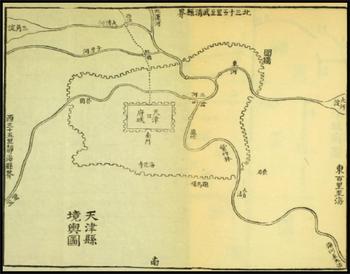
On the map of Tianjin as it appeared in 1884 (Figure 1), three rivers meet to the northeast of the square walled city. Merchants from different parts of China traveled to Tianjin by means of these waterways, many deciding to settle along the Hai River. During this time, Tianjin developed rapidly, growing from a military settlement into a flourishing commercial center and water transportation hub for the whole of the Qing dynasty's territory. But while water brought commercial prosperity and a diverse population to the city, it also brought considerable problems for Tianjin's old city.
The square walled city Tianjin and the Hai River.

A total of 1,090 km in length, the Hai River is prone to frequent floods, partly due to the region's continental monsoon climate. Tianjin is located to the southwest of the flat, elevated terrain where several tributaries meet the Hai River, and it lies only sixty km from the Bohai Sea. Its annual rainfall does not exceed 500–800 mm, which is less than other cities along the eastern coast of China. Though the total amount of rainfall is fairly negligible, it is concentrated in June, July, and August, which means floods are twice as likely to occur in the summer than in the rest of the year. Flooding is a frequent occurrence: in the 109 years between 1840 and 1948, Tianjin experienced a total of 102 floods.Footnote 13
Tianjin is a city caught between river and sea, and every inch of its land is soaked in water. The low, flat river basin has an average elevation of only 10 m, which creates serious difficulties in water drainage and once made Tianjin famous for its ponds and swamps. Those ponds and lakes constitute the typical water landscape of Tianjin, which is still reflected in today's local place names, such as wa 洼 (depression pond), gu 沽 (river), and dian 淀 (shallow lake).Footnote 14 These names are much more commonly used in Tianjin than in other Chinese cities. In addition to shaping the city's culture, these low-lying lakes have played a complicated role in the city's natural flood control system. When floods occur, the lakes and ponds can retain a significant amount of the floodwater, assisting in flood discharge to a certain extent. In this way, they function as a natural flood regulation and storage subsystem.Footnote 15
“Yinhe tushuo” 引河图说(The illustrated diversion canals),Footnote 16 published in 1846, describes the effects of typical flooding as it regularly occurred in Tianjin:
The southwest part of the city is an especially low-lying area … when it rains, the canal water spills out of the bank eastward, while the downstream sea tide runs westward. The overflowing waters poured into depression areas, which were hard to drain and did not dry out even after a few years. It was impossible to grow anything on that land.
Though the low-lying lands can store floodwater, they cannot be easily drained. To solve the problems associated with draining this impounded water, the local government excavated a number of diversion canals to link these lakes to the Hai River. These silted up far too easily, however, and were too costly and labor-intensive to maintain.
As is the norm for many Chinese cities, Tianjin also boasts of its eight most famous views,Footnote 17 which are selected by local poets and mostly related to water—the rivers, lakes, and depression ponds inside and outside of the city. Some Chinese poems describe Tianjin in the same way southern, water-rich cities tend to be portrayed, with fishermen in their boats floating on the lake, humming beautiful songs while the sun sets over the glistening water. Similar scenery, however, is in no way a guarantee of a similar water environment. Compared to the waters of southern cities, most ponds and lakes in Tianjin—especially the temporary depression lakes filled with flood and rain water—are stagnant. This water does not readily flow across the low, flat lands of the region without human assistance.
There was no scientific data recorded in the Qing dynasty, so it is hard to find any clear or precise evidence of the water quality in Tianjin's ponds and lakes. We can, however, extrapolate from the facts we do have regarding this city at the end of the nineteenth century. Tianjin had a large population and many low, easily water-logged areas, plus it faced grave difficulties with respect to water drainage due to its geography. There were consistently large volumes of water stored in the city's depression areas and a possibly large amount of urban wastewater, which was very difficult to discharge from the town.
IS WASTEWATER A PROBLEM?
Alexander Michie, a British businessman, contributor to newspapers and learned journals, and member of the first group visiting the British concession in Tianjin, expressed his utter disappointment with the poor hygienic conditions he discovered there in 1888. The land into which the concession had been extended, the new Tianjin (or “Tientsin” in the romanized spelling of the time), appeared to him to be little more than swampland and narrow ditches filled with dirty water.Footnote 18
Western records on Tianjin in the late nineteenth century substantiate Michie's conclusion that “the city of Tientsin was one of the dirtiest, most repulsive, and busiest commercial cities of China.”Footnote 19 Among the many problems related to sanitation, the early colonists worried most about water. On the one hand, water was plentiful, to be found almost everywhere in the city; on the other, the quality of all this water was dubious at best. They were shocked when they awoke to see townspeople emptying their nightsoil vessels in practically the same spot where others were drawing water to make their breakfast tea. They concluded that the river must be full of wastewater,Footnote 20 and accused the Tianjinese of drinking what amounted to nothing less than diluted sewage.
The Danish vice-admiral Steen Bille arrived in Tianjin on a steamship named “Nansing” in July 1864, a few years after the British and French concessions were established. His very brief visit coincided with the hottest month of the year in Tianjin, and this did not give him a favorable impression of the city at all: the Grand Canal, a structure of impressive antiquity, appeared to him to be a deep ditch overflowing with garbage, and he was altogether disgusted by conditions in the city.Footnote 21 He was surprised to find the residents of Tianjin to be in good health in spite of the extreme population density.
Bille was not unusual in his assessment of Tianjin. About thirty years later, the concession's local newspaper, Peking and Tientsin Times, contained a highly visceral report penned by a foreign resident. The anxious reader had accidentally visited the Hai's banks and witnessed Chinese boatmen drinking water directly from the river using a ladle as well as Tianjinese using buckets to collect river water—and emptying buckets of their waste into the river. He “shuddered with horror” at the sight, as if he could actually see “the typhoid germs” latching onto each person, whence they were “conveyed into his palatial residence, climbed into his bed, smeared over his floors, mixed with his tea.”
“I am not a very decided individual at the best of times,” the reader concluded, “but am absolutely certain of two things, the one is death, the other, that the Tientsiners are the thickest skinned white men that exist upon this globe. My reason for this latter complimentary remark is that they habitually bathe in, and drink diluted sewage not only with complacency but with apparent relish.”Footnote 22 According to Per Laurence Oliphant's account, the smell of the city was, if not quite as bad as that of the southern Chinese cities, still quite off-putting and unpleasant.Footnote 23 The odor may well have originated in the excrement piled up in hidden corners or in the various types of wastewater flowing into and through paths and waterways throughout the city. One Japanese visitor concluded that the Tianjinese “didn't have any concept, facilities, and ideas of modern sanitation.”Footnote 24
So where did wastewater aggregate inside the city of Tianjin? In contrast to today, most of old Tianjin's population was settled in a limited area along the riverbanks at the confluence of the three rivers and inside the walled city. Late imperial Tianjin was a densely populated city that produced an enormous amount of wastewater every day. Because of the challenges associated with effectively discharging the quantities being produced, this wastewater ended up collecting in puddles throughout the city.
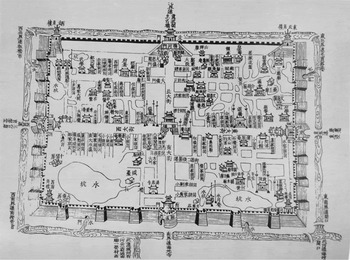
We can gain a better understanding of the problems related to drainage by taking a closer look at the old city's moat system, for example. A map of Tianjin from the late Qing dynasty (Figure 2) clearly identifies how water has accumulated at each corner of the square, walled city; these are linked in turn to the moat outside the city walls by four water gates. The moat itself is connected to the Hai River by way of a short canal with two water locks, which had been built at the southeastern corner of the walled city. The moat, first constructed during the Ming dynasty for military purposes, was intended to divert fresh water from the Hai River to the city. Written on a stone plaque above the water lock were the words “yinji shoufu” 引汲受福,Footnote 25—“take water and be blessed”—a reflection of the citizens’ aspirations in building the canal.
Map of Tianjin walled city.

In reality, the moat system functioned not at all as its builders had intended. Instead of clean water, it was domestic wastewater that filled the pools, and the moat became a sewer. The water lock was opened only when the tide was strong enough to push river water into the canal to dilute the sewage. Both inside and outside of the walled city, Tianjin was dominated by ponds, lakes, and variously sized depressions filled with unclean water of diverse origins, creating a complicated water landscape—and indeed, odor.
Was this water environmentally hazardous? Although foreigners worried about the safety of Tianjin's drinking water, local documents do not indicate that local-born residents were anxious about their water environment. According to Ruth Rogaski, Tianjinese in the late nineteenth century did not consider their urban environment to be harmful.Footnote 26 On the contrary, those wastewater-filled ponds, ditches, and rivers were considered a notable feature of Tianjin, a symbol of the city's abundant water.
Tianjin's access to plentiful water meant that it did not share the constraints faced by most cities in Northern China, which frequently found themselves suffering from droughts. It is for this reason, as was mentioned above, that many literary-minded Chinese compared Tianjin to water-rich towns in the south of China. This comparison even extended to suggesting similarities with the south in terms of rice production. Poets praised the beautiful scenes created by Tianjin's ponds, with one poet enthusing:
If not for the foreigners’ complaints, a reader of this poem would have no idea that the waters which here receive such high praise almost certainly contained a great deal of wastewater. By the early Republican period, however, some members of the Chinese elite, who were among the first in the country to learn about Western sanitary practices, had penned a number of articles expressing concerns about their compatriots’ living conditions. One suggested, undoubtedly echoing a stance assumed by many of his colleagues as well, that “wastewater is as harmful to human beings as drought and war, especially in a populous city.”Footnote 28
These critical comments by Chinese observers emerged no earlier than the establishment of the concession, and they primarily appeared in early twentieth-century municipal publications on city sanitation management. As was the case with many intellectuals during this period, these elites were dissatisfied with the contemporary state of urban development and were in search of new approaches for transforming the Chinese city into a truly modern metropolis.
The arguments they put forward took an unconventional form, combining Western knowledge with Chinese culture in an attempt to explain the Chinese residents’ tolerance of the unhealthy aspects of their environment. They argued that the Chinese made relatively few demands with regard to sanitation as a result of the influence of Confucian and Taoist ideologies, which encouraged people to live uncomplicated lives: they “advocated simplicity and spontaneity, pursuing spiritual meaning rather than practical significance.”Footnote 29 The municipal papers reflect the emergence among Chinese observers of an awareness of the health hazards posed by wastewater and, equally, the widespread willingness of the general population to ignore these hazards.
To put it somewhat bluntly: Before the dawn of a modern concept of sanitation, the Tianjinese were living in hygienic chaos. But there are two immediate objections to this crude characterization. First, Tianjin was a large commercial city long before any Westerners arrived. We should recall that according to the 1846 census, 198,715 people lived in the central urban area of Tianjin.Footnote 30 Could such a large city with a high population density and mobility have maintained this population and sustained additional growth without having had any proper wastewater disposal systems whatsoever?
The second factor to consider is whether Chinese standards of cleanliness simply do not align neatly with those of the West. Even within China, various cultures and polities throughout Chinese history certainly possessed different sanitation standards. Until relatively recently there was no character in the Chinese vocabulary that corresponded to the meaning of the English word “hygiene.” Weisheng 卫生 was originally used for yangsheng 养生, a term from Taoist philosophy which means to preserve one's health. It was the Japanese who used it to translate the modern idea of hygiene and health. Before the widespread acceptance of the germ theory of disease, people proposed a wide variety of avenues for the transmission of diseases. Just as Americans in the early nineteenth century would link a disease to a certain group of people,Footnote 31 Chinese used qi 气, a force they believed to widely exist in the universe, to explain disease. According to this theory, positive qi can prevent illness, while evil qi leads to infection, and a disorder of qi inside the body will cause different kinds of physical discomfort. In traditional Chinese thought, human excrement and sewage, though filthy, are not linked directly to fatal disease. And in general, the Chinese traditional concept of weisheng is associated more with maintaining and caring for the health of an individual, not a concern for public or population-based health. From this perspective, it is understandable how Western visitors, unfamiliar with Chinese conceptions of the environment and human health as they existed at the beginning of the modern era, automatically doubted, criticized, and condemned practices they did not comprehend.
IS WASTEWATER A WASTE?
Wastewater in Chinese cities was usually referred to as huishui 秽水 (literally translated as “dirty water”) during the nineteenth and twentieth centuries. The term was somewhat broadly defined. Waste was divided into three categories in the late Qing dynasty period and in Republican Tianjin: huitu 秽土 (“dirty earth”), fentu 粪土 (“feces”), and huishui 秽水 (“dirty water”). Huitu encompassed normal solid garbage, such as dust, dirt, leaves, and other types of dry and solid waste; fentu was excrement, which was collected to make manure. Huishui referred to a mixture of all possible kinds of fluid waste or any waste containing water, be it from a public toilet or a household kitchen. Wastewater was traditionally disposed of not by means of pipes, but in pits or buckets to be collected and transported manually. For this reason, people often threw in other kinds of liquid and solid waste, including small pieces of garbage, kitchen scraps, and bathroom waste in addition to urine. Huishui was full of organic material and nutrients that were potentially valuable components in the production of fertilizer for farming.
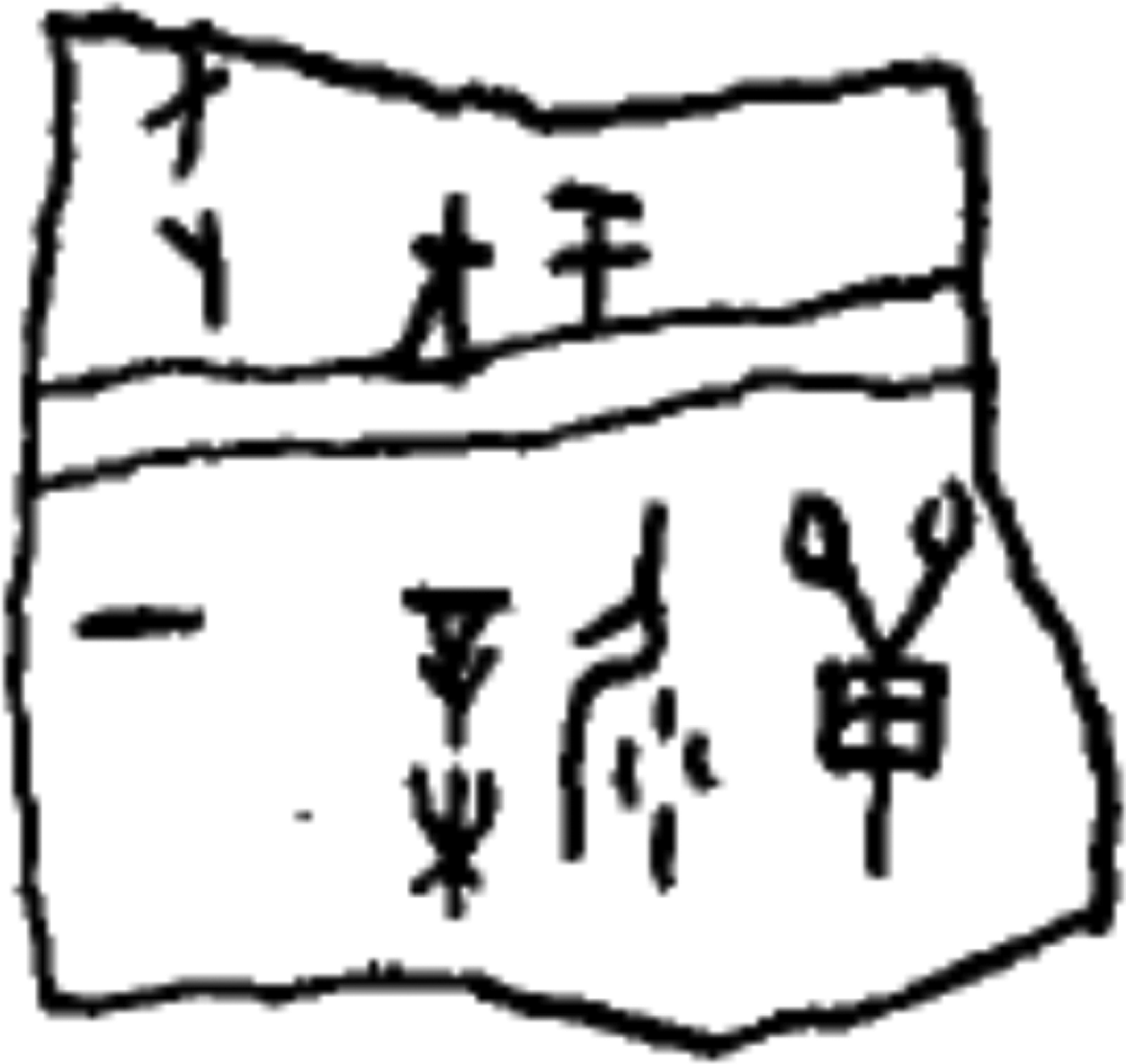
The lengthy history of agriculture in China is a testament to the remarkable skills the Chinese developed for maintaining soil fertility. No one knows when or how they developed the use of human feces to supplement existing fertilization methods. In the 1980s, Hu Houxuan suggested, based on information available in the extant Shang oracle bone inscriptions, that the use of human excrement in agriculture started in the Shang (or Yin) period.Footnote 32 A character carved on a piece of oracle bone represents a man in the process of excreting (Figure 3). If Hu is correct, and the character is the antecedent of fen 粪 (excrement,), this inscription proves that recycling feces for agriculture began in China at least 3,000 years ago.
Characters for “feces” in oracle bone inscriptions.

Returning waste to the land helped the Chinese feed a large population and offered an occasion to consider more philosophical aspects of the relationship between humans and their natural environment. Ecological literature, including Tianrenheyi 天人合一 (“the unity of heaven and man”) and the theory of sancai 三才 (“three ways of nature”), highlights and links three elements: heaven, land, and humans.Footnote 33
These ancient recycling practices extend so far back into history that they appear in Zhouyi (likely written in the West Zhou dynasty, 1046–771 BCE). Confucius (551–479 BCE) is credited with explaining this distinct aspect of personhood in Zhongyong 中庸, where he argued that human activities could balance the relationship between heaven and earth.Footnote 34 Mencius (372–289 BCE) later added the Confucian notion of “benevolence,” by which humans care for nature as they care for their own family. Over the course of thousands of years, this idea became firmly ensconced in Confucian philosophy, the most influential mode of thought in China. Two primary corollaries were especially emphasized: everything has its own way and exists in cycles; and humans must learn the ways of the universe to help keep heaven, earth, and their own communities in balance.
The way of heaven, also known as tianshi 天时 (“order in nature”), is the guiding force among the three elements: humans, heaven, and earth. Natural processes and anthropogenic activities alike depend on earth's natural cycles, since humans depend on the land. According to this theory, each of the three elements of nature has its own rules, and it is up to humans to find ways to keep them in balance. For example, if people want a good harvest, human agricultural activities should follow the rules of heaven (day and night, the cycles of the seasons) and earth (all things grow from the soil and return to the soil) to ensure harmonious accord among them. The three elements of nature also fall into cycles independently: seasons change, crops grow, humans live and die. A circular pattern defines everything, and agricultural practices governed by this philosophical perspective acknowledge that everything that comes from the land can be returned to the land to feed it.
This ancient concept of cycles influenced Chinese culture for thousands of years, and the residents of Tianjin, who held a generally positive attitude toward wastewater, would certainly be no exception. This would explain why wastewater, like any other form of organic waste, was thought to be valuable and a potential fertilizer material. It could also explain why the Tianjinese did not mind living in a “harmful water environment” and preferred these supposedly “unhealthy” ways of disposing of wastewater.
Accounting for and acknowledging this “cyclical” view of waste helps to clarify some of the residents’ entrenched wastewater disposal habits. Pouring a small amount of wastewater onto the streets or near a tree, for example, was in line with the idea that waste was not harmful, but actually beneficial to the land. Citizens believed that returning wastewater to the ground marked the completion of a cycle. Moreover, it was an easy way to deal with relatively clean wastewater that would soon evaporate in direct sunlight. However, as the city grew larger, the practice began to cause a number of problems. In the winter of 1936, for example, layers of frozen wastewater accumulated, ultimately forming a roadblock of solid ice that was “hard for cleaners to remove and impeded the passage of pedestrians.”Footnote 35 Similarly, in the winter of 1947, frozen wastewater from private households was “not only detrimental to sanitation but was also responsible for traffic accidents, as well as causing many pedestrians and horse (or mule) carts to slip and fall on the road.”Footnote 36 Residents were so set in their ways, though, that neither strict regulations nor impassioned pleas could force them to change their habits.
Dumping wastewater into the river or canals was also a common means of wastewater disposal, as citizens believed that the river would return the wastewater to nature. Unfortunately, the solid components in wastewater could easily lead to the blockage of water channels or the deterioration of water quality. People in Tianjin dumped not only wastewater, but also solid garbage into the river; both were considered “dirty matter” identified as the underlying cause of river blockage in reports from Social Welfare Tientsin.Footnote 37 Even as late as 1948, the improper disposal of wastewater was being blamed for problems. According to a proposal for the repair of the waste ditch in front of the Qianfosi 千佛寺 temple, Feng Songnian, a representative from the city's eighth district, was convinced that wastewater dumping was the major cause of damage. He suggested that wastewater carriers be forbidden from casually dumping wastewater into the ditch.Footnote 38
Ponds were common in Tianjin, as mentioned above, and provided a convenient alternative for wastewater disposal. Given the tolerant attitudes toward dirty water prevalent at the time, even a stagnant pond filled with domestic sewage and giving off foul smells could be considered a source of nutritious fertilizer, perfect for planting lotus. In China, the lotus is a special ornamental plant with important economic value, and its roots, flowers, and seeds were, and still are, popular ingredients in Chinese dishes. It was therefore common for people to plant lotus in wastewater ponds in Tianjin. There were dozens of lotus ponds along the most famous drainage channel, the Qiangzi River. Even so, local citizens had their limits; in a letter of complaint, some decried the excessive level of wastewater in one of these ponds, which left it especially foul-smelling, particularly on days when it sat steaming in the sun.Footnote 39
The wastewater dumping habits of the Tianjinese had detrimental effects on the city and were at least a potential cause of a number of recognized problems, but they were nevertheless extremely hard to change. While there are undoubtedly a number of reasons for this, the traditional concept of wastewater was almost certainly one of the most important factors. The distasteful habit of dumping wastewater throughout the city was informed by a traditional understanding of sanitation and “waste” that was markedly different from modern concepts of sanitation. These well-established older concepts highlighted the valuable aspects of wastewater as a source of fertility, a product of the land that should be returned to the land.
This ancient concept of recycling is worth renewed consideration. Though it appears to have been a source of sanitation-related issues in ancient cities, it contributed to the establishment and functioning of an urban wastewater disposal system in Tianjin before the period of modernization, one that did indeed fulfill its purpose, at least to an extent. Certain aspects of this system might very well be applicable to managing the flow of urban wastewater in today's modern cities.
WHERE DOES WASTEWATER GO?
By the late Qing dynasty, Tianjin was already a busy metropolis with a relatively high population density. The majority of the urban population had settled along the riverbank, which was convenient for the collecting and disposing of water. However, there were still a good number of households relatively far from the river that needed a way to dispose of wastewater.
In the Imperial period Tianjin nearly entirely lacked drains of any sort. The old Tianjin city, which was square and surrounded by walls, had the best public facilities in the region, as it was the seat of Tianjin's local government. Even in the Ming and Qing dynasties, however, the only purpose-built structure resembling a drain was the moat. As mentioned above, the moat was created to divert fresh water into the city, but it ended up becoming choked with waste. There were some private ditches linked to the four pools located in the four corners of the walled city. These, which were in turn connected to the moat through four gates, constituted “the end point of foul odors (秽气所终), forcing passengers to cover their mouths and noses.”Footnote 40
The first official wastewater drainage channel in China did not appear until Zhou Fu 周馥, an official in the Qing Haiguan Dao 海关道, “laid stone bricks to build a canal to drain water outside”Footnote 41 during the construction of an official road inside Tianjin in 1882. In 1900, the Eight-Nation Alliance forcesFootnote 42 occupied Tianjin, tore down the city walls and filled in the moat in an effort to improve the urban environment. They used bricks from the old city to create a new drainage ditch with a slab stone cover called the “officer's ditch.” The drainage system had developed only very slowly in the parts of Tianjin outside the concession area. By the mid-twentieth century, only a few areas had pipelines, while most districts had no drainage canals or ditches at all. The reason was obvious: any conduits built on this flat, low-lying land would silt up, especially given huishui’s complex mixture of components and poor fluidity. The demand for new drainage systems, however, remained very high.
This demand created a new profession of wastewater carriers known as huishuifu 秽水夫, who were crucial in removing household wastewater and completing the whole drainage process. They may have worked together with fresh water carriers, and some fresh water carriers were certainly also wastewater carriers. After delivering fresh water to local households in the early morning, they would return in the early evening to take wastewater away as an additional free service. Wastewater carriers received lower pay for their work than another group of waste carriers, fenfu 粪夫 (“feces carrier”), because wastewater was not as in demand as feces on the fertilizer market. This also partially explains why the carrying of wastewater was only a part-time job.
Wastewater carriers gathered wastewater from households, transporting it in buckets hung from poles balanced on one's shoulders or loaded in wastewater carts to the nearest puddle, lake, ditch, canal, or river, where they dumped it. Their job was simple, but since the wastewater was useless to the carriers, they could be less than meticulous in their work. Sometimes they would discard wastewater halfway before reaching their destination.
Wastewater dumping sites, where most of the wastewater carried by the majority of huishuifu ended up, included huishuiboji 秽水簸箕 (wastewater “dustpans”), huishuichi 秽水池 (wastewater “sinks”), and some public lavatories. According to documentary records, a huishuiboji was a simple device shaped like a dustpan that was installed on the riverbank; the sloped sides guided the waste down into the river. They “easily disintegrated after long-term use and from bank erosion,”Footnote 43 but if they were not placed in specific locations, “anywhere along the bank could become a water dumping site.”Footnote 44 Therefore the water dustpan actually served to fix the dumping of wastewater to specific sites. The casual dumping of wastewater caused numerous problems, such as canal blockages and damage to the riverbank, so regulations began to be enforced in the early twentieth century in Tianjin that limited wastewater dumping to the dustpans in an effort to protect the riverbank.
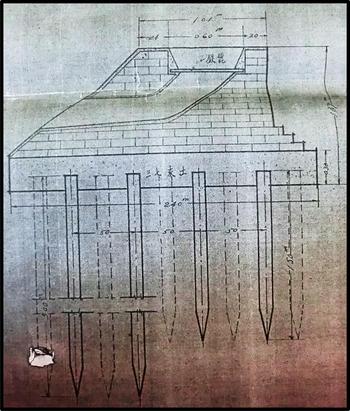
Wastewater dustpans were made out of either wood or iron/aluminum. In a survey conducted in 1942, of a total of 61 wastewater dumping sites, only seven were iron/aluminum,Footnote 45 with the remaining dustpans being made of wood. Compared to the uncomplicated wooden “dustpan,” the huishuichi, which consisted of an open, square brick sink on top with a short underground pipe below, transported wastewater directly to the river without harming the bank. The wastewater sinks (Figure 4) by the bank needed reinforcement below to suitably extend their service life. Above ground, the system took the form of a “ten chi long and eight chi wide square (sink)Footnote 46 with walls four bricks high and a base two bricks high, with the inside surface covered with cement.”Footnote 47
Wastewater sink.

Most of Tianjin's wastewater ended up in various types of waterways. There were numerous private or public ditches, canals, and ponds, but most were by the end of the Republican period linked to one or more of the four main waterways and bodies of water called the “Four Hazards.” The map of early modern Tianjin marks them clearly: the Chilong River 赤龙河, Nankai Reservoir 南开蓄水池, Qiangzi River 墙子河, and Jinzhong River 金钟河.Footnote 48
The Chilong River, a branch of the Hai River, had a well-preserved natural river course and was named for its tortuously winding route, which resembled a Chinese dragon, and the red color it seemed to assume when the tide rose (Chilong = “The Red Dragon”). It ran through the city from south to north, connecting the moat, the Weijin River, and the Qiangzi River to form the main drainage canal for the original walled city of Tianjin.Footnote 49 After the moat was filled in by the armed forces of the Eight-Nation Alliance, the Chilong River met the Qiangzi and Weijin Rivers at Haiguangsi 海光寺, which became Tianjin's second busiest hub, the so-called “odorous three divergences,”Footnote 50 for the transportation of goods such as fruits, vegetables, building materials, and urban waste within the city.
There are two different accounts of the origins of Nankai Reservoir. The first suggests that a pit left after the removal of earth for a construction project became filled with water and later came to be used officially as a wastewater pond.Footnote 51 According to the second account, Belgian colonists chose a piece of land in 1900 on which to build a warehouse for their tram business. They dug a square reservoir to drain the water from this piece of land, turning the once marshy, reed-covered land into a dry site suitable for construction.Footnote 52 By the end of the Republican period, the reservoir had grown into Tianjin's largest wastewater pond, covering an area of 130 mu (21 acres),Footnote 53 which connected to the Qiangzi River from the south.
The Jinzhong River, an artificial watercourse, was named Jinzhong (“Golden Bell”) after a certain stone bridge downstream—water flowing beneath this bridge often produced sonorous sounds.Footnote 54 The river flowed from Jingang Bridge in downtown Tianjin to the north, traveling 48.8 km to meet the sea at Beitang,Footnote 55 making it the only channel located in the northeastern part of Tianjin city.
Qiangzi River was originally a fortification built by Sengge Rinchen, the imperial commissioner, in 1860 to enhance the city's defenses against British and French invasion. The fortification originally consisted of a moat and a wall beside it, but the wall was soon destroyed and the moat was turned into an urban canal that became essential for transport and waste drainage within the city.
The Four Hazards were the source of many environmental problems and were frequently maligned by Tianjin's residents. The water in Nankai Reservoir was more stagnant than that in the canal, and the reservoir essentially became a half-century old, large, fetid pit. When it was completely full, the waste-lake turned a purplish red in color and its people even several miles away could smell it.Footnote 56 The rivers were no better. The water was filthy; channels became breeding grounds for mosquitoes and flies, and when floods occurred, sewage water would rise up into nearby dwellings.Footnote 57 The poor conditions of the Four Hazards in terms of sanitation, however, did not necessarily mean the urban wastewater drainage system they constituted was ineffectual. Though it created problems of various degrees for the surrounding neighborhoods, the system did effectively accomplish its task of carrying away unwanted waste.
The sanitation problems associated with the Four Hazards were were not the result of their drainage alone. Overpopulation and poor governmental maintenance played a role, actually turning the Four Hazards dangerous towards the end of the Republican period, when war and famine spread across China. In the mid-twentieth century, Tianjin's population exploded to nearly two million (only in the Chinese area),Footnote 58 as immigrants—mostly refugees fleeing war and natural disasters—flooded into shelters spread across the outer fringes of the city.Footnote 59 The war also led to interruptions in governmental operations as well as a lack of financial support for waterway clearance. A drainage system under effective management (e.g., timely waterway dredging, bank maintenance, proper dumping regulations) could serve a smaller population reasonably well, but it was overtaxed by the influx of new residents at this time.
Hazards or not, the four drainage rivers and reservoir played an incredibly important role in urban life in Tianjin. They intersected within the city, flowed through populous regions, and carried sewage to the Hai River or to the sea. Together, the water carriers, ditches, canals, rivers, and scattered dumping sites created a wastewater drainage system of interlaced water channels and wastewater discharging points that linked the wastewater of Tianjin's urban residents to surrounding natural bodies of water. However, the functioning of wastewater transportation in Tianjin served broader aims than this physical description can convey on its own. The traditional concept of life cycles plays a part in the city's wastewater drainage system, where every drainage route may take a shortcut to farmland. At its most extreme, the wastewater that had already reached the end of its journey (in the water canals) would be dredged and moved to the places where its fertility-enhancing properties were most needed.
HOW DOES WASTEWATER TURN INTO WEALTH?
In early modern Tianjin, citizens tended to dump wastewater onto the ground or into lakes, pools, ditches, or drainage waterways which led to the Hai River. There was another important link connecting the city to its rural neighbors in this practice of returning waste to the land: the manure trade. In contrast to the disposal channels that moved unwanted waste through the old city's drainage system, the manure trade prized this resource, which it transported from the city to the countryside. This disposal method, which played an intermediary role between modern sanitary practices and traditional concepts regarding sanitation and the environment, seemed appropriate for a growing city and was supported by the local government for some time.
Although wastewater was valuable as agricultural fertilizer, long-distance wastewater transportation was uncommon, as the transport of liquid waste required not only special facilities but also a great deal of human labor. Because it was inefficient and brought little to no financial benefit, the fenfu, or collectors of urban manure, would refuse to collect wastewater from households and instead discarded urine directly into the river while carefully collecting the feces from the public lavatory. The public lavatories of the time reflect this: in most lavatories along the riverside, urine pathways were linked with underground pipes (e.g., wastewater sinks)Footnote 60 and dumped directly into the river, while in lavatories located further away from rivers (or ditches), urine would be contained in a seepage pit while feces was carefully collected in vats buried under the toilet.Footnote 61 This practice continued even as wastewater became a valuable resource in the nineteenth and twentieth centuries, reflecting the sizable demand for fertilizer.
The trade in wastewater was a crucial approach to transforming urban waste into rural wealth. In Tianjin, there were two approaches to collecting wastewater: liquid form (wastewater) or solid form (wastewater sediments or river mud). Collecting liquid waste was particularly hard work. Until the end of the Republican period, buckets and shoulder poles were still the most common tools for transporting water. Most water carts did not have any specialized means for storing and transporting the waste: they were simply trolleys loaded with buckets. All types of carts—three wheels or four, pulled by man or by animal—normally relied on a platform or other precarious structure to hold the buckets and conveyed only a small amount of liquid, which was nevertheless all too easily spilled onto the road.Footnote 62 Consequently the long-distance transport of wastewater relied mainly on waterways.
Transporting wastewater by boat, however, was also a daunting task. A document by Tianjin Kaiyuan Agricultural Company dating from the 1920s discussed three possible methods. The first was to collect huitu 秽土 (dirty dust)Footnote 63 at the dock, spreading it out for people to pour wastewater on top of it. The material was then mixed together into a muddy slurry and loaded onto the boat for shipment. The second option was to build special boats for wastewater transportation and to mix the wastewater and solid wastes only once they had reached the farm. The third option was to fill 70 percent of the boat's capacity with huitu, then berth the boat on the riverbank next to dumping sites connected to the dock with an iron pipe. Wastewater would run down these pipes onto the huitu already on the boat until the full capacity was reached.Footnote 64
In the 1920s, when farmlands around the city still relied on organic fertilizers, the largest farming company of Tianjin, the Kaiyuan Reclamation Company, faced an emergency shortage of fertilizer. To maintain a supply of fertilizer from the city, the company signed a contract with the Tianjin Police Office for collecting manure. The contract stipulated that “the police officer will build dumping boards for wastewater and urine and ask dwellers to dump at a set time, then the Kaiyuan Company will carry the waste away with appropriate boats. The building fees are to be paid by the Kaiyuan Company.”Footnote 65
To reduce costs, the company chose the first method outlined above at most wastewater collecting points. They asked wastewater carriers to pour wastewater onto the solid waste piles (i.e., huitu) until the storage capacity was reached. In a few dumping spots, they hired small boats to load the huitu first, which would then take on board wastewater at fixed locations and times. They performed this collection process with the help of the local police force, who published notices to citizens requiring them to dump wastewater at these fixed locations and times. For performing these services, the police force charged the company by total weight of all the cargo on their boats.
The transport of wastewater in solid form involved natural settling processes after the discharge of wastewater into surrounding water bodies. Wastewater contained various components that were prone to contribute to silting and the clogging of waterways. But it also contained useful or valuable sediments. River mud was often used in Tianjin as a construction material for leveling the ground at a building site, and sludge from wastewater dumping points was a popular form of manure. Fixed discharge points made dumping activities fairly easy to supervise; however, this practice also concentrated urban wastewater and sediments at certain locations, which exacerbated any problems in the river's flow. To keep pathways unblocked, Tianjin's government regularly removed the river mud. They also frequently received applications from local residents to collect river mud for use as a construction material or fertilizer. These applications were particularly prevalent during times when the waterways were being cleared, as the local government normally charged private individuals for taking river mud for personal use, but reduced or cancelled the fees when necessary to encourage residents to help clean up the waterways.Footnote 66
There was another group of individuals, aside from the city's residents, who regarded river (or canal) segments lined with “wastewater dustpans” as a bonanza: manure collectors. These sailed small sampans, called manure boats, along the rivers, making their living by gathering and selling river mud to farmers in the countryside. For them, wastewater dumping sites were a source of wealth, much as the public lavatories were for the feces collectors. They benefitted considerably from the right to clean up the silt that collected at those sites. Some wastewater carriers had contracts with the government and paid monthly fees for the rights to mud and sediment removal in a particular region. But their mud collection was affected by natural factors, government policies, and the changing locations of wastewater discharging sites. A flood that washed away all the sediments washed away their income too.
During the flood of 1939, for example, water manure collector Zuo Jintang applied for an extension for paying the annual fee for river mud collection because “all the wastes were flushed away, so collection stopped for more than a month and life was very difficult.”Footnote 67 Any change in the wastewater dumping sites also had a critical impact on the components of river mud and affected its value as fertilizer. When a huishuikou was removed, the river silt collectors would cease their collection there. Some collectors would even demand refunds of their annual fees when they knew that a repaired dumping site in their contract range would no longer produce nutrient-rich sludge.Footnote 68
CONCLUSION
The city of Tianjin is characterized by a close relationship between its residents and its water resources. Water has brought wealth to the continually growing population of the city, but it has also brought a series of problems throughout the city's history. On the low-lying land where the original square city was located, ponds of various sizes were selected for the disposal of urban domestic wastewater. Though it would not meet modern urban sanitation standards, Tianjin's drainage system, in which wastewater was carried away, poured into ditches or lakes, and carried via canals to the natural bodies of water outside the city walls, had been custom created for it. The demand for agricultural fertilizer in the surrounding rural areas also made the city's wastewater a valuable source of manure. The main source of manure was solid waste (feces), but the fact that wastewater was also collected and transported, despite the far more laborious process involved, reflects the strong demand for fertilizer around Tianjin. The process of wastewater collection, and specifically the collection of river mud from wastewater disposal sites, also extended the wastewater drainage network into the countryside.
The wastewater disposal methods used by Tianjin residents were criticized as unhygienic by foreigners living in the city's first concession area in the mid-nineteenth century. The system might be better understood, however, with reference to sancai, the Chinese concept of life cycles. In this agricultural concept, heaven, human beings, and the earth all exist and act in intersecting cycles; humans are tasked with finding and maintaining a balance among them to ensure a harmonious existence.
Sancai, as well as the “unique link between humans and heaven” 天人合一 predicated on the long history of agriculture and negotiations between humans and nature, can be regarded as the most important ecological concept in ancient Chinese philosophy.Footnote 69 Sancai requires balance among humans, heavens, and the land; in Tianjin's case, transporting urban sewage to the countryside not only provided the countryside with more fertilizer, it also improved the urban environment. A simple waste drainage system allowed the city to grow in size and population by the late Qing period thanks to the carefully maintained balance between the urban area and its natural environment. The city's modernization in the late nineteenth and early twentieth century was accompanied by the development of modernized public services and facilities, improved political management, and a cultural transformation that kept pace with these changes. Alongside this complex process, new technology gradually transformed the appearance of Chinese cities, modern sanitation ideas slowly influenced the Chinese traditional understanding of health and urban sanitation, and manmade fertilizer began to replace organic manure. This very same process broke the time-tested balance between city and countryside.
In today's Tianjin, “invisible” systems carry our wastewater away to a final destination of which we generally remain ignorant. However, the simple concept of sancai offers us another option for waste treatment. Though the traditional drainage system of Tianjin was far from perfect, it was a practice which had stood the test of time for hundreds of years. The concept of waste recycling supported a large and continually growing population while providing valuable resources to the surrounding countryside in the form of agricultural fertilizer.
What can we learn from Tianjin's historical waste drainage practices? Can we still apply the concept of natural cycles to contemporary urban environmental problems? Our current situation demands a new “engine” to drive our waste discharge and recycling processes. Perhaps wastewater's final destination is the key to establishing truly sustainable waste management practices. Tianjin's history reveals a potential new approach based on sancai with which we may seek to achieve a balance between anthropogenic and natural activities as we pursue harmony with nature.