I. Introduction
Pentecostalism is a dynamic, evangelical Christian movement that emphasizes personal experience of the Holy Spirit, marked by spiritual gifts like speaking in tongues, healing, and miracles. It seeks to restore apostolic Christianity by replicating the early church’s supernatural experiences as recorded in the Book of Acts. This experiential emphasis has made Pentecostalism particularly adaptable to rapidly changing urban environments, where religious authority must continually demonstrate relevance in everyday life. Pentecostal and Charismatic Christianity has reshaped Nigeria’s religious landscape since the late 1970s, turning major cities into laboratories for new forms of worship, media evangelism, and entrepreneurial church planting. Among the most emblematic of these movements is the LFC Worldwide, popularly known as Winners’ Chapel, whose explosive growth is inextricably linked to the distinctively charismatic leadership of its founder, Bishop David Oyedepo. From a single fellowship in the early 1980s, the ministry grew into a transnational network with branches in over 147 countries and more than 20,000 Nigerian congregations serving over six million adherents by 2020.Footnote 1 The church’s trajectory shows a broader pattern in Nigerian Pentecostalism in which locally rooted ministries such as the Redeemed Christian Church of God (RCCG) and Believer’s Love World (BLW) evolve into transnational religious corporations through a combination of charismatic authority and organizational innovation. Kaduna Metropolis occupies a special place in this story.Footnote 2 It was there that Oyedepo planted the first LFC on December 11, 1983, following the 1981 “Liberation Mandate vision” (his claimed divine mandate to liberate humanity from spiritual and material bondage) that launched his ministry. Thus, Kaduna was the church’s incubator for its formative seven years, before the headquarters relocated southwest to Lagos/Ota in 1989. The city’s multi-ethnic, military–industrial character, its position as a gateway to Nigeria’s religiously diverse Middle Belt, and its role as a Northern commercial hub created fertile ground for a brand of Pentecostalism that promised empowerment, prosperity, and social mobility. Examining how a small congregation integrated into the Kaduna Metropolis and expanded into numerous satellite assemblies provides a focused lens on the mechanisms of Pentecostal expansion.
Yet most scholarship on LFC treats the organization at the national or global scale, foregrounding its landmark Faith Tabernacle in Ota or its flagship universities.Footnote 3 What remains under-examined is the micro-historical process through which charismatic authority translated into sustainable institutional presence in a Northern Nigerian city marked by doctrinal pluralism and periodic ethno-religious tension. This gap is particularly significant given the dominance of macro-level analyses in the study of Nigerian megachurches, which often obscure the local processes through which institutional authority is constructed. This article, therefore, investigates how Oyedepo’s charismatic leadership style catalyzed both the rapid growth and the organizational consolidation of the church within Kaduna Metropolis between 1983 and 2020. It argues that LFC’s expansion in Kaduna was not simply the product of charismatic appeal, but of the deliberate routinization of that charisma through organizational structures, training systems, and mediated forms of presence. Hence, the analysis is grounded in Max Weber’s concept of charismatic authority and its routinization, especially the tension between prophetic charisma and bureaucratic institutionalization, and is strengthened by recent scholarship on African urban Pentecostalism and the political economy of megachurches. Works by Asonzeh Ukah, Ebenezer Obadare, Ruth Marshall, and Kwabena Asamoah-Gyadu help illuminate how Pentecostal movements in African cities embed charisma within organizational routines, urban infrastructure, and prosperity-driven institutional models.Footnote 4 These perspectives imply that Pentecostal expansion is not merely spiritual in character but deeply rooted in processes of institutional formation, social adaptation, and economic negotiation. With a focus on Kaduna, this article unravels how a single metropolis mediates the passage from prophetic vision to measurable institutional footprint, thereby enriching broader debates on religion, leadership, and urban change in contemporary Africa.
II. An Overview of Pentecostal Growth in Nigeria and Debates on Charismatic Leadership
Pentecostalism, a modern global Christian movement, did not originate from a single source. Although the 1906 Azusa Street Revival in Los Angeles, led by African American preacher William J. Seymour, was enormously influential in shaping global “Classical Pentecostalism,” recent scholarship shows that the movement has polygenetic roots. Alongside Azusa, early Pentecostal impulses emerged independently in various parts of the world, including the Welsh Revival (1904–1905), the Korean revival movements, the Mukti Mission revival in India under Pandita Ramabai, and indigenous African revivalist traditions that pre-dated Western missionary presence.Footnote 5 These parallel spiritual awakenings, marked by glossolalia, healing, prophecy, and ecstatic worship, collectively contributed to the formation of global Pentecostalism, rather than Azusa Street alone. This polycentric origin helps explain the movement’s later adaptability, particularly in African contexts where local conditions shaped distinct trajectories of Pentecostal development. By the mid-20th century, charismatic movements arose within mainline Protestant and Catholic churches. Unlike earlier waves, these movements stressed prosperity, deliverance, and spiritual warfare, attracting middle-class believers and leveraging media and popular culture.Footnote 6 As we shall see subsequently, these developments foreshadowed the increasing importance of media and organizational strategy in sustaining charismatic movements beyond their initial revivalist phase. The global Pentecostal explosion also mirrored broader trends in decolonization, urban migration, and spiritual dissatisfaction with formal religion. In Nigeria, these global currents intersected with local socioeconomic pressures to produce a form of Pentecostalism that was both contextually grounded and institutionally ambitious.
Pentecostalism in Nigeria emerged through three overlapping historical phases shaped by distinct socio-political and theological contexts. The first phase, spanning the 1910s–1940s, was marked by Indigenous Revivalism and Proto-Pentecostal movements. During this period, African Independent Churches (AICs) such as the Cherubim and Seraphim, Church of the Lord (Aladura), and Christ Apostolic Church (CAC) arose, integrating Pentecostal practices like healing, prayer, and visions with indigenous religious worldviews.Footnote 7 This early synthesis established a precedent for later Pentecostal movements, which would similarly blend imported theological frameworks with local spiritual sensibilities. Between the 1930s and 1960s, collaboration between foreign and indigenous Pentecostal groups greatly expanded the movement in Nigeria. An example was the partnership between Joseph Ayo Babalola of the CAC and British missionary Sydney Granville Elton of the Faith Tabernacle, which helped spread Pentecostalism from Southern Nigeria to Northern Nigeria.Footnote 8 The northward diffusion of Pentecostalism laid the groundwork for later expansion into cities like Kaduna, where new movements would build on earlier foundations. Between 1950 and 1970, the Classical Pentecostal and Institutional Formation phase formalized Pentecostalism in Nigeria, with leaders like Archbishop Benson Idahosa linking to global networks and adopting mass evangelism, healing ministries, and media outreach.Footnote 9 Idahosa’s initiatives marked a pivot shift toward more structured forms of religious organization, prefiguring the institutional models later adopted by neo-Pentecostal churches in Nigeria. The 1980s saw the rise of Neo-Pentecostalism and megachurches in Nigeria, along with prosperity-centered theologies like the Word of Faith and Prosperity Gospel, led by figures such as Oyedepo, Enoch Adeboye, Chris Oyakhilome, and Tunde Bakare. Their ministries attracted urban, educated Nigerians seeking socioeconomic and spiritual growth, featuring charismatic leadership, media use, megachurches, dominion theology, spiritual warfare, and transnational expansion.Footnote 10 They also illustrate how charismatic authority, when combined with strategic organization and media engagement, can produce highly scalable religious institutions.
Consequently, Nigeria emerged as an important center of Pentecostal innovation, not simply by importing Western Charismatic theology but through creative adaptation that blended these teachings with indigenous beliefs in spirits, healing, deliverance, and communal ritual practices. Scholars such as Kalu, Anderson, Asamoah-Gyadu, and Wariboko have explained how this synthesis produced uniquely Nigerian forms of Pentecostalism, characterized by both transnational connectivity and local spiritual sensibilities.Footnote 11 Furthermore, this has produced a hybrid form of Pentecostalism that is both contextually rooted in Nigeria and globally adaptable. Little wonder that Nigerian Pentecostal leaders have attained significant transnational influence, with ministries such as the LFC, RCCG, and BLW establishing branches across numerous countries. This expansion exemplifies the “reverse mission” phenomenon, wherein African churches actively engage in evangelizing the Global North.Footnote 12
Charismatic Leadership has played a profound role in their meteoric rise to megachurches. Max Weber defined charismatic authority as power legitimized by followers’ belief in a leader’s supernatural gifts or prophetic insight.Footnote 13 However, such authority is inherently unstable unless it is transformed into routinized structures capable of sustaining it over time. Charismatic leadership shaped Nigerian Pentecostalism, with leaders like Idahosa, Adeboye, and Oyedepo drawing followers through claims of supernatural powers. Ojo’s study of independent Pentecostal churches explores the dynamic between charisma and institutionalization, noting that while initial growth was driven by personal charisma, many leaders eventually routinized authority through bureaucratic structures and delegated leadership, albeit often accompanied by internal tensions.Footnote 14 Internal tensions, in this context, refer to the central challenge of maintaining spiritual authenticity while building bureaucratic stability. Olulowo and Oluwarinde similarly document how prosperity teachings and entrepreneurial ventures became part of churches’ institutional consolidation, linking spirituality with socioeconomic development.Footnote 15 The fusion of spirituality and economic practice also contributed to the material expansion and organizational resilience of these churches. More recent analysis of African neo-Pentecostal leadership identifies hybrid forms of governance, blending charismatic persuasion with gerontocratic or servant-leadership models derived from indigenous traditions.Footnote 16
Scholars debate whether charismatic authority can be institutionalized without losing its spiritual vitality or degenerating into a personality cult. Weber argues that for charisma to endure beyond the founder, it must be routinized into formal roles, codified rules, and clear succession mechanisms.Footnote 17 Contemporary studies of African Pentecostal megachurches suggest that leaders like Oyedepo consciously combine this bureaucratic rationalization with continued performative charisma through preaching, ritual spectacle, and prosperity-oriented practices to maintain both organizational stability and devotional intensity.Footnote 18 Simultaneously, this dual strategy preserves charisma and institutionalizes it. Studies in Nigeria and Africa show that churches founded by charismatic leaders often establish succession plans, training institutes, and administrative networks to maintain growth beyond the founder.Footnote 19 These debates set the conceptual foundation for examining how Bishop Oyedepo’s charismatic leadership drove LFC’s growth and consolidation at a micro-level.
III. The Origin of the LFC in Kaduna Metropolis, 1983–1989
Colonial and post-colonial urbanization, leading to increased economic opportunities and migrations into the Kaduna Metropolis, created a fertile ground for Pentecostalism to flourish. Migration from Southern Nigeria, where Pentecostalism first took root, introduced new Christian influences, while hardship and dissatisfaction with mainline churches drew many to Pentecostalism’s prosperity message and Spirit-led worship. The Nigerian Civil War (1967–1970) created social disruptions that heightened spiritual seeking among students, within which new forms of charismatic authority could emerge and gain legitimacy. The activities of Christian student organizations such as the Scripture Union (SU), Fellowship of Christian Students (FCS), and Calvary Ministries at Ahmadu Bello University (ABU) and Kaduna Polytechnic played a key role in channeling this energy.Footnote 20 These student ministries provided training in leadership, evangelism, and small-group organization, fostering networks of committed young believers who later became core members, leaders, and propagators of emerging Pentecostal churches. By cultivating both spiritual zeal and organizational skills, student ministries significantly contributed to the post-war expansion of Pentecostalism in Kaduna Metropolis. Southern Pentecostal leaders used home fellowships and street evangelism to gain traction in the strongholds of mainline churches, which resisted through counter-theology and revival programs, to win back their members.Footnote 21 Despite efforts by established churches and authorities to regulate or contain Pentecostalism, it continued to expand throughout the 1980s and 1990s. Its appeal lay in a hope-filled, pragmatic, and adaptive form of Christianity that addressed everyday social, economic, and spiritual concerns, making it resilient to institutional pushback and allowing it to thrive across diverse urban and rural communities. Such adaptability would become a defining feature of later Pentecostal movements like the LFC, which combined spiritual appeal with organizational flexibility.
The commencement of Sunday Services and the employment of full-time workers heralded a new dawn in the history of Pentecostalism in Nigeria. Idahosa’s Bible study group became the first Neo-Pentecostal church in 1972 in the south, while church building began in the north in the 1980s to consolidate earlier gains.Footnote 22 As economic crises deepened despite the Structural Adjustment Program (SAP), the socioeconomic challenges of the 1980s and 1990s did not merely accompany Pentecostal expansion but actively shaped the demand for its message and institutional presence.Footnote 23 But before this period, corruption had reached a new high during the Second Republic (1979–1983) despite the peak in oil revenue in 1980. By 1983, the oil glut of 1981 and a global recession had crippled Nigeria’s economy, slashing oil prices and foreign exchange earnings.Footnote 24 Oil revenue fell from $25 billion in 1980 to $6 billion in 1984.Footnote 25 Between 1979 and 1983, recession, austerity measures, and massive government plundering caused severe unemployment and inflation.Footnote 26 As political elites accumulated wealth through patronage and corruption, both urban and rural populations experienced deepening economic hardship and marginalization. In this context, Pentecostal churches in Kaduna expanded their influence by combining spiritual guidance with material interventions, including welfare support, educational assistance, and small-scale financial aid. LFC, for instance, complemented its religious message with relief efforts, youth empowerment initiatives, and community mobilization around prayer and development.Footnote 27 Similarly, the RCCG and other Pentecostal organizations actively engaged in community projects, education, and health outreach.Footnote 28 Their interventionist messages, which combined spiritual hope with tangible support, attracted new converts and solidified their influence and organizational consolidation in both urban and rural areas.
The LFC is one of the most famous Pentecostal churches in the world, with a humble beginning in the Kaduna Metropolis. Oyedepo, the church’s founder, was a convert of the 1960s–1970s charismatic revival movements. He reportedly became a born-again Christian in 1969 at the age of 15 under the guidance of Betty Lasher, a missionary and his teacher.Footnote 29 He began preaching in 1970, embraced Pentecostalism in 1972, and became a devoted follower of Archbishop Idahosa, who had been mentored by Sydney Granville Elton and ordained in 1971 by Gordon and Freda Lindsay.Footnote 30 After his ordination, Idahosa left Gordon Lindsay’s Bible College in Texas and, with Elton, held large stadium Crusades in Benin City that converted thousands to Christianity.Footnote 31 The partnership lasted until 1973, when Idahosa announced that he was divinely called to preach the “prosperity gospel,” declaring, God told me: “Begin to bless your people with all blessings; ask them to ask me anything they need, and I shall provide it for them…. I shall make them prosperous in all areas of their lives. I shall bless your partners and co-workers. Wake up, go to the Church in the morning, and tell them poverty died last night!”Footnote 32
Idahosa’s claimed vision caused an ideological split between him and Elton. As Idahosa embraced the prosperity gospel and moved away from Elton, he attracted young aspiring Pentecostal ministers. With this new ministry direction, he arguably founded Nigeria’s prosperity gospel, which many later embraced. This shift toward prosperity theology would become central to the institutional logic of later Pentecostal movements, including the LFC. In May 1981, at the age of 26, Oyedepo claimed an 18-hour divine vision directing him to commence a full-time ministry.Footnote 33 While in Ilesha seeking counsel from colleagues, he later withdrew to a small room at Ilesha’s International Hotel, where he received a revelatory vision depicting afflicted and deformed people. He was informed: “The hour has come to liberate the world from all oppressions of the devil through the preaching of the word of faith, and I am sending you to undertake this task.”Footnote 34
Visionary experiences are central to the construction of charismatic authority and appeal, and provide the spiritual legitimacy upon which leadership claims are established in Pentecostalism. Oyedepo’s vision became the church’s central mandate and marked a shift from Elton’s salvation gospel toward Idahosa’s prosperity gospel. Specifically, the vision points to Nigerians’ struggles during the 1980s economic crisis, systematically linking the church’s growth to his followers’ material conditions. This alignment between spiritual promise and material aspiration would later underpin the church’s capacity for sustained expansion. It is not surprising that Pentecostalism has historically flourished in regions marked by poverty, political oppression, and social marginalization. However, this claim has been debated in the literature. Some scholars argue that growth is not solely a response to deprivation but also reflects strategic organization, transnational networks, and innovative religious marketing. For instance, Yoshinori Yamamori, Donald E. Miller, and Wanjiru Gitau have rightly observed that Pentecostal expansion often combines spiritual appeal with institutional sophistication, social services, and media engagement, suggesting that both structural conditions and entrepreneurial leadership shape its growth.Footnote 35 LFC’s emergence, thus, can be understood as the product of both structural conditions and deliberate organizational strategy. Oyedepo shared his vision with like-minded individuals willing to collaborate.Footnote 36 He also studied the biographies of leading Pentecostal preachers in the 1980s to identify why they succeeded or failed.Footnote 37 From this study, he gained insights into effective and ineffective practices in leading a Pentecostal church, drawing particular inspiration from the teachings and approaches of Kenneth and Gloria Copeland, Kenneth Hagin, Asa Alonzo Allen, and Smith Wigglesworth.Footnote 38 Oyedepo shaped his ministry, vision, and mission by combining insights from earlier Pentecostal preachers, his study of scripture, and his claimed divine revelations, while also drawing on his understanding of the spiritual universe. His cosmological perspective emphasized the active presence of divine and spiritual forces in everyday life, framing his theology around deliverance, prosperity, and practical engagement with social and material conditions and needs. This worldview informed his preaching and organizational strategies, enabling him to mobilize followers effectively and institutionalize his church’s authority.
Without delay, he launched the Faith Liberation Hour in Ilorin with the 70-member Power House, who prayed and fasted for 28 months.Footnote 39 He also held monthly seminars on the last Friday of the Month to advance his vision.Footnote 40 This preparatory phase culminated in the ministry’s formal inauguration in September 1983. This period marks the church’s early stages of routinization, where charismatic vision began to take on structured, repeatable forms. Oyedepo’s initial plan was to move to Jos, most probably due to its overwhelming Christian majority.Footnote 41 Although Oyedepo claimed the move to Kaduna was Spirit-led despite having more followers in Ilorin, its strategic location and economic potential likely influenced his choice.Footnote 42 Similarly, despite Lagos’s proximity to Ilorin and its status as Nigeria’s political and economic capital at the time, the city’s high cost of living and the daunting prospect of starting over may have discouraged its consideration.
LFC Kaduna started at EE 5 Ramat Close in Ungwan Rimi on December 11, 1983.Footnote 43 It began with eight members after Oyedepo’s ordination into ministry in 1983 by Pastor Adeboye of the RCCG in a four-bedroom flat owned by a woman, who later relocated overseas.Footnote 44 Between January and June 1984, the average attendance was 21 individuals.Footnote 45 However, the church experienced steady growth throughout the year, such that by July, attendance had surged to 90 worshippers, indicating a notable increase in membership.Footnote 46 This upward trend continued, and by December 1984, the church had 154 worshippers, reflecting an increase in attendance within months.Footnote 47 The church had grown to about 1000 worshippers by the time it relocated from Ungwan Rimi, its birthplace.Footnote 48 LFC’s early growth signals the effective translation of charismatic appeal, embedded in faith and prosperity messages, into an expanding congregational base in the metropolis. At this stage, the church was transitioning from a small fellowship into a recognizable institutional presence.
Oyedepo argued that the ministry’s fortunes shifted when God revealed a dark cloud over the church.Footnote 49 However, the church was initially considered a “white garment church,” a term used locally to describe indigenous Pentecostal and charismatic congregations, such as the Cherubim and Seraphim (C&S) and the Celestial Church, whose members wear distinctive white robes during worship.Footnote 50 These churches were widely thought to engage in “blood rituals,” a local label suggesting cult-like practices, including the alleged sacrifice of humans or animals to gain spiritual power. This perception was borne out of Oyedepo’s background; his mother was a member of the C&S, and his father was a Muslim charmaker.Footnote 51 Consequently, many believed his ministry drew on indigenous supernatural powers outside the Christian faith, which he professed. This perception was deployed by mainline churches in the metropolis to discourage attendance and to frame new Pentecostal movements as dangerous and unorthodox.Footnote 52 Contestations over legitimacy are common to emerging charismatic movements seeking recognition within multi-religious societies.
Abraham asserts that while the ministry thrived early in Kaduna, its turning point came in May 1987 with church planting across Northern Nigeria and Oyedepo’s move to Lagos on September 24, 1989.Footnote 53 In early 1987, five churches were planted in Maiduguri, Biu, Bauchi, Azare, and Mubi in the North-East of Nigeria. In the latter part of the year, a branch in Minna, the Capital City of Niger State, was established and placed under the leadership of Bishop Joseph Ebhohimen.Footnote 54 Oyedepo’s regional church-planting effort, which was rare at the time, led to his ordination as Bishop in 1988 by his spiritual father, Archbishop Idahosa.Footnote 55
Alarmed by the growth of LFC, marked by an overflow of worshippers in Ungwan Rimi, friends and relatives of the owner of the property informed her that Oyedepo had assumed ownership.Footnote 56 Evangelist Mathew Owojaiye, a close associate of Oyedepo and some other Pentecostal preachers at the time, also accused Oyedepo of a ploy to snatch the woman’s property. This was because he decided to return it when the church had a prospect of another property, coupled with the sustained pressure emanating from her agents in the metropolis.Footnote 57 Others, however, cautioned against their view, suggesting that he probably held the property because he had no alternative and did not want to lose the followers he had already gathered.Footnote 58 This practice is not unique to Oyedepo; the founders of Pentecostal churches across Nigeria have, through spiritual assertions, claimed ownership of properties provided by their founding members or supporters. Such claims often reflected the founders’ landless or resource-limited status during the early phase of their Christian ministries, and are part of broader patterns in which emerging church leaders leveraged both spiritual authority and community networks to establish institutional foundations.Footnote 59 They also highlight how founders leveraged spiritual authority and community trust to acquire resources, indicating the interplay between charisma, material support, and institutional consolidation in Pentecostalism’s growth trajectory. It is relatively unknown that pressure on the property led the church to worship under the sun in 1986 until it constructed a batcher in 1987.Footnote 60 This phase in LFC’s history in Kaduna demonstrates how material constraints often compel the practical institutionalization of charismatic movements.
In the case of LFC, pressure led to the purchase of its first landed property at Barnawa, a thirteen-acre plot of land in a strategic location in the metropolis, popularly known as the Garden of Faith. The acquisition of permanent space marked a decisive step in transforming a mobile charismatic movement into a territorially stable institution. The land was purchased from one of the sons of the owner of the popular Chanchangi Airlines.Footnote 61 Before the purchase, the land was used by Calvary Production (CAPRO), an evangelistic organization based in Jos, and was about to fold up.Footnote 62 Although the church maintains that it bought the land without exerting pressure on worshippers, evidence suggests otherwise. Oyedepo bought the land through the contributions of members; offerings, tithes, and seeds, as well as donations by some international World Missions based in the U.S.Footnote 63 Besides, the income of the church had grown exponentially between 1984 and 1989. For example, LFC’s yearly income in 1984 was ₦18600, while his monthly salary and that of his wife were ₦300 and ₦140, respectively. While his monthly income increased to ₦1386 in 1987, the church crossed its first ₦ 1,000,000.00 mark in 1989.Footnote 64 Although the inflation rate in 1989 had skyrocketed to 50.47 percent, much more than the 13.25 percent rate in 2020, it is highly likely that the purchasing power of one million naira in 1989 is much more than that of the same amount in 2020, given the fact that the dollar to naira exchange rate in 1989 was 7.39 and 380.25 in 2020.Footnote 65 The point is that ₦ 1,000,000.00 in 1989 was a substantial sum to raise without pressure on worshippers and sufficient to acquire thirteen acres of land to erect a structure for worship. Financial mobilization shows the economic dimension of routinization in LFC; structured giving systems are critical to sustaining organizational expansion.
The first space the church used for worship on the land was also a batcher.Footnote 66 It was on that piece of land that Oyedepo claimed to have been led by God to “move to Lagos and raise a prosperous people.”Footnote 67 However, Oyedepo’s relocation to Lagos coincided with a period of remarkable financial upturn for the LFC, which made it sufficiently resourced to function in the city. The move could also be interpreted as an attempt to capitalize on the city’s open-minded ethos and commercial integration with the global sphere.Footnote 68 This circumstance calls into question his assertion of divine guidance in relocating to Lagos, revealing that tensions between spiritual narrative and material reality are central to understanding the dynamics of charismatic leadership and operations. Be that as it may, Akintola narrated how he and other close associates of Oyedepo attended the foundation laying at Lagos in 1998 and the commissioning of the headquarters of the church at Ota, a suburb of Lagos, in 1999.Footnote 69 With Oyedepo’s move to Lagos, Bishop David Abioye, his close associate and the Vice President of the church until October 2024, was transferred to Kaduna to lead the expanding church. The delegation of leadership responsibilities at this stage reveals an important moment in the routinization of authority in LFC. Abioye began pastoring with the church in Maiduguri before his deployment to Kaduna.Footnote 70 He quickly established himself as a church favorite, turning down efforts by some members to lure him away from the church to start his own ministry.Footnote 71 He was preferred over Oyedepo because he was simpler, humbler, and more approachable. This was in addition to his reputation as a good teacher of the Bible, who carried everyone along, irrespective of academic and financial status.Footnote 72 Through these processes, LFC in Kaduna unravels how charismatic authority was gradually stabilized through delegated leadership, organizational structures, and material consolidation.
IV. Expansion and Consolidation, 1990–1999
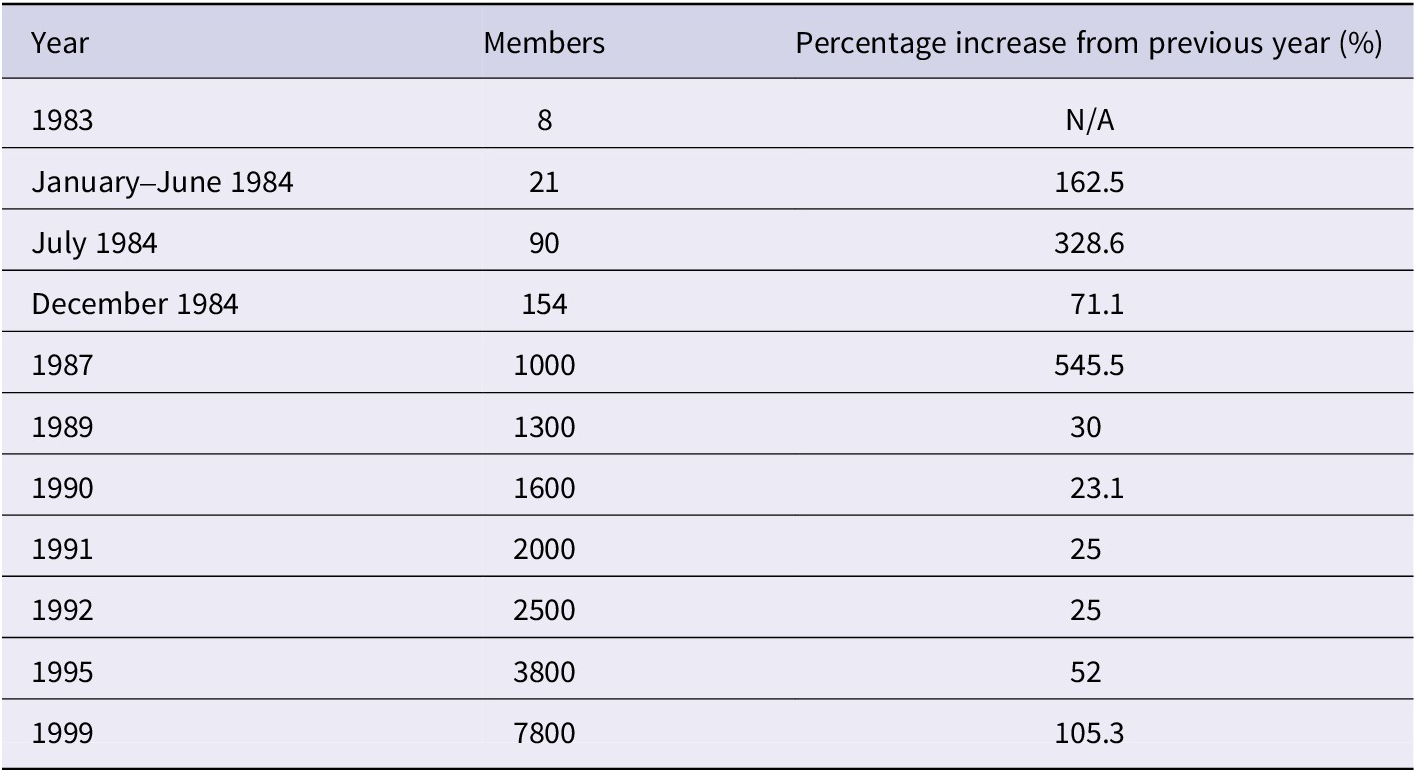
Frederick K. C. Price was the first building erected by the LFC at Barnawa. Due to the church’s increasing financial fortunes, it was built in 14 days and named in honor of the late faith preacher, K.C. Price, who was the first to preach in the building in 1990.Footnote 73 Oyedepo recalled how the 400-seat hall, which remains at the Garden of Faith, was built in anticipation of the arrival of Price, who was at that time one of the most celebrated Pentecostal preachers in the world.Footnote 74 An attendee of the hall’s dedication ceremony posits that it could not contain the number of people who turned out for the program in which K.C. Price preached.Footnote 75 Notable increase in attendance at the event confirms the translation of Oyedepo’s charisma into tangible institutional presence. On this backdrop, Oyedepo decided to build a bigger church to accommodate more worshippers. In one of Oyedepo’s well-attended programs at the Kongo Conference Hotel in Zaria in 1994, he boldly unveiled the architectural design for the permanent Church building at Barnawa, which many considered unrealistic, given the economic conditions of the period. Not only was the unveiled design ambitious, but he also announced that it would be the biggest church building in Northern Nigeria. At the completion and dedication of the 4000-seat capacity church on December 5, 1995, many who thought it was unimaginable, let alone achievable, went into the building to see for themselves what seemed like a rare miracle in the face of daunting economic challenges and the political turmoil that characterized the regime of the late General Sani Abacha.Footnote 76 In the church’s history, this moment affirms the role of visionary leadership in galvanizing followers even amid economic constraints and also reinforces Weber’s notion of charismatic authority. Beyond spiritual interpretation, this achievement suggests effective resource mobilization and strategic planning by the church’s leadership. The data presented in Table 1 illustrate the growth of the church in Kaduna between 1983 and 1999:
Growth of the LFC in Kaduna Metropolis and percentage increase, 1983 and 1999.

Table 1. Long description
The table has three columns labeled Year, Members, and Percentage increase from previous year. The first row lists 1983 with 8 members and N slash A for percentage increase. The next row is January to June 1984 with 21 members and a 162.5 percent increase. July 1984 shows 90 members and a 328.6 percent increase. December 1984 lists 154 members and a 71.1 percent increase. In 1987, there are 1000 members and a 545.5 percent increase. For 1989, 1300 members and a 30 percent increase are recorded. In 1990, there are 1600 members and a 23.1 percent increase. The 1991 row shows 2000 members and a 25 percent increase. In 1992, there are 2500 members and a 25 percent increase. The 1995 row lists 3800 members and a 52 percent increase. The final row, 1999, shows 7800 members and a 105.3 percent increase. The data source is L F C Kaduna Metropolis Church Growth Records, 1983 to 1999.
Sources: LFC Kaduna Metropolis, Church Growth Records, 1983–1999 (internal church records provided to the author by a church official on condition of anonymity).
The table shows that the church experienced rapid growth in its early years, particularly between 1983 and 1987. The growth rate slowed down in the late 1980s and early 1990s. The church experienced significant growth surges in 1987 and 1995. Overall, the church has experienced consistent growth over the period, with an average annual growth rate of approximately 25 percent. The growth data indicate that the expansion of LFC in Kaduna was not accidental but the product of deliberate institutional strategy and social resonance.
A member of the church during the period of study, however, observes that there was nothing miraculous or strange about the structure erected and commissioned in 1995 because Oyedepo’s LFC was at the time worth hundreds of millions of Naira.Footnote 77 The church’s purchase of the eight-seat Hawker Sydney 400B executive jet for ₦100 million in 1996 and the construction of the ₦9 billion worth Faith Tabernacle at Ota between 1998 and 1999 validate her claim.Footnote 78 In addition to mobilizing funds from members, the church also received financial support from foreign missions and partner ministries abroad, which traditionally assist churches in Africa that accuse their governments of persecuting Christians and provide evidence for such.Footnote 79
The call on members to invest in kingdom projects to insure their destinies in God’s hands, who will in turn build their personal houses, as well as Oyedepo’s lead sacrificial act of investing the proceeds of his investments and reinvestments in businesses, is also believed to have endeared several of his followers to follow suit.Footnote 80 Kantiok further opined that she had to empty her account to partake of the pronounced blessings. Nevertheless, her condition, and those of many partakers, which she can remember, only got worse over time.Footnote 81 This is part of the problem of the prosperity gospel wherever it is preached; it tends to produce pastors who are prosperous while impoverishing the followers who are meant to be made rich. Kantiok’s experience reveals that promised blessings are not generally realized, revealing the gap between public triumph and private hardship in Nigeria’s prosperity-centered megachurches.
Importantly, Oyedepo was not initially keen on establishing multiple churches across the metropolis. This may be attributed to several factors: limited financial and human resources at the early stage of his ministry, a focus on consolidating a single central congregation, and the strategic use of a flagship location to build visibility and credibility before expansion. Such a cautious approach aligns with patterns observed in other Nigerian Pentecostal founders, who often prioritized institutional consolidation before rapid geographic spread.Footnote 82 He maintained the Barnawa Branch in Kaduna throughout the 1980s and 1990s until the ministry was fully rooted in the state. Expansion into the nooks and crannies of the metropolis began in earnest in the 2000s when the church conceived the idea of establishing satellite churches across major urban centers in Nigeria.
Understanding the church’s growth during the period under study requires an analysis of the factors that facilitated it. Although the church maintains that Oyedepo’s divine covenant with God and the anointing of the Holy Spirit on him and his mentors sufficed, attributing the growth of a movement to spiritual factors and forces alone is inadequate. More so, the historical analysis focuses on tangible social phenomena, and Pentecostalism is intricately intertwined with the socioeconomic and political contexts in which it emerges. Therefore, attempting to explain the expansion of Pentecostalism purely through spiritual lenses is tantamount to a barren theological hypothesis.
Central to the growth of the LFC was the faith and prosperity gospel, which it adopted from its inception. While the prosperity gospel in Nigeria was the brainchild of Idahosa, Oyedepo, who had submitted to his theology, introduced it into the Kaduna Metropolis in the early 1980s. According to Kate Bowler, the prosperity gospel focuses on four key themes, namely faith, wealth, health, and victory.Footnote 83 She explains that faith is seen as a powerful force that generates spiritual energies and transforms positive words into reality and seeds (money) sown/given into miracles. The level of faith is measured by both one’s wealth and health, with material success serving as the gauge for the strength of one’s spiritual beliefs.Footnote 84 This theology found full expression in Kaduna, in light of local material hardships, making the message highly relevant and attractive. Oyedepo’s prosperity gospel was further shaped by three books: “The Purpose of Pentecostalism” by T.L. Osborn, “The Laws of Prosperity” by Kenneth Copeland, and “God’s Will is Prosperity” by Gloria Copeland.Footnote 85 Copeland was at the time the richest prosperity preacher in the world, with fleets of private jets, which Oyedepo has emulated, even though he claimed that his acquisition of five jets was for the purpose of preaching the gospel beyond the shores of Nigeria. The authors of these books argue that prosperity comes from God, not the state, through financial donations to the church.Footnote 86
LFC’s prosperity gospel adapted perfectly to the circumstances of the people in the metropolis. Its message of divine health comforted members who could not access the few standard medical facilities in the metropolis.Footnote 87 The message of hope through faith as the gateway to financial prosperity also became a motivation to several people who were on the verge of giving up in the face of the untold hardship that characterized the 1980s and 1990s. According to Samuel Ayila, his charismatic and dynamic preaching was recorded and sold across Kaduna by people who were fascinated by it.Footnote 88 On listening to these records, many were inspired to sit under his teaching and pastoral guidance. Consequently, people from different parts of the metropolis gathered to listen to his teachings on faith and prosperity. Akintola observed that, on several occasions, attendees had to walk back to their residences in the Kawo and Mando neighborhoods because the church often closed late, after public transportation services had ceased.Footnote 89
By implication, Oyedepo became a prominent figure in Kaduna’s religious landscape due to his “practical approach” to Christianity and his accessible exposition of the Bible, which resonated deeply with the lived experiences of his audiences. His emphasis on the prosperity gospel and the Word of Faith teachings promised material, social, and spiritual empowerment, addressing the economic hardships and social uncertainties faced by urban and rural dwellers. While sharing core elements with the American proponents – Kenneth Copeland, Kenneth Hagin, and Robert Osborne, such as the affirmation of faith, divine provision, and positive confession – Oyedepo’s message was uniquely contextualized: it directly engaged local concerns, incorporated culturally intelligible metaphors, and linked spiritual obedience to tangible outcomes, thereby enhancing its immediate relevance and appeal to Kaduna audiences. The church’s growth was further enhanced through the introduction of transportation services to transport members to the church’s location, thereby overcoming the challenges of distance and ensuring that attendees could return home safely after evening services. Practical support for worshippers promoted loyalty and demonstrated a material extension of spiritual care.
Oyedepo’s association with famous preachers was an important factor in the growth of LFC. It may be safe to argue that he practically rode on the wings of successful preachers to rise to the top in Christian ministry. His trajectory aligns with a broader pattern in which emerging Pentecostal leaders drew from earlier revivalist networks while developing distinct charismatic identities. In his formative years, he found guidance and support from the highly respected late Archbishop Idahosa, who was both his spiritual father and mentor. Idahosa frequently visited Oyedepo’s Ungwan Rimi church to encourage him and deter threats to its safety from Muslims.Footnote 90 There are accounts of Idahosa advising Oyedepo to take drastic measures, including setting mosques ablaze in the event of an attack on his church.Footnote 91 It is pertinent to note that during the 1970s and 1980s, Idahosa was widely revered for what followers and observers described as his “supernatural abilities,” due to his reported healings, miracles, and prophetic insights. These perceived powers enhanced his authority and visibility, drawing both local and international followers to his ministry.Footnote 92 Scholars argued that the demonstration of spiritual abilities was central to the appeal of early African Pentecostal leaders and contributed significantly to the global recognition of their ministries.Footnote 93 His reputation as a powerful spiritual leader not only shielded LFC from adversaries but also attracted curious Christians who wanted to witness the extraordinary display of “spiritual powers.”Footnote 94 Consequently, many individuals were inspired to join Oyedepo’s congregation, believing that aligning themselves with the church would grant them access to the same grace and anointing associated with Idahosa.
On the international stage, collaboration with prominent Pentecostal leaders such as Copeland, Hagin, Price, Benny Hinn, and others, significantly contributed to the rise of LFC. As mentioned earlier, Price preached at the 400-seat capacity church in Barnawa in 1990. Later that year, the church hosted the popular “healing evangelist,” Benny Hinn, with several worshippers slain in the spirit.Footnote 95 These events, among others, announced LFC, marking the dawn of a new era for the church in Kaduna. The church has openly acknowledged that its collaborations with renowned preachers have tremendously enhanced its reputation and visibility.Footnote 96 Oyedepo’s strong belief in the power of partnerships in achieving growth and expansion was demonstrated by his unwavering commitment to hosting the most accomplished global Pentecostal leaders, regardless of the resources required. This network of mentorship illustrates how global Pentecostal connections could engender local legitimacy and growth. For example, international partnerships increased Oyedepo’s visibility and authority in a competitive religious marketplace.
It is instructive to note that during the Ibrahim Babangida administration of Nigeria (1985–1993), religion gained increased political significance. It was utilized as a tool for gaining political power, causing instability in government at both local and national levels, strengthening ethnic affiliations, and sparking violent conflicts.Footnote 97 These negative developments left many Christians in the metropolis feeling that mainstream churches could not respond effectively. Oyedepo’s bold Christian stance, linked to perceived Idahosa’s protection, put him in the spotlight; he even dared arsonists to set his church ablaze during religious riots in Kaduna.Footnote 98 According to Abraham, one of his famous threats was, “Burn down this church and die, please give it a try.”Footnote 99 One informant posits that LFC was untouched throughout the 1980s and 1990s because of his fiery messages.Footnote 100 A bold stance in a tense political climate shows that Oyedepo leveraged charisma in response to socio-political contingencies. Consequently, it inspired many and drew members across denominations to the LFC.
Furthermore, the role of the Word of Faith Bible Institute (WOFBI) in the growth of the LFC cannot be overemphasized. Established in 1986 by Oyedepo, WOFBI was meant to produce a Pentecostal army to conquer Nigeria’s religious space for Christ. It has instilled the church’s vision in new converts and Pentecostals in the metropolis. Additionally, it has helped to lay a strong foundation for sister Pentecostal churches to ride on.Footnote 101 The reason is not far-fetched; WOFBI has graduated thousands who have established Christian ministries, contributing to the expansion of the Pentecostal community in Kaduna and beyond.Footnote 102 During each graduation ceremony, Oyedepo would address the graduates, declaring that they had been equipped to succeed within six months. He would also assert that their success was imperative because failure was not an option.Footnote 103 Oyedepo’s conviction stems from his belief that the Holy Spirit’s anointing, God’s grace, and the transfer of his mantle (spiritual authority) would aid their ministries.Footnote 104 This claim resonates with the contemporary realities of the bishop, who does not tolerate underperformance or neglect of pastoral duties. Underperforming pastors are either dismissed or demoted and labeled lazy stewards.Footnote 105 WOFBI transmitted his Pentecostal ideas to members and non-members of the LFC, who in turn disseminated them further. Moreover, some graduates later became members, while others remained long-term partners of the church.Footnote 106 The foregoing analyses show that institutional training ensured that charisma was routinized through a structured clergy capable of sustaining expansion.
Radical evangelism, through house-to-house, street, and campus outreach, was central to the church’s expansion. As the church expanded in the mid-1990s, it established student groups on the campuses of higher institutions in the metropolis and other parts of Northern Nigeria.Footnote 107 Through these groups, LFC reached out to students anxious about their uncertain futures. The church combined evangelism with social welfare to alleviate suffering on campuses and in local communities. In Kakuri, Sabo, Kawo, and Mando, for instance, essential items like food, clothing, free medical services, and other necessities were distributed.Footnote 108 Additionally, boreholes were constructed to provide clean water and improve health in three Barnawa communities.Footnote 109 It also provided scholarships, small loans, empowerment programs, and accessible spiritual guidance.Footnote 110 Therefore, LFC’s growth in Kaduna was supported by its consistent efforts to address the material, social, and spiritual needs of local communities during a period of economic uncertainty following the prolonged downturn caused by neoliberal policies since the 1980s. This strategy combined proselytization with social utility to strengthen the church’s appeal and consolidate its presence and institutions in the metropolis.
Bishop Abioye was at the forefront of LFC’s evangelistic efforts in Kaduna. His journey with the church began in Ilorin in 1979, where he first met Oyedepo and joined his ministry.Footnote 111 Their relationship evolved from a brotherly friendship into a deep spiritual bond. Oyedepo has described Abioye as an angel sent by God to assist him in his ministry. Similarly, Faith Oyedepo, his wife, has characterized their partnership as a long and enduring journey that began in the formative years of LFC.Footnote 112 From organizing early school camp meetings to spearheading street and campus evangelism across Kaduna in the 1980s and 1990s, he demonstrated steadfast leadership and unusual commitment, unparalleled in Nigerian Pentecostalism.Footnote 113 In recognition of his contributions to the stability and expansion of the church, he was ordained a Bishop at the Garden of Faith in 1993, at the age of 32.Footnote 114
Other leaders of the church who aided the church’s growth through evangelism in its foundational years include Thomas Aremu, David Olutayo, Bishop George Adjeman, Joseph Ebhohimen, Bishop Bolu Martins, Mike Afolabi, and Bishop Dickson Olorunda.Footnote 115 Ebhohimen joined the emerging LFC while studying physics at the University of Ilorin (1977–1982), where he held leadership roles in the University Fellowship as Prayer Secretary, Vice President, and President.Footnote 116 This fellowship served as a breeding ground for future members of LFC and Ebhohimen’s first encounter with Bishop Oyedepo. After his NYSC program, Ebhohimen secured employment at the National Centre for Technology in Education (NETC) in Kaduna in September 1983. This relocation was important for the LFC because it coincided with the church’s program in Kaduna from November 21 to 28, 1983, and subsequently, his founding membership of the church in December of the same year.Footnote 117 Ebhohimen’s dedication to the ministry increased over time, culminating in full-time service in November 1988. His appointment as Chairman of the National Church Committee in 1998/1999 and ordination as a Bishop in 1999 were a testament to his expanding role in the church. Aremu’s role in the evangelization of the metropolis is also worthy of mention. His journey with the Church began in Ilorin, particularly, the Power House, a group dedicated to prayer and fasting for the realization of Oyedepo’s vision.Footnote 118 He was not only committed to Oyedepo’s vision but also a founding member of the LFC in Kaduna, where he served in various capacities, including a full-time pastor in 1984. Despite his pastoral duties, he was fully involved in the church’s evangelistic missions within the metropolis and beyond.Footnote 119
From the foregoing, it can be argued that the roles of longstanding, committed, and strategic key leaders in the church translated Bishop Oyedepo’s personal charisma into an enduring institutional framework. Within the church’s hierarchical structure, Oyedepo was at the helm of affairs as General Overseer, providing overarching vision and doctrinal direction. Directly beneath him were influential church leaders and senior pastors who combined evangelistic, administrative, and pastoral responsibilities. This hierarchy shows both spiritual and organizational expertise, as well as the integration of personal charisma with institutional labor. In other words, delegated authority operationalized Oyedepo’s charisma and created the administrative infrastructure for sustainable growth. For instance, the ordination of foundational members as Bishops and their ascension to the church’s management committees and training programs further institutionalized their roles, signaling both trust and formal recognition within the hierarchy. It also reveals how sustained labor and administrative skill supported both regional growth and institutional continuity, blending spiritual devotion with practical organizational work. The collaboration between Oyedepo and these leaders encapsulates the gamut of the routinization of charismatic authority as articulated by Max Weber. Oyedepo’s visionary and charismatic leadership was operationalized through the committed work of deputies and associates, transforming personal charisma into a stable and replicable institutional structure. The interface between the founder’s spiritual authority and the industrious labor of his team demonstrates how structured leadership, bureaucratic coordination, and media utilization enabled LFC to expand and extend its influence beyond the founder’s immediate presence, while maintaining doctrinal coherence and organizational effectiveness.
Another critical factor in the church’s rise to prominence was its strict hierarchical structure that enforced discipline among its members. To become a recognized member, individuals were required to complete a foundational class. The objective was to educate them about the church’s core beliefs and practices, the importance of faithful service, and financial commitments.Footnote 120 After the training, church members were required to belong to both a service unit (choir, ushering team, or sanitation unit) and a home cell (fellowship group), where they were to serve faithfully.Footnote 121 Failure to comply with these requirements resulted in one being considered merely a church attendee rather than a registered member. This status implied that one’s needs would not be met, since the challenges of members could only be communicated through service units and home cells. As a result, some congregants not endorsed by units and cell leaders as dedicated members lost the benefits associated with registered membership. Uncommitted members often turned to smaller Pentecostal churches for accessible spiritual and material support, with a few eventually defecting in response to their more inclusive welfare provisions.Footnote 122 Discipline and accountability within the church’s hierarchy strengthened institutional coherence, even as some attrition occurred.
Oyedepo’s strategic move to Lagos in 1989 was a defining moment in the history of LFC. After claiming to have been led by the spirit to move to Lagos, Oyedepo dispatched some Staff to the location to secure a facility for LFC’s launch. The Lagos expansion exemplifies how early consolidation in Kaduna served as a springboard for national and international prominence. LFC in Lagos began with an outreach program in a facility on 1A, New Area Road, Iyana Ipaja, Agege, in 1989.Footnote 123 From 1990 to 1992, seminars on faith for prosperity were organized. However, the facility could no longer accommodate the large number of attendees at these seminars, which had expanded to include what was then called breakthrough night teaching sessions. Thus, LFC relocated to 38 Raji Oba Street, where it acquired a new facility in 1992.Footnote 124 Initially, they operated from a temporary church while constructing a 3000-seat auditorium. However, due to a rapid increase in membership to 5000 individuals, the facility also became inadequate, with members sitting on the road during service. In December 1995, Idahosa dedicated the church’s larger facility, the Winners complex, amid the unwavering support of devoted worshippers.Footnote 125 The LFC also acquired the Certificate of Occupancy (C-of-O) for Canaan Land and did a foundation-laying ceremony in 1998. On September 18, 1999, the Tabernacle of Faith, also known as Canaan Land and the international headquarters of the church, was officially inaugurated.Footnote 126
Between 1994 and 2000, church records show that membership of the Lagos church increased from 3000 to 5000, a phenomenal growth in the history of Nigerian Pentecostalism.Footnote 127 Also, the fact that people were sitting on the rooftops and roads near the facilities used by the LFC in Lagos demonstrates that any available space was worth the church’s word of faith and encouragement, which provided emotional and psychological support. The rapid growth of LFC in both Lagos and Kaduna reflects an interplay between perceived success and material responsiveness: congregants were drawn to thriving churches, anticipating spiritual and practical benefits, while the church’s active engagement in meeting members’ material and social needs reinforced loyalty and sustained expansion. Therefore, the feat recorded in Lagos between 1989 and 1999 was not only uncommon in the history of global Pentecostalism but was also captivating and magnetizing to all who believed in the ideals of Pentecostalism. On the whole, the rapid growth of LFC in Lagos became the springboard that fed other branches of the church wherever it existed; Kaduna Metropolis was not an exception.
At this juncture, the determination of Oyedepo needs to be acknowledged. In Nigeria’s Christian community, he is widely regarded as fiercely relentless in pursuing his dreams and visions.Footnote 128 From the start, he ran LFC like a business aimed at becoming a top global Pentecostal church, backing bold claims with projects like the K.C. Price Hall, Garden of Faith, as well as Canaan land and large Crusades when they were uncommon in the metropolis. Prudent resource management and reinvestment also contributed to its rise to a mega ministry by 1999. Particularly striking was his strategy of prioritizing learning over personal recognition, which is at variance with the practices of emerging Pentecostal leaders in contemporary Nigerian societies. He instead focused on studying successful Pentecostal leaders and ministries worldwide, aligning with them strategically, until he achieved his ambition of becoming a prominent leader himself. Thus, Kaduna and Lagos are good examples of how charisma, material resources, organizational strategy, and social responsiveness combined to produce a replicable mega-Pentecostal model.
V. Media and the Consolidation of LFC in Kaduna Metropolis, 2000–2020
The period from 2000 to 2020 marked the peak of LFC’s growth, characterized by unprecedented expansion. This was driven by the strategic establishment of satellite churches to consolidate earlier gains, and the emergence of new Pentecostal congregations inspired by LFC’s model. Enhanced community engagement also played a critical role, as LFC consistently responded to local needs, thereby reinforcing its institutional presence and legitimacy.Footnote 129 The church became closely integrated with local dynamics and participated in addressing social challenges. Beyond its religious role, it catalyzed developments in healthcare, education, humanitarian services, and civic engagement. This phase marked the maturation of earlier processes, in which charismatic authority had become firmly established in institutional structures across Kaduna.
Within this period, the LFC established about 200 branches in the metropolis, which it refers to as satellite churches.Footnote 130 The proliferation of satellite churches underscores the spatial routinization of charisma, which extends beyond the founder’s influence across multiple locations. The result was massive, partly because of the church’s rich financial resources and the pathbreaking success recorded at the national level. In 2020, the church established 10,000 branches nationwide, bringing its total number of branches to over 21,000 in Nigeria alone.Footnote 131 Additionally, it planted several branches in 147 countries.Footnote 132 This uncommon expansion in the church’s history highlights the scalability of the institutional model beyond its original local context. The proliferation of branches resulted from aggressive evangelism that was consistent and deliberately focused on expanding to newer areas in the metropolis. Areas previously unreached and those with minimal presence of the church, especially in the expanding parts of the metropolis, Chikun and Igabi Local Government Areas (LGAs), were specifically targeted.
The leadership of Bishops Abioye, Aremu, Ebhohimen, Yakubu Kazi Afolabi, Pastors Chris Abraham, and Lekan Ogedenbe, among others, is noteworthy in the expansion of the LFC to these areas. Their roles show the importance of decentralization of authority in sustaining large-scale organizational growth.Footnote 133 Moreover, their efforts led to the establishment of the first set of LFC branches across the metropolis on October 14, 2010, from whence other branches sprang up. This period signaled a shift toward systematic replication of the church’s organizational model across the metropolis. The pioneering branches include the Kaduna Metro Church (Katsina Road), LFC Sabo, LFC Ungwan Maigero, LFC Gonin Gora, and LFC Jaji.Footnote 134 Expansionist strategy during this period marked a shift from earlier interdenominational campus fellowships to distinctly denominational ones. It established a presence in all tertiary institutions in Kaduna and fostered faith formation, peer networks, and denominational outreach among students. The vibrancy of these fellowships, coupled with material support, attracted many youths, some of whom now lead various congregations within the metropolis.Footnote 135
The consolidation of Pentecostalism is inextricably tied to globalization, modernity, and individual and group identity formation. Rijk Van Dijk situates Pentecostalism within the broader framework of “religions of modernity” and transformations associated with global capitalism, identity formation, and modern urban life.Footnote 136 This is because Pentecostalism engages with contemporary consumption and technology and desires social relevance. Pentecostalism’s consolidation thus lies in its ability to reshape identities and empower individuals to transcend traditional norms to adapt to global modernity. In this context, Dijk contends that Anglo-American Pentecostalism introduced new religious ideas, organizational models, and cultural aesthetics, prompting youth to reject traditional structures associated with mainline churches and older generations.Footnote 137 This way, global influences were not simply adopted but selectively adapted to local realities. This shows the link between globalization and transnational influences in shaping the expansion and consolidation of Pentecostalism in Africa.
Between 2000 and 2020, globalization drove the LFC to liberalize worship (an inclusive style of worship) to boost membership and income, relaxing strict dress codes and adopting modern music and expressive worship.Footnote 138 This created an entertainment-like atmosphere that incorporated performative elements to broaden the appeal and participation of urban youth, but drew criticism for prioritizing growth and revenue over spiritual depth.Footnote 139 This tension reflects the broader challenge of balancing institutional expansion with perceived spiritual authenticity. The church also expanded its reach through television, VCD/DVD distribution, and later digital platforms like YouTube and WhatsApp, fostering “Digital Pentecostalism” and enabling remote participation. However, online worship, accelerated by COVID-19, reduced physical attendance and giving, with several members remaining virtual even after restrictions were eased.Footnote 140 Digital platforms, therefore, extended the reach of charismatic authority while reshaping patterns of participation and commitment in Nigerian Pentecostal churches.
To address financial shortfalls, LFC adopted technological solutions such as mobile short codes and apps for tithes and offerings, and regularly displayed bank account information during live streams.Footnote 141 At key locations, including its headquarters and the Katsina Road branch, ATM booths and Point-of-Sale (POS) systems were installed to ensure seamless financial transactions.Footnote 142 These developments suggested a dual identity for the church as both a spiritual institution and a transactional financial entity. LFC’s fintech solutions highlight the increasing formalization and bureaucratization of church finances as part of institutional consolidation. It also reveals a different but complementary dynamic to LFC’s contextual relevance and pragmatic ministry. By linking financial strategies and global networks, LFC not only adapted pragmatically to local socioeconomic realities but also leveraged global resources, partnerships, and commercial integration to consolidate its influence. This reflects the convergence of religious practice and economic rationality in contemporary Nigerian Pentecostalism.
LFC’s use of media enhanced its leadership image, theology, and branding, with figures like Bishops Oyedepo, Abioye, and Aremu gaining significant influence through televised events and targeted promotion of major programs like Shiloh, the church’s major annual event.Footnote 143 Thus, media visibility became a major mechanism for sustaining charismatic presence beyond physical gatherings. For example, Bidemi Job, a former church secretary, cited the televised teachings of Bishops Oyedepo and Abioye as the reason for joining the church in 2005.Footnote 144 Marketing via social media, advertising, and product sales reinforced the church’s appeal and commercial reach. Furthermore, they blurred the boundaries between religious organizations and institutional enterprise. Building on earlier Pentecostal radio evangelism pioneered by leaders like Aimee Semple McPherson and Idahosa, LFC used radio, cassette tapes, and mass sermon distribution to expand its audience, engage non-members, and make conversions.Footnote 145 Continuity with earlier Pentecostal traditions demonstrates how media technologies have consistently underpinned the expansion of the LFC and other Nigerian Pentecostal churches across the globe.
Since the late 1980s, LFC has used print media for evangelism, culminating in the launch of Dominion Publishing House (DPH) in 1992. Oyedepo’s first books debuted in 1987, and by 2020, DPH had produced over two million Christian publications, some free and others sold, for evangelism, discipleship, and revenue generation.Footnote 146 DPH disseminated LFC’s Pentecostal ideologies centered on faith, wisdom, and prosperity. Winning the ECOWAS Gold Award in 1996, it expanded LFC’s reach across languages and borders, reinforced doctrine, maintained loyalty, and promoted its “12 Pillars of Faith,” while generating hundreds of millions of naira for the church and its authors.Footnote 147 As such, print media served as a tool of doctrinal standardization and also a source of institutional revenue for further expansion.
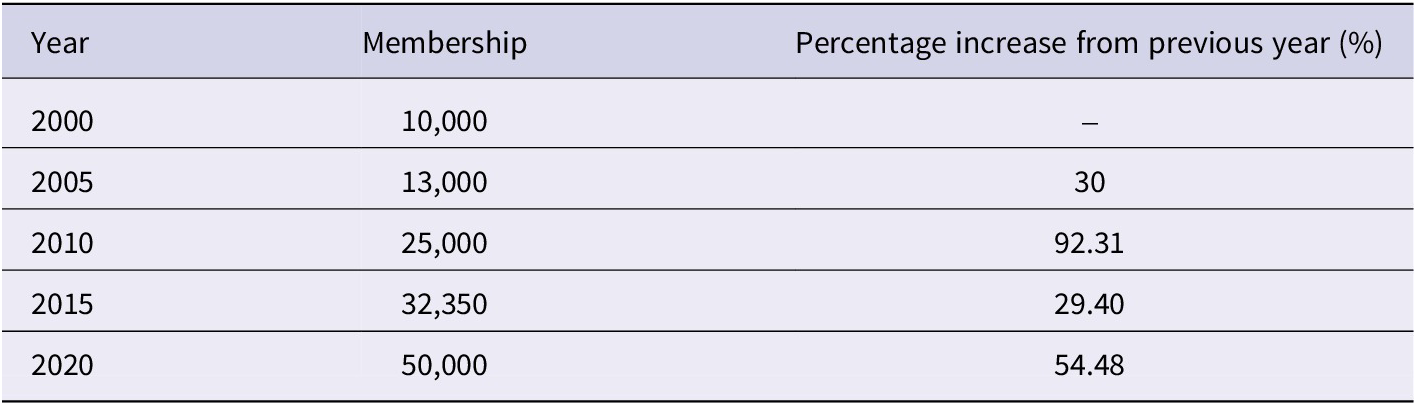
With expansion achieved through the establishment of branches, house and campus fellowships, and through evangelism and the use of media tools, the number of worshippers increased exponentially, such that by 2020, worshippers had grown to 50,000. Table 2 shows the estimated growth rate of the church from 2000 to 2020:
Growth of the LFC Kaduna from 2000 to 2020.

Table 2. Long description
The table has three columns labeled Year, Membership, and Percentage increase from previous year. From top to bottom, the rows are as follows. In 2000, membership is 10,000 with no percentage increase listed. In 2005, membership is 13,000 with a 30 percent increase. In 2010, membership is 25,000 with a 92.31 percent increase. In 2015, membership is 32,350 with a 29.40 percent increase. In 2020, membership is 50,000 with a 54.48 percent increase. The data source is L F C Church Growth Records, 2020, noting that figures may include both registered members and broader participation, especially with expanded media engagement during the COVID-19 period.
Sources: LFC Church Growth Records, 2020 (internal church records provided to the author by a church official on condition of anonymity; figures reflect institutional reporting and may incorporate both registered members and broader forms of participation, particularly in the context of expanded media engagement during the COVID-19 period).
An analysis of LFC membership data from 2000 to 2020 reveals an upward trend. LFC witnessed the most dramatic surge in membership between 2005 and 2010, with a 92.31 percent increase. This phenomenal numeric increase was partly the result of the unusual growth the Lagos church brought to bear in the history of global Pentecostalism. This way, the Kaduna case models how global forces and local dynamics intersect to sustain long-term Pentecostal expansion in Nigeria and Africa. Although growth rates later exhibited some variability, the overall growth pattern remained positive, culminating in a substantial 54.48 percent increase between 2015 and 2020. The marked increase recorded in 2020 should, however, be read with caution, as pandemic-related restrictions on physical gatherings coincided with an expansion of mediated participation through broadcast and digital platforms, potentially blurring the distinction between formal membership and wider audiences. Be that as it may, the sustained growth meant the successful integration of organizational structure, media strategy, and social engagement in Kaduna. Interpreted from the Weberian analytical framework of the routinization of charismatic authority, the evidence presented suggests that while Oyedepo’s personal charisma initiated LFC’s expansion, its durability and consolidation resulted from systematic institutionalization through leadership training, standardized church practices, bureaucratic coordination, and extensive media use. Moreover, periods of sustained and accelerated growth coincided with the consolidation of organizational routines, especially the elevation of WOFBI, administrative professionalization, and the strengthening of a hierarchical network that transmitted the founder’s vision across multiple satellite churches. Therefore, LFC’s growth history agrees with Weber’s thesis that charisma must be depersonalized and institutionalized to achieve a far-reaching impact.
VI. Conclusion
The trajectory of LFC in Kaduna between 1983 and 2020 shows how charismatic authority, as theorized by Max Weber, can be transformed into a durable institutional force within a complex urban setting. While Oyedepo’s spiritual vision and rhetorical authority catalyzed early growth, long-term expansion depended on the systematic routinization of charisma through organizational structures, doctrinal standardization, media networks, and leadership training. Situated within Kaduna’s religiously plural, economically volatile, and politically contested context, LFC’s evolution highlights how Pentecostal megachurches embed themselves in urban landscapes by responding to both spiritual and material needs. Thus, the Kaduna experience underscores the broader political economy of African megachurches, where religious authority intersects with capital accumulation, social welfare, and global networks. It also reveals the dual character of institutionalized charisma in Africa: while routinization enables continuity, scalability, and influence, it also risks bureaucratization and the dilution of founding spontaneity. In the final analysis, the LFC’s example explicates that charismatic movements in Africa are neither transient nor purely spiritual phenomena, but adaptive institutions that shape, and are shaped by urban modernity, socioeconomic realities, and the longstanding tension between inspiration and organization.
Acknowledgements
I am deeply grateful to the editorial team of Church History Journal, especially Brett Whalen and the editors – Brandon Bayne, Esther Chung-Kim, Maria Doerfler, Lauren Jarvis, and Angela Tarango, as well as the anonymous reviewers of the article, for their careful reading, constructive criticisms, incisive insights, and invaluable feedback, which significantly improved the quality of this article. I also thank Aaron Pattillo-Lunt, Senior Assistant to the Editors, whose encouragement and professional guidance throughout the review process were incredible. I am particularly indebted to Rev. E.A. Akintola of Faith Dominion Church, Kaduna, Nigeria, and to all my informants whose willingness to share their experiences and insights made this research possible. Their contributions provided depth and a critical perspective to this study. While I have benefited greatly from this generous support and interventions, any remaining errors are entirely my own.