Introduction
Anterior glottic web can be described as a focal narrowing of the airway because of fibrotic tissue at the level of the true vocal folds. Acquired anterior glottic webs are more common than congenital webs. They may occur at any age, secondary to endotracheal intubation, laryngeal trauma or surgery close to the anterior commissure, radiotherapy, and rarely inflammatory processes. Symptoms can range from dysphonia and impaired exercise tolerance to airway obstruction, depending on the length of the web.
Surgery for anterior glottic web is carried out for two reasons: to establish a stable airway and to provide a functional voice. The surgical management of this condition poses a significant problem to the laryngologist given the propensity for web reformation following treatment and the lack of a clear consensus regarding the optimal surgical approach.
The management of anterior glottic web is not a new problem. Previous descriptions of bougie dilatation and excision via an external approach date back as far as the late nineteenth century.Reference Schroetter1 However, it was in 1924 when Haslinger described his silver keel techniqueReference Haslinger2 and approaches recognisable to the present-day laryngologist entered common usage. McNaught modified this technique, using a tantalum keel placed via a laryngofissure.Reference McNaught3 It has since been modified many times with various materials.
In the 1980s, when laser techniques became widely utilised, laser surgery was employed by many to divide anterior glottic webs. However, some have returned to cold steel division with or without mucosal flaps, as described by McGuirt et al.Reference McGuirt, Salmon and Blalock4 More recently, mitomycin C, an antineoplastic agent, was found to suppress fibroblast proliferation.Reference Khaw, Doyle, Sherwood, Grierson, Schultz and McGorray5 It has subsequently been used topically after the division of anterior glottic webs, with varying success.Reference Roh6,Reference Simpson and James7
Despite the myriad techniques described, there is no general consensus on the management of anterior glottic web, and controlled trials on the subject are lacking. The existing evidence is based largely on observational studies. This systematic review was therefore undertaken to inform evidence-based management of anterior glottic web. Given the differing pathophysiological processes underlying congenital and acquired anterior glottic web, only acquired anterior glottic web has been considered for the purposes of this study.
Materials and methods
Study design and search strategy
A systematic search of the PubMed, Embase, and Cochrane databases was carried out to identify original articles published until October 2018. The research was conducted according to the Preferred Reporting Items for Systematic Reviews and Meta-Analyses (‘PRISMA’) criteria. A combination of Medical Subject Heading terms and free-text words were used in the search, as follows: ‘anterior glottic web’, ‘laryngeal web’, ‘laryngeal synechia’, ‘vocal fold synechia’, ‘anterior commissure synechia’, ‘anterior glottic stenosis’ or ‘anterior laryngeal stenosis’, and ‘management’, ‘treatment’, ‘surgery’, ‘follow up’ or ‘surveillance’. Filters were then used to identify articles pertaining to humans, with more than one patient. Reference lists of articles and narrative reviews published in the last 10 years were also manually searched for articles not identified by the initial search.
Inclusion and exclusion criteria
All studies investigating the management of acquired anterior glottic web in humans were assessed for inclusion. Studies in all languages were considered. Studies concerning congenital anterior glottic web or airway stenosis at other levels were excluded, as were those with fewer than two patients. Studies containing duplicated data from previously published work were also excluded, as were review articles, editorials and letters. No restrictions were placed on study design or study population.
Systematic review protocol and data extraction
Two authors (DB and JMF) independently screened all the titles and abstracts of studies generated by the search, using predefined inclusion and exclusion criteria. Subsequently, the full text of articles was screened if relevance was not obvious based only on the title and abstract. Any disagreement between the assessors regarding the suitability of articles for inclusion was settled by discussion between assessors or, failing this, by referral to the senior author.
Data from included studies were extracted using a standardised proforma in Microsoft Excel spreadsheet software (Redmond, Washington, USA). Categories for data extraction included sample size, participant age, surgical technique, anterior glottic web size, recurrence rate, follow-up duration and post-operative voice quality.
Data analysis
Given the variety of outcome measures employed in different studies, statistical meta-analysis of results was not possible. Results were therefore consolidated according to intervention and outcome measure, and are presented descriptively.
Risk of bias and quality assessment
All studies were assessed for quality and risk of bias by both reviewers, according to a modification of the system described in the Cochrane Handbook for Systematic Reviews of Interventions, version 5.1.0.Reference Higgins and Green8 Because of the large number of retrospective, non-randomised, non-blinded studies on the subject, more weight was placed on the descriptions of interventions and reporting of outcomes, than on randomisation and blinding.
Results
Search results and study selection
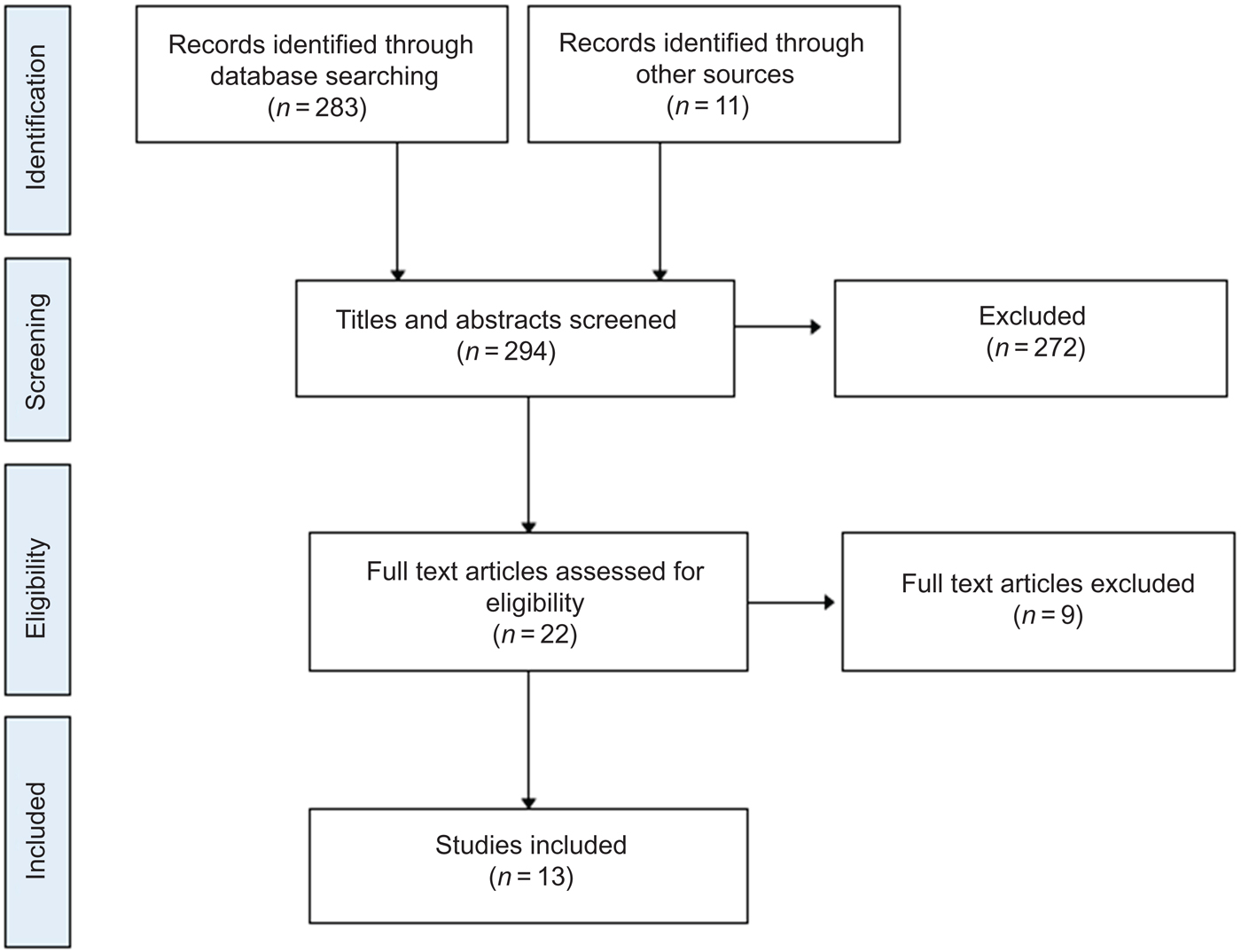
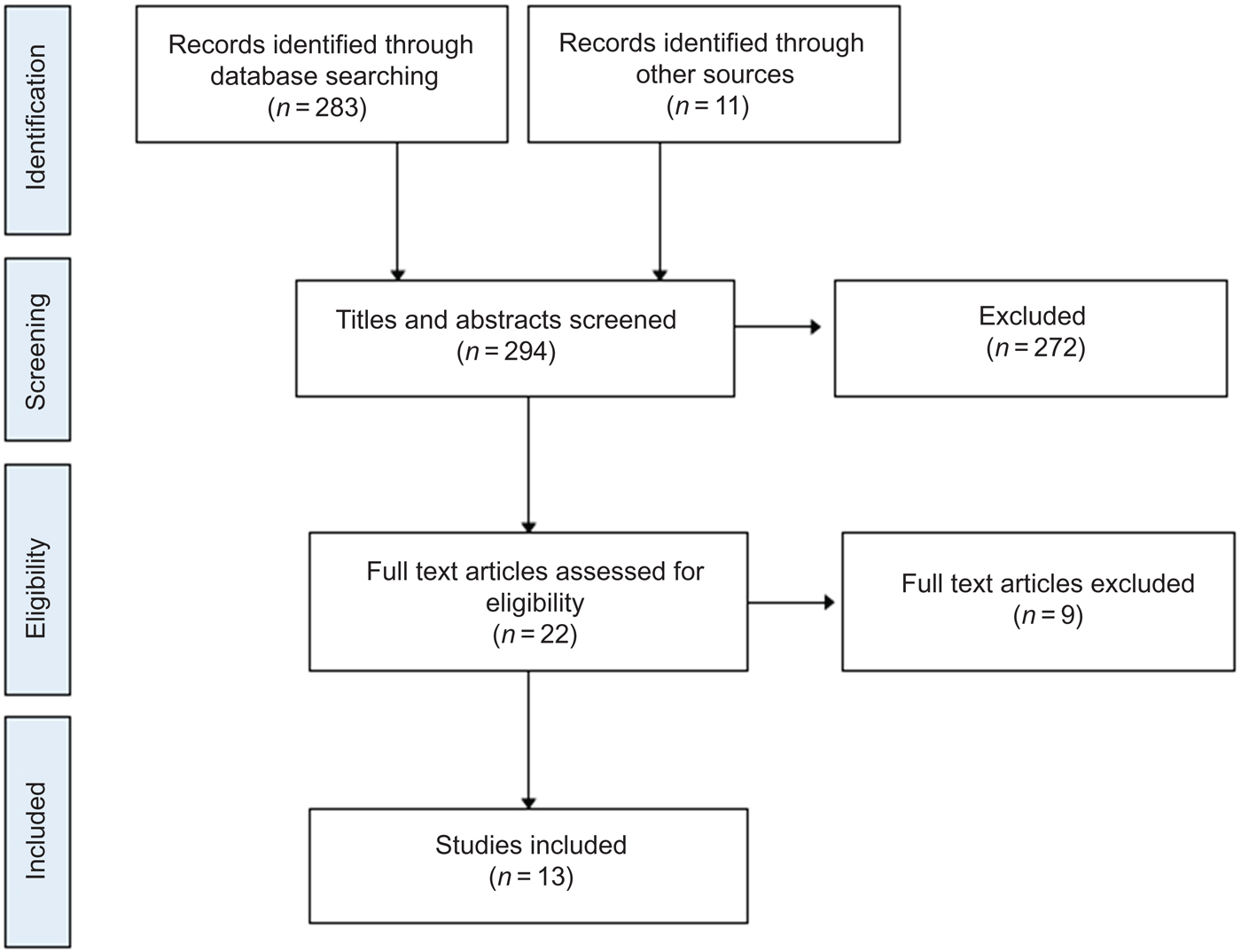
The search strategy detailed above yielded 294 articles. By screening the titles and abstracts, 272 articles could be excluded because it was clear they did not meet the inclusion criteria. This left 22 studies for which the full text was assessed. Of these, 13 studies met the inclusion criteria.Reference Lichtenberger and Toohill9–Reference Cao and Sun21 Figure 1 shows the Preferred Reporting Items for Systematic Reviews and Meta-Analyses flowchart.
Preferred Reporting Items for Systematic Reviews and Meta-Analyses (‘PRISMA’) flowchart describing the search strategy.
Characteristics of included studies
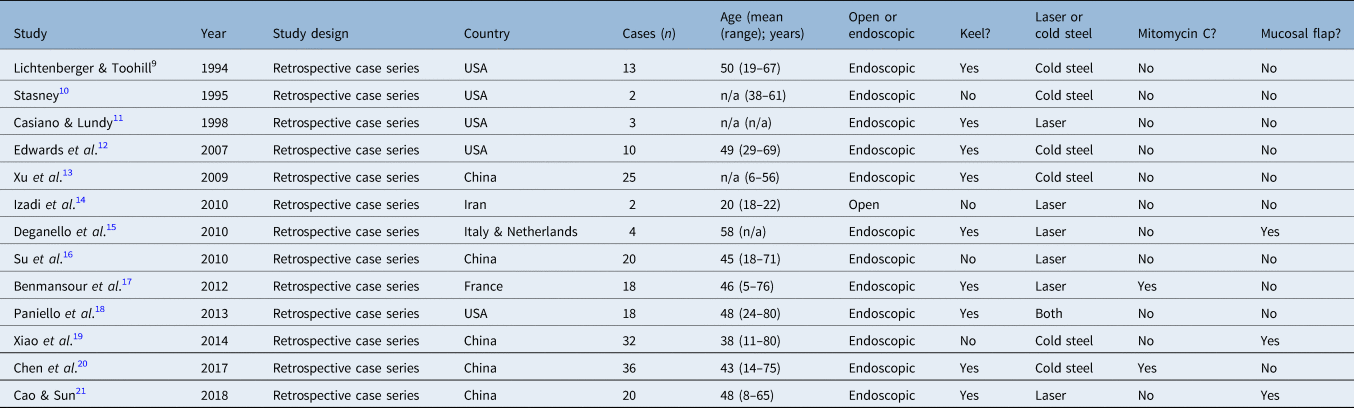
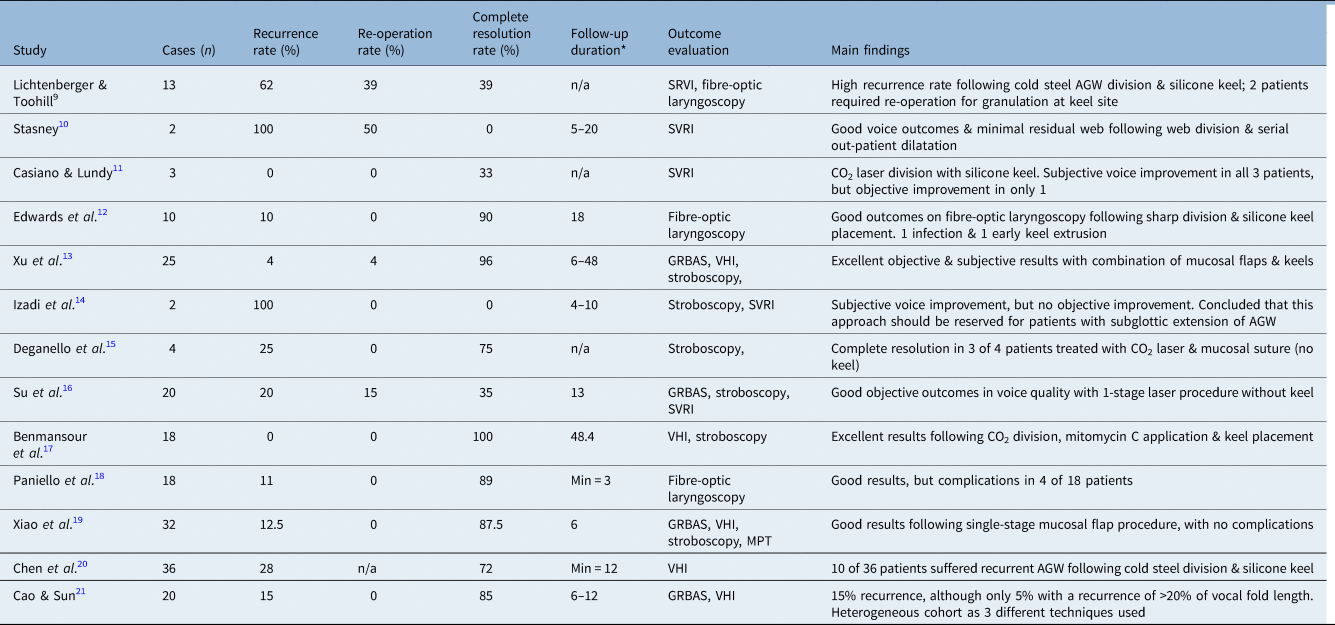
The 13 studies meeting the inclusion criteria included a total of 203 patients ranging in age from 5 to 80 years, and all were retrospective case series. Three of the studies included a total of five patients with congenital anterior glottic web, and it was impossible to separate these from the acquired anterior glottic webs in the reported data.Reference Lichtenberger and Toohill9,Reference Benmansour, Remacle, Matar, Lawson, Bachy and Van Der Vorst17,Reference Chen, Shi, Chen, Yang, Cheng and Wu20 After discussion between authors, it was decided they should be included, as the congenital anterior glottic web patients made up only a small proportion of the patients in each study. Table 1 shows general characteristics of the included studies, and Table 2 summarises the key findings.
Characteristics of included studies

n/a = not applicable
Summary of key findings

* Values reflect average follow-up duration or range (or minimum (‘min’) where specified), in months. n/a = not applicable; SRVI = self-rated voice impairment; AGW = anterior glottic web; CO2 = carbon dioxide; GRBAS = grade, roughness, breathiness, asthenia and strain scale; VHI = Voice Handicap Index; MPT = maximum phonation time
The length of follow up ranged from 3 to 48 months. The outcome measures reported varied significantly. All studies reported recurrence rate, and the majority reported the re-operation rate. Qualitative measures included self-ratings of voice impairment, the Voice Handicap Index score, the grade, roughness, breathiness, asthenia and strain (‘GRBAS’) scale score, videostroboscopy findings and fibre-optic laryngoscopy findings. Objective outcome measures included maximum phonation time, phonation quotient, frequency range, fundamental frequency, and jitter and shimmer analysis findings. These objective measures were unfortunately difficult to compare given the heterogeneity in reporting within the different studies.
Open versus endoscopic approaches
Although once a popular approach for anterior glottic web surgery, open surgery via laryngofissure is now seldom used given the advances in endoscopic equipment and techniques. Open surgery does still have a role in the management of thick anterior laryngeal webs with subglottic involvement.Reference Stephenson and Wyatt22 Nevertheless, 12 of 13 studies identified in this review utilised an endoscopic approach.
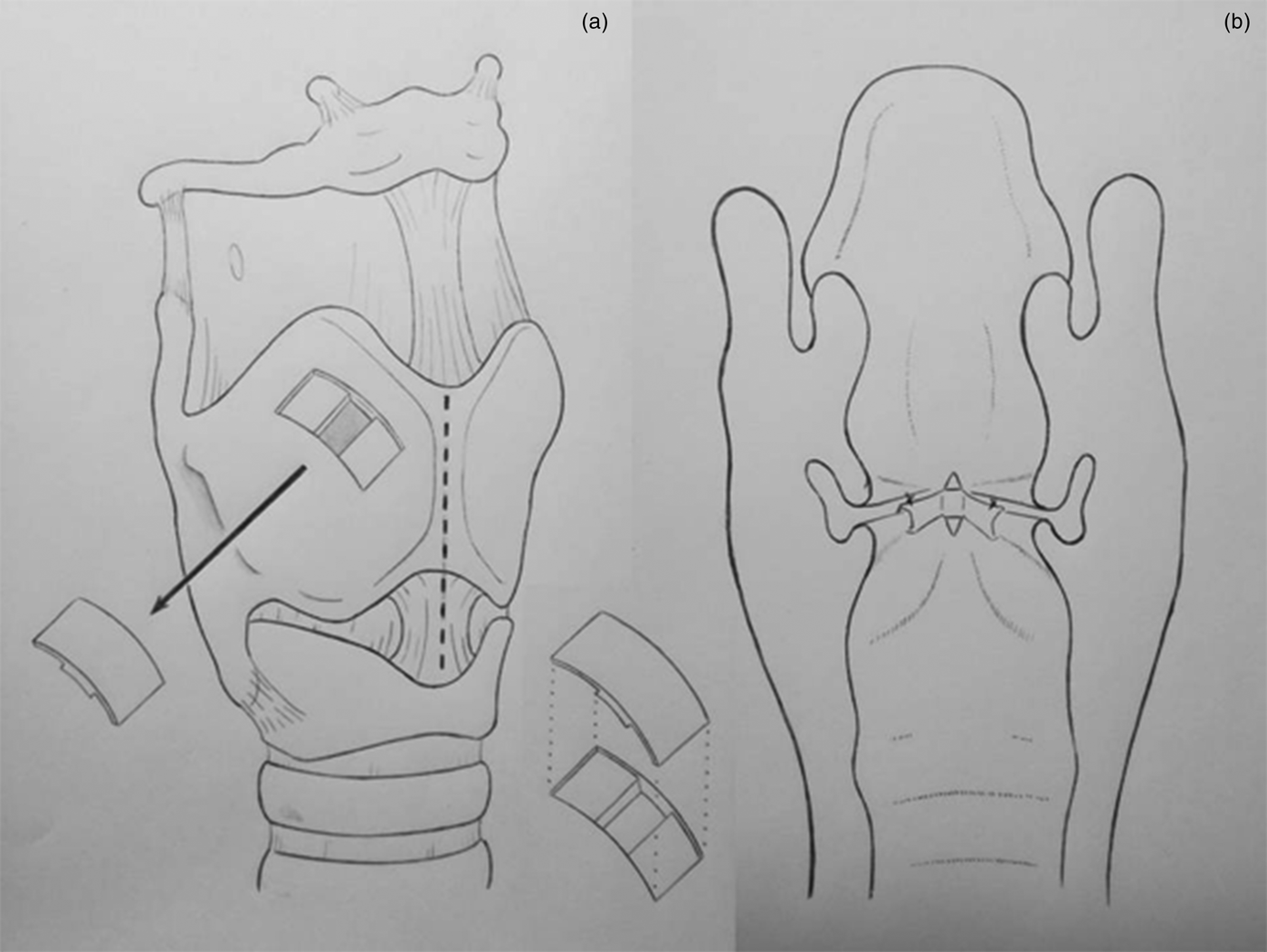
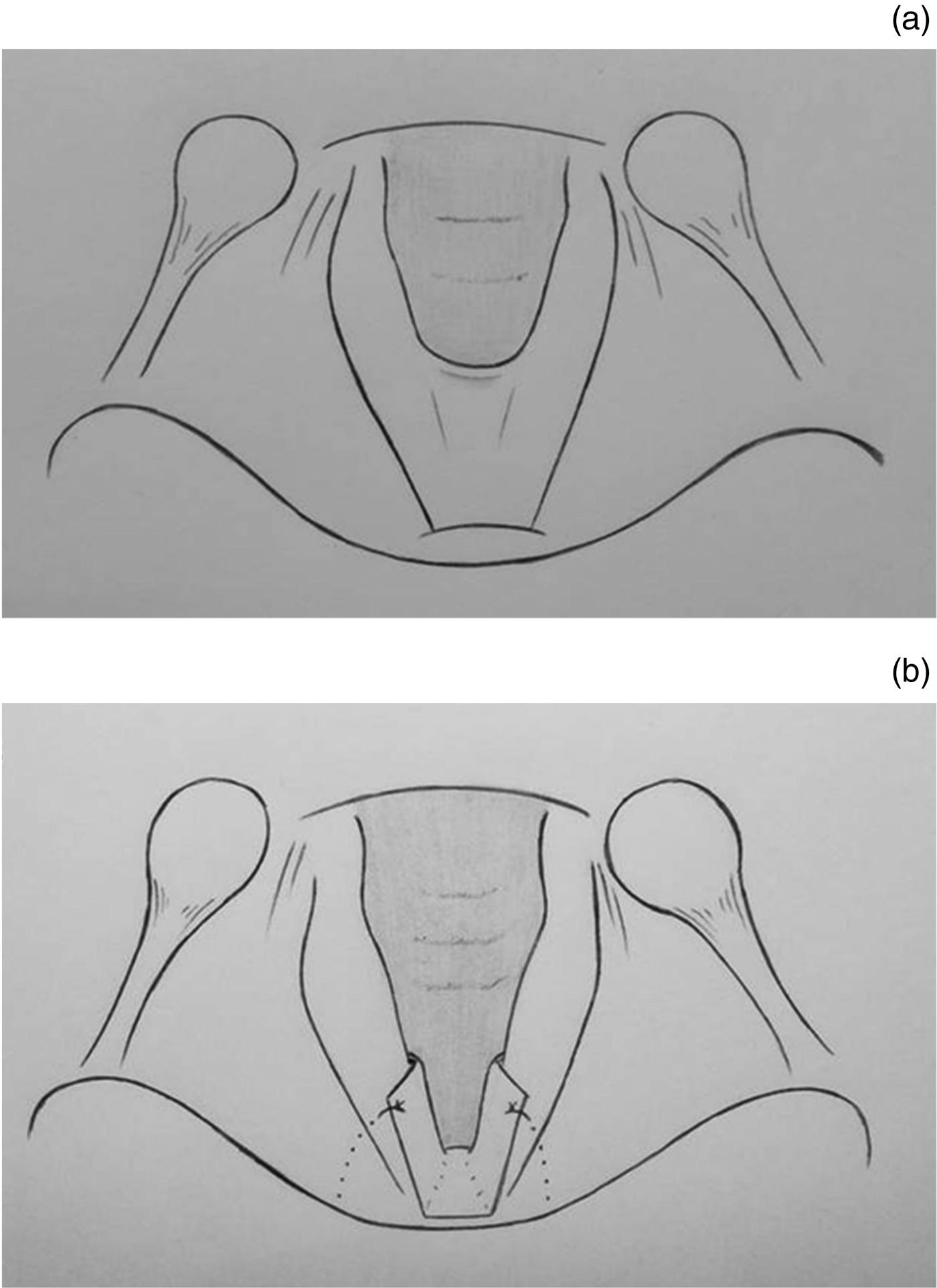
Izadi et al. described a technique used in two patients with bulky anterior glottic webs extending into the subglottis, which involved access via a laryngofissure, division of the anterior glottic web, and insertion of a composite graft of cartilage and perichondrium to act as a keel (Figures 2 and 3).Reference Izadi, Delarestaghi, Memari, Mohseni, Pousti and Mir14 In both cases, there was a subjective improvement in voice quality, but no objective improvement. The authors conceded that the open approach has significant drawbacks, including the need for a tracheostomy, but maintain that it has advantages in those with subglottic extension of an anterior glottic web. By contrast, all studies that described an endoscopic approach were able to avoid a tracheostomy in all patients.
Autologous keel ‘butterfly technique’, as described by Izadi et al.,Reference Izadi, Delarestaghi, Memari, Mohseni, Pousti and Mir14 whereby a segment of thyroid cartilage outer perichondrium along with a sliver of cartilage is excised (a), and, after division of the anterior glottic web via a laryngofissure, secured at the anterior commissure to prevent web reformation (b). The dashed line in (a) represents the site of laryngofissure incision.

View from above the anterior glottic web before (a) and after (b) division and insertion of autologous keel (as described by Izadi et al.Reference Izadi, Delarestaghi, Memari, Mohseni, Pousti and Mir14).

Web division
Six of the 13 papers described ‘cold steel’ dissection in 118 patients,Reference Lichtenberger and Toohill9,Reference Stasney10,Reference Edwards, Tanna and Bielamowicz12,Reference Xu, Han, Hu, Chen, Li and Hou13,Reference Xiao, Wang, Han, Ma, Ye and Xu19,Reference Chen, Shi, Chen, Yang, Cheng and Wu20 with the aim of reducing thermal damage to vocal mucosa and thus the rate of recurrence. The carbon dioxide (CO2) laser has been described as a method for dividing anterior glottic web, and 6 studies used it exclusively in 67 patients. In one study, both techniques were used, but it did not specify which patients underwent which technique.Reference Paniello, Desai, Allen and Khosla18 The techniques were so variable in terms of keel placement and duration that meaningful comparison between the laser and ‘cold steel’ outcomes was difficult; however, the recurrence rates in the pooled groups were 15 per cent and 22 per cent respectively.
Mucosal flap surgery
Four studies described the use of a mucosal flap to reduce the recurrence of anterior glottic web after division, in a total of 64 patients.Reference Xu, Han, Hu, Chen, Li and Hou13,Reference Deganello, Gallo, Gitti, de'Campora and Mahieu15,Reference Xiao, Wang, Han, Ma, Ye and Xu19,Reference Cao and Sun21 In these studies, the mucosal flap was used instead of a keel, to ensure that no two raw surfaces were left opposing each other. Deganello et al. described division of the web by CO2 laser following elevation of a mucosal flap on one side.Reference Deganello, Gallo, Gitti, de'Campora and Mahieu15 The authors reported suturing the flap at the inferior surface of the vocal fold, so that on one fold there is a raw surface but on the other side the flap covers the fold. Xiao et al. divided the web into superior and deep surfaces, cutting each along opposite sides parallel to the vocal folds.Reference Xiao, Wang, Han, Ma, Ye and Xu19 They then draped the mucosa of the upper surface down over one fold and sutured it in place, to bring the lower surface upwards and suture it onto the other fold.
The series reported by Deganello et al. was small, with only four patients.Reference Deganello, Gallo, Gitti, de'Campora and Mahieu15 Complete resolution of the anterior glottic web was reported in three patients, with one patient suffering mild residual anterior glottic web with minimal symptoms. The series by Xiao et al. was larger, with 32 patients.Reference Xiao, Wang, Han, Ma, Ye and Xu19 They identified a residual anterior glottic web in only four patients, with significant improvement in subjective and objective measures of voice in all patients. Xu et al. used their technique only in eight patients not deemed to require, or to be able to tolerate, a silicone keel.Reference Xu, Han, Hu, Chen, Li and Hou13 They reported a residual web in five of the eight patients treated with a mucosal flap alone.
The study by Cao and Sun was the only one describing a technique that combined the use of both the mucosal flap technique and a 0.3 mm thick silicone keel for larger webs (9 out of 20 patients).Reference Cao and Sun21 For patients with smaller webs, a mucosal flap technique using size 7-0 polypropylene sutures was applied to close at least one side of the freshly incised mucosa. The adhesive web tissues were removed with a CO2 laser. This procedure was not standardised, but tailored to individual patients. The authors reported an overall recurrence rate of 15 per cent; however, only one (5 per cent) of their patients developed a recurrent web of more than 20 per cent of the length of the vocal folds.
Keel use
The nautical term ‘keel’ describes a fin-shaped structure that is sited in the midline, separating the left and right sides of the glottis. Its aim is to prevent the apposition of raw surfaces at the anterior commissure during mucosal healing.
Eight studies with a combined total of 124 patients described the use of a keel following division of the anterior glottic web.Reference Lichtenberger and Toohill9,Reference Casiano and Lundy11–Reference Xu, Han, Hu, Chen, Li and Hou13,Reference Benmansour, Remacle, Matar, Lawson, Bachy and Van Der Vorst17,Reference Paniello, Desai, Allen and Khosla18,Reference Chen, Shi, Chen, Yang, Cheng and Wu20,Reference Cao and Sun21 In all studies, silicone elastomer was used to fashion the keel, securing it with transcutaneous sutures tied over a button or silicone tube on the skin of the anterior neck. The interval between placing and removing the keel varied from two to five weeks. In six of the eight studies, a second general anaesthetic was required,Reference Lichtenberger and Toohill9,Reference Edwards, Tanna and Bielamowicz12,Reference Xu, Han, Hu, Chen, Li and Hou13,Reference Benmansour, Remacle, Matar, Lawson, Bachy and Van Der Vorst17,Reference Paniello, Desai, Allen and Khosla18,Reference Cao and Sun21 with only two studies reporting opting to remove the keel transnasally or transorally in the consulting room.Reference Casiano and Lundy11,Reference Chen, Shi, Chen, Yang, Cheng and Wu20
In general, papers that described the use of a keel following anterior glottic web division reported good outcomes. The complete resolution rate was 84 per cent in the pooled patients across studies, compared with 77 per cent in the pooled group of patients who underwent mucosal flap suturing without keel placement. However, there were significant complications reported in patients treated with a keel, including spontaneous extrusion due to suture rupture,Reference Edwards, Tanna and Bielamowicz12,Reference Paniello, Desai, Allen and Khosla18,Reference Chen, Shi, Chen, Yang, Cheng and Wu20 skin infectionReference Edwards, Tanna and Bielamowicz12,Reference Paniello, Desai, Allen and Khosla18 and granuloma formation.Reference Lichtenberger and Toohill9,Reference Casiano and Lundy11,Reference Paniello, Desai, Allen and Khosla18
Mitomycin C
Only two papers identified in this review described the use of mitomycin C in the management of anterior glottic web.Reference Benmansour, Remacle, Matar, Lawson, Bachy and Van Der Vorst17,Reference Chen, Shi, Chen, Yang, Cheng and Wu20 Both reported topical application via a cottonoid pledget to the wound site immediately after anterior glottic web division. However, each study used a different dose and regimen for applying mitomycin C. Benmansour et al. used 2 mg/ml mitomycin C applied for two periods of 2 minutes.Reference Benmansour, Remacle, Matar, Lawson, Bachy and Van Der Vorst17 Chen et al. using 0.4 mg/ml mitomycin C applied for 10 minutes.Reference Chen, Shi, Chen, Yang, Cheng and Wu20
Discussion
The management of anterior glottic web is complex. It should be individualised and undertaken in a centre with appropriate expertise. Multidisciplinary management, with collaboration between otolaryngologists, anaesthetists, paediatricians and speech therapists, is vital. Both endoscopic and open approaches have been described for division of the anterior glottic web, with the thickness of the web and degree of subglottic involvement dictating the surgical approach. The advent of improved endoscopic technology has shifted the indications for the surgical approach, with open approaches now being reserved for selected cases with significant subglottic extension.
Despite the increasingly ubiquitous nature of lasers in laryngeal surgery in recent decades, sharp dissection of the laryngeal web, by sickle knife or micro-scissors, is still used by many surgeons. ‘Cold steel’ laryngeal surgery is often advocated to minimise heat-induced scar formation.Reference Matrka and Simpson23 Interestingly, there does not seem to be a clear improvement in outcomes with sharp techniques compared with the laser in anterior glottic web surgery; in fact, the studies included in this review point to a slightly better outcome with the laser. This may be because the most important factor is adequate coverage of the raw surface, either by keel or mucosal flap, rather than the technique of web division.
The rationale behind the use of a keel in anterior glottic web surgery is to maintain separation between healing tissues, thus preventing further scarring and recurrent web formation. Numerous materials have been used, and an evolution has been seen, with initial work utilising pewter, metal and Teflon stents, advancing to the use of silicone.Reference McNaught3,Reference Dedo24 Silicone is an ideal material, as it is inert, flexible, and easy to cut to the desired shape and size.
In 1991, Lichtenberger designed and used an endo-extralaryngeal needle holder to successfully place a silicone elastomer sheet into the larynx.Reference Lichtenberger and Toohill9 This minimally invasive technology, which does not require tracheostomy, has been widely used to treat anterior glottic webs since then, with subsequent modifications depending on the individual centre's experience. In recent years, silicone keel placement has achieved certain therapeutic effects.Reference Edwards, Tanna and Bielamowicz12,Reference Benmansour, Remacle, Matar, Lawson, Bachy and Van Der Vorst17,Reference Paniello, Desai, Allen and Khosla18,Reference Chen, Shi, Chen, Yang, Cheng and Wu20 However, the disadvantages of this kind of surgery are the need for two general anaesthetics, local tissue damage, slow recovery, and the possibility of partial rejection and infection.
Proponents of the mucosal flap technique point to the disadvantages of keels. They instead suggest the use of existing mucosa to cover raw surfaces and thus prevent contact at the anterior commissure, without the need for any foreign object. In 2002, Schweinfurth performed a scar release for laryngeal web separation, and suture of the mucosal flaps, on a 14-year-old with recurrent laryngeal papilloma.Reference Schweinfurth25 In 2010, Deganello described a new surgical technique in four patients, involving web division by CO2 laser, and suturing of the resulting mucosal flaps to cover the raw surfaces on the vocal folds.Reference Deganello, Gallo, Gitti, de'Campora and Mahieu15
Based on these reports, Xiao et al. described a modified ‘Z’-shaped mucosal flap, with arguably the best results of those centres reporting mucosal flap techniques.Reference Xiao, Wang, Han, Ma, Ye and Xu19 The satisfactory clinical outcomes, along with the avoidance of a keel, make this an attractive approach; however, it is not suitable for thick webs, and the technical difficulty of the procedure makes it unsuitable for low volume centres. In order to overcome the problem of thick webs without renouncing the mucosal flap technique, Cao and Sun simply decided to combine keel placement with the use of a mucosal flap for webs involving more than 35 per cent of the glottis.Reference Cao and Sun21
The use of medical adjuncts such as botulinum toxin and mitomycin C has also been described. Botulinum toxin may be injected into the interarytenoid and thyroarytenoid muscles, resulting in a temporary paresis of the adductor muscles. The aim is to prevent over-adduction in the posterior commissure region during the post-operative healing period.Reference Nathan, Yin and Stucker26 Whether this reduces the risk of restenosis is debatable.
Mitomycin C is an antineoplastic agent that inhibits fibroblast proliferation, and thereby modulates wound healing and scarring. In 2006, Simpson and James suggested that mitomycin C might reduce the risk of restenosis when applied topically to a surgically treated area.Reference Simpson and James7 However, mitomycin C is a potential carcinogen. A case of laryngeal carcinoma that may have been induced by its topical use in the treatment of a glottic web has been reported.Reference Agrawal and Morrison27 Better quality evidence for its efficacy, including optimal timing of administration and dosage, is required before recommending its use.
Limitations
There is a relative dearth of published evidence on the management of anterior glottic web in the medical literature, which makes it difficult to draw clear conclusions on the optimal management strategy. Furthermore, many studies are retrospective, and various different outcome measures have been used to evaluate the results. This makes comparison between studies difficult and meta-analysis impossible.
Conclusion
The optimal treatment of acquired anterior glottic web remains controversial. ‘Cold steel’ division is theoretically preferable to laser, in order to minimise surgery-related scar formation between freshly divided surfaces. However, keel placement and the use of mucosal flaps both effectively prevent web reformation by separating the divided mucosa at the anterior commissure, thus reducing the importance of the technique used to divide the web. Placement of a keel has several disadvantages such as the need for two separate operations under general anaesthesia, prolonged recovery, and the risk of infection and granuloma formation. The mucosal flap technique, despite being technically more challenging, seems to produce high success rates. A small percentage of patients are likely predisposed to web reformation and development of granulation tissue, despite excellent surgical technique. The use of topical agents such as mitomycin C needs more high-quality evidence, both in terms of efficacy and safety, before being recommended. Future research in the form of large prospective studies is required in order to better inform best practice.
Acknowledgement
The illustrations were kindly provided by Mr Daniele Burgada.
Competing interests
None declared