INTRODUCTION
Polychaetes are abundant and diversified animals in marine benthos in all depths (e.g. Rouse & Pleijel, Reference Rouse and Pleijel2001). Although most polychaetes are typically benthic, various species inhabit pelagic environments, permanently or temporarily, both in estuarine, shelf and oceanic waters (Giangrande, Reference Giangrande1997; Rouse & Pleijel, Reference Rouse and Pleijel2001; Abe et al., Reference Abe, Sato-Okoshi and Endo2011; Cañete et al., Reference Cañete, Cárdenas, Palacios and Barría2013). At least four strategies of the pelagic realm occupation by polychaetes have been described: (i) holoplanktonic species which are known in eight families (Fernández-Álamo & Thuesen, Reference Fernández-Álamo, Thuesen and Boltovskoy1999; Rouse & Pleijel, Reference Rouse and Pleijel2001); (ii) planktonic larvae: yet many other strategies may be found, the most common polychaete reproductive mode includes gamete liberation in the water column and development of a planktonic larva, whether planktotrophic or lecithotrophic (Blake, Reference Blake1975; Wilson, Reference Wilson1991); (iii) benthic adults from many different families may have reproductive behaviours including incursions in the water column for mating and/or egg liberation (Alldredge & King, Reference Alldredge and King1980; Franke, Reference Franke1999; Crumrine, Reference Crumrine and Shanks2001; Cañete et al., Reference Cañete, Cárdenas, Palacios and Barría2013); (iv) suspension processes may lift up benthic polychaetes in the water column (Pilskaln et al., Reference Pilskaln, Churchill and Mayer1998; Sardá et al., Reference Sardá, Gil, Taboada and Gili2009).
The importance of planktonic polychaetes in food webs has been recognized. Holoplanktonic species are typically predators, although filter-feeders or phytophagous species also exist (Fernández-Álamo & Thuesen, Reference Fernández-Álamo, Thuesen and Boltovskoy1999). Planktotrophic larvae exhibit a great variety of feeding mechanisms and when abundant their grazing effect may be significant and impact prey populations (Turner & Anderson Reference Turner and Anderson1983; Martin et al., Reference Martin, Pinedo and Sardá1996). Additionally, many species of holoplanktonic adult polychaetes and larvae may serve as food for several fish (Pettibone, Reference Pettibone1963), emphasizing their role in the pelagic realm.
Polychaetes are amongst the least studied marine zooplanktonic groups from the Brazilian coast (Lopes, Reference Lopes2007). A few studies on Brazilian holoplanktonic polychaetes are available, mostly focusing on taxonomy and geographic distribution in offshore waters (Fernández-Álamo & Thuesen, Reference Fernández-Álamo, Thuesen and Boltovskoy1999: figure 2; Tovar-Faro et al., Reference Tovar-Faro, Leocádio and Paiva2013). Vannucci (Reference Vannucci1960, Reference Vannucci1968) described the morphological features of some regionally common polychaete larvae, and records of high abundance of polychaete larvae in the Brazilian coastal and estuarine ecosystems are common (e.g. Branco et al., Reference Branco, Kozlowsky-Suzuki and Esteves2007), implying their importance. However none of these quantitative studies attempted to identify the larvae in any level other than ‘polychaete larvae’, nor analysed in detail their distribution or relationships with food concentration, physical parameters and hydrodynamics, which are known factors to have a major role in larval distribution, development, duration and survivorship (Belgrano et al., Reference Belgrano, Vincx, Dewarumez, Richard, Craeymeersch and Heip1990; Bochert et al., Reference Bochert, Fritzsche and Burckhardt1996; Qian & Dahms, Reference Qian, Dahms, Rouse and Pleijel2006). Moreover, knowledge on meroplankton composition, distribution and abundance is crucial for understanding benthic-pelagic coupling, and recruitment patterns of benthic populations which in turn is important for the configuration of benthic assemblages (Belgrano et al., Reference Belgrano, Vincx, Dewarumez, Richard, Craeymeersch and Heip1990; Abe et al., Reference Abe, Sato-Okoshi and Endo2011).
In the present study we made eight seasonal surveys to assess planktonic polychaetes abundance, and seasonal and spatial assemblage dynamics from Babitonga Bay, a subtropical estuary from south Brazil, exploring their relationships with possible explanatory environmental and biotic factors such as hydrography, chlorophyll a and zooplankton.
MATERIALS AND METHODS
Study site
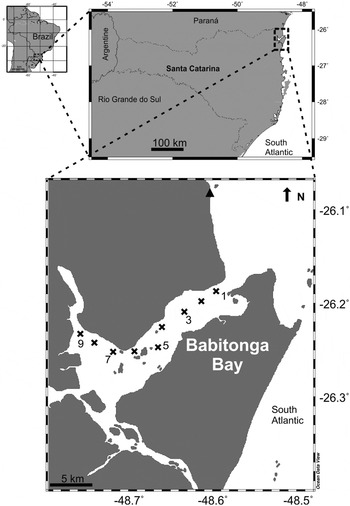
Babitonga Bay (Figure 1) is an estuary with an area of ~130 km2 located on the north coast of the Santa Catarina state in south Brazil, where the climate is of the humid subtropical type. The bay is ~21 km in length, being mostly shallower than 15 m depth and up to 28 m in the channel of the access to the port (DNIT-IME, 2004). It is classified as partially mixed and weakly stratified and tidal range is ~1.30 m, with duration of nearly 6 h between low and high tide (DNIT-IME, 2004; Cremer et al., Reference Cremer, Morales and Oliveira2006). Many rivers discharge on Babitonga Bay, the largest ones are Cubatão do Norte and Palmital, and the total freshwater discharge in the estuary is 57 m3 s−1 (DNIT-IME, 2004). Annual rainfall ranges between 1700 and 2400 mm, with a typically wet period during summer and a drier period during winter (DNIT-IME, 2004). The plankton community has a wide temporal variation, with higher abundances typically during late spring and summer (Camacho & Souza-Conceição, Reference Camacho and Souza-Conceição2007; Costa & Souza-Conceição, Reference Costa and Souza-Conceição2009; Nogueira Júnior et al., Reference Nogueira Júnior, Pukanski and Souza-Conceição2015).
Map of Babitonga Bay estuary, south Brazil, showing the nine stations sampled in eight surveys between 18 October 2007 and 8 August 2008. Closed triangle shows the position of the meteorological station from where rainfall data were taken. Generated using Ocean Data View Software (Schlitzer, Reference Schlitzer2015; modified from Nogueira Júnior et al., Reference Nogueira Júnior, Pukanski and Souza-Conceição2015).

Data collection
Eight surveys were conducted on a seasonal basis between October 2007 and August 2008. Each campaign sampled nine stations (3–25 m in depth) across the estuary in a total of 72 stations. At each station a 50 cm mouth diameter and 500 µm mesh plankton net was hauled twice, and a 40 cm diameter and 200 µm mesh was hauled once, totalling 216 zooplankton samples. All the hauls were oblique, integrating most of the water column except 1–2 m above the bottom, and were performed during daylight period (between 9 am and 3 pm), lasting 2–5 min. Both nets were fitted with a calibrated Hydrobios mechanic flowmeter and the samples were fixed in 4% formaldehyde solution buffered with borax. Subsurface and near-bottom temperature and salinity were measured with a U-10 Horiba multi-probe and water transparency estimated with a Secchi disk. Chlorophyll a was determined from subsurface in samples of 100–150 ml filtered on board with Whatman filters (25 mm diameter, in fibreglass – GF/F). In the laboratory, pigments were extracted and reading was done in Turner Designs – Trilogy calibrated fluorometer. Rainfall, as accumulated values from previous 20 days from each campaign, was obtained from EPAGRI/CIRAM, SC, a meteorological station situated a few kilometres north of Babitonga Bay (Figure 1).
In the laboratory, the samples taken with the 200 µm mesh net (N = 72) were used to estimate zooplankton wet weight after removing the water excess with blotted paper (following Omori & Ikeda, Reference Omori and Ikeda1992), using a digital scale with precision of 0.1 mg. Samples taken with the 500 µm mesh net (N = 144) were analysed in their entirety under stereomicroscope and the polychaetes were sorted, identified to the lowest taxonomic level possible and quantified.
Data analysis
Spatial sectors within the estuary were defined based on salinity data. A similarity matrix was calculated from Euclidean distance among samples (Legendre & Legendre, Reference Legendre and Legendre1998) and a cluster (group average mode) was built to identify groups of sampling sites.
In order to test assemblage differences considering temporal (seasons of the year) and spatial (sectors of the estuary as defined above) factors we used a bi-factorial permutational multivariate analysis of variance (PERMANOVA; after 9999 runs). This analysis allows testing the null hypothesis that there are no assemblage differences between groups of samples specified by the levels of the factors (Anderson, Reference Anderson2001; Anderson et al., Reference Anderson, Gorley and Clarke2008). The analysis was based on a Bray–Curtis similarity matrix after abundance data were transformed by log (x + 1). In cases of significant differences, pair-wise comparisons between different levels of the significant factor(s) were performed (Anderson et al., Reference Anderson, Gorley and Clarke2008). The cluster and PERMANOVA analyses were performed using the software PRIMER V.6 + PERMANOVA.
Aiming to associate the variation of species abundance with abiotic and biotic potential explanatory variables, a constrained ordination was used with the software CANOCO 4.5. The detrended correspondence analysis revealed small length of gradients (<3) suggesting the use of linear methods (Lepš & Šmilauer, Reference Lepš and Šmilauer2003) such as the redundancy analysis (RDA). In this analysis only dominant taxa (those representing >20% of abundance in at least one of the seasons) were included. Before the analysis the environmental variables were centred and standardized (Lepš & Šmilauer, Reference Lepš and Šmilauer2003) and polychaete abundances were transformed by log (x + 1). We used as explanatory variables subsurface and near-bottom temperature and salinity, water transparency, chlorophyll a, zooplankton biomass and rainfall. Subsurface temperature and salinity were subsequently excluded from the model because they were highly inter-correlated with bottom temperature and salinity respectively, and high inter-correlation of the explanatory variables may inflate the explanatory power of the model (Lepš & Šmilauer, Reference Lepš and Šmilauer2003). Only explanatory variables that significantly (P < 0.05, after 9999 runs) explain part of the variation in species abundance were retained in the model. Plots of temperature–salinity–plankton (TSP) were made for the dominant taxa.
RESULTS
Hydrography, chlorophyll and zooplankton biomass
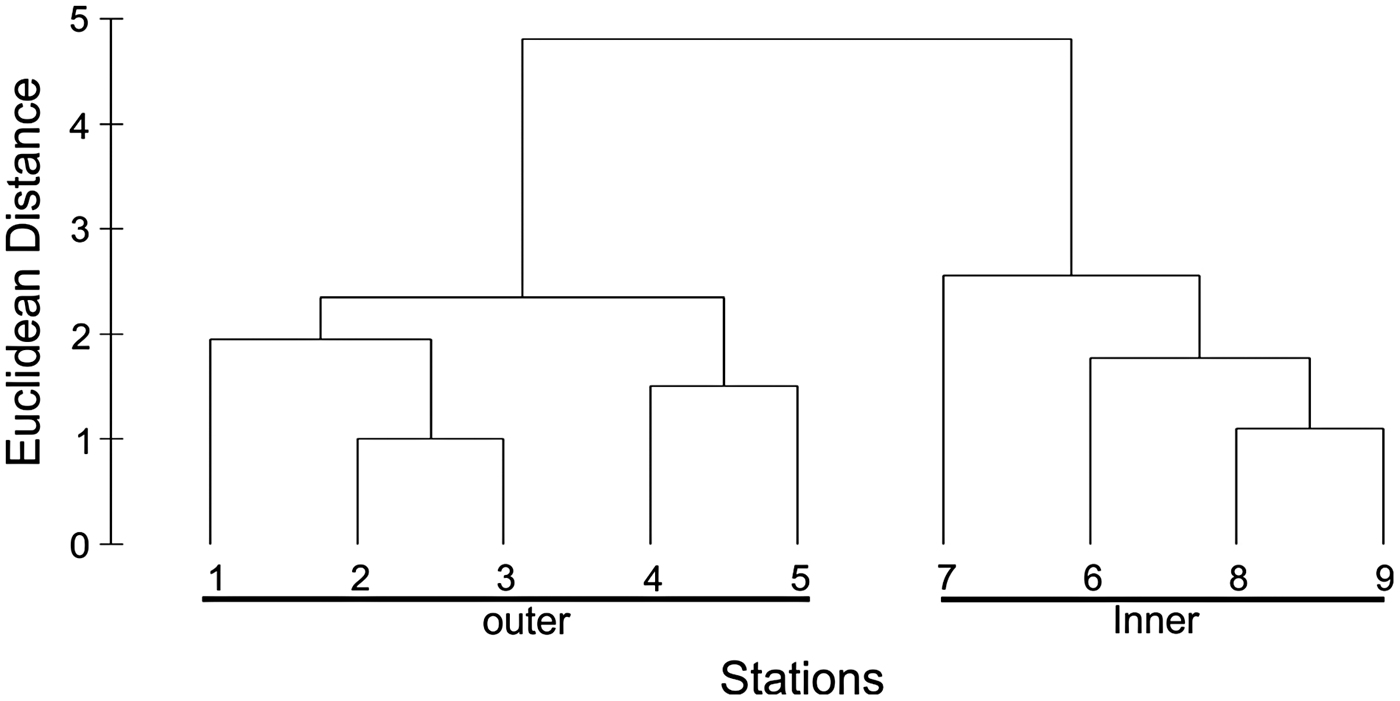
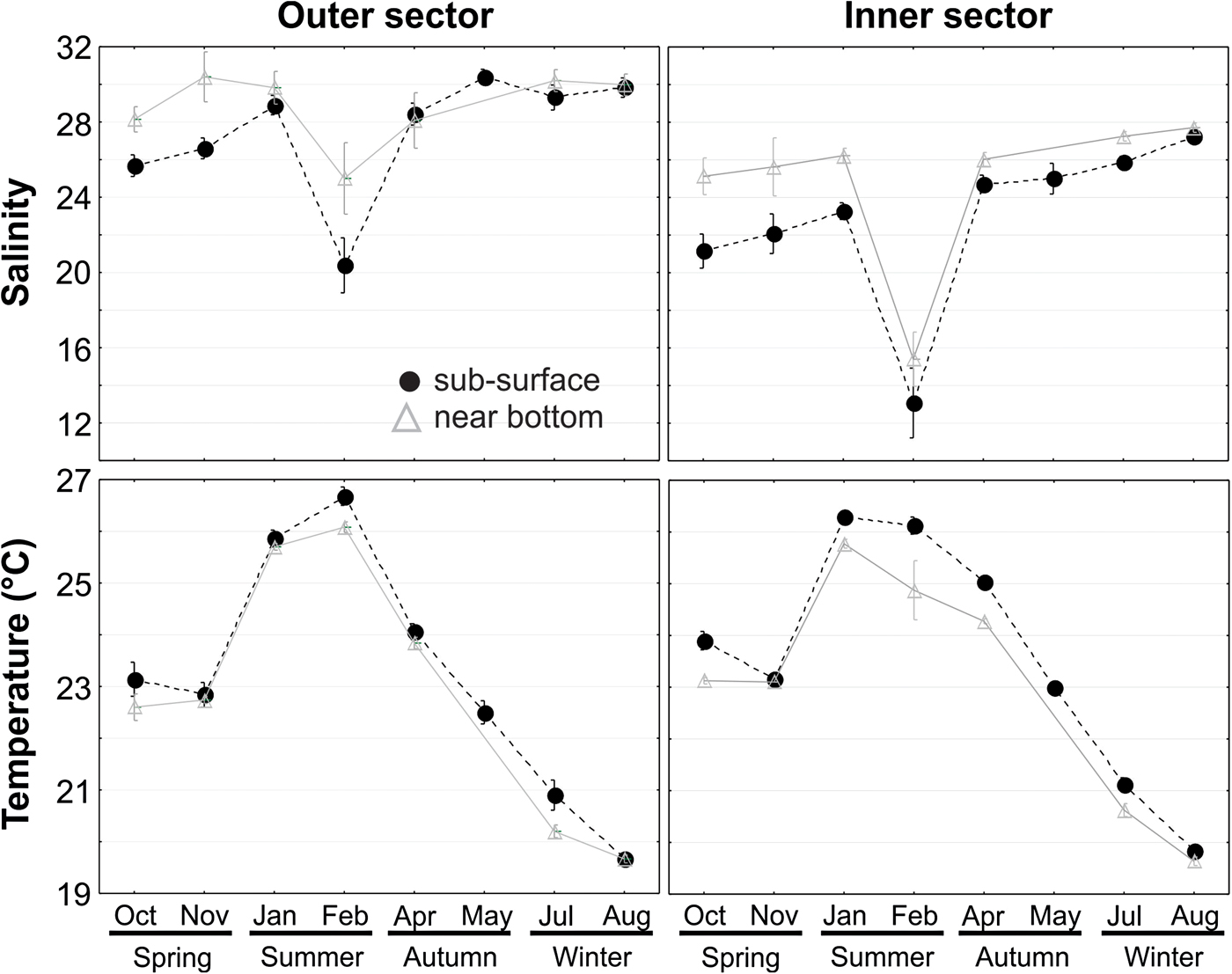
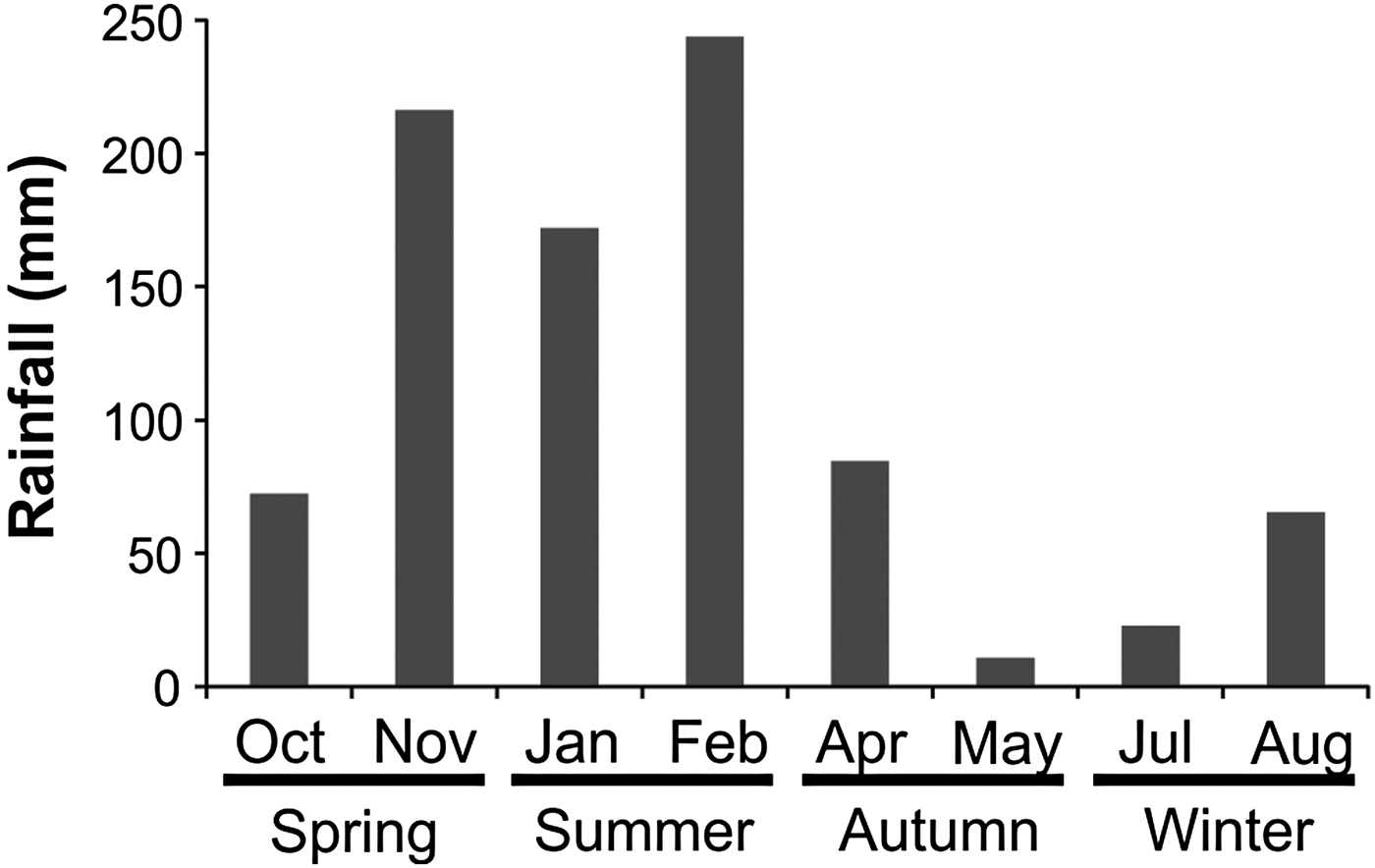
Salinity varied widely, between 10 and 33.6, with the lowest values related to the highest precipitation in February. A spatial gradient of the salinity was clear and two sectors were defined within the estuary based on the salinity data (Figure 2). Salinity was always lower in the inner sector, with smaller values in February and tending to increase through autumn and winter (Figure 3). Salinity differences between the bottom and the surface of up to 5 were recorded from October to February, mainly in the inner sector. A ~7°C-seasonal-amplitude was registered, with the lowest values in August (19.6°C), and the highest during summer (25.5–27°C). Temperature differences between the different sectors were not observed (Figure 3). Rainfall ranged from 11 mm in May to 244 mm in February, with a wet period from November to February and a dry period during late autumn and winter (Figure 4).
Cluster analysis (group average mode) based on monthly salinity data.

Mean seasonal dynamics of subsurface and near-bottom salinity and temperature (°C) in the inner and outer sectors of Babitonga Bay, south Brazil, between October 2007 and August 2008. Vertical bars show the standard error. Sectors defined following Figure 2.

Seasonal variation of rainfall as accumulated from 20 days before samplings.

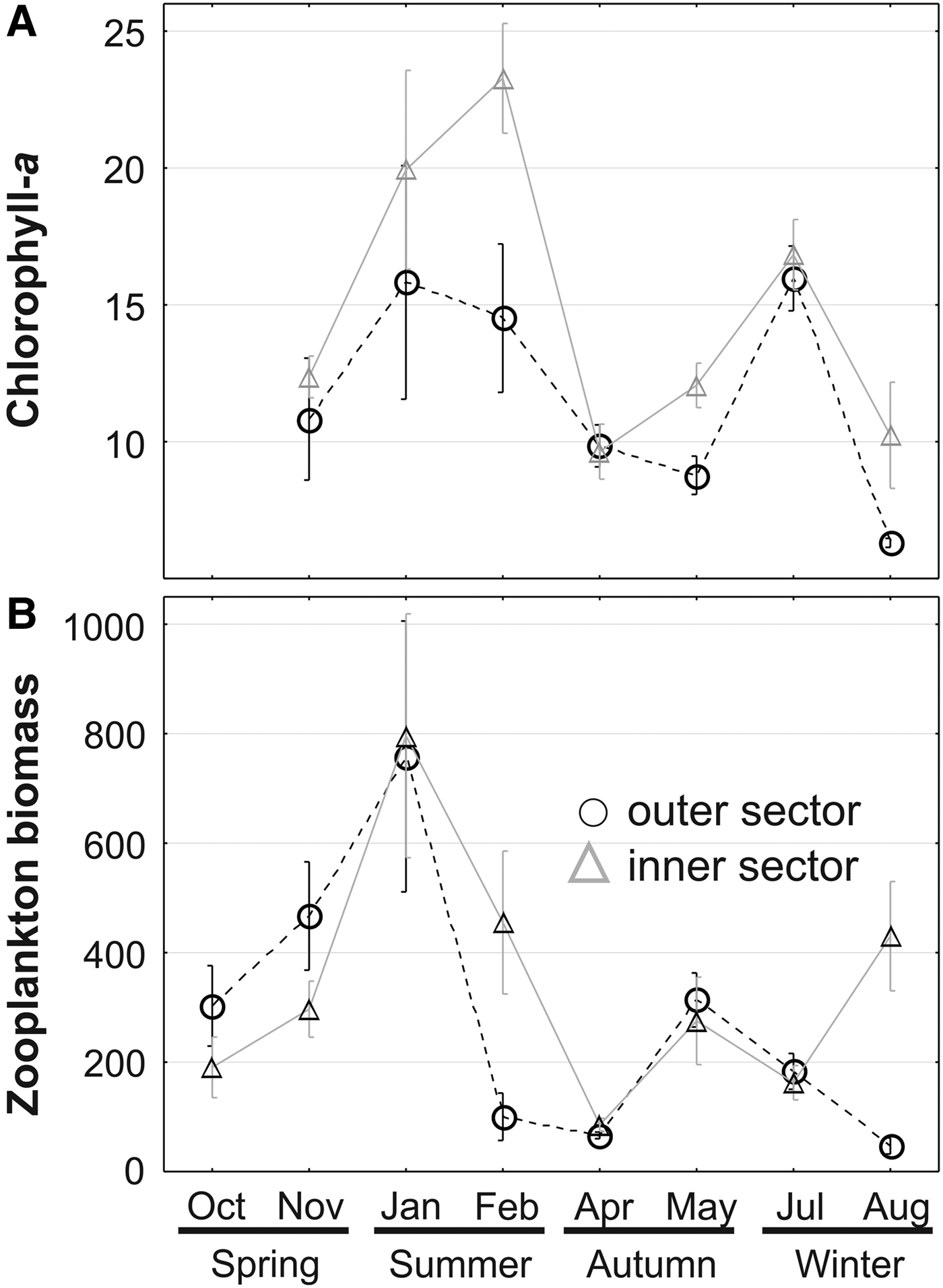
Chlorophyll a was higher during summer and lower during autumn (April–May) and winter (August), tending to be higher in the inner sector of the estuary, particularly during summer (Figure 5A). Zooplankton biomass tended to follow an annual cycle, with intermediate values during spring (October–November), peaking in January and decreasing later (Figure 5B). Zooplankton spatial distribution was not seasonally constant, with similar biomass in both sectors during the January peak, higher values in the outer sector during spring and in the inner sector in February and August (Figure 5B).
Mean seasonal dynamics of chlorophyll a (μg l−) and zooplankton wet weight (mg m−3) in the inner and outer sectors of Babitonga Bay, south Brazil, between October 2007 and August 2008. Vertical bars show the standard error. Sectors defined following Figure 2.

Polychaetes
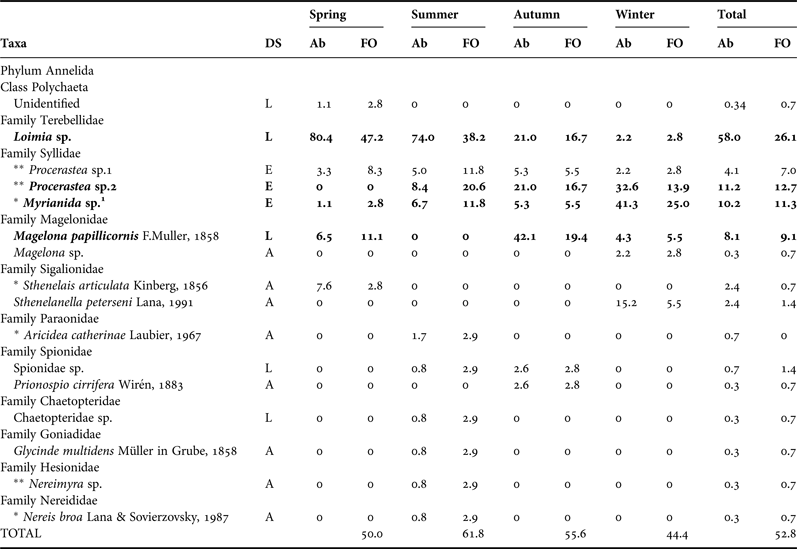
A total of 16 polychaete taxa were found, of which 13 were identified down to specific or generic level. Among these taxa five were larval stages, eight were adults typically benthic (ranging from 1.5–40 mm in length), and three were reproductive stages (epitokes) of the family Syllidae (Table 1). Larvae of Loimia sp. (Terebellidae) was the dominant taxa, representing 58% of all polychaetes found, followed by epitokes of Procerastea sp.2 (~11%) and Myrianida sp. (~10%; Table 1).
Polychaetes sampled in the plankton of Babitonga Bay estuary, south Brazil, between October 2007 and August 2008, their seasonal and total relative abundance (Ab, %) and frequency of capture (FO, %).

DS, developmental stage; A, adult; E, epitoke; L, larva.
Bold font indicates the dominant species (>20% of abundance in at least one of the seasons).
*, new record for Santa Catarina State and **, new record for Brazilian coast (after Amaral et al., Reference Amaral, Nallin and Steiner2012 and Pagliosa et al., Reference Pagliosa, Doria, Alves, Almeida, Lorenzi, Netto and Lana2012).
¹Reported as Autolytus spp.
Seasonal and spatial distribution
The PERMANOVA indicates significant (P < 0.05) seasonal and spatial changes in the polychaete assemblage, but not in the interaction between these two factors (P > 0.05). The pair-wise comparisons among seasons suggests that all seasons differ significantly (P < 0.05) between each other, except for autumn × winter which are mostly characterized by syllid dominance, and the P value remains near the threshold limit of significance (P = 0.057).
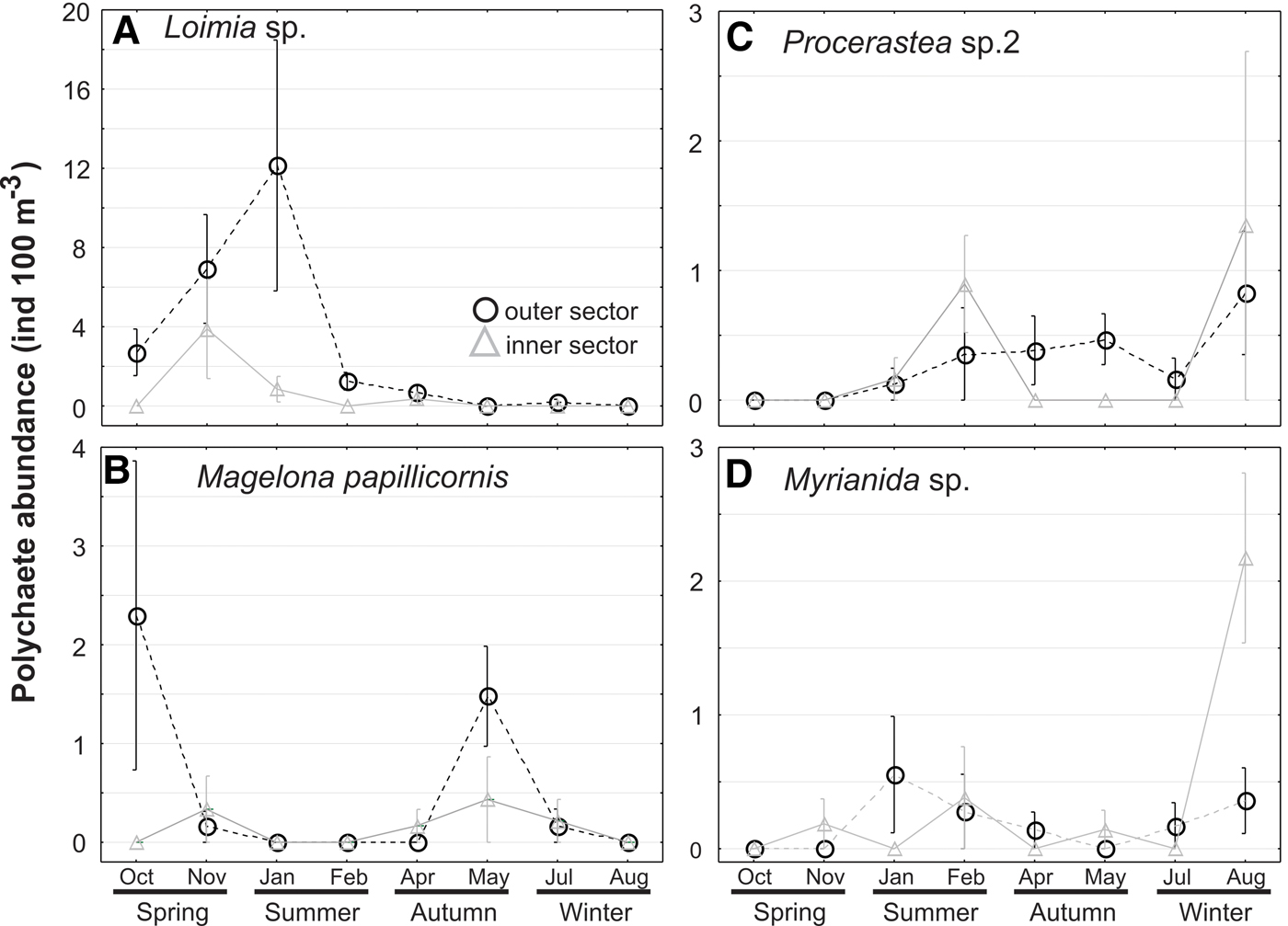
Larvae of Loimia sp. was almost exclusively sampled during spring and summer, with higher abundances in the outer sector of the estuary (Figure 6A), particularly at stations 2–4 in November and January. Higher abundances of Magelona papillicornis larvae were also observed in the outer sector with two seasonal peaks, in October and a smaller one in May (Figure 6B). Higher abundances of Procerastea sp.2 occurred in August, with a smaller peak in February. Higher abundances were typically observed in the inner sector, except during autumn when it was exclusively sampled in the outer sector (Figure 6C). The seasonal and spatial distribution of Myrianida sp. was similar to the previous species, peaking in August and with densities tending to be higher in the inner sector (Figure 6D).
Mean seasonal abundance of dominant polychaete larvae (A, B) and epitokes (C, D) in the outer and inner sectors of Babitonga Bay, south Brazil between October 2007 and August 2008. Vertical bar indicate the standard error. Sectors defined following Figure 2. Notice different scales.

Relationship with environmental variables
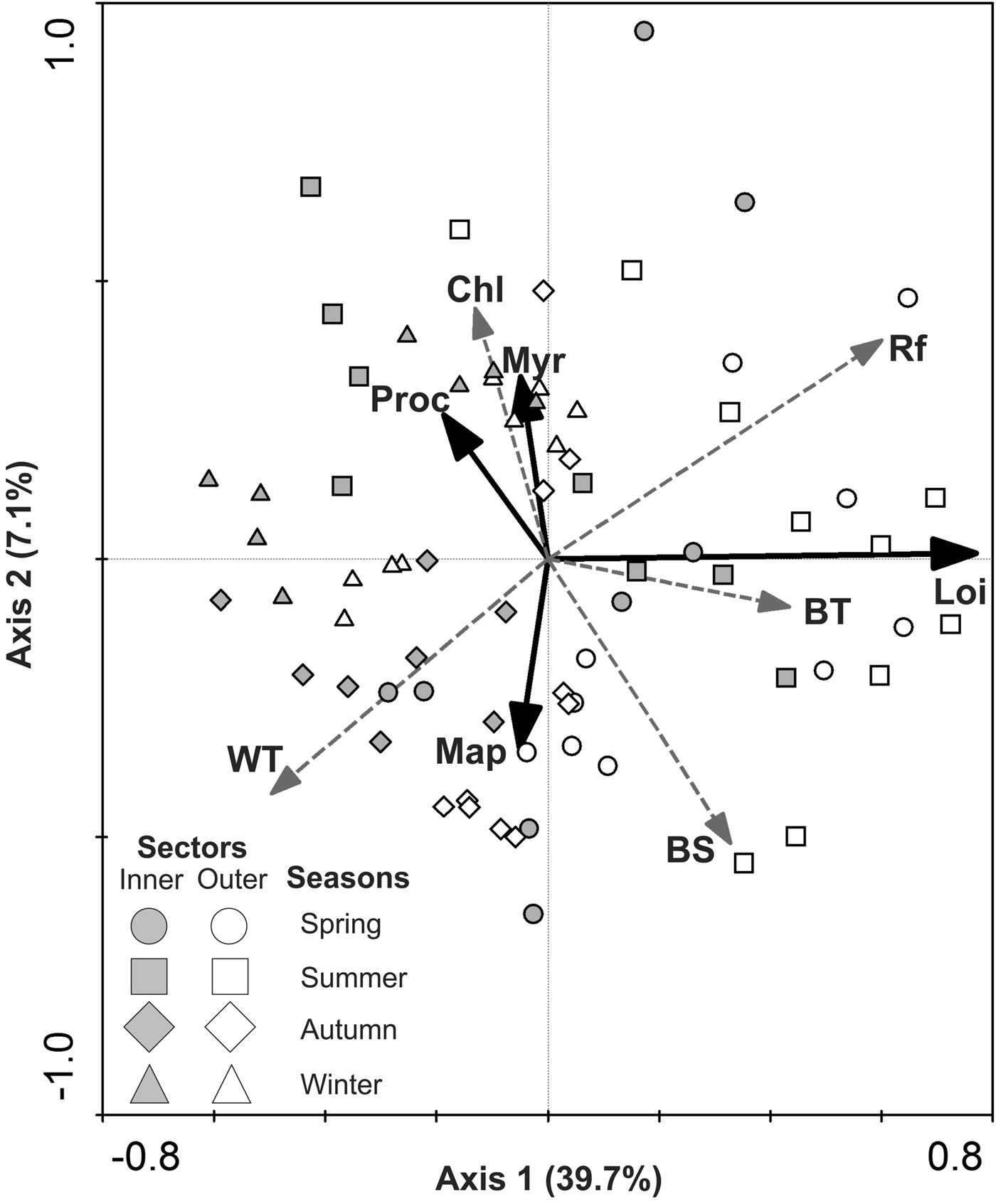
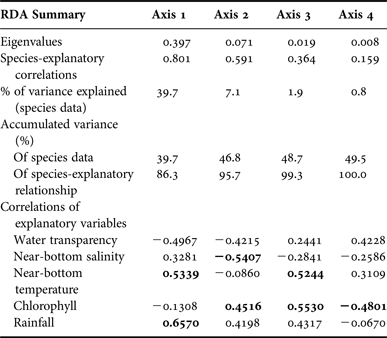
Zooplankton biomass did not significantly (P > 0.05) explain part of the variation and therefore was not included in the RDA model (Table 2). In the first four canonical axes selected explanatory variables explained 49.5% of planktonic polychaete assemblage variance. Rainfall, temperature and salinity were the variables that most influenced the assemblage (Table 2; Figure 7). The first ordination axis explained nearly 40% of the abundance variations and was mostly positively correlated with rainfall and temperature. The second axis explained only a further 7% of the assemblage variance, being mostly negatively correlated with salinity and positively with chlorophyll a. The third and fourth axes were mostly influenced by chlorophyll a and temperature but their explanatory power was low (Table 2).
Ordination plot of the Redundancy Analysis showing the first and second canonical axes and the relationships of dominant planktonic polychaete species (black solid vectors) with selected explanatory variables (grey dotted vectors), along with the distribution of the samples (symbols according to the legend). Zooplankton biomass did not significantly explain (P > 0.05; after 9999 runs) a portion of the data variance and therefore was excluded from the model. The percentage of the species data variation explained by each axis is shown in parentheses. Species code: Loi, Loimia sp.; Map, Magelona papillicornis; Myr, Myrianida sp.; Proc, Procerastea sp.2. Explanatory variables codes: BS, near-bottom salinity; BT, near-bottom temperature; Chl, chlorophyll a; Rf, rainfall; WT, water transparency.

Summary of the Redundancy Analysis performed between the four dominant polychaete taxa and the selected explanatory variables from Babitonga Bay, south Brazil.

Zooplankton biomass did not significantly explain (P > 0.05; after 9999 runs) a fraction of the data variance and therefore were not included in the model. Bold font indicates the variables best correlating with each of the first four canonical axes.
Loimia sp. larvae were mostly positively correlated with the first axis, indicating a positive relationship with rainfall and temperature, and negative with water transparency. Myrianida sp. and Procerastea sp.2 were mostly positively related with the second axis, and therefore negatively related with salinity, and positively with chlorophyll a in a lesser extent (Figure 7; Table 2). Magelona papillicornis was mostly positively related to near-bottom salinity.
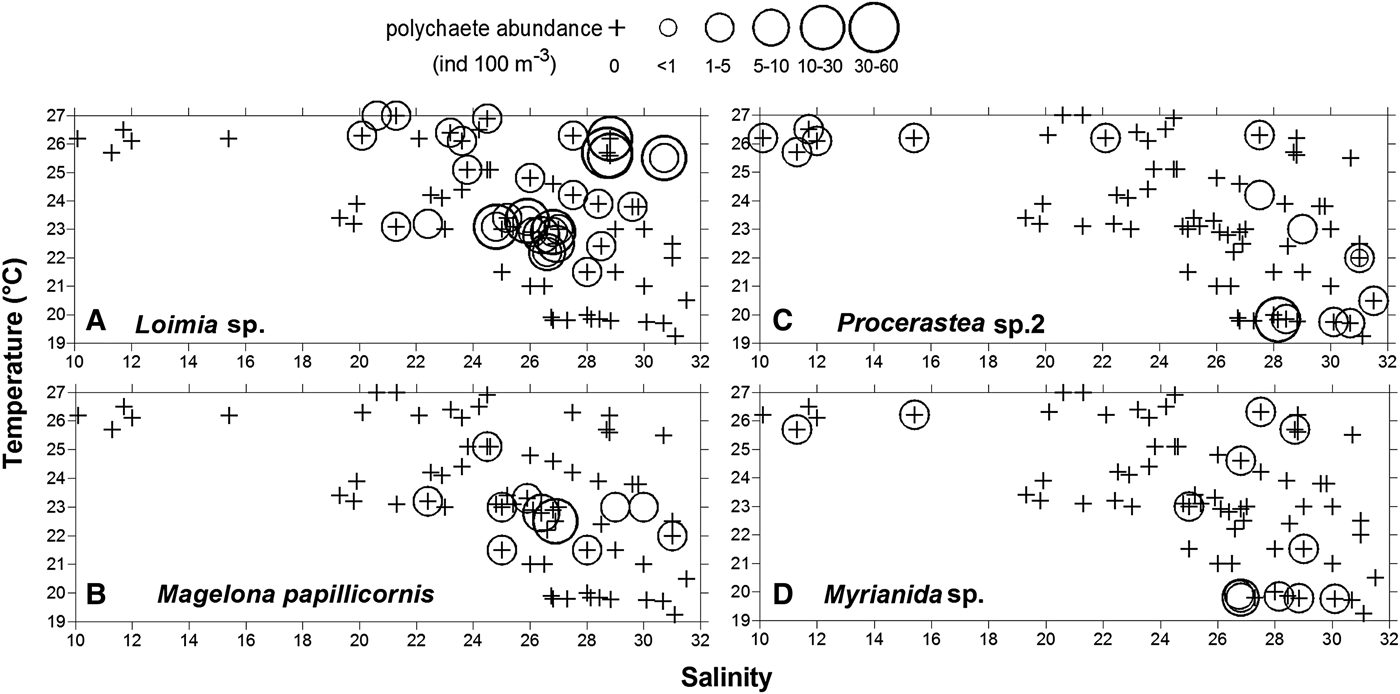
Loimia sp. larvae were not sampled in salinity and temperature lower than 20 and 21°C respectively, and higher densities were found in salinities >24 and temperatures ≥23°C (Figure 8A). Magelona papillicornis larvae were found mainly in salinities above 24 and temperatures between 22 and 24°C (Figure 8B). Procerastea sp.2 was found through the range of salinity and temperature sampled, with highest abundance in lower temperatures and higher salinities (Figure 8C). Myrianida sp. was also sampled through most of the temperature and salinity range sampled, more commonly in salinities higher than 26 and lower temperatures (Figure 8D).
Diagrams of bottom salinity, temperature and abundance of dominant planktonic polychaete species sampled between October 2007 and August 2008 in Babitonga Bay estuary, south Brazil.

DISCUSSION
The present study draws attention to three different types of plankton occupation by benthic polychaetes: (i) larval stages, (ii) reproductive stages and (iii) typically benthic adults suspended in the water column. The first case is commonly reported from coastal and shelf plankton samples worldwide (e.g. Mileikovsky, Reference Mileikovsky1970; Omeĺyanenko & Kulikova, Reference Omeĺyanenko and Kulikova2002, Reference Omeĺyanenko and Kulikova2011; Abe et al., Reference Abe, Sato-Okoshi and Endo2011), including in Brazilian estuaries (e.g. Branco et al., Reference Branco, Kozlowsky-Suzuki and Esteves2007), but this is not the case of the other two types. Benthic polychaetes on the water column have seldom been reported from plankton samples, and have not been previously reported from Brazil, although they may be common worldwide, particularly on estuarine and coastal waters (Dales & Peter, Reference Dales and Peter1972). The complete absence of holoplanktonic polychaetes was expected since these species are mostly oceanic with higher diversity and abundance offshore (Fernández-Álamo & Thuesen, Reference Fernández-Álamo, Thuesen and Boltovskoy1999; Tovar-Faro et al., Reference Tovar-Faro, Leocádio and Paiva2013), being typically absent from estuarine waters. The wide continental shelf off Babitonga Bay (>150 km) probably obstructs the colonization of the estuarine and coastal waters by these oceanic taxa.
The results of the present study indicate that planktonic polychaete assemblages from Babitonga Bay change considerably among different seasons and sectors, both in abundance and species composition. While larvae tended to dominate in the outer sector during spring and summer, with a second smaller peak of M. papillicornis in May, epitokes peaked during winter particularly in the inner sector (Figure 6). These changes in the assemblage are consistent with the seasonal and spatial dynamics of the environmental conditions of the subtropical estuary studied, which has a warm (>25°C) and typically wet summer followed by a dry and colder (<20°C) winter (DNIT-IME, 2004; Cremer et al., Reference Cremer, Morales and Oliveira2006), in addition to a relatively weak but obvious haline horizontal gradient, intensified during summer by higher rainfall (Figures 3 and 4). Accordingly, temperature, salinity and rainfall were the variables explaining most of the assemblage variability (Table 2; Figure 7), and the TSP analysis clearly indicates different hydrographic preferences of the dominant species (Figure 8): Loimia sp. more abundant in warmer (>23°C) and saltier (>25) waters, M. papillicornis more abundant in saltier waters with intermediate temperatures (22–23°C) and the syllids more common and abundant in lower temperatures (<20°C).
Although both seasonal and spatial changes in the assemblage were detected by the PERMANOVA, seasonality was more pronounced and accounted for most of the variability of the assemblage as indicated by the much higher pseudo F statistic for the seasonal factor (Pseudo F = 4.94) when compared with the spatial factor (Pseudo F = 1.97). This pattern is expected in a relatively small and mixed estuary such as Babitonga Bay, similar to observed elsewhere for meroplankton (Magris & Loureiro-Fernandes, Reference Magris and Loureiro-Fernandes2005). In addition, the RDA analysis indicates that temperature and rainfall were the variables that most influenced the assemblage (Table 2). Since both variables did not vary spatially, they can be used as a proxy to the seasonal variations of the environmental conditions of the estuary. Accordingly, temperature is known to commonly affect seasonality of estuarine meroplankton, including polychaetes, in temperate environments (Mileikovsky, Reference Mileikovsky1970; Omeĺyanenko & Kulikova, Reference Omeĺyanenko and Kulikova2002; Abe et al., Reference Abe, Sato-Okoshi and Endo2011), and also in lower latitudes with smaller annual temperature range (Magris & Loureiro-Fernandes, Reference Magris and Loureiro-Fernandes2005) such as observed here. Seasonality of meroplanktonic larvae in general and of polychaetes in particular, is commonly determined by the spawning strategies of adults (Mileikovsky, Reference Mileikovsky1970; Levin, Reference Levin1984; Seitz & Schaffner Reference Seitz and Schaffner1995; Omeĺyanenko & Kulikova, Reference Omeĺyanenko and Kulikova2002; Omeĺyanenko et al., Reference Omeĺyanenko, Kulikova and Pogodin2004), which also is known to be influenced by temperature. Thus, temperature may have a twofold effect on meroplanktonic polychaetes; it may have a direct effect on larval survivorship, growth and development rates and also have an indirect effect influencing gamete production and spawning period (Olive, Reference Olive1995; Seitz & Schaffner Reference Seitz and Schaffner1995; Bochert et al., Reference Bochert, Fritzsche and Burckhardt1996; Giangrande, Reference Giangrande1997; Olive et al., Reference Olive, Porter, Sandeman, Wright and Bentley1997).
In higher latitudes polychaete spawning period was suggested to be associated with larval type; lecithotrophic larvae tend to occur year round while planktotrophic larvae are highly seasonal (Curtis, Reference Curtis1977; Lacalli, Reference Lacalli1981), typically coincident with the warming of the water and/or with the diatom bloom between spring and late summer (Lacalli, Reference Lacalli1981; Omeĺyanenko & Kulikova, Reference Omeĺyanenko and Kulikova2002; Abe et al., Reference Abe, Sato-Okoshi and Endo2011). The results obtained here for a subtropical estuary corroborate these observations; Loimia sp., the most abundant species in the present study, is planktotrophic and its occurrence was highly seasonal, with abundances increasing from spring to early summer and subsequently decreasing (Figure 6A). The positive association of Loimia sp. larvae with temperature was clear here (Figure 7) and it was rarely found in waters colder than 22°C (Figure 8). This pattern is quite similar to Loimia medusa, from temperate Chesapeake Bay, a closely related species whose larvae also peak during summer and is strongly correlated with seasonal changes in temperature, usually being found in waters warmer than 23°C (Seitz & Schaffner, Reference Seitz and Schaffner1995). Temperature dependence for gamete production appears to be the main factor controlling these seasonal patterns (Seitz & Schaffner, Reference Seitz and Schaffner1995). Assuming the same development time for L. medusa, i.e. larvae appear on plankton one month after gamete liberation and spend less than one month in the water column (Seitz & Schaffner, Reference Seitz and Schaffner1995), we estimate that Loimia sp. populations from Babitonga Bay reproduce continuously between September and January, with higher reproductive activity between October–December.
Salinity was also an important driver of the polychaete assemblage. This variable influenced the second canonical axis (Table 2), and mostly defined the spatial changes of the assemblage, with both Loimia sp. and M. papillicornis larvae associated with higher salinities in the outer shelf, while the syllids were found both in high and low salinities but tended to be more abundant in the inner sector (Figures 6 and 8). Thus, in Babitonga Bay estuary seasonal dynamics of meroplanktonic polychaetes seem to be more influenced by temperature, while the spatial dynamics by salinity. These general trends are similar to those reported for estuarine polychaete and meroplankton assemblages in general elsewhere (Mileikovsky, Reference Mileikovsky1970; Omeĺyanenko & Kulikova, Reference Omeĺyanenko and Kulikova2002, Reference Omeĺyanenko and Kulikova2011; Magris & Loureiro-Fernandes, Reference Magris and Loureiro-Fernandes2005; Kulikova & Omelyanenko, Reference Kulikova and Omelyanenko2009; Abe et al., Reference Abe, Sato-Okoshi and Endo2011). In addition to adequate salinity conditions for both adult and larval survivorship and growth (Bochert et al., Reference Bochert, Fritzsche and Burckhardt1996), larval horizontal distribution is determined by location of adults and direction of currents inside the bay (Kulikova & Omelyanenko, Reference Kulikova and Omelyanenko2009). Abundant populations of adult M. papillicornis have been recorded in the outer sector of the Babitonga Bay estuary (Pieper, Reference Pieper2010), matching the larval distribution found here. However, there is very limited local information regarding benthic polychaetes (Pagliosa, Reference Pagliosa2006; Pagliosa et al., Reference Pagliosa, Doria, Alves, Almeida, Lorenzi, Netto and Lana2012), hampering more detailed attempts to tie the planktonic distribution with the occurrence of their benthic counterparts.
The identification of planktonic stages of polychaetes often is difficult due to the lack of studies describing these stages for most species. The identification of Loimia sp. larva was based on the appearance of the notochaete in the second segment and uncini in the third, matching the pattern of Loimia sp. described by Garraffoni & Lana (Reference Garraffoni and Lana2010) based on material from a nearby estuary. The specific identity of the syllids is hard to assure with certainty since they are epitokous stages which go through considerable morphological modifications known as epitokous metamorphosis (Franke, Reference Franke1999), and which have not been described for most species (Nygren, Reference Nygren2004), hindering appropriate identification. These modifications along with physiological and behavioural transformations prepare the individuals for an ephemeral pelagic existence projected to reproduce (Franke, Reference Franke1999). Epitoky and reproductive swarming is a common reproductive feature in many polychaete families (Crumrine, Reference Crumrine and Shanks2001; Rouse & Pleijel, Reference Rouse and Pleijel2001; Cañete et al., Reference Cañete, Cárdenas, Palacios and Barría2013), and regarded as the primitive reproductive state among syllids (Franke, Reference Franke1999), and therefore probably widespread worldwide, particularly on coastal and estuarine waters (Dales & Peter, Reference Dales and Peter1972). The syllids found here occurred throughout most of the year and altogether represented ~30 and 76% of the pelagic polychaetes during autumn and winter respectively. Although commonly sampled, their densities, up to 11 and 6 ind 100 m−3 for Procerastea sp.2 and Myrianida sp. respectively, were very low in comparison, for instance, with Exogone lourei from Mission Bay, California (USA) that may reach densities of 100 ind m−3 in the plankton (Levin, Reference Levin1984).
The distributional patterns of the syllids observed here have three remarkable aspects: (i) they were found in diurnal samples; (ii) throughout almost the whole year (except spring); and (iii) peaked during winter. We did not perform nocturnal samples to test for possible diel patterns, but the consistent presence of males and females of both Procerastea spp. and Myrianida sp. in diurnal plankton samples throughout most of the year, indicate that diurnal reproduction is a regular feature of these populations. Some of the best studied syllid species such as Typosyllis prolifera and Odontosyllis enopla spawn during the night, typically shortly after sunset (Daly, Reference Daly1975; Franke, Reference Franke1983, Reference Franke1999; Tsuji & Hill, Reference Tsuji and Hill1983; Gaston & Hall, Reference Gaston and Hall2000; Anokhina, Reference Anokhina2006). The same is true for Brania sp. (as Brainia sp.), Sphaerosyllis hystrix (Alldredge & King, Reference Alldredge and King1980), Exogone gemmifera, Salvatoria limbata (as Grubea limbata; Anokhina, Reference Anokhina2006) and unidentified syllids (Alldredge & King, Reference Alldredge and King1977). Nevertheless, diurnal swarming has been reported for some other syllids in addition to the three species reported here, such as Pionosyllis lamelligera, Eusyllis blomstrandi (Franke, Reference Franke1999), Typosyllis prolifera, T. pulchra (Heacox, Reference Heacox1980; Franke, Reference Franke1986) and Exogone lourei (Levin, Reference Levin1984), along with Autolytus edwardsi that may swarm both at dawn and dusk (Franke, Reference Franke1999).
The occurrence of the syllids year-round on the plankton of a subtropical estuary with a relatively low annual temperature range (<7°C), such as observed here, was expected based on the year-round reproduction of tropical species (e.g. Gaston & Hall, Reference Gaston and Hall2000). This pattern contrasts with temperate populations which tend to have a more restricted reproductive season, typically during spring and/or summer, occasionally extending to autumn, such as Odontosyllis polycera from New Zealand, O. phosphorea from Vancouver Island, Canada, and O. gibba from Concarneau, France (Daly, Reference Daly1975; Franke, Reference Franke1999). However, a winter peak in reproductive activity of syllids such as observed here (Figure 6C, D), with higher abundances in lower temperatures (<20°C), have not been previously reported. Even in tropical sites syllid swimming activities tend to increase during summer (Gaston & Hall, Reference Gaston and Hall2000).
It is remarkable that half of the polychaete taxa found in our plankton samples are typically benthic infaunal adults. Altogether they represented ~8% of total polychaetes sampled and were found in all seasons, but individually each species was always found in low densities (<1 ind 100 m−3) and in a few samples (<2% of all samples; Table 1), as if they had been accidentally sampled. None of our samples had signs of touching the bottom, therefore these typically infaunal adult polychaetes were actually suspended in the water column. While benthic nematodes, copepods and hydroids have been commonly found in suspension in the coastal plankton either due to active or passive factors (Thomas & Lana, Reference Thomas and Lana2011; Pacheco et al., Reference Pacheco, Goméz and Riascos2013; Cabral et al., Reference Cabral, Nogueira Júnior, Nagata and Brandini2015), the same is not true for benthic polychaetes.
Records of typical benthic adult polychaetes occupying the pelagic realm, and which are not reproductive stages, are rare and only three such reports were found after exhaustive search in the literature. Pilskaln et al. (Reference Pilskaln, Churchill and Mayer1998) and Sardá et al. (Reference Sardá, Gil, Taboada and Gili2009) found many benthic polychaete species suspended in the water column, including a species and genus also found here (Prionospio cirrifera and Aricidea), and associated their occurrence with bottom disturbance and the consequent presence of a thick nepheloid layer. Westheide (Reference Westheide2003) found that the typically infaunal adults of Loimia medusa may actively leave their tubes and adopt a temporarily planktonic stage in reaction to an (unknown) environmental disturbance event. The presence of many different benthic species in low numbers throughout the year in our samples seems more compatible with the hypothesis of passive suspension processes (Pilskaln et al., Reference Pilskaln, Churchill and Mayer1998; Sardá et al., Reference Sardá, Gil, Taboada and Gili2009) rather than active reaction performed concomitantly by many individuals of a single species (Westheide, Reference Westheide2003).
The exact cause of infaunal polychaetes dwelling in the plankton found here is not possible to assure with the present data. Bottom disturbance due to trawl activity has been associated with infaunal polychaetes suspended in the water column (Pilskaln et al., Reference Pilskaln, Churchill and Mayer1998), and the presence of two large harbours on Babitonga Bay, one of them being built during our sampling campaigns, may have had particular influence. The constant dredging activities certainly physically disturb the bottom and lift up sediment and associated benthic fauna in the water column. Although the specimens found here were large (up to 40 mm in length), infaunal polychaetes up to 140 mm in length were found in sediment traps located 25–30 m above the bottom in the Gulf of Maine, USA (Pilskaln et al., Reference Pilskaln, Churchill and Mayer1998). Considering that Babitonga Bay estuary is a high priority site for aquatic conservation in Brazil (MMA, 2007), harbouring a highly diversified aquatic fauna (Vilar et al., Reference Vilar, Spach and Santos2011; Nogueira Júnior, Reference Nogueira Júnior2012), the possible effects of dredging on sediment suspension and impacts on the biota should be carefully tested. An alternative hypothesis is that these benthic polychaetes were suspended in the water column due to high bottom turbulence associated with the small depth of the estuary, as reported for benthic foraminiferans in shallow tropical estuaries (Neumann-Leitão, Reference Neumann-Leitão1995; Porto Neto et al., Reference Porto Neto, Neumann-Leitão, Gusmão, Vieira, Silva and Silva1999).
ACKNOWLEDGEMENTS
Dr José Maria Souza-Conceição is greatly acknowledged for inviting MNJ to join the sampling campaigns and for accessibility to the plankton samples. Dr Henry L. Spach (CEM-UFPR) helped with logistic support. Drs Ciro C. Vilar, José M. Souza-Conceição, Lilyane de O. Santos, Monica S. Simião and Rodrigo (Guigo) Fontoura helped in the field trips. M.Sc. Luís de M. Pukanski kindly provided the data on zooplankton biomass. Dr José G. Bersano Filho (CEM-UFPR) allowed the use of his laboratory facilities to analyse the samples. Gustavo Felipe Milleo Júnior helped with English revision and edition. Thanks to all the staff of the Centro de Informações de Recursos Ambientais e de Hidrometeorologia de Santa Catarina (EPAGRI/CIRAM, SC) for kindly providing meteorological data. Thanks also to the Centro de Estudos do Mar (CEM-UFPR, MPL) where this study was developed between 2007 and 2010.
FINANCIAL SUPPORT
MNJ was supported by Conselho Nacional do Desenvolvimento Científico e Tecnológico (CNPq, grant no. 140945/2007-5) and by Fundação de Amparo à Pesquisa do Estado de São Paulo (FAPESP, grant no. 2011/09880-8).