Introduction
The Great East Japan Earthquake was a complex disaster comprising an earthquake, a tsunami, and a nuclear power plant accident; it caused unprecedented damage. The main affected area spread across Iwate, Miyagi, and Fukushima Prefectures. The number of people dead or missing reached 18,574, and a further 6,135 were injured. 1 As many as 460,000 people were evacuated. 2 Most of the human suffering was a result of the tsunami; very few people suffered traumatic injuries requiring acute treatment, such as crush syndrome, from the earthquake itself. However, the number of people experiencing acute exacerbation of endogenous or chronic diseases began rising on the third day after the disaster, indicating a typical tsunami-type earthquake disaster characterized by the need for wide-area, long-term medical relief. 3
The predisaster population of the Miyagi Prefecture Ishinomaki Medical Zone (Ishinomaki City, Higashimatsushima City, and Onagawa Town) was approximately 200,000; 26.5% were 65 years of age or older.Reference Yoshida, Sugawara and Kajitani 4 The disaster resulted in approximately 6,000 people dead or missing and the immediate evacuation of approximately 120,000 people to the roughly 320 shelters in that zone. 5
When major catastrophes occur, medical relief teams are usually deployed to the site to open up field hospitals, where they offer medical assistance to people in the affected area.Reference Venticinque and Grathwohl 6 , Reference Potera 7 In Japan, however, medical relief teams that are deployed to disaster-stricken areas assist the local core hospitals and travel to each of the shelters to provide medical services. While acute treatment is provided by Japan Disaster Medical Assistance Teams that have all received the same type of training and are fairly well controlled, various other types of medical relief teams are deployed from the subacute phase (one to six weeks after the earthquakeReference Wasay and Shafqat 8 ) onward. No system was previously in place for managing all these teams, so activities were coordinated individually in each area for each disaster.Reference Goto 9 - 13
The largest amount of damage from the Great East Japan Earthquake occurred in the Ishinomaki Medical Zone. Therefore, an Area-based/Line-linking Support System (“Area-Line System”) was devised and implemented to resolve issues and coordinate activities of the Ishinomaki Zone Joint Relief Team (IZJRT).
A retrospective analysis was conducted to determine the effectiveness of the medical relief provided to evacuees using the Area-Line System for coordinating both the activities of the IZJRT and their coordinating headquarters.
Methods
The design of this study was descriptive analysis of an intervention that occurred during the disaster response and stabilization phase. Data were collected retrospectively.
Area-Line System
The Area-Line System was the system for human resource allocation. The affected zone was segmented into several “areas” based on administrative boundaries, number of shelters, and number of evacuated patients. Each area has several “lines,” which are the team units of medical staffs that were continuously deployed on a monthly basis. Even though it is possible that the members within each line will change every three to five days, the members are always from the same institution or organization, and the designated line itself continuously performs medical relief activities (surveying shelters, taking part in traveling clinics, and providing care at first aid stations). Activity periods of relief teams are determined independently within each line, but lines ensure that there are no gaps in the schedule and that each team will hand over duties to the next before leaving and thus reduce the workload at headquarters.
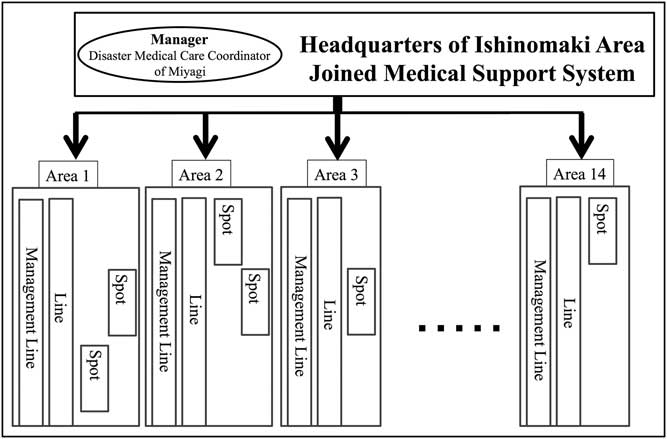
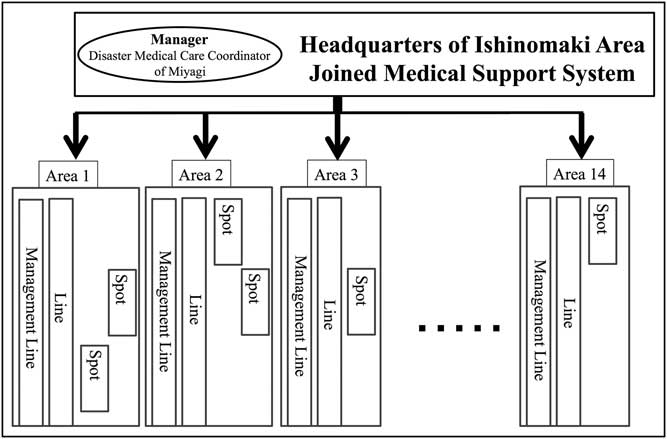
In each area, one of the lines was designated for leadership, and called the “management line.” The duties of each “management line” were as follows: (1) to collect and tabulate medical records from shelters visited; (2) to attend the morning and evening liaison meetings at headquarters and pass on messages to other teams of the area; and (3) to coordinate the activities within the area. Short-term relief teams are called “spots” and allocated to the busier areas and the hospitals (Figure 1).
Schematic diagram of the Area-based/Line-linking Support System. The Ishinomaki Medical Zone was divided into 14 areas and managed by a single headquarters.
Activities and Coordinating Activities of the IZJRT Before Establishment of the Area-Line System
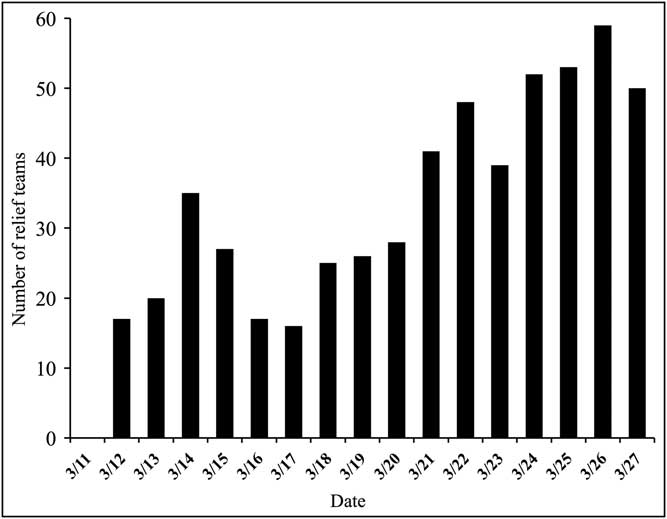
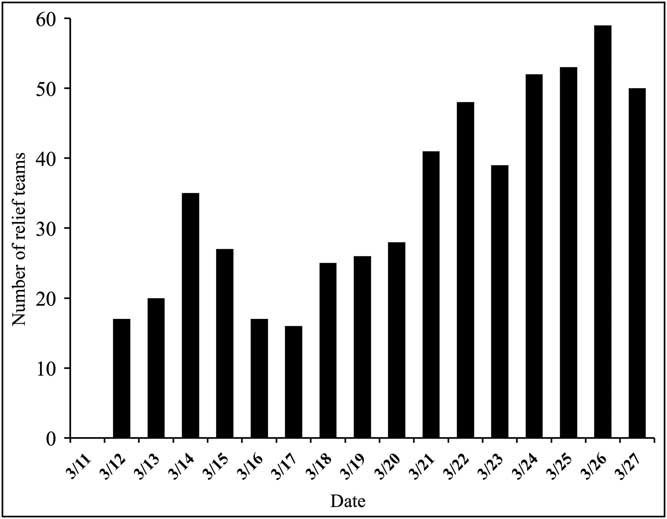
Medical relief teams were deployed from Japanese Red Cross hospitals, prefectural medical associations, university hospitals, prefectural hospitals, national hospital organizations, and other institutions in the Ishinomaki Medical Zone to provide medical assistance. These teams worked together as an IZJRT to provide medical relief, which primarily consisted of traveling to shelters called “traveling clinics” and assisting in the operations of the Ishinomaki Red Cross Hospital. The IZJRT, which was established on March 20th as a collaborative team, included a disaster medical care coordinator that managed all the activities of the medical relief teams in the Ishinomaki Medical Zone. A headquarters for the IZJRT was set up at the Ishinomaki Red Cross Hospital. Each day, the medical records from shelters that had been visited were collected and tabulated at headquarters, and the results were used to determine the locations and activities of each team for the following day. Figure 2 shows the transition in number of medical relief teams over time. There were as many as 59 teams on a single day. As teams remained in the area for varying lengths of time, the members of the visiting clinic who were assisting shelters were changing daily. As a result, the number of teams that would be present several days later could not be predicted at headquarters, which resulted in the traveling clinics having a lack of continuity.
Transition in the number of medical relief teams deployed to the Ishinomaki Zone Joint Relief Team before establishment of the Area-based/Line-linking Support System. The highest number of teams was 59 on March 26.
Establishment of the Area-Line System
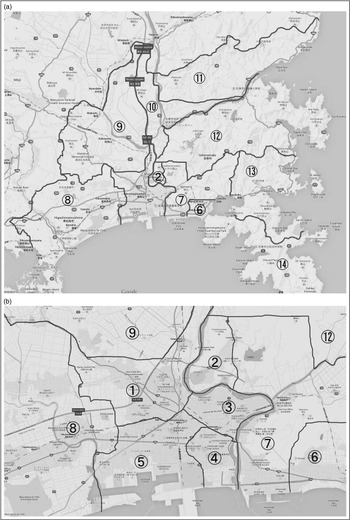
A new system was established to overcome these issues. The Ishinomaki Medical Zone was segmented into 14 areas based on administrative boundaries, number of shelters, and number of evacuee patients (Figures 3A and 3B). At the time the system was established, the median number of shelters per area was 19 (interquartile range (IQR) = 11-33), with a median of 2,149 evacuees (IQR = 1479.5-2970.5) per area. A line consisted of five to eight doctors, nurses, pharmacists, and coordinators, and three or four lines assisted each area.
Area map of the Ishinomaki Medical Zone (A: wide area, B: Ishinomaki City street map). 1 through 14 are area numbers. Areas were segmented based on administrative boundaries, number of shelters, and number of evacuees.

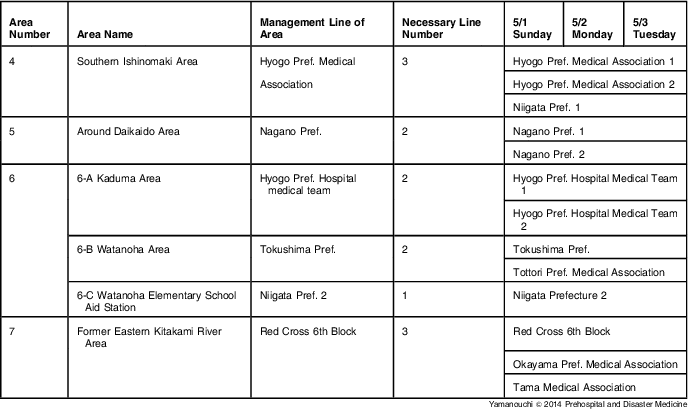
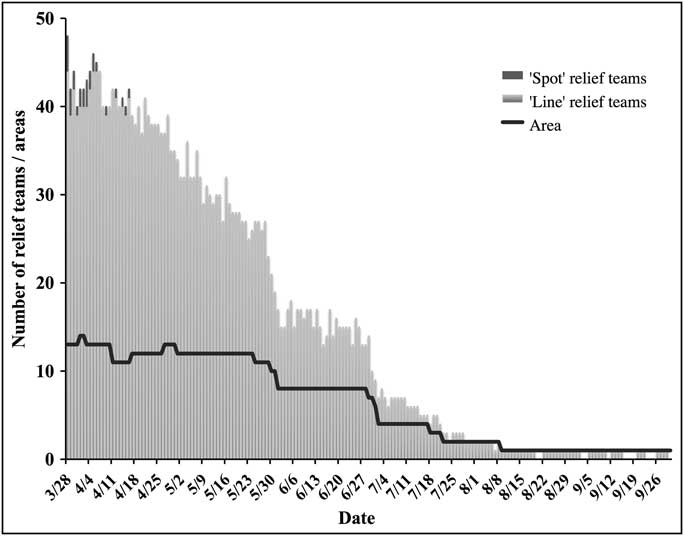
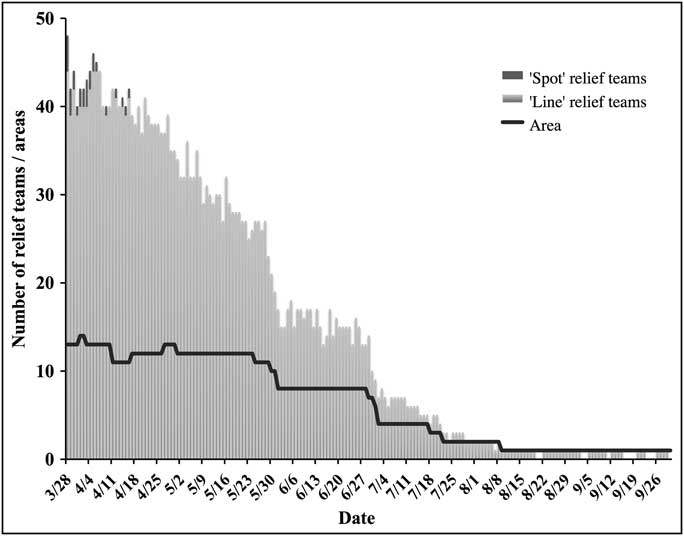
In each area, one of the lines was designated for leadership and was called the “management line.” Those in charge at headquarters met with the management lines of two areas each day (all 14 areas each week) to receive updates on problems in the area and current conditions in the shelters. Short-term relief teams were called “spots” and allocated to the busier areas, the hospitals, and the Ishinomaki Red Cross Hospital to provide assistance (Figures 1A and 1B). A table for allocating activities to areas, lines, and spots was posted at headquarters and continuously updated (Table 1). It took into account factors such as the number of shelters, number of evacuees, and reconstruction progress of medical clinics within areas to divide and merge areas appropriately. In the middle of each month at headquarters, the number of lines needed for the following month was considered, the comings and goings of supporting medical institutions were coordinated, and requests for medical relief teams for lines in need were submitted. The Area-Line System was devised and adjusted from March 24th (the 14th day after the earthquake), and began operation on March 28th (the 18th day). The temporal transition in number of areas and lines is shown in Figure 4. One line remained in the Ogachi district on August 9th, but no lines remained as of September 30th.
Allocation of Activities After Introduction of the Area-Line System

Transition in the number of areas and medical relief teams (lines and spots) deployed to the Ishinomaki Zone Joint Relief Team after establishment of the Area-based/Line-linking Support System.
Study Items
To examine the effect of the Area-Line System, the following points were analyzed:
-
1. The time required at headquarters to collect and tabulate medical records from shelters visited;
-
2. The time required at headquarters to determine deployment locations and activities of all the medical relief teams; and
-
3. Inter-area variation in number of patients per team.
The time required to collect and tabulate medical records from shelters visited was calculated by examining the actual work performed by the person in charge (to determine the work time required per team or area) and multiplying that by the number of teams (or areas). The time required to allocate activities was calculated by asking the person in charge of that task how much time was necessary to complete the task. Inter-area variation in number of patients per team was calculated by determining the number of patients per team from the number of teams in an area and the total number of patients seen, for every 3-day period, and then calculating the standard deviation. Areas prior to implementation of the Area-Line System were determined by the area in which each shelter was located following establishment of the system. The data were entered into a Microsoft Excel spreadsheet Version 14.3.9 (Microsoft Corporation, Redmond, Washington USA).
Results
Time Required to Collect and Tabulate Medical Records from Shelter Visits
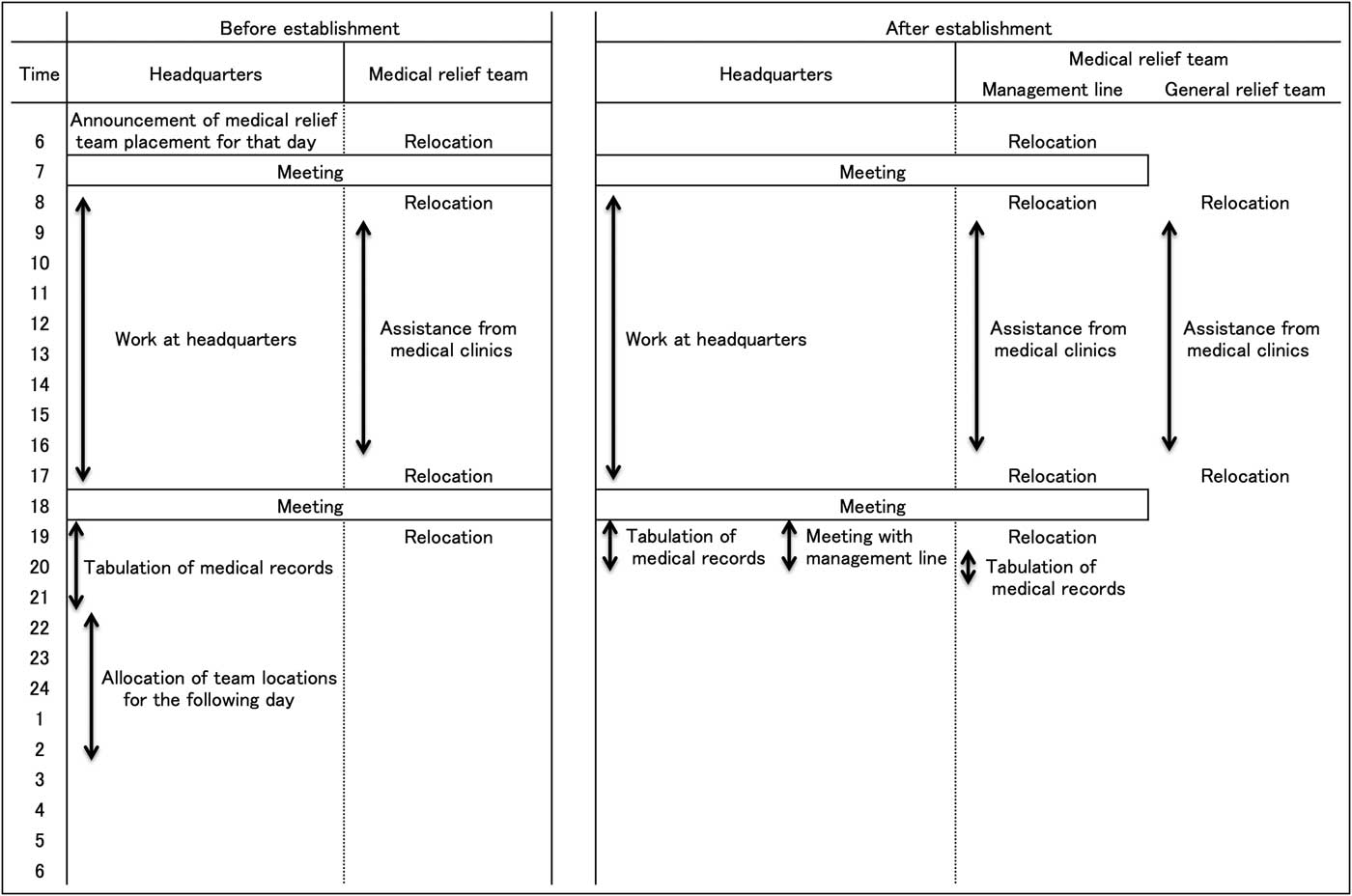
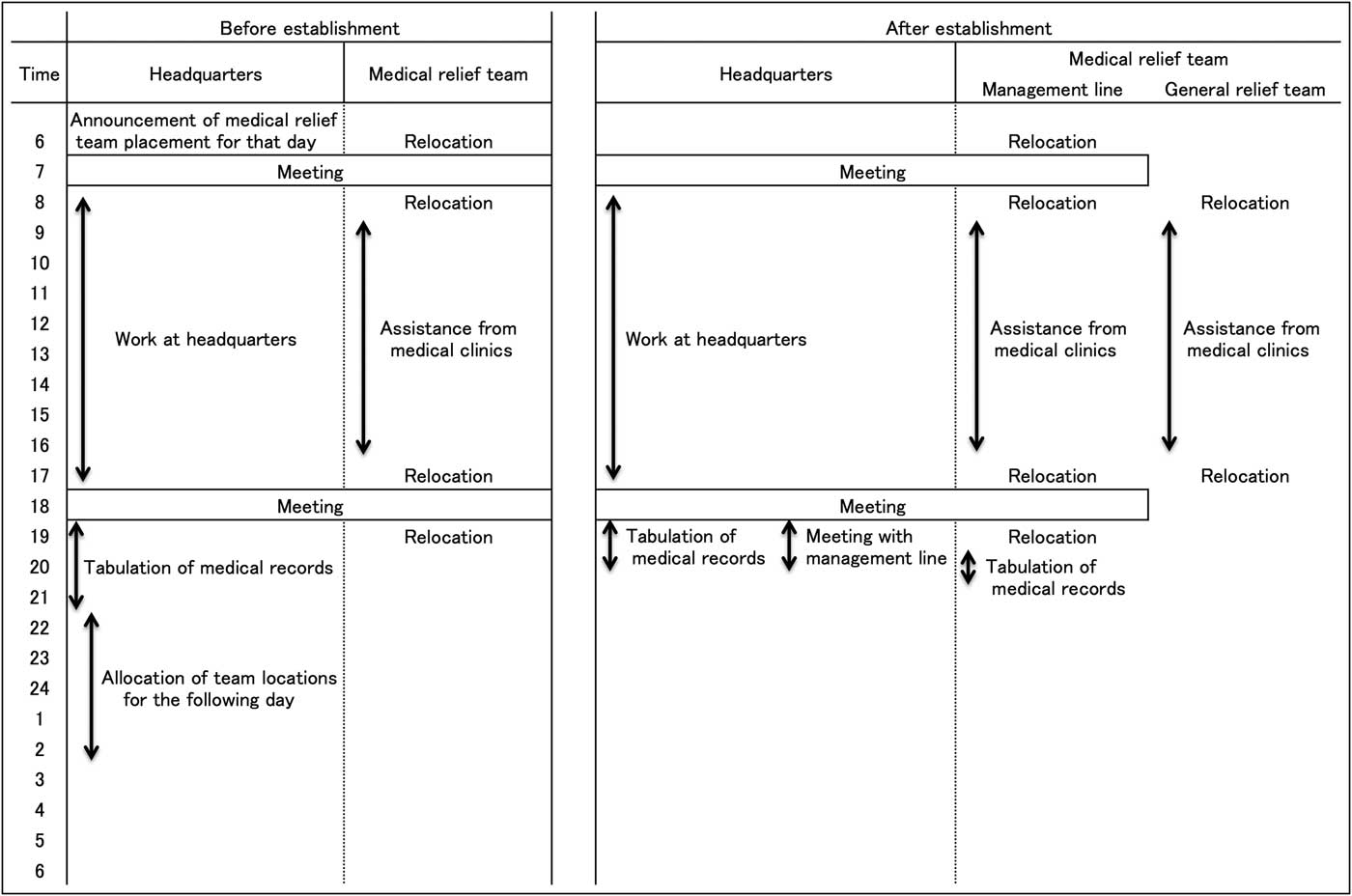
Immediately prior to establishment of the Area-Line System, collecting and tabulating medical records from shelters visited took an average of approximately 300 minutes per day (five minutes × approximately 60 teams). After establishing the Area-Line System, the time required for this task decreased to an average of approximately 70 minutes per day (five minutes × 14 areas) (Figure 5). The task was carried out by two to three people in both cases.
Typical daily schedule of the staff at headquarters and the medical relief teams. Before the Area-based/Line-linking Support System was established, placement of medical relief teams for a certain day was announced at 6:00 am. All medical relief teams met at headquarters. The best way to allocate team locations for the following day was worked out at headquarters until late at night. With the Area-Based/Line-linking Support System in place, management lines were the only teams required to participate in meetings, which reduced the burden of the medical relief teams. In general, teams were deployed for one-month periods, eliminating the need for headquarters to allocate teams daily.
Time Required to Determine Deployment Locations and Activities of the Medical Relief Teams
Before establishment of the Area-Line System, activities for the following day were allocated based on the results of tabulating the records from shelters visited each day; these activities took an average of five hours per day (150 hours per month) (Figure 5). With the new system in place, a disaster medical relief coordinator at headquarters met with a delegate from the management line in each area once a week (average of 30 minutes per area, two areas per day). To divide and merge areas appropriately, factors such as the number of shelters, number of evacuees, and reconstruction progress of medical clinics within areas were taken into account. In the middle of each month, the number of lines needed for the following month was considered, and the medical relief teams were coordinated. As a result, the time required for coordination work following establishment of the Area-Line System was reduced to an average of one hour a day for meetings and approximately 10 hours per month for line adjustment, for a total of 40 hours per month. Before the system, this task was performed by one person. With the system in place, this task required two people: one to meet with the line delegates and one to adjust the lines.
Inter-area Variation in Number of Patients Under the Care of Each Team
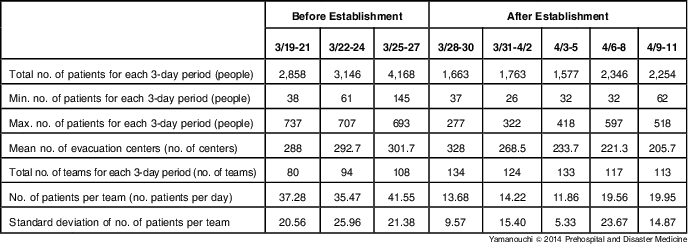
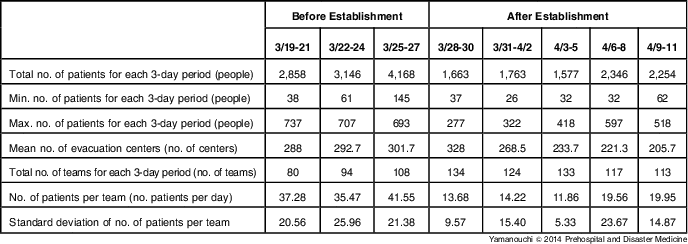
Transitions in the total number of patients, number of participating teams, number of patients per team, and standard deviation both before and after establishment of the Area-Line System, are shown in Table 2. The data are shown in 3-day blocks. The total number of patients peaked at March 25-27 with 4,487 patients, during which the mean number of patients per team was the highest (41.6 people). The standard deviation was the highest at March 22-24 with 26.0 people, showing high variation in workload among teams. The Area-Line System was established soon after, at which time the number of patients also decreased. Inter-area variation also increased following the largest aftershock on April 7, but did not increase overall compared to the variation observed prior to establishment of the Area-Line System.
Number of Patients, Evacuation Centers, Medical Relief Teams, and Patients per Team Before and After Establishment of the Area-Line System
Discussion
This is an analysis of a novel system of coordination of medical relief teams in the subacute phase following a complex and large-scale disaster.
The Area-Line System implementation was composed of four elements: (1) area division of the medical zone; (2) continuous support in each area by lines; (3) establishment of management lines in areas to provide assistance; and (4) reorganization of areas.
Some advantages of the Area-Line System were:
-
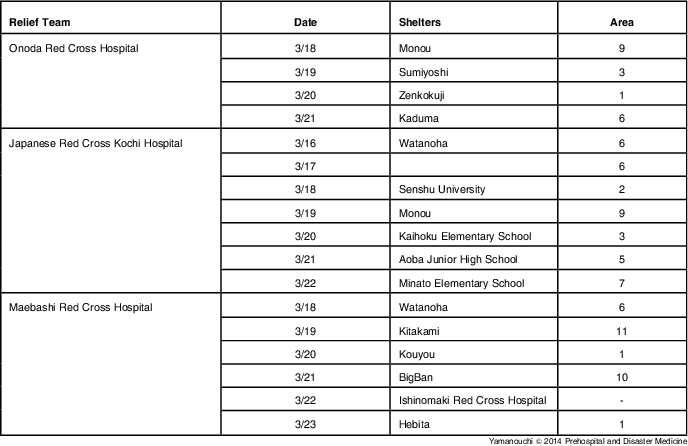
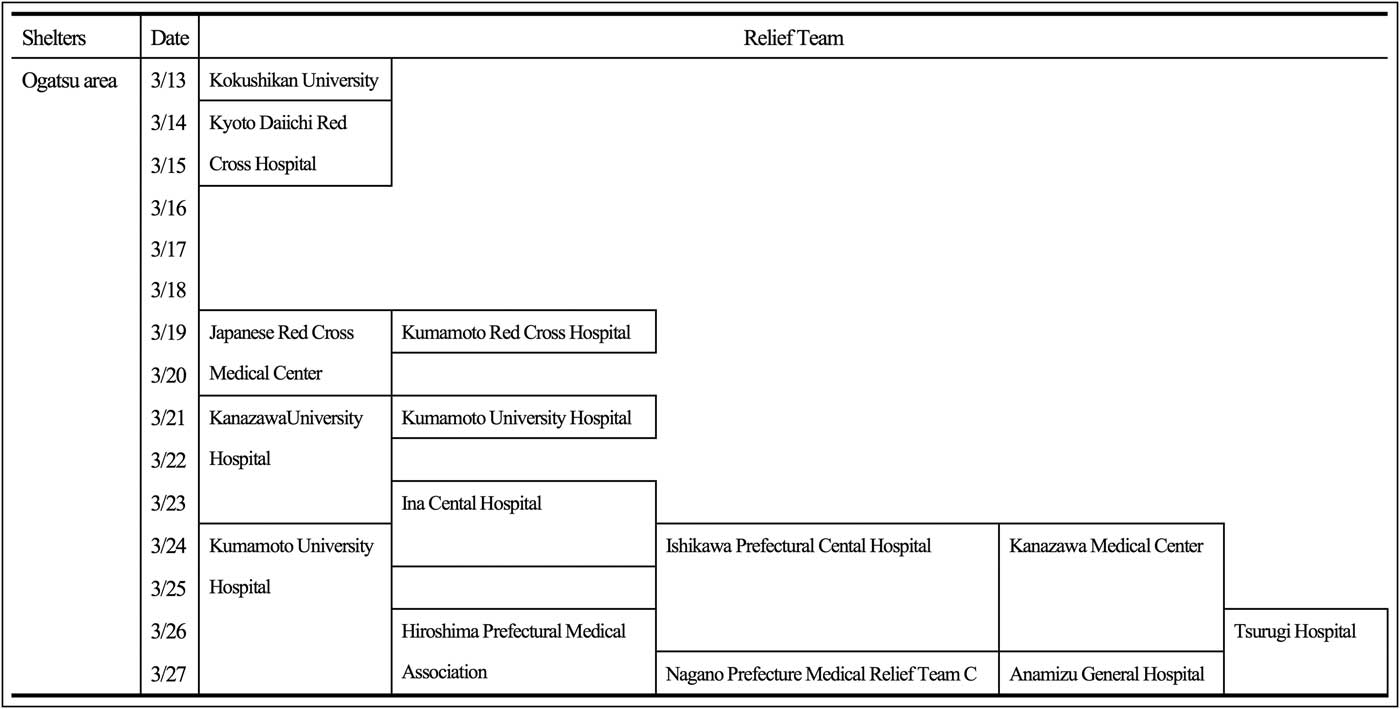
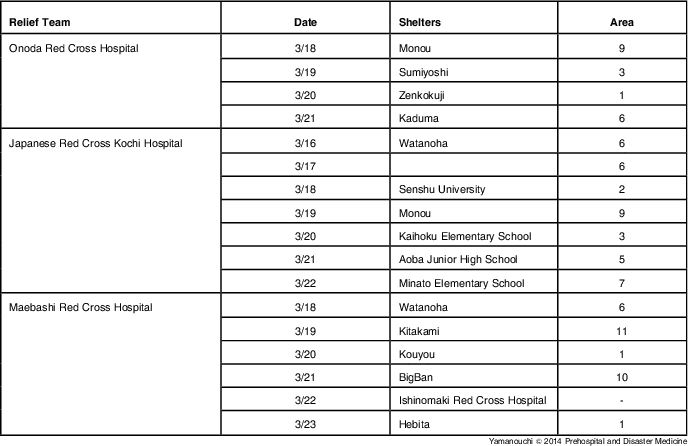
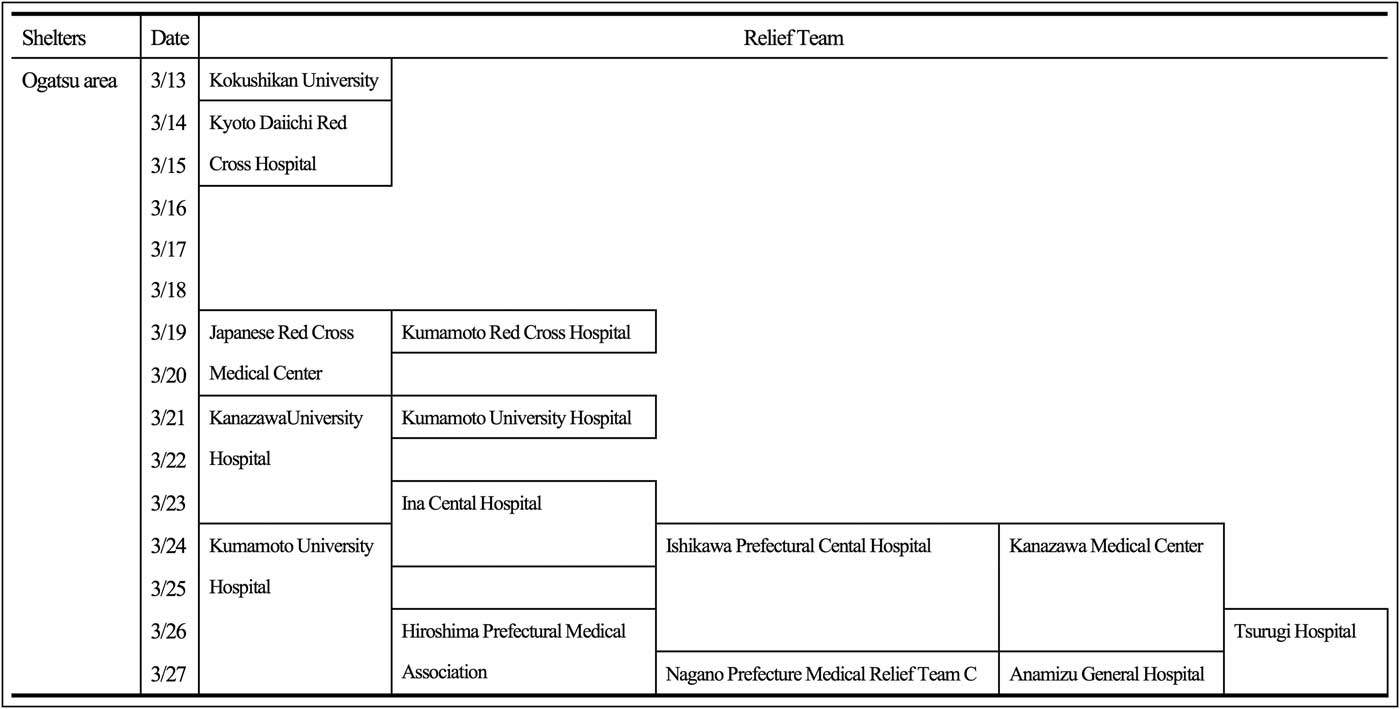
1. Improvement of traveling clinics to assist shelters that previously lacked continuity (Table 3) due to ever-changing teams and activities (Figure 6). Continuous medical relief was achieved by ensuring liaison with the incoming team, and community-based medical relief became possible.
Table 3Example of Daily Changes in Team Activities
 Figure 6
Examples of traveling clinics that lacked continuity. Teams and activities were ever-changing before the Area-based/Line-linking Support System was established.
-
2. The Area-Line System reduced the workload at headquarters, including for tasks such as collecting and tabulating medical records from shelters visited and determining the deployment locations of medical relief teams.
-
3. Knowledge of how many teams would be present in the future enabled construction of a medium term medical relief system at headquarters.
-
4. Resolution of the problem of teams never knowing what work they would be doing the following day.
-
5. Elimination of the burden of all teams participating in meetings at headquarters each day.
-
6. Stability of deployment accommodation and public transportation bookings that enabled simplification of tasks.
The above points demonstrate that the Area-Line System was beneficial to evacuees, headquarters, and deployed medical relief teams, and was useful as a medical relief system in the subacute phase onward of a disaster.
In line with the main purpose of implementing the Area-Line System, the expected benefits included a reduction in the amount of time required both to collect and tabulate medical records from shelters and to determine deployment location and activities of all the medical relief teams. There was also concern, however, that moving control from a centralized headquarters to each of the areas via their management lines could increase variation in the burden to each area. Table 2 shows that this was not the case. While variation among areas increased following the largest aftershock on April 7, no major difference in workload arose among areas. Thus, it appeared that the system reduced the burden at the central headquarters without generating any major problems.
The Great Hanshin-Awaji Earthquake of 1995 resulted in 6,437 people dead or missing, 43,792 people injured, and as many as 316,678 people evacuated to 1,153 shelters. A maximum number of 326 medical relief teams were active during the 104-day-long relief period. As the epicenter of the quake was directly below the city, most medical relief involved acute treatment for traumatic injuries. On the seventh day after the earthquake, the Ministry of Health and Welfare installed a local emergency response headquarters that implemented a centrally organized system for deploying health care professionals upon request on an as-needed basis.Reference Goto 9 - Reference Ishido 11 As the Great Hanshin-Awaji Earthquake was an urban catastrophe, numerous medical institutions were located within the disaster-stricken area. In addition, the disaster was localized to a single prefecture. The damage from the Great East Japan Earthquake was much more extensive, both geographically and in scale, than the Great Hanshin-Awaji Earthquake. Moreover, it required assistance over a longer period of time. It therefore required the development of a more organized medical relief system in order to efficiently deploy medical relief teams for the Ishinomaki Medical Zone.
Recently, a “cluster approach” has been established for handling disasters in developing countries. Its aim is to maximize efficiency by effectively utilizing limited medical resources and avoiding duplication of assistance, thus ensuring that medical resources reach the places that need them most.Reference Steets, newald and Binder 12 In developing countries, the cluster approach is carried out by support organizations that have traveled to the area to provide medical relief; these are often multinational organizations. In contrast, the Area-Line System used after the Great East Japan Earthquake was run by local medical organizations at the disaster site and managed by domestic medical relief teams.
The concept of “span of control” in the Incident Command System expresses the idea that a single commander should only control three to seven people, with five people being optimal. 13 With the establishment of the Area-Line System, the number of medical relief teams under direct control of headquarters decreased from 59 to 14 teams (areas), with three to four medical relief teams allocated to each area. Based on this concept, consolidating two additional areas to create seven areas in total may have led to more effective coordination.
In the present example, the general situation of all the shelters in the medical zone was able to be grasped at headquarters; this enabled smooth implementation of the Area-Line System. Implementing the system in the direct aftermath of a disaster, during which time there is insufficient information, requires collaboration among government agencies, health centers, and other entities to gather information from shelters, followed by rapid assessment and adjustment. Other earthquakes predicted to occur in Japan, including the Tokai Earthquake 14 and the Nankai Trough Quake, 15 are also expected to be tsunami-type disasters. Globally, the Area-Line System is thought to be useful for long-term and wide-ranging disaster management in developed countries, especially when the relief efforts are managed primarily by domestic medical relief teams. The Area-Line System can potentially be applied after such disasters to provide well-coordinated relief.
Limitations
One inevitable limitation of this study was its design (ie, an intervention study without a control group). In relation to research, it might be necessary to assess the efficacy of the Area-Line System, control group, and other areas that remained under total control of headquarters. However, experimental implementation of the Area-Line System for the purpose of testing its effectiveness wasn't possible. The staff at headquarters was overloaded with the task of coordinating the duration of medical relief team visits, along with their preferred deployment locations and activities. Furthermore, the number of patients was continuously rising, with no end in sight. In reality, the number of patients began decreasing at the time the Area-Line System was finally established, resulting in a natural decrease in the number of patients per team and the burden at headquarters. It is thus possible that the results observed in this study do not necessarily demonstrate the effectiveness of the Area-Line System on their own. However, even if the reduction in workload is not an actual measured value, this report is both an important descriptive epidemiological study on the implementation of an Area-Line System in the midst of a growing number of patients and relief teams, and a useful comparison of the situation before and after the system's introduction. It is also possible that the data on number of patients were not completely accurate, as it was based on individual reports from each team (area).
Conclusion
Large-scale disasters like the Great East Japan Earthquake require wide-ranging, long-term medical relief. Implementation of the Area-Line System can establish a secure system from the subacute phase onward that is centered on providing medical relief to shelters. The Area-Line System was beneficial because it provided equal access to health care for evacuees, reduced the burden on the staff at headquarters, and achieved efficient handover between medical teams, thereby increasing the efficiency of relief provision to disaster-stricken areas.