Introduction
The supplementation of animal feed with exogenous enzymes can improve the nutritional value of feed ingredients, increasing the efficiency of digestion. Since the mid 1980s, feed enzymes have dramatically improved the profitability of commercial poultry production. The current feed enzyme market is worth an estimated $700-800 million USD. The use of phytase has been extensively reviewed by Selle and Ravindran (Reference SELLE and RAVINDRAN2007), Adeola and Cowieson (Reference ADEOLA and COWIESON2011) and Woyengo and Nyachoti (Reference WOYENGO and NYACHOTI2011), and its use is unequivocally valuable in poultry production, although phytate digestibility with such supplementation is far from complete (Slominski, Reference SLOMINSKI2011).
Though the use of phytase has been shown to be advantageous in the majority of cases, the use of carbohydrases and proteases occasionally results in apparently inconsistent responses. There are many potential reasons for the inconsistency of an enzyme product to elicit a beneficial economic response including the application of inappropriate matrix values, nutrient imbalances, and variance in underlying ingredient quality, changes in ingredients proportions with reformulation, and others. One key reason however is the ‘responsiveness’ of the diet to enzyme modification. ‘Responsiveness’ of a diet or an ingredient to exogenous enzymes is elusive and difficult to accurately define but it includes factors such as substrate concentration and ‘accessibility’, inherent digestibility, nutrient interactions, anti-nutrients, and solubility in water. A greater understanding of the likely responsiveness of a diet to carbohydrase and protease addition would allow maximising the economic benefits of these enzymes.
Rosen (Reference ROSEN2010) concluded that the inclusion of specific feed ingredients contributed to the magnitude of feed enzyme response. Choct (Reference CHOCT2006) summarised that the so-called ‘viscous’ feed ingredients such as wheat, barley, rye, triticale and oats responded to carbohydrases due to a higher concentration of water soluble non-starch polysaccharides (SNSP). Interestingly, in maize and sorghum based diets, there are substantially lower concentrations of SNSP, these grains also have been reported to respond reasonably consistently to supplemental carbohydrases. Cowieson and Ravindran (Reference COWIESON and RAVINDRAN2008) assumed that exogenous carbohydrases and protease increase nutrient digestibility not only via a reduction in digesta viscosity but also via a reduction in cell wall integrity, generation of fermentable disaccharides, low-molecular weight polysaccharides and oligosaccharides, improving protein solubility, decreasing endogenous losses and overcoming anti-nutritional factors. It is now recognized that the concentration of undigested nutrients including protein, starch and fat in the ileum can be used to predict the functional pattern i.e. the magnitude and consistency of carbohydrases and proteases in response to the control diet with different inherent characteristics. The assumed functional pattern of carbohydrases and proteases is that feed ingredients with high ileal digestibility may respond less readily to exogenous enzymes than that with a poor digestibility; therefore, as Cowieson and Bedford (Reference COWIESON and BEDFORD2009) indicated, the evaluation of the inherent digestibility of the control diet to which enzymes will be added appears to be important regarding the likely effect on productivity.
Considering that the expense of in vivo ileal digestibility assays for the assessment of enzyme functional pattern is high, it is crucial to develop suitable in vitro methods to predict the magnitude of enzyme response. Currently, the in vitro analysis of diets in the poultry industry is generally limited to the determination of gross chemical composition (i.e. dry matter, ash, crude protein, crude fat, crude fibre and starch) or to crude indices of ‘quality’ such as bushel weight and broken grains. Near-infrared reflectance spectroscopy (NIRS) assessments have successfully estimated the energy value of starch and fibre concentrated feed ingredients for broilers (Losada et al., Reference LOSADA, GARCÍA-REBOLLAR, ÁLVAREZ, CACHALDORA, IBÁÑEZ, MÉNDEZ and DE BLAS2010). Gross chemical measurements provide little useful information on the characteristics of the diet in relation to its inherent digestibility and, although useful, NIRS does not consistently predict the nutritional value of most feed ingredients (Losada et al., Reference LOSADA, GARCÍA-REBOLLAR, ÁLVAREZ, CACHALDORA, IBÁÑEZ, MÉNDEZ and DE BLAS2010). Therefore, appropriate in vitro assays that are able to quantify the inherent digestibility of nutrients in a diet at the ileal level may help to develop multiple regression models for feed enzyme functional patterns.
The current paper describes the drivers of the inherent digestibility of different poultry diets or feed ingredients, and identifies characteristics that explain variance in digestibility.
Inherent characteristics of feed ingredients for broiler chickens
Dietary protein and energy yielding substrates such as starch and fat are the most costly nutrients in poultry diets and are required in adequate quantities and proportions for optimal performance (Moosavi et al., Reference MOOSAVI, ESLAMI, CHAJI and BOUJARPOUR2011). It is generally accepted that improvements in AME in response to exogenous enzymes in lower energy diets are greater than that of higher energy diets. Francesch and Geraert (Reference FRANCESCH and GERAERT2009) indicated that enzyme supplementation often decreased feed intake due to the increased energy availability. Accordingly, lower energy density diets often result in increased feed intake due to the bulk limit, and in practice, the contribution of feed enzymes on the AME values may not be always sufficient to reduce feed intake and improve the feed conversion ratio (FCR). Furthermore, broiler chickens fed diets that are essentially adequate in all nutrients often still respond to exogenous enzyme addition, suggesting that enzyme benefits may result from changes in less tangible metrics such as appetite control, digestive physiology, immunology, or microbiology i.e. ‘net effects’. Modern broilers have been genetically selected to efficient converters of plant-based nutrients into animal protein, but Klasing (Reference KLASING2007) ascribed their rapid growth rate to high feed intake and not necessarily increased nutrient digestibility. Indeed, as Cowieson (Reference COWIESON2010) indicated that, for various reasons, a significant proportion of nutrients (especially those of endogenous origin) does escape digestion and leave the ileum. Weurding et al. (Reference WEURDING, ENTING and VERSTEGEN2003) suggested that the extent of starch digestion in the small intestine was positively correlated to the AME content of poultry diets, and Cowieson and Bedford (Reference COWIESON and BEDFORD2009) showed clear relationships between the inherent digestibility of macro nutrients and enzyme activity.
starch
It is well known that starch is the major energy-yielding component of poultry diets and is presumed to be almost completely digestible by the terminal ileum (Wiseman, Reference WISEMAN2006). However, Zelenka and Čerešňaková (Reference ZELENKA and ČEREŠŇAKOVÁ2005) and Jenkins et al. (Reference JENKINS, THORNE and RAO1987), suggested that the variation in starch concentration among different cereals and varieties, and, in particular, the starch/protein interface, might affect the inherent digestibility of the diet. Recently, in an in vitro study, Wong et al. (Reference WONG, MARX, WILSON, BUCHANAN, LEMAUX and PEDERSEN2010), reported that in sorghum the content of amylose and total starch, together with protein digestibility, accounted for 94% of variation in starch digestibility.
Approximately 60 to 70% of the organic matter (OM) of cereals is starch, which is composed of two polymers of glucose: amylose and amylopectin (Wong et al., Reference WONG, MARX, WILSON, BUCHANAN, LEMAUX and PEDERSEN2010). Further, more than half of the apparent metabolisable energy content of diets for broiler chickens is provided by starch (Weurding et al., Reference WEURDING, ENTING and VERSTEGEN2003; Wong et al., Reference WONG, MARX, WILSON, BUCHANAN, LEMAUX and PEDERSEN2010). Cowieson (Reference COWIESON2005) suggested that even relatively small differences in starch digestibility among ingredients could have a substantial impact on dietary variation in the AME content. Amylopectin makes up 70-80% of most starch sources and is the major component, strongly influencing the physiochemical characteristics of starch (Dona et al., Reference DONA, PAGES, GILBERT and KUCHEL2010). The amylose: amylopectin ratio is negatively correlated with starch digestion in pigs (Svihus et al., Reference SVIHUS, UHLEN and HARSTAD2005) and chickens (Meng and Slosminski, 2005), likely due to steric hindrance associated with tightly packed amylose. In human nutrition, Englyst et al. (Reference ENGLYST, KINGMAN and CUMMINGS1992) showed that the extent of starch digestion within small intestine is variable and a substantial amount of starch escapes digestion by the end of the small intestine. In broiler chickens, Meng and Slominski (Reference MENG and SLOMINSKI2005) and Weurding et al. (Reference WEURDING, VELDMAN, VEEN, VAN DER AAR and VERSTEGEN2001) summarised incomplete starch digestion in corn, wheat, barley, pea, legumes and some complete diets (Table 1).
Undigested starch fraction in cereals, legumes and corn-soy based diets (%) (Adapted from Weurding et al., Reference WEURDING, VELDMAN, VEEN, VAN DER AAR and VERSTEGEN2001 and Meng and Slominski, Reference MENG and SLOMINSKI2005).

1Grains mixed with soybeans and meat meal; 2Legumes mixed with corn; 3Corn mixed with casein, fish meal and isolated soy. The gross energy value in starch was calculated as 17.39 MJ/kg or 4160 kcal/kg (Carré et al., Reference CARRÉ, GOMEZ and CHAGENEAU1995).
Cereal grains have an undigested starch fraction between 2%-8% at the terminal ileum of chickens (Table 1). In legumes, this fraction varies from 19-28%, though the total starch content is considerably lower than is the case for cereals. Although corn-soybean meal diets are regarded as essentially ideal for poultry, the digestibility of corn starch is about 93% at 20 d of age, much lower than that at 28 d of age. Wiseman (Reference WISEMAN2006) suggested that poor digestibility values for starch in young broilers are attributable to the physico-chemical structure of starch and interactions between starch and other components. Thus, the interaction between starch and other components may be more important than starch per se in some ingredients. However, Jiang et al. (Reference JIANG, ZHOU, LU, HAN and WANG2008) indicated that the exogenous amylase improves productive performance for young chickens by compensating the digestive system of the birds and Zanella et al. (Reference ZANELLA, SAKOMURA, SILVERSIDES, FIQUEIRDO and PACK1999) suggested that starch digestion will be virtually completed by the hindgut for older birds, implying that exogenous carbohydrases, notably amylases and glucoamylases, may be more effective in younger broiler chickens.
Although chicks have been considered to adapt rapidly to starch digestion when fed at hatch, Thomas et al. (Reference THOMAS, RAVINDRAN and RAVINDRAN2008) and Svihus (Reference SVIHUS2011) have shown that the total tract starch digestibility in modern fast-growing broiler chickens dropped from five to seven days of age and was restored to normal high level at 14 days of age in wheat, sorghum and corn based diets. Further, Meng and Slominski (Reference MENG and SLOMINSKI2005) reported that a higher corn inclusion level resulted in the relative lower starch digestibility due to the higher NSP contents, suggesting that NSP-degrading enzymes potentially improve starch digestibility in corn-based diets. Unexpectedly, Weurding et al. (Reference WEURDING, VELDMAN, VEEN, VAN DER AAR and VERSTEGEN2001) reported the higher starch digestibility in barley than that in corn, implying that exogenous enzymes improved the performance of birds fed on high viscous grains such as barley and wheat for reasons other than starch digestibility per se, possibly due to lower feed intake and/or fat and protein digestion constraints. Surprisingly, corn-canola meal based diets have similar starch digestibility, but poorer performance than corn-soy based diets possibly due to the higher concentration of NSP (Meng and Slominski, Reference MENG and SLOMINSKI2005), indicating an interaction between starch, protein, and water insoluble NSP. Weurding et al. (Reference WEURDING, VELDMAN, VEEN, VAN DER AAR and VERSTEGEN2001; Reference WEURDING, ENTING and VERSTEGEN2003) reported that broiler chickens grew faster and more efficiently on a diet containing slowly digestible starch than on a diet containing rapidly digestible starch, possibly leading to a more efficient protein deposition. Although Weurding et al. (Reference WEURDING, ENTING and VERSTEGEN2003) suggested four physiological mechanisms responsible for the better performance of broiler chickens to slowly digestible starch, it is majorly believed that the diet containing slowly digested starch could supply the ileum with glucose, thereby sparing amino acids from being oxidized and be used for muscle growth. Recently, Del Alamo et al. (Reference DEL ALAMO, VERSTEGEN, DEN HARTOG, PEREZ, AYALA and VILLAMIDE2009) confirmed that starch digestion rate may be affected by protein digestion rate and other components apart from cereal starch. Thus, the synchronized supply of digestible starch and protein along the small intestine may be more important than starch or protein digestion rate considered in isolation. D’ Alfonso (Reference D' ALFONSO2005) reported that faster in vitro starch digestion rate of corn resulted in improved ileal starch digestibility in vivo. In practice, the interaction between starch digestion rate and protein digestion rate may result in conflicting results among different cereal ingredients and complete diets. In isolation, higher starch digestibility or faster starch digestion rate may not always lead to better performance.
protein
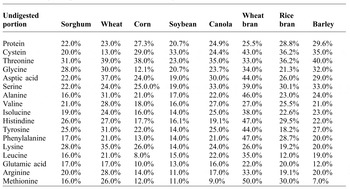
Rubio and Clemente (Reference RUBIO and CLEMENTE2010) have demonstrated that the degree of protein and peptides hydrolysis strongly affect the digestibility of amino acids in rats. In poultry, Cowieson (Reference COWIESON2010) has extensively reviewed the effect of carbohydrases on inherent digestibility of amino acids in corn and wheat based diets, indicating that methionine is typically very readily digested and cysteine very poorly. Therefore, carbohydrases have more opportunity to improve the digestibility of cysteine compared with that of methionine in complete broiler diets though it is not clear why cystein in corn and wheat based diets is poorly digested.
Undigested protein fraction in different ingredients.

Adapted from Ravindran and Bryden et al., Reference RAVINDRAN and BRYDEN1999, Ravindran et al., Reference RAVINDRAN, HEW, RAVINDRAN and BRYDEN2005, Donkoh and Attoh-Kotoku (Reference DONKOH and ATTOH-KOTOKU2009), and Al-Marzooqi et al., Reference AL-MARZOOQI, KADIM, MAHGOUB, Al-BUSAID, Al-LAWATI, AlMAQBALY, Al-WHEEBI and Al-BAKERY2010. All data were calculated on the basis of apparent ileal amino acid digestibility.
From Table 2, it is clear that the inherent digestibility of methionine in rice bran and wheat bran is much lower than that in other feed ingredients. Therefore, the magnitude of enzyme effect on diets including rice bran and wheat bran may be expected to be higher than on typical corn-soybean diets. Cowieson (Reference COWIESON2010) summarised that the apparent digestibility of threonine in most feed ingredients including wheat bran and rice bran is relatively poor. It is not clear if the addition of synthetic threonine may reduce carbohydrases effects on the inherent digestibility of threonine in broiler diets but this is likely to be the case.
Widyaratne and Drew (Reference WIDYARATNE and DREW2011) reported that highly digestible proteins and low-protein diets maximized the efficiency of utilisation of dietary protein. However, in low-protein diets, there was no significant difference in protein digestibility between highly digestible and low digestible protein sources. It was noticed that poorly digestible protein strongly decreased feed intake and therefore body weight gain of broiler chickens (Widyaratne and Drew, Reference WIDYARATNE and DREW2011). Thus, it may be difficult to investigate the response of enzymes in low protein diets based on protein digestibility due to lack of divergence in digestibility for various protein sources. On the other hand, higher concentrations of poorly digestible proteins in poultry diets can lead to poorer nutrient digestion and absorption owing to the impact of anti-nutrients and indigestible carbohydrates present in legumes.
The protein content, the location of the protein in the ingredient, the presence of anti-nutrients such as trypsin inhibitors, the quality of industrial processes of protein ingredients, and the accessibility of the proteins to endogenous and exogenous proteases may affect feed enzyme functional patterns in different ingredients. Although cereals are usually used primarily as an energy source, they contribute about 25-30% of dietary protein in poultry diets. Accordingly, the quality of cereal proteins may also influences the functional patterns of carbohydrases or proteases.
Allee and Baker (Reference ALLEE and BAKER1970) indicated that corn protein is deficient in lysine and tryptophan. Black et al. (Reference BLACK, HUGHES, NIELSEN, TREDEA, MACALPINE and BAREVELD2005) reported that a small portion of sorghum proteins, the λ-kafirins, was difficult to access by digestive proteases; while Choct (Reference CHOCT1997) ascribed reduced protein digestibility to increased soluble NSP concentrations in wheat, multi-carbohydrase enzymes failed to improve protein digestibility in a corn diet probably due to the much lower water soluble NSP concentration in corn (Meng and Slominski, Reference MENG and SLOMINSKI2005). Recently, Cowieson (Reference COWIESON2010) reviewed the effect of multi-carbohydrase enzymes on corn soybean meal based diets and suggested a consistent 16% improvement in undigested protein portion, assuming it resulted from the release of structure protein (glycoprotein) in soybean meal, rather than from the elimination of encapsulating effect of the cell wall (Meng and Slominski, Reference MENG and SLOMINSKI2005). Surprisingly, Kocher et al. (Reference KOCHER, CHOCT, PORTER and BROZ2000) and Meng and Slominski (Reference MENG and SLOMINSKI2005) reported a negative protein digestibility response in canola meal-based diets in response to an carbohydrases admixture including xylanase, glucanase and cellulase, indicating that the supplementation of carbohydrases in the higher inclusion level of canola meal diets might result in more NSP hydrolysis products, which might influence the protein digestibility by broiler chickens. Therefore, the interaction between water soluble, insoluble NSP and protein, both in cereals and other protein sources, may complicate the effect of xylanase on NSP and protein digestibility and the overall value needs to be further investigated. In addition, as described previously, the interaction between protein and starch might also affect the effect of carbohydrases on protein digestibility. Unfortunately, as Svihus et al. (Reference SVIHUS, UHLEN and HARSTAD2005) indicated, interactions between starch and protein have usually been ignored due to the fact that protein digestion precedes starch digestion spatially. Further work needs to be done in this area. In particular, the ileum may not be the ideal site to investigate the interaction between starch and protein digestion, or indeed for exploration of exogenous enzyme value. More proximal regions of the small intestine may be more useful to study feed enzyme functional patterns.
fat
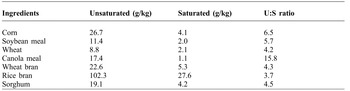
There is scarce information about inherent fat digestibility in feed ingredients or complete diets although it is well-known that the degree of saturation of the constituent fatty acids, their chain length and proportion of free fatty acids present within a supplemental blend affects dietary energy values (Wiseman et al., Reference WISEMAN, EDMUNDA and SHEPPERSON1992). For young broiler chickens, increased supplemental free fatty acid content and degree of saturation depress the fat digestibility (Wiseman and Salvador, Reference WISEMAN and SALVADOR1991). Dänicke et al. (Reference DÄNICKE, JEROCHA, BOÈTTCHERA and SIMON2000) demonstrated that increasing the ratio of dietary unsaturated and saturated fatty acids (U:S ratio) up to 1.5, improved fat digestibility and accordingly, lower U:S ratio resulted in pronounced xylanase responses in a rye-based diet. Table 3 shows the compositions of saturated and unsaturated fatty acids in major feed ingredients. Considering that most vegetable fat sources have a high content of unsaturated fatty acids and animal fat or some vegetable (e.g. palm oil) are rich in long-chain saturated fatty acids (Smink et al., Reference SMINK, GERRITS, HOVENIER, GEELEN, LOBEE, VERSTEGEN and BEYNEN2008), in practice, utilisation of vegetable oil in poultry diets may be reflected in increased fat digestibility. However, Jørgensen et al. (Reference JØRGENSEN, ZHAO, THEIL and JAKOBSEN2008) suggested that unsaturated vegetable fat has a positive effect on digestibility of dietary fat and protein but a negative effect on starch digestibility. It is of interest to note that although lipid digestibility is generally assumed to be independent of the composition of the diet, there is the evidence that unsaturated fatty acids inherent in the grain portion of a diet enhance the utilisation of the supplemental fat (Mateos and Sell, Reference MATEOS and SELL1981).
The compositions of saturated and unsaturated fatty acids in major feed ingredients.

Adapted from Sauvant et al., Reference SAUVANT, PEREZ and TRAN2004.
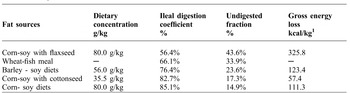
On the other hand, it appears that the fat digestibility is significantly decreased in diets with higher NSP concentrations (Table 4) due to the oil-encapsulating effect of NSP (Slominski et al., Reference SLOMINSKI, MENG, CAMPBELL, GUENTER and JONES2006) or alterations in viscosity (diffusion of high molecular weight compounds) due to water soluble NSPs. Further, the deficiency in bile acid secretion in young birds resulted in lower lipid digestibility (Carré et al., Reference CARRÉ, GOMEZ and CHAGENEAU1995), either more added fat or high NSP contents in starter diets for young broilers may depress total feed utilisation (Moore et al., Reference MOORE, STALDER, BEITZ, STAHL, FITHIAN and BREGENDAHL2008). However, in iso-caloric diets, a reduced dietary fat concentration, can depress the performance of young broilers and Cowieson et al. (Reference COWIESON, BEDFORD and RAVINDRAN2010) suggested minimum fat concentrations could maximize bioefficacy of NSP enzymes in corn-soy based diets because the reduction in fat level might compromise protein digestibility due to an increased rate of gastric emptying.
Undigested fat fraction in different diets.

Adapted from Cowieson (Reference COWIESON2010), Liu et al., Reference LIU, RU, WANG and XU2010, Slominski et al., Reference SLOMINSKI, MENG, CAMPBELL, GUENTER and JONES2006, Almirall et al., Reference ALMIRALL, FRANCESCH, PEREZ-VENDRELL, BRUFAU and ESTEVE-GARCIA1995.
1 The gross energy value in fat was calculated as 39.04 MJ/kg or 5450 kcal/kg (Carré et al., Reference CARRÉ, GOMEZ and CHAGENEAU1995).
It is noticed that for young broiler chickens in a typical corn-soybean diet, the energetic loss contributed by undigested fat and starch is about 210 kcal/kg. Because the energetic loss associated with the undigested protein is estimated to be around 190 kcal/kg (Cowieson, Reference COWIESON2010), there is a loss of around 400 kcal of energy from undigested starch, protein and lipid.
Interactions between the inherent nutrient digestibility and phytate or NSP
Cowieson (Reference COWIESON2005) and Thorne et al. (Reference THORNE, THOMPSON and JENKINS1983) have respectively reviewed factors that affect the nutritional value of corn and legumes, suggesting phytate, enzyme inhibitors and resistant starch primarily affect the nutritional value of corn and legumes. White et al. (Reference WHITE, DOUCET, HILL and WISEMAN2008) indicated that cereal-based feeds for newly weaned piglets, the hydration and structural characteristics affect the rate and extent of starch hydrolysis, therefore, the digestibility that can be monitored using in vitro digestibility tests.
phytate P
Extensive reviews about the effect of phytate on the digestibility of carbohydrates, amino acids, proteins and minerals can be found in previously described reviews (Selle and Ravindran (Reference SELLE and RAVINDRAN2007), Adeola and Cowieson (Reference ADEOLA and COWIESON2011) and Woyengo and Nyachoti (Reference WOYENGO and NYACHOTI2011), and will not be covered in detail herein. Briefly, Thompson and Yoon (Reference THOMPSON and YOON1984) suggested that phytate might impair the digestibility of wheat starch probably due to the formation of mineral/phytate/starch complexes in the intestines (Angel et al., Reference ANGEL, TAMIM, APPLEGATE, DHANDU and ELLESTAD2002). Cowieson et al. (Reference COWIESON, ACAMOVIC and BEDFORD2006) and Yu et al. (Reference YU, COWIESON, GILBERT, PLUMSTEAD and DALSGAARD2012) have suggested that phytate can bind protein in the early part of the digested part and make it less accessible to attack from endogenous proteases Additionally, the existence of complexes of phytate and fatty acids and reduced fat digestibility has also been reported (Singh, Reference SINGH2008). Thus, phytate may not directly influence the bioefficacy of exogenous carbohydrases or protease per se, but the solubility of those substrates and accessibility for enzymatic digestion. Nonetheless, an inhibitory effect of phytate on the activity of other endogenous protelytic enzymes has been reported to reduce protein digestibility (Woyengo and Nyachoti, Reference WOYENGO and NYACHOTI2011).
An appreciation for the concentration of phytate in feed ingredients in the context of carbohydrase biochemistry may be also instructive due to the potential for a carbohydrase-mediated reduction in the integrity of cell wall architecture. Bedford (Reference BEDFORD2000) previously reported that xylanases and glucanases hydrolyse cell wall material, releasing previously encapsulated cell contents. Therefore, it is theoretically possible for a carbohydrase or protease to increase the concentration of soluble or reactive phytate in the lumen of poultry or swine. So, although phytate is not a focus of research for carbohydrase efficacy studies, it may be an obscure contributor to observed effect. The solubility of phytate with and without carbohydrase treatment may be measured in vitro and this may shed light on risk associated with these mechanisms.
water-soluble and insoluble NSP
It is well-known that vegetable protein sources contain higher water soluble and insoluble NSP than cereal feed ingredients and cereal by-products contain little water soluble NSP but substantial concentrations of insoluble NSP. Higher fibre diets have a low metabolisable energy value and may cause abrasion of the intestinal mucosa and increase the amino acids requirements for synthesis of mucosa (Mushtaq et al., Reference MUSHTAQ, SARWAR, AHMAD, MIRZA, AHMAD, MOREEN, MUSHTAQ and KAMRAN2009). Fernandez et al. (Reference FERNANDEZ, SHARMA, HINTON and BEDFORD2000) indicated that adding xylanase to a wheat based diet could reduce intestinal viscosity and therefore decrease the numbers of Campylobacter jejuni. Furthermore, Janssens and Gaethofs (Reference JANSSENS and GAETHOFS2007) suggested that xylanase could break down the arabinoxylan chains into smaller fragments, which may slow proliferation of gram-positive cocci and presumptive enterobacteria (Vahjen et al., Reference VAHJEN, GLÄSER, SCHÄFER and SIMON1998). It is possible that shifting microbial populations towards commensal populations with the use of xylanase may reduce the energy and amino acid requirements of the host to maintain pathogenic populations under control in the intestine.
Angkanaporn et al. (Reference ANGKANAPORN, CHOCT, BRYDEN and ANNISON1994) indicated that even 15-35 g/kg diet arabinoxylans can either increase endogenous losses of amino acids or reduce protein digestibility, which is a relatively low concentration compared to the range of dietary crude fibre in commercial diets of 4.5% to 5.5%, even those for young broilers contain less than 3% crude fibre. Although the amount and solubility in water of arabinoxylan in corn appears insufficient to influence intestinal viscosity and consequently nutrient availability, the multi-carbohydrases preparation still significantly improved ileal starch digestibility in corn diet and protein digestibility in corn-soy based diets (Slominski, Reference SLOMINSKI2011). JØrgensen et al. (Reference WEURDING, ENTING and VERSTEGEN1996) reported that water-insoluble NSP could be partially degraded in the small intestine but may be poorly fermented in the chicken ceca and remains almost completely undigested. However, significant disaccharides, low-molecular weight polysaccharides and oligosaccharides derived from either water-soluble or insoluble NSP due to the use of exogenous enzymes may be fermented in ceca, although the net efficiency of utilisation of dietary energy via hind gut fermentation is estimated to 65% and 50% of that of glucose absorbed in adult cockerels and broiler chickens (Choct and Kocher, Reference CHOCT and KOCHER2000). Bedford and Cowieson (Reference BEDFORD and COWIESON2012) suggested that oligomers produced from enzyme action on corn is quite different from those produced from wheat and therefore influence the enzyme response. Interestingly, arabinoxylo-oligosaccharides derived from wheat bran significantly improved FCR in both wheat and corn based diets due to decreased feed intake (Courtin et al., Reference COURTIN, BROEKAERT, SWENNEN, LESCROART, ONAGBESAN, BUYSE, DECUYPERE, VAN DE WIELE, MARZORATI and VERSTRAETE2008). Jamroz et al. (Reference JAMROZ, JAKOBSEN, BACH KNUDSEN, WILCZKIEWICZ and ORDA2002) indicated that a proportion of the total NSP in barley was degraded in the ceca of chickens (46%), ducks (27%), and geese (90%), respectively. Negative values for the degradation of water soluble NSP were observed in chicken and duck but geese fermented soluble NSP to a much greater extent. Hetland et al. (Reference HETLAND, SVIHUS and KROGDAHL2003) suggested that the inclusion of water-insoluble NSP might improve gizzard functioning and increase the reflux of digesta from duodenum to the gizzard, facilitating the contact between nutrients and endogenous enzymes. Jimenez-Moreno (Reference JIMENEZ-MORENO, GONZALEZ-ALVARADO, GONZALEZ-SERRANO, LAZARO and MATEOS2009) concluded that even young broiler chickens needed a minimal amount of water-insoluble NSP for optimal performance.
Pettersson and Aman (Reference PETTERSSON and AMAN1989) and Choct et al. (Reference CHOCT, HUGHES, TRIMBLE, ANGKANAPORN and ANNISON1995) have shown that xylanase significantly increased water-insoluble NSP digestibility in rye and wheat. In contrast, it is well-documented that in cereal grains with high concentrations of NSP, such as wheat and barley, water soluble arabinoxylans and ß-glucans result in increased intestinal viscosity and depressed starch, fat, and protein digestibility. As indicated previously, while water-soluble NSP results in the increased viscosity, insoluble NSP actually shorten the residency time of digesta, possibly leading to changes in starch digestion rate depending on the ratio of water-soluble NSP and insoluble NSP. Further work needs to be done in this area.
In proteinaceous feed ingredients, Daveby et al. (Reference DAVEBY, RAZDAN and ÅMAN1998) indicated that α-galacto-oligosaccharides (e.g., raffinose, stachyose and verbascose), containing α-galactosidic linkages, are undegradable by digestive enzymes of humans and monogastric animals. Pectic polysaccharides, comprising mainly arabinose, uronic acids and rhamnose residues, are the dominant cell wall components in dehulled legumes. The nutritive value in soybean meal and canola meal is limited by the presence of pectic polysaccharides (Choct, Reference CHOCT1997). Although oligosaccharides in soybean meal may be extensively fermented in ceca, leading to a positive physiological response (e.g., acidition of digesta, decreased ammonia concentration, and increased short chain fatty acids), these oligosaccharides may also increase accumulation of cecal digesta composed of undigested constuents and increase bacterial mass (Jankowski et al., Reference JANKOWSKI, JUSKIEWICZ, GULEWICZ, SLOMINSKI and ZDUNCZYK2009). It is of importance to notice that canola meal contains on average 2.5% α-galacto-oligosaccharides (Kocher et al., Reference KOCHER, CHOCT, PORTER and BROZ2000) but the sum of oligosaccharides averaged 5.3% for soybean meal (Jankowski et al., Reference JANKOWSKI, JUSKIEWICZ, GULEWICZ, SLOMINSKI and ZDUNCZYK2009), suggesting that the displacement of soybean meal with canola meal in diets might significantly reduce oligosaccharides concentrations in broiler diets. It is expected that α-galacto-oligosaccharides are subjected to bacterial degradation due to lack of endogenous α-galactosidase activity in the host (Carré et al., Reference CARRÉ, GOMEZ and CHAGENEAU1995). Interestingly, there is no direct evidence that increased water insoluble NSP contents depress starch digestibility but may depress apparent protein digestibility in peas (Gabriel et al., Reference GABRIEL, QUILLIEN, CASSECUELLE, MARGET, JUIN, LESSIRE, SÈVE, DUC and BURSTIN2008) and canola meal (Fang et al., Reference FANG, LIU, DAI, QIAN, QI, MA and PENG2009) due to the increase in bacterial protein losses (Carré et al., Reference CARRÉ, GOMEZ and CHAGENEAU1995) and protein and amino acid flows at the terminal ileum (Mateos et al., Reference MATEOS, JIMÉNEZ-MORENO, SERRANO and LÁZARO2012). Thus, the effects of enzymes on the NSP component of the diet may affect patterns of ileal digestibility of protein, starch and lipids. At least, Cowieson and Bedford (Reference COWIESON and BEDFORD2009) indicated that for ingredients with high concentrations of water insoluble NSP, the improvement of the undigested amino acids is low and for ingredients with high concentrations of water soluble NSP, the improvement of the undigested fraction is higher.
Prediction of feed enzyme functional pattern based on feed ingredient characteristics
Recently Cowieson and Bedford (Reference COWIESON and BEDFORD2009) and Cowieson (Reference COWIESON2010) have demonstrated that the inherent digestibility of nutrients in the diet prior to enzyme addition is a good indicator of the magnitude of enzyme response. So, in diets where ileal digestibility coefficients for starch, amino acids or fat are low, the response to exogenous enzymes is typically higher. However, there are a range of reasons why a particular feed ingredient or diet may have a relatively poor digestibility and it may be overly simplistic to conclude that all such ingredients will be responsive to feed enzymes. The concentration of substrate for the enzyme is of course relevant and the dominant nutritional fraction that is influenced by the enzyme i.e. fat, starch, fibre or protein will dictate how the enzyme-modified diet is perceived by the bird. It is expected that this enzyme response is multi-factorial and may fit multiple regression models. Previous mechanistic work to explore correlations between chemical characteristics of feedstuffs and the in vivo digestibility and/or enzyme response has focussed largely on single ingredients. Though this approach is logical, an inherent problem is that within any one feed ingredient there is relatively little variation in chemical or nutritional characteristics. A more robust approach is to geometrically generate ingredient mixtures with radically different characteristics which will possibly set up multiple regression models to predict feed enzyme response magnitudes.
Due to the limitation of gross chemical measurements, some in vitro methods need to be developed to provide useful information on the characteristics of the diet in relation to its inherent digestibility. Wong et al. (Reference WONG, MARX, WILSON, BUCHANAN, LEMAUX and PEDERSEN2010) summarised in vitro methods that have been developed to assess inherent protein and starch digestibility in sorghum, indicating that in vitro pepsin and in vitro amylase assays are commonly used to assess protein and starch digestibility, respectively but they do not address effects of interactions between feed ingredients in the control diets. Recently, Doucet et al. (Reference DOUCET, WHITE, WULFER, HILL and WISEMAN2010) established a swine model by using in vitro assessment to predict in vivo starch digestibility, suggesting that starch characteristics such as hydration, structure and amylolytic digestion are fundamentally associated with the inherent digestibility. Dona et al. (Reference DONA, PAGES, GILBERT and KUCHEL2010) summarised starch characteristics affecting digestion, indicating that in vitro water solubility index (WSI) and amylolytic released glucose are strongly correlated to the in vivo starch digestibility. Thus, water absorption index (WAI), WSI and dietary physical density representing the combination of different factors affecting the nutrients digestibility, have been used to characterise the hydration properties and potential in vivo digestion of feed ingredients (Janas et al., Reference JANAS, BOUTRY, MALUMBA, VANDER ELST and BÉRA2010; Al-Rabadi et al., Reference AL-RABADI, TORLEY, WILLIAMS, BRYDEN and GIDLEY2012).
It is well-known that starch digestion rate in the small intestine of broiler chickens varies considerably among feed ingredients and Weurding et al. (Reference WEURDING, VELDMAN, VEEN, VAN DER AAR and VERSTEGEN2001) has demonstrated that digestion rate of the digestible starch and the resistant starch fraction will affect the extent of starch digestion. Although numerous in vitro starch digestibility methods and in vitro organic matter (OM) assays are available, rapidly digestible starch (RDS), slowly digestible starch (SDS) and resistant starch (RS) (Englyst et al., Reference ENGLYST, KINGMAN and CUMMINGS1992) have been used most commonly to predict human (Woolnough et al., Reference WOOLNOUGH, MONRO, BRENNAN and BIRD2008) and chicken (Weurding et al., Reference WEURDING, ENTING and VERSTEGEN2003) in vivo nutritional responses, which indicates that the correlation between starch hydrolysis in vitro and in vivo may better defined by the pattern of hydrolysis over time rather than hydrolysis at a specific point in time. The in vitro starch digestion rate in feed ingredients and complete diets may be better measured by the glucose release method described by Sopade and Gidley (Reference SOPADE and GIDLEY2009).
One important physical property of diets is their intrinsic solubility. Based on their solubility in water, diluted salt solutions, alcohol solutions and alkali solutions, proteins in feed ingredients are usually classified into four main fractions (albumin, globulin, prolamin and glutelin) (Byers et al., Reference BYERS, MIFLIN and SMITH1983). The major soybean proteins are globulins which are soluble in diluted salt solutions (Wolf, Reference WOLF1970). The salt-soluble proteins in corn, sorghum and wheat are 20, 30 and 33%, respectively (Byers et al., Reference BYERS, MIFLIN and SMITH1983; Wall and Paulis, Reference WALL and PAULIS1983). Accordingly, 40, 28 and 50% of storage proteins in corn (Zein), sorghum (Kafirin), and wheat (Gladin), respectively, are prolamins. These different fractions have different properties, hydrophobicities and molecular weights and are likely to have different susceptibilities to exogenous enzymes. Indeed, the salt-solubility of protein in different corn samples has been demonstrated to correlate with ileal digestible energy values, indicating that salt-soluble protein may represent some ileal digestible characteristics in feed ingredients (Gehring et al., Reference GEHRING, BEDFORD, COWIESON and DOZIER2012). Therefore, it is possible to develop multiple regression equations by using gross chemical measurements, in vitro starch digestion rate, water absorption characteristics, physical density or other in vitro parameters, to predict ileal protein, starch and fat digestibility or feed enzyme functional patterns.
Conclusions
A reduction in feed cost is a major goal for feed producers and poultry integrators. Supplementation of diets with microbial enzymes is one way by which feed input costs can be controlled. Historically, the value of carbohydrases and proteases for poultry diets has been limited by equivocal animal data and apparent inconsistency at an end user level. A substantial part of this inconsistency may have been mediated via a lack of appreciation for the inherent nutritional value of the control diet to which the enzymes will be added, and an incomplete understanding of the physiological factors determining the link between digestion and absorption. Genesis of predictive equations based on multiple regression models of in vitro data and in vivo ileal digestibility values may shed light on these factors and improve the consistency of response. Though single-ingredient models can be helpful, especially mechanistically, a more empirical proportionality approach is likely to result in more robust models. The use of feed ingredient mixtures, generated systematically, with radically different inherent characteristics to explore enzyme effects in a multi-nutrient space will be instructive and allow primary drivers for feed enzyme effect to become apparent.