Introduction
As an alternative to using chemical insecticides, genetically modified plants (traits are insect resistance and herbicide tolerance) have been used as an efficient and promising tool in the control of insect pests in different crops. These traits can provide many advantages such as the reduction of insecticide use, increase in yield, beyond simplified management of weed control (Storer et al., Reference Storer, Kubiszak, Ed King, Thompson and Santos2012).
However, genetic manipulation of a particular trait may affect other characteristics because of possible pleiotropy or insertional mutations (Schuler et al., Reference Schuler, Potting, Denholm and Poppy1999). Some studies have focused on the impact of the Bacillus thuringiensis Berliner, 1915 (Bt) genes on plant, herbivore-induced plant volatiles (HIPVs), and effects on herbivores insects (Turlings et al., Reference Turlings, Davison and Tamo2004; Dean and De Moraes, Reference Dean and De Moraes2006; Torres et al., Reference Torres, Ruberson and Adang2006; Naranjo, Reference Naranjo2009; Comas et al., Reference Comas, Lumbierres, Pons and Albajes2014). Also, studies with HIPVs have been shown to mediate interactions with other herbivores (Naranjo-Guevara et al., Reference Naranjo-Guevara, Peñaflor, Cabezas-Guerrero and Bento2017; Aljbory and Chen, Reference Aljbory and Chen2018). These studies involve plants and interactions with insect pests and beneficial insects. However, there are no study assessed the ecology (plants/pest insects/natural enemies) of oviposition-induced plant volatiles (OIPVs) mediated interactions between plants genetically modified with singular and stacked events and higher trophic levels (Nascimento et al., Reference Nascimento, Fadini, Valicente and Ribeiro2018).
B. thuringiensis Cry proteins are known to have a relatively specific range of biological activity (Bravo et al., Reference Bravo, Gillb and Soberón2007; Shu et al., Reference Shu, Romeis and Meissle2018). However, the evolution of resistance in the target pests is a common process when a single protein is used. To broaden the target spectrum, to delay the insect resistance, and to simplify crop management, multiple Cry proteins have been combined into modern GM plants. (Head et al., Reference Head, Carroll, Evans, Rule, Willse and Clark2017).
A second approach to control agricultural pest insects is the use of beneficial insects. Therefore, when attacked, plants emit volatiles compounds that may affect interactions among organisms belonging to the arthropod herbivore's community of the plant, for example, predators and parasitoids (Dicke and Baldwin, Reference Dicke and Baldwin2010; Hilker and Meiners, Reference Hilker and Meiners2010; Turlings and Erb, Reference Turlings and Erb2018; Willett et al., Reference Willett, Alborn, Stelinski and Shapiro-Ilan2018). These volatile compounds may induce after herbivore damage of pest insects, HIPVs. These compounds consist such as benzenoids, terpenoids and fatty acid derivatives that may be used like chemical cues to natural enemies (Dicke et al., Reference Dicke, van Beek, Posthumus, Ben, van Bokhoven and de Groot1990; Turlings et al., Reference Turlings, Tumlinson and Lewis1990; Mumm and Dicke, Reference Mumm and Dicke2010; Naranjo-Guevara et al., Reference Naranjo-Guevara, Peñaflor, Cabezas-Guerrero and Bento2017). Besides, studies show that egg deposition by herbivorous insects can change plant volatile emission. Parasitoids utilize the OIPVs during host location (Meiners and Hilker, Reference Meiners and Hilker2000; Colazza et al., Reference Colazza, Fucarino, Peri, Salerno and Conti2004; Fatouros et al., Reference Fatouros, Bukovinszkine'Kiss, Kalkers, Soler and Dicke2005; Tamiru et al., Reference Tamiru, Bruce, Woodcock, Caulfield and Midega2011; Fatouros et al., Reference Fatouros, Lucas-Barbosa, Weldegergis, Pashalidou and van Loon2012).
Plant defenses after oviposition represent an effective strategy, developed by plants over evolutionary time, to reduce damage caused by future herbivory. Plant defenses can be activated before the onset of feeding (Hilker and Meiners, Reference Hilker and Meiners2006; Hilker and Meiners, Reference Hilker and Meiners2006; Penãflor et al., Reference Penãflor, Erb, Robert, Miranda, Werneburg, Alda, Turlings and Bento2011). Insect oviposition can modify the plant's chemistry, with consequences for eggs deposition and/or subsequently herbivory (Beyaert et al., Reference Beyaert, Köpke, Stiller, Hammerbacher, Yoneya, Schmidt, Gershenzon and Hilker2011; Kim et al., Reference Kim, Tooker, Luthe, De Moraes and Felton2012). Plant surface chemistry, for example, may kill eggs, reduce egg viability, producing ovicidal substances (Doss et al., Reference Doss, Oliver, Proebsting, Potter, Kuy, Clement, Williamson, Carney and Devilbiss2000; Hilker and Meiners, Reference Hilker and Meiners2002), and indirectly by attracting egg parasitoids (Fatouros et al., Reference Fatouros, Bukovinszkine'Kiss, Kalkers, Soler and Dicke2005; Fatouros et al., Reference Fatouros, Pashalidou, Aponte Cordero, van Loon, Mumm, Dicke, Hilker and Huigens2009). However, some studies show that when there is no mechanical damaged the emission of volatiles was suppressed (Dean and De Moraes, Reference Dean and De Moraes2006; Penãflor et al., Reference Penãflor, Erb, Robert, Miranda, Werneburg, Alda, Turlings and Bento2011; Michereff et al., Reference Michereff, Borges, Laumann, Diniz and Blassioli-Moraes2013). Moreover some studies evaluated the role of Bt genes in the production of volatiles by plants and the effect of these compounds on herbivore attack (Moraes et al., Reference Moraes, Laumann, Aquino, Paula and Borges2011; Téllez-Rodríguez et al., Reference Tellez-Rodriguez, Raymond, Morán-Bertot, Rodríguez-Cabrera, Wright and Borroto2014; Liu et al., Reference Liu, Romeis and Yu2015; Jiao et al., Reference Jiao, Hu, Peng, Wu, Romeis and Li2018; Nascimento et al., Reference Nascimento, Von Pinho, Fadini, Souza and Valicente2020).
Here we investigated the olfactory behavioral responses of Trichogramma pretiosum Riley, 1879 (Hymenoptera: Trichogrammatidae) to volatile blends emitted by maize (Zea mays L.) with singular and stacked events after oviposition by Spodoptera frugiperda Smith, 1797 (Hymenoptera: Trichogrammatidae. Three Bt maize hybrids and isogenic were used as a model system, presents the same genetic background of the no-transgenic isoline, but with genetic modification and herbicide tolerance hybrid. The herbivore S. frugiperda was selected as polyphagous insect, considered one of the main pests of maize crop, which feeds on all plant phenology stages (Cruz et al., Reference Cruz, Figueiredo, Silva, Silva, Paula and Foster2012). The egg parasitoid T. pretiosum is a microhymenoptera widely used as a biological agent of several lepidopteran species which are pests of many important agricultural crops.
We evaluated: (i) the effects of oviposition on plant volatile mediated tritrophic interactions with egg parasitoids, (ii) the specificity of plant response to oviposition by singular events and stacked maize, and (iii) examine responses on the level of gene expression of plants subjected to oviposition. We analyzed the genes of lipoxygenase and three terpene synthases, enzymes involved in the synthesis of volatile compounds that attract egg parasitoids.
Materials and methods
Plants
Seeds of commercial hybrids maize, DKB390 (isogenic line), DKB390 YieldGard VT PRO TM (Cry1A.105 + Cry2Ab2, resistant to lepidopteran insects, singular hybrid), DKB390 VT PRO 2 ™ (Cry1A.105 + Cry2Ab2, resistant to lepidopteran insects and glyphosate herbicide-tolerant, stacked hybrid), DKB390 VT PRO 3® (Cry1A.105 + Cry2Ab2, Cry3Bb1, resistant to lepidopteran and coleopteran insects and glyphosate-tolerant, stacked hybrid) and Ag 3700 RR2 (CP4 EPSPS, glyphosate-tolerant, singular hybrid), from Dekalb (Monsanto, St. Louis, USA) were planted in 2 L-polyethylene pots filled with 1.5 kg of soil. Maize plants in these bioassays were used 10–12 days after emergence with three fully expanded leaves (V3). At this stage maize plants were naturally attacked by S. frugiperda. Plants were kept in greenhouse 25 ± 5°C, 70 ± 15% relative humidity (RH), 12:12 light (L):dark (D) and irrigated as needed.
Insects
The artificial rearing was initiated using larvae collected from maize fields (hybrid BRS 1030, no-transgenic) at Embrapa Maize and Sorghum, Minas Gerais State, Brazil, in 1980, and the colony has been supplemented with larvae collected from the same area annually. These larvae lack any resistance to cry toxins. Eggs of S. frugiperda used in this bioassay were obtained from the laboratory of the Biological Control in Embrapa Maize and Sorghum. Insects were reared according to Valicente and Barreto Reference Valicente and Barreto2003, and maintained under controlled environmental conditions at 25 ± 1°C, 70 ± 10% relative humidity (RH), 12:12 h light (L):dark (D).
Females of the parasitoid T. pretiosum (<48 h) were provided by the Koppert® Biological Systems Company and maintained under controlled temperature and relative humidity until the beginning of the experiment (25 ± 1°C, 70 ± 10% relative humidity (RH), 12:12 light (L):dark (D)). The sexing of the parasitoids was conducted under stereoscope microscope using a fine brush, distinguishing males and females by the antenna morphology (Querino et al., Reference Querino, Ranyse and Zucchi2003). All vials were maintained in incubators. The biossay was replicated 20 times.
Oviposition-induced volatiles
One plant per cage of the hybrids VTPRO, VTPRO2, VTPRO3, RR2, and their isoline were distributed individually within the nylon cages (0.6 m wide × 0.6 m long × 0.6 m high). Plants were aritificially infested and immediately after tests were performed. Maize plants at the stage of three fully grown leaves were confined in nylon cages with three 3- to 4-day-old mated females of S. frugiperda overnight, after 24 h, plants with egg masses (two–four egg masses on each plant) were selected for experiments. The cages with maize plants and S. frugiperda females were kept under the same experimental conditions as described above.
Olfactory behavior bioassay
The responses of T. pretiosum were tested in dual-choice bioassays in a Y-tube olfactometer (Ø = 2.5 cm; main arm = 18 cm; smaller arms = 9 cm). The maize plants were placed inside the glass bottles (70 cm in height, 25 in width, 35 in length), which were connected to the ends of the olfactometer. A tube from a vacuum pump was connected to the main arm of the olfactometer. The air flow was adjusted to 300 ml min−1 using calibrated flowmeters connected to each arm. Two-day-old females of the parasitoid were positioned individually at the beginning of the central arm of the Y-tube and observed for 5 min. When the wasps crossed the threshold line (located in the middle of each arm) and stayed at the end of the arm for at least 20 s, this was considered as ‘choice’. Only insects that successfully made a choice for one arm within the first 5 min were considered for statistical analysis. Each parasitoid was used only once to prevent sociative learning. After each trial, the olfactometer was disassembled and all glassware was washed with neutral dishwashing soap, distilled water, and alcohol (90% v/v). At least 20 replicates were performed for each treatment combination and at least 4 different days. After oviposition-induced volatiles, plants were immediately removed from the olfactometry tests.
To evaluate egg parasitoid responses to OIPV´s emitted by S. frugiperda, bioassays with the following combinations were carried out: (i) air vs air; (ii) DKB390 (isogenic) vs DKB390 VTPRO (singular event) not-oviposited plants, control; (iii) DKB390 (isogenic) vs DKB390 VTPRO2 (stacked event) not-oviposited plants, control; (iv) DKB390 (isogenic) vs DKB390 VTPRO3 (stacked event) not-oviposited plants, control; (v) DKB390 (isogenic) vs Ag 3700 RR2 (singular event) not-oviposited plants, control; (vi) DKB390 (not-oviposited plant) vs DKB390 (oviposited plant – OP); (vii) DKB390 (oviposited plant – OP) vs DKB390 VTPRO (oviposited plant – OP); (viii) DKB390 (oviposited plant – OP) vs DKB390 VTPRO2 (oviposited plant – OP); (ix) DKB390 (oviposited plant – OP) vs DKB390 VTPRO3 (oviposited plant – OP); (x) DKB390 (oviposited plant – OP) vs Ag 3700 RR2 (oviposited plant – OP). The bioassays were conducted in laboratory, under the same conditions described above, between 09:00 and 17:00 h.
Plant volatile collection and chemical analyses
SPME fibers
SPME fibers, divinylbenzene/carboxen/polydimethylsiloxane (DVB/CAR/PDMS), Sigma-Aldrich were cleaned by heating in a gas chromatograph injector at 250°C for 30 min with helium as the carrier flow. Cleaned fibers were then wrapped in aluminum foil and stored in individual screw-capped Pyrex glass tubes until use.
Volatile organic compounds
The volatile organic compounds (VOCs) were collected from not-oviposited plants (control) and oviposited plants (OIPVs). Samples were taken by enclosing intact plants with three fully unfolded leaves (V3). Pots were carefully wrapped in aluminum foil to prevent interaction with VOCs from the soil and roots. Each plant was individually enclosed in an airtight 2-L glass chamber. After 2 h of sampling, the SPME fiber was added for ad/absorption of the volatiles, where it remained in the system for 60 min, under the same conditions previously described. The samples (SPME FIBERS) were injected in splitless mode for 5 min (injector temperature 200°C) and analyzed by GC–MS instrument (Finnigan Trace GC/MS da Thermo®) with an RTX-5 column (30 m 9 0.25 mm i.d., 0.25 mm film thickness. Helium was the carrier gas at a column head pressure of 170 kPa. The column temperature was held at 40°C for 5 min, increased to 150°C (5°C min−1) and maintained for 1 min, and then the temperature incresed until 250°C. The detector was maintained in scan mode (fullscan, from 30 to 300), using an electron impact ionization (EI) technique, with energy of 70 eV. The chromatographic column used was a HP5-MS (30 m long, 0.25 mm internal diameter and 0.25 μm film thickness) (Agilent Technologies INC, Germany) for analysis of mass spectrometry. Relative quantification was estimated based on the peak area of the total ion chromatogram relative to the internal standard. Compounds were identified by comparing their mass spectra with those from NIST mass spectrum libraries (NIST/EPA/NIH (2011). A total of three replicates (N = 3) for each treatment (‘Olfactory behavior bioassay’) were collected and analyzed. The volatiles were collected right after the oviposition S. frugiperda females. Plants were offered to the moths for oviposition in the period from 7:00 pm to 9:00 am and volatile compounds were collected. Eggs were left on the plants during the experiment. Clean maize plants were used as controls and were maintained in similar experimental conditions but in a separate room to avoid any plant toplant interaction. Three plants were used for each treatment. Plant volatiles were collected to investigate whether differences in volatile profiles could explain the observed behavior of parasitoids and in gene expression.
Tissues were collected for gene expression, and prepared for real-time PCR, synthesis of the cDNA, primers/genes, and RT-qPCR analysis
Hybrids were planted in pots with 25 kg of soil, where three seedlings per pot were kept. Maize plants used in the bioassays were 10–12 days after emergence with three fully expanded leaves (V3). Plants were maintained in greenhouses and irrigated as needed. After plant infestation, eggs were removed to collect plant tissues. The collected area was determined by the location of the egg masses deposited by the moths, with limits on the leaf surface inferior and superior to 2 cm of the egg masses, and plants was cut to its full width. Immediately after collecting, the plant material was wrapped in properly identified aluminum foil, frozen in liquid nitrogen and then stored at −80°C until use. Three plants were used per sample, and three biological replicates were collected from each treatment. For gene expression assays, plants without oviposition (not-oviposited plant) and oviposited plants were used. Oviposition treatment is described in the topic ‘Oviposition-Induced Volatiles’.
The total RNA was extracted from leaf tissue using the RNeasy Mini Kit (QIAGEN), according to the manufacturer's recommendations. RNA quantification was performed by spectrophotometry using the NANODROP ND-1000 equipment. The extracted RNA was stored at −80°C until use.
The synthesis of the cDNA was achieved using1 μg of the total RNA with the aid of the High Capacity cDNA Reverse Transcription Kit (Applied Biosystems), and stored at −20°C until use.
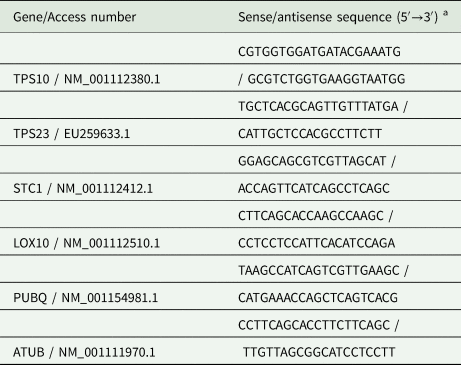
The specific sense and antisense primers for each gene were described by table 1. The target genes selected were TPS 23 (Terpene Sintase 23), TPS10 (Terpene Sintase 10), STC1 (Sesquiterpene Cyclase 1) and LOX10 (Lipoxygenase), whereas the Ubiquitin gene (UBQ) was used as the reference gene. Genes were selected because they are considered key genes involved in plant defense responses to insect pests. Sequences were obtained at the National Center for Information in Technology (NCBI, USA).
Sequence of pairs of primers used for qRT-PCR

a Sequences obtained at the National Center for Information Technology (NCBI, EUA http://www.ncbi.nlm.nih.gov/).
The efficiency of the reactions for each target gene was obtained from a four-point standard curve and 1:10 dilution factor whereas the specificity was evaluated from the melting curve. The qPCR reactions, both for validation and expression analysis, were prepared in a final volume of 10 μl containing 3.0 μl cDNA (diluted 50×), 5 μmol of each primer and 1×<Vinod: use multiplication symbol> Fast Master Mix (Applied Biosystems) and conducted in the 7500 Fast Real Time PCR System (Applied Biosystems following the instructions of equipment manufacturer). Samples were analyzed in three technical replicates and calculation of the relative expression of the transcripts was performed according to the 2−ΔΔCt method (Livak and Schmittgen, Reference Livak and Schmittgen2001).
Statistical analysis
Odor preference data were subjected to χ2 tests for categorical data (Crawley, Reference Crawley2013). Insects that did not make a choice were recorded excluded from statistical analysis. Normality and homogeneity data of the relative amounts of volatiles were tested by Shapiro−Wilk and Levene tests (P < 0.05). Plant volatile composition values were transformed using [log (x + 0.5)] and submitted to the analysis of variance (ANOVA). We also performed a principal component analysis (PCA). The quantifications of individual volatiles were evaluated by analysis of variance (one-way ANOVA) and the means were compared by Scott-knott test (P < 0.05). Statistical analyses were performed using the software R (R Development Core Team, 2014).
Results
Olfactory behavior bioassay
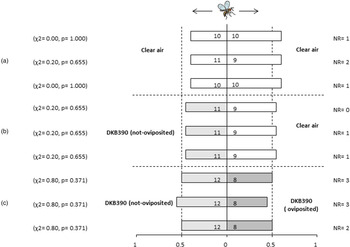
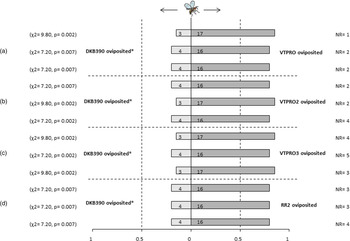
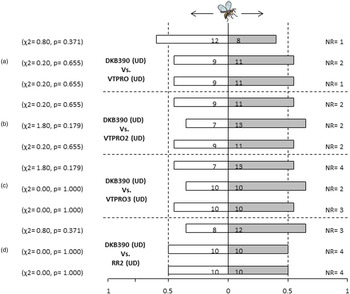
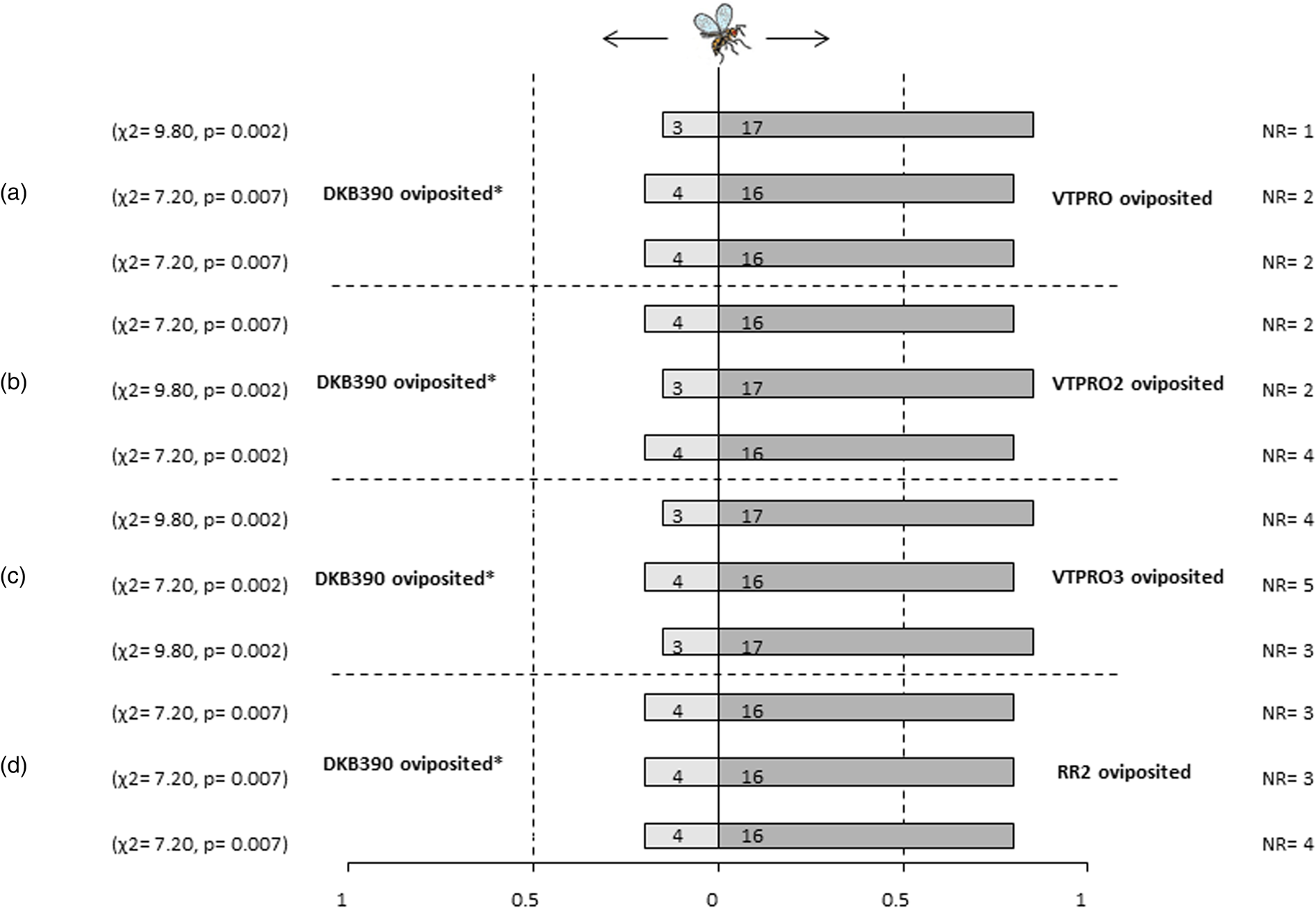
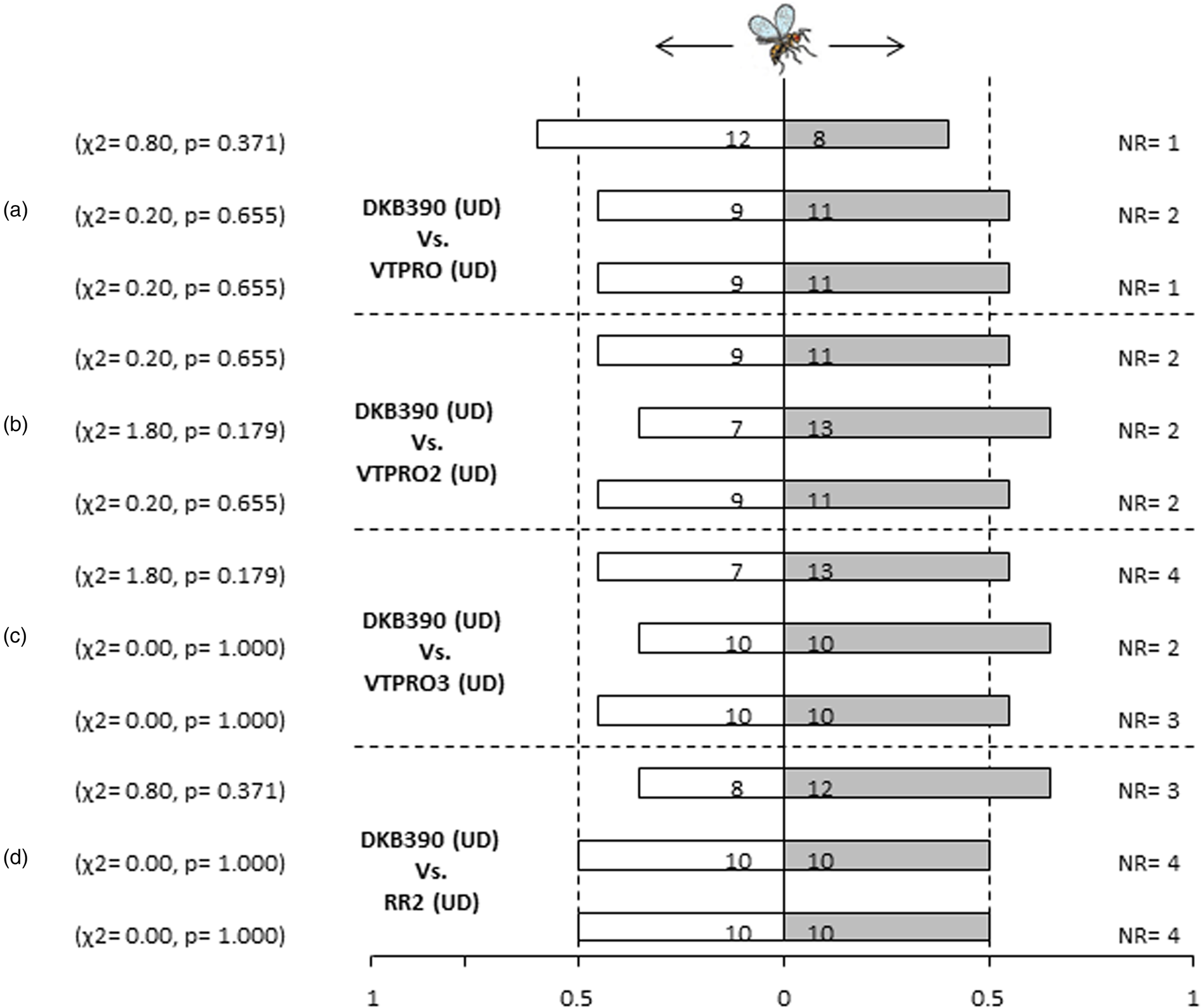
Adult females of T. pretiosum did not show any preference to the odors emitted by DKB390 (isogenic) without oviposition vs air, and DKB390 without oviposition vs oviposited DKB390 (fig. 1). However, the parasitoid showed preference to transgenic hybrids when compared to isogenic line in dual choice tests (fig. 2). In addition, wasps were not attracted to VOCs emitted by the control of all hybrids (fig. 3).
Olfactory response of Trichogramma pretiosum females to volatiles emitted by oviposition of Spodoptera frugiperda. As sources of odor consisted of: (a) the air vs. air (white bars); (b) DKB390 (not-oviposited plant – light gray bars) vs. air; (c) DKB390 (not-oviposited plant) vs. DKB390 (plant oviposited – dark gray bars). NR represents non-responsive insects (no choice). χ2 test with 5% significance. Numbers in bars represent individual parasitoids that choose the indicated odor. The number of parasitoids without response to the treatments (NR), after 5 min, was eliminated from the statistical analysis

Olfactory response of Trichogramma pretiosum females to volatiles emitted by oviposition Spodoptera frugiperda. The sources of odor consisted of: (a) DKB390 oviposited vs. DKB390 VTPRO oviposited; (b) DKB390 oviposited vs. DKB390 VTPRO2 oviposited; (c) DKB390 oviposited vs. DKB390 VTPRO3 .oviposited; (d) DKB390 oviposited vs. 3700RR2 oviposited. NR represents non-responsive insects (no choice). χ2 test with 5% significance. Numbers in bars represent individual parasitoids that choose the indicated odor. The number of parasitoids without response to the treatments (NR), after 5 min, was eliminated from the statistical analysis.
Olfactory response of Trichogramma pretiosum females to constitutive volatiles. The treatments were tested in pairs. The sources of odor consisted of: (a) DKB390 not-oviposited plant (UD) vs. DKB390 VTPRO (UD); (b) DKB390 (UD) vs. DKB390 VTPRO2 (UD); (c) DKB390 (UD) vs. DKB390 VTPRO3 (UD); (d) DKB390 (UD) vs. Ag3700 RR2 (UD). NR represents non-responsive insects (no choice). χ2 test with 5% significance. Numbers in bars represent individual parasitoids that choose the indicated odor. The number of parasitoids without response to the treatments (NR), after 5 min, was eliminated from the statistical analysis.
Chemical analyzes of plant volatiles
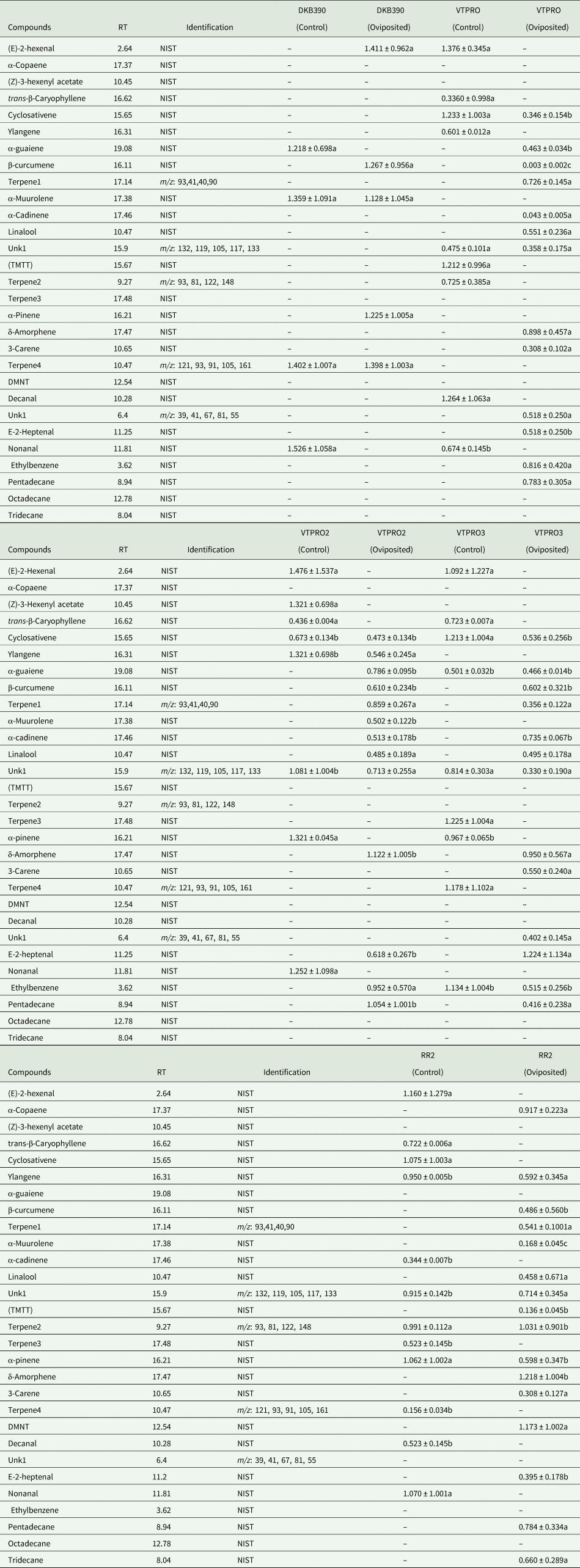
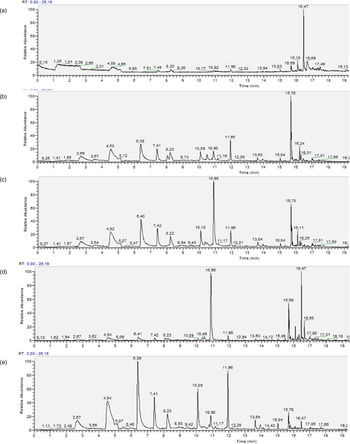
A total of 29 compounds were detected among the volatiles emitted by maize plants (singular and stacked) after oviposition by S. frugiperda adults, and plants without oviposition (control) (table 2; fig. 6, 7. Volatile chemical compounds like those found have been identified (Peñaflor et al., Reference Penãflor, Erb, Robert, Miranda, Werneburg, Alda, Turlings and Bento2011; Leppik and Frérot, Reference Leppik and Frérot2014; Naranjo-Guevara et al., Reference Naranjo-Guevara, Peñaflor, Cabezas-Guerrero and Bento2017; Coll et al., Reference Coll, Jacobi, Fernandez, Luft, Virla, Hill and Catalán2019). VOCs fall into four distinct categories: terpenes, fatty acid derivatives, aldehydes, and alkanes.
Relative amounts of volatile emissions released by undamaged maize (Control) and oviposite maize by Spodoptera frugiperda female (DKB390, VTPRO, VTPRO2, VTPRO3 and Ag3700RR2)
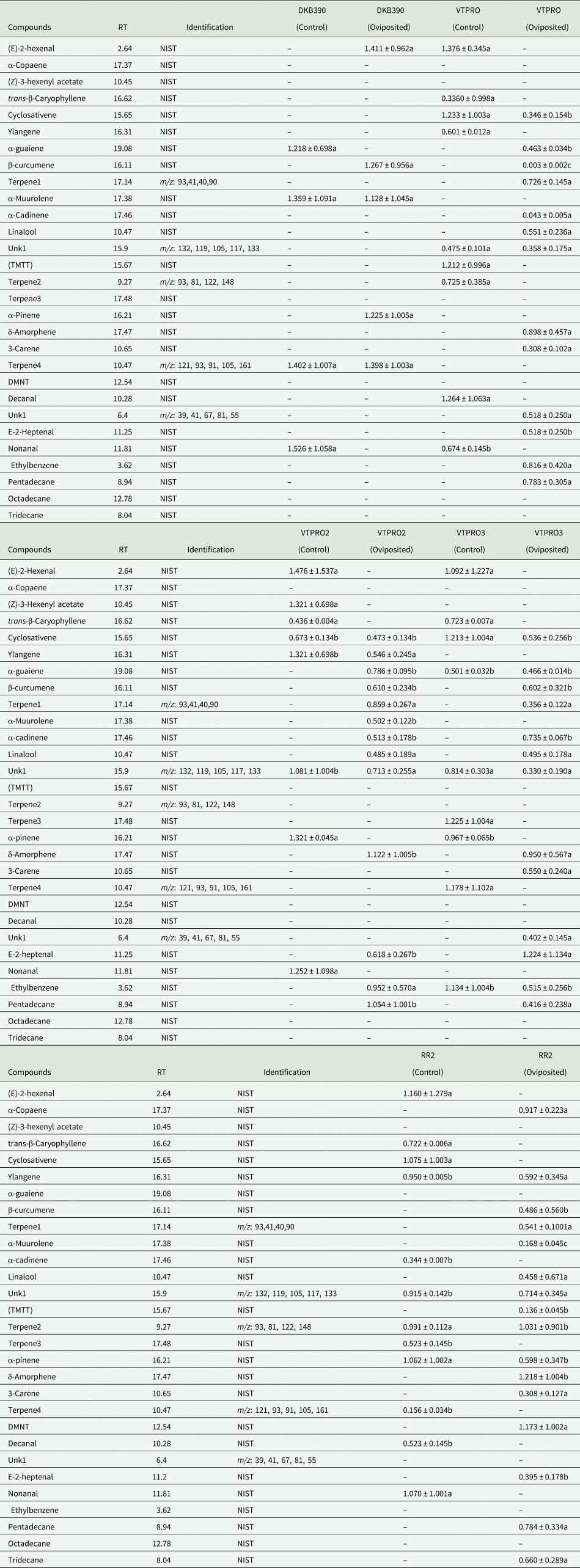
After oviposition, there was an increase in the number of compounds emitted for all tested hybrids. However, there were a great number of significant compounds compared to non-oviposited plants (control) in transgenic hybrids. DKB390 (isogenic line) emitted four constitutive volatile compounds and five compounds after oviposition. DKB390 VTPRO (singular) was identified with nine constitutive compounds and 13 after oviposition. VTPRO2 (stacked) released eight constituent compounds and 13 in OIPV´s plants. VTPRO3 (stacked) emitted nine compounds in non-oviposited plants and 13 in OIPV´s. Finally, RR2 (singular) released 12 compounds were found in non-oviposited plants and 16 in oviposited plants.
Terpene group compounds, α-patchoulene, Linalool, cyclosativene, α-guaiene, α-cadinene, (E)- α-bergamotene, TMTT, E-2-heptenal (aldehydes), ethybenzene aldehydes), Pentadecane (alkane) were found exclusively in oviposited transgenic maize. Also, α-Copaene and Tridecane compounds were released only by Ag3700 RR2 oviposited plants (table 2).
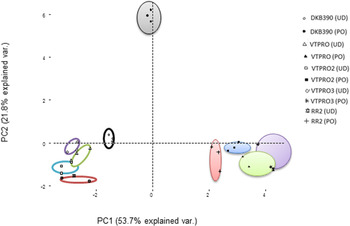
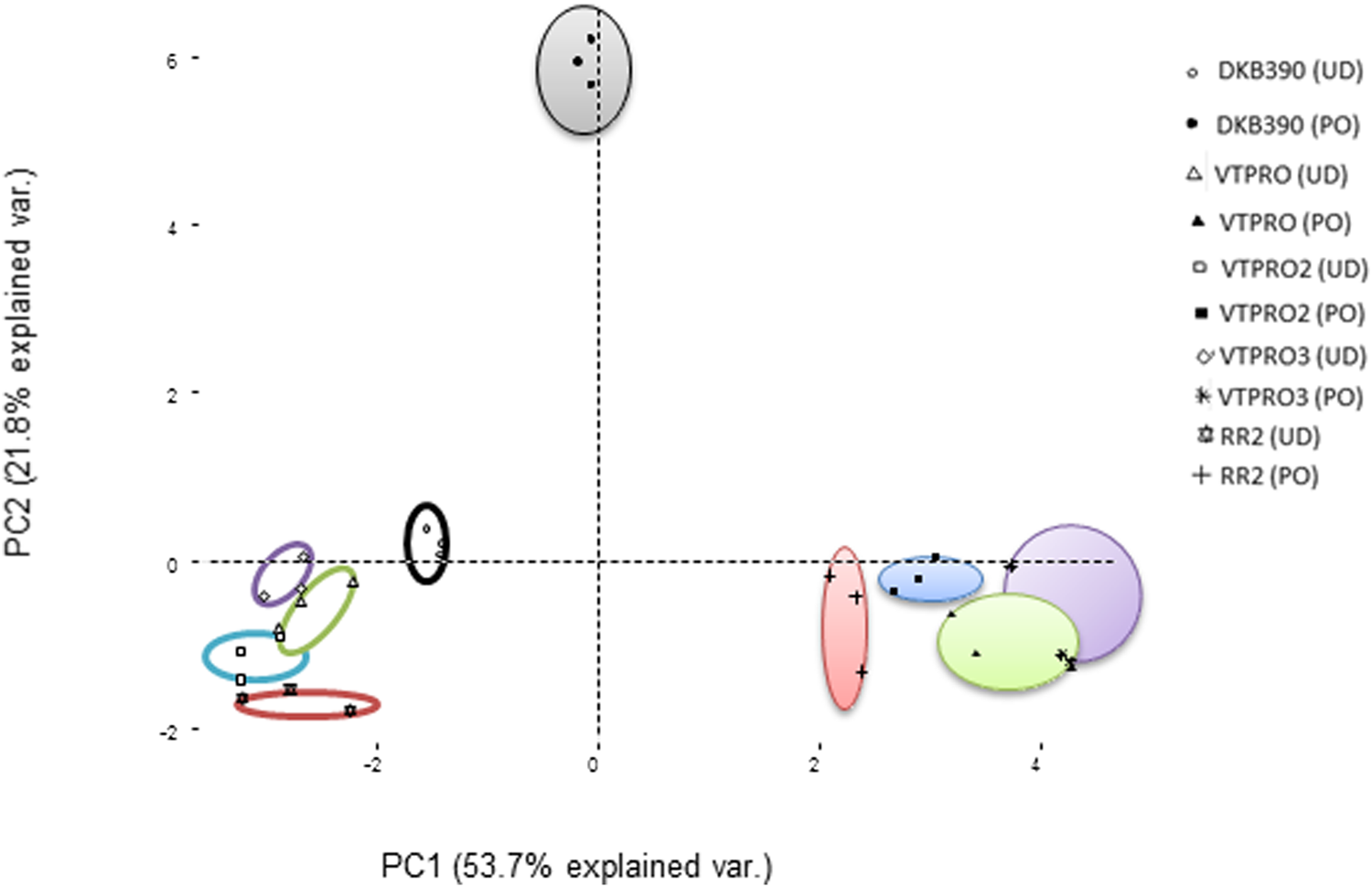
The PCA explained 75.5% of the total variation of volatiles data (fig. 4). In the first axis of the PCA, 53.7% of the total variation was positively correlated with terpenes. The second component explained the 21.8% of the variation and it was related to fatty acid derivatives, aldehydes, and alkanes.
Score plot for principal component analysis (PCA) for the composition of volatiles emitted by maize plants, control, (DKB390 isogenic, DKB390 VTPRO, DKB390 VTPRO2, DKB390VTPRO3 and Ag 3700RR2), and maize plants oviposited, (DKB390 isogenic, DKB390 VTPRO, DKB390 VTPRO2, DKB390VTPRO3 and Ag3700RR2). The first two axes account for 21.8 and 53.7% of the total variation.
Gene expression
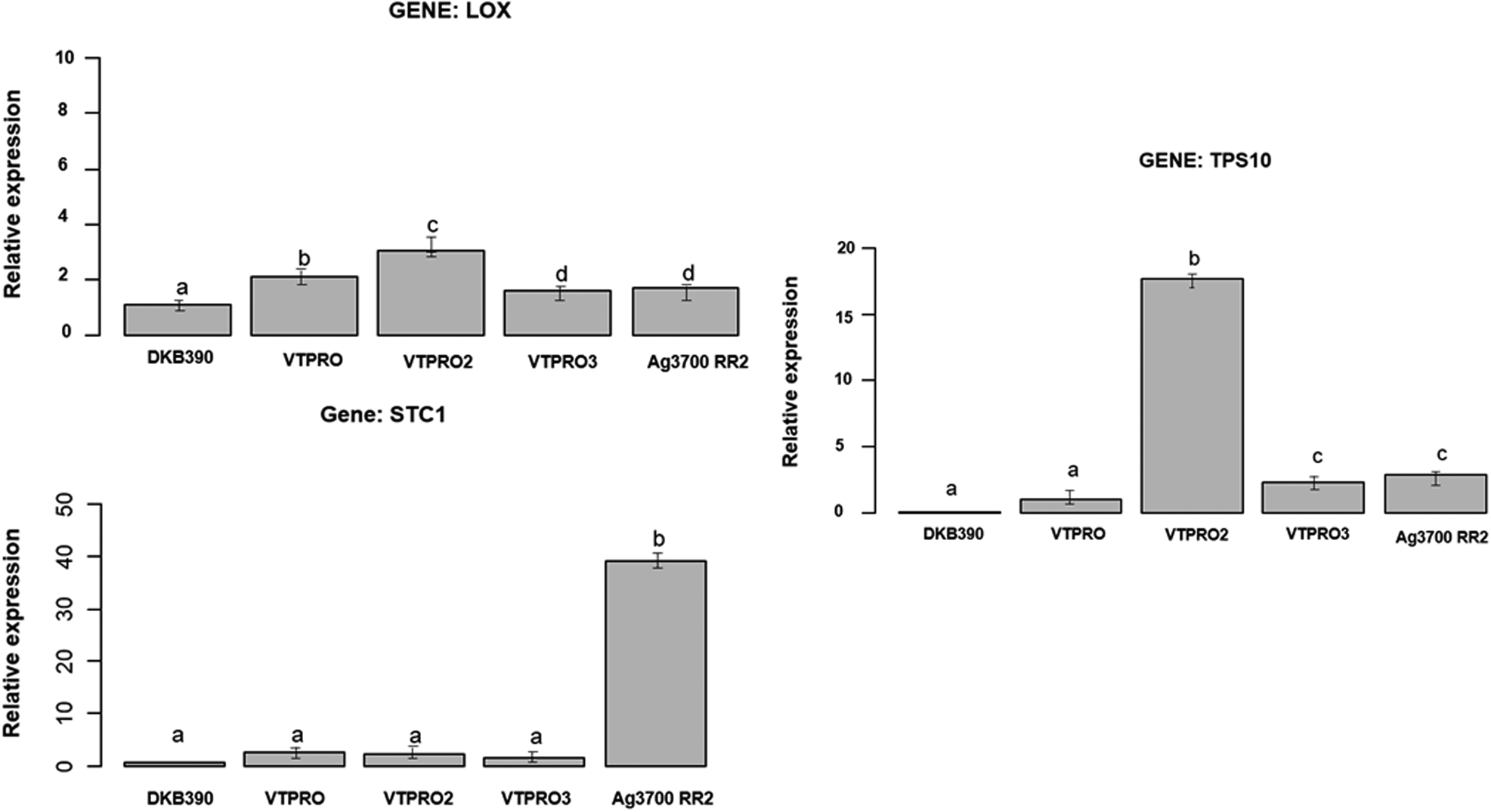
Analysis of lipoxygenase gene transcripts (LOX10) showed lower expression in DKB390 (isogenic) plants when compared to transgenic maize oviposited by S. frugiperda (F = 92.27, P < 0.001, fig. 5). Among the genetically modified materials, VTPRO2 was the only hybrid that presented the largest number of transcripts related to this gene. The TPS10 gene showed an increase in the amount of transcripts, and also in VTPRO2 hybrid.The amount of transcript of this gene was significantly higher than in the isogenic form and the other transgenic hybrid in the oviposition tratament (F = 244.4, P < 0.001 fig. 5). However, VTPRO3 and RR2 hybrids presented a significantly higher number of transcripts than non-transgenic hybrid.
RT-qPCR analysis of the relative abundance of: (a) LOX10, (b) TPS10, (c) STC1 gene transcripts in maize (Zea mays L) plants submitted to oviposition of adult females of Spodoptera frugiperda. Relative quantification of mRNA was developed with PUBQ efficiency correction as the reference gene. Values are the mean (± standard error of mean) of three replicates. Averages followed by the same letter do not differ by the Scott-Knott test at 0.05 significance.

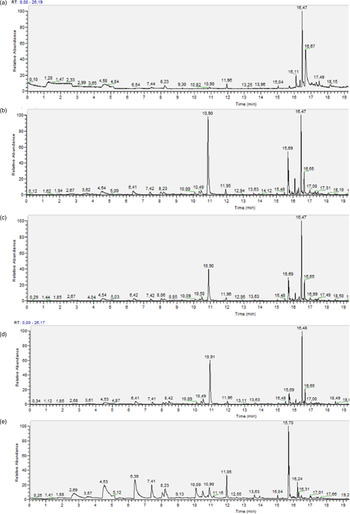
Representative GC-MS response of female T. pretiosum to volatiles collected from maize plant (control) headspace. (a) DKB390 not-oviposited plant (UD); (b) DKB390 VTPRO (UD); (c) DKB390 VTPRO2; (d) DKB390 VTPRO3 (UD); (e) Ag3700 RR2 (UD). There are three successful replicates for each extract. For the number interpretation, please refer to Table 2.

Representative GC-MS response of female T. pretiosum to volatiles collected from maize plant (oviposited) headspace. (a) DKB390 oviposited plant (OP); (b) DKB390 VTPRO (OP); (c) DKB390 VTPRO2 (OP); (d) DKB390 VTPRO3 (OP); (e) Ag3700 RR2 (OP). There are three successful replicates for each extract. For the number interpretation, please refer to Table 2.

Divergent pattern occurred in the expression of the sesquiterpene cyclase 1 (STC1) gene compared to the other studied genes. Even though there was a significant difference between the hybrids (F = 33.31, P < 0.001, fig. 5), 3700RR2 presented greater number of transcripts differing from the other hybrids.
Discussion
Volatiles emitted by transgenic maize after oviposition of S. frugiperda are highly preferred by T. pretiosum. This finding shows that among the evaluated hybrids, genetically modified plants can be integrated within biological control programs, as a potentitial of egg parasitoid by increasing its foraging hability, integrating pest management.
Studies has been showing that oviposition by herbivorous insects can induce indirect plant defense responses by volatiles emitted that attract egg parasitoids (Fatouros et al., Reference Fatouros, Bukovinszkine'Kiss, Kalkers, Soler and Dicke2005; Hilker and Meiners, Reference Hilker and Meiners2006). The OIPVs provide early warning and chemical cues to the parasitoids toward colonized plants by their host and thus enhance their foraging efficacy (Bruce, Reference Bruce2010). Plants that produce OIPVs after to oviposition of pest insects, have the advantage for defending themselves early and before larval hatching reducing plant damage. However, it was not yet clear the interaction between plants with stacked events and tritrophic relationships. There are few studies evaluating HIPVs non-Bt and Bt plants with different tecnologies (Turlings et al., Reference Turlings, Jeanbourquin, Held and Degen2005; Dean and De Moraes, Reference Dean and De Moraes2006). Therefore, the present work opens a new perspective of OIPVs study with these plants that currently dominate the market of agricultural crops.
Based on our results, we believe that the greater attractiveness of wasps to volatiles emitted by the transgenic maize after oviposition of S. frugiperda might be related to the high expression of some key genes tested, which are involved in the process of activation of plant defenses. The results of gene expression assays demonstrated that the TPS23, STC1 and LOX10 genes have higher relative transcript expression in transgenic maize (fig. 4).
After herbivory or oviposition, plants perceive insect attack by specific recognition of elicitors, which are produced by various biochemical, physiological, and molecular mechanisms (Kessler and Baldwin, Reference Kessler and Baldwin2002). Some elicitors are produced by herbivores insects which are injected into plant tissues as part of oviposition process or oral insect secretions, for example, lepidoptera insects (Diezel et al., Reference Diezel, von Dahl, Gaquerel and Baldwin2009; Bonaventure et al., Reference Bonaventure, van Doorn and Baldwin2011). This signaling triggers a succession of biochemical cascades that culminate in a systemic response in the plant, reaching the gene expression levels and the synthesis of chemical compounds, like fatty acid derivatives, aromatic hydrocarbons, terpenes, aldehydes, and salicylates (Takabayashi and Dicke, Reference Takabayashi and Dicke1996).
Lipoxygenase can be considered a product of an early gene, whereas the genes involved in the last steps of terpene biosynthesis appear to be late expression genes (Nemchenko et al., Reference Nemchenko, Kunze, Feussner and Kolomiets2006). It seems that there is a peak observed for lipoxygenase, where there is the triggering of expression of other genes, such as sesquiterpene cyclase 1, terpene synthase, among others involved in plant defense responses (Saravitz and Siedow, Reference Saravitz and Siedow1996). In general, jasmonic acid from the lipoxygenase triggered biochemical cascade may be involved in the activation of enzymes that lead to the expression of genes involved in the induced response in the plant. The crucial role of jasmonic acid in inducible indirect defense has been investigated (Wu and Baldwin, Reference Wu and Baldwin2010; Hettenhausen et al., Reference Hettenhausen, Baldwin and Wu2013). The jasmonic acid is synthesized from linolenic acid through the action of several enzymes including lipoxygenases and allene oxide cyclases in chloroplast membranes in response to herbivory (Wasternack and Hause, Reference Wasternack and Hause2013). The induction of the jasmonic acid pathway by herbivore associated elicitors has been reported in S. frugiperda (Schmelz et al., Reference Schmelz, LeClere, Carroll, Alborn and Teal2007). Plants treated with jasmonic acid exhibit attraction to predators and parasitoids (Ozawa et al., Reference Ozawa, Arimura, Takabayashi, Shimoda and Nishioka2000).
From the expression of genes related to plant response to herbivore along with the action of phytohormones, jasmonic acid participates mainly on the production and emission of defense chemical compounds. Some of these compounds, such as terpene derivatives or terpenes will attract natural enemies of herbivores, including predators and parasitoids (Takabayashi and Dicke, Reference Takabayashi and Dicke1996; Hilker and Meiners, Reference Hilker and Meiners2006; Aljbory and Chen, Reference Aljbory and Chen2018). Our GC-MS results show that the largest number of chemical compounds was emitted by transgenic maize and some compounds were released exclusively by them.
There was greater expression of the sesquiterpene cyclase gene in the RR2 singular hybrid and was not significantly expressed in the other hybrids tested. STC1 is not usually expressed in maize seedlings and its sesquiterpene product is a nonessential secondary metabolite (Shen et al., Reference Shen, Zheng and Dooner H2000). This may explain the low expression of this gene in other hybrids.
The STC1 in terpenoid metabolism has not been accurately described. Studies suggest that the enzyme sesquiterpene cyclase 1 is responsible for the production of monoterpenes (Shen et al., Reference Shen, Zheng and Dooner H2000; Lin et al., Reference Lin, Shen, Xu, Kollner, Degenhardt and Dooner2008). Terpenes belong to a large group of organic chemicals and are among the main components of plant volatiles. Terpenoids are modified terpenes containing additional functional groups (Shen et al., Reference Shen, Zheng and Dooner H2000). Groups of terpenoids and terpenes can attract natural enemies of insect's herbivores in various agricultural systems (Chen, Reference Chen2008).
In conclusion, females of T. pretiosum are attracted by volatiles compounds oviposition- induced of S. frugiperda. Our results suggest that after oviposition of the herbivore, a series of cascade events occur at the level of gene expression, altering constituent compounds of transgenic maize. This research contributed to provide relevant information of biological control and tritrophic interactions with plant defense technologies. We believe that the results of this study can be applied within the integrated pest management (MIP), with the use of genetically modified hybrids and the egg parasioid, T. pretiosum, enhancing the control of S. frugiperda.
Acknowledgements
The authors would like to thank the Graduate Program in Agronomy/Phytotechnics, for the scientific support to the student, and also to Embrapa Maize and e Sorghum and Federal University of São João del-Rei, for the facilities. We thank the Minas Gerais State Foundation for Research Aid (Fapemig) and Conselho Nacional de Desenvolvimento Científico e Tecnológico (CNPq) for the financial support. To Marcelino Borges de Brito (Koppert Biological Systems) for providing the parasitoid wasps, and Dr José M. Waquil, for the review and suggestions in original manuscript.
Author contribution
PT Nascimento planed, designed, and executed experimental work. MS Rocha contributed with executed experimental. JOF Melo contributed with GC-MS analysis. BA Barros contributed with RT qPCR analysis. MAM Fadini conducted data analyses. PT Nascimento wrote the manuscript. FH Valicente, MAM Fadini, CSF Souza and RG Von Pinho reviewed the manuscript.