I. Introduction
Alzheimer's disease was previously defined and diagnosed by symptoms alone. The disease is now also defined by measures of amyloid and tau, referred to as “biomarkers.”Reference Jack, Bennet and Blennow1 Biomarkers are detectible before symptoms and offer the prospect of predicting the risk of developing symptomatic Alzheimer's disease, when they become clinically available for asymptomatic populations.Reference Sperling, Aisen and Beckett2 Unlike genetic information, biomarkers are not inheritable and indicate the presence of disease pathology.3 Biomarkers provide information that can help individuals and families prepare for future cognitive and functional impairment, including planning for long-term care serves and supports (LTSS) needs. Insurers could also use this information to make discriminatory and adverse underwriting decisions based on a risk for Alzheimer's disease. These potential risks raise novel legal and policy challenges.
Our previous research determined that federal anti-discrimination laws, including the Genetic Information Nondiscrimination Act (GINA) would not provide protections for individuals who learn their biomarker status.Reference Arias and Karlawish4 Federal legislation and regulations provide limited anti-discrimination protections in the context of insurance.Reference Avraham, Logue and Schwarcz5 For example, GINA prohibits discrimination based on genetic information in health insurance and employment.6 The Law does not apply to biomarkers, which are not “genetic information,” and does not provide protections in the context of long-term care insurance.7 However, prior research has not provided data on trends within state laws, which may play a central role in regulating insurance practices.
Federal law is not the primary source of insurance regulation in the United States. The McCarren-Ferguson Act delegates insurance regulation to the states, providing states with significant discretion to regulate insurance practices, including underwriting.8 This discretion can lead to variations among states. The National Association of Insurance Commissioners (NAIC) has made efforts to provide guidance and “best practices” to inform state legislation and regulations.9 However, their guidance documents and model acts are not binding and state adoption of NAIC practices have not been fully studied for consistency between states.
Long-term care (LTC) insurance provides a particularly relevant context for considering protections from unfair underwriting and coverage decisions. Biomarkers for Alzheimer's disease could identify individuals who are at a high risk for needing long-term services and supports LTSS. This same population could be deemed “high risk” policyholders and may be at an increased risk for medical denials or prohibitively high premiums. In the context of LTC insurance, the disclosure of biomarkers could have devastating effects on patients and families who are attempting to prepare for future functional decline. Prior research has not examined whether state laws provide protections from unfair underwriting or coverage decisions based on Alzheimer's disease biomarker status.
This article implements empirical legal research methods to map current state law practices to evaluate whether individuals who learn their biomarker status are protected from unfair or discriminatory underwriting or coverage decisions against individuals based on Alzheimer's disease biomarker status. Here we report on data collected through a larger study examining ethical, legal, and social consequences of Alzheimer's disease biomarkers. This article will describe the relationship between long-term care services and support, Alzheimer's disease, and long-term care insurance. The article will then report on the empirical legal research results examining LTC insurance legislation relevant to underwriting and coverage practices.
This article implements empirical legal research methods to map current state law practices and evaluate whether individuals who learn their biomarker status are protected from unfair or discriminatory underwriting or coverage decisions against individuals based on Alzheimer's disease biomarker status. Here we report on data collected through a larger study examining ethical, legal, and social consequences of Alzheimer's disease biomarkers. This article will describe the relationship between long-term care services and support, Alzheimer's disease, and long-term care insurance. The article will then report on the empirical legal research results examining LTC insurance legislation relevant to underwriting and coverage practices. These results include a comparative analysis between the NAIC Model Long-term Care Insurance Act and state laws. The analysis uses the Model Act as a proxy for evaluating protections from discriminatory and unfair practices. Finally, the article evaluates policy implications of the study outcomes. The results from this study demonstrate that individuals who learn their Alzheimer's disease biomarker status would likely be protected from adverse coverage decisions, but would be exposed to adverse LTC insurance underwriting decisions.
II. Background
Alzheimer's disease, long-term care services and supports, and long-term care insurance have an interconnected relationship. Individuals suffering from Alzheimer's disease are high users of long-term care services and supports. Given high use rates, individuals with an increased risk of Alzheimer's disease are likely to benefit from early planning and preparation, including purchase of long-term care insurance to mitigate LTSS expenses. This section will provide brief descriptions of rates of use and costs associated with LTSS, Alzheimer's disease and preclinical bio-markers, and the history and use of LTC insurance.
A. Long-term Care Services and Supports and Financing
Long-term care services and supports (LTSS) provide assistance with non-medical needs over an extended period of time, including assistance with instrumental (e.g., managing finances, meal preparation) and basic activities of daily living (e.g., bathing, toileting and transferring).10 LTSS encompasses a broad range of services, including home care, adult day cares, and institutional care (i.e., nursing or assisted living facilities).Reference Cornell, Grabowski and Cohen11 Over 12 million people rely on LTSS to assist with functional impairment due to cognitive or physical disabilities.Reference Holt12 Approximately 6.7 million of these individuals are elderly (over 65 years old), 5.4 million are “working age” and the remaining.6 million are children.13 The high prevalence of older adults needing LTSS will continue to increase with an aging society, consistent with increasing rates of age associated illnesses including Alzheimer's disease.14
Costs of LTSS vary by the level of care, location of care (home versus intuitional), geographic location, and individual preferences.Reference Fox-Grage15 The national average for home care services are more than $31,000 (based on 30 hours a week), compared to approximately $92,000 per year for a private room in a nursing home.16 At an aggregate level, LTSS spending amounted to $219.9 billion in the United States in 2012, approximately 9% of all health care spending.17 LTSS do not constitute medical care. Federal legislation regulating health plans define “medical care” to primarily mean “the diagnosis, cure, mitigation, treatment, or prevention of disease.”18 The curative and preventive focus of medical care does not include services to assist with ADLs, provided under the umbrella of LTSS. Therefore, Medicare and private health insurance do not provide coverage for LTSS, except for limited circumstances of post-acute care.19 LTSS is financed primarily by Medicaid (62%), individual out-of-pocket spending (22%), and LTC insurance (12%).20
B. Alzheimer's Disease: Advancements and a Relationship with LTSS
An estimated 5.5 million individuals are living with Alzheimer's disease dementia in the United States, which is expected to increase to nearly 14 million by 2050.21 Alzheimer's disease is a chronic neurodegenerative disease that causes cognitive impairment that can lead to dementia.Reference McKhann22 Individuals with Alzheimer's disease suffer progressive disability performing instrumental and basic activities of daily living.23 Approximately 75% of individuals with Alzheimer's disease and other dementias will move into a nursing facility by the age of 80, in contrast to 4% of the general population.24 Individuals with Alzheimer's disease and other dementias make up 32% of adult-day services users and 42% of assisted living facility residents.25
Alzheimer's and other diseases that cause dementia are associated with increased medical and LTSS expenses.Reference Deb, Thornton, Sambamoorthi and Innes26 In 2017, $259 billion were spent on medical care and LTSS for Americans age sixty-five and older with dementia.27 The average annual Medicaid spending for an individual with Alzheimer's disease or related dementia is over $8,000 compared to $350 for individuals without Alzheimer's disease and other related dementias.28 Medicare expenses are similarly increased for individuals with Alzheimer's disease or other dementias.29 Comparing costs in the last five years of an individual's life (in 2010), individuals with Alzheimer's disease incur $287,000 compared to the average $173,000 for an individual with cancer.30 By 2050, Medicare and Medicaid costs associated with Alzheimer's disease and other dementias will reach $758 billion.31
Alzheimer's disease is caused by two pathologies described as “plaques” (amyloid) and “tangles” (tau).32 Researchers have identified measures of amyloid and tau, biomarkers associated with plaques and tangles and indicators of disease pathology (commonly referred to as “biomarkers”). Techniques using cerebrospinal fluid and Positron Emission Tomography imaging (PET Imaging) are capable of detecting amyloid and tau levels that indicate disease pathology.Reference Sperling, Aisen and Beckett33 These biomarkers are detectible up to 20 years before symptoms emerge.34 Preclinical biomarker testing is not currently available clinically, but is used in research. Clinical implementation is likely given ongoing studies to identify treatments that rely on preclinical testing. Importantly, biomarkers are distinct from genetic information. Genetic markers are inheritable, are constant throughout an individual's life, and do not indicate the presence of disease pathology.35 Biomarkers are not definitive of future Alzheimer's disease dementia and may not provide information regarding prognosis (i.e., when will a person begin experiencing symptoms).36 Yet, biomarkers provide an opportunity to identify individuals with the highest risk of developing symptomatic Alzheimer's disease. Biomarkers may also serve to identify individuals who are at an increased risk of experiencing disability and requiring LTSS.
In 2011, President Obama signed the National Alzheimer's Project Act (NAPA), which aims to “build upon and leverage HHS programs and other federal programs and other federal efforts to help change the trajectory of Alzheimer's disease and related dementias.”37 One goal of The National Plan to Address Alzheimer's is to prevent and effectively treat Alzheimer's disease by 2025.38 Strategies to meet this goal include expanding research to prevent, treat, and identify early and presymptomatic stages of Alzheimer's disease.39 Trials, including the Anti-Amyloid Treatment in Asymptomatic Alzheimer's study (A4), use biomarkers during recruitment to identify cognitively healthy individuals who have evidence of disease patholog.y.40 If successful, secondary prevention treatments will lead to clinical use of biomarker tests to identify individuals who are risk for Alzheimer's disease and likely to benefit from treatment.
C. Long-term Care Insurance and Current Legal Standards
Private long-term care (LTC) insurance policies “provide coverage for not less than twelve (12) consecutive months […] for services provided in a setting other than an acute care unit of a hospital.”41 LTC insurance has been evaluated as a mechanism for reducing social financial burdensReference Frolik42 and helping individuals prepare for future LTSS expenses.43 LTC insurance policy purchase rates increased between the late 1990s and early 2000s.Reference Favreault, Gleckman and Johnson44 Between 2005 to 2012, policy purchase rates declined from 528,000 to 395,000.45 Among Americans between the ages of 60-65 only 10% had a LTC insurance policy in 2010.46 Multiple factors contribute to low LTC insurance purchase rates, including misperceptions that Medicare or health insurance cover LTSS expenses, high premium rates, and medical denials.47 Medical underwriting impedes access to LTC insurance and contributes to other core failures of the LTC insurance market. LTC insurers deny up to 24% of applications based on medical underwriting.48
Prior research studies and scholarship have not previously explored how legal standards influence LTC insurance underwriting in the context of a specific type of health information. Preliminary data demonstrates that federal legislation provides minimal regulation of LTC insurance. Federal law is limited to establishing the definition of LTC insurance and other broad issues (i.e., minimum coverage requirements).49 This is consistent with the McCarren-Ferguson Act, which delegated the “business of insurance” to states.50 State discretion can lead to vary standards and can make it difficult to evaluate standards for regulation.
The National Association of Insurance Commissioners (NAIC) is a standard setting organization with membership of commissioners of all fifty states, the District of Columbia (D.C.) and all 5 territories.51 The NAIC issues model laws to guide state legislators and regulators, including the NAIC Long-term Care Insurance Model Act. While model laws reflect NAIC “best practices,” states legislatures and regulators have broad discretion to adopt proposed model laws. The NAIC initially published the Long-term Care Insurance Model Act in 1987, with multiple revisions.52 The Model Act provides legislative language with several purposes including, “to protect applicants for long-term care insurance […] from unfair or deceptive […] practices [and] to establish standards for long-term care insurance […].”53 All 50 states and the District of Columbia report to have “state related activity” based on the NAIC Long-term Care Insurance Model Act.54 This indicates that every state has adopted the Model Act or used the Model Law as guidance in drafting and passing related legislation. While all 50 states and D.C. have “state related activity,” this does not guarantee that states are consistent with the Model Act on sections relevant to a given question, or consistent with each other. Even with NAIC serving as a standard setting organization, legal standards for LTC insurance will vary between states and will differ from laws affecting health, life, or disability insurance. A state by state analysis of current legal standards is required to evaluate whether individuals who learn their Alzheimer's disease biomarker status are protected from discrimination in the context of LTC insurance.
III. Methods
This study aims to describe and evaluate the legal, ethical, and social consequences of Alzheimer's disease biomarker testing in asymptomatic individuals. The study implements empirical legal research methods adapted from public health law research to map and evaluate legal standards relevant to discrimination risks based on biomarkers.Reference Tremper, Thomas and Wagenaar55 Tremper et al. propose a four-stage data collection and analysis method to map the status of state laws relevant to a public health goal, comprising (1) gather, (2) organize, (3) interpret, and (4) apply.56 Here investigators used standardized data collection tools and processes to apply the Tremper methods to determine whether anti-discrimination protections apply to individuals who are asymptomatic and biomarker positive. The study prioritized anti-discrimination protections for employment and health, long-term care, life, and disability insurance. This article reports on study findings relevant to anti-discrimination protections for individuals in the context of LTC insurance.
A. Gather and Organize
Investigators developed and validated tools to conduct searches for laws in all fifty U.S. states and the District of Columbia (D.C.). To assure consistency investigators used validated checklists to guide online searches in legal research databases (Westlaw and LexisNexis) and online search engines (i.e., Google). For each individual state, a single investigator (JA, AT, BO) collected data, maintained field notes, and documented findings. Two investigators (JA, BO) conducted a quality review of all data to validate and assure standardization.
Investigators used a RedCap database,Reference Harris, Taylor and Thielke57 a web-based database with the survey and data collection capabilities, to document and organize data. We organized data among four categories (privacy, anti-discrimination, employment/labor, and insurance regulation). Each category was further divided into subtopics. For example, “Insurance Regulation” included definitions of insurance types and preexisting condition legislation for health, life, long-term care, and disability insurance. RedCap provided investigators with capability to query data to conduct in-depth analysis of individual state approaches to insurance regulation and conduct analysis between states (i.e., comparison of preexisting condition definitions for LTC insurance). For purposes of this article, investigators queried the data to determine whether states had preexisting condition statutes or regulations (here after “laws”) specific to LTC insurance.
B. Analyze: Interpret and Apply
Investigators qualitatively analyzed state law using content analysis, which implements an iterative process to identify patterns among sources and evaluates the meaning of text within its context.Reference Elo and Kyngas58 We aimed to interpret state law and apply legal standards to determine whether state law protected individuals with positive biomarker status from discrimination in the context of LTC insurance. Our search identified the National Association of Insurance Commissioners (NAIC) Model Long-term Care Insurance Act and Regulation (Model Act or Model Regulation). Therefore, our analysis began with an interpretation of the NAIC Model Act and Regulation. We then conducted a comparative analysis between the NAIC Model Act and Regulation and state laws to determine whether states varied from the NAIC Model Act. This analysis found consistency between the NAIC Model Acts and state law. Following a comparative analysis, we interpreted the NAIC Model Act and state laws to evaluate the (1) definition of preexisting condition and (2) protections afforded by preexisting condition laws.
This study aims to describe and evaluate the legal, ethical, and social consequences of Alzheimer's disease biomarker testing in asymptomatic individuals. The study implements empirical legal research methods adapted from public health law research to map and evaluate legal standards relevant to discrimination risks based on biomarkers.
Investigators open coded the NAIC Model Act and identified eight key elements of the preexisting condition provision (described below). We then coded state laws in all 50 states and D.C. using these eight elements to determine substantial consistency and identify variations from the NAIC Model Act. Here we define “substantially consistent” to mean that the language of a state law confers the same substantive meaning as the model act and that a majority of state laws met this standard. After establishing substantial consistency, investigators interpreted the definition of preexisting condition and protections provided under the NAIC Model Act. Investigators applied the interpretation of the Model Act and state laws to Alzheimer's disease biomarker information. In our application we analyzed the Model Act and state laws to determine whether (1) biomarkers met the definition of “preexisting conditions,” and (2) preexisting condition laws would provide meaningful protections for individuals who learn their biomarker status. Here we define “meaningful protections” to indicate that individuals who learn their Alzheimer's disease biomarker status would be protected from discrimination that would impede access to a private LTC insurance policy or coverage for LTSS costs (benefits).
IV. Results
The study found that state laws were substantially consistent with the NAIC Long-Term Care Insurance Model Act. Using the Model Act as a proxy for state laws, the study found that Alzheimer's disease biomarkers likely meet the definition of “preexisting condition.” Additionally, investigators determined that preexisting condition laws would assure coverage for LTSS related to Alzheimer's disease, if an individual application is approved. However, individuals would not be protected from adverse medical underwriting decisions based on biomarker status. As a result, we concluded that protections provided by the NAIC Model Act and states laws were not meaningful.
A. The NAIC Long-Term Care Insurance Model Act and Consistency Among State Law
The NAIC Model Act has few sections which address issues of unfair or discriminatory practices. Protections that prohibited use of individual or health information were generally restricted to insurer practices following enrollment. For example, the Model Act prohibits insurers from terminating a policy based on “grounds of the age, gender or the deterioration of the mental or physical health of the insured.”59 Beyond post-enrollment protections, a significant portion of the Model Act addresses terms of the policy, including requirements for informing applicants of terms.60 Conversely, the Model Act provides insurers with permission to rescind a policy for misrepresentation on an application, within 6 months of the policy.61 Investigators identified the preexisting condition section as a potential mechanism to provide meaningful protections for individuals who learn their Alzheimer's disease biomarker status.
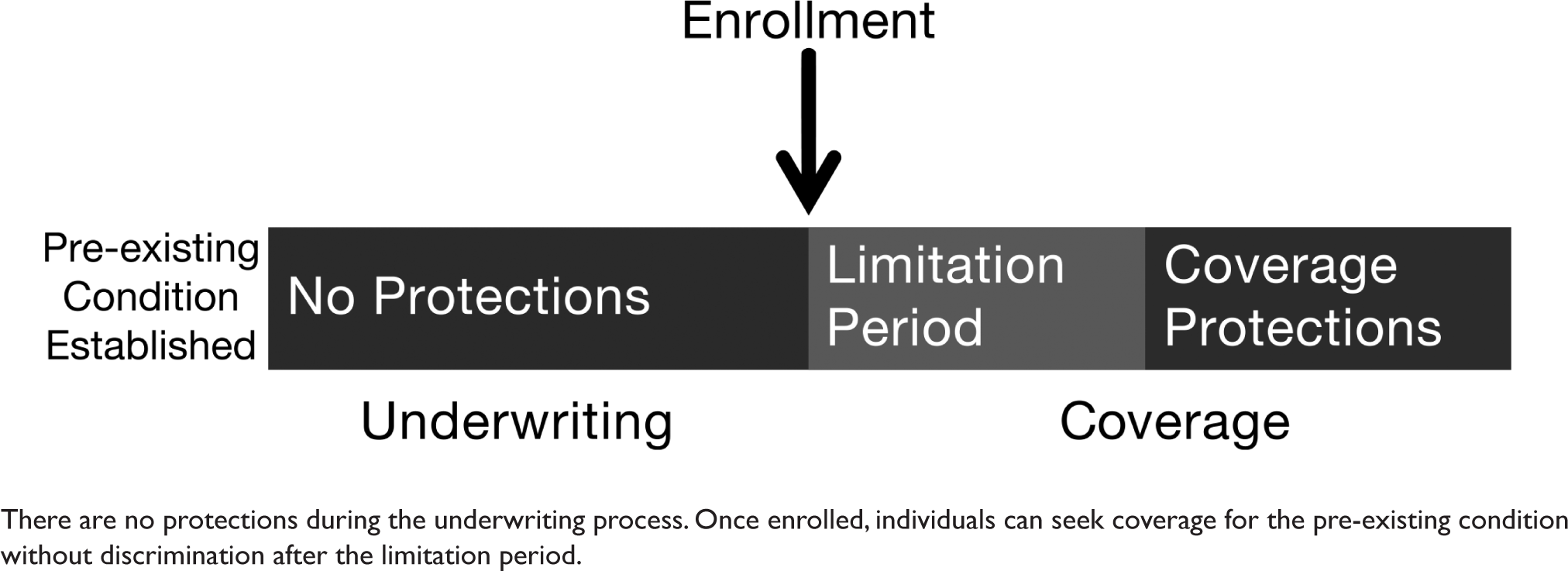
The NAIC Model Act preexisting condition section restricts LTC insurers from limiting coverage for a preexisting condition for more than six months after enrollment.62 Investigators found that the Model Act's preexisting condition section has eight separate elements, that define a “preexisting condition” and establish protections (Table 1).63
Elements of the NAIC Long-term Care Insurance Model Act (2009), Pre-existing Conditions Provision

The first element establishes the scope of protections and exempts group policies from the section. The second and third elements apply to the definition of a “preexisting condition.” The Model Act prohibits insurers from defining a preexisting condition more restrictively than a “condition for which medical advice or treatment was recommended by, or received from a provider of health care services, within six (6) months preceding the effective date of coverage of an insured person.” Element two requires that the individuals receive “medical advice or treatment” by a health care provider for the condition to meet the definition. Element three is the length of the look back period (“within six (6) months preceding the effective date of coverage”).
The remaining elements address protections. Element 4 is the limitation period, which prohibits insurers from limiting coverage based on a preexisting condition for more than six months after enrollment. Element 5 provides the Insurance Commissioner discretion to extend the limitation period. Lastly, elements 6-8 provide qualifications or clarifications of the protections. The Model Act:
Prohibits insures from naming specific conditions as excluded for coverage beyond the established limitation period (Element 6);
Permits insurers to limit coverage within the established limitation period, even if the applicant does not disclose a preexisting condition on the application (Element 7);
Explicitly permits insurers to collect and use health information for underwriting purposes (Element 8).
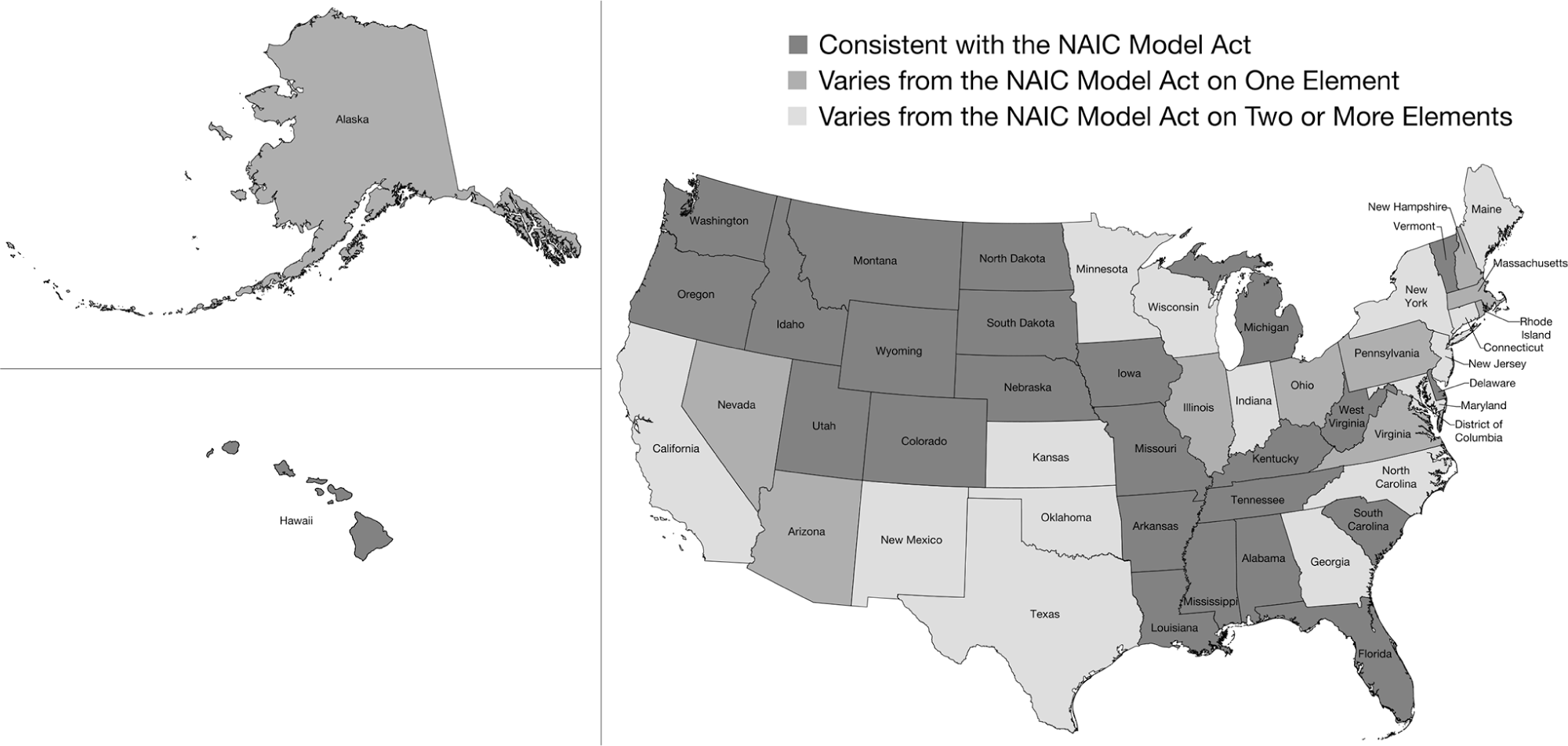
This study found that state laws in all fifty states and D.C. were substantially consistent with the NAIC Model Act on the eight elements within the preexisting condition provision. Figure 1 reports on findings for all eight elements and overall consistency (states that were consistent for all eight elements).
State Law Consistencies with the NAIC Model Act

Twenty-four (24) state legislative or regulatory preexisting condition laws are consistent with the Model Act on all eight elements (47%). Twenty-seven states varied from the Model Act on at least one of the elements and 15 states varied on two or more of the elements (Figure 2). Investigators analyzed individual elements to determine whether a majority of states adopted or had legislative/regulatory language which was substantially similar to a specific element. Investigators found consistency between individual Model Act elements and state laws, reflecting different state approaches as to which Model Act elements an individual state adopted.
State Pre-Existing Condition Legislative Provisions Consistency with NAIC Model Act

All states but one (Indiana) are consistent with the Model Act's “limitation period” element. The most frequent variation from the Model Act was found in the scope element, exemption of group policies, only eighteen (18) states explicitly include group LTC insurance within the scope of the preexisting condition law. Also notable are state variations on how “condition” is defined. Of the five states that varied on this element, three adopted an ordinarily prudent standard (i.e., a condition “which would cause an ordinarily prudent person to seek diagnosis, care, or treatment.”)64 The remaining states (Indiana and Minnesota) were outliers on all elements (as described below).65 Forty-three (43) states include the underwriting exception element, explicitly permitting insurers to collect and use health information for underwriting purposes. Of the eight states that varied, seven states were silent on use of health information for underwriting purposes.66 The eighth state (Indiana) had two separate statutes which varied from each other on this element.67
Indiana law varied across all provisions, as the only state with two LTC insurance preexisting condition statutes. The first statute (28-8-12-12) applies broadly in scope (no group policy exception), adopts the ordinarily prudent standard, establishes the lookback and limitation periods according to the policyholder's age, provides commissioner discretion, but does not include underwriting privilege.68 The second statute (28-8-12-10.5) excludes group policies issued to employers and substantively matches the Model Act on all elements.69 Minnesota is also unique from other states and the Model Act, with minimal specificity and is silent on many of the elements identified in the Model Act.70
Biomarkers alone do not rise to an illness or injury and thus would not constitute a “preexisting condition.” However, this regulation does not apply (explicitly) to state laws regulating LTC insurance.
B. Analysis: Interpretation and Application
Our comparative analysis of state law against the NAIC Model Long-term Care Insurance Act found substantial consistency. This finding supports using the Model Act as a paradigm to consider whether preexisting condition laws would apply meaningful protections to individuals who learn their AD biomarker status. Our analysis in applying the Model Act to Alzheimer's disease biomarkers consisted of (1) determining whether Alzheimer's disease biomarkers would meet the definition of “preexisting conditions”; (2) evaluating whether protection under the Model Act would be meaningful; and (3) considering whether any variations impacted the outcome of this analysis.
1. BIOMARKERS AS “PREEXISTING CONDITIONS”
The Model Act defines a preexisting condition as “a condition for which medical advice or treatment was recommended by, or received from a provider of health care services, within six (6) months preceding the effective date of coverage.”71 We determined that Alzheimer's disease biomarkers would likely meet this definition. The temporal element of six months would rely on a case by case analysis of the timing between learning biomarker status and purchasing a LTC insurance policy. Investigators conducted a further analysis of whether Alzheimer's disease biomarkers would constitute a “condition” for which “medical advice or treatment” was received based on current clinical standards.
According to current clinical standards, Alzheimer's disease biomarkers are not themselves sufficient for a diagnosis.Reference Dubois72 Instead biomarkers are evidence of pathology that can rule out Alzheimer's disease as a cause of current symptoms (if biomarker results are negative), increase the probability of Alzheimer's pathology as an etiology of dementia or mild cognitive impairment (if biomarkers results are positive), or serve as a risk factor for individuals who are asymptomatic.73 Additionally, there is not currently a disease modifying therapy to treat individuals who are biomarker positive.Reference Cummings74
The question of whether Alzheimer's disease bio-markers would meet the definition of a “preexisting condition” hinges on whether an individual who learns their biomarker status would have received “medical advice” for purposes of the provision. Neither the Model Act nor the Model Regulation provide additional clarification on what activities constitute “medical advice.” In the context of health insurance, bio-markers are outside the standard definition used for preexisting conditions provided under the Affordable Care Act (ACA).75 The ACA and implementing regulations characterizes a preexisting condition to mean a “condition resulting from illness, injury (whether or not the injury is accidental), pregnancy, or congenital malformation.”76 Biomarkers alone do not rise to an illness or injury and thus would not constitute a “preexisting condition.” However, this regulation does not apply (explicitly) to state laws regulating LTC insurance.
Investigators conducted supplementary literature and case law research, using the search terms “medical advice” and “medical opinion.” Courts have differed regarding whether non-diagnostic information meets the definition of preexisting condition for non-health insurances (i.e., disability or life). In the context of group long-term disability insurance, the Third Circuit Court of Appeals held that seeking advice regarding a suspected but not yet diagnosed illness could constitute a “preexisting condition.”Reference Polin77 In this case, the Third Circuit establishes that a diagnosis is not a critical element of meeting the definition of “preexisting condition.” This case is precedent for defining a “preexisting condition” to include a suspected illness. However, in the facts of the case the individual raised suspicion of the illness based on his own knowledge of family history and symptoms he was experiencing. It is unclear whether preclinical biomarkers alone meet the threshold of a “suspicion” for an illness, because they provide risk information and are not based on symptom presentation. The Third Circuit's holding regarding the term “advice” may be more relevant in this context. The Third Circuit held that the term “advice” was “an opinion or recommendation offered as a guide to action.”78 The West Virginia Supreme Court issued the same finding regarding the definition of “advice” in the context of a LTC insurance policy.79 Preclinical Alzheimer's disease biomarker disclosures would generally include guidance regarding lifestyle and further monitoring for cognitive decline. These activities are likely to meet the definition of “advice.”
Whether Alzheimer's disease biomarkers meet the definition of a “preexisting condition” for purposes of LTC insurance legislation will not be formally resolved without the determination of a court. However, given prior case law regarding LTC insurance and long-term disability insurance, there is a high probability that biomarkers would be interpreted to constitute “preexisting condition.” The availability of a disease modifying therapy would increase the certainty that biomarker would lead to “medical advice.”
2. PROTECTIONS UNDER THE NAIC MODEL ACT AND STATE LAWS
The NAIC Model Act prohibits insurers from limiting coverage based on a preexisting condition for more than six months after enrollment. As a result, an individual who enrolls in a LTC insurance policy with a preexisting condition is eligible for benefits specific to the preexisting condition following a six-month period after enrollment (Figure 3). We found that, under the Model Act, individuals who disclose biomarker status as a preexisting condition and then purchase a policy would have access to benefits after the initial six-month limitation period.80 Additionally, under the Model Act and in 41 of states, insurers are prohibited from excluding a named illness (i.e., Alzheimer's disease) from coverage beyond the limitation period.81 The protections guarantee coverage for LTSS associated with Alzheimer's disease for individuals who enroll after learning their biomarker status.
Pre-existing Condition Protections under LTCI Legislation

Individual applicants would not be protected from adverse underwriting decisions based on preclinical Alzheimer's disease biomarker status. The NAIC Model Act and 43 state laws explicitly permit insurers to use health information in underwriting. The Model Regulation solidifies an insurer's discretion by requiring that policy application contain “clear and unambiguous questions designed to ascertain the health condition of the applicant.”82 As a result, the preexisting condition provision explicitly permits insurers to use health information in underwriting, which would include biomarkers collected for clinical purposes. As a result, insurers would be permitted to deny an individual application or charge prohibitively high premiums based on biomarker information.
3. RELEVANCE OF VARIATIONS
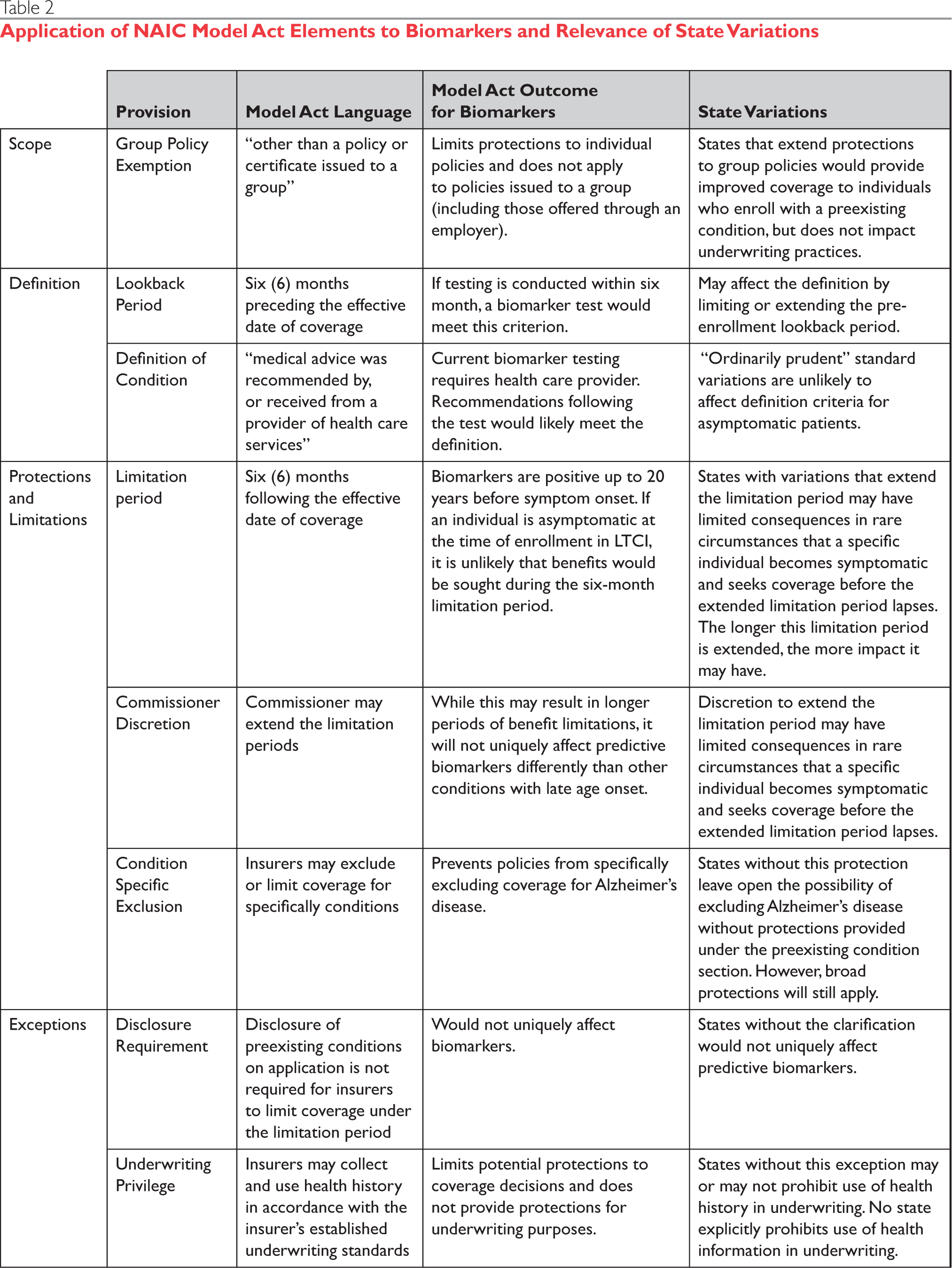
Investigators conducted a final analysis to determine whether variations from the NAIC Model Act would affect the outcomes of our results. This analysis (Table 2) failed to identify significant variations that affected (1) whether biomarkers would constitute a “preexisting condition;” and (2) whether an individual who learns their Alzheimer's disease biomarker status would receive meaningful protections. Several variations are worth noting. First, the most frequent variation from the Model Act was states that did not adopt the scope element, which excludes group policies. While this would affect the type of policies covered, the scope would not influence whether Alzheimer's disease biomarkers would receive meaningful protections under the provision. Second, ten states were not consistent with the element prohibiting insurers from naming conditions that would be excluded from these protections. However, there is no indication that these variations would permit insurers to explicitly name Alzheimer's disease, or another condition, as excluded from coverage beyond the limitation period. Third, the “ordinarily prudent” standard for defining preexisting condition has an unclear effect on outcomes. This language prevents individuals from avoiding disclosing a preexisting condition by not seeking medical care for a symptomatic illness (and thus not receiving a diagnosis, treatment, or medical advice) before applying for LTC insurance. It is difficult to conceive of a circumstance in which an individual would receive biomarker information separate from clinical advice. Lastly, the most pertinent variation would be the underwriting element that permits insurers to use health information in underwriting. However, states that varied from the Model Act were silent on the issue of underwriting. As a result, insurers were not explicitly prohibited and thus would likely maintain the discretion to use health information in underwriting.
Application of NAIC Model Act Elements to Biomarkers and Relevance of State Variations

V. Discussion
This study found legislation or regulations in all fifty states and D.C. that regulate LTC insurer practices. Nearly half of all states have preexisting condition laws which are substantially consistent with the NAIC Model Act. Additionally, our analysis found substantial consistency with individual NAIC Model Act elements. This supported using the NAIC Model Act as a proxy for determining whether state laws would provide anti-discrimination protections to individuals who learn their Alzheimer's disease biomarker status. Our interpretation and application of the NAIC Model Act, and subsequently state law, found that the preexisting condition laws would likely apply to individuals who learn their biomarkers status. As a result, this population would be entitled to coverage under a LTC insurance policy after the six-month limitation period. However, this requires that the insurer approves the individual's application. Because the NAIC Model Act and 43 states explicitly permit LTC insurers to use health information for underwriting decisions, we determined that the protections provided by the NAIC Model Act and states laws would not meaningfully protect individuals from discrimination based on biomarker status in the context of LTC insurance. Medical underwriting practices would likely create a barrier to individuals seeking LTC insurance policies based on preclinical biomarkers status. A failure to address and mitigate discrimination risks will prevent individuals who are biomarker positive from accessing critical resources to prepare for financial burden of LTSS costs. This is a critical gap in anti-discrimination protections.
Data from this study is consistent with prior research and scholarship evaluating LTC insurance underwriting practices and anti-discrimination protections in insurance. Prior research has demonstrated that there are limited federal anti-discrimination protections relevant to insurers.83 Avraham and colleagues reported that there are only four federal statutes that prohibit discrimination by insurers, including the ACA (2010), the Health Insurance Portability and Accountability Act (1996), GINA, and the Fair Housing Act.84 Among these laws, none provide protections to individuals who are applying for or are enrolled in LTC insurance. Additionally, authors of this paper (Arias and Karlawish) have previously shown that federal anti-discrimination protections are unlikely to apply to preclinical biomarkers based on criteria to meet qualifying definitions under legislation.85 For example, the American's with Disability Act incorporates criteria for meeting the definition of “disability.”86 Data reported above identifies additional gaps in state anti-discrimination protections.
Findings that an individual who learns their pre-clinical biomarker status is not protected from adverse underwriting decisions is consistent with data on “medical denials.” A 2010 Department of Health and Human Services (HHS) report found that approximately 20% of applicants are denied LTC insurance based on health status, or “medical denials.”87 Other studies have demonstrated that denial rates could be higher (24%) in older and financially suitable populations (i.e., those with sufficient financial assets to afford LTC insurance).88 Additional studies have examined factors leading to adverse underwriting decisions, including medical denials and prohibitively high premium rates. Cornell and colleagues found that a history of stroke or diabetes are among the most influential chronic illness affecting approval rates.89 The Cornell study applied a secondary analysis of data collected through the Health and Retirement Survey. Given limitations of the data collection methods, cognitive impairment and neurodegenerative illnesses were not included in analyzing the relationship between chronic illness and LTC insurance policy approval ratings.Reference Temkin-Greener, Mukamel and Meiners90 However, Alzheimer's disease is consistently included as a “knock out” condition in reports on LTC insurance underwriting practices.91 A knock out condition is one that insurers have deemed as uninsurable.92 In contrast, other conditions may be rated to determine an individual's risk as a policy-holder before deciding whether to approve the policy and set premium rates.Reference Farely93
The role of predictive testing in LTC insurance underwriting is a novel challenge for insurers and policy makers. Prior research has yet to establish the rates of denials based on genetic or other predictive risk information. However, recent data demonstrates that insurers are increasingly using family history during the underwriting process.Reference Taylor, Cook-Deegan and Hiraki94 The REVEAL Study found that individuals with genetic risks for Alzheimer's disease were more likely to purchase LTC insurance.95 Findings from that study demonstrate an increased demand for LTC insurance based on predictive information, but does not demonstrate approval rates for individuals with known genetic risk factors. However, given proprietary protections over insurers underwriting practices, it may be difficult to accurately determine how insurers are using genetic information. While research and policies related to genetic information and insurance underwriting practices may be informative, it is unclear at this stage how an insurer would interpret preclinical biomarker status. This study demonstrates that a gap in legal protections could, at a minimum, expose biomarker positive individuals to adverse underwriting decisions without recourse.
Adverse underwriting decisions have consequences that extend beyond individual applicants or issues of fairness. Underwriting practices are a source of low purchase rates in LTC insurance that are challenging the market. Poor purchase rates have caused high premiums and led to insurers leaving the market due to low profits.96 The reported “death spiral” of LTC insurance has led to numerous recommendations for other solutions to financing LTSS. Such recommendations have included the proposal of a voluntary public insurance market under the CLASS Act, which was repealed in 2012.97 Other proposals look to improving access to a social or public insurance.98 However, private LTC insurance is important to reducing the burden on Medicaid as the primary payor for LTSS. Estimates in 2013 reported LTSS makes up 30% of Medicaid spending.99 This reliance on Medicaid to fund LTSS is placing non-sustainable pressure on state budgets.
Still, underwriting serves an important role in the LTC insurance market by reducing adverse selection. Adverse selection is one party's (the individual) use of information not available to the other party (insurer) at the time of an agreement.100 The current voluntary structure of the LTC insurance market increases the likelihood of applicants waiting to purchase coverage until they identify a need for a policy. Prior solutions, including Partnership Programs101 and tax incentives102 have failed to motivate healthy and younger individuals to purchase a policy. As a result, underwriting serves as a mechanism to balance an insurance pool by reducing the potential for enrolling a “high risk” policyholder. Underwriting also protects profits and market stability by attempting to prevent actual claims (benefits paid out) from exceeding projected claims (used to set premiums). This complex dynamic between underwriting, adverse selection, and market security must inform any future recommendations to amend legal underwriting standards. Therefore, a potential solution must not only include increased protections for individuals who are at risk for medical denials, but also mechanisms to increase enrollment by healthy policyholders.
This study uses standardized legal empirical research methods to map the current landscape of state LTC insurance legislation and regulation, specifically preexisting condition laws. The study only provided an in-depth analysis of case law or regulatory implementation when warranted by specific interpretation questions (i.e., the definition of “medical advice”). Additional case law research that reflects a broader comparison of state law may be warranted for future research. Additional research is needed to examine whether existing anti-discrimination protections (i.e., GINA) are appropriate models to develop anti-discrimination protections for individuals who are positive for preclinical Alzheimer's disease biomarker status.
The findings from this study support a determination that individuals who learn their Alzheimer's disease biomarker status would not be protected from discrimination in LTC insurance underwriting. This gap in anti-discrimination protections indicates that reevaluation of underwriting standards are needed to promote access to LTC insurance, as promoted by the NAIC Model Act. We propose that future research develop amendments to the NAIC Long-term Care Insurance Model Act as a catalyst for changes in state legal standards. This proposal is supported by data from this study demonstrating substantial consistency between the Model Act and state laws. As researchers and clinicians begin considering implementation of biomarkers, the potential impact on an access to LTC insurance should be considered alongside the benefits of early risk detection.
Acknowledgements
This research was funded by the Alzheimer's Association, Legal, Ethical, & Social Analysis of Preclinical Biomarker Tests in AD (MNIRGD-14-319284); A portion of this data was collected at the Cleveland Clinic.