Introduction
Incidents involving the exposure of large numbers of people to radiological material can have serious consequences for those affected, their community and wider society. In many instances, the psychological effects of these incidents have the greatest impact. People fear radiation;Reference Slovic1 lack of visiblity and the delay between exposure and negative health impacts lead to uncertainty and concern,Reference Bromet2, Reference Vyner3 and even incidents which result in little or no actual exposure have the potential to cause widespread anxiety and behavior change.Reference Bromet2
It is understandable, then, that terrorist groups are interested in acquiring radiological weapons,Reference Acton, Rogers and Zimmerman4 and it is vital that official agencies can successfully communicate with the public about the risks involved and protective actions required if a terrorist event involving radiological materials were to occur.Reference Becker5-Reference Williams, Saathoff, Guterbock, MacIntosh and Bebel7 Evidence from non-malicious events such as the 1979 Three Mile Island nuclear accident,Reference Becker5 the 1987 Goiania radiation accident,Reference Stone8 and the 2011 Fukushima nuclear accidentReference Rubin, Amlot, Wessely and Greenberg9 demonstrate the importance of reducing uncertainty and enhancing information credibility to mitigate the psychological impact of radiological incidents. Survey studies of anticipated public responses to radiological terrorism further support the need for credible information to offset likely confusion and uncertainty which may result in high demands on medical services.Reference Lemyre, Turner, Lee and Krewski10, Reference Taylor, Joung and Griffin11
Previous studies that have focused on communicating with the public following Chemical, Biological, Radiological or Nuclear (CBRN) terrorist events,Reference Becker5, Reference Glik, Harrison, Davoudi and Riopelle12-Reference Jefferds, Laserson and Fry27 have suggested that CBRN terrorism can lead to anxiety and fatalism, which is likely to negatively impact on the lay public's ability to understand information given after an incident.Reference Keselman, Slaughter and Patel28 Furthermore, members of the public tend to exhibit low levels of knowledge about CBRN agents and often hold inaccurate beliefs about these substances, which can make communicating about these types of incident particularly challenging.Reference Fischhoff, Gonzalez, Small and Lerner29-Reference SteelFisher, Blendon and Ross32
Studies that have focused on how people might specifically respond to a radiological attack have typically used a scenario which involves an improvised radiological dispersion device (RDD) or “dirty bomb”.Reference Acton, Rogers and Zimmerman4 This consists of a radioactive source combined with explosive material to produce a conventional explosion which spreads radioactive material. The attention paid to this particular scenario is unsurprising, as a number of intended radiological terror attacks which have been prevented in recent years involved attempts to use dirty bombs.Reference Acton, Rogers and Zimmerman4 Nevertheless, it is important to also consider other malevolent uses for radiological materials which are equally plausible, particularly the covert use of radiation.Reference Acton, Rogers and Zimmerman4 The lack of familiary and heightened uncertainty associated with this type of attack might predict increased anxiety and fatalism. However, the muted public response to the poisoning of Alexander Litvinenko with radioactive polonium-210 in London shows that one cannot assume this to be the case.Reference Rubin, Page and Morgan33 A radiological exposure device (RED) is one way in which radiological material could be used for a covert terrorist attack. An RED is a source of radiation that has been deliberately hidden with a view to exposing people in the immediate area to significant doses of ionizing radiation without their knowledge. Unlike RDDs, these devices do not incorporate any explosive material or result in any long-lasting contamination. Once an RED has been found and removed, it no longer presents a risk to the public.
In this study, a hypothetical RED scenario was used to assess perceptions of, and possible reactions to, a covert radiological attack. The research had three stages. The first stage consisted of focus groups with members of the public to identify their information needs and behavioral intentions in response to the scenario. The outcomes of these focus groups were used to inform national telephone surveys, which quantified intended behaviors and assessed what perceptions were correlated with these behaviors. Focus group and survey results were used to develop video and leaflet communication interventions, which were then evaluated in a second round of focus groups. This three stage mixed-methods approach allowed the authors to develop and test communication materials informed by a quantitatively verified, in-depth qualitative understanding of public beliefs and behavioral intentions. To extend the generalizability of the findings, this research was conducted in Britain and Germany, two nations which are culturally similar but have different experiences of and attitudes towards radiological incidents.Reference Rubin, Page and Morgan33, Reference Renn34
Methods
Scenario
To help participants visualize the discovery of an RED, they were presented with four media injects. The first was a mock newspaper story describing the discovery of radiological material during a raid on a terrorist group. This was designed to “set the scene” for participants by describing a story which appeared in the week before the start of the incident described in later injects. The other injects consisted of mock television news footage. The second inject concerned the recent discovery of a suspicious package on a commuter train. Eyewitnesses emphasized that emergency services had not found explosives, that radiation experts were present and that the train station had been evacuated. The third inject, which was presented as a news item from later the same day, focused on official confirmation that the package was an RED that had been present on the train for several days. A medical expert described the signs and symptoms of acute radiation sickness and asked anyone experiencing symptoms or who was on the train over the past few days to contact a telephone helpline or visit a monitoring center to check for exposure. The fourth inject was presented as appearing three weeks later. It described the re-opening of the train station and focused on the claims of one “independent scientist” that the Government had underestimated how many people had been exposed.
The scenario was adapted for use in the surveys, asking participants to imagine that “you hear on the news that a local train station has been evacuated” because of a radioactive package that “is not a bomb … but can still emit harmful radiation.” Participants were told that “in the days after this, several people from your area are brought to hospital and found to have radiation sickness.” After describing their symptoms, participants were told that the Government had advised people with symptoms or who might have been on the train in the last week to call a helpline number.
The second round of focus groups used the same scenario and injects as the first round, but included additional filmed material in the third media inject and a short leaflet (word count:1011) to address information needs identified in first round focus groups and the survey. The new information in the third inject was presented using an animation to represent the removal of the device from the train, by extending the information given by the “medical expert” and by introducing a new “government spokesperson.” This emphasized the limited zone of influence of the device and the absence of contamination, and explained the signs and symptoms of exposure in more detail. The government spokesperson also asked that only those directly involved in the incident should seek treatment or monitoring.
The leaflet was presented as an official government communication. It contained information about REDs, a brief description of radiation, and statements that contamination would not occur and that exposed people posed no threat to the health of others. It also described the factors that reduce the likelihood of exposure causing a health effect, the symptoms of exposure, how these symptoms can be alleviated and a short discussion of the steps that emergency services might take if a device was found.
The development of an outline for this incident was informed by scenarios previously developed for the emergency preparedness activities of the UK Health Protection Agency (HPA), and were checked and revised by in-house HPA experts and by representatives from the Ministry of the Interior, Ministry of the Environment and the state health authority in Germany. The texts for the injects were also checked by these experts and communications professionals to ensure the accuracy and realism of the scenarios.
Participants
For the first round of focus groups, seven British (n = 52) and five German (n = 35) focus groups were conducted. In Britain, participants were recruited from existing databases of potential volunteers. A purposive sampling method was used to maximize variation on the basis of sex, age, marital status, income, religion, ethnicity, education and to ensure that groups included some parents and some people who traveled through a mainline London train station. The sampling procedure was designed to maximize the range of attitudes accessed with a view to achieving meaning saturation.Reference Gaskell and Bauer35 The British research required more focus groups than the German research to ensure adequate demographic variation. In Germany, people were randomly selected from the Stuttgart City Records Department and sent a letter inviting them to participate. Respondents completed a socio-demographic questionnaire before they were assigned to groups to ensure that the German sample also maximized variation in relation to sex, age, marital status, religion and to ensure that groups included some parents and some people who regularly use Stuttgart Central station (the station used in the German version of the scenario). Participants were not selected on the basis of ethnicity in Germany, as Stuttgart has very low levels of ethnic diversity. Full demographic details are given in Appendix 1 of the online supplementary material.
The market research company TNS-EMNID conducted national telephone surveys in Germany and Britain on the authors’ behalf. They used random digit dialing to contact an area-based, probability sample of households which had a fixed line telephone number. Once an interviewer contacted a household, they asked to speak to the person aged 18 or over who had had the most recent birthday. After obtaining verbal consent, they read the first section of the scenario, followed by the outcome variables and predictor variables. Interviewing continued until at least 1000 participants from each country were obtained. This provided a sample error of approximately plus or minus three percent for the prevalence rates. Response rates were 20%-25%. These rates are not unusually low for “cold calling” telephone surveys of this nature.Reference Galea and Tracy36 For the final round of focus groups, ten new focus groups in Britain (n = 70) and ten in Germany (n = 63) were conducted using the same method of recruitment and inclusion criteria as first round focus groups. Demographic details are provided in Appendix 2 of the online supplementary material.
Focus Groups
Participants were invited to join a discussion of “public responses to terrorist events.” At each stage of our scenario, participants were first asked to write their thoughts and feelings about the media inject, prior to discussing their reactions and concerns, expectations about how the authorities would respond, behavioral intentions, information needs and preferred information sources with the rest of the group. Transcripts were analyzed using thematic analysis.Reference Aronson37-Reference Braun and Clarke39 Separate analysts worked on the German and British results in their native language. Unless otherwise stated, no substantive differences were noted between the countries. King's College London's Research Ethics Committee approved all British data collection in this paper. German data collection did not require ethical approval. For the second round focus groups, the procedure and analysis was identical to that in the first round. However, participants were also asked to evaluate the leaflet in terms of its content, presentation and method of delivery. First round focus groups lasted two hours. The second round focus groups lasted three hours.
Surveys
Survey questions were based on behaviors identified in the focus groups and behaviors that have been reported in the wider literature following major public health crises. The authors also assessed perceptions identified in the focus groups and other concepts previously shown to be relevant in people's understandings of illness.Reference Moss-Morris, Weinman, Petrie, Horne, Cameron and Buick40
Behavioral Outcomes
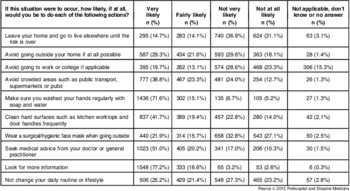
Interviewers asked participants how likely they would be to perform each of 10 actions if the scenario occurred (Table 1). Response options were “very likely (coded as 1),” “fairly likely (2),” “not very likely (3)” or “not at all likely (4).” Principal components analysis and varimax rotation suggested two factors for these outcomes, accounting for 45.1% of the variance. The first (“avoidance”) had loadings of greater than 0.6 for variables relating to leaving home, avoiding work, avoiding going outside, avoiding crowded areas and wearing a face mask. The second (“cleaning”) had loadings of greater than 0.6 for variables relating to hand washing and cleaning surfaces. Three behaviors did not load onto the factors: seek medical advice, look for more information and not change your daily routine or lifestyle.
Likely Behavioral Reactions During an Incident in which a Radiological Exposure Device has been Discovered in the Local Area. British and German data are combined for this table.

Predictor and Demographic Variables
Interviewers read participants nineteen statements concerning perceptions of the incident. Seventeen were adapted from the revised illness perceptions questionnaire (IPQ-R).Reference Wray, Kreuter, Jacobsen, Clements and Evans42 Two new statements were also used to assess the perceived importance of knowing where is and is not safe from radiation (see Appendix 3 in the online supplementary material for wording). Respondents were asked whether they strongly agreed (coded as a score of 5), agreed (4), neither agreed nor disagreed (3), disagreed (2) or strongly disagreed (1) with each statement. Principal components analysis suggested that data from these items could be reduced to six factors accounting for 61.8% of the variance. These reflected perceptions that nothing could be done to prevent someone being exposed to the radiation or becoming ill (labeled “inevitable”), that the participant had the power to affect whether or not they became ill or that specific measures or treatments could prevent exposure or cure exposed people (“controllable”), that treatments were not available for those exposed to radiation (“untreatable”), that radiation was difficult to understand (“incomprehensible”), that exposure would result in severe effects (“severe”) and that exposure could be encountered anywhere (“pervasive”).
Nine items were used to assess the perceived mechanisms through which an RED might affect health (see Appendix 3). Principal components analysis revealed two factors in these data accounting for 60.8% of the variance. The first (“exposure from others”), was loaded on by items relating to being near to, sharing a drink with, touching, or being coughed or sneezed on by someone who had been affected by the radiation. The second (“exposure from the environment”) was loaded on by five items relating to breathing in air, eating food, drinking water, being near to objects or touching objects that had been exposed to radiation.
Each participant's age, sex, working status, household income, highest educational qualification, ethnicity and whether they took part in Britain or Germany were recorded.
Analyses
Scores for the various factors were calculated by taking the mean score for their items, with items reversed where required. Responses of “don't know” or “not applicable” were coded as missing data. Because the distributions for the behavioral outcome factors were skewed, they were dichotomized using a median split. Scores for the three behavioral items that did not load on either factor were dichotomized based on whether participants were very or fairly likely to perform the action or were not very or not at all likely to perform it.
Odds ratios were calculated using binary logistic regressions to test the associations between predictor and outcome variables, using data from both countries combined. For the association with perceptions, these regressions adjusted for all demographic variables.
Results
First Round Focus Groups
Perceptions about Radiation Threats
When asked about their understanding of radiation, the Chernobyl accident and Hiroshima atomic bomb were widely mentioned by participants. In discussing how terrorists might use radiological material, participants commonly referred to large incidents resulting in radioactive fallout, such as a dirty bomb or nuclear explosion. Participants had no knowledge about REDs. These were not mentioned in any group until introduced by our injects. Even after this, some participants reported that this use seemed unlikely or did not fit with their preconceptions as to what a radiological attack would “look like.”
Confusion existed about the risks of the incident to people not directly exposed to the device. Preconceptions based on previous well-known radiation incidents led some to believe that exposed members of the public might transfer contamination to others or that the incident would result in persistent contamination of the affected area. Even though the medical expert in our third inject stated that neither effect would occur, some participants continued to express these views. As one noted, “I'd think about […] if I (or family or friends) may have had contact with a contaminated person. Also think about the extent of damage of this incident (ie, contamination spread)” (UKG6a, P7, written response).
Several aspects of the scenario failed to meet participant expectations about radiological terrorism, including the small area of the police cordon, the absence of an explosion and the lack of quarantine. Some participants interpreted this as indicating that this was a failed attack, a scare story or a minor incident: “Not too concerned as nothing seems to have exploded or been released into air” (UKG3a, P7, written response). “If it was radioactive [affected people would] be put in the big tents” (UKG3a, P4). As a result of their limited concern, most participants reported that they would be unlikely to alter their behavior beyond avoiding public transport if it had been disrupted. Some also felt that altering their behavior would fulfil the terrorists’ objectives.
For those who accepted that it was a genuine attack, lack of personal impact and the perception that the incident was self-contained contributed to their lack of concern. Despite this, uncertainty was expressed by some as to whether they might have been exposed to the device prior to its discovery. This was particularly true if it had lain undiscovered for some time. Consequently, when asked if they would visit a monitoring center, some participants indicated that they would go even if they were not directly involved in the incident: “I'd probably call in or go to the center because it didn't really specify how close you had to be or within what proximity” (UKG1a, P5). Others noted a lack of clarity as to what behavioral changes they should make: “Daunted but left in the dark as to what threat is or what I can possibly do to avoid it” (UKG4a, P8, written response).
In addition, some participants raised concern about the likelihood of further devices being found and expressed a desire for more information relating to security issues: “I would have liked to know […] what's happening, are there any names of the terrorist group and stuff like that” (DEG5a, P2).
Communicating Health-Related Information
Many participants expressed a desire for more factual information about the scenario. Questions often revolved around the likelihood of being affected: “I would want more information to make sure that I was safe… that you're safe if you're outside that [cordoned] area” (UKG2a, P7).
Participants also wanted information about symptoms and reassurance that people could be treated successfully: “I would want someone to say […] it's alright we can give you something” (UKG1a, P7). For others, the lack of behavioral advice in the injects led them to seek information about what they should do: “Well, I would like to have information about what I personally could do, in concrete terms” (DEG1a, P1).
Participants in both countries expected that the government would provide a statement, although there was an expectation that some information would be withheld for security reasons. In Germany, this was coupled with a belief that the government would downplay the incident and withhold information in order to prevent public disquiet: “I would expect that if there is something about radiation that a lot of stuff will be not talked about… It was the same with Chernobyl. First it wasn't a threat […] later it came out it was severe. I would distrust right away” (DEG4a, P2).
Information presented by the media was also viewed with suspicion, based on previous experience of “media scare stories”: “just one of those media […] things where everything's blown out of proportion” (UKG1a, P5), but participants expressed a generally positive attitude to receiving information from non-governmental sources. Our “independent scientist” was viewed by some as expressing concerns that aligned with their existing perceptions regarding the long-term health impacts of radiation. However for some he lost credibility for being “chosen by the media for what he had to say” (UKG4a, P1).
Surveys
Table 1 shows the responses for each behavior. The most likely reaction was “look for more information,” which 77.2% of participants said they were very likely to do. Other reactions rated as very likely by more than half of the participants were “wash your hands regularly with soap and water” and “seek medical advice.”
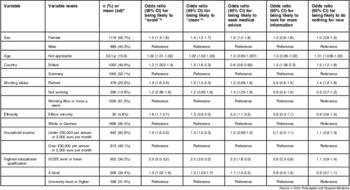
The associations between the outcome and demographic variables are shown in Table 2. In general, participants who were female, older, from Britain, retired, from an ethnic minority group, poorer or had lower educational qualifications were more likely to engage in the behaviors.
Association Between Demographic Variables and Likely Behaviors

aNumbers that do not sum to 2005 are the result of “not applicable,” “don't know,” or “prefer not to say” responses.
bBased on a median split for five avoidance-related variables.
cBased on a median split for two cleaning-related variables.
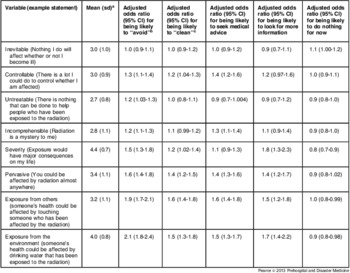
Table 3 shows the association between perceptions and the behavioral outcomes. In line with the focus group results, perceptions about how pervasive the risks from radiation would be, the possibility of being affected by other people and the possibility of being affected by environmental contamination were strongly associated with each of the intended behaviors that were assessed, apart from “doing nothing.” The perceived severity of the effects of exposure also showed a strong association with behavioral intentions. While other perceptions showed some significant associations with behavioral intentions (see Table 3), these were weaker and therefore of less relevance from a communications perspective.
Association Between Perceptions and Likely Behaviors. All odds ratios were adjusted for age, sex, country, working status, ethnicity, household income and highest educational qualification.

aScores range from 1 (Strongly disagree) to 5 (Strongly agree).
bBased on a median split for five avoidance-related variables.
cBased on a median split for two cleaning-related variables.
Second Round Focus Groups
Response to the New Material
Participants responded positively to the additional filmed information. They felt reassured that the size of the cordoned area was appropriate and reported that they understood the lack of quarantine. Several also reported that this information had countered their misperceptions regarding the spread of contamination: “I was under the impression that, say if I was radioactive, if I met you, you became radioactive and it would pass, so when he said it doesn't pass on like that, that was actually quite reassuring” (UKG6b, P1).
Despite this, some remained unwilling to accept that an affected area would not be contaminated once a device was removed, that individuals who had been exposed would not be “contagious” and that any effects would be limited to the immediate area surrounding the device: “I'm not sure if I'm convinced by line that people exposed to radiation aren't in some way ‘contagious’ ” (UKG8b, P3, written response). This trend was stronger in Germany, where participants also continued to talk about contamination and the need to close doors and windows in their homes: “[It's] not true, the whole train is contaminated, the whole environment. You can't just go into the station and say hey, the source is gone, it's all fine. The whole station is contaminated” (DEG1b, P7).
As with the first round of focus groups, there were high levels of intended compliance in relation to avoiding the cordoned area and visiting a monitoring center if required. However, participants in the second round appeared less inclined to visit the monitoring center if they were not directly involved in the incident. Participants attributed this to feeling confident they would not have been affected if they were not on the train.
Initial reactions to the leaflet intervention were similarly positive, with the majority of participants describing the leaflet as informative, clear and easy to understand: “I think it's good that it's written in a way that people can understand it without prior knowledge on those things” (DEG6b, P3). The permanent, concrete nature of a written communication was also viewed positively, partly because people could refer to it later if needed and partly because it would be harder for the Government to revoke or change written advice a later stage: “It's one thing them making a statement. But then giving something… that then strengthens your belief in the whole system” (UKG5b, P1).
The leaflet also had an impact on participants’ responses to the “independent scientist.” Where his comments resonated with existing concerns, participants remained worried: “I think he confirms what I thought in the beginning that the problem is much bigger than what we thought” (UKG5b, P3, written response). However, there was a greater tendency in second round focus groups for participants to question the validity of his claims, using arguments drawn from the official information provided to them: “Well, I felt that this guy [independent expert] was not trustworthy. He said the opposite of what the officials said” (DEG3b, P2).
Criticisms of the leaflet focused on its length, the density and complexity of the text, the lack of illustrations and accessibility issues for groups with disabilities. There was also a belief that the use of leaflets might cause worry: “I can imagine that people who aren't concerned […] and then receive a leaflet like this, that they become more nervous, that they might think there must be something bigger behind that otherwise the government wouldn't make this effort” (DEG6b, P1).
Some concern was raised about the timing of the leaflets or its impact on people who were not motivated to read it. In both respects, attempting to educate the public about the nature of radiological terrorism before an incident occurs struck some participants as unlikely to work: “If I'd had this a week, two weeks before the [radiation] issue, [do you] know where I'd put it to find it again? Recycling box probably” (UKG2b, P1).
Unresolved Issues
Despite the additional information, participants still wanted more health-related information about prevention, protection, symptoms and treatment. Concerns about prevention and protection related to a desire for more information about how to identify an RED and which type of radiation it would emit. In terms of symptoms participants were keen to know if there were any distinguishing features which would allow them to confirm that they were suffering from radiation sickness. For treatment, concerns were expressed about the lack of specific details or reassurance that radiation sickness could be cured: “The bit that says how radiation sickness is treated doesn't tell you how radiation sickness is treated… Are you gonna give me antibiotics or can't it be cured?” (UKG7b, P8).
In addition to health-related information, participants also wanted more information that would enable them to assess the likelihood of further attacks and formulate an appropriate response: “I think we want to know if there's any indication of who put it there, you know whether it's potentially a terrorist thing or whether it's you know some crazy guy who just got fired from his job” (UKG4b, P7).
Discussion
In addition to the potential physical health effects on those who have been directly exposed, a terrorist attack using an RED has the potential to cause fear and behavior change among the wider population. The results from the first round of focus groups and surveys suggest that such effects would be largely due to concerns and misperceptions among the public about their likelihood of being exposed to radiation. In part, these concerns relate to the inevitable uncertainties that would surround the discovery of any hidden exposure device: how long has it been there, where else has it been, how far away from it is “safe” and are other devices still out there? Misperceptions about the nature of an exposure device are also important, however, including the belief held that persistent contamination would occur and would spread through the environment and from person to person.
In both the focus groups and surveys, perceptions about the likelihood of being exposed and the routes through which exposure might occur were associated with higher levels of worry and greater likelihood of engaging in behaviors that might be detrimental to ongoing public health efforts, such as unnecessary attendance at a monitoring or health care facility. This finding ties in well with existing theoretical models of why people engage in protective behavior during an emergency,Reference Rogers, Amlôt, Rubin, Wessely and Krieger41, Reference Wray, Kreuter, Jacobsen, Clements and Evans42 with existing research on radiation risk communicationReference Becker5 and with evidence from previous real-life incidents.Reference Rubin, Page and Morgan33, Reference Rubin, Amlôt, Carter, Large, Wessely and Page43
The misperceptions about the likely presence of contamination arising were largely driven by our participants’ lack of familiarity with exposure devices and their reliance on analogies with better-known radiation threats such as Chernobyl or the atomic bomb. These analogies had a second, undesirable effect, with some participants deciding that because an RED, or the authorities’ response to it, did not meet their expectations, the incident was therefore a scare story or failed attack. This false reassurance could itself have undesirable effects if it results in exposed members of public failing to heed public health advice due to a lack of concern.
The second round of focus groups demonstrated that both types of misunderstanding are amenable to change following targeted communication. The “pre-prepared” leaflet and the additional information provided by spokespeople were able to alter people's understanding of the nature of an exposure device, leading to more realistic risk perceptions and differing intentions with respect to attending a monitoring facility. This supports post-incident analysis of real life events which has highlighted lack of effective risk communication as an important contributory factor to high demand for medical attention from low-risk patients.Reference Stone8
Yet while providing such information was effective in the relative comfort of a focus group, providing it during the chaos of a real incident will inevitably pose more challenges. In particular, the lack of trust the participants reported with respect to the media, the government, and independent scientists may make it difficult to convey credible information during a crisis. This is a well-recognized problem.Reference Lemyre, Turner, Lee and Krewski10, Reference Rogers, Amlôt, Rubin, Wessely and Krieger41, Reference Wray, Becker and Henderson44 Interestingly, our written leaflet was viewed by participants as one particularly credible source of information, due to both its permanence and the implication that the messages must be important if time and money had been spent communicating them. This suggests that although interest in alternative forms of communication is growing,Reference Pandey, Patni, Singh, Sood and Singh45 a role remains for more traditional forms of communication.
Limitations
Several methodological limitations should be borne in mind when considering the results of this study. With respect to our focus groups, as with all qualitative research, the use of a small, non-probability sample limits the generalizablity of findings and increases the possibility of biased responses. However, the advantage of obtaining data based on discussion among group members rather than asking participants to respond solely to our direct questions may outweigh this concern. Conformity and group polarization effects are also of potential concern.Reference Morgan46, Reference Sussman, Burton, Dent, Stacy and Flay47 These issues were mitigated by using experienced moderators and by asking participants to provide written responses prior to discussion.
The use of a hypothetical scenario raises the possibility that the behavioral intentions expressed by focus group participants may not reflect behaviors that would be performed in the event of a real incident. However, the scenario benefited by being informed by scenarios previously developed for the emergency preparedness activities of the UK Health Protection Agency (HPA) and by being checked for accuracy and realism by radiation experts in the UK and Germany. Realism was further enhanced through the use of professional-quality media injects to communicate the scenario to participants. Nevertheless, it is important to recognize that high experimental realism may bias some responses. For example, we cannot be sure that the wider public would pay the same level of attention to information provided in leaflets.
With respect to our survey, our reliance on a hypothetical scenario raises the possibility that the data we obtained reflected “non-opinions,” answers which did not reflect the genuine beliefs held by participants but which were provided simply to satisfy the needs of the survey.Reference Bishop48 While this is possible, the fact that the pattern of associations identified between perceptions and behavioral intentions was similar to that found in other, genuine incidentsReference Rubin, Page and Morgan33 and in the focus groups provides some reassurance that this was not the case. Whether the results accurately reflect the perceptions and intentions held by the general publics of Britain and Germany is more debatable. The low response rates achieved by telephone surveys of the type used here inevitably raise doubts as to the psychological representativeness of their samples. However, in this context, it is noteworthy that recent research has shown that telephone surveys which use market research techniques can be more accurate in estimating health-related parameters than conventional epidemiological techniques.Reference O'Cathain, Knowles and Nicholl49
Conclusions
These findings demonstrate the role of targeted communication in mitigating the psychological impact of radiological terrorism. Consistent with previous studies, participants exhibited low levels of knowledge about radiation and were confused about the risk of exposure, transmission and contamination. The potential for uncertainty and confusion to increase the burden on medical services was also supported, as was the role of trust in those tasked with providing advice. However, the use of a non-explosive scenario highlighted the potential for unfamiliarity to reduce as well as enhance concern. This suggests that generic radiation communication which aims to reduce anxiety may not be appropriate in situations where the mode of dispersal is inconsistent with existing preconceptions about radiological terrorism. These findings therefore indicate the need for targeted communication which addresses existing public preconceptions about the ways in which radiological material can be deployed.
Should terrorists succeed in placing a hidden radiological device in a public location, then health agencies may find that it is easier to communicate effectively with the public if they explicitly and clearly discuss the mechanisms through which someone could be affected by the radiation and the known geographical spread of any risk. Messages which explain how the risk from a hidden radiological device “works” should be prepared and tested in advance so that they can be rapidly deployed if the need arises.
Abbreviations
- CBRN:
Chemical, Biological, Radiological or Nuclear
- HPA:
UK Health Protection Agency
- RED:
radiological exposure device
Acknowledgements
This study forms part of the Public Information Responses After Terrorist Events (PIRATE) project (www.pirateproject.eu). In addition to the authors, the PIRATE team consisted of Kevin Dyer and John Simpson (Health Protection Agency, UK), Rosa Nieto-Hernandez and Simon Wessely (King's College London, UK) and Ortwin Renn (DIALOGIK, University of Stuttgart, Germany). This project received financial support from the Prevention of and Fight Against Crime Programme. European Commission-Directorate-General Home Affairs. The views expressed in this paper are those of the authors and are not necessarily those of their employers or funders.