


Highlights
-
• Distinct postoperative symptom trajectories were observed, with orthostatic headache showing the greatest improvement.
-
• Complete recovery was uncommon, and persistent fatigue and cognitive impairment were frequently reported years after surgery.
-
• Treatment responses differed between spontaneous intracranial hypotension and iatrogenic CSF leak, with acetazolamide most effective for rebound headache.
Introduction
Persistent symptoms after surgical repair of CSF leaks in patients with spontaneous intracranial hypotension (SIH) and post-dural puncture headache (PDPH) pose a significant clinical challenge. Reference El Rahal, Wolf, Volz and Beck1,Reference Volz, Fung and Wolf2 Although both conditions involve CSF loss, SIH and PDPH represent distinct disease entities with different aetiologies, recovery dynamics and prognostic implications. Reference Cheema, Anderson and Angus-Leppan3,Reference Zhang, Pang and Liu4 While direct dural closure or minimally invasive techniques often result in rapid improvement in SIH, evidence for PDPH remains limited, and postoperative outcomes appear less immediate and may develop more gradually in some patients. Reference El Rahal, Wolf, Volz and Beck1,Reference Volz, Fung and Wolf2,Reference Zhang, Pang and Liu4–Reference Kapan, Waldhör, Schiffler, Beck and Wöber6 These symptoms go far beyond headaches and include a wide range of neurocognitive and physical complaints, such as tinnitus, nausea, vertigo, concentration problems and “brain fog,” Reference Volz, Lahmann and Wolf7,Reference Volz, Wolf and Fung8 and are often accompanied by profound psychological distress, with patients experiencing depression, anxiety, social withdrawal and an overwhelming sense of losing control over their life circumstances. Reference Kapan, Waldhör, Schiffler, Beck and Wöber6,Reference Liaw, McCreary and Friedman9 Despite growing clinical recognition, the pathophysiology underlying persistent postoperative symptoms remains incompletely understood and is likely multifactorial. Reference Fermo10
Diagnostic evidence further illustrates this clinical uncertainty. In a retrospective digital subtraction myelography (DSM) study of 21 patients with extensive postoperative spinal CSF leaks and extradural CSF collections after spine surgery, most of whom had orthostatic headache, DSM identified the exact leak site in 19 patients (90%). The mean duration of the postoperative CSF leak was 3.3 years, ranging from 3 months to 21 years. Notably, four patients (19%) also had a CSF–venous fistula at the same location as the postoperative dural tear, emphasising the limitations of conventional imaging and highlighting the diagnostic complexity of persistent symptoms after prior spine surgery. Reference Schievink, Maya and Chu11 This diagnostic complexity is compounded by patient- and disease-related factors associated with poor treatment response, including a longer duration of symptoms before intervention, Reference Mea, Chiapparini and Savoiardo12 a history of pre-existing headache disorders, such as migraine or tension-type headache, and, in patients with PDPH, female sex, particularly in the postpartum period following labour epidural analgesia. Reference Ansari, Barad, Shafer and Flood13 The classification and treatment of these persistent post-treatment conditions are further hindered by ambiguous and inconsistently applied terminology. Terms such as “chronic SIH” or “persistent PDPH” are frequently used even in the absence of demonstrable CSF hypotension or detectable leakage. Reference Kapan, Waldhör, Schiffler, Beck and Wöber14,Reference Urbach15 This diagnostic ambiguity, coupled with a broad and disabling symptom profile, illustrates the insufficiency of purely structural models and calls for integrative diagnostic and therapeutic frameworks that reflect the multisystemic nature of the disorder. Despite the growing recognition of persistent postoperative symptoms following spinal CSF leak repair, systematic data on longer-term symptom trajectories, postoperative headache phenotypes and treatment responses remain scarce. Building on prior work characterising the impact of CSF leak symptoms on health-related quality of life and occupational capacity, the present study addresses these gaps by systematically describing postoperative symptom trajectories, headache phenotypes and the perceived effectiveness of pharmacological and interventional treatments at least 12 months after surgical repair of spinal CSF leaks in patients with SIH and iatrogenic CSF leaks. These insights aim to improve clinical understanding and guide postoperative management in this complex and understudied patient group.
Methods
Study design and recruitment
This research involved a cross-sectional online survey conducted from 1 February to 1 April 2025. Ethical approval was obtained from the Ethics Committee of the Medical University of Vienna (EK-Nr. 1111/2025). Participants gave electronic informed consent before starting the survey. Data collection was carried out using the General Data Protection Regulation-compliant platform SoSci Survey (https://www.soscisurvey.de), ensuring data protection compliance.
The study was conducted and is reported in accordance with the STROBE (Strengthening the Reporting of Observational Studies in Epidemiology) guidelines for cross-sectional studies. Reference von Elm, Altman and Egger16 This paper presents the primary pre-specified analysis of individuals treated surgically for either SIH or PDPH. To prevent automated (bot) entries, reCAPTCHA verification was implemented, and SoSci Survey’s duplicate protection was activated to block multiple submissions from the same device or IP address. To reach an international audience, the survey was shared through established digital channels popular among people affected by intracranial hypotension. Key partners included the Spinal CSF Leak Foundation (USA, https://spinalcsfleak.org), the CSF Leak Association (UK, https://csfleak.info), CSF Leak Canada (https://spinalcsfleakcanada.ca), the Asociación AHIFUGA (Spain, https://www.somospacientes.com/ahifuga) and several large Facebook groups such as CSF Leaks International, Iatrogenic Lumbar Puncture Leakers, the German-speaking Liquorunterdrucksyndrom and the Scandinavian CSF Leak Support forum. These platforms not only helped distribute the survey but also offered affected individuals spaces to share their experiences and receive emotional and informational support during the often-lengthy diagnostic and treatment process. At the end of the survey, participants could voluntarily provide an email address to enable the study team to contact them for clarification or re-contact them for follow-up studies, provided they gave explicit consent.
Questionnaire Development and Patient-Centred Co-Design
The questionnaire was developed through a collaborative process involving individuals with lived experience of SIH and PDPH, especially platform moderators and community administrators. This co-design approach ensured that the instrument was not only clinically suitable but also user-friendly, contextually relevant and aligned with the real-world concerns of the target group. Actively involving affected individuals in the development process follows best practices in Patient and Public Involvement in health research. Such participatory methods improve the ecological validity and relevance of the data gathered. To enhance data integrity and minimise missing responses, automated completeness checks were incorporated into the online survey system. Reference Hoddinott, Pollock and O’Cathain17
Study population
Clear inclusion and exclusion criteria were communicated through all recruitment materials, including online support group posts. At the beginning of the survey, participants were required to actively confirm their eligibility. Built-in filter logic automatically excluded those who did not meet the criteria. Additionally, responses were omitted from the final data if they were incomplete, especially when they only contained demographic info. To improve the accuracy of self-reported diagnoses and procedural information, participants were instructed to consult their medical records and, if needed, their treating physician or operative report when answering clinical and surgical questions. Eligible participants were required to be at least 18 years of age, provide electronic informed consent and confirm that they had undergone at least one operative (open or minimally invasive neurosurgical) repair of a clinically confirmed spontaneous or post-dural puncture spinal CSF leak (e.g., dural tear or CSF–venous fistula). This was verified by an affirmative response to the screening question: “Have you undergone operative surgical repair for a clinically confirmed SIH or PDPH spinal CSF leak?” Sufficient English-language proficiency to complete the survey was required.
Survey content
The questionnaire was organised into key thematic areas and focused solely on the period after CSF leak surgery. All participants were instructed to answer based on their post-surgical experiences.
-
• Sociodemographic and Background: Collected data on age, sex, relationship status, education, income and employment status (including medical retirement due to CSF leak).
-
• Medical History and Aetiology of CSF Leak: Respondents indicated the cause of their leak (e.g., spontaneous or iatrogenic), along with any pre-existing conditions such as connective tissue disorders, neurological issues or dysautonomia.
-
• Surgical Details and Postoperative Diagnostics: Participants provided details regarding the time from symptom onset to surgery, surgical techniques used, leak location and type, follow-up imaging (e.g., MRI, CT myelography) and clinician-diagnosed structural findings or complications. They were also asked to report the time elapsed since their most recent CSF leak surgery to contextualise postoperative duration and outcomes.
-
• Headache Type and Symptom Development: Patients described their postoperative headache phenotype (e.g., rebound high-pressure headache [RHPH], orthostatic or persistent non-specific headache) and retrospectively rated the severity of symptoms before and after surgery on a scale from 0 to 10. Symptoms included pain (e.g., headache, neck pain, fatigue, dizziness, brain fog, sensory disturbances and autonomic symptoms).
-
• Postoperative Treatments and Symptom Management: Participants described the treatments they received following surgery, such as medications and procedures like acetazolamide, gabapentinoids, antidepressants, steroids, pain relievers, nerve blocks, blood or fibrin patches and shunt surgery, and provided their subjective responses.
A detailed overview of all variables and outcomes is provided in Tables 1–3 and Figures 1–3.
Symptom progression following CSF leak surgery in spontaneous intracranial hypotension (SIH, red) and iatrogenic CSF leaks (green). Bars represent the percentage of patients reporting full recovery, significant improvement, slight improvement, no change, deterioration or worsening symptoms at different postoperative intervals.

Figure 1. Long description
This bar chart presents self-reported postoperative symptom progression after CSF leak surgery, comparing participants with spontaneous intracranial hypotension and iatrogenic CSF leaks. Bars show the percentage of patients reporting different postoperative trajectories, including full recovery, significant improvement, slight improvement with fluctuating symptoms, no change, initial improvement followed by deterioration, and worsening symptoms. The figure illustrates that complete recovery was uncommon in both groups, while partial improvement and persistent or fluctuating symptoms were more frequent.
Headache characteristics and locations by subgroup following CSF leak surgery. Radar plots show the frequency of pain qualities and locations for three subgroups: rebound high-pressure headache (RHPH) (n = 84, red), orthostatic headache (n = 39, blue) and non-orthostatic/non-RHPH headache (n = 105, green). Values represent the percentage of patients in each subgroup endorsing specific pain descriptors.

Figure 2. Long description
This figure uses radar plots to compare headache characteristics and pain locations after CSF leak surgery across three postoperative headache subgroups: rebound high-pressure headache, orthostatic headache, and non-orthostatic/non-rebound high-pressure headache. The plotted percentages indicate how often patients in each subgroup reported specific pain qualities, such as pressing, sharp, burning, or pulsating pain, and pain locations, including the occipital, neck, forehead, temporal, whole-head, or shifting regions.
Symptom severity before and after CSF leak surgery. Boxplots show patient-reported severity scores (0–10 scale) prior to surgery (red) and after surgery (blue-green). Higher values indicate greater symptom burden. Boxes represent the interquartile range, horizontal lines the median and whiskers the data range excluding outliers. Δ = mean difference; p-values are from paired t-tests. Panels A–L depict symptom domains: (A) headache while lying down; (B) headache while standing; (C) neck pain; (D) fatigue; (E) dizziness; (F) balance problems; (G) brain fog; (H) concentration difficulties; (I) nausea; (J) tinnitus; (K) light sensitivity; and (L) sound sensitivity.

Figure 3. Long description
This set of boxplots compares patient-reported symptom severity before and after CSF leak surgery using a 0–10 rating scale, where higher values indicate greater symptom burden. The panels show headache while lying down, headache while standing, neck pain, fatigue, dizziness, balance problems, brain fog, concentration difficulties, nausea, tinnitus, light sensitivity, and sound sensitivity. The figure shows that headache while standing improved most strongly after surgery, while symptoms such as fatigue, brain fog, concentration difficulties, and tinnitus showed more moderate improvement.
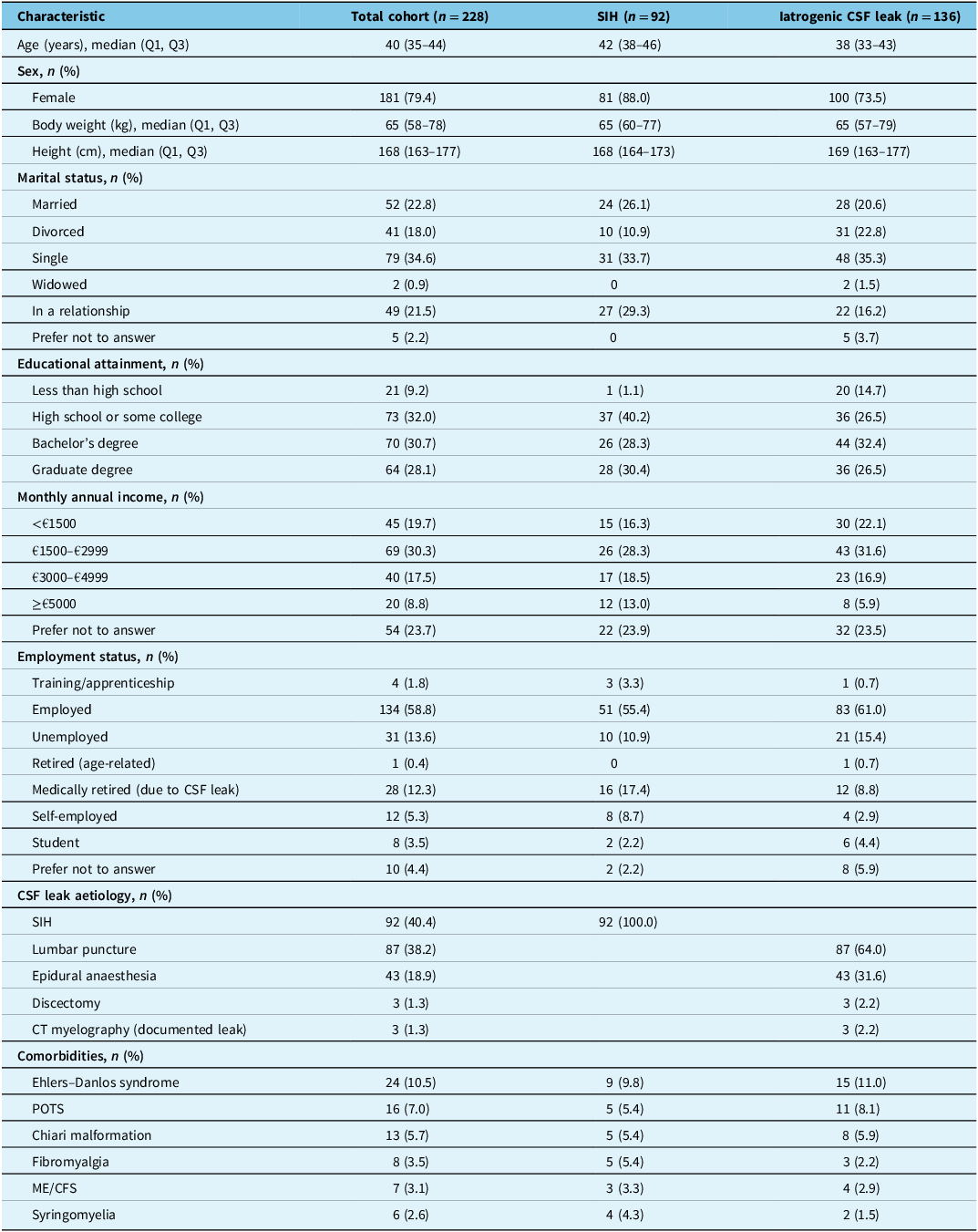
Sociodemographic and clinical characteristics of individuals with spontaneous intracranial hypotension and iatrogenic CSF leaks

Table 1. Long description
This table presents sociodemographic and clinical characteristics of the total cohort and compares participants with spontaneous intracranial hypotension and iatrogenic CSF leaks. It includes age, sex, body weight, height, marital status, educational attainment, income, employment status, CSF leak etiology, and comorbidities. Continuous variables are reported as medians with first and third quartiles, and categorical variables are reported as counts and percentages.
Note: Values are shown as median (Q1, Q3) for continuous variables and as counts (percentages) for categorical variables. SIH = spontaneous intracranial hypotension; POTS = postural orthostatic tachycardia syndrome; ME/CFS = myalgic encephalomyelitis/chronic fatigue syndrome; Q1 = first quartile; Q3 = third quartile; kg = kilogram; cm = centimetre; € = euro.
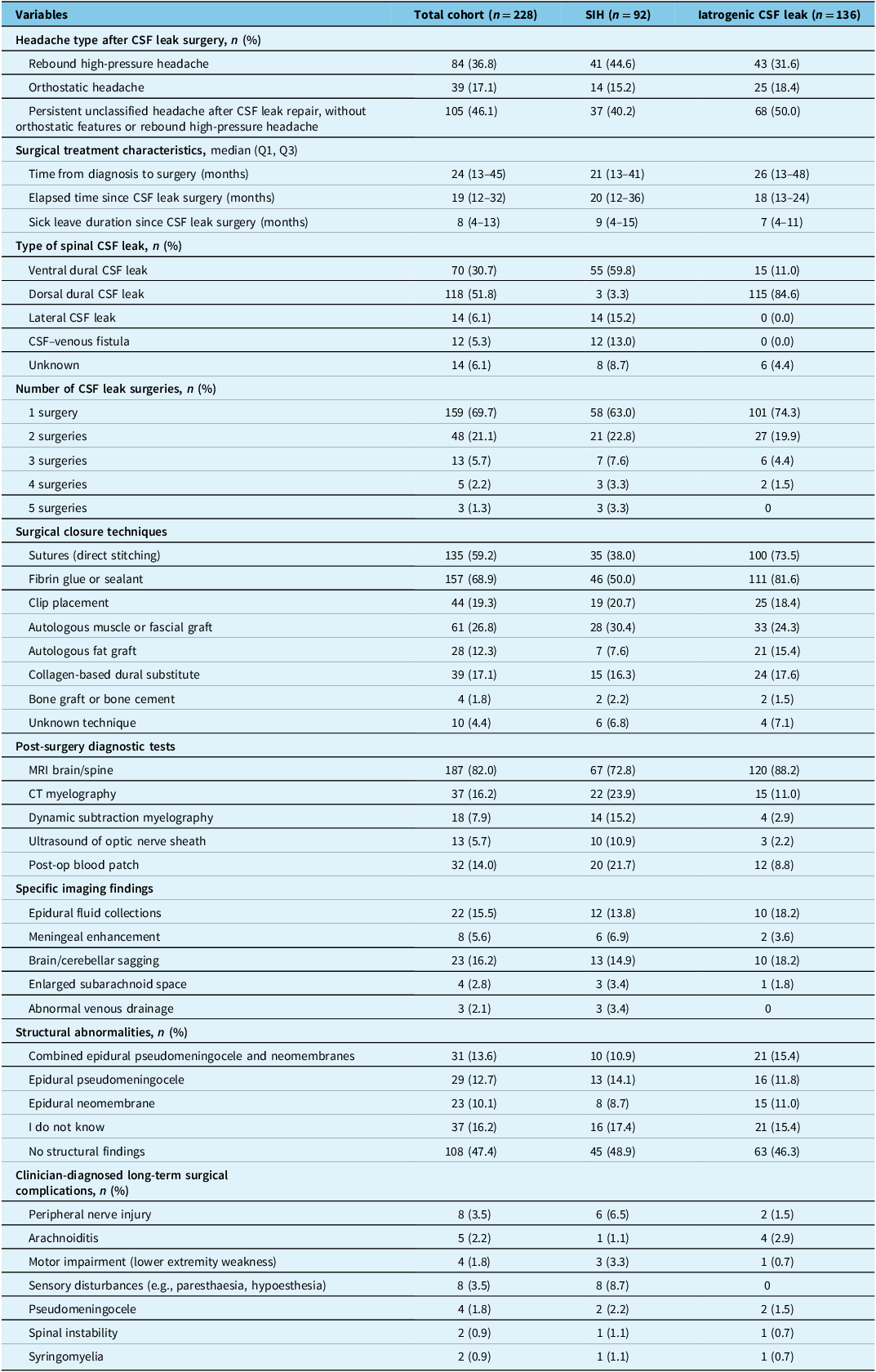
Surgical profiles and complications in spinal CSF leak patients by aetiology

Table 2. Long description
This table compares surgical profiles, postoperative headache types, imaging findings, structural abnormalities, and clinician-diagnosed long-term surgical complications between participants with spontaneous intracranial hypotension and iatrogenic CSF leaks. It includes time from diagnosis to surgery, time since surgery, sick leave duration, leak type, number of surgeries, surgical closure techniques, post-surgery diagnostic tests, specific imaging findings, structural abnormalities, and complications.
Note: Values are presented as absolute numbers (percentages). The extent of surgery indicates the number of spinal levels addressed during the primary surgical intervention. SIH = spontaneous intracranial hypotension; Q1 = first quartile; Q3 = third quartile.
Medications and treatments for CSF leak symptoms

Table 3. Long description
This table summarizes postoperative medications and therapeutic interventions used for CSF leak symptoms and compares patient-reported treatment responses between participants with spontaneous intracranial hypotension and iatrogenic CSF leaks. Treatments include acetazolamide, gabapentin or pregabalin, theophylline, tricyclic antidepressants, pain relievers, corticosteroids, beta blockers, post-surgery epidural blood or fibrin patches, occipital nerve blocks, therapeutic lumbar puncture, ventriculoperitoneal shunt, and GLP-1 receptor agonists. Responses are categorized as no improvement, slight improvement, significant improvement, complete resolution, or not applicable.
Note: SIH = spontaneous intracranial hypotension; GLP-1 = glucagon-like peptide-1.
*Therapeutic lumbar puncture refers to CSF drainage performed for pressure-related symptoms after CSF leak repair (e.g., suspected rebound intracranial hypertension).
Sample size
Since there are no reliable prevalence estimates for surgically treated patients with SIH or PDPH, a formal sample size calculation was not carried out. Instead, the study employed an exploratory approach, including all eligible responses available at the time of data collection in the final analysis.
Statistics
Descriptive statistics summarised patient demographics, comorbidities, surgical characteristics and postoperative outcomes. Categorical variables are shown as counts and percentages. Continuous variables are presented as means with standard deviations if normally distributed and as medians with interquartile ranges (IQRs) (Q1–Q3) otherwise. To assess changes in symptom severity before and after CSF leak surgery, paired t-tests were used on mean symptom scores. Symptom severity was rated on a numerical scale from 0 (no symptom) to 10 (maximum severity). For each symptom, mean values before and after surgery, standard deviations and mean differences (Δ) were calculated. For visualisation, boxplots showing medians and IQRs were utilised to illustrate the distribution of symptom severity scores better. All statistical analyses were conducted using SPSS version 28.0 (IBM Corp., Armonk, NY). For the creation of the presented figures, GraphPad Prism 10 for Windows, version 10.2.2 (341), was employed. A p-value < 0.05 was considered statistically significant. All items were fully completed by all participants, with no missing values in the dataset.
Results
A total of 1582 individuals accessed the online questionnaire. Of these, 302 started the survey. After applying the inclusion criterion of having undergone surgical treatment for a CSF leak, 254 respondents met the eligibility criteria. Twenty-seven individuals were excluded due to no prior surgery, and an additional 21 participants were excluded because they reported skull base CSF leaks, which were outside the study scope. Among the 254 eligible cases, 26 participants discontinued the survey after completing the initial screening questions and were excluded due to incomplete data. The final sample consisted of 228 fully completed responses, including 92 participants with SIH (40.4%) and 136 with iatrogenic CSF leaks (59.6%).
Table 1 shows key sociodemographic characteristics and aetiological factors by CSF leak type. Patients with SIH were older than those with iatrogenic leaks, with a median age of 42 years (Q1, Q3: 38, 46) compared to 38 years (Q1, Q3: 33, 43). The proportion of female participants was higher in the SIH group (88.0%) than in the iatrogenic group (73.5%). Educational attainment differed between groups: 40.2% of SIH participants had completed high school or some college, compared to 26.5% in the iatrogenic group. Conversely, fewer SIH participants had less than a high school education (1.1%) than those with iatrogenic leaks (14.7%). Income and marital status were largely similar across groups. However, notable differences appeared in medication use. Regarding aetiology, 92 participants (40.4%) were classified as SIH. Among those with iatrogenic leaks (136 participants, 59.6%), lumbar puncture was the most common cause (87 cases, 64.0%), followed by epidural anaesthesia (43 cases, 31.6%), discectomy (3 cases, 2.2%) and CT myelography-confirmed leaks (3 cases, 2.2%) (see Table 1 for details).
Table 2 summarises key surgical and imaging characteristics by CSF leak aetiology. The time interval from diagnosis of SIH or PDPH to surgical intervention was prolonged in both groups, with a median of 21 months (Q1–Q3: 13–41) in patients with SIH and 26 months (Q1–Q3: 13–48) in those with iatrogenic CSF leaks. The distribution of leak sites differed substantially between groups. In SIH, ventral dural leaks were the most frequent (59.8%), followed by lateral leaks (15.2%), CSF–venous fistulas (13.0%) and dorsal leaks (3.3%). In contrast, iatrogenic leaks were predominantly dorsal (84.6%), with fewer ventral leaks (11.0%) and no lateral leaks or CSF–venous fistulas observed. About half of all participants reported structural spinal abnormalities during surgery, though these findings were unevenly distributed between groups. Regarding postoperative headache types, RHPH was the most frequently reported subtype overall (36%), affecting 44% of SIH and 31% of iatrogenic patients. Orthostatic headache was less common, seen in 15% of SIH and 18% of iatrogenic cases. A variety of surgical closure techniques were used. The most common method overall was fibrin glue or sealant (68%), employed in 81% of iatrogenic and 50% of SIH cases. Direct suturing was also frequent, especially in iatrogenic cases (73% vs. 38% in SIH). Further details can be found in Table 2.
As shown in Table 3, various medications and therapeutic interventions were used to treat persistent symptoms following CSF leak surgery. Pain relievers were the most common medication across all participants. While most patients experienced some benefit, mainly slight improvement (50.4%), only a small percentage achieved significant relief (13.6%), and complete symptom resolution was rare (1.3%). Among pharmacological options, acetazolamide (Diamox) was the most frequently prescribed drug, used by 37.7% of the overall cohort, with 46.7% in the SIH group versus 31.6% in iatrogenic cases. Notably, 53.5% of SIH patients reported substantial symptom relief, compared to only 27.9% in the iatrogenic group. Tricyclic antidepressants ranked as the second most used class (43.9% overall), with considerably higher usage in the SIH group (67.4%) than in patients with iatrogenic leaks (27.9%). However, their effectiveness was limited: over 85% of users in both groups reported no noticeable improvement. Regarding procedural interventions, epidural blood or fibrin patches after surgery were reported by 43.4% of participants, including 66.3% of the SIH group compared to 27.9% in the iatrogenic group. More than half of these patients did not experience improvement. Other targeted treatments included occipital nerve blocks (used in 17.1% overall), which generally resulted in slight improvement, especially in the SIH group. Therapeutic lumbar punctures were performed in 13.6% of cases, with higher rates of significant improvement (38.7%) compared to other treatments, notably among iatrogenic patients (44.4%). Further details about medications and therapeutic interventions can be found in Table 3.
Figure 1 shows the self-reported symptom trajectory after CSF leak surgery in people with SIH and iatrogenic CSF leaks. Complete symptom resolution was uncommon overall, especially within the first few months after surgery. Fewer than 1 in 10 patients with SIH (8.7%) reported full recovery within 6–12 months, compared to only a small proportion of iatrogenic cases (3.7%). Resolutions within the first month were rare (≤1% in both groups), and even after two years, complete recovery was still uncommon. In the SIH group, the most common outcome was significant but incomplete improvement, reported by about two in five participants (39.1%). Conversely, the iatrogenic group more often reported slight improvement with fluctuating symptoms, affecting over one in three patients (36.0%). This pattern was less frequent among SIH cases (around one in five). Outcomes indicating minimal change were reported by just under 9% of participants across both groups. Notably, 1 in 10 patients in each group described an initial improvement followed by deterioration. A small minority (around 3–4%) experienced worsening symptoms after surgery.
Key differences between RHPH and orthostatic headache phenotypes are shown in Figure 2. Pressing pain was the most commonly reported type in both groups, but it was slightly more frequent in the RHPH (75%) than in the orthostatic group (69.2%). However, sharp pain was notably more common in orthostatic headaches (33.3%) compared to the RHPH group (11.9%). The pulling sensation was also significantly more frequent in orthostatic cases (59.0%) than the RHPH group (14.3%). Burning and pulsating pain were more often reported in orthostatic headaches (23.1% and 17.9%, respectively) than in the RHPH group (9.5% and 22.6%). Occipital and neck pain appeared more prominent in the orthostatic group, with 66.7% reporting pain at the back of the head and 56.4% in the neck region. In contrast, the RHPH group reported these locations less frequently (back of head: 47.6%, neck: 38.1%). The forehead and temporal regions were similarly reported in both groups (∼35–44%), while shifting or diffuse pain patterns were slightly more common in the RHPH group (shifting: 49.9%, whole head: 31.0%) compared to the orthostatic group (shifting: 28.2%, whole head: 28.2%).
Figure 3 shows the severity ratings (0–10 scale) before and after CSF leak surgery. Headache pain when lying down (Panel A) decreased from a mean of 3.7 before to 2.5 after surgery (Δ = 0.88; p < 0.001). Headache pain when standing (Panel B) lowered from a mean score of 7.9 before surgery to 3.8 after surgery (Δ = 4.13; p < 0.001). Brain fog (Panel J) reduced from a mean severity of 6.7 to 5.3 (Δ = 1.39; p < 0.001). Tinnitus (Panel D) mean score declined from 6.0 to 4.1 (Δ = 1.93; p < 0.001). Dizziness (Panel E) dropped from a mean of 5.8 to 3.6 (Δ = 2.13; p < 0.001). Neck pain (Panel H), with a preoperative mean of 5.8, decreased to 4.1 postoperatively (Δ = 2.77; p < 0.001). Further details are available in Figure 3.
Discussion
This study presents the long-term postoperative self-reported outcomes of 92 patients who underwent surgery for SIH and 136 patients with iatrogenic CSF leaks. The findings emphasise the complexity and variability of postoperative recovery for these two conditions and demonstrate that a significant number of patients continue to experience persistent symptoms.
In our cohort, 36.8% of patients reported experiencing RHPH, with a higher frequency observed in those with SIH (44.6%) compared to patients with iatrogenic CSF leaks (31.6%). Clinically, RHPH involves a paradoxical shift in CSF dynamics that typically develops hours to weeks after treatment. Patients often describe a change from orthostatic pain, which worsens when standing, to a pressure-related headache that gets worse when lying down. Reference Jafari, Karaminia and Togha18 Recognising this transition is clinically important, as early postoperative RHPH symptoms can overlap with those of persistent intracranial hypotension, potentially leading to misdiagnosis and inappropriate treatment decisions. Reference Parikh19 The reported frequency of RHPH varies widely in the literature and is predominantly described in the context of SIH. A large retrospective study from a single centre found an incidence of 27.4% after SIH treatment and demonstrated a significant association between venous sinus stenosis on magnetic resonance venography and RHPH occurrence, suggesting impaired cerebral venous drainage as a contributing mechanism. Reference Schievink, Maya and Jean-Pierre20
Another possible reason for the higher incidence of RHPH in our self-reported cohort might be the lack of a standardised definition, given that the International Classification of Headache Disorders, 3rd edition does not specify a diagnostic category for RHPH. 21 Similarly, although the multidisciplinary consensus guideline for SIH diagnosis and treatment describes RHPH as a post-procedural syndrome characterised by temporary pressure elevation, it does not offer a clear clinical-diagnostic operational definition. Reference Cheema, Anderson and Angus-Leppan3 In the absence of consensus, Schievink et al.’s (2019) Reference Schievink, Maya and Jean-Pierre20 definition has become established in clinical practice, characterising RHPH by three main criteria: reversed orthostatic headache after CSF leak sealing, response to acetazolamide and exclusion of competing causes. This definition and the response to acetazolamide were applied in a cohort of 113 SIH patients, with 25 of 31 improving within 6 weeks and 4 more within 3 months. However, treatment was not universally effective; one patient needed a ventriculoperitoneal shunt after 14 months, and another remained dependent on acetazolamide at 15 months. Our self-report findings extend these observations by demonstrating substantial heterogeneity in treatment response, with only 40.7% of patients reporting significant improvement, primarily among those with SIH (53.5%) compared to iatrogenic cases (27.9%). The relatively high rate of treatment resistance observed in our self-report cohort may reflect a population with more chronic or severe disease, particularly among SIH patients with prolonged symptom duration before surgery, or may indicate misclassification of headache phenotypes. Some individuals labelled as having RHPH may in fact experience disturbed CSF dynamics with alternating periods of intracranial hypo- and hypertension. Reference Parikh19 This diagnostic challenge stems from the fact that RHPH mechanisms remain poorly understood, and clinical diagnosis sometimes relies primarily on patient-reported symptoms without systematic objective testing. Reference Jafari, Karaminia and Togha18 The self-reported treatment resistance observed in this cohort may reflect complex pathophysiological processes, including partial CSF flow obstruction, altered venous outflow and altered CSF reabsorption patterns. Reference Mehta, Cheema, Davagnanam and Matharu22 Such changes may cause a transient compensatory increase in CSF production that requires time to normalise after treatment, Reference Jafari, Karaminia and Togha18 potentially explaining the delayed or incomplete therapeutic responses observed in this group of patients.
Beyond RHPH, the persistence of symptoms reflects a multifactorial pathophysiology that extends well beyond mechanical treatment failure. Potential mechanisms include persistent cryptogenic leaks, Reference Fermo10 recurrent leaks Reference Zogheib, Hanna, Daou, Mjaess and Sleilati23,Reference Schievink, Maya and Riedinger24 and the development of central sensitisation. Reference Fermo10 Consistent with this complexity, our findings indicate that 17.1% of patients still reported orthostatic headaches after surgery. Although only 7.0% of patients reported having Postural orthostatic tachycardia syndrome (POTS) prior to surgery, the potential overlap between the two conditions complicates differential diagnosis. For instance, a retrospective study Reference Graf, Fernandes Santos and Ulrich25 showed that all patients diagnosed with SIH meet the diagnostic criteria for POTS. Although every SIH patient reported orthostatic headaches, only 27% of those with POTS experienced similar symptoms. While persistent orthostatic headaches are probably caused by incomplete repair of CSF leaks or postoperative disruptions in CSF dynamics, in some patients, an underlying autonomic dysfunction might also contribute to the complexity of symptoms.
These symptoms illustrate the recovery process following surgical treatment. Only 13.6% of SIH patients and 5.8% of iatrogenic cases achieved complete symptom resolution within a year. While 39.1% of SIH patients and 30.1% of iatrogenic cases reported significant symptom improvement, nearly half still experienced clinically meaningful complaints. The varied postoperative courses of individual symptoms can be explained by their underlying pathophysiology: The greatest improvement was seen in orthostatic headaches when standing (Δ = 4.13), reflecting effective normalisation of CSF pressure. Non-specific symptoms like fatigue (Δ = 1.30), concentration difficulties (Δ = 1.49), brain fog (Δ = 1.39) and tinnitus (Δ = 1.93) showed only moderate improvement. This pattern suggests that symptoms more directly related to CSF-pressure abnormalities may improve more readily after repair, whereas neurocognitive symptoms, fatigue, tinnitus and sensory complaints may persist due to functional, neuroplastic, inflammatory or sensitisation-related mechanisms. This slower recovery probably results from functional, neuroplastic and inflammatory changes that go beyond the mechanical cause. Reference Volz, Lahmann and Wolf7,Reference Wolf, Volz and El Rahal26
These findings differ from other research. For instance, among a group of 69 SIH patients, Reference Häni, Fung and Jesse27 52.2% experienced complete improvement, 42.0% had partial improvement and 5.8% saw no change after surgery. The most important factor predicting full recovery was the length of time from symptom onset to surgery. Patients who had surgery within 12.4 weeks were significantly more likely to achieve complete remission compared to those with longer delays (71.4% vs. 37.5%; p = 0.016). This probably explains the less favourable results observed in our cohort, where the median duration from symptom onset to surgery was 24 months (IQR: 13–45), well above the threshold. Such prolonged delays might lead to secondary structural and functional changes, such as neuroplastic maladaptation or persistent inflammatory processes, potentially impeding postoperative recovery despite successful CSF leak repair. Reference Volz, Lahmann and Wolf7,Reference Wolf, Volz and El Rahal26 However, for PDPH, while one might assume similar timing-dependent effects, no comparable data exist examining the relationship between symptom duration and treatment outcomes.
Another study Reference Volz, Fung and Wolf28 reported consistent improvements in a group of 80 SIH patients, where the average six-item Headache Impact Test-6 scores decreased from 65 before surgery to 49 at 3 months and maintained this improvement over 12 months. However, 23% of patients still experienced orthostatic headaches one year after surgery. Discrepancies might be due to methodological differences, particularly the significant decline in follow-up rates. While 79% of participants completed the follow-up at 14 days, only 39% did so at 12 months. This considerable dropout was acknowledged but not quantified or methodologically addressed. It is probable that patients who fully recovered ceased participating because they had no symptoms, while those experiencing ongoing issues might have withdrawn out of frustration or perceived it as futile.
This complexity also affects patients’ postoperative burden and treatment requirements. The median sick leave lasted eight months, and about 20% of participants remained on medical leave at assessment. Besides ongoing symptoms, long-term surgical complications were noted: nearly 15% of patients suffered sequelae such as peripheral nerve injuries, sensory disturbances like paraesthesia or hypoesthesia, arachnoiditis, motor impairments in the lower limbs and occasionally spinal instability. In ongoing therapy, most pharmacological interventions, such as gabapentin, tricyclic antidepressants, theophylline and corticosteroids, showed only limited effectiveness. Postoperative epidural patches were administered in 99 of 228 patients (43.4%), occurring more frequently in the SIH group (66.3%) compared to iatrogenic cases (27.9%). Despite this, the clinical benefit was limited; complete resolution was not achieved in any case, and only 10.1% reported significant improvement, 6.6% in the SIH group and 15.8% in iatrogenic cases. Most patients reported only slight improvement (33.3%) or no improvement at all (51.5%). In contrast, occipital nerve blocks, although used less often, were administered to 39 patients (17.1 %), more frequently in the SIH group (27.2 %) than in iatrogenic cases (10.3 %). While overall complete resolution was rare (2.6 %), a subset of SIH patients (4.0 %) reported full relief, suggesting a role in cases involving central sensitisation Reference Hong, Lee and Lee29 or cervicogenic pain. Reference Caponnetto, Ornello and Frattale30 Therapeutic lumbar punctures, especially in RHPH, proved effective primarily in the group of iatrogenic CSF leaks, with around 40% reporting significant symptom relief. Of particular interest are initial experiences with experimental treatment strategies such as glucagon-like peptide-1 receptor agonists. These were tested in a small subgroup (3.5%) and generally resulted in only minor improvements among individuals with RHPH.
Overall, these findings emphasise the limited effectiveness of isolated drug treatments after surgical repair of CSF leaks and highlight the importance of tailored, multimodal approaches, especially in cases of delayed or partial recovery.
This study has several limitations. First, its cross-sectional design means that the analyses are descriptive and do not allow causal conclusions about the effects of surgery, symptom duration or postoperative treatments. Long-term prospective research is required to confirm these findings. Recruiting participants through online support groups may introduce sampling bias, as individuals with persistent symptoms or more complex disease courses may be more likely to participate, while those who have fully recovered may be underrepresented. This self-selection could result in an overestimation of long-term symptom burden. Furthermore, the use of an English-language questionnaire excluded non-English speakers, thereby limiting the generalisability of the findings.
All information was based on self-reported data, which may be subject to recall or reporting bias. Although participants were encouraged to consult medical records when uncertain, misunderstandings of clinical terminology, such as CSF leak subtypes or surgical details, cannot be fully excluded. However, in chronic and rare conditions, patient-reported outcome measures are a critical source of information, as patients often represent the most reliable informants of long-term symptom trajectories and functional impact. Reference Slade, Isa and Kyte31,Reference Schoth, Radhakrishnan and Liossi32 In addition, not all structural abnormalities may have been consistently documented in the surgical or radiological reports accessible to participants, potentially leading to incomplete or imprecise classification of anatomical findings and limiting conclusions regarding structure–symptom relationships.
Conclusion
This cross-sectional study demonstrates that a substantial proportion of patients continue to experience clinically relevant symptoms long after surgical repair of spinal CSF leaks, regardless of aetiology. While orthostatic headache improves most consistently, non-specific symptoms such as fatigue, cognitive impairment and tinnitus often persist and show only partial recovery. Treatment responses after surgery are heterogeneous, with limited effectiveness of most pharmacological and interventional approaches. These findings underscore the need for structured, multidisciplinary and long-term follow-up strategies after CSF leak surgery, as well as prospective studies to better define recovery trajectories and optimise postoperative management.
Acknowledgements
We sincerely thank everyone who took part in this study by completing the survey and sharing their personal experiences. Their willingness to provide valuable insights made this research possible. We are also very grateful to the many patient organisations that helped distribute the survey and connect us with a broad and diverse international group affected by spontaneous or iatrogenic CSF leaks. Special thanks to the Spinal CSF Leak Foundation in the United States (https://spinalcsfleak.org), the CSF Leak Association in the United Kingdom (https://csfleak.info), CSF Leak Canada (https://spinalcsfleakcanada.ca) and the Spanish-speaking Asociación AHIFUGA (https://www.somospacientes.com/ahifuga). We also appreciate the support from several Facebook communities, including CSF Leaks International, Iatrogenic Lumbar Puncture Leakers, the German-speaking Liquorunterdrucksyndrom and the Scandinavian CSF Leak Support forum. These groups not only helped distribute the survey but also continue to provide emotional support, share knowledge and advocate for affected individuals worldwide. Their involvement was essential to making this study happen, and we sincerely thank them for their contributions.
Author contributions
AK conceived and designed the study, supervised data collection, analysed and interpreted the data, drafted the manuscript and approved the final version of the manuscript. CI contributed to study design, interpretation of results, critical revision of the manuscript and approved the final version of the manuscript. CU contributed to study design, interpretation of results, critical revision of the manuscript and approved the final version of the manuscript. FD contributed to study design, interpretation of results, critical revision of the manuscript and approved the final version of the manuscript. All authors agree to be accountable for all aspects of the work.
Funding statement
This study received no specific grant from any funding agency in the public, commercial or not-for-profit sectors.
Competing interests
The authors declare that the research was conducted in the absence of any commercial or financial relationships that could be construed as a potential conflict of interest.
Data availability statement
The datasets generated and analysed during this study are available from the corresponding author upon reasonable request.
Declaration of generative AI and AI-assisted technologies in the writing process
During the preparation of this manuscript, the authors used OpenAI’s ChatGPT, accessed at https://chat.openai.com in 2025, to improve the readability, language and organisation of the text. No AI tool was used to generate data, analyse data, create figures or draw scientific conclusions. After using this tool, the authors reviewed and edited the content and take full responsibility for the final content of the manuscript.
Ethical standards
The study protocol was reviewed and approved by the Ethics Committee of the Medical University of Vienna (approval number 1111/2025). Informed consent was obtained from all participants.




 Open access

