


On 4 February 1931, Minister Lindolfo Collor was honoured with a lunch commemorating his forty-first birthday. He was the head of the Ministry of Labour, Industry and Commerce (Ministério do Trabalho, Indústria e Comércio – MTIC), which had been formed a few months earlier. The creation of that Ministry was one of the first acts of the “Revolution of 1930”, which, using an anti-oligarchic and nationalist discourse, overthrew Brazil’s First Republic (1889–1930) and installed Getúlio Vargas as president. Due to its importance, it was known as the “Ministry of the Revolution”, and its aim was to create laws that would solve the “social question” as well as to pacify Brazil’s labour unions by offering substantial concessions and, at the same time, bringing them under the control of the state, thus eliminating tendencies considered “subversive”, such as anarchism or communism.
Lindolfo Collor is honoured with a birthday lunch, 4 February 1931. From left (seated): Evaristo de Moraes, Mário Ramos (3rd), Hermínia Collor, Lindolfo Collor and B. de Mello (7th); (standing): Bruno Lobo, Nascimento and Silva, Carlos Cavaco (5th), Horácio Carter (7th), Heitor Muniz (9th), Joaquim Pimenta (12th) and Agripino Nazareth (13th). CPDOC/FGV Archives, used by permission.
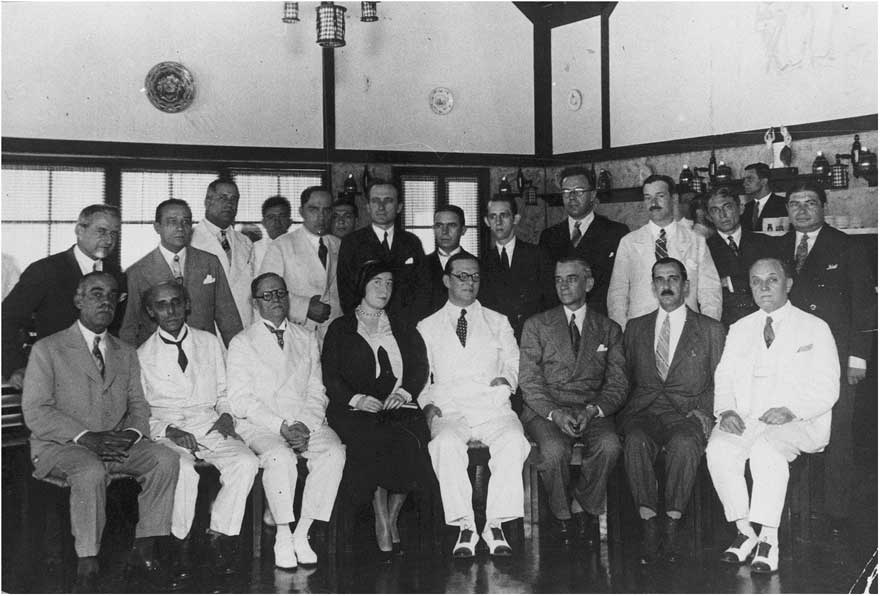
In the photograph documenting his birthday tribute, Collor appears beside his wife, Hermínia, and is surrounded by his Ministry staff, including a number of socialist militants who had played an important role in the workers’ movement in the last decades of the nineteenth century and the first decades of the twentieth (figure 1): Evaristo de Moraes, Carlos Cavaco, Joaquim Pimenta, and Agripino Nazareth. Born between 1871 and 1886, they came from different states in Brazil – Rio de Janeiro, Rio Grande do Sul, Ceará, and Bahia, respectively – each with its own socio-political characteristics. All four men had a biography that included not only militancy, but also active and leading participation in strikes, mobilizations, and even attempted uprisings. How did these figures, who had not hesitated at times to get involved in radical political action, come to be at this place, serving as high-ranking officials to the new Minister? Of course, a trajectory from “activist” or even “street fighter” to “government bureaucrat” is nothing unusual in the history of the labour movements throughout the world, especially in the period spanning the late nineteenth century and the first decades of the twentieth century. What is remarkable in this case, however, is that these socialists were involved in a regime that, although professing a rhetoric of “revolution” and engaging in a series of social reforms, eventually veered to the right (giving way, in 1937, to the Estado Novo with its openly fascist leanings). Furthermore, these actors saw their different roles not as contradictory but in harmony with each other. At the same time, as peculiar as these trajectories were, these men should not be seen as overly exotic converters: Activists and proponents from other political-ideological currents (reformist unions, cooperative unions, Catholic unions, nationalist military personnel) supported the new regime as well (at least initially), especially the new model of relations between the state and the unions introduced after 1930. In this article, we will examine the careers of six socialists who had leading roles in regional context during the first decades of the twentieth century and who became involved in national politics after 1930, underscoring their differences and similarities in order to better understand the various and changing ways of being a socialist: their varied “styles” of doing political work, the main ideas they upheld, as well as their role in the development of Brazilian labour laws (which was one of the most important outcomes of the changes ushered in by the 1930 “revolution”).
According to their opponents, particularly those among anarchists and communists, as well as some historians, the leading socialists during the First Republic (1889–1930) and particularly especially those playing a role in the new regime after 1930 were “sell-outs”; that is, people who collaborated with bourgeois governments and betrayed the workers’ cause, especially the cause of revolution, in exchange for favours from the state. Following that line of interpretation – which, obviously, was based on the assumption that the “true” workers’ movement was intrinsically revolutionary – the socialists had failed to provide a solid, viable political alternative for Brazilian workers during the Republic and after. The fact that major socialist leaders signed onto Vargas’s project after 1930Footnote 2 supposedly confirmed that view by revealing their ideological weakness and opportunism vis-à-vis a regime that, despite its apparent friendliness towards workers and their demands, was essentially alien to their cause.Footnote 3 More recently, however, several authors have shown that this interpretation falls short of the mark, demonstrating that numerous workers followed and identified with the Brazilian socialists and their orientation towards reform. These authors point to the fact that socialist activists exerted a strong influence on several unions, led major strikes, sometimes even uprisings, published newspapers that were widely read among workers, and sought to form a workers’ party.Footnote 4
This article argues that, by following the careers of some of these militants, we can gain a better understanding of their experiences and expectations. Methodologically, it connects to a longer research tradition in labour history of biographical studies, emphasizing in particular one of the advantages that such an approach offers: It can serve as a means to break with some of the historical and political stereotypes that emerged from a political history of ideas and organizations by pointing to the nuances, contradictions, and counterintuitive facts that are frequently found in individual biographies. While biographical studies are realised in several ways – from individual biographies, to biographical dictionaries, to prosopographic studiesFootnote 5 – this article is inspired by a tradition that both reconstructs biographies in their individual particularity and attempts to gain wider results by comparing the trajectories of several actors (albeit a qualitative comparison, as such groups of actors would be too small and varied to attempt any kind of quantifying prosopographic analysis).Footnote 6 Thus, we wish to advance the following arguments: Firstly, that “socialism” in the Brazilian context was a label that could claim a certain ideological-political coherence and function as a realm of manifold political practices, especially in the different regions of the country. There were several ways of being a socialist during Brazil’s First Republic. Secondly, despite that diversity, the militants analysed here shared a number of ideas and had certain forms of intervening in common. Thirdly, for these activists, joining the Vargas regime was a conscious political choice that was consistent with their previous careers, and not a moment of “conversion”, “renunciation”, or even a “betrayal”.
Socialists of the First Republic: A Generation?
Although they were born in different states, came from diverse social backgrounds, lived in different cities, studied at various institutions, and practised their professions in a variety of settings, the paths of the six individuals analysed in this article crossed on several occasions, either physically or at least through ideas published in newspapers. They shared certain ideas and nurtured common political concerns, even if they disagreed about the course they should take at certain times. They sometimes joined forces with or distanced themselves from other activists from a wide range of political-ideological currents, getting involved in a variety of movements and taking on different commitments and positions over the course of time. In the following pages, we will provide a brief overview of their social backgrounds, education, and professional and political activities. In doing so, we address one of the standard questions that arises during the analysis of any group of actors, namely whether they belonged to the same “generation”.Footnote 7
Francisco Xavier da Costa was born on 3 December in the early 1870s (exact year is unknown), in Porto Alegre, the state capital of Rio Grande do Sul, the southernmost state in Brazil. At that time, Rio Grande do Sul was characterized by cattle raising, a relatively small number of slaves, and a strong presence of European immigrants. His father seems to have been one of the poor free black men who had fought in the Paraguayan War (1864–1870), and all indications are that his mother worked all her life within the domestic sphere. Francisco was racially categorized as pardo (of mixed ethno-racial ancestry) and must have encountered the racial and social barriers that limited the lives of free but low-income people of colour at the time. When he was eleven, his father died, and he had to go to work to support his mother and sisters. He found a job as a lithographer’s apprentice in a German-owned printing shop in Porto Alegre. While there, he learned his employers’ and co-workers’ language, which facilitated his access to newspapers published in German both in Europe and in Rio Grande do Sul, where there were large numbers of German-speaking immigrants, including socialists.Footnote 8
Antonio Evaristo de Moraes was born the son of Basílio Antonio and Elisa Augusta de Moraes on 26 October 1871, in Rio de Janeiro, then the capital of the Brazilian Empire. From 1883 to 1886, he received a grant to complete his secondary education at Colégio São Bento, to which he later returned as a history teacher. He also worked as a journalist for the Gazeta Nacional and Correio do Povo newspapers. Thanks to those activities, he managed to support himself and his mother after his father abandoned the family in 1887. He practised as a lay lawyer for many years and gained a reputation as a criminal defence attorney before obtaining a Law degree in 1916. A mestiço (another of the categories indicating mixed ethno-racial ancestry), he had already taken part in the campaigns to abolish slavery and establish the Republic. While facing colour and class prejudice similar to that experienced by Xavier da Costa, he made himself publicly visible as a defender of the socialist cause in the press and in trade unions as well as the interests of individual workers at the courts.Footnote 9
Custódio Carlos de Araújo, whose childhood nickname was “Cavaco”, was born on 18 September 1878, in Santana do Livramento, located on the Brazil-Uruguay border. His father was a decorated soldier and, according to documents, his mother was a “housewife”, who, after her husband’s death, started to work as a seamstress to support her children. Cavaco joined the military at a very young age, but was forced to quit due to what was seen as his unruly, bohemian behaviour. He also devoted himself to literature, influenced by the revolutionary romanticism of Victor Hugo and the regionalism of the Argentinian José Hernández, who had developed a style and a set of themes attuned to the idiosyncrasies of the Rio de la Plata basin. Cavaco had a reputation as a distinguished orator, which helped advance his career as a lawyer. He arrived in the state’s capital, Porto Alegre, in 1904, seeking to join the social circles of the local literary scene. During that period, he published his writings in books and newspapers.Footnote 10
Agripino Nazareth was born on 24 February 1886, in Salvador, the capital of Bahia, a state that was very different from the aforementioned Rio Grande do Sul: Located in the tropical north-east, its coastal regions had long been one of the centres of the slave-based production of sugar cane and other cash crops. Agripino Nazareth, too, was the son of a decorated Brazilian Army officer, while his mother was listed as homemaker. He studied law at universities in Recife, Rio de Janeiro, and São Paulo. In May 1911, he was appointed Chief of Police for the Department of Alto Juruá, in the territory of Acre, located in the Amazon region. He achieved this position thanks to his friendship with Pedro Avelino, a politician originally from the state of Rio Grande do Norte (located in the north-east of Brazil), who had been appointed Mayor in Alto Juruá.Footnote 11 The following year, he returned to Rio de Janeiro, then the nation’s capital, and began working for the newspaper A Época Footnote 12 and teaching at the Free School of Law, Pharmacy, and Dentistry. It was through his contributions to A Época, that he engaged in a vigorous struggle with the representatives of the dominant oligarchies of Brazil. Meanwhile, he also established close ties with figures linked to the dissident elites.Footnote 13
Maurício Paiva de Lacerda was born in Vassouras, Rio de Janeiro on 1 June 1888. His mother worked within the domestic sphere and his father was a lawyer and politician, who held several elected posts after the early years of the Republic, and later became a magistrate. Lacerda graduated from the Rio de Janeiro Law School in 1909. He and Agripino Nazareth (who obtained his Law degree in São Paulo in 1909) had been classmates in Rio. Lacerda was elected state congressman in 1910 and federal congressman in 1912, 1915, and 1918 as a member of the Fluminense (Rio de Janeiro State) Republican Party (Partido Republicano Fluminense), a party professing republican ideals winning numerous votes from workers, but which was dominated by Rio’s agrarian elites. He held three elected offices simultaneously – congressman as well as city councilman (1913–1923) and Mayor (1915–1920) of the municipality of Vassouras (located in the interior of the state of Rio de Janeiro and at the time dominated by coffee production). He served as an elected city councilman of the Federal District (then the city of Rio de Janeiro) whilst in prison in 1926,Footnote 14 and he was re-elected to the same post in 1928.Footnote 15
Joaquim Pimenta was born on 13 January 1886 in Tauá, in the state of Ceará (located further north-east, with a predominantly agrarian economy, though it had never been one of the centres of slave-based plantation labour). The son of a “housewife” and an impoverished pharmacist and merchant, he was a sexton and began his studies under a priest-tutor. He moved to Fortaleza, the state capital, where he made a living from various forms of manual labour and teaching in a primary school. While in that city, he enrolled in the Law School, where he first came into contact with socialist ideas, questioned elements of his Catholic upbringing, and worked for several newspapers as an editor and contributor. In 1909, he moved to Recife, the capital of Pernambuco (historically, one of the prototypical areas of sugar cane plantations and slave labour), enrolling in the Recife Law School, an institution where, as we have seen, Agripino Nazareth had been enrolled for the first years of the same course of study. Pimenta graduated in 1910 and worked as the public prosecutor in Recife in 1911. He had to quit due to the political conflicts involving the dominant oligarchy and the opposition, which he had joined. He was appointed Secretary of the Public Education Inspectorate in 1912, and was a professor at the Law School in 1915. In the 1910s, he helped found trade unions and socialist parties, and was the main leader of the 1919 general strike in Recife. In 1924, he moved to Rio de Janeiro and became a commissioned civil servant in the Ministry of Justice during Artur Bernardes’s presidential term (1922–1926). Bernardes governed in a state of siege and launched several campaigns to persecute Lacerda, Nazareth, and other socialists, as well as communist and anarchist activists.Footnote 16
The figures analysed here were all born within a period of a little less than twenty years (from the early 1870s to 1888). Despite the significant chronological difference, they all went through circumstances that the French historian Jean-François Sirinelli has labelled as “inaugural”,Footnote 17 i.e. formative experiences shared by the actors in question or events that have a fundamental long-term impact, also on those who were born shortly after the events themselves, such as the abolition of slavery (1888) and the proclamation of the Brazilian Republic (1889). Xavier da Costa, Moraes, and Cavaco (either young men or coming of age in the early republic) had high hopes for the new regime. They all became labour activists in the late nineteenth century and the first decade of the twentieth. Nazareth, Pimenta, and Lacerda, the younger members of the group, who had been born shortly before the end of the old regime, played a leading role in the workers’ struggles during the early twentieth century, when the Republic was increasingly controlled by the “oligarchies”, a term that was widely used at the time as a political denunciation and indicates the stable alliance between state elites and varying groups of landed property (of different regional origin and competing among each other).
Apart from their similarities, however, it is also important to stress the differences among then, especially their different social origins. Xavier da Costa and Moraes came from working-class or poor backgrounds, while Cavaco, Nazareth, Pimenta, and Lacerda were from more-or-less well-off middle-class groups. For Moraes, Cavaco, Nazareth, Pimenta, and Lacerda, a legal education was a key to their upward social mobility, bringing them into contact with new social ideas, allowing them to make a living, and to participate in politics. Xavier da Costa represents something of an exception in this regard: in his case, it was the profession of lithographer that offered him access to other milieus and ideas. In the case of the poorer of six, the death or absence of their father forced them to seek ways of making a living while they were still young. In terms of gender roles, however, they all appear to have grown up in conventional families, their fathers regarded as “breadwinners”, working in the public sphere, and their mothers as “homemakers”, working most of the time in the private space of their homes (unless their husbands died or abandoned the families).
With regard to Xavier da Costa and Moraes, it is important to note that both were of African descent and born before the abolition of slavery. This must have had a significant impact on their lives, not least their careers, which were marked by serious limitations and racial prejudice, on the one hand, and strenuous efforts to improve their social status on the other. Whatever the similarities and differences in their backgrounds and trajectories, the common generational position of the six socialists and their involvement with the emerging labour movements meant that they shared similar concerns and agendas, marked, in many ways, by the attempt to transform the variegated social struggles and localized, often small-scale organizations into larger political projects.
Working with Unions and Forming Political Parties
The figures analysed here were politically socialized in an epoch in which “labour” in Brazil had already begun to constitute an actor in its own right, but in which no larger political parties claiming to represent labour existed yet. They thus devoted a good part of their activism to working with labour unions and attempting to form workers’ parties that could elect candidates who should be genuine representatives of workers, capable of fighting for a better living and working conditions, while advancing the gradual and peaceful introduction of socialism – though not all socialists (both among the six analysed here and in general) opted for such gradualism, especially in the earlier years. The degree of radicalism in their words and actions varied considerably, determined to a great extent by the circumstances, i.e. by the political environment in the region they were active in and the opposition they encountered from the dominant classes and the state. Therefore, on some occasions, they went so far as to support violence as a means of overthrowing capitalism. Until the mid-1920s, their main competitor within the labour movement were different currents of anarchism, which were also seeking to influence the unions, but which rejected party politics as a form of political struggle, preferring direct action, general strikes, and the (self-) education of workers in terms of a rationalist worldview.
The six protagonists thus acted in a world marked by a myriad of smaller organizations that had manifold overlaps among them, yet no central point of crystallization, despite some unsuccessful attempts to establish genuinely national organizations. Each region saw a specific “mix” of traditions and organizations, often greatly shaped by the presence of communities of European immigrants, but also the regional socioeconomic structure. Rio Grande do Sul was a typical case in this regard. Xavier da Costa, for example, from the last decade of the nineteenth century, took part in organizations representing typographers, as well as socialist-inspired associations such as the Liga Operária Internacional (International Workers’ League, 1895) and the Partido Socialista do Rio Grande do Sul (Rio Grande do Sul Socialist Party, 1897). He was one of the leaders of the Congresso Operário do Rio Grande do Sul (Rio Grande do Sul Workers’ Congress), which, for a limited time in 1898, and in a political project quite remarkable in comparison with the labour history of most other countries, brought together socialists and anarchists.Footnote 18 After a period of decline caused by internal disputes, the Porto Alegre workers’ movement reorganized in 1905, through the formation of the Partido Operário Rio-Grandense (Rio Grande Workers’ Party), of which Xavier da Costa was one of the leaders. The party’s manifesto is a document of a continued (and quite intriguing) compromise between anarchist and socialist ideas: it did not advocate taking over the state, but it did call for the participation of “true” representatives of the workers in its operations and decisions. With such a strategy, the document explained, Brazil could avoid a violent solution to social problems, similar to what had taken place in Europe.Footnote 19 During that period, Xavier da Costa enjoyed much prestige among the city’s numerous labour associations (including both union organizations and more political projects), such as the Confederação Obreira (Worker’s Confederation), of which he was president, and the União dos Trabalhadores em Madeira (Wood Workers’ Union) and the União dos Empregados em Padaria (Bakery Employees’ Union), in which he was considered a “moral authority”.Footnote 20 He was later involved in further (but, again, short-lived) attempts to launch higher-level and unifying workers’ associations such as the Partido Socialista de Porto Alegre (Porto Alegre Socialist Party, 1908) and the Confederação Geral dos Trabalhadores (General Confederation of Workers, 1911).
Further north, in Rio de Janeiro, it was a similar story for Evaristo de Moraes. By 1890, he had helped found the Partido Operário Nacional (National Workers’ Party), created in Rio de Janeiro under the leadership of the typographer Luiz da França e Silva. Since at least 1903, Moraes had used the pages of the Correio da Manhã newspaper to deliver a staunch defence of the right to strike and organize trade unions, as well as the need for labour laws in Brazil.Footnote 21 During that time, he also worked as a lawyer for unions of shoemakers, coachmen, and carters, and several categories of workers in the Rio de Janeiro port complex, helping release several workers who had been arrested for taking part in mobilizations.Footnote 22
Meanwhile, in Bahia, a Labour Party (Partido Operário da Bahia) was founded in 1890 which, having been renamed the Labour Centre of Bahia (Centro Operário da Bahia) in 1893, was able to gather thousands of workers; under its banner dozens of justices of the peace and councillors were elected in Salvador until 1919.Footnote 23 From 1919 on, Nazareth became the main socialist leader in the state and played a key role in the process of organizing labour unions and establishing more stable political representations among Bahian workers, particularly the Federação dos Trabalhadores Baianos (Federation of Bahian Workers) that was founded in 1920, an umbrella organization that included sixteen unions and over 25,000 members. Not untypically for labour movement organizations in different countries of Latin America in the years after 1917, both of anarchist and socialist orientation, one of the federation’s documents demanded the recognition of the Soviet Union – serving as an indicator for the prestige that the “first proletarian state” enjoyed among organized workers of different persuasion during the 1920s.Footnote 24 That same year, Nazareth founded the Partido Socialista Baiano (Bahian Socialist Party) and ran for election as its candidate for the Federal House of Representatives, while Maurício de Lacerda was the same party’s candidate for the Senate. The political platform of the Partido Socialista Baiano was similar to those of other labour movement organizations of that kind created during the First Republic, propagating a programme that was remarkably radical in comparison to similar documents by socialist parties in Europe or North America. It contained the following points, among others: the socialization of commerce, major industries, and all means of transportation; the introduction of a minimum wage; the abolition of all indirect taxes, and a progressive taxation on incomes of over six million réis per year; the right to vote for women and soldiers,Footnote 25 and a reform of the laws on tenancy and eviction.Footnote 26
Like Nazareth in Bahia, Pimenta was involved in the organization or reorganization of several labour unions, represented some as a lawyer, and founded short-lived socialist parties in the states of Pernambuco, Alagoas, and Paraíba (all located in the coastal north-east of Brazil). In 1921, intervening in a Rio newspaper about one of the pressing issues debated in the labour movement at the time (in favour of or against the formation of political parties and the participation in elections), Nazareth connected his pro-position with both an international comparison to Argentina and a regionalist stance accusing, from the point of view of a more advanced “periphery” (the northeastern states) the ignorance of the “centre” (Rio). Workers in the capital of the Republic, he wrote, would be making a serious mistake if they remained “indifferent” to the “advancing provincial proletariat”, especially in the north-east, and continued to be “restricted to union activities, which are insufficient, in and of themselves, to benefit the surge of demands” that could “be addressed while the bourgeois regime is still in power”. He said that it was essential for workers to participate in elections, because political activity made it possible to elect lawmakers who were committed to the workers’ cause (as in the case of Argentina, he believed) and bring about social reforms within the capitalist regime without losing the prospect of building a socialist society.Footnote 27 This was, of course, an overt criticism of the anarchists and revolutionary syndicalists, who, at the time, had a dominant position in Rio’s labour movement.Footnote 28
In mid-1921, four of the six socialists analysed here – Nazareth, Moraes, Pimenta, and Lacerda – joined forces with Nicanor do Nascimento, Everardo Dias, and Afonso Schmidt to found the Brazilian Clarté Group, the “International of Thought” initiated in 1919 by Henri Barbusse as an anti-war organization of progressive intellectuals.Footnote 29 There is no space here to recount in detail how the trajectories of these four socialists crossed paths, but it is clear that their contact and collaboration had been going on for longer and was based on a shared inclination towards a rather left-wing socialist stance, above all advocating the foundation of parties. They saw themselves as “reformers” within the movement and their activities culminated on 1 May 1925, when Nazareth and Moraes spearheaded the founding in Rio de Janeiro of the Partido Socialista do Brasil (Socialist Party of Brazil, hereafter, PSB). Moraes was entrusted with writing the Manifesto-Programme, which was published in and commented on by virtually all of the country’s major newspapers. The Manifesto appealed to the “living forces” of society, especially the “proletarian classes”. The plural in “proletarian classes” is noteworthy as it indicates sensitivity among Brazilian socialists for the country’s multi-layered and ethno-racially fragmented characteristic of the working class. The manifesto called on these “proletarian classes” to join a “party organization that, with frank socialist ideas”, sought to “achieve true democracy”, which, according to the document, the contemporary Republic was about to turn away from. The socialists advocated the need for a process of “administrative recentralization” with the aim of dissolving the oligarchies, attacking their control of public resources, and the “mockery of direct universal suffrage”, which resulted in a regime that lacked “legitimate representatives” or “worthy representees”.Footnote 30 Moreover, the Party stated that it was willing to obey the Constitution of 1891 regarding the separation of Church and State, in addition to promoting basic, vocational, and higher education. Within the sphere of “reforms of an essentially economic nature” that were achievable before the “radical transformation” of capitalism, the PSB undertook to fight for the “establishment of direct, sole, and progressive taxation of the incomes of all able-bodied individuals”; “the limitation, through indirect means, of large land ownership”; “the officialization of the banking industryFootnote 31 with a view to suppressing money-lending, the foreign exchange game, and an unconvertible currency”Footnote 32 ; “restricting the right to property ownership by foreign collective persons” who were not committed to the “provision of services of public utility proportional to their possessions and profits in the country”; introducing a public “insurance against all social risks”; “limiting the profits of industry and commerce, with the consequent suppression of usury”; a state monopoly of land, sea, river, and air transport services, as well as the ports, roads, electric power, mines, etc., and encouraging and supporting cooperatives. In other words, both in political and economic terms, the new socialist party appeared to advocate a peculiar mix of demands for reform, many of them quite radical in their nature, and a revolutionary outlook (however attenuated in tone). As to the international arena, the PSB declared its commitment to combating “militarism” (armamentismo) in all its forms and fostering “sincere unity among all peoples” and the “solidarity of the South American Republics” with a view to forming a “Confederation” of those countries. It also promised to “advocate the recognition of the Soviet Republic”, which, in 1925, when communists and socialists in other regions of the world had already parted ways, was a remarkable statement.
The Party also emphasized the need for “propaganda among unions”, clearly stating that all its members should join “professional unions”. In an argument that once again manifested the currency of anarchist and syndicalist ideas in the Brazilian labour movement, yet which also made the potentially corporatist leanings of syndicalism visible, the document stressed that unions were bodies that would produce the “elements for an electoral reform based on a representation by classes”.Footnote 33 Later, in the 1930s, Vargas would – echoing similarly ambiguous overlapping zones between certain syndicalist concepts and fascists ideas, especially in Italy – selectively appropriate such arguments when establishing his explicitly corporatist regime and the labour laws that would be associated with it.
The PSB continued to disseminate its ideas through “Propaganda Lectures” held between October and December 1925 at the Free University of Rio de Janeiro. The speaker was Evaristo de Moraes, who explained that the PSB was not “exclusively a workers’ party,” but an organization aimed at the “solution of the problem of wage labour, without overlooking other social and economic problems”. Furthermore, Moraes stressed his adherence to what he called, after the well-known current in late nineteenth-century France, “possibilist socialism”, accepting “reforms and institutions” that could “improve the living conditions of the working classes” under capitalism, “raising them up on the material level and the intellectual level”. Pointing to the importance that leading Brazilian socialists attributed to the law in general and labour laws in particular, he made clear that, unlike anarchism, his kind of socialism did not see anything “noxious” in “the so-called labour laws”. He argued that state intervention in relations between capital and labour was positive and necessary as an antidote to the influence of “propagandists of violent action, which is not always advisable and does not always achieve appreciable results”, and as an alternative to the economic damage caused by strikes and lockouts.Footnote 34
These more moderate statements by Evaristo de Moraes contrast quite sharply with the radicalism of the party’s foundational declarations. This might be explained, on the one hand, with the need for the socialists to position themselves as more attuned to local realities than their new competitor, the Partido Comunista do Brasil (Communist Party of Brazil), created in 1922 by a group of former anarchists.Footnote 35 As was to be expected, the young communist party sharply criticised the socialists for what they considered a reformist accommodation with the political system and the existing socioeconomic regime. Confronted with this critique, Evaristo de Moraes highlighted his gradualism all the more, stating that he had always preferred “a peaceful solution, political intervention, slowly gaining positions or, at least, influence over legislative bodies and elections”.Footnote 36 On the other hand, the moderation in tone as well as the emphasis on the need for political organization and to involve workers in the electoral process had a clear objective: the elections of the Rio de Janeiro City Council and, at the same time, the president and vice-president of Brazil, scheduled for 1 March 1926. Evaristo de Moraes and Maurício de Lacerda stood as candidates representing the working class for the first and second districts of Rio de Janeiro, respectively.17 In the end, only Lacerda managed to get elected, not least due to the strong opposition by the established elites and the repressive behaviour by the authorities.
In 1927, pressurized by the Third International and trying to get around the ban on their party imposed by authorities, the PCB invited Maurício de Lacerda, Azevedo Lima, and the PSB to form a tactical alliance. The idea was to take part in the 1927 federal elections with a common platform that demanded laws protecting workers and the establishment of diplomatic relations with the Soviet Union. While the socialists rejected the communists’ appeals to form a united front (which the latter took as an hostile act), the PCB candidates to the National Congress were João Batista de Azevedo Lima, a physician who managed to get elected as a federal congressman, and the printing industry worker João da Costa Pimenta, who failed to get enough votes.Footnote 37
In relation to one of their main goals – forming a socialist party for the whole of Brazil – the socialists analysed in this article had, by the late 1920s, both succeeded and failed: A party of relevance had been founded, enabling the socialists to realize some of the ambitions related to it (participating in elections, getting representatives voted, influencing the law-making process). Yet, this party had only been founded in 1925, relatively late in comparison to European developments, but also to other countries in Latin America, especially Argentina, and at a moment when, with the Communist Party, a small but relevant competitor had already arisen. At the same time, anarchist traditions remained strong among many workers. Moreover, the socialists faced multiple kinds of state repression as well as fraudulent practices in elections. These factors combined, on the one hand, to give the socialists a certain standing both in the labour movement and the mainstream political scene. On the other, they frustrated many of the hopes the leading figures had associated with the foundation of the party – which might explain why, only a few years later, they would become directly involved with the state in such a smooth way when the “revolution” of 1930 offered the opportunity to do so. However, this account of a swift integration and assimilation into the state’s apparatus can eclipse the more contradictory earlier experience of radical interventions and direct activism that several of them shared.
Strikes and Uprisings
Before going into further detail about the doings of the six socialists after 1930, it is worth remembering some of their interventions and activities in an earlier period when they actively took part in several strikes and (attempted) uprisings, sometimes as leaders, and at others as mediators. Those experiences, particularly the mediation of conflicts between employers and workers, were key in building up a political capital that later was brought to bear, when, in the 1930s, Brazilian labour law was being formulated and several strikes erupted demanding the effective implementation of the rights achieved. It should also be stressed that each of the six socialists analysed here exhibited quite different degrees of radicalism in their statements and actions during these strikes and other mobilizations, something that was not only due to individual political “style”, but also the regional context with its different levels of elite opposition and state repression.
In August 1906, thousands of workers staged the first general strike in Porto Alegre. Their main demand was an eight-hour work day. As the movement developed, the rivalries between anarchists and socialists, which had marked the local labour movement already for quite some time, grew even stronger, as both groups vied to lead the strike. During that conflict, the Federação Operária do Rio Grande do Sul (Workers’ Federation of Rio Grande do Sul, FORGS) was initially led by the socialists (later it became dominated by supporters of revolutionary syndicalism). The strike ended in an agreement between the employers and some of the workers, mediated by Xavier da Costa, for a nine-hour work day.Footnote 38 As Da Costa had to admit later on in an article in A Democracia, the agreement was soon broken.Footnote 39
The initiation of Custódio de Araújo (“Cavaco”) into socialist activism probably took place through Xavier da Costa, who introduced him into the circle of those leading the 1906 strike. The press at the time stressed his fiery oratory, capable of mobilizing large crowds. At a rally, he advised them to put up physical resistance “[…] to the demands of the exploiting potentates”, and “[…] if necessary, to set up barricades in the streets, [for] he was willing to die beside his rifle for the proletarian cause”.Footnote 40
For their parts, Agripino Nazareth and Maurício de Lacerda made their first major public appearances in Rio in late 1915 and early 1916 – much later than Xavier da Costa, Moraes, and Cavaco in Porto Alegre – when they took part in a thwarted mutiny of enlisted men and sergeants in the Army, Navy, Police, and Fire Brigade of Rio de Janeiro with the stated objective of deposing the president and establishing a parliamentary republic in Brazil. Workers were supposed to be mobilized as well to generate a broad uprising. A Época, the newspaper for which Nazareth had been a key player since 1912, was intended to be the main channel of communication with the workers. However, the conspiracy was discovered and foiled due to police infiltration.Footnote 41
In 1917, a wave of strikes and mobilizations broke out in several Brazilian cities that would continue well into 1918 and 1919. It had its local backgrounds and reasons, but it was also clearly related to the international revolutionary wave triggered by the Russian Revolution.Footnote 42 Some of the common demands were the eight-hour work day, the abolition of child labour, equal pay for men and women performing the same jobs, and wage increases. Agripino Nazareth was deeply involved in these mobilizations (both as organizer and commenting journalist). However, while many activists fully embraced a revolutionary outlook during these feverish days, Nazareth was prone to point to the parliamentary level as well, for instance in an article in which he commented ironically on President Wenceslau Braz’s (1914–1918) sudden interest in social issues; such novel curiosity, he declared, stood in flagrant contradiction to the opposition presented by the government and its allies to all of the bills on worker protection that Congressman Maurício de Lacerda had introduced to Congress that year.Footnote 43 In November 1918, Agripino Nazareth got involved in yet another conspiracy in Rio de Janeiro, joining forces with several libertarian leaders to establish a Republic of Workers and Soldiers in Brazil. However, once again due to infiltration, government forces disrupted the movement at an early stage, closed down some trade unions, arrested many workers, and prosecuted several anarchist and socialist leaders, including Agripino Nazareth.Footnote 44
In June of the following year, Nazareth, who had moved back to his native state Bahia, fleeing the Rio de Janeiro police,Footnote 45 led approximately 50,000 artisans and workers, primarily Afro-descendants, in the state’s first general strike. Virtually all the city’s workshops, manufacturers, and factories shut down. Bakers, stevedores, dock porters, and transport, power, public lighting, and telephone workers also walked off the job. On behalf of the Central Strike Committee, Nazareth drafted a detailed memorandum for the government and employers, which basically contained the same demands as the previous wave of 1917 strikes.Footnote 46 This general strike was victorious in terms of the demands conceded by the government and employers. The momentum of the first general strike and the role Nazareth played in it were so powerful that as early as June 1919, thousands of workers from a wide range of sectors staged fresh strikes in the interior and capital of the state, reiterating the same demands. In September, 8,000 textile workers from Salvador rose up again under the leadership of Nazareth and the Sociedade União Geral dos Tecelões da Bahia (General Union Society of Textile Workers of Bahia, SUGTB), this time to maintain the achievements of the general strike. It is interesting to note (and tells a lot about the limitations of insight and intellectual comprehension of the opponents of the left) that, in some press articles, Nazareth was accused of being influenced by the “subversive ideas” of the British writer William Godwin, as well as the Russian revolutionary theorists Mikhail Bakunin and Vladimir Ilyich Lenin.Footnote 47
In another locale, Joaquim Pimenta led a successful general strike in Recife during that same period. This mobilization, however, had a different character, combining social issues with a nationalist stance: The walkout had been initiated by the union of employees of Pernambuco Tramways, a company that was in British possession. It responded to the workers’ demands by sacking all the union leaders. Pimenta gave his speeches a strong anti-imperialist note, and won avowals of sympathy not only from the mainstream media, but the government itself, which did not order any police action to suppress the strike. Finding themselves isolated, the employers conceded to workers’ demands for better working conditions and wages.Footnote 48
These examples of the involvement of the six socialists in strikes and even uprisings highlight how pointedly militant their action could be under certain circumstances. When these leading socialists entered ministerial offices after 1930, those experiences were not undone or negated, but, at least from the point of view of the protagonists themselves, brought to bear in the context of elaborating the extensive (and, in international comparison, exceptional) body of Brazilian labour laws.
In the Ministry’s Offices without Leaving the Streets
Francisco Xavier da Costa, born already in the early 1870s and thus the oldest of the six socialists, constitutes a somewhat special case: He does not appear in the photograph mentioned at the beginning of this article depicting the Labour Minister Lindolfo Collor and his aides (among them several of the socialists at the centre of this article). The reason for this absence is that Francisco Xavier da Costa had already long been involved in what his opponents (and even he, for some time) called “bourgeois politics”.
He seems to have become disenchanted with the political and organizational state of the labour movement at the end of the first decade of the twentieth century, especially the electoral failure of the numerous, but ephemeral attempts to found (local) socialist parties. In 1911, he therefore joined the Partido Republicano Rio-Grandense (Rio Grande Republican Party, PRR), which had been the dominant party in the state of Rio Grande do Sul since the beginning of the Republic, and he was elected city councilman in Porto Alegre. The PRR mostly adhered to positivism (in its Brazilian adoption),Footnote 49 the main ideological strand of some local elite sectors in the young republic who considered themselves “progressive”. Following August Comte’s call for an integration of the modern proletariat, the republicans gave increasing attention to the “social question” and sought support from the workers’ and representatives of the emerging labour movement.Footnote 50 The other factor that drove a certain perceptiveness for workers’ concerns, giving the socialists room to negotiate and bargain, was the competition between the two main parties in Rio Grande do Sul at the time, the republicans and the federalists (a constellation that could be found, mutatis mutandis, in several of the Brazilian states).
The social policy of the state’s government, following the outlook of the republicans and their positivist ideals, was based on two complementary principles: support from the executive branch for certain demands from the workers’ movement (shorter work days, wage increases, and so on) and state mediation of conflicts between employers and employees – principles that, as we will see, were also the basis of the official policies of the federal state after 1930.Footnote 51 Furthermore, both socialists and positivists drank from the font of the pseudo-scientific and evolutionist culture characteristic of the time, which emphasized the need for a “moral regeneration” of society.Footnote 52 These commonalities might have contributed to the “defection” of Xavier da Costa to the republicans; yet, all indications are that he was not fully co-opted by his new party or the state’s government (at least not in terms of becoming ideologically entirely assimilated), but rather saw it as a continuation of his earlier activities by other, more official means. In that sense, his trajectory is less of an exception compared to the other five socialists analysed here than it might appear at first sight, as they saw their own biographical turns in a similar way. Moreover, Da Costa, like the other protagonists in this story, combined his government activities with activism in the streets, in the press, and in conjunction with workers’ associations. For instance, he directed the Gazeta do Povo and O Inflexível newspapers, in which he both defended the PRR interests and demanded rights for workers. He was also a “union columnist” for Correio do Povo, then the most important newspaper in Rio Grande do Sul. In these years, he also acted as of co-founder of numerous unions and played an active role in several mutual aid organizations, cooperatives, etc.Footnote 53 These activities reveal the degree of Xavier da Costa’s continuing connections to and influence on the local labour movement.
The Aliança Liberal (Liberal Alliance), the political front for which Getúlio Vargas ran as a candidate for the presidency of Brazil in 1930 (an electoral contention that led to the “revolution” of 1930), had a platform that included several proposals aimed at improving workers’ living and working conditions, which led some of the protagonists of this article to give it their support. For example, Xavier da Costa saw the victory of that group as a means of achieving the ideal nurtured by Brazilian socialists since the end of the nineteenth century: the construction of a “true” Republic that was to be very different from the disappointing regime installed in 1889, one that was aware of the labour question and willing to bring the interests of employers into “harmony” with those of the workers. Agripino Nazareth also joined the Aliança Liberal’s campaign. At one point, the newspaper Correio da Manhã reported him as arguing in one of his speeches that workers “from all categories” should vote for Vargas because his programme “offers the material improvements that the working classes will obtain from his government”.Footnote 54 In fact, not only Nazareth, but also Moraes, Lacerda, and Pimenta spoke at rallies of the Aliança Liberal’s rallies in as many as nine different states (Alagoas, Amazonas, Bahia, Ceará, Minas Gerais, Pará, Pernambuco, Rio Grande do Norte, and Rio de Janeiro).Footnote 55
On 1 March, the Aliança Liberal was defeated in an election characterized by widespread fraud and previous violence on both sides. That marked the beginning of an armed movement (supported by a sector of military officers), which tried to put Vargas into power. It eventually succeeded with an uprising (or, for the revolution’s opponents, a “coup”), beginning on 3 October, that wanted to stop the officially elected candidate from assuming office.Footnote 56 Nazareth, then editor-in-chief of the Diário de Notícias, made good use of that newspaper’s pages to support the 1930 movement, and the “New Brazil” and “Ministry of the Revolution” that were born from it.Footnote 57 Cavaco fought at Vargas’s side in the armed uprisings. Xavier da Costa, on 15 October 1930, introduced a motion of “solidarity for the current movement” in the Porto Alegre City Council.Footnote 58
While the events of 1930 have been assessed very differently, it is clear that a genuine mobilization arose in that year, one which was, in multiple ways, related to the labour movements, which saw leading socialists as it protagonists, and which was accompanied by a language of social change, if not transformation. Thus, the protagonists in this story entered the 1930s full of hopes and plans and saw the new regime, at least at the beginning, as a means to carry on their struggle for the workers’ cause. In contrast to the fascist leanings of the subsequently installed Estado Novo under Vargas (1937–1945), it is remarkable the degree to which the politics of the regime immediately after 1930 was rendered, including by the protagonists of this article, in a language of socialism. For example, about one year after the “Revolution”, Xavier da Costa gave a speech before the general assembly of the Sociedade União dos Trapicheiros (Warehouse Workers Trade Union), at the port in Porto Alegre, in which he declared:
In the Government, the eminent young man who ennobles the ministerial portfolio to which the interests of the proletariat are attached, the great worker for good, namely Dr. Lindolfo Collor, is paving the way to solve the great problems associated with the social question. Let us make the best of his meritorious efforts; let us take the open road, through which we will reach the promised land that Karl Marx spoke of, the emancipation of the proletarian class.Footnote 59
This statement is noteworthy for two reasons: First, it symbolically links the new Minister Lindolfo Collor (who had never been a socialist, but rather saw himself as a progressive in the positivist tradition) to Karl Marx, the “promised land”, and the emancipation of the working class. Second, these words carried some of Xavier da Costa’s own contradictions: While at the beginning of his political career he was a professed socialist (declaring himself a follower of Karl Marx after being voted first into the city council, running for the ruling PRR)Footnote 60 , he had stopped adhering to socialist ideas, yet took them up again in the context of the 1930 events. Xavier da Costa died a few years later, on 11 May 1934, and it must be left to psychological speculation whether he had come full circle, returning to ideas once shed, or, alternatively, had never actually left his initial views, only to come out of the “closet” again when circumstances seemed appropriate.
The other figures analysed here (with the exception of Lacerda) joined the MTIC’s diverse team, which included socialists, liberals, conservatives, technicians, and industrialists, whose task was to produce social legislation that was supposed to rise above class antagonisms. Cavaco was initially appointed to the post of First Officer of the General Directorate of Records and Accounts (Diretoria Geral de Expediente e Contabilidade). Shortly thereafter, Collor, who wanted to surround himself with people he could trust, invited Cavaco to become his Chief of Staff.Footnote 61 Nazareth was hired as a technical consultant at the MTIC. His discourse soon took on explicitly anti-communist tones, increasingly rejecting the validity of the liberal tenets of democratic politics in the face of the communist “threat”. He was not alone in this anti-liberal turn with several of his former comrades in the socialist struggles undergoing the same transformation. In a lengthy missive published in the Diário de Notícias newspaper in the city of Salvador on 8 January 1931, he explained that he had accepted Collor’s “honourable invitation” because he was imbued with the “conviction” that Collor, this “eminent fellow countryman”, was “firmly disposed to include the Brazilian proletariat in the rights they were due”, and for which he had always fought. In his words, “the Brazilian Revolution created for the workers, until very recently exposed to police brutality, an environment conducive to fulfilling necessary demands”. Every day, with every act of the Ministry, he was more convinced that Collor had not spoken “mere words” when he acceded to his post, and “declared that the Labour Ministry would be the Specific [sic] Ministry of the Revolution”. He pointed to the “keen and discriminating sense of values” that Vargas had recognized in Collor. He also said that Evaristo de Moraes and Joaquim Pimenta shared that belief, otherwise they would not “cooperate” with the Provisional Government as he did.Footnote 62
As soon as they took their new posts, the three socialists – Moraes (until 1932), Nazareth, and Pimenta – became responsible for a range of administrative and supervisory roles at the MTIC and were involved in drafting labour and union laws as well as the creation and recognition of trade unions. In May 1931, they were invited to participate in a task that was, in every way, more important than any of their previous activities: They became part of a new commission made up of MTIC representatives, employers, employees in commerce, and workers, which was commissioned to study draft legislation on individual and collective work contracts and on the establishment of reconciliation and judgement councils. The activities of this commission and the documents elaborated by it greatly contributed to what would become the impressive body of Brazilian labour laws and labour regulation – a system of rules and institutions that, at least in intra-Latin American comparison, is both extensive and comprehensive.Footnote 63 Topics discussed in this commission included “certain and determined economic and social conditions of labour” in Brazil, regardless of agreements between employers and workers; they covered the “nationalization of labour, establishing measures on the percentage of Brazilian workers that each company should have”; they also established working hours, weekly periods of rest, guarantees for workers with illnesses, the restriction of child labour, equal pay for men and women performing the same jobs, and six weeks of maternity leave for female workers (before and after childbirth), with two thirds of their original pay.Footnote 64 As we have seen, these measures had long been part of the socialist agenda, and experienced leading activists like Moraes, Nazareth, or Pimenta were of fundamental importance to the new MTIC, not only because they were familiar with the inner workings of the labour movement and its struggles, but because they had the legal backgrounds necessary for participating in the elaboration of a new legal framework to regulate labour relations.
During his relatively short time in office (he was dismissed in early 1932), Collor and his social policies came under pressure from several sides: from those lieutenants of anti-oligarchic orientation who had played a central role in the mobilizations to bring Vargas to power and who demanded more radical reforms for the workers; from employers who were opposed to state intervention in relations between them and the workers; and from the regional oligarchies, such as the one in Rio Grande do Sul, Collor’s main base of support, for which the presence of such figures as Cavaco, Moraes, Nazareth, and Pimenta in the MTIC sounded alarming. Vargas sought to conciliate the interests of these various groups, but rising tensions (which, again, had a strong component of intra-regional conflict) led to the collective dismissal of all ministers from Rio Grande do Sul, including Collor, in March 1932.
Cavaco, Nazareth, and Pimenta carried on working for the Ministry after Collor’s departure;Footnote 65 yet, the euphoric and pioneering mood of the first months started to vanish when Joaquim Pedro Salgado Filho, formerly the chief of the political police, took charge of the MTIC. It should not be forgotten, however, that most of the social legislation that regulated labour relations in Brazil were enacted during his time in office. At the same time, the thrust for integration-cum-control of the labour movement, a hallmark of the Vargas era, became increasingly noticeable with closer ties between the trade unions and the state being established and the repression of the independent union movement becoming more intense.Footnote 66
The protagonists analysed in this article were certainly not “innocent” in this process and merely “used” by those in power. They knew that they were working in a minefield, cooperated with the new Minister, and, at the same time, strove to see their political and personal projects prevail. Sometimes they succeeded, sometimes they did not. In any event, once Collor left the Ministry, they had to re-assess and re-direct their plans: Cavaco held onto his government office and continued to express his loyalty to Vargas until the latter’s suicide during his second (and democratically legitimized) presidency (1951–1954). At the same time, he carried on with his socialist activism, having participated on 15 November 1932 in the First Brazilian Revolutionary Congress (Primeiro Congresso Revolucionário Brasileiro) in Rio de Janeiro, which re-founded the Partido Socialista Brasileiro (PSB), an umbrella group representing the “left” of the Provisional Government (lieutenants and socialists), with Evaristo de Moraes at its head.Footnote 67 Cavaco died on 22 December 1961.
Nazareth and Pimenta also stayed on at the MTIC, rising to the post of legal counsel for the National Labour Department (Departamento Nacional do Trabalho).Footnote 68 In 1941, the Labour Court, a cornerstone of the labour regime under the Estado Novo of Vargas, was officially established and Nazareth became the legal counsel of its supreme entity, the National Labour Council (Conselho Nacional do Trabalho, CNT), holding that post until the end of the Estado Novo in 1945. The 1946 Constitution shifted the Labour Court from the sphere of the Executive Branch to the Judiciary, and the CNT gave way to the Superior Labour Court (Tribunal Superior do Trabalho). Then, Nazareth joined the office of the Labour Public Prosecutor, retiring on 25 February 1959, and passing away on 1 August 1961.Footnote 69 Pimenta did not stay on long enough to experience many of these changes first-hand: In 1937, he was barred from holding two posts simultaneously – labour attorney and professor at the National Law School – and, with the signs of the coming dictatorship of the Estado Novo already visible, opted for the teaching position.Footnote 70
Major segments of the labour movement were euphoric at the prospect of seeing long-demanded social welfare laws enacted during the 1930s and 1940s. As is well known from a series of historical studies revising older views of the period after the “revolution” and of the Estado Novo dictatorship, these years were not (or not only) characterized by a top-down process of integration, co-optation, or repression in relation to workers and the labour movement, they also saw support for and considerable active involvement by workers in the new regime as well as numerous social conflicts.Footnote 71 These conflicts were partly sparked by the employers’ resistance to the enforcement of the new labour and welfare laws. As they already had experience with strikes during the First Republic, the figures analysed here played a key role in mediating those conflicts, both following their self-image as movement activists and the maxim of the new regime of the state as “arbiter” in clashes between capital and labour. As early as 1931, for example, Nazareth, Moraes, and Pimenta successfully intervened as mediators in a conflict involving thousands of dissatisfied textile workers in the states of Rio de Janeiro and São Paulo, who complained to the MTIC about cuts and squeezes on wages and the sacking of strikers and union leaders.Footnote 72 Furthermore, the three protagonists were playing an active role in the creation and organization of trade unions (something expressly fostered, even initiated by the state) as well as in adapting them, from the start, to the new corporatist structure established by the regime.
Thus, whilst handling routine administrative duties at the MTIC and belonging to the group of intellectuals that was drafting labour laws, the three protagonists also maintained a more direct involvement with the unions and the labour movement. Such involvement, however, was frowned upon, if not openly condemned by major sectors of organized workers. The fiercest resistance to the new corporatist relationship between the state and organized labour, established after 1930, came from the long-standing supporters of revolutionary syndicalism, particularly in those urban centres where it had its traditional strongholds, like São Paulo. However, the corporatist structure of unions was widely accepted in the areas dominated by practitioners of a reform-oriented unionism, which had had much currency in several regions already during the First Republic, such as in Rio de Janeiro (both the federal capital and the state), Bahia, and Pernambuco. Many of the leaders of these reform-oriented unions, generally influenced by socialist ideas, did not necessarily adhere to corporatism in an uncritical and submissive way, trying to maintain a modicum of independence from the government apparatus. At the same time, they were disposed to using the new institutional channels that were opening up to guarantee certain rights and legal regulations that the workers had been struggling for during decades, seeing these changes not as a deflection of these struggles, but as a form of their achievement. Furthermore, the shift towards the emerging corporatist unions created such momentum that even fierce critics of this development (such as the communists and several currents of dissident communist, including Trotskyists) proceeded to participate in these unions after 1933 in order to politicize them and dispute the hegemony of the Labour Ministry. However – as a long stream of literature on so-called populism, not only in Brazil, but also other countries in Latin America, has made clear – the regime and its corporatist arrangements gained the support of broad swathes of the working class. Far from being only a repressive manipulator of workers, Vargas obtained their consent in all parts of the country by offering opportunities and platforms for advancing workers’ concerns and interests.Footnote 73 The figures studied here played a fundamental role in this process, both in mediating these opportunities (as well as their limitations) and in the process of legal codifications of these policies.
Multiple Ways of Being a Socialist
In this article, we have sought to analyse the similarities and differences between the careers of socialist militants who saw a new and promising future coming in 1930, as well as the strategies that had guided their activities on behalf of workers in the previous decades. The comparison of the trajectories of the six socialists analysed in this article allowed us, on the one hand, to highlight common patterns among them, and, on the other, to identify differences that deconstruct supposedly coherent units such as “socialist during the First Republic” or “socialists in support of Vargas”.
As for the similarities, all of them found an important space in the press for political activism and dissemination of ideas. In articles written both for the mainstream and workers press, they tried to raise workers’ “consciousness” as well as establish a sort of exchange, even if sometimes controversial, with the representatives of other social classes as well as governmental institutions. In addition, the six individuals played important roles in workers associations, initially by trying to steer them towards socialist ideas, and, after 1930 (or even before, as in the case of Xavier da Costa) by prompting them to support incumbent governments when these had issued their proposals on the “social question”. Furthermore, the six socialists also participated in strikes and insurrections before 1930 (some of them in a very militant fashion), while later, they intervened as mediators on behalf of government in conflicts between bosses and workers. This role as intermediator was not entirely new, however: In Rio Grande do Sul, for example, due to various regional characteristics, especially the positivist influence in the ruling party, Xavier da Costa acted in such a function already during a strike in 1906. When Vargas came to power in 1930, all of them supported the new government’s proposals in relation to labour issues. Some of them, however, were more organically involved in this process, by overtly intervening in the formulation and implementation of a labour legislation and by organizing and formalizing trade unions in accordance with the new labour law (such as Nazareth, Pimenta, and Moraes), while others had more indirect participation (Cavaco and Xavier da Costa).
As for the differences, these were most notable in the means of political intervention. Nazareth and Lacerda were prone to using conspiracy methods and insurrection strategies, involved, in one way or another, in the uprising of army officers in 1915–1916, 1922, 1924, and 1930. And in 1918, Nazareth was readily prepared to build alliances with anarchists such as José Oiticica (1882–1957), Astrojildo Pereira (1890–1965), and Everardo Dias (1883–1966) to promote a soldiers’ and workers’ uprising in Rio de Janeiro, clearly inspired by the Russian Revolution. Even the victorious general strike he led in 1919 in Salvador had an insurrectional profile according to some observers at that time. Cavaco, in turn, repeatedly used an inflammatory rhetoric, but did not take part in any insurrection. Moraes and Pimenta, meanwhile, being a criminalist and a law professor, respectively, nurtured an image of adhering to law and order. Xavier da Costa, despite some occasional aggressive speeches, most of the time also tried to present himself as “respectable” for bosses and rulers.
The trajectories of the six individuals after 1932 were quite varied: Nazareth continued his career at the MTIC, the Labour Court, and the Labour Public Prosecutor Office, retiring in 1959. He died in 1961. Pimenta remained in the Labour Court until 1937, when he changed to an academic teaching career, eventually dying in 1963. Moraes left the Labour Ministry in 1932, but never explicitly opposed the Vargas government. The most distinctive was Lacerda’s course: He supported the Aliança Liberal rally in 1929 and took part in the Revolution of 1930, but never worked for the Labour Ministry or for the Labour Court, despite his legal career and the books he had written about labour law. In May 1930, he resumed his post as a Member of the Federal House of Representatives and worked as a Brazilian ambassador in Uruguay for a short period after Vargas came to power, but quit due to differences with the new government. He was again Mayor in Vassouras between 1932 and 1935 and took part in the Aliança Nacional Libertadora (National Alliance for Freedom), an organization that gathered anti-fascists and communists. After the end of the Estado Novo in 1945, however, Maurício de Lacerda became part of the União Democrática Nacional (National Democratic Union), a party that gathered the same right-wing liberals that were later involved in the coup d’état that started the military dictatorship in 1964.
When attempting to understand why men who were socialist militants during the First Republic joined the campaign of the Aliança Liberal and later the Vargas administration, several recent studies have introduced interpretations that steer wide of the ideas of “selling out” and “betrayal”. Focusing on Francisco Xavier da Costa and Carlos Cavaco, one of the authors of this article has underscored the need to replace moral judgements with historical analysis, concluding that these individuals did not see their support for the regime after the 1930 “revolution” as contradicting their own pasts. On the contrary, they believed that both stages of their trajectories were consistent with each other, and they drew a continuous line between their socialist activism prior to 1930 and their involvement in the government under Vargas, as the latter, in their view, was about to fulfil long-held, historic demands of the working class.Footnote 74
Joseli Mendonça reached similar conclusions in her study of the lay lawyer (later solicitor) Evaristo de Moraes. She stressed that the former socialist activist saw the new situation as an opportunity to redefine relations between capital and labour through an actively intervening State. According to Mendonça, the creation of the MTIC and its considerable powers fulfilled a long-held, persistent demand of Moraes and many other socialist militants from the old regime, who since the early years of the First Republic had called for state intervention in relations between workers and employers, especially concerning labour contracts. Evaristo de Moraes was convinced that those relations were structurally biased in favour of the employers to the detriment of the employees. To establish a kind of balance between those two forces for the good of the country, it would be necessary for the state to intervene, protecting and safeguarding the more fragile and disadvantaged party through means that included labour laws. Moraes, Mendonça writes, has especially devoted himself to the elaboration of such legal frameworks during his short tenure as Collor’s legal advisor (from December 1930 to March 1932): The famous Trade Union Act of 19 March 1931, which he co-authored with Joaquim Pimenta, were part of that effort.Footnote 75
There were many ways of being a socialist in Brazil as this article has shown by highlighting different moments in the trajectory of six socialists during last decades of the nineteenth century through to the 1920s, and by analysing in more detail their activities in the early years after the “revolution” of 1930. All six socialists shared certain common activities and concerns, particularly the work within unions, the attempt to form political parties, the journalistic work in both the movement-related and mainstream press, as well as the participation in strikes and uprisings. In that, the variation in experiences of radical militancy and confrontational intervention – variations among the six, yet also in the course of their single biographies – is remarkable. At the same time, this refutes any overly clear image of the “accommodating reformist”. Also, these socialists operated in an environment in which the labour movement was partly dominated by syndicalist and anarchist traditions, constantly forming alliances with these groups and integrating some of syndicalism’s tenets into their programmatic platforms. Even their relations with the communists, from the late 1920s on, clearly marked by hostility, were more ambiguous at the beginning, the recognition of the Soviet Union being part of their international demands.
The trajectories of the six socialists – both shared and varied – made them actively participate in the regime that arose after the “revolution” of 1930 and the new labour policies it launched. While their support for this new regime was neither unreserved, nor without conflict, they offered both their expertise, not least in legal matters, and their political capital to develop the specific kind of labour corporatism for which the Vargas era is known until today. In doing so, they greatly contributed to the drafting and enactment of Brazilian labour laws – a body of legal regulations which, even in global comparison, stands out as exceptionally fine-grained and comprehensive.
Translation: H. Sabrina Gledhill



