Introduction
Functional endoscopic sinus surgery (FESS) aims to restore patterns of mucus flow and sinus aeration and ventilation by physically altering sinus air cells. It is widely used in adults, but its role in paediatric patients remains controversial, with concerns regarding indications, efficacy, and long-term effect on sinonasal development.Reference Wang, Johnson, Horani, Brown, Mitchell and Shah1 Paediatric FESS is often performed for treatment-refractory chronic rhinosinusitis, cystic fibrosis- (CF-) related sinonasal disease, and select sinonasal tumours.Reference Virgin, Rowe, Wade, Gaggar, Leon and Young2, Reference Makary and Ramadan3 The introduction of balloon sinuplasty has further complicated the landscape of paediatric sinus surgery, leading to a shift in surgical indications.Reference Hopkins, Noon and Roberts4, Reference Fujita and Manes5
Chronic rhinosinusitis in children, particularly in those with CF, is associated with persistent inflammation, nasal polyposis, and high recurrence rates despite medical therapy.Reference Garcia, Corbett, Eberly, Joyce, Le and Karibo6, Reference Wu, Huang, Yang, Huang, Huang and Chang7 Prior studies report recurrence rates of up to 60 per cent in CF patients undergoing FESS, underscoring the need for long-term outcome assessments.Reference Yung, Gould and Upton8 However, no UK-based study known to us has specifically analysed elective paediatric FESS outcomes over a sustained period.
Aims
This study aims to evaluate the indications, outcomes, and recurrence rates of elective paediatric FESS in a tertiary paediatric centre. Specifically, we aim to: (1) characterise the patient population undergoing elective paediatric FESS; (2) assess recurrence rates and identify factors associated with treatment failure; and (3) determine the efficacy and safety of paediatric FESS in paediatric patients. This study presents a seven-year retrospective review of elective paediatric FESS cases at a tertiary paediatric centre, examining patient demographics, indications, outcomes, and recurrence rates to inform future surgical decision-making.
Materials and methods
This is a retrospective cohort study of paediatric patients who underwent elective paediatric FESS at Alder Hey Children’s Hospital between January 2017 and December 2024. Patients under the age of 18 who had chronic rhinosinusitis with or without polyps, antrochoanal polyps, mucoceles, or isolated sinus pathology were included. Emergency FESS cases for complicated sinusitis and patients with incomplete medical records were excluded.
This project was registered with the local audit department and Caldicott Guardian approval was sought prior to accessing patient records. Relevant data were collected from electronic medical records, including demographic details such as age, sex, and underlying conditions. Pre-operative assessments included Lund–Mackay scores to evaluate sinus involvement.Reference Hopkins, Browne, Slack, Lund and Brown9 Radiological evaluations were conducted using computed tomography (CT) scans, and disease severity was classified accordingly. The extent of surgical intervention was recorded, including the specific sinuses addressed and any additional procedures performed such as polypectomy or adenoidectomy. Operative details were reviewed for intra-operative complications, blood-loss estimation, and surgical duration.
Post-operative data included length of hospital stay, requirement for additional medical management, recurrence rates, and any need for revision surgery. Follow-up data were collected at regular intervals to document symptom resolution and complications.
Statistical analysis was undertaken using SPSS v29.0.1.1 (MacOS). Logistic regression analysis was also performed to identify independent predictors of revision surgery. Fisher’s exact test was used to compare categorical variables, while Student’s t-test was applied for continuous data comparisons. A p-value of <0.05 was considered statistically significant. Strengthening the Reporting of Observational Studies in Epidemiology (STROBE) guidelines were followed during reporting of data.Reference von Elm, Altman, Egger, Pocock, Gøtzsche and Vandenbroucke10
Results
Cohort characterisics
Sixty-five patients (median age 12 years; range: 5–17 years; male-to-female ratio 1.2:1) underwent paediatric FESS. Chronic rhinosinusitis with polyps was the most common indication (27/65 cases), followed by chronic rhinosinusitis without polyps (18/65 cases), antrochoanal polyps (12/65 cases), and frontal mucoceles (5/65 cases). Less common indications included isolated sphenoidal disease in two patients and facial pain in one patient.
In terms of co-morbidities, 64 per cent of patients were otherwise healthy. Asthma was present in 11 per cent (7/65) of patients, whilst 15 per cent (10/65) of patients had a diagnosis of cystic fibrosis (CF). No patients had a diagnosis of primary ciliary dyskinesia. Two patients with FGFR-associated craniosynostosis required paediatric FESS because they developed chronic rhinosinusitis following mid-face advancement. Other co-morbidities included anxiety and depression in three patients, neurofibromatosis type 1 in one patient, and Pfeiffer syndrome in one patient.
Pre-operative imaging
Pre-operative CT was performed in 98 per cent of the patient cohort (64/65). The mean Lund–Mackay score for patients treated for chronic rhinosinusitis was 11.68 (± 8.02). Among patients who required revision surgery, the mean Lund–Mackay score was 13.8 (± 7.98), although no statistically significant difference was observed between those who underwent revision surgery and those who did not (p = 0.14, 95 per cent confidence interval (CI): −2.3 to 5.8).
The mean Lund–Mackay score for patients with CF was significantly higher at 16.4 (± 6.38) compared to 10.97 (± 8.17) in non-CF chronic rhinosinusitis patients (p = 0.018, 95 per cent CI: 1.2–10.7), indicating a greater burden of sinus disease in CF patients.
Operative analysis
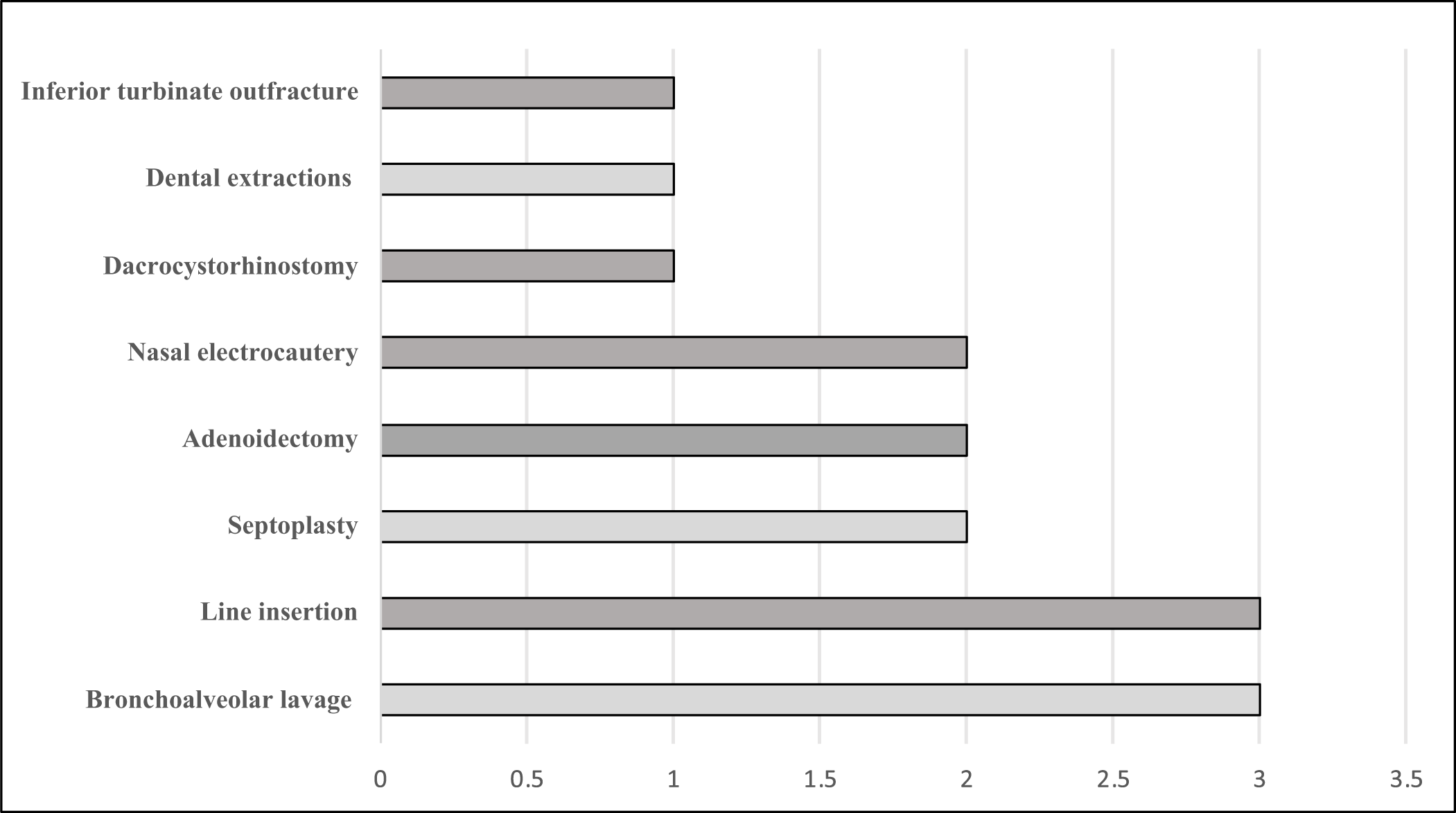
Surgical intervention varied among patients. The most frequently performed procedure was medial maxillary antrostomy, seen in 84 per cent (55/65) of cases. Nasal polypectomy was undertaken in 62 per cent (40/65) of cases, with histology specimens sent in each case. (Figure 1) None of the nasal polyp analyses yielded an unexpected result of sinonasal malignancy. Anterior ethmoid surgery was undertaken in 42 per cent (27/65) of cases whilst 20 per cent (13/65) of cases involved posterior ethmoidectomy. Frontal sinus and sphenoidal surgeries were undertaken in 8 per cent (5/65) and 3 per cent (2/65) of cases, respectively, primarily due to frontal sinus mucocele and isolated sphenoid opacification (Figure 2). Additional procedures including adenoidectomy, septoplasty, and turbinoplasty (Figure 3) were performed in 18 per cent (12/65) of cases. Thirty-seven patients were discharged on the same day, while the mean hospital stay for admitted patients was 1.10 days.
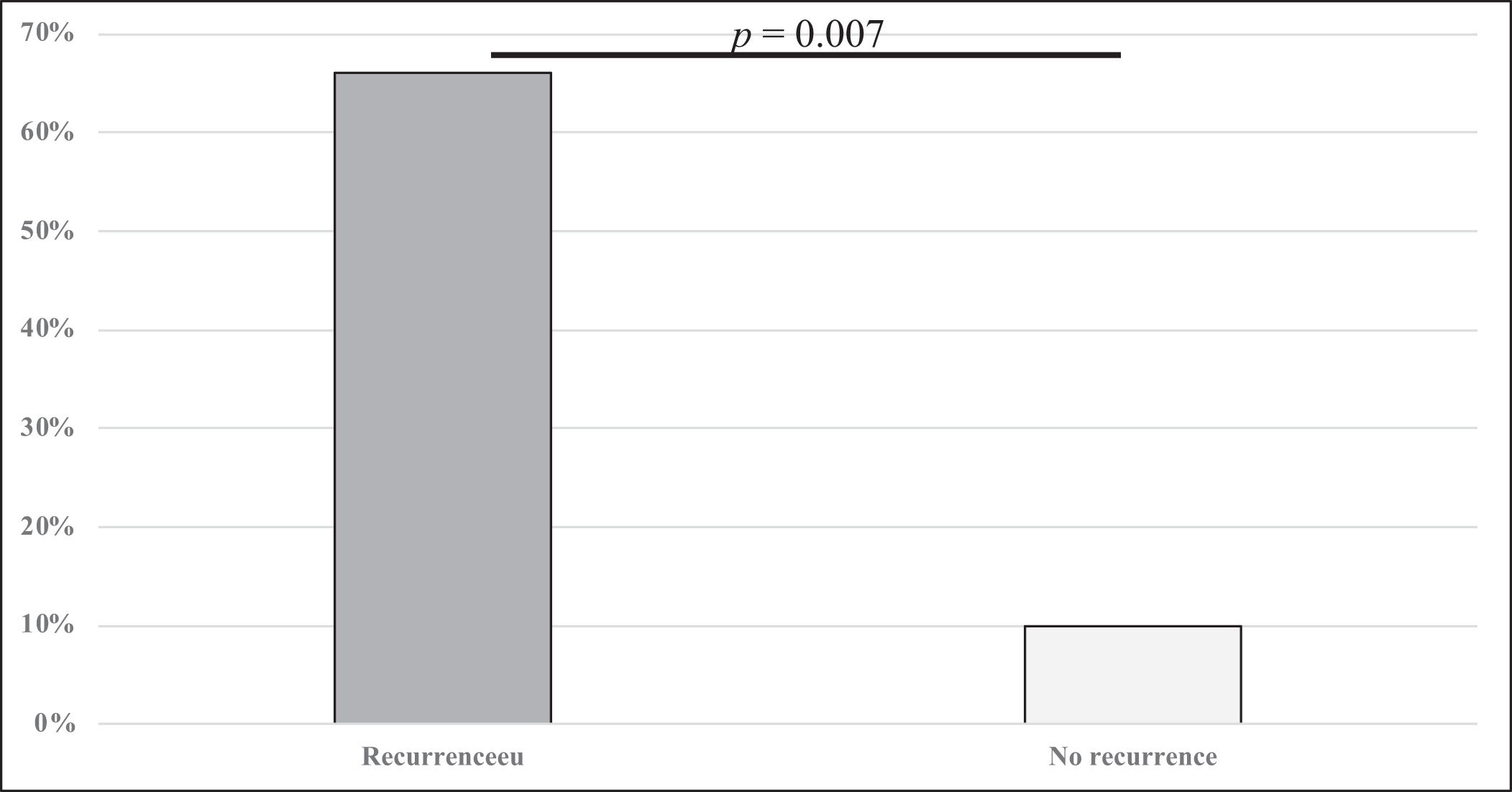
Bar graph demonstrating the difference in proportion of patients with a diagnosis of cystic fibrosis in the recurrence and no-recurrence groups.

Bar graph to demonstrate the distribution of operative management undertaken.

Bar graph outlining additional procedures undertaken at time of paediatric endoscopic sinus surgery.

Revision surgery
Six of sixty-five (9.2 per cent) patients required revision surgery due to symptom recurrence. Cystic fibrosis was strongly associated with the need for revision, as 67 per cent of revision cases (4/6) occurred in CF patients. In contrast, only 10 per cent (6/59) of non-recurrent patients had CF. This difference was statistically significant (p = 0.007, 95 per cent CI: 1.4–45.3 per cent). No significant association was found between the duration of hospital admission and the need for revision surgery (p = 0.345, 95 per cent CI: −5.3 to 13.8 per cent).
Logistic regression analysis confirmed that CF status was an independent predictor of revision surgery, with an odds ratio of 8.5 (95 per cent CI: 1.2–60.3, p = 0.007). Other variables, including initial Lund–Mackay score and hospital admission duration, were not significantly associated with recurrence risk.
No major complications, such as cerebrospinal fluid leaks, orbital injuries, or severe haemorrhage, were reported in this cohort. Minor complications included transient nasal crusting in 17 per cent (11/65), mild epistaxis in 12 per cent (8/65), and temporary nasal obstruction in 8 per cent (5/65), all resolving within six weeks post-operatively with conservative management.
Discussion
In this single-centre retrospective review, paediatric FESS was found to be both safe and effective for managing chronic rhinosinusitis and other sinonasal pathologies in children. The overall revision rate of 9.2 per cent (6/65) underscores that, although the majority of paediatric patients benefit from surgery, a subset, most notably those with cystic fibrosis (CF), may require further intervention. This aligns with broader assertions that CF is associated with higher recurrence rates of sinonasal disease, driven in part by persistent mucus stasis and bacterial colonisation.Reference Wang, Johnson, Horani, Brown, Mitchell and Shah1, Reference Virgin, Rowe, Wade, Gaggar, Leon and Young2
Sixty-two percent of patients required nasal polypectomy as part of their surgical management. This underscores an important limitation of balloon sinuplasty, which cannot address nasal polyps.Reference Mirza, Shawli, Alandejani, Aljuaid, Alreefi and Basonbul11 Consequently, paediatric FESS remains crucial for paediatric sinonasal pathology where polyposis is present. Eighty-four percent of patients underwent middle meatal antrostomy, while only 40 per cent needed anterior ethmoidectomy, and fewer still required frontal or sphenoid interventions. This reflects the varied pattern of sinus development in children and highlights the individualised approach needed for treating paediatric sinonasal disease.Reference Lee, Fernandez, Mirjalili and Kirkpatrick12
Furthermore, our cohort emphasises the need to coordinate interdisciplinary care: 20 per cent of patients in this cohort required concomitant procedures, including bronchoalveolar lavage and line insertion. This underscores the importance of careful surgical planning and team-based management to reduce the number of general anaesthetic exposures in a paediatric population. Additionally, the high proportion of paediatric patients with CF or other comorbidities (e.g., anxiety, depression, craniosynostosis) demonstrates the importance of recognising multi-system disease factors and ensuring close collaboration with respiratory physicians, paediatricians, and anaesthetists.
Comparisons with the literature
Multiple previous studies have demonstrated that paediatric functional endoscopic sinus surgery paediatric (FESS) can be both safe and effective for carefully selected children, particularly those with chronic rhinosinusitis unresponsive to comprehensive medical therapy. Most of these published cohorts, however, originate from the United States or European centres outside the United Kingdom.Reference Virgin, Rowe, Wade, Gaggar, Leon and Young2, Reference Wu, Huang, Yang, Huang, Huang and Chang7, Reference Lee, Fernandez, Mirjalili and Kirkpatrick12–Reference Chang, Lee, Huang, Lai and Lee14 This review aims to present the first detailed elective paediatric FESS cohort specifically reported from the United Kingdom. In doing so, these findings provide a unique UK-centric perspective on patient demographics, surgical indications, concomitant procedures, and revision rates.
Our observed low rate of major complications aligns with existing meta-analyses, which report incidence figures generally below 1 per cent for serious adverse events in paediatric cohorts.Reference Makary and Ramadan3, Reference Vlastarakos, Fetta, Segas, Maragoudakis and Nikolopoulos15 Revision rates likewise parallel international data, hovering around 5–10 per cent in many series.Reference Makary and Ramadan3, Reference Vlastarakos, Fetta, Segas, Maragoudakis and Nikolopoulos15 Historically, concern about potential disruption of facial growth initially tempered the utilisation of sinus surgery in children, yet mounting data have clarified that prudent, anatomically guided approaches such as FESS do not negatively influence midfacial growth.Reference Lee, Fernandez, Mirjalili and Kirkpatrick12, Reference Wolf, Anderhuber and Kuhn16 Current practice patterns increasingly emphasise a stepwise escalation, beginning with medical therapy and adenoidectomy (when indicated), then proceeding to balloon sinuplasty or FESS if required.Reference Schupper, Nation and Pransky17–Reference Brown and Graham19
Our finding that CF status correlated strongly with revision rates echoes the work of Wang et al., who observed that children hospitalised for pulmonary exacerbations of CF commonly had concomitant chronic rhinosinusitis.Reference Wang, Johnson, Horani, Brown, Mitchell and Shah1 Their data indicate an increasing reliance on non-surgical management over time, yet in certain refractory or complicated CF cases, paediatric FESS remains necessary for disease control. Other published series, particularly from tertiary referral centres, report CF revision rates as high as 60 per cent, reflecting a more severe phenotype of sinonasal disease and emphasising the importance of adequate counselling for patients and families.Reference Yung, Gould and Upton8
In addition, the present review supports prior observations that children with higher baseline Lund–Mackay scores are more prone to surgical failure or recurrence of symptoms.Reference Do, Lands, Mascarella, Fanous, Saint-Martin and Manoukian20 Although controversies remain on the ideal thresholds for intervention, an elevated pre-operative radiologic burden of disease (especially if associated with CF or polyps) appears to correlate with more severe disease and potential for revision surgery.Reference Wu, Huang, Yang, Huang, Huang and Chang7, Reference Do, Lands, Mascarella, Fanous, Saint-Martin and Manoukian20 Our experience aligns with the broader literature affirming that paediatric FESS, when undertaken in the appropriate clinical scenario, leads to significant symptomatic improvement and favourable long-term outcomes, with minimal major complications.Reference Makary and Ramadan3, Reference Vlastarakos, Fetta, Segas, Maragoudakis and Nikolopoulos15
Beyond the direct surgical outcomes, several studies underscore the improvements in quality of life (QoL) after FESS. Sethi et al. noted that >90 per cent of children reported better sinus-related QoL post-operatively, as measured by validated instruments such as the Sinus and Nasal Quality of Life Survey (SN-5) questionnaire.Reference Sethi and Chakravarti21 These subjective improvements may be pivotal, especially when weighing the burden of sinus-related symptoms (e.g., nasal obstruction, purulent discharge, cough, facial pressure) that often affect school attendance and daily function in paediatric patients.Reference Rizzi and Kazahaya22, Reference Tajudeen and Kennedy23
Limitations and future recommendations
This study is limited by its retrospective, single-centre design, which may introduce selection bias and limit the generalisability of our findings. Additionally, although many patients benefited from extended follow up, some data points (e.g., long-term QoL measures, hospital readmission rates beyond 1–2 years, socio-demographic variables) were unavailable. Variability in surgical technique and evolving instrumentation (e.g., powered instrumentation vs balloon sinuplasty vs navigation-assisted endoscopy) were not accounted for in detail.
Although we confirmed a statistically significant association between CF status and revision rate, the small CF subgroup size warrants caution in extrapolating these results. Larger multicentre cohorts focusing on CF would more precisely clarify prognostic risk factors for surgical failure.
Finally, the era of balloon sinuplasty has introduced a less invasive alternative for select paediatric patients with localised maxillary disease and minimal polyposis.Reference Fujita and Manes5, Reference Mirza, Shawli, Alandejani, Aljuaid, Alreefi and Basonbul11 Because most cases in this cohort underwent more traditional paediatric FESS approaches (e.g., uncinectomy, anterior ethmoidectomy, etc.), we could not directly compare balloon dilatation outcomes. Future research should address whether balloon sinuplasty alone, particularly in younger children without polyps, might reduce the need for standard FESS or the risk of revision surgery.
• Functional Endoscopic Sinus Surgery remains a safe and effective treatment in paediatric patients, with a low rate of major complications and treatment failure.
• A diagnosis of Cystic fibrosis is significantly associated with disease recurrence and requirement for further operative management in paediatric patients undergoing Functional Endoscopic Sinus Surgery.
• A high Lund-McKay score is not associated with treatment failure in paediatric patients treated with functional endoscopic sinus surgery. This is in keeping with the adult literature.
• A multidisciplinary team approach is required, with consideration of early involvement of respiratory specialists, in all cases of paediatric patients presenting with sinonasal pathology to rule out ciliary dysfunction.
• Additional procedures, such as bronchoalveolar lavage, were required in 20% of cases which is reflective of the need for involvement from respiratory team. Paediatric services should be designed so that additional cases requiring a general anaesthetic can be coordinated at the time of paediatric functional endoscopic sinus surgery.
Conclusion
In this single-centre retrospective review, paediatric FESS demonstrated both safety and efficacy for children with recalcitrant sinonasal disease. Despite low overall complication and revision rates, the CF subgroup displayed a higher recurrence and more frequent need for further surgical intervention.
These findings align with prior evidence that paediatric FESS, particularly when performed by multidisciplinary teams in a tertiary paediatric centre, helps to alleviate sinonasal symptoms, lower antibiotic usage, and improve overall QoL. Nevertheless, key challenges remain, including optimal timing of intervention, the role of adjunct procedures (such as balloon sinuplasty), and the need for robust, long-term prospective data on QoL outcomes. Future work should emphasise multicentre collaborations to refine patient selection criteria, integrate new technologies, and develop standardised protocols to further enhance the safety and durability of paediatric sinus surgery.
Data availability statement
Dataset is available at request from corresponding author.
Ethical approval
Ethical approval was neither sought nor required for this study. Caldicott Guardian approval was sought prior to accessing patient records. This project was registered with the local audit department at Alder Hey Children’s Hospital Trust.