In the years immediately following World War I and the Bolshevik Revolution, revolutionary fervor consumed many European working communities, whether or not their countries had been combatants. While the War and Revolution were certainly important catalysts, like with many changes associated with the First World War, postwar labor conflicts had their roots not only in the conflict, but also in rising social discontent prior to its outbreak. In Spain, the years after the war have become synonymous with labor conflict, which ultimately prompted King Alfonso XIII to call on General Miguel Primo de Rivera to establish a military dictatorship, ending Spain's first sustained experiment with representative democracy. Historians associate rising labor discontent with heavy industry, tending to ignore or discount organization and activism in agriculture. But in Spain, strikes were spread across sectors, and some of the earliest took place in the rapidly expanding citrus industry in València, on Spain's Mediterranean coast.
In this work, I will discuss the conflicts that took place in Valencian society, and within the citrus industry in particular, which by 1914 had become one of Spain's most profitable exports. The crash that began during the War foreshadowed the general downturn that plagued the Spanish economy towards the end of the War. València's strikes, beginning in 1917, were unique because they involved not only citrus workers, but workers in other industries, as well as shop owners throughout the region, recognizing the region's dependence on “the golden fruit,” and acknowledging their own reliance on profits from citrus. Most importantly, the strikes were also a seminal moment in the proletarianization of the Valencian working classes: Not only did workers unite to fight back against capital-whose long-term mismanagement of the industry, they alleged, had resulted in the crisis facing workers and their families during the harvest of 1917-they also harnessed that energy to form new organizations and begin to agitate for changes in everyday working conditions in the industry prior to 1923, chalking up some real successes and laying a foundation for continued activity during the 1930s.
If proletarianization is a process of workers becoming a “proletariat,” one would assume a certain scholarly consensus on what that process has looked like, or even what it means to be part of a proletariat. However, because the process itself was rarely so linear and complete as classic theoretical models suggest, it has been difficult to establish a single definition of either concept.Footnote 1 Proletarianization means more than a working class becoming dependent on a wage. It is also a self-recognition—a realization, as a group, that those you depend on have separate, oftentimes contrary, economic interests. Valencian citrus workers in 1917 did not constitute a proletariat in any classic sense; they did not emerge from the crises a fully-formed proletariat, if such a thing has ever really existed. The workers were too diverse, comprised of small-holders, renters, and sharecroppers; members of these groups also joined landless workers in the fields to augment their annual earnings. Wives and daughters filed into fields and warehouses, central to the processes of both production and distribution to global markets. Even after 1917, many workers retained some control over the means of production—they owned their land and their tools, and some even had access to both credit and fertilizer. But workers did not have access to the means of distribution—the foundation of the growth of citrus, and the wealth it provided. There was at the time little local consumption of citrus, and shipping companies were generally held by foreign interests who contracted with local commercial houses. If shipping was reduced or totally unavailable, production slowed down or stopped: fruit was not collected, warehouses closed, construction on crates stopped, and wages froze. The World War I-era crises, the most severe of which came in the spring of 1917, were a seminal moment in Valencian proletarianization because they sparked the creation of labor organizations designed to protect workers and collectively bargain annual contracts, and began to bridge the divides separating diverse groups of workers. They also united Valencian workers whose livelihoods relied on citrus whether or not they worked within the industry. Proletarianization is thus as much a process of identity formation as it is an economic transformation.
Spain, Food, and Agriculture in the Age of Globalization
Food has become an essential part of our global capitalist market, though it is not always, or often, valued as such. In the past fifty years, food has become very big business, as large agri-corporations have supplanted local farms and local distribution networks in many areas, distributing foods to new, often distant markets; recently, of course, food and environmental activists in the developed world have founded counter-movements geared at re-localizing production and consumption, with mixed results, and often with little recognition of the long-term economic effects of local food movements on developing economies. Over at least the past two centuries, the combination of increasingly capitalized agriculture and industrialized transportation have allowed people in Minnesota to have tomatoes in January, bananas anywhere, anytime, and of course, widespread distribution of the Valencian orange. Since at least the 1960s, researchers have become increasingly interested in the processes of food production and distribution, and the relationships between food and the chemical and transportation industries. A well-established canon investigates the history of traditional export commodities like sugar, coffee, and bananas, frequently produced by forced labor, and also crucial to colonial economies. The extant literature on food production has been heavily focused on connections between Europe, the United States, and Latin America, defined as both colonial and dependent relationships between “the West” and “developing” nations. In general, these fascinating studies are as much about power—who has it, who wants it, and how to get more of it—as they are about food.Footnote 2 But at its simplest level, a study of food recognizes that “every group of people in history has had to identify such resources [as food] and create a mode of production to get them from the earth and into their bellies.”Footnote 3 Donald Worster refers to this process as the creation of an “agroecosystem,” or “an ecosystem reorganized for agricultural purposes.”Footnote 4 Worster cites differences between pre-capitalist and capitalist modes of (agricultural) production, noting that prior to the capitalist turn, people produced food primarily for subsistence, but the long process of “capitalist reorganization carried out in those years [1400s–1900s]…brought as sweeping and revolutionary a set of land-use changes as did the Neolithic Revolution….”Footnote 5 Among these changes are the commodification of land and the expansion of monocultural production. While València's agriculture remained relatively diverse, the production of a couple of key crops, like citrus and rice in the huerta (irrigated region) drove the capitalization of Valencian agriculture, supporting the export of less important crops like onions and carob.Footnote 6
Capitalist reorganization in València in the nineteenth century thus depended heavily on the citrus industry, and the landscape, land distribution patterns, and mode(s) of production changed concurrently. València was neither a minifundio nor a latifundio region—James Simpson's analysis of Spanish land tenure notes that these two categories leave out not only much of València, but a substantial portion of the interior; the irrigated areas of the region tended to be characterized by medium farms and long lease agreements.Footnote 7 With the expansion of citrus came the expansion of plantation-style agriculture, worked by renters, jornaleros (day-laborers), other smallholders, and even share-croppers, who hired out their own labor during recolección (harvest)—workers often occupied more than one of those categories.Footnote 8 The continuing expansion of the citrus industry led to substantial increases in plantations (naranjales)—though smaller holdings and smaller producers continued to be part of the industry, there were nearly 250,000 acres of plantation in the irrigated huerta by 1940.Footnote 9
Numerous historians have investigated Spain's agricultural history, primarily with the goal of emphasizing the “failure” of agricultural policies, the backwardness of rural people, and the unrealized goals of nineteenth-century desamortización (disentailment).Footnote 10 A “paradigm of backwardness” has plagued modern Spanish historiography, buttressed by discussions of Spain's uneven industrialization, political corruption, and lackluster agricultural performance prior to the “economic miracle” of the 1960s. Using this paradigm, historians have sought broadly to explain the decline and loss of the immense Spanish empire, which culminated in the “disaster of 1898,” and ultimately the social divisions that precipitated the outbreak of war in 1936.Footnote 11 Historians, anthropologists, and sociologists consistently have focused on a variety of failures on Spain's path to modernity, oftentimes without interrogating the meanings of modernity and the inadequacies of its traditional models.
More recently, scholars have critiqued the traditional declensionist narrative of Spanish history, seeking continuities in the nineteenth and twentieth centuries that produced, for example, the economic miracle and the relatively peaceful transition to democracy after Francisco Franco's death.Footnote 12 They argue that by approaching the question of “modernization” from the perspective of how states should have developed, we consequently have ignored the complexities of how they did modernize, including regional and local variations or anomalies in national patterns. For example, as James Simpson noted in 1995, Spanish agriculture suffered from inadequate government policies, farmers’ reluctance to employ modern-methods, and “difficulties in achieving export-led growth.”Footnote 13 València, however, represents an anomaly in the general “failure” of Spanish agriculture due to its sophisticated irrigation systems; a well-developed export sector based on citrus, but also including important cash crops like rice, wine, and olives; and the willingness of Valencian farmers and landowners to employ more up-to-date methods and chemical fertilizers.Footnote 14 This Valencian anomaly did not occur in a vacuum. Rather, Valencian capitalists adeptly responded to changing conditions in an emergent global market for luxury or exotic foods, demonstrating an impressive awareness of changing trends in food cultures as well as an expanding global economy on which Valencian agriculture became increasingly dependent. In other words, while national histories are important in terms of, especially, top-down economic developments and policies, local, regional, and transnational histories can provide a more nuanced picture of diverse and complex economic developments.
Perhaps most importantly, the emergence of capitalist agriculture also signified a shift in agricultural work patterns akin to those described in the transitions to industrial factory labor. In both capitalist agriculture and industry, workers become increasingly dependent upon wages or income from the market, and work is something that takes place away from home. Jobs become concurrently more specialized, and wage scales develop to reflect different jobs and their relative prestige. València's labor crisis in the early twentieth century was a crucial event in the development of a transnational agricultural working class whose oftentimes substandard working and living conditions continued to help keep food costs manageable in developed economies.
Additional research into the patterns of labor organization in food production, particularly from a comparative perspective, is absolutely essential in understanding the potential emergence of this transnational working class. Scholars are hampered, in many respects, by the hard and fast divisions between geographic regions and historical periodizations. Jorge Uría, for example, discusses the “myth of the peaceable peasant” in the northwest regions of Asturias and Galicia, noting that not only has popular peasant resistance been overlooked in the region in favor of analyses of peasants in the south, but some striking similarities to Valencian peasantries appear as well. In Galicia, “many [peasants] combined being part-time or seasonal laborers, small landholders, tax farmers, or sharecroppers,” indicating that like Valencians, other Spanish peasantries occupied multiple rural categories.Footnote 15 Cliff Welch discusses the impact of globalization on Brazil's rural laborers, in particular focusing on the disconnect between smallholders and large-scale agribusiness, though his period of analysis begins in the 1940s.Footnote 16 R. Steven Griffin, on the other hand, also looks at workers’ political mobilization during the first quarter of the twentieth century, but his examination of Florida's Socialist movement does not look specifically at agricultural workers.Footnote 17 In general, the biggest challenge to completing a genuine comparison is a lack of research—scholarship addressing proletarianization in the countryside is sparse, and one of the most significant divides is on developed versus developing areas. Marcel van der Linden's discussion of labor history in Latin America, Africa, and Asia notes that scholars in those areas have been producing excellent discussions of non-Western labor history, but the West/non-West divide persists. We are in real need of transnational comparisons and studies, particularly in the examination of labor migration and food production.Footnote 18 The Valencian strikes are an interesting starting point for future comparisons because citrus workers—who often, again, occupied various rural categories—reacted to economic pressures more related to globalization than to national economics. How other working populations react in similar situations, particularly in the twentieth century, can provide valuable insight on the development of modern labor movements beyond factory walls.
Citrus and Its Production in València
Contemporarily, the País Valenciano refers to the autonomous region of València on the Mediterranean coast, south of Catalunya. It is comprised of three provinces: Castelló de la Plana in the North, València, and then Alacant in the South, though citrus was more important in València and Castelló. Productive agriculture benefits from a relatively temperate climate, though frost was and is a consistent and important threat to citrus production in particular. As noted above, the region differed from the agricultural zones of the south of Spain, famous for large landed estates and concurrent political turmoil resulting from a large class of radicalized landless laborers, and an already dynamic agricultural sector was boosted by the disentailment policies of the nineteenth century, which liquidated twenty-three thousand square kilometers of land in the País Valenciano, representing 4.6 percent of Spain's total disentailment. In València alone, 23,044 rural farms, or fincas rurales, changed hands.Footnote 19 The emergent Valencian bourgeoisie purchased many of these farms and then rented them to local peasants, whom they tapped as local labor for the expansion of commercial agriculture.Footnote 20 Much of the citrus production in the area takes place in two distinct regions: the Ribera del Xúquer, the fertile valley around the Xúquer river southwest of València city, which includes Alzira and Carcaixent, and the Plana, including the cities of Vila-real, Castelló, and Borriana.Footnote 21 Of course, growing occurs up and down the coast, but with higher population concentrations, these cities, along with the city of València itself, also saw the majority of the production and distribution.
Citrus fruits arrived in València as part of the Arab agricultural revolution after the eighth-century Muslim conquest.Footnote 22 It was not until the nineteenth century, though, that farmers, looking for ways to make up for decreases in silk and wine production, began to produce citrus in earnest. Citrus growers were also able to take advantage of an already-established export culture that was over two millennia old.Footnote 23 During the two decades prior to World War I, European demand for València oranges increased significantly as standards of living improved. València exported hundreds of thousands of metric tons of oranges to Germany, England, and France. Even in the early years of the industry's expansion, exports of oranges were massive—Valencians shipped over thirty-six million kilograms of oranges to foreign markets in 1872 alone.Footnote 24 Valencian farmers in turn imported substantial quantities of guano and nitrate-based chemical fertilizers for their groves from Great Britain and Chile.
Exports of Valencian oranges and other products grew substantially in the late nineteenth and early twentieth centuries, despite an otherwise lackluster agricultural performance on a national level. By 1902, roughly thirty percent of irrigated farmland, just over ninety thousand acres, had been turned over to citrus production; that same year, València's citrus production totaled 5,546,090 Qm. (quintales métricos), over eighty-five percent of Spain's entire crop.Footnote 25 By 1935, on the eve of civil war, that had increased to over 150,000 acres, or about forty-two percent of available irrigated land, the vast majority of which was located in València and Castelló.Footnote 26
Growth in production naturally corresponded with growth in export and demand. In 1850, citrus fruits represented only one percent of Spain's agricultural export; by 1900, citrus accounted for eighteen percent of Spanish exports, and on the eve of World War I, that number had increased to thirty-one percent of all Spanish agricultural exports. No single product consistently had higher numbers throughout the years of the Restoration and Second Republic (1874–1936). In short, by the outbreak of World War I, citrus in València had become the most important sector, and provided a tremendous amount of wealth for the region and for the nation.
The Producers
Of course, with such an important and time-sensitive product, València needed a robust agricultural working class involved in the labor process, and by the 1870s, a distinction between the “agricultural” and business sides of production had begun to emerge, accompanied by two distinct systems of local sale that continued to dominate distribution into the twentieth century. The first of these was “a ull,” in which a commercial agent values an entire crop and then pays that amount to the farmer. The second method allowed farmers to sell by weight, and a commercial agent would pay a pre-agreed upon price based on either the weight or the number of oranges.Footnote 27 The distribution phase depended heavily on investment from abroad, particularly from Great Britain and France, and by the outbreak of World War I, one of the most important criticisms of the industry was that too much of it rested in the control of foreign capital. This critique became especially important when foreign shipping companies began diverting naval resources to the war effort.Footnote 28
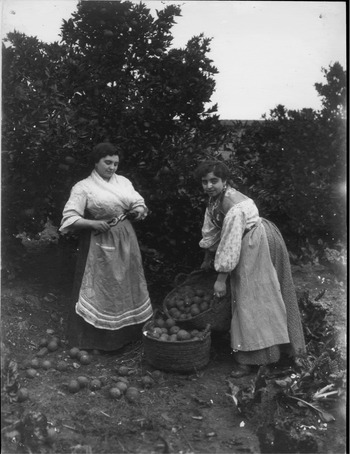
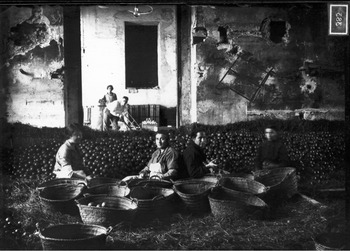
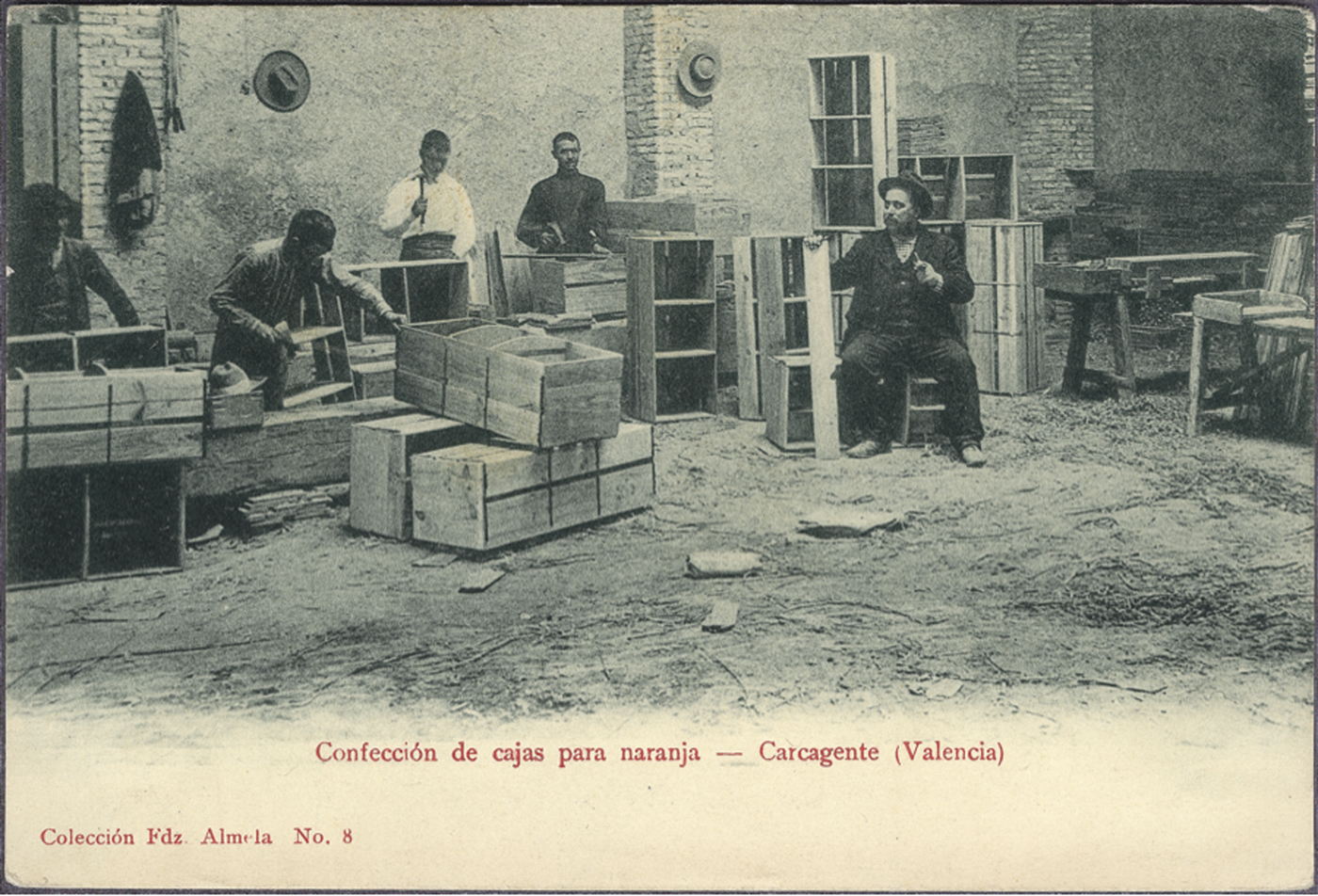
Citrus production thus began in the orange groves and plantations (the naranjales). Unlike wheat, much pre-harvest activity rests on expanding the area of production and applying fertilizer—usually guano or one of the newer nitrate-based fertilizers. Since citrus is a winter product, action began as early as October, when workers went out into the naranjales to begin recolección (harvest). An extremely diverse labor force participated in this phase—men, women, and children, but also tenant farmers, smallholders, sharecroppers, and day workers (Figure 1). After recolección, workers then transported the oranges to the almacenes (warehouses) for confección (preparation). Here, empapeladores (women workers) assigned each fruit a class based on size and quality (Figure 2). After separating the oranges, empapeladores then wrapped each orange in specially-designed papel de seda (tissue paper)—these papers eventually became quite elaborate, featuring the logos of exporting houses or cooperatives, as well as illustrations. The final step in the warehouse was boxing the oranges, done by encaixadores (another class of female workers). The crates were generally built in-house, and though photos that feature construction indicate that this was a male job (Figure 3), the creation of women's unions of crate builders after the disruptions during World War I indicate that both men and women were responsible for construction. Once the oranges were crated, they were then transported to railway stations and ports for shipment.
Museu de la Taronja, Arxiu Fotogràfic. Núm. registre: A-0009, “Recolección de la naranja,” late nineteenth century.

Museu de la Taronja, Arxiu Fotogràfic. Núm. registre C-0004, “Selección de la naranja,” 1920s.

Confección de cajas para naranja, Carxaixent. Series Fernández Almela no. 8. Biblioteca Valenciana, Arxiu Fotogràfic, Collecció José Huguet.

Each season (October–May), the multi-million peseta citrus crop absolutely depended on work performed by at least tens of thousands of workers.Footnote 29 Though many of these workers were also smallholders and tenant farmers, this was a sector whose workers depended on wages and/or income from the capitalist interests that controlled production, whether employed by a cooperative or large landowner; selling one's own product; or, just as likely, both.
Citrus production took place in the fields, but also in the warehouses and in transportation, indicating that in terms of labor organization, there were numerous similarities between agricultural and industrial production. In the decades of citrus’ most significant expansion, the realities of living and working in the Valencian countryside also mirrored, in many ways, the conditions associated with rising industrialization. A brief examination of the conditions faced by rural workers, and workers in small towns throughout the province of València, is invaluable in contextualizing the nature of the World War I-era crisis, and its effects on citrus workers themselves.
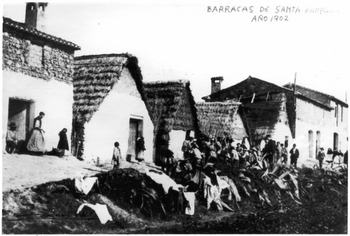
The Valencian coast had one of the highest population densities in the country: In 1900, the provinces of València and Castelló had a population of 1,117,384, the majority of which lived in the irrigated huerta. There is no data that specifically discuss the living conditions of the citrus working class, but the report from València's Comisión de Reformas Sociales, released in 1891, provides valuable insight into the living conditions of València province's rural and urban workers.Footnote 30 Two of the most important orange-growing cities in the province were Carcaixent and Alzira. The former had a population of 12,262 in 1900, while Alzira boasted a population of over 20,000. Figure 4 is an image of a row of peasant barracas in Cacaixent in 1902—these thatched-roof rural homes, common throughout the region, often housed two or three families, as contracts were signed for between four and six years, and residents had to pay their rents in cash.Footnote 31 Though the city was relatively small, as we can see, peasants and workers often lived side by side, which provided the advantage of close social networks. Workers could also rent rooms and flats, generally sublet (rellogats in Valencian)—rents could be as low as thirty pesetas/year in smaller towns, and as high as one hundred and eighty pesetas/year in a larger city like Alzira; though there were many calls for the construction of barrios obreros (workers’ neighborhoods), none had been constructed by the turn of the twentieth century, and workers often had to settle for cheap, often substandard, lodging.Footnote 32 València's local section of the Commission for Social Reform estimated that the average jornalero (day worker or laborer) family needed to earn roughly seven hundred pesetas per year to survive, but their report noted that daily pay for the average male worker was between two and two and one-half pesetas per day. Work was generally seasonal in the agricultural sector, and as such that same jornalero worked about seventy-five days per year, earning between one and two hundred pesetas annually. For specialized tasks or periods of harvest, wages went up, but earning about one-third of a family's necessary income meant that every member of a family, of course, had to contribute: A stay-at-home wife, or children enrolled in school, would have been an unimaginable luxury. Women workers not only worked in agriculture, they were a crucial part of the citrus production process, as noted above; young women also comprised part of an urban labor force in the city of València and other urban areas, in the glove, tobacco, silk, and mosaic tile industries. Children were just as important as women workers in the maintenance of the family economy. Though the 1873 Benot Law forbade child labor, industry and agriculture often ignored the law, and it only prohibited child labor up to ten years of age. Children and women earned between one-quarter and one-half of men's wages; interestingly, children earned as much as 1.75 pesetas/day in agricultural labor, but that work also tended to be seasonal.Footnote 33
Museu de la Taronja, Arxiu Fotogràfic. Núm. registre S-0027, “Carcaixent: Barracas de Santa Bárbara, Calle de los Gitanos,” 1902.

The Myth of the “Levante Feliz”
Taking into account these conditions, it would be natural to assume a certain amount of social unrest, but an examination of Spanish labor history leads one to assume that the notion of the “Levante feliz,” or “happy Levante,” accurately described social relations in the area.Footnote 34 At first glance, it is easy to overlook social conflict in the Valencian countryside, but when Madrid and Barcelona, in particular, are discounted, València's political and social atmosphere in the late nineteenth and early twentieth centuries appears far more fractious.
Available evidence indicates at least a fear of growing class conflict throughout the nineteenth century. In 1872, Eduardo Pérez Pujol published his treatise La cuestión social en Valencia at the behest of the Sociedad Económica de los Amigos del País, one of Spain's seminal organizations for liberal economic policy recommendations. In this work, Pérez Pujol references the growing tensions between the bourgeoisie and València's growing working class, and the immediate threat posed by the emergence of a new organization: the Asociación Internacional de los Trabajadores (AIT), or the International. To counter this threat, he laid out a program of interclass cooperation—reliant on joint labor-management committees, reformed guilds, and cooperative associations—to mitigate class conflict. His work is significant because it became the cornerstone of a “Valencian initiative” to answer the social question, reflected in the organization of the Commission for Social Reform (CRS) in the 1880s.Footnote 35
The CRS's report not only dealt with living conditions, but the investigators also tackled social unrest. The subsection addressing València's strike activity lists a succession of strikes in the 1870s and 1880s, in areas as diverse as silk and textiles, bricklaying, iron work, tanning, and carpentry. The language used by the CRS's regional committee is illustrative in this report as well: Bricklayers, while striking in both 1873 and 1882, were described as “peaceful,” and the strike courteous enough to not stop work entirely—it happened “sin actitud de huelga,” or “without the attitude of a strike,” meaning that the workers were appropriately deferential. In 1874, however, when tanners went on strike, they were led by a “section of the International established in València by Catalan workers,” rejecting the idea that Valencian workers would support and begin International chapters of their own volition. Tanners walked out at the “most damaging” moment for the bosses, stopping work entirely, leaving the “tan-pit full of skins.”Footnote 36
Absent from the CRS report, however, is any substantive discussion of rural incidents, despite the fact that social conflict was a regular occurrence in the countryside as well. In both 1878 and 1882, for example, strikes by fematers (young male waste collectors) and female verduleras (vegetable sellers) disrupted life in both the city and the countryside, as they defended their traditional rights and privileges vis-à-vis the urban economy.Footnote 37 Also in 1878, conflicts arose between tenant farmers in the Valencian countryside and landlords who, for the most part, lived in València city. Ground down by successive bad seasons, peasants “almost in unison” elected to withhold rents, frustrated by their landlords’ “bourgeois mentality” toward property that, presumably, precluded them from exercising the type of paternalism that has historically defined landlord-peasant relationships.Footnote 38 The strike began peacefully but quickly devolved into violence, as uncooperative peasants had their plots burned; though València's Liga de Propietarios, an association founded in 1871 to protect the rural interests of València's urban landlords, was convinced that “foreign people” had agitated the peasantry, seventy-eight farmers were arrested and ultimately deported.Footnote 39 Alfons Cucó has presented the “huelga” as a “transitional” protest—no longer primitive, but not yet fully informed by modern ideologies.Footnote 40 But most importantly, the strike, and the response, accelerated the consolidation of bourgeois socio-economic dominance of the huerta.
Similarly, while data for Castelló in the twentieth century is sparse until 1914, València and Alacant accounted for eighteen major strikes in the period between 1905 and 1909. The Estadística de las huelgas, published by the Institute for Social Reform, notes that in this five-year period, 5,388 Valencian and Alicantine workers actively participated in strikes (huelguistas)—only seven percent of the total strikers throughout Spain in this same period. However, if Madrid and Barcelona, which accounted for the majority of strikes and strikers, are discounted, the number goes up to ten percent of all of Spain's actively striking workers. In 1907 and 1908, however, València and Alacant alone accounted for forty percent of Spain's strikers. Concerns varied, but frequent causes were work hours, conditions, and salary/wage issues.
Concurrently, and perhaps because of the influence of the Valencian initiative, a variety of organizations emerged or expanded to help workers in both rural and urban areas. These included numerous mutual assistance societies, credit cooperatives, Catholic workers’ circles, and workers’ education associations, with an increased focus on workers’ needs from spiritual, cultural, and economic perspectives. This vast tapestry of working- and middle-class associations in València indicates, as Jesús Cruz has pointed out, that within regional society, a robust bourgeois culture had developed, creating a path for increased politicization.Footnote 41
A political consciousness also emerged against this backdrop of social conflict and associationism. In addition to the Valencian republican movement led by Blasco Ibáñez known as “blasquismo,” which purportedly decentered class identity, several working-class movements began to make waves in the region during the Restoration.Footnote 42 Within five years of its founding, as noted above, International representatives were agitating in Spain; in 1871, València played host to an AIT regional congress, and in these early years, 410 Valencians on average attended local AIT meetings.Footnote 43 During the same period, workers in the Alicantine town of Alcoy, just south of València, formed Spain's first recognized Anarchist organization, the Alcoy Federation, which declared a general strike in 1873, and issued a manifesto declaring support for the newly founded Republic “because the republic is the last resort of the bourgeoisie, the final line of defense of the exploiters of the fruits of our labor, and the complete disillusionment for all those brothers of ours who have hoped for everything from governments….”Footnote 44 Throughout the late nineteenth century, Spanish workers tested the waters of Socialism and Anarchism, resulting in the founding of the Partido Socialista Obrero Español (PSOE) in Madrid in 1879—one of the earliest Socialist parties in European parliamentary systems.Footnote 45 By 1881, a Valencian branch of the PSOE had been founded, and by the end of the decade, the party had adherents throughout both València and Castelló. Despite the oppression by the government in the wake of Barecelona's Tragic Week (1909), both Socialism and Anarchism continued to grow in number and influence. In València in particular, as the local Socialist Party grew, its influence extended into the countryside, and the language(s) of Socialism and Anarchism continued to inform Spanish working-class politics, and took center stage during the World War I-era crises.
The radicalization of València's workers corresponded to the emergence of a working-class politics among Spanish industrial and agricultural workers. Alongside the burgeoning Anarchist movement, the socialist-leaning Unión General de Trabajadores (UGT) formed in the 1880s, launching its first general strike in 1882. The union grew in fits and starts in the late nineteenth century, but on the eve of the War had grown to 147,000 active members.Footnote 46 The UGT had national standing, and by the end of the nineteenth century, under the leadership of Pablo Iglesias, had insinuated itself into parliamentary politics and gained access to social policy institutions like the Institute for Social Reform.Footnote 47
On the eve of the War, the other national union was the National Confederation of Labor (CNT), which had formed in 1910 out of the local Barcelona union Solidaridad Obrera. Anarcho-syndicalist in character, the union spread rapidly to industrial centers, and by 1911 called its first general strike, organized to protest continuing military operations in Morocco. Manuel Buenacasa, a founding member of the CNT, noted that the CNT spread quickly to València, remarking on the events of the 1911 general strike in the region, which resulted in the declaration of a commune in the seaside town of Cullera, and the sentencing to death of six activists, five of whose sentences were commuted to life in prison.Footnote 48
Though there are no records to specifically trace the spread of working-class politics to the Valencian countryside, it makes sense to surmise that València's growing industrial presence—and the interdependence of the urban on the rural—facilitated the transfer of ideas. Evidence from Castellón is far sparser. If Castelló turned in a report to the Commission of Social Reform, it did not survive for the reprinting in the early 1980s. The Estadística de las Huelgas lists one solitary strike in 1908. As Samuel Garrido has noted, the region was populated by more conservative worker organizations, in particular the Catholic Workers’ Circles.Footnote 49 These emerged under the guidance of famous Spanish priest Antonio Vicent, who hailed from Castelló, and whose work Socialismo y anarquismo built on Pope Leo XIII's encyclical Rerum Novarum, published in 1891. Rerum Novarum addressed growing socio-political discontent, particularly between labor and capital, defending property rights and encouraging cooperation between the two opposing sides.Footnote 50 Vicent built on this argument, proposing that the main problem within society was not capitalism but rather secularization and the abandonment of traditional forms of labor organization, particularly guilds.Footnote 51 The Catholic workers’ circle movement gained steam, especially in Castelló, and the region claimed nearly seventeen thousand members, though some historians have argued that because half of those members were middle-class associates, the membership numbers are misleading.Footnote 52
The real story of the impact of Catholic Workers’ Circles may well be hard to judge, but the evidence indicates that at the very least, Castelló did not experience the same level of class conflict in the late nineteenth and early twentieth century as did its counterpart to the south. The crisis of 1908 does provide a lens into the ways that the Castellonense propertied class addressed crisis within citrus. In January of that year, three weeks of rain led to devastating floods in the fields and unemployment for workers. The response of the local capitalist and landed interests, in particular cooperatives and farmer communities, was to open local food stores and distribute the surplus. In Borriana, for example, as Garrido notes, over one thousand people were able to take advantage of the distribution of bread, beans, rice, and meat; in the city of Castelló itself, each person seeking charity received “two loaves of bread and a pound of rice.”Footnote 53 At the height of the 1917 crisis, Las Provincias, one of València city's most important daily papers, speculated that while the crisis in Castelló was also bad, the region had better padrinos (godfathers) that would make sure workers were protected. While this turned out not to be true, the assumption highlights the perception that in Castelló, paternalistic interclass cooperation had been a relative success.
Despite, or perhaps because of, this increased activism on all fronts of worker life, organization among the citrus groves was actively discouraged. Bourgeois interests were represented by a variety of organizations—the Liga de Propietarios, the Círculo Frutero (founded in 1901), the Federación Agraria Levantina, and the Federación Naranjera were all active in the Restoration period and lobbied the government in Madrid, as well as local institutions, to support commercial interests in the citrus industry. One of the most important voices for València's “commercial class” was the biweekly paper Los Mercados, which took credit for the formation of the Círculo Frutero in 1901, an organization open to both growers and comerciantes.Footnote 54 The paper consistently advocated for the formation and expansion of citrus cooperatives, and provided a voice for corporate and bourgeois organization. At the same time, however, they viewed worker organization with contempt. In January 1901, the paper published a blistering editorial against unionization in general, arguing that industrial organization had been a “disaster” across the board. This laid the foundation for more specific anti-union publications, in particular a response that same month to a rumor that in Alzira, farmers and confeccionadores (preparers) were in negotiations to form a union, which the paper labeled ridiculous. After reaffirming the ruin that accompanied unions, they questioned whether or not foreign markets could absorb the inevitable price increase that would accompany unionization. They concluded that “the interests of farmers and confeccionadores are not contrary, although bad faith” may cause discord between the two groups, as long as “England needs our orange, laugh at confeccionador unions.”Footnote 55
The War and the Orange Proletariat
Thus in 1914, at the outbreak of war, the Valencian economy depended upon an export produced by a large agricultural working class, but the leaders of that industry had entrusted part of its financing and expansion to foreign economic interests. Working-class politics had permeated both urban and rural centers, and workers and peasants had numerous opportunities for organization and association. Growth in citrus outpaced slow but steady economic growth throughout the nation, but despite this growth, dissatisfaction among Spaniards had been growing. Since the late nineteenth century, social reformers had been anxiously addressing the consequences of lopsided economic development, helping to lay the foundation for the formation of the Commission for Social Reform, which became the Institute for Social Reform in the early twentieth century. At the grassroots level, really since the nineteenth century, a culture of associationism had begun to flourish, and many of these associations were of the mutual assistance variety, existing to help workers and farmers meet their basic needs. Working-class politics developed alongside these grassroots organizations.
Overall, the War had been a boon to the Spanish economy. Spain, under the leadership of Prime Minister Eduardo Dato, declared “strict neutrality,” and maintained the ability to trade with combatant nations on both sides of the conflict.Footnote 56 This led to “unprecedented” economic growth: The ability to continue trading “above all metals, strategic minerals, textiles—especially uniforms and blankets for soldiers” propped up the Spanish economy. But “unnecessary” items, in particular wine and oranges, took an early hit. In October of 1914, citrus industry leaders began looking for ways to branch out beyond European markets, especially as negotiations between cosecheros (harvesters) and local export agents became increasingly difficult, and shipments to Germany, Russia, and Holland suffered.Footnote 57 The Federación Agraria and the Federación Naranjera, the two industry-leading voices, expressed cautious optimism about the season of 1914–15, but had become genuinely concerned about a potential labor crisis in the countryside by February of 1915. As a result, local leaders began to petition the Spanish state to create public works projects, apparently with little success.Footnote 58 In the next year and a half before the crisis of 1917, Los Mercados issued repeated calls for customs reforms, and proposed more programs to get more ships and to build faster railroads to improve both domestic sales and French distribution.Footnote 59
Throughout at least the last half of 1916, a steady stream of reports flowed out of the region of strikes, labor conflicts, and, perhaps most tellingly, requests for train cars and assistance for transport—not just for citrus, but also rice, potatoes, and onions. These reports appeared in the anarcho-syndicalist paper Solidaridad Obrera (Barcelona) alongside stories about rising prices for subsistencias (basic necessities). The issue of subsistencias was a significant one across the country, but also serves as an example of the unevenness of an economic boom that accompanied Spain's neutrality during the war. In Catalunya, as well as Madrid and the Basque Country, profits poured in as industrial production expanded to meet demands for textiles and war materiél. While wages did go up, they did not go far—inflation negated salary gains for most years. As Solidaridad Obrera noted in November of 1916, the huge increase in “bourgeois contracts” meant more work, and drove up prices for subsistencias. In a place like Barcelona, this was bad enough, but in an area like València, where war had destroyed the export economy, it was a recipe for disaster.Footnote 60
It would be easy, in light of the subsistence crisis, to “write off” the Valencian protests as mere subsistence riots—as though subsistence riots themselves are less worthy of analysis. There were numerous riots and protests about subsistence in Spain during the 1910s, particularly in Barcelona, as Temma Kaplan has discussed.Footnote 61 But concerns over subsistence were not the only issues raised by Valencian workers in 1916 and 1917. To celebrate the May 1 [1916] holiday, for example, workers in Vila-real issued a letter protesting the War and tacked on a demand for an eight-hour work day and expanded public works projects. They also protested “the use of the Mauser…against workers who seek employment and a reduction in subsistencias…,” implying rising levels of conflict between workers and authorities.Footnote 62 These concerns were raised again in August, when officials in the pueblo of Sueca, just outside of València city, convinced the governor general to shut down the Sindicato Obrero, further indicating that worker organization was being seen as more and more threatening.Footnote 63 Strike activity spread throughout the region in the last four or five months of 1916 in industries as diverse as bricklaying, potato farming, transportation, and textiles, not to mention at least two general strikes in which Valencian workers participated: one in August and one in December.Footnote 64 Workers held meetings about the labor crisis, the lack of train cars, the subsistence crisis, and the rising price of fuel—some so large they had to be held in the Plaza de Toros in València city.Footnote 65 Simultaneously, multiple calls were issued by workers, as well as by local officials, to address not only the crisis in subsistencias, but also issues with the transportation of agricultural products including oranges, in addition to potatoes, rice, and onions. Local officials attempted to negotiate new tax rates for land-based transportation as early as August of 1916, and everyone was aware that “farmers continued to be worried about the upcoming season,” in light of the “truly ruinous” seasons that they had faced since 1914.Footnote 66
Then disaster struck. In the first days of December, a massive storm—described as a hurricane, but more likely a cyclone—hit the Valencian coast, causing floods throughout the countryside. Reports from Alcira lamented that “an infinity of boxes of oranges” had been destroyed and that “thousands of families” were “in misery.”Footnote 67 As València lurched into the new year, the region's workers were faced with a growing subsistence crisis, and organizations dealing with worker issues began to expand and become more active. At the beginning of January, agricultural workers in Cullera hosted a three day congreso where they determined to increase recruiting. On January 22, nine thousand women box makers went on strike in Alcira demanding an eight-hour work day and a pay raise; by January 25, this strike had spread to “more than two thousand” women box makers in València city—neither strike earned mention by Los Mercados.Footnote 68
A series of crucial events thus served to exacerbate a crisis already being felt by the most vulnerable in the regional economy. In the first months of 1917, international events further worsened the situation. First, in late January, the Germans declared that they would remove restrictions on submarine warfare that had been put into place after the sinking of the Lusitania in 1915—sources just refer to this as “the Note.” In response, the few Spanish-owned shipping companies still operating in the Mediterranean opted to dock their ships indefinitely. British ships, of course, had been in short supply since the outbreak of the War. On February 24, however, the availability of ships became a moot point: Britain announced that they would restrict their imports for a full year. Specifically, Valencian citrus imports to Britain would be reduced to twenty-five percent of 1916's already reduced numbers.Footnote 69 As the subsistence crisis worsened, Los Mercados opined in February that the subsistence problems were not related to supply, but rather with earnings. Fearing the war would impede Spain's ability to import grains and cereals, the government placed an export ban on any material that could have been used to feed cattle, including sugar, alcohol, and vegetable oil. The overall effect was that farmers received lower prices for whatever goods they were able to sell, and then were unable to afford ordinary items.Footnote 70
Locally, then, the ban on exports exacerbated subsistence problems that had been growing throughout 1916. The Valencian daily Las Provincias predicted that Valencians would receive news of the British export ban with an attitude of “desperate serenity.”Footnote 71 Rumors began to spread in late February and early March of general strikes proposed in Alzira, and Las Provincias blamed the growing crisis on government “apathy.” Alzira's Sociedad Agrícola and the Sociedad de los Cosecheros met on Monday, March 12, and agreed to go on strike the following Wednesday, March 14. They contacted other organizations of workers in disparate industries to join in the general strike, arguing that collective action “that obliges the government to truly address the interests” of the region would be effective in addressing the crisis. They helped mobilize bricklayers, barbers, mural painters, transportation workers, and the local Cooperativa Obrera (Workers’ Cooperative) to join the strike, reflecting a local understanding that their livelihoods depended on the success of the region's dominant industry.Footnote 72 A rise in petty crimes, especially theft, in Alzira prompted public officials to publish calls for calm, reminding locals that things could be a lot worse—at least they were not in war-torn Europe.Footnote 73
Industry leaders and public officials called the planned protests “unjust,” and argued that they were doing everything in their power to address local concerns. After petitioning the government in Madrid, the Valencian Civil Governor had secured a promise of twenty million pesetas to fund public works projects, and a shipment of two hundred train cars for domestic transport. The president of Alzira's local Ateneo Mercantil, Enrique Oria, convened committees and sent them out to convince workers to end strike preparations, but to no avail—he noted himself that “given the state of expectation” in town, the strikes would likely move forward. On March 13, Las Provincias reported that thousands of hungry workers marched, angered at the news that no trains would be available immediately to transport surplus fruit to potential interior markets.
As Wednesday, March 14 dawned, twenty-one thousand workers in Alzira, Algemesí, Puebla Larga, Carcaixent and “other Ribera towns of the Júcar [river]” declared a general strike, demanding vagones (train cars) and food. The demand for vagones was an important one—in the absence of reliable shipping, workers hoped that their provision would allow farmers to expand sales to interior markets, offsetting some of the worst effects of the growing crisis. The government responded quickly, promising increased supply of food and wagons, but workers retained the right to march if the government reneged on its promises—they were back out on strike within the week.
With tens of thousands of workers in València out of work, hungry, and frustrated, the newspaper Heraldo de Castellón lamented that the year's harvest was rotting on the trees, but that “60,000 workers have not eaten for two weeks.”Footnote 74 On March 20, in València, Las Provincias reported that over one hundred thousand crates of oranges were rotting at the city's port, along with “20,600 crates of onions, 200 tons of loose oranges … 18,000 sacks of rice, 3,000 sacks of beans [and] 200 sacks of flour.”Footnote 75 This report highlights the dysfunction in the economic system, and supports the assertion made by Los Mercados that the subsistence crisis was not a problem of supply, but of income. There is no evidence that anyone even suggested distributing food that would rot and have to be thrown away and written off to local hungry workers. This crisis was manufactured, and as such was preventable.
Las Provincias reported on March 14 that the towns of “La Plana,” or the orange-producing region of Castelló, were far more peaceful, but reports out of Borriana and Vila-real, in particular, told a different story.Footnote 76 The same day, the Heraldo de Castellón informed readers that the local padrinos were meeting with government officials to arrive at some sort of solution, and invited local readers to a general assembly that had been scheduled the following Sunday, March 18, in Vila-real.Footnote 77 By March 16, however, the situation in Borriana, whose economy was nearly entirely dependent upon citrus production, was becoming dangerous. Reports out of Borriana alleged that “a restless group of men, women, and children” were marching through the streets of the town loudly “demanding BREAD, SHIPS AND WORK.”Footnote 78 On the sixteenth and seventeenth, the Borriana crisis became violent—the Civil Governor, Teodoro Izquierdo, ordered civil guard forces and a military regiment to the town, and reports became sparse as telegraph and telephone lines were downed in the wake of a fire at the local train station set by armed and angry protestors. The express train from València to Barcelona, which passed through the town, had to be turned around due to station damage.Footnote 79 Like in Valencian cities, the town was essentially shut down—in Borriana, as well, local commerce depended on the citrus industry, and many businesses shut their doors in solidarity with striking workers.
Beginning in the afternoon and going well into the evening, local leaders from both the Liberal and Conservative parties met to address the rapidly-deteriorating situation. Through the local paper, the Heraldo, they pleaded for calm, and encouraged people to wait until Sunday's general meeting, where everyone would have a chance to air their grievances. They were also reportedly in negotiation with the government, asking Madrid to order Spanish companies to send ships, and to negotiate with Britain to ease their import restrictions; they also asked local banks to cede credits to local farmers to help offset some of the worst effects of the crisis.Footnote 80
As Saturday the seventeenth dawned, demonstrators went back out into the streets. Women began the protest, inviting other workers in the streets to join their march towards “warehouses, factories and mills.” Though both male and female workers dominated the crowd, a number of bourgeois representatives joined in the protest, again in recognition of the importance of citrus to the local economy. There was a moment of panic when a demonstrator lifted a sign, prompting a civil guard to fire a warning shot, but it passed quickly as the march continued peacefully. The streets that evening were quiet as residents prepared for the next day's meeting in Vila-real, though “groups of children ran through the streets asking for work and bread.”Footnote 81
On Sunday, a crowd of six thousand women, men, and children marched almost five kilometers to the city of Vila-real shouting “¡Viva la Plana! ¡Viva Burriana! ¡Viva Villarreal! ¡Viva la Plana sufrida y honrada!”Footnote 82 Women marchers carried homemade placards and banners that read “Ships, bread and work,” some decorated with drawings of ships; men wore hats with small signs of the march's unofficial slogan pasted on them. Clearly the citizens of Borriana had invested time, organization, and energy into preparation for the rally. The Heraldo de Castellón painted a vivid picture:
Roofs, terraces, balconies, windows…everywhere you saw people…. The side portico was full, the plaza, an area of 2,861 square meters, full, completely full, but access to all its avenues was open, and without guard, without armed agent. We do not remember having been present at a citizen action like that of Villarreal.Footnote 83
The crowds were not disappointed. First, the civil governor spoke, expressing solidarity with the citizens of the region, and promising to advocate on their behalf in negotiations with Madrid. The director of the Heraldo de Castellón read a telegram sent by the minister of development, promising to establish a commission to study the situation and come up with possible solutions. But the crowd reserved its most enthusiastic praise for “el obrero Sanmartín,” who had been part of both demonstrations and negotiations with authorities on behalf of workers, and whose speech was “frequently interrupted by applause” from the throng. Sanmartín argued:
We have arrived at a desperate situation that reaches the merchant, the industrialist, and the landowner. The working class [has been] thrust into misery by war, [and] needs the powerful aid of the government. Here in this region, in which like slaves we have pierced the land, bringing up springs, converting the dry ground and the marshlands into [a] beautiful, lush forest of orange trees, opening the heart with their perfumes and aromas [applause!], here we all form a conglomerate of virtue and wealth. Do you not believe that it would be a crime if the great powers did not protect us?Footnote 84
Sanmartín's comments are an important window into the formation of the region's citrus economy and the working-class identity that accompanied it. Workers themselves had worked “like slaves” to make sure the industry became a success. They irrigated land and drained bogs. The wealth that came from citrus was theirs as much as anyone's, and now that the industry was in crisis, the workers would do their best to make sure that “the great powers” did not turn their backs on them. At first glance, this seems like a cooperative ideology—like Sanmartín is arguing that the interests of labor and capital were in concert, but it is more complex. First, he recognized that the crowd he spoke to was a diverse one—this was not only a workers’ rally, it was also a citizen action. Secondly, in the context of the strikes, he is reminding his crowd that their interests are in concert with workers’ interests; it is a semantic distinction, but an important one that indicates an emerging sense of empowerment among rural workers.Footnote 85
In subsequent days, the Director of Public Works José Zorita toured the affected areas of Castelló and promised swift action.Footnote 86 Not long after, the Spanish state issued property credits and financed public works projects, and in May of 1917, reduced fees for rail transport of oranges; new legislation later in the year addressed inadequacies in the credit system, but historians argue that its inadequate funding reduced its efficacy.Footnote 87 The subsistence crisis may have hit its nadir in the early spring of 1917, and strikes remained a constant threat. Newspapers kept readers abreast of price fluctuations, announcing increases in the cost of bread, meat, or rice.Footnote 88 Valencians were coping with a phenomenon that was not unlike the “stagflation” of the 1970s—throughout the pre-war period, prices moved steadily downward, but after the outbreak of war, the cost of living rose sharply and remained relatively high. Salaries generally rose for Spaniards, but could not keep up with inflation; agricultural salaries actually dropped during this period, having an even more detrimental impact on citrus workers.Footnote 89
By the beginning of the 1917–18 harvest, the government had arranged for over two thousand wagons for domestic distribution to be sent to the region; they also negotiated a new treaty with England to increase fruit exports to fifty percent of 1916 numbers. But the damage had already been done. Many small farmers were ruined after the 1917 season and the culmination of three bad harvests, and too many workers had lost their jobs. Most almacenes in Algemesí (València) and Alzira remained closed through at least March, but the most long-lasting effect was the outmigration of tens of thousands of Valencians who went to France or Catalunya to find work. In total, over 64,780 Valencians left the region—more than the rest of Spain combined during this era—and only 16,783 ever returned. Borriana alone lost 21,000 inhabitants, and Alzira lost over 4,000.Footnote 90
Epilogue: The Rise of the Orange Proletariat
Whatever organization, discussion, or mobilization might have been going on in the citrus fields and warehouses prior to the wartime disruptions, workers became more publicly radical as a result of the 1917 actions. Robert Kern cited this year as a seminal one for Spanish anarchism, and in the August Rebellions he noted that under the leadership of Eusebio Carbó “Anarchists in Valencia…claimed to have gained almost ten thousand sympathizers and organized a dozen or so strikes and demonstrations,” though there is no way to know how much of this initial agitation directly involved citrus workers.Footnote 91 This was the beginning of protracted conflict between the Anarchist CNT and the Socialist UGT that formed the backdrop of Spanish labor culture in the postwar period. In the wake of the 1917 strikes, political engagement of citrus workers who remained (or returned) increased markedly; a good illustration of this is the formation of the Sociedad “El Despertar” Femenino, which sponsored the formation of a women's construction union in the city of Carcaixent in 1917. Founded by Socialist activists, El Despertar had its roots in the early twentieth century, in the Alacantine city of Elche, which remains famous for espadrille making. Its spread across the Valencian coast in the decades leading up to the Civil War enabled agitation on behalf of unemployed women workers during the labor disputes of the 1930s.Footnote 92 The charter of the new organization, promulgated in October and November of 1917, demanded an eight-hour work day, guaranteed daily pay, and, perhaps most interestingly, a guarantee of an hour—to be used at a workers’ discretion—for new mothers to nurse their children.Footnote 93 They also demanded overtime pay, and that overtime not be forced on workers if other workers in the area were unemployed. Regular meetings of the Sociedad occurred throughout 1923, though unsurprisingly they kept their official reports relatively vague. In addition to “El Despertar,” Carcaixent's Sociedad de los Trabajadores del Campo formed in January of 1917, on the eve of the strike movements, and remained active at least through the end of 1918. Members worked to negotiate “bases sobre las faenas agrícolas,” or wage scales for various agricultural work.Footnote 94 In 1919, two hundred and twenty-three workers in Alcira registered for the Unión Obrera, most of them merely identifying as “jornalero,” though the list was also peppered with bricklayers and carpenters, both professions that would have participated in the construction of warehouses.Footnote 95
These were part of a much larger movement—local labor organizations expanded significantly in the years after the 1917 disruptions. In the fall of 1920, new weekly El Defensor del Obrero (Defender of the Worker) reported on the Third Congress of the Levantine Regional Federation, which represented workers in the southern Ribera area of production. Present at the meeting were representatives of fifty-one separate worker associations, including El Despertar, speaking for over thirty-five thousand workers. These representatives approved wage scales, and reaffirmed demands from August that restricted the amount of oranges they could carry per day (three hundred small boxes, but only two hundred large boxes), and echoed an earlier demand from “El Despertar” that workers not get overtime if other workers were unemployed—a public declaration of worker solidarity. They also addressed workers in the northern Plana, who had been in their own negotiations. The Levantine Regional Federation also reported news from Juan Sanmartín—very likely the “obrero Sanmartín” who spoke at the 1917 Vila-real protest—that contracts in the North, where the harvest typically began earlier, had recently been signed that lowered wages of braceros (day laborers); Ribera workers worried that this might give local capital the impetus to lower their own wages.Footnote 96
Perhaps unsurprisingly, El Defensor reported a week later that “local bosses,” in particular El Sindicato de Exportadores de Frutas, had termed their “insignificant demands” unacceptable.Footnote 97 The paper accused the local “patrono” class of a “refined cruelty,” and asserted that the workers’:
Position in this conflict is limited to our own existence. We want to live because we have a right to…and for our vida reivindicadora we will sustain the attack. Our defense is legitimate, and we will see who will defeat whom in this conflict.Footnote 98
Such militancy! Note the difference—just three years before, “el obrero Sanmartín” challenged the “great powers” to protect the workers, but in 1920, El Defensor del Obrero lambastes the patronos for their “pride” and their “feudal egoism.”Footnote 99 The conflict between the Sindicato and the workers lasted nearly a month, with El Defensor keeping pressure on the bosses, but on December 4, 1920, the paper announced “¡Triunfaron los campesinos!” (“The Peasants have Won!”), and decried the “Terrorism” of the bosses.Footnote 100
It strains credulity to surmise that these organizations sprang up fully formed in the wake of World War I-era disruptions. Though contemporary observers consistently talked about outside, foreign, or Catalan influences on rising working-class discontent, “foreign” ideas do not, in and of themselves, create exploitative situations, though they may help to awaken workers to the exploitative situations in which they already live and work. The emergence of industrialization had prompted the formation of class consciousness in urban areas, and the proximity of the citrus fields, warehouses, and transportation centers meant that a rural proletariat was forming. Rising capitalization of the industry, along with an increase in the influence of bourgeois ideals and cultural forms, as well as attitudes towards property, accelerated the disruption of rural social relations. The 1917 collapse of the citrus industry, and most importantly the subsistence crisis it created, further hastened the transformation of rural society. The days of uncritical peasant acceptance, if they ever existed, were gone. In 1917, workers began to form their own organizations to represent their own interests. The rural peasantry was well on its way to becoming the orange proletariat.
Though the issues of the 1917 strikes would persist in myriad ways through the 1930s, at least, the strikers of 1917—tens of thousands of men, women, and children—did not know they were marching inexorably toward civil war and dictatorship. So much of contemporary Spanish historiography sees events through the lens of the approaching catastrophe. But the events of 1917 in particular, and the emergence of citrus in general, is an interesting case study in the development of the West's modern agricultural system. Through the twentieth century, farmers and agricultural workers—many of whom are migrant laborers, sometimes bearing “undocumented” status—worked in a system in which they had little or no control over market forces, prices of products or materials, or distribution networks; farmers became increasingly dependent on large agricorporations. Agriculture had also become increasingly defined by monocultural production—citrus, for example, cannot be pulled up and replanted, or rotated, or left fallow. Not only did this have a long-term impact on the quality of the soil, it also left farmers, and those who worked for them, extremely vulnerable to both natural and economic forces. The workers who pick our food have become as invisible as factory labor once was, and farmers straddle the space between labor and capital, employers and employees.